One of the most familiar pieces of scripture is the 23rd Psalm. Today we hear the BCP version of the psalm, but most of us know the psalm in the King James Version. In fact, the Prayer Book even has the King James Version printed within the Burial office because that translation is so familiar and comforting to us. This is the psalm we turn to when we are steeped in anxiety. This is the psalm we turn to when a loved one is facing serious illness. This is the psalm we turn to when death finally comes.
I have been particularly grateful for this psalm this week. This week has felt like a tremendous “valley of the shadow of death.” We started the week with the horrible bombing in Boston. Not only did we lose lives, and were many people horribly injured and maimed, but also something of the innocent joy of that sporting event was taken away. But the week just kept getting worse. After powerful testimonies from the Newtown families, the Senate still could not pass legislation around background checks for guns. I know that gun control is a sensitive political topic, but for many people, the Senate’s not passing this bill felt like an acquiescence to the violence in our country. Then just a day later, a horrible explosion happened in Texas, killing many. After the past six months, which have included Hurricane Sandy and Newtown, this week makes our valley of the shadow of death seem more and more barren, and perhaps unending.
Of course that is only our own American valley of the shadow of death. That valley does not include the hundreds of places around the world where bombings happen every day. The American valley does not include the places where villages are ravaged by HIV/AIDS, where children are starving, and where violence threatens whole ethnic groups. Just this week, the night one of the Boston bombers was killed, a bomb went off in Baghdad in a coffee shop, killing 27 people and injuring over 50. If we really tracked the worldwide and domestic news everyday, we may not feel as though we are just walking in the valley of the shadow of death, but instead our entire world has been exiled to a permanent valley of darkness and death.
But the reason I have been so drawn to the 23rd Psalm this week has not only been because of the poignancy of the valley. I have also been drawn to this psalm because of the richness of comfort, blessing, and peace in this psalm. In fact, in some ways, the valley is mentioned in passing to highlight the ways that God cares for us so abundantly. Frederick Buechner wrote about a worship service that happened immediately after September 11th, in which a speaker said, “At times like these, God is useless.” Buechner writes, “When I first heard of it, it struck me as appalling, and then it struck me as very brave, and finally it struck me as true. When horrors happen we can’t use God to make them unhappen any more than we can use a flood of light to put out a fire or Psalm 23 to find our way home in the dark. All we can do is to draw closer to God and to each other as best we can, the way those stunned New Yorkers did, and to hope that, although God may well be useless when all hell breaks loose, there is nothing that happens, not even hell, where God is not present with us and for us.”[i]
This is why we are all drawn to this piece of scripture. All that we want to believe about God, all that we hope is true about God, is found here in this brief psalm. Our longing for words like these is why this psalm is so popular and prominent. The 23rd Psalm is so well-know that the psalm has been called “an American secular icon,” because even people who do not attend church have come to know this psalm.[ii] We all want a God who leads us beside still waters, who restores our souls, who takes away all fear, and who comforts us.
I think this is why so many artists and biblical scholars are drawn to this psalm. Because this psalm captures for so many people not only who we believe God to be, but also who we desire God to be, many have been inspired to rephrase the language of this psalm to capture our imagination in new and fresh ways. Probably the most familiar is the hymn “The King of Love my Shepherd Is.” This hymn breathes air into the psalm, describing our God as a God, “whose goodness faileth never; I nothing lack if I am his.” Just this week I stumbled on an a cappella version of the 23rd Psalm that uses feminine language to refer to God – “She makes me lie down in green meadows; beside the still waters she will lead.”[iii] For those of us who struggle with the overly masculine language we have about God, this version of the psalm broke open the psalm yet again for me. All of the things we hear about God in this psalm – one who comforts, cares, and cradles – are all stereotypically feminine qualities. When God can be both feminine and masculine, then God truly is bigger and more whole.
But the one translation that really grabbed me this week is from the New Jerusalem Bible. The verse that we typically recall as, “Surely goodness and mercy shall follow me all the days of my life,” in the New Jerusalem Bible is translated as, “kindness and faithful love pursue me every day of my life.” The “mercy” or “faithful love” we hear translated is the hesed of God in Hebrew – God’s loving-kindness. This is the kind of overflowing love, loyalty, and lavishness that God shares with God’s people. In fact, when people show hesed, that loving-kindness is sometimes translated as “godly love.” But what really grabbed me about this translation is that God’s hesed does not simply follow us in life. God’s hesed pursues us in life. God chases after us, actively, even frantically, attempting “to reach us with the gift of life and the resources which sustain life.”[iv] We hear the strength of this verb because this is the same verb in scripture that is often used to describe what enemies do – they pursue. So to use the strength of this word to describe what God does to us is to say that God ferociously desires and drives to give us God’s hesed.
Our invitation today is to allow these new images to work on us as we continue to journey with God, even in what feel like valleys of the shadow of death. Even when we feel like God is useless or that darkness may overwhelm us, God’s love never fails, God’s motherly care is for us, and when we feel most abandoned by God, God is chasing us down to rain God’s hesed upon us. This is the beauty of our spiritual journey – our words are ever trying to help us understand this God with whom we journey. Our language will never fully capture God, but each new attempt awakens our journey and invites us into deeper connection. Our blessing this Eastertide is the myriad voices that help us get just a little closer to God when we need God the most. Amen.
[ii] J. Clinton McCann, Jr., “Preaching the Psalms: Psalm 23,” Journal for Preachers, vol. 31, no. 2, Lent 2008, 43.

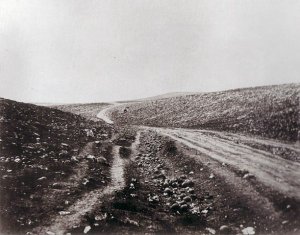 This coming Sunday, the appointed psalm is Psalm 23. As I have been praying on the texts, that phrase, “the valley of the shadow of death,” has been haunting me. In some ways, it feels like our country has been in the valley of the shadow of death for quite some time. After Hurricane Sandy and Newtown last year, multiple deaths by gun violence since Newtown – including two accidental deaths caused by four-year-olds with guns, and now the tragedy in Boston, it feels like we are in a valley of death that we cannot escape. In fact, on Monday, I almost found that I could no longer watch the coverage about Boston because I could not handle the emotional overload that has been these six months. The images were just too much to bear.
 Seeking and Serving