
Tags
called, Christians, disciple, Dorcas, Good Shepherd, Jesus, ministry, name, normal, Peter, Sermon, Tabitha
A couple of weeks ago I was at a dinner with some new friends, one of whom had brought his wife to the dinner. As we made our introductions, the wife told me, “Actually I have met you before.” I immediately started scanning my brain for a recollection of our previous meeting when she told me a story. She said, “Many years ago, I was at the library with my young daughter. She can be a bit much sometimes, and most of the other kids were uncomfortable engaging her in play. But then she found your two girls building with some big blocks. Your girls had built a tall wall with the blocks, and my daughter knocked the wall down, giggling with joy. I sat and watched your girls rebuild the wall just so she could knock it down over and over again. They were such a gift to my daughter and me that day.”
I was shocked by this woman’s story because I only vaguely remember that day at the library. The thing I remember most distinctly is one of my daughters looking to me with a question in her eyes – as if she knew this was not the “normal” way we play with others, but also subtly seeking affirmation to engage in play in a way that might be normal for this specific girl. The moment was so infinitesimally small that I almost forgot the moment – until this mom described how incredibly momentous the moment was for her and her child.
We never hear Tabitha (or Dorcas) speak in the reading from Acts today. But we do learn a lot about her. We know that she is labeled as a disciple – the only time the feminine form of the word “disciple” is used in the New Testament.[i] We know that she is named – with not one name but two names – possibly denoting the breadth of her ministry to people who speak different languages. People being named in scripture, especially women, demonstrates their significance in the biblical narrative. Usually women are just called, “the woman at the well” or the “the hemorrhaging woman.” We also learn that she made tunics for the widows in town. Most people in this time-period only had one or two tunics at a time in their wardrobe – they were handmade, custom fit to bodies, and a symbol of the deeply personal, intimate care Tabitha offered to these widows[ii] – women who were the “least of these” in their town. As the weeping widows show Peter these tunics, we come to know that Tabitha was a deeply faithful servant – a disciple and leader – in her community. We can only imagine this tremendous servanthood is why the disciples send two men to get Peter and tell him to come to them without delay.
The fourth Sunday in Eastertide is traditionally called Good Shepherd Sunday. We pull that language from the gospel of John. Over the course of three years, we hear the three parts of John’s Gospel that talk about Jesus being the Good Shepherd – today’s being the least obvious one, as Jesus talks about his sheep who hear his voice and follow him. But if you recall last week’s gospel, Jesus commissioned Peter three time to feed his sheep – basically telling Peter that he is passing the mantle of being a shepherd to Peter. And now, we find Peter acknowledging another disciple who has been carrying that same mantle as shepherd, and whom he raises from the dead so that she can continue the good work God has begun in her.
This is where things get a little heavy for me in scripture today. What we see in the passing of the baton (or maybe the passing of the shepherd’s staff) is that in our baptism into the faithful, in our claiming of ourselves as Christians, or maybe just in our tiptoeing into the waters of Christian community, we are each given staffs of shepherds too. While being a part of Christian community is one of the most affirming, life-giving, and supportive experiences we will find, being a part of Christian community is also one of commission. We become disciples – regardless of gender, or age, or location – disciples with a commission to show forth the love of the Good Shepherd we have experienced. The ministries will not look the same: we may be sewers of tunics, or builders of cardboard walls for community play with other children, or developers of process-management worksheets, or singers of life-giving song, or feeders of lambs.
Now, you might not know what ministry you will be called to do and how that ministry will likely bloom and evolve over time. But you will be called by name. Peter last week was called to feed Jesus’s sheep three times by name. Tabitha or Dorcas was called by her name in two languages by grieving widows. And you are called by name too. Sometimes that call will be from a Vestry or clergy member who will literally call you on the phone and ask you to help. Sometimes you will hear God speaking something to your heart – even if you are uncomfortable with that kind of spiritual expression or label that calling as “self-talk.” And sometimes, the people whose lives you will touch through your Christ-like love and service will call you by name – occasionally by nasty names but more often by loving descriptions – even years later than your acts of love and grace, and sometimes not to you, but about you in your absence. Our invitation this week is to pick up our shepherding staffs, to listen to the Good Shepherd’s voice, and then to go feed Jesus’ sheep. You are called – by name. Because you can go and feed God’s sheep. Amen.
[i] Robert W. Wall, “Exegetical Perspective,” Feasting on the Word, Yr. C, vol. 2 (Louisville: Westminster John Knox Press, 2009), 429.
[ii] Matt Skinner and Rolf Jacobson, “Sermon Brainwave: #1022: Fourth Sunday of Easter – May 11, 2025,” April 29, 2025, as found at https://www.workingpreacher.org/podcasts/1022-fourth-sunday-of-easter-may-11-2025 on May 7, 2025.
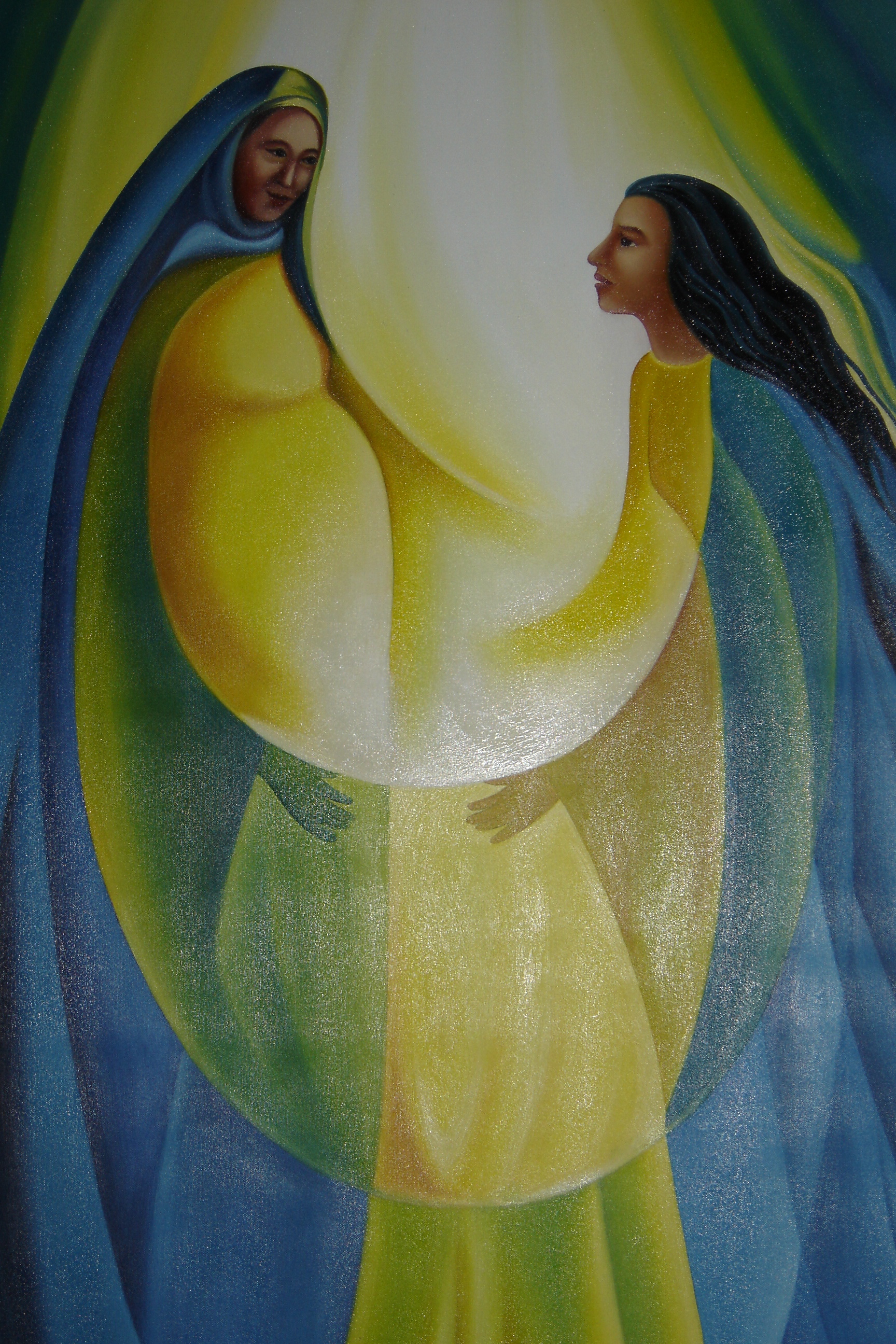
 Seeking and Serving