
• About

Seeking and Serving

~ seek and serve Christ in all persons

Seeking and Serving

Tag Archives: fresh

Sermon – Mark 6.1-13, P9, YB, July 7, 2024

17 Wednesday Jul 2024

Posted by jandrewsweckerly in Sermons

≈ Leave a comment

Tags

change, control, Episcopal Church, fresh, God, growth, Holy Spirit, Jesus, lane, limit, movement, new, Philadelphia Eleven, Sermon, uncomfortable

I realized recently that one of things I often say when I am asked how my family is doing is to offer a halfhearted compliment, “Everyone is staying in their lane.”   I think I started adopting that minimum standard, “staying in your lane,” because I have learned over the years how little control I have as a parent.  I may not be able to control what things my kids are interested in, I may not be able to control how well they perform in school, and I may not be able to control how they handle interpersonal relationships.  But if each family member is “staying in their lane,” then that means I have at least controlled their meddling with one another, their active misbehavior, or their making a scene anywhere else. 

That is what seems to be bothering the folks in Jesus’ hometown of Nazareth – Jesus is not staying in his lane.  At the beginning, there seems to be a modicum of respect for what Jesus is teaching in the synagogue – they compliment the wisdom he seems to have gained and the healing acts he has performed.  But the compliments end there.  Then the questions begin.  Where did he get this wisdom?  Isn’t he the carpenter’s son?  Isn’t he the son of Mary – a question dripping with criticism, as you would usually only refer to someone’s parentage through the father, not the mother.[i]  In other words, the people of Jesus’ hometown are basically saying, “Stay in your lane, Jesus!”

Passages like this can be so tempting for us.  We read about Jesus’ hometown and think, “Those silly folks from Nazareth!  They cannot see what God is doing right in front of them!”  As if “those” people and finger pointing is what the gospel calls for.  But when we start wagging our fingers at “those” people, we forget one kernel of truth about scripture:  we are always “those” people.”  Anytime something someone does in scripture makes us uncomfortable or sanctimonious, scripture is speaking straight to “us” not “those people.”  So, the people of Nazareth aren’t the only ones telling Jesus to stay in his lane.  We tell that to Jesus all the time.  When the Holy Spirit is calling us try a new ministry that feels daunting, we are tempted to tell Jesus to stay in his lane and let us do things our way.  When Jesus puts people in our lives that push us out of our comfort zones, we grumble to Jesus to stay in his lane and stop sending us prophets – I mean, annoying people.  When we hear that still, quiet voice speaking truth to us in places we like to keep in a box, we cut Jesus some nasty side-eye and tell Jesus to stay in his lane.

But as scholar Debie Thomas says, “The call of the Gospel is not a call to stand still.  It is a call to choose movement over stasis, change over security, growth over decay.”[ii]  Just last Sunday, we started a movie series about changemakers.  Last week, the film was The Philadelphia Eleven, the story of the unsanctioned ordination of the first eleven women in the Episcopal Church.  The vitriol of the bishops, clergy, and lay people who were opposed to those women’s ordination was shocking to the ears.  From the clergy person who stated with confidence, “Women can be anything they want – except a priest in God’s holy church.”  From the woman who lamented the ways those women had violated what God calls women to be and do in the world.  To the bishops held a public, scathing trial of the three male bishops who dared to ordain the first eleven.  The Philadelphia Eleven had waited time after time for the Episcopal Church to change – to chose growth, change, and movement instead of decay, security, and stasis.  And when the church refused to let these women out of their lane, the stepped out of their lane anyway.

Scholar Thomas concludes, “The scandal of the Incarnation is precisely that Jesus doesn’t stay in his lane.  God doesn’t limit God’s self to our small and stingy notions of the sacred.  God exceeds, God abounds, God transgresses, God transcends.  The lowly carpenter reveals himself as Lord.  The guy with the tainted birth story offers us salvation.  The hometown prophet tells us truths we’d rather not hear… [Jesus] will call out to us, nevertheless, daring us always to see and experience him anew.”[iii]  Our invitation today is let Jesus out of his lane in our life:  to not hold his lane as sacred, and to open ourselves to the ways his transgression of lanes is helping us to experience Jesus in new and fresh ways.  Maybe we do that in weekly worship, opening ourselves through song, prayer, and scripture to fresh experiences of God.  Maybe we come to the film series or Bible study this summer to see where God is exceeding, abounding, transgressing, and transcending.  Or maybe we let go of whatever boundary we are holding here at Hickory Neck to see what happens when we ask Jesus to please cross out of his lane.  The promise for us is a fresh experience of Jesus in our own day, time, and place.  Amen.


[i] Efrain Agosto, “Exegetical Perspective,” Feasting on the Word, Year B, Vol. 3 (Louisville:  Westminster John Knox Press, 2009), 215.

[ii] Debie Thomas, “Hometown Prophets,” June 27, 2021, as found at https://www.journeywithjesus.net/essays/3058-hometown-prophets on July 5, 2024.

[iii] Thomas.
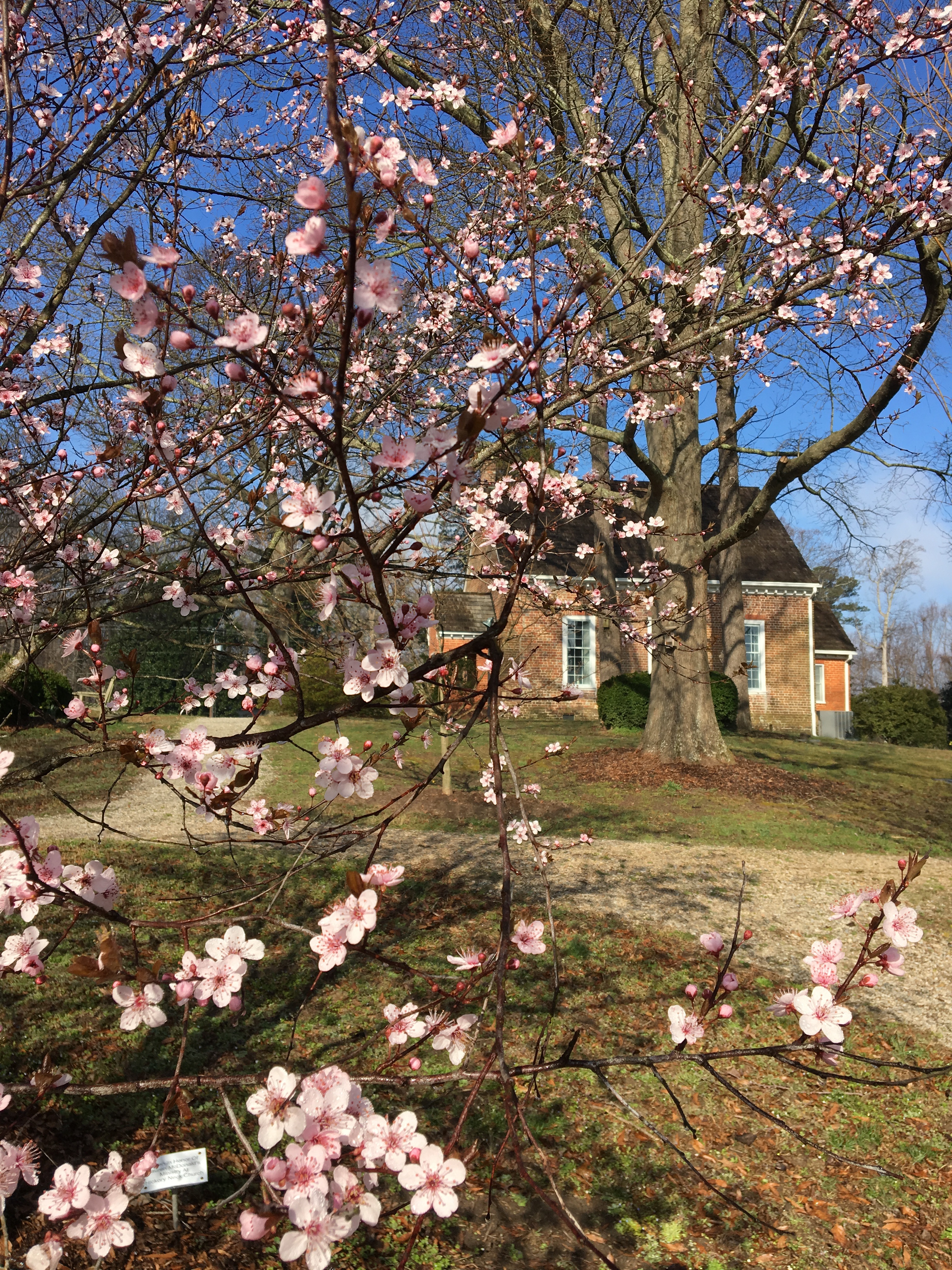
On God and Spring…

20 Wednesday Mar 2019

Posted by jandrewsweckerly in Uncategorized

≈ Leave a comment

Tags

beauty, bloom, blossom, color, fresh, glory, God, joy, love, people, spring, surprise, trees, wonder

IMG_6943

Photo credit:  Jennifer Andrews-Weckerly; reuse only with permission

This year, spring has taken me a bit by surprise.  I am mostly surprised because we keep having cold bursts, and yet, the budding trees seem undeterred.  But what has also surprised me is how unprepared I have been for the emergence of color.  You see, in these brisk days, I had become accustomed to bare trees and the dormant brown of the season.  As the trees begin to blossom, though, I have been caught off guard.  I forgot how beautiful these trees can be in spring.  I forgot the soft yellows, purples, pinks, and whites of their blooms, and I had forgotten the beauty they possess.  Despite having watched these same trees blossom year after year, I still find myself surprised by their loveliness.

As I have been surprised by the beautiful emergence of spring this year, I began to wonder if I don’t do the same thing with the people around me.  Sometimes, I think we get so used to our loved ones that we forget to really see them.  We get used to the rote normalcy of life, and we get so accustomed to our routines, we sometimes fail to see the beautiful blooms of the people right in front of us.  We neglect to see the ways the people in our lives are changing and growing, and sparking new life, and we fail to see their blossoming beauty.  We fail to behold their beauty with the wonder it deserves.

I wonder who in your life has been blossoming without your notice.  I wonder whose blossoms are coming into glory and yet you have been too busy to notice.  I invite you this week to take a long look at your loved ones.  Look at them with fresh eyes, expecting to be wowed with something fresh and inspiring.  See them with the eyes of a new acquaintance instead of the eyes of someone who only sees the withered winter version.  And then, tell them what you see.  Share with your loved ones the beauty you see in them, the new life you see budding, and the ways in which their color gives joy to the world around them.

I suspect when you start to embrace this new way of seeing your loved ones you will see them as God sees them – as beautiful creations whose beauty reflects God’s glory.  You can share that gift too – the ways in which you see God’s glory reflected in them.  But beware!  Once you begin to see God’s beauty and glory in others, you might also begin to see it in yourself as well.  If you need a little help seeing the color blooming in yourself, let me know.  I’d be happy to help you see yourself as God sees you!

Sermon – John 9.1-41, I Samuel 16.1-13, L4, YA, March 26, 2017

29 Wednesday Mar 2017

Posted by jandrewsweckerly in Sermons, Uncategorized

≈ Leave a comment

Tags

blind man, fresh, God, grief, Jesus, Laetare Sunday, Lent, Mothering Sunday, Pharisees, refreshment, renewal, repentance, revelation, Rose Sunday, sabbath, Samuel, Saul, Sermon, spiritual journey, stuck, unstuck

In a lot of ways, Lent is about being stuck.  Many of us sit down before Lent and take stock of our lives, discerning where we are stuck, and commit to working on getting unstuck.  Some of us are not that organized, and only discover how stuck we are as we enter into the penitential season, letting the prayers, scriptural lessons, and liturgies work on us.  And some of us cannot even claim to have done that work.  We only discover when we are stuck when someone metaphorically or literally smacks us against the head and tells us to shake off whatever is getting in our way, and get back in the game.

Two characters in our scripture readings today are similarly stuck.  The first is Samuel.  If you remember, Samuel is the prophet who anoints the first king of Israel – Saul.  But eventually Saul falls out of grace with God, and although Samuel delivers God’s judgment, Samuel grieves.  We are not really sure why Samuel grieves – if Samuel was really rooting for Saul and is disappointed in Saul’s failure[i]; if Samuel is lost in Saul’s failure and is scared of what is to come for Israel; or if Samuel is worried about himself.  After all, Samuel was intimately involved in helping Israel find a king – something God did not want for Israel in the first place.  Regardless of the “Why?” of Samuel’s grief, we do know that God is unhappy with Samuel’s continued grief.  God clearly thinks Samuel is stuck in grief.  “How long will you grieve over Saul?  I have rejected him from being king of Israel.  Fill your horn with oil and set out…”

Samuel is not the only character in our scripture today who is stuck.  In John’s gospel, we find a blind man healed by Jesus on the Sabbath.  But Jesus’ actions are not the center of the story.  Twenty-six verses – or 63% of the text we heard –  is about the Pharisees being stuck in their own understanding of who, how, and when a person can heal another.  For twenty-six verses they try to figure out who Jesus is, confident that he must be a sinner if he is healing on the Sabbath.  They barrage both the formerly-blind man and his parents about the incident – bringing in the healed man twice.  The banter goes on and on and finally, the healed man says exasperatedly, “I do not know whether he is a sinner.  One thing I do know, that though I was blind, now I see.”

In both Samuel and the Pharisees, we see God’s people, God’s leaders even, so stuck in their spiritual journeys that they are unable to see the work of God among them.  In both cases, neither party is doing something wrong – grief is an appropriate response from Samuel.  Samuel has invested a lot in Saul and has tried to mentor him on the right path for years.  And if we are honest, there is probably a bit of self-pity in his grief, as God’s being done with Saul means Samuel is in for a rocky road, seditiously anointing another as king before Saul has abdicated or been removed from his seat of power.[ii]  Likewise, the Pharisees are dutifully following the law of the Lord.  They have been taught for generations to honor the Sabbath and keep it holy.  We even prayed those very words last week, when we prayed the Decalogue together.  The Pharisees’ confusion is about a man acting in contradiction to everything they have ever been taught.

I wonder how often we find ourselves similarly stuck in our journey with God.  I cannot tell you the number of times someone in the midst of grief or discernment has said to me, “But this is not what was supposed to happen!”  We never plan for divorces, unexpected deaths, layoffs, addictions, betrayals, or illness.  We cannot anticipate the ways that tragedy or surprising life-changes will shake us to the core and sometimes paralyze us into inaction.  Sometimes we do not even realize we are stuck.  We get so caught up in our way of coping with life or simply surviving, that we do not realize how we deafen ourselves to the voice of God, speaking new and fresh revelation to us.

The good news for us, and for Samuel and the Pharisees, is that there is room for redemption and repentance.  God finally speaks directly and plainly to Samuel.  When Samuel has wallowed enough in his grief, God basically says, “Enough.  You have had plenty of time to grieve.  You have work to do, so get up and go.”  God even has a plan for Samuel’s safety when he protests about that.  “No more excuses.  I have you covered.  Go.”  The healed man does a similar thing for the Pharisees.  As they barrage him with question after question, he finally slows down and says, “Argue all you want!  Your confusion does not change the fact that I was blind and now I see.  Deal with it!”  Of course, the Pharisees do not accept the invitation to repentance – to change their minds.  But the healed man gives them more than enough direction toward truth and change.

The same is true for us.  There are all kinds of opportunities for us to get unstuck this Lenten season.  Many of you have already told me how the change in our liturgical pattern was just enough of a change to unsettle and reorient your senses in our worship of God.  Our bible studies have offered multiple opportunities to review the saving acts of God in history.  Our ecumenical services have given us ample occasions to see and hear God in fresh ways – whether through a different preaching style, music that touches us in new ways, or liturgical differences that shake up our senses.  I know we had a long conversation at our house about why the wine was so different at the other churches!  And I suspect our Quiet Day this coming Saturday may just be what some of us need help us hear God saying, “Enough.  Get going!”

But even in this season of repentance, of orienting ourselves back to God, the church gives us a Sunday of renewal – what the Episcopal Church calls, “Rose Sunday,” “Mothering Sunday,” or in the Latin, “Laetare Sunday.”  On this fourth Sunday in Lent, we take a break.  Virgil Michel said about this Sunday, “A Christian Lent can never be entirely sad.  With the fourth Sunday the pent up spiritual joy in the true member of Christ bursts forth in anticipation of the Easter joy to come…This was the day when the catechumens were decked with roses and when roses were mutually exchanged.  Thence comes the custom of the rose vestment.”[iii]  Our custom on this Refreshment Sunday is to wear rose-colored clothes and eat simnel cake as a way of honoring this day of refreshment.  We all need those reminders to listen to God, to be more open to revelation, to get ourselves unstuck.  But we also need those days when we say as a community, “Getting unstuck is hard work.  That you are trying is blessing enough today.  Take in a breath of God’s sweet mercy, and fill up that horn of oil tomorrow.  There is time to get up and get going.”

So breathe in the refreshment today.  Take courage that you are in good company in your need for renewal and redirection – both in the person sitting near you today and in our biblical ancestors.  Honor this Sabbath that is meant for rest for your wearied souls.  Do all those things; because tomorrow, you will indeed need to recommit to that work of getting unstuck.  You will need to pick up that horn and go do the work God has given you to do.  You will need to work on your hearing and eyesight, as God sprinkles wisdom all around for you to see and hear.  But today, fully take this Sabbath.  The good news is God will empower you to do all those other things you need to do tomorrow.  Amen.

[i] Carol A. Newsom, “Exegetical Perspective,” Feasting on the Word, Yr. A, Vol. 2 (Louisville:  Westminster John Knox Press, 2010), 101.

[ii] Newsom, 101.

[iii] Virgil Michel, The Liturgy of the Church, quoted in A Lent Sourcebook:  The Forty Days, J. Robert Baker, Evelyn Kaehler, and Peter Mazar, ed. (Chicago:  Liturgical Training Publications, 1990), 51.

Homily – 1 Kings 17.1–16, Roger Williams and Anne Hutchinson, February 8, 2015

16 Monday Feb 2015

Posted by jandrewsweckerly in Uncategorized

≈ Leave a comment

Tags

Anne Hutchinson, Elijah, expectations, fresh, God, homily, religious freedom, Roger Williams

Today we honor two prophetic witnesses:  Roger Williams and Anne Hutchinson.  Born in London in 1603, Roger Williams was a priest in the Church of England.  He found that he could not abide by the rigorous, high-church policies of Archbishop William Laud, and in 1630 he sailed to New England in search of religious liberty.  Once he arrived in Boston, life did not go as expected.  The civil authorities were punishing people for religious offenses.  Because Williams felt church and state powers should be separate and that individuals should be able to follow their consciences in matters of religious belief, he left Massachusetts and founded a settlement in Providence and formed the colony of Rhode Island.  Rhode Island formed a new constitution that granted wide religious latitude and freedom of practice.  Though he founded the first Baptist church in Providence, Williams refused to be tied to an established church.

Anne Hutchinson also immigrated to Massachusetts in hope of finding religious freedom.  She was an outspoken advocate of the rights and equality of women, challenging the dominant views of Puritan leadership.  Hutchinson held women’s Bible studies, where she welcomed critical examination of the faith.  In 1638, she was tried by the General Court of Massachusetts and branded a dangerous dissenter and banished from the colony.  She eventually relocated to the Bronx, where she and members of her family were killed by Siwanoy Indians in 1643.  Both Roger Williams and Anne Hutchinson are remembered as early champions of religious liberty and prophets of individual freedom.

What I like about Williams’ and Hutchinson’s stories is that their lives did not end up how they expected.  Both Williams and Hutchinson came to Massachusetts with the expectation of finding their ideal freedom – and while both were disappointed, both kept at it, continuing to seek where the Spirit was moving and revealing truth.  Their spiritual journeys remind me of Elijah’s journey.  When Elijah flees to the wilderness, the LORD sends ravens to provide sustenance.  When the water dried up, Elijah could have felt defeated, but he kept on going and then has an profound experience with the widow in Zarephath.  In the face of impossibility, of failure, of abandonment, God keeps showing up.

I think that is what Williams, Hutchinson and Elijah remind us of today – to never give up.  The journey will likely not look how you expect, but God will be with you, making a way.  And it may be that in that scary in-between, God finds new and fresh ways to reveal God’s self.  The trick is to hang with God in the meantime.  Amen.

Recent Posts

  • On the Myth and Magic of Advent…
  • On Risking Failure and Facing Fear…
  • Sermon – Luke 23.33-43, P29, YC, November 23, 2025
  • On Inhabiting Gratitude…
  • Sermon – Luke 20.27-38, P27, YC, November 9, 2025

Archives

  • December 2025
  • November 2025
  • October 2025
  • September 2025
  • August 2025
  • July 2025
  • June 2025
  • March 2025
  • February 2025
  • December 2024
  • November 2024
  • October 2024
  • September 2024
  • August 2024
  • July 2024
  • June 2024
  • May 2024
  • March 2024
  • February 2024
  • January 2024
  • December 2023
  • November 2023
  • October 2023
  • September 2023
  • August 2023
  • July 2023
  • June 2023
  • May 2023
  • March 2023
  • February 2023
  • January 2023
  • December 2022
  • November 2022
  • October 2022
  • June 2022
  • May 2022
  • January 2022
  • December 2021
  • November 2021
  • October 2021
  • September 2021
  • August 2021
  • June 2021
  • May 2021
  • April 2021
  • March 2021
  • February 2021
  • January 2021
  • December 2020
  • November 2020
  • October 2020
  • September 2020
  • August 2020
  • July 2020
  • June 2020
  • May 2020
  • April 2020
  • March 2020
  • February 2020
  • January 2020
  • December 2019
  • November 2019
  • October 2019
  • September 2019
  • August 2019
  • July 2019
  • June 2019
  • May 2019
  • April 2019
  • March 2019
  • February 2019
  • January 2019
  • December 2018
  • November 2018
  • October 2018
  • September 2018
  • August 2018
  • July 2018
  • June 2018
  • May 2018
  • April 2018
  • March 2018
  • February 2018
  • January 2018
  • December 2017
  • November 2017
  • October 2017
  • September 2017
  • August 2017
  • July 2017
  • June 2017
  • May 2017
  • April 2017
  • March 2017
  • February 2017
  • January 2017
  • December 2016
  • November 2016
  • October 2016
  • September 2016
  • August 2016
  • July 2016
  • June 2016
  • May 2016
  • April 2016
  • March 2016
  • February 2016
  • January 2016
  • December 2015
  • November 2015
  • October 2015
  • September 2015
  • August 2015
  • July 2015
  • June 2015
  • May 2015
  • April 2015
  • March 2015
  • February 2015
  • January 2015
  • December 2014
  • November 2014
  • October 2014
  • September 2014
  • August 2014
  • July 2014
  • June 2014
  • April 2014
  • March 2014
  • February 2014
  • January 2014
  • December 2013
  • November 2013
  • October 2013
  • September 2013
  • August 2013
  • July 2013
  • June 2013
  • May 2013
  • April 2013
  • March 2013
  • February 2013
  • January 2013
  • December 2012
  • November 2012
  • October 2012
  • September 2012

Categories

  • reflection
  • Sermons
  • Uncategorized

Meta

  • Create account
  • Log in
  • Entries feed
  • Comments feed
  • WordPress.com

Blog at WordPress.com.

  • Subscribe Subscribed
    • Seeking and Serving
    • Join 394 other subscribers
    • Already have a WordPress.com account? Log in now.
    • Seeking and Serving
    • Subscribe Subscribed
    • Sign up
    • Log in
    • Report this content
    • View site in Reader
    • Manage subscriptions
    • Collapse this bar
 

Loading Comments...