• About

Seeking and Serving

~ seek and serve Christ in all persons

Seeking and Serving

Tag Archives: incarnate

On Inhabiting Gratitude…

12 Wednesday Nov 2025

Posted by jandrewsweckerly in reflection

≈ Leave a comment

Tags

act, barriers, God, gratitude, incarnate, practice, stewardship, tangible, Thanksgiving

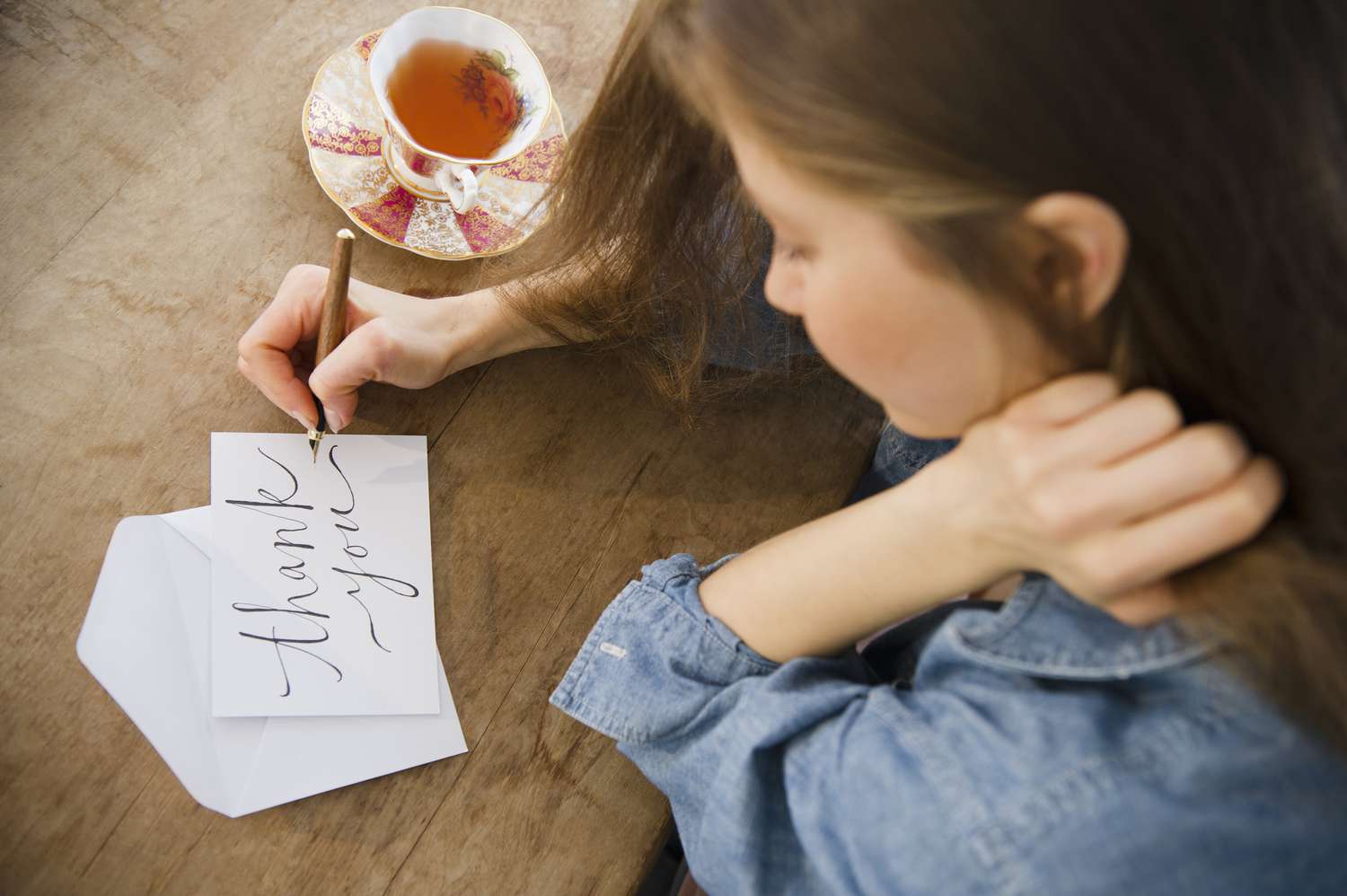
Photo credit: https://www.southernliving.com/culture/what-to-write-in-thank-you-card

November is regularly a month when I talk about gratitude with my parish.  Most of that push comes from the confluence of things that happen in November.  We are almost always closing up our stewardship season in November – a season when we encourage parishioners to let their giving reflect their gratitude toward God.  We are also preparing for the Thanksgiving holiday – which although a secular holiday comes pretty close to being a sacred time of thanksgiving and praise.  And just yesterday we took the day to thank Veterans, honoring the sacrifices their vocations require and the blessings we enjoy because of their work.

This year, to help cultivate my own sense of gratitude, I picked up a calendar one of my favorite non-profits produced call “30 Days of Gratitude.”  Though some of the “activities” are to think about something I am grateful for, like a good memory in my home, most of the “activities” are more hands-on – like expressing gratitude to every member of the household or greeting a neighbor.  What I have loved about the calendar is the shift the calendar has created. 

Often when we talk about gratitude, we feel burdened – like we’re supposed to force ourselves into an emotion.  But what the calendar has done is make gratitude tangible – to act on my gratitude.  What’s beautiful about that shift is that the action is something I can do that has the unintended consequence of feeling gratitude instead of trying to manufacture gratitude out of thin air.  The calendar has made gratitude incarnate – allowed me to inhabit gratitude instead of simply emoting gratitude.  It’s a subtle change, but one that feels much more freeing.

I wonder how you are navigating gratitude during this season.  What are the barriers to you inhabiting gratitude?  What burdens are clouding your gratitude practices, making you more cranky than grateful?  Gratitude is not easy.  If it were, folks wouldn’t be producing gratitude calendars and journals.  I invite you to find the tool, the person, or the community who can help make your gratitude incarnate.

Sermon – Luke 2.1-20, CE, YB, December 24, 2023

03 Wednesday Jan 2024

Posted by jandrewsweckerly in Sermons

≈ Leave a comment

Tags

Bethlehem, chaos, Christmas, Christmas Eve, devastation, God, good, holy, Holy Land, incarnate, Jesus, Mary, messy, political, Sermon, silent

Sometimes on Christmas Eve, we hear a bunch of strange words.  And instead of paying too much attention to them, our minds simply get cued that Christmas has begun.  But those funny words [that Chloe read so beautifully] – of Emperors, registrations, censuses, some guy named Quirinius, a bunch of town names, something about the line of David, and of a pregnant woman who isn’t quite yet married – all those words matter.  They matter because they set the stage for the birth of the Christ Child.  We often think of that birth as this simplified, sacred moment, where everything gets really still.  We’ll even sing Silent Night tonight.  But nothing about that night was remotely silent.  Joseph and a very pregnant Mary have journeyed over 90 miles[i] by donkey and foot.  The Emperor has created political chaos by forcing people from their residences to their ancestral homes – all likely in an effort to extort more money from strained peoples.  Into that upheaval and manipulation, we find the Bread of Life being born in the town, Bethlehem, whose name means House of Bread, in a bed that was literally used to feed. 

This year, I am especially grateful for the reminder that Jesus was born into the chaos of political manipulation, suffering, and tension.  Over the last many weeks, we have all been watching as the Holy Land has yet again fallen into chaos – as leaders fight over land, disregard human dignity, and desecrate all that is holy.  The images have been horrific:  from children standing in long lines with makeshift bowls hoping for enough soup to stave off starvation for themselves and maybe a little for their parents; to hospitals and other places that should be safe zones being decimated; to the Lutheran Church in Bethlehem whose creche this year placed the baby Jesus in a pile of rubble.[ii]  And although we associate Christmas with shiny lights, joyous songs, and abundant food and blessings, the reality of that first Christmas was much more similar to Christmas in the Holy Land this year.

Just this week, I read that Christmas in Bethlehem is cancelled – the very place that welcomed Jesus into the manger has once again had to close its doors to the Holy Family.  As Sophia Lee reports, “Typically, Bethlehem—a Palestinian city of about 30,000 people in the Israeli-occupied West Bank—is jammed with more than 3 million visitors coming from all over the world to celebrate the birth of the Messiah.  Marching bands and carol singers and dancers and fireworks would fill the city with loud cheer and festive energy.  Thousands would pack the Church of the Nativity, golden lights would twinkle across Star Street, and a giant tree with a ruby star would illuminate Manger Square.  Instead, the streets are dark and hushed.”  Christian leaders in Bethlehem report, “It will be a silent night this Christmas—but it’ll still be a holy night… Stripping Christmas of all its extraneous decorations and Western traditions,” they say, “will help them focus on the true meaning of Christmas.”  One pastor explained, “…if you look at the real story of Christmas, it was a story of pure hardship.  But God didn’t leave Mary and Joseph.  And they didn’t leave God.”[iii]

For weeks, I have been feeling like we would have to forego everything good and holy about Christmas – that celebrating this Christmas just did not feel appropriate or respectful of the devastation in the very land we are celebrating.  But the clergy of the Holy Land are paving the way to our Christmas celebrations this year.  Truth be told, Christmas was never about shiny lights, boisterous parties, and lots of presents.  Christmas was and always has been about the miracle of the incarnation – God taking on human form in order to bring us redemption and salvation.  And when God does something, God never does that something half-way.  If God was going to become human, God was going to become incarnate in super fleshy ways – not in shiny, idealized human ways, but in raw, earthy, messy ways.  Jesus came among us – not to the polished versions of ourselves we present to the outside world, but to the real, gritty versions of ourselves who actually need an incarnate God.  And I cannot think of better news than that.  This Christmas, in the midst of censuses, registrations, and funnily named places; in the midst of bombings, bloodshed, and loss; in the midst of anxiety, loneliness, and dissatisfaction, Jesus comes among us.  Jesus does not leave Mary and Joseph.  Jesus does not leave Palestinian or Jew.  Jesus does not leave you or me.  And that is good news for a merry Christmas.  Amen.     


[i] Timothy L. Adkins-Jones, “Commentary on Luke 2:1-14 [15-20],” December 24, 2023, as found at https://www.workingpreacher.org/commentaries/revised-common-lectionary/christmas-eve-nativity-of-our-lord/commentary-on-luke-21-14-15-20-24 on December 20, 2023.

[ii] As found at https://www.facebook.com/christmaslutheranchurch on December 21, 2023.

[iii] Sophia Lee, “Bethlehem Cancels Christmas, But Local Pastors Still Expect a Holy Night,” Christianity Today, December 20, 2023, as found at https://www.christianitytoday.com/news/2023/december/bethlehem-cancel-christmas-christian-pastors-church-nativit.html on December 21, 2023.

Sermon – John 4.5-42, L3, YA, March 15, 2020

19 Thursday Mar 2020

Posted by jandrewsweckerly in Sermons, Uncategorized

≈ Leave a comment

Tags

anxiety, Caronavirus, flesh, God, human, incarnate, incarnation, intimate, Jesus, Messiah, relationship, Samaritan, Sermon, vulnerable, well, woman

Today’s gospel lesson is one of those lessons that can be so full of intrigue that we miss what is happening in the text.  Most of us have heard this lesson hundreds of times, and have probably lingered on the part of the conversation where Jesus calls out the woman for living with someone who is not her husband, after already having had five husbands.  The conversation sounds straight out of Jerry Springer or Dr. Phil, where in the next scene we expect the other husbands to arrive, and a fight to break loose.

The problem with that kind of reading is we have the tone all wrong.  By narrowing in on what sounds like a “gotcha!” statement from Jesus right in the middle of about 40 verses, we forget all of the words and actions surrounding this event in the middle.  We have clues all along in the reading:  Jesus going through Samaria (when most Jews avoid Samaria); a woman appearing at a well at noon (when most of the woman have come and gone); Jesus (a Jew) talking to a Samaritan woman in broad daylight (a triple no-no); disciples appearing and engaging in conversation that sounds like The Three Stooges; talk of prophets, messiahs, disciples, and evangelism.

When we step back and take the broad view of this lesson, we are able to not be distracted by the sweep of the narrative, the scandalous and the absurd details, and the confusing stream of thought.  When seen broadly, we find a story that illuminates what having an incarnate God really looks like.  Too often, when we talk of the incarnation, we think of the baby Jesus, or the bodily, gruesome crucifixion.  But we sometimes forget the everydayness of the incarnation:  the fact that Jesus is thirsty and needs something from another, namely this Samaritan woman; the fact that Jesus initiates an intimate relationship, where two people can talk about the pain, suffering, and societal rejection of a widow and/or divorcee, who is simply trying to get by in a community that ostracizes her, even from drawing water from the well in the cool of morning; the fact that Jesus understands barrenness and empowers her to instead birth new believers.[i]  As Karoline Lewis says, says, “To take the incarnation seriously, to give it the fullest extent and expression, demands that no aspect of what it means to be human be overlooked.  To do so would truncate the principal theological claim of [John’s] Gospel.  At stake for the fourth evangelist is that Jesus is truly God in the flesh and every aspect of what humanity entails God now knows.”[ii]

I find this reading immensely meaningful today, because we are living in a moment when being flesh and bone is particularly precarious and unnerving.  A pandemic has gone all over the world and landed in our schools, our churches, our gathering places, and our homes.  Our lives have been upended by the threat of the Coronavirus, knowing the vulnerability of some in our community, and understanding suddenly how intricately intwined our lives are, even at a time when we have opined about how socially distanced we are.  This is a time when we feel very fleshy and vulnerable and here is Jesus talking to a vulnerable woman about his own fleshiness.

I don’t know about you, but I find this strange, circuitous conversation very comforting today.  In a time of anxiety, fear, and upheaval, Jesus is right there, in the midst of everyday messiness, and saying, “I feel you.  I understand.  I, your God, am incarnate, and I see and know you.”  And in response, the woman who is seen, known, and heard in turn goes to her community and becomes Jesus for others.  As Lewis says, “The woman at the well is not only a witness.  She is Jesus, the ‘I AM’ in the world, for her people.”[iii]

This is our invitation today too.  In the midst of upheaval, of disorientation, of anxiety, we are invited to be fully enfleshed Jesuses for others – to see their pain, their suffering, their uncertainty, and offer solidarity, comfort, and encouragement.  Even in a time of physical separation, we are invited into intimate relationship with one another, into relationships that honor the holy in one another, and help us all move forward.  This is what the Messiah does for us.  This is what we can do for one another.  Amen.

[i] Karoline M. Lewis, John:  Fortress Biblical Preaching Commentaries (Minneapolis: Fortress Press, 2014), 64.

[ii] Lewis, 55.

[iii] Lewis, 65.

Sermon – Luke 2.1-14, CE, YA, December 24, 2019

08 Wednesday Jan 2020

Posted by jandrewsweckerly in Sermons, Uncategorized

≈ Leave a comment

Tags

Christmas, Christmas Eve, comfort, cozy, familiar, God, identity, incarnate, Jesus, love, Sermon, sharing, story

This December, my elder daughter and I are slowly finishing the last book in the Harry Potter series.  The process has taken us several years, since we usually only finish a few pages each night.  But each time we pick the book up, I can never tell who is more excited – her or me.  You see, I have read the series at least three times – once during a summer interning at a hospital, when I needed a brain break from the emotional labor, and twice while spending lots of time nursing, when I needed a brain break from a different kind of labor.  But reading the books with my daughter has been different.  Although I know what will happen, there have been parts of the seven books I forgot entirely.  As I have watched through her eyes, I had forgotten the range of emotions the books evoke, the anticipation the author builds, and the slew of questions that take ages to answer.  In rereading them with her, I have also seen bigger truths – some allegories and religious parallels that only sink in after multiple readings.  The whole experience has been so fun, I cannot wait to start all over again with our younger daughter!

I have been thinking about how our favorite books are often like that.  Though we have endless options of books to read, sometimes we will pick an old favorite to read again.  I think many of us will reread favorite books because we like the familiarity, like cozying up with old friend.  Some of us enjoy rereading books because we enjoy catching new tidbits we never caught before.  While others of us enjoy rereading books because there is some comfort in knowing how the story ends – of being certain about what will happen.  The same can be true for small children too.  I cannot tell you how many times I read Goodnight Moon over the years.  But I never minded because I totally understood the comfort my kids found in the familiarity of a known book; the comfort they sought in Goodnight Moon was the same comfort I sought in familiar books too.

In a lot of ways, that is what we are doing tonight.  We are telling a story we have heard over and over again – although tonight’s New Revised Standard Version may not sound as familiar as the old King James Version; even Charlie Brown’s friends knew that version.  Every year, every single Christmas Eve, we make our way to church – sometimes having fought over what to wear, when, where, and what to eat, or whether or not to open any gifts beforehand.  But we make our way here tonight because we know the ultimate reward is sitting here, in the quiet of night, listening to the story we hear every year of a powerful emperor imposing a tax; of a very pregnant Mary making her way to Bethlehem with her betrothed, Joseph; of Mary giving birth and putting the Christ Child in a manger because there is no room in the inn; of shepherds minding their business in the dark of night; of angels appearing announcing glorious news; and of a chorus of angels singing magnificent truth.  And our reactions are much like they are with any favorite book.  We find comfort in the story’s familiarity, we look for and sometimes hear tiny details we forgot or had not thought about before, and we find comfort in knowing how the story will end.  Glory to God in the highest, indeed!

But the main reason we tell this story year after year after year is not simply for the familiarity and comfort – though the Church wants us to experience that goodness too.  The main reason we tell this familiar story again tonight is because we need to remember who we are and who God is.  You see, what happened on that beautiful, special night, is God came in human form among us – came as Jesus Christ incarnate – because God loves us so very much.  God saw we were struggling to be good, to live as loving people made in God’s image, and God knew we needed Jesus to help us.  We learn in this story that God is awesome, God loves us and is faithful to God’s covenant even when we are not, and God does unimaginably incredible things for us.  This beloved, almost quaint, story is full of good news about who God is.

But this beloved, familiar story also tells us something about who we are.  This story tells us that whatever baggage we came in here with tonight, whatever we are struggling with on a weekly basis, whatever self-doubts we might have, we learn in this story that we are worthy of God’s love.  We learn in this story that no matter who we are – an esteemed king, feared among the people and wielding great power; a couple with nowhere to go, feeling unsure about the future; everyday workers going about their daily jobs, just trying to pay the bills; or a vulnerable baby, unaware of the dangers all around – no matter who we are, we are loved by God, and given the opportunity to have a relationship with God.  We also learn in this story a bit harder reality.  We learn in this story that being loved by God means sharing God’s love – of going to visit people who need visiting and need to know the love of God in their isolation and loneliness, of caring for people who have no place to go no matter what we judgments we make about how they got into their current situation, of taking on tasks that seem insurmountable but will help more people experience the love of God.  We find out a lot about ourselves tonight in this familiar story too.

I know each of us who has gathered here tonight came for a different reason.  Maybe you just like the music, or maybe someone made you come, or maybe you came out of habit, or maybe you came because you wanted some sense of comfort and familiarity.  Regardless of how you got here, the Church tonight tells us a story full of meaning.  We certainly tell this story tonight because this is safe place we can cozy up to the story and feel comforted in familiarity.  We tell this story because we need reminding who God is and who we are.  But we especially tell this story tonight because God wants us to go from this place and do something with all the love and comfort we receive tonight.  God wants us to share God’s love with those who need love the most – even to the people we sometimes do not like (actually, especially to the people we do not like).  God wants us tonight to remember who we are, and who God is, and then go out into the world, rejoicing, sharing the love of Christ, retelling the Christ Child’s story, and bringing Jesus’ story to life for others.  Who knows?  Maybe this will become your new favorite story you want to read over and over again!  Amen.

Sermon – Luke 2.8-20, CD, YC, December 25, 2018

02 Wednesday Jan 2019

Posted by jandrewsweckerly in Sermons, Uncategorized

≈ Leave a comment

Tags

birth, chaos, Christmas, forgiveness, God, holy, incarnate, intimate, Jesus, marriage, Mary, normal, quiet, Sermon, shepherds, vows, wisdom

On Christmas Eve and Christmas Day, we split up the gospel of Luke.  On Christmas Eve we hear about the registration, and how all the families have to travel to be taxed.  That part of the story is when we learn about there being no room in the inn, and Mary giving birth, wrapping her child in bands of cloth, lying him in a manger.  But today, we get the part of the story I love.  I know the multitude of the heavenly host has inspired many a Christmas carol, but I like the very last part of the story:  the part where the shepherds have gathered with Mary, Joseph, and baby Jesus, where others gather with them to marvel at the shepherd’s story and Mary ponders everything in her heart.

I like this last part, because this last part is the most normal, intimate moment we get in the birth narrative of Jesus.  Everything else is so chaotic – people migrating, hustling for space to stay, likely arguing about who gets to stay where.  Then there is the birth of Jesus itself, not only without modern medicine, but in the roughest of conditions.  Birthing children is hard enough as is – I cannot imagine the messy, loud scene of childbirth under such conditions.  And finally, the shock of not only an angel of the Lord, but also the chorus of the heavenly host in the middle of the night where there is usually no sound is mind-blowing.

Instead, I prefer the quiet scene at the end.  That is a kind of scene I can imagine.  Of outcasts thrown together, sharing stories, bonding over the craziness of the night.  Of an exhausted mother and father and shepherds lounging around, wondering what all this means.  Of the moments of silence when everyone’s eyes settle on baby Jesus who has finally drifted off to sleep, watching his chest rise and fall, wondering what else might rise and fall because of this tiny baby.  I imagine the bonding that can only happen at three in the morning, that can only happen through a people filled with hope in a hopeless world, that can only happen when God sweeps through your life in a bold way.

That’s why I love today’s service so much.  Last night was the night of holy chaos – of kids with pent up excitement for Christmas day, of dinners being prepared, trumpets leading us in song, and the loud chatter of old friends and family greeting one another.  But today, we enter the church in quiet, with no music to distract us, perhaps having left behind piles of wrapping paper or needy family members, having turned off our radios so that we can tell the old, old story.  On Christmas Day, I like to imagine we recreate that holy, intimate night, where old friends and strangers gather around the mystery of the incarnation, wondering what Jesus has in store for us today.  All we need is a little straw and sleep deprivation, and we can almost imagine ourselves there.

That is why when Margaret and Jim asked if we could renew their wedding vows on Christmas Day, wanting something quiet and sacred to mark their sixtieth wedding anniversary, I said an emphatic, “Yes!”  Marriage is a sacred institution too – where we welcome friend and stranger alike, where we sometimes meet people who change our lives but we never see again, where we share intimate time, and where we ponder what God is doing in our lives.  So, gathering again, sixty years later, we too gather like a band of misfits, sharing stories of marriage, of Jesus, and of community.  We let down our hair and marvel at the holy mystery of God, holding holy moments of silence like gifts, and giving thanks for the God who makes sixty years possible.

The other reason I love the idea of renewing wedding vows on a day like today is because today is a day of hope.  When God incarnate comes into the world, we are given the gift of hope – the promise that life will change dramatically.  As we ponder the baby Jesus with those in that quiet room, we also slowly fill with hope, knowing that God is doing great things.  The same is true of marriage.  When I marry two people, I never know how the marriage will go.  I am hopeful that the two will get to do things like celebrate sixtieth wedding anniversaries, but honestly, hardship and separation are equally likely.  But we marry people anyway because we have hope – hope that God is doing a new thing between two people, and will make those people better through God.  As Margaret and Jim recommit themselves to one another today, we again claim hope that God will do amazing things through their marriage, bringing blessing to all of us, not just to the two of them.

Our prayers for Margaret and Jim today are not just for them.  They are for all of us.  We need wisdom and devotion in the ordering of our common lives as much as they do.  We need to recognize and acknowledge our fault when we hurt others, and seek forgiveness of others just as they do.  We need to make our lives a sign of Christ’s love to this sinful and broken world, and reach out in love and concern for others as much as they do.  All of that ordering of our lives is made possible by what happens today.  When God becomes incarnate in Christ, everything changes.  In that intimate space where strangers, exhausted, afraid, and full of hope, came together in the mystery of a miracle, life is changed.  Our gathering here today, to honor the incarnation, to celebrate the blessing of long marriage, and to create a sacred moment of intimate community, is the way we take the first step in living life differently – living a life of sacred incarnation.  Thanks be to the God who showed us the way in the incarnation of God’s only, begotten Son.  Amen.

Sermon – Luke 2.1-14, CE, YC, December 24, 2018

02 Wednesday Jan 2019

Posted by jandrewsweckerly in Sermons, Uncategorized

≈ Leave a comment

Tags

action, birth, Christmas, Christmas Eve, comfort, God, Grinch, imitate, incarnate, Jesus, kindness, lesson, movie, Sermon, story, teach

One of the things I love about Christmas are Christmas movies.  I know we all have our favorites, and some are related to our generation.  My two favorites are The Grinch Who Stole Christmas (the original, not the Jim Carey one) and Home Alone.  What is fun about Christmas movies is we watch them over and over again because we like something about their message.  The movies teach us something.

This year, I introduced my younger daughter to The Grinch Who Stole Christmas.  She was fascinated by the movie, asking all sorts of questions – why they play bad music when the Grinch is around, why he stole all their presents, and why he hits his dog.  But the question she asks most frequently has been about the Grinch’s heart.  For those of you not familiar with the story, the Grinch tries to ruin Christmas for Whoville by stealing all their presents, decorations, and feast items.  But when Whoville does not cry and wail about all that is lost, and instead returns to the town center to sing as a community, without their “stuff,” the Grinch’s heart is strangely warmed, growing three times the size the heart was.  My daughter keeps asking me about the Grinch’s growing heart, and her questions have allowed us to talk about what Christmas is really about, and why someone’s heart might grow.

Every year we watch our favorite Christmas movies and cartoons because we enjoy revisiting the lessons the movies teach us.  But what is interesting about those movies is, over time, the lesson the movie teaches us takes on new meaning.  We meet new Grinches over our lifetime – or sometimes we become them!  We get to know presumably creepy or scary neighbors who we eventually learn are beautiful human beings.  We experience Christmases where everything goes wrong, but we find joy in the unexpected.  We know part of what the story is teaching us, but as we age and mature, the movies speak to us in new and fresh ways.

We tell the story of Jesus’ birth every single Christmas for a similar reason.  We tell the same story every year because God did this amazing thing.  God is all powerful, and conceivably could do anything God wants – and has:  from kicking Adam and Eve out of the garden, to flooding the earth, to cursing generations for one person’s sins.   God can rule and govern and do anything God wants, and yet the one thing God does is become human.  God becoming incarnate is such an amazing thing that when we say the Creed, many people bow or genuflect during the part of the Creed that talks about God becoming incarnate from the Virgin Mary, being made man.  Becoming human is God’s ultimate expression of God’s lovingkindness, that hesed, we have been talking a lot about lately.  Becoming incarnate is the way God shows God’s love for us.

I am a part of group that is creating a kindness initiative in 2019 in the Greater Williamsburg area.  We will be encouraging the faith community, business community, local schools, and nonprofits to engage in acts of kindness, with the ultimate goal of making Greater Williamsburg the next community of kindness.  I like the initiative because I know doing acts of kindness helps me get a small glimpse into God’s lovingkindness; doing acts of kindness helps me honor God, and embody God to others.  When we talk about shining Christ’s light in the world, or being Jesus to others, we are often talking about doing acts of kindness.  The ultimate form of flattery or honoring someone else is when we do acts of kindness.  When we, as persons of faith, do acts of kindness, we honor God by imitating God’s lovingkindness.  Any of you who has a sibling knows that siblings often copy what we do.  How many times have you heard the complaint, “He’s copying me!” or “She’s keeps stealing my clothes.”?  The reasons our siblings do this, besides to annoy us, is because they want to be like us – they want to honor us by imitating us – just like we imitate God.  Of course, they would never admit that reality to your face, but the truth is, imitation is the best form of flattery.

Tonight, we tell the story of Mary and Joseph, of innkeepers and registrations, of shepherds and angels because we love the story.  The story makes us feel safe, loved, and reassured.  And sometimes we really need opportunities to feel good about life, ourselves, and our God.  But we also tell the story because the story is formative – the story shapes who we are and how we behave.  Over the years, different parts of the story touch us, and as we grow and change, the lesson grows and changes.  So we listen to the story to remember who we have been and who we are.  But we also listen to this familiar story to remind us of what we will do tomorrow.  This story invites us to share God’s lovingkindness like the shepherds.  This story invites us to ponder God’s amazing love like Mary.  This story invites us to sing loudly like the angels, shouting our love for God and the world like an army of kindness.  I cannot wait to learn what hearing the story this year leads you to do in the days, weeks, and months to come!  May this favored story not just be a story of comfort, but also a story of action.  Amen.

Sermon – Luke 2.8-20, CD, YB, December 25, 2017

10 Wednesday Jan 2018

Posted by jandrewsweckerly in Sermons, Uncategorized

≈ Leave a comment

Tags

birth, Christ, Christmas, contemplate, God, incarnate, Mary, miracle, ponder, quiet, sacred, Sermon, silence, wonder

Eight years ago, while serving as a curate in my first position out of seminary, I experienced Christmas Day worship for the first time.  Though I had often gone to Christmas Eve services before ordination, I suppose it never occurred to me to go to church on Christmas Day.  I was probably still in my pajamas or on the road to see family.  So imagine my surprise when the Rector told me there would be no music at the Christmas Day service.  I was shocked!  After all this time, patiently waiting through Advent music, on the actual day of Christmas, we were not going to hear any music?!?  I threw what some might consider a bit of a temper tantrum, and was told I should talk to the people who normally go to Christmas Day services.

Of course, my Rector knew what she was talking about.  As I talked to Christmas Day attendees, I discovered one universal truth:  they loved the spoken Christmas Day service.  First, they all went to a Christmas Eve service, so they got their carols fix the night before.  Second, they loved the quiet respite in an otherwise chaotic day.  A quiet service on Christmas Day was a godsend.  And third, they loved the Christmas Day service because it was a small, intimate service of what they called the “faithful;” much like what happens when you throw a party at your home and everyone but your close friends go home at the end of the night.  You kick off your shoes, find a warm beverage, and enter into quiet, meaningful conversation with your friends.  Music, in those parishioners’ minds, would have hindered the intimate, contemplative, peaceful vibe they loved.

In a lot of ways, having a quiet Christmas Day service is like taking a cue from Mary in our gospel lesson today.  After the chaos of travel and birthing a child in less than ideal accommodations, after shepherds have seen blinding lights and hear the triumphant chorus of the multitude of heavenly host, when everything quietens down, all that is left is a mother, father, and child, and some shepherds who seem like old friends.  I have always imagined the shepherds bursting through the doors, talking on top of each other to tell the story of the angels.  But I wonder if perhaps the scene was a little different.  Knowing full well the baby has arrived in less than ideal circumstances, and that babies are notorious for crying when disturbed, maybe the shepherds were whispering their intimate tale to the holy family.  Maybe they were those gathered at the end of the party, sharing in quiet, meaningful conversation.

I wonder if this might be true because we get one short line about Mary at the end of our text today, “But Mary treasured all these words and pondered them in her heart.”  Exhausted, fatigued, weary Mary takes the enormity of what has happened:  to her, when Gabriel came to her; with Elizabeth, who further revealed the angel’s proclamation; with Joseph, as he shared his own angelic story; and now with the shepherds who tell of yet another angelic encounter.  Mary takes all the bits of information – all the encounters she is privy to – and ponders them.  She takes a personal moment to sit quietly in the enormity of it all to ponder.  In some ways, she is a mother like anyone else – one who has carried a child in her womb with all the normal doubts and concerns that come from every ache, pain, and discomfort.  But in other ways, she is nothing like other mothers.  She is an instrument – pregnant without her own doing, carrying a child who will be bigger than anything before, and mothering someone who will never fully belong to her, but to the greater world he will soon save.

The funny thing is, pondering is an activity that would hardly ever make an appearance on our Christmas to-do lists.  We have been scurrying about this past month:  decorating homes, sending cards, attending parties, planning liturgies, hosting guests or finding hostess gifts.  We have either been caught up in the joy of the season, reveling in the 24-7 Christmas radio stations, or maybe we have been lost in our grief of all that is not this Christmas season.  Regardless of whether you are off to a Christmas celebration with twenty or more people, or having a quiet day alone or with one other, there is likely to be little true quiet:  our minds are way too noisy for quiet today.

And yet, quiet pondering is exactly what Mary does today.  She takes all the noise and chaos – both outward and inward – and she pauses for pondering.  She hits the pause button on the movie called life, takes a deep breath, and drinks in the miracle of Christ’s birth.  She stops talking, turns off her internal conversation, and listens.  She makes room for God in that rustic, foreign room, with people who are not her own, letting her body and soul contemplate the enormity of the nativity:  God incarnate; Messiah arrived; Eternal life made possible.  The wonder of that moment is enough to silence Mary, giving her much to ponder.

That is our invitation today too.  I know today is the least likely day for a moment of wonder, pondering, and contemplation.  But you are here.  You took a moment away from whatever today will be to sit at the manger with Mary and ponder.  Drink in the miracle of Christ’s birth, the gift of God incarnate.  Stand before our God in holy quiet and reverence as we pray and eat a different meal.  Remember “how God became one of us, remember how Christ still joins us at the Table, remember how we are fed by him in order that we might live as his body in the world.”[i]  These kinds of sacred moments are so rare in life.  Receive the gift of pondering at the manger with Mary today, and take that quiet out into the world with you, giving your heart the gift of true celebration and joy.  Amen.

[i] Kimberly Bracken Long, “Homiletical Perspective,” Feasting on the Word, Yr. B, Vol. 1 (Louisville:  Westminster John Knox Press, 2008), 121.

Holy mess…

20 Wednesday Mar 2013

Posted by jandrewsweckerly in Uncategorized

≈ 2 Comments

Tags

Holy Week, incarnate, messy, Prayer Book

Last week I was officiating a committal service in our cemetery.  It had rained the day before, so not only was the ground very soggy, but also the dirt that I use to throw on the casket during the service was a bit wet too – despite the fact that we tried to keep it covered overnight.  What I did not realize was just how wet the dirt would be.  After I tossed the dirt, my hands we covered with crumbling mud.  Despite my efforts to rub the dirt off my hands, my Prayer Book pages got dirty and even the back of my Prayer Book had smudges on it.

As someone who loves books and likes to show my respect for books by caring for them gently, normally something like this would freak me out.  But my Prayer Book lives a very different life than my other books.  My Prayer Book has been sullied with dirt and sand from funerals and interments.  My Prayer Book has gotten damp from baptisms and the use of an aspergillum.  The pages in my Prayer Book that have the ordination liturgy have oil smears because the bishop anointed my hands so that I may anoint others.  No one could ever argue that my Prayer Book is pristine.

But that is exactly why I love my Prayer Book.  My sullied Prayer Book reminds me of the incarnate life we all live together.  Each dirt smear reminds me of a beloved parishioner, or a family who was completely unknown to me until they came to me for liturgical help.  Each hint of a drop of water reminds me of the babies and young adults I have baptized into the faith.  Those touches of oil remind me of the many times I have said healing prayers with others.  My Prayer Book caries in it the incarnate memories from this blessed vocation I am privileged to live.

As I think about next week – Holy Week in the Church – I am looking forward to more of those incarnate moments with others.  Palms that will be shoved into the back of my Prayer Book, Chrism that I will receive from the Diocese that may drip on those pages, water from the washing of feet that may splash into the book, and wax from the Vigil candles that may drip on a page of my beloved Prayer Book.  The liturgies of Holy Week not only encourage us to remember Jesus’ journey toward the cross and resurrection, but also the liturgies involve our senses, our bodies, and our messy incarnate ways.  I am looking forward to messy memories next week with St. Margaret’s!

Recent Posts

  • On the Myth and Magic of Advent…
  • On Risking Failure and Facing Fear…
  • Sermon – Luke 23.33-43, P29, YC, November 23, 2025
  • On Inhabiting Gratitude…
  • Sermon – Luke 20.27-38, P27, YC, November 9, 2025

Archives

  • December 2025
  • November 2025
  • October 2025
  • September 2025
  • August 2025
  • July 2025
  • June 2025
  • March 2025
  • February 2025
  • December 2024
  • November 2024
  • October 2024
  • September 2024
  • August 2024
  • July 2024
  • June 2024
  • May 2024
  • March 2024
  • February 2024
  • January 2024
  • December 2023
  • November 2023
  • October 2023
  • September 2023
  • August 2023
  • July 2023
  • June 2023
  • May 2023
  • March 2023
  • February 2023
  • January 2023
  • December 2022
  • November 2022
  • October 2022
  • June 2022
  • May 2022
  • January 2022
  • December 2021
  • November 2021
  • October 2021
  • September 2021
  • August 2021
  • June 2021
  • May 2021
  • April 2021
  • March 2021
  • February 2021
  • January 2021
  • December 2020
  • November 2020
  • October 2020
  • September 2020
  • August 2020
  • July 2020
  • June 2020
  • May 2020
  • April 2020
  • March 2020
  • February 2020
  • January 2020
  • December 2019
  • November 2019
  • October 2019
  • September 2019
  • August 2019
  • July 2019
  • June 2019
  • May 2019
  • April 2019
  • March 2019
  • February 2019
  • January 2019
  • December 2018
  • November 2018
  • October 2018
  • September 2018
  • August 2018
  • July 2018
  • June 2018
  • May 2018
  • April 2018
  • March 2018
  • February 2018
  • January 2018
  • December 2017
  • November 2017
  • October 2017
  • September 2017
  • August 2017
  • July 2017
  • June 2017
  • May 2017
  • April 2017
  • March 2017
  • February 2017
  • January 2017
  • December 2016
  • November 2016
  • October 2016
  • September 2016
  • August 2016
  • July 2016
  • June 2016
  • May 2016
  • April 2016
  • March 2016
  • February 2016
  • January 2016
  • December 2015
  • November 2015
  • October 2015
  • September 2015
  • August 2015
  • July 2015
  • June 2015
  • May 2015
  • April 2015
  • March 2015
  • February 2015
  • January 2015
  • December 2014
  • November 2014
  • October 2014
  • September 2014
  • August 2014
  • July 2014
  • June 2014
  • April 2014
  • March 2014
  • February 2014
  • January 2014
  • December 2013
  • November 2013
  • October 2013
  • September 2013
  • August 2013
  • July 2013
  • June 2013
  • May 2013
  • April 2013
  • March 2013
  • February 2013
  • January 2013
  • December 2012
  • November 2012
  • October 2012
  • September 2012

Categories

  • reflection
  • Sermons
  • Uncategorized

Meta

  • Create account
  • Log in
  • Entries feed
  • Comments feed
  • WordPress.com

Blog at WordPress.com.

  • Subscribe Subscribed
    • Seeking and Serving
    • Join 394 other subscribers
    • Already have a WordPress.com account? Log in now.
    • Seeking and Serving
    • Subscribe Subscribed
    • Sign up
    • Log in
    • Report this content
    • View site in Reader
    • Manage subscriptions
    • Collapse this bar
 

Loading Comments...