• About

Seeking and Serving

~ seek and serve Christ in all persons

Seeking and Serving

Monthly Archives: October 2024

On Measuring What Matters…

09 Wednesday Oct 2024

Posted by jandrewsweckerly in reflection

≈ Leave a comment

Tags

blessing, celebration, complain, discipline, God, gratitude, Jesus, measuring, negative, positive, practice, Thanksgiving

Photo credit: https://texasleansixsigma.com/measure-what-matters/

This week we’ve been working intentionally on shifting my daughter’s propensity to complain.  She can have the best of days or afternoons, but at some point in the retelling of what happened, she’ll inevitably find something to complain about – what someone said, what someone did, or how she perceived something.  This week I threatened to start a daily tally of everything that came out of her mouth, putting her words in two columns:  positive things and negative things.  I told her we would see which column won at the end of the day.  I was honestly making an empty threat (who has time to monitor every word that comes out of a kid’s mouth?!?), but something about my threat registered with her.  The next morning, she was all positives – thanking me for mundane things, celebrating small victories, noticing the good.  When I picked her up from school that day, she proclaimed, “Actually, today’s been a really good day!”  We celebrated what a wonderful experience both she and I had had that day, noticing what her intentionality had done.

I’ve been thinking about our experiment and have been recalling all the times I have taken on a discipline of gratitude – all the times I have fallen into the very same patterns as my child.  There have been times when I have used my prayer beads, only praying prayers of thanksgiving instead of petition.  There have been times when I have used my journal to find at least three things at the end of the day for which I can give thanks (some days that was harder than others!).  And there have been times when I have read books or heard testimonies about the powerful transformative practice of gratitude.

These last weeks, gratitude has been challenging to come by.  I have been watching helplessly as countless homes, businesses, churches, roads, and whole towns have been washed away by hurricanes – only to be bracing for the impact of another one today.  I have been praying with friends and community members recovering from freakish events:  being hit by car, road rage gun violence, and random violent targeting.  I have listened to the anxieties of parishioners, completely consumed by worry about the presidential election less than a month away. 

This Sunday, our church will kick of stewardship season, as we ponder what really matters in our lives.  As we have already been reflecting this year, we are a community blessed with abundance.  We could certainly go down the road of scarcity, detailing all the things we are longing for or missing.  But instead, we are entering an intentional time of noticing:  noticing the abundance around us, noticing the blessings that embrace us, noticing the goodness and love of God in our lives.  I am looking forward to the gift of a season of gratitude – of celebrating the good and honoring the abundance of our Lord and Savior, Jesus Christ.  I am hopeful that each day in this stewardship season, we can begin to turn our hearts from pain, and find the way, even if in something miniscule, to be able to say, “Actually, today’s been a really good day!”  I invite you to join us in the celebration of what matters!

On Looking for Helpers…

02 Wednesday Oct 2024

Posted by jandrewsweckerly in reflection

≈ Leave a comment

Tags

despair, electric company trucks, God, help, helpers, Holy Spirit, hope, hurricane, Hurricane Helene, natural disaster, relief

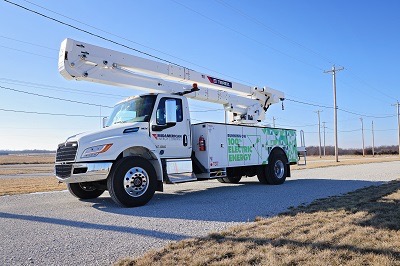
Photo credit: https://www.power-grid.com/der-grid-edge/electric-vehicles/midamerican-rolls-out-three-all-electric-utility-bucket-trucks/#gref

Last week I was on retreat in western North Carolina.  We were east enough that Hurricane Helene mostly dealt us wind and rain, and we only lost power and water for about seven hours.  But as we prepared to return home, the news was trickling in that the impact further west was bad – inconceivably devastating.  As I headed east making my way home, signs indicated the highway I was traveling was completely closed in the other direction and that all travel to western North Carolina was forbidden.

On the sobering home drive, as I contemplated all who were suffering and how mostly unscathed I was, a familiar sight appeared:  a line of electric company trucks driving westward.  Having grown up mostly in NC and having been on Long Island during Superstorm Sandy, I felt that familiar overwhelming sense of relief when you see those trucks after a storm.  Help was on the way.  Trucks with their workers from all over the place were dropping everything in their lives to offer up the gifts God gave them to help others.  I knew those in western North Carolina would feel a similar palpable relief to see those glorious white trucks, and I offered a prayer of thanksgiving. 

Fred Rogers used to say, “When I was a boy and I would see scary things in the news, my mother would say to me, ‘Look for the helpers.  You will always find people who are helping.’”  No matter how much we bemoan our divisions and the political toxicity in our country, it is the helpers that give me hope.  That line of white trucks was a reminder to me that goodness is all around us, even when hopelessness feels like it may drown us. 

I wonder what signs of hope you might be able to spy this week – what glimmers of light are breaking through the clouds if you open your eyes.  Or perhaps the Holy Spirit is beckoning you to be a helper – to be one of those signs of hopefulness in the ways that only you can.  I cannot wait to hear the stories of how God is showing up and birthing hope.

Sermon – Matthew 11.25-30, St. Francis Feast, YB, September 29, 2024

02 Wednesday Oct 2024

Posted by jandrewsweckerly in Sermons

≈ Leave a comment

Tags

animals, blessing, interconnected, Jesus, poor, Sermon, St. Francis, stigmata, yoke

Today we honor the life and witness of St. Francis of Assisi.  St. Francis is well-known and beloved for myriad reasons.  Primarily, people tend to appreciate two things about him: his commitment to living in solidarity with the poor, which included dramatically stripping his clothing off, begging for food, and supporting the most needy; and, his affinity for the creatures of God, with stories of preaching to birds, negotiating with a violent wolf to make peace with the local town, and generally valuing the beasts of the earth.  But what we rarely talk about is the stigmata of St. Francis – those marks corresponding to the ones left on Jesus’ body by the crucifixion said to have been impressed by divine favor on devoted followers of Christ.

Here’s what we know about St. Francis’ stigmata.  He was praying on the Feast of the Cross, which falls on September 14.  His prayer that day to Jesus was that he might feel in his body and soul the pain that Jesus felt in the Passion.  But he also prayed to feel in equal measure the excessive love that Jesus felt that allowed him to endure pain for us.  We are told that in his intense prayer session, he saw a vision, and when he emerged, he had what looked like piercings in his hands and feet – or, stigmata.[i]  Now I don’t know how you feel about the existence of stigmata on certain saints, but I’ve always thought it was a little, well, weird – and even more heretical, maybe even unbelievable.

So, why, on this Sunday when all we want to do is bless and celebrate animals or remember the poor, do we need to talk about stigmata?  Believe me or not, there is actually a deep correlation with today’s gospel lesson.  Today, Jesus talks about yokes – those tools used to harness two animals for work.  The yoke allows the two not just to double their work, but to rely on one another – if one is tired, the other can push harder; and then the weaker one can later support the stronger one.  Yokes, like Jesus’ work, are easy and make the burden light. 

But beyond the mechanics of a good yoke, the yoke is also a good metaphor for how we see the gospel.  Being yoked to another makes you connected.  And once you are connected, and see how dependent upon one another you are, you begin to see how that connection extends beyond the two of you – that your yoked interconnection is a microcosm of the connectedness of all of God’s creation.  When Francis prayed fervently to both feel Jesus’ deepest physical pain as well as Jesus’ excessive outpouring of love, his resulting stigmata left a physical reminder of the ways in which, even in pain or great love, we are connected to one another.

Perhaps another example may help.  “Ramakrishna was a mystic who lived in India over a hundred years ago.  One day, as he was walking through the marketplace, he saw a servant boy being whipped by his master.  As he watched that boy being whipped, welts appeared on Ramakrishna’s own body.”  We are told that, “This suggests that this man had such a strong feeling for this boy that he could identify with him in the sufferings that he was enduring.”[ii]  Furthermore, “Like Ramakrishna, who was so at one with God that he could walk through the marketplace and become one with God’s creations, especially this poor servant, Francis so identified with the suffering of Jesus that he took on the wounds himself.”[iii]

What we see in Francis’ stigmata and even in the experience of the mystic Ramakrishna is that when we are living faithfully, we begin to see that we are yoked to one another.  We slowly begin to see all of humanity is connected.  And the more we spend time seeing the humanity in others – especially the humanity in those we would rather not – then we start to see that our interconnectedness extends even further – to God’s creation, to God’s creatures, to the cosmos.  If we open our hearts to one, we cannot help to open our hearts to all.  Francis’ love for the poor, Francis’ love for creatures, and even Francis’ stigmata are not disconnected – they are one in the same. 

In Psalm 148, a psalm sometimes read or sung on St. Francis’ feast day, we hear an invitation to all of God’s creation:  Mountains and all hills, fruit trees and all cedars;  Wild beasts and all cattle, creeping things and winged birds; Kings of the earth and all peoples, princes and all rulers of the world; Young men and maidens, old and young together.[iv]  We bless animals today because Francis reminded us how all of God’s creation is worthy of love and is interconnected.  But the invitation for us today is not just to love on cute dogs, cats, hamsters, and horses.  The invitation for us is to start claiming our yoked nature – yoked to those we love, yoked to our political opponents, yoked to those who have different ethics and values than ourselves, yoked to parents who make different parenting decisions, yoked to those with different skin color or sexual orientation or gender identity, yoked to those we see as deserving of God’s grace and those who are not.  Our yoked nature allows us to pray the Prayer of St. Francis from our Prayer Book:  “Lord, make us instruments of your peace. Where there is hatred, let us sow love; where there is injury, pardon; where there is discord, union; where there is doubt, faith; where there is despair, hope; where there is darkness, light; where there is sadness, joy. Grant that we may not so much seek to be consoled as to console; to be understood as to understand; to be loved as to love. For it is in giving that we receive; it is in pardoning that we are pardoned; and it is in dying that we are born to eternal life.”[v]  We can do the work of St. Francis because of the yoke of Jesus.  Thanks be to God.  Amen.


[i] Hilarion Kistner, O.F.M., The Gospels According to Saint Francis (Cincinnati:  Franciscan Media, 2014), 88-91.

[ii] Kistner, 87-88.

[iii] Kistner, 92.

[iv] Psalm 148.9-12.

[v] BCP, 833.

Sermon – Proverbs 31.10-31, P20, YB, September 22, 2024

02 Wednesday Oct 2024

Posted by jandrewsweckerly in Sermons

≈ Leave a comment

Tags

anxiety, capable woman, community, creator, election, God, grace, king, partnership, powerful, president, Sermon, strength, together

As the presidential election approaches in just about six weeks, I have spoken with many of you about a rising sense of anxiety and despair.  One of the things I have noticed about the last three presidential elections is that we have kind of gotten lost – so caught up in big personalities and dramatic events that we have lost sight of one core question in elections:  what do we need in a president to create a just country that reflects the priority of love.

Since I always tell our community that I do not preach politics – just Jesus – I thought I would turn to scripture this week for guidance.  I started with the daily office.  On Wednesday, I came across Psalm 72.  The psalm begins, “Give the king your justice, O God, and your righteousness to a king’s son.  May he judge your people with righteousness, and your poor with justice.  May he defend the cause of the poor of the people, give deliverance to the needy, and crush the oppressor.”  “Yes,” I thought, “This is the president we need.  After all this debate and controversy, this is the kind of president I want.”  Then I kept reading.  The more I read about this noble king, the more the king sounded a lot like Jesus.  Finally, a truth seeped through – this year, as I am considering my choice for President, I have not been looking for an actual person.  I have been looking for a savior; and that is not fair to any human being.  Any person running for president is going to be flawed.  And we already have a Savior – we do not need another one. 

Then I turned to our Old Testament lesson for today: the so-called “capable woman” from Proverbs.  I spent some time with this text when I was writing my thesis in seminary, so I am always drawn to this familiar text.  But the more I read about this woman this time, the more inadequate I felt.  She makes clothes, rises before dawn to feed her family, manages a staff, purchases a field, and plants a vineyard by herself.  She in an entrepreneur, selling her wares for good money.  She cares for the poor, and is a wise teacher.  She does all this and is happy.  As a priest, mother of two, and a wife, I feel woefully inadequate next to the capable woman.  In fact, in Hebrew, the word to describe her is not really “capable” per se.  The word, hayil, is a word that means much more than capable.  Hayil is primarily used in the Old Testament to describe men of great power, valor, and strength.  Hayil is a term for powerful warriors.  In fact, this Proverbs woman and Ruth are the only women in the Old Testament to earn the title normally reserved for men.  The Proverbs woman is not just capable; she is a woman of strength and power.  She is a superwoman. 

The challenge with these two images – the righteous king and the powerful woman – is that neither of these labels feels attainable.  For women, the Proverbs woman of power is especially loaded.  Many of us long to be a woman of hayil.  We want to be a woman who can do everything – work outside the home, manage our finances, care for a home and family, maintain a healthy relationship with God, have power and honor in our lives.  This is the challenge of the modern woman – society is opening doors for us to do everything – to work, to raise a family, to be successful.  But the reality is that we either kill ourselves trying to do everything, or we feel horribly guilty for our many failures.  Unlike celebrities, who seem to manage family, fame, and face with ease, we feel overwhelmed and woefully inadequate.  In fact, as I was pondering preaching this text this week, I stumbled across a quote from one seminary professor.  She writes, “Many of you will conclude this text is too much a minefield and steer clear, with good reason.”[i] 

Of course, today is not just a sermon for the women in our community.  Men often feel the same sense of being overwhelmed by trying to do everything.  Forget the kingly imagery from the Psalm.  There is often pressure for men to be financially stable, and if you have a family, to provide for them.  There is now an expectation that men play a role in the rearing of children and doing housework, being involved in the community, and caring for the upkeep of your home.  As I have read parenting magazines over the years, I have seen story after story of men trying to navigate the modern family’s expectations of playing both traditional and nontraditional male roles.  And for the man and woman running for President, expecting a “just king” or a “capable woman” places incredibly unfair expectations on either candidate.

So, what do we make of this woman of hayil in Proverbs today?  Like the King in Psalm 72, I wonder if the woman in Proverbs is perhaps not a particular human, but an ideal.  All the practices of the woman of strength are practices that we should strive to embody – we are to be industrious, using the talents that God has given us for the good of ourselves and others.  We are to work hard and to care for the poor and needy.  We are to use our words wisely, and shape the next generation to love kindness and walk humbly with God.  And most of all, we are to fear the Lord.  Fear in this sense is not the kind of fear that cowers from God, but that holds the Lord in awe, marveling at the majesty of God, rooting our lives in that sense of wonder, gratitude, and reverent humility before the Creator.[ii]  But mostly, this text is a reminder that we do not put these expectations just on presidents – these are expectations, or ways of life, for each of us.

The good news is that we do not strive for the ideal of hayil alone.  Perhaps a better image for us today is not a single woman of hayil, but a community of hayil.  This text from Proverbs is not inviting us to be all things to all people, but instead is inviting all men and women to consider together what the tasks of a family, church, or community are, and to consider the ways we can share in those tasks together.[iii]  When we focus on only one woman, we miss that this text encourages us to think about the partnerships between men and women in the work of the community.  This text is not a beautiful hymn to one human woman, but is a lesson about interdependence, partnership, and the contours of community.[iv]

That’s what excites me about Hickory Neck.  We are on a journey to become a woman, a community, of hayil.  I see you using your time, talent, and treasure to help in the ways that you are most gifted.  I see you praying for one another, especially when one of us looks particularly overwhelmed or stressed.  I see you looking beyond our doors about the way we can individually and collectively care for our neighbors in need.  I see you leaning into our creativity to make a path forward in a new reality.  In this moment, Hickory Neck is living as the woman of hayil.

Of course, we still have work to do – we are still accomplishing the ideal as a community.  A priest friend of mine had a set of triplets in her parish.  She knew that the mother could not manage all three alone – one person only has two arms!  So, the priest arranged for a rocking chair in the narthex to help ease the babies’ tempers.  There were older women in the congregation who, within seconds of a cry, would swoop up one of the babies and rock the child in the side aisle, without the mother having to even ask for help.  There were men who caught the crawling babies under pews and returned them to their mother.  And mostly, there were patient parishioners, who would focus through the cries of the children to hear the sermon without complaint.  We too can offer this grace to one another.  Whether there is a parent with a child who could use some help, whether there is a parishioner who needs a hand to get to the communion rail, or whether we offer prayers for someone who we notice is struggling this week, we are a community who can exemplify the holy partnership we see in scripture today.  We can acknowledge that our work is best accomplished together because our shared labor expresses faith, hope, and love in ways that build us up and bring us together.  We can all be that woman of hayil, that superwoman for the wider community, but only if we do the work together.  Amen.


[i] Amy Oden, https://www.workingpreacher.org/commentaries/revised-common-lectionary/ordinary-25-2/commentary-on-proverbs-3110-3, September 23, 2012, as found on September 20, 2024. 

[ii] Kathleen M. O’Connor, “Exegetical Perspective,” Feasting on the Word, Yr. B, vol. 4 (Louisville: Westminster John Knox Press, 2009), 79.

[iii] H. James Hopkins, “Homiletical Perspective,” Feasting on the Word, Yr. B, vol. 4 (Louisville: Westminster John Knox Press, 2009), 77.

[iv] Hopkins, 79.

Recent Posts

  • On the Myth and Magic of Advent…
  • On Risking Failure and Facing Fear…
  • Sermon – Luke 23.33-43, P29, YC, November 23, 2025
  • On Inhabiting Gratitude…
  • Sermon – Luke 20.27-38, P27, YC, November 9, 2025

Archives

  • December 2025
  • November 2025
  • October 2025
  • September 2025
  • August 2025
  • July 2025
  • June 2025
  • March 2025
  • February 2025
  • December 2024
  • November 2024
  • October 2024
  • September 2024
  • August 2024
  • July 2024
  • June 2024
  • May 2024
  • March 2024
  • February 2024
  • January 2024
  • December 2023
  • November 2023
  • October 2023
  • September 2023
  • August 2023
  • July 2023
  • June 2023
  • May 2023
  • March 2023
  • February 2023
  • January 2023
  • December 2022
  • November 2022
  • October 2022
  • June 2022
  • May 2022
  • January 2022
  • December 2021
  • November 2021
  • October 2021
  • September 2021
  • August 2021
  • June 2021
  • May 2021
  • April 2021
  • March 2021
  • February 2021
  • January 2021
  • December 2020
  • November 2020
  • October 2020
  • September 2020
  • August 2020
  • July 2020
  • June 2020
  • May 2020
  • April 2020
  • March 2020
  • February 2020
  • January 2020
  • December 2019
  • November 2019
  • October 2019
  • September 2019
  • August 2019
  • July 2019
  • June 2019
  • May 2019
  • April 2019
  • March 2019
  • February 2019
  • January 2019
  • December 2018
  • November 2018
  • October 2018
  • September 2018
  • August 2018
  • July 2018
  • June 2018
  • May 2018
  • April 2018
  • March 2018
  • February 2018
  • January 2018
  • December 2017
  • November 2017
  • October 2017
  • September 2017
  • August 2017
  • July 2017
  • June 2017
  • May 2017
  • April 2017
  • March 2017
  • February 2017
  • January 2017
  • December 2016
  • November 2016
  • October 2016
  • September 2016
  • August 2016
  • July 2016
  • June 2016
  • May 2016
  • April 2016
  • March 2016
  • February 2016
  • January 2016
  • December 2015
  • November 2015
  • October 2015
  • September 2015
  • August 2015
  • July 2015
  • June 2015
  • May 2015
  • April 2015
  • March 2015
  • February 2015
  • January 2015
  • December 2014
  • November 2014
  • October 2014
  • September 2014
  • August 2014
  • July 2014
  • June 2014
  • April 2014
  • March 2014
  • February 2014
  • January 2014
  • December 2013
  • November 2013
  • October 2013
  • September 2013
  • August 2013
  • July 2013
  • June 2013
  • May 2013
  • April 2013
  • March 2013
  • February 2013
  • January 2013
  • December 2012
  • November 2012
  • October 2012
  • September 2012

Categories

  • reflection
  • Sermons
  • Uncategorized

Meta

  • Create account
  • Log in
  • Entries feed
  • Comments feed
  • WordPress.com

Blog at WordPress.com.

  • Subscribe Subscribed
    • Seeking and Serving
    • Join 394 other subscribers
    • Already have a WordPress.com account? Log in now.
    • Seeking and Serving
    • Subscribe Subscribed
    • Sign up
    • Log in
    • Report this content
    • View site in Reader
    • Manage subscriptions
    • Collapse this bar
 

Loading Comments...