• About

Seeking and Serving

~ seek and serve Christ in all persons

Seeking and Serving

Tag Archives: community

On Redefining Community…

06 Wednesday May 2026

Posted by jandrewsweckerly in reflection

≈ Leave a comment

Tags

church, comfort, community, contradiction, discomfort, God, love, narrow, stranger, success, superficial, wide, yard sale

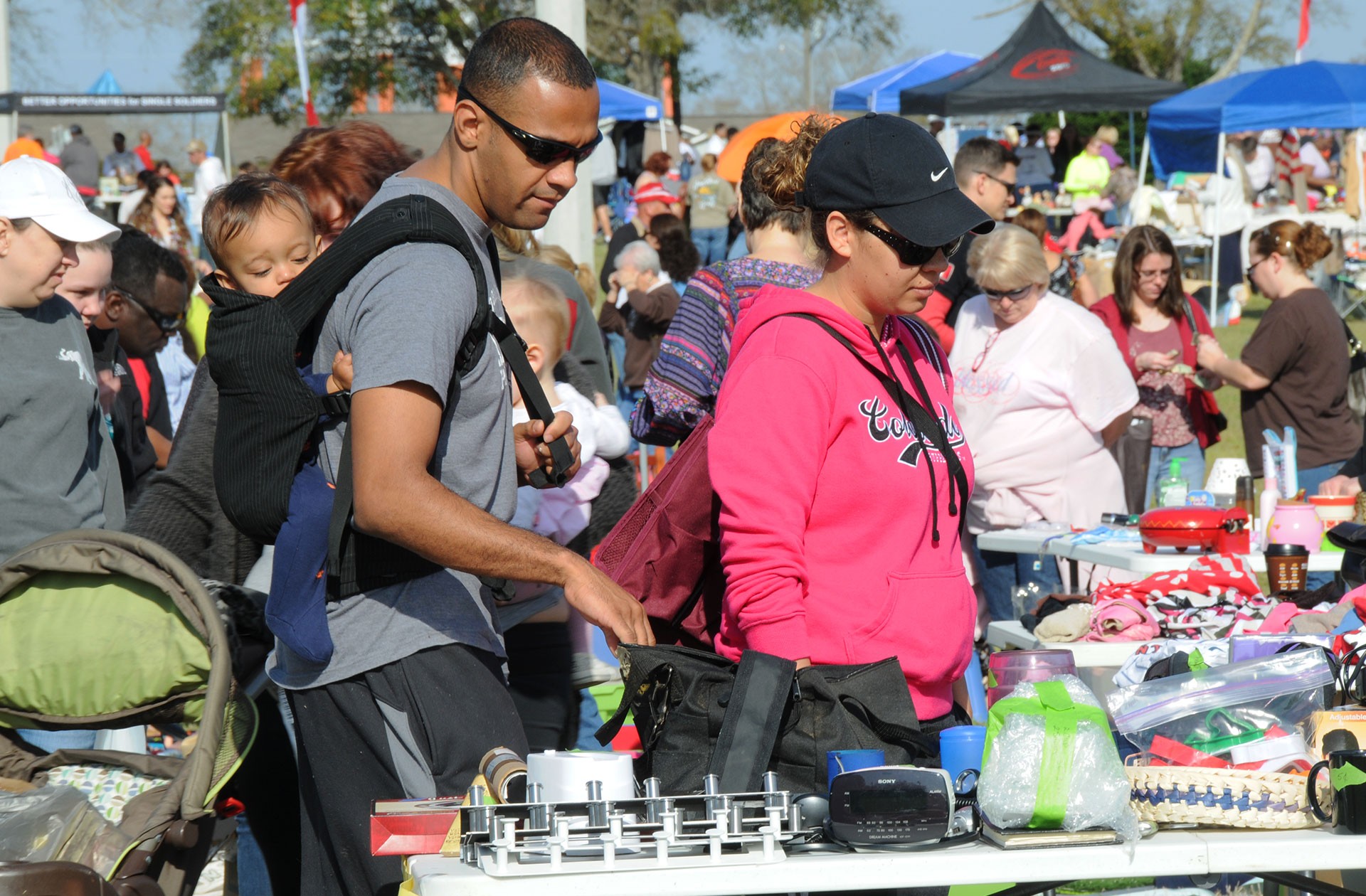
Photo credit: https://www.army.mil/article/164948/trash_or_treasure_yard_sale_source_of_savings_income_for_soldiers_families

This past weekend, our church held a yard sale.  I was so impressed by our leaders and volunteers, and was excited to see steady traffic at the sale.  I know our parishioners were happy to extend the life of their once beloved items, and shoppers were happy to find items that may become useful to them or their families.  All in all, it was a great event!

As I watched the constant stream of shoppers, I was struck by a contradiction.  You see, the town I live in is relatively small.  Most people share one or two degrees of separation.  Either you know most people, you know someone in common, you’ve casually crossed paths, or you’ve heard of them.  But the vast majority of our shoppers this weekend were unknown to me.  They were a diverse group of people, representing diverse stages of life.  Some brought children and grandchildren, some came with a loved one, and some shopped solo.  Some seemed curious about what they might find, while others seemed like yard sale veterans who knew how to discern value.  But as someone who believes themselves to be fairly connected in the community, I was surprised by how many strangers I met that day.

The experience got me wondering:  how can someone (like a pastor) who is constantly meeting new people in a small-ish town still have a sizeable set of people they do not know?  How often do we assume success (if, say, our goal is to get to know our community well and share Christ’s love widely) when in fact our success is superficial at best?  Has our definition of “wider community” been narrowed to “strangers who are similar to me”? 

I wonder if our invitation is not to sit in the comfort of thinking we know our community, and instead to stretch how we engage our community.  Maybe we need to shop occasionally in places we do not normally shop.  Maybe we need drive in parts of town we do not normally drive.  Maybe we need exchange our normal polite nods for actual words of conversation and connection.  I do not know what the first step is for you, but I look forward to hearing what you choose and where you are having encounters with God in the process.

On Parenting, Milestones, and Community…

29 Wednesday Apr 2026

Posted by jandrewsweckerly in reflection

≈ Leave a comment

Tags

celebrate, change, community, console, delight, encourage, God, health, independent, interconnected, journey, life, milestones, relationship, shepherd, work

Photo credit: https://flo.health/being-a-mom/your-baby/growth-and-development/early-walking-babies

When my kids were younger, we delighted in their milestones:  regaining their birthweight, learning to crawl and then walk, eating solid foods, the first real smile, and finally speaking words.  There was a joy in each of those moments, but also a sense that things were okay – that your child was developing in the ways that they were supposed to, and were therefore healthy. 

These days, the milestones are different:  first love interest, first heartbreak, getting a driver’s license, first paycheck, being awarded honors.  I suppose those milestones are markers of healthiness too, and the delight comes just as strongly.  But somehow, these later year milestones are tinged with a hint of coming change.  Before too long our children will launch out into the world and the milestones will be their own to enjoy – celebrated independently of the protective sphere we hosted for so many years.

As I become wistful these days, I think of how God has viewed us over the years.  In Jeremiah 29.11-14, God addresses those who have been exiled from Jerusalem and sent to Babylon.  “For surely I know the plans I have for you, says the Lord, plans for your welfare and not for harm, to give you a future with hope.  Then when you call upon me and come and pray to me, I will hear you.  When you search for me, you will find me; if you seek me with all your heart, I will let you find me, says the Lord, and I will restore your fortunes and gather you from all the nations and all the places where I have driven you, says the Lord, and I will bring you back to the place from which I sent you into exile.”

As I recall the ways God’s people have journeyed with God over the years, I suppose the milestones never cease – God is constantly seeking relationship and health for us, in all parts of our lives:  in the young formative years, in the youth of our adulthood, and in those middle and late years; in the darkness and what feels like times of failure; in the joys and in the successes.  God is present in all of it.

I wonder if the work we do that we label as “parenting through milestones,” is work that is not limited to biological children and parents.  Much like God journeys with us, God gifts us with people in our lives – friends, family, neighbors, church members, colleagues, and even strangers – who we can shepherd through milestones too.  Though our culture would have us believe we are independent lone rangers responsible for our own success and happiness, Christians community teaches us that we are much more interconnected and gifted the opportunity to journey with others through all those milestones of life.  I wonder who God is inviting you come close to:  to celebrate, to encourage, to console, and to delight.  We are in this work of life together. 

Sermon – Acts 2.42-47, E4, YA, April 26, 2026

29 Wednesday Apr 2026

Posted by jandrewsweckerly in Sermons

≈ Leave a comment

Tags

abundance, care, Christian, church, cohousing, community, disconnected, faith, God, Holy Spirit, Jesus, possessions, Sermon, social, stewardship, transform, worth

“The meltdown started with a small thing — a bag of [lollipops].  Rachel Damgen’s four-year-old son wanted one.  She said no.  It was a few years ago, in the middle of the pandemic, when it was not unusual for her to be home alone for an 11-hour stretch with her two young kids. She was struggling with the isolation.  Small obstacles felt outsized…”  That meltdown, where she too ended up crying on the floor, “…was a turning point.  With their extended families far away in other states, she and her husband, Chris Damgen, began asking themselves if there was any way to reconfigure their lives in order to optimize for more support and community.  The answer they found was cohousing.”[i]

According to research, “The cohousing movement started in Denmark in the late 1960’s.  Today [cohousing is] an international movement.”  In the United States there are almost 200 cohousing communities across 36 states.  “Cohousing participants commit themselves to live intentionally in community.  Families live in private housing, but share public spaces, responsibilities, meals, resources, activities, and events.  Shared care for children and the elderly is often part of the mix.  Neighbors collaborate to plan and manage their communities.  Decisions often require consensus.  Cohousing is one response to the lack of social equity that the political scientist Robert Putnam of Harvard documented in his book Bowling Alone: The Collapse and Revival of American Community (2000).  Putnam showed how many people today feel disconnected and isolated.  We’ve accumulated what he called a growing ‘social-capital deficit’ that leaves people in our culture longing for a ‘more collectively caring community.’”[ii]

That same collectively caring community is what Luke describes in the lesson from the Acts of the Apostles today.  The scene takes place after the event of Pentecost, when the early church is forming and growing under the leadership of the apostles.  The reading first tells us some very basic tenants of life as a Christian – a new follower of Jesus.  We are told that after they are baptized, they do four things:  they devote themselves to the apostles’ teaching (so, what we might call Bible Study); to fellowship (think about small groups, Men’s Breakfast, or what some Episcopalians call the eighth sacrament, Coffee Hour); the breaking of the bread (for us this is weekly communion, but they also mean the actual sharing of meals after the ritual of communion); and the prayers (this is both the formal and informal prayers that were breathed in and out of daily life).  I imagine all those things sound very familiar and are things you too like about life in Church.

But then comes the twist from Luke that probably made each of you squirm if you were listening.  Luke tells us, “All who believed were together and had all things in common; they would sell their possessions and goods and distribute the proceeds to all, as any had need.  Day by day, as they spent much time together in the temple, they broke bread at home and ate their food with glad and generous hearts, praising God and having the goodwill of all the people.”[iii]  They sold their possessions and goods and distributed the proceeds to all.  Now, I know what you are thinking, “Here we go – here comes the financial ask to the Stewardship Campaign.”  Well, take a deep breath.  That’s not where we’re going.  Well, not totally.

Professor Willie James Jennings helps break open this radical way of living.  “It is not a new thing,” he says, “that people would offer up their possessions to a noble or religious cause…A different order of sacrifice is being performed here, one that reaches back to the very beginnings of Israel…  A new kind of giving is exposed at this moment, one that binds bodies together as the first reciprocal donation where the followers will give themselves to one another.  The possessions will follow.  What was at stake here was not the giving up of all possessions but the giving up of each one, one by one as the Spirit gave direction, and as the ministry of Jesus made demand.  Thus anything they had that might be used to bring people into sight and sound of the incarnate life, anything they had that might be used to draw people to life together and life itself and away from death and the end of the reign of poverty, hunger, and despair – such things were subject to being given up to God.  The giving is the sole purpose of announcing the reign of the Father’s love through the Son in the hands of communion together with the Spirit.”[iv]  In other words, coming into the life of Jesus and the walk of faith transforms the whole life – how one spends one’s time and how one regards and shares their treasure.  Those newly baptized into the newly forming Christian community were not just declaring faith in Jesus, or joining a Church:  their entire lives and way of being was transformed. 

The Damgen family moved into a cohousing complex in Oregon.  Moving into the community was a game changer – both for their mental health and for the health of their family.  They decided to have a third child because they knew the community would support them.  Rachel described a day where one sick kid had finally fallen asleep when another kid needed to be picked up.  Within five minutes, she found a neighbor who could sit in the home while the sick kid slept so she could run to the school.  Kids and elders play and visit together in the common spaces, pets are enjoyed across family lines, and, as one older widow in the community attests, the community helps conquer loneliness and isolation experienced by many in America.[v]

Now, I’m not saying we all need to move to Oregon or we all need to time travel to those early days with Peter and the apostles.  But what I am saying is being a part of Hickory Neck and being a faithful Christian means not just engaging the practices of learning, fellowship, communion, and prayer.  If we take the life and witness of Jesus seriously, our entire lives are transformed here.  How we regard others, how we regard our possessions, and how we regard our worth is changed.  As Matt Skinner says, “Deep care and concern are unavoidable fruit of Easter faith.”[vi]  When Jesus says in our gospel from John today, “I came that they may have life, and have it abundantly,”[vii] Jesus gives that abundant life that through the vehicle of the Church and the Holy Spirit.  The shared gifts, the shared community, the shared sense of care and love is abundant in this place because we inherit the fruit of Easter faith.  Our invitation is not to go and do more work to inherit abundance.  Our invitation is to see the abundance all around us, to celebrate and share that abundance, and to invite others into that overflowing abundance with us.  Amen.


[i] Katia Riddle, “How to be not lonely? ‘Cohousing’ is an answer for some people,” December 1, 2024, as found at https://www.npr.org/sections/shots-health-news/2024/11/29/nx-s1-5210688/lonelieness-epidemic-social-isolation-parenting-cohousing on April 25, 2026.

[ii] Dan Clendenin, “Life Together,” April 30, 2017, as found at https://journeywithjesus.net/essays/1362-life-together on April 24, 2026.

[iii] Acts 2.46-47a.

[iv] Willie James Jennings, Acts (Louisville:  Westminster John Knox Press, 2017), 39-40.

[v] Riddle.

[vi] Matthew L. Skinner, Acts:  An Interpretation Bible Commentary (Louisville:  Westminster John Knox Press, 2025),50.

[vii] John 10.10b.

On the Blessing and Curse of Church…

15 Wednesday Apr 2026

Posted by jandrewsweckerly in reflection

≈ Leave a comment

Tags

blessing, church, community, curse, gift, God, hurt, inclusion, Jesus, love, music, pain, prayer, safe

Photo credit: https://www.guitarhabits.com/how-to-play-guitar-with-a-band-or-group/

I was listening to a podcast recently where a couple of singer-songwriters were being interviewed.  When talking about the creative process of bringing together artists to create music, one musician described the experience as, “something really communal and almost like church, but for people that want to come together in a way that feels inclusive and safe for all.”[i] 

I understood what the artist was saying, completely.  The church for so many people has been a place of hurt – whether due to an experience around someone’s sexual orientation or gender expression, whether due to a divorce (either personally or watching the church handle the divorce of one’s parents), whether with the way hard conversations were had – with a sense of rigidity and judgment or with an openness to wonder and question.  I know the church has been a place of hurt because so many people have talked to me as a priest about their own resistance to Church because of that hurt.

But despite all my understanding and knowledge about how many times the Church has been the source of curse instead of blessing, the throw-away comparison of the music community this artist had experienced to the experience of Church hit like a gut punch.  Her qualification of Church not being a place that feels safe and inclusive for all hurt my soul so much that I literally felt the wind being knocked out of me. 

Perhaps the comment hurt so much because whereas this singer-songwriter found the Church lacking and found what Church is supposed to be somewhere else, I have spent a lifetime trying to find churches that strive to actually be what Church is supposed to be like – and certainly as a priest, I have tried to shape communities into being that kind of community.  I love being in a place that despite being pretty diverse politically and theologically, can happily celebrate the renewal of vows by a lesbian couple who has found a sense of home and purpose there; where former members of other denominations find a sense of welcome and acceptance that their former church withheld; a church who seeks out the liturgical leadership of young people, whether transgendered, neurodivergent, or just young, because they are some of our best leaders; where retired members show up at the sporting events, dance recitals, or theater performances of younger members; where parishioners with protest pins on their lapels kneel next to parishioners with bumper stickers of opposing viewpoints. 

I never want to minimize the hurt or victimization that people have experienced by the hand of the Church.  And even if I personally did not commit a heinous act of hatred, judgment, or exclusion, I know part of my work is atoning for the sin of the Church universal.  My prayer this week is that those who have only experienced exclusion and a lack of safety in churches might find their way to churches who strive to live another way – to live the love of Jesus fully and authentically.  And it is my prayer that for those of us striving to live in that other way that we remain humble about whether we have actually achieved that safety and inclusivity and keep remembering not the way of church politics, but the way of Jesus. 


[i] Maren Morris, “Brandi Carlile:  Good Hang with Amy Poehler,” March 31, 2026, as found at https://podcasts.musixmatch.com/podcast/good-hang-with-amy-poehler-01jktbqakmf0anjvx2tz394fjv/episode/brandi-carlile-01kn1tcfzgdg73vb0jhswns3xs on April 15, 2026

Sermon – Matthew 6.1-6, 16-21, AW, YA, February 18, 2026

15 Wednesday Apr 2026

Posted by jandrewsweckerly in Sermons

≈ Leave a comment

Tags

Ash Wednesday, community, discipline, faith, fasting, holy, Jesus, Lent, self, Sermon, together

I have always regarded Ash Wednesday and our Lenten experience as the ultimate self-directed season.  The ashes on our foreheads remind us of how we came into this world alone and we will go out alone.  The disciplines we assume this day for the next six weeks are catered to our own journeys, focusing on what we have discerned we personally need to right our own relationship with God.  When I confess, I am struck by memories of grievances I have committed – images and feelings flashing before me as a particular set of words hits close to home.

But as I read Matthew’s convicting gospel this year, I remembered the wise words of New Testament scholar Karoline Lewis.  All those warnings Jesus makes, “Beware of practicing your piety before others…whenever you give alms, do not sound a trumpet…when you pray, do not be like the hypocrites…whenever you fast, do not look dismal…”, all of those warnings are not in the singular.  In the original Greek, they are actually in the plural.[i]  So the words are more like, beware of practicing you all’s piety.  Or maybe in Southern speak, “when ya’ll pray…” Jesus is not criticizing or singling out you or you or me.  Jesus is singling out the community of the faithful.

That may sound like semantics, but there is something quite dramatic about Jesus speaking in the plural versus the singular.  Every week in Sunday services, we confess our sins.  But we confess them communally.  Communal confession is an extraordinary event.  While we may feel lost or despondent about our inability to live in the light of Christ as individuals, when we communally confess, a room of voices is saying with you, “Me too!”

One of the things I grieved the most during the pandemic was our inability to gather in person.  I loved that we had and continue to have an online community – especially when people write things in the comments, greet one another, or meet Hickory Neck for the first time.  But our necessary isolation during the pandemic naturally led to a pattern of looking inward – sometimes so much so that we forgot we are not alone – that there is a whole community of faith who is walking this journey with us and struggling just as we are.  There is something quite powerful about listening to the voices of a 7-year-old next to the 77-year-old – the person who looks so put together next to the person who is clearly struggling – the dad with children next to the widow – all confessing together.  Week in and week out, those myriad voices remind us we are not alone.

Of course, part of that reason we get so focused on the self in Lent is because self-interest and self-focus is culturally entrenched in being a modern American.  There is both a blessing and a curse to the American dream – that any individual can achieve their dreams, if they just pull themselves up by their bootstraps – an argument that assumes everyone has bootstraps.  But indigenous New Testament scholar Danny Zacharias argues that we have a lot to learn from indigenous communities in Lent.  Zacharias says, “Traditional Indigenous cultures practice communal living and redistribution of resources, often rejecting the accumulation of wealth as a sign of individual success.  Indigenous communities also have high social expectations upon wealthier individuals to be the providers, especially for communal events.  Generosity and balance are seen as fundamental to a good life.  Indigenous leaders have historically been known for their generosity, with material lack by a leader being a strong sign of virtue and abundant generosity.[ii]  Jesus’ teaching affirms this principle, calling his disciples to a life where wealth is measured not in possessions but in righteousness and relationship with God.”[iii]

So if Jesus is talking to all y’all this Lent, and if we can learn something from indigenous communities this Lent, what does communal Lent look like?   One model might come from Pope Leo this year.  The pope said, “I would like to invite you to a very practical and frequently unappreciated form of abstinence:  that of refraining from words that offend and hurt our neighbor.  Let us begin by disarming our language, avoiding harsh words and rash judgement, refraining from slander and speaking ill of those who are not present and cannot defend themselves.  Instead, let us strive to measure our words and cultivate kindness and respect in our families, among our friends, at work, on social media, in political debates, in the media and in Christian communities.  In this way, words of hatred will give way to words of hope and peace.”[iv]

Our invitation today as we enter Lent is to remember that the act of reconciliation and redemption does not happen alone.  We all are invited into a holy Lent.  We all are invited into prayer, fasting, and alms giving – even if that fasting looks like fasting from hurtful words.  We all are invited to remember we are dust.  In person, online, and hybrid together, we are not invited into solo, parallel journeys.  Our journeys are strengthened and made possible through the companionship of community.  You are not alone.  We are in this together.  And Jesus lights the way for us all.  Amen.


[i] Karoline Lewis, as described on the podcast, “Sermon Brainwave:  #889: Ash Wednesday – February 22, 2023,” February 17, 2023, as found at https://www.workingpreacher.org/podcasts/889-ash-wednesday-february-22-2023 on February 17, 2026.

[ii] Randy S. Woodley, Shalom and the Community of Creation: An Indigenous Vision, Prophetic Christianity (Grand Rapids: Eerdmans, 2012), 155.

[iii] Danny Zacharias, “Commentary on Matthew 6:1-6, 16-21,” February 18, 2026, as found at https://www.workingpreacher.org/commentaries/revised-common-lectionary/ash-wednesday/commentary-on-matthew-61-6-16-21-18 on February 17, 2026.

[iv] Pope Leo XIV, as quoted at https://www.facebook.com/FrJamesMartin/posts/pfbid02uQANdoLUZ94niQnhZDvRN1vSQmSG6BckAQ3HwGm2PpLpGUmZtBCqqpKbijunr9Bwl on February 13, 2026.

On Sharing the Love…

04 Wednesday Feb 2026

Posted by jandrewsweckerly in reflection

≈ Leave a comment

Tags

community, give, gratitude, heart, holy, honor, Jesus, kindness, love, receive, valentine, Valentine's Day

Photo credit: https://www.thebearandthefox.com/easy-peasy-valentine-garland/

With Valentine’s Day approaching, my daughter’s dance studio has welcomed back their “Spread the Love” month.  Paper hearts are cut out and students are invited to write something kind about another student and paste them around the studio.  It sounds very simple, but I loved watching the impact last year.  I was impressed by how eager kids were to write something kind about one of their peers.  But even more noteworthy was watching the kids read something kind about themselves.  As humans, we are often reticent to celebrate our own gifts and talents; and culturally, we do not regularly make time to compliment the giftedness we see in others.  The simple invitation to celebrate each other becomes a profound experience. 

Personally, I have never loved Valentine’s Day, as its focus on romantic love and paired couples creates an environment for uncoupled folks to feel inadequate, lonely, or less than.  The reframing of a day about love like the one at our dance studio reminds me of the kind of love that Jesus asks us to show everyday – not just on Valentine’s Day.  By focusing on spreading love and kindness, the entire community shifts and benefits as both givers and receivers of love.  It is a beautiful expression of the holiest of activities.

So this month, I invite you to spread the love too.  You can certainly cut out some hearts if you like, but whether it’s a text, a phone call, a conversation, an email, or an old school “valentine,” I encourage you to look around at the people in your life – both those people you know and love, and those people who happen into your path.  Take a long look at them and then let them know what about them is special to you – what gifts, or kindnesses do they share with the world for which you are grateful?  Find your mode of communication and then start sharing the love.  I suspect you will find great joy in honoring others. And even if you do not receive similar “valentines” in return, the love will return to you ten-fold.

On Claiming Your Why…

05 Wednesday Nov 2025

Posted by jandrewsweckerly in reflection

≈ Leave a comment

Tags

abundance, bless, church, community, God, grace, gratitude, home, obligation, why

Photo credit: https://worksheets.clipart-library.com/five-whys-worksheet.html

In one of my executive leadership courses we read about the “five whys.”  Developed within the Toyota Motor Corporation, the process is a problem-solving process meant to get to the deepest root causes of a problem by asking the simple question, “why?” repeatedly.  While this was intended for manufacturing processes, the “five whys” found its way into all industries as a way to help teams focus on the root of any situation. 

I have often said that at church, understanding your “why” is really important.  Using a system like the “five whys” to get to the root of a challenge before the Vestry, or a situation before the staff, or even to problem before lay leaders, discerning the real “why” before us helps us address the issue at hand at a deeper, much more relevant manner.

This autumn, our parishioners have been sharing their “whys” with our congregation about why supporting ministry at Hickory Neck Church is so important.  Through short video testimonies we have heard all kinds of whys, learned about the impact of ministries in our faith community, and been able to see the deeper meaning people are finding in our spiritual home.  Why would we want to know that?  Well, as we consider how we want to support the church with our time, talent, and treasure, knowing our whys helps us convert our giving from obligation to gratitude.  Once we understand our why more deeply – and the whys of fellow members – we begin to see the wideness of God’s mercy in this place, and begin to feel more committed to supporting this place that blesses us and others so richly.  Slowly, we see we are not being pressured to give, we are being invited into a vibrant, life-changing, purpose-making place that we can enable with the resources God has given us.

We’ve shared the case for Hickory Neck, we’ve heard from fellow parishioners, and now, we are invited to ask our “five whys” about this place we have come to call our spiritual home.  I look forward to hearing about the abundance and grace you find when you ask your “five whys” this week.  I suspect your whys might inspire my own!

On Finding Commonality and Church…

01 Wednesday Oct 2025

Posted by jandrewsweckerly in reflection

≈ Leave a comment

Tags

band, beauty, Christ, church, commonality, community, concert, disparate, healing, meaning, music, unity

Photo credit: https://unsplash.com/s/photos/concert-audience

Last weekend we took one of our daughters to her first concert.  It was not a band or even a genre of music I particularly like.  But she had been obsessing over every concert venue.  When the band came within an hour of our town, coupled with a big birthday this year, we couldn’t refuse.  So, off we went, playing chaperone to one of those fun life milestones.

While I cannot say that I came to fall in love with the band, what did not escape me was the beautiful experience of that night.  Feeling like a total outsider, I watched as everyone around me joined in commonality.  I watched as people belted out memorized lyrics, and they mimicked famous moves and gestures of the band, and as they shared excitement as each new song began.  I watched people who did not know each other exchange comradery and joy with total strangers.  I watched parents smile at the adulation of a younger generation.  I watched many disparate parts come together as one in that singular moment.

Now I would never claim that Church, especially a church in my denomination, has the same electric, communal energy as that night of raw, unfiltered passion caused by music, but I like to dream that some things like that night happen every Sunday.  We gather every Sunday as a disparate group too:  young parents, frazzled by life; retirees, finding their purpose in later life; singletons longing for a place of belonging; couples or families praying they are not alone in their experiences.  Those who are joyous, those who are grieving, those who are anxious, and those who are feeling good gather every week – not for a favorite band per se, but certainly for a favorite activity.  We gather to remember something bigger than ourselves as individuals, to ground ourselves in something better than what sometimes feels like the daily grind, to find oneness in the one bread and one cup.

Though I would never claim my church feels like going to a band’s concert, I do think Church offers a weekly dose of beauty, of commonality, of belonging, and of joyful purpose.  For those who are not regular church-goers, or even for those who have been hurt by the Church, I understand why you would keep your distance.  But when the Church is at her most Christ-like, the Church offers a weekly gift that might be a source of healing from all those hurts, isolations, and divisions of life.  If you ever want to give it a try, know that this community welcomes you here.

Sermon – I Timothy 6.6-19, Luke 16.19-31, P21, YC, September 28, 2025

01 Wednesday Oct 2025

Posted by jandrewsweckerly in Sermons

≈ Leave a comment

Tags

community, faith, God, grasp, lesson, life, money, parenting, Sermon, share, sympathize, value, vocation

Parenting is probably the most difficult of the vocations God has given me – not simply because parenting can be physically, emotionally, and spiritually exhausting, or because of the heftiness of the responsibility of shaping decent human beings who will have an impact on the world, or because parenting forces you to justify every belief and value you hold.  Those alone would be daunting enough.  But parenting is also a difficult vocation because of the way parenting evolves:  from those early days of helping this creature learn the basics for survival, to those young days of helping children wonder and ask the big questions of life, to those middle days of clarifying family, faith, and individual values that will guide their behavior and choices, to those later days of gently reflecting on those ultimate things of life – of what really makes for a life of meaning and purpose.

In many ways, our scripture lessons lately have felt like listening to a parent trying to help us figure out what this whole life thing is all about.  On the surface, our lessons today are straight of central casting for a stewardship talk – we’ve really teed up the parishioner who will share his testimony today with everything he needs.  From Amos who foreshadows what will happen to those who spend their lives luxuriating in lavishness, as if luxuriating is an end in and of itself; to Paul’s letter to Timothy who warns how dangerous a love of money can be, distracting us from things of ultimate significance; to our gospel lesson which starkly depicts the eternal significance of how wealth can make us so blind to the needs of others that we condemn ourselves in the life beyond this life.  The lessons this week seem to serve up the ultimate stewardship sermon:  the place of money in our lives is so fraught with spiritual consequences, you should just give that money to the church so that you do not have to worry about a fate like those in our lessons today!

And while our budget for next year might appreciate such a lesson, much like parenting has varied phases, so does the church’s teaching of us.  The one line of all the weighty lessons on wealth from today that has been hovering in my mind comes from Paul’s first letter to Timothy.  In the last line of the portion of his letter we heard today, Paul says we “are to do good, to be rich in good works, generous, and ready to share, thus storing up for [ourselves] the treasure of a good foundation for the future, so that [we] may take hold of the life that really is life.”  So that we may take hold of the life that really is life.  The verb in the Greek translated as “take hold” is a not a gentle verb – taking hold is better translated as to grasp desperately.[i]  So we are to grasp desperately to the life that really is life. 

This is the phase of parenting where I find myself:  how do I teach my children what the “life that really is life” is?  In a world that very much feels like the passage from Amos, telling us that “life that really is life” is a life so comfortable you can set your goal as luxuriating in peace, or in a world that so values individualism that we are trained not to let our gaze linger on people like Lazarus or to even know their name for that matter, or in a world that seems to jump from one political controversy to the next, destabilizing our moral compass, how are we supposed to even know what the life that really is life is?

Award winning journalist Amy Frykholm, inspired by that simple phrase “the life that really is life,” traveled to a tiny city in southern Mexico, Fortín de las Flores, after reading Sonia Nazario’s book Enrique’s Journey.  The book details the story of a Honduran man trying to make his way into the United States by traveling on top of a freight train.  His story is not all that unique – the 20,000 residents of Fortín see people like him all the time.  What is unusual about Fortín is how they respond to these migrants.  Instead of responding with fear, or with self-protection, or even with a blind eye, the people of Fortín act as a place of mercy.  Actively making their way to the trains to deliver food, water, and supplies every day – food left over from their food trucks which are just barely making enough for their own families to survive, water poured into zipped baggies they can toss them to the tops of trains, and even sweatshirts or winter hats because they know that after the stop in Fortín, the migrants will face the brutal cold of a trip through mountains.  When journalist Frykholm asked them why they cared for these strangers, most of the residents just looked at her like she was asking a silly question.  A resident of Fortín who had lived in the United States understood her confusion.  He said, “‘The central value of this society is compartir,’ [the Spanish word for “sympathize”] …as he carried a bag of oranges toward a train that had briefly stopped not far from the hotel.  ‘Even a business is primarily a place from which to share.’”[ii] 

The wealth the rich man has in our gospel lesson is not bad in and of itself.  The wealthy man is not even an evil man – he does not actively do anything bad to people like Lazarus.  The danger in the wealthy man’s life is how he does not see,[iii] how he presumes his wealth is simply a blessing for him to enjoy from God.  Debie Thomas writes, “It has taken me a long time to recognize how insidious this notion of ‘blessing’ really is.  How contrary [the notion of blessing] is to Jesus’s teachings.  When I was growing up, no one ever told me that by locking human suffering out, I was locking myself in.  Locking myself into a life of superficiality, thin piety, and meaninglessness.  As our reading from [Paul’s letter to Timothy] puts it this week, the refusal to confront my own privilege, the refusal to bear the burdens of those who have less than me, is a refusal ‘to take hold of the life that really is life.’”[iv]

That is our invitation today – to desperately grasp on to the life that really is life.  Fortunately, scripture does not give us this hefty command like a parent sending out their grown child with one last bit of advice.  Paul wrote this letter not just to Timothy but to the community of faith.  Paul wrote this letter to the community of faith because Paul knew they could not grasp desperately to the life that really is life without some companions on the journey – without a village of people whose central value is compartir.  We gather with people every week because we need a community who can hold us accountable to our values and who can challenge us when loose track of what a life that really is life is.  Sometimes the community will do that by looking at us like we are asking a silly question; sometimes the community will do that by inviting us to be generous givers; and sometimes the community will do that by sitting us down to open up wisdom for us.  But mostly, the community will partner with us because each one of us is desperately trying to grasp onto that life that really is life too.  Together, we create our own little Fortín right here in Toano, witnessing with simplicity the life that really is life – together.  Amen.


[i] Stephanie Mar Smith, “Theological Perspective,” Feasting on the Word, Yr. C, Vol. 4 (Louisville:  Westminster John Knox Pres, 2010), 110.

[ii] Amy Frykholm, “Life That Really Is Life,” September 21, 2025, as found at https://journeywithjesus.net/essays/3969-life-that-really-is-life on September 26, 2025

[iii] Charles B. Cousar, “Exegetical Perspective,” Feasting on the Word, Yr. C, Vol. 4 (Louisville:  Westminster John Knox Pres, 2010), 119.

[iv] Debie Thomas, “The Great Chasm,” September 22, 2019, as found at https://journeywithjesus.net/essays/2374-the-great-chasm on September 26, 2025.

Sermon – Luke 14.25-33, P18, YC, September 7, 2025

10 Wednesday Sep 2025

Posted by jandrewsweckerly in Sermons

≈ Leave a comment

Tags

choices, communication, community, conflict, cost, direct, discipleship, God, Jesus, priorities, security, Sermon, trust

Having been born and raised in Georgia and North Carolina, saying living on Long Island was a culture shock would be an understatement.  But one of the things I came to love about living on Long Island was the directness of communication.  Now do not get me wrong, having been raised in the South, I know all too well that when your mom says, “You’re wearing that?” or your grandma says, “Don’t you want to wear lipstick?” or your friend says, “Well those new shoes are utilitarian,” they are not actually saying what they mean.  On Long Island things are much clearer.  Instead, you’ll be told, “Don’t wear that,” “Put on some lipstick; I’ll show you which one,” and “Those shoes are awful.”  The words always sting, but at least you know you what people think.

Today’s gospel has me convinced some of Jesus’ relatives were from Long Island.  In these short eight verses, Jesus says if we want to follow him, we will need to sell our possessions, carry our cross, and hate our parents, spouse, children, siblings, and even life itself.  I have to say, on this Kickoff Sunday, on the day we return to the fullness of Hickory Neck, and we feast and laugh and worship together, I could have used a little more southern-speak from Jesus today.  Jesus could have at least saved the hard sell for Stewardship season!

But as we start putting our calendars together for the fall, as our children sign up for the extracurricular activities, and as we think about what ministries we may want to try at Hickory Neck this fall, I suppose there is no time like the present to get real.  This is a season of hard choices.  I have talked to parents just this week about how to find a common date for the kids given all the scheduling challenges.  As we adults have mapped out our own calendars, we have realized there are things we can say yes to and things to which we have to say no.  In our own family, there are times when we have to bring in a third adult to help us juggle four people’s commitments.  This is a season of hard choices.  This is a season of conflicting priorities.

I do not actually think Jesus is being harsh in today’s gospel.  I know we sometimes get so used to the inclusive, loving, embracing God that we forget that following Jesus is not all rainbows and sunshine.  Jesus, like our beloved Long Islanders, is not harsh – just honest.  And Jesus is not saying there will be no health, healing, and wholeness; no justice, mercy, and grace; no forgiveness, salvation, and eternal life.  But Jesus is saying those things will cost us.  All those rainbows and sunshine we will receive come at the cost of redistributing wealth, of being faithful even when being faithful gets us ostracized from our social circles, of being intolerant of injustice, even if doing so risks our most valued relationships with others.

If we can agree that Jesus is just being honest, understanding why he is setting such a high standard can be helpful.  Starting with one of the trickier things Jesus says today may be best.  Jesus says in the final verse today, “None of you can become my disciple if you do not give up all your possessions.”  We all know that Jesus talks about money perhaps more than any other subject in scripture.  Jesus talks about money so much because Jesus knows the power money has over us.  Jesus tells us to give up our possessions, to stop worrying about what is mine because my obsession with owning, possessing, or claiming things as my own can make me think ownership is my exclusive, inviolable right.  Jesus knows having possessions can make me think all things are my own:  my money, my time, my comfortable lifestyle, my political or religious beliefs, my closest relationship, my independence.  Jesus knows when I get possessive, I cling to things that are not God, and create habits in myself leading me to smother, not love; to exploit, not steward; to hoard, not appreciate.[i]

Several years ago, on the podcast “On Being,” Rabbi Amichai Lau-Lavie retells an old Talmudic parable.  In the parable there is “a ship that is sailing, and there are many cabins.  And one of the people in the cabins on the lower floor decides to dig a hole in the floor of his cabin, and does so, and sure enough, the ship begins to sink.  And the other passengers suddenly discover what’s going on and see this guy with a hole in the floor.  And they say, ‘What are you doing?’ And he says, ‘Well, it’s my cabin.  I paid for it.’  And down goes the ship.”[ii]  What this parable and what Jesus are trying to do is help us see that possessions tempt us to live like the man in the cabin – to believe our ownership negates our relationship to others.  Our possessions can create an obsession with “me, me, me,” with a disregard for the “we” to which we belong as followers of Christ.

Jesus goes on to say in verse 27, “Whoever does not carry the cross and follow me cannot be my disciple.”  Part of Jesus’ cross is a redefining of the “we,” we were just talking about.  After some time being a member here at Hickory Neck, most of us start to move from third person to the second person language.  Instead of saying, Hickory Neck is committed to faith formation and serving neighbor, we start to say, “We are committed to faith formation and serving neighbor.”  The sense of belonging we find here takes us out of “me and my” language and “they and them” language and puts us into “us and we” language.  So, when Jesus talks about carrying our cross as Jesus invites today, he is not just talking about personal sacrifice.  Jesus is also asking, to whom and for whom we are responsible.  Jesus is widening the circle of “my people,” to consider who the people are we will love, welcome, serve, and for which we would make sacrifices.  Jesus is asking us to take on the task of widening our “we” to be broader and riskier than we have previously embraced.  By taking up our cross, we are saying the whole ship, not just my cabin on the ship, but the whole ship has an irrefutable claim on my life.[iii]

Jesus’ brutal honesty though comes right at the beginning, in verse 26.  Jesus says, “Whoever comes to me and does not hate father and mother, wife and children, brothers and sisters, yes, and even life itself, cannot be my disciple.”  Hate is a strong word – a word we have banned in our home, especially when talking about other family members.  I will not be going home today and telling our children they can pick up that word again.  But I do think Jesus uses a powerful word because the power of discipleship will involve taking on some powerful experiences.  We will need to be willing to hate some things about this life.  We will need to ask which customs, beliefs, or traditions we have inherited we need to renounce to follow Jesus.  We will need to look at what baggage we need to abandon, what ties we must loosen, what relationships we must subordinate.  What scholar Debie Thomas says is “Jesus spoke his hard words about ‘hating’ one’s family in a cultural context where the extended family was the source of a person’s security and stability.  Jewish families in first century Palestine were self-sustaining economic units.  No one in their right mind would leave such a unit behind in order to follow a homeless, controversial preacher into some uncertain future.”  What Thomas asks us to consider is what sources of modern-day security and stability we trust more than we trust God.[iv] 

So, where do we find some Good News in all this sobering honesty?  Why would we do all this hard stuff?  We do all the hard stuff of discipleship because of the rainbows and sunshine.  We give up a sense of possession, we take on crosses, and we renounce things we have loved because we have experienced the rainbows and sunshine of Hickory Neck:  we have experienced life-altering community here; we have experienced love, joy, and blessing we did not know we needed here; we have experienced purpose, meaning, and value here.  We also take on Jesus’ intense notion of discipleship because we have experienced the rainbows and sunshine of the world around us:  we have experienced the profundity of loving our neighbor as ourselves; we have experienced the blessing of seeing God in someone we thought unworthy of our love; we have experienced being transformed by walking right out of our comfort zones into life-giving discomfort zones.  We accept the invitation of illogical discipleship because of the more cosmic rainbows and sunshine of faith:  of being known and accepted by a loving, living God; of the promise of forgiveness of our most heinous sins; of the reality of eternal life made possible through Jesus’ life, death, and resurrection.  Once we start thinking about the rewards of the life of discipleship, the cost seems surmountable.  Once we look at the depth of Christ’s rainbows and sunshine, letting go of possessions, taking up crosses, and hating the stuff of life that only brings death seems much less scary.  Once we realize we may not be able to do whatever we want to in our cabin, we realize we have a ship full of people ready to hold our hands as we take on the burden of discipleship together – because the burden is easy and the yoke is light.  Amen.


[i] Debie Thomas, “What It Will Cost You,” Journey with Jesus, September 1, 2019, as found at https://www.journeywithjesus.net/lectionary-essays/current-essay?id=2346 on September 5, 2025.

[ii] Amichai Lau-Lavee, “First Aid for Spiritual Seekers,” On Being with Krista Tippet, July 13, 2017, as found at https://onbeing.org/programs/amichai-lau-lavie-first-aid-for-spiritual-seekers/ on September 5, 2025.

[iii] Thomas.

[iv] Thomas.

← Older posts

Recent Posts

  • On Redefining Community…
  • On Parenting, Milestones, and Community…
  • Sermon – Acts 2.42-47, E4, YA, April 26, 2026
  • On Seasons of Discernment…
  • Sermon – Luke 24.13-35, E3, YA, April 19, 2026

Archives

  • May 2026
  • April 2026
  • February 2026
  • January 2026
  • December 2025
  • November 2025
  • October 2025
  • September 2025
  • August 2025
  • July 2025
  • June 2025
  • March 2025
  • February 2025
  • December 2024
  • November 2024
  • October 2024
  • September 2024
  • August 2024
  • July 2024
  • June 2024
  • May 2024
  • March 2024
  • February 2024
  • January 2024
  • December 2023
  • November 2023
  • October 2023
  • September 2023
  • August 2023
  • July 2023
  • June 2023
  • May 2023
  • March 2023
  • February 2023
  • January 2023
  • December 2022
  • November 2022
  • October 2022
  • June 2022
  • May 2022
  • January 2022
  • December 2021
  • November 2021
  • October 2021
  • September 2021
  • August 2021
  • June 2021
  • May 2021
  • April 2021
  • March 2021
  • February 2021
  • January 2021
  • December 2020
  • November 2020
  • October 2020
  • September 2020
  • August 2020
  • July 2020
  • June 2020
  • May 2020
  • April 2020
  • March 2020
  • February 2020
  • January 2020
  • December 2019
  • November 2019
  • October 2019
  • September 2019
  • August 2019
  • July 2019
  • June 2019
  • May 2019
  • April 2019
  • March 2019
  • February 2019
  • January 2019
  • December 2018
  • November 2018
  • October 2018
  • September 2018
  • August 2018
  • July 2018
  • June 2018
  • May 2018
  • April 2018
  • March 2018
  • February 2018
  • January 2018
  • December 2017
  • November 2017
  • October 2017
  • September 2017
  • August 2017
  • July 2017
  • June 2017
  • May 2017
  • April 2017
  • March 2017
  • February 2017
  • January 2017
  • December 2016
  • November 2016
  • October 2016
  • September 2016
  • August 2016
  • July 2016
  • June 2016
  • May 2016
  • April 2016
  • March 2016
  • February 2016
  • January 2016
  • December 2015
  • November 2015
  • October 2015
  • September 2015
  • August 2015
  • July 2015
  • June 2015
  • May 2015
  • April 2015
  • March 2015
  • February 2015
  • January 2015
  • December 2014
  • November 2014
  • October 2014
  • September 2014
  • August 2014
  • July 2014
  • June 2014
  • April 2014
  • March 2014
  • February 2014
  • January 2014
  • December 2013
  • November 2013
  • October 2013
  • September 2013
  • August 2013
  • July 2013
  • June 2013
  • May 2013
  • April 2013
  • March 2013
  • February 2013
  • January 2013
  • December 2012
  • November 2012
  • October 2012
  • September 2012

Categories

  • reflection
  • Sermons
  • Uncategorized

Meta

  • Create account
  • Log in
  • Entries feed
  • Comments feed
  • WordPress.com

Blog at WordPress.com.

  • Subscribe Subscribed
    • Seeking and Serving
    • Join 391 other subscribers
    • Already have a WordPress.com account? Log in now.
    • Seeking and Serving
    • Subscribe Subscribed
    • Sign up
    • Log in
    • Report this content
    • View site in Reader
    • Manage subscriptions
    • Collapse this bar

Loading Comments...