• About

Seeking and Serving

~ seek and serve Christ in all persons

Seeking and Serving

Tag Archives: church

On Redefining Community…

06 Wednesday May 2026

Posted by jandrewsweckerly in reflection

≈ Leave a comment

Tags

church, comfort, community, contradiction, discomfort, God, love, narrow, stranger, success, superficial, wide, yard sale

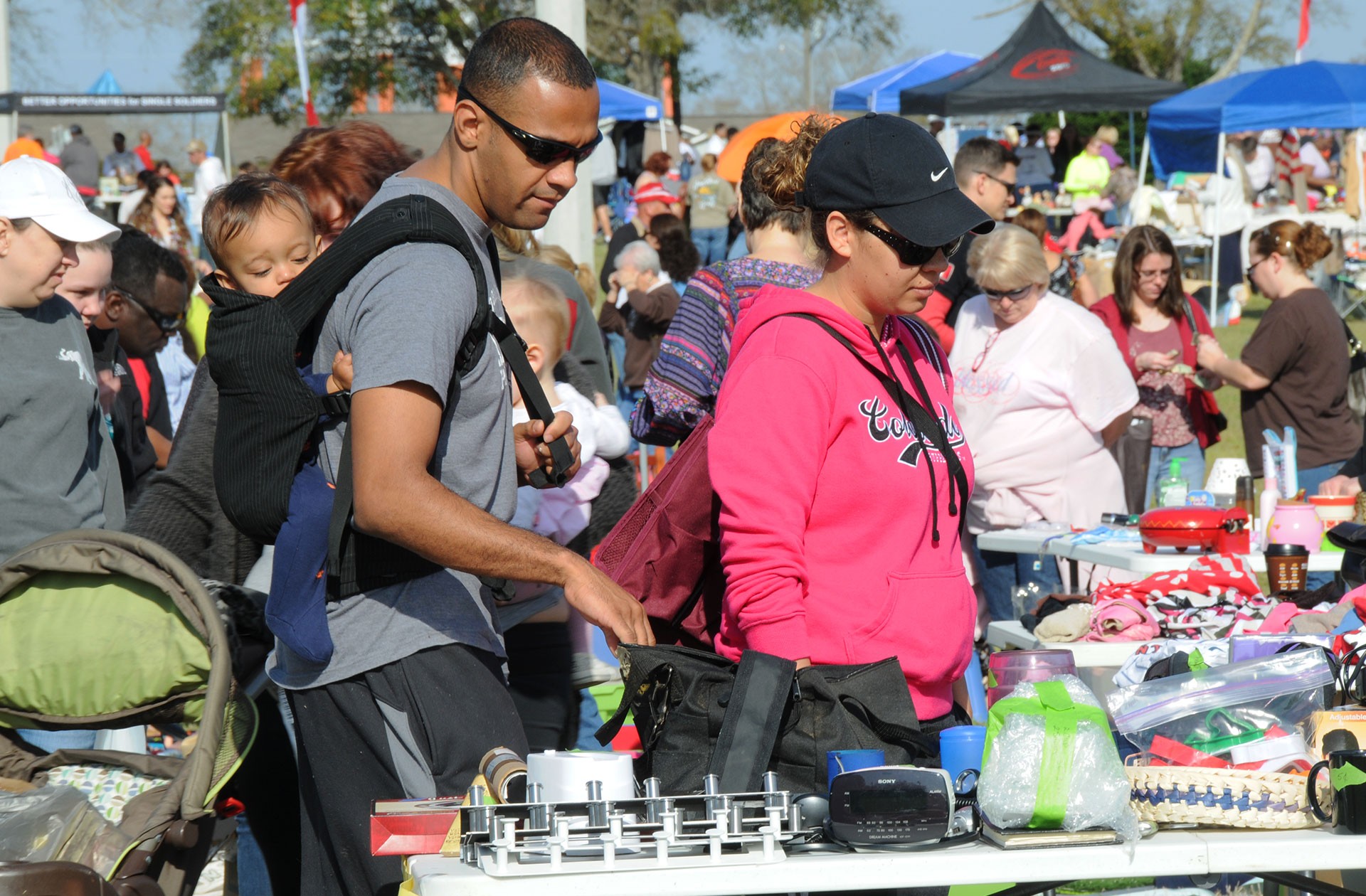
Photo credit: https://www.army.mil/article/164948/trash_or_treasure_yard_sale_source_of_savings_income_for_soldiers_families

This past weekend, our church held a yard sale.  I was so impressed by our leaders and volunteers, and was excited to see steady traffic at the sale.  I know our parishioners were happy to extend the life of their once beloved items, and shoppers were happy to find items that may become useful to them or their families.  All in all, it was a great event!

As I watched the constant stream of shoppers, I was struck by a contradiction.  You see, the town I live in is relatively small.  Most people share one or two degrees of separation.  Either you know most people, you know someone in common, you’ve casually crossed paths, or you’ve heard of them.  But the vast majority of our shoppers this weekend were unknown to me.  They were a diverse group of people, representing diverse stages of life.  Some brought children and grandchildren, some came with a loved one, and some shopped solo.  Some seemed curious about what they might find, while others seemed like yard sale veterans who knew how to discern value.  But as someone who believes themselves to be fairly connected in the community, I was surprised by how many strangers I met that day.

The experience got me wondering:  how can someone (like a pastor) who is constantly meeting new people in a small-ish town still have a sizeable set of people they do not know?  How often do we assume success (if, say, our goal is to get to know our community well and share Christ’s love widely) when in fact our success is superficial at best?  Has our definition of “wider community” been narrowed to “strangers who are similar to me”? 

I wonder if our invitation is not to sit in the comfort of thinking we know our community, and instead to stretch how we engage our community.  Maybe we need to shop occasionally in places we do not normally shop.  Maybe we need drive in parts of town we do not normally drive.  Maybe we need exchange our normal polite nods for actual words of conversation and connection.  I do not know what the first step is for you, but I look forward to hearing what you choose and where you are having encounters with God in the process.

Sermon – Acts 2.42-47, E4, YA, April 26, 2026

29 Wednesday Apr 2026

Posted by jandrewsweckerly in Sermons

≈ Leave a comment

Tags

abundance, care, Christian, church, cohousing, community, disconnected, faith, God, Holy Spirit, Jesus, possessions, Sermon, social, stewardship, transform, worth

“The meltdown started with a small thing — a bag of [lollipops].  Rachel Damgen’s four-year-old son wanted one.  She said no.  It was a few years ago, in the middle of the pandemic, when it was not unusual for her to be home alone for an 11-hour stretch with her two young kids. She was struggling with the isolation.  Small obstacles felt outsized…”  That meltdown, where she too ended up crying on the floor, “…was a turning point.  With their extended families far away in other states, she and her husband, Chris Damgen, began asking themselves if there was any way to reconfigure their lives in order to optimize for more support and community.  The answer they found was cohousing.”[i]

According to research, “The cohousing movement started in Denmark in the late 1960’s.  Today [cohousing is] an international movement.”  In the United States there are almost 200 cohousing communities across 36 states.  “Cohousing participants commit themselves to live intentionally in community.  Families live in private housing, but share public spaces, responsibilities, meals, resources, activities, and events.  Shared care for children and the elderly is often part of the mix.  Neighbors collaborate to plan and manage their communities.  Decisions often require consensus.  Cohousing is one response to the lack of social equity that the political scientist Robert Putnam of Harvard documented in his book Bowling Alone: The Collapse and Revival of American Community (2000).  Putnam showed how many people today feel disconnected and isolated.  We’ve accumulated what he called a growing ‘social-capital deficit’ that leaves people in our culture longing for a ‘more collectively caring community.’”[ii]

That same collectively caring community is what Luke describes in the lesson from the Acts of the Apostles today.  The scene takes place after the event of Pentecost, when the early church is forming and growing under the leadership of the apostles.  The reading first tells us some very basic tenants of life as a Christian – a new follower of Jesus.  We are told that after they are baptized, they do four things:  they devote themselves to the apostles’ teaching (so, what we might call Bible Study); to fellowship (think about small groups, Men’s Breakfast, or what some Episcopalians call the eighth sacrament, Coffee Hour); the breaking of the bread (for us this is weekly communion, but they also mean the actual sharing of meals after the ritual of communion); and the prayers (this is both the formal and informal prayers that were breathed in and out of daily life).  I imagine all those things sound very familiar and are things you too like about life in Church.

But then comes the twist from Luke that probably made each of you squirm if you were listening.  Luke tells us, “All who believed were together and had all things in common; they would sell their possessions and goods and distribute the proceeds to all, as any had need.  Day by day, as they spent much time together in the temple, they broke bread at home and ate their food with glad and generous hearts, praising God and having the goodwill of all the people.”[iii]  They sold their possessions and goods and distributed the proceeds to all.  Now, I know what you are thinking, “Here we go – here comes the financial ask to the Stewardship Campaign.”  Well, take a deep breath.  That’s not where we’re going.  Well, not totally.

Professor Willie James Jennings helps break open this radical way of living.  “It is not a new thing,” he says, “that people would offer up their possessions to a noble or religious cause…A different order of sacrifice is being performed here, one that reaches back to the very beginnings of Israel…  A new kind of giving is exposed at this moment, one that binds bodies together as the first reciprocal donation where the followers will give themselves to one another.  The possessions will follow.  What was at stake here was not the giving up of all possessions but the giving up of each one, one by one as the Spirit gave direction, and as the ministry of Jesus made demand.  Thus anything they had that might be used to bring people into sight and sound of the incarnate life, anything they had that might be used to draw people to life together and life itself and away from death and the end of the reign of poverty, hunger, and despair – such things were subject to being given up to God.  The giving is the sole purpose of announcing the reign of the Father’s love through the Son in the hands of communion together with the Spirit.”[iv]  In other words, coming into the life of Jesus and the walk of faith transforms the whole life – how one spends one’s time and how one regards and shares their treasure.  Those newly baptized into the newly forming Christian community were not just declaring faith in Jesus, or joining a Church:  their entire lives and way of being was transformed. 

The Damgen family moved into a cohousing complex in Oregon.  Moving into the community was a game changer – both for their mental health and for the health of their family.  They decided to have a third child because they knew the community would support them.  Rachel described a day where one sick kid had finally fallen asleep when another kid needed to be picked up.  Within five minutes, she found a neighbor who could sit in the home while the sick kid slept so she could run to the school.  Kids and elders play and visit together in the common spaces, pets are enjoyed across family lines, and, as one older widow in the community attests, the community helps conquer loneliness and isolation experienced by many in America.[v]

Now, I’m not saying we all need to move to Oregon or we all need to time travel to those early days with Peter and the apostles.  But what I am saying is being a part of Hickory Neck and being a faithful Christian means not just engaging the practices of learning, fellowship, communion, and prayer.  If we take the life and witness of Jesus seriously, our entire lives are transformed here.  How we regard others, how we regard our possessions, and how we regard our worth is changed.  As Matt Skinner says, “Deep care and concern are unavoidable fruit of Easter faith.”[vi]  When Jesus says in our gospel from John today, “I came that they may have life, and have it abundantly,”[vii] Jesus gives that abundant life that through the vehicle of the Church and the Holy Spirit.  The shared gifts, the shared community, the shared sense of care and love is abundant in this place because we inherit the fruit of Easter faith.  Our invitation is not to go and do more work to inherit abundance.  Our invitation is to see the abundance all around us, to celebrate and share that abundance, and to invite others into that overflowing abundance with us.  Amen.


[i] Katia Riddle, “How to be not lonely? ‘Cohousing’ is an answer for some people,” December 1, 2024, as found at https://www.npr.org/sections/shots-health-news/2024/11/29/nx-s1-5210688/lonelieness-epidemic-social-isolation-parenting-cohousing on April 25, 2026.

[ii] Dan Clendenin, “Life Together,” April 30, 2017, as found at https://journeywithjesus.net/essays/1362-life-together on April 24, 2026.

[iii] Acts 2.46-47a.

[iv] Willie James Jennings, Acts (Louisville:  Westminster John Knox Press, 2017), 39-40.

[v] Riddle.

[vi] Matthew L. Skinner, Acts:  An Interpretation Bible Commentary (Louisville:  Westminster John Knox Press, 2025),50.

[vii] John 10.10b.

On the Blessing and Curse of Church…

15 Wednesday Apr 2026

Posted by jandrewsweckerly in reflection

≈ Leave a comment

Tags

blessing, church, community, curse, gift, God, hurt, inclusion, Jesus, love, music, pain, prayer, safe

Photo credit: https://www.guitarhabits.com/how-to-play-guitar-with-a-band-or-group/

I was listening to a podcast recently where a couple of singer-songwriters were being interviewed.  When talking about the creative process of bringing together artists to create music, one musician described the experience as, “something really communal and almost like church, but for people that want to come together in a way that feels inclusive and safe for all.”[i] 

I understood what the artist was saying, completely.  The church for so many people has been a place of hurt – whether due to an experience around someone’s sexual orientation or gender expression, whether due to a divorce (either personally or watching the church handle the divorce of one’s parents), whether with the way hard conversations were had – with a sense of rigidity and judgment or with an openness to wonder and question.  I know the church has been a place of hurt because so many people have talked to me as a priest about their own resistance to Church because of that hurt.

But despite all my understanding and knowledge about how many times the Church has been the source of curse instead of blessing, the throw-away comparison of the music community this artist had experienced to the experience of Church hit like a gut punch.  Her qualification of Church not being a place that feels safe and inclusive for all hurt my soul so much that I literally felt the wind being knocked out of me. 

Perhaps the comment hurt so much because whereas this singer-songwriter found the Church lacking and found what Church is supposed to be somewhere else, I have spent a lifetime trying to find churches that strive to actually be what Church is supposed to be like – and certainly as a priest, I have tried to shape communities into being that kind of community.  I love being in a place that despite being pretty diverse politically and theologically, can happily celebrate the renewal of vows by a lesbian couple who has found a sense of home and purpose there; where former members of other denominations find a sense of welcome and acceptance that their former church withheld; a church who seeks out the liturgical leadership of young people, whether transgendered, neurodivergent, or just young, because they are some of our best leaders; where retired members show up at the sporting events, dance recitals, or theater performances of younger members; where parishioners with protest pins on their lapels kneel next to parishioners with bumper stickers of opposing viewpoints. 

I never want to minimize the hurt or victimization that people have experienced by the hand of the Church.  And even if I personally did not commit a heinous act of hatred, judgment, or exclusion, I know part of my work is atoning for the sin of the Church universal.  My prayer this week is that those who have only experienced exclusion and a lack of safety in churches might find their way to churches who strive to live another way – to live the love of Jesus fully and authentically.  And it is my prayer that for those of us striving to live in that other way that we remain humble about whether we have actually achieved that safety and inclusivity and keep remembering not the way of church politics, but the way of Jesus. 


[i] Maren Morris, “Brandi Carlile:  Good Hang with Amy Poehler,” March 31, 2026, as found at https://podcasts.musixmatch.com/podcast/good-hang-with-amy-poehler-01jktbqakmf0anjvx2tz394fjv/episode/brandi-carlile-01kn1tcfzgdg73vb0jhswns3xs on April 15, 2026

Sermon/Annual Address – Matthew 17.1-9, LEP, YA, February 15, 2026

15 Wednesday Apr 2026

Posted by jandrewsweckerly in Sermons

≈ Leave a comment

Tags

Annual Meeting, church, God, Jesus, listen, ministry, mountaintop, prayer, relationship, Sermon, tension, Transfiguration, work

Every January, once the year-end numbers are in, the pledges are finalized, new Vestry members lined up, and priorities established, Hickory Neck holds our Annual Meeting.  We celebrate a year of ministry, honor outstanding service, elect and commission new leaders, and get a glimpse of the year to come.  Of course, Mother Nature had something to say about that this year, and so, we rescheduled, and rescheduled, and are now, finally able to take a moment to pause to celebrate where we have been, who we are, and where we are going. 

On this celebration day for Hickory Neck, the assigned scripture for the day mirrors our celebrations.  Now, I am not promising our Annual Meeting or this Rector’s address will be anything akin to the transfiguration of our Lord:  though we are on the highest point in Toano, our location could hardly be described as a mountaintop, and although we are gathered with Jesus this morning, I cannot promise you will see Jesus in dazzling white – let alone Moses or Elijah.  Nevertheless, the similarities have been grounding for me this week as I too have been looking back, looking at our now, and looking ahead.

The three disciples Jesus takes up with him to the mountain do not experience a healing or a miracle like multiplying fishes and loaves.  Instead, the literal mountaintop experience they have is one of reflection, instruction, and action.  As Moses and Elijah appear and Jesus is transformed, the disciples experience clarity and wisdom about who Jesus is and how Jesus fits into their historical identity as the people of God.  As God speaks, saying, “This is my Son, the Beloved; with him I am well pleased; listen to him!” God tells the disciples what they are to do:  to be guided and directed by Jesus.  And then, much to Peter’s chagrin, who would like to stay on that mountain and revel in the majesty of the moment, the disciples do what every community does when they’ve been up to the mountaintop:  they come down.  They come down the mountain and if we kept reading chapter 17 of Matthew, we would learn that they get right back to work, healing the sick and casting out demons.

Your Vestry has been through a similar mountaintop experience.  They looked back at an incredible year of ministry:  they saw new ministries begin, like our programming for Middle School aged children – a first for Hickory Neck in over a decade.  They saw the average of individual pledges of giving and our average Sunday attendance increase.  They saw us welcome 15 new households in the last year to Hickory Neck, those experiencing homelessness housed in our buildings and done in partnership with other faith communities, and children taking a lead in worship.  They saw beds built, monies raised and distributed, animals blessed out in the community, and a lending library for adults and children.  They saw new leaders step up, reinvigorating our ministry to families with young children, donations made to seed a new worship service, and a new organ installation complete to help us expand our ministry of music with a new Minister of Music.  They saw a nonprofit organization, the Virginia Episcopal Real Estate Partners offer us a grant to seed new dreams with our Dream Team.  And maybe most importantly, they saw countless testimonies from you – our parishioners – who shared story after story about how even in the changes and chances of life at Hickory Neck, we continue to be a place where people feel a sense of belonging, of purpose, and of being loved. 

One of the things we talk about a lot in Vestry and among the staff is about Hickory Neck’s size – not so much about our literal numbers, but what being a church our size means.  You see, Hickory Neck is what researchers and experts in the field call a “transition-sized parish.”  Of the five size designations, our designation as transition-sized means that we are the only type in those five sizes of churches who lives in a constant state of tension.  The tension is pretty straightforward and one I imagine each of you can recognize:  the tension is in whether to be a parish who shrinks down in size, returning to a size where everyone knows each other and growth is limited or whether to be a parish who is growth-minded, continuing to push into a parish that can offer programming that both serves the needs of our current members and attracts new members.  Almost every time Hickory Neck experiences tension or conflict, the Vestry and staff recall the underlying tension that impacts our life here – that never goes away, but constantly forces us to make choices about how we want to be in the world. 

And so, this year more than any other in my time here, I watched your Vestry do exactly what God asked the disciples to do:  to listen to Jesus.  And so, rooted in prayer and relationship with Christ, sobered by the reality that we, along with most churches these days, must commit to new models of ministry – new ways of structuring revenue that can enable us to keep offering ministry in this sacred place we have come to love.  And so, rooted in that mountaintop experience, your Vestry and I invite you to come down the mountain with us – to get back to the work we have been given to do with Jesus.  We’ll do that in two short weeks when we host our neighbors experiencing homelessness again.  We’ll do that when our new Minister of Music gets settled and starts making a reality our dream of a vibrant ministry of music program that reaches the wider community.  We’ll do that when our leadership teams put in place the elements that can buttress church growth.  We’ll do that when we care for our members, care for our neighbors, and care for the world around us. 

Coming down the mountain is scary.  Jesus would not have come to Peter, James, and John, placed his hand on their shoulders and said, “Do not be afraid” if coming down the mountain wasn’t scary.  Coming down the mountain does not offer the same coziness as those three dwellings or tents Peter wanted to construct.  But coming down the mountain is the only way to get to the good stuff – to the stuff that feeds us, that feeds others, and that glorifies God.  Coming down the mountain is work, to be sure, but coming down the mountain is work that nourishes our souls and the lives of others, gives us purpose and meaning, and happens with a beautiful sense of belonging.  I am honored to join hands with you and come down the mountain together this year to watch and participate in what Jesus has in store for us.  Amen. 

On Politics, Football, and Love…

11 Wednesday Feb 2026

Posted by jandrewsweckerly in reflection

≈ 1 Comment

Tags

Bad Bunny, Benito, church, faith, football, God, hard, hate, Jesus, love, neighbor, politics, Super Bowl

Photo credit: https://www.harpersbazaar.com/celebrity/latest/g70287539/bad-bunny-hidden-messages-super-bowl-halftime-performance/

I confess that I did not know much about Bad Bunny when he was announced as this year’s Super Bowl Halftime Show artist.  I had seen clips of him guest starring on sketch shows and talk shows, but knew very little beyond that.  I eventually learned that he sings almost exclusively in Spanish, and that lots of folks were upset by the fact that they, as non-Spanish speakers, would not be able to understand the lyrics.  I did not really share that upsettedness.  Even with minimal Spanish myself, I was more curious about how 1) someone who sings exclusively in Spanish could be such a global success, and 2) what he would do with the global stage the Super Bowl provides.

The minute the show started, I was transported.  I have never traveled to Puerto Rico, but I have been to the Dominican Republic several times with church mission trips, and the sugar cane fields, the guys playing dominoes, and the rhythms of dance were immediately familiar.  As the show unfolded, I found not an artist defending his right to be performing at the Super Bowl, but instead, an artist joyfully welcoming everyone into his culture – and as he would likely say, into our culture.  Toward the end of the show, a billboard in the stadium displayed the words, “The only thing more powerful than hate is love.”  And suddenly, I realized Bad Bunny, Benito as he is called by those who know him, took us all to Church. 

You see, in my “purple” congregation, I always tell folks I don’t preach politics – I preach Jesus.  On Super Bowl night, Benito didn’t preach politics – he preached love.  And for those who were frustrated about language, or, more likely, frustrated that a Spanish-speaking singer reminded them of the political strife that the enforcement of immigration regulations has unleashed in our country, I found myself remembering that love, especially Jesus’ command to love, is always political when embraced wholeheartedly.  You cannot commit to love of neighbor without encountering neighbors you would rather not love.  And so, when a worldwide superstar holds up a football with the words, “Together we are America,” he is also holding up a mirror with the question to at least followers of Jesus, “Are you loving your neighbor?”

Most of us do not have a worldwide stage to be agents of Christ’s love.  Very few of us have pulpits from which to preach God’s love.  But all of us, every single day, have the ability and the commission from Jesus to love.  Love God, love self, love neighbor.  Love is hard work – hatred is so much easier.  But being faithful has never been about the easy way.  Being faithful has always meant being a beloved child of God who is then required to gift that love to others.  Sometimes it takes a Spanish-speaking superstar, sometimes it takes a wise grandmother, sometimes it takes an innocent child – but the message is always the same.  We are called to love, and love is so much bigger than we will ever feel comfortable with; and, we do it anyway.  Thank you, Benito, for reminding us whose we are.

Sermon – Luke 2.1-20, CE, YA, December 24, 2025

07 Wednesday Jan 2026

Posted by jandrewsweckerly in Sermons

≈ Leave a comment

Tags

anxiety, carol, Christmas Eve, church, clarity, God, grace, humanity, Jesus, love, noise, Sermon, silent, Silent Night, stress, truth

Ten Christmases ago – my very first Christmas at Hickory Neck – we gathered near midnight in the Historic Chapel, mesmerized by the flickering of candlelight and eager to experience our first Christmas together.  It started out as an idyllic night.  And then, right as I began my sermon, a car alarm went off.  Now I am a consummate professional, so I kept going.  But I noticed how, after the alarm kept beeping and beeping, one parishioner at a time snuck out of the church to ensure the beeping was not coming from their car.  I swear that beeping went on for 5 minutes before we found the right clicker to shut the noise down.  Recovering, we moved forward with the service, overcoming other minor hiccups as I figured out how to best celebrate in the beautiful space by candlelight.  And then, right as we proclaimed the dismissal, we heard the blaring roar of fire trucks right outside the church.  We all looked confused as there was not fire in the space where we were worshiping.  We later learned that one of the candles got a little too smokey and the fire station down the hill had been silently alerted.  We were able to send them back to the station, but the night was anything but a Silent Night at Hickory Neck.

I have always found the fact that we sing Silent Night on Christmas Eve to be a humorous contradiction.  Nothing about the night of Jesus’ birth was silent.  His parents entered Bethlehem amidst the chaos of the census, where they finally found space in an inn among the animals.  I do not know how much you have been around animals, but they are not particularly silent – even while sleeping.  Then there is the act of giving birth.  I know Mary is the Blessed Mother, but I do not know of any woman who is silent in childbirth – let alone a newborn who is silent after the trauma of entering the world.  And although the shepherds keeping watch over their flocks by night might have been enjoying some relative quiet, those angels sure are not quiet.  I am pretty sure a multitude of the heavenly host praising God is really loud. 

So, what inspired the author of hymn Silent Night?  Well, we’ve cobbled together a bit about the formation of the hymn.  “Joseph Mohr worked as a country priest serving a small village in present-day Austria.  His father had abandoned the family prior to his birth, and Joseph relied on the encouragement and support of the local church for his education.  He was active in the choir, learned violin and guitar, and went on to seminary and full-time ministry.  While a parish priest, Joseph penned Silent Night and asked his friend, a local schoolmaster, to compose the melody for a Christmas Eve service.”[i]  Varying sources say he wrote the words while walking in the quiet snow-covered town, and that the night of Christmas Eve that year in 1818, the organ had broken, so the organist, Franz Gruber, figured out how to play the tune on the guitar.[ii]  There was something magical about the carol, though, because Joseph Mohr’s hymn spread around the world over time, being translated into over 300 languages.

But perhaps the most famous thing about the song happened almost 100 years later amid brutal trench war in World War I.  On December 24, 1914, “…as Christmas Eve night drew in, British soldiers watched in surprise as German troops began to place makeshift Christmas trees on the ridge of the German trenches.  Soon after enemy soldiers waved to each other and shouted Christmas greetings.  Then a few German soldiers came gingerly over the top of the trenches to retrieve their dead and wounded comrades from the battlefield.  British soldiers followed their example, until ‘No Man’s Land’ was cleared of the dead and dying.  Although the pause in fighting had brought a welcome sense of calm, both sides were still divided.  Then through the cold, starry night a German soldier began to sing ‘Stille Nacht,’ [or Silent Night].  What followed was both sides singing more well- known carols, some sung at the same time in both German and English.  Then soldiers ventured over the top of the trenches again, this time to exchange smiles, show photographs of loved ones, and even play football together.”[iii] 

As I have been thinking about the well-loved, seemingly universally healing and appealing carol of Silent Night, despite the obvious contrast in that actual, quite noisy night and the night described in the carol, I have begun to wonder what we mean by the word “silent.”  I wonder if instead of the absence of noise, we might mean a sense of hyperfocus.  When Mohr composed about that silent night, I wonder if he meant the silence that only comes with profound clarity where the world truly seems to stop as truth is revealed to you.  One can image how time seems to freeze, the distractions of crying children, or noisy uncles, or cranky pets suddenly mute, as profound truth makes sense for us.  On that snowy night in the World War I trenches, the profound truth was in the humanity of the formerly faceless enemy.  On that night in Bethlehem, the profound truth was that a Savior was born – not a generic savior but a savior born “to you,” the text tells the lowly shepherds.  On that night for that parish priest, with a broken organ on the biggest night of the Church year, the profound truth was “…not just a baby in a manger, but love’s pure light, …[where] we too can encounter God’s redeeming grace.”[iv]            

That is the church’s gift to you tonight too.  I cannot take away the noise of children (or adults who act like children), or the noise of anxiety and stress, or even the noise of seemingly unending political strife.  But the church can offer you the silence that comes from the truth of love’s pure light, radiant beams, and God’s redeeming grace.  Even if the noise only momentarily fades into nothing, in that silence the incarnate God whispers to you the only gift you need tonight – love’s pure light, radiant beams, and redeeming grace.  God gifts you with the grounding truth of this night, so that on all the other nights, all the other hours, all the other minutes, you have the silent night to help you brave the noise.  Amen.


[i] David Chavez, “Advent Devotional,” as found at https://www.cslewisinstitute.org/christmas-carol-silent-night/ on December 23, 2025.

[ii] “A Weary World Rejoices.  Silent Night: God’s Inadvertent Ways” St. Luke’s UMC, December 24, 2020, as found at chrome-extension://efaidnbmnnnibpcajpcglclefindmkaj/https://www.stlukesumc.com/GetFile.ashx?guid=f669184e-bb9b-4641-a7a9-e75da96a5d4a on December 23, 2025.

[iii] “Silent Night:  A Reflection,” as found at chrome-extension://efaidnbmnnnibpcajpcglclefindmkaj/https://missio.org.uk/wp-content/uploads/2018/11/Silent-Night-a-reflection-notes.pdf on December 23, 2025.

[iv] Chavez.

On Claiming Your Why…

05 Wednesday Nov 2025

Posted by jandrewsweckerly in reflection

≈ Leave a comment

Tags

abundance, bless, church, community, God, grace, gratitude, home, obligation, why

Photo credit: https://worksheets.clipart-library.com/five-whys-worksheet.html

In one of my executive leadership courses we read about the “five whys.”  Developed within the Toyota Motor Corporation, the process is a problem-solving process meant to get to the deepest root causes of a problem by asking the simple question, “why?” repeatedly.  While this was intended for manufacturing processes, the “five whys” found its way into all industries as a way to help teams focus on the root of any situation. 

I have often said that at church, understanding your “why” is really important.  Using a system like the “five whys” to get to the root of a challenge before the Vestry, or a situation before the staff, or even to problem before lay leaders, discerning the real “why” before us helps us address the issue at hand at a deeper, much more relevant manner.

This autumn, our parishioners have been sharing their “whys” with our congregation about why supporting ministry at Hickory Neck Church is so important.  Through short video testimonies we have heard all kinds of whys, learned about the impact of ministries in our faith community, and been able to see the deeper meaning people are finding in our spiritual home.  Why would we want to know that?  Well, as we consider how we want to support the church with our time, talent, and treasure, knowing our whys helps us convert our giving from obligation to gratitude.  Once we understand our why more deeply – and the whys of fellow members – we begin to see the wideness of God’s mercy in this place, and begin to feel more committed to supporting this place that blesses us and others so richly.  Slowly, we see we are not being pressured to give, we are being invited into a vibrant, life-changing, purpose-making place that we can enable with the resources God has given us.

We’ve shared the case for Hickory Neck, we’ve heard from fellow parishioners, and now, we are invited to ask our “five whys” about this place we have come to call our spiritual home.  I look forward to hearing about the abundance and grace you find when you ask your “five whys” this week.  I suspect your whys might inspire my own!

Sermon – Matthew 11.25-30, St. Francis Feast, YC, October 5, 2025

15 Wednesday Oct 2025

Posted by jandrewsweckerly in Sermons

≈ Leave a comment

Tags

animals, blessing, church, connected, creation, God, Jesus, pets, saint, Sermon, St. Francis, yoked

Image credit: https://www.instagram.com/p/CF_31K6sogj/

I was talking to a friend recently who had been on a road trip.  She had stopped for gas and was standing by her car when another car pulled up next to her.  A family piled out of the car, followed by the family’s dog.  My friend was paralyzed in place.  The dog looked exactly like her beloved dog Buddy who had passed away four years ago.  Her eyes immediately watered, and even though four years had passed, an ache appeared in her chest that she thought had long ago gone away forever.  “I just really miss that dog,” she explained later – surprising even herself at how her grief lingered.

I have sometimes wondered if our celebration of St. Francis and the Blessing of the Animals is not a little gimmicky.  We even took our celebration on the road yesterday for the first time, offering to bless animals and their owners whom we have never met, who maybe never harken the door of any church, let alone Hickory Neck’s doors.  But as I thought about my friend’s lingering grief over her dog who had passed, and as I have heard countless stories over the years of cats, horses, Guinea pigs, goats, and even chickens who have been a source of joy, companionship, sometimes consternation, but always love, I understand more fully why we commit to blessing animals and their owners, even if on the surface the practice may seem like a gimmick.

We engage in the blessing of animals because of the inspiration that comes from St. Francis of Assisi.  St. Francis is one of the most beloved saints of the Church.  Most of us think of Francis as the patron saint of animals and creation.  When we think of him, we may think of a St. Francis statue in a garden.  We may think of various images of him preaching to birds.   Some of us may even recall that tale where Francis negotiated peace between a village and a wolf that had been terrorizing the town.  His understanding of animals as his brothers and sisters is why we bless animals on his feast day – the creatures that were so dear to him.  That is also why when we say the Eucharistic prayer [at 10:00 am] today, we will use Prayer C – the one that praises, “the vast expanse of interstellar space, galaxies, suns, and the planets in their courses, and this fragile earth, our island home.”[i]

At the heart of our blessings yesterday and today is an understanding that St. Francis had mastered and we continue to understand – that we are bound to all of the creation God created – to the earth, to the earth’s animals, and to one another – even the other humans or other creation we may not like.  Jesus reminds us of the nature of that bond today in his words about following him.  In Matthew’s gospel, Jesus says, “Come to me, all you that are weary and are carrying heavy burdens, and I will give you rest.  Take my yoke upon you, and learn from me; for I am gentle and humble in heart, and you will find rest for your souls.  For my yoke is easy, and my burden is light.”  Those yokes Jesus talks about were used to harness two animals for work.  The yoke allowed the two not just to double their work, but to rely on one another – if one was tired, the other could push harder; and then the weaker one could later support the stronger one.  Yokes, like Jesus’ work, were easy and made the burden light. 

But beyond the mechanics of a good yoke, the yoke is also a good metaphor for how we see the gospel.  Being yoked to another makes you connected.  And once you are connected, and see how dependent upon one another you are, you begin to see how that connection extends beyond the two of you – that your yoked interconnection is a microcosm of the connectedness of all of God’s creation.  Francis, who was just as known for helping the poor as he was for befriending animals, understood that all humanity is connected.  He learned that the more we spend time seeing the humanity in others – especially the humanity in those we would rather not – then we start to see that our interconnectedness extends even further – to God’s creation, to God’s creatures, to the cosmos.  If we open our hearts to one, we cannot help but to open our hearts to all.  Francis’ love for the poor and Francis’ love for creatures were not two separate things – they were one in the same. 

The invitation for us is to start claiming our yoked nature – yoked to those we love, yoked to our political opponents, yoked to those who have different ethics and values than ourselves, yoked to parents who make different parenting decisions, yoked to those with different skin color or sexual orientation, yoked to those we see as deserving of God’s grace and those who are not.  Our yoked nature allows us to pray [and later sing] the Prayer of St. Francis from our Prayer Book:  “Lord, make us instruments of your peace. Where there is hatred, let us sow love; where there is injury, pardon; where there is discord, union; where there is doubt, faith; where there is despair, hope; where there is darkness, light; where there is sadness, joy. Grant that we may not so much seek to be consoled as to console; to be understood as to understand; to be loved as to love. For it is in giving that we receive; it is in pardoning that we are pardoned; and it is in dying that we are born to eternal life.”[ii]  We can do the work of St. Francis, blessing animals, humans, and all creation, because of the yoke of Jesus.  Thanks be to God.  Amen.


[i] BCP, 370.

[ii] BCP, 833.

On Finding Commonality and Church…

01 Wednesday Oct 2025

Posted by jandrewsweckerly in reflection

≈ Leave a comment

Tags

band, beauty, Christ, church, commonality, community, concert, disparate, healing, meaning, music, unity

Photo credit: https://unsplash.com/s/photos/concert-audience

Last weekend we took one of our daughters to her first concert.  It was not a band or even a genre of music I particularly like.  But she had been obsessing over every concert venue.  When the band came within an hour of our town, coupled with a big birthday this year, we couldn’t refuse.  So, off we went, playing chaperone to one of those fun life milestones.

While I cannot say that I came to fall in love with the band, what did not escape me was the beautiful experience of that night.  Feeling like a total outsider, I watched as everyone around me joined in commonality.  I watched as people belted out memorized lyrics, and they mimicked famous moves and gestures of the band, and as they shared excitement as each new song began.  I watched people who did not know each other exchange comradery and joy with total strangers.  I watched parents smile at the adulation of a younger generation.  I watched many disparate parts come together as one in that singular moment.

Now I would never claim that Church, especially a church in my denomination, has the same electric, communal energy as that night of raw, unfiltered passion caused by music, but I like to dream that some things like that night happen every Sunday.  We gather every Sunday as a disparate group too:  young parents, frazzled by life; retirees, finding their purpose in later life; singletons longing for a place of belonging; couples or families praying they are not alone in their experiences.  Those who are joyous, those who are grieving, those who are anxious, and those who are feeling good gather every week – not for a favorite band per se, but certainly for a favorite activity.  We gather to remember something bigger than ourselves as individuals, to ground ourselves in something better than what sometimes feels like the daily grind, to find oneness in the one bread and one cup.

Though I would never claim my church feels like going to a band’s concert, I do think Church offers a weekly dose of beauty, of commonality, of belonging, and of joyful purpose.  For those who are not regular church-goers, or even for those who have been hurt by the Church, I understand why you would keep your distance.  But when the Church is at her most Christ-like, the Church offers a weekly gift that might be a source of healing from all those hurts, isolations, and divisions of life.  If you ever want to give it a try, know that this community welcomes you here.

On Rituals and Faith…

24 Wednesday Sep 2025

Posted by jandrewsweckerly in reflection

≈ Leave a comment

Tags

church, disconnected, God, Jesus, journey, kids, pleasure, reflection, ritual, routine, television

Photo credit: https://www.istockphoto.com/photos/hand-popcorn-bowl

I grew up in a time where watching TV meant sitting down with my family at a TV at a scheduled time of a show (though eventually with the ability to record a show and watch it later).  The experience is somewhat foreign to my and my family’s patterns now, with so many on-demand options and individual devices, not to mention increased prices at movie theaters. 

That’s why I’ve been especially grateful this summer and fall with some “old school” experiences with my kids.  My older child and I started watching a show several years ago that released its final season this summer.  However, unlike shows who release seasons in bulk, this one released the episodes one at a time.  We found ourselves dissecting each episode, wondering what would happen next week, making “dates” to sit down together and watch.  Meanwhile, our local movie theater is re-airing a movie series in the theaters – one movie each week for eight weeks.  The movies are based on books my younger child and I have read, and we’ve been able to have our own set of dates, recalling favorite moments, making connections she hadn’t noticed before now that she’s read most of the books.  It’s been a delightful source of joy for both of us.

Having these experiences has made me think a lot about rituals – not just the content of my time with my kids, but the ritual of setting aside time, joining in something that brings us pleasure, making space for conversation and reflection.  Reflecting on these last weeks has made me ever more appreciative of the rituals we find in church.  Some are obvious, like attending weekly worship.  But others are less obvious, like how it feels to receive communion weekly, talking about what we learned that day through Sunday School or a sermon, or even the beauty of a post-church nap every week.  The ritual of being connect to a church community creates the environment for us to develop a relationship with God too.  I have no way of knowing if my children will be church attenders in their adult lives, but by giving them the experience of the ritual, they at least have some place to start in adulthood for making their own way to God.

I wonder what rituals need tending in your life this week.  Where are you feeling disconnected and disjointed, and how might finding your way back to those rituals feed your life and your journey with Jesus?  Or, if you are not so sure about that relationship with God, how might trying out some of the rituals with church open up some doors to which you didn’t know you had access.  I look forward to hearing about your what tending you want to try this week!

← Older posts

Recent Posts

  • On Redefining Community…
  • On Parenting, Milestones, and Community…
  • Sermon – Acts 2.42-47, E4, YA, April 26, 2026
  • On Seasons of Discernment…
  • Sermon – Luke 24.13-35, E3, YA, April 19, 2026

Archives

  • May 2026
  • April 2026
  • February 2026
  • January 2026
  • December 2025
  • November 2025
  • October 2025
  • September 2025
  • August 2025
  • July 2025
  • June 2025
  • March 2025
  • February 2025
  • December 2024
  • November 2024
  • October 2024
  • September 2024
  • August 2024
  • July 2024
  • June 2024
  • May 2024
  • March 2024
  • February 2024
  • January 2024
  • December 2023
  • November 2023
  • October 2023
  • September 2023
  • August 2023
  • July 2023
  • June 2023
  • May 2023
  • March 2023
  • February 2023
  • January 2023
  • December 2022
  • November 2022
  • October 2022
  • June 2022
  • May 2022
  • January 2022
  • December 2021
  • November 2021
  • October 2021
  • September 2021
  • August 2021
  • June 2021
  • May 2021
  • April 2021
  • March 2021
  • February 2021
  • January 2021
  • December 2020
  • November 2020
  • October 2020
  • September 2020
  • August 2020
  • July 2020
  • June 2020
  • May 2020
  • April 2020
  • March 2020
  • February 2020
  • January 2020
  • December 2019
  • November 2019
  • October 2019
  • September 2019
  • August 2019
  • July 2019
  • June 2019
  • May 2019
  • April 2019
  • March 2019
  • February 2019
  • January 2019
  • December 2018
  • November 2018
  • October 2018
  • September 2018
  • August 2018
  • July 2018
  • June 2018
  • May 2018
  • April 2018
  • March 2018
  • February 2018
  • January 2018
  • December 2017
  • November 2017
  • October 2017
  • September 2017
  • August 2017
  • July 2017
  • June 2017
  • May 2017
  • April 2017
  • March 2017
  • February 2017
  • January 2017
  • December 2016
  • November 2016
  • October 2016
  • September 2016
  • August 2016
  • July 2016
  • June 2016
  • May 2016
  • April 2016
  • March 2016
  • February 2016
  • January 2016
  • December 2015
  • November 2015
  • October 2015
  • September 2015
  • August 2015
  • July 2015
  • June 2015
  • May 2015
  • April 2015
  • March 2015
  • February 2015
  • January 2015
  • December 2014
  • November 2014
  • October 2014
  • September 2014
  • August 2014
  • July 2014
  • June 2014
  • April 2014
  • March 2014
  • February 2014
  • January 2014
  • December 2013
  • November 2013
  • October 2013
  • September 2013
  • August 2013
  • July 2013
  • June 2013
  • May 2013
  • April 2013
  • March 2013
  • February 2013
  • January 2013
  • December 2012
  • November 2012
  • October 2012
  • September 2012

Categories

  • reflection
  • Sermons
  • Uncategorized

Meta

  • Create account
  • Log in
  • Entries feed
  • Comments feed
  • WordPress.com

Blog at WordPress.com.

  • Subscribe Subscribed
    • Seeking and Serving
    • Join 391 other subscribers
    • Already have a WordPress.com account? Log in now.
    • Seeking and Serving
    • Subscribe Subscribed
    • Sign up
    • Log in
    • Report this content
    • View site in Reader
    • Manage subscriptions
    • Collapse this bar

Loading Comments...