• About

Seeking and Serving

~ seek and serve Christ in all persons

Seeking and Serving

Tag Archives: listen

Sermon – Matthew 11.2-11, A3, YA, December 14, 2025

07 Wednesday Jan 2026

Posted by jandrewsweckerly in Sermons

≈ Leave a comment

Tags

despair, doubt, faith, fear, God, Jesus, John the Baptist, joy, listen, look, Messiah, Sermon, strong

“Are you the one who is to come, or are we to wait for another?”  John the Baptizer’s words have been haunting me all week.  This year, John’s question hits a little too close to home.  As the safety of people of color has been threatened – whether they are legally or illegally here; as the hard-earned rights of women and those in the LGBTQ+ community are being second-guessed; as the decency of and respect for every human being feels lost as a shared core value, I too find myself asking, “Are you the one who is to come, Jesus, or are we to wait for another?”  Where is God in the unraveling of our nation and her communities.[i]

On this third Sunday in Advent – on this Gaudete Sunday, or Rose Sunday, or Joy Sunday – we find no joy in John the Baptizer’s experience.  “…Imprisoned for speaking the hard truth to Herod, John is in chains and in crisis, wondering if he has staked his life on the wrong promise and the wrong person.  The Messiah, as far as John can tell, has changed nothing.  He was supposed to make the world new.  He was supposed to bring justice, fairness, and order to human institutions, such that a tyrant like Herod would no longer sit on the throne, and a righteous man like John would no longer languish in a rat-infested prison.  Jesus was supposed to finish the costly work John started so boldly in the wilderness — to wield the axe, bring the fire, renew the world.”[ii]  And yet, nothing – nothing at all – has worked out as John had imagined from this supposed Messiah. 

So how does Jesus answer John’s question?  Well, before we go to Jesus’ words in Matthew, we first heard from Isaiah today.  You see, John is not the first person of faith to find himself floundering in despair and uncertainty.  The prophet Isaiah’s words were consumed by and encouraging to a people in exile – a people who had lost everything and knew not whether they would ever return to their gifted home.  To those despondent people, God instructs the prophet Isaiah, saying, “Say to those who are of a fearful heart, ‘Be strong, do not fear!  Here is your God.’”[iii]  Be strong.  Do not fear.  Here is your God.

Now you might be thinking, “No offense, Jennifer, but I have been trying for most of this year to be strong and not to fear.  And quite frankly, I’m not seeing much of God these days.”  You might be feeling like the last year is not so very different from that cold, dank prison cell where John sat – after, let’s be honest, living an exemplary life for God.  If a guy who leaps in the womb at the pregnancy of Mary with Jesus, who preaches in the wilderness with minimal resources and rustic living, who baptizes the Messiah himself – if that guy is sitting bewildered about God’s presence in Jesus in the world, how are we supposed to be strong – to not fear – to know that our God is here?

Well, fortunately, Jesus does answer John the Baptizer.  Jesus tells the disciples of John to, “Go and tell John what you hear and see: the blind receive their sight, the lame walk, the lepers are cleansed, the deaf hear, the dead are raised, and the poor have good news brought to them.  And blessed is anyone who takes no offense at me.”[iv]  In other words, scholar Debbie Thomas explains, “Jesus says: go back to John and tell him your stories.  Tell him my stories.  Tell him what your eyes have seen and your ears have heard.  Tell him what only the stories — quiet as they are, scattered as they are, questionable as they are — will reveal.  Why?  Because who I am is not a pronouncement.  Not a sermon, a slogan, or a billboard.  Who I am is far more elusive, mysterious, and Other than you have yet imagined.  Who I am will emerge in the lives of ordinary people all around you — but only if you’ll consent to see and hear.”[v] 

Thomas goes on to say, “But this story is not ‘okay,’ and many of our own stories aren’t okay either.  The prison bars that hold us don’t always give way.  Our doubts don’t always resolve themselves.  Justice doesn’t always arrive in time.  Questions don’t always receive the answers we hunger for.  Jesus calls us to see and hear all the stories of the kingdom — and that includes John’s story, too.  ‘Blessed is anyone who takes no offense at me,’ Jesus says.  Offense runs away.  Offense quits.  Offense erects a wall and hides behind [the wall] because reality is harsher and more complicated than we expected [reality] would be.  Yes, some stories are terrible, period.  They break hearts and end badly.  People flail and people die, and this, too, is what the life of faith looks like.  Don’t take offense.  Don’t flee.”

Now, I don’t know if you know this, and you may be wondering why we get this part of John’s story today, but John the Baptizer is actually the patron saint of joy.  He was in Elizabeth’s womb and leapt for joy at the incarnation of Jesus inside Mary’s womb.  According to John’s gospel, when John the Baptizer knew his work was complete and that Jesus the Messiah’s work was beginning, he said, “My joy is now complete.”  So how do can we be strong, not fear, and trust that God is here?  How can we see and hear Jesus’ stories and embrace joy?

Debie Thomas argues about this, “Maybe John understood something hard and flinty about joy.  Joy in a prison cell isn’t about sentimentality.  Or happiness.  Or the pious suppression of our own most painful crises and questions.  Maybe he understood that joy is what happens when we dare to believe that our Messiah disillusions us for nothing less than our salvation, stripping away every lofty expectation we cling to, so that we can know God for who [God] truly is.  Maybe [John] realized that God’s work is bigger than the difficult circumstances of his own life, calling John to a selfless joy for the liberation of others.  Maybe John’s joy was otherworldly in the most literal sense, because he understood that our stories extend beyond death, and find completion only in the presence of God himself.  ‘Are you the one who is coming?’ John asked in despair.  ‘You decide,’ Jesus [answers] in love.”[vi]

Nothing we say or do today will whitewash the messiness of these days.  No amount of pink or talking or singing about joy is going to transform your heart into joy.  What Isaiah and Jesus are saying is that joy can be found though.  There are stories and examples of goodness all around you for you to see and hear.  Our invitation this week is look and listen – to each other, to our neighbors, to strangers and friend alike.  God is around us in the darkness, breaking through with joy.  Be strong.  Do not fear.  God is here.  God is here in you, and me, in the stranger, in the other.  Our work is to look and listen.  Amen.


[i] Karri Alldredge, “Commentary on Matthew 11:2-11,” December 14, 2025, as found at https://www.workingpreacher.org/commentaries/revised-common-lectionary/third-sunday-of-advent/commentary-on-matthew-112-11-7 on December 12, 2025.

[ii] Debie Thomas, “Are You the One?” December 4, 2016 as found at https://journeywithjesus.net/essays/1201-are-you-the-one on December 12, 2025.

[iii] Isaiah 35.4a.

[iv] Matthew 11.4-6.

[v] Thomas.

[vi] Thomas.

Sermon – John 21.1-19, E3, YC, May 4, 2025

18 Wednesday Jun 2025

Posted by jandrewsweckerly in Sermons

≈ Leave a comment

Tags

action, disciples, discipleship, follow, follow me, Jesus, lead, listen, noise, quiet, Sermon, storytelling

Our gospel lesson today utilizes two overlapping modes of storytelling.  The primary mode has a lot of movement and action.  We have disciples fishing, a man shouting about where to put nets, Peter leaping out of a boat to swim ashore, breakfast sizzling in a pan over a crackling fire, and Peter and Jesus having this strangely repetitive conversation.  This mode of the text is a little discombobulating.  There is so much happening that by the time we get to Jesus telling Peter to feed his lambs, we forget the part of the story about Peter getting dressed to jump into water.  The frenetic nature of the text leaves us with more questions than answers:  Why is Peter fishing at a time like this?  Why is he naked?  Why do the disciples not recognize Jesus at first?  Why is Jesus cooking breakfast?  Why does Jesus repeat his question to Peter three times?

In some ways, the frenetic nature of storytelling reflects the frenetic nature of the disciples.  Before they met Jesus, they had all settled into certain identities in their lives – many of them were fishermen, many of them had families with whom they worked, and all of them had homes where they resided.  Their lives were simple and predictable.  Then this guy comes into their lives and their identity and purpose get totally out of balance.  They have no consistent daily routine, they leave behind everything they know, this man they are following is compelling but also completely confusing, and they are being asked to totally change their lives.  And just when they find a rhythm of managing their unpredictable lives with Jesus, everything turns over on its head again, and they lose everything – their leader, their purpose, and their identity.  So, in an effort to find something to hang on to, the disciples become punchy with action.

We all do this.  My family has learned that something is going on with mom when they find me intently scrubbing something in the house.  I may not be able to solve some problem at work, or I might not be able to fix some relationship that needs mending, but I can have a clean floor.  I might not have responded to the forty-eight emails in my inbox and the twenty-nine items on my to-do list, but my desk will be cleared of all clutter and looking freshly dusted.  My frenetic coping mechanism is cleaning, but we all have some frenetic coping behavior.  Some of us need to find a shopping center or online store to clear our minds of all the stuff going on inside of us.  Somehow finding the perfect dress or newest gadget takes away our other anxieties.  Others get out in the garden and dig our way to peace of mind.  Something about a freshly weeded garden makes us feel like something was accomplished, even if the rest of us is in shambles.  Still others hit the gym.  There is nothing like sweating away anxieties or feeling the burn to take away the other feelings going on inside of us.[i]

What is interesting about all the activity and noise found in our gospel lesson is that there is also a mode of storytelling present that is completely quiet.  We start with the disciples silently staring at that Sea of Tiberias.  There is nothing left to say among them, because they have talked this whole resurrection thing to exhaustion.  Then we find the disciples on the boat fishing in the middle of the night, silently absorbed in the mechanics of navigating waters and fishing nets.  Despite the splashing of Peter to swim to Jesus, once they all gather on the beach, no one says a word.  The air is only filled with the quiet lapping of water and the sizzling of a pan over a fire.  The disciples have questions, but no one asks them.  Even the conversation between Jesus and Peter has a quiet, sober tone.

I think this quiet space is where the text is really pointing.  The disciples, who have irritated Jesus to no end, finally fall silent.  No more asking about who shall be first, and nor more asking what Jesus means or who he is.  No more crazy proposals like building booths for Moses, Elijah, and Jesus, and no more insisting that Jesus wash all of their bodies, not just their feet.  No more insisting that they would never betray Jesus.  There is nothing left to say.  And so, they stare quietly, they fish in silence, and they answer in hushed, humble voices.

This mode is the most important because this mode marks a shift.  The disciples stop trying to muscle their way into discipleship, and they finally learn to let Jesus take the lead.  They have become so physically, mentally, and spiritually exhausted that they stop trying to control everything, and they simply wait for Jesus to tell them what to do.  This is a critical moment in the disciples’ journey with Christ.

If you didn’t know before this past winter, you certainly know by now that one of my loves is dance.  I grew up doing all sorts of dancing:  ballet, jazz, tap, hip hop.  But the most difficult form of dancing I stumbled into was formal partnered dancing – the fox trot, waltz, cha-cha.  In the other forms of dancing, I am responsible for myself, learning the steps, and making sure I know the rhythm so that the dance looks beautiful.  But in partnered dance, especially as the woman, you have to learn how to follow.  As someone with pretty good rhythm and memory for steps, you have no idea how incredibly frustrating following a man who does not know what he is doing can be.  The tendency is to want to use your arms or legs to start guiding the man, or even to whisper the directions.  But the role of the woman in partnered dancing is to follow where the man leads – quite a challenge for many of us who consider ourselves liberated women!  But what I also find in partnered dancing is that when you have a really good partner, he can make you feel like the most graceful, beautiful woman on the dance floor.  In fact, you stop worrying about the steps and the count, and you start moving with fluidity and ease.  The price for such a feeling is total surrender and trust.  But the payoff is that you find a joy so strong that you will hunt down that partner and beg them to save you a dance.

This is the kind of submission the disciples finally master on that beach.  No more trying to muscle Jesus into the way they want him to behave.  No more trying to talk their way through their relationship with him.  They surrender all they have to him, longing for the clarity that only he can give them.  And when they finally do that, in the quiet of that morning, they finally hear the words of purpose for their lives.  “Follow me,” Jesus says.  They are the same words Jesus said to them at the beginning of their relationship with him; he has already called them into discipleship.[ii]  But now they finally hear.  And now they can finally respond with their whole being.  Jesus’ words are as clear as they can be.  Jesus’ words give their life meaning.  And their spirit is finally in the place where they can hear and respond.  They are truly and thoroughly ready to follow him – they are ready and able to be disciples.

This is what Jesus invites us to do as well.  This morning, in this sacred place, Jesus invites us to shove those piles off the desks of our minds, to rip out the weeds blocking our hearts, and to drop our armfuls of distractions and to listen to his simple words for us.  The words are there waiting.  The direction is clear.  The peace and comfort of clarity and purpose are ours for the taking and the world needs our discipleship now more than ever.  So, when you come to this table for the Eucharistic feast, quietly listening for Jesus’ words for you, you will be able to hear those words, “Follow me,” and do just that when you walk out those church doors.  Amen.


[i] Gary D. Jones, “Pastoral Perspective,” Feasting on the Word, Yr. C, Vol. 2 (Louisville: Westminster John Knox Press, 2009), 420.

[ii] Karoline Lewis, Sermon Brainwave:  #1021: Third Sunday of Easter – May 4, 2025, April 24, 2025 as found at https://www.workingpreacher.org/podcasts/1021-third-sunday-of-easter-may-4-2025 on May 1, 2025.

On Searching for Slightly Sideways…

30 Tuesday May 2023

Posted by jandrewsweckerly in reflection

≈ Leave a comment

Tags

God, listen, powerful, prayer, retreat, routine, sideways, spirituality

Mepkin Abbey 2023. Photo credit: Jennifer Andrews-Weckerly (reuse only with permission).

You might imagine as a priest that going to a monastery on retreat is like going to church on steroids.  And perhaps in some ways it is:  certainly, going to worship five times in a day for multiple days in a row is pretty churchy.  But spending time at a monastery at the root does something much more subtle and important.  Spending time at a monastery turns everything familiar slightly sideways.

When I’m here, I eat three meals a day just like anywhere else.  But here, I have no control over the menu, the food is straightforward, and you eat what is available.  No buffet of options, no taking orders, no preview of the menu.  You just show up and eat something simple, satisfying, and sufficient.

And let’s not forget that those meals are eaten in silence.  At home, I fight tooth and nail to get my family members to put down their technology (me included!), to talk for 15-20 minutes.  It’s often the only intentional time we get together as a family to find out what’s going on in our lives.  But when I’m at the monastery, despite the fact that I am sitting across from people from all walks of life –  other religious members, seekers, those needing spiritual nourishment – I cannot talk to them, ask them what they thought of the service we just attended, talk about their journey with God, or even see if they have tips about good places to be inspired on campus. 

Of course, there is worship.  As an Episcopalian, the Roman Catholic daily office and Eucharist of the Trappist monks is familiar – but not exactly the same.  I know how to follow along with chanting psalms and antiphons, I know what to expect with the Magnificat, and I know some of the words of the Eucharist.  But I stumble through various books, parts of the liturgies that the other Romans know by heart, and even which direction to face (despite the orientation materials!).  Everything is perfect – and slightly off from familiar.

And that is what this churchy person needs while on retreat.  I need things to be slightly “off” to shake up my spiritual routines.  When I am slightly uncomfortable in worship, I hear rhythms differently, I catch words more powerfully, and I am surprised by God’s presence more readily.  When I am eating unfamiliar food, the simple flavors awaken my senses more than an exotic meal – making me savor the gift of nourishment in ways I never do when I am rushing to the next thing.  When I am sitting in silence, all the words that regularly tumble out of my mouth must be put on a shelf:  instead, my ears become more attuned to both my neighbor and to God.  Prayer seeps into the meal in ways more powerful than daily grace. 

I wonder what ways you and I can create that “slightly sideways” experience at home.  In the hum of everyday life, perhaps there are ways to shake up the familiar.  Perhaps it means refusing to engage in stimulation while driving:  no music, podcasts, or quick phone calls.  Perhaps it means having a certain day of the week for a simple meal.  Or perhaps you have another way of breaking your routine – just briefly enough to turn down the noise of life and let in the noise of God.  I look forward to hearing what you try!

Sermon – Luke 24.13-35, E3, YA, April 23, 2023

30 Tuesday May 2023

Posted by jandrewsweckerly in Sermons

≈ Leave a comment

Tags

confusion, Easter, Emmaus, fear, gather, glorious, Jesus, joy, listen, renewed, resistance, Sermon

In 2015, Jamil sat in a hospital room distraught.  His newborn daughter, Alma, had suffered a stroke during childbirth, and had been whisked away to the Neonatal Intensive Care Unit.  Doctors and nurses had been tending to her around the clock.  And then, in the haze of the hospital stay, at about one o’clock in the morning, a doctor came into their hospital room and shared some difficult news about Alma’s treatment plan.  And here’s where the story gets interesting:  “‘…instead of just delivering the news compassionately and leaving, [the doctor] just pulled up a chair.’  The two men talked for about 90 minutes — a wide-ranging conversation in which the doctor told Jamil about his own struggles as a new father, and shared his thoughts about parenthood.”  Jamil recalls of Dr. Petersen, “It was as though he hit the pause button on this torrent of pain and anguish that we were feeling.” [i]

Sometimes we have a hard time remembering what the first Easter and Eastertide felt like for the followers of Christ.  We read Luke’s gospel today, but in all the gospel narratives of that first Easter, we discover not a sense of victory and responding alleluias.  We find fear, confusion, and resistance.  In Luke’s gospel today, the women have already discovered and reported the empty tomb, and Peter even had run to confirm the amazing news.  Today we pick up the story as Cleopas and another disciple of Jesus have packed up and are heading back home to Emmaus.  They do not believe the women and the inability of Peter to see the risen Lord makes them even more incredulous.  As they unknowingly talk to Jesus along their walk to Emmaus, they express their despondency acutely, “…we had hoped that he was the one to redeem Israel.”[ii]

We too get trapped in post-Easter uncertainty.  We had a glorious Holy Week and Easter Sunday here at Hickory Neck, and even enjoyed a healthy crowd last Sunday.  This past week we started our Gratitude Gatherings, which have been full of joyful pondering about all that the Holy Spirit is doing among us.  As we turned our conversations to our hopes for Hickory Neck, I have heard a similar thread:  a longing to know what is next.  We have walked through all sorts of identity changing years of late:  from new leadership, to welcoming, nurturing, and then sending on the Kensington School, to wading through a pandemic and becoming a hybrid community, to the promise of a sabbatical in just a month’s time.  As we have talked about our hopes for the future, we have many dreams and desires; but it also feels like we are standing at a precipice.  We have that feeling of goodness and blessing, and also that unsettling feeling of wondering where God is taking us next. 

When Jamil sat with Dr. Petersen for an hour and half in the midst of his grief and anxiety, he says, “‘I just felt like I couldn’t control anything…I was feeling this loss of autonomy, of agency.  And then I just remember [Dr. Petersen] not leaving.’  Petersen’s honest conversation about the ups and downs of fatherhood reminded [Jamil] that he wasn’t doing this alone.”  Jamil says, “Afterwards I stopped thinking about the suffering that we were going through and started thinking about, OK, well, what do we do for Alma next?”[iii]

Jesus does not leave Cleopas and the other disciple in the despondency.  He walks with them.  He listens and he shares the salvation narrative with them.  And as if that were not enough, Jesus “leaves them free to continue on without him.”  Like he always does, he gives his followers free will.  And when Jesus is invited to stay on, Jesus does.  Only then – in the sacrament of breaking bread, blessing bread, and distributing bread – only then are the disciples’ eyes opened.[iv]  Jesus tarries with the disciples until they can ask the question that the followers in our Acts narrative ask today, “What should we do?”[v]

That is our invitation at Hickory Neck in these coming weeks and months.  We are invited to sit with Jesus – to not let him depart, but to continue walking, talking, and eating together at his table.  We are invited in these weeks of Easter and sabbatical, to keep gathering together, to listen in the midst of our busy lives, to be open to how Jesus is warming our hearts with his presence.  That is where our hopes and dreams become redefined.  That is where we become renewed and delivered from our fears and anxieties.  That is where we can let go of what has been and take up what we are to do next.  Jesus is with us – and his presence is a glorious promise for warmed hearts and renewed spirits.  Amen.


[i] Laura Kwerel, “Jamil was struggling after his daughter had a stroke. Then a doctor pulled up a chair.”  My Unsung Hero from Hidden Brain, NPR, April 17, 2023, as found at https://www.npr.org/2023/04/17/1167802053/jamil-was-struggling-after-his-daughter-had-a-stroke-then-a-doctor-stepped-in on April 19, 2023.

[ii] Luke 24.21

[iii] Kwerel.

[iv] Cynthia A. Jarvis, “Homiletical Perspective, Feasting on the Word, Yr. A, Vol. 2 (Louisville:  Westminster John Knox Press, 2010), 423.

[v] Acts 2.37.

Sermon – Acts 2.1-21, PT, YC, June 5, 2022

05 Wednesday Oct 2022

Posted by jandrewsweckerly in Sermons

≈ Leave a comment

Tags

hearing, Holy Spirit, languages, light, listen, love, noise, Pentecost, people, Sermon, speak

At Hickory Neck, one of our core values is creativity.  We have an openness to experimentation that has served us well throughout this pandemic.  You might have noticed our Acts reading today was a little different – allowing us to sample the idea of what it might have been like to hear the chorus of languages on that famous Pentecost Day.  In the past, we experimented a little differently – with all the languages at one time, so that a cacophony of noise filled this space.  I LOVED the experience every year.  However, some found the cacophony to be more an experience of noise as opposed to joyful noise.  So, we experimented again this year with another way to stimulate our imagination about this significant day in the life of the Church.

As I have been thinking about our experimentation with hearing today, I stumbled on the work of theologian Willie James Jennings.  Jennings argues about Pentecost, “…we must see more than a miracle of hearing.  …The miracles are not merely in ears.  They are also in mouths and in bodies.”[i]  Jennings argues that just as important as everyone hearing in their own tongues at Pentecost was the miracle of speaking in tongues.  Now I do not know how to recreate our Acts readings by randomly choosing five of you to spontaneously speak another language.  We’ll have to experiment with that next year.  But I am intrigued by why Jennings thinks the speaking is just as important as the hearing.  Jennings argues that when you can speak in the language of another group of people, you can “speak a people.”  He says, “God speaks people, fluently.  And God, with all the urgency that is with the Holy Spirit, wants the disciples of his only begotten Son to speak people fluently too.  This is the beginning of a revolution that the Spirit performs.”[ii]

During a year of volunteer AmeriCorps service, you learn to live a little differently.  I stayed in a campus ministry building on campus for free in exchange for cleaning and locking up the building every night.  I lived on a shoestring budget and managed to get by with support.  One day, I was sitting on the loading dock of the Food Bank where I was working next to older teenager, Jayden.  We had just done a lot of work with fresh produce.  He lived in a group home that was a frequent shopper at the Food Bank.  Together, we sat on the dock, sweaty and exhausted.  As our conversation meandered, we began to talk about our homes – him in the group home and me in the home that was also a job.  When I explained my arrangement to him (which I had admittedly resented sometimes – I mean who likes cleaning toilets and pest control?), he looked dreamily out into the sky in front of us and sighed, “I hope I can find a place like that someday.”  Now, Jayden did not speak a foreign language.  The Holy Spirit did not make another language burst out of my mouth.  But Jayden and I were from very different worlds – me a recent college graduate and him unsure of his fate after he aged out of the group home.  But sitting on that loading dock, the Holy Spirit allowed me to “speak a people” – to break down the walls of language so that we could sit as equals and ponder the wonder of God and express our deepest desires with vulnerability. 

Pentecost is an invitation for the Church to learn to speak a people.  Now that does not mean you need to go sign up for foreign language class – though that certainly would not hurt.  And that does not mean you need to go volunteer for a year – though that would not hurt either.  But what speaking a people means is finding ways to meet people where they are, hear their stories in their own “language,” and share the love of God that you have received so abundantly.  Speaking a people may also mean that you do not use your mouth as much as your body to show forth love and light. 

And just in case you are hearing this invitation today and thinking, “That sounds like the work preachers should be doing, or evangelicals are better at doing,” remember what happened at that festival of Pentecost.  The text tells us, “All of them were filled with the Holy Spirit and began to speak in other languages, as the Spirit gave them ability.”  As scholar Karoline Lewis reminds us, the text says “all” of them.  Not some of them.  All of them were filled with the Holy Spirit.  Just like John the Baptist was filled with the Holy Spirit, and Mary was filled with the Spirit, and Elizabeth, and Zechariah, and Simeon.  All of them were filled.[iii]  And just in case you find yourself saying, “But those were famous people, a long, long time ago.  How can I do that?”  The answer is right there in verse four.  “All of them were filled with the Holy Spirit and began to speak in other languages, as the Spirit gave them ability.”  The Spirit will give you the ability to speak a people.  The Spirit will give you the ability to listen deeply and speak meaningfully.  The Spirit will make a way for those powerful, vulnerable moments of truth and love.  So, when you hear that dismissal today, “Let us go forth into the world, rejoicing in the power of the Spirit, alleluia, alleluia,” your answer can be an emphatic, “Thanks be to God, alleluia, alleluia!”  Amen.


[i] Willie James Jennings, Acts, Belief:  A Theological Commentary on the Bible (Louisville:  Westminster John Knox Press, 2017), 29.

[ii] Jennings, 30.

[iii] Karoline Lewis, Sermon Brainwave:  #847: Day of Pentecost (C) – June 5, 2022, May 29, 2022, as found at https://www.workingpreacher.org/podcasts/847-day-of-pentecost-c-june-5-2022 on June 2, 2022.

Sermon – Genesis 3.8-15, Mark 3.20-35, P5, YB, June 6, 2021

16 Wednesday Jun 2021

Posted by jandrewsweckerly in Sermons

≈ Leave a comment

Tags

anxiety, belonging, discomfort, evil, God, goodness, Holy Spirit, Jesus, listen, relationship, relax, restless, Sermon, sinfulness, summer, The Fall

Last week we talked about the long journey we had made in the liturgical year that helped us get to Trinity Sunday.  After Trinity Sunday, we enter into the next long journey of what we call “ordinary time,” that time that stretches through summer and the fall when we settle into the stories about the life and ministry of Jesus.  In some ways, what happens in the Church is like what happens in the summer – we kick off our shoes, pull up a refreshing beverage, and settle into a good summer read.  The shift should be a palpable sigh of relief as we ease into the familiar stories we love.

Except, nothing about scripture lessons today is remotely relaxing – in fact, our Old Testament and Gospel texts do quite the opposite, making us tense with discomfort and anxiety.  We start with the story in Genesis, traditionally call the story of the fall.  Adam and Eve have already consumed the fruit from the forbidden tree, and today we hear the story of their being “caught.”  Right away, God knows something is amiss, and how do Adam and Eve respond?  In a comical exercise of finger pointing.  Adam blames both Eve and God:  Eve because she “made” Adam eat the fruit and God because God gave Eve to him in the first place.  Eve blames the serpent, recognizing she was tricked.  The curses from God fly:  on the serpent, on the land, and later in Genesis, on the man and woman and their habitation.  Historically, this text has been used to subjugate women, but most theologians know this story impacts all kinds of theological concepts – from our sinful nature, free will, promises of salvation, and the covenant.[i]  But you do not have to be a theologian to read this text and know that the finger pointing of humans when caught in sinfulness is not going to lead to goodness.

Then we get this strange story about Jesus in Mark’s gospel.  Jesus is simply sitting among the people and his disciples when things go crazy.  The scribes come and begin to proclaim that Jesus is possessed by Satan, and anything seemingly good Jesus is doing is rooted in evil.  Then Jesus’ own family assume he has had a mental breakdown and they come to restrain Jesus.  The people who should know and love Jesus best and the people who should be able to recognize the power of the Holy Spirit try to cast him out.  In response, Jesus rejects them all.  Instead, he professes to have no family except those who gather around him and do the will of God.  Jesus does not actually define what the will of God is, so we should be careful not to project our own notions of doing justice or serving those in need.  For now, being a part of the family of Jesus seems to involve sitting around.  As scholar Matt Skinner says, “The way into kinship—belonging—with Jesus is sticking around. It’s to acknowledge that you’ve been caught up into a new reality—this transformational alternate reality called ‘the kingdom of God’—and to hold on for the ride. That’s probably not the entirety of what it means to do or to accomplish or to commit to ‘the will of God,’ but it seems to be the biggest part, as far as Mark is concerned.”[ii]

Perhaps that is our invitation this summer too.  We are still invited to kick off our shoes, sit at Jesus’ feet, and pull up a good book.  But instead of rereading a comforting story, this may need to be a summer of reading the stories that ask us hard questions: of whether we are in right relationship with God or hiding who we really are; whether we are insisting on our own will or way instead of the way of Jesus; whether we are too restless to slow down and simply sit with the Holy Spirit.  In the flurry of regathering, of finally getting to experience some familiar practices like sitting in chairs [pews] we have missed, using our voices to sing [speak] among others, and seeing familiar friends and meeting new ones, we can miss why we love this community so much in the first place.  We can forget that Hickory Neck is a place we like to come because we are a community who does not let each other hide, who challenges one another to follow the way of love, who will remind us to slow down and listen for the soft voice of God.  Who we are and what this community does is the reason why we will continue to livestream services – so those who still need to be at home can be a part of us too, so those who are tending to life’s daily commitments can come back to the video for a good word, and so those who are longing for something more in life can get to know this Jesus – who redefines who is in and out – and sit at his feet with us.  Our experience this summer might not be one you were hoping for after a long, hard fifteen months – but I suspect this summer will be even better than you could have imagined.  Amen.


[i][i] James O. Duke, “Theological Perspective,” Feasting on the Word, Year B, Vol. 3 (Louisville: Westminster John Knox Press, 2009), 98.

[ii] Matt Skinner, “Stick Around,” May 30, 2021, as found at https://www.workingpreacher.org/dear-working-preacher/stick-around on June 4, 2021.

Sermon – Acts 8.26-40, E5, YB, May 2, 2021

05 Wednesday May 2021

Posted by jandrewsweckerly in Sermons

≈ Leave a comment

Tags

baptism, Ethiopian eunuch, God, Good News, guide, Holy Spirit, listen, patience, Philip, posture, proclaim, pursuit, question, response, Sermon

As we continue our journey of Eastertide, we continue to explore the consequences of the resurrection on our daily living.  This week, we turn to the Acts of the Apostles, and the vivid story between Philip and the Ethiopian eunuch.  What seems like a simple witness story, the apostle Philip teaching and converting the foreign eunuch, is not simple at all.  In fact, we learn from both characters, in very different ways, what posture toward God we should assume, what our responsibility to each other and the community of faith is, and what our response to the resurrection and one another can be.

Our first lesson from these two characters is what posture toward God we can assume.  Philip shows us the posture of responding to God, no matter what the instruction.  Philip is told by an angel of the Lord to go south.  There is no explanation about why he should go or what the itinerary will be, or why he should take the dangerous wilderness road.  Later, the Holy Spirit tells Philip to approach a quickly-moving chariot, containing a person of influence, who may reject this disheveled disciple.  Both times, Philip responds immediately, sprinting to follow the Spirit.  We see in Philip no complaining or whining to God.  Philip hears God’s word of instruction and Philip responds, no questions asked.

We also learn from the eunuch’s posture toward God.  The eunuch is a man of color, looking distinctly different from any Jew from Israel; he is a court official, a man of importance and wealth[i]; his sexual status has been altered, making him barred from the temple.[ii]  So this man, this unnamed eunuch, has both power and a lack of power.  But despite his exclusion from the temple, he is pursuing God.  And, despite his half-fulfilled experience in Jerusalem, he will not be deterred from seeking God.  This outsider by all other standards shows us the posture of constant, undeterred pursuit of God. 

After Philip and the eunuch teach us about the appropriate postures toward God, the pair teaches us about our responsibilities to one another and to the community of faith.  Philip teaches us of our responsibility to serve as guides to one another.[iii]  Imagine for a moment the best teacher you ever had.  Usually our best teachers are not didactic, but are more guides who are in the learning journey with us.  That is exactly what Philip offers when he sits beside the eunuch in the chariot.  He sits beside the foreign, castrated man, and treats him like an equal in the pursuit of following Jesus.  Philip teaches us that our work is to be guides with one another in this journey of growing to know God.

The eunuch teaches us a lot about our responsibilities toward one another too.  As a person of influence and power, the eunuch could have easily brushed off Philip, telling this dirty disciple to get away from his pristine chariot.  But instead, the eunuch is completely unafraid to ask questions.  He willingly admits he needs a guide, he wants to know how to interpret scripture, and he wants to know if he too can be baptized.  His willingness to question reveals a sense of humility and engagement, and a willingness to trust someone in the community to teach him.

After teaching us about the appropriate posture toward God, the responsibilities to one another and the community of faith, Philip and the eunuch finally teach us about what our work or response to God and one another can be.  Philip responds to God by proclaiming the good news.  This step is often the hardest for us.  When the time for proclaiming the gospel comes, we clam up, fear we are not qualified, or are afraid to come off as pushy or sanctimonious.  But Philip shares the good news by telling the eunuch about Jesus, sharing stories of Jesus’ historical ministry, his love for the poor, his death and resurrection, and then finally, how Jesus’ life can be seen in the whole of the salvation narrative.  Sharing the good news is simply a matter of telling a good story. 

Finally, the eunuch shows us the other requirement of faithful living – responding to the good news.  For the eunuch, he hears the good news, and he immediately responds by asking for baptism.  Our liturgy invites us into the same response every week.  We come together as a community; we hear the word of God – those stories that make up the whole of the good news; and we are sent out into the community – to love and serve the Lord.  Church is not just a place to come and feel good.  Church is also a place to be so filled that your enthusiasm for the good news that sends you out into the world with the work God has given you to do. 

This week, I invite you to take Philip and the Ethiopian eunuch with you out into the world.  Perhaps you will work on your willingness to be open to the voice of the Holy Spirit; perhaps you will allow yourself to say aloud those questions that you hide in the depths of your heart; perhaps you will share the holy stories of the faith with another; or perhaps you will patiently sit with someone who is struggling with their faith this week.  Like Philip and the eunuch, who boldly go down to those baptismal waters, we too hold one another’s hands as we leave this space, facing the challenges of this world together.  Amen.


[i] Paul W. Walaskay, “Exegetical Perspective,” Feasting on the Word, Year B, Vol. 2 (Louisville: Westminster John Knox Press, 2008), 457.

[ii] Walaskay, 457.

[iii] William Brosend, “Unless Someone Guides Me,” Christian Century, vol. 117, no. 15, May 10, 2000, 535.

Sermon – Matthew 16.21-28, P17, YA, August 30, 2020

02 Wednesday Sep 2020

Posted by jandrewsweckerly in Sermons, Uncategorized

≈ Leave a comment

Tags

control, cross, follow, God, Jesus, life, listen, love, Messiah, pandemic, Peter, resurrection, Sermon, suffering

I have to tell you, I have been dreading this gospel text all week.  We are in a season of life that feels completely out of our control:  whether we direct our attention to the looming presidential election in just ten weeks, the fires and hurricanes bearing down on our neighbors, the impending start of a new school year – whose daily schedule is still unclear, or the ever pervasive global pandemic and the way the pandemic has disrupted our physical, emotional, spiritual, and financial lives.  Even planning this year’s church calendar with our Vestry this past month felt like a game of pin the tail on the donkey – as we tried to guess where our lives would be in two, four, or even six months.

As experts in living an out-of-control life, we can totally understand Peter’s actions in our gospel lesson today.  An impending sense of doom and the anxiety-provoking lack of control lead Peter to rebuke Jesus, declaring vehemently that Jesus must never experience the great suffering and death Jesus predicts for himself.  Peter, who literally two verses before this text is praised for his bold proclamation of Jesus’ identity as the Messiah, is severely scolded by Jesus.  “Get behind me, Satan!” Jesus yells.  Peter, who has just been called the rock on which Jesus would build his Church, is now a stumbling block, getting in the way of Christ’s mission.  We understand Peter’s actions though.  When Peter declares Jesus the Messiah, he means a triumphal, redeeming Messiah, not one heading to death.  Peter’s Messiah is not supposed to behave this way, and Peter will not stand idly by and let his Messiah self-destruct.

Our tendency is to look at Peter and shake our heads.  Poor Peter – always getting things wrong:  sinking in the water when walking to Jesus, misunderstanding what Messiahship means, getting confused at the Transfiguration, insisting he will never abandon Jesus at the end.  But we have to be really careful with Peter because Peter is not that much different than each of us.  We have all had those instances where we rebuked God for one reason or another.  We too have faced hurricane forecasts and have rebuked God.  As we have watched our political life crumble, we have rebuked God.  As colleges close, mandated technology gets delayed two weeks after school starts, and school schedules are still unknown, we have rebuked God.  As friends are infected, lose jobs, or die from the pandemic, we have rebuked God.  Like Peter, we too have yelled out, “God forbid it!”  We have seen the darkness and pain looming ahead and have desired with every inch of our being to stop the suffering.

And yet, suffering is what Jesus predicts for all of us.  Jesus says, “If any want to become my followers, let them deny themselves and take up their cross and follow me.  For those who want to save their life will lose it, and those who lose their life for my sake will find it.”  Jesus’s words make us very uncomfortable and confuse our notions of a loving, grace-filled God who beckons us to come to God when we are weary.  We hear these words about suffering, recalling all of the pain in our lives – the loss, the heartache, the loneliness – and we cannot imagine that God plans for us to suffer in these ways.  Predestined suffering does not fit our understanding of who God is.  And yet, here we are with Jesus’ words today.

What helps me with this text is to go back to Peter.  What is interesting about Peter’s rebuking of Jesus is that he seems to rebuke all of what Jesus says without actually listening to all of what Jesus says.  Jesus says he, “must go to Jerusalem and undergo great suffering at the hands of the elders and chief priests and scribes, and be killed, and on the third day be raised.”  Peter hears the suffering and the killing part and seems to totally miss the part about being raised on the third day.  If Peter had been listening, he would have heard the good news imbedded in Jesus’ words.  He would have heard the promise of resurrection, the promise of everlasting life, the promise of resurrection life for all of us.  Yes, the road will be dark and painful – maybe even unbearable – but there is goodness at the end of that road.  God’s promise of salvation, of resurrection on the third day, is good news for Peter.  Suddenly Jesus’ scolding of Peter seems much more justified.

The invitation for us today the same:  to listen.  Listen to the entirety of what Christ is saying to us.  If we get lost in the words about suffering and death, then we become like Peter.  Now I am not arguing Jesus is encouraging us to go recklessly surfing in this hurricane of life.  Instead, Jesus is inviting us into a life that matters – a life lived not inwardly guarding our own comfort, but a life that lets go of control, not worrying about the cost for self, but a life that is poured out for others.  We can enter into that ambiguous place because God promises us that even if our lives end in the process, God has more life in store for us.  Jesus’ invitation to take up our crosses is not an invitation into death, but an invitation into life.[i]  This week, boldly take up your cross; knowing that on the third day, Christ will be raised.  Resurrection life awaits!  Amen.

[i] Barbara Brown Taylor, The Seeds of Heaven: Sermons on the Gospel of Matthew (Louisville: Westminster John Knox Press, 2004), 80.

Sermon – 1 Kings 19.9-18, P14, YA, August 9, 2020

19 Wednesday Aug 2020

Posted by jandrewsweckerly in Sermons, Uncategorized

≈ Leave a comment

Tags

Elijah, encouragement, faithfulness, God, listen, quiet, Sermon, silence, sound, speaking

Today’s sermon is offered as the height of irony.  The art of preaching is based on the spoken word.  Fortunately for you, we are Episcopalians, so our sermons are usually under fifteen minutes – and in the times of livestreaming, we shorten them down to less than ten.  In other traditions, the spoken word of the sermon can last thirty minutes to an hour.  In fact, I used to worship at a church where scheduling lunches after worship was nearly impossible because depending on how much the preacher got going, lunch could be a noon, at one, or even approaching two in the afternoon.

I say this is the height of irony because our scripture lessons today seem to point to one instruction:  to stop talking.  Poor Elijah has sunken into a funk.  He shuts down the prophets of Baal in a dramatic, showy display of confidence and trust in God.  But as soon as Queen Jezebel threatens to retaliate by taking Elijah’s life, Elijah flees and becomes so despondent in the wilderness, he would rather the Lord take his life.  Though God shows infinite compassion, tending to Elijah’s needs for food and shelter, when Elijah dejectedly goes all the way to Mt. Sinai, God finally asks a loaded question, “What are you doing here, Elijah?”  Elijah’s response is to start talking – a lot.  He goes on and on, justifying what a great prophet and servant he has been, how he has defended God’s honor, and punished sinners.  Then he complains about how despite his valiant work, his life is threatened, and he is the only one left defending God.

As if to demonstrate how Elijah needs to stop talking and start listening, God makes a dramatic point.  A great wind passes by Elijah’s cave, then an earthquake, and even a fire.  But not until there is the sound of sheer silence does God appear.  Once again, God, in the sound of sheer silence asks, “What are you doing here, Elijah?”  Now this is the point at which Elijah should have gotten the hint:  answers are not in the noise of wind, earthquakes, and fire – not even in endless talking.  Answers are found in the profound silence of God.  But Elijah does not get the hint, and proceeds to answer God with the exact same verbose explanation.

With the exception of those who live in religious orders, most of us struggle with the sheer silence of God.  Our prayers to God are full of words – petitions for loved ones, diatribes of lament over our fractured political state, or words of anger at God when we feel abandoned, anxious, or overwhelmed.  Even our own liturgical tradition is rooted in words.  We are quite good at talking to God.  Our challenge is not in finding words; our challenge in relationship with God is in not using words – in making room for the sound of sheer silence.  Anyone who has been to a Taizé worship service knows that in the long periods of silence – three to five minutes even – the first couple of minutes are filled with the shuffling discomfort of those gathered.  In our resistance to silence is a resistance to God:  perhaps a fear that we will not be able to hear God, or worse, a fear of what we will hear from God.

Professor Christopher Davis says, “One of the hardest lessons we have to learn is that God is in the quiet, the gentle influences that are ever around us, working with us, for us, and on us, without any visible or audible indicators of activity.  We must learn to listen for the God who is quiet and gentle.”[i]  In Elijah’s story, God makes this point dramatically – offering some of the loudest acts of nature to contrast the sound of sheer silence.  Now the good news is God does not see Elijah’s inability to stop talking as justification to abandon Elijah.  In fact, not only does God quietly tell Elijah he is not alone – there are still seven thousand in Israel who are as faithful as Elijah.  But God also provides a solution for Elijah – kings and a prophetic successor, Elisha, who will take up the mantle when Elijah can no longer keep going.

The promise is the same for us.  Even if we are unable to stop talking at God – Lord knows in the middle of this pandemic, with what feels like the world crumbling around us, we have a lot to say to God.  Our invitation though, is to take a pause, maybe even a deep breath, and listen for the sound of sheer silence.  In that silence, God is finally able to speak to us, showing us the signs of encouragement all around us, pointing us to signs of God’s faithfulness in what can feel like abandonment, and helping us physically turn to God when our bodies are much more trained to stay in tense resistance in some attempt to control the chaos all around us.  This week, the Lord reminds us that we cannot always talk our way out of the cacophony of life.  Sometimes only the sheer silence of God’s presence can speak to us.  When God asks us this week, “what are you doing here?” our invitation is not to justify ourselves with words, but to ponder anew with God in the silence.  Whether we speak or manage to stay silent, God is there:  but today, God offers us the gentle reminder that we will find hearing God a whole lot easier if we can simply stand with God in the sheer sound of silence.  Amen.


[i] Christopher Davis, “Commentary on 1 Kings 19:9-18,” August 9, 2020, as found at http://www.workingpreacher.org/preaching.aspx?commentary_id=4556 on August 7, 2020.

On Race, Earthquakes, and Action…

17 Wednesday Jun 2020

Posted by jandrewsweckerly in Uncategorized

≈ 2 Comments

Tags

action, African-American, beauty, blindness, compassion, complacency, confederate, earthquake, harassed, Jesus, learn, listen, love, power, protest, racism, senses, uncomfortable, value

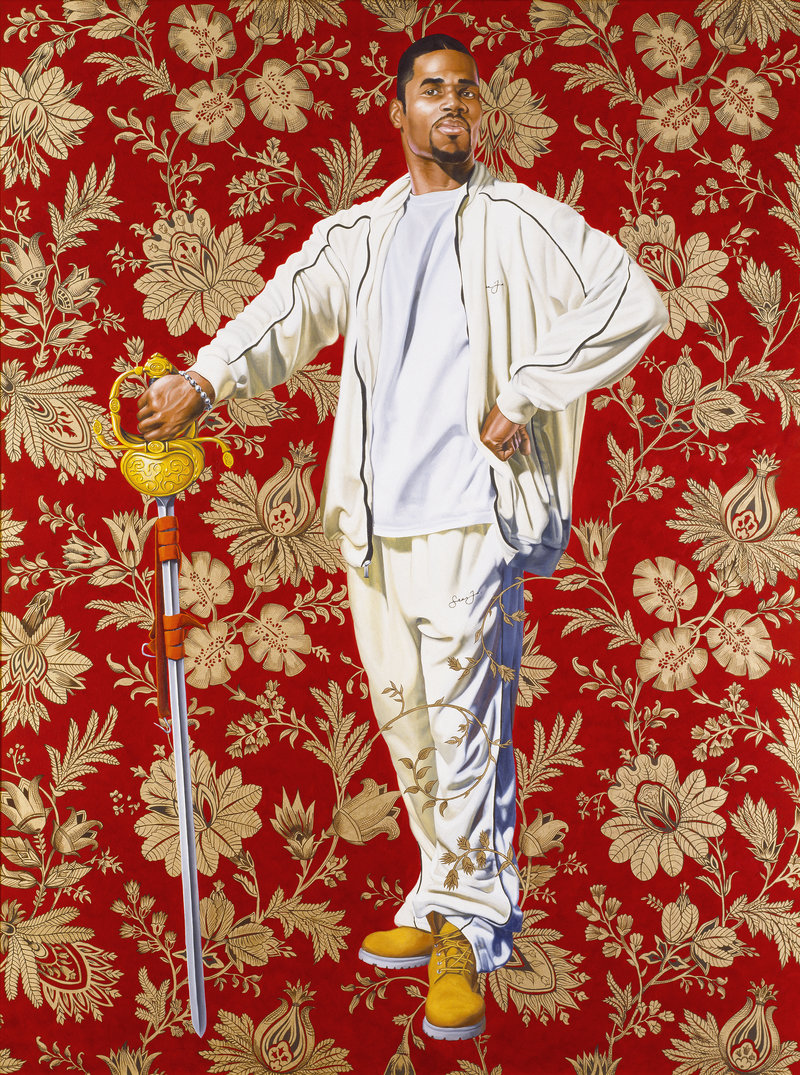
Kehinde Wiley

Photo credit:  https://www.npr.org/2015/05/22/408558234/the-exquisite-dissonance-of-kehinde-wiley

A few years ago, the Virginia Museum of Fine Arts had an exhibit of the works of Kehinde Wiley.  I had not seen his work before, and found his pieces in the exhibit shocking to the eye.  Wiley managed to take traditional poses and settings from art history and infuse them with images of modern African-Americans.  The pieces were jarring to the senses.  As I made my way through the exhibit, it began to dawn on me why my senses were so jarred. By consistently seeing classical art featuring people with light-colored skin, I had been enculturated to expect certain images in art.  The prominence of one kind of subject also created unspoken messages about value, beauty, and power.  Wiley’s vibrant pieces were like an earthquake.  And as someone who considers herself fairly self-aware, I found myself humbled by his work, and sorrowful for my ignorance.

I think that is why I was so surprised by an experience last week.  Last Tuesday night, our family went up to Richmond to take a look at the Robert E. Lee statue and the surrounding damage to businesses and monuments.  For those of you who have not been following the story, as part of the protests about George Floyd’s death and the Black Lives Matter cause, the prominent Confederate monuments in Richmond have come under fire.  The statue of Robert E. Lee’s large stone plinth has been covered in graffiti, protesting George’s death, the treatment of African-Americans by the police, and systemic racism.  As I took in the visceral, pain-filled cries of graffiti, as I looked at pictures of black victims of police violence surrounding the statue, whose names I have prayed for over the years, as I watched families of color take pictures in front of this once pristine, but ever-controversial, statue with a new sense of pride and defiance, what I began to understand is those who are harassed and feel helpless have been begging for our compassion for a long time – cries that could no longer be ignored when staring at that powerfully altered statue.

But mostly, I mourned again for my complacency and blindness.  As a descendant of Confederate veterans, student of African-American history and politics, and pastor of a church built long before the Civil War, I know the issue of Confederate statues and monuments is sensitive.  But watching what was happening at the Robert E. Lee statue created the same feeling as Kehinde Wiley’s art work:  an earthquake for all in positions of privilege and power.  Standing there with my family, I felt like I was on unstable ground, my complicity in systemic racism exposed, and the weight of the question pressing on my chest:  what are you going to do about it?

For my brothers and sisters of color, I am sorry.  I am sorry that you have had to do the work to awaken my senses instead of doing that work myself.  For my brothers and sisters of European descent, we have work to do.  Hickory Neck Church has been posting ways for you to engage this issue – not necessarily telling you what to do, but inviting you into the position of making yourself vulnerable to listening, learning, and acting.  This is our work to do.  It is hard and uncomfortable, and this post may even make you defensive.  Please know that I am here – here to walk with you, here to encourage you, and here to hold us all to Jesus’ message of love.  What you do next will vary widely.  Maybe you can only do one small thing to start.  Our invitation is do something – and keep doing something until we find ourselves doing the work of the kingdom Jesus has desired for a long time.

IMG_8253

Photo credit:  Jennifer Andrews-Weckerly; reuse with permission only.


← Older posts

Recent Posts

  • On Politics, Football, and Love…
  • On Sharing the Love…
  • Sermon – Micah 6.1-8, Matthew 5.1-12, EP4, YA, January 30, 2026
  • On Justice, Kindness, Humility, and the Messy Middle…
  • Feast of the Rev. Dr. Martin Luther King, Jr., January 18, 2026

Archives

  • February 2026
  • January 2026
  • December 2025
  • November 2025
  • October 2025
  • September 2025
  • August 2025
  • July 2025
  • June 2025
  • March 2025
  • February 2025
  • December 2024
  • November 2024
  • October 2024
  • September 2024
  • August 2024
  • July 2024
  • June 2024
  • May 2024
  • March 2024
  • February 2024
  • January 2024
  • December 2023
  • November 2023
  • October 2023
  • September 2023
  • August 2023
  • July 2023
  • June 2023
  • May 2023
  • March 2023
  • February 2023
  • January 2023
  • December 2022
  • November 2022
  • October 2022
  • June 2022
  • May 2022
  • January 2022
  • December 2021
  • November 2021
  • October 2021
  • September 2021
  • August 2021
  • June 2021
  • May 2021
  • April 2021
  • March 2021
  • February 2021
  • January 2021
  • December 2020
  • November 2020
  • October 2020
  • September 2020
  • August 2020
  • July 2020
  • June 2020
  • May 2020
  • April 2020
  • March 2020
  • February 2020
  • January 2020
  • December 2019
  • November 2019
  • October 2019
  • September 2019
  • August 2019
  • July 2019
  • June 2019
  • May 2019
  • April 2019
  • March 2019
  • February 2019
  • January 2019
  • December 2018
  • November 2018
  • October 2018
  • September 2018
  • August 2018
  • July 2018
  • June 2018
  • May 2018
  • April 2018
  • March 2018
  • February 2018
  • January 2018
  • December 2017
  • November 2017
  • October 2017
  • September 2017
  • August 2017
  • July 2017
  • June 2017
  • May 2017
  • April 2017
  • March 2017
  • February 2017
  • January 2017
  • December 2016
  • November 2016
  • October 2016
  • September 2016
  • August 2016
  • July 2016
  • June 2016
  • May 2016
  • April 2016
  • March 2016
  • February 2016
  • January 2016
  • December 2015
  • November 2015
  • October 2015
  • September 2015
  • August 2015
  • July 2015
  • June 2015
  • May 2015
  • April 2015
  • March 2015
  • February 2015
  • January 2015
  • December 2014
  • November 2014
  • October 2014
  • September 2014
  • August 2014
  • July 2014
  • June 2014
  • April 2014
  • March 2014
  • February 2014
  • January 2014
  • December 2013
  • November 2013
  • October 2013
  • September 2013
  • August 2013
  • July 2013
  • June 2013
  • May 2013
  • April 2013
  • March 2013
  • February 2013
  • January 2013
  • December 2012
  • November 2012
  • October 2012
  • September 2012

Categories

  • reflection
  • Sermons
  • Uncategorized

Meta

  • Create account
  • Log in
  • Entries feed
  • Comments feed
  • WordPress.com

Blog at WordPress.com.

  • Subscribe Subscribed
    • Seeking and Serving
    • Join 391 other subscribers
    • Already have a WordPress.com account? Log in now.
    • Seeking and Serving
    • Subscribe Subscribed
    • Sign up
    • Log in
    • Report this content
    • View site in Reader
    • Manage subscriptions
    • Collapse this bar
 

Loading Comments...