• About

Seeking and Serving

~ seek and serve Christ in all persons

Seeking and Serving

Tag Archives: belonging

On Realizing Dreams…

09 Wednesday Sep 2026

Posted by jandrewsweckerly in reflection

≈ Leave a comment

Tags

belonging, best, church, community, dream, faith, flaws, future, Jesus, love, multigenerational, plans, vision

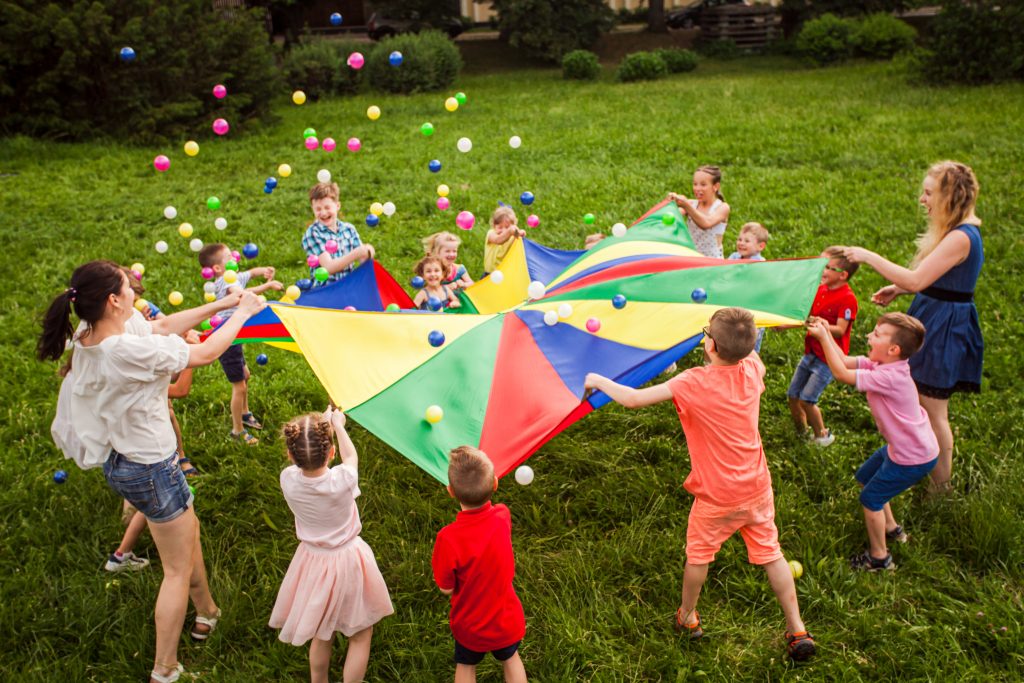
Photo credit: https://blog.gophersport.com/non-competitive-school-community-field-day/

This Sunday our church will host its annual “Rally Sunday,” the day to celebrate the kickoff of the program year and all the ministry we enjoy.  Usually that means registration for things like Sunday School, a fun ice cream social, and seeing some faces that may have missed as they enjoyed travels, took a break from “school year activities,” and generally used the summer for a bit of rest and renewal.  This year, our Rally Sunday has two unusual features:  the celebration of the 20th birthday of our “New Chapel,” and the addition of our inaugural “Field Day.”

These two additions have been bringing me great joy as I anticipate our Rally Sunday.  The celebration of our New Chapel’s birthday has been a lovely exercise in reminiscing, reconnecting with parishioners who were a part of the construction process, but maybe have relocated in the last twenty years, and learning more about our history.  The preparation has meant seeing a painting I didn’t know existed of the groundbreaking for the New Chapel, reading news articles about the process of construction, and hearing stories from longtime members about the excitement of adding more space and conveniences than our almost 300-year-old tiny “Historic Chapel” ever has allowed.  The generation that built the New Chapel was able to envision a future yet to be realized.

The addition of the Field Day has me excited about what new future is being realized.  Though the increase in families with young children has been a gift to us in the last 5-6 years, what I have loved watching is the families creating a community within the community.  They have found their own way of group conversation – not organized by a coordinator but organically organized by taking the reins and making the community their own.  They share resources, plan outings, organize events like a community yard sale, and most recently, conceive of a field day for our parishioners to connect across generations.  This will mean that elders will run stations like three-legged races or bean bag tosses.  This will mean parents will get to watch their children play, entrusting the community to shepherd and delight in their children.  This will mean children will get to know adults other than their parents in a playful way.  In one afternoon, our community is manifesting and living into the vision that countless Vestries have articulated over the years.

All that is to say, Church can be a place where sacred community is cultivated, where connection and belonging is extended, and where joy and celebration is rooted in a place that reminds of the origin of all love and grace: Jesus Christ.  Like any institution made of humans, all churches have their flaws.  And, I love watching when churches live into their best selves.  If you’ve been searching for a sense of community, a sense of belonging and purpose, or a place to refresh your aching heart, you are certainly welcome at our church.  If you’re reading from afar, I invite you to consider finding a local church where you can find a similar meaningful community.  You are welcome here!

On Seeing the Kingdom…

02 Wednesday Sep 2026

Posted by jandrewsweckerly in reflection

≈ Leave a comment

Tags

belonging, church, community, connection, family, generations, God, Kingdom, kingdom of God

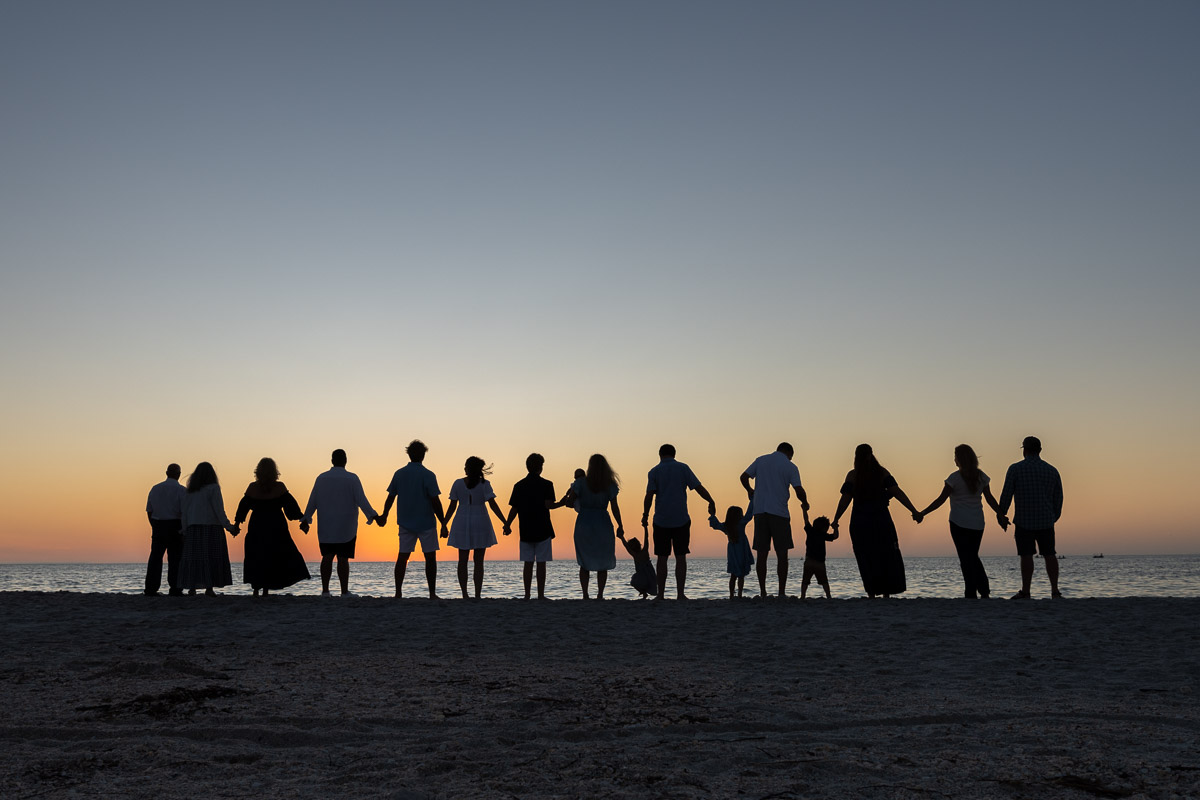
Photo cred: Stephanie Snow, as found at https://stephaniesnowphotography.com/7-poses-for-beach-pictures-for-your-family/

Every summer, our family travels to the beach.  But unlike traditional beach stays, we stay at a community house run through the Episcopal Church.  The house has 11 family rooms, shared living spaces, and two shared meals a day.  The house is only a few blocks from the beach and a couple more blocks to the boardwalk.  Staying in a community house certainly involves some uncertainty – you have no idea who will occupy the other 10 rooms:  singletons, couples, families with either young or older children, rooms occupied by friends of another room’s occupants, or grandparents, uncles or aunts, or cousins of other housemates.  Invariably, communal meals and living spaces are shared across generations, often with people who were strangers at the beginning of the week, but friends by the end.

This year, I was struck by the magic of the multigenerational nature of the house.  I watched as my preteen joined in games with older adults.  I watched as an elementary school-aged child reveled in the design of a birthday cake of someone in her late 60s.  I watched my high schooler talk about the local amusement park with one of the younger residents.  And probably most beautiful, I watched as each morning and evening, hands joined together across family and generational lines, to offer up prayers of thanksgiving and gratitude before meals.

Our experience at the beach reminds me so much of the same beauty I find at Church.  I love watching grandparent-aged folks marveling at the princess dresses of our young ones.  I love watching parents of young children kneel next to adults old enough to be their parents – and watching them exchange looks of awe as a young kid asks for a blessing.  I love watching hugs exchanged across generations, older members asking students about their studies and extracurricular activities, and parents welcome in a harried newcomer parent whose victory that day was just getting the whole family through the church doors. 

When folks are looking for a sense of community or even more specifically for a worshipping community, all sorts of factors come into play:  the music selections, the liturgy choices, the sermon style, or even the dress code.  But probably more important than those surface differences is the way a church makes you feel:  a sense of belonging, of affirmation, of spiritual guidance, of connection – to God and to others.  In “church speak,” you’re looking for the kingdom of God here on earth.  No church is perfect – because every church is made up of imperfect persons.  But when the Church is fully being its beautiful self, there’s a magic you cannot find elsewhere.  Come see for yourself, and fold yourself into the beauty of community!

Sermon – Genesis 37.1-4, 12-28, P14, YA, August 9, 2026

02 Wednesday Sep 2026

Posted by jandrewsweckerly in Sermons

≈ Leave a comment

Tags

belonging, church, dreamer, economy, enough, family, Family Systems, God, health, hurt, Joseph, messy, scarcity, Sermon, sin

Family Systems studies is one of the most important areas of study for a pastor.  Understanding the interconnected emotional network of a congregation helps the community navigate group behavior, anxiety, and change management.  You can study as much scripture, homiletics, theology, ethics, and liturgy as you want, but all you need is one funeral or wedding to watch everything unravel in the face of generations-learned dysfunction and conflict.  To every single person who has ever whispered to me a confession that their family might be a little bit dysfunctional, I make my work to disabuse them of the idea that any family functions perfectly healthily all the time – even the pastor or the therapist’s family – probably especially the pastor and therapist’s families. 

Last week we talked about the not-so-functional family of Isaac and his scheming son Jacob, who wrestled with God after a lifetime of manipulation and grasping.  Lest you think Jacob was an outlier in his family, today we get the story of Jacob’s son’s.  Now, biblical commentators warn about drawing too many parallels between Jacob’s family and modern families.  With Jacob’s two wives, and their two servants, Jacob’s children are descendant from four mothers – all living together and all giving birth to create one family.  But things were even more complicated than that:  remember, Rachel, the younger daughter of Laban, was Jacob’s favorite wife.  But for a long time, Rachel was unable to bear children, and Leah, the older daughter of Laban who Laban tricked Jacob to marry, was heartily fertile – giving Jacob six of his 12 sons (not to mention a daughter).  Rachel’s servant was offered to Jacob and produced two children in her stead, not to be unmatched by Leah’s servant who added two more.  Needless to say, this would have been a very tricky family to minister to at a funeral.

And although we don’t bless marriages to multiple wives, let alone marital-type relations with maid servants (who also don’t exist in modern times), we are very family with complicated families.  Between divorces, blended families, and a whole bunch of stuff we don’t talk about publicly, we know plenty well about how messy family can be.  That’s why today’s story about Joseph is not all that shocking if we’re being honest.  Like his parents before him (Isaac favoring Esau and Rebekah favoring Jacob), and his grandfather before him (Abraham, who cast out Ishmael when Isaac came along), Jacob had favorites among his children.  Jacob’s favorite was a double favorite – the favorite son from his favorite wife.  And Joseph was not the most mature or what we call “self-differentiated” member in the family:  In just a few short verses (and in some of the verses we skipped today), we know that Jospeh was a tattletale on his half-brothers, that he shared aloud two dreams he had where his brothers and father were bowing down to him, he sported a beautiful, embroidered coat – one designed for royalty (not shepherds) – and that his dad was unambiguous about his favoritism for Joseph.  You can hear the anger and projection in his brother’s words, “Here comes that dreamer!”  Now, we can argue about whether Reuben is a hero for ensuring the brothers threw him in a pit instead of killing him, or Judah was being caring by selling Joseph into slavery instead of letting him die in the pit – but the triangulation, conflict-avoidance, and lack of self-differentiation in this family is off the charts!  This would be a family systems professor’s dream case study.

But here’s the funny thing happening behind all that mess.  Joseph’s brothers aren’t the first people to try to stifle a dreamer.  On April 4, 1968, after having given his “I have a dream” speech in DC, and after rallying the sanitation workers in Memphis, Martin Luther King, Jr., was murdered.  He was murdered because many did not like his dreams and did not want him to speak any more about them.  On a memorial sitting outside the National Civil Rights Museum on the property of the preserved Lorraine Hotel where King was murdered are etched words from today’s passage:  “They said to one another.  Behold.  Here cometh the dreamer…  Let us slay him…  And we shall see what will become of his dreams.” 

At the heart of Joseph’s story, and the reason his story is so close to home, is certainly about family dynamics – but at an even deeper level is the problem of sin.  At the root of the hatred of Joseph and the desire to kill a brother is envy.  We know envy as one of the classic seven deadly sins.  Cain murdered his brother Abel out of envy.  Envy is prohibited in the ten commandments.  As theologian Geoffrey Hoare explains, “Envy is the name given to either that desire we have for some possession or quality or talent that belongs to someone else, or the desire that the other not enjoy some possession, quality, or talent…Envy can stem from the belief that there is not enough favor to go around, from a sense that life is fundamentally unfair, or possibly from simple greed.  Any of these causes for envy are in direct opposition to the revealed purposes of God for the world, and so envy gives rise to rebellion against the Lord of the universe.  In God’s economy, material circumstance is the source of neither happiness nor salvation.”[i]  Jacob’s brothers operated out of envy and in opposition to God’s economy.  The people of this country operated out of envy when talking about sharing equal rights.  We act out of envy every time we gather around this Eucharistic table caught up in our inability to operate within God’s economy, like Jospeh’s brother also ate together while their brother languished in a pit nearby.

Edwin Friedman wrote a lot about Family Systems, talking about the multigenerational nature of emotional or family systems.  “The theory is that patterns of relationship get played out and repeated from generation to generation, unless or until someone seeks to change those patterns, largely through self-differentiation and a willingness to resist succumbing to anxiety while the family system resists this change and seeks to return to its status quo.”[ii]  Abraham couldn’t see God’s economy when his first-born son came from his wife’s servant.  Jacob couldn’t see God’s economy when he stole Esau’s birthright and blessing.  Laban couldn’t see God’s economy when Jacob desired Rachel over Leah.  Joseph’s brothers couldn’t see God’s economy when Jacob loved one son over the other eleven.

What Family Systems tell us is that we cannot fix others.  Joseph could not force his brothers to see generously instead of seeing with jealousy.  We cannot force parents, siblings, children, friends, or fellow church members to see with God’s abundance instead of life’s scarcity.  Paradoxically, that is where we find the good news in Joseph’s story.  The only way to mend a broken family system is mend ourselves – to function in a non-anxious, self-differentiated way.  We won’t get to hear the whole of what happens to Joseph in slavery next week (spoiler alert – he serves as a slave for 12 years, is then imprisoned for many more years before his ability to interpret dreams is discovered by Pharoah.  He becomes Pharoah’s number two, saving the country and eventually his own people when a famine comes).  But next week, we will find a Joseph, who, in his ability to self-differentiate in an unhealthy system reencounters his brothers with forgiveness and grace, breaking generations of hurt.  By the end of the book, Joseph will say to his brothers, “Even though you intended to do harm to me, God intended it for good, in order to preserve a numerous people, as he is doing today.”[iii]

Joseph invites us today to step out of our generational habits of harm, and to step into habits of good.  Joseph invites us into redefining how systems malfunction but focusing on our own healthy functioning.  Joseph invites us to look through the lens of God’s economy where there is always enough, and not through society’s economy that only sees scarcity.  Healthy functioning is not easy work, and the work takes good partners for support and strength.  The church invites you to use this table not as a place to let your hurt and envy fester, but to release that hurt and envy to God.  This table will empower you to feel and know what belonging to each other really means.[iv]  Amen.


[i] Georffrey M. St. J. Hoare, “Theological Perspective,” Feasting on the Word, Supplemental Essays Year A (Louisville: Westminster John Knox Press, 2011), 3.

[ii] Hoare, 5.

[iii] Genesis 50.20.

[iv] Gary V. Simpson, “Pastoral Perspective,” Feasting on the Word, Supplemental Essays Year A (Louisville: Westminster John Knox Press, 2011), 5.

On Baptisms, Community, and Belonging…

04 Wednesday Sep 2024

Posted by jandrewsweckerly in reflection

≈ Leave a comment

Tags

baptism, beauty, belonging, beloved, challenge, child of God, Christ, church, God, image of God, love

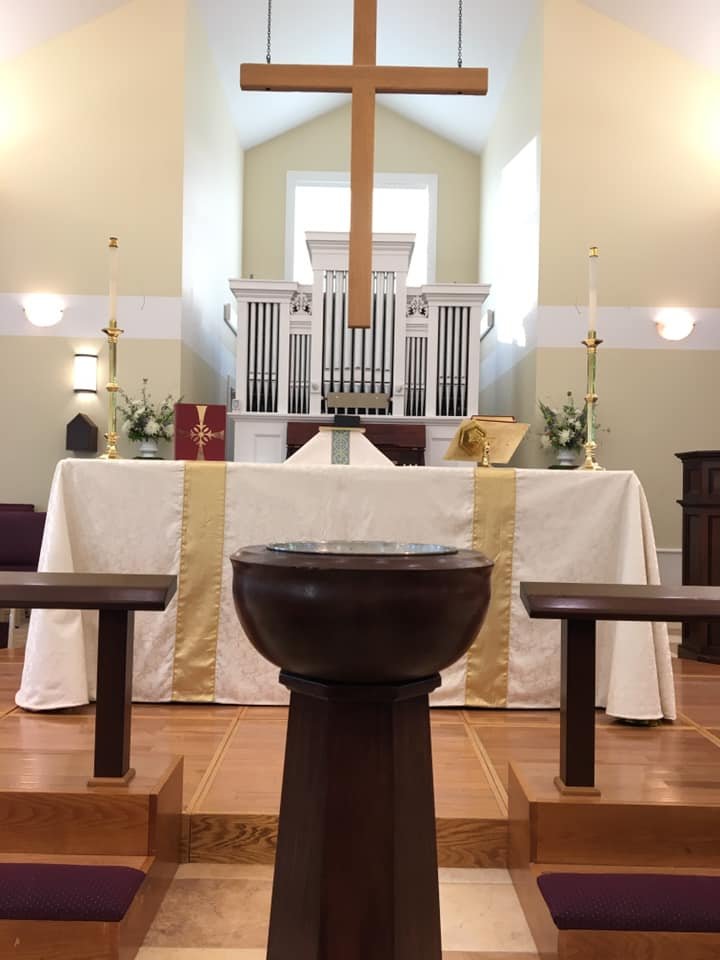
Photo credit: https://www.sacredheartcalgary.ca/sacraments/baptism-2/baptism/

One of the challenges of a church with multiple service times is the inevitable formation of multiple smaller communities within a larger community.  Between different attendees and different worship styles, each service begins to take on its own personality.  I have had families with young children show up at our early service, and had to be sure to let them know that the later service might be much more familiar and comfortable than the meditative feel of the early service.  Or I have had folks who grew up in an Anglo-Catholic tradition show up at our later service, and had to be sure to let them know they might find the more formal liturgy of the early service more heart-warming.  The trick is figuring out how to create a sense of “home” in each worship service while also providing opportunities for cross-pollination across services.

I think that is why I am so excited for a baptism at my church this weekend at the early service.  We almost never have children at that service (I know very few parents of littles who can get their families at church by 8:00 am), and we do not have music (for those littles to join in the joyful noise making), and the pews in the historic chapel are way less accommodating than the movable chairs in our newer chapel.  But the mother of the baptized grew up in that space and wants her child to experience the centuries of prayer found there.  And although there may not be other children there, she will tell her son of the days when she used to sit in the window wells or babies crawled under the pews.  And when she sees parishioners the age of her son’s grandparents in worship, she will be able to tell her son about the fellowship of saints, and maybe even let parishioners take a turn rocking her son if he becomes fussy.

That is the true beauty of the kind of community church creates.  No matter which service you choose, there is a child whose grandparent may live far away, a grandparent who hasn’t seen his children in months or a year, and a parent who just needs a place who gets how hard parenting is.  And those three groups come together as a fluid organism, with all their everyday human stuff, laying their troubles before God, praising God for their blessings – even when it is sometimes hard to see them, and breaking bread together, recognizing the beauty of a diverse room of people reflecting the image of God. 

That is what this Sunday’s baptism is all about:  bringing another human being into to the strange, mysterious, beauty of Church; helping him know that he is a child of God and is marked as Christ’s own forever; teaching him that he will now belong to a community that will both love him unconditionally and challenge him to live into his vocation and calling – whatever it may be.  We baptize that little one to tell him all that.  But we also baptize that little one to remind ourselves of that reality:  to remember how we too are beloved children of God with a commission to love and serve the Lord in the world.  No matter what service you choose, we all need that message.   

Sermon – John 10.11-18, E4, YB, April 21, 2024

01 Wednesday May 2024

Posted by jandrewsweckerly in Sermons

≈ Leave a comment

Tags

baptism, belonging, body of Christ, Christ, community, God, Good Shepherd, inclusion, Jesus, membership, obligation, Sermon

In a few moments, we will baptize Abby and Laela, sisters who are ages 6 and 7 respectively.  What’s interesting about a baptism for candidates who are not infants is there is much more cognition, curiosity, and craving.  In a sense, Abby and Laela understand more profoundly that their baptism is a sacrament of belonging – a welcoming into full membership in the body of Christ.  One of Hickory Neck’s strongest gifts is the powerful gift of welcome.  You talk to any newer or longer-term member, and they will likely tell you that Hickory Neck’s warm welcome was what drew them in and made them linger.  There was a sense of inclusion and care that made them want to stay.

For a community so skilled in welcoming and especially as a community who will be welcoming Abby and Laela today, we hear a powerful word from John’s gospel about life with the Good Shepherd.  For people familiar with the lectionary, the fourth Sunday of Easter, affectionally known as Good Shepherd Sunday, is a favorite Sunday.  Every year on this Sunday we hear about Jesus’ proclamation of being the Good Shepherd.  This year’s text from John tells us how Jesus the Good Shepherd lays down his life for the sheep; how Jesus will protect the sheep; how he knows the sheep and the sheep know him; and that there are other sheep that do not even belong to the fold that Jesus will bring into the beloved fold.  When we hear a text like this, we get a warm-fuzzy feeling[i] – the kind of feeling of protected belonging that we want Abby and Laela to always feel with Jesus and the church community.  That feeling of care and belonging has inspired artwork, song, liturgies, and sermon alike.  This Good Shepherd Sunday reminds all of us of what inspired us to keep coming back to this modern incarnation of the Good Shepherd’s fold here at Hickory Neck.

The challenge about the warm-fuzzies that come with belonging is that chasing a sense of belonging can become consumeristic:  a pursuing of a feeling that is received without any expectation of reciprocity.  The pursuit of belonging makes sense.  As one scholar suggests, “Forming authentic and holistic community is hard work – we dole out parts of ourselves in stingy bits and pieces, avoid being vulnerable with each other, hold back our feelings and thoughts, are afraid to confront each other, judge each other without mercy, hold grudges, set impossibly high standards for ourselves and each other…We have a difficult time trusting each other,” making real and life-giving community hard.[ii]  But belonging with Jesus and within the faith community is not something that is just received.  Belonging comes with obligation.  No longer are we individuals feeling alone – now we are a part of a larger whole.  Though beautiful, that whole does not work without each of its members.  Receiving the warm-fuzzy feeling of belonging results in the action of giving:  of contributing in your own right to the community.[iii]    

The good news is that although we use language about welcome at Hickory Neck, we actually mean belonging.  Yes, we were likely greeted warmly, maybe given a welcome gift or sent a greeting by mail soon after our first visit, and often we were recognized and engaged after the service or at Coffee Hour.  But I cannot tell you the number of people at Hickory Neck who have also told me about how accessible involvement and even leadership are here.  From stories of being recruited to lead Fall Festivals within the first year of membership, to hopping in as an usher or reader, to being invited to a Bible Study, service opportunity, or a Foyer Group, to becoming a financial supporter of programming:  you are not just welcomed here – you are invited into belonging here.  Though we may not use the strong word of “obligation” or “responsibility,” we teach through our behavior that warm welcome means full membership in the body of Christ.  We join in not because we have to, but because the warmth of the Good Shepherd’s inclusion of all overwhelms us into wanting to give back – both here inside these walls and outside these walls in the wider community.

And that is what we have been teaching Abby and Laela about baptism.  Today, as the water is poured over their heads and the oil rubbed into their foreheads, they will be welcomed into full membership in the body of Christ.  And even though age six and seven might seem too young for the “obligations of membership in the body,” we need their gifts just as much as they need the gift of belonging.  So, when they bring forward the communion elements, or participate in Godly Play, or join in singing and song, they make our community complete.  They remind us of the broadness of God’s inclusion, the power of being known, and the resultant discipleship that springs out of all of us – no matter size, age, or ability.  Today, the Good Shepherd welcomes Abby and Laela into the fold – into the body of Christ.  Today, Abby and Laela invite us to renew our sense of belonging in that same fold and all that belonging entails.  And for that, we give thanks to God.  Amen.


[i] As described by Matt Skinner, on the Sermon Brainwave podcast, “#961: Fourth Sunday of Easter – April 21, 2024,” April 14, 2024, as found at https://www.workingpreacher.org/podcasts/961-fourth-sunday-of-easter-april-21-2024 on April 18, 2024.

[ii] Barbara J. Essex, “Homiletical Perspective,” Feasting on the Word, Year B, Vol. 2 (Louisville:  Westminster John Knox Press, 2008), 451.

[iii] As described by Karoline Lewis, on the Sermon Brainwave podcast, “#961: Fourth Sunday of Easter – April 21, 2024,” April 14, 2024, as found at https://www.workingpreacher.org/podcasts/961-fourth-sunday-of-easter-april-21-2024 on April 18, 2024.

Sermon – John 13.31-35, Acts 11.1-18, E5, YC, May 15, 2022

25 Wednesday May 2022

Posted by jandrewsweckerly in Sermons

≈ Leave a comment

Tags

baptism, belonging, challenging, Christian, communion, Episcopal Church, evangelism, General Convention, Holy Eucharist, Holy Spirit, hospitality, identity, Jesus, love, membership, Peter

Every three years, the entire Episcopal Church gathers for what is called General Convention.  Eight lay and ordained people from every diocese in the Episcopal Church and all the bishops gather in two houses to pass legislation that will govern the whole of the church.  Issues range widely, from authorizing new liturgies, to promoting social justice issues, to human resources issues for clergy and lay staff, to who will guide and govern the church.  One topic that is coming around again this year is whether the Episcopal Church should remove the baptism requirement for the reception of Holy Eucharist.  Even though practices range pretty widely, technically the canons of the Episcopal Church reserve communion for those who have been baptized.  The issue is highly contested, has been written about widely, and I could spend a whole hour teaching on this topic.  At the heart of the debate are issues of belonging, identity, hospitality, and evangelism.

 As I have watched some of the initial debate heat up in the Episcopal Church, I marvel at how, as much as the Church has changed over the years, much remains the same.  After Jesus’ ascension, and as the disciples and apostles began to spread the Good News far and wide, Peter and the other disciples begin to debate the issue of membership – whether uncircumcised Gentiles could become full members of the body of Christ without being circumcised.  In our reading from the Acts of the Apostles, we hear the story of how the apostles call Peter in and question his fellowship with uncircumcised Gentiles.  Peter launches into a story about a vision he had and what God said to him about “membership” in the body of Christ.  After hearing Peter’s testimony, there is silence.  The weight of such a change hovers in the silence – issues of belonging, identity, hospitality, and evangelism hanging in the air.

So much about this story today is human.  Time and time again, from the beginning of time, we have debated who is in and who is out.  There are benign ways and malicious ways of defining those boundaries, but ultimately those boundaries help us know who we are so we understand who we are not.  We agree to a set of behaviors and activities every time we reaffirm our baptisms.  Clubs and civic groups have criteria for admitting members.  Colleges have criteria for who can be a student, and what can get you expelled.  Even retirement communities have rules about what age you can be before you can move into the community.  But the malicious ones are trickier.  Redlining is a practice that has kept people of certain races and ethnicities from owning homes in certain areas.  Women are unable to serve as ministers in certain faith traditions.  LGBTQ identifying individuals were denied the same spousal rights and parenting rights as straight individuals.  The question becomes how do we define who we are and what we are about without harming or maligning others?

Some have argued Jesus gives us the answer in John’s gospel today.  Jesus says, “I give you a new commandment, that you love one another.  Just as I have loved you, you also should love one another.  By this everyone will know that you are my disciples, if you have love for one another.”  The instructions sound simple enough.  Our Presiding Bishop preaches nothing but the gospel of love.  But the instruction to love one another so people will know we are disciples does not make the issue of membership simple.  I love my Jewish and Muslim brothers and sisters but that does not make them Christian any more than their love of me makes me Jewish or Muslim.  I remember in seminary an interfaith dialogue between our Episcopal Dean and a Muslim leader in the community.  When they were establishing the ground rules for the conversation, the Muslim leader said, “We both enter into this conversation with deep respect for one another.  But for either of us to say that we are not trying to recruit the other would be a lie.  Of course I want you to become a Muslim:  I would not be a good Muslim if I did not think being a Muslim was the right path.  The same is true for you.  If you are not trying to convert me, I would wonder about the ferocity of your faith.”

What the texts do today is invite us into a challenging space.  By telling us to love one another, Jesus is not telling us that love denies who we are.  Likewise, by the disciples arguing about who can be Christians and who cannot, and coming to a conclusion that the Holy Spirit is doing something new does not mean that the disciples are diminishing their identity or the identity of the community.  Peter does not water down the gospel.  He simply invites the disciples to reconsider who could ascribe to that gospel.  What these two texts do together is remind us that loving one another means both holding fast to the gospel, while trusting the Holy Spirit enlivens the gospel.  The two texts together remind us that loving one another means we can be both generous and orthodox.  The two texts together remind us that loving one another means we can say yes and no, and find a gracious gray area where love abides.  What Jesus simply asks is that in the silence of the question – the silence that stood between Peter and the disciples before they made a decision – we allow love to do love’s work, so that our discernment of the Spirit can flourish.  Amen.

Sermon – Isaiah 43.1-7, Luke 3.15-17, 21-22, EP1, YC, January 16, 2022

23 Sunday Jan 2022

Posted by jandrewsweckerly in Sermons

≈ Leave a comment

Tags

baptism, belonging, blessing, children, communal, exile, God, hope, individual, Jesus, love, pandemic, redemption, Sermon, you

A couple of weeks ago, despite months of planning, I was not sure today would happen.  Of course, we would celebrate the feast of Jesus’ baptism regardless of whether we were gathered in person or online, but I really wanted all the things that come with an in-person baptism – babies crying the middle of sermons, moms and dads rhythmically bouncing their children to soothe them during the service, crayons scattered wherever children find themselves in the worship space.  But most of all, I love having the congregation’s children gather around the font, eyes fixed on the pouring of water, clutching onto the sacred items we have asked them to hold, nervously giggling as they wait for the big moment of their friends’ baptism.  Their energy is reflected by the adults in the space but seeing that energy up close is invigorating.

But then, we suspended physically gathered worship, and everything shifted.  We had choices in front of us, and after much prayer and discernment, the baptismal family decided to gather their small family without the enthusiasm of the whole congregation physically present.  Not until I read today’s Old Testament lesson did I appreciate the parallels in our collective journey to this day.  You see, Isaiah has been prophesying to a people in exile.  The sinful generations of Israel have led to their own demise, and they now sit in Babylon in despair, recognizing their failings, feeling isolated from everything familiar, wondering if they will ever find God’s favor again.  Though we have not been exiled from our land, this pandemic has created our own exile of sorts.  Our weary hearts long for good news.

Into these twin exiles in Babylon and in pandemic, God speaks words of redemption, belonging, and hope.  “Do not fear, for I have redeemed you; I have called you by name, you are mine,” God says.  “When you pass through the waters, I will be with you; and through the rivers, they shall not overwhelm you; when you walk through fire you shall not be burned…For I am the Lord your God…you are precious in my sight, and honored, and I love you.”  These words from God are a balm to the people of God.  But each of those promises are not only for the nation of God.  Those “you”s are accompanied by the second-person-singular verb forms, as one scholar explains, “as if speaking to each member of the community.”[i]  I will be with you.  You are mine.  You are precious and honored.  I love you.

That is what we do in baptism.  Although baptism is a communal event – whether, like in Luke’s gospel, as Jesus stands in a line of people to be baptized along with them, or whether we gather in some hybrid form of in-person and online worship – even though baptism is necessarily communal, baptism is also about the promises to a unique child of God:  who belongs to God, with whom God is present, and who is loved.  We hear echoes of God’s blessing from Isaiah in Jesus’ baptism, when God says, “You are my Son, the Beloved; with you I am well pleased.”  The Church claims the same for Reed and Zenora today – “You are my child, whom I love; with you I am well pleased.”[ii]  Although Reed is old enough to hear and understand this blessing, we as a community, with Zenora’s parents and godparents, promise today to keep reminding Zenora of her identity as a child of God, whom God protects, to whom she belongs, and who is deeply loved and honored.  In truth, we all need that reminder, especially during these dark times.  That is why we will all reaffirm our baptismal covenant in just a few moments – so that we might reclaim our baptismal identity and receive again the charge of our call. 

This service today is not just a day of blessing for Reed, Zenora, and all of us gathered in hybrid worship.  Today’s baptisms are also a commission.  As one pastor writes, “Luke uses very few words to share with us the baptism of our Lord.  But those few words lead us to very deep wellsprings of joy in the faithful ministry.  To identify with all people, to depend upon God in prayer for the strength to live and to love, and to hear the affirmation of your God as the source of your calling and purpose in life are the most enduring joys of life.  Theses are the blessing of our life together in Christ as the church.”[iii]  Our invitation today is to take this pivotal moment for Zenora and Reed, to receive the reminder of your own beloved status, and then to go back out into the world with a reenergized sense of purpose and renewal.  God says powerful words to us today.  I love you.  Our work this week is to say the same to a hurting world.  I love you.  Amen.


[i] Kathleen M. O’Connor, “Exegetical Perspective,” Feasting on the Word, Year C, Vol. 1 (Louisville: Westminster John Knox Press, 2009), 219.

[ii] Robert M. Brearley, “Pastoral Perspective,” Feasting on the Word, Year C, Vol. 1 (Louisville: Westminster John Knox Press, 2009), 240.

[iii] Brearley, 240.

Sermon – Genesis 3.8-15, Mark 3.20-35, P5, YB, June 6, 2021

16 Wednesday Jun 2021

Posted by jandrewsweckerly in Sermons

≈ Leave a comment

Tags

anxiety, belonging, discomfort, evil, God, goodness, Holy Spirit, Jesus, listen, relationship, relax, restless, Sermon, sinfulness, summer, The Fall

Last week we talked about the long journey we had made in the liturgical year that helped us get to Trinity Sunday.  After Trinity Sunday, we enter into the next long journey of what we call “ordinary time,” that time that stretches through summer and the fall when we settle into the stories about the life and ministry of Jesus.  In some ways, what happens in the Church is like what happens in the summer – we kick off our shoes, pull up a refreshing beverage, and settle into a good summer read.  The shift should be a palpable sigh of relief as we ease into the familiar stories we love.

Except, nothing about scripture lessons today is remotely relaxing – in fact, our Old Testament and Gospel texts do quite the opposite, making us tense with discomfort and anxiety.  We start with the story in Genesis, traditionally call the story of the fall.  Adam and Eve have already consumed the fruit from the forbidden tree, and today we hear the story of their being “caught.”  Right away, God knows something is amiss, and how do Adam and Eve respond?  In a comical exercise of finger pointing.  Adam blames both Eve and God:  Eve because she “made” Adam eat the fruit and God because God gave Eve to him in the first place.  Eve blames the serpent, recognizing she was tricked.  The curses from God fly:  on the serpent, on the land, and later in Genesis, on the man and woman and their habitation.  Historically, this text has been used to subjugate women, but most theologians know this story impacts all kinds of theological concepts – from our sinful nature, free will, promises of salvation, and the covenant.[i]  But you do not have to be a theologian to read this text and know that the finger pointing of humans when caught in sinfulness is not going to lead to goodness.

Then we get this strange story about Jesus in Mark’s gospel.  Jesus is simply sitting among the people and his disciples when things go crazy.  The scribes come and begin to proclaim that Jesus is possessed by Satan, and anything seemingly good Jesus is doing is rooted in evil.  Then Jesus’ own family assume he has had a mental breakdown and they come to restrain Jesus.  The people who should know and love Jesus best and the people who should be able to recognize the power of the Holy Spirit try to cast him out.  In response, Jesus rejects them all.  Instead, he professes to have no family except those who gather around him and do the will of God.  Jesus does not actually define what the will of God is, so we should be careful not to project our own notions of doing justice or serving those in need.  For now, being a part of the family of Jesus seems to involve sitting around.  As scholar Matt Skinner says, “The way into kinship—belonging—with Jesus is sticking around. It’s to acknowledge that you’ve been caught up into a new reality—this transformational alternate reality called ‘the kingdom of God’—and to hold on for the ride. That’s probably not the entirety of what it means to do or to accomplish or to commit to ‘the will of God,’ but it seems to be the biggest part, as far as Mark is concerned.”[ii]

Perhaps that is our invitation this summer too.  We are still invited to kick off our shoes, sit at Jesus’ feet, and pull up a good book.  But instead of rereading a comforting story, this may need to be a summer of reading the stories that ask us hard questions: of whether we are in right relationship with God or hiding who we really are; whether we are insisting on our own will or way instead of the way of Jesus; whether we are too restless to slow down and simply sit with the Holy Spirit.  In the flurry of regathering, of finally getting to experience some familiar practices like sitting in chairs [pews] we have missed, using our voices to sing [speak] among others, and seeing familiar friends and meeting new ones, we can miss why we love this community so much in the first place.  We can forget that Hickory Neck is a place we like to come because we are a community who does not let each other hide, who challenges one another to follow the way of love, who will remind us to slow down and listen for the soft voice of God.  Who we are and what this community does is the reason why we will continue to livestream services – so those who still need to be at home can be a part of us too, so those who are tending to life’s daily commitments can come back to the video for a good word, and so those who are longing for something more in life can get to know this Jesus – who redefines who is in and out – and sit at his feet with us.  Our experience this summer might not be one you were hoping for after a long, hard fifteen months – but I suspect this summer will be even better than you could have imagined.  Amen.


[i][i] James O. Duke, “Theological Perspective,” Feasting on the Word, Year B, Vol. 3 (Louisville: Westminster John Knox Press, 2009), 98.

[ii] Matt Skinner, “Stick Around,” May 30, 2021, as found at https://www.workingpreacher.org/dear-working-preacher/stick-around on June 4, 2021.

Sermon – John 10.11-18, Psalm 23, E4, YB, April 25, 2021

28 Wednesday Apr 2021

Posted by jandrewsweckerly in Sermons

≈ Leave a comment

Tags

belonging, children, control, Good Shepherd, intimacy, Jesus, love, mutuality, parent, relationship, respect, Sermon, sheep, shepherd, vulnerable

As a new parent, I struggled during the toddler years – those years when the child is first asserting their will, realizing they want to be in control too.  And so, after trying calm coaxing and verbal reasoning, I eventually honed the art of muscling:  I realized I was stronger than my toddler, so I could just sweep them up and carry on doing what I knew we needed to do anyway.  Sometimes the swooping was playful, swinging the child around or letting them hang upside-down.  But more often, it was just a strong, steady sweep – getting us out of the grocery store during a meltdown, getting us out of the house and into the car for an appointment, getting us away from the television.  But that kind of parenting only works for so long – approximately as long as you can physically lift a flailing child, which for me, was not that long.  That is when parenting gets real.

I have been thinking a lot about the Good Shepherd this week, and the similarities between shepherding and parenting.  As children, or more aptly, as sheep, we want a shepherd who will take care of us.  The words from today’s psalm and John’s gospel lay out the idealized caregiver:  The Lord is my shepherd; I shall not be in want[i]; the good shepherd lays down his life for the sheep.[ii]  When we think about what we want from God, especially after a long year-plus of a pandemic, of political divisiveness, of struggling with the institution of racism, we want a God who will cradle us in, and love and protect us unconditionally.  I suspect that is why so many churches have paintings, stained glass windows, and statues of Jesus carrying a perfectly clean, cute little lamb on his shoulder.

I confess, I do not know enough about shepherding, but even from watching the lambs in Colonial Williamsburg, I can assure you, those lambs are not perfectly clean and well-behaved.  There is something about our saccharine-filled images of the Good Shepherd that feel unrealistic to me.  As much as I want to crawl in the lap of a loving, protective Jesus, something about our images of the Good Shepherd does not quite capture reality.  This week, I watched a YouTube video of a man trying to rescue a sheep.  There was this long narrow ditch alongside a road, and the sheep’s hind end was hanging out of the ditch.  A man, carefully using his strength, managed to grasp the sheep’s legs and pull the sheep free.  The freed sheep bounded away from him, bouncing gracefully toward freedom – of course until he bounded back over the ditch toward the other side of the road, jumping head-first, right back into the ditch.  In your imagination, you can almost hear the deep, audible sigh of frustration by the man who had just helped him.

I think that is why I like verse 14 of John’s gospel so much, “I am the good shepherd.  I know my own and my own know me.”  The shepherd knows how to love unconditionally; but the shepherd also knows all our “conditions”:  the times when we stubbornly do things our way, the times when we refuse wisdom and jump right back into trouble, the times when we project our anger and frustration on others.  And the sheep know the shepherd:  the times when the shepherd will try to reason with us instead of muscling us to do the shepherd’s will, the times when the shepherd forgives us when we confess our sins, the times when the shepherd sighs deeply in disappointment at our refusal to lie down in green pastures.  There is an intimacy to that relationship, as one scholar describes, a “mutual recognition and a mutual belonging together.”[iii] 

Our invitation this week is an invitation into that mutuality and intimacy.  The invitation is not an invitation into a snowy-white, paternalistic, cradling love.  The invitation is into a messy, complicated, but respectfully intimate relationship where we are known, and we know our shepherd.  Through this real, honest, vulnerable place we find strength to then go back out into the world, allowing “the Shepherd’s voice to speak through us as we reach out to the lost and hurting we encounter on the way,”[iv] sharing the love of the risen, shepherding Jesus that has saved us from many a ditch!  Amen.


[i] Psalm 23.1

[ii] John 10.11

[iii] Stephen A. Cooper, “Theological Perspective,” Feasting on the Word, Yr. B, Vol. 2 (Louisville:  Westminster John Knox Press, 2008), 448.

[iv] Nancy R. Blakely, “Pastoral Perspective,” Feasting on the Word, Yr. B, Vol. 2 (Louisville:  Westminster John Knox Press, 2008), 452.

On the Why of Church…

04 Wednesday Sep 2019

Posted by jandrewsweckerly in Uncategorized

≈ 5 Comments

Tags

attend, belonging, church, community, God, habit, hope, invite, Jesus, journey, love, meaning, purpose, worship

67066969_10157939010987565_1287447765877522432_n

Photo:  Hickory Neck Episcopal Church; reuse with permission only

I spent the last almost three weeks on vacation.  It was a time relaxation, refreshment, and restoration.  It was a time of unplugging, unwinding, and uninterrupted space.  It was a time of sabbath.  And because most Sundays I am in church, I experienced not going to church.  On Sundays, it turns out lots of people are eating brunch, exercising, spending time with their families, enjoying nature, working, or just enjoying a good read.  And for a couple of weeks, I did just that.

The weeks away got me thinking:  why do we go to church on Sundays, when there are so many other things we could be doing?  As I contrasted the time of not going to church with my years of going to church, I realized I go to church for so many reasons – some big and some small.  The big ones may be obvious.  I want to connect with, learn about, and feel loved by God.  I want a sense of community, where I belong and am known.  I want a sense of purpose rooted in Jesus’ command to love God, self, and neighbor.

The small ones are less obvious.  I love the beauty of the people in church:  the elders laughing heartily, children and their looks of wonder and their awesome questions, people caring for the needs of others when they think no one is looking.  I love the power of music:  from the familiar song that takes me back to fond place, to the unfamiliar song with a lyric that blows my mind, to the transcendent way harmonizing voices can bring me to tears for some unknown reason.  I love the little moments:  when an invitation to prayer reminds me of a hurting loved one, when sharing the peace with someone with whom I have had hard feelings dissolves all tension, when the burn of the communion wine down my throat lingers for several minutes – as if Christ is not ready to leave me yet, when the light shines just so on the cross, reminding me once again of the big stuff of Church.

Going to Church every week gives me a sense of belonging – to God and to other people, gives me a sense of meaning in a world that is often confounding, and gives me a sense of hope.  Maybe you have gotten out of the habit of going to Church, for a hundred little and good reasons.  If so, I invite you to shake things up this week and try Church again.  Maybe you left the Church in hurt or never really were introduced to Church.  If so, I invite you to consider stepping in the doors and giving the Church a chance to share Christ’s love with you.  Or maybe you go to Church every Sunday, but things have begun to feel stale.  If so, I invite you to take a deep breath, sit in a different place, or simply allow yourself to be surprised by the Holy Spirit.  I invite you to my Church this week – for some of the reasons here, for your own reasons, or for reasons unknown to you.  I will be there with open arms, ready to introduce you to a group of awesome people, on the same journey to know our awesome God.

← Older posts

Recent Posts

  • On Change and Bread…
  • Sermon – Exodus 14.19-31, P19, YA, September 13, 2026
  • On Realizing Dreams…
  • On Seeing the Kingdom…
  • Sermon – Exodus 3.1-15, P17, YA, August 30, 2026

Archives

  • September 2026
  • August 2026
  • July 2026
  • June 2026
  • May 2026
  • April 2026
  • February 2026
  • January 2026
  • December 2025
  • November 2025
  • October 2025
  • September 2025
  • August 2025
  • July 2025
  • June 2025
  • March 2025
  • February 2025
  • December 2024
  • November 2024
  • October 2024
  • September 2024
  • August 2024
  • July 2024
  • June 2024
  • May 2024
  • March 2024
  • February 2024
  • January 2024
  • December 2023
  • November 2023
  • October 2023
  • September 2023
  • August 2023
  • July 2023
  • June 2023
  • May 2023
  • March 2023
  • February 2023
  • January 2023
  • December 2022
  • November 2022
  • October 2022
  • June 2022
  • May 2022
  • January 2022
  • December 2021
  • November 2021
  • October 2021
  • September 2021
  • August 2021
  • June 2021
  • May 2021
  • April 2021
  • March 2021
  • February 2021
  • January 2021
  • December 2020
  • November 2020
  • October 2020
  • September 2020
  • August 2020
  • July 2020
  • June 2020
  • May 2020
  • April 2020
  • March 2020
  • February 2020
  • January 2020
  • December 2019
  • November 2019
  • October 2019
  • September 2019
  • August 2019
  • July 2019
  • June 2019
  • May 2019
  • April 2019
  • March 2019
  • February 2019
  • January 2019
  • December 2018
  • November 2018
  • October 2018
  • September 2018
  • August 2018
  • July 2018
  • June 2018
  • May 2018
  • April 2018
  • March 2018
  • February 2018
  • January 2018
  • December 2017
  • November 2017
  • October 2017
  • September 2017
  • August 2017
  • July 2017
  • June 2017
  • May 2017
  • April 2017
  • March 2017
  • February 2017
  • January 2017
  • December 2016
  • November 2016
  • October 2016
  • September 2016
  • August 2016
  • July 2016
  • June 2016
  • May 2016
  • April 2016
  • March 2016
  • February 2016
  • January 2016
  • December 2015
  • November 2015
  • October 2015
  • September 2015
  • August 2015
  • July 2015
  • June 2015
  • May 2015
  • April 2015
  • March 2015
  • February 2015
  • January 2015
  • December 2014
  • November 2014
  • October 2014
  • September 2014
  • August 2014
  • July 2014
  • June 2014
  • April 2014
  • March 2014
  • February 2014
  • January 2014
  • December 2013
  • November 2013
  • October 2013
  • September 2013
  • August 2013
  • July 2013
  • June 2013
  • May 2013
  • April 2013
  • March 2013
  • February 2013
  • January 2013
  • December 2012
  • November 2012
  • October 2012
  • September 2012

Categories

  • reflection
  • Sermons
  • Uncategorized

Meta

  • Create account
  • Log in
  • Entries feed
  • Comments feed
  • WordPress.com

Blog at WordPress.com.

  • Subscribe Subscribed
    Seeking and Serving
    Join 397 other subscribers

    Have a WordPress.com account? Log in now.

  • Seeking and Serving
    View site in Reader
    Manage subscriptionsSign upLog in
    Report this content
    Collapse this bar
Loading Comments...