• About

Seeking and Serving

~ seek and serve Christ in all persons

Seeking and Serving

Tag Archives: family

On Seeing the Kingdom…

02 Wednesday Sep 2026

Posted by jandrewsweckerly in reflection

≈ Leave a comment

Tags

belonging, church, community, connection, family, generations, God, Kingdom, kingdom of God

Photo cred: Stephanie Snow, as found at https://stephaniesnowphotography.com/7-poses-for-beach-pictures-for-your-family/

Every summer, our family travels to the beach.  But unlike traditional beach stays, we stay at a community house run through the Episcopal Church.  The house has 11 family rooms, shared living spaces, and two shared meals a day.  The house is only a few blocks from the beach and a couple more blocks to the boardwalk.  Staying in a community house certainly involves some uncertainty – you have no idea who will occupy the other 10 rooms:  singletons, couples, families with either young or older children, rooms occupied by friends of another room’s occupants, or grandparents, uncles or aunts, or cousins of other housemates.  Invariably, communal meals and living spaces are shared across generations, often with people who were strangers at the beginning of the week, but friends by the end.

This year, I was struck by the magic of the multigenerational nature of the house.  I watched as my preteen joined in games with older adults.  I watched as an elementary school-aged child reveled in the design of a birthday cake of someone in her late 60s.  I watched my high schooler talk about the local amusement park with one of the younger residents.  And probably most beautiful, I watched as each morning and evening, hands joined together across family and generational lines, to offer up prayers of thanksgiving and gratitude before meals.

Our experience at the beach reminds me so much of the same beauty I find at Church.  I love watching grandparent-aged folks marveling at the princess dresses of our young ones.  I love watching parents of young children kneel next to adults old enough to be their parents – and watching them exchange looks of awe as a young kid asks for a blessing.  I love watching hugs exchanged across generations, older members asking students about their studies and extracurricular activities, and parents welcome in a harried newcomer parent whose victory that day was just getting the whole family through the church doors. 

When folks are looking for a sense of community or even more specifically for a worshipping community, all sorts of factors come into play:  the music selections, the liturgy choices, the sermon style, or even the dress code.  But probably more important than those surface differences is the way a church makes you feel:  a sense of belonging, of affirmation, of spiritual guidance, of connection – to God and to others.  In “church speak,” you’re looking for the kingdom of God here on earth.  No church is perfect – because every church is made up of imperfect persons.  But when the Church is fully being its beautiful self, there’s a magic you cannot find elsewhere.  Come see for yourself, and fold yourself into the beauty of community!

Sermon – Genesis 37.1-4, 12-28, P14, YA, August 9, 2026

02 Wednesday Sep 2026

Posted by jandrewsweckerly in Sermons

≈ Leave a comment

Tags

belonging, church, dreamer, economy, enough, family, Family Systems, God, health, hurt, Joseph, messy, scarcity, Sermon, sin

Family Systems studies is one of the most important areas of study for a pastor.  Understanding the interconnected emotional network of a congregation helps the community navigate group behavior, anxiety, and change management.  You can study as much scripture, homiletics, theology, ethics, and liturgy as you want, but all you need is one funeral or wedding to watch everything unravel in the face of generations-learned dysfunction and conflict.  To every single person who has ever whispered to me a confession that their family might be a little bit dysfunctional, I make my work to disabuse them of the idea that any family functions perfectly healthily all the time – even the pastor or the therapist’s family – probably especially the pastor and therapist’s families. 

Last week we talked about the not-so-functional family of Isaac and his scheming son Jacob, who wrestled with God after a lifetime of manipulation and grasping.  Lest you think Jacob was an outlier in his family, today we get the story of Jacob’s son’s.  Now, biblical commentators warn about drawing too many parallels between Jacob’s family and modern families.  With Jacob’s two wives, and their two servants, Jacob’s children are descendant from four mothers – all living together and all giving birth to create one family.  But things were even more complicated than that:  remember, Rachel, the younger daughter of Laban, was Jacob’s favorite wife.  But for a long time, Rachel was unable to bear children, and Leah, the older daughter of Laban who Laban tricked Jacob to marry, was heartily fertile – giving Jacob six of his 12 sons (not to mention a daughter).  Rachel’s servant was offered to Jacob and produced two children in her stead, not to be unmatched by Leah’s servant who added two more.  Needless to say, this would have been a very tricky family to minister to at a funeral.

And although we don’t bless marriages to multiple wives, let alone marital-type relations with maid servants (who also don’t exist in modern times), we are very family with complicated families.  Between divorces, blended families, and a whole bunch of stuff we don’t talk about publicly, we know plenty well about how messy family can be.  That’s why today’s story about Joseph is not all that shocking if we’re being honest.  Like his parents before him (Isaac favoring Esau and Rebekah favoring Jacob), and his grandfather before him (Abraham, who cast out Ishmael when Isaac came along), Jacob had favorites among his children.  Jacob’s favorite was a double favorite – the favorite son from his favorite wife.  And Joseph was not the most mature or what we call “self-differentiated” member in the family:  In just a few short verses (and in some of the verses we skipped today), we know that Jospeh was a tattletale on his half-brothers, that he shared aloud two dreams he had where his brothers and father were bowing down to him, he sported a beautiful, embroidered coat – one designed for royalty (not shepherds) – and that his dad was unambiguous about his favoritism for Joseph.  You can hear the anger and projection in his brother’s words, “Here comes that dreamer!”  Now, we can argue about whether Reuben is a hero for ensuring the brothers threw him in a pit instead of killing him, or Judah was being caring by selling Joseph into slavery instead of letting him die in the pit – but the triangulation, conflict-avoidance, and lack of self-differentiation in this family is off the charts!  This would be a family systems professor’s dream case study.

But here’s the funny thing happening behind all that mess.  Joseph’s brothers aren’t the first people to try to stifle a dreamer.  On April 4, 1968, after having given his “I have a dream” speech in DC, and after rallying the sanitation workers in Memphis, Martin Luther King, Jr., was murdered.  He was murdered because many did not like his dreams and did not want him to speak any more about them.  On a memorial sitting outside the National Civil Rights Museum on the property of the preserved Lorraine Hotel where King was murdered are etched words from today’s passage:  “They said to one another.  Behold.  Here cometh the dreamer…  Let us slay him…  And we shall see what will become of his dreams.” 

At the heart of Joseph’s story, and the reason his story is so close to home, is certainly about family dynamics – but at an even deeper level is the problem of sin.  At the root of the hatred of Joseph and the desire to kill a brother is envy.  We know envy as one of the classic seven deadly sins.  Cain murdered his brother Abel out of envy.  Envy is prohibited in the ten commandments.  As theologian Geoffrey Hoare explains, “Envy is the name given to either that desire we have for some possession or quality or talent that belongs to someone else, or the desire that the other not enjoy some possession, quality, or talent…Envy can stem from the belief that there is not enough favor to go around, from a sense that life is fundamentally unfair, or possibly from simple greed.  Any of these causes for envy are in direct opposition to the revealed purposes of God for the world, and so envy gives rise to rebellion against the Lord of the universe.  In God’s economy, material circumstance is the source of neither happiness nor salvation.”[i]  Jacob’s brothers operated out of envy and in opposition to God’s economy.  The people of this country operated out of envy when talking about sharing equal rights.  We act out of envy every time we gather around this Eucharistic table caught up in our inability to operate within God’s economy, like Jospeh’s brother also ate together while their brother languished in a pit nearby.

Edwin Friedman wrote a lot about Family Systems, talking about the multigenerational nature of emotional or family systems.  “The theory is that patterns of relationship get played out and repeated from generation to generation, unless or until someone seeks to change those patterns, largely through self-differentiation and a willingness to resist succumbing to anxiety while the family system resists this change and seeks to return to its status quo.”[ii]  Abraham couldn’t see God’s economy when his first-born son came from his wife’s servant.  Jacob couldn’t see God’s economy when he stole Esau’s birthright and blessing.  Laban couldn’t see God’s economy when Jacob desired Rachel over Leah.  Joseph’s brothers couldn’t see God’s economy when Jacob loved one son over the other eleven.

What Family Systems tell us is that we cannot fix others.  Joseph could not force his brothers to see generously instead of seeing with jealousy.  We cannot force parents, siblings, children, friends, or fellow church members to see with God’s abundance instead of life’s scarcity.  Paradoxically, that is where we find the good news in Joseph’s story.  The only way to mend a broken family system is mend ourselves – to function in a non-anxious, self-differentiated way.  We won’t get to hear the whole of what happens to Joseph in slavery next week (spoiler alert – he serves as a slave for 12 years, is then imprisoned for many more years before his ability to interpret dreams is discovered by Pharoah.  He becomes Pharoah’s number two, saving the country and eventually his own people when a famine comes).  But next week, we will find a Joseph, who, in his ability to self-differentiate in an unhealthy system reencounters his brothers with forgiveness and grace, breaking generations of hurt.  By the end of the book, Joseph will say to his brothers, “Even though you intended to do harm to me, God intended it for good, in order to preserve a numerous people, as he is doing today.”[iii]

Joseph invites us today to step out of our generational habits of harm, and to step into habits of good.  Joseph invites us into redefining how systems malfunction but focusing on our own healthy functioning.  Joseph invites us to look through the lens of God’s economy where there is always enough, and not through society’s economy that only sees scarcity.  Healthy functioning is not easy work, and the work takes good partners for support and strength.  The church invites you to use this table not as a place to let your hurt and envy fester, but to release that hurt and envy to God.  This table will empower you to feel and know what belonging to each other really means.[iv]  Amen.


[i] Georffrey M. St. J. Hoare, “Theological Perspective,” Feasting on the Word, Supplemental Essays Year A (Louisville: Westminster John Knox Press, 2011), 3.

[ii] Hoare, 5.

[iii] Genesis 50.20.

[iv] Gary V. Simpson, “Pastoral Perspective,” Feasting on the Word, Supplemental Essays Year A (Louisville: Westminster John Knox Press, 2011), 5.


Sermon – 1 Samuel 8.4-20, 11.14-15, Mark 3.20-35, P5, YB, June 9, 2024

19 Wednesday Jun 2024

Posted by jandrewsweckerly in Sermons

≈ Leave a comment

Tags

control, faith, family, God, Holy Spirit, invite, Jesus, king, love, parent, Sermon, trust

This morning, we get two powerful stories from scripture.  In our story from first Samuel, we hear the story of how the people of Israel come to demand a king to rule over them instead of God and God’s appointed judges and prophets.  They figure if they have a king like the other nations, then they’ll never have to worry about their safety and security.  A king will defend them in a way that looks familiar – like the other nations – than a way that feels like trusting a God you cannot see.  Of course, Samuel warns them – you pick a king and the king will take your daughters and sons into his service, will steal your land and produce as his own, will take your property and use it to his own benefit, will basically enslave you (not unlike the days in Egypt).  But the people insist none of that matters – as long as they have a king like everyone else.

Meanwhile, in Mark’s gospel, Jesus has been healing people, driving out demons, saying some things, and generally making a raucous.  Here, two groups insert themselves – the scribes, who try to claim Jesus is possessed by a demon himself, and his family, who are concerned he has lost his mind and want to restrain him.  Jesus is so frustrated by their behavior, especially of his mother and brothers that he loudly states, “Who are my mother and my brother?”  In other words, he denies his very own family because they cannot see the truth in what he is doing.  In these two stories – of the Israelites wanting a king and of Jesus’ family demanding he behave in a certain way, we have people thinking they know better than God – taking matters into their own hands thinking they know how things should be.

I was talking to another parent recently about how parenting is probably the hardest job of all the vocations I have – particularly as a person who likes to imagine she has a modicum of control in her life.  In the beginning, although parenting is physically exhausting, parenting is also manageable in a way that is not so obvious.  For those infants and young children, you have a lot of control – what the child will eat and drink, what the child will wear, when the child will rest, where the child can go.  But as the child ages, they make more and more of the decisions – what they will wear, where they will go, with whom they will spend time.  This is, of course, how parenting should be – the raising up of an independent child.  But the more your child becomes independent the more you realize how the younger years were the “good ol’ days” – the days where you felt like you were in control (or at least convinced yourself you had more control than you probably did).  Parenting feels like the ultimate test for those of us who like a sense of control.

But the truth is, the ultimate test for those of us who like a sense of control is being a person of faith – following a God whose logic sometimes feels illogical, following a savior who says and does things that really push our buttons, and following a Spirit who takes us places we really do not want to go.  And so, we find ourselves, much like the Israelites, accepting slavery, abuse, and the loss of freedom just to get those things we think will make us happy and whole.  We find ourselves, like Mary and Jesus’ brothers, bossing around God, insisting God behave in ways that make us feel comfortable.  Instead, God tells them and us to trust – to trust that God will provide leaders who will guide us in the ways of justice and truth; to trust that even the things we cannot understand will lead to good; to trust that even though we cannot know what God knows, our wholehearted trust in the will of God is all that matters.

So how do we do that?  How do we, people of free will, in a country of democracy where “we the people” make decisions, in a time when choices are boundless and we must make them, how do we become people of trust – people of faith?  Well, I like to go back to that story of Jesus in a crowded room from Mark’s Gospel today.  Scholar Debie Thomas says, “…I can’t help but imagine what it must have felt like to be inside the house with Jesus that day.  I know intimately and well, as perhaps you do, the hunger to belong, to have someone safe and loving to belong to.  Regardless of our circumstances, we all know what it’s like to yearn for someone who can hold all of who we are, and love us still, without flinching.  That’s exactly what Jesus does for the crowds that day. He invites them in, he asks them to stay, and he makes them family. 

Yes, Jesus divides the house, and that process hurts.  But he doesn’t divide [the house] to make us homeless.  He divides [the house] to rebuild it.  To make [the house] more spacious, more welcoming, and more beautiful.  The Spirit of God is neither insane nor evil; the Spirit completes the good work he begins.  His will be a house of healing for the whole world.”[i]

Holy Scripture today is not inviting us to become some mindless, fluff who walk around without aim or purpose just “trusting that God will work everything out.”  God did give us freewill, and God does want us to use that freewill for good.  But what the Holy Spirit is trying to remind us of is that we do not have the whole story.  We cannot see the way in which Jesus is rebuilding the house.  We cannot fully know the feeling of being inside that home where true healing may be.  We cannot understand the fullness of the implications of our desires – which seem reasonable and justified to us.  But what we can see and know and understand is that Jesus is building a house of healing for the whole world.  And if we can stop trying to parent God, we can start beginning to see that God is constantly doing a new thing and inviting us into the family.  We just do not get to be the parent in that family.  And that is a very good thing indeed.  Amen.


[i] Debie Thomas, “A House Divided,” June 3, 2018, as found at https://www.journeywithjesus.net/essays/1805-a-house-divided on June 5, 2024.

Of the Mind and of the Heart…

15 Friday Mar 2024

Posted by jandrewsweckerly in reflection

≈ Leave a comment

Tags

academic, change, children, emotional, faith, family, God, head, heart, Jesus, journey, joy, know, Lent, live, parenthood, prayer, sadness

Photo credit: https://www.everypixel.com/image-8567765057447502976

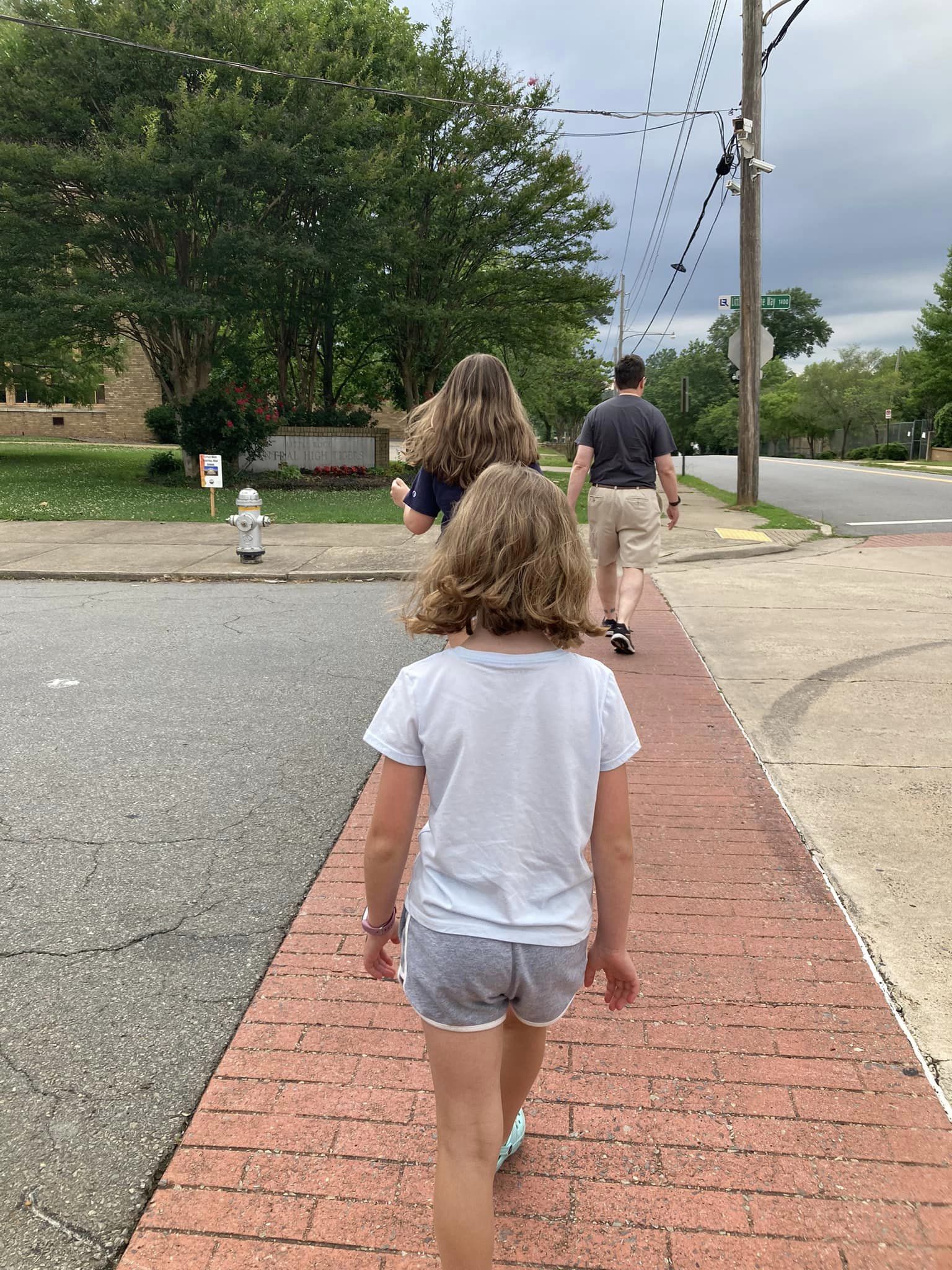
A couple of weekends ago, my husband and I found ourselves kids-free, walking the local downtown area.  As we strolled along, we observed other families – parents pushing strollers, parents supervising kids learning to ride their bicycles, parents pausing family walking for educational moments.  Watching the other families brought back a flood of memories of those stages of our lives – the fond, endearing moments as well as those moments when we felt like we might crack.  But what was not familiar was what we were experiencing that day:  the children having plans of their own, making choices to be with friends over being with their parents.

My husband and I used to work with families at our church who were going through those very changes:  the phase of life where the children’s primary influence shifts from parents to peers.  It is a good and natural phase, but one we observed was much harder for parents than for the children.  But teaching and knowing something is quite different from experiencing something – from watching your own children do the very thing you have taught other parents about.  That moment is the clarity that comes from taking an academic subject and having it become a very real, emotional subject.  Suddenly, I could see the future of the relationships with our children in a much more tangible way.  And there was some sadness, some joy, and lots of somethings in between.

As we make our way past the halfway mark of Lent and we see the approaching journey of Holy Week, I have been thinking a lot about the learned experience of faith and the felt experience of faith.  Often we Episcopalians are creatures of the mind – studying repentance and forgiveness, participating in liturgies that shape the penitential nature of Lent, and even talking to others to learn about their Lenten experiences.  But knowing about Lent can be quite different from living Lent – facing all those things we preferred to keep in the “academic” box and instead having to move them into the “lived” box. 

My prayer for you as your Lenten journey approaches the climax of Holy Week and Easter is that you let yourself feel all of it.  My prayer is that you allow that much more vulnerable version of yourself to gather next to Jesus and keep walking forward – as the imperfect person you are, accompanied by the perfection of the Savior who makes this journey possible.  I look forward to hearing how letting down those walls of self-protection and letting in the grace, love, and forgiveness of God shapes these last days of Lent.  Know that I walk with you!

Sabbatical Journey…on the Ties that Bind

04 Tuesday Jul 2023

Posted by jandrewsweckerly in reflection

≈ Leave a comment

Tags

bind, bond, child of God, children, family, friendship, intentional, Jesus, reconnection, relationship, siblings, ties, unique

Sisters (reuse with permission)

When I was growing up, my brother was my best friend.  As a preacher’s kid, we moved around a lot, always relocating in the summer, and so for every move, he was the only young person who knew me until I could make friends when school started.  So, by default, we became close over the years through the common experience of being the new kid on the block.  That did not mean we did not have our fair share of fights and bickering, but in the end, we knew we needed each other and how important our companionship was.

When my husband and I had two children, I hoped the same would be true for them.  But there are all sorts of factors that are different for them.  For one, they are both girls, which can change the dynamics.  Two, they are a little further apart in age than my sibling and I are, so there are some maturity gaps.  And three, I know the relationship between every set of siblings is unique – some are very close, some are strained, some have falling outs, and some remain best friends far into adulthood.

One of the tremendous gifts of this cross-country trip has been watching my children form bonds.  Of course, there has been the typical sibling bickering (“She’s on my side!”), the rowdiness that comes from being cooped up in a car for hours on end, and the whining that even adults do when we’re not being intentional.  But there has also been a tremendous amount of laughter (lots of new inside jokes being formed), caretaking that only a big sister can offer, and learning new things together.  I imagine these twenty-one days will be days that build the foundation for a lifelong friendship – not just family ties.

As I have been watching our children’s relationship grow, I have been thinking about the relationships in my life.  One of the themes of my sabbatical has been reconnection.  Our time in pandemic meant that many of my friendships were harder to maintain because we simply could not see one another.  As I have forged renewed relationships with my family during this trip, I am also reminded how intentionality can help with my friendship ties.  Just like our relationship with Jesus needs tending, so do our earthly relationships.  I invite you to reach out to a relationship that needs tending today.  Your point of contact may be the only reminder to them and you how you are a beloved child of God.

Sabbatical Journey…On Resetting and Love

27 Tuesday Jun 2023

Posted by jandrewsweckerly in reflection

≈ 1 Comment

Tags

family, frustration, God, hug, invitation, love, peace, perfection, prayer, push, reset, still

Idaho Road (reuse with permission)

In case reading about and seeing pictures from our cross-country adventure make you think we are having a perfect trip with perfectly behaving family members, today reminded me how human we really are.  When you are family, you know each other almost too well:  you know what makes family members laugh and what embarrasses them, you know the quirks of each member and you know teasing is a form of love, you know how far you can push someone until they lose their cool.  But because you love each other unconditionally, sometimes you push anyway.  And when you are in each other’s presence 24/7 for ten days, apparently, the tenth day is when the pushing becomes almost inevitable. 

Despite the dazzling green of Idaho’s countryside, the beautiful rivers of Wyoming, and the stunning mountains across three states, and although there were fun road trip games, stories shared, and conversations had, today I also lost my patience and my ability to exhibit mature parenting responses.  Even with some downtime for all of us, I realized I was snapping too much, and my patience was brittle thin.  What I needed was some unconditional love, and so, as I said goodnight to each family member, I asked for a hug.  Despite having just been bickering not ten minutes earlier, each member to a person gave me a hug without protest.  And suddenly the unease that had settled around me melted away.

Too often – with loved ones, with neighbors, with community leaders, and certainly in church – we forget to reset with love.  I know not everyone is comfortable with physical touch, and I know the pandemic made us anxious about physical contact, but sometimes I think a hug might help us all reset some of the tension between us.  In fact, I know some of us have been frustrated or angry for so long that we are not even sure what we were originally frustrated or angry about. 

When I’m feeling frazzled, one of my favorite prayers is from Psalm 46.10, “Be still and know that I am God.”  I love to pray those words repeatedly, each time, dropping the last word in the phrase.   The first time I pray all eight words.  Then I pray just seven, “Be still and know that I am.”  And then six, and so on, until I just pray the word “be.”  If a hug is not available to you today, or if you want to do your own self work on resetting with love, I commend Psalm 46.10.  Between God’s invitation into stillness, and the stillness one finds in hugs, I pray you find some peace this day.

On Being a Chameleon Traveler…

15 Thursday Jun 2023

Posted by jandrewsweckerly in reflection

≈ Leave a comment

Tags

adventure, chameleon, creation, family, fullness, God, sacred, storytelling, travel, visit

Photo credit: https://www.primerrily.com/post/frontporchparenting

I have been formed in two worlds of travel.  The first world of formation was in my childhood, when travel was mostly for the purpose of visiting family.  There were two primary experiences on those trips.  The first was what we called, “visiting,” where people gathered in living rooms or on porches and just talked and caught up for hours.  Kids weren’t really entertained – just expected to participate in the conversation.  The second activity was playing cards and table games – hours and hours of games. 

The second world of formation emerged when I married into a family with a very different expression of travel.  Travel for my newfound family was about seeing things, getting out and doing things, and trying new experiences.  We certainly talked as much as my family of origin, but usually en route to somewhere.  Activities were often planned months in advance, and schedules were part and parcel of travel.  Consequently, after almost twenty-two years of marriage, I have become a chameleon:  just as happy to sit and visit and play games as I am to get out and see the world.

Photo credit: https://www.cnbc.com/select/how-to-save-on-travel/

So, when I convinced four seminary friends to join me for a sabbatical getaway over a year ago, I did not think about the fact that the five of us had never traveled together.  Only in the weeks leading up to our trip did that realization hit me.  In which world of travel were these friends formed?  Did we need an itinerary?  Did I need to pack some games?  How in the world do you pack for a trip when you don’t know what kind of travelers you are traveling with?!?

When I planned my sabbatical, I did not realize how much my plans reflected my chameleon travel nature.  This past week with friends was certainly the “visiting” kind.  I didn’t see any of the local sites (except the amazing beach!).  But I heard stories untold over the last several years of pandemic, recalled inside jokes, played new games, and laughed – a lot!  Next week, I embark on the other world of travel in which I have been formed:  seeing parts of our country I have longed to see and experiencing new adventures.  Of course, we’ll have plenty of time in the car to “visit” – whether we want to or not!  Somehow, I am unintentionally getting the best of both worlds of travel.

One of my learnings from sabbatical is that my different modes of travel are teaching me about being open to the joys of God’s creation in whatever modes of storytelling God presents.  I suspect seeing new sights and the breadth of God’s creation out west will be just as lifegiving as sitting around a game table with longtime friends.  There is a sacred fullness to this time that is filling my tank for ministry.  My prayer is that you are able to see the variety of ways God is filling your tank too these days!

On Delight and Sabbatical…

06 Tuesday Jun 2023

Posted by jandrewsweckerly in reflection

≈ Leave a comment

Tags

delight, family, friends, God, harmony, intentional, practice, rest, sabbatical, tension

Photo credit: https://www.linkedin.com/pulse/why-you-need-help-schedule-sabbatical-asap-kadi-cole-rn-ms/

Toward the end of my second week of sabbatical, it dawned on me what a different space sabbatical creates from vacation.  The beginning is quite similar:  a flurry of activity, trying to tie up loose ends, ensuring all systems and coverage are in place, and maybe, clearing off your desk.  But at the end of the second week of sabbatical, I noticed a distinction from vacation.  Usually at the end of vacation, even a two-week vacation, tension in my body begins to return.  The wheels in my mind start to churn, even if I know they shouldn’t.  “Work mode” creeps into vacation mode and spoils any deep relaxation I have established.  I was delighted to realize that creep is not happening as I enter week three of sabbatical.

Part of my delight in this realization is how restorative these last two weeks have been.  It’s been such a joy to slow down and reconnect with God, with my family, and with friends.  When I was on retreat at the monastery, I turned off the notifications on my phone, and I was amazed at how much tension released from my body.  In times of quiet, I have been able to stop talking so much, and be more focused on listening:  to God, to my family, to those around me.  And in the differently paced time of sabbatical, I am finding so much love:  finding “space” to remember how powerfully life-giving the loving relationships are in my life.

I am not likely to have twelve weeks of sabbatical again for at least another seven years, which has left me wondering how to hold on to moments of sabbatical time in “real life.”  How might I find harmony between my natural full-speed self and my intentional sabbatical self?  It is my hope in the coming weeks to learn that harmonic practice.  I would love to hear what tricks you have developed for that harmony in your own life!

On the Blessings of Family – Biological and Chosen…

05 Thursday Jan 2023

Posted by jandrewsweckerly in reflection

≈ Leave a comment

Tags

blessing, church, community, encouragement, engage, family, intergenerational, isolation, life, light, pleasure, purpose, relationship

Graphic Credit: https://www.thecolonygroup.com/introducing-your-children-to-your-family-wealth/

This past week, I spent hours delighting in my children’s relationships with their grandparents, aunts, uncles, and cousins.  Whether it was their uncontained excitement about a sleepover with their aunt and uncle, the deeply contented smiles of grandparents engaging in conversation with our children, the similarly-aged cousins who have never met but act thick as thieves within minutes of time together, or the admiration of the older new favorite “cousin” (a girlfriend who my children are desperately hoping marries into the family – no pressure though!). 

Living relatively far away from our family, I find watching my children with their grandparents and aunts and uncles in person to be a tremendous blessing.  I get to see our children through fresh eyes, watch their behavior transform, and see healthy relationships being forged that are totally separate from their relationship with me.  As our children age, I see how important these separate and special relationships are for all of us:  for me as a parent, for the children as individuals growing into adults, and for the extended family members.  I never lived close to my own grandparents and extended family, so perhaps others experience that blessing all the time.  But as I come off some holiday time with family, I am acutely aware of the importance of these relationships beyond what I and their father can provide.

I am usually quite loathe to call churches “families” because families also bring lots of baggage.  In fact, for some, church provides a safe haven their biological families did not.  However, churches can do what families do when at their best.  Part of why I am so committed to having my own children in church (even though it may appear obligatory as the community’s priest) is because we live so far from our biological families.  I want the elders of our church to dote on my children the same ways in which their grandparents do – in part because I know those relationships are just as life giving for the seniors as they are for the children.  I want the mid-age parents to be the cool aunts and uncles that my children can go to when they are tired of their own mom and dad – in part because those same parents may sometimes feel like parenting failures with their own children but can use the reminder that they are beloved and needed beyond their immediate family.  And I want my children to feel a sense of kinship with the other children of church – the cousins they rarely see, but for whom they can serve as role models at church.  The very intergenerational nature of church is a major reason why church is so important to our lives.

We live in a time when families are often dispersed, where work or service calls us from our extended families, or where, if we are blessed with immediate family nearby, we have neighbors who are not.  That reality became painfully poignant during the pandemic, when our sense of isolation grew, families with children felt unbearable weight as they became teachers, parents, and a little of everything else, and elders missed gathering with their own biological families.  As we emerge from this pandemic, if you have yet to come out of that internalized, isolated state, I invite you to engage (or reengage) with a church community.  It certainly will not be perfect – no community or family is.  But it will be a place of life and light, of encouragement and engagement, and of purpose and pleasure.  You are welcome here!

On the Perfectly Imperfect…

21 Wednesday Dec 2022

Posted by jandrewsweckerly in reflection

≈ Leave a comment

Tags

acceptance, Christmas, church, disoriented, family, imperfection, Jesus, love, perfect, Savior, welcome, womb

Photo credit: Hickory Neck Episcopal Church. Reuse with permission only.

This Christmas will be the first Christmas I am able to spend time with my husband’s family in five years.  We used to travel there more regularly, but about the time we would have visited, the pandemic hit, and here we are years later returning to something that feels comfortingly familiar.  I find a deep sense of relief knowing the familiar faces that will greet us, the warmer temperatures and beautiful landscape that will refresh us, the smells and tastes that will delight us, and the love and acceptance that will overwhelm us.

In some ways, I think attending church on Christmas Eve is a lot like that comforting familiar experience.  We know the lessons we will hear, the songs we will sing, the greenery we will find, and the hospitality we will experience.  In what has been a time of disorientation, suffering, grief, and struggle these last years, nothing feels as enticing as the promise of a warm, welcoming womb in which to gather.

What’s fascinating about the Christmas story and experience is that the first Christmas had little other than a womb in common with our modern experience.  Mary and Joseph are likely still recovering from the rocky beginning to their relationship – nothing like an unorthodox pregnancy to bring on marital strain!  Mary and Joseph also join hordes of their kin in being displaced by the government, only to find accommodations entirely unsuited for childbirth.  Strangers of ill repute show up sharing stories quite unfathomable, inserting themselves into the chaos of that night.  And Mary is left overwhelmed, trying to figure out what is happening to her life.  Why, of all the stories we could hear, is this crazy, disorienting story the one we want to hear year after year?

I suppose, in part, we breathe in a comforting deep breath on Christmas Eve because no matter where our journey has taken us over the last year – or years – knowing the imperfection of that perfect night helps us bless and honor our own imperfection.  Perhaps we revel in Christmas at church because we know that every year, no matter how off-track our lives have become, we have a place where we can go, a family with whom we can journey, and a Savior who is just as vulnerable as we are.  This Christmas, I hope you know there is no imperfection in you that is not perfectly welcome at the Table.  You are welcome here.

← Older posts

Recent Posts

  • On Change and Bread…
  • Sermon – Exodus 14.19-31, P19, YA, September 13, 2026
  • On Realizing Dreams…
  • On Seeing the Kingdom…
  • Sermon – Exodus 3.1-15, P17, YA, August 30, 2026

Archives

  • September 2026
  • August 2026
  • July 2026
  • June 2026
  • May 2026
  • April 2026
  • February 2026
  • January 2026
  • December 2025
  • November 2025
  • October 2025
  • September 2025
  • August 2025
  • July 2025
  • June 2025
  • March 2025
  • February 2025
  • December 2024
  • November 2024
  • October 2024
  • September 2024
  • August 2024
  • July 2024
  • June 2024
  • May 2024
  • March 2024
  • February 2024
  • January 2024
  • December 2023
  • November 2023
  • October 2023
  • September 2023
  • August 2023
  • July 2023
  • June 2023
  • May 2023
  • March 2023
  • February 2023
  • January 2023
  • December 2022
  • November 2022
  • October 2022
  • June 2022
  • May 2022
  • January 2022
  • December 2021
  • November 2021
  • October 2021
  • September 2021
  • August 2021
  • June 2021
  • May 2021
  • April 2021
  • March 2021
  • February 2021
  • January 2021
  • December 2020
  • November 2020
  • October 2020
  • September 2020
  • August 2020
  • July 2020
  • June 2020
  • May 2020
  • April 2020
  • March 2020
  • February 2020
  • January 2020
  • December 2019
  • November 2019
  • October 2019
  • September 2019
  • August 2019
  • July 2019
  • June 2019
  • May 2019
  • April 2019
  • March 2019
  • February 2019
  • January 2019
  • December 2018
  • November 2018
  • October 2018
  • September 2018
  • August 2018
  • July 2018
  • June 2018
  • May 2018
  • April 2018
  • March 2018
  • February 2018
  • January 2018
  • December 2017
  • November 2017
  • October 2017
  • September 2017
  • August 2017
  • July 2017
  • June 2017
  • May 2017
  • April 2017
  • March 2017
  • February 2017
  • January 2017
  • December 2016
  • November 2016
  • October 2016
  • September 2016
  • August 2016
  • July 2016
  • June 2016
  • May 2016
  • April 2016
  • March 2016
  • February 2016
  • January 2016
  • December 2015
  • November 2015
  • October 2015
  • September 2015
  • August 2015
  • July 2015
  • June 2015
  • May 2015
  • April 2015
  • March 2015
  • February 2015
  • January 2015
  • December 2014
  • November 2014
  • October 2014
  • September 2014
  • August 2014
  • July 2014
  • June 2014
  • April 2014
  • March 2014
  • February 2014
  • January 2014
  • December 2013
  • November 2013
  • October 2013
  • September 2013
  • August 2013
  • July 2013
  • June 2013
  • May 2013
  • April 2013
  • March 2013
  • February 2013
  • January 2013
  • December 2012
  • November 2012
  • October 2012
  • September 2012

Categories

  • reflection
  • Sermons
  • Uncategorized

Meta

  • Create account
  • Log in
  • Entries feed
  • Comments feed
  • WordPress.com

Blog at WordPress.com.

  • Subscribe Subscribed
    Seeking and Serving
    Join 397 other subscribers

    Have a WordPress.com account? Log in now.

  • Seeking and Serving
    View site in Reader
    Manage subscriptionsSign upLog in
    Report this content
    Collapse this bar
Loading Comments...