• About

Seeking and Serving

~ seek and serve Christ in all persons

Seeking and Serving

Tag Archives: family

On Baptisms, Babies, and Blessings…

16 Wednesday Jun 2021

Posted by jandrewsweckerly in reflection

≈ Leave a comment

Tags

absence, babies, baby, baptism, blessing, creation, family, God, loud, messy, mystery, pandemic, sacred, touch, vulnerability, wonder

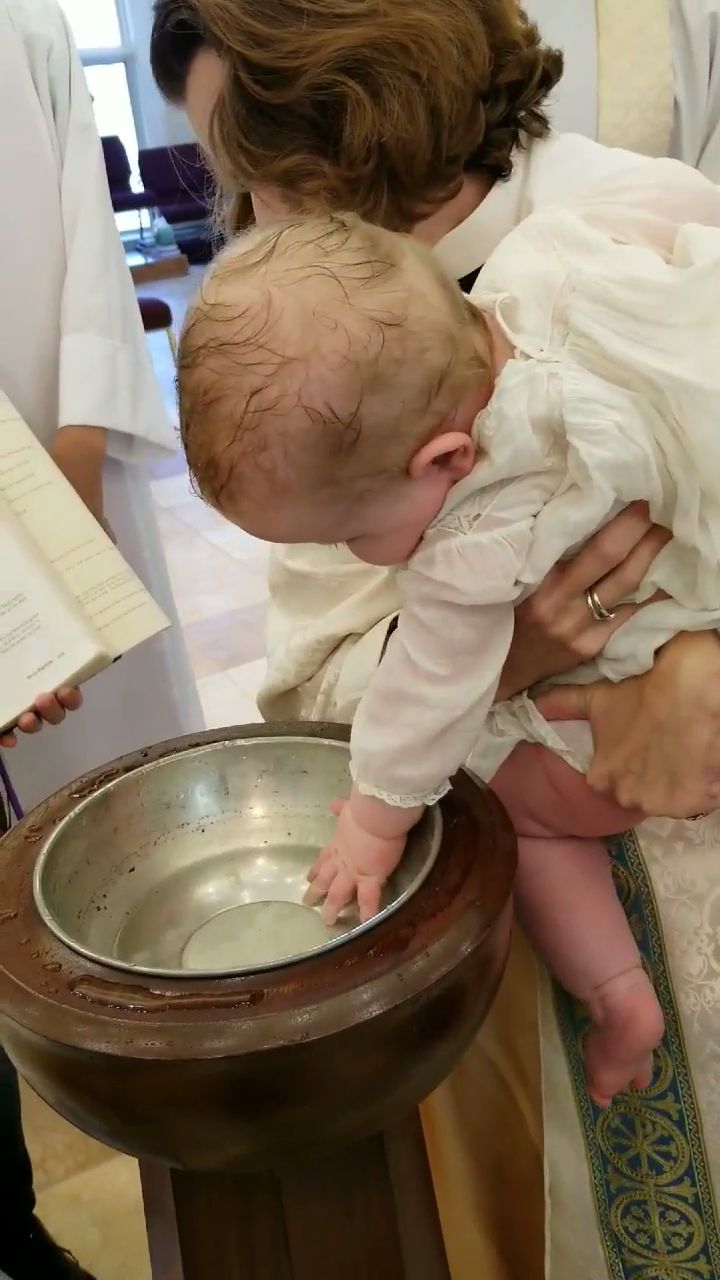
Photo credit: Kim Edwards; reuse with permission only

I was never really a baby person:  I did not do much babysitting as an adolescent; except for my little brother, there were not a lot of babies around me growing up; and I was just never all that jazzed about babies.  They seemed delicate, loud, messy, and mysterious.  I never had maternal urges in early adulthood, and my friends found constant amusement in any scenario where the question arose about who should take care of a baby in a pinch – obviously, the baby should not come my way.  But the time my husband and I were engaged, we were not even sure we wanted to have children.

Then in my early thirties, a switch flipped and I realized, in fact, I did want children.  I still was not sure about other babies, but I was excited about my own.  But then a funny thing happened.  I was ordained a deacon when I was about seven months pregnant.  What I did not realize was once you are ordained, you handle babies a lot – in baptisms, in walking moms through pregnancies and births, and even in the receiving line at church.  Once I went through babyhood with my own daughter, and she was no longer at that lovely, innocent stage, I realized my vocation included mothering a lot of other babies.  It has become one of my favorite parts of ministry because it is a glimpse into the wonder and mystery of creation and the grandeur of our God.

So, you can imagine, when this pandemic hit, among the myriad reasons my heart hurt was not being able to interact with babies.  Our church had babies born during the pandemic and it killed me to not be able to welcome the baby at the hospital and give the baby and family their first blessing.  My heart ached to see baby photos on social media and know the babies were growing up without the church surrounding them in love.  But mostly, my arms palpably felt the absence of holding babies, swaying to keep them calm, and smelling their unique baby scent.

As we slowly come out of this pandemic, I am keenly aware of the privilege of holding babies again.  At a recent wedding I tentatively asked a guest, who I did not know, if they would like me to hold their baby to give them a break.  When they quickly passed me the baby, my face lit up.  Last Sunday, when I finally got to hold the baby we had prayed for all during her time in the womb, I was elated.   And as we approach two more baptisms this weekend, I could not be more excited to make those special connections – even though they are not really babies anymore!  One of the blessings of the rise in vaccinations is enjoying the sacred honor of touch, of experiencing vulnerability and innocence, and of redefining the boundaries of family.  This week I give thanks for the abundance of love and joy.  May you all find your own encounters with the holy this week!

On Shifting Sands and Drishtis…

19 Thursday Nov 2020

Posted by jandrewsweckerly in Uncategorized

≈ Leave a comment

Tags

balance, control, family, focus, God, goodness, grace, imbalance, Jesus, love, pandemic, parenting, power, sand, weary, yoga

Photo credit: https://www.yogajournal.com/yoga-101/pillars-of-power-yoga-using-drishti-on-and-off-the-mat

When you are doing balancing postures during yoga, one of the skills you learn early on is developing a drishti, or a focal point.  The idea is the more you focus your gaze on one fixed object, the more your body steadies itself.  I am not entirely sure why or how finding a drishti works, but I know from experience that a very wobbly body in a balancing posture is quickly steadied once focused on a drishti.  It is a strange sensation, but when the drishti is engaged, the gaze of the eyes has complete power over the entire body, creating a sense of self-possession, control, and power.

I was talking to a fellow parent this past week and when we talked about parenting during a pandemic, I told her I felt like I was standing on shifting sand.  Just when I would start to figure out a rhythm or start to feel like I had some modicum of control over family life, things would change – whether the formal arrangement with hybrid learning, the changing of teachers mid-quarter, or even my own child’s changing ability to adapt and thrive.  Just when I feel like our family is finding our balance, something makes us wobbly all over again.  That kind of uncontrolled imbalance, of attempting to stand on shifting sand leaves the body weary and fatigued.

But as I have been thinking about pandemic parenting and my learning in yoga, I’ve begun to wonder if what this wobbly parent might need is a pandemic drishti.  For some parents that might mean focusing on the blessing of your children – so that no matter what tempter tantrum they are throwing today, what argument you are having as a family, or what door they have slammed, you focus not on the anger and frustration of the scene immediately in front of you, but on the love you have for your child (even if it’s only the love you see when they are fast asleep).  For me, my drishti is the love of God surrounding us on every side:  the one who loves me when I fail as a parent, the one who loves my child as they receive another setback in expectations, the one who loves each of us when all we can see is the heat of anger and frustration in one another.  Once I focus on God’s love of us, slowly my demeanor starts to shift, my balance starts to return, and my steadiness strengthens.

This week, I encourage you to claim your pandemic drishti.  Whether you focus on God’s lovingkindness, the grace of our Lord Jesus Christ, or the ever-present blessing of the Holy Spirit, take whatever time you need to shift your gaze on God.  My guess is the more you practice steading your gaze on the goodness of God, the more your wobbling, weary body will feel grounded in goodness too.  We cannot control the shifting sand of these times.  But we can control our steady gaze in the face of a storm.

On Finding Family…

23 Thursday Apr 2020

Posted by jandrewsweckerly in Uncategorized

≈ Leave a comment

Tags

blessing, church, crisis, family, friends, genuine, harm, imbalance, invitation, invite, Jesus, love, rich, unconditional

Better family conversations

Photo credit:  https://www.psychologies.co.uk/five-ways-better-family-conversations

Families are a funny thing.  We are born into them, and have no choice about their makeup.  Some of us are blessed with large or small families that nurture and care for us.  Some us are born into hurtful, abusive families.  And some of us navigate our way as we age, realizing who in our immediate and extended family build us up, and who we can minimize time with or avoid altogether because they do not know how to love us.  As we age, we redefine family – perhaps with friends and lovers who love us better than the family members we were born into, or perhaps with groups of people who understand us and create a sense of “home.”

For some of us, that group is Church.  Now I know churches have been some of the worst offenders – places of pain, abuse, or just meanness.  But Church can also be the family you choose – the place where you are loved unconditionally, feel a sense of belonging, and discover a sense of purpose and meaning.  Church is the place where an unrelated elder can offer care and wisdom you have longed for, where a child teaches you what joy, laughter, and love feel like, and where a once (and maybe still) stranger can pray for you in ways that reaches your soul like never before.  The people of Church can be the vehicle through which we experience the unconditional love of Christ.

What has struck me about this time of separation is how much the separation has made it easier for us to invite people into that family of Church.  Whether a neighbor sharing about their seriously ill parent leads us to invite them to join us for online prayers; whether a friend is struggling with their children and finds our invitation to enjoy online Godly Play or accessible teaching materials; or whether someone who has not been able to step foot on a church property feels less threatened by a Sunday online worship service – we are finding invitation to be a much more organic, genuine experience – because we need that sense of family, we need that love of Christ.

But what has struck me even more deeply has been the shifting dynamic within our Church “family.”  Instead of inviting people “in” to the church, this has been a beautiful time of us being invited “out” – finding how much malleability our family has.  Invitation during this time has not simply been about inviting people into “the family” so that they can experience the blessings we have, but has also been about inviting people into the family because our family is not complete – there are people we did not even know could make us feel whole who we are meeting because Church looks so different right now.  That kind of role reversal can create a sense of imbalance and vulnerability – but it can also create a richer sense of family and loving community.  In our separation from the body of Christ, we are learning just how vast the body of Christ really is.  We may not have been looking for it, or even realized we needed it, but I am grateful for the ways this crisis is growing our family, and expanding the ways we can experience Christ’s love.

On Parenting Myths and Grace…

12 Wednesday Dec 2018

Posted by jandrewsweckerly in Uncategorized

≈ Leave a comment

Tags

family, God, goodness, grace, hard, joy, kids, negative, parenting, positive, respect

SingleParenting_CoverImage

Photo credit:  https://www.healthline.com/health/parenting/single-parenting-why-you-are-a-superhero

This week, my sabbath and a snow day coincided, meaning the whole family was home.  My sabbath is usually the day I take care of household stuff – cleaning, errands, etc.  But I knew the kids would not patiently handle that as well.  So, the girls and I suited up, and off we went into the snow.  I confess I used some of the time to dig out my car, but the rest of the time we spent building a snowwoman and sledding down a neighborhood hill.  Several other kids joined us, and we found ourselves laughing and having a truly fun morning.  We topped off the morning with yummy grilled cheese sandwiches and hot chocolate.  Later that evening, my younger daughter needed to go to dance class, so the three of us headed over together and the older one played while I read a book.  As we were leaving, totally unprompted, the older daughter said a heartfelt thank you for being able to come and play.

The story could end there, and you might imagine that our day, and, in fact, parenting in general, is a wonderfully blissful experience of fun, respect, and mutuality.  When I look at most parents, that is the impression I get of their experience of parenting:  that parenting is the most wonderful thing in their lives, bringing them great fulfillment, joy, and purpose.  And some days, parenting is that for me.  But most days, parenting is hard.  At the end of that idyllic Monday, children melted down, said hurtful, disrespectful things, and refused to follow instructions.  What had been a cooperative day became a battle-of-wills evening.  And more days are like that evening than like that morning.

As I have been reflecting on that contrast this week, I realized I could either feel deflated, focusing on the negative behavior, feeling like a failure of a parent, wondering why I cannot seem to sustain the more joyful moments; or, I could choose to hold fast to the joy of the day, letting the negative have less power.  Maybe other parents do that more naturally, or maybe I am just to too prone to pessimism, but it was clear as my children fell to sleep, it was my choice how I would remember the day – and how I would say goodnight to the children.

I imagine God has similar challenges with us.  Though I am my toughest critic, I trust that God is much more inclined to see my goodness than I ever am.  I trust that God remembers everyday how when God created humankind, God said it was very good.  I trust that God sees little wonderful things we do even when we do not realize we are doing them.  And if God has that much grace with us, perhaps we can share that grace with others – in the grocery line that stalls when the checker has to page the manager, with the friend who is complaining…again, and during the doctor’s office wait that is way too long.  And if you are a parent who is struggling with one more temper tantrum or sassy comment, perhaps you can also see your child with God’s grace, remembering the child is just trying to develop into an independent, competent, confident person – which is really hard when you are tired, immature, and physically and emotionally incapable of being what you want to be right now.  We know how hard it is because we need that same grace from God.  Everyday.  Hang in there, everyone!  You can do this.  Give yourself a break.  And give those kids, strangers, neighbors, and friends a break too.  We all need it this week.

GC79: Reconciliation in Real Time

20 Friday Jul 2018

Posted by jandrewsweckerly in Uncategorized

≈ Leave a comment

Tags

anxiety, bishops, change, cheer, concern, Cuba, Episcopal Church, family, General Convention, God, home, House of Bishops, humbling, mercy, reconciliation, right, wrong

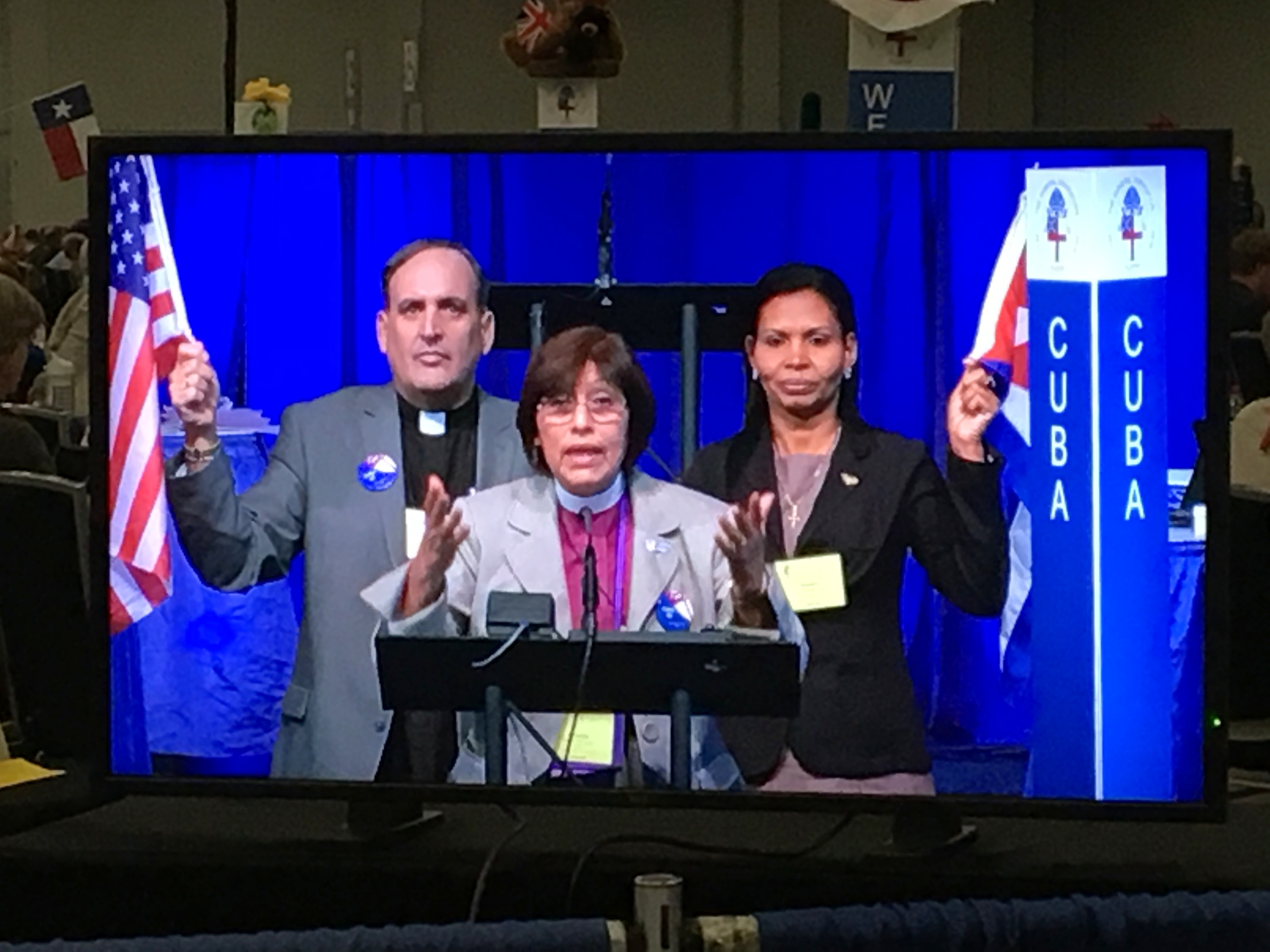
IMG_1927In 1966, in light of the Cuban Revolution and the political response of the United States, the House of Bishops voted to separate from the Diocese of Cuba from the Episcopal Church, leaving it an autonomous diocese without a provincial home.  The clergy scattered, some returning or immigrating to the US, but some who remained in Cuba were imprisoned, executed, or disappeared; priests lost their pensions, and they operated in isolation from the Church.  Cuba officially requested to be reaffiliated with the Episcopal Church and was given a list of requirements before admission.  As of GC79, all of those conditions had been met.  However, leading up to the resolution coming to the floor of both the Deputies and Bishops, there was controversy on what it would mean, how this admission might impact the admission of other Dioceses (or their exit), how to affirm already elected bishops (assuming they had not followed the current practices of approval for bishops in the Episcopal Church), among other concerns.  In other words, there was a desire to right the wrong done 52 years ago, but some anxiety about the implications of the decision.

As an alternate deputy, I had the leisure of observing either House.  On Tuesday, I happened to be observing the House of Bishops when resolution A238 came to the floor.  Each testimony pleaded for righting the wrong done by the House of Bishops in 1966.  Retired bishop Leo Frade from the Diocese of Southeast Florida spoke passionately about the resolution.  As a Cuban American who had been a part of the Church in Cuba, he got quite emotional in his plea for the bishops to do the right thing.  When it came time for the vote, the vote was a unanimous approval for readmittance.  The entire house – bishops and visitors – exploded.  Cheers and clapping filled the room, and the standing ovation lasted several minutes.  Unbeknownst to me, the Bishop of Cuba was present and was invited to approach the platform to address the House.  Bishop Curry embraced her.  The House broke into singing the Doxology.

Bishop Griselda Delgado’s speech was the most humbling.  Despite every reason to feel resentful or hurt, Bishop Delgado communicated nothing but forgiveness and reconciliation.  “We are family,” she insisted.  And although we severed the relationship so many years ago, she insisted, “Cuba never left.”  Her sentiments struck me as the exact way that God sees us.  When we reject God, God never leaves us.  When we abandon God, we do not abandon our familial ties with God.  Bishop Delgado’s profound sense of right relationship, reconciliation, and forgiveness brought the House to tears.  We did not deserve her mercy, and yet there she was, offering mercy.  When Bishop Delgado said, “The Holy Spirit is here,” I knew she was right.  In response, Presiding Bishop Curry said, “The Bishop may take her seat at Table 7.”  Those words were words of righting a wrong – fully, completely, unconditionally.

The experience the next day was equally powerful in the House of Deputies.  They too needed to approve the resolution, and it also passed unanimously.  Bishop Delgado spoke there too, but equally powerful was the triangular sign with the word, “Cuba” written on it.  It was processed to a table, and the deputies from Cuba were seated in the House of Deputies.  “Welcome home,” pronounced President Jennings.

What I loved about the approval of this resolution was seeing how legislation can powerfully effect change.  Sometimes, in the weeds of parliamentary procedure, and canonical revisions, one can wonder if all we are doing is navel gazing.  But on these days, we watched first-hand the commitment to change, the willingness to boldly repent, and the receiving of mercy.  Surely the presence of this Lord has been in this place!

On Making Room in the Inn…

29 Wednesday Nov 2017

Posted by jandrewsweckerly in Uncategorized

≈ Leave a comment

Tags

Advent, Christ, Christmas, family, heart, holidays, Jesus, manger, nativity, prepare, pressure, relief, simplify

christmas holly decoration

Photo credit:  https://nourishingminimalism.com/2017/11/simplify-christmas-goodbye-elf.html

As my family approaches the holidays this year, life is a bit different.  We decided months ago that we would visit our California family over Christmas break.  Now that we are traveling with four, we realized the travel expenses would set us back quite a bit.  Having noticed the last couple of years how much we are spending on gifts for the kids, we decided that the trip will function as our Christmas.  My in-laws are also gifting the family a couple of days at Disneyland, which we agreed would function as their Christmas gift.  So instead of “stuff” we are concentrating on “adventure” or “experiences.”

It took some explaining and questions, but we seem to have everyone on board with the new concept.  Personally, I did not mind giving up gifts.  But what took me by surprise was how much I would miss having a live Christmas tree.   I love everything about decorating a live tree:  the smell, stringing the lights, recalling the memories of each ornament, all while sipping eggnog and listening to Christmas songs play in the background.  But the danger of the fire hazard while we are away means the tree-related boxes will stay sealed this year.

For the last week or so, I was grieving the change in our Christmas traditions.  But this week, as Advent rapidly approaches, I realized that my grief is fading, and instead, a sense of relief has overcome me.  You see, instead of running around getting gifts, I am able to imagine the calm of Advent that I always preach about, but rarely get to experience.  Instead of working frantically to get a tree and find a meeting-free night to decorate the tree, I can pull out our Advent wreath, Advent devotional, and our creches from around the world to decorate the house.  I have often heard the encouragement to simplify for Advent, but have rarely figured out how to accomplish the goal.  This year, the unintended consequences of decisions have done it for me.  And I could not be more grateful.

Now I am not suggesting you chuck all your holiday traditions about the window.  But I wonder what things or thing you might let go of this year in order to relieve some of the pressures we find in Advent.  Too often we take the “prepare” message of Advent like Martha does with Jesus.  We run around buying, baking, partying, planning, decorating, and distracting.  Maybe this Advent we can be a little more like Martha’s sister Mary, finding ways to sit at the feet of Jesus – or perhaps at the empty manger – preparing our hearts for his nativity.  I suspect that the extra room you create in your heart might be just the room Jesus and his family need when they can find no room in the inn.


Sermon – Matthew 18.15-20, P18, YA, September 10, 2017

13 Wednesday Sep 2017

Posted by jandrewsweckerly in Sermons, Uncategorized

≈ Leave a comment

Tags

avoidance, church, community, conflict, dignity, family, gift, healthy, Jesus, love, manage, reconciliation, relationship, Sermon, truth, witness

I have been looking forward to this Sunday for weeks!  After taking successive vacations at the end of the summer, all of our staff are finally back in town.  Many of you have been traveling, spending time away with friends, or simply taking a break to enjoy the last bits of summer.  Our musicians and liturgy team have been planning our return to three services.  Our Stewardship Committee has been organizing our new Discipleship Fair.  Our Parish Life Committee has been organizing our Parish Picnic.  Church members have been inviting friends to join them for church, or maybe you yourself decided today was the day to search for a new church home.  I have felt the anticipation building as this has day approached.

I have been so excited to kick off a new program year, to invite people to engage in their faith journey, and to share an invitation to others to discover the beauty of this vibrant community, and what does the gospel lesson from Matthew offer us?  A text about fighting within the church.  Jesus does not just admit that sometimes, every once in a while, people in the church might experience conflict.  No, Jesus goes into great detail about what to do when you face conflict in the church:  embrace conflict directly, repeatedly, and publicly.  To those of us who were raised in the South, or at least to those of us who were raised in conflict-avoidant families, this text is our worst nightmare!  And this is certainly not the joyful text I was looking for when anticipating this festive day.

Part of what bothers us about this text from Holy Scripture is many of us come to church looking for a break from the conflict that surrounds our everyday life.  Whether we experience conflict in our families, conflict in our workplaces, schools, or service organizations, or conflict in our political lives, the last thing we want to do when we come to church on Sundays is deal with more conflict.  A friend of mine once confessed to me that he was thinking about leaving his current church home over a conflict within the church.  We were both young adults, on our own for the first time since college, and we had images in our minds about what church should be and what we wanted from our church communities.  But instead of bucolic communities of peace, harmony, and justice, we were both finding churches riddled with conflict and disunity.  As we were talking about his frustration, my friend finally confessed, “When I go to church, I just want everyone to get along.  I go to church to escape what is going on in my everyday life, not relive it!”

Now, I could spend the next hour deconstructing his complaint, but there is something powerful at the heart of his complaint, and perhaps at the heart of our own experience of church.  When we talk about church as being like a family, or being like home, what we really mean is we want a place that is a bit unlike our families or homes.  We want a place that is always happy, loving, nurturing, sometimes challenging, but more often comforting.  When we think about the warm, fuzzy feeling we have, the feeling we find at a place like Hickory Neck, the last thing we think is, “Man, I love the way we handle conflict at church!”

Unfortunately, that is exactly what our text is inviting us to do – to celebrate the way that the church teaches us to fight – or to phrase it a little differently, how the church teaches us to deal with conflict in healthy ways.  In order to get to the point where we can see the gift of healthy conflict resolution as a good thing, we need to do a few things.  First, we need to get to the point where we can embrace the inevitability of conflict in the church community.  For some of us, that is not a big hurdle.  For others of us, the assumption of conflict is difficult.  Perhaps you were raised in a family who treated conflict as something to be avoided at all costs.  Or perhaps you grew up in an environment where conflict was so aggressive you created patterns of conflict-avoidance later in life.  Regardless, if we have come to see conflict as the enemy, accepting the inevitability of conflict is going to be our first task.  In Matthew’s gospel today, Jesus says, “For where two or three are gathered in my name, I am there among them.”  But what he implies is that when two are three are gathered in his name, there will be conflict.  Jesus himself was so sure there would be conflict that he developed a whole conflict management plan.  So take a deep breath, let the breath out, and repeat after me, “Conflict is unavoidable in church.”

Now that you are breathing calmly, and accepting the unavoidable, the next thing we need to do is honor the gift of conflict management Jesus gives us in scripture today.  For those of us who are conflict avoidant, Jesus’ conflict management plan is going to seem daunting.  The good news is scholars agree with you.  Many of the scholars who have written about this text say the step-by-step instructions do not necessarily need to be read as a step-by-step guide to solving conflict within a church.[i]  What is most important is what the instructions convey:  conflict in the church is not to be ignored, hidden, or buried.  Theologian Stanley Hauerwas has this to say about conflict, “[Jesus] assumes that conflict is not to be ignored or denied, but rather conflict, which may involve sins, is to be forced into the open.  Christian discipleship requires confrontation because the peace that Jesus has established is not simply the absence of violence.  The peace of Christ is nonviolent precisely because it is based on truth and truth-telling.  Just as love without truth cannot help but be accursed, so peace between the brothers and sisters of Jesus must be without illusion.”[ii]

As Christians, Jesus wants us to behave differently.  Jesus wants us to be truthful with one another.  Jesus wants us to deal with one another face-to-face instead of talking behind each other’s backs.  Jesus wants us to work on reconciliation of relationships instead of letting hurt and pain fester and erode relationships.  For Jesus, being right or wrong is much less important than being in relationship.  Being in right relationship, keeping the family together is much more important.[iii]  Jesus wants us to take a breath in, let the breath out, and repeat after him, “Conflict is not the enemy.  Letting conflict ruin relationships is the enemy.”

Finally, once we have accepted the inevitability of conflict, and once we have agreed to value relationships over the avoidance of discomfort, we are ready to embrace the gift of our gospel lesson today – and perhaps even claim that this might be the perfect lesson for a Rally Sunday.  If you came to church to escape conflict or enter some bubble of blissfully ignorant happiness, Hickory Neck is probably not the right place for you.  But, if you came to Hickory Neck to learn how to transform conflict into something holy, they you may have just found a real home – not a home based on illusion, but a home based on truth, dignity, and respect.  When you accept the inevitability of conflict and the value of meaningful relationship, you receive the tools to work through conflict and land in the reality of reconciliation.

But here is the best part of Jesus’ Conflict Resolution Class today.  If we can stay on the journey through conflict to reconciliation, gaining the tools that this community has to offer us, then we as a community create something much more powerful than can be contained in these walls.  We create a witness for our community.  We create disciples capable of not only working through conflict within the community, but also capable of modeling reconciliation beyond our community.  Anyone who has read a headline in our country in the last year knows that our country needs more models for healthy conflict engagement.  That is what Jesus offers us today:  tools to work on our own issues around conflict, tools to become a loving, honest, and reconciling community, and tools to teach reconciliation beyond these walls.  Jesus has promised to be with us as we do our work.  In fact, Jesus is here with us now as we anxiously try to step on that path toward reconciliation.  So take a deep breath, let the breath out, and repeat after me, “Conflict is a blessing my church teaches me to embrace.  Thank you, Jesus, for the blessing of conflict and the promise of reconciliation.  Help me to share that gift with others.”  Amen.

[i] David Lose, “Pentecost 14 A – Christian Community,” September 6, 2017, as found at http://www.davidlose.net/2017/09/pentecost-14-a-christian-community/ on September 7, 2017.

[ii] Stanley Hauerwas, Matthew:  Brazos Theological Commentary on the Bible (Grand Rapids:  Brazos Press, 2006), 165-166.

[iii] Barbara Brown Taylor, The Seeds of Heaven: Sermons on the Gospel of Matthew (Louisville:  Westminster John Knox Press, 2004), 88-89.

On Blessings and Curses, and Surviving Thanksgiving Meals

23 Wednesday Nov 2016

Posted by jandrewsweckerly in Uncategorized

≈ Leave a comment

Tags

conflict, creation, fall, family, God, gratitude, heart, leaves, mind, prayer, space, Thanksgiving, Thanksgiving Day

Colorful autumn

Photo credit:  www.fluentu.com/french/blog/french-fall-autumn-vocabulary-word-list

For those of you who know me well (or read this blog each fall), you know that I love the changing of the leaves during Fall.  Fall is my favorite season of the year – the cooler weather, the crunch of leaves, and the brilliant reds, yellows, and oranges that take your breath away.  The leaves turned later than usual this year in Virginia, so I have had time to enjoy their beautiful journey until now.  Just this week, a light wind was blowing, and a tree was raining down yellow leaves like a flower girl before the bride.  Some people like to stop and smell the roses.  I like to stop and revel in the beauty of God’s changing leaves.

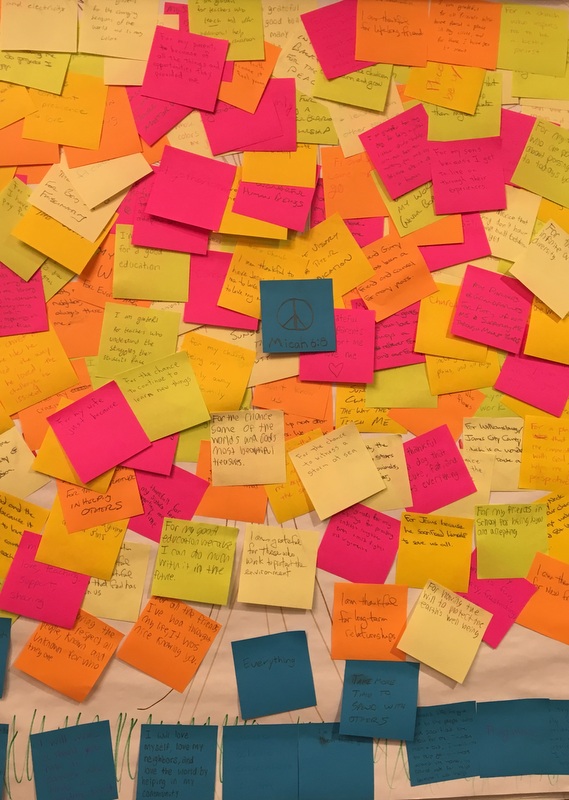
Watching and being fed spiritually by that beauty this year led us to creating a Thanksgiving Tree at Youth Group this past Sunday.  We took a poster with a bare tree, and then used our post-it notes to cover the tree with things for which we are grateful.  We had five categories, including family, relationships, creation, God, and school/work.  I challenged the group to write down three things in each category – not just a one-word response, but an explanation of their gratitude.  Perhaps 15 notes seemed like overkill to the young adults, but what I was hoping was that the more they thought about the blessings in their lives, the less space the negative would have in their hearts and minds.

That is my prayer for each of you this week as we head into Thanksgiving celebrations.  Though we may have Normal Rockwell images of Thanksgiving Day meals in our minds, and although some of you may actually get that experience, the reality of most meals, especially if spent with family, is that they will include a fair share of conflict.  If you are lucky to avoid talking about politics, some other family drama will surely emerge.  Expecting that conflict, I invite you to start praying your thanksgivings.  If your crazy family promises to bring angst, start praying now about the things that bring you joy about each member of your family.  You may have to dig deep (Lord knows your uncle’s jokes can drive you insane – but maybe you can thank God for predictability with your uncle or for the knowing glances of your cousins).  But my guess is that the more you start looking at your family or friends with the eyes of gratitude, there will be a lot more space in your heart and mind for blessings than curses.

If you can master that practice of thanksgiving prayers throughout one of the more stressful days of the year, perhaps you can carry that prayer practice through the next month.  As you hone that spiritual discipline for the next month, you may find it becomes easier to carry it into the next year.  Given our current climate, we are going to need all the space we can get for blessings. img_3401

Working Together to Make it Work

07 Wednesday Sep 2016

Posted by jandrewsweckerly in Uncategorized

≈ Leave a comment

Tags

Christ, church, faith, family, generation, grow, love, multigeneration, witness

multigenerational

Photo credit:  https://www.indacoriskadvisors.com

Every year our family vacations at a place called, “Memorial House,” in Rehoboth Beach.  The house is owned by the Diocese of Delaware and is an 11-bedroom home used for retreats, meetings, and, in the summer, for family and church vacations.  Each family or individual has a private room, but the dining and living area is shared.  Each day in the summer, a full, hot breakfast and dinner is served buffet-style, and enjoyed at shared tables with the other guests.

This year, our family vacationed with another family with two children.  Joining us were a family with adult children, older couples, and some retired singles.  Our four children were the only children this year, making our eight-person dinner table the most raucous.  I lost count on how many tablecloths we changed, and the broom was never far from hand.  The other mom and I worried a bit that we might be disturbing what could have been a perfectly peaceful vacation for the others.

Luckily, I had two encounters that told a different story.  The first was with a grandmother who talked to us as we were preparing lunches.  She joked with us about how much work she saw us doing.  She confessed that she had already spent one week this summer at the beach with her own family – including children and grandchildren.  But she had done so much work that week that she decided to come to Memorial House so she could have an “actual vacation”!  Another grandmother talked to me at the end of our week.  She pulled me aside and said, “You know, I had forgotten how much work I did as a young mom.  You guys are doing a great job!”

What Memorial House does is a little like what Church does, when Church is at its best.  You see, Church is one of the few places that multiple generations gather to worship, learn, and grow together.  When the Church is at its best, grandmothers distract an inconsolable child when a mom or dad is at her or his wits end.  When Church is at its best, a retiree is teaching children his favorite Bible Stories in dramatic and fun ways.  When Church is at its best, youth know adults who might give them the same answers as their parents, but the youth can hear it better from someone else.  When Church is at its best, we are a multigenerational family, welcoming those from all walks of life, making sure we are all fed, nurtured, and empowered to go out into the world to witness the love of Christ.  This week, I am especially grateful for that gift!

Sermon – Luke 12.49-56, P15, YC, August 14, 2016

17 Wednesday Aug 2016

Posted by jandrewsweckerly in Sermons, Uncategorized

≈ Leave a comment

Tags

argue, avoid, conflict, conflict management, confront, cross, disagreement, division, family, forgive, honest, Jesus, listen, love, peace, Prince of Peace, rebirth, reconciliation, renewal, restoration, Sermon, transformation

I grew up in a house without conflict.  No one ever fought, no one ever yelled, and certainly, no one ever hit.  There may have been disagreements, but they were quickly resolved and our house was restored to peace.  Given that was my experience growing up, I assumed all family handled conflict in hushed, quiet ways.  But then I visited a friend who taught me differently.  I was staying with her family for a few days, and on a car ride to dinner, her mother and father started arguing and were quickly yelling at each other in the front seat.  My eyes bulged and my whole body tensed up.  I immediately thought, “This is the most horrible thing I have ever seen!”  I surreptitiously glanced at my friend to see if she was equally horrified, but she just sat there like it was an everyday occurrence.  But even more strange than the fight was how the family acted later.  There was a bit of quiet after the yelling, but by the time we stopped for dinner, everyone was back to normal.  I, however, could not manage to release the tension in my body, and my mind was racing.  Are they okay?  Is this normal?  Will it happen again?  How do I act now?

I remember after that visit feeling relieved and almost proud.  Clearly my family had the better conflict management system.  Clearly we were more in control of our emotions and cared for each other with tenderness and love.  I let myself believe that lie until my parent’s divorce.  My entire world view about conflict and family and love came apart.  Suddenly my quiet house was not simply quiet.  My quiet house was a conflict avoidant house.  The lack of yelling in my house was not simply a lack of yelling, but was a stuffing of hurt and pain for the sake of pretend peace.  Now, do not get me wrong.  I am not suggested that you all go home and yell at your loved ones.  What I am saying is that no matter what your experience of conflict has been – avoidance, dramatic confrontation, reasoned discussion through disagreement – we have all experienced conflict in our family.

All that is to say that nothing Jesus says about families should be shocking today.  Most of us like the loving, caring, gentle Jesus the best.  We like Jesus being hailed as the Prince of Peace, not hearing Jesus say, “Do you think that I have come to bring peace to the earth? No, I tell you, but rather division!”[i]  That is not the version of Jesus we come to hear about on Sundays.  That is not the version of Jesus we want to read about when our best friend is mad at us, our brother won’t talk to us, or our spouse is thinking about leaving.  That is not the version of Jesus we want the preacher talking about on the Sunday we decided to bring our friend to church.

And normally, I would be right there with you in protest.  I like the Prince of Peace who cares for the poor and downtrodden.  I love the Jesus who tells me not to be afraid and not to worry, especially when the lilies of the field are so well tended by God.  I adore the Jesus who forgives and unites all kinds of people into one.  But all of my protest comes from being someone who used to be pretty conflict avoidant.  That is, until I learned another way.  I will always say that one of the greatest gifts of my time on Long Island was learning how to not only handle conflict, but to really appreciate conflict for all that conflict can do.

For those of you not familiar with the cultural dynamic of Long Island, several things are at play.  First, Long Islanders have a different way of communicating.  They are direct, incisive, and honest.  For a Southerner, their style of communication can feel rude, but over time, said Southerner realizes that all that directness and ability to dive into conflict means you get everything out on the table.  There is no listening for innuendo or passive aggressiveness.  There are no cute phrases that sound nice, but really mean something entirely different.  Instead, you know where people stand, and you go home quite clear about the varying viewpoints.  Of course, that style of communication does not always feel good.  If you have sensitive feelings about criticism, your feelings can and will get hurt.  If you get uncomfortable with heated arguments, you will be challenged to stay calm.  If you prefer niceness over brutal honesty – well, you probably should not live on Long Island.

But here is what I learned and came to love about the beautiful people of Long Island.  They taught me how to listen, even if all I wanted to do was flee the room.  They taught me how to sit through criticism instead of getting defensive.  They taught me how to see conflict not as the ultimate evil, but instead as a critical key to transformation, reconciliation, and restoration.

That is at the heart of Jesus’ message today.  Of course Jesus says that he is going to divide fathers and sons, mothers and daughters, and in-laws against one another.  What Jesus is teaching about is a radical reordering of the world.[ii]  We heard that proclamation from his mother’s mouth as she sang out the words of the Magnificat earlier in Luke’s gospel, “He has shown strength with his arm; he has scattered the proud in the thoughts of their hearts.  He has brought down the powerful from their thrones, and lifted up the lowly; he has filled the hungry with good things, and sent the rich away empty.”[iii]  Mary was not just talking about the enemy Rome.  Many of the Israelites themselves were proud, powerful, and rich.  We in the modern world are the proud, powerful, and rich.  And to us, Jesus shouts, “Do you think that I have come to bring peace to the earth? No, I tell you, but rather division!”

The good news is that Jesus is not telling us he wants us to fight.  He is not encouraging violence or abuse, or even neglect or pain.  Jesus is simply telling us that his message is going to upset the status quo.  And as people who benefit from the status quo, we are going to have to face our demons and look at our brothers and sisters who are in need and take real stock of ourselves and our lives.  And when we start upsetting the status quo – when we start making women equal to men, when we start treating minorities with dignity and respect, when we start empowering the poor thrive and turn their lives around, we will have friends and family who push back.  We will have people who try to convince us to protect our power rather than share our power.  We will have family who walk away because they cannot face the truth.  All we have to do is look at the church – look at the hundreds of denominations who could not agree on whom could be baptized, what Eucharist means, and whom can be ordained or married.  We are a family divided because Jesus’ love is so revolutionary that we will be divided about how to define his love, how to share his love, and how receive his love.  Jesus does not want us to fight.  But he knows that if we are going to authentically live into the Gospel life, we are going to deal with conflict and we are going to be divided.[iv]

But that is also why Jesus went all the way to the cross.  His death was an effort to transform and redeem our conflict and to help us live fully into the people of peace and love we are invited to be in him.  Jesus knows that we will have to fight.  But he also knows that if we are willing to enter into conflict with an open mind, with listening ears, and a discerning heart, we will become a people who do not avoid conflict, but understand conflict as the purifying fire that burns away the mess of life and leaves behind the fertile ground for creating something new and holy.[v]  So yes, Jesus is still the Prince of Peace, who brings peace upon earth.  But the path there is not a smooth, straight, simple path.  The path there will take us through conflict, tension, and pain.  But the peace that awaits on the other side is more glorious than any community that will sit through passive aggressive avoidance just to maintain a false sense of security.

And just in case you are already feeling weary, wondering where you can muster the strength to survive such a rocky path, our letter to the Hebrews today gives us a clue, “Since we are surrounded by so great a cloud of witnesses, let us also lay aside every weight and the sin that clings so closely, and let us run with perseverance the race that is set before us, looking to Jesus the pioneer and perfecter of our faith…”[vi]  That group of people you are going to be in conflict with – whether your biological family, or the crazy family you selected as your church home – is the same group of people who have left us an example of how to work our way through conflict.  They have shown us how to survive the race toward peace and reconciliation, reminding us that Jesus is the pioneer and perfecter who gets us there.  We will not get there avoiding conflict.  But we will get there together, holding hands when we disagree, loving each other when we say helpful but painful truths, and rejoicing when we push through to the side of reconciliation, renewal, and rebirth.  Amen.

[i] Luke 12.51.

[ii] Richard P. Carlson, “Exegetical Perspective,” Feasting on the Word, Yr. C, Vol. 3 (Louisville: Westminster John Knox Press, 2010), 361.

[iii] Luke 1.51-53.

[iv] Audrey West, “Theological Perspective,” Feasting on the Word, Yr. C, Vol. 3 (Louisville: Westminster John Knox Press, 2010), 360, 362.

[v] Elizabeth Palmer, “Living By The Word:  August 14, 20th Sunday in Ordinary Time,” Christian Century, July 26, 2016, as found at http://www.christiancentury.org/article/2016-07/august-14-20th-sunday-ordinary-time on August 11, 2016.

[vi] Hebrews 12.1-2a.

← Older posts
Newer posts →

Recent Posts

  • On Change and Bread…
  • Sermon – Exodus 14.19-31, P19, YA, September 13, 2026
  • On Realizing Dreams…
  • On Seeing the Kingdom…
  • Sermon – Exodus 3.1-15, P17, YA, August 30, 2026

Archives

  • September 2026
  • August 2026
  • July 2026
  • June 2026
  • May 2026
  • April 2026
  • February 2026
  • January 2026
  • December 2025
  • November 2025
  • October 2025
  • September 2025
  • August 2025
  • July 2025
  • June 2025
  • March 2025
  • February 2025
  • December 2024
  • November 2024
  • October 2024
  • September 2024
  • August 2024
  • July 2024
  • June 2024
  • May 2024
  • March 2024
  • February 2024
  • January 2024
  • December 2023
  • November 2023
  • October 2023
  • September 2023
  • August 2023
  • July 2023
  • June 2023
  • May 2023
  • March 2023
  • February 2023
  • January 2023
  • December 2022
  • November 2022
  • October 2022
  • June 2022
  • May 2022
  • January 2022
  • December 2021
  • November 2021
  • October 2021
  • September 2021
  • August 2021
  • June 2021
  • May 2021
  • April 2021
  • March 2021
  • February 2021
  • January 2021
  • December 2020
  • November 2020
  • October 2020
  • September 2020
  • August 2020
  • July 2020
  • June 2020
  • May 2020
  • April 2020
  • March 2020
  • February 2020
  • January 2020
  • December 2019
  • November 2019
  • October 2019
  • September 2019
  • August 2019
  • July 2019
  • June 2019
  • May 2019
  • April 2019
  • March 2019
  • February 2019
  • January 2019
  • December 2018
  • November 2018
  • October 2018
  • September 2018
  • August 2018
  • July 2018
  • June 2018
  • May 2018
  • April 2018
  • March 2018
  • February 2018
  • January 2018
  • December 2017
  • November 2017
  • October 2017
  • September 2017
  • August 2017
  • July 2017
  • June 2017
  • May 2017
  • April 2017
  • March 2017
  • February 2017
  • January 2017
  • December 2016
  • November 2016
  • October 2016
  • September 2016
  • August 2016
  • July 2016
  • June 2016
  • May 2016
  • April 2016
  • March 2016
  • February 2016
  • January 2016
  • December 2015
  • November 2015
  • October 2015
  • September 2015
  • August 2015
  • July 2015
  • June 2015
  • May 2015
  • April 2015
  • March 2015
  • February 2015
  • January 2015
  • December 2014
  • November 2014
  • October 2014
  • September 2014
  • August 2014
  • July 2014
  • June 2014
  • April 2014
  • March 2014
  • February 2014
  • January 2014
  • December 2013
  • November 2013
  • October 2013
  • September 2013
  • August 2013
  • July 2013
  • June 2013
  • May 2013
  • April 2013
  • March 2013
  • February 2013
  • January 2013
  • December 2012
  • November 2012
  • October 2012
  • September 2012

Categories

  • reflection
  • Sermons
  • Uncategorized

Meta

  • Create account
  • Log in
  • Entries feed
  • Comments feed
  • WordPress.com

Blog at WordPress.com.

  • Subscribe Subscribed
    Seeking and Serving
    Join 397 other subscribers

    Have a WordPress.com account? Log in now.

  • Seeking and Serving
    View site in Reader
    Manage subscriptionsSign upLog in
    Report this content
    Collapse this bar
Loading Comments...