• About

Seeking and Serving

~ seek and serve Christ in all persons

Seeking and Serving

Tag Archives: journey

On Getting It Right…

10 Wednesday Jun 2026

Posted by jandrewsweckerly in reflection

≈ Leave a comment

Tags

church, community, Episcopal, Jesus, journey, judgment, love, prayer, real, right, spiritual, vulnerable, wrong

Photo credit: https://iblp.org/what-power-spoken-blessing/

This coming Sunday our church is honoring a young parishioner who has just turned 13 – not because we want to celebrate a birthday, but because we want to honor the very real life-changes that are happening in the parishioner’s life at this significant developmental stage.  Last week, our Diocese hosted its inaugural Pride Service, where histories were retold, truths were honored, and where one queer attendee marveled, “I’ve never been to a worship service like this – especially not with my priest.”  And over the last six weeks, ten parishioners in our Discovery Class have been learning about the Episcopal Church, sharing their faith journeys, and asking hard questions about their faith and spiritual practices. 

What has struck me about all these experiences from church lately is how grateful I am that the Church is not at all afraid of the very real, honest, and vulnerable experience of being a human – and how the Church willingly steps along side us to help us make meaning.  What I have loved about these experiences is the absence of the word “should,” or any sense of judgment.  Instead, there is an abundance of wonder, curiosity, understanding, and care.  There has never been a feeling like something was taboo or inappropriate for question.  Sometimes just the naming of the thing – the transition, the hurt, the journey, or the longing – has been incredibly liberating and affirming.

So many times, the Church has gotten it wrong – has been an agent of judgment, exclusion, and hurt.  I have talked with many people who left the Church for a time (or permanently) because of such experiences.  Knowing that truth, I have been feeling especially grateful for a church who tries to be better – who acknowledges her faults and failings, and actively seeks to live in truth and love. 

I know many of you have stepped away from Church or have been hurt enough times by the Church that you are no longer interested in finding community there.  Know that you are loved and missed.  Also know that wherever you are on your spiritual journey, there are communities of faith who are working to be better – to be more loving, to be more affirming, to be more Christ-like.   For all of us, I lift up Thomas Merton’s prayer:

My Lord God, I have no idea where I am going.  I do not see the road ahead of me.  I cannot know for certain where it will end.  Nor do I really know myself, and the fact that I think I am following Your will does not mean that I am actually doing so.  But I believe that the desire to please You does in fact please You.  And I hope I have that desire in all that I am doing.  I hope that I will never do anything apart from that desire.  And I know that, if I do this, You will lead me by the right road, though I may know nothing about it.  Therefore I will trust You always though I may seem to be lost and in the shadow of death.  I will not fear, for You are ever with me, and You will never leave me to face my perils alone.  Amen.[i]


[i] Thomas Merton, “A Prayer of Unknowing,” Thoughts in Solitude (New York:  Farrar, Straus & Cudahy, 1958), 79.

On God, Grace, and Letting Go…

03 Wednesday Jun 2026

Posted by jandrewsweckerly in reflection

≈ Leave a comment

Tags

anxiety, children, curse, free will, gift, God, grace, heart, journey, parenting, relief, tension, trust

Photo credit: https://www.learningrx.com/harrisonburg/test-taking-tips-for-students-who-struggle/

As we approach the end of the school year in our district, I had a surprising realization.  Our kids are old enough now that we expect them to keep up with assignments, tests, and projects.  We keep an eye on grades each quarter, but the expectation to work hard and do your best is already established.  And each of our children had tough years this year:  one in a grade notorious for being academically rigorous, the other making a transition from elementary to middle school.  But even in the expectation of challenging years, we also put a lot of trust in our children to make it work.

So, imagine my surprise, as we talked about this being the last week of school, when I realized how much tension I had been holding in my chest for our children to get to this point – to successfully complete the school year.  I had convinced myself that I had put the onus on them to be responsible for their own experiences and successes.  And yet, as I’ve been releasing a 9-month held breath of tension, I realized perhaps I’ve been holding on more than I was willing to admit. 

I talk a lot about free will when I offer pastoral care.  Theologically, I do not believe that God directs good or bad things our way necessarily.  So, when questions arise like, “Why would God let this happen?” or “Why do bad things happen to good people?” my answer is not some explanation about a punishing God, or about predestination, or even about works righteousness.  Instead, we talk about the tremendous gift (and curse) of free will. 

But what I had perhaps not realized until this week is my understanding of God’s relationship to free will.  Honestly, I had sort of thought of God as cut off from the decision to give us free will – sort of “you made your bed now lie in it” mentality.  But as I observed my own physical reaction to the relief of the end of a school year (where I had supposedly totally trusted my kids’ free will), I wonder if God mourns along with us when the exercise of our free will leads to negative consequences instead of positive ones.  I wonder if God is sometimes holding God’s breath until we make our way through the ups and downs of life.  I’m not arguing I would ever want God to take away our free will.  But somehow imagining God’s heart as God’s children figure it out has given me a lot more appreciation for the cost of our free will – and perhaps a lot more grace for my children as I watch their journey through the ups and downs of life too.

On Spiritual Check-Ins…

27 Wednesday May 2026

Posted by jandrewsweckerly in reflection

≈ Leave a comment

Tags

believe, check-in, church, Episcopal, Episcopalian, Eucharist, faith, identity, Jesus, journey, liturgy, love, meaning, ponder, spiritual, worship

Photo credit: https://www.sjs.edu/blog/understanding-our-worship-liturgy-of-the-eucharist

What we say in our church’s Discovery Class is that if you want to know Episcopalians believe, you need to pay attention to our liturgies.  In our worship, you see the centrality of scripture to our sense of identity (both in the scripture we read and the way scripture is woven into the language of our liturgies), in our profession of the baptismal covenant, in the confession of and forgiveness of our sins, in the gathering at the table for the sustenance we need to go out into the world as Jesus’ disciples and agents of God’s love.  Our liturgies are rich with meaning, purpose, and identity. 

And yet, because we are a liturgical church, sometimes our liturgies can become rote, and we stop paying attention to the meaning behind the familiar words we declare.  That’s why this Sunday our church will be holding what we call an “Instructed Eucharist.”  The worship will follow the normal patterns, but there will be two key differences.  First, a narrator will join us to offer commentary sporadically to help us understand what we are doing every week and what those actions mean.  Second, our bulletins will be annotated – basically like an expert wrote notes in the margins to help us not only understand what different components mean in the liturgy, but also some pondering questions to help grow our faith.  We have offered these instructed eucharists a few times at our church, and we find every time that all of us (even the clergy!) deepen and renew our faith through the experience.

Given that offering, I have two invitations for you.  One, I invite you to watch – either in person or over on our YouTube channel (the service will archive so even if you can’t join in at 10:00 AM EST, you can still join in).  You won’t regret it, I promise!  Two, I invite you to take a moment for that spiritual check-in.  How is your faith life going these days?  Have elements of your practices – your prayer life, your attendance in worship, your connection to community – become stale or rote?  We all have seasons of rich spiritual lives and arid, wandering places in our spiritual journey.  No matter what season you are in, know that you are welcome here.  This Sunday we hope to offer some tools to help you on your way!

On Parenting, Milestones, and Community…

29 Wednesday Apr 2026

Posted by jandrewsweckerly in reflection

≈ Leave a comment

Tags

celebrate, change, community, console, delight, encourage, God, health, independent, interconnected, journey, life, milestones, relationship, shepherd, work

Photo credit: https://flo.health/being-a-mom/your-baby/growth-and-development/early-walking-babies

When my kids were younger, we delighted in their milestones:  regaining their birthweight, learning to crawl and then walk, eating solid foods, the first real smile, and finally speaking words.  There was a joy in each of those moments, but also a sense that things were okay – that your child was developing in the ways that they were supposed to, and were therefore healthy. 

These days, the milestones are different:  first love interest, first heartbreak, getting a driver’s license, first paycheck, being awarded honors.  I suppose those milestones are markers of healthiness too, and the delight comes just as strongly.  But somehow, these later year milestones are tinged with a hint of coming change.  Before too long our children will launch out into the world and the milestones will be their own to enjoy – celebrated independently of the protective sphere we hosted for so many years.

As I become wistful these days, I think of how God has viewed us over the years.  In Jeremiah 29.11-14, God addresses those who have been exiled from Jerusalem and sent to Babylon.  “For surely I know the plans I have for you, says the Lord, plans for your welfare and not for harm, to give you a future with hope.  Then when you call upon me and come and pray to me, I will hear you.  When you search for me, you will find me; if you seek me with all your heart, I will let you find me, says the Lord, and I will restore your fortunes and gather you from all the nations and all the places where I have driven you, says the Lord, and I will bring you back to the place from which I sent you into exile.”

As I recall the ways God’s people have journeyed with God over the years, I suppose the milestones never cease – God is constantly seeking relationship and health for us, in all parts of our lives:  in the young formative years, in the youth of our adulthood, and in those middle and late years; in the darkness and what feels like times of failure; in the joys and in the successes.  God is present in all of it.

I wonder if the work we do that we label as “parenting through milestones,” is work that is not limited to biological children and parents.  Much like God journeys with us, God gifts us with people in our lives – friends, family, neighbors, church members, colleagues, and even strangers – who we can shepherd through milestones too.  Though our culture would have us believe we are independent lone rangers responsible for our own success and happiness, Christians community teaches us that we are much more interconnected and gifted the opportunity to journey with others through all those milestones of life.  I wonder who God is inviting you come close to:  to celebrate, to encourage, to console, and to delight.  We are in this work of life together. 

Sermon – Genesis 12.1-4a, L2, YA, March 1, 2026

15 Wednesday Apr 2026

Posted by jandrewsweckerly in Sermons

≈ Leave a comment

Tags

Abram, blessed, college, difficult, discipline, friends, go, God, intimacy, journey, Lent, love, Sermon

We’ve been talking a lot about college in our house.  I recalled my own experience of that first year of college with my older daughter recently.  I was so ready to leave home and start my “adult” life, I was beyond thrilled to be able see Duke basketball games in person, I was eager to start my studies so that I could take on that big job, and I knew I would have a ton of fun.  As I packed my bags, I felt like the world was full of promise and hope and I just knew I was going to have an awesome college career.  In many ways, my college experience was one of the best experiences of my life – one where I learned so much more than I expected, I made lifelong friends, I experienced my first sense of call to ministry, and I did in fact enjoy many a basketball game.  But that first year of college was nothing like the picture looking back now.  I had an awful freshman roommate experience, I struggled with the rigor of classes at first, I had a hard time finding a group of friends I really liked, there were multiple things I either tried out for our wanted to be invited into that I was not, and there were times that I wondered what in the world I was doing there.

As I listened to our Old Testament lesson today, I wondered how much Abram felt the same way about his own journey.  The very short passage from Genesis today says, “The Lord said to Abram, ‘Go from your country and your kindred and your father’s house to the land that I will show you.  I will make of you a great nation, and I will bless you, and make your name great, so that you will be a blessing.  I will bless those who bless you, and the one who curses you I will curse; and in you all the families of the earth shall be blessed.’”  At first glance, Abram’s invitation sounds awesome!  He is invited on a journey with God and he is promised God will bless him, will give him plenteous offspring and power, and he will essentially be famous.  Who wouldn’t want to pack up their earthly belongings and hit the road with that kind of invitation?  The upcoming journey sounds like one full of promise, hope, and abundant joy.

Of course, there are a few slight indicators of how hard this journey might actually be.  First God tells Abram to leave his country, his kindred, and his father’s house – all without a map of where they will be going.  Scholar Carol Newsome reminds us, “In traditional societies the kin group is the source of identity, economic benefit, security, and protection.  To leave such a fundamental social network is to put a great deal at risk.”[i]  And then there is the text we do not read today.  In the verses immediately preceding this text, we are told that Abram’s father has just died.  We all know what the death of a parent can do to a person, and can at least imagine the intense grief Abram is working under when he says yes to God.  And the text immediately after where we stop tells us that Abram is about 75 years old at this point.  So, a man well beyond the prime of life, who is freshly experiencing grief, who has probably long since lost hope of bearing any children should be able to guess that this journey will not be all roses and rainbows.

In fact, we know that the journey is not as hope-filled as our lesson makes the journey out to be today.  This man whom God says will be blessed and be great hits all kinds of bumps along the way.  If you remember, Abram passes off his wife as his sister several times to avoid danger to himself.  When he still does not have any offspring, Sarai eventually convinces him to sleep with her handmaiden Hagar.  Though Hagar bears him a son, Abram eventually casts Hagar and Ishmael out into the wilderness when his wife Sarai gets jealous.  And of course, we cannot forget that Abram is also forced to take his one son by Sarai, Isaac, up on a mountain to be sacrificed – believing all along that God intends for Abram to kill his only heir.  Sounds like a real journey of blessing, right?

That is the funny thing about journeys.  We are not often promised that our journeys will be blessed.  But even when we hope that they will be blessed, the blessing never comes immediately and is often masked by long intervals of pain and suffering.  We have lived that life here at Hickory Neck.  Almost three hundred years ago, people from Williamsburg were told, “Go.  Go from the conveniences of town and settle in a rural, farmland that I will show you.  I will make of you a great church, and I will bless you, and make your name great, so that you will be a blessing.”  At least, that’s how our histories of Hickory Neck read.  We too were a people of hope and expectation – at least until a certain war broke out and our side lost.  The building had its own adventure with students, residents, and injured soldiers.  And then, over 100 years ago, the dream emerged again.  We took a stab at the dream:  first with a small group of families, and then more and more friends, and slowly strangers gathering.  We had lots of clergy – some staying longer than others – some vicars, some rectors, some associates, and deacons.  We built buildings, bought more land.  We experienced church growth and church decline, budget surpluses and budget deficits.  We welcomed new ministries, a school, and joined the digital world.  When God said, “Go,” who would have ever guessed the journey would play out the way the journey has.

Sometimes our Lenten journeys have that same feel.  We fill ourselves with pancakes, and then the next day, kneel with resolve to take on some discipline.  We look forward to the blessings of Lent – the intimacy with God the journey will bring, the learning will we do, the peace we will gain, or even the couple of pounds we might lose.  And when we hear a story like the Old Testament lesson today, we feel pumped up and ready for an exciting journey.  We may even imagine God making similar promises to us:  You will be blessed in this Lenten journey.  And yet, if we think back to any Lent in the past, we might remember how difficult our discipline became by week four or five.  We might remember how that cool discipline we chose did not really turn out to be as great as we imagined.  And depending on how stable we were at the time, that sense of failure could have brought more of a sense of curse than blessing.

How do we know that blessing awaits and what do we do in the meantime?  What do we do when those days come – because they will – when we feel discouraged and lose that sense of promise and hope that God gives today?  If we look to Abram, we see that our only option is to go – to keep putting one foot in front of the other.  The lesson today says, “So Abram went, as the Lord had told him.”  The journey for Abram is risky, full of potholes, and ultimately full of some wild twists that might have turned Abram back at any point.  And yet, “Abram went.”  We are lucky enough to know that Abram becomes Abraham – the man that would eventually become a father of entire people – in fact of several faith traditions.  But Abraham never got to see the fullness of that blessing.  His life was more one of blessing in hindsight, not really an everyday blessing-fest.

In some ways, that is all we can do too.  God constantly calls us into a journey – whether during Lent or in whole phases of life.  God promises to bless us and love us along the way.  But we know the journey will be hard at times, and leave us feeling discouraged.  And when that happens, all we can do is put one foot in front of the other, and keep on going.  Of course, we have each other along the way, much like Abram had Lot.  In fact, the last words of today’s lesson are, “and Lot went with him.”  So, whether you are in that blessed state of bliss, or you are already struggling in your steps, God still tells you to go.  Our response is difficult, intimidating, and profound, but also extremely simple.  We go, knowing the journey will be blessed.  We go, knowing friends will journey with us.  We go, knowing God is with us.  We go.  Amen.


[i] Carol A. Newsom, “Exegetical Perspective,” Feasting on the Word, Yr. A., Vol. 2 (Louisville: Westminster John Knox Press, 2010), 53.


On Rituals and Faith…

24 Wednesday Sep 2025

Posted by jandrewsweckerly in reflection

≈ Leave a comment

Tags

church, disconnected, God, Jesus, journey, kids, pleasure, reflection, ritual, routine, television

Photo credit: https://www.istockphoto.com/photos/hand-popcorn-bowl

I grew up in a time where watching TV meant sitting down with my family at a TV at a scheduled time of a show (though eventually with the ability to record a show and watch it later).  The experience is somewhat foreign to my and my family’s patterns now, with so many on-demand options and individual devices, not to mention increased prices at movie theaters. 

That’s why I’ve been especially grateful this summer and fall with some “old school” experiences with my kids.  My older child and I started watching a show several years ago that released its final season this summer.  However, unlike shows who release seasons in bulk, this one released the episodes one at a time.  We found ourselves dissecting each episode, wondering what would happen next week, making “dates” to sit down together and watch.  Meanwhile, our local movie theater is re-airing a movie series in the theaters – one movie each week for eight weeks.  The movies are based on books my younger child and I have read, and we’ve been able to have our own set of dates, recalling favorite moments, making connections she hadn’t noticed before now that she’s read most of the books.  It’s been a delightful source of joy for both of us.

Having these experiences has made me think a lot about rituals – not just the content of my time with my kids, but the ritual of setting aside time, joining in something that brings us pleasure, making space for conversation and reflection.  Reflecting on these last weeks has made me ever more appreciative of the rituals we find in church.  Some are obvious, like attending weekly worship.  But others are less obvious, like how it feels to receive communion weekly, talking about what we learned that day through Sunday School or a sermon, or even the beauty of a post-church nap every week.  The ritual of being connect to a church community creates the environment for us to develop a relationship with God too.  I have no way of knowing if my children will be church attenders in their adult lives, but by giving them the experience of the ritual, they at least have some place to start in adulthood for making their own way to God.

I wonder what rituals need tending in your life this week.  Where are you feeling disconnected and disjointed, and how might finding your way back to those rituals feed your life and your journey with Jesus?  Or, if you are not so sure about that relationship with God, how might trying out some of the rituals with church open up some doors to which you didn’t know you had access.  I look forward to hearing about your what tending you want to try this week!

Sermon – Exodus 32.7-14, P19, YC, September 14, 2025

24 Wednesday Sep 2025

Posted by jandrewsweckerly in Sermons

≈ Leave a comment

Tags

change, changelessness, God, history, idol, journey, love, Moses, relationship, Sermon

This week Hickory Neck hosted a group from St. Luke’s Episcopal Church in Powatan.  The group has been touring historic churches, gleaning lessons from each church’s stories, and asked if they could come do the same with us.  I told Hickory Neck’s story – from a newly constructed country church, to the act of siding with the British and closing altogether after the Revolutionary Way, to being a school for generations of children, to being a hospital for physical healing, to being ransacked by militias in multiple wars – where even the pulpit was used as firewood, to finally hosting a worshiping community just over 100 years ago, to now, being situated on 12 times the amount of property we originally had, hosting three buildings and a vibrant community of faith.

As I fielded questions from the group, I reflected on how as I have prayed in those wooden pews, as I have brushed my hand over those bricks with initials carved in them, and as I have stepped over a tombstone every time I enter that historic building, I find myself wondering about the stories of countless souls who have graced that building.  I know the more recent stories – of children in window wells, and people crowded around the altar for seating, and even of decisions like the one to build a new chapel so we have room to grow.  But I wonder about the stories of those who first opened the church who awaited who might show up that first Sunday of business.  I wonder about the grief experienced by those who watched their worship space become something else – or for those kids who grew up to tell tales like “when I was young, that didn’t used to be a church…”  I wonder about those who, for over 60 years never imagined anything for Hickory Neck other than being a little family-sized church, to those who worried a new building would mean the loss of intimacy the historic church provided.

As I pondered those various voices, imagined the myriad emotions of almost three hundred years experienced on this property, contemplated how those histories impacted spiritual relationships with God, I could not help but recall another group of followers of God – the Hebrews we read about in our lesson from Exodus today.  Those folks had been on a long journey too.  Their ancestor Abraham had journeyed to a foreign land and been promised countless descendants.  After his own dramatic journey, his descendants ended up in Egypt to escape a time of famine.  The rescuing by his son Joseph evolved into slavery under a new pharaoh.  After deaths and suffering, a reluctant prophet, Moses was sent.  Then came plagues, a mass exodus, a chase that led to drowning of the enemy, and a long journey in the wilderness.  But despite centuries of God’s faithfulness, the people lose their hope again and cling to something tangible – an idol – to soothe their anxiety. 

Now the part of that story we get today is interesting – I mean, who doesn’t have questions about the idea of God changing God’s mind, of God being so enraged by the infidelity of God’s people that God would destroy them entirely, of Moses slyly arguing with God, reminding God of how appearances matter (Does God want the Egyptians to see God destroy the very people God liberated?), of how God’s action of rage would negate the promise God made to Abraham, of whose people the Hebrews are (with God and Moses sounding like two arguing parents – your people have sinned…I think you mean your people with whom you made a covenant!). 

But what is more interesting to me is the greater arc.  Reading Genesis and Exodus is like reading a soap opera.  Journeys and betrayals, covenants and falls from grace, destruction and rebuilding, promises made and promises broken.  In the greater arc of that saga is a truth:  God’s faithfulness.  Over and over and over again, God’s faithfulness wins the day.  Theologians have read this passage from Exodus, and become anxious about the implications of a God that can change God’s mind.  If God’s mind can change, does that somehow make what we know about God inconsistent?  Danish Christian philosopher Søren Kierkegaard addresses this very issue.  Kierkegaard describes God as, “You Changeless One … You who are changeless in love, who just for our own good do not let yourself change.”[i]  In other words, “To say that God can be changed is not to suggest that God’s love for the world can be changed, but simply to say that there is no part of the world, no matter how meaningless to us, that is not of importance to God.”[ii]

As I think about the chaos of these days – of the unchecked shootings of children, political activists, and everyday people doing everyday things; of the demonizing of anyone who does not think like we do; of the disregard for the dignity of other human beings – I can empathize with a sinful people who would make an idol to have some tangible sense of comfort.  But this week, as I thought about the soap opera of our ancestors in Genesis and Exodus, and as I imagined the varied journey of our ancestors at Hickory Neck, I found myself overwhelmed with the faithfulness of our God – of the Changeless One who is changeless in love.    

I do not know what part of the world’s chaos is tugging at your anxiety or your temptation to craft an idol – perhaps an idol of money, power, popularity, and fame.[iii]  Whatever that force that is tugging at you, pastor Catherine Young reminds us that the interaction between Moses and God today is an invitation to remember that, “We can converse – even argue – with God.  The irony-filled dialogue between Moses and God shows that God has a sense of humor and appreciates ours.  More than our piety, God wants our honesty and candor.  God calls us to talk, listen, wrestle with our emotions, and be honest about our problems.  Those direct interactions change us…and sometimes they even change the mind of God!”[iv]  What they do not change though is God’s changelessness – God’s changeless love for God’s people in ancient days, in American history, and in our own day.  You Changeless One … You who are changeless in love, who just for our own good do not let yourself change.  Amen.


[i] Søren Kierkegaard “The Changelessness of God,” found in the collection of Kierkegaard writings, The Moment and Late Writings, eds. Howard V. Hong and Edna H. Hong, Princeton University Press, 1998, p. 268.

[ii] Michael Fitzpatrick, “The Lord’s Mind was Changed,” September 4, 2022, as found at https://journeywithjesus.net/essays/3442-the-lord-s-mind-was-changed on September 12, 2025.

[iii] Catherine E. Young, “Pastoral Perspective,” Feasting on the Word, Yr. C, Supplemental Essays (Louisville:  Westminster John Knox Press, 2010), 3.

[iv] Young, 5.

Sermon – Luke 10.1-11, 16-20, P9, YC, July 6, 2025

24 Thursday Jul 2025

Posted by jandrewsweckerly in Sermons

≈ Leave a comment

Tags

Christian, delight, ethics, evangelism, faith, God, harvest, identity, Jesus, journey, joy, plentiful, politics, Sermon, share, work

This past week has been a jumbly mess of feelings around my identity as an American Christian.  I probably could have buried my head in the sand about most of the mess and just ate my hamburger and watched the fireworks and called it a day.  But I happen to have an eleven-year-old in my house who asks lots of questions, officially making head-in-the-sand living virtually impossible.  Instead, we spent time in conversation about the intersection of politics and Christian ethics in the caring for the poor and sick and the responsibilities of those with wealth.  Later, we had to talk about my discomfort with the man on his loudspeaker preaching salvation to Colonial Williamsburg visitors – that not all followers of Jesus believe the same things.  Our conversations reminded me that knowing in my head that not all Christian values being publicly proclaimed are my Christian values, and having actual conversations with others about that difference are two very different things.

I think that is why today’s gospel lesson is so unnerving.  By chapter ten of Luke’s gospel, Jesus has already sent out the twelve on an evangelism mission.  Today, we pick up where Jesus commissions seventy to do the same.  In other words, this is when being followers of Jesus starts getting real.  Jesus does not sugarcoat the mission or even make an appealing pitch.  First Jesus tells them that the “harvest is plentiful, but the laborers are few.”  So basically, there is so much work to be done that the seventy are going to be overworked and overstressed.  Next Jesus tells them, “I am sending you out like lambs into the midst of wolves.”  I imagine the seventy begin to panic with questions about who these wolves are and whether their own lives are at stake.  Then Jesus tells them, “Carry no purse, no bag, no sandals; and greet no one on the road,” explaining they are to be dependent upon the hospitality of others.  If they are not worried about working conditions already, this last bit of information might set them on edge.  Basically, Jesus sends them out with nothing – no safety net, no creature comforts, and no guarantees.  The seventy are terrified and starkly vulnerable; and we, thousands of years later, are either equally wary or totally dismissive.

I remember many years ago talking with a clergy colleague who did a lot of consulting on evangelism.  She tells a story of how she was studying with a professor whose specialty was church growth, and her assignment for her thesis was to go to a local coffee shop and start talking to people about their faith.  The first week she went to the coffee shop, but was too terrified to talk to anyone.  When her professor asked her how it went, she totally lied.  She made up some story about having good conversations with folks.  This charade continued for weeks.  Each week she would go to the shop, but be unable to take that first step.  And each week, she would lie to her professor about trying.  Finally, guilt won over, and she took a small step forward.  She made a little sign out of a folded piece of paper that read, “Talk to me about church, and I’ll buy you a cup of coffee.”  She sat nervously, petrified of what would happen.  Eventually a woman came up to her and said, “I’d like to talk to you about church, but I’ll buy the cup of coffee for you.”  The following conversation was transformative for them both, and the professor, who knew all along she was lying, was proud to see her finally make progress.

Like there was good news for my colleague, so there is good news for the seventy.  Although Jesus does send the seventy out in a very vulnerable way, he does not send them alone.  Jesus sends them in pairs.  Having a partner offers all sorts of security in the midst of their vulnerability.  As David Lose says, “When one of them falters, the other can help.  When one is lost, the other can seek the way.  When one is discouraged, the other can hold faith for both for a while.  That is what the company of believers does – we hold on to each other, console each other, encourage and embolden each other, and even believe for each other.”[i]

Second, Jesus promises the seventy that the harvest is plentiful.  Jesus does not tell the seventy that they are responsible for preparing the harvest – that is God’s work.  Their work is simply to gather the harvest.[ii]  This distinction is pretty tremendous because Jesus is saying that people are ready for his message.  Jesus does not tell the seventy that they will need to go out and convince people of the message.  Instead, he tells them that there are people who will already be receptive and are simply waiting for the seventy to gather them.

Finally, we hear that after this scary commission – as lambs among wolves, of walking over snakes and scorpions, and of being utterly reliant on the hospitality of strangers – the seventy return with joy.  This thing Jesus asks them to do does not leave them bereft or exhausted or even discouraged.  The seventy return delighted in what has happened to them; not because they did something, but because of the work that God did through them.[iii]

This gospel lesson has good news for us today as well.  Despite our hang-ups about the commission, at the end of the day, this story is about our own call to share our experience of God’s grace with others – especially in these identity-challenging times.  When we think about this text in those terms, the language starts to shift.  When Jesus says we are to go out for the harvest, and that the harvest is plentiful, mostly Jesus is telling us that in our world today, people are eager for a word of Good News.  Even if they say they are not religious, or they do not normally talk about God, Jesus assures us today that there are many people who want to hear your story of gratitude about all that God has done in your life.  And when Jesus says the kingdom of God is coming near, he is not asking us to go to Market Square and grab a megaphone.  Mostly he is telling us to stop delaying and get out there.  The kingdom being near is his way of saying the time for sharing is now, even if your sandwich board is more like a folded piece of paper inviting others to coffee and conversation.  Finally, when Jesus tells us to cure people, we might consider the ways that our faith has been a salve for us.  Surely in your faith journey, at some point your relationship with God has gotten you through something tough and has returned you to wholeness.  The worlds needs the salve of the Good News now more than ever.

And just in case you are not sure about all of this, I want to give you a little encouragement.  I once gave some homework to one of my Vestries.  They were to go to a local gas station or shop and ask for directions to our church.  One of our Vestry members was shocked to find that the grocery clerk was able to give her perfect directions to our church.  The Vestry member found out that she lives in the neighborhood across the street, though she had never actually been inside our doors.  Another Vestry member was chatting with a different grocery clerk about the amount of blueberries she was purchasing.  The Vestry member explained that they were for Church.  The clerk proceeded to ask her which Church and even said she might come by one Sunday.  Even I had an encounter at the local gym.  I was stretching and a gentleman approached me who I had seen several times.  He said that he had seen me in a church t-shirt the last time I was at the gym and he wondered what my affiliation was with church.  In the conversation that followed, I learned that he had once attended our church and that he might consider coming back for a visit.

Though the language of this gospel might make us evangelism-wary, politically-exhausted Episcopalians nervous, the truth is Jesus is simply inviting us to share the Good News of God’s grace in our lives.  He promises that we do not have to do the work alone – we always have good partners here at Hickory Neck.  He promises that people are ready to hear our words – we all have a story of goodness about our faith journey here the world needs to hear.  And he promises that there will be joy – we will all find surprising delights in this journey of sharing.  Our invitation is to be a laborer in the plentiful harvest.  Amen.


[i] David Lose, “The Greater Gift,” July 1, 2013, as found on http://www.workingpreacher.org/craft.aspx?post=2617 on July 5, 2025.

[ii] David J. Lose, “Homiletical Perspective,” Feasting on the Word, Yr. C, Vol. 3 (Louisville: Westminster John Knox Press, 2010), 217.

[iii] Richard J. Shaffer, Jr., “Pastoral Perspective,” Feasting on the Word, Yr. C, Vol. 3 (Louisville: Westminster John Knox Press, 2010), 218.

Of the Mind and of the Heart…

15 Friday Mar 2024

Posted by jandrewsweckerly in reflection

≈ Leave a comment

Tags

academic, change, children, emotional, faith, family, God, head, heart, Jesus, journey, joy, know, Lent, live, parenthood, prayer, sadness

Photo credit: https://www.everypixel.com/image-8567765057447502976

A couple of weekends ago, my husband and I found ourselves kids-free, walking the local downtown area.  As we strolled along, we observed other families – parents pushing strollers, parents supervising kids learning to ride their bicycles, parents pausing family walking for educational moments.  Watching the other families brought back a flood of memories of those stages of our lives – the fond, endearing moments as well as those moments when we felt like we might crack.  But what was not familiar was what we were experiencing that day:  the children having plans of their own, making choices to be with friends over being with their parents.

My husband and I used to work with families at our church who were going through those very changes:  the phase of life where the children’s primary influence shifts from parents to peers.  It is a good and natural phase, but one we observed was much harder for parents than for the children.  But teaching and knowing something is quite different from experiencing something – from watching your own children do the very thing you have taught other parents about.  That moment is the clarity that comes from taking an academic subject and having it become a very real, emotional subject.  Suddenly, I could see the future of the relationships with our children in a much more tangible way.  And there was some sadness, some joy, and lots of somethings in between.

As we make our way past the halfway mark of Lent and we see the approaching journey of Holy Week, I have been thinking a lot about the learned experience of faith and the felt experience of faith.  Often we Episcopalians are creatures of the mind – studying repentance and forgiveness, participating in liturgies that shape the penitential nature of Lent, and even talking to others to learn about their Lenten experiences.  But knowing about Lent can be quite different from living Lent – facing all those things we preferred to keep in the “academic” box and instead having to move them into the “lived” box. 

My prayer for you as your Lenten journey approaches the climax of Holy Week and Easter is that you let yourself feel all of it.  My prayer is that you allow that much more vulnerable version of yourself to gather next to Jesus and keep walking forward – as the imperfect person you are, accompanied by the perfection of the Savior who makes this journey possible.  I look forward to hearing how letting down those walls of self-protection and letting in the grace, love, and forgiveness of God shapes these last days of Lent.  Know that I walk with you!

On Letting the Dust Settle…

21 Wednesday Feb 2024

Posted by jandrewsweckerly in reflection

≈ Leave a comment

Tags

buzz, church, comsume, details, dust, God, journey, Lent, neighbor, rejoice, repair, repent, self

Photo credit: https://ymi.today/2015/04/when-dust-settles-in-the-sunlight/

Oftentimes, I think are two version of church:  the version that is consumed and the version that is fully knowledgeable of all the details and intricacies that it takes to create the consumable experience.  In the former, one comes to church, prays prayers, sings beautifully written songs, hears scripture, engages with a sermon, consumes communion, and is commissioned to go out and live the Gospel.  Of course, there may also be the juggling of children, the scramble to get there on time, and the focus needed to fully engage all that is “church,” and not be distracted by life whispering in the background. 

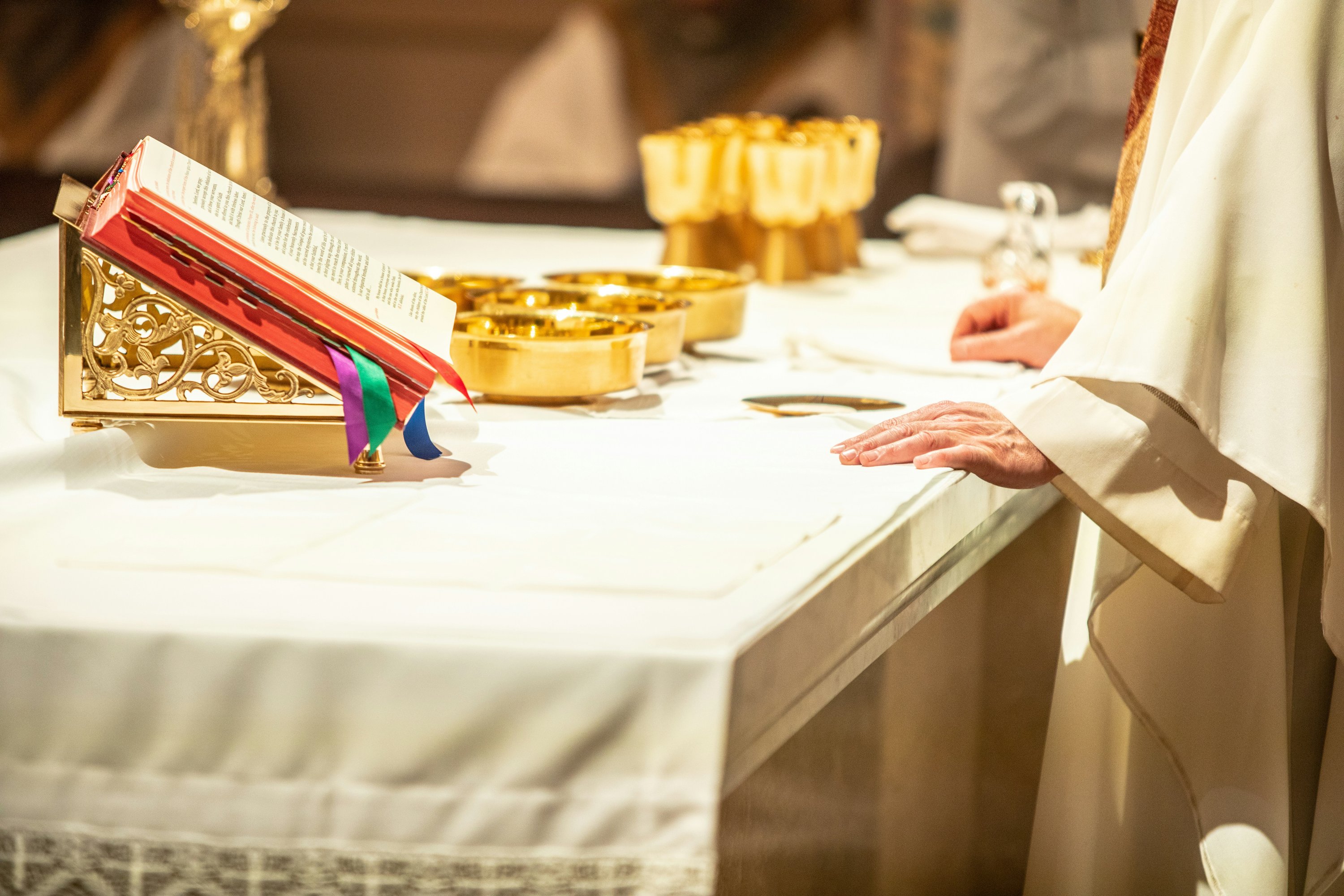
For the latter – the version of church that is fully knowledgeable, the experience of church happens through a filter.  In that experience, you are juggling the personnel details (did the lector show up, how the procession should line up based on who is serving, whether a choir member is late and didn’t get to rehearse fully), you are painfully aware of the hours of planning that went into the bulletin (the liturgical and musical decisions that were made to create a seamless experience), and you are mindful of all the administrative details (did the altar book get marked, which cruet has wine and which has water, do we have enough wafers for the number of people in church, did we remember all the announcements, and on and on).  People in both categories consume church in equal amounts, but the buzz behind the experiences may be different.

As someone who falls in that latter category, I have been especially grateful for Lent this year.  Our staff worked really hard to have all the liturgy planning completed early this year.  That is a fantastic feat, but it also means this winter has been extremely busy and detail-filled.  Even the start of Lent was chaotic.  On Shrove Tuesday, you are eating and merrymaking, and less than 24 hours later, you are spreading ash on people’s foreheads and making sure they have a meaningful Ash Wednesday.  By that Sunday, you are chanting or saying the very long Great Litany on the first Sunday of Lent, and by that Monday, you take a gulp of air once you realize you have done it – Lent has begun.

What all that preplanning has meant for me this year is that gulp of air is an invitation to trust the planning and to now live into Lent.  Instead of my head being abuzz with details, now I can sit down and clear out space to be with God – to do a meaningful assessment of my relationships with God, self, and neighbor, and see what invitations arise about what in those relationships needs repentance, repair, or rejoicing.  In essence, I suppose I shift now to being a consumer of church for a time.  I get to do the prayer, fasting, and alms giving that Lent invites without all the intricacies that began the season.

I wonder where you are finding yourself at the beginning of this second week in Lent.  How are you creating spaces where the buzz of life, the swirl of life’s details, and the burdens of the everyday can be set aside to connect with God, self, and neighbor?  How are you finding meaningful ways to repent, repair, and rejoice?  I cannot wait to hear how this Lent is reigniting your faith journey!

← Older posts

Recent Posts

  • On Getting It Right…
  • Sermon – Matthew 9.9-13, 18-26, P5, YA, June 7, 2026
  • On God, Grace, and Letting Go…
  • On Spiritual Check-Ins…
  • Sermon – Acts 1.6-14, E7, YA, May 17, 2026

Archives

  • June 2026
  • May 2026
  • April 2026
  • February 2026
  • January 2026
  • December 2025
  • November 2025
  • October 2025
  • September 2025
  • August 2025
  • July 2025
  • June 2025
  • March 2025
  • February 2025
  • December 2024
  • November 2024
  • October 2024
  • September 2024
  • August 2024
  • July 2024
  • June 2024
  • May 2024
  • March 2024
  • February 2024
  • January 2024
  • December 2023
  • November 2023
  • October 2023
  • September 2023
  • August 2023
  • July 2023
  • June 2023
  • May 2023
  • March 2023
  • February 2023
  • January 2023
  • December 2022
  • November 2022
  • October 2022
  • June 2022
  • May 2022
  • January 2022
  • December 2021
  • November 2021
  • October 2021
  • September 2021
  • August 2021
  • June 2021
  • May 2021
  • April 2021
  • March 2021
  • February 2021
  • January 2021
  • December 2020
  • November 2020
  • October 2020
  • September 2020
  • August 2020
  • July 2020
  • June 2020
  • May 2020
  • April 2020
  • March 2020
  • February 2020
  • January 2020
  • December 2019
  • November 2019
  • October 2019
  • September 2019
  • August 2019
  • July 2019
  • June 2019
  • May 2019
  • April 2019
  • March 2019
  • February 2019
  • January 2019
  • December 2018
  • November 2018
  • October 2018
  • September 2018
  • August 2018
  • July 2018
  • June 2018
  • May 2018
  • April 2018
  • March 2018
  • February 2018
  • January 2018
  • December 2017
  • November 2017
  • October 2017
  • September 2017
  • August 2017
  • July 2017
  • June 2017
  • May 2017
  • April 2017
  • March 2017
  • February 2017
  • January 2017
  • December 2016
  • November 2016
  • October 2016
  • September 2016
  • August 2016
  • July 2016
  • June 2016
  • May 2016
  • April 2016
  • March 2016
  • February 2016
  • January 2016
  • December 2015
  • November 2015
  • October 2015
  • September 2015
  • August 2015
  • July 2015
  • June 2015
  • May 2015
  • April 2015
  • March 2015
  • February 2015
  • January 2015
  • December 2014
  • November 2014
  • October 2014
  • September 2014
  • August 2014
  • July 2014
  • June 2014
  • April 2014
  • March 2014
  • February 2014
  • January 2014
  • December 2013
  • November 2013
  • October 2013
  • September 2013
  • August 2013
  • July 2013
  • June 2013
  • May 2013
  • April 2013
  • March 2013
  • February 2013
  • January 2013
  • December 2012
  • November 2012
  • October 2012
  • September 2012

Categories

  • reflection
  • Sermons
  • Uncategorized

Meta

  • Create account
  • Log in
  • Entries feed
  • Comments feed
  • WordPress.com

Blog at WordPress.com.

  • Subscribe Subscribed
    • Seeking and Serving
    • Join 391 other subscribers
    • Already have a WordPress.com account? Log in now.
    • Seeking and Serving
    • Subscribe Subscribed
    • Sign up
    • Log in
    • Report this content
    • View site in Reader
    • Manage subscriptions
    • Collapse this bar

Loading Comments...