• About

Seeking and Serving

~ seek and serve Christ in all persons

Seeking and Serving

Tag Archives: difficult

Sermon – Matthew 28.1-10, ED, YA, April 5, 2026

15 Wednesday Apr 2026

Posted by jandrewsweckerly in Sermons

≈ Leave a comment

Tags

alleluia, death, difficult, Easter, fast, fear, God, Jesus, joy, Lent, loss, Mary, praise, question, resurrection, Sermon

In the Episcopal Church we have this tradition of not saying the word “Alleluia” during Lent.  As someone who grew up in the Methodist Church, I was surprised to learn in my first Lent that we don’t sing songs that have the “a word” in them for six weeks, we eliminate liturgical responses that usually contain alleluias, and even our psalms for those six weeks do not contain the forbidden alleluias.  For some churches, they offer a ceremony for the children where they “bury the alleluias” – collecting written versions of the word around the tables at Shrove Tuesday and sealing them away in a box until Easter Day.  I’ve even had families who needed a funeral during Lent who asked if we needed to avoid any music or parts of the liturgy that say alleluia.  And while the answer is, “No, a burial is an Easter celebration,” you can see how ingrained the practice is for those in the Episcopal Church.

Given that taboo, you can imagine how liberating singing, saying, and shouting our alleluias are today.  We have fasted from that word of praise – the word that literally means “Praise the Lord!” – for six weeks.  And now we get to feast on alleluias.  We sing them – a LOT!  We say them in their normal places.  We add them in at the dismissal.  And in some settings, we even ring little bells every time an alleluia is shared.  If we have buried our alleluias, the kids release them with gusto.  This is a day of true celebration and joy.

While for some of us, the alleluias are what we came for:  we came to celebrate Easter, we came to gather with our family and friends and take pictures to remember the day, we came to jump off the Easter feasts we will enjoy later today, we came to be encouraged in a season that for many has been quite discouraging.  We want the alleluias, the egg hunts, the Cadbury eggs, the feast.  Meanwhile, for others, uttering those words of celebration – those alleluias – feels a bit…harder.  We really only need ten minutes of reading the news to know that this is no time in the world for celebration.  We only need ten minutes on social media to see the bickering and us-versus-them discourse to know that an alleluia is not going to wipe away our deep, deep divisions.  We only need ten minutes to recount all the people in our lives, and maybe in our own selves, that are suffering, dealing with a new diagnosis or a loss, who are missing loved ones or a broken relationship, to know that alleluias almost feel inappropriate. 

So how do we receive the gift of an alleluia today or even wholeheartedly shout those alleluias with such torn hearts and spirits?  Well, I like to go back to the text from Matthew’s gospel today.  We learn first that Mary Magdalene and the other Mary do not come to the tomb in joy – they do not come with flowers, with celebration clothing, or even with celebration words.  They come in grief.  They come to mourn.  As scholar Rolf Jacobson says, “The two Marys approach the tomb, expecting to see the tomb – the final resting place of Christ, the last sad chapter in his once promising story, the closing scene in the saddest story ever told.”[i]  So right off the bat, the Marys give us permission to come with all our stuff – our grief, our loss, our anger, our sense of helplessness. 

But perhaps even more encouraging from the text today is what the Marys do after the tremendously, shockingly good news.  We are told, “…they left the tomb quickly with fear and great joy…”[ii]  I love that the text suggests that these two emotions – fear and joy – while contrasting, are also tremendously compatible.[iii]  The Marys are tremendously joyful.  They have learned that what awaits is not the saddest story ever told, but a story that ends with joy – with alleluias!  Jesus is risen.  The tomb is empty.  Death does not have the final say.  Alleluia, indeed.

And the women go in fear.  Their alleluias do not negate their fear, do not wipe away all that has been.  They have questions, they have lingering grief for what might have been, they do not know what an empty tomb really means for their everyday life.  Scholar Richard Dietrich describes the two Mary’s fear and joy, “They are altogether too full:  they are afraid for joy.  It is the kind of feeling we have when we fall in love, when we witness the birth of a child, when we lean over the rim of the Grand Canyon, joyous and fearful at the same time.  The women are running, afraid for joy…”[iv]

And that to me is the greatest gift of Easter.  We do not leave here with the sugary promise that the empty tomb makes life roses and sunshine.  We do leave here with an assurance that everything in the world that is hurting our heart will be just fine.  We do not leave here with all the answers about what will happen next in our world, even if we know what comes next in Matthew’s gospel.  But what we do leave here with is permission to be full of joy with our fear.  We leave here with a commission to share the Good News of the empty tomb with people cowering in fear elsewhere.  We leave here with a word lingering on our lips that lets us be gloriously afraid for joy.  Alleluia!  Christ is Risen.  The Lord is risen indeed.  Alleluia!  Amen.


[i] Rolf Jacobson, “Commentary on Matthew 28:1-10,” April 24, 2011, as found at https://www.workingpreacher.org/commentaries/revised-common-lectionary/resurrection-of-our-lord/commentary-on-matthew-281-10-2 on April 1, 2026.

[ii] Matthew 28.8.

[iii] Matt Skinner, “Commentary on Matthew 28:1-10,” April 5, 2026, as found at https://www.workingpreacher.org/commentaries/revised-common-lectionary/resurrection-of-our-lord/commentary-on-matthew-281-10-14 on April 1, 2026.

[iv] Richard S. Dietrich, “Exegetical Perspective,” Feasting on the Word, Yr. A, Vol. 2 (Louisville:  Westminster John Knox Press, 2010), 351.
Sermon – Genesis 12.1-4a, L2, YA, March 1, 2026

15 Wednesday Apr 2026

Posted by jandrewsweckerly in Sermons

≈ Leave a comment

Tags

Abram, blessed, college, difficult, discipline, friends, go, God, intimacy, journey, Lent, love, Sermon

We’ve been talking a lot about college in our house.  I recalled my own experience of that first year of college with my older daughter recently.  I was so ready to leave home and start my “adult” life, I was beyond thrilled to be able see Duke basketball games in person, I was eager to start my studies so that I could take on that big job, and I knew I would have a ton of fun.  As I packed my bags, I felt like the world was full of promise and hope and I just knew I was going to have an awesome college career.  In many ways, my college experience was one of the best experiences of my life – one where I learned so much more than I expected, I made lifelong friends, I experienced my first sense of call to ministry, and I did in fact enjoy many a basketball game.  But that first year of college was nothing like the picture looking back now.  I had an awful freshman roommate experience, I struggled with the rigor of classes at first, I had a hard time finding a group of friends I really liked, there were multiple things I either tried out for our wanted to be invited into that I was not, and there were times that I wondered what in the world I was doing there.

As I listened to our Old Testament lesson today, I wondered how much Abram felt the same way about his own journey.  The very short passage from Genesis today says, “The Lord said to Abram, ‘Go from your country and your kindred and your father’s house to the land that I will show you.  I will make of you a great nation, and I will bless you, and make your name great, so that you will be a blessing.  I will bless those who bless you, and the one who curses you I will curse; and in you all the families of the earth shall be blessed.’”  At first glance, Abram’s invitation sounds awesome!  He is invited on a journey with God and he is promised God will bless him, will give him plenteous offspring and power, and he will essentially be famous.  Who wouldn’t want to pack up their earthly belongings and hit the road with that kind of invitation?  The upcoming journey sounds like one full of promise, hope, and abundant joy.

Of course, there are a few slight indicators of how hard this journey might actually be.  First God tells Abram to leave his country, his kindred, and his father’s house – all without a map of where they will be going.  Scholar Carol Newsome reminds us, “In traditional societies the kin group is the source of identity, economic benefit, security, and protection.  To leave such a fundamental social network is to put a great deal at risk.”[i]  And then there is the text we do not read today.  In the verses immediately preceding this text, we are told that Abram’s father has just died.  We all know what the death of a parent can do to a person, and can at least imagine the intense grief Abram is working under when he says yes to God.  And the text immediately after where we stop tells us that Abram is about 75 years old at this point.  So, a man well beyond the prime of life, who is freshly experiencing grief, who has probably long since lost hope of bearing any children should be able to guess that this journey will not be all roses and rainbows.

In fact, we know that the journey is not as hope-filled as our lesson makes the journey out to be today.  This man whom God says will be blessed and be great hits all kinds of bumps along the way.  If you remember, Abram passes off his wife as his sister several times to avoid danger to himself.  When he still does not have any offspring, Sarai eventually convinces him to sleep with her handmaiden Hagar.  Though Hagar bears him a son, Abram eventually casts Hagar and Ishmael out into the wilderness when his wife Sarai gets jealous.  And of course, we cannot forget that Abram is also forced to take his one son by Sarai, Isaac, up on a mountain to be sacrificed – believing all along that God intends for Abram to kill his only heir.  Sounds like a real journey of blessing, right?

That is the funny thing about journeys.  We are not often promised that our journeys will be blessed.  But even when we hope that they will be blessed, the blessing never comes immediately and is often masked by long intervals of pain and suffering.  We have lived that life here at Hickory Neck.  Almost three hundred years ago, people from Williamsburg were told, “Go.  Go from the conveniences of town and settle in a rural, farmland that I will show you.  I will make of you a great church, and I will bless you, and make your name great, so that you will be a blessing.”  At least, that’s how our histories of Hickory Neck read.  We too were a people of hope and expectation – at least until a certain war broke out and our side lost.  The building had its own adventure with students, residents, and injured soldiers.  And then, over 100 years ago, the dream emerged again.  We took a stab at the dream:  first with a small group of families, and then more and more friends, and slowly strangers gathering.  We had lots of clergy – some staying longer than others – some vicars, some rectors, some associates, and deacons.  We built buildings, bought more land.  We experienced church growth and church decline, budget surpluses and budget deficits.  We welcomed new ministries, a school, and joined the digital world.  When God said, “Go,” who would have ever guessed the journey would play out the way the journey has.

Sometimes our Lenten journeys have that same feel.  We fill ourselves with pancakes, and then the next day, kneel with resolve to take on some discipline.  We look forward to the blessings of Lent – the intimacy with God the journey will bring, the learning will we do, the peace we will gain, or even the couple of pounds we might lose.  And when we hear a story like the Old Testament lesson today, we feel pumped up and ready for an exciting journey.  We may even imagine God making similar promises to us:  You will be blessed in this Lenten journey.  And yet, if we think back to any Lent in the past, we might remember how difficult our discipline became by week four or five.  We might remember how that cool discipline we chose did not really turn out to be as great as we imagined.  And depending on how stable we were at the time, that sense of failure could have brought more of a sense of curse than blessing.

How do we know that blessing awaits and what do we do in the meantime?  What do we do when those days come – because they will – when we feel discouraged and lose that sense of promise and hope that God gives today?  If we look to Abram, we see that our only option is to go – to keep putting one foot in front of the other.  The lesson today says, “So Abram went, as the Lord had told him.”  The journey for Abram is risky, full of potholes, and ultimately full of some wild twists that might have turned Abram back at any point.  And yet, “Abram went.”  We are lucky enough to know that Abram becomes Abraham – the man that would eventually become a father of entire people – in fact of several faith traditions.  But Abraham never got to see the fullness of that blessing.  His life was more one of blessing in hindsight, not really an everyday blessing-fest.

In some ways, that is all we can do too.  God constantly calls us into a journey – whether during Lent or in whole phases of life.  God promises to bless us and love us along the way.  But we know the journey will be hard at times, and leave us feeling discouraged.  And when that happens, all we can do is put one foot in front of the other, and keep on going.  Of course, we have each other along the way, much like Abram had Lot.  In fact, the last words of today’s lesson are, “and Lot went with him.”  So, whether you are in that blessed state of bliss, or you are already struggling in your steps, God still tells you to go.  Our response is difficult, intimidating, and profound, but also extremely simple.  We go, knowing the journey will be blessed.  We go, knowing friends will journey with us.  We go, knowing God is with us.  We go.  Amen.


[i] Carol A. Newsom, “Exegetical Perspective,” Feasting on the Word, Yr. A., Vol. 2 (Louisville: Westminster John Knox Press, 2010), 53.

Sermon – 1 Samuel 3.1-20, E2, YB (Annual Meeting), January 17, 2020

20 Wednesday Jan 2021

Posted by jandrewsweckerly in Sermons

≈ Leave a comment

Tags

action, creativity, difficult, God, Here I Am, Hineni, journey, listening, pandemic, Samuel, Sermon, service, technology

When I was in seminary, our Old Testament Professor would take roll every class.  She told us at the beginning of the semester we could either answer with, “Here,” “Present,” or if we were really bold, “Hineni,” which is the Hebrew word for “Here I am.”  Most of us giggled and several of us used the term throughout the semester.  But what I am not sure any of us realized fully was saying hineni was not simply about practicing our Biblical Hebrew or even taking attendance.  As one scholar explains, the word hineni connotes “a willingness to respond with action to one’s master.”[i]  So all those times we have heard those words uttered in Holy Scripture, “Here I am,” from Samuel, Moses, Abraham, Jacob, to Mary, we are not simply witnessing God taking attendance.  We are witnessing a weighty exchange: from the one who utters the words being willing to respond with action, to the response God offers:  a journey of difficult service.[ii]

As we gather for our Annual Meeting today, I am keenly aware of how much this has been a year of saying hineni to God.  At the beginning of 2020, showing up for God was easy.  We celebrated the ministry of our curate, we welcomed with gusto Presiding Bishop Curry’s message of love, we walked as pilgrims through the music and stones of the Mother Church in England, we sang the spirituals that have accompanied our black brothers and sisters for centuries.  Saying hineni was easy then.

Saying hineni was a lot harder when a pandemic began ravaging our nation, when our buildings closed and all our ministries had to totally transform within days’ notice, when weeks turned to months of separation and mourning for all we missed, when our black brothers and sisters called us to task about the impact of institutional racism in our country, and when political trauma demanded we define our Christian identity.  Saying hineni to God this year has indeed been an experience of being invited into a journey of difficult service.

But saying hineni this year has also been an experience is seeing the heretofore inconceivable.  We went from being a church with zero commitment to broadcasting our services to being a church with daily online worship.  We went from being a church where homebound members only saw an occasional visit to being a church where our homebound could see faces online they know not just in worship, but in formation and fellowship.  We went from being a church who put the onus on others to walk through our church doors to get to know us, to being a church who did drive-by birthday celebrations, online live auctions, and helping newcomers “meet us” without actually meeting us in a what we thought was the best way. 

 When Samuel, in a sleepy, confused stupor says hineni to God three times, he has no idea what is coming.  He is not a priest, he does not know that his priestly mentor will be replaced by himself, he does not know he will anoint kings, take away kingly power, and eventually watch his own sons fail as Eli’s do.  And yet, when Eli helps Samuel understand what he is to do, Samuel responds the fourth time, “Speak, LORD, for your servant is listening.”  His response is no longer a sleepy, obligatory response of action, but is a confident, mature embracing of the difficult, but incredible road ahead.

We are entering into another year where God is calling our name too.  The arrival of vaccines at some point this year does not mean as we eventually regather we will simply go “back to normal.”  No, when God calls our name this year, God is inviting us to continue saying hineni to this new journey we are on – one where we continue being committed to sharing the gospel using all the technological gifts at our disposal, where we consider the new ways God has showed us to reach our neighbors in need, where we witness to the unchurched, and where we praise God for the gift of creativity that has always been our gift here at Hickory Neck – and then use that creativity to keep saying hineni to God.  As we look forward to this year, we do not simply sing hineni, “Here I am Lord.”  We also boldly say, “Speak, LORD, for your servant is listening.”  Amen.


[i] Cory Driver, “Commentary on 1 Samuel 3:1-10 [11-20]” January 17, 2021, as found at https://www.workingpreacher.org/commentaries/revised-common-lectionary/second-sunday-after-epiphany-2/commentary-on-1-samuel-31-10-11-20-6 on January 14, 2021.

[ii] Driver.

Seeing dignity…

24 Wednesday Jun 2015

Posted by jandrewsweckerly in Uncategorized

≈ Leave a comment

Tags

baptism, brokenness, difficult, dignity, faith, human being, humanity, joy, laughter, The Intouchables

Photo credit: http://ourfaithinaction.net/2012/the-intouchables/the-intouchables-movie-poster-3/

Photo credit: http://ourfaithinaction.net/2012/the-intouchables/the-intouchables-movie-poster-3/

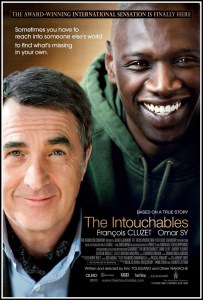
This weekend I finally saw The Intouchables, a 2011 film based on the true story of a French, wealthy quadriplegic who hires a man convicted of petty theft to be his caregiver.  The quadriplegic, Philippe, has been through many caregivers.  He is a widower who lost the use of most of his body in a paragliding accident.  He is bitter and does not like the way that most highly-skilled caregivers treat him more like a patient than a person.  Meanwhile, Driss applies for the job simply to obtain governmental unemployment benefits, assuming that Philippe will never hire him.  Philippe is intrigued by this man who shows him little respect, and hires Driss.  The two begin a relationship that is different than any either of them had known.  Philippe is finally able to rediscover a joy for life and reimagine what his life can be.  Meanwhile, Driss begins to see that he can have value too – that perhaps he can start anew with life, providing for his family and having a new sense of self-worth.

What I loved about this film was two-fold.  First, I had anticipated this being a sober, but triumphal movie.  Instead, I found myself laughing throughout the film – not at a slapstick humor, but at the kind of humor one develops when things get so bad that laughter is both the inappropriate and most appropriate thing to do.  It is an irreverent humor that only two characters who have been pushed to the margins can deeply enjoy, and yet, those outcasts invite us in to our own darkness and bring us out with laughter.  The second thing I loved about this movie is the way in which each character was able to see humanity in one who had been stripped of their humanity.  For Philippe, his physical disability had taken away his ability to full participate in society.  Society struggled to see any value in him beyond his money – which is not a value for which anyone wants to be known.  For Driss, he was a criminal who was unable to hold down a job and be a responsible citizen.  Society struggled to see any value in him, leaving him limited options.  And yet, in Philippe, Driss was able to unearth an adventurous, funny, sarcastic man of compassion and fortitude.  And in Driss, Philippe was able to unearth a sympathetic, strong, talented man of wisdom and grace.  In essence, they could see the humanity in one another.

When we reaffirm our baptismal covenant, one of the promises we make is to respect the dignity of every human being.  Over and over we make that promise, and yet I think it is one of the hardest things we promise to do.  It is very difficult to respect the dignity of the guy who cuts you off in traffic.  It is very difficult to respect the dignity of your family member who constantly puts you down.  It is very difficult to respect the dignity of the man who kills nine Christians in a church because of their race.  This past Sunday, as we were editing the Prayers of the People, I found I had no problem listing the names of the deceased from Charleston.  Where I struggled was adding the killer’s name to our list too.  That action went against every instinct in my body, and yet, some small ache made me feel like I had to add him too.

Respecting the dignity of every human being is not a one-time action.  It takes a lifetime of practice.  We fail at it all the time, but we keep recommitting to the work because we promised we would at our baptism.  What encouraged me about that work this week, was the relationship between Philippe and Driss.  Watching two men, so dramatically different, and yet similar in the way that society treated them as outcasts, heartily laugh from the depths of their souls gave me hope.  They gave me hope that I might see the dignity of others through my own brokenness.  The promise for my work is that I too would find the joy that only hearty, full-bodied laughter can bring.

On Mother’s Day…

07 Thursday May 2015

Posted by jandrewsweckerly in Uncategorized

≈ 1 Comment

Tags

bless, difficult, joy, Mother's Day, mothers, pregnancy, struggle

Photo credit: http://www.modernartimages.com/symbol-of-motherhood.htm

Photo credit: http://www.modernartimages.com/symbol-of-motherhood.htm

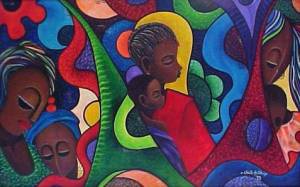
As Mother’s Day approaches, I face it with my usual dread.  Though there are so many mothers that we can and should honor (I love you, Mom!!), there are so many people for whom this is a hard day.  I am at the stage in life when many of my friends are having children.  There are the sonogram picture announcements about the pregnancies, the gender-reveal parties, the showers, and, of course, the onslaught of beautiful baby pictures.  It is a time of great joy and most of the time it feels like a gift, especially to be a part of it all when friends live far away.

But then I remember all of those friends who want to be pregnant, but struggle with infertility.  Each pregnancy announcement is bittersweet.  And I remember all of those friends who have lost a pregnancy.  Those sonogram pictures bring up fresh rounds of grief.  And I remember those friends who have lost children after birth.  Those pictures of swaddled babies bring back the muscle memory of empty arms.

Of course, that does not even include all the other ways that Mother’s Day can be difficult:  the mothers we have lost, the mothers who have been abusive, the mothers who are estranged from their children.  The list goes on and on.  And so, each year, my Mother’s Day tradition has been to reread this wonderful ode to “The Wide Spectrum of Mothering,” by Amy Young.  May you bless and be blessed this Mother’s Day, affirming all the women in your life.

Recent Posts

  • On Redefining Community…
  • On Parenting, Milestones, and Community…
  • Sermon – Acts 2.42-47, E4, YA, April 26, 2026
  • On Seasons of Discernment…
  • Sermon – Luke 24.13-35, E3, YA, April 19, 2026

Archives

  • May 2026
  • April 2026
  • February 2026
  • January 2026
  • December 2025
  • November 2025
  • October 2025
  • September 2025
  • August 2025
  • July 2025
  • June 2025
  • March 2025
  • February 2025
  • December 2024
  • November 2024
  • October 2024
  • September 2024
  • August 2024
  • July 2024
  • June 2024
  • May 2024
  • March 2024
  • February 2024
  • January 2024
  • December 2023
  • November 2023
  • October 2023
  • September 2023
  • August 2023
  • July 2023
  • June 2023
  • May 2023
  • March 2023
  • February 2023
  • January 2023
  • December 2022
  • November 2022
  • October 2022
  • June 2022
  • May 2022
  • January 2022
  • December 2021
  • November 2021
  • October 2021
  • September 2021
  • August 2021
  • June 2021
  • May 2021
  • April 2021
  • March 2021
  • February 2021
  • January 2021
  • December 2020
  • November 2020
  • October 2020
  • September 2020
  • August 2020
  • July 2020
  • June 2020
  • May 2020
  • April 2020
  • March 2020
  • February 2020
  • January 2020
  • December 2019
  • November 2019
  • October 2019
  • September 2019
  • August 2019
  • July 2019
  • June 2019
  • May 2019
  • April 2019
  • March 2019
  • February 2019
  • January 2019
  • December 2018
  • November 2018
  • October 2018
  • September 2018
  • August 2018
  • July 2018
  • June 2018
  • May 2018
  • April 2018
  • March 2018
  • February 2018
  • January 2018
  • December 2017
  • November 2017
  • October 2017
  • September 2017
  • August 2017
  • July 2017
  • June 2017
  • May 2017
  • April 2017
  • March 2017
  • February 2017
  • January 2017
  • December 2016
  • November 2016
  • October 2016
  • September 2016
  • August 2016
  • July 2016
  • June 2016
  • May 2016
  • April 2016
  • March 2016
  • February 2016
  • January 2016
  • December 2015
  • November 2015
  • October 2015
  • September 2015
  • August 2015
  • July 2015
  • June 2015
  • May 2015
  • April 2015
  • March 2015
  • February 2015
  • January 2015
  • December 2014
  • November 2014
  • October 2014
  • September 2014
  • August 2014
  • July 2014
  • June 2014
  • April 2014
  • March 2014
  • February 2014
  • January 2014
  • December 2013
  • November 2013
  • October 2013
  • September 2013
  • August 2013
  • July 2013
  • June 2013
  • May 2013
  • April 2013
  • March 2013
  • February 2013
  • January 2013
  • December 2012
  • November 2012
  • October 2012
  • September 2012

Categories

  • reflection
  • Sermons
  • Uncategorized

Meta

  • Create account
  • Log in
  • Entries feed
  • Comments feed
  • WordPress.com

Blog at WordPress.com.

  • Subscribe Subscribed
    • Seeking and Serving
    • Join 391 other subscribers
    • Already have a WordPress.com account? Log in now.
    • Seeking and Serving
    • Subscribe Subscribed
    • Sign up
    • Log in
    • Report this content
    • View site in Reader
    • Manage subscriptions
    • Collapse this bar

Loading Comments...