
Tags
Abraham, abundance, barren, concern, fear, God, good, Jesus, praise, promise, Sarah, Sermon, support, worry
We have been in a season of Vacation Bible School. As I watched our kids learning songs at Vacation Bible School this week, I found myself reminiscing about all the songs I learned as a kid at VBS – Deep and Wide, Jesus Loves Me, and, probably the most fun and robust, Father Abraham, complete with full-body motions and increasing speed. Watching the joy of our children, and experiencing my own nostalgia for that innocent time of my life left me so grateful for our continued ministry with the children of our community.
Unfortunately, thinking about Father Abraham and his many sons and the admonishment “Let’s just praise the Lord,” collided with our lectionary readings this week. Though we talk about God’s abundance with our children, our adult selves know all too well the rest of the story – both for Abraham and for ourselves. Our lesson from Genesis sets the stage. Abraham is still Abram at this point, and Abram, faithful follower of God who has been promised bountiful descendants is sitting empty handed with Sarai – who is far too old to be bearing children anyway. Abram laments with God about his hopelessness that the promised abundance will ever come.
Later we hear from the letter to the Hebrews a recounting of Abraham’s story as an example of what faithfulness means. We are reminded that not only do Abraham and Sarah face infertility into old age, Abraham has had to leave everything familiar to him, journey to a place he does not even know, living in tents in a foreign land. In fact, the letter to the Hebrews describes Abraham as “one as good as dead” – as in, given Abraham’s age, and the length of infertility in his marriage, and the data-based expectation that he would have no children – Abraham is as good as dead because there will be no one to keep his name alive. Barren was not just the state of Abraham and Sarah – barren would have been a reasonable state of their faith in God.
There are times these days that I relate much more to the barrenness of Abraham and Sarah than to the jubilant songs about praising the Lord. As I talk to workers whose employment is insecure, being reduced, or eliminated altogether, I hear echoes of Abraham’s complaints about barrenness to God. As I listen to people of color express their vulnerability in these volatile times, I feel a sense of barrenness in our country. As I hear stories of anxiety from those needing medical coverage or our nonprofits whose funding cuts threaten the very lives of their clients, I hear the barrenness of those who seem like “one as good as dead.”
So where do we find hope in the bleakness of the barrenness of life? How do we join the songs of our children, reminding us to “just praise the Lord”? Some of that hope comes from scripture today too. In Luke’s gospel, right at the very beginning, and so fast we might miss his words, Jesus says, “Do not be afraid, little flock, for it is your Father’s good pleasure to give you the kingdom… Do not be afraid, little flock, for it is your Father’s good pleasure to give you the kingdom.” Of course, we know that truth – God promises Abraham abundance over and over again. The community of the Hebrews celebrated the abundance of Abraham’s many sons when their own faith waivered. And Jesus tells his followers the same, “Do not be afraid, little flock, for it is your Father’s good pleasure to give you the kingdom.”
Now, I know words are easy to say, but sometimes hard to believe – even assurances from Jesus about God’s good pleasure of abundance for us. So, today we are going to do something totally different and try a little exercise from pastor and theologian David Lose. When you came in today you received a blank notecard. I want you to take that out and write on one side these words: God wants to give you all good things. Got it?
Now, I want you to turn the card over and write down one fear or worry or concern you would be willing to share – not aloud, and not with your name attached. Just one fear, worry, or concern you are carrying right now. As you are thinking about that and writing that fear, worry, or concern down, I will explain what we are going to do with your notecard: when we get to the offering, the ushers will pass both the offering plates and a basket for your cards. When you leave today, we will take those baskets, mix up the cards, and invite you to take out a random one. Your homework for this “week ahead is simply to pray for whomever wrote down the concern on the card you [receive] on the way out. You don’t need to know who it is, just that it’s a fellow member of the body of Christ who has this concern. As you are praying for that person, you [will] also know that someone is praying for you.”
Do you have your fear, worry, or concern written down? Hang on to your card until the offering. [The hope today through this small exercise is that] you [will] realize that you are not alone. We all have the promise that God wants to give us the kingdom; we all have trouble remembering and acting on that promise; [and] we all are praying for and supporting each other.”[i] This is our tangible work this week – to be a community in prayer for one another, working through our resistance to God’s promise to give us the kingdom, and seeing the abundance that will allow us to “just praise the Lord.” Amen.
[i] David Lose, “Dear Working Preacher: The Heart of the Matter,” August 5, 2013, as found at https://www.workingpreacher.org/dear-working-preacher/the-heart-of-the-matter on August 7, 2025.
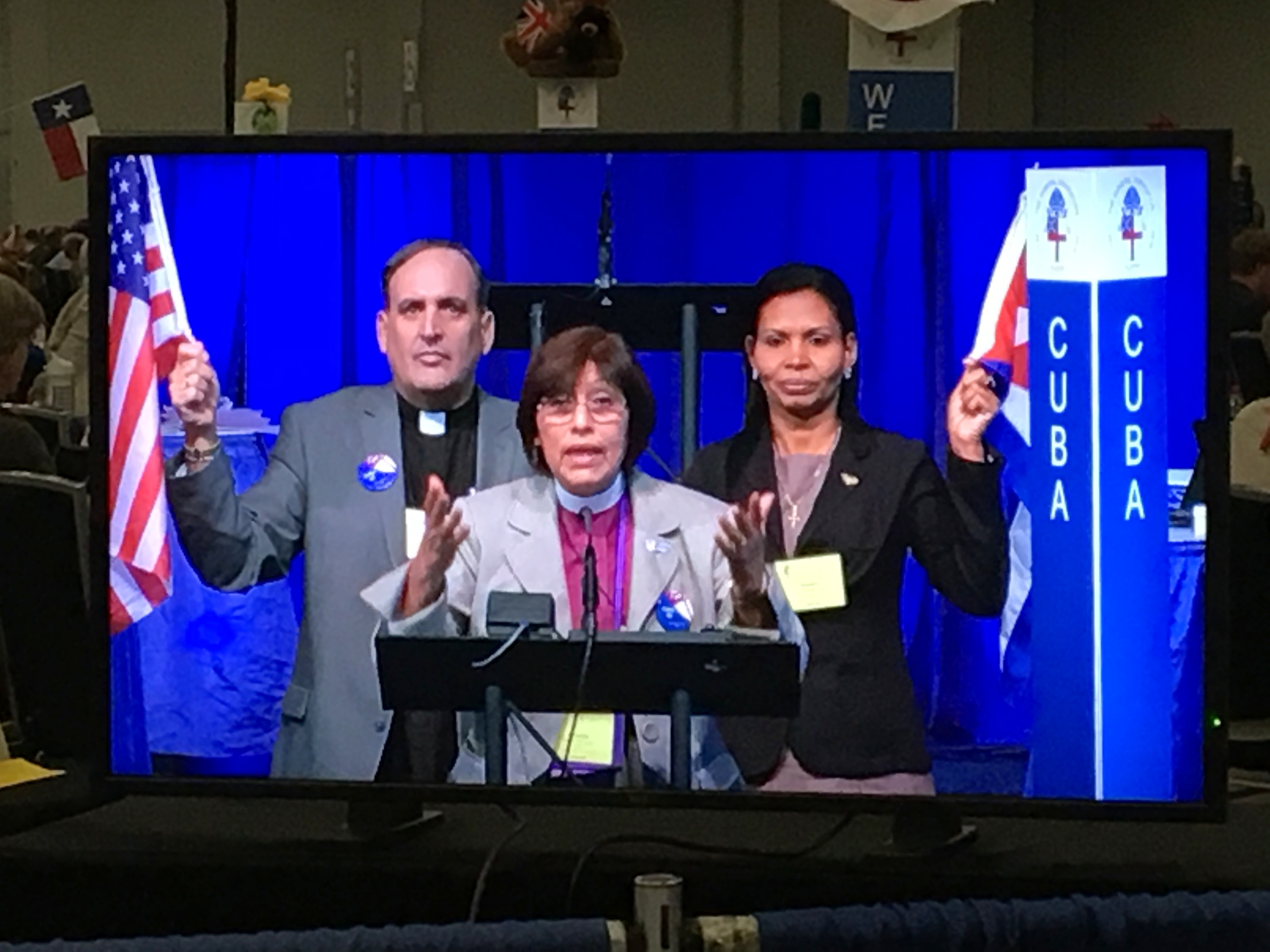 In 1966, in light of the Cuban Revolution and the political response of the United States, the House of Bishops voted to separate from the Diocese of Cuba from the Episcopal Church, leaving it an autonomous diocese without a provincial home. The clergy scattered, some returning or immigrating to the US, but some who remained in Cuba were imprisoned, executed, or disappeared; priests lost their pensions, and they operated in isolation from the Church. Cuba officially requested to be reaffiliated with the Episcopal Church and was given a list of requirements before admission. As of GC79, all of those conditions had been met. However, leading up to the resolution coming to the floor of both the Deputies and Bishops, there was controversy on what it would mean, how this admission might impact the admission of other Dioceses (or their exit), how to affirm already elected bishops (assuming they had not followed the current practices of approval for bishops in the Episcopal Church), among other concerns. In other words, there was a desire to right the wrong done 52 years ago, but some anxiety about the implications of the decision.
 Seeking and Serving