• About

Seeking and Serving

~ seek and serve Christ in all persons

Seeking and Serving

Tag Archives: Easter

Sermon – John 20.1-18, ED, YB, April 5, 2015

15 Wednesday Apr 2015

Posted by jandrewsweckerly in Uncategorized

≈ Leave a comment

Tags

community, Easter, Episcopal, intellect, Jesus, John, Mary Magdalene, mystery, personal, questions, realness, Sermon, theological, visceral

Growing up in the church, I always had a lot of questions.  There were a lot of things in the Bible that I found confusing, and downright contradictory, and I wanted someone to explain them.  Often the answers were unsatisfactory, and I struggled to understand why the adults in my church did not just have clear answers.  So imagine my delight in adulthood when I discovered the Episcopal Church and the way that the Church seemed to embrace questions.  Of course, the answers were still not always clear, and priests used words like “mystery” and “I don’t know.”  But at least I was in a place that welcomed the questions, and that fact gave me hope that one day, I might actually figure out all this “God stuff.”  And of course, going to seminary was a dream – I could actually spend 24-7 steeped in my questions, in textbooks, and in my favorite spot, the Library.  And though I discovered that there is rarely one answer to a question, the fact that there were myriad answers that one must hold in tension was just fine.  I was just happy to have developed some of the language and ideas around those big questions.

So imagine how proud I was when my first child finally started asking questions about Jesus.  I was going to be the parent who did not have to use words like “mystery” and “I don’t know.”  I did know, and with her first question, I launched into an explanation of epic proportions.  It was not until I looked in the rearview mirror of the car and saw her eyes glazed over and her attention fading that I realized I had lost her.  Somehow my accumulated knowledge and reference to the debates of scholars was of no help with a three-year old.

What I probably should have done was taken a cue from John’s gospel that we hear today.  The funny thing is that John’s gospel is usually pretty heady – his sentences are often convoluted and complicated.  And to be honest, sometimes my eyes glaze over and my attention fades when I read John’s gospel.  But today’s lesson is a little different.  Today, as we hear about the most significant fact of the Christian faith – Jesus’ resurrection – John is not abstract or intellectual at all.  Quite the opposite, the encounter between the risen Lord and Mary Magdalene is visceral, emotional, and deeply, deeply personal.[i]

This kind of revelation about God is not what we expect from John’s gospel.  This is the same gospel that begins, “In the beginning was the Word, and the Word was with God, and the Word was God.  He was in the beginning with God.  All things came into being through him, and without him not one thing came into being.”  No mangers, angels, or kings.  John is all about theologically explaining Jesus.  So why then does John give us a story about Mary, Peter, and the beloved disciple running around like crazy people?  Why does John have Mary repeatedly not being able to see past her grief to realize that not only is she speaking to angels who are trying to give her good news, she is also talking to the very man whom she is grieving?  John beautifully transitions today from being a writer who consistently presents Jesus in heady, intellectual ways, to being a writer who also shows us that Jesus is most known in the tangible, realness of life.  In the story, Mary is desperate to see her Lord’s body – what she imagines is the last tangible piece of him left.  She is so distraught that she cannot even see clearly when he is looking at her straight in the eye.  Only when she has turned away in despair, is she able to find Jesus.  Jesus says, “’Mary,’ and the sound of his voice saying her names helps her to see him.  He does not offer a general address; no, he uses a word that applies to her and her alone, a word that captures the utter particularity of her individual life – her name.”[ii]

We do not get a distant, transcendent Jesus in John.  We do not get some flowery, academic description of a concept of Jesus.  We get a real man, addressing a real woman, using the sound of his raspy voice, calling a woman by her very own name.  The gospel does not get much more real and tangible than that.  John’s gospel is such a relief to us today because who among us cannot relate to the busyness of this text?  Before we get to the part of Jesus saying Mary’s name we have Mary and disciples running back and forth, people walking past one another without a word, Mary misinterpreting things because she is so singularly focused on what she thinks should be happening.  Of course she could not see Jesus.  Neither can we.  We are running from work to home to meetings to practices to church.  We are answering emails, hearing headlines on the news, and eating dinner.  We are on the phone, driving the car, and scarfing down lunch.  How can we connect to Jesus in the chaos of our lives?

We can certainly try to connect to Jesus through the study of academic readings and theological debates.  We can try to mentally work our way toward Jesus.  But more often, Jesus is revealed to us instead through embodied, physical ways.  As one scholar explains, “As he did with Mary, Jesus comes to us not as a general idea or an imagined ghostly figure, but as a presence that reaches beyond our mind’s overt powers of knowing and touches our lives in ways that we cannot see.  They are felt – tasted, touched, smelled, heard, seen in image, and as such, often as unconscious as they are visceral.”[iii]  Sometimes we will experience God through study and the use of our minds.  But sometimes, we will come to know God through the emotional and personal – like being called by name.

Once we are willing to accept that there are some things that are beyond our knowing, we can perhaps lessen our grip on our Episcopal embrace of the intellect, and realize that some things of God have to be experienced.  In order to do that, we are going to need some help.  We are going to need to “go to church and be in a space where we physically, emotionally, communally, experience Jesus in our midst.”[iv]  Whether in the taste of the communion wine, the smell of the Easter flowers, the sound a favorite old hymn, or the feel of hard wooden pew, church is one of those places in which the familiar tastes, smells, sounds, touches, and sights stirs up something deep inside of us.  Though church can certainly feed our minds, we can feed our minds anywhere.  But our bodies need to be fed too.  And sometimes the only way to feed our body is through our physical, visceral experiences that can only be had in church – so that our bodies might be reminded of Christ too.

Of course, that means we are going to have to give up some things.  We are going to have to give up on the notion that our brains will be able to answer all our questions.  We are going to have to give up some time on Sundays so that we can place ourselves in the position to taste, touch, feel, see, and hear Jesus.  And we might even have to be willing to say the occasional, “I don’t know,” when our children ask us really hard questions.  But my guess is that children, and even adults, when they are willing to admit it, might be relieved to hear us say, “I don’t know.  But sometimes in my gut, I can feel Jesus with me.  And every once in a while, though the thought may be really strange, I really can hear Jesus calling my name.”  My guess is that the ambiguity, the visceral, tangible concept of Christ, and the sense of wonder and mystery you share might make for a more engaging answer anyway.  Amen.

[i] Serene Jones, “Theological Perspective,” Feasting on the Word, Yr. B, vol. 2 (Louisville:  Westminster John Knox Press, 2008), 376.

[ii] Jones, 378.

[iii] Jones, 378.

[iv] Jones, 380.

Lenten hope…

11 Wednesday Mar 2015

Posted by jandrewsweckerly in Uncategorized

≈ Leave a comment

Tags

already, Easter, God, hope, Lent, not yet, repent, sinfulness, spring, weary, winter, work

Picture credit:  http://www.hellopamevans.com/selling-home-spring-smart-move/

Picture credit: http://www.hellopamevans.com/selling-home-spring-smart-move/

Today is a day I have been longing for for at least a month.  The church bells are playing, the sun is shining, the temperature is rising, and I can see bits of grass under mounds of snow.  In some ways, the dreariness of winter has been most appropriate.  We are in Lent after all, so the feeling of weariness seems appropriate.  Any hint of spring would only tease us into a sense of relaxation – something we do not associate with Lent.  And yet, today feels like a little taste of Easter – a promise of what is to come in just a few short weeks.  For some reason, I really needed that taste today.

Of course, we always live our lives in a state of “already and not yet.”  As Christians we understand that the kingdom of God is already present and not yet fulfilled.  We live in a strange state of in between – of knowing that the Savior has come, and yet a time of waiting for the return of the Messiah.  It is an odd reality, and yet how we also understand this odd time.

Lent can be that way too.  We already know what happens after the crucifixion of Jesus.  Therefore staying in the moment, staying in the state of repentance and thoughtfulness about our sin feels contrived or forced – like pretending those birds aren’t chirping when we clearly hear them.  But that is also the beauty of Lent.  In fact, I think that is why we can experience Lent at all.  How else could we agree to delve into the depths of our sinfulness, our separation from God and others, without the promise of the Resurrection.  The Resurrection does not excuse us – it simply anchors us so that we can do the hard work that we need to do during Lent.

So today, I will breathe in the little promise of Easter.  I thank God for the gift of sun on my face and the trickle of melting snow.  And then I will get back to Lent with a little more energy and hopefulness.

Sermon – Acts 16.9-15, E6, YC, May 5, 2013

10 Friday May 2013

Posted by jandrewsweckerly in Uncategorized

≈ Leave a comment

Tags

disciples, Easter, evangelism, Good News, Holy Spirit, Jesus, Lydia, Paul, Sermon, spiritual practice

This Eastertide, I have been thinking a lot about evangelism.  The bishop asked us to have a conversation about our mission and evangelism efforts here in Plainview during Eastertide.  The Vestry just started reading a book about evangelism as a spiritual discipline.  And our Vestry retreat in April was about the tangible practices of evangelism we could employ.  For a topic that makes most Episcopalians very uncomfortable, evangelism seems to be everywhere I turn.  But as I was thinking about the theme of evangelism this Eastertide, I realized that the theme’s prominence makes quite a bit of sense.  Eastertide is sort of the “so what?” of the resurrection.  Throughout Eastertide, we are hearing the stories of the disciples’ reaction to the resurrection, and what life was like after this pivotal moment.  What better time to think about evangelism than while the disciples are doing just that – taking the Good News of Jesus’ resurrection and sharing that Good News with others.

What I appreciate then about our lesson from Acts today is that the practice of evangelism in biblical times was not exactly precise.  You would think that the book of Acts would tell the story of how after Jesus’ death the disciples knew exactly how to spread the Good News.  You would think after all those years with Jesus, the disciples had clear instructions for moving forward, and were able to draw up a structured evangelism plan.  But our stories from Acts this year have included nothing of the sort.  So far we have heard stories of a brutal persecutor of Christians being dramatically converted, of Peter realizing that Gentiles should also be included in the Christian community, and today we hear of this foreign woman of power coming to Christ.  I am pretty sure if the disciples sat down and planned their target audience for the Good News, Paul, Cornelius, and Lydia would not have been on their list.  And yet, this is the story of evangelism we hear during Eastertide: a story of unlikely and unexpected people hearing and responding to the word of God.

On the surface, this sounds like good news to us.  These stories of conversion give a sense of confidence that no matter with whom we share the story of Jesus, they will be converted.  But looking at the end of the story glosses over the actual experiences of those on the evangelism journey.  If you remember, when Paul is converted, and his eyes are scaled over, the Christian who goes to talk with him is scared to death.  God tells him to go to Paul, but that is little assurance when that instruction means walking into the lair of a nasty murderer of Christians.  And for Peter, his interaction with Cornelius means that he must surrender all that has been familiar to him – the necessity of circumcision and all that he has known as being central markers of faithfulness – and let go of that familiarity.  Even with this interaction between Paul and Lydia today, Paul must take on a long journey based on a few words in a dream, only to find not a Macedonian man who is asking for help, but a foreign woman.[i]

These stories during Eastertide only highlight our own anxieties about evangelism.  As modern Christians, we have a hard enough time sharing the Good News with our friends and family.  Religion is one of those primary topics to avoid at dinner parties.  At the slightest hint of discomfort from someone else, we immediately drop the topic, not wanting to drive away a friend or colleague.  We do not want to become known as some Jesus freak who everyone avoids at parties.  Quite frankly, there are even times when we feel uncomfortable even talking about our faith within Church.  How in the world could we ever then expect ourselves to be able to talk to those who are hostile, unchurched, or strangers to us?

Before I went to seminary, I participated in a group at my parish called EFM – Education for Ministry.  The program was a four-year program where a small group of people gathered and each year covered a different topic – Old Testament, New Testament, Church History, and Theology.  During one of the scripture years, I was traveling by plane alone and I was sorely behind in my scripture reading.  I carried a large study bible with me, and that trip I found that I had more interesting conversation than you could ever imagine.  I had a slightly uncomfortable conversation with a young evangelical male who started telling me about his conservative views on scripture.  I had a businessman ask me if I was a minister or theology student.  When I told him no, he seemed bewildered as to why I would be reading the Bible, and kept eyeing me suspiciously the rest of that flight.  I had a middle-aged woman start telling me about her church and Bible Studies she had enjoyed.  And of course, there were tons of people who just stared at me warily trying to figure out what my angle was.  You would think the lesson from my trip would be, “Take a Bible with you, and see what evangelism opportunities it creates.”  But to be honest, I found myself wanting to never carry a Bible with me again in an airport.

I think why we get so uncomfortable about evangelism is we imagine evangelism as knocking on the doors of strangers, presenting some uncomfortable script, and then having doors slammed in our faces.  But our lesson from Acts today shows us a different model.  Our lesson from Acts tells us is that yes, evangelism will entail going places that may be uncomfortable or interacting with people you would not expect.  Paul goes on a long journey expecting to meet a man and gets something quite different.  Lydia goes seeking a place to pray with her familiar girlfriends and hears something entirely new.  But evangelism is not just about the evangelizer and the evangelizee.  The other major actor is the Holy Spirit.  The text tells us that the Lord opened Lydia’s heart to listen eagerly to Paul.  Evangelism is the intersection between human faithfulness and divine guidance.  “Paul would not have been guided to this place at this moment, were he not first of all at God’s disposal, open to being guided, sensitively attuned to being steered in one direction and away from all others.  Lydia would not have arrived at this place or time, had she not first of all been a worshiper of God, a seeker already on her way.  Peter does his part and Lydia hers, but it is God who guides all things and works in and through all things, not just for good but for what would otherwise be impossible.”[ii]

What is so liberating about this understanding of evangelism is that even if we thought we had to or could do evangelism on our own, we realize today that our work of evangelism only happens with God.  The book our Vestry is reading says that “Evangelism is a spiritual practice of expressing gratitude for God’s goodness and grace.”[iii]  That does not sound so bad, does it?  A spiritual practice of expressing gratitude for God’s goodness and grace.  He does not define evangelism as saving souls or self-righteously driving away your friends.  He says that evangelism is about expressing gratitude for God’s goodness and grace.  Knowing that definition of evangelism and knowing from scripture that evangelism happens as a partnership between our faithfulness and God’s guidance makes the whole enterprise seem a lot less scary.

I want you to take a moment to think about the best vacation you ever had.  Think about all the reasons why the vacation was wonderful and why you enjoyed yourself.  Think about the happiness and peace that the vacation brought you and the warm smile that just recalling the trip brings to your face.  Imagine the enthusiasm in your voice as you share that story with someone else and the great conversation your sharing might evoke.  Now, take a moment to imagine the same experience with a conversation about your faith journey.  Think about the great joy you have had in your relationship with God.  Think about the happiness and peace you have at times found in God.  And now think about the enthusiasm in your voice as you share that story with someone else and the incredible conversation your sharing might evoke.  That is all that happens between Paul and Lydia.  That is all that God invites you to do today.  Because the Holy Spirit will take care of rest.  Amen.


[i] Eric Barreto, as found at http://www.workingpreacher.org/preaching.aspx?commentary_id=584.

[ii] Ronald Cole-Turner, “Theological Perspective,” Feasting on the Word, Yr. C, Vol. 2 (Louisville: Westminster John Knox Press, 2009), 476

[iii] David Gortner, Transforming Evangelism (New York: Church Publishing, 2008), 29.

On being an Easter people…

17 Wednesday Apr 2013

Posted by jandrewsweckerly in Uncategorized

≈ Leave a comment

Tags

Boston, death, Easter, funerals, life, Psalm 23

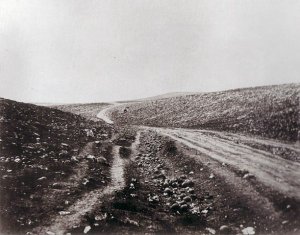
Valley_of_the_Shadow_of_DeathThis coming Sunday, the appointed psalm is Psalm 23.  As I have been praying on the texts, that phrase, “the valley of the shadow of death,” has been haunting me.  In some ways, it feels like our country has been in the valley of the shadow of death for quite some time.  After Hurricane Sandy and Newtown last year, multiple deaths by gun violence since Newtown – including two accidental deaths caused by four-year-olds with guns, and now the tragedy in Boston, it feels like we are in a valley of death that we cannot escape.  In fact, on Monday, I almost found that I could no longer watch the coverage about Boston because I could not handle the emotional overload that has been these six months.  The images were just too much to bear.

What is interesting about the texts for this Sunday is that not only do we read the 23rd Psalm, but also we read a text from Revelation 7.  Both of these are regularly read at funerals.  As I sit with these texts this week, all I can think about is death – which is especially frustrating in the midst of Eastertide – a season supposed to be about life.  So what do we make of a Sunday about death, and what feels like a world overshadowed by death, in the midst of Easter?  I suppose in many ways, this is the same paradox we have at every funeral.  At every funeral, a time when we mark someone’s death, the church encourages us to look toward life.  In fact, we decorate the church in white for funerals because burials are Easter celebrations.

Recalling the many times I have redirected mourning families toward life, I took my own advice today and starting looking for signs of life in the midst of this valley of death.  I was amazed at how much I could recall.  Here in New York, the trees are just now starting to bloom, and pops of color continue to surprise and delight me.  Our Vestry just had a retreat this weekend to talk about Evangelism.  The day brought up all sorts of fresh ideas and a commitment to growth.  The hopefulness of our Vestry is nothing like the weight of the valley of the shadow of death.  Even the empty garden bed which will be filled with soil this weekend is a sign of life here at St. Margaret’s.  As our parish children stood in the bed on Sunday, which will only be empty for a few more days, I smiled to think about the convergence of life both in our children and in our produce for the poor.  And even in Boston, there were immediate signs of life – people rushing to help victims, even to their own personal endangerment, strangers holding hands, people carrying victims, and strangers using their own clothes to stop bleeding and death.

I do not know if I can completely erase those words, “the valley of the shadow of death,” and all that it connotes for me this week, but my hope is that I can at least linger equally on the next words, “Thou art with me.”  Perhaps the answer is not that life erases death, but that God is with us in both.  And knowing that God is with us in death and in life helps me better to be an Easter person this week.

Sermon – John 20.1-18, ED, YC, March 31, 2013

10 Wednesday Apr 2013

Posted by jandrewsweckerly in Uncategorized

≈ Leave a comment

Tags

darkness, Easter, expectation, expecting, God, Jesus, Mary Magdalene, Sermon

On that dark, damp, dreary morning, Mary Magdalene comes to the tomb expecting something.  Darkness clings to her like a cloak.  She was there at the foot of the cross two days ago.  She waited, hoping against hope that God would be victorious and Jesus would be miraculously saved.  And then she prayed that God would take Jesus faster, because despair was setting in and his suffering was overwhelming to witness.[i]  She cried so much that night, that her eyes ran dry.  After 48 hours of dazed despair, she drags her lifeless body through the darkness to tend to her beloved Jesus’ body.  Seeing his body one more time will only confirm her grief, but at least she has somewhere to go to mourn; at least his cold body will confirm his death, and begin a journey toward closure.  Mary Magdalene comes to that tomb in darkness expecting something.

We too come to church today expecting something.  Maybe we are expecting a word of joy, the release of the alleluias we have been holding in for weeks.  If we attended the myriad Holy Week services this week, maybe we are expecting a relief from all the darkness of the liturgies during these last holy days.  If we have not been to church in a long time, maybe we are uncertain as to what to expect.  We came here seeking something – some sort of connection, a sense of familiarity, or maybe a place that will accept us as we are, letting us take things as slowly as we need.  Or perhaps you were dragged to church today by a family member, and the most you are expecting is an hour of your time taken away – and that certainly feels like a period of darkness for you too.

If Mary came expecting one thing, what she gets is altogether different.  The absence of Jesus body puts her over the edge.  The first thing she does is run to get the disciples.  But even they only confirm the awful truth that keeps compounding.  Humiliating him, torturing him, and crucifying him were not enough.  Now they have taken his body too?  Having the disciples leave Mary Magdalene alone again starts the downward spiral that seems endless.  This is why she cannot see the angels in their glory – she only mutters a response to them and turns away from the tomb, her vision blurred by her tears again.  This is also why, when a man appears, she desperately begs the man to tell her where he has taken the body.  And then the unexpected happens – or at least perhaps what she had hoped might happen, but would never let herself say aloud.  Rabbouni!  Her teacher is back!

But Jesus only partially fills her expectations.  “Do not hold on to me,” Jesus says.  His words must have felt like a slap to Mary’s fragile self.  In the instant that she recognizes Jesus, a whole new set of expectations arrive.  Surely, they can flee to Galilee again and keep Jesus safe.  But Jesus changes things yet again; Mary Magdalene’s expectations cannot be fulfilled.  Things cannot return to normal.  What Jesus invites is not a return to the way things were, but to a way that is even better than the way things were; a way in which she can develop new expectations for her life in Christ.

When I graduated from college and relocated to Delaware, I was looking for a United Methodist church.  I had experienced a particular style of worship in my hometown, and was looking to replicate that experience.  After six months of frustrated looking, I stumbled into the Episcopal Cathedral.  Parts of my expectations were met – the Cathedral had one of the most diverse populations I had ever seen – racially, socioeconomically, ethnically, by household definitions, and by sexual orientation.  They were doing some incredible urban ministry, and seemed to have an inspiring commitment to the poor.  But the worship killed me.  It was so formal and the music was so uptight, that I wondered how such a progressive church could be so rigid.  I remember hearing an offertory anthem one Sunday that was so good that I said a very loud, “Amen!” at the end.  I realized right away that that was not what was expected of me.  Ultimately, after several Sundays, I decided that I would stay, but only temporarily.  When we moved again, I would just look for another United Methodist church.  But God had other expectations for my life.

That is the funny thing about expectations.  Both the realistic expectations Mary Magdalene has – the expectation to remain in bitter darkness – and the hopeful expectation Mary has – that everything could go back to normal – are not met.  But that does not mean that Jesus does not make a way out of the darkness.  We have heard from the very beginning of John’s gospel about Jesus and the light.  “The light shines in the darkness, and the darkness did not overcome it,” says John’s gospel[ii]  The later, John says, “Again Jesus spoke to them, saying, ‘I am the light of the world. Whoever follows me will never walk in darkness but will have the light of life.’”[iii]  Jesus, then, this light of the world, cannot meet the expectations of Mary; because Mary’s expectations are smaller than God’s.  Mary cannot go back to the way things were.  But the way things are going to be is infinitely better.  “God gives a new kind of life, a life that is still worth living, a new kind of aliveness toward God and the world…”[iv]

Mary’s interaction with Jesus invites us to consider our own expectations of this day.  If we came here today, only seeking joy without transformation, then our expectations might go unmet today.  If we came here expecting to rub out all the darkness of these last days, then our expectations will only be partially met today because we cannot celebrate the resurrection, without the cross ever with us.  If we came here as seekers, expecting to just sit in the pew and then go back to our lives, then our expectations might not be met either.  Once we learn that this room is full of seekers just like us, who want us to enrich their journey, this place cannot be seen in the same way.  Even for those of you who just hoped to survive this hour of forced worship will not have your expectations met.  Because even if you are not touched today by Christ’s light, those who brought you here are being touched by the light; your relationship with them will be changed because they are being changed.

So the polite Southerner in me wants to say, “I am so sorry we did not meet your expectations today.”  But at the end of the day, I am glad that our expectations are not met today.  God is doing bigger and better things than we can imagine.  Our job is to trust that the light of the world will lead the way into the new resurrection journey that awaits us.  Amen.


[i] Joan Gray, “Beyond Rescue,” Journal for Preachers, vol. 22, no. 3, Easter 1999, 51.

[ii] John 1.5

[iii] John 8.12

[iv] Gray, 52.

Newer posts →

Recent Posts

  • On the Myth and Magic of Advent…
  • On Risking Failure and Facing Fear…
  • Sermon – Luke 23.33-43, P29, YC, November 23, 2025
  • On Inhabiting Gratitude…
  • Sermon – Luke 20.27-38, P27, YC, November 9, 2025

Archives

  • December 2025
  • November 2025
  • October 2025
  • September 2025
  • August 2025
  • July 2025
  • June 2025
  • March 2025
  • February 2025
  • December 2024
  • November 2024
  • October 2024
  • September 2024
  • August 2024
  • July 2024
  • June 2024
  • May 2024
  • March 2024
  • February 2024
  • January 2024
  • December 2023
  • November 2023
  • October 2023
  • September 2023
  • August 2023
  • July 2023
  • June 2023
  • May 2023
  • March 2023
  • February 2023
  • January 2023
  • December 2022
  • November 2022
  • October 2022
  • June 2022
  • May 2022
  • January 2022
  • December 2021
  • November 2021
  • October 2021
  • September 2021
  • August 2021
  • June 2021
  • May 2021
  • April 2021
  • March 2021
  • February 2021
  • January 2021
  • December 2020
  • November 2020
  • October 2020
  • September 2020
  • August 2020
  • July 2020
  • June 2020
  • May 2020
  • April 2020
  • March 2020
  • February 2020
  • January 2020
  • December 2019
  • November 2019
  • October 2019
  • September 2019
  • August 2019
  • July 2019
  • June 2019
  • May 2019
  • April 2019
  • March 2019
  • February 2019
  • January 2019
  • December 2018
  • November 2018
  • October 2018
  • September 2018
  • August 2018
  • July 2018
  • June 2018
  • May 2018
  • April 2018
  • March 2018
  • February 2018
  • January 2018
  • December 2017
  • November 2017
  • October 2017
  • September 2017
  • August 2017
  • July 2017
  • June 2017
  • May 2017
  • April 2017
  • March 2017
  • February 2017
  • January 2017
  • December 2016
  • November 2016
  • October 2016
  • September 2016
  • August 2016
  • July 2016
  • June 2016
  • May 2016
  • April 2016
  • March 2016
  • February 2016
  • January 2016
  • December 2015
  • November 2015
  • October 2015
  • September 2015
  • August 2015
  • July 2015
  • June 2015
  • May 2015
  • April 2015
  • March 2015
  • February 2015
  • January 2015
  • December 2014
  • November 2014
  • October 2014
  • September 2014
  • August 2014
  • July 2014
  • June 2014
  • April 2014
  • March 2014
  • February 2014
  • January 2014
  • December 2013
  • November 2013
  • October 2013
  • September 2013
  • August 2013
  • July 2013
  • June 2013
  • May 2013
  • April 2013
  • March 2013
  • February 2013
  • January 2013
  • December 2012
  • November 2012
  • October 2012
  • September 2012

Categories

  • reflection
  • Sermons
  • Uncategorized

Meta

  • Create account
  • Log in
  • Entries feed
  • Comments feed
  • WordPress.com

Blog at WordPress.com.

  • Subscribe Subscribed
    • Seeking and Serving
    • Join 394 other subscribers
    • Already have a WordPress.com account? Log in now.
    • Seeking and Serving
    • Subscribe Subscribed
    • Sign up
    • Log in
    • Report this content
    • View site in Reader
    • Manage subscriptions
    • Collapse this bar
 

Loading Comments...