• About

Seeking and Serving

~ seek and serve Christ in all persons

Seeking and Serving

Tag Archives: freedom

On Vaccines and the Cross…

24 Wednesday Mar 2021

Posted by jandrewsweckerly in reflection

≈ Leave a comment

Tags

Coronavirus, cross, dignity, freedom, Jesus, joy, love, neighbor, pandemic, respect, sacrifice, vaccine

Last week I got my first vaccine shot.  Although I am relatively young and healthy, our commonwealth updated the 1B category to include clergy.  So, when my email came to setup an appointment, I was giddy with excitement.  A flurry of joyful texts went out to friends, I had a permanent smile for the day, and there might have been some dancing.  The day of the vaccine was not much different.  Long lines usually bother me, but I have never smiled so much while just waiting.  Had we not still been in a pandemic, I might have hugged every volunteer and staffer who processed me through the various stages.  And though I have had hundreds of shots in my lifetime, I have never so eagerly proffered my arm for a shot. 

But it was not until I got in my car that I lost it.  Tears burst out of me as the emotions from a year of pandemic spilled out.  Not until that moment did I realize how much I had been holding in – trying to be strong for my family, my church, and even myself.  I still have over a month to go before I get my second shot and work my way through the waiting period, but that one little prick of a needle was the first real sign of hope for me.  I may finally get to see my family, after a year and a half of their absence.  I may finally be able to offer hospitality in my home to others without a sense of panic about safety.  I may finally feel a sense of freedom that has been absent for so long and whose value I never fully appreciated.  The tears that were streaming were the release of a year’s worth of weight on my shoulders.

Of course, even with the overwhelming joy of that day, I know our work is still not yet done.  But somehow the gift of that vaccine shifted the weight of that continued work.  Now my mask-wearing and social distancing is not so much out of fear or self-preservation.  Now my mask-wearing and social distancing can be a witness of Christ’s love for others.  From the beginning, I have said our safe practices were an act of loving our neighbor as ourselves and respecting the dignity of every human being.  But now those acts will not just be an added bonus to self-protection – they will be an act of agency, of choosing to care for others when the selfish thing to do might be to value newly regained freedom over all else. 

As we prepare for Holy Week, I am aware of the symbol we will be turning toward next week.  We will be walking toward the cross until the day of resurrection on Easter.  We will watch, and pray, and sing, and grieve as our Lord and Savior Jesus Christ witnesses the ultimate form of sacrificial love.  In this season of COVID, the cross is our invitation to love like Jesus taught us.  I look forward to making that walk with you this year in new and profound ways.

Photo credit: https://signsofthetimes.org.au/2020/04/the-power-of-the-cross/

On Grief, Grace, and God in a Pandemic…

30 Thursday Apr 2020

Posted by jandrewsweckerly in Uncategorized

≈ Leave a comment

Tags

cope, Coronavirus, emotion, freedom, God, grace, grief, Jesus, loss, lovingkindness, pandemic

istock-467983993

Photo credit:  https://www.timeshighereducation.com/student/blogs/how-deal-grief-while-university

This week, I hopped in the car to pick up an order of food from a local restaurant.  We’ve been trying to support our local businesses, and this has become a weekly treat.  On my drive there, I suddenly felt a sense of freedom.  I was totally alone in the car, I was blasting music only I like, and I was free from the confines of our home.  The whole trip was probably only 20 minutes round trip, and I have been out of the house many times, as I am the designated person to pick up necessities, but something about this particular drive was so gloriously freeing that the release of blissful emotion almost made me cry with longing.

As I thought about the drive later, I began to understand the surprising surge of emotion.  Intellectually, I know we as a world are suffering a tremendous amount of grief.  But I had not fully acknowledged my own grief – grief over seemingly small losses.  In my case, the loss of freedom to structure my day, create space without children around for contemplation or accomplishing work, to go about daily rituals (work, shopping, dropping off kids), or even the ability to just hop in the car and go wherever I want.  I suppose I had not acknowledged my grief because there is much bigger grief all around me – grief over the death of loved ones whose funerals are indefinitely postponed, grief over lost livelihoods and the threat of financial ruin, grief over the incapacitating of the body from this virus, grief over lost milestones, such as graduations, weddings, and baptisms.  In the face of such enormous grief, my feelings felt petty or unmerited.

I have counseled more families than I can count after a loved one has been lost.  We talk about how important having a funeral as soon as possible is so the grief process can begin.  With church members, we send a series of four books over the following year to help them as their grief evolves.  But in the midst of a pandemic, grief is a strange animal.  There are ways in which we are hesitant to acknowledge or give credence to our grief.  There are ways in which we stuff our grief because we are just trying to survive.  And there are ways in which our grief simply cannot be processed because of the elimination of our normal rituals.

All of that is to say, I hope that you can use this time to give yourself the same amount of grace and lovingkindness that our Lord gives us.  This time is unlike anything most of us have faced, and our normal coping mechanisms may not be sufficient.  And that is okay.  The good news is that Christ is walking with us in this time, holding our fragile selves together (and staying nearby with the fragility shatters).  Our invitation is to accept that tenderness for ourselves, and, when possible, extend that tenderness to others – our loved ones, our neighbors, and strangers.  As always, you are in my prayers.  Today I especially pray that you can feel God’s loving arms surrounding you on every side.

Sermon – Matthew 25.14-30, P28, YA, November 19, 2017

22 Wednesday Nov 2017

Posted by jandrewsweckerly in Sermons, Uncategorized

≈ Leave a comment

Tags

bold, calling, confident, creativity, cruel, discerning, freedom, generous, gifts, God, Jesus, joy, mean, parable, risk, Sermon, servant, talents, trusting, vocation

Our parable from Matthew’s gospel today seems to present two very different versions of God.  When the story opens, the landowner is painted in a positive light.  Within the first line of this parable, we already find a landowner who places a great deal of trust in his servants.  Not only does he trust his servants with his property, he is also thoughtful about what each servant can handle.  Based on their abilities, he give gives one servant five talents, one servant two talents, and the other servant one talent.[i]  Now before we go too much farther, we need to remember that the entrusting of even one talent is a big deal.  You see, a talent is worth about 15 years of what a servant would normally make in wages.[ii]  To the first servant, the landowner is entrusting about 75 years’ worth of wages!  This landowner is not only generous with his property, he communicates a great deal of confidence in these three servants.

The story continues to be remarkable.  Nowhere in the parable does the landowner say, “Okay here are your talents.  Here is how I suggest you manage my wealth.”  No, the landowner leaves, communicating not just generosity, confidence, and trust, but also giving the gift of freedom to each servant.  Implicit is the expectation that they handle the wealth well, but also implicit is the idea that they have some autonomy in their management.

Many years later, the landowner returns, and we find his generous, trusting, encouraging nature continues.  When the first servant tells the landowner of his adventures with the talents, how he is able to double his holdings, the landowner is effusive with praise.  Because he has done such a fantastic job, the landowner says he will reward him with entrusting him to do more.  And then, as if to further prove what a generous landowner he is, the landowner opens his arms widely and says, “enter into the joy of your master.”  What a tremendous gift to this servant who has worked hard, taken on tremendous risk, and hustled for years and years for the sake of his landowner.  We can almost hear the vigorous pats on the back, and imagine the tears welling up in the servant’s eyes as he is affirmed, encouraged, and loved.

But then our story changes.  The third servant seems to evoke a very different version of the landowner.  Clearly the landowner knew the third servant was not as gifted as the others when he only gave the third servant one talent.  Faced with the sudden burden of wealth like he has never seen before, the third servant panics.  He does not want to mess things up or disappoint the landowner.  Unlike the other servants, this servant is full of self-doubt and fear.  And so, he does the best he can.  He goes and he buries the money.  Sure, he does not come back with more like the other servants, but at least he does not come back with less than with what he was entrusted.  To this nervous, timid, perhaps slightly less bright servant, the landowner is suddenly a very different landowner.  The landowner calls the servant wicked and lazy.  The landowner yells at the servant for mischaracterizing the landowner and for being so overcome with fear.  And then, as if the yelling and name-calling is not enough, the landowner strips him of the wealth, gives the talent to the first servant, and then casts the third servant out of his grace and abundance, leaving him in the outer darkness.

So, why is this landowner so kind, generous, and trusting in one breath, and impatient, mean, and cruel in the next?  We have been getting a lot of these kinds of stories from Matthew lately.  First, we got the wedding host who seemed to be generously welcoming all to the party, only to cast someone out who wore the wrong clothing.  Then we got the feuding bridesmaids who refuse to care for one another, and the bridegroom who has no patience for a lack of preparedness.  And then we get today’s parable.  If we simply had just this one instance of God’s harshness or unjust judgment, we could say the parable is an anomaly, a strange outlier.  But given the repeated telling of scary-ending stories, we are cued into the idea that something else is going on in Matthew’s gospel.  Indeed, all of these unsettling parables are what we call eschatological parables – stories about the end times.[iii]  At this point in Matthew’s gospel, Jesus is approaching the end of his life.  Instead of continuing to heal, preach, and lovingly teach his disciples, he starts getting real.   I am reminded of one of the first reality television shows that ever aired, MTV’s The Real World.  MTV would pair seven very different individuals and make them live together for a few months.  The tagline of the show was, “This is what happens when people stop being polite and start getting real.”

Understanding that Jesus is facing his immanent death is critical to understanding what is going on with Jesus in these parables.  Any of us who has journeyed with someone who is dying knows that at some point, they stop being polite and start getting real.  This is their last chance to tell others the essentials:  the life lessons learned, the love they want to share, and the stern encouragement they want to give.  Although this landowner seems harsh or even irrationally mean, what he is doing is communicating ultimate significance.

Let’s go back to this third servant.  We know what the third servant does is not all that bad.  He does not squander the entrusted wealth, or act rashly.  He is conservatively prudent and, perhaps based on his skill level, wise to restrain himself.  But ultimately, the landowner is not upset about what the servant does.  The landowner is upset about the servant’s motivation:  fear.[iv]

In a couple of months, our family will be going on a trip that involves a visit to an amusement park.  We have been talking about the park as a family, and most of the members of our family are thrilled.  We have been watching videos about the rides, and the children are getting amped up to try some of the rollercoasters.  I, on the other hand, have no interest in the rides.  I am scared to death of rollercoasters.  I do not like the way they make me feel, I do not like how tense they make me, and I do not like the lack of control I feel when on them.  I gladly prefer to be the “holder of bags” at amusement parks.  But my family has been riding me this time.  They want to experience the adventure with me.  They want to discover which ones are too scary and which ones are just plain fun together.  And yet just talking about that idea has my knees knocking with fear.

That’s the funny thing about fear.  Fear distorts every good thing about our nature.  Fear cuts off creativity.  When we are overcome with fear, we cannot be imaginative and playful, coming to new solutions and ways of being.  Fear also messes with our sense of trust.  When we are overcome with fear, we forget the goodness of others, our previous examples of how things have gone well, or even the bold support of our God.  Fear messes with our confidence.  When we are overcome with fear, all the good, powerful, and holy parts of us gets riddled with self-doubt and inaction.  And finally, fear messes with our willingness to take risks.  When we are overcome with fear, we cannot do the things that will lead to great payoff.

Fear in the abstract is a normal reaction in life.  But we have to remember what Jesus is talking about in this parable to understand why the landowner is so harsh about fear.  You see, talents are not just metaphors for the thing things we are good at or even for the money we have in life.  Talents are metaphors for the vocations we each have.[v]  You see, each person in this room has a calling.  Some of us are called to particular jobs or courses of study.  Some of us are called to particular roles within families or groups.  Some of us are called to use our gifts in particular ways.  We all have a call, a vocation in life.  And our vocation is affirmed by the skills or materials we are given to live out that call.  The problem with the third servant is that he is given what he needs in abundance.  The landowner affirms him, trusts him, and gives him space and time to live out his vocation.  But the third servant allows himself to be so overcome with fear that he does not live out his vocation.  He shuts down creativity, trust, confidence, and risk-taking all because he is afraid.  And that is the ultimate sin for God.

What this parable invites us to do today is not to see this landowner – this stand-in for God – as a mean, cruel, reactive God that punishes.  Quite the opposite, the parable today invites us to remember that our God is trusting, discerning about our gifts, confident in our abilities, and joyful in our obedience.  God gives each person in this room a vocation, a purpose, in this world, gives us the gifts and encouragement we need to fulfill that vocation, and, ultimately, expects us to go out into the world and boldly take the risk of doing what God has already enabled us to do.  No one likes being thrust out of the nest, having to use our wings to sustain us.  But our parable reminds us we can do what we need to do.  We have beautiful wings and our flying will help others, will bring blessing to the world, and will bring us great joy.  Getting scared when God stops being polite and starts getting real is normal.  But letting fear overpower our beauty is not what God desires for us – because God knows you can do it.  God knows your willingness to live out your vocation means great things for the world.  You can do it!  So buckle up and get ready for the ride!  Amen.

[i] Mark Douglas, “Theological Perspective,” Feasting on the Word, Yr. A, Vol. 4 (Louisville:  Westminster John Knox Press, 2011), 310.

[ii] Lindsay P. Armstrong, “Homiletical Perspective,” Feasting on the Word, Yr. A, Vol. 4 (Louisville:  Westminster John Knox Press, 2011), 309, 311.

[iii] Douglas, 308

[iv] Douglas, 312.

[v] Idea presented by Matthew Skinner in the podcast, “SB570 – Twenty-fourth Sunday after Pentecost (Ord. 33)” November 11, 2017, as found at http://www.workingpreacher.org/brainwave.aspx?podcast_id=948 on November 17, 2017.


On Patience and Humanity…

18 Wednesday Jan 2017

Posted by jandrewsweckerly in Uncategorized

≈ Leave a comment

Tags

control, free will, freedom, frustration, God, humanity, patience, pray, reason, sleep, stubborn

Our youngest recently graduated to a “big girl” bed, which means that she now officially refuses to stay in it for sleeping.  Since she discovered her new freedom, we have spent anywhere from twenty minutes to two hours trying to get her to sleep.  We have tried everything – a predictable routine of bath, book, rocking, and bed.  We have tried gently returning her to her room, with limited conversation.  We have tried insisting she put herself back to bed (this one almost never succeeds).  And of course, we have raised our voices many a time – not exactly the best remedy to get someone to go to sleep.  There have been tears (hers and ours), arguments, and desperation.  We keep reminding ourselves that this is a phase, but when you are in the thick of a phase, it can be hard to see straight.

I was bemoaning our situation this weekend, wondering why she doesn’t just go to sleep.  Clearly she is tired, and she feels better when she is rested.  But logic is not her strong suit right now.  In the midst of my frustration, it occurred to me that this must be a little taste of God’s relationship with us.  Surely God knows what is best for us, and would love for us to follow God’s will.  And yet, we are stubborn.  We want to do things our way, and we want to be in control.  Sometimes it occurs to us to go to God in prayer, seeking guidance.  But most of the time we are so fixed on what we want and what we think is best, we rarely look to God.  God gives us the gift of free will, and with that comes the mess of human decisions and actions.

Thinking about God’s infinite patience with my own stubbornness has made me wonder if I might take a deep breath and try to offer that same patience with my little one.  I often find that when I take that breath, imagining God’s lens of patience, I am able to see my child’s frustration, her longing for independence, and her confusion.  Seeing her humanity makes my heart much more generous.  Thinking about God’s infinite patience has also made me wonder to whom else I could extend a little more patience.  Perhaps it is the friend or family member who feels like a perpetual burden.  Perhaps it is a colleague or fellow volunteer who refuses our advice.  Or perhaps, and maybe even more frustrating lately, it is that elected official for whom we may or may not have voted.  If God can love us, honor our humanity, and abide with us, surely we might be able to share the same love, honor, and patience – even if it sometimes makes us crazy!  I promise to pray for you as you endeavor to follow God’s example – as long as you pray for me too!

gods-patience

Photo credit:  www.ottawacoc.org/sermons/393261-gods-patience/

Sermon – Acts 16.16-34, E7, YC, May 8, 2016

11 Wednesday May 2016

Posted by jandrewsweckerly in Sermons, Uncategorized

≈ Leave a comment

Tags

Christ, enslaved, faith, freedom, live, Moral Mondays, Paul, power, praise, privilege, protest, Silas, slave, suffering, truth, value, wealth

Thousands of years ago, our people were enslaved.  Once-friendly Egypt got a new pharaoh who saw the sheer number of us, and out of fear, enslaved us.  We lost our freedom, and labored under a brutal new regime.  We longed for better days.  We longed for a return to our homeland, even though our homeland could not have sustained us because of the famine years before.  Every night, our cries went out to God.  One day, God heard us.  God sent us a man by the name of Moses, who dramatically managed to convince Pharaoh to let us go back home.  So we quickly packed our things and ran.  Pharaoh changed his mind and sent his armies after us.  But when we crossed the Sea of Reeds, and Pharaoh’s army drowned, we celebrated.  We were free.

Not long after, the rejoicing stopped.  Freedom did not look like what we thought freedom would look like.  Freedom was hard.  When we were enslaved, we always knew from where our next meal would come.  We knew where we would lay our heads at night.  We knew the routine.  With Moses, we were constantly wandering in the wilderness, wondering where our next meal would come from, searching for water, unsure of what would happen.  Nothing in our journey unfolded as we imagined.  We thought freedom would mean being able to do whatever we wanted, being free of obligation, and not being constrained by anyone or thing other than ourselves.  Pharaoh was admittedly awful, but better the devil you know, right?

Being from a country whose primary value is freedom, sometimes I think we get as confused as our ancestors about what freedom means in the context of being people of faith.  Take our lesson from the Acts of the Apostles today.  There are both people who are free and people who are not.  Those who own the slave-girl are free to collect money for someone else’s performance, and they are free to get someone thrown in jail.  The judges who throw Paul and Silas into jail are also free – free to choose who is punished and who is not.  Finally, we might put the jailer into the free category as well.  He is a man with a steady, respectable job, who has power over those in prison.

Meanwhile, our story has those who are lacking freedom.  The first character we hear about is a slave-girl.  In some ways, this nameless slave is a double slave – a slave to her owners who use her for money and a slave to the spirit of divination inside her.  Paul and Silas also lose their freedom.  They are thrown into jail midway through our story, which clearly puts them in the not-free category.  Plus, the slave-girl calls them “slaves of the Most High God.”

Looking at the characters in Acts, we can see how confusing the definition of freedom can be.  If freedom is a value in and of itself, then the heroes of our story are the slave owners, magistrates, and the jailer.  The owners of the slave girl obviously have social capital and an income source.  They have influence and power, and up until Paul and Silas come along, they have the comforts of wealth.  The judges also have a great deal of respect and power in the community.  They are charged with keeping order in the community and protecting the community’s way of life.  Even the jailer has a clear sense of identity and purpose.  He may not have wealth and prestige, but he has a secure job and a sense of clear identity in the community.

Consciously, we know that we should not identify with these three entities.  But subconsciously, and in a country that does not distinguish between freedom and freedom in Christ, we find ourselves much more aligned with and, quite frankly, longing for the kind of freedom that these three parties have.  Meanwhile, the slave-girl is nothing like what we hope for ourselves.  Being possessed by a spirit and being owned by another individual do not usually make the top of our lists for happiness and fulfillment.  And in no way do we want to be like Paul and Silas, who not only seem to be homeless rebel-rousers, they also are physically brutalized and imprisoned.  We are faithful followers of Christ, but I doubt many of us would take that commitment all the way to jail.

Last week, a friend of mine had that very debate.  She is a priest in North Carolina, and she decided to join the weekly protests that has become known as Moral Mondays.  Moral Mondays have been happening since 2013, as religious leaders and followers across North Carolina have gathered in peaceful protest of the laws being passed that promote unfair treatment, discrimination, and oppression.  Bishop Michael Curry was a frequent protestor and speaker at Moral Mondays before being elected Presiding Bishop.  Last week, my friend decided that she needed to join fellow Christians in protest, but she was uncertain about the possibility of being arrested.  She knew what was happening in the legislature was unjust, but she also had a family and job to think about.  She was unsure about how she could best be of use – by staying long enough to be escorted to jail, or whether her presence at the protest would be enough.

What my friend was on the cusp of understanding is what Paul, Silas, and the slave-girl already know.  The slave-girl already knows the truth that no one else can see – that Jesus is the way to salvation.  And when she shouts that long and loudly enough, she is not only freed of her possession, she is free of the bondage of slavery – because her owners can no longer use her as they did before.  Even Paul and Silas, who are locked in jail, are more free than they seem at first glance.  What person, after being brutally whipped and thrown into a cold cell, can be found praying and singing praises to God in the middle of the night?  Only someone who is so free of the bondage of this world can be able to praise God in the midst of earthly suffering.

If Paul, Silas, and the slave-girl are free, guess who the real enslaved ones in our story are.  Those owners, who seem to have the earthly freedom of wealth, have actually become slaves to their wealth.  They are so enslaved to that wealth that when their source of income is freed, they lash out, bringing pain and suffering down upon others.  They cannot see the gift of freedom and health for the slave-girl; they only see the consequences for themselves.  The magistrates are no freer than the owners.  They are so enslaved to their rigid rules that they cannot see the inherent injustice that the slave-girl has faced for so many years.  Even the jailer is not truly free.  He is so caught up in his identity as a jailer that he is willing to take his life for his job.  He is ready to kill himself for what he thinks is a failure on his part than to see how this job has taken over his sense of identity.[i]

So how do we avoid living like the complaining Israelites, who were physically free, but not yet spiritually free to live as the Lord our God invited them to live?  How do we, in a nation that reveres freedom, avoid being enslaved by the wealth, power, and identity that comes from being free?  The jailer asks the same question to Paul and Silas when he asks, “What must I do to be saved?”  In the paraphrase of our text, Paul’s answer is simple:  Put your entire trust in the Master Jesus. Then you’ll live as you were meant to live.[ii]  Paul and Silas could have easily fled that jail when the earthquake happened.  They could have sped past the jailer, and been focused solely on their own self-preservation.  But we see that there is a peace in Paul and Silas that comes from true freedom – of living how we are meant to live.  Instead of weeping and plotting in that cell, they sing and pray to God.  Instead of running when the doors fling open, they ensure that the jailer is okay.  Instead of demonizing the jailer, they offer him baptism.  This is what true freedom looks like.[iii]

In our freedom, we have become enslaved – in varied and sundry ways, but we are all enslaved by something.[iv]  Paul, Silas, and the slave-girl invite us into another way.  They invite us to live as liberated people who trust in our Lord Jesus Christ.  That true freedom may mean we find ourselves shouting out truth in a peaceful rally.  That true freedom may mean that we find ourselves praising God when no one else is, sacrificing our own comfort so that someone might find theirs.  That true freedom might mean trusting God is acting when we feel like God left the building long ago.  When we claim that freedom, then finally, finally, we will begin living as we were meant to live.  Amen.

[i] David G. Forney, “Pastoral Perspective,” Feasting on the Word, Yr. C, Vol. 2 (Louisville: Westminster John Knox Press, 2009), 526.

[ii] Eugene Patterson, The Message, as found at https://www.biblegateway.com/passage/?search=Acts+16%3A16-34&version=MSG on May 6, 2016.

[iii] L. Gregory Jones, “Come, Lord Jesus,” Christian Century, vol. 109, no. 16, May 6, 1992, 485.

[iv] Ronald Cole-Turner, “Theological Perspective,” Feasting on the Word, Yr. C, Vol. 2 (Louisville: Westminster John Knox Press, 2009), 524.

O death…

16 Wednesday Sep 2015

Posted by jandrewsweckerly in Uncategorized

≈ 1 Comment

Tags

abundance, blessing, call, death, different, eternal life, fear, freedom, God, grace, joy, pretend

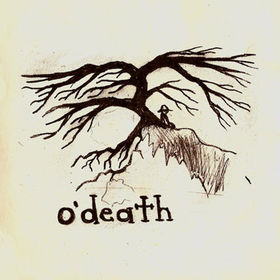
This past week I have been thinking a lot about death.  It’s probably a function of being a priest, but death is ever a part of my journey.  Many days I can avoid thinking about it.  But I imagine that is not really what God wants.  Just to prove the point, I find that deaths usually come in threes.  No one can avoid thinking about death when they come in threes.

That was the case last week.  Within 24 hours, a parishioner, a family member, and an acquaintance all died.  The parishioner was retired but was living a full life.  She went in to check on some pain and within four months she was gone.  The family member was much older.  She had lived a full life and the journey toward death took a long time.  We were sad, but ready.  The acquaintance was around my age and had three kids at the same nursery school one of my daughters attends.  She got sick and within a week died.  Three children.  My age.

That’s the funny thing about death.  We can pretend it happens only to old people (which we never are – even when we are).  We can pretend it is far away and will come when we are fully prepared and ready to join our God.  We can pretend that death is non-existent.  But we know that is all pretend.  We know that pretending is just our way of masking how scary death is.  For those of us who believe in eternal life, we like to say that life is changed, not ended.  But that is what we say about others.  I wonder how much we can proclaim it for ourselves.

Photo credit:  http://www.oneforall-allforone.net/rssnews/odeath/

Photo credit: http://www.oneforall-allforone.net/rssnews/odeath/

One of my favorite songs from the film “O Brother, Where Art Thou,” soundtrack is called “O Death.”  In the song, the artist sings, “O, death, won’t you spare me over til another year.”  The singer’s voice is haunting.  And while there is a part of us that knows we should not fear death, there is something in that song’s words that resonates with us.  We want one more year.  One more decade.  One more lifetime.

And yet death comes.  Sometimes death comes within a week – within a day.  I wonder what you would do differently with your life if you were willing to let that reality slip over you.  What has God been calling you to do that you have been avoiding?  What have you been meaning to say to someone that you don’t say because you are afraid?  Does the reality of death make you want to move?  Though the questions are heavy, as is the topic, I think there is freedom in the questions too.  We can let go of all that is weighing us down and start living.  The promise of earthly death is a blessing – one that frees us to live this life with abundance, grace, and joy.  How will you start living into that joy today?

Sermon – Acts 16.16-34, E7, YC, May 12, 2013

22 Wednesday May 2013

Posted by jandrewsweckerly in Uncategorized

≈ Leave a comment

Tags

bondage, freedom, Jesus, scripture, Sermon

If we were to break out a flip chart today and create two columns – one for those in bondage and one for those who are free – where would our main characters from Acts go?  At first glance, our “those in bondage” column might start with the slave-girl.  We are not even given her name.  She is simply called the slave-girl.  And we know from the story that she is a double slave – a slave to her owners who use her for money and a slave to the spirit of divination inside her.  Another addition to the “bondage” category might be Paul and Silas.  They are thrown into jail midway through our story, which clearly puts them in the bondage category.  Plus, the slave-girl calls them “slaves of the Most High God.”  The other column in our flip chart is those who are free.  We have several for that column.  There are those who own the slave-girl.  They are free to collect money for someone else’s performance, and they are free to get someone thrown in jail.  The judges who throw Paul and Silas into jail are also free – free to choose who is punished and who is not.  Finally, we might put the jailer into the free column as well.  He is a man with a steady, respectable job, who has power over those in prison.  So in the “bondage” column we have the slave girl, Paul, and Silas.  And in the “free” column we have the owners, the judges, and the jailer.

Most of us would certainly prefer to be in the “free” column on this chart.  The owners of the slave girl obviously have social capital and an income source.  They have influence and power, and up until Paul and Silas come along, they have the comforts of wealth.  The judges also have a great deal of respect and power in the community.  They are charged with keeping order in the community and protecting the community’s way of life.  Their roles in the community are admirable and secure.  Even the jailer has a clear sense of identity and purpose.  He may not have wealth and prestige, but he has a secure job and a sense of clear identity in the community.  He has a role that is understood and a vocation that is stable.  Meanwhile, the slave-girl is nothing like what we hope for ourselves.  Being possessed by a spirit and being owned by another individual do not usually make the top of our lists for happiness and fulfillment.  And in no way do we want to be like Paul and Silas, who not only seem to be homeless rebel-rousers, they also are physically brutalized and imprisoned.

The people in the “free” column are the people we most likely follow in our lives.  We want to be people with more money, with secure sources of income, and with power and influence.  We like independence and not being forced to rely on anyone else.  But we get so caught up in longing for these things in life that we sometimes forget the only desire that will make us whole – the desire for a deep relationship with Jesus Christ.  Even churches get trapped in desiring the wrong kind of freedom.  “If we just had as much money as St. Swithin’s, then everything would be fine.”  But the truth is that this kind of desire is never fulfilled.  Trust me, I have served at St. Swithin’s, and St. Swithin’s has just as many problems and stresses as we do every time budget talks come around.

Of course, like any good Bible story, appearances are not always as they seem.  The truth is that although we might put the slave-girl, Paul, and Silas in the “bondage” column, their true home is in the “free” column.  The slave-girl already knows the truth that no one else can see – that Jesus is the way to salvation.  And when she shouts that long and loudly enough, she is not only freed of her possession, she is free of the bondage of slavery – because her owners can no longer use her as they did before.  Even Paul and Silas, who are locked in jail, are in that “free” column.  What person, after being brutally whipped and thrown into a cold cell, can be found praying and singing praises to God in the middle of the night?  Only someone who is so free of the bondage of this world can be able to praise God in the midst of earthly suffering.

And of course, if those in our “bondage” column are actually in the “free” column, the same is true of those we originally put in the “free” column.  Those owners, who seem to have the earthly freedom of wealth, have actually become slaves to their wealth.  They are so enslaved to that wealth that when their source of income is freed, they lash out, bringing pain and suffering down upon others.  They cannot see the gift of freedom for the slave-girl; they only see the consequences for themselves.  The judges are no freer than the owners.  They are so enslaved to their rigid rules that they cannot see the inherent injustice that the slave-girl has faced for so many years.  Even the jailer is not truly free.  He is so caught up in his identity as a jailer that he is willing to take his life for his job.  He is ready to kill himself for what he thinks is a failure on his part than to see how this job has taken over his sense of identity.[i]

We do this too.  We are enslaved by our economies, our ways of doing things, and our senses of roles.  Think about the last party or gathering you attended.  What is one of the first questions someone asks to get to know a stranger?  “So, what do you do?”  We ask this question because our job or our role in society defines us in some way.  Several years ago, a friend of mine was going through a real low point in life.  She quit her job because she knew the job was not what she was called to do.  But she also had no idea what was next.  She was bold enough to say “no” to the old job, but was left clueless about what would be her next step.  This all happened when she was relatively new to a community, and still had not found a church home.  She confided in me that she had stopped looking for a church home because she got so tired of stumbling through an answer at coffee hour when she was repeatedly asked, “So, what do you do?”

So if we are enslaved by our ways of being, how can we get out of our bondage?  Our first cue comes from Paul and Silas.  Paul and Silas could have easily fled that jail when the earthquake happened.  They could have sped past the jailer, and been focused solely on their own self-preservation.  But we see that there is a peace in Paul and Silas that comes from true freedom.  Instead of weeping and plotting in that cell, they sing and pray to God.  Instead of running when the doors fling open, they ensure that the jailer is okay.  Instead of demonizing the jailer, they offer him baptism.  This is what true freedom looks like.[ii]

How do we get to this true freedom?  The jailer gives us the second cue.  The jailer asks Paul a simple question, “What must I do to be saved?”  In order to be saved, to gain that true sense of freedom, we must ask for help like the jailer asks for help that day.  Whether we ask a friend, a stranger, or God, we must ask for help.  This is not always easy for us.  We will have to risk our pride and we will have to trust others.[iii]  But asking for help is that first step in the journey out of the “bondage” column and into the “freedom” column.

Our invitation today is two-fold.  First, our invitation is to consider the ways in which we have become enslaved – the ways of being that we have assumed that have created a life of bondage.  That recognition leads to our second invitation – the invitation to ask for help, to trust in another to guide us into the freedom that can only come from Christ.  When we do those two things, we can know the peace of freedom that we see in scripture today.  Amen.


[i] David G. Forney, “Pastoral Perspective,” Feasting on the Word, Yr. C, Vol. 2 (Louisville: Westminster John Knox Press, 2009), 526.

[ii] L. Gregory Jones, “Come, Lord Jesus,” Christian Century, vol. 109, no. 16, May 6, 1992, 485.

[iii] Frederick Buechner, as found on http://www.frederickbuechner.com/content/weekly-sermon-illustrations-jailer on May 7, 2013.

Recent Posts

  • On the Myth and Magic of Advent…
  • On Risking Failure and Facing Fear…
  • Sermon – Luke 23.33-43, P29, YC, November 23, 2025
  • On Inhabiting Gratitude…
  • Sermon – Luke 20.27-38, P27, YC, November 9, 2025

Archives

  • December 2025
  • November 2025
  • October 2025
  • September 2025
  • August 2025
  • July 2025
  • June 2025
  • March 2025
  • February 2025
  • December 2024
  • November 2024
  • October 2024
  • September 2024
  • August 2024
  • July 2024
  • June 2024
  • May 2024
  • March 2024
  • February 2024
  • January 2024
  • December 2023
  • November 2023
  • October 2023
  • September 2023
  • August 2023
  • July 2023
  • June 2023
  • May 2023
  • March 2023
  • February 2023
  • January 2023
  • December 2022
  • November 2022
  • October 2022
  • June 2022
  • May 2022
  • January 2022
  • December 2021
  • November 2021
  • October 2021
  • September 2021
  • August 2021
  • June 2021
  • May 2021
  • April 2021
  • March 2021
  • February 2021
  • January 2021
  • December 2020
  • November 2020
  • October 2020
  • September 2020
  • August 2020
  • July 2020
  • June 2020
  • May 2020
  • April 2020
  • March 2020
  • February 2020
  • January 2020
  • December 2019
  • November 2019
  • October 2019
  • September 2019
  • August 2019
  • July 2019
  • June 2019
  • May 2019
  • April 2019
  • March 2019
  • February 2019
  • January 2019
  • December 2018
  • November 2018
  • October 2018
  • September 2018
  • August 2018
  • July 2018
  • June 2018
  • May 2018
  • April 2018
  • March 2018
  • February 2018
  • January 2018
  • December 2017
  • November 2017
  • October 2017
  • September 2017
  • August 2017
  • July 2017
  • June 2017
  • May 2017
  • April 2017
  • March 2017
  • February 2017
  • January 2017
  • December 2016
  • November 2016
  • October 2016
  • September 2016
  • August 2016
  • July 2016
  • June 2016
  • May 2016
  • April 2016
  • March 2016
  • February 2016
  • January 2016
  • December 2015
  • November 2015
  • October 2015
  • September 2015
  • August 2015
  • July 2015
  • June 2015
  • May 2015
  • April 2015
  • March 2015
  • February 2015
  • January 2015
  • December 2014
  • November 2014
  • October 2014
  • September 2014
  • August 2014
  • July 2014
  • June 2014
  • April 2014
  • March 2014
  • February 2014
  • January 2014
  • December 2013
  • November 2013
  • October 2013
  • September 2013
  • August 2013
  • July 2013
  • June 2013
  • May 2013
  • April 2013
  • March 2013
  • February 2013
  • January 2013
  • December 2012
  • November 2012
  • October 2012
  • September 2012

Categories

  • reflection
  • Sermons
  • Uncategorized

Meta

  • Create account
  • Log in
  • Entries feed
  • Comments feed
  • WordPress.com

Blog at WordPress.com.

  • Subscribe Subscribed
    • Seeking and Serving
    • Join 394 other subscribers
    • Already have a WordPress.com account? Log in now.
    • Seeking and Serving
    • Subscribe Subscribed
    • Sign up
    • Log in
    • Report this content
    • View site in Reader
    • Manage subscriptions
    • Collapse this bar
 

Loading Comments...