• About

Seeking and Serving

~ seek and serve Christ in all persons

Seeking and Serving

Tag Archives: insight

Sabbatical Journey…on Creating Wider Sightlines

21 Wednesday Jun 2023

Posted by jandrewsweckerly in reflection

≈ 1 Comment

Tags

community, data, focus, God, insight, Jesus, kingdom of God, overwhelming, prayer, sightlines, view

Photo credit: Jennifer Andrews-Weckerly (reuse with permission)

I remember when my husband first relocated to the East Coast after being raised in Southern California, he said the East Coast made him claustrophobic.  He was used to sightlines as far as the eye could see; on the East Coast, the trees on either side of highways made him feel like he couldn’t breathe.  At the time, I thought his confession was a bit silly, and I was grateful that he eventually adjusted.

Today, as we passed through New Mexico and into Arizona, his confession hit me in reverse.  As someone raised on the East Coast, with trees like a comforting blanket, I became totally overwhelmed while driving.  The sightlines were insane – likely as far as thirty miles away.  My brain felt overloaded with detail – the massive number of images overwhelming my senses and making me feel disoriented.  All I could think is “How can people process all of this every day?!?”

Once I slipped back into the passenger seat, I realized how the sightlines in my life can be a real hazard.  The walls of trees are very much a metaphor for my usual MO:  focus on the path ahead, and don’t worry about what is beyond the trees.  There is determination, focus, and hardness to how I often operate.  But I realized today, that for folks who live out West with these sightlines, they must always be stepping back to absorb all the data before proceeding.  They can see the bigger picture because the picture is, well, bigger.  All that data might feel overwhelming to the unaccustomed eye, but all that data surely must make for better decision making.

I wonder, what trees are blocking your view these days?  Where might you need to pull back some layers or step further back to see what you are missing?  Though I know Jesus loves your focus, I wonder what else Jesus would love for you to see.  And if that feels overwhelming, who are the people in your life who can help you extend your sightlines?  The work of the kingdom is always done in community and prayer.  My prayer for us is that we find some bigger sightlines together!

Sermon – Matthew 2.1-12, EP, YA, January 8, 2023

11 Wednesday Jan 2023

Posted by jandrewsweckerly in Sermons

≈ Leave a comment

Tags

Bethlehem, boldness, Epiphany, God, insight, Isaiah, Jerusalem, king, magi, Matthew, opennness, prophecy, Sermon, truth, wise men

When I first read our Isaiah text today, I had not remembered that Isaiah had predicted kings coming to the Messiah with gold and frankincense.  I was thrilled to see the pairing of Isaiah and Matthew today, thinking of how wonderfully the Old and New Testaments’ stories were being woven together.  And since Matthew is known for emphasizing the idea of Jesus being the fulfillment of the Hebrew Scriptures, I thought we could not have a better invitation today than to “Arise, shine; for your light has come, and the glory of the LORD has risen upon you.”

But the more I read this week, the more I realized that the math is not so simple.  We do not simply get “Isaiah plus Matthew equals fulfillment.”  In fact, the introduction of Isaiah 60 helps us see that Jesus’ story is much more complicated than Jesus’ story appears at first glance.  Isaiah 60 is written about the city of Jerusalem.  About 600 years before Jesus is born, the people of Israel return to Jerusalem after exile, to a ruined city.  To these disheartened peoples, Isaiah writes this poem to encourage them and to predict the ways in which Jerusalem will return to Jerusalem’s former glory.  The poet believes that Jerusalem will be a hub of international trade, becoming once again a prosperous, productive city where, “Nations will come to your light, and kings to the brightness of your dawn.” 

The wise men from the East in Matthew’s gospel likely knew of Isaiah 60.[i]  They journey to Jerusalem because they know about this text, and they bring their gold, frankincense, and myrrh because Jerusalem is where they expect to find this king of peace and prosperity.  But when they finally arrive to inquire of Herod about this new king, Herod panics.  Herod runs to his own advisors, demanding an explanation of Isaiah 60, wanting to hear all about these multitudes of camels and these extravagant gifts.  That is when the story takes a twist.  According to Herod’s chief priests and scribes, Isaiah 60 is not where these wise men should be looking at all.  Instead, the prophecy they seek comes from Micah 5, which says, “And you, Bethlehem, in the land of Judah, are by no means least among the rulers of Judah; for from you shall come a ruler who is to shepherd my people Israel.”[ii]  Herod calls for the wise men, tells them the actual location of this new king, and the rest is history.

What is interesting in this switch within Matthew are the differences between Jerusalem and Bethlehem.  Jerusalem is the city that Isaiah promises will be the thriving, prosperous city – where the king of kings could easily make his home.  And yet, Bethlehem is where the king actually appears.  Not in the thriving, bustling, shiny city, but in a rural, dusty, unpretentious town.  No one expects such a place for their king.  They expect their king to live in the beautiful, prosperous city they have developed, not in some shabby town that does not hold the same prestige as their glorious, revitalized city.

I have been wondering in what ways we too might be like most of the characters in this story – expecting to find greatness in our lives in the obvious places as opposed to in the less likely places.  As we emerge from the pandemic, we find ourselves tentatively trying to return to a sense of normalcy.  But the trauma of these last few years sometimes fills us of with longing about pre-COVID times instead of wondering what our new reality can be.  Yes, the pandemic hurt and continues to hurt many people, sending more people into unemployment, to food pantries, and to government assistance.  But in those supposed glory days before the pandemic, many of us were spending more than we had, assuming lives we could not afford, and forgetting the poor in the process.  In some ways our prosperity gave us permission to forget each other and encouraged us to focus solely on ourselves.  We got lost in the prosperity instead of finding the kind of people that God invites us to be.

What is interesting to me in our story from Matthew is the reaction of the wise men.  They do not scoff at Herod’s insight.  They do not hear about Bethlehem and begin to ponder whether they really want to see this journey through or not.  They, as learned intellectuals and powerful men, do not second-guess Herod’s new interpretation through Micah over Isaiah.  Instead, “rather than hesitate or resist, they reorganize their wealth and learning, and reorient themselves and their lives around a baby with no credentials.”[iii]  The funny thing is that Bethlehem is about nine miles south of Jerusalem.  These men, who have done numerous calculations, a detailed study of prophecies, and have already made a long journey following a star, have missed their mark by nine miles.  Though Herod shares the insight about Micah for personal gain, imagine how different the story would be had Herod’s chief priests and scribes not remembered Micah 5, let alone if the wise men had been too proud not to hear this fresh insight. 

The response of the wise men is one of letting go of one’s own expectations and trusting that God continues to reveal truth that may not be congruent with what hard work and experience would lead one to anticipate.  As one scholar explains, what the wise men learn is that the journey with God is “not about security and prosperity, but about vulnerability, neighborliness, generosity, a modest future with spears turned into pruning hooks and swords of plowshares.”[iv]  The wise men show us that the truly wise are always willing to accept that God may reveal truth that is counter to anything else we know, but that is full of greatness and joy.

Our invitation today is an invitation into the same boldness of the wise men.  Our invitation is to let the vulnerability of Micah disrupt the self-congratulation of Isaiah, realizing that although we might expect God to redeem us in the way we anticipate, granting us favor and privilege, we might instead experience that God redeems us through much more simple, humble ways.  Our invitation is to be bold enough to keep journeying with God, even when we are presented with information that might steer our journey in a direction we never expected or desired.  Our invitation is to remember that nine miles may not be a lot, but nine miles can be the difference between a manipulative, power-hungry king, and a humble, vulnerable king who can transform our lives into ones focused not on ourselves but on our neighbors and the greater good of all of us.  The question for us, both as individuals and as a community of faith, is what dusty road we have been avoiding.  The promise is that the dusty road will lead us to a connection with our Savior, who is so tremendous, that we too will drop everything and pay homage to our King.  Amen.          


[i] Walter Brueggemann, “Off by Nine Miles,” Christian Century, vol. 118, no. 35, December 19-26, 2001, 15.

[ii] Matthew 2.6

[iii] Brueggemann, 15.

[iv] Brueggemann, 15.

On Keeping Watch…

13 Wednesday Dec 2017

Posted by jandrewsweckerly in Uncategorized

≈ Leave a comment

Tags

Advent, anxiety, Christ Child, Christian, community, devotional, God, Holy Spirit, insight, inspiration, keep, photo, speak, tension, watch, Word

f9f56881c6863e8e994df67022934897

Photo credit:  https://it.pinterest.com/pin/628252216738231468/

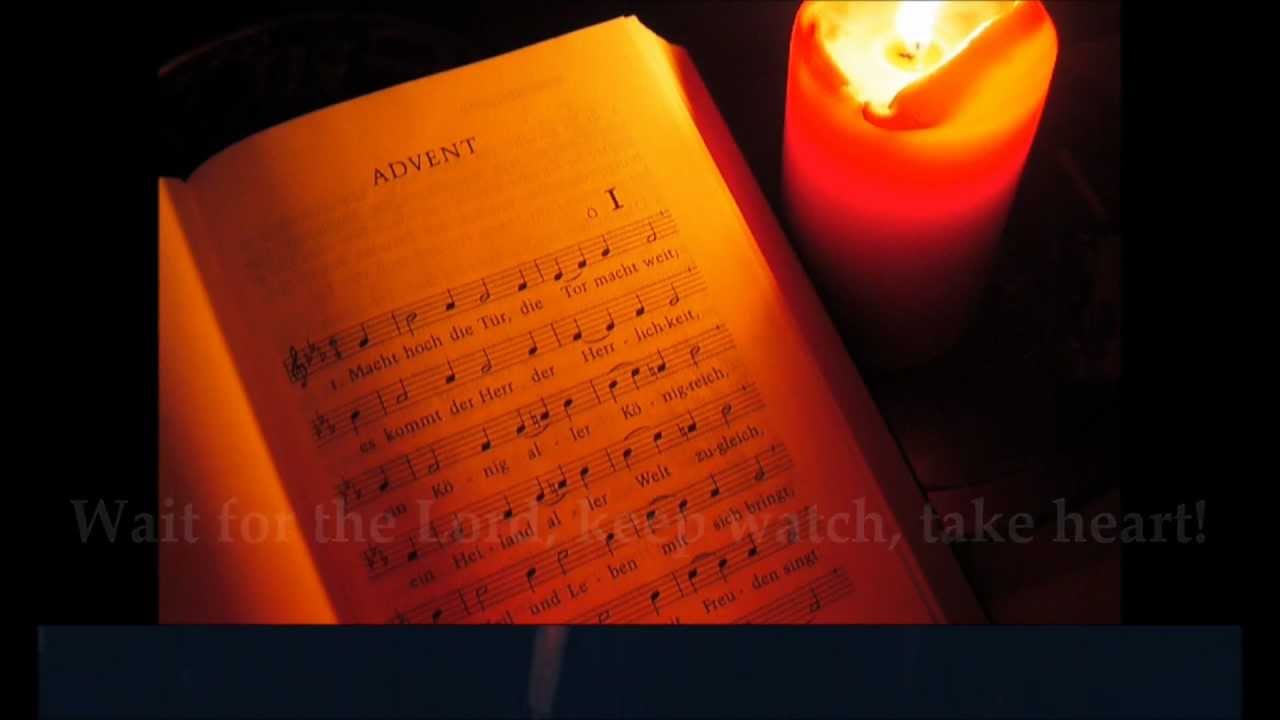
One of the themes we find in Advent is keeping watch.  Throughout the four weeks leading up to the birth of the Christ Child, we are to keep watch, preparing our hearts for the nativity of our Lord.  Traditionally, I have kept watch by using an Advent calendar or a special devotional book.  But this year, I am trying something new.  I have joined the Anglican Communion in a participatory Advent devotional called “Advent Word.”  Each day of Advent has an assigned word, and participants are invited to post a picture on social media that captures that word.

When I decided to join the Advent Word community, I was a bit nervous.  I worried what I would do if I could not figure out a picture to take or use that went with the daily word.  I have found my initial anxiety has not disappeared, but has created a sense of anticipatory tension.  Each day, I open up my email, and find a word and picture, with an invitation to prayer.  Then, throughout the day, I am keeping watch – for inspiration, for insight, for the Holy Spirit speaking to me anew through the images of everyday life.  By praying the word throughout the day, I am finding myself much more aware throughout the day, and much more attuned to God speaking to me in fresh ways.

In some ways, the anticipatory tension of participating in Advent Word has helped me accomplish the bigger goal of keeping watch during Advent.  Instead of having Advent slip by in the bustle of the season, each day has a poignancy and sense of meaning.  Instead of wishing away the days until Christmas comes, my Advent has become much more intentional and meaningful.

I wonder how your Advent is going?  Are you finding ways to keep watch?  If the days are slipping away, I invite you to find ways to slow down, and listen for the Holy Spirit who longs to prepare your heart for the Christ Child.  If you have found other ways to keep watch this Advent, I would love to hear about your experience.  If nothing else, I have learned this year that Christian community can be a wonderful partner in helping us keep watch.  If you are looking for such a community, Hickory Neck is full of everyday people who are happy to keep watch with you.

Sermon – Matthew 15:10-28, P15, YA, August 20, 2017

23 Wednesday Aug 2017

Posted by jandrewsweckerly in Sermons, Uncategorized

≈ Leave a comment

Tags

blessing, Canaaanite woman, chosen, discomfort, dog, Gentile, God, grateful, insight, Jesus, Jew, mean, mercy, redemption, rude, Sermon, ugly

I have never really liked the story we hear from our gospel lesson today.  Every time I have heard or read the story of Jesus’ interaction with the Canaanite woman, I cringe.  I do not like the way Jesus ignores the woman.  I do not like the way Jesus then tries to dismiss her – not only because his dismissal is rude, but also because he is being exclusive, saying that his ministry is only for chosen of God.  And I especially do not like the way Jesus not only calls her a dog, but also basically treats her like a dog.  This is not the Jesus I know.  And I am pretty sure that this is not what the slogan designers meant when they asked, “What would Jesus do?”

But the real problem with this story, the problem that I do not like to talk about, is Jesus’ ugly behavior reminds me of all the times I have acted in a similarly ugly way.  Most of the time, my ugly behavior is well-intentioned or even justifiable.  When I see a homeless person or someone begging for money, and I know that I have nothing to give them that day, I have honed the art of avoiding eye contact.  Or, when I am not protected by the rolled-up windows of my car, and a similar person asks me directly for help, I have figured out my patented response, “Sorry I do not have any cash;” which is sometimes true, but is often a lie.  I do have cash, but I feel awkward explaining that I give to agencies that make a difference for people like them to protect me from having to have this very same engagement.  Or I have had countless conversations with people I have helped through the church’s discretionary fund, only to have to say “no” when they show up two weeks later because, as I clearly communicated, we have a policy of helping people not more than once every six months.

Now I can completely explain all the reasons for the things I do:  I am a petite woman, so avoiding engagement with what could be a volatile, unstable person is generally a good practice; I have created a framework for giving which makes a difference, but also makes me feel more comfortable; I have a system for our emergency assistance program because I need to make sure the church’s discretionary fund supports as many people as possible, and as fairly as possible.  All of those explanations are good, and they exhibit healthy boundary-drawing.  In fact, I have had multiple conversations over the years when each of those decisions has been labeled as smart, intentional, and fair.  And yet, when I am in the midst of each of those types of scenarios, the execution of those smart decisions still feels ugly.  I feel like I am actually following that slogan, “What would Jesus do,” when I am in the midst of ignoring, explaining why I cannot help, or firmly drawing a boundary with someone who is being too pushy.  But instead of following the Jesus we find in our passage today and feeling good about myself, I am left with a sense of discomfort.

So, if I feel uncomfortable with my actions, and I especially feel uncomfortable with this version of Jesus that we find in Holy Scripture, why is this story in scripture at all?  And why, of all the texts they could have included, did the designers of our lectionary demand that we hear this particular passage?  Let’s start with the first question – why this story is in scripture at all.  The good news is that this scripture, despite all its ugliness and discomfort is important.  Jesus is sent to the people of God with a very specific mission:  to initiate God’s purposes for God’s people.  God had promised long ago to send a messiah to save God’s people.  Jesus is now enacting that mission.  Jesus has been clear all along that God’s mission starts with God’s people.  In Matthew’s gospel, when Jesus sends out the disciples the first time, Jesus tells the disciples to go only to the house of Israel, not to be distracted by the Gentiles, or non-Jewish peoples.  He is not necessarily being exclusive.  Jesus knows that the people of Israel are going to be a blessing to all people, including the Gentiles.  But the first job is to get the people of Israel on board – to help them understand that the messiah is here and the reign of God is beginning.[i]

The problem for Jesus, and perhaps the reason why we find Jesus the way we find him today, is that the people of God are not listening.  They are throwing Jesus out of towns, they are arguing with him about the following of laws instead of seeing the fulfillment of the law, and they are faltering in their faith.  Just last week we watched as Peter sunk into the sea.  Today, Jesus is moving on to Tyre and Sidon because his people have kicked him out of town.  And all of that stuff we heard today about what defiles a person being what comes out of the mouth, not what goes in, is an argument about getting so caught up in the letter of the law that one cannot see how one is violating the spirit of the law.  So here Jesus is, beating his head against a wall, with the people of God refusing to understand or listen to him, when a woman from a country his people oppose says very simply, “Lord, Son of David.”  The people of God, the leaders of the people of God, even the disciples of God do not get who Jesus is.  But this unclean, foreign, woman – so a triple outcast – gets who Jesus is.

So, we can imagine that Jesus is feeling a little raw – in a sea of rejection, the affirmation of this lowly outsider may not have been enough to draw him out of his funk.[ii]  Fair enough.  But the woman persists.  Jesus lets down his guard a little bit, and instead of ignoring her explains he is not trying to be rude, but he has been sent on a mission that entails him proceeding in a particular manner – Jews first, Gentiles later.  But the woman persists again.  And frazzled, rejected Jesus, who has tried to politely ignore, then perhaps politely explain, snaps and asserts his boundary.  “The good news is just not ready for Gentiles, okay?”  But the woman persists again.  She takes Jesus’ nasty words and she transforms them.  She takes that belittling label “dog,” and puts the label right in front of Jesus.  She does not want to wait for Easter.[iii]  She does not want to wait for the people of God to wake up.  She wants her blessing, the blessing that God eventually intends anyway, to start.  Right now.

And Jesus does that beautiful, awful thing we all hate to do.  Jesus admits he is wrong.  He heals her daughter, seeing in the persistence of this woman that he has gotten so caught up in the proper process and the appropriate boundaries that he has limited the power of the gospel and the reach of the good news.

The last two weeks I have been working on a request for financial assistance.  The person needed rental assistance, and the case had been fully vetted.  I knew Hickory Neck could not cover the full rental payment, so I offered to collaborate with some other churches.  Now any of you who have ever tried to collaborate know that although collaboration is good, collaboration is never simple nor fast.  So this week, the case came back around because the deadline is rapidly approaching.  I explained where we were and how I needed to get back to the churches I had invited to help.  The person I had been working with finally snapped and said, “You guys are all wrapped up in all these protests over something that happened hundreds of years ago.  But when the effects of racism are staring you in the face, and you can actually do something about it, you can’t seem to move!”  I felt like I had been slapped in the face.  Here I was following my process, staying with in the reasoned boundaries I have created, working creatively to solve the problem, while also being quite passionate about and wanting to work on correcting the sin of racism that our whole country is addressing since Charlottesville last weekend.  And here was a Canaanite woman, a Gentile calling me out – pushing me out of the theoretical, or the master plan, and asking me to look her in the face and explain why the fulfillment of God’s promise cannot happen today.

We do not like this story today because Jesus is dismissive, rude, and mean.  But mostly we do not like this story because Jesus’ story reminds us of the times we have been dismissive, rude, or mean.  We can claim that we do not like how Jesus behaves in this story, but really we do not like how Jesus is a mirror of our own behavior in this story.  And for that reason, I am grateful for the discomfort today.  I am grateful for the ways in which I am squirming today because something tremendous happens when Jesus gets uncomfortable today.  When Jesus gets slapped in the face by the Canaanite woman, he wakes up.  He stops, sees, and hears her.  And he changes course.  This lowly triple-outcast changes the ministry of Christ forever.  No longer is Jesus doggedly sticking to the plan of the redemption of Jews followed by the redemption of Gentiles.  Jesus mercy and mission get wider, right in this very moment.[iv]  Jesus’ wide arms of mercy, love, and grace spread just a bit wider, eventually being spread so wide that they fit onto the cross.

Our invitation today is to let our arms start moving to the same position.  I do not know who the Canaanite women are in your lives.  I do not know if your heart needs softening on racism, on sexism, or on some other -ism.  I do not know if you heart needs softening on some other person or group you have deemed beyond redemption.  I do not know if your heart needs softening by the person whose eyes you are avoiding.  But our invitation today is to recognize that our dismissiveness, our exclusion, our boundary-drawing is already in line with what Jesus would do.  Now Jesus is inviting us to keep doing what Jesus would do and to change our minds – to do better, to behave better, to be better.  Stretching our arms that far wide will be hard.  But the promise of transformation is much more powerful than anything we have imagined.

[i] N. T. Wright, Matthew for Everyone, Part 1 (Louisville:  Westminster John Knox Press, 2004), 199-200.

[ii] Barbara Brown Taylor, The Seeds of Heaven:  Sermons on the Gospel of Matthew (Louisville:  Westminster John Knox Press, 2004), 62.

[iii] Wright, 201.

[iv] Brown Taylor, 64-65.

Homily – Proverbs 2:1-9, St. Benedict of Nursia, July 11, 2013

31 Wednesday Jul 2013

Posted by jandrewsweckerly in Uncategorized

≈ Leave a comment

Tags

Benedict of Nursia, God, homily, insight, rule

When I was at Mepkin Abbey last month, I took a tour of the monastery grounds led by a volunteer.  At some point, she started talking about the monks and wondered out loud how they do it – cut off from the world, without even TV shows.  At first, I totally sympathized with her thought – I wasn’t sure how long I could go without texting, Facebook, checking NPR, etc.  My tour guide concluded that for her, the answer was that she could never do it.  But the question got me thinking about the monk’s motivation:  Though connection with others is hugely important to my life, what do I miss out on when my life is so full?

Benedict of Nursia had a sense of what was missing.  In the early 500s, Rome was being taken over by various barbarian tribes.  Benedict’s response was retreat – to be closer to God he had to retreat.  In the years to come, he wrote the rule that has influenced all of Western monasticism.  He structured the day around liturgical prayer, spiritual reading, work, eating, and sleeping.  That was it.  Simple and focused.  His rule became the rule that countless others would continue to follow.

Though I love monasteries, clearly I never chose to stay in one permanently.  I love the clarity and wisdom I have found in keeping the hours, but for those of us who do not live the monastic life, is that clarity and wisdom and insight unavailable to us?  Proverbs sheds some light on the matter.  The author gives us three “ifs”:  1) If you accept my words , 2) if you cry out for insight, and 3) if you seek understanding like silver.  If these things, then, 1) you will understand, 2) you will find the knowledge of God, and 3) you will be given wisdom from the Lord.  

Our invitation today is to figure out how to do these things in a setting that bombards us with distraction.  One gift Benedict gives to all people is the concept of a rule.  You may not follow his rule in his way, but we probably all need a rule to help us accept God’s words, cry out for insight, and seek understanding.  The abundance of this world is truly a gift – but if we allow ourselves to get lost in that abundance, we can find ourselves no longer longing for a connection to God.  Benedict and Proverbs assure us we can still find a way to God and insight, even in the midst this life.  Amen.

Recent Posts

  • On the Myth and Magic of Advent…
  • On Risking Failure and Facing Fear…
  • Sermon – Luke 23.33-43, P29, YC, November 23, 2025
  • On Inhabiting Gratitude…
  • Sermon – Luke 20.27-38, P27, YC, November 9, 2025

Archives

  • December 2025
  • November 2025
  • October 2025
  • September 2025
  • August 2025
  • July 2025
  • June 2025
  • March 2025
  • February 2025
  • December 2024
  • November 2024
  • October 2024
  • September 2024
  • August 2024
  • July 2024
  • June 2024
  • May 2024
  • March 2024
  • February 2024
  • January 2024
  • December 2023
  • November 2023
  • October 2023
  • September 2023
  • August 2023
  • July 2023
  • June 2023
  • May 2023
  • March 2023
  • February 2023
  • January 2023
  • December 2022
  • November 2022
  • October 2022
  • June 2022
  • May 2022
  • January 2022
  • December 2021
  • November 2021
  • October 2021
  • September 2021
  • August 2021
  • June 2021
  • May 2021
  • April 2021
  • March 2021
  • February 2021
  • January 2021
  • December 2020
  • November 2020
  • October 2020
  • September 2020
  • August 2020
  • July 2020
  • June 2020
  • May 2020
  • April 2020
  • March 2020
  • February 2020
  • January 2020
  • December 2019
  • November 2019
  • October 2019
  • September 2019
  • August 2019
  • July 2019
  • June 2019
  • May 2019
  • April 2019
  • March 2019
  • February 2019
  • January 2019
  • December 2018
  • November 2018
  • October 2018
  • September 2018
  • August 2018
  • July 2018
  • June 2018
  • May 2018
  • April 2018
  • March 2018
  • February 2018
  • January 2018
  • December 2017
  • November 2017
  • October 2017
  • September 2017
  • August 2017
  • July 2017
  • June 2017
  • May 2017
  • April 2017
  • March 2017
  • February 2017
  • January 2017
  • December 2016
  • November 2016
  • October 2016
  • September 2016
  • August 2016
  • July 2016
  • June 2016
  • May 2016
  • April 2016
  • March 2016
  • February 2016
  • January 2016
  • December 2015
  • November 2015
  • October 2015
  • September 2015
  • August 2015
  • July 2015
  • June 2015
  • May 2015
  • April 2015
  • March 2015
  • February 2015
  • January 2015
  • December 2014
  • November 2014
  • October 2014
  • September 2014
  • August 2014
  • July 2014
  • June 2014
  • April 2014
  • March 2014
  • February 2014
  • January 2014
  • December 2013
  • November 2013
  • October 2013
  • September 2013
  • August 2013
  • July 2013
  • June 2013
  • May 2013
  • April 2013
  • March 2013
  • February 2013
  • January 2013
  • December 2012
  • November 2012
  • October 2012
  • September 2012

Categories

  • reflection
  • Sermons
  • Uncategorized

Meta

  • Create account
  • Log in
  • Entries feed
  • Comments feed
  • WordPress.com

Blog at WordPress.com.

  • Subscribe Subscribed
    • Seeking and Serving
    • Join 394 other subscribers
    • Already have a WordPress.com account? Log in now.
    • Seeking and Serving
    • Subscribe Subscribed
    • Sign up
    • Log in
    • Report this content
    • View site in Reader
    • Manage subscriptions
    • Collapse this bar
 

Loading Comments...