• About

Seeking and Serving

~ seek and serve Christ in all persons

Seeking and Serving

Tag Archives: life

Holy chaos…

08 Wednesday Jan 2014

Posted by jandrewsweckerly in Uncategorized

≈ Leave a comment

Tags

chaos, children, Christ Child, Christmas, church, Epiphany, holy, incarnation, Jesus, life, liturgy, messy, pageant

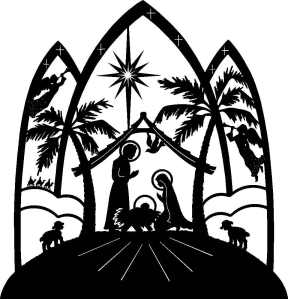
Courtesy of http://saintansgar.blogspot.com/2010/11/joint-childrens-christmas-pageant-and.html

Courtesy of http://saintansgar.blogspot.com/2010/11/joint-childrens-christmas-pageant-and.html

This past Sunday, our church held its annual Epiphany Pageant.  Since the pageant involves using Scripture and hymns to retell the entirety of Jesus’ birth narratives, the pageant replaces most of the Liturgy of the Word (the part of the service when we traditionally read/chant the four lessons and then hear a sermon).  Though part of what we love about the pageant is the kids’ presence, we also love being invited into the familiar – rehearing the story of the Christ’s birth and incarnation and singing the hymns that we look forward to all year.

Inevitably, the pageant is a bit messy and chaotic – children forget where to go, costumes do not quite fit, or attention spans are just not long enough.  Situating the pageant within the context of worship also means that the entire worship experience that morning is loud and a bit difficult to stay fully engaged in – especially if you are looking for a quiet, contemplative reflection on the incarnation.

But to be honest, that is what I love about the pageant – the holy chaos of it all.  We often think about the birth of the Christ Child as a clean story, much like many of the two-dimensional artistic renderings we see of what looks like quiet adoration at a manger.  But the whole concept of the incarnation is messy:  from Jesus’ scandalous conception, to what had to have been an unsanitary birth among hay and animals, to stinky visitors like the shepherds, to the visit of three foreign men who act strangely and probably raise more suspicion than excitement.  The birth of Jesus is a bit of a holy mess, not to mention the rest of Jesus’ incarnate life, which involves hanging with those of ill-repute, with smelly fishermen, and with the seriously infected and ill.  Nothing about Jesus’ birth or life is sanitary, controlled, or predictable.

Later on Sunday morning in worship, as I distributed communion, I gave the body of Christ to the young girl who had just played Mary in the pageant.  In that moment, the chaos of the day disappeared, and the miracle of the incarnation became much more real to me.  Mary, the mother of Jesus, was just a woman, trying to live faithfully, caught in the holy chaos of life.  I found myself wondering what receiving the body of Christ, the body of her son, would have been like, especially once he was gone.  And just like Mary was just a woman, each one of us in church – the young girl, the middle-aged man, the aging woman – are all just people, caught in the holy chaos of life, trying to make sense of it all, but also eternally grateful for a God who takes on human flesh for us.  That is why Church is so incredible to me.  In the midst of contemplative prayer, and even in the midst of what feels like a loud, crazy liturgy, God can break through and speak truth to us.  I am grateful to our children for reminding me that God is incarnate in the midst of all of life – in the beautiful and quiet, but especially in the messy, loud, chaos of life.

Sermon – Luke 20.27-38, P27, YC, November 10, 2013

14 Thursday Nov 2013

Posted by jandrewsweckerly in Uncategorized

≈ Leave a comment

Tags

afterlife, answers, death, God, grace, heaven, Jesus, life, love, mercy, resurrection, Sadducees, Sermon

About a year ago we lost one of our parishioners after a sustained battle with illness.  If you remember, at that time we were still recovering from Hurricane Sandy.  Though many of us finally had our power back, we faced an early snow storm.  The storm delivered just enough snow to knock out power in some of the local schools and to muck up roads that were already struggling to be freed from fallen trees.  My daughter’s school was cancelled, and I had anticipated just trying to stay warm at home for the day.  But when I got the call that Mina had died – I was dumbfounded.  There was no doubt in my mind that I would go join the family for prayers, but I had no idea how to incorporate my daughter into the visit.  With the weather conditions such as they were, there was no way she could stay anywhere else.  And so began a ten minute drive during which I tried to explain to my three-year old daughter what death meant, what heaven is, and what God’s role in all of this is.  Of course, I totally forgot to factor into my explanation the fact that Mina’s body would still be present, and how her body figured into my three-year-old-appropriate explanation of heaven.  Needless to say, a year later, I am still fielding questions about death, heaven, and God.

The truth is that I think adults have as many questions about death, heaven, and God as young children do.  When we hear the complicated question of the Sadducees to Jesus about the woman with seven husbands, we find ourselves morbidly curious too.  What does happen to this woman in the afterlife?  Would she have wanted to be with one over another in heaven?  Of course her scenario makes us think of all the stories of loved ones we know – or even of ourselves.  What happens to the widow who remarries in the resurrection?  What about the couple who divorces and later remarries?  Surely they will not have to be reunited with their exes!  Or what about that abusive father, that mean uncle, or that estranged sister?  Do we face them in the afterlife?  Since we do not really have anyone to give us an insider’s perspective, these are the questions that we really wonder about.  And if we have ever held the hand of a loved one approaching death, we may have asked these questions to God, to our priest, or to a friend.  So when the Sadducees ask this question of Jesus, we perk up, hoping for some real clarity from Jesus, and secretly praying for the answer that we think is best.

The trouble with this text though is that the Sadducees are not really asking Jesus a practical question about what happens in the resurrection.  In fact, the Sadducees do not even believe in the resurrection.  If you remember, the Sadducees are the group of people who believe the Torah – those first five books of the Hebrew Scriptures – to be the only authorized scripture.  None of the other books that we know from scripture – the prophetic writings or the Psalms – are considered valid scripture by the Sadducees.  Because there is neither a doctrine of resurrection of the dead nor a belief in angels in the written Torah, the Sadducees refuse to believe that there is life after this earthly life.  The Pharisees along with Jesus and his disciples, on the other hand, believe in ongoing interpretation of Torah handed down by word of mouth, and so, they have no problem with the ideas of resurrection presented in other Hebrew scriptures.[i]

So this question by the Sadducees about the resurrection is not really a question for which the Sadducees are looking for answers.  Instead, this is a question meant to both ridicule Jesus,[ii] and to trap Jesus in an impossible question.  Though we may feel some sense of camaraderie in shared curiosity, the Sadducees are not simply a curious bunch with a heartfelt question.  They are trying to manipulate Jesus and embarrass him in front of the crowd.  Luckily for us, Jesus offers an answer anyway.  Of course the answer is not as specific as we might like, but the answer does offer hope and mercy in a roundabout way.

What Jesus basically tells the Sadducees and those gathered around him is that the resurrection is not like life here on earth.  Life after earthly life is not “Earthly Life, Part II,” where everything is the same, but better.  In the resurrection life, rules of this life – and in particular, rules that applied to Levirate marriage, like a brother taking on a widowed sister-in-law – are not the same as the rules in the afterlife.  Jesus does not explain exactly what this looks like or how this plays out, and Jesus does not fully satiate our curiosity.  But Jesus does give an answer that is full of mercy and love.  Jesus basically tells those gathered that the beauty of the resurrection is that the strictures and limitations of this life are lifted in the life to come.  Things like women being treated as property to be managed, infertility, and grief are erased in the afterlife.  Things like disappointment in marriage, pressure to be married, and even death itself are no longer present in the afterlife.  Things that define us here, limit or frustrate us, or pain us here in this life are absent in the afterlife.  Jesus will never concede to the Sadducees that resurrection life does not exist.  But Jesus does try to kindly invite the Sadducees into seeing that resurrection life is so much more than they can imagine, and so much more full of true life than this earthly life that they know.  Jesus does not answer their question fully, but Jesus does say that the Creator God of Torah is still revealing truth, and that the truth is full of mercy, grace, and love.

I am reminded of the scene from the movie The Matrix where the main character, Neo, goes to visit a woman called the Oracle to find out if he is “the one,” a messiah-like figure to save the world.  Neo goes to the Oracle with a clear-cut question, “Am I the One?”  But the conversation that ensues is complex and layered with meaning.  She seems to be telling Neo he is not the one, but we later learn in the movie that she was actually telling him that he is not the one if he will not claim his status as the One.  The scene is as complicated as my rudimentary attempts to explain the scene.  But what the scene reminds me of are our conversations with God about ultimate things.  We often come to God with basic questions and concerns that are rarely answered directly.  But that does not mean we do not get a response.  In the end, the response is loving, full of compassion, and ultimately full of truth when we are ready to understand and interpret that truth.

This is all that Jesus can offer us today.  Jesus is not offering an exclusive interview a top news source to tell us everything we want to know about resurrection life.  We will not be able to watch with bated breath as Jesus answers every question we want answered.  Instead, Jesus offers us a promise to take home.  His promise is that we have resurrection life beyond this earthly life.  His promise is that resurrection life is not some two-dimensional repeat of this life, with the limited happiness we can find here, but instead is a three-dimensional life beyond our knowing because of our limited earthly experience.  His promise is that God is ever revealing truth to us, showing us the most important truth:  that God loves us, shows us exquisite mercy, and offers us unfailing grace.  Jesus’ words today may not be the 60-Minute special we were hoping for, but Jesus’ words today give us something to hold on to in the midst of this crazy, chaotic world that is our earthly home.  Hold fast to the Lord who loves you, shows you exquisite mercy, and offers you unfailing grace.  Amen.


[i] Vernon K. Robbins, “Exegetical Perspective,” Feasting on the Word, Yr. C, vol. 4 (Louisville: Westminster John Knox Press, 2010), 285.

[ii] Eberhard Busch, “Theological Perspective,” Feasting on the Word, Yr. C, vol. 4 (Louisville: Westminster John Knox Press, 2010), 286

Homily – Matthew 11.25-30, St. Francis, October 6, 2013

10 Thursday Oct 2013

Posted by jandrewsweckerly in Uncategorized

≈ Leave a comment

Tags

creator, gift, God, gratitude, homily, Jesus, life, possessions, St. Francis, stewardship, stuff, yoke

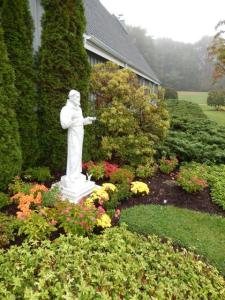
Today we honor the life and work of St. Francis of Assisi.  Francis was born in 1182, and was the son of prosperous merchant.  But later in life, he was moved by the beggars and lepers he saw and decided to devote his life to a life of poverty – despite his father’s intense opposition.  Francis gathered a community together – although his ideal of strict and absolute poverty was so stark that almost no one could maintain the ideal.  But what Francis was trying to get the brothers to see was that “stuff” got in the way of life with Christ.  Once he renounced his “stuff” he was better able to see – see his neighbors’ poverty and suffering.  And giving up his “stuff” allowed Francis to take in a bigger view of God’s creation.  Though we sometimes narrow in on Francis’ love of animals, St. Francis had a much larger sense of the creative God and God’s created world.  Francis reveled in the creator God, who time and again during the creation process saw that, “it was good.”
Our Sunday School children have been working on the creation story this Fall.  They are learning about the vast expanse of interstellar space, as well as this fragile earth, our island home.  They are learning about how God created plants and every living creature.  They are also learning about how we are created in God’s image and we are to be stewards of God’s creation.  They are learning how we are designed for goodness and generosity, and that all of life is a gift – that we do not own any of it.  St. Francis knew this well.  His understanding of life as a gift is why he could give up everything.

But we struggle – we clutch to our resources and we use words like “earned,” and “deserve” and forget words like “gift” and “generosity.”  St. Francis’ life is all well and good, but when we really look at our resources, we more often find our hands clenched around our possessions than our hands openly giving them away.  I invite us to ponder this contrast not to make us feel guilty, but to invite us to live into God’s generosity.  That is what St. Francis wanted too.  He did not want to guilt people, but to welcome people into the freedom of knowing that all we have is gift, and to live a life in celebration of that gift.  Francis had experienced this radical way of living into the people God calls us to be, and he wanted to share that blessing with others.

Our Gospel lesson today gives us some clues about what all this means in practice.  Jesus says, “Come to me, all you that are weary and are carrying heavy burdens, and I will give you rest.  Take my yoke upon you, and learn from me; for I am gentle and humble in heart, and you will find rest for your souls. For my yoke is easy, and my burden is light.”  Those words from Jesus are echoed in St. Francis’ life and witness.  We may not be able to walk around shoeless in the depths of winter like Francis, or even beg for our food, but when we enter into relationship with God with a greater sense of God’s invitation into the life of generosity, we can image and experience the light yoke.  This is the reflection work we will be doing throughout our stewardship season this fall – but Francis and Jesus give us a little preview about what stewardship really looks like.  So take a moment to start today.  Take in the beautiful creation of our property, as its Fall glory begins to unfold.  If you are an animal lover, look at the generous love of your pet.  Look at one another, remembering the vulnerable beauty of each person here – even those who annoy you the most.  Let this wonder and gratitude fill you up – so that you can slip on that light yoke of generosity and live into the goodness that God has created for you and has created you for.  Amen.

On being an Easter people…

17 Wednesday Apr 2013

Posted by jandrewsweckerly in Uncategorized

≈ Leave a comment

Tags

Boston, death, Easter, funerals, life, Psalm 23

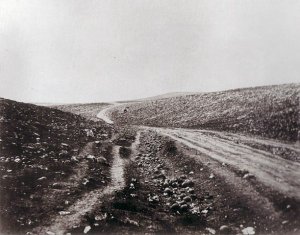
Valley_of_the_Shadow_of_DeathThis coming Sunday, the appointed psalm is Psalm 23.  As I have been praying on the texts, that phrase, “the valley of the shadow of death,” has been haunting me.  In some ways, it feels like our country has been in the valley of the shadow of death for quite some time.  After Hurricane Sandy and Newtown last year, multiple deaths by gun violence since Newtown – including two accidental deaths caused by four-year-olds with guns, and now the tragedy in Boston, it feels like we are in a valley of death that we cannot escape.  In fact, on Monday, I almost found that I could no longer watch the coverage about Boston because I could not handle the emotional overload that has been these six months.  The images were just too much to bear.
What is interesting about the texts for this Sunday is that not only do we read the 23rd Psalm, but also we read a text from Revelation 7.  Both of these are regularly read at funerals.  As I sit with these texts this week, all I can think about is death – which is especially frustrating in the midst of Eastertide – a season supposed to be about life.  So what do we make of a Sunday about death, and what feels like a world overshadowed by death, in the midst of Easter?  I suppose in many ways, this is the same paradox we have at every funeral.  At every funeral, a time when we mark someone’s death, the church encourages us to look toward life.  In fact, we decorate the church in white for funerals because burials are Easter celebrations.

Recalling the many times I have redirected mourning families toward life, I took my own advice today and starting looking for signs of life in the midst of this valley of death.  I was amazed at how much I could recall.  Here in New York, the trees are just now starting to bloom, and pops of color continue to surprise and delight me.  Our Vestry just had a retreat this weekend to talk about Evangelism.  The day brought up all sorts of fresh ideas and a commitment to growth.  The hopefulness of our Vestry is nothing like the weight of the valley of the shadow of death.  Even the empty garden bed which will be filled with soil this weekend is a sign of life here at St. Margaret’s.  As our parish children stood in the bed on Sunday, which will only be empty for a few more days, I smiled to think about the convergence of life both in our children and in our produce for the poor.  And even in Boston, there were immediate signs of life – people rushing to help victims, even to their own personal endangerment, strangers holding hands, people carrying victims, and strangers using their own clothes to stop bleeding and death.

I do not know if I can completely erase those words, “the valley of the shadow of death,” and all that it connotes for me this week, but my hope is that I can at least linger equally on the next words, “Thou art with me.”  Perhaps the answer is not that life erases death, but that God is with us in both.  And knowing that God is with us in death and in life helps me better to be an Easter person this week.

Sacred noise…

20 Wednesday Feb 2013

Posted by jandrewsweckerly in Uncategorized

≈ 1 Comment

Tags

children, church, life, noise, thanks

kids-in-church

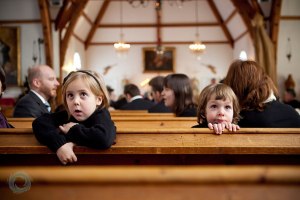
One of my challenges as a priest has been how to encourage parents who are worshiping with their children in church.  I want them to stay in church, but I also want to honor the occasional discomfort of their experience.  Of course, my opinion on this matter has changed dramatically since I became a parent, but what was once distracting noise by children in church has now become the sound of life to me.  A fellow blogger expressed this reality for me quite beautifully here.

But me telling a parent that they are welcome to stay in church does not solve much.  I cannot control the glares or the shh-es from other parishioners.  I cannot control the wave of panic that crashes over a parent when it feels like your child’s noises are as loud as a parade in a library.  I cannot even set an example because I am rarely actually in the pews with my fellow parents.  But I have experienced some of the grace that can happen when people are open to a child in church.  Back in December, I took my three-year old daughter to an ordination at the Cathedral.  She lasted relatively well for the first hour, but then became antsy.  I asked her if we should go after the peace, but she insisted she wanted to stay.  We made it back to the pew, and midway through the bishop’s praying of the Eucharistic prayer, my daughter impatiently asked, quite loudly, “Can I have the body of Christ now?!?”  Everyone around me giggled and I did too.  She broke the tension I had been feeling about her noise.  She probably voiced the fatigue that fellow worshipers around me felt too.  And she showed me that she fully understood what was happening, and was eager to receive the sacrament.  It doesn’t get more awesome than that.

I can’t force parents to stay in church with their kids.  I can’t force parishioners to always be sympathetic or even helpful.  What I can do is continue to hold all parents and children in prayer, thanking God for their presence, and the ways in which they keep me humble.  Thank you, parents, for all that you do to raise our children in the church.  We are blessed by you more than you know and always happy to have you in church.

Newer posts →

Recent Posts

  • On Politics, Football, and Love…
  • On Sharing the Love…
  • Sermon – Micah 6.1-8, Matthew 5.1-12, EP4, YA, January 30, 2026
  • On Justice, Kindness, Humility, and the Messy Middle…
  • Feast of the Rev. Dr. Martin Luther King, Jr., January 18, 2026

Archives

  • February 2026
  • January 2026
  • December 2025
  • November 2025
  • October 2025
  • September 2025
  • August 2025
  • July 2025
  • June 2025
  • March 2025
  • February 2025
  • December 2024
  • November 2024
  • October 2024
  • September 2024
  • August 2024
  • July 2024
  • June 2024
  • May 2024
  • March 2024
  • February 2024
  • January 2024
  • December 2023
  • November 2023
  • October 2023
  • September 2023
  • August 2023
  • July 2023
  • June 2023
  • May 2023
  • March 2023
  • February 2023
  • January 2023
  • December 2022
  • November 2022
  • October 2022
  • June 2022
  • May 2022
  • January 2022
  • December 2021
  • November 2021
  • October 2021
  • September 2021
  • August 2021
  • June 2021
  • May 2021
  • April 2021
  • March 2021
  • February 2021
  • January 2021
  • December 2020
  • November 2020
  • October 2020
  • September 2020
  • August 2020
  • July 2020
  • June 2020
  • May 2020
  • April 2020
  • March 2020
  • February 2020
  • January 2020
  • December 2019
  • November 2019
  • October 2019
  • September 2019
  • August 2019
  • July 2019
  • June 2019
  • May 2019
  • April 2019
  • March 2019
  • February 2019
  • January 2019
  • December 2018
  • November 2018
  • October 2018
  • September 2018
  • August 2018
  • July 2018
  • June 2018
  • May 2018
  • April 2018
  • March 2018
  • February 2018
  • January 2018
  • December 2017
  • November 2017
  • October 2017
  • September 2017
  • August 2017
  • July 2017
  • June 2017
  • May 2017
  • April 2017
  • March 2017
  • February 2017
  • January 2017
  • December 2016
  • November 2016
  • October 2016
  • September 2016
  • August 2016
  • July 2016
  • June 2016
  • May 2016
  • April 2016
  • March 2016
  • February 2016
  • January 2016
  • December 2015
  • November 2015
  • October 2015
  • September 2015
  • August 2015
  • July 2015
  • June 2015
  • May 2015
  • April 2015
  • March 2015
  • February 2015
  • January 2015
  • December 2014
  • November 2014
  • October 2014
  • September 2014
  • August 2014
  • July 2014
  • June 2014
  • April 2014
  • March 2014
  • February 2014
  • January 2014
  • December 2013
  • November 2013
  • October 2013
  • September 2013
  • August 2013
  • July 2013
  • June 2013
  • May 2013
  • April 2013
  • March 2013
  • February 2013
  • January 2013
  • December 2012
  • November 2012
  • October 2012
  • September 2012

Categories

  • reflection
  • Sermons
  • Uncategorized

Meta

  • Create account
  • Log in
  • Entries feed
  • Comments feed
  • WordPress.com

Blog at WordPress.com.

  • Subscribe Subscribed
    • Seeking and Serving
    • Join 391 other subscribers
    • Already have a WordPress.com account? Log in now.
    • Seeking and Serving
    • Subscribe Subscribed
    • Sign up
    • Log in
    • Report this content
    • View site in Reader
    • Manage subscriptions
    • Collapse this bar
 

Loading Comments...