
• About

Seeking and Serving

~ seek and serve Christ in all persons

Seeking and Serving

Tag Archives: pets

Sermon – Matthew 11.25-30, St. Francis Feast, YC, October 5, 2025

15 Wednesday Oct 2025

Posted by jandrewsweckerly in Sermons

≈ Leave a comment

Tags

animals, blessing, church, connected, creation, God, Jesus, pets, saint, Sermon, St. Francis, yoked
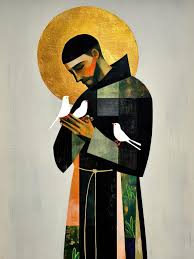
Image credit: https://www.instagram.com/p/CF_31K6sogj/

I was talking to a friend recently who had been on a road trip.  She had stopped for gas and was standing by her car when another car pulled up next to her.  A family piled out of the car, followed by the family’s dog.  My friend was paralyzed in place.  The dog looked exactly like her beloved dog Buddy who had passed away four years ago.  Her eyes immediately watered, and even though four years had passed, an ache appeared in her chest that she thought had long ago gone away forever.  “I just really miss that dog,” she explained later – surprising even herself at how her grief lingered.

I have sometimes wondered if our celebration of St. Francis and the Blessing of the Animals is not a little gimmicky.  We even took our celebration on the road yesterday for the first time, offering to bless animals and their owners whom we have never met, who maybe never harken the door of any church, let alone Hickory Neck’s doors.  But as I thought about my friend’s lingering grief over her dog who had passed, and as I have heard countless stories over the years of cats, horses, Guinea pigs, goats, and even chickens who have been a source of joy, companionship, sometimes consternation, but always love, I understand more fully why we commit to blessing animals and their owners, even if on the surface the practice may seem like a gimmick.

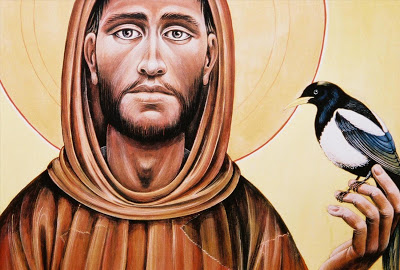
We engage in the blessing of animals because of the inspiration that comes from St. Francis of Assisi.  St. Francis is one of the most beloved saints of the Church.  Most of us think of Francis as the patron saint of animals and creation.  When we think of him, we may think of a St. Francis statue in a garden.  We may think of various images of him preaching to birds.   Some of us may even recall that tale where Francis negotiated peace between a village and a wolf that had been terrorizing the town.  His understanding of animals as his brothers and sisters is why we bless animals on his feast day – the creatures that were so dear to him.  That is also why when we say the Eucharistic prayer [at 10:00 am] today, we will use Prayer C – the one that praises, “the vast expanse of interstellar space, galaxies, suns, and the planets in their courses, and this fragile earth, our island home.”[i]

At the heart of our blessings yesterday and today is an understanding that St. Francis had mastered and we continue to understand – that we are bound to all of the creation God created – to the earth, to the earth’s animals, and to one another – even the other humans or other creation we may not like.  Jesus reminds us of the nature of that bond today in his words about following him.  In Matthew’s gospel, Jesus says, “Come to me, all you that are weary and are carrying heavy burdens, and I will give you rest.  Take my yoke upon you, and learn from me; for I am gentle and humble in heart, and you will find rest for your souls.  For my yoke is easy, and my burden is light.”  Those yokes Jesus talks about were used to harness two animals for work.  The yoke allowed the two not just to double their work, but to rely on one another – if one was tired, the other could push harder; and then the weaker one could later support the stronger one.  Yokes, like Jesus’ work, were easy and made the burden light. 

But beyond the mechanics of a good yoke, the yoke is also a good metaphor for how we see the gospel.  Being yoked to another makes you connected.  And once you are connected, and see how dependent upon one another you are, you begin to see how that connection extends beyond the two of you – that your yoked interconnection is a microcosm of the connectedness of all of God’s creation.  Francis, who was just as known for helping the poor as he was for befriending animals, understood that all humanity is connected.  He learned that the more we spend time seeing the humanity in others – especially the humanity in those we would rather not – then we start to see that our interconnectedness extends even further – to God’s creation, to God’s creatures, to the cosmos.  If we open our hearts to one, we cannot help but to open our hearts to all.  Francis’ love for the poor and Francis’ love for creatures were not two separate things – they were one in the same. 

The invitation for us is to start claiming our yoked nature – yoked to those we love, yoked to our political opponents, yoked to those who have different ethics and values than ourselves, yoked to parents who make different parenting decisions, yoked to those with different skin color or sexual orientation, yoked to those we see as deserving of God’s grace and those who are not.  Our yoked nature allows us to pray [and later sing] the Prayer of St. Francis from our Prayer Book:  “Lord, make us instruments of your peace. Where there is hatred, let us sow love; where there is injury, pardon; where there is discord, union; where there is doubt, faith; where there is despair, hope; where there is darkness, light; where there is sadness, joy. Grant that we may not so much seek to be consoled as to console; to be understood as to understand; to be loved as to love. For it is in giving that we receive; it is in pardoning that we are pardoned; and it is in dying that we are born to eternal life.”[ii]  We can do the work of St. Francis, blessing animals, humans, and all creation, because of the yoke of Jesus.  Thanks be to God.  Amen.


[i] BCP, 370.

[ii] BCP, 833.
Sermon – Matthew 11.25-30, Feast of St. Francis, October 1, 2023

04 Wednesday Oct 2023

Posted by jandrewsweckerly in Sermons

≈ Leave a comment

Tags

blessing of animals, burden, creation, disciples, discipleship, easy, impact, Jesus, light, pets, Sermon, serve, St. Francis, yoke

“Come to me, all you that are weary and are carrying heavy burdens, and I will give you rest.”  Whether you are wearied from wrestling your pets this morning (or your kids!), weary from full fall schedules, or weary from illness, anxiety, or bad news, Jesus’ words are words of comfort today.  They remind us of our time of renewal in sabbatical, and we want to cozy into the Gospel words today.

But today is not about Jesus blessing times of rest.  Jesus is actually commissioning disciples.  At this point in Matthew’s gospel, Jesus has been describing the way of discipleship:  serving the poor, working for justice, striving for peace.  Jesus tells them the work will be hard and will make the disciples weary.  To those disciples, Jesus offers a way to reach comfort.  Jesus says, “Take my yoke upon you, and learn from me; for I am gentle and humble in heart, and you will find rest for your souls.  For my yoke is easy, and my burden is light.”

Now, I do not know how much you know about yokes, but I have been studying up on yokes this past week.  There are actually two kinds of yokes.  Some yokes are meant for one person.  Imagine, if you will, a person hauling water from a well in village, the yoke over her shoulders, while two buckets full of water hang below.  The yoke distributes the weight of the water, but the yoke is not exactly an easy yoke.  The other kind of yoke is meant for two animals – like two oxen working together.  If one ox gets tired, the other pushes a little harder; later the roles may reverse.  A good yoke balances the work between the animals, without chafing or rubbing.  The work is genuinely easier and lighter.

This second kind of yoke is the metaphor Jesus uses to depict discipleship.[i]  Jesus tells them the work of discipleship will be hard and wearisome.  But when yoked to Jesus, the work will feel light.  So often, when we think of disciples as easing suffering, fighting for the poor, struggling for justice, we think we need to solve the worlds’ problems on our own – that we must use our own gifts to make a difference.  We go unyoked, and we feel overwhelmed and disheartened.[ii]  Even when try to do good work:  building beds for kids in need, buying extra food for food collection Sunday, or donating money to events like our Murder Mystery – we can still become discouraged.  When we think we can go at it alone (or maybe even better than others), we do not get relief in Jesus’ yoke. 

St. Francis, who we honor today, knew all about the yoke of Jesus.  Francis came from a wealthy family, had a rambunctious youth, and enjoyed status and privilege.  But one day he encountered some beggars and lepers and everything changed.  Francis renounced his privilege and wealth, took on poverty, and honored the sick, poor, and disenfranchised.  What Francis discovered was his wealthy had become its own burden of sorts.  Once he yoked himself to Jesus, everything changed.  He began to see Jesus in everyone, even birds to which he preached and the animals for whom he advocated.  Francis yoked himself to Jesus and became a faithful steward of God’s creation – so faithful that we bless animals and rejoice in creation ourselves through music and scripture today.

Now, I know you maybe came today to bless your pet, or maybe to remember a beloved pet who showed you what unconditional love really is.  And while that will bring us comfort today, and we do so with love and laughter, we also do something much bigger.  Today we remember all the instances where we have felt love – in animals, in each other, even in Jesus – and we take that love not only as a comfort, but also as a commission.  Today Jesus invites us outside of ourselves – our worries, our woes, our weariness, and put our attention on those who may need love even more than we do. 

Do not get confused.  I am not asking you to add weight to that single yoke, asking you to add more water to your heavy buckets.  I am inviting you to take off the single yoke and step in a double yoke – to yoke yourself to Jesus, yoke yourself to other disciples in this room.  Take on that yoke of Christ because the yoke is easy and light – and will actually free up your burden.  Jesus will give you the comfort, encouragement, and strength you need.  And you will be enabled to stride forward making an impact right here in James City County.  We will do that work together, because the yoke is easy and the burden is light.  Amen.


[i][i] Douglas R. A. Hare, Matthew:  A Bible Commentary for Teaching and Preaching (Louisville:  John Knox Press, 1993), 129.

[ii] Barbara Brown Taylor, The Seeds of Heaven:  Sermons on the Gospel of Matthew (Louisville:  Westminster John Knox Press, 2004), 21.

Homily – Mt. 11.25-30, St. Francis Feast, YB, October 21, 2018

24 Wednesday Oct 2018

Posted by jandrewsweckerly in Sermons, Uncategorized

≈ Leave a comment

Tags

blessing, easy, healing, homily, hurt, Jesus Christ, light, love, pets, reconciliation, relationship, rest, sabbath, Sermon, St. Francis, village, wolf, yoke

FrancisOfAssisi

Photo credit:  http://thewildreed.blogspot.com/2007/10/st-francis-of-assisi-dancer-rebel.html

Today we honor the life of St. Francis of Assisi.  Francis is one of the most popular and admired saints of all time.  Most of us know the highlights of his story: born the son of a wealthy man in 1182; had a conversion experience and devoted his life to Lady Poverty; shaped monastic and lay devotion; was a friend to all God’s creatures – being known to have preached to the birds.  But the story I like most is the story about St. Francis and the Wolf.

According to legend, there was a wolf that was terrorizing a nearby town, killing and eating animals and people.  The villagers tried to fight back, but they too died at the jaws of the wolf.  Francis had pity on the people and went out to meet the wolf.  When Francis found the wolf, he made the sign of the cross, and said, “Come to me, Brother Wolf.  In the name of Christ, I order you not to hurt anyone.”  The wolf calmly laid down at Francis’ feet.  Francis then went on to explain to the wolf how the wolf was terrorizing the people and other animals – all who were made in the image of God.  The wolf and Francis then made a pact that the wolf would no longer harm the town and the town would no longer try to hurt the wolf.  The two traveled into town to explain the pact they had formed.  The people were amazed as Francis and the wolf walked side-by-side into town.  Francis made the people pledge to feed the wolf and the wolf pledge not to harm anyone else.  From that day on, the wolf went door to door for food.  The wolf hurt no one and no one hurt the wolf; even the dogs did not bark at the wolf.[i]

What I love about this story of St. Francis is that the story is about reconciliation and relationship.  At the beginning of the story the town and the wolf are at an impasse – the wolf is hungry and getting attacked; the people are afraid and are lashing out.  What Francis does for both parties is shock them out of the comfortable.  For the wolf, no one has addressed the wolf kindly – they have either shut the wolf out or actively tried to kill the wolf.  For the people, the wolf has not asked for help – he has simply and violently taken what he needed and wanted.  Francis manages to shock the wolf first – not through violence or force, but with the power of love and blessing.  By giving a blessing in the name of God, Francis is then able to implore the wolf to reciprocate with love.  Francis also manages to shock the village – not with a violent victory, but with a humble display of forgiveness and trust.  By walking into town with a tamed wolf at his side, Francis is able to encourage the town to embrace, forgive, and care for the wolf.  Francis’ actions remind both parties that unless their relationships are reconciled, unrest and division will be the norm.

The funny thing about this story is that the story is pretty ridiculous.  I mean, how many of us go around talking to wild animals, blessing them with the sign of the cross, expecting anything other than being attacked?  We will never really know whether the story is true.  But like any good Biblical story, or even any good midrash, whether the story is true is hardly the point: the point is that the stories point toward “Truth” with a capital “T.”  What this story teaches is that peace and reconciliation only happen through meeting others where they are.  We cannot expect great change unless we are willing to get down in the trenches – to go out and meet that destructive wolf face-to-face.  The other thing this story teaches is relationships are at the heart of reconciliation.  Only when the wolf and the town began to get to know each other and began to form a relationship with one another could they move forward.

This is the way life is under Jesus Christ.  In our gospel lesson today, Jesus says, “Come to me, all you that are weary and are carrying heavy burdens, and I will give you rest.  Take my yoke upon you, and learn from me; for I am gentle and humble in heart, and you will find rest for your souls.  For my yoke is easy, and my burden is light.”  Jesus’ words have layered meaning.  The first meaning we all catch is that Jesus offers us rest and refreshment.  Jesus encourages us to come to him, to cast our burdens and cares upon him, and to take rest, to take Sabbath in Christ.  Our souls will find peace in Christ Jesus.  The second meaning is that peace in Christ Jesus is not without work.  Jesus does not say come unto me and relax forever in happy retirement.  Jesus says we will still have to take on a yoke – the burden of disciple living.  But luckily, that burden of being Christ’s disciple will not be burdensome – it will be light.  Finally, not only will Jesus make the workload “light,” as in not heavy:  Jesus will also make us “light” – as in lights that shine into the darkness and refuse to allow the shadow to overwhelm[ii]; as in lights that shine on this very Holy Hill where Hickory Neck rests.  We become the light when we work for reconciliation in our relationships with others.

That is why we do so many special things today.  Today, we ask for prayers and then exchange signs of peace – that God might help us reconcile the relationships in our life that need healing.  Today, at our 9:00 am service, we ask for blessing on our animals – that God might help our relationship with our pet be one of blessing and light.  Today, we come to Jesus for Sabbath rest – that God might renew us on this Sabbath day, use the rest to fill us with light, and renew our commitment to be agents of reconciliation, gladly putting on Christ’s yoke.  Amen.

[i] John Feister, “Stories about St. Francis and the Animals,” October 4,2005, as found at https://faith32.livejournal.com/61897.html on October 18, 2018.

[ii] Mel Williams, “Let it go…and rest” Faith and Leadership, July 6, 2014 as found at http://www.faithandleadership.com/sermons/mel-williams-let-it-go%E2%80%A6and-rest  on October 18, 2018.

Recent Posts

  • On the Myth and Magic of Advent…
  • On Risking Failure and Facing Fear…
  • Sermon – Luke 23.33-43, P29, YC, November 23, 2025
  • On Inhabiting Gratitude…
  • Sermon – Luke 20.27-38, P27, YC, November 9, 2025

Archives

  • December 2025
  • November 2025
  • October 2025
  • September 2025
  • August 2025
  • July 2025
  • June 2025
  • March 2025
  • February 2025
  • December 2024
  • November 2024
  • October 2024
  • September 2024
  • August 2024
  • July 2024
  • June 2024
  • May 2024
  • March 2024
  • February 2024
  • January 2024
  • December 2023
  • November 2023
  • October 2023
  • September 2023
  • August 2023
  • July 2023
  • June 2023
  • May 2023
  • March 2023
  • February 2023
  • January 2023
  • December 2022
  • November 2022
  • October 2022
  • June 2022
  • May 2022
  • January 2022
  • December 2021
  • November 2021
  • October 2021
  • September 2021
  • August 2021
  • June 2021
  • May 2021
  • April 2021
  • March 2021
  • February 2021
  • January 2021
  • December 2020
  • November 2020
  • October 2020
  • September 2020
  • August 2020
  • July 2020
  • June 2020
  • May 2020
  • April 2020
  • March 2020
  • February 2020
  • January 2020
  • December 2019
  • November 2019
  • October 2019
  • September 2019
  • August 2019
  • July 2019
  • June 2019
  • May 2019
  • April 2019
  • March 2019
  • February 2019
  • January 2019
  • December 2018
  • November 2018
  • October 2018
  • September 2018
  • August 2018
  • July 2018
  • June 2018
  • May 2018
  • April 2018
  • March 2018
  • February 2018
  • January 2018
  • December 2017
  • November 2017
  • October 2017
  • September 2017
  • August 2017
  • July 2017
  • June 2017
  • May 2017
  • April 2017
  • March 2017
  • February 2017
  • January 2017
  • December 2016
  • November 2016
  • October 2016
  • September 2016
  • August 2016
  • July 2016
  • June 2016
  • May 2016
  • April 2016
  • March 2016
  • February 2016
  • January 2016
  • December 2015
  • November 2015
  • October 2015
  • September 2015
  • August 2015
  • July 2015
  • June 2015
  • May 2015
  • April 2015
  • March 2015
  • February 2015
  • January 2015
  • December 2014
  • November 2014
  • October 2014
  • September 2014
  • August 2014
  • July 2014
  • June 2014
  • April 2014
  • March 2014
  • February 2014
  • January 2014
  • December 2013
  • November 2013
  • October 2013
  • September 2013
  • August 2013
  • July 2013
  • June 2013
  • May 2013
  • April 2013
  • March 2013
  • February 2013
  • January 2013
  • December 2012
  • November 2012
  • October 2012
  • September 2012

Categories

  • reflection
  • Sermons
  • Uncategorized

Meta

  • Create account
  • Log in
  • Entries feed
  • Comments feed
  • WordPress.com

Blog at WordPress.com.

  • Subscribe Subscribed
    • Seeking and Serving
    • Join 394 other subscribers
    • Already have a WordPress.com account? Log in now.
    • Seeking and Serving
    • Subscribe Subscribed
    • Sign up
    • Log in
    • Report this content
    • View site in Reader
    • Manage subscriptions
    • Collapse this bar
 

Loading Comments...