
Tags
anxiety, carol, Christmas Eve, church, clarity, God, grace, humanity, Jesus, love, noise, Sermon, silent, Silent Night, stress, truth
Ten Christmases ago – my very first Christmas at Hickory Neck – we gathered near midnight in the Historic Chapel, mesmerized by the flickering of candlelight and eager to experience our first Christmas together. It started out as an idyllic night. And then, right as I began my sermon, a car alarm went off. Now I am a consummate professional, so I kept going. But I noticed how, after the alarm kept beeping and beeping, one parishioner at a time snuck out of the church to ensure the beeping was not coming from their car. I swear that beeping went on for 5 minutes before we found the right clicker to shut the noise down. Recovering, we moved forward with the service, overcoming other minor hiccups as I figured out how to best celebrate in the beautiful space by candlelight. And then, right as we proclaimed the dismissal, we heard the blaring roar of fire trucks right outside the church. We all looked confused as there was not fire in the space where we were worshiping. We later learned that one of the candles got a little too smokey and the fire station down the hill had been silently alerted. We were able to send them back to the station, but the night was anything but a Silent Night at Hickory Neck.
I have always found the fact that we sing Silent Night on Christmas Eve to be a humorous contradiction. Nothing about the night of Jesus’ birth was silent. His parents entered Bethlehem amidst the chaos of the census, where they finally found space in an inn among the animals. I do not know how much you have been around animals, but they are not particularly silent – even while sleeping. Then there is the act of giving birth. I know Mary is the Blessed Mother, but I do not know of any woman who is silent in childbirth – let alone a newborn who is silent after the trauma of entering the world. And although the shepherds keeping watch over their flocks by night might have been enjoying some relative quiet, those angels sure are not quiet. I am pretty sure a multitude of the heavenly host praising God is really loud.
So, what inspired the author of hymn Silent Night? Well, we’ve cobbled together a bit about the formation of the hymn. “Joseph Mohr worked as a country priest serving a small village in present-day Austria. His father had abandoned the family prior to his birth, and Joseph relied on the encouragement and support of the local church for his education. He was active in the choir, learned violin and guitar, and went on to seminary and full-time ministry. While a parish priest, Joseph penned Silent Night and asked his friend, a local schoolmaster, to compose the melody for a Christmas Eve service.”[i] Varying sources say he wrote the words while walking in the quiet snow-covered town, and that the night of Christmas Eve that year in 1818, the organ had broken, so the organist, Franz Gruber, figured out how to play the tune on the guitar.[ii] There was something magical about the carol, though, because Joseph Mohr’s hymn spread around the world over time, being translated into over 300 languages.
But perhaps the most famous thing about the song happened almost 100 years later amid brutal trench war in World War I. On December 24, 1914, “…as Christmas Eve night drew in, British soldiers watched in surprise as German troops began to place makeshift Christmas trees on the ridge of the German trenches. Soon after enemy soldiers waved to each other and shouted Christmas greetings. Then a few German soldiers came gingerly over the top of the trenches to retrieve their dead and wounded comrades from the battlefield. British soldiers followed their example, until ‘No Man’s Land’ was cleared of the dead and dying. Although the pause in fighting had brought a welcome sense of calm, both sides were still divided. Then through the cold, starry night a German soldier began to sing ‘Stille Nacht,’ [or Silent Night]. What followed was both sides singing more well- known carols, some sung at the same time in both German and English. Then soldiers ventured over the top of the trenches again, this time to exchange smiles, show photographs of loved ones, and even play football together.”[iii]
As I have been thinking about the well-loved, seemingly universally healing and appealing carol of Silent Night, despite the obvious contrast in that actual, quite noisy night and the night described in the carol, I have begun to wonder what we mean by the word “silent.” I wonder if instead of the absence of noise, we might mean a sense of hyperfocus. When Mohr composed about that silent night, I wonder if he meant the silence that only comes with profound clarity where the world truly seems to stop as truth is revealed to you. One can image how time seems to freeze, the distractions of crying children, or noisy uncles, or cranky pets suddenly mute, as profound truth makes sense for us. On that snowy night in the World War I trenches, the profound truth was in the humanity of the formerly faceless enemy. On that night in Bethlehem, the profound truth was that a Savior was born – not a generic savior but a savior born “to you,” the text tells the lowly shepherds. On that night for that parish priest, with a broken organ on the biggest night of the Church year, the profound truth was “…not just a baby in a manger, but love’s pure light, …[where] we too can encounter God’s redeeming grace.”[iv]
That is the church’s gift to you tonight too. I cannot take away the noise of children (or adults who act like children), or the noise of anxiety and stress, or even the noise of seemingly unending political strife. But the church can offer you the silence that comes from the truth of love’s pure light, radiant beams, and God’s redeeming grace. Even if the noise only momentarily fades into nothing, in that silence the incarnate God whispers to you the only gift you need tonight – love’s pure light, radiant beams, and redeeming grace. God gifts you with the grounding truth of this night, so that on all the other nights, all the other hours, all the other minutes, you have the silent night to help you brave the noise. Amen.
[i] David Chavez, “Advent Devotional,” as found at https://www.cslewisinstitute.org/christmas-carol-silent-night/ on December 23, 2025.
[ii] “A Weary World Rejoices. Silent Night: God’s Inadvertent Ways” St. Luke’s UMC, December 24, 2020, as found at chrome-extension://efaidnbmnnnibpcajpcglclefindmkaj/https://www.stlukesumc.com/GetFile.ashx?guid=f669184e-bb9b-4641-a7a9-e75da96a5d4a on December 23, 2025.
[iii] “Silent Night: A Reflection,” as found at chrome-extension://efaidnbmnnnibpcajpcglclefindmkaj/https://missio.org.uk/wp-content/uploads/2018/11/Silent-Night-a-reflection-notes.pdf on December 23, 2025.
[iv] Chavez.



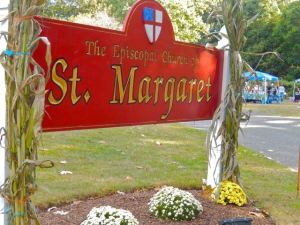 This Saturday our parish has its Annual Fall Fair – a festive gathering with vendors, food, children’s activities, raffles, and other fall merriment. We are blessed with an 11-acre property, so the event is a wonderful way for us to welcome people to our grounds and remind the community that they are welcome here. Having done this event for so many years, most of our parishioners know what needs to be done – signs, publicity, donors, coordinating vendors, setting up the property, making baskets, bringing in donations. The list goes on. But even though we all know what needs to be done, there is usually a bit of anxiety and stress to make sure the event is a success, especially in the week leading up to the event. As someone who can become easily stressed, I totally understand the reaction. Though I am not involved in the execution of the event, I always empathize with our parishioners as the tension builds in this final week.

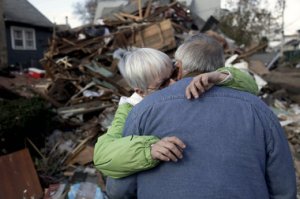 I have been pondering for the last ten days what to say about the experience of Hurricane Sandy. I think I felt overwhelmed because I knew that my experience was not as bad as thousands of others in our area. My experience felt superficial somehow, as if I did not earn enough credit to have something to say about all of this. But what I realized these last couple of days is that although I cannot speak for places that were utterly devastated by this horrible storm, I can speak for what life has been life for the rest of us, tied to those who are suffering more while suffering ourselves.
 Finally, I have been struck by the overwhelming ways in which this storm has brought out the goodness in others. My parishioners have been running extension cords across the street to share power with others. I observed all of us talking to one another more – learning more of each others’ stories – caring more about the welfare of each other. People without power themselves have bent over backwards to make sure my family was okay. Friends and parishioners have taken us in for hot meals and for washing laundry or for simple camaraderie. People long to help others even when they are suffering. There is a sense of abundance in the face of devastation. There is joy watching a toddler find creative ways to entertain herself. And the outpouring of love from all over the region is even more overwhelming. I have felt like that wall that keeps us from sharing Christ with one another has been decimated, and Christ is found all around us as we love and care for one another.
 Seeking and Serving