
• About

Seeking and Serving

~ seek and serve Christ in all persons

Seeking and Serving

Tag Archives: ultimate

Sermon – John 11.32-44, AS, YB, November 3, 2024

13 Wednesday Nov 2024

Posted by jandrewsweckerly in Sermons

≈ Leave a comment

Tags

All Saints Sunday, anxiety, baptism, burial, covenant, God, grief, Jesus, presidential election, saints, Sermon, ultimate

I imagine if you were to poll a group of priests, most of them would say that one of their favorite liturgies in the Episcopal Church is the burial office – not because of the painful journey of grief and loss that leads to such an office, but because of what the liturgy and its scripture lessons accomplish.  In the midst of personal pain and gut-wrenching bereavement, the Church shows up with scripture lessons that point us toward ultimate things – that remind us of the ultimate source of hope for the faithful:  the promise of resurrection and eternal life.  Grief can upend your entire center, leaving you feeling lost.  But scripture, the burial office liturgy, and our faith are like a tether that hold us steady – that hold us close to Christ when Christ can feel absent.

Our lessons today on this feast of All Saints are all lessons traditionally recommended for a burial office – ones that have given us hope as we have lost spouses, parents, children, friends, and spiritual mentors.  They are lessons that give us hope for that feast of rich food and well-aged wines, where death is swallowed up forever, and God wipes away our tears.  They are lessons that promise that death will be no more, mourning and crying and pain will be no more, for the first things have passed away.  They are lessons that depict a Jesus deeply disturbed and deeply moved by our suffering. 

So why all this focus on end things?  Why this focus on ultimate things?  For one, as we honor the saints who have gone before on All Saints Sunday, these are lessons that remind us of what the Church has always believed about life, death, and eternal life in Christ.  As we will later recall in the service those souls closer to our own journeys and tie ribbons on the altar rail in their memory, the Church wants us to be ever confident in where those souls are and where we will go too.  And as we reaffirm our baptismal covenant today – that reminder of how in baptism we go down into the baptismal waters and die to self and come up again born anew in Christ, we are reminded that we are a kingdom people, living in resurrection not just in eternal life but in the here and now.

I am especially grateful for this feast of All Saints, on this day of remembering ultimate things, as we head into a week that feels especially weighty and consequential.  Not only are we each feeling our own anxieties and fears about how this presidential election will go (probably not all agreeing about which way would be best), I was also reminded yesterday as I watched the investiture of our new Presiding Bishop Rowe, that the rest of the world joins in our anxiety.  As a primate from South Sudan reminded us, our presidential election this week does not just impact us, but has ripple effects in countries around the world. 

Into this global anxiety, in this conflicted country, commonwealth, and county, we are gifted the same thing the Church gifts us with at every burial and every reminder of the saints:  the reminder of ultimate things.  We are reminded that in celebration and catastrophe, God is with us, wiping away tears.  We are reminded that in victory and defeat, death holds no power over us.  But maybe most importantly, we are reminded in anxiety, in relief, in hope, and in hope vanquished, Jesus is by our side, deeply moved and ever ready to continue showing us God’s glory when God’s glory feels long lost.

Today our lessons and our liturgy are powerful reminders that we have a sacred duty to live into our baptismal covenant.  That may not sound like much of a balm – maybe the command to honor our baptismal covenant feels more like homework than comfort.  But we are never baptized just into comfort.  We are baptized through comfort to live radical lives as Christ’s disciples – where we share the good news of God in Christ, where we gather in weekly worship and communion, where we seek and serve Christ in all persons, and where we strive for justice and peace, respecting the dignity of every human being.

Yes, this time feels so weighty on our shoulders that we feel like we may collapse under the weight of this time.  But the Jesus who weeps for Lazarus is the same Jesus who told us his burden is easy and his yoke is light.  The Jesus who is deeply disturbed is also the Jesus who troubles the water – the waters in which we died in baptism and rose to new life.  The Jesus who walked alongside Martha and Mary is the same Jesus who walks alongside you and me.  Our invitation today is take that baptismal covenant seriously – with the heft of ultimate things like death and resurrection and eternal life.  We stand in those baptismal waters this week, and we invite others to join us.  Those waters are our source of strength this week.  Amen.
Sermon – Mark 10.17-31, P23, YB, October 13, 2024

13 Wednesday Nov 2024

Posted by jandrewsweckerly in Sermons

≈ Leave a comment

Tags

earn, faithful, giving, God, instrument, Jesus, love, matters, measure, money, pledge, relationship, stewardship, trust, ultimate

As we kickoff stewardship season today, I know what you must be thinking, “Wow!  Jennifer went all-in on scripture this week – she’s really trying to get us to make a big pledge this year!”  And while I would love for you to make a generous pledge this year, you know from how much I complain about the assigned lectionary over the course of the year that I had no part in choosing today’s gospel.  And, if I’m really being honest, if I could choose a passage to kickoff stewardship season, I would not have chosen this text from Mark. 

“Why?” you might ask.  Mark’s story about the wealthy man seems like the perfect tee up for stewardship.  The sermon simply could be, “You heard the words from Jesus directly – sell what you own and give the money away – preferably to your favorite local church.”  But I would not have chosen this text or that sermon – not because this text is so extreme (trust me, I am not asking you to sell everything you own), but because this text goes deeper than money.  Jesus in this text is not just challenging us to be generous givers, Jesus is asking us even bigger questions about salvation and the very nature of our relationship with God.

This story is repeated in all three gospels.  In Luke’s gospel, the man is described as a “ruler,” and in Matthew he is described as “young.”  “But for Mark he is just a regular guy, although with ‘great possessions.’”[i]  In other words, this guy is just like you and me.  Just like you and me, he is trying so very hard to live a faithful life.  Just like you and me, he is already doing the basics – loving his neighbor by following those ten commandments about how we treat one another.  And just like you and me, he is faithfully striving to live a better life – he has sought out this Jesus to learn more and to discover how to order his life so that he can be in right relationship with God.  Jesus gives him, and us, an answer – the way to right that relationship with God – to follow those ten commandments that tell us to both love neighbor and love God – is to right our relationship with money. 

As one scholar explains, “The problem is not wealth per se but our attitude toward [wealth].  As we accumulate riches, we are tempted to trust in our possession and our powers of acquiring them, rather than in God, for our ultimate security and comfort.  Even honestly acquired and generously shared wealth can thus lead to pride.  That is why it is easier for a camel to go through the eye of a needle than for a rich person to enter the kingdom of God.  It is hard to let go of the immediate basis of our security and comfort – and the more we have, the harder [letting go] gets.”[ii]  And so Jesus gives us today the ultimate spiritual discipline – to untangle our relationship with money from our relationship with God:  to see our material blessings not as a badge of honor for righteous living or hard work, but as a tool for sharing the love of Christ – an instrument to demonstrate our love of God through how we use money.

Now, I do not know what your relationship with your wealth is.  Growing up, our family did not have very much of it.  We had what we needed, but some of what we needed was gifted by a neighbor dropping off a basket of produce or a bag of hand-me-down clothing.  I knew if I wanted to go to college, I was going to need to earn some scholarships and financial aid.  The challenge with that kind of upbringing is that, as you come into your own, you realize you are now responsible for ensuring you have enough wealth not to need those gifts from neighbors and institutions.  You have to earn that wealth.  And the danger in knowing your earning of wealth is dependent upon your own blood, sweat, and tears is that you begin to think of everything you have as earned by yourself as opposed to being gifted by God – as though the gifts and talents you have were not gifted by God and enable you to then earn the wealth you need to purchase the rewards for your hard work.  And when we read stories like today’s gospel, we start to get a pit in our stomach – that small, nagging, gnawing feeling that we too might walk away grieving if Jesus were to tell us our relationship with money was interfering with our relationship with God.

That small, nagging, gnawing feeling is what leads the disciples to ask, “Who, then, has any chance at all?”  And here is where the grace comes.  Jesus basically says, “No chance at all if you think you can pull it off by yourself.  Every chance in the world if you let God do it.”[iii]  In other words, we can right our relationship with wealth, we can become peoples of generous giving only through God.  Now Jesus is not saying giving generously will not be hard.  What Jesus is saying is, “You can do hard things.” 

Last fall, one of our families had a long conversation during stewardship season.  As a couple, they handle finances independently in some areas and together in others.  Their giving to church was one of those in the areas they handled independently from one another.  After hearing a testimony from a fellow parishioner, they sat down to look at the numbers – and realized their giving didn’t reflect their theology of money.  And so, they decided to make some changes – to right-size their household budget to reflect the deep relationship with God they knew they had but that they weren’t reconciling within their wallets.  That kind of reconciling work was not easy – but their relationship with God and their membership in a faith community helped them know they could do hard things.

 This year, we have already been talking about ultimate things – about measuring what matters in our lives.  You have heard stories from parishioners about what this community means to them, and how they have come to understand that intimate relationship between their relationship with God and their relationship with their wealth.  Even talking about that small, nagging, gnawing feeling was hard for many of them.  But each one of them knew they could do the hard thing because Jesus enabled them to do so.  They knew, through God, all things were possible.  Their testimonies, Jesus’ words today, and our own desires for greater intimacy with God are the tools that enable us to do hard things:  to examine our relationship with wealth, to examine our relationship with God, and to examine our fears and feelings that hold us back from the freedom that comes from trusting in God and not in our own bootstraps.  Jesus is very plain today.  You cannot pull off right relationship by yourself.  But with God – with God, all things are possible.  Thanks be to God!  Amen.


[i] David B. Howell, “Pastoral Perspective,” Feasting on the Word, Yr. B, vol. 4 (Louisville: Westminster John Knox Press, 2009), 164.

[ii] James J. Thompson, “Theological Perspective,” Feasting on the Word, Yr. B, vol. 4 (Louisville: Westminster John Knox Press, 2009), 166.

[iii] Mark 10.27 as quoted in The Message paraphrase (Eugene H. Patterson, The Message: The Bible in Contemporary Language (Colorado Springs:  NavPress, 2002).

Sermon – Matthew 5.1-12, ASD, YA, November 1, 2020

05 Thursday Nov 2020

Posted by jandrewsweckerly in Sermons

≈ Leave a comment

Tags

Beatitudes, breathe, God, heaven, importance, Jesus, persecution, renewed, reward, Sermon, ultimate

There are certain events in life that when we stop and pay attention, bring into laser-sharp focus the importance of ultimate things:  baptisms, weddings, and funerals probably being the most significant.  For baptisms, we do not just celebrate because babies are cute or because adult baptisms feel empowering.  We celebrate by making promises to journey with the individual in their faith, and by renewing our own baptisms.  Similarly, we make promises to couples getting married.  There is even a prayer for already married couples in our liturgy, asking God to renew their promises to one another.  Of course, funerals can do the same thing.  They are not just sobering in their reminder of our own mortality, but also, they refocus us on the ultimate significance promised in Jesus Christ – eternal life.  All of these events in the life of the church offer us a sobering reminder of the importance of ultimate things.

In some ways, that is what Jesus is doing in the Beatitudes – that portion of the Sermon on the Mount found in Matthew’s gospel today.  Prior to these verses, Jesus has been healing the sick, proclaiming the gospel, and managing swarms of crowds who are drawn to his message and healing.  But in these verses, Jesus stops.  He sits down, gathers the disciples, and invites them to listen.  Jesus then shares the importance of ultimate things.  The disciples are seeing what he sees – the suffering, the pain, the agony.  Into that overwhelming need, Jesus does not teach them how to heal.  He does not teach them how preach.  He does not set a schedule for where they will go next or how many more they will heal.  Instead he lays out a series of blessings that remind the disciples what is ultimately important.  “Blessed are the poor in spirit, for theirs is the kingdom of heaven.  Blessed are those who mourn, for they will be comforted.  Blessed are the meek, for they will inherit the earth.  Blessed are those who hunger and thirst for righteousness, for they will be filled.  Blessed are the merciful, for they will receive mercy.  Blessed are the pure in heart, for they will see God.  Blessed are the peacemakers, for they will be called children of God.  Blessed are those who are persecuted for righteousness’ sake, for theirs is the kingdom of heaven.  Blessed are you when people revile you and persecute you and utter all kinds of evil against you falsely on my account. Rejoice and be glad, for your reward is great in heaven, for in the same way they persecuted the prophets who were before you.”  Jesus is more than willing to heal and soothe suffering.  But Jesus is also saying that our pain and our suffering mean something; our pain and suffering can and will be transformed.

We do something similar in our liturgical actions today as well.  We honor not just the saints who have gone before – those who have performed miracles or lived notable lives.  We honor all the “saints” – the label Saint Paul used for all Christians – the mothers, fathers, siblings, children, friends, lovers, and mentors who taught us about the ultimate things.  Even though the practice looks a little different this year, every year we tie ribbons on our altar rail to remember the ultimate things of this life – the wisdom our loved ones taught us.  In our socially distant worship service today, a couple will renew the wedding vows they made forty years ago because they want to remember the ultimate things of married life.  Even in the midst of pandemic, protests, and political campaigns, the Church today pauses this morning and reminds us of ultimate things. 

On this All Saints Day, the faithful stop, take a deep breath, pulling in the anxiety, the pain, the anger, and the suffering, and breathe out the words of Jesus, “Blessed are the poor in spirit…blessed are those who mourn…blessed are those who hunger, who are merciful, who are pure in heart, who are persecuted…blessed are the peacemakers…blessed are you.”  Our invitation today is to breathe in with the all the saints who have gone before, so that when we breathe out, we are renewed with the breath of ultimate things.  Keep doing the work of our Savior in this crazy time because you are blessed and will continue to be blessed.  Rejoice today and be exceedingly glad – for great is your reward in heaven.  Amen.

On Birthdays and Blessings…

20 Wednesday Nov 2019

Posted by jandrewsweckerly in Uncategorized

≈ Leave a comment

Tags

big, birthday, blessing, celebrate, God, gratitude, life, little, thankful, ultimate

gratitude

Photo credit:  https://www.lupus.org.uk/lupus-trust-uk-news/2019/8/2/qzppdr7brifhgd5i9zi7h8o1ia34i0

My husband and I experience our birthdays very differently.  He is perfectly happy to have a quiet, reserved day, wanting to be acknowledged, but not wanting a lot of attention on him.  I, on the other hand, love have a ton of attention on my birthday – songs, cake, cheers, you name it.  So when my daughter insisted I wear a “It’s My Birthday!” sash yesterday, I only hesitated for a second.  What was funny about the sash was the experience I had wearing it.  The funniest reactions were probably at the bus stop.  I think most of the kids must have parents more like my husband as they seemed surprised I was celebrating.  But one kid in particular asked me, “So are you having a big party with your friends tonight?”  When I replied I was not, her response was, “Yeah, I guess you’re too old, huh?”

It’s funny how a six-year old can make you question your life.  I was suddenly wondering, “Should I have assembled a party?  Should I have found other big ways to celebrate?”  But as the evening closed yesterday, I reflected on what my day of celebration entailed:  a breakfast, including eggs and coffee, my children proudly made by themselves; a lunch in the school cafeteria with my older daughter and her friends; an evening watching my younger daughter’s ballet class – an activity I cherished growing up; a surprise dinner by my husband, fully ready upon our return home; not to mention cards, cupcakes, and endless texts, calls, and social media messages.  It wasn’t a party in the traditional sense, but it did feel like wonderful day of celebrating life – my life here and now.

In the last couple of weeks, I have administered last rites, conducted a funeral, spent several days with my dad who was in the hospital, talked to families dealing with crisis, consoled the bereaved, baptized a baby, and heard people’s life stories for the first time.  When you are that deep in the reality of life, parties or treats no longer seem necessary.  What suddenly becomes important are the ultimate things of life – breath, family, loved ones, intimacy, little life moments.

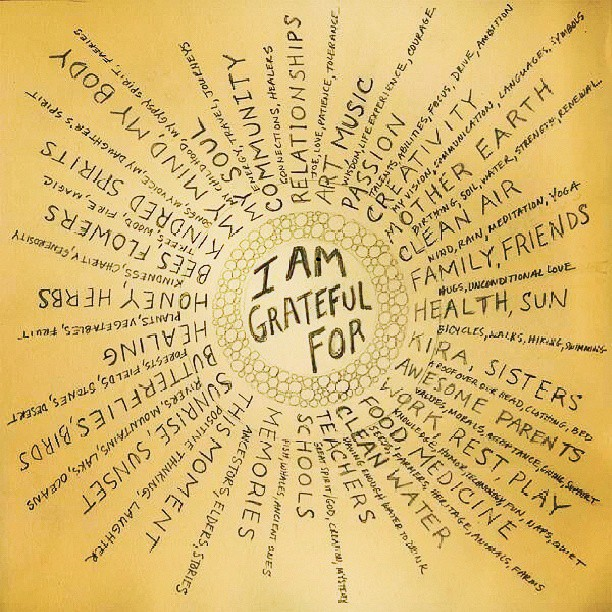
To help me keep celebrating, I invite you this week, to slow down and look at the blessings all around you.  I know some of you are hurting, some of you are just trying to get by, and some of you don’t have that many stressors right now.  Wherever you are, take a moment today to give thanks to God for all your bountiful blessings – big and very small.  Each breath, each day, each year is a gift.  Tell me where you are feeling grateful.  I’d like to celebrate with you!

Recent Posts

  • On the Myth and Magic of Advent…
  • On Risking Failure and Facing Fear…
  • Sermon – Luke 23.33-43, P29, YC, November 23, 2025
  • On Inhabiting Gratitude…
  • Sermon – Luke 20.27-38, P27, YC, November 9, 2025

Archives

  • December 2025
  • November 2025
  • October 2025
  • September 2025
  • August 2025
  • July 2025
  • June 2025
  • March 2025
  • February 2025
  • December 2024
  • November 2024
  • October 2024
  • September 2024
  • August 2024
  • July 2024
  • June 2024
  • May 2024
  • March 2024
  • February 2024
  • January 2024
  • December 2023
  • November 2023
  • October 2023
  • September 2023
  • August 2023
  • July 2023
  • June 2023
  • May 2023
  • March 2023
  • February 2023
  • January 2023
  • December 2022
  • November 2022
  • October 2022
  • June 2022
  • May 2022
  • January 2022
  • December 2021
  • November 2021
  • October 2021
  • September 2021
  • August 2021
  • June 2021
  • May 2021
  • April 2021
  • March 2021
  • February 2021
  • January 2021
  • December 2020
  • November 2020
  • October 2020
  • September 2020
  • August 2020
  • July 2020
  • June 2020
  • May 2020
  • April 2020
  • March 2020
  • February 2020
  • January 2020
  • December 2019
  • November 2019
  • October 2019
  • September 2019
  • August 2019
  • July 2019
  • June 2019
  • May 2019
  • April 2019
  • March 2019
  • February 2019
  • January 2019
  • December 2018
  • November 2018
  • October 2018
  • September 2018
  • August 2018
  • July 2018
  • June 2018
  • May 2018
  • April 2018
  • March 2018
  • February 2018
  • January 2018
  • December 2017
  • November 2017
  • October 2017
  • September 2017
  • August 2017
  • July 2017
  • June 2017
  • May 2017
  • April 2017
  • March 2017
  • February 2017
  • January 2017
  • December 2016
  • November 2016
  • October 2016
  • September 2016
  • August 2016
  • July 2016
  • June 2016
  • May 2016
  • April 2016
  • March 2016
  • February 2016
  • January 2016
  • December 2015
  • November 2015
  • October 2015
  • September 2015
  • August 2015
  • July 2015
  • June 2015
  • May 2015
  • April 2015
  • March 2015
  • February 2015
  • January 2015
  • December 2014
  • November 2014
  • October 2014
  • September 2014
  • August 2014
  • July 2014
  • June 2014
  • April 2014
  • March 2014
  • February 2014
  • January 2014
  • December 2013
  • November 2013
  • October 2013
  • September 2013
  • August 2013
  • July 2013
  • June 2013
  • May 2013
  • April 2013
  • March 2013
  • February 2013
  • January 2013
  • December 2012
  • November 2012
  • October 2012
  • September 2012

Categories

  • reflection
  • Sermons
  • Uncategorized

Meta

  • Create account
  • Log in
  • Entries feed
  • Comments feed
  • WordPress.com

Blog at WordPress.com.

  • Subscribe Subscribed
    • Seeking and Serving
    • Join 394 other subscribers
    • Already have a WordPress.com account? Log in now.
    • Seeking and Serving
    • Subscribe Subscribed
    • Sign up
    • Log in
    • Report this content
    • View site in Reader
    • Manage subscriptions
    • Collapse this bar
 

Loading Comments...