• About

Seeking and Serving

~ seek and serve Christ in all persons

Seeking and Serving

Monthly Archives: February 2025

On the Dance of Trust…

12 Wednesday Feb 2025

Posted by jandrewsweckerly in reflection

≈ 2 Comments

Tags

afraid, dance, God, grace, hard, trust

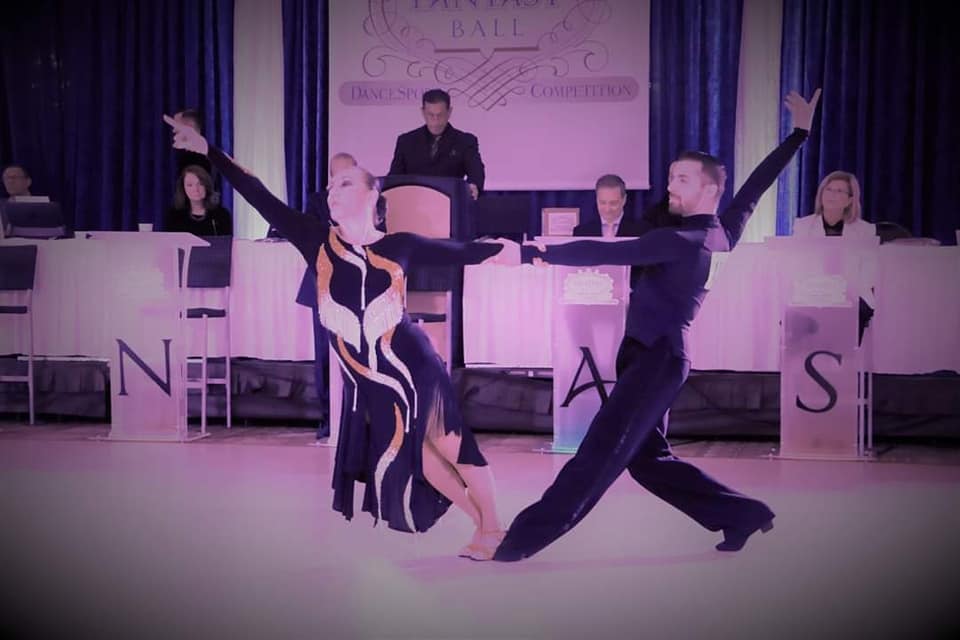
Photo credit: World Class Ballroom

In a little over a week, I will be competing in my town’s version of Dancing with the Stars – where 12 of us local “stars” are paired with professional dancers and perform our routines in a ticketed show.  The event is for charity, hoping to raise about $60,000 for our local Big Brothers Big Sisters affiliate and Literacy for Life.  When I was asked to be a star this year, I was excited.  I loved the idea of supporting local ministries, of a clergy person doing something so outside the box, and the fun of dancing.

Naively, I thought years of dancing in childhood and adolescence would be a big help.  I took ballet, tap, and jazz all through my school years – even taking a little ballet in college.  I was on dance teams in high school and college, doing hip hop style dancing.  And I even took a “Social Dance” class in college meant to teach you the basics of ballroom dance.  Consequently, I was fully expecting to learn and execute my routine with relative ease.

What I hadn’t accounted for in my mental preparation was what dancing with a partner would mean.  Of course, I knew that, as a female, I would need to let the male lead – and I also knew that would be hard based on previous experiences.  It can be hard to trust someone who also doesn’t know what they are doing.  But I had assumed dancing with a professional would make the trust part easier.  That was until a lesson recently where my teacher basically told me that I needed to fall forward in a particular position – with the promise he would catch me.  When I gave him an incredulous look, he explained that if I tried to catch myself, I would make him fall.  But if I just fell, he would catch me and the move would look dramatically graceful.

I have loved getting to know my teacher and have no reason not to trust him – he’s incredibly talented and has been doing this for ages.  But my resistance to trusting my teacher has given me a lot of insight on how deeply demanding trusting God is.  God has proven to us time and again how God is holding us, caring for us, bringing us to the right places at the right time.  And yet, every time something gets scary or unfamiliar, we yank that trust right back.  I suppose that is why we hear that refrain in Scripture, “Do not be afraid,” so often – because being unafraid is really hard.

I wonder in what ways you are holding back your trust in God these days.  I wonder how often you are unwilling to “fall,” expecting something dramatically graceful, and instead limiting God’s grace by your resistance to giving up control.  Letting go will not be easy – God wouldn’t have to tell us to not be afraid so much if letting go were easy.  But imagine the beautiful dance you could produce if you could reach out your hand and instead say, “Here I am.  Send me.” 

You can help me “let go” by making a donation to the amazing charities we are supporting.  Click HERE to donate today and make a difference in the lives of others.

Sermon – Luke 5.1-11, EP5, YC, February 9, 2025

12 Wednesday Feb 2025

Posted by jandrewsweckerly in Sermons

≈ Leave a comment

Tags

abundance, baptism, change, empower, feelings, gospel, Jesus, Kingdom, same, Sermon, wisdom, with, work

On occasions of big life milestones, we tend to be a people who like to offer sage advice.  Whether the advice is about how to approach retirement after decades of work, how to handle parenting to a first-time parent, how to manage marriage, how to navigate divorce, or, like today, how to approach full membership in the body of Christ through the act of baptism.  As parents and godparents tentatively offer their children to the Church, in turn, we as a community offer advice and counsel – sometimes formally through things like the baptismal covenant, and sometimes informally over coffee and cake from our own lived experiences.

As I was reading our gospel lesson this week, I was thinking about one of those loved bits of wisdom that often comes up in the life of the Church.  I cannot tell you the number of times I have heard a parishioner say to me, “You know what they say the definition of insanity is, Jennifer?  Insanity is doing the same thing over and over again and expecting different results.”  Sometimes, when we just cannot get some momentum to overcome a problem at church, I find myself doing an “insanity check” because of that old adage.  So, imagine my surprise when I read today’s gospel and hear Jesus basically asking the disciples to do the exact opposite of what that bit of wisdom suggests about how doing the same thing over and over again never leads to meaningful change. 

Here we are, meeting Simon, James, and John in Luke’s gospel for the first time.  These career fishermen have had a rough day on the job.  They have been out on the water all night long, using all their normal tricks, fishing in all the right spots, and have come to shore, exhausted, disappointed, and likely more than a bit irritated to have nothing to show for their labor.  Into this despondency and frustration, this guy, Jesus, inserts himself and basically says the complete opposite of what that old saying says about doing the same thing over and over.  Jesus says to the soon-to-be disciples, “Go back and fish again.”  To weary, disheartened men, who have just spent all night doing this work, Jesus says, “Do the work again.” 

We do not know why Peter agrees.  But we do know the feeling Peter describes when he basically tells Jesus this is a terrible idea.  We may not be fishermen, but we know “what it’s like to work really hard at something that matters, and have nothing to show for [our] efforts when [we’re] done.  …I imagine we all know what’s it’s like to pour ourselves into a job, a relationship, a ministry, a dream — and come away exhausted, frustrated, thwarted, and done.”[i]  For that matter, after the last month we may be having those feelings right now.  Whether we are weary from watching the chaos and upheaval of these first few weeks of a new administration, or we are weary from having big conversations about church, we know how resistant we would be if Jesus were to tell us, “Just go back out into the world (or to Hickory Neck) and keep doing the same thing!”

But here is the thing:  Jesus doesn’t actually ask Peter to keep doing the same thing.  Though the physical action Jesus is suggesting is the same, something dramatic changes in the scene.  Yes, Peter, James, and John, are using the same nets, in the same waters, in the same location, using all their same gifts.  But this time, this time the text tells us that Jesus gets in the boat with them.  Jesus does not shout from the shore what the disciples should do.  Jesus gets on that weary boat with them, and heads out into the deep, trouble waters with them.  As scholar Debie Thomas says, “This is a promise to cultivate us, not to sever us from what we love.  It’s a promise rooted in gentleness and respect — not violence and coercion.  It’s a promise that when we dare to ‘go deep,’ to do what we know and love with Jesus at our side, God will enliven our efforts in ways we couldn’t have imagined on our own.”[ii]

As I have been looking at the chaos in the political sphere right now, and even as I have been looking at pretty big changes at Hickory Neck, I have been wondering if Jesus’ only words of encouragement are going to be, “Just get back out in the deep waters and keep doing the good work of the Gospel.”  Because lately that has just felt more like “insanity work.”  Instead, what our gospel lesson tells us that when we get back to the work Jesus has given us to do, knowing that Jesus is in the boat with us, it means not only will we not get the same results, we are going to be surprised with abundance.  Now, I’m not saying you have to accept the promise of abundance enthusiastically.  Even Peter protests and then acquiesces half-heartedly.  “Yet if you say so, I will,” Peter tepidly commits.  So Debie Thomas tells us we can commit too.  “Yet if you say so, I will try again.  Yet if you say so, I will be faithful to my vocation.  Yet if you say so, I will go deep rather than remain in the shallows.  Yet if you say so, I will trust that your presence in the boat is more precious than any guarantee of success.  Yet if you say so, I will cast my empty net into the water, and look with hope for your kingdom to come.”[iii]

When we baptize little Arthur today, and we decide what bit of wisdom we want to pass along to him, forget about that whole “insanity” advice.  Maybe instead, our advice can be something more akin to our gospel.  We can tell him, “Sometimes Jesus is going to invite you to do some crazy stuff – to do something that you are certain will lead to the same old results.  But just remember, Jesus does not send without getting in the boat with you.  Jesus does not send you without empowering you to do the work.  Jesus does not send you without the promise that abundance will come.”  Our invitation today is to not to just give the advice to little Arthur – but to hear and embrace the advice for ourselves too.  Amen.


[i] Debie Thomas, “Same Old Same Old,” February 3, 2019 as found at https://www.journeywithjesus.net/essays/2075-same-old-same-old on February 7, 2025.

[ii] Thomas.

[iii] Thomas.

Sermon & Annual Meeting Address – 1 Corinthians 12.12-31a, EP3, YC, January 26, 2025

12 Wednesday Feb 2025

Posted by jandrewsweckerly in Sermons

≈ Leave a comment

Tags

Annual Meeting, anxiety, body, Christ, Holy Spirit, home, Jesus, members, Paul, Sermon, system, value

One of the things we do on Annual Meeting Sunday is install new Vestry Members.  Even though only one third of the Vestry rotates on and off each year, I always remind Vestries that we become a new, changed body every year.  Each of those nine members bring different gifts, talents, and insights.  Each of those members shifts the tone and tenor of our work, and helps us dance a little bit differently.  I was reminded of this reality last week.  When talking about a retiring Vestry member, another member said, “What’s so cool about him is that he does not speak often, but when he does everyone gets really quiet because the insight he offers is so profound.”  That feedback was entirely true – and that feedback reminded of me of another Vestry member much earlier in my tenure at Hickory Neck who would do the same thing – come in toward the end of a conversation with an insight none of us had seen but was entirely needed.

That is the funny thing about bodies – we need all our parts to be the best versions of our bodies.  I think that is why Paul leans into the metaphor of a body to describe the followers of Christ in first Corinthians.  As one scholar writes, “The human body has 206 bones, 693 muscles, and about 6 pounds of skin, along with ligaments, cartilage, veins, arteries, blood, fat, and more.  Every time we hear a sound; every time we take a step; every time we take a breath, hundreds of different parts work together so that what we experience is a single movement, our minds and bodies working as one unit.  Even the great engineers struggle to achieve anything like [the body] in mechanical form.  The human body represents one of the most complex systems in existence.”[i]

For Paul, that super complex system represents the body of Christ – the way each part of the body (or in this case, each member of the church) is not just a belonging member, but is a member whose participation is vital – the whole body is thrown out of balance when we are not all using our gifts.  Scholar Raewynne Whiteley explains, “Every single person in the church matters – the homebound elderly, babies, those with disabilities, and well as the generous givers and hard workers.  This is a reality we can name, which has less to do with equality than with wholeness.  Only with all our members can the body of the church be whole.”[ii]

This last year, we saw what wholeness looks like at Hickory Neck.  Tech team members and pop-up prayer leaders who stream worship online connect us to homebound members, overstretched families who cannot make their way to church but want to pray with us, and those unchurched in our wider community who want to see if they have a place in this body before braving the doors that open to super friendly (sometimes overwhelmingly so) Hickory Neckers.  Retirees who live far from their families and have very little interaction with children in the daily lives connect with children whose own grandparents may live far away and whose parents may be frazzled just by trying to get the family in the car on Sunday mornings.  College students who love to sing but maybe have an estranged relationship or no relationship with the Church connect with a community who cares about the poor and hear sermons from clergy that help them think about faith and politics a little differently. 

And that is just the everyday Sunday at Hickory Neck.  If we are to believe Paul’s metaphor that we are a complex body of parts that need one another, we need only to look at the long list of moving parts in our community in the last year:  from 5 baptisms, 2 first communions, 11 confirmations/receptions/ reaffirmations, and 1 wedding; from 19 members of Discovery Class, 25 participants in Godly Play classes at the Kensington School, and countless volunteers during the Winter Shelter; from a brand new Choir Camp with 20 children, guest concerts with well over 100 attendees each time, to a guest choir of 38 high school students from New Jersey; from over 13,000 points of pastoral care from clergy, an increase in pledges by over $17,000, and an increase in average Sunday attendance by 8%.  This is a complex community, who is not only content with daily operations but is ever trying new things like a Cursillo Eucharist, St. Patrick’s Day Liturgy, a children’s Chorister program, Holy Vino fundraiser, a new organ, a Finance Committee, and even a priest as a dancing star in Williamsburg.  When Bishop Haynes visited us in 2024, and said we are a vibrant, thriving community, this is what she meant.

Now, there is an inherent tension about being a body with varying parts, as Paul reminds us.  As scholar Karen Stokes explains, “There will always be differences with a congregation – differing opinions, experiences, priorities, needs – and it is dangerous to try to play down those differences in the interest of some superficial harmony.  When this natural diversity within a congregation is not allowed to be expressed openly, subtle judgments are communicated:  when the ear gets the message that it would really be better if [the ear] were an eye, when the foot realizes the community values hands more highly.”[iii]  If we do not let the uniqueness of each part be celebrated, when we face changes, anxieties can increase.  And Stokes goes on to say, “Anxiety lessens once’s ability to be imaginative, creative, and self-reflective, and instead causes reactivity, defensiveness, even paranoia”[iv] 

We have been talking a lot the last couple of weeks about our finances and our need for increased revenue to support our vibrant, varied ministries.  Those conversations have brought up a lot of anxiety.  After nine years at Hickory Neck, I have come to recognize that every January is similar – talk of finances gets all of us anxious.  As I have been marinating on Paul’s body metaphor and thinking about the miracle of such diverse parts working so harmoniously together, and as I reflected on 2024 and how we started with anxiety around budgets twelve months ago and managed to power through a tremendous year of vibrant ministry, I find I am looking toward 2025 with renewed confidence.  Perhaps this is the time of year when we are reminded that we are not all ears or feet or eyes.  We will not see ministry the same or hold the same opinions.  Even though we might approach ministry differently, we are all here to see the body do what the body of Christ does best – love God, love self, and love neighbor. 

Just a few weeks ago, I was talking to a first-time visitor who was looking for a new church home.  She heard about Hickory Neck from another new family to Hickory Neck and was able in that one Sunday to see a place for her family here.  That experience tells us all something powerful:  we may be a body that is complex, and beautiful, and sometimes anxious because of our differences; but we are also a body who honors how every person who comes through that door is a part we did not even realize we were missing and who we are thrilled to welcome into their unique contribution to our whole.  Having seen church communities who are not open to new body parts being added, I can tell you, having that experience made me realize we are a beautiful, complex, fabulous body, made possible by the gifts of the Spirit, who works in and through each of us.[v]  Our work this year is to let the Spirit use us to be awesome ears, eyes, feet, tendons, and muscles.  I cannot wait to see what the Spirit does with this fabulous body in 2025!  Amen.


[i] Raewynne J. Whiteley, “Homiletical Perspective,” Feasting on the Word, Yr. C, Vol. 1 (Louisville:  Westminster John Knox Press, 2009), 279.

[ii] Whiteley, 283.

[iii] Karen Stokes, “Pastoral Perspective,” Feasting on the Word, Yr. C, Vol. 1 (Louisville:  Westminster John Knox Press, 2009), 280.

[iv] Stokes, 280.

[v] Whiteley, 283.

Sermon – Isaiah 43.1-7, Luke 3.15-17, 21-22, E1, YC, January 12, 2025

12 Wednesday Feb 2025

Posted by jandrewsweckerly in Sermons

≈ Leave a comment

Tags

affirmation, baptism, belong, Christ, church, exile, God, hard, joy, new birth, Sermon

Some Sundays, Church is a bit hard.  Every Sunday, even the ones in Lent, are considered resurrection celebrations – days where we take a break from all that weighs on us and we celebrate the gift of a Savior.  But some Sundays turning our hearts to joy is difficult.  We may be mourning a loss, or watching a crisis like the fires near Los Angeles this week.  We may be struggling with anger or fear, or worried about an estranged child, or precarious relationship, or how we are going to make ends meet.  And yet, Sunday after Sunday, the Church says, “Rejoice, and again I say, rejoice!” 

That contrast is experienced brilliantly in our Old Testament lesson today.  The reading from Isaiah is the perfect pairing for our gospel lesson where Jesus is baptized, the Holy Spirit descends like a dove, and the voice of God speaks, “You are my Son, the Beloved; with you I am well pleased.”  The echoes of the prophet Isaiah are those words to Jesus.  God says to the people in Isaiah’s time, “Do not fear, for I have redeemed you; I have called you by name, you are mine…you are precious in my sight, and honored, and I love you…I am with you.”  On the surface, these words sound like joy upon joy.  Who would not be thrilled to hear such affirmation and respond with songs of praise and jubilation?

But here is what you might not realize about chapter 43 of Isaiah.  At this point, the people of God are in exile in Babylon.  God is not speaking to0 the generation of people who were driven out of the land of promise into Babylon.  These words are spoken to the children and even grandchildren of those first exiles – some of whom were born in exile and only know the land of promise by legend.[i]  These words sound lovely, but must have been hard to hear.  The exiles may have even asked, “If God is with us…how did we end up in Babylon?”[ii]  God is speaking to a people who have likely lost hope or lost belief that God is even with them anymore.  Because if God is with us, how can suffering be? 

Today we will baptize two young boys – one, August, who is too young and innocent for such questions yet, and the other, Jonathan, who is just old enough to start asking the big questions:  who is God?  What is baptism?  If you are a priest, can you bless the water I drink too?  On a Sunday when we might be struggling to bring the joy with the world burning and freezing around us, a baptism might be just what we need.  Baptism is all about identity making – baptism is the moment we are acknowledged as full members of the body of Christ – as children of God.  Baptism is the day the church says, “You belong to God.” 

And so, when God says through Isaiah, “I have called you by name, you are mine…you are precious in my sight, and honored, and I love you…I am with you,” God means you.  Even the pronoun used in the text is the second-person-singular – as if God is speaking to each member of the community.[iii]  So you, Bob and Betty, are precious in God’s sight.  You, Nancy and David, are called by name and are God’s.  God loves you, Jonathan and August.  As one scholar writes, “Our sense of belonging comes not from the acceptance of our peers or the status of our communities but from the One who claims us and will never let us go.  What makes us worthy is not our individual achievements or the size of our congregational budgets, but God’s gracious love.”[iv]

In the ancient church, baptism looked a little different than it does today.  They did not have beautifully carved and crafted fonts with small amounts of water poured over heads or sprinkled among people.  The early Church had a deep, cruciform shaped pools with stairs on either end of the cross length.  So the candidate would walk down into the water at one end, totally submerge under the waters, and then emerge on the other end.  The symbolism was that your old self died in the waters of baptism, and you were born into the life of Christ, emerging from the womb’s water a new person.

We may not submerge Jonathan and August, but we do understand them as born anew today.  And in fact, each of us here today are born anew too as we reaffirm what happened in that new birth for us.  That’s how we tangibly grasp onto the hope and celebration of a resurrection Sunday – even in the midst of fire and freeze.  We grasp onto hope as the Church reminds us who we are and how we will be.  We promise today to “continue in the apostles’ teaching and fellowship, in the breaking of the bread, and in the prayers.”  We promise to “repent and return to the Lord, to proclaim by word and example the Good News of God in Christ.”  We promise to “seek and serve Christ in all persons, loving our neighbor as ourselves and to strive for justice and peace among all people, and respect the dignity of every human being.”  Whether we brought joy with us today, or we are in need of joy, the Church promises that if we keep trying to live into those baptismal promises, live into that identity of beloved children of God, we will find our way into believing and feeling the truth of those words from God.  “I have called you by name, you are mine…you are precious in my sight, and honored, and I love you…I am with you.”  Amen.     


[i] Julia M. O’Brien, “Commentary on Isaiah 43:1-7,” January 12, 2025, as found at https://www.workingpreacher.org/commentaries/revised-common-lectionary/baptism-of-our-lord-3/commentary-on-isaiah-431-7-6 on January 10, 2025.

[ii] Valerie Bridgeman Davis, “Homiletical Perspective,” Feasting on the Word, Yr. C, Vol. 1 (Louisville:  Westminster John Knox Press, 2009), 221.

[iii] Kathleen M. O’Connor, “Exegetical Perspective,” Feasting on the Word, Yr. C, Vol. 1 (Louisville:  Westminster John Knox Press, 2009), 219.

[iv] W. Carter Lester, “Pastoral Perspective,” Feasting on the Word, Yr. C, Vol. 1 (Louisville:  Westminster John Knox Press, 2009), 222.

Sermon – Matthew 2.1-12, EP, YC, January 5, 2025

12 Wednesday Feb 2025

Posted by jandrewsweckerly in Sermons

≈ Leave a comment

Tags

both/and, either/or, Epiphany, Episcopal, fear, God, hope, Jesus, magi, Sermon

Many Episcopalians find their way to the Episcopal Church from another way – another denomination or even no faith at all.  One common theme among those making their way to the Episcopal Church is that they are fleeing a faith that is “black and white,” or “either/or.”  They find comfort in the Episcopal Church because the Episcopal Church embraces the “gray,” or the “both/and.”  The appeal of those other traditions is obvious – there is no ambiguity or need for discernment in a “black and white” faith.  Something is either right or wrong.  That kind of clarity is refreshing in a world that is always complex, complicated, and ambiguous.  But our Episcopal tradition does not offer the comfort that comes from absolutes.  Our tradition helps us find comfort within, not despite, the complexity and ambiguity of both our sacred and secular lives.

Take our gospel lesson today.  We could easily read the Epiphany story, the story of the visitation of the Wise Men or Magi, and make easy, defendable categories:  Herod is bad, the Magi are good.  But before we dig in too deeply in that dichotomy, we are going to be good Episcopalians this morning and look into the gray.  We start with the Magi.  There is something quite magical about these wise people of thought.  Their magic is not in how they used their mental capacities to track a star to find the Messiah.  What is magical about the Magi is their response to finding Jesus.  Matthew tells in the literal translation that the Magi “rejoiced with a really, really big joy.”[i]  These Magi, who know very little about the life, death, and resurrection of the king of the Jews feel something, feel really, really big joy in the Christ Child because they, unlike most of us, have “mastered the art of hoping in God.”[ii]

Ellen Davis, Old Testament scholar, explains there is a Proverbs verse that helps us understand the Magi.  Proverbs 10.28 says, “The hope of the righteous is gladness.”  She goes on to explain, “Those who train their sights on the faithfulness of God, ‘the righteous’ – they already experience joy even before they see their hopes fulfilled, even if they never live to see (in this world, at least) the clear fulfillment of all that God has promised…That is the kind of joy that burst forth that night on the streets of Roman-occupied Bethlehem, like flowers springing suddenly out of stone pavement.  It was joy that takes root in nothing more (or less) substantial than hope itself.”[iii]

The Magi’s hope does not teach us that because God is born in Jesus all is right in the world.  I am not sure any of us would believe that anyway, given the current state of the world.  Instead, as Davis explains, “Christian hope is something very different from the natural feeling of elation that comes when things are going our way.  No, hope is not a feeling that ebbs and flows.  Rather, it is a way of living that we choose; and gradually, day by day, we learn to be graceful in it.  Hope is a way of living beyond our own limited vision and natural fears, a way of living into God’s faithfulness and there finding fullness of joy forevermore.”[iv]

Now, we could easily stop our interpretation there, and say, “Don’t be bad like Herod, be hopeful and righteous like the Magi, and all shall be well.”  But remember how I told you about the ambiguity of the Episcopal Church?  Let’s go back to Herod – the supposed “wrong” to the “right” of the Magi.  We know Herod is a horrible, power-hungry, paranoid ruler.  We are told that when these foreigners come out saying a new King of the Jews has been born, Herod is afraid.  He’s not scared of a baby – he’s scared about the threat to his power.  And so, he pulls together his own biblical scholars in secret, and then talks to the Magi in secret to get them to find this baby – not so that he can worship him, as Herod claims, but so that he can kill the threat to his power.  And when that does not work because the Magi go home another way, we find out in the verses following our text today, that Herod has all the boys in Bethlehem under the age of two murdered – just to make super sure that his power is secure.

But the problem of making Herod out to be the villain is we skip over one key point.  The text says, all of Jerusalem is frightened by this new king too.  As Davis explains, “Herod could not have secured the deaths of all those children, if he were the only one who was afraid.  Matthew is pointing to the clearly documented fact that fear is contagious, and [fear] readily crosses party lines…Fear spreads like plague through an unhealthy system, infecting not only those who are powerless to defend themselves – the Jewish families in Bethlehem – but also infecting the relatively powerful, the ruling elite in Jerusalem, who sensed (with that gut-gripping fear that comes in the middle of the night) the fragility of the base on which their power rested.”[v]

So, before we try to simplify again – Magi are good, Herod (and the people of faith in Jerusalem) are bad,” Ellen Davis encourages us to see another way.  She says, “This is not a simple picture of them and us, as we would prefer to believe.  Rather, if we read the story deeply and honestly, I think we will identify both with fearful Jerusalem and with hopeful Magi; for they both reveal aspects of our own situation that we have not seen clearly before…there is judgment for us in that picture of Herod and all Jerusalem.  Matthew holds [that judgment] before us like a mirror, challenging us to acknowledge our fear, to recognize the violence that springs from fear and will doubtless perpetuate [violence].  Yet Matthew does not consign us to despair.  For alongside that mirror is a second one – you might call [the second mirror] a glass of vision, for [the second mirror] show us something a little ahead of where we are now.  [The mirror] shows what we as a church can and will look like if we stand against the tyranny of self-perpetuating fear.  We will look like the Magi.”[vi]

I cannot think of a better time to read this “both/and” text, this “gray” text where everything is not so rigid as we might prefer.  Many in our communities are full of fear right now – fear from what the changes of a new administration will do in power, fear of violence like the wonton killing of those in New Orleans this New Year’s, and even fear of financial instability in these volatile times.  We do not honor the Magi today because their message is “Just have hope and all shall be well!”  Instead, as Davis argues, Matthew, “challenges us to be the community of resistance that the church has been…from the beginning.  [Matthew] challenges us as a church to examine and deepen our understanding of the systems that generate fear for ourselves and others.  He challenges us as a church to find ways out of those systems – not to despair, though the systems are large and powerful, but to find and commit ourselves to the small steps by which we may depart from the country governed by fear and go by another road to our own country, that place we call the kingdom of God.  Matthew’s Gospel challenges us to live boldly in the hope of the Magi, so that having rejoiced with them at the first coming of Christ, we may at his second coming know fullness of joy forevermore.”[vii]  That may not be the “right/wrong” word you were looking for this morning.  But I think the beauty of the gray of Holy Scripture today is exactly what we need.  Amen.


[i] Ellen F. Davis, “Stargazers,” January 5, 2003, Sermons from Duke Chapel:  Voices from “A Great Towering Church,” William H. Willimon, ed. (Durham, NC:  Duke University Press, 2005), 337.

[ii] Davis, 338.

[iii] Davis 338.

[iv] Davis, 339.

[v] Davis, 340. 

[vi] Davis, 341.

[vii] Davis, 341.

Sermon – Luke 2.1-20, CE, YC, December 24, 2024

12 Wednesday Feb 2025

Posted by jandrewsweckerly in Sermons

≈ Leave a comment

Tags

awe, Bethlehem, burdens, Christ Child, Christmas, dystopian, film, gift, hope, Jesus, Joseph, joy, light, Mary, Messiah, sacred, Savior, Sermon, unsteady

Every summer, we hold a film series at Hickory Neck.  This summer, one of the films was movie called Children of Men.  The film is a dystopian film situated in London about a time in the future when the world has become infertile.  The youngest human, aged 18 has just died, schools and playgrounds are abandoned, a pall of grief and depression hangs in the air, and the world has become violent, unpredictable, harsh – with massive detainment camps of refugees and rebels fighting the government militia and civilians alike.  Into this setting, we meet Theo, a man who has lost hope and purpose, and we meet a young woman of color who would normally be in one of those detainment camps, who is secretly carrying the first pregnancy in over 18 years.  Theo’s world is thrown into chaos as he tries to get the young mother to safety so that the child will be able to live freely. 

In a powerful scene near the end of the movie, the mother has birthed her child in a dingy, rat-infested, crumbling room, and Theo needs to get her and the child to the safe haven.  But the crumbling building is overrun with rebels and a battle ensues as the military shows up.  In the din of violence and noise, the baby cries out, and all activity ceases.  Rebels hold their fire as they watch in reverence as the baby is carried down the stairs of the building.  The soldiers outside call for a ceasefire as the high-pitched cries they have not heard in almost 20 years fill the air.  Rebels, civilians, and soldiers alike stand in awe, many reaching out just to touch the baby and mother.  The awed silence is so palpable that even movie watchers hold their breath at this miracle.

I imagine that night from our gospel lesson was a bit like that breath-holding moment in Children of Men.   We know that Mary and Joseph are going to be registered in Bethlehem, but what we can forget is that Mary and Joseph live in a time of occupation – where taxes are extorted, registrations can drive folks from their homes, where rebellion against the state leads to death.  The mass movement of people for the registration creates another layer of chaos, leaving people jockeying for shelter, especially a couple so close to birth, and whose pregnancy is of a dubious nature from the beginning.  Even in the peaceful countryside where shepherds are just doing their work, a chaos of shocking news, a chorus from angels, and the blinding light of the glory of the Lord is shining in their normally darkened pastoral setting. 

And then, just like in that battle scene in the film, the shepherds arrive where the holy family have made due, and a whispered conversation leads to a stillness that makes you hold your breath.  But this stillness is not just about the miracle of life – no this stillness is about so much more – about a savior, the Messiah, who has been promised for generations who finally is here; about a promised peace in a world that has no peace; about promises for justice that Mary has sung about with her cousin Elizabeth, and now seems to be a reality.  Mary is so overwhelmed by the enormity of the moment that all she can do is ponder the words of the shepherds in her heart.

What is so unsettling about the parallels in this secular, dystopian film and the ancient biblical story is not just their similarities.  What is most unsettling is their similarities to our own time.  Our political landscape is just as unstable, conflicted, and threatening.  Our economic, mental, and physical health is just as unsteady.  And for some of us, our home life is a place of even more strain.  In so many ways, having ourselves a merry little Christmas feels like a stretch.  In fact, the very reason we may be here tonight – besides a family member telling us we had to come – is that we long for that moment of awe – that quiet, tremendous, encouraging peace that can only be found at the site of the Christ Child.  We want a word, or a song, or a meal shared that will leave us something to treasure and ponder in our hearts too.

That is what Christmas does.  Coming here tonight is not going to solve all our problems or the world’s problems.  In that movie, as soon as the child is out of sight, bombs and gunfire ramp up dangerously again.  At that manger scene, Herod’s paranoid tyranny means Mary, Joseph, and Jesus will have to flee to Egypt for safety.  And come January, we will have a transition in power in our own country.  But tonight, in this sacred space, we enter into a time of unfiltered joy.  We recall what matters most – the Savior born in a manger whose eventual salvation will give us meaning and purpose.  We lean into those gathered with us tonight – those who are family and friends, those who are fellow church members, and even those whose names we do not know – we lean into one another in this safe space of sanctuary, where none of the darkness outside can touch us – even if only for an hour.  We lay down any burdens on our hearts at the altar as we share a holy meal, fortifying ourselves for what comes next.  And we glorify and praise God, like shepherds who have seen a great light, and whispered holy truths. 

Now unfortunately, that tremendous gift, that sacred life-giving balm, is not without a price.  The price, is that we must leave this place, enter back into the dark of night, and carry on with life back out in the world.  Our invitation is to carry whatever light, whatever hope, whatever small sliver of praise and glory we find this night, and gift it to someone else.  To be like Theo, who refuses to allow the glory of a mother’s child to suffer; to be like shepherds, who share the good news of a Messiah; to be like your neighbor in the chair (pew) beside you, who is already thinking of someone who needs the gift of hope and healing who cannot be here tonight, but whom your neighbor will be sure to gift some of that love and peace to tomorrow.  Christmas is the Church’s gift to you this night.  You are Jesus’s gift to someone else tomorrow.  Amen.

Sermon – Luke 2.8-20, Blue Christmas, December 21, 2024

12 Wednesday Feb 2025

Posted by jandrewsweckerly in Sermons

≈ Leave a comment

Tags

Blue Christmas, Christmas, church, comfort, God, grief, hope, light, paradox, sacred, secular, Sermon, sit, unsettling

Christmas is a funny thing.  Christmas is simultaneously soft and loud, comforting and unsettling, hopeful and demoralizing.  Some of that paradox comes from the Christmas story itself, but some of that paradox comes from our hopes and memories of Christmas verses our lived experience of Christmas.  I remember all the loveliness of Christmases past:  of familiar foods shared, of gifts exchanged, of the aunts and uncles verses cousins football games in our grandparents’ yard.  But as I aged, the veneer wore off:  aunts and uncles divorced, hurtful things were said and done, and older generations began sharing the “behind the scenes” version of our Christmases that I never knew – and wished I didn’t know now.  And, slowly, I began reshaping what Christmas meant for the next generation – with a sense of certainty about what I wanted them to experience and a sense of anxiety that they might someday lose the magic of a once special time. 

We hold this Blue Christmas service every year because somewhere in the midst of shopping, caroling, worshiping, and partying, our world – both the secular one, with Hallmark movies and glossy advertisements, and sometimes even our sacred one, with familiar carols and perfect pageants – our world offers us dissonance.  In the merry making, there is little room for the parts of us that are not merry – whether those parts are due to lingering Christmas grievances, visitations from the grief fairy when we least expect her, economic pressures and worldly anxieties, the open wounds from the brokenness of our country from a nasty political year, or relationships that are broken or are limping along.  The world and even the Church rarely makes space for our inability to fully embrace the merriness of Christmas. 

As I pondered this disconnect this year, I stumbled on a reading from Gertrud Mueller Nelson.  Nelson describes about this time of year – of this season of shortened days and lessened light, “Pre-Christian peoples who lived far north,” she writes, “and who suffered the archetypal loss of life and light with the disappearance of the sun, had a way of wooing back life and hope.  Primitive peoples do not separate the natural phenomena from their religious or mystical yearning, so nature and mystery remained combined.  As the days grew shorter and colder, and the sun threatened to abandon the earth, these ancient people suffered the sort of guilt and separation anxiety, which we also know.  Their solution was to bring all ordinary action and daily routine to a halt.  They gave in to the nature of winter, came away from their fields and put away their tools.  They removed the wheels from their carts and wagons, festooned them with greens and lights, and brought them indoors to hang in their halls.  They brought the wheels indoors as a sign of a different time, a time to stop and turn inward.  They engaged the feelings of cold and fear and loss.  Slowly, slowly, they wooed the sun-god back.  And light followed darkness.  Morning came earlier.  The festivals announced the return of hope after primal darkness.

This kind of success – hauling the very sun back:  the recovery of hope – can only be accomplished when we have the courage to stop and wait and engage fully in the winter of our dark longing.”  Nelson goes on to say, “Perhaps the symbolic energy of those wheels made sacred has escaped us and we wish to relegate our Advent wreaths to the realm of quaint custom or pretty decoration.  Symbolism, however, has the power to put us directly in touch with a force or idea by means of an image or an object – a “thing” can do that for us.  The symbolic action bridges the gulf between knowing and believing.  It integrates mind and heart.  As we go about the process of clipping our greens and winding them on a hoop, we use our hands, we smell the pungent smell that fills the room, we think about our action.  Our imagination is stirred.

Imagine what would happen,” Nelson adds, “if we were to understand that ancient prescription for this season literally and remove – just one – say the right front tire from our automobiles and use this for our Advent wreath.  Indeed, things would stop.  Our daily routines would come to a halt and we would have the leisure to incubate.  We could attend to our precarious pregnancy and look after ourselves.  Having to stay put, we would lose the opportunity to escape or deny our feelings or becomings because our cars could not bring us away to the circus in town.[i]”

In some small way, that is what tonight does.  Tonight, we take the wheel off our cars, and place the wheel in the wreath right here in this little chapel.  We take away our ability to bustle about, and we sit.  We sit in the dark, we sit in our discomfort, and we sit in our un-merriness.  We take time, listening to a story about some shepherds who were similarly uncomfortable in the dark of night, dirty among their sheep, in the fields – doing their daily, maybe sometimes demoralizing, work of shepherding.  We pray, we mark our specific sense of loss or pain with the lighting of candles, and we bless our lack of merriment – we receive permission to tarry for a while in the darkness.  We do that all because we know that after today, the light will start to come a little earlier, will start to last a little longer, and will start to kindle hope in us.  We may not yet be ready to leave this place, glorifying and praising God like those shepherds.  But we are able to receive the gift of this sacred inside time, knowing that light is coming – that days are coming when we, too, will remember joy, and life, and praise.  We tarry here because this is where we also find hope.  That is the Church’s gift to you tonight – space and a tiny little sliver of hope.  Come, gather by the wheel, and tarry a bit longer.  Amen.


[i] Gertrud Mueller Nelson, To Dance With God: Family Ritual and Community Celebration (Mahwah, NJ:  Paulist Press, 1986), 63, as quoted in An Advent Sourcebook, Thomas J. O’Gorman, ed. (Chicago:  Liturgy Training Publications, 1988), 141-142.

Sermon – Malachi 3.1-4, A2, YC, December 8, 2024

12 Wednesday Feb 2025

Posted by jandrewsweckerly in Sermons

≈ Leave a comment

Tags

Advent, Christ Child, entertain, familiar, God, music, pain, preparation, questions, refine, Sermon, together, tougher

The professional choir at the parish I served as a curate would perform Handel’s Messiah every Advent season in preparation for Christmas.  I remember my first Advent the Rector told me about the performance with excitement and anticipation, and all I remember thinking was, “Oh goodness!  Do I have to go??”  Do not get me wrong, I love Handel’s Hallelujah Chorus as much as anyone, but that piece is only about three-four minutes long and is only half-way into the three hours of singing that Handel’s Messiah takes. 

Music is a funny thing in Advent.  Since we hardly ever hear music at this service, you may not remember the hymns designated for singing in Advent.  But most people I know who regularly attend services with music do not really love Advent music.  Unlike familiar, comforting, endearing Christmas carols, Advent hymns are “discordant, unsung, and unpopular in many congregations.”[i]  I have known choir members whose skin crawls from Advent music, and I imagine some of you are here today because the idea of a whole service dedicated to Advent Carols which we will hear at 10:00 am sounds like torture. 

The problem might be that Advent music is not as catchy as Christmas music.  But I think there is a deeper truth to our distaste of Advent music.  The music of Advent points to the themes of Advent:  of apocalyptic demands to be alert, doing acts of righteousness to be right with God; of judgment so stringent to be compared to a refiner’s fire and fullers’ soap; of needing to bear fruit worthy of repentance so as not to be chopped down and thrown into the fire; and of bringing down the powerful from their thrones and lifting up the lowly.  None of that is quite as catchy as a holly, jolly Christmas.

Perhaps the issue is that Advent music tries to do the same thing scripture does.  In 1741, Handel wrote to a friend of his masterpiece Messiah, “‘I should be sorry if I only entertained them.  I wished to make them better.’  The composer challenges [us] to go beyond feeling good to doing good.”[ii]  The same was true for Malachi.  Malachi brings good news of a messenger coming to prepare the way of the Lord and that we will be purified enough that our offerings will be pleasing to the Lord as they once were before.  But Malachi also reveals the fearful questions of the people.  “But who can endure the day of his coming, and who can stand when he appears?”  These are just two of the twenty-two questions in the fifty-five verses of Malachi.[iii]  But they are questions we all ask if we are paying attention during Advent.

I remember when I was pregnant with my first child, women poured pregnancy stories over me.  A camaraderie of sorts began to build, the state of our friendship altered because we were now going to share something we had not before.  But what I always noticed about those stories is whenever I expressed my nervousness about labor, their eyes darted away, and they made wistful promises about how anything resembling pain would be forgotten.  The more their warm countenances shifted to wary, twitchiness, the more I suspected labor would be a painful reality.

The same is true for the infant we will welcome once again on December 24th.  As much as we cry out, “Hark the Herald Angels Sing,” as much as we sing of “Silent Nights,” and as much as we dream of “Joy to the World,” our Christmas celebration comes with a price – the price of preparation, of messengers making the way for joy, of fire burning away all that corrupts us.  Advent is not about entertaining us.  But, much like Handel hoped, Advent is meant to make us just and better, so that we might be right with God when that infant is placed in the arms of the Church.  Advent is for Malachis, for Zechariahs, the father of that coming messenger, and for you and for me.  And although we may feel like we have been refined enough to last a lifetime after the last election season, the refining God is doing now in each of us means, as one scholar assures, we will “be re-formed in God’s image, and [that re-forming] will be good.  No matter how we feel about it now.  No matter what we may be afraid of now.  When we are refined and purified as God promises, it will be good.”[iv]  As much as we may dread that awful Advent music or loathe those heavy, foreboding stories of Advent, we do so together, knowing that we are being refined tougher, so that, together as a community, we will welcome the Christ Child with open, ready arms.  Amen.


[i] Deborah A. Block, “Pastoral Perspective, Feasting on the Word, Year C, Vol. 1  (Louisville: Westminster John Knox Press, 2009), 30.

[ii] Block, 30.

[iii] Block, 26.

[iv] Seth Moland-Kovash, “Homiletical Perspective,” Feasting on the Word, Year C, Vol. 1  (Louisville: Westminster John Knox Press, 2009), 31.

Recent Posts

  • On the Myth and Magic of Advent…
  • On Risking Failure and Facing Fear…
  • Sermon – Luke 23.33-43, P29, YC, November 23, 2025
  • On Inhabiting Gratitude…
  • Sermon – Luke 20.27-38, P27, YC, November 9, 2025

Archives

  • December 2025
  • November 2025
  • October 2025
  • September 2025
  • August 2025
  • July 2025
  • June 2025
  • March 2025
  • February 2025
  • December 2024
  • November 2024
  • October 2024
  • September 2024
  • August 2024
  • July 2024
  • June 2024
  • May 2024
  • March 2024
  • February 2024
  • January 2024
  • December 2023
  • November 2023
  • October 2023
  • September 2023
  • August 2023
  • July 2023
  • June 2023
  • May 2023
  • March 2023
  • February 2023
  • January 2023
  • December 2022
  • November 2022
  • October 2022
  • June 2022
  • May 2022
  • January 2022
  • December 2021
  • November 2021
  • October 2021
  • September 2021
  • August 2021
  • June 2021
  • May 2021
  • April 2021
  • March 2021
  • February 2021
  • January 2021
  • December 2020
  • November 2020
  • October 2020
  • September 2020
  • August 2020
  • July 2020
  • June 2020
  • May 2020
  • April 2020
  • March 2020
  • February 2020
  • January 2020
  • December 2019
  • November 2019
  • October 2019
  • September 2019
  • August 2019
  • July 2019
  • June 2019
  • May 2019
  • April 2019
  • March 2019
  • February 2019
  • January 2019
  • December 2018
  • November 2018
  • October 2018
  • September 2018
  • August 2018
  • July 2018
  • June 2018
  • May 2018
  • April 2018
  • March 2018
  • February 2018
  • January 2018
  • December 2017
  • November 2017
  • October 2017
  • September 2017
  • August 2017
  • July 2017
  • June 2017
  • May 2017
  • April 2017
  • March 2017
  • February 2017
  • January 2017
  • December 2016
  • November 2016
  • October 2016
  • September 2016
  • August 2016
  • July 2016
  • June 2016
  • May 2016
  • April 2016
  • March 2016
  • February 2016
  • January 2016
  • December 2015
  • November 2015
  • October 2015
  • September 2015
  • August 2015
  • July 2015
  • June 2015
  • May 2015
  • April 2015
  • March 2015
  • February 2015
  • January 2015
  • December 2014
  • November 2014
  • October 2014
  • September 2014
  • August 2014
  • July 2014
  • June 2014
  • April 2014
  • March 2014
  • February 2014
  • January 2014
  • December 2013
  • November 2013
  • October 2013
  • September 2013
  • August 2013
  • July 2013
  • June 2013
  • May 2013
  • April 2013
  • March 2013
  • February 2013
  • January 2013
  • December 2012
  • November 2012
  • October 2012
  • September 2012

Categories

  • reflection
  • Sermons
  • Uncategorized

Meta

  • Create account
  • Log in
  • Entries feed
  • Comments feed
  • WordPress.com

Blog at WordPress.com.

  • Subscribe Subscribed
    • Seeking and Serving
    • Join 394 other subscribers
    • Already have a WordPress.com account? Log in now.
    • Seeking and Serving
    • Subscribe Subscribed
    • Sign up
    • Log in
    • Report this content
    • View site in Reader
    • Manage subscriptions
    • Collapse this bar
 

Loading Comments...