
• About

Seeking and Serving

~ seek and serve Christ in all persons

Seeking and Serving

Category Archives: Uncategorized

Sermon – Acts 16.16-34, E7, YC, May 12, 2013

22 Wednesday May 2013

Posted by jandrewsweckerly in Uncategorized

≈ Leave a comment

Tags

bondage, freedom, Jesus, scripture, Sermon

If we were to break out a flip chart today and create two columns – one for those in bondage and one for those who are free – where would our main characters from Acts go?  At first glance, our “those in bondage” column might start with the slave-girl.  We are not even given her name.  She is simply called the slave-girl.  And we know from the story that she is a double slave – a slave to her owners who use her for money and a slave to the spirit of divination inside her.  Another addition to the “bondage” category might be Paul and Silas.  They are thrown into jail midway through our story, which clearly puts them in the bondage category.  Plus, the slave-girl calls them “slaves of the Most High God.”  The other column in our flip chart is those who are free.  We have several for that column.  There are those who own the slave-girl.  They are free to collect money for someone else’s performance, and they are free to get someone thrown in jail.  The judges who throw Paul and Silas into jail are also free – free to choose who is punished and who is not.  Finally, we might put the jailer into the free column as well.  He is a man with a steady, respectable job, who has power over those in prison.  So in the “bondage” column we have the slave girl, Paul, and Silas.  And in the “free” column we have the owners, the judges, and the jailer.

Most of us would certainly prefer to be in the “free” column on this chart.  The owners of the slave girl obviously have social capital and an income source.  They have influence and power, and up until Paul and Silas come along, they have the comforts of wealth.  The judges also have a great deal of respect and power in the community.  They are charged with keeping order in the community and protecting the community’s way of life.  Their roles in the community are admirable and secure.  Even the jailer has a clear sense of identity and purpose.  He may not have wealth and prestige, but he has a secure job and a sense of clear identity in the community.  He has a role that is understood and a vocation that is stable.  Meanwhile, the slave-girl is nothing like what we hope for ourselves.  Being possessed by a spirit and being owned by another individual do not usually make the top of our lists for happiness and fulfillment.  And in no way do we want to be like Paul and Silas, who not only seem to be homeless rebel-rousers, they also are physically brutalized and imprisoned.

The people in the “free” column are the people we most likely follow in our lives.  We want to be people with more money, with secure sources of income, and with power and influence.  We like independence and not being forced to rely on anyone else.  But we get so caught up in longing for these things in life that we sometimes forget the only desire that will make us whole – the desire for a deep relationship with Jesus Christ.  Even churches get trapped in desiring the wrong kind of freedom.  “If we just had as much money as St. Swithin’s, then everything would be fine.”  But the truth is that this kind of desire is never fulfilled.  Trust me, I have served at St. Swithin’s, and St. Swithin’s has just as many problems and stresses as we do every time budget talks come around.

Of course, like any good Bible story, appearances are not always as they seem.  The truth is that although we might put the slave-girl, Paul, and Silas in the “bondage” column, their true home is in the “free” column.  The slave-girl already knows the truth that no one else can see – that Jesus is the way to salvation.  And when she shouts that long and loudly enough, she is not only freed of her possession, she is free of the bondage of slavery – because her owners can no longer use her as they did before.  Even Paul and Silas, who are locked in jail, are in that “free” column.  What person, after being brutally whipped and thrown into a cold cell, can be found praying and singing praises to God in the middle of the night?  Only someone who is so free of the bondage of this world can be able to praise God in the midst of earthly suffering.

And of course, if those in our “bondage” column are actually in the “free” column, the same is true of those we originally put in the “free” column.  Those owners, who seem to have the earthly freedom of wealth, have actually become slaves to their wealth.  They are so enslaved to that wealth that when their source of income is freed, they lash out, bringing pain and suffering down upon others.  They cannot see the gift of freedom for the slave-girl; they only see the consequences for themselves.  The judges are no freer than the owners.  They are so enslaved to their rigid rules that they cannot see the inherent injustice that the slave-girl has faced for so many years.  Even the jailer is not truly free.  He is so caught up in his identity as a jailer that he is willing to take his life for his job.  He is ready to kill himself for what he thinks is a failure on his part than to see how this job has taken over his sense of identity.[i]

We do this too.  We are enslaved by our economies, our ways of doing things, and our senses of roles.  Think about the last party or gathering you attended.  What is one of the first questions someone asks to get to know a stranger?  “So, what do you do?”  We ask this question because our job or our role in society defines us in some way.  Several years ago, a friend of mine was going through a real low point in life.  She quit her job because she knew the job was not what she was called to do.  But she also had no idea what was next.  She was bold enough to say “no” to the old job, but was left clueless about what would be her next step.  This all happened when she was relatively new to a community, and still had not found a church home.  She confided in me that she had stopped looking for a church home because she got so tired of stumbling through an answer at coffee hour when she was repeatedly asked, “So, what do you do?”

So if we are enslaved by our ways of being, how can we get out of our bondage?  Our first cue comes from Paul and Silas.  Paul and Silas could have easily fled that jail when the earthquake happened.  They could have sped past the jailer, and been focused solely on their own self-preservation.  But we see that there is a peace in Paul and Silas that comes from true freedom.  Instead of weeping and plotting in that cell, they sing and pray to God.  Instead of running when the doors fling open, they ensure that the jailer is okay.  Instead of demonizing the jailer, they offer him baptism.  This is what true freedom looks like.[ii]

How do we get to this true freedom?  The jailer gives us the second cue.  The jailer asks Paul a simple question, “What must I do to be saved?”  In order to be saved, to gain that true sense of freedom, we must ask for help like the jailer asks for help that day.  Whether we ask a friend, a stranger, or God, we must ask for help.  This is not always easy for us.  We will have to risk our pride and we will have to trust others.[iii]  But asking for help is that first step in the journey out of the “bondage” column and into the “freedom” column.

Our invitation today is two-fold.  First, our invitation is to consider the ways in which we have become enslaved – the ways of being that we have assumed that have created a life of bondage.  That recognition leads to our second invitation – the invitation to ask for help, to trust in another to guide us into the freedom that can only come from Christ.  When we do those two things, we can know the peace of freedom that we see in scripture today.  Amen.


[i] David G. Forney, “Pastoral Perspective,” Feasting on the Word, Yr. C, Vol. 2 (Louisville: Westminster John Knox Press, 2009), 526.

[ii] L. Gregory Jones, “Come, Lord Jesus,” Christian Century, vol. 109, no. 16, May 6, 1992, 485.

[iii] Frederick Buechner, as found on http://www.frederickbuechner.com/content/weekly-sermon-illustrations-jailer on May 7, 2013.

On mothers…

10 Friday May 2013

Posted by jandrewsweckerly in Uncategorized

≈ 1 Comment

Tags

joy, Mother's Day, mothers, prayer, sorrow

Mother and child handsThe older I have become, the more complicated Mother’s Day seems for me.  I grew up with an amazing mother.  She made tremendous sacrifices for our family, she was incredible witness to what serving Christ and others meant, and she was a caring and loving presence in my life.  As I have become an adult, our relationship has naturally changed.  We do not agree on a variety of things, but I have a deep love and admiration for her – more than I could probably ever explain or express to her or to you.

But as I have become an adult, the idea of motherhood has shifted.  When I moved away from my family, other women became mothers to me too.  I have become a mother myself and now see how incredibly difficult the job is.  And I have watched friends and family lose beloved mothers – sometimes at a very young age, and sometimes at a much more mature age.  The loss never goes away.

But I have also seen the darker side of mothers.  I have come to know individuals who were abused by their mothers.  I have come to know women who want to be mothers but cannot.  I have come to know mothers whose relationships with their children have become estranged and irreparably damaged.

So every year, given that Mother’s Day falls on a Sunday, I find myself torn about Mother’s Day.  I find myself wanting to celebrate the goodness of mothers – however we define motherhood.  And I find myself wanting to acknowledge how wholly painful this day is to others.  The best I can do is be honest about that tension and pray for all of us – that we somehow manage to hold our joy and our sorrow in tension this Mother’s Day.  And for all of us, I offer up this prayer:  https://dl.dropboxusercontent.com/u/42236079/The%20wide%20spectrum%20of%20mothering%20%28resource%29.pdf

Sermon – Acts 16.9-15, E6, YC, May 5, 2013

10 Friday May 2013

Posted by jandrewsweckerly in Uncategorized

≈ Leave a comment

Tags

disciples, Easter, evangelism, Good News, Holy Spirit, Jesus, Lydia, Paul, Sermon, spiritual practice

This Eastertide, I have been thinking a lot about evangelism.  The bishop asked us to have a conversation about our mission and evangelism efforts here in Plainview during Eastertide.  The Vestry just started reading a book about evangelism as a spiritual discipline.  And our Vestry retreat in April was about the tangible practices of evangelism we could employ.  For a topic that makes most Episcopalians very uncomfortable, evangelism seems to be everywhere I turn.  But as I was thinking about the theme of evangelism this Eastertide, I realized that the theme’s prominence makes quite a bit of sense.  Eastertide is sort of the “so what?” of the resurrection.  Throughout Eastertide, we are hearing the stories of the disciples’ reaction to the resurrection, and what life was like after this pivotal moment.  What better time to think about evangelism than while the disciples are doing just that – taking the Good News of Jesus’ resurrection and sharing that Good News with others.

What I appreciate then about our lesson from Acts today is that the practice of evangelism in biblical times was not exactly precise.  You would think that the book of Acts would tell the story of how after Jesus’ death the disciples knew exactly how to spread the Good News.  You would think after all those years with Jesus, the disciples had clear instructions for moving forward, and were able to draw up a structured evangelism plan.  But our stories from Acts this year have included nothing of the sort.  So far we have heard stories of a brutal persecutor of Christians being dramatically converted, of Peter realizing that Gentiles should also be included in the Christian community, and today we hear of this foreign woman of power coming to Christ.  I am pretty sure if the disciples sat down and planned their target audience for the Good News, Paul, Cornelius, and Lydia would not have been on their list.  And yet, this is the story of evangelism we hear during Eastertide: a story of unlikely and unexpected people hearing and responding to the word of God.

On the surface, this sounds like good news to us.  These stories of conversion give a sense of confidence that no matter with whom we share the story of Jesus, they will be converted.  But looking at the end of the story glosses over the actual experiences of those on the evangelism journey.  If you remember, when Paul is converted, and his eyes are scaled over, the Christian who goes to talk with him is scared to death.  God tells him to go to Paul, but that is little assurance when that instruction means walking into the lair of a nasty murderer of Christians.  And for Peter, his interaction with Cornelius means that he must surrender all that has been familiar to him – the necessity of circumcision and all that he has known as being central markers of faithfulness – and let go of that familiarity.  Even with this interaction between Paul and Lydia today, Paul must take on a long journey based on a few words in a dream, only to find not a Macedonian man who is asking for help, but a foreign woman.[i]

These stories during Eastertide only highlight our own anxieties about evangelism.  As modern Christians, we have a hard enough time sharing the Good News with our friends and family.  Religion is one of those primary topics to avoid at dinner parties.  At the slightest hint of discomfort from someone else, we immediately drop the topic, not wanting to drive away a friend or colleague.  We do not want to become known as some Jesus freak who everyone avoids at parties.  Quite frankly, there are even times when we feel uncomfortable even talking about our faith within Church.  How in the world could we ever then expect ourselves to be able to talk to those who are hostile, unchurched, or strangers to us?

Before I went to seminary, I participated in a group at my parish called EFM – Education for Ministry.  The program was a four-year program where a small group of people gathered and each year covered a different topic – Old Testament, New Testament, Church History, and Theology.  During one of the scripture years, I was traveling by plane alone and I was sorely behind in my scripture reading.  I carried a large study bible with me, and that trip I found that I had more interesting conversation than you could ever imagine.  I had a slightly uncomfortable conversation with a young evangelical male who started telling me about his conservative views on scripture.  I had a businessman ask me if I was a minister or theology student.  When I told him no, he seemed bewildered as to why I would be reading the Bible, and kept eyeing me suspiciously the rest of that flight.  I had a middle-aged woman start telling me about her church and Bible Studies she had enjoyed.  And of course, there were tons of people who just stared at me warily trying to figure out what my angle was.  You would think the lesson from my trip would be, “Take a Bible with you, and see what evangelism opportunities it creates.”  But to be honest, I found myself wanting to never carry a Bible with me again in an airport.

I think why we get so uncomfortable about evangelism is we imagine evangelism as knocking on the doors of strangers, presenting some uncomfortable script, and then having doors slammed in our faces.  But our lesson from Acts today shows us a different model.  Our lesson from Acts tells us is that yes, evangelism will entail going places that may be uncomfortable or interacting with people you would not expect.  Paul goes on a long journey expecting to meet a man and gets something quite different.  Lydia goes seeking a place to pray with her familiar girlfriends and hears something entirely new.  But evangelism is not just about the evangelizer and the evangelizee.  The other major actor is the Holy Spirit.  The text tells us that the Lord opened Lydia’s heart to listen eagerly to Paul.  Evangelism is the intersection between human faithfulness and divine guidance.  “Paul would not have been guided to this place at this moment, were he not first of all at God’s disposal, open to being guided, sensitively attuned to being steered in one direction and away from all others.  Lydia would not have arrived at this place or time, had she not first of all been a worshiper of God, a seeker already on her way.  Peter does his part and Lydia hers, but it is God who guides all things and works in and through all things, not just for good but for what would otherwise be impossible.”[ii]

What is so liberating about this understanding of evangelism is that even if we thought we had to or could do evangelism on our own, we realize today that our work of evangelism only happens with God.  The book our Vestry is reading says that “Evangelism is a spiritual practice of expressing gratitude for God’s goodness and grace.”[iii]  That does not sound so bad, does it?  A spiritual practice of expressing gratitude for God’s goodness and grace.  He does not define evangelism as saving souls or self-righteously driving away your friends.  He says that evangelism is about expressing gratitude for God’s goodness and grace.  Knowing that definition of evangelism and knowing from scripture that evangelism happens as a partnership between our faithfulness and God’s guidance makes the whole enterprise seem a lot less scary.

I want you to take a moment to think about the best vacation you ever had.  Think about all the reasons why the vacation was wonderful and why you enjoyed yourself.  Think about the happiness and peace that the vacation brought you and the warm smile that just recalling the trip brings to your face.  Imagine the enthusiasm in your voice as you share that story with someone else and the great conversation your sharing might evoke.  Now, take a moment to imagine the same experience with a conversation about your faith journey.  Think about the great joy you have had in your relationship with God.  Think about the happiness and peace you have at times found in God.  And now think about the enthusiasm in your voice as you share that story with someone else and the incredible conversation your sharing might evoke.  That is all that happens between Paul and Lydia.  That is all that God invites you to do today.  Because the Holy Spirit will take care of rest.  Amen.


[i] Eric Barreto, as found at http://www.workingpreacher.org/preaching.aspx?commentary_id=584.

[ii] Ronald Cole-Turner, “Theological Perspective,” Feasting on the Word, Yr. C, Vol. 2 (Louisville: Westminster John Knox Press, 2009), 476

[iii] David Gortner, Transforming Evangelism (New York: Church Publishing, 2008), 29.

Homily – Psalm 71.1-8, Bishop Athanasius, May 2, 2013

10 Friday May 2013

Posted by jandrewsweckerly in Uncategorized

≈ Leave a comment

Tags

Athanasius, exile, God, homily, trust

Today we honor Athanasius, Bishop of Alexandria.  Athanasius is a major figure in Church history and in the theological world.  Rarely in the history of the Church has the course of its development been more significantly determined by one person than by Athanasius in the forth century.  Called “the pillar of the Church” and “the God-given physician of her wounds,” Athanasius was a key voice at the Council of Nicea in 325 as they debated the divinity of Christ.  Athanasius was the one who crafted the words from our Nicene Creed, “of one Being with the Father.”  When he became bishop in 328, he fearlessly defended Nicene Christology – five times he was exiled for his efforts.  We are indebted to Athanasius for his theological work – some of the most accessible I have read – and yet all of that work came at great personal cost.

I wonder if Athanasius ever prayed the Psalm we prayed today, “in you, O LORD, have I taken refuge; let me never be ashamed.  In your righteousness, deliver me and set me free; incline your ear to me and save me.  Be my strong rock, a castle to keep me safe…”  Surely once or twice in exile Athanasius cried out those words to God.

Of course, few of us know the desperation of being exiled from our country for defending a theological truth.  But we do know what it feels like to call out to God – to call out to God when we know we are doing the right thing, but we are paying for it.  When friends cut us off or family members shut us out, we too may have asked God to incline God’s ear to us.  We know what it feels like to only feel assurance through the God that is our strong rock.

What I like about Athanasius’ story is that during this last exile, the Emperor had to bring him back because the citizens threatened insurrection unless Athanasius was returned.  When Athanasius stood his ground, staked his claim on Truth, God, even in exile, was a castle to keep him safe.  What Athanasius’ experience reminds us of is that even in times that seem hopeless (like a fifth exile), God is with us, keeping us safe and making things better all the while.  Our invitation today is to remember that God is our strong rock and to let our mouths be “full of God’s praise and God’s glory all the day long”…even in exile!  Amen.

A confession…

01 Wednesday May 2013

Posted by jandrewsweckerly in Uncategorized

≈ 1 Comment

Tags

church, conversation, fear, God, judge, meaningful, teens

One of the things I find fascinating about teenagers, especially as a priest, is how difficult it can sometimes be to have a deep conversation.  I do not know if it is the collar, if I am particularly uncool, or if my timing is off (I suppose right before a Sunday 8:30 am Eucharist might not be the best time!), but there are times when I get one-word answers or blank looks.  Even in our confirmation class this year, I found that the teens were willing to ask big questions, but my responses did not evoke much extended dialogue.

So imagine my pleasant surprise this Sunday to see how our confirmands led worship.  They read scripture, served as ushers and chalicists, prayed the prayers of the people, and preached with confidence.  I was particularly nervous about the sermon because the preacher did not seem to want much guidance from me in her preparation.  But her sermon blew me away.  I found myself nodding at her insightful words, wanting to say aloud, “Yes!”  Her words were prophetic, perceptive, and powerful.

After service on Sunday, my perspective shifted a bit.  First, I began to realize that the way I judge meaning may not be a true indicator of meaning.  Just because I feel like I am not getting the feedback I am looking for from a teen does not mean that something meaningful is not happening.

But second, and much more importantly, I think that teens are getting a bad rep from people like me.  The truth is that I know an equal amount of adults who are unable or unwilling to have deep, meaningful conversations.  We are all a bit guarded about the things that make us uncomfortable, and our faith is probably one of the biggest areas in our lives that make us feel uncomfortable – because we are not sure how to explain some of the things we believe, or we worry someone will point out some basic biblical or theological concept that we do not know.  In fact, one of the major reasons that adults give for not wanting to teach teens is that they are afraid the teens will ask a question that they don’t know how to answer.

multi-generationalIn order for us to have deeper, more meaningful, and more authentic conversations about our faith, our invitation today is to do a little more listening and a lot less judging.  Our invitation today is to let go of the fear we have of embarrassment and be honest about what we are still figuring out about the mystery of God.  Our invitation today is to remember that only through our collective sharing – from our three- to our thirteen- to our thirty- to our sixty-three-year-olds – will we begin to hear the fullness of God’s voice among us.

Homily – Mark 16.15-20, St. Mark the Evangelist, April 25, 2013

01 Wednesday May 2013

Posted by jandrewsweckerly in Uncategorized

≈ Leave a comment

Tags

evangelism, forgiveness, homily, Mark, redemption

Today we celebrate St. Mark the Evangelist, author of the Gospel according to Mark.  I have always loved Mark’s gospel.  His writing is so succinct that you have to run to keep up.  He gives very little detail at times, leaving the reader to use their imagination.  Mark feels like the Gospel for the 21st century:  quick snippets that you have to catch before they are gone.

What’s funny about celebrating Mark is that he is the same Mark who bails out on Paul in the book of Acts.  Paul, Barnabus and Mark were to go on a missionary journey, but Mark decided not to go.  Paul was so upset that he refused to travel with Mark on the next trip.  They eventually made up, but Mark is always that guy who turned his back on a missionary journey with Paul and Barnabus.

What I appreciate about this flaw is that Mark gives us all permission to be human, something we do not always give to ourselves.  We are a people who strive to be good Christians, to use the gifts God has given us.  When we fail, we beat ourselves up and wallow in guilt.  We can take more time to forgive ourselves than we take to forgive others.  And we see all our flaws with a magnifying glass – we know our failures better than anyone.

How perfect is it then that we get the gospel lesson for today?  Mark, the guy who bailed on a missionary journey, writes about Jesus’ commission to share the good news.  Mark’s inclusion of this text shows both his humility and his redemption.  If an abandoner of mission can be “Mark the Evangelist” and can write one of the four gospels about Jesus Christ, then there must be plenty of redemption for all of us.

When we were potty-training our daughter, we watched a Sesame Street video about potty training.  One of her favorite parts was a song by Elmo and Grover.  The chorus goes, “Accidents happen and that’s okay.”  Just the other day, I caught my daughter doing something she wasn’t supposed to.  When caught, she looked at me and said, “Accidents happen Mommy, and that’s okay.”  She took a lesson about using the potty and could make it a much larger concept about forgiveness and redemption.  If only we could do the same!  Amen.

Homily – Luke 12.4-12, Bishop Alphege, April 18, 2013

01 Wednesday May 2013

Posted by jandrewsweckerly in Uncategorized

≈ Leave a comment

Tags

Alphege, boldness, Boston, fear, Holy Spirit, homily, Jesus

I have been thinking about the Boston Marathon a lot this week.  The more stories I hear, the worse it gets.  The story of the 8 year old who died has captured my attention the most – mostly because I cannot imagine losing a child, having a daughter lose a limb, and having a seriously injured spouse all at once.  For many of us, the tendency might be to shut down:  if it is not safe for us at even the Boston Marathon, an occasion of great joy and triumph, then maybe it isn’t safe anywhere.  Why risk the danger?  We tend to close ourselves off, moving into protection mode, even if only emotionally – and in so doing, cut off others as well.

Archbishop Alphege, who we celebrate today, could have done the same.  In the late 900s, he was a monk and abbot.  He could have stayed in that life, protected and cut off from others.  That would have been a respectable life.  And later, when he became bishop, he could have hidden from the Scandinavian invaders, hoping to save his own life or the lives of his parishioners and priests.

But instead burrowing into a hole, Alphege went out into the world.  He brought the Norse King to King Aethelred to make peace.  And when he was captured by the Danes in 1011, he refused to allow a ransom to be paid for him, knowing the financial burden it would put on his people.  He was brutally murdered seven months later.

Our gospel lesson today encourages this kind of boldness.  “Do not fear those who kill the body, and after that can do nothing more.”  Jesus knows our tendency to fear the wrong things.  We get so attached to what we know and the life we experience that we can become paralyzed with fear or even fight vigilantly to protect that life.  But Jesus knows there is much more to life than this earthly life.

This is our invitation today: a life of boldness.  Such a life will cost us.  But Jesus promises us the Holy Spirit will be with us at the very moment we need the Holy Spirit.  Our rewards for such boldness will be better than we can imagine!  Amen.

Finding joy in exhaustion…

24 Wednesday Apr 2013

Posted by jandrewsweckerly in Uncategorized

≈ Leave a comment

Tags

anxiety, change, emotional, exhaustion, God, spiritual, work

hands_teamThis month has been one of those months at church that has been super busy.  Three out of four Saturdays have had events, and Sundays have been full too.  That alone can be exhausting, as many of us have commiserated.  But I was thinking about it today, and the truth is that all of the things we are doing are a big deal.  I think that some of our exhaustion is not just because our weekends have been full, but that the things that have been filling our time are emotionally and spiritually significant.
Two weekends ago, our Vestry had our annual retreat.  During that time we were exploring our evangelism efforts here in Plainview and imagining how we might reinvent some of our space to welcome visitors.  Both think about going out into the community and rearranging our own house raised all sorts of apprehensions and anxieties.

Last weekend, we put the soil in our new Garden of Eatin’ – a Grow to Give garden that will allow us to feed our hungry neighbors this summer.  The work was fun, took a physical toll, and brought on a mixture of emotions.  Like any new project, this project has brought a whole host of conversation and at times, conflict.  So in some ways, seeing things moving was completely refreshing and life-giving.  But we still have a ways to go before emotions are completely settled.

Later that afternoon, we held our Annual High Tea.  What I loved about the event was that the attendees ranged widely – total strangers to our church, friends of parishioners, and then a good dose of parishioners.  Now if only we can be as bold to invite those folks on Sundays as we are to invite them to our tea, we would be heading in the right direction.  But thinking about that practice can bring anxiety too.

Finally, this coming weekend, we have two major events.  First six of our teens are being confirmed at the Cathedral.  Although this comes at the end of months of preparation, I really see this as a beginning for them.  They declare on that day that they are ready to take more intentional steps in their journey with God.  It is a declaration made without certainty, but faith that God will be with them along the way.

On Sunday, our confirmands will lead us in worship as they serve in various roles.  We will conclude that service with a parish wide conversation about our ministry and mission here in Plainview.  This is a conversation that parishes throughout the diocese are having.  I am excited to see where the conversation goes, but I know that even this conversation will lead to some tough questions and uncomfortable answers.

What makes me happy about all of this is that this is all good stuff.  That does not mean all of it is easy or does not make us spiritually or emotionally drained.  But if we are not feeling drained, then we are not letting this work really do what it needs to do among us.  So as tired as we are, I hope you can hang in there with me.  I think God is doing great things among us.

Sermon – Psalm 23, E4, YC, April 21, 2013

24 Wednesday Apr 2013

Posted by jandrewsweckerly in Uncategorized

≈ Leave a comment

Tags

Boston, death, God, hesed, images, King James Version, Psalm 23, Sermon, translation, valley

One of the most familiar pieces of scripture is the 23rd Psalm.  Today we hear the BCP version of the psalm, but most of us know the psalm in the King James Version.  In fact, the Prayer Book even has the King James Version printed within the Burial office because that translation is so familiar and comforting to us.  This is the psalm we turn to when we are steeped in anxiety.  This is the psalm we turn to when a loved one is facing serious illness.  This is the psalm we turn to when death finally comes.

I have been particularly grateful for this psalm this week.  This week has felt like a tremendous “valley of the shadow of death.”  We started the week with the horrible bombing in Boston.  Not only did we lose lives, and were many people horribly injured and maimed, but also something of the innocent joy of that sporting event was taken away.  But the week just kept getting worse.  After powerful testimonies from the Newtown families, the Senate still could not pass legislation around background checks for guns.  I know that gun control is a sensitive political topic, but for many people, the Senate’s not passing this bill felt like an acquiescence to the violence in our country.  Then just a day later, a horrible explosion happened in Texas, killing many.  After the past six months, which have included Hurricane Sandy and Newtown, this week makes our valley of the shadow of death seem more and more barren, and perhaps unending.

Of course that is only our own American valley of the shadow of death.  That valley does not include the hundreds of places around the world where bombings happen every day.  The American valley does not include the places where villages are ravaged by HIV/AIDS, where children are starving, and where violence threatens whole ethnic groups.  Just this week, the night one of the Boston bombers was killed, a bomb went off in Baghdad in a coffee shop, killing 27 people and injuring over 50.  If we really tracked the worldwide and domestic news everyday, we may not feel as though we are just walking in the valley of the shadow of death, but instead our entire world has been exiled to a permanent valley of darkness and death.

But the reason I have been so drawn to the 23rd Psalm this week has not only been because of the poignancy of the valley.  I have also been drawn to this psalm because of the richness of comfort, blessing, and peace in this psalm.  In fact, in some ways, the valley is mentioned in passing to highlight the ways that God cares for us so abundantly.  Frederick Buechner wrote about a worship service that happened immediately after September 11th, in which a speaker said, “At times like these, God is useless.”  Buechner writes, “When I first heard of it, it struck me as appalling, and then it struck me as very brave, and finally it struck me as true.  When horrors happen we can’t use God to make them unhappen any more than we can use a flood of light to put out a fire or Psalm 23 to find our way home in the dark.  All we can do is to draw closer to God and to each other as best we can, the way those stunned New Yorkers did, and to hope that, although God may well be useless when all hell breaks loose, there is nothing that happens, not even hell, where God is not present with us and for us.”[i]

This is why we are all drawn to this piece of scripture.  All that we want to believe about God, all that we hope is true about God, is found here in this brief psalm.  Our longing for words like these is why this psalm is so popular and prominent.  The 23rd Psalm is so well-know that the psalm has been called “an American secular icon,” because even people who do not attend church have come to know this psalm.[ii]  We all want a God who leads us beside still waters, who restores our souls, who takes away all fear, and who comforts us.

I think this is why so many artists and biblical scholars are drawn to this psalm.  Because this psalm captures for so many people not only who we believe God to be, but also who we desire God to be, many have been inspired to rephrase the language of this psalm to capture our imagination in new and fresh ways.  Probably the most familiar is the hymn “The King of Love my Shepherd Is.”  This hymn breathes air into the psalm, describing our God as a God, “whose goodness faileth never; I nothing lack if I am his.”  Just this week I stumbled on an a cappella version of the 23rd Psalm that uses feminine language to refer to God – “She makes me lie down in green meadows; beside the still waters she will lead.”[iii]  For those of us who struggle with the overly masculine language we have about God, this version of the psalm broke open the psalm yet again for me.  All of the things we hear about God in this psalm – one who comforts, cares, and cradles – are all stereotypically feminine qualities.  When God can be both feminine and masculine, then God truly is bigger and more whole.

But the one translation that really grabbed me this week is from the New Jerusalem Bible.  The verse that we typically recall as, “Surely goodness and mercy shall follow me all the days of my life,” in the New Jerusalem Bible is translated as, “kindness and faithful love pursue me every day of my life.”  The “mercy” or “faithful love” we hear translated is the hesed of God in Hebrew – God’s loving-kindness.  This is the kind of overflowing love, loyalty, and lavishness that God shares with God’s people.  In fact, when people show hesed, that loving-kindness is sometimes translated as “godly love.”  But what really grabbed me about this translation is that God’s hesed does not simply follow us in life.  God’s hesed pursues us in life.  God chases after us, actively, even frantically, attempting “to reach us with the gift of life and the resources which sustain life.”[iv]  We hear the strength of this verb because this is the same verb in scripture that is often used to describe what enemies do – they pursue.  So to use the strength of this word to describe what God does to us is to say that God ferociously desires and drives to give us God’s hesed.

Our invitation today is to allow these new images to work on us as we continue to journey with God, even in what feel like valleys of the shadow of death.  Even when we feel like God is useless or that darkness may overwhelm us, God’s love never fails, God’s motherly care is for us, and when we feel most abandoned by God, God is chasing us down to rain God’s hesed upon us.  This is the beauty of our spiritual journey – our words are ever trying to help us understand this God with whom we journey.  Our language will never fully capture God, but each new attempt awakens our journey and invites us into deeper connection.  Our blessing this Eastertide is the myriad voices that help us get just a little closer to God when we need God the most.  Amen.


[i] Frederick Buechner, Beyond Words, as found on http://www.frederickbuechner.com/content/weekly-sermon-illustrations-disaster.

[ii] J. Clinton McCann, Jr., “Preaching the Psalms: Psalm 23,” Journal for Preachers, vol. 31, no. 2, Lent 2008, 43.

[iii] http://www.youtube.com/watch?v=91TbjlaS4kc.

[iv] McCann, 46.

On being an Easter people…

17 Wednesday Apr 2013

Posted by jandrewsweckerly in Uncategorized

≈ Leave a comment

Tags

Boston, death, Easter, funerals, life, Psalm 23

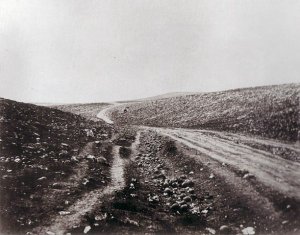
Valley_of_the_Shadow_of_DeathThis coming Sunday, the appointed psalm is Psalm 23.  As I have been praying on the texts, that phrase, “the valley of the shadow of death,” has been haunting me.  In some ways, it feels like our country has been in the valley of the shadow of death for quite some time.  After Hurricane Sandy and Newtown last year, multiple deaths by gun violence since Newtown – including two accidental deaths caused by four-year-olds with guns, and now the tragedy in Boston, it feels like we are in a valley of death that we cannot escape.  In fact, on Monday, I almost found that I could no longer watch the coverage about Boston because I could not handle the emotional overload that has been these six months.  The images were just too much to bear.

What is interesting about the texts for this Sunday is that not only do we read the 23rd Psalm, but also we read a text from Revelation 7.  Both of these are regularly read at funerals.  As I sit with these texts this week, all I can think about is death – which is especially frustrating in the midst of Eastertide – a season supposed to be about life.  So what do we make of a Sunday about death, and what feels like a world overshadowed by death, in the midst of Easter?  I suppose in many ways, this is the same paradox we have at every funeral.  At every funeral, a time when we mark someone’s death, the church encourages us to look toward life.  In fact, we decorate the church in white for funerals because burials are Easter celebrations.

Recalling the many times I have redirected mourning families toward life, I took my own advice today and starting looking for signs of life in the midst of this valley of death.  I was amazed at how much I could recall.  Here in New York, the trees are just now starting to bloom, and pops of color continue to surprise and delight me.  Our Vestry just had a retreat this weekend to talk about Evangelism.  The day brought up all sorts of fresh ideas and a commitment to growth.  The hopefulness of our Vestry is nothing like the weight of the valley of the shadow of death.  Even the empty garden bed which will be filled with soil this weekend is a sign of life here at St. Margaret’s.  As our parish children stood in the bed on Sunday, which will only be empty for a few more days, I smiled to think about the convergence of life both in our children and in our produce for the poor.  And even in Boston, there were immediate signs of life – people rushing to help victims, even to their own personal endangerment, strangers holding hands, people carrying victims, and strangers using their own clothes to stop bleeding and death.

I do not know if I can completely erase those words, “the valley of the shadow of death,” and all that it connotes for me this week, but my hope is that I can at least linger equally on the next words, “Thou art with me.”  Perhaps the answer is not that life erases death, but that God is with us in both.  And knowing that God is with us in death and in life helps me better to be an Easter person this week.

← Older posts
Newer posts →

Recent Posts

  • On the Myth and Magic of Advent…
  • On Risking Failure and Facing Fear…
  • Sermon – Luke 23.33-43, P29, YC, November 23, 2025
  • On Inhabiting Gratitude…
  • Sermon – Luke 20.27-38, P27, YC, November 9, 2025

Archives

  • December 2025
  • November 2025
  • October 2025
  • September 2025
  • August 2025
  • July 2025
  • June 2025
  • March 2025
  • February 2025
  • December 2024
  • November 2024
  • October 2024
  • September 2024
  • August 2024
  • July 2024
  • June 2024
  • May 2024
  • March 2024
  • February 2024
  • January 2024
  • December 2023
  • November 2023
  • October 2023
  • September 2023
  • August 2023
  • July 2023
  • June 2023
  • May 2023
  • March 2023
  • February 2023
  • January 2023
  • December 2022
  • November 2022
  • October 2022
  • June 2022
  • May 2022
  • January 2022
  • December 2021
  • November 2021
  • October 2021
  • September 2021
  • August 2021
  • June 2021
  • May 2021
  • April 2021
  • March 2021
  • February 2021
  • January 2021
  • December 2020
  • November 2020
  • October 2020
  • September 2020
  • August 2020
  • July 2020
  • June 2020
  • May 2020
  • April 2020
  • March 2020
  • February 2020
  • January 2020
  • December 2019
  • November 2019
  • October 2019
  • September 2019
  • August 2019
  • July 2019
  • June 2019
  • May 2019
  • April 2019
  • March 2019
  • February 2019
  • January 2019
  • December 2018
  • November 2018
  • October 2018
  • September 2018
  • August 2018
  • July 2018
  • June 2018
  • May 2018
  • April 2018
  • March 2018
  • February 2018
  • January 2018
  • December 2017
  • November 2017
  • October 2017
  • September 2017
  • August 2017
  • July 2017
  • June 2017
  • May 2017
  • April 2017
  • March 2017
  • February 2017
  • January 2017
  • December 2016
  • November 2016
  • October 2016
  • September 2016
  • August 2016
  • July 2016
  • June 2016
  • May 2016
  • April 2016
  • March 2016
  • February 2016
  • January 2016
  • December 2015
  • November 2015
  • October 2015
  • September 2015
  • August 2015
  • July 2015
  • June 2015
  • May 2015
  • April 2015
  • March 2015
  • February 2015
  • January 2015
  • December 2014
  • November 2014
  • October 2014
  • September 2014
  • August 2014
  • July 2014
  • June 2014
  • April 2014
  • March 2014
  • February 2014
  • January 2014
  • December 2013
  • November 2013
  • October 2013
  • September 2013
  • August 2013
  • July 2013
  • June 2013
  • May 2013
  • April 2013
  • March 2013
  • February 2013
  • January 2013
  • December 2012
  • November 2012
  • October 2012
  • September 2012

Categories

  • reflection
  • Sermons
  • Uncategorized

Meta

  • Create account
  • Log in
  • Entries feed
  • Comments feed
  • WordPress.com

Blog at WordPress.com.

  • Subscribe Subscribed
    • Seeking and Serving
    • Join 394 other subscribers
    • Already have a WordPress.com account? Log in now.
    • Seeking and Serving
    • Subscribe Subscribed
    • Sign up
    • Log in
    • Report this content
    • View site in Reader
    • Manage subscriptions
    • Collapse this bar
 

Loading Comments...