
Tags
blessing, dependence, God, independence, money, Sermon, stewardship
This week, once our power was finally restored, Simone and I caught an episode of our favorite show, Sesame Street. Typically I am running around the house getting us ready for school and work during Sesame Street, but this week, I found myself glued to the television. In this particular episode, Sesame Street experienced a hurricane, and Big Bird’s home was destroyed. All the neighbors of Sesame Street came out to help Big Bird. But Big Bird struggled with their help. Although he appreciated all their hard work, he was so fraught with sadness and despair that he could hardly focus on their generosity. Although they put him up for the night, their houses were not the same as his. Although they fed him meals, the food was not quite as he would want. You could tell that he appreciated their efforts, but what he truly missed was his independence. He did not like depending on others, especially because their care took him out of his comfort zone.
To be honest, I almost could not watch the episode. The story was a little too close to home. We have all been struggling with the battle between independence and dependence these last two weeks. We have been dependent on the generosity of our neighbors and friends who have given us breaks from the cold, a space to recharge our electronics, a warm meal, or a place to clean laundry. We have been dependent of the workers of LIPA and electrical workers from around the country to help us get our electricity restored. We have been dependent on the availability of gasoline for transportation and for the few of us with generators. Almost all of us have experienced episodes of dependence over the last two weeks, and we do not like it! Receiving help feels awkward, throwing off the balance of power that we have with others. We do not like the lack of control that dependence creates. In fact some of us have stayed in cold homes, avoiding shelters or the offers of friends and neighbors just because we want some modicum of control over our disrupted lives.
With this internal struggle with dependence, our lectionary lessons today then are almost salt in our wounds. First we hear from the concluding chapters of Ruth. Ruth is often seen as one of the most independent, strong-willed women in scripture. But in the portion of text we hear today, we hear the other reality of Ruth’s life – Ruth’s life is marked by dependence. Ruth is dependent upon Naomi, who conceives of a plan to save them both; she is dependent upon Boaz, who can support her and sustain her; and she is dependent upon the community, who understands the roles of women and community in very different ways than we do in modern America. In some ways, Ruth goes from being the central woman of fierce independence, to the dependent wife, mother, and daughter-in-law who fades into the life of the community.
Then we get the widow in our gospel lesson today. Here is a woman, who barely has anything, who, as a widow, is inherently dependent upon others for support, and who is found putting the two final coins in her possession in the treasury. Jesus praises her because she gives not out of her abundance like the others, but because she recognizes her total dependence upon God, and freely gives away everything. The lesson we hear from Jesus today about this woman is that we are to be “dependent on nothing but the grace of God. We are to be people without any resources except the riches of God’s mercy.”[i]
And this is where we all get more than a little bit uncomfortable with Jesus’ words and Ruth’s actions. We replay these past two weeks and worry that if we cannot get comfortable depending on our neighbors, how are we ever to get comfortable with depending fully on God? Or our practical brains kick in and we immediately begin to argue with God. How are we supposed to function on our own without a penny to our name? Are we just supposed to walk away from everything, standing on the street, saying, “Okay God, I am dependent upon you. Take care of me.” In our independent American culture, the idea of dependence is uncomfortable and almost feels impossible to us.
For guidance, I go back to our lessons. First, I listen again to Ruth. Instead of imagining Ruth as the woman oppressed by a patriarchal system, I like to imagine the joy that comes from Ruth’s life – the joy that is found when an entire community comes together for the sake of survival. When Obed is born, everyone rejoices, everyone wins. Maybe Ruth is not a liberated, independent woman – but are any of us truly so liberated that we do not need others in our lives? Ruth chooses dependence – she willingly chooses dependence because she trusts that God will make everything right. In fact, her independent self chooses dependence throughout her blessed story.
Next, I look back at the widow. She irrationally gives everything to God – her very last pennies. But we should be honest. When all you have are pennies left, those little coins are not going to dramatically change your life anyway.[ii] Her utter poverty and dependence upon others who care for widows allow her to see what the wealthy cannot – that everything belongs to God anyway. What she teaches us is not to feel guilty or irrational about wealth and giving, but to realize that we will have to choose dependence upon God – because dependence never comes naturally.
When I worked at Habitat, I remember having a conversation with the financial consultant to our homeowner families. In looking at one homeowner’s budget, she saw that the homeowner was giving about ten percent of her income to her Church. The consultant was frustrated, because she knew that all that giving to the Church was hurting the homeowner’s children. But the homeowner would not budge on the issue. The homeowner insisted they would just have to find another way to balance the budget, because God was getting that ten percent.
The truth is that our lessons are not condemning wealth or independence. What the lessons are trying to teach us is that both wealth and our own egos can trick us into thinking that we can truly be independent. They can trick us into thinking that we do not really need God. That is why the Stewardship Committee and I have been talking about our relationship with money this past month. We have not been talking about money because we need to bring in enough to pay the bills, or because we want us to feel guilty about our wealth. We have been talking about money because we want us all to see how our relationship with money can impact our relationship with God. When we cling to our money or our independence so tightly that we blind ourselves to the blessings that can bubble out of letting go of those things, we miss out on opportunities for the Holy Spirit to work on us, to help us see through the lens of Christ. Although some may connect dependence with oppression and depression, Ruth and Jesus show us that our dependence on God leads to joy and thanksgiving.[iii]
As I think back on these past two weeks, I will also remember the blessings. I will remember how a hot bowl of soup or a warm pot of spaghetti warmed not only my insides, but also warmed my spirits. I will remember the camaraderie of people gathered at the public library, charging electronics and helping kids blow off steam. I will remember the ways in which our mutual dependence led to conversations with people that normally would have been superficial but were now full of meaning and shared support. I will remember the great comfort of sharing an impromptu coffee hour with those of us who could spare the gasoline to get here last week, and how overjoyed I was just to see your faces and hear your stories. If anything, this horrible storm has shown how we are more dependent than we all might like, but also how that dependence has led to incredible blessings. Our invitation today is to embrace our dependence on God in the same way that we are embracing our dependence on one another. Amen.
 I have been pondering for the last ten days what to say about the experience of Hurricane Sandy. I think I felt overwhelmed because I knew that my experience was not as bad as thousands of others in our area. My experience felt superficial somehow, as if I did not earn enough credit to have something to say about all of this. But what I realized these last couple of days is that although I cannot speak for places that were utterly devastated by this horrible storm, I can speak for what life has been life for the rest of us, tied to those who are suffering more while suffering ourselves.
 Finally, I have been struck by the overwhelming ways in which this storm has brought out the goodness in others. My parishioners have been running extension cords across the street to share power with others. I observed all of us talking to one another more – learning more of each others’ stories – caring more about the welfare of each other. People without power themselves have bent over backwards to make sure my family was okay. Friends and parishioners have taken us in for hot meals and for washing laundry or for simple camaraderie. People long to help others even when they are suffering. There is a sense of abundance in the face of devastation. There is joy watching a toddler find creative ways to entertain herself. And the outpouring of love from all over the region is even more overwhelming. I have felt like that wall that keeps us from sharing Christ with one another has been decimated, and Christ is found all around us as we love and care for one another.
 Despite the fact that we have had a bit of hiatus with posts due to Hurricane Sandy, we are still wrapping up our Stewardship campaign. Last week was our Stewardship In-Gathering. I had imagined a full and joyful church, a procession with music, and warmth inside and out. Instead, we worried about those who were missing, we sang without accompaniment, and we processed in the frigid, unheated church. But somehow, that simplified offering of our pledges spoke volumes for me. There was a sense that life goes on in the midst of chaos, and that the things that are good here at St. Margaret’s are still very, very good.
 As we journey into our stewardship season, we continue to reflect as a community about how we have been blessed. This week, Fal Gibson offers a reflection on her own gratitude to God for the many blessings in her life. I hope you will enjoy the blessing of Fal in her words as much as we enjoy the blessing of her presence every week!
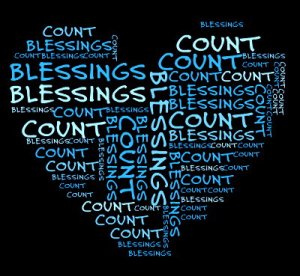 Blessed to be a blessing. This is the theme that the stewardship team has adopted this year as we begin to reflect on the abundant blessings in our lives and discern how we might use those blessings to be a blessing to others. I have had the great pleasure of working with six other parishioners from St. Margaret’s since this summer, and we have all been discerning how our relationship with God and money are connected. We have debated and discussed whether and how our faithful financial stewardship impacts our relationship with God. We have helped one another draw the connections between our relationship with money and our relationship with God. This work is on-going among us, as we continue to pray through this issue as we discern our own pledges this year. Some of us have already witnessed how sacrificial giving can be life giving. Others of us wonder how our attitude toward money can impact our relationship with God. And so we continue to pray – for our own discernment, for each other’s discernment, and for St. Margaret’s. We know that St. Margaret’s has been a blessing to us, and so we both want to be a blessing to St. Margaret’s, and we want St. Margaret’s to be a blessing to our community. We invite you into this circle of blessing!
 On of my new favorite places is the prayer candle station at St. Margaret’s. I was first introduced to prayer candles at my field education parish in Alexandria, VA. I always marveled at the beauty of the candles burning, but never understood the practice fully. Then, a year and a half ago, I went on pilgrimage with my parish in Delaware. A colleague shared with me her practice of lighting candles and praying for people throughout the pilgrimage, and I became an immediate convert. I started carrying coins and small bills just so that I had something to put in the donation box at each church as I lit candles along the way.
 Seeking and Serving