• About

Seeking and Serving

~ seek and serve Christ in all persons

Seeking and Serving

Tag Archives: Advent

God and cell phones…

03 Wednesday Dec 2014

Posted by jandrewsweckerly in Uncategorized

≈ Leave a comment

Tags

Advent, connection, disconnected, God, prayer, relationship, technology

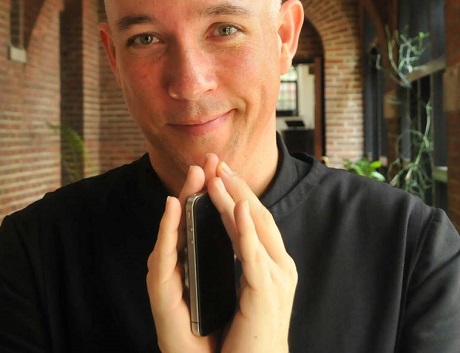
To see me now, you might not guess the initial reluctance I experienced with using a cell phone.  My progress was slow from owning one at all, to learning to text, to using a smart phone, to now using my agile phone.  Part of my reluctance was what such usage would mean – being able to be reached at all times; work emails invading “down time,” making me feel like I am never truly off; decreased patience with others who are not as technologically savvy; and constant usage for everyday needs.  I still try to resist looking at my phone constantly – I put it down during dinner time, I try not to respond to emails on my day off, I sometimes wait to look up something until I am at my computer.  But I still have those moments when my daughter impatiently waits while I finish one quick text or email to someone.  Though I ask her to hold on while I finish, I worry that I am becoming what I feared.

But there are also days when I am really grateful for my phone.  I currently have a parishioner who in the last stages of life.  The family and I know that the parishioner could go at any time, and so we are keep watch, spending time together, and holding each other in prayer.  I am keeping my phone especially close, checking for texted updates or for the dreaded call.  I even keep my phone on my nightstand in case I need to run to the hospital overnight.  That may sound unpleasant to some, but what I have come to see these last few weeks is that my phone is becoming not just a tool for pastoral care (a way for parishioners to reach me for emergencies), but it is also becoming a tool for my prayer life.  When I check my phone and there are no messages about this parishioner, I use the moment as a reminder to pray – pray for the parishioner, the parishioner’s family, and talk with God about the hard stuff of life.  Who would have thought that this little phone – a thing which I had once associated with menace, annoyance, and disconnectedness – could also be a tool for deep connection, prayer, and blessing?

Courtesy of http://episcopaldigitalnetwork.com/ens/2014/11/12/anglicans-invited-to-celebrate-advent-using-your-camera-phones/

Courtesy of http://episcopaldigitalnetwork.com/ens/2014/11/12/anglicans-invited-to-celebrate-advent-using-your-camera-phones/ Check out their website for a concrete way of using technology this Advent!

What I love about this tiny revelation is that it points to a larger truth.  God is constantly working through us in the current age.  It may sound silly, but I think God can work through our technology – through my little cell phone – for good, inviting me back into relationship with God, and working through it to connect us to one another.  The trick is keeping a watchful eye for God when it could otherwise be easy to miss God.  Of course, that is not a new problem.  God has been inviting God’s people into relationship from the beginning of time – and we have regularly been resistant.  The trick for staying connected is finding those things that help us return to the LORD:  whether it is a cell phone, a strategically placed Prayer Book that reminds us to pray, a set of prayer beads that you keep in your pocket, or a regular commitment to church attendance.  I wonder what things in your life might be repurposed to help you reconnect with the holy this week.


Sermon – Mark 13.24-37, A1, YB, November 30, 2014

03 Wednesday Dec 2014

Posted by jandrewsweckerly in Uncategorized

≈ Leave a comment

Tags

Advent, anxiety, awake, Christmas, contrast, discipline, God, loud, noise, quiet, Sermon

I live a very loud life these days.  If any of you have ever visited the Rectory between the hours of five and seven in the evening, you have witnessed the sheer volume of my life.  Between the baby who can only communicate frustration through crying and the kindergartner who is quite verbose nowadays, mixed in with the fatigue they both feel after a long day of school and nursery care, let’s just say these hours are full of a lot of noise.  That is not to say that all of the noise is unpleasant – there is also the noise of laughter, storytelling, and shaking rattles.  But our house in those hours is not the place where you would want set up a yoga mat and try to meditate.

I sometimes blame all the noise in my life on my beloved children.  But the truth is I am as much a cause of the noise as they are.  I am admittedly loud myself – whether barking instructions around the house, singing aloud, or simply talking my husband’s ear off.  But I am not just loud in the house – I am also loud inside my head.  My mind is in constant conversation:  my to-do list, searching for ideas for a blog post, worrying about a sick friend or parishioner, trying to make plans for the weekend, processing a troublesome conversation, or wallowing in guilt for missed exercise or time in prayer.  As loud as my outside world is, my inside world is probably much worse.  Add Christmastime to the mix, and the loudness of my life reaches levels that can be incapacitating.

That is why I love Advent so much.  In the lead-up to Christmas, the outside world bombards us with noise:   Christmas songs on the radio, shopping to complete, parties to attend, gifts to wrap, houses to decorate, gatherings to host, cards to send, and loud relatives or friends to entertain.  In contrast, the Church at this time asks us to do the exact opposite:  slow down, take a breath, light some candles, breath in the fresh greenery, sing quiet, meditative songs, and worship in the soothing purple of anticipation.  When the outside world is telling us, “Do more, buy more, run more, fuss more, stress more,” the Church says, “Do less, worry less, run less, talk less, be busy less.”  The contrast between the two worlds is like night and day, and at a time of high stress, Advent becomes the Church’s greatest gift to us.

Into this contrast, we hear words from Mark’s gospel today.  The text says, “Beware, keep alert; for you do not know when the time will come.  It is like a man going on a journey, when he leaves home and puts his slaves in charge, each with his work, and commands the doorkeeper to be on the watch.  Therefore, keep awake– for you do not know when the master of the house will come, in the evening, or at midnight, or at cockcrow, or at dawn, or else he may find you asleep when he comes suddenly.  And what I say to you I say to all: Keep awake.”  Many of us hear this text today with a sense of anxiety – of needing to keep anxious watch for the Lord.  We might imagine the many apocalyptic movies, predictions, and preachers we have witnessed over the years and wonder whether Jesus really does want us to be more alarmed.  Certainly the outside world would have us also be alert and anxious for the coming Christmas.

But I think the Church is saying something else today.  Instead of an anxious alarm, our gospel lesson sounds like a gentle reminder to me.  Keep awake, for you do not want to miss the quiet beauty of Advent.  Keep awake, for you do not want to miss the gift of time set apart in these four weeks.  Keep awake, for you do not want to miss the lead in to the manger, the dramatic retelling of why the manger is so important, and the grounding for this entire season.[i]  Jesus’ words for us to “keep awake,” are not meant to be one more anxiety to pile on top of a mound of concerns.  Jesus’ words for us to “keep awake,” are meant to help us focus on what is really important.

So make a commitment to come to church each Sunday in Advent and spend those Sundays in quiet worship with your church family.  Grab an Advent calendar or devotional to help you more intentionally mark the days leading up to the manger.  Or set up that Advent wreath at home, so that you might bring the quiet candlelight of prayer and meditation to your home.  Whatever the discipline, choose something this Advent that will help you maintain the quiet peace you find here at Church and carry that quiet peace throughout your weeks leading up to Christmas.  My guess is that noise of life will slowly fade into a quiet hum in the background – which is right where it should be.  Amen.

[i] Lillian Daniel, “Pastoral Perspective,” Feasting on the Word, Yr. B, Vol. 1 (Louisville: Westminster John Knox Press, 2008), 22.

Sermon – Matthew 1.18-25, A4, YA, December 22, 2013

08 Wednesday Jan 2014

Posted by jandrewsweckerly in Uncategorized

≈ Leave a comment

Tags

Advent, Christmas, God, goodness, Joseph, Mary, messiness, righteous

So there he is, betrothed to Mary.  The way betrothal works in those days was that the husband and wife, or often the husband and the wife’s parents, enter into a marriage contract.  From that point on, the couple is considered married for all intents and purposes.  Any breaking of the contract would require a divorce.  During the betrothal period, the man prepares financially for his marriage, and the woman grows a bit more into womanhood, since she usually enters into the contract right after beginning puberty.  Some time later, the couple completes the marriage process with some sort of celebration or feast; then, the groom takes his wife into his home and the couple is considered fully married.[i]

Joseph had done everything by the books.  He is a righteous man, which means he follows the law to the letter.  Everything is heading in the proper direction, going as planned, according to schedule.  And then he gets the worst possible news.  Mary is pregnant.  Since Mary and Joseph are betrothed, but not yet in the stage of marriage where they have consummated the union, there is no way Joseph is the father of the child.  He can only assume Mary has been unfaithful.  Joseph has two options: he can have Mary stoned or he can divorce her.[ii]  He is well within his rights to utilize either path, and would not receive criticism by other faithful Jews.  But Joseph is one of those rare treasures who not only knows the letter of the law, but also understands the spirit of the law.  Instead of a brutal, public punishment for Mary, he decides he will divorce her quietly, hoping to help her avoid the full force of cultural judgment.

Joseph makes a well-informed, respectable, and compassionate decision.  He makes his decision and then rests his weary mind and body.  That is when life changes yet again.  God appears to Joseph in a dream, and explains that Joseph’s decision cannot stand.  This child in Mary’s womb is special, and not only is Joseph not to divorce her, he is to legally claim the child as his own by naming the child.  So what does Joseph do?  He bends even further than he already has, and takes Mary as his wife.

When most of us think of the Holy Family or even that holy night, we have a pretty romanticized picture of their life.  Our joy about the Christ Child seems to erase the reality of that poor family.  In fact, the Holy Family was a bit of a holy mess.  Mary is in the extremely vulnerable position of having her body taken over by the Holy Spirit and this child, all without the promise of a willing partner.  And Joseph is in a legal and cultural predicament.  I am sure that anyone in their community could do the math about Mary’s due date and wonder why Joseph stays with her, let alone assume ownership of the child.  Despite being obedient to God, I cannot imagine that Joseph’s dream wiped away all the tension between Joseph and Mary.

Of course, we are no stranger to this kind of messiness in families.  We all have experienced tensions in our relationships with parents, partners, siblings, and extended family.  Sometimes the tensions are from minor issues that eventually get resolved.  But sometimes the tensions break down communication, create broken relationships, and have ripple effects in our families.  Just this week, I have had conversations with people about an aging mother who is creating tensions among her children; a couple struggling with infertility; parents navigating the sexual orientation of their child; and a single person who feels lonely and hopeless.  We all know the messiness of life – in fact, we may have begun to wonder whether our dreams of peace and concord among our families is just a pipe dream.  Or maybe we would rather just divorce ourselves entirely from what our lives have become.

In the midst of messiness, another way emerges.  Joseph, a man who we know to be righteous and faithful makes a choice.  He had nothing to do with the messiness in his life, and he has every reason and right to just walk away and find a much neater, tidier life and a more conventional wife.  But Joseph makes a choice to believe God.  Joseph chooses differently.  “He claims the scandal, he owns the mess – he legitimizes it – and the mess becomes the place where the Messiah is born.”[iii]  Joseph’s choice is unconventional, a bit radical, and perhaps even a bit illogical.  But Joseph, having no idea where the choice will lead him, or how he will navigate his relationships once his decision is made, chooses to believe and to follow God right into the heart of the messiness, trusting that God will sustain him in the messiness and make something beautiful out of the mess.

Of course, Joseph had reason to believe that God could make a way through the messiness.  Just a few verses before the text we hear today in Matthew, Matthew lists the genealogy of Jesus.  In that genealogy, Jesus’ heritage begins with Abraham, goes through David, and ends with Joseph.  But in that list of forty-two fathers, four women from the Old Testament are also listed – all of whom had a history either before marriage or childbirth that made their story either strange or scandalous.  Take Tamar for example.  She was found to be pregnant long after her husband’s death.  Her father-in-law denounced her until he realized that he was the father.  Or look at Bathsheba, the wife of Uriah.  She became pregnant not by her husband Uriah, but by David.[iv]  Joseph comes from a long line of messiness and scandal, and yet, God moves through the messiness to create something new and powerful every time.  Perhaps a family history of messiness and divine action leads Joseph to take that leap of faith with Mary.

I wonder how all of this messiness resonates with your life.  We are still wrapping up Advent, and not quite yet to Christmas.  Like Joseph, we are not quite at the manger, finally arriving at our destination.  Now I recognize that some of you will be blessed by a blissful, picturesque Christmas with nothing but familial harmony.  That kind of reality may be entirely due to some good luck, and if that is what your Christmas looks like, then praise be to God.  But most of us probably are approaching Christmas with our fair share of messiness.  There are relationships to navigate or perhaps relationships that have entirely crumbled over the years.  You may have lingering questions about how God will act and what kind of goodness can come out of your mess.

Our invitation today is to remember that God still speaks to us in the messiness, and that God can still work not in spite of our mess, but through our mess for goodness.  And if you not convinced, perhaps then Joseph might be your best companion in the coming days.  Perhaps Joseph can journey with you as you wade into the messiness of your life, praying to hear God’s words for you.  Perhaps Joseph can fill you with hope and promise that your messiness, which may or may not be as severe as some of the Biblical messiness we have heard about today, has surely been seen by and blessed by God.  Perhaps Joseph can hold your hand at the stable, like he did with Mary, inviting you into a sure, steady trust that your God can do infinitely more than you can ask for or imagine this Christmas.  Amen.


[i] Arland J. Hultgren, “Commentary on Matthew 1.18-25,” as found on http://www.workingpreacher.org/ preaching.aspx? commentary_id=1936 on December 18, 2013.

[ii] David Lose, “Matthew’s Version of the Incarnation,” as found on http://www.workingpreacher.org/craft. aspx?post=2961 on December 18, 2013.

[iii] Martin B. Copenhaver, “Jesus’ Other Parent,” Journal for Preachers, vol. 31, no. 1, Advent 2007, 35.

[iv] Raymond E. Brown, “The Annunciation to Joseph,” Worship, vol. 61, no. 6, November 1987, 483.

God’s embrace…

19 Thursday Dec 2013

Posted by jandrewsweckerly in Uncategorized

≈ Leave a comment

Tags

Advent, busyness, God, peace, quiet

This time of year is always a little crazy for me.  The plus side is that we have established with our family and friends that given my work, we really cannot get away for Christmas.  We do however, more than welcome folks to come and stay with us.  So our place has become a wonderful place of hosting various family and friends since my ordination.  That being said, while in the midst of finishing bulletins, preparing multiple sermons, and tending to any work that needs to be finished before I take several days off, I also need to make sure the house is clean, the shopping (food and gifts) has been done, the decorations are all ready to go – the list goes on and on.

Needless to say, anxiety is pretty high around our place this time of year.  I try to soak in the quiet of Advent, and I try to proceed with a steady calm, but I regularly fail.  Sometimes I wish I could get through Christmas, make time freeze for a couple of days, and then pick up in the middle of Christmas dinner.  But no matter what I do, I still have not figured out that time freeze trick.

Courtesy of http://www.illustrationsource.com/stock/image/248001/a-mother-and-child-hugging/?&results_per_page=1&detail=TRUE&page=38

Courtesy of http://www.illustrationsource.com/stock/image/248001/a-mother-and-child-hugging/?&results_per_page=1&detail=TRUE&page=38

Tonight, though, I was reminded of the little gifts that God gives me in the midst of anxiety and overwhelmedness.  After her bedtime routine, some quiet play in her room, and much stalling, my daughter always comes to me and asks me to rock her a little while in the dark before singing her to sleep.  Tonight, as she lay on my chest and growing belly, we rocked in the quiet.  It occurred to me how close her body was to the other growing child in my womb.  It was almost like the two were hugging each other in the quiet.  Of course, then I realized that I had the pleasure of hugging both of them, as the three of us rocked back and forth in a brief moment of calm and peace.  I rocked for a minute or two more before realizing that the three of us were not actually alone.  God’s arms were wrapped around all of us, holding us tightly, rocking gently with us.  The image took me by surprise, but also created a wave of relief for me.  It is so easy for me to get wrapped up in the busyness of this time that I forget that God is with me, even though I flit around as if God is not.

In the midst of these last days of preparation and waiting, I invite you to imagine the times when God might be enveloping you too – when you least expect it, when you most need it, but more importantly, when you do not even realize it.  That is the gift of our awesome God – a God who carries us, despite the fact, that we, like a four-year old, insist that we can do it by ourselves.  Ever faithful, ever patient, ever awesome is our God.

Homily – Colossians 4.2–6, John of the Cross, December 12, 2013

19 Thursday Dec 2013

Posted by jandrewsweckerly in Uncategorized

≈ Leave a comment

Tags

Advent, darkness, God, homily, John of the Cross, light, prayer

Today we honor Juan de la Cruz, or John of the Cross.  Though he died in 1591, John was widely unknown until more recently.  Born in 1542 in Spain, his father died when he was three.  His mother and siblings were thrown into poverty.  He received early education in an orphanage, but by 17 he had learned carpentry, tailoring, sculpting, and painting through apprenticeships.  He was able to do his university studies with the Jesuits; after school he joined the Carmelite order.  In 1567, he was ordained to the priesthood and recruited by Teresa of Avila to reform the Carmelite order.  He studied extensively, was a spiritual director, and devoted himself to the search for God.  Because of his attempts to dramatically reform the Carmelites, he was eventually imprisoned.  There he wrote poetry as a comfort.  His “Dark Night of the Soul” became his most famous piece.  As John of the Cross has been rediscovered, he has become known as “the church’s safest mystical theologian” and “the poet’s poet.”

I was thinking John must have known a lot about the dark night of the soul.  He had a rough childhood, fought to get an education, and then found incredible resistance when he tried to make the devotion of the Carmelites better; his prison cell must have felt like a dark night.  I am reading an Advent devotional right now, and it has felt pretty dark at times.  I can tell the author has experienced some rough times, though she never specifies what they are in her poetry.  But the darkness of her soul pervades her writing.  I have wondered as I read why she is putting such darkness in our Advent devotional – a season of light.  But then I thought about the realities of this season – the pain the season can bring of lost loved ones, of unfulfilled dreams, of unmet expectations, of pressure and anxiety.  Perhaps the author, like John of the Cross, is willing to expose the dark night that can live in the soul.

So where is the light for us to grasp in Advent?  I appreciate those words of instruction in Colossians: “Devote yourselves to prayer.”  Prayer is one of the places that we can dump darkness and discover light.  Prayer is the conversation in which we can struggle vulnerably and honestly with God, and eventually end up on the other side renewed and refreshed.  This is one of our Advent invitations:  devote yourselves to prayer.  Whether you already feel bathed in light or you are longing for the light, prayer is the place where we meet God and we find strength for the journey.  Amen.

Sermon – Matthew 3.1-12, A2, YA December 8, 2013

13 Friday Dec 2013

Posted by jandrewsweckerly in Uncategorized

≈ Leave a comment

Tags

Advent, anxiety, dreams, hopes, John the Baptist, re-orientation, repentance, Sermon, vision

Today we are going to do something a little different.  We are going to try an exercise I found recently.[i]  I want you to pull out your bulletin or a scrap of paper, and grab the pencil in your pew or a pen you brought with you.  Next, I want you to make a quick “to do” list for Advent.  I want you to put all the things you need and want to get done:  maybe shopping for gifts, decorating the Christmas tree, sending those Christmas cards, or attending the kids’ school Christmas concert.  Maybe you want to make some end-of-year charitable contributions, or need to get those Christmas Eve services on your calendar.  I want you to put all the things on the list and feel free to be fairly exhaustive about what you want to get done in these next two and half weeks.  I am going give you a second, as I imagine your list is probably as long as mine.  And this is probably the only time I will ever encourage you to make a to-do list during the sermon, so enjoy!

Now, I want you to take a deep breath, clear your mind a bit, and I want you to daydream about what you hope Christmas will be like this year.  Think about the kind of day you want to have or maybe the kind of relationships you want to be a part of your life.  Think about what kind of world you want to live in this Christmas, and maybe even beyond Christmas Day.  Your hopes can certainly be about your immediate wants and needs, but they can also include your larger families, communities, and the world.  If you want, go ahead and take just another moment to write a brief sentence below your other list that captures your hope for your life and the world this Christmas.  As you are thinking about the kind of world you want to live in, think about the passage we heard from Isaiah today:  a world where the wolf shall live with the lamb, the cow and the bear graze together, and a nursing child shall play over the hole of the asp.  Perhaps this kind of harmony and peace is a part of your Christmas hope and can certainly be a part of your dreaming today.

Okay, now that you have your to-do list and your Christmas hope in mind, I want you to work backwards.  Look at the to-do list you made and circle those tasks that might contribute directly to your own deep hopes and longings about your life and this world.  Certainly, there are going to be some items on your list that are important in the short-term, but maybe do not contribute to your larger vision and hope.  Here is where our invitation lies today.  Perhaps this Advent can be a time of putting things in perspective and channeling our energy and resources to those things that matter most to us, to our families, to our communities, and to God.

Of course, that invitation may not have been what you initially imagined when you heard John the Baptist’s words today in our gospel lesson.  His words of repentance and judgment are honestly more scary than comforting this time of year.  I have many times wondered why we have to hear John’s words now, as we approach that blessed holy night, as opposed to some other text about happy anticipation or blessed expectation.  But John does not mince words, “Repent, for the kingdom of heaven has come near.”

I have been reading a lot these last couple of weeks about the season of Advent and people’s varying opinions about whether Advent is a penitential season or not.  I have been part of parishes that have insisted that Advent is not a mini-Lent, and refuse to take on anything that resembles the penitential nature of Lent.  But I have also been a part of parishes who see the themes in our collects this season and hear words like John the Baptist’s words today and cannot help but to claim the penitential nature of Advent.

Part of the challenge is that we all get a bit hung up on the fact that we think of repentance as being about guilt, inadequacy, and unworthiness.  We imagine that repentance is about our standard of moral worthiness or about our feelings of remorse.  Barbara Brown Taylor explains, “The kind of repentance most of us shrink from is all about us, in case you hadn’t noticed.  It is all about me, me, me, the miserable sinner.  No wonder it is so revolting.”  But, Taylor suggests that there might be another way to look at repentance.  “The other kind of repentance, the healing kind is far more interested in God.  It spends more time looking at the kingdom than the mirror.  It has more faith in God’s power to make new than in our own power to mess up.”[ii]  In fact, some have argued that repentance is about God’s desire to realign us with Christ’s life, God’s hope to transform us into Christ’s image.[iii]  Real repentance is not about our failings, but about God’s desires for us.

I think many of us want to avoid texts like our gospel lesson today, because the last thing we want to hear as we try to struggle through those Advent to-do lists is that we need to repent, and think about the kingdom of heaven coming near.  But John is not trying to push us to feel bad about ourselves this Advent season, or even to wallow in apologies.  Instead, repentance is about “re-orientation, a change of perspective and direction, a commitment to turn and live differently.”[iv]  Our gospel lesson today is not trying to get us to limit our hopes or define ourselves by our ancestry or piety, but to dream bigger dreams, and to work toward those bigger hopes on that Christmas hope list you just made this morning.  This is what John means when he says to bear fruit worthy of repentance.

Now if you imagine that I am saying that you have more work to do this Advent season, you are partially right.  I am inviting you to take up the work of living into your bigger hopes and dreams this season.  But I am also giving you permission to let go of those things on that to-do list that are not allowing you to focus on the real joy of this season: the joy of a life of repentance – of re-orientation.  Now you may not be able to get out of that party or those Christmas cards, but maybe your presence at that party will be marked by your new Advent re-orientation.  Maybe those cards will have a different message than you originally planned, or your approach to completing them may be full of love and compassion instead of obligation and annoyance.  John’s words for us today are a wake-up call, but not the wake up call that fills us with dread and self-criticism.  John’s wake-up call is a reminder of the hope of this season – the hope that is ours to claim when we are ready.  Amen.


[i] David Lose, “Hoping for More,” as found at http://www.workingpreacher.org/craft.aspx?post=2901 on December 2, 2013.

[ii] Barbara Brown Taylor, “A Cure for Despair: Matthew 3:1-12,” Journal for Preachers, vol. 21, no. 1, Advent 1997, 18.

[iii] John P. Burgess, “Theological Perspective,” Feasting on the Word, Yr. A, Vol. 1 (Louisville:  Westminster John Knox Press, 2010), 46.

[iv] Lose.

Advent attention…

05 Thursday Dec 2013

Posted by jandrewsweckerly in Uncategorized

≈ 2 Comments

Tags

Advent, attention, God, music, pilgrimage, sacred, secular

Courtesy of http://www.metmuseum.org/exhibitions/listings/2013/janet-cardiff/slideshow

Courtesy of http://www.metmuseum.org/exhibitions/listings/2013/janet-cardiff/slideshow

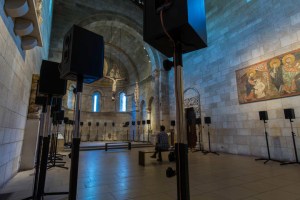
This week, several parishioners and I embarked on a “mini-pilgrimage” to the Cloisters in the City.  Though I loved many parts of the Cloisters, I found that I was most drawn to a sound installation by Janet Cardiff of The Forty Part Motet.  Cardiff positioned forty high-fidelity speakers on stands in a large oval in the middle of the Fuentidueña Chapel.  The motet is a reworking of the forty-part motet Spem in alium (which translates as “In No Other Is My Hope,”) by Thomas Tallis.  One part is played in each speaker in the room, and if you stand in the center and close your eyes, you can almost imagine yourself sitting in the chancel of a Cathedral listening to those beautiful voices.  And because the speakers are setup in the Chapel, which features the late twelfth-century apse from the church of San Martín at Fuentidueña, near Segovia, Spain, you really can transport yourself into sacred beauty of the music.

Part of what I loved about the installation was the way in which it froze me in my path.  No longer was I ready to hustle through the exhibits – instead I was transfixed in one place, just listening.  And even more strange was that I was not the only one – the whole room was filled with people just standing and listening to the incredible sound.  I was fascinated by the way such beautiful music held us captive, arresting our attention.

As I venture into Advent, I wonder how we might hold on to that sense of arrested attention on God.  Advent is a season often co-opted by the world around us.  I can count countless secular things that send us into a flurry – buying gifts, decorating houses, hosting and attending parties, and generally running around chaotically.  But our sacred worlds can keep us just as busy.  I know that in our parish during the month of December we have an Annual Meeting, a Bishop’s Visit, our 50th Anniversary Gala, the decorating our church with greens, and the flurry of Christmas worship services.

Our invitation this week might be to find small ways to commit arrested attention to God.  Maybe our way will be simply stopping for a prayer.  Maybe our way will be dropping everything we had planned and stopping to visit with an elderly person, with someone who is sick, or with a child.  Or maybe it is a more intentional commitment to being fully present wherever you are – putting aside the other forty things that also need to be done immediately, and just giving yourself over to the task or experience at hand fully.  If we can isolate our attention, and arrest our harried selves, maybe we can find our way back to the God who loves us and simply wants a bit of our arrested attention too.

Homily – Advent Lessons and Carols, December 1, 2013

05 Thursday Dec 2013

Posted by jandrewsweckerly in Uncategorized

≈ Leave a comment

Tags

Advent, Christmas, different, Episcopal Church, Lessons and Carols, music, ordinary, quiet

My first experience of Advent in the Episcopal Church was a bit of a let-down.  In the United Methodist Churches where I grew up in, Advent was a time to sing all our favorite Christmas songs, preparing us for the great feast of Christmas.  It was sort of like turning on the local Christmas radio station throughout Advent, but only with the religious songs.  I loved the experience, and looked forward to December all year long.  So when I encountered Advent in the Episcopal Church for the first time, you can imagine my surprise and disappointment.  Not only were we not singing Christmas songs, the songs we were singing felt drab and disappointing.  Everything about the season felt quiet and reserved – nothing like the boisterous build-up I was used to for Christmas.  I found myself thoroughly confused – wondering if the Episcopal Church had not received the Christmas memo.

But slowly, as the Church usually does, the Episcopal Church won me over.  As my adult life became more frenetic, the quiet of Advent became like a precious gift.  Instead of putting me in the stable on December 1st, the Church reminded me of the journey toward the stable – of prophecies and promises, of visitations and expectations, of hopes and dreams.  And believe it or not, slowly over the years, I found that there were actually Advent songs that I liked, and eventually came to love, cherish, and anticipate every year.  Many of my favorites we hear today:  O Come, O Come Emmanuel; The Angel Gabriel; and Let All Mortal Flesh Keep Silence.  Not only are the words beautiful, but the music reaches something deep inside of me and invites me into a rich, reflective reverence as I block out all that beckons me into a break-neck pace of life.  I find that the music calms my spirit and invites me into contemplation and quiet before our God.

And so today, on this first Sunday in Advent, the Church gives us the gift of Advent Lessons and Carols.  Leading up to this day, many of you have asked me, on this day of joint worship, as we head into our Annual Meeting, why we would not have Holy Eucharist.  The strict answer is that the liturgy of Advent Lessons and Carols does not recommend Holy Eucharist.  But the better answer for me is that by having a service so outside our normal pattern, we are marking the differentness of this season of Advent.  By starting out the season with a service so out of the ordinary, we proclaim that Advent is not ordinary.  Our behavior during Advent will not be ordinary – at least not the ordinary of the secular world this time of the year.  As we claim this season of Advent is as quiet oasis during in an otherwise frenzied time, we shake up our senses so much that we cannot help but to set our intentions for these four weeks on a different way of being throughout this season.

I invite you today to drink in the gift of Lessons and Carols.  I invite you too soak in the differentness of this day, letting the service awaken your senses to what is to come.  I invite you to listen to the lessons, many of which you will hear again throughout Advent, remembering why the birth of the Christ Child is so momentous.  I invite you to meditate on the music of this day, letting the words speak new truth to you, and allowing the melodies to calm and renew you.  Advent is the Church’s gift to you, and our service of Lesson and Carols reminds us of the availability of that gift.  Drink from the rich, deep pools of refreshment waiting for you today.  Amen.

Homily – John 1.9-13, St. Lucy (Lucia), December 13, 2012

19 Wednesday Dec 2012

Posted by jandrewsweckerly in Uncategorized

≈ Leave a comment

Tags

Advent, homily, light, St. Lucy

Today we celebrate the feast of St. Lucy, a martyr in the early 300’s, a particularly brutal time of early Christian persecution.  Although not much is known about the details of Lucy’s life, she was known for her purity of life and the gentleness of her spirit.  Because of her name, meaning “light,” and her feast day being on what was the shortest day of the year for centuries, Lucy became associated with light.  In Sweden, a young girl from the family dresses in pure white and wears a crown of lighted candles on her head.  She serves her family special foods and in praise of her service, she is called Lucy for the day.

In the middle of Advent, celebrating Lucy is most appropriate.  Advent is a season of dimmed lights – a vigil we hold as we await the bright light of the incarnate Christ.  We tone down our liturgies, take on a more penitential tone, and spend more time in silence before God.  At this time of year, the days shorten, dawn comes earlier every day, and we journey through John the Baptist’s message of repentance.  In the midst of this darkness, we could all use a little light today.

Advent is tricky in this way.  Advent calls us into a countercultural experience – as Christians we are to hold off on celebrating Christmas.  I grew up in the faith tradition that did not guard Advent so stringently.  When I settled in the Episcopal Church, I remember hating Advent at first.  The music was drab, the liturgies felt dull.  The rest of the world was frolicking in Christmas cheer and the Episcopal Church was closing that door for two more weeks!  I remember thinking of the Episcopal Church as the “Debbie Downer” of Christmas.

Years later I came to appreciate the church’s gift of Advent.  That focus on a modest, dimmed, quiet helps guide us in a secular world that tries to pull us from the true focus of Christmas.  So we honor the shortened period of light on the earth.  We slow down and redirect our lives, and we take on the yoke of waiting.

What Lucy does today is to encourage us on the journey with a bit of light.  She does not turn up all the lights, but her candles give us an inkling of the blinding light of Christ that is to come into the world.  Lucy gives us hope and comfort as her flickering flames light us through these last 10 days of Advent.  Like Lucy, we too can be lights in the world that lead others to Christ and share the way to the path of salvation.  Amen.

Advent transition…

19 Wednesday Dec 2012

Posted by jandrewsweckerly in Uncategorized

≈ Leave a comment

Tags

Advent, Christmas, grief, incarnation, liturgy, Newtown

dark churchThis Advent has been a bit of an emotional rollercoaster.  Here in Plainview, at the beginning of Advent we were just getting back into a “normal” rhythm post-Hurricane Sandy.  One of my parishioners even noted that he realized I was “back in the game” when he got a flurry of church emails from me.  On Second Advent, we had our Annual Meeting, and we were all pleasantly surprised that an Annual Meeting could actually be quite fun and reinvigorating.  We were all heading toward the Christmas apex when the shooting in Newtown last Friday threw us for a loop.  Advent Three was one of the most mournful Sundays we have had in a while.  Many parishioners shared with me that they wanted to be in Church because they needed it.  We shared sadness, fears, and tears.  We lingered a little longer at Coffee Hour, needing the community of faith to help us process the event.  We all seem to be struggling to hold on to the “Christmas spirit.”

In the midst of this emotional rollercoaster, St. Margaret’s heads into a four-day series of liturgies that leads us to the manger.  I would be a little more anxious about how I was going to revive my own “Christmas spirit,” if the liturgies were not laid out as they are.  I am relieved to start our four days with our Cemetery Memorial services.  Every year we invite parishioners and family members who have loved ones buried in our cemetery to come for one of two memorial services.  We pray the burial office, listen to a necrology, and sing Christmas hymns.  The service is not simply for those whose names will be read.  This service really is becoming a “Blue Christmas” service – a service to recognize that Christmas is not always the happy version of perfection that commercials would have us believe.  Christmas is rife with baggage from our past, strife within families, feelings of loneliness or grief, and a general desire to pull inward during a season that tries to shove us outward.  In the wake of the shooting in Newtown, I am especially grateful for these liturgies.

After we get through these services, we move into Advent Lessons and Carols the next day.  On this last Sunday in Advent, we get the chance to really ease our way out of Advent and into Christmas by lingering in Advent through scripture and songs.  I am grateful for the gentle transition and pray that it will allow me the space to turn my thoughts and emotions to the blessing of Christ’s incarnation.

Perhaps after these liturgies I will be ready for our family service on Christmas Eve.  I am looking forward to the revamped service, in which our children and families will play an active leadership role in worship.  In a time when we have been mourning the loss of God’s beloved children, I cannot think of a better way to embrace Jesus’ command to, “Let the little children come to me.”  Perhaps by then I will be relieved to join the choir in singing those long-awaited Christmas hymns and to enter into the Holy Night of Christmas Midnight Mass.

Of course, if all of that does not do the trick, certainly the spoken service on Christmas Day might.  The quiet of that service is a nice place to recenter in the midst of a crazy time.  Sure, opening presents will be fun, especially with my more aware three-year old, but the quiet of church may be the safe haven we all need to ground the day in Christ Jesus.  It is at times like this that I am grateful for the ways in which the Episcopal Church is a church rooted in rich liturgies.  Come join us!

← Older posts
Newer posts →

Recent Posts

  • On the Myth and Magic of Advent…
  • On Risking Failure and Facing Fear…
  • Sermon – Luke 23.33-43, P29, YC, November 23, 2025
  • On Inhabiting Gratitude…
  • Sermon – Luke 20.27-38, P27, YC, November 9, 2025

Archives

  • December 2025
  • November 2025
  • October 2025
  • September 2025
  • August 2025
  • July 2025
  • June 2025
  • March 2025
  • February 2025
  • December 2024
  • November 2024
  • October 2024
  • September 2024
  • August 2024
  • July 2024
  • June 2024
  • May 2024
  • March 2024
  • February 2024
  • January 2024
  • December 2023
  • November 2023
  • October 2023
  • September 2023
  • August 2023
  • July 2023
  • June 2023
  • May 2023
  • March 2023
  • February 2023
  • January 2023
  • December 2022
  • November 2022
  • October 2022
  • June 2022
  • May 2022
  • January 2022
  • December 2021
  • November 2021
  • October 2021
  • September 2021
  • August 2021
  • June 2021
  • May 2021
  • April 2021
  • March 2021
  • February 2021
  • January 2021
  • December 2020
  • November 2020
  • October 2020
  • September 2020
  • August 2020
  • July 2020
  • June 2020
  • May 2020
  • April 2020
  • March 2020
  • February 2020
  • January 2020
  • December 2019
  • November 2019
  • October 2019
  • September 2019
  • August 2019
  • July 2019
  • June 2019
  • May 2019
  • April 2019
  • March 2019
  • February 2019
  • January 2019
  • December 2018
  • November 2018
  • October 2018
  • September 2018
  • August 2018
  • July 2018
  • June 2018
  • May 2018
  • April 2018
  • March 2018
  • February 2018
  • January 2018
  • December 2017
  • November 2017
  • October 2017
  • September 2017
  • August 2017
  • July 2017
  • June 2017
  • May 2017
  • April 2017
  • March 2017
  • February 2017
  • January 2017
  • December 2016
  • November 2016
  • October 2016
  • September 2016
  • August 2016
  • July 2016
  • June 2016
  • May 2016
  • April 2016
  • March 2016
  • February 2016
  • January 2016
  • December 2015
  • November 2015
  • October 2015
  • September 2015
  • August 2015
  • July 2015
  • June 2015
  • May 2015
  • April 2015
  • March 2015
  • February 2015
  • January 2015
  • December 2014
  • November 2014
  • October 2014
  • September 2014
  • August 2014
  • July 2014
  • June 2014
  • April 2014
  • March 2014
  • February 2014
  • January 2014
  • December 2013
  • November 2013
  • October 2013
  • September 2013
  • August 2013
  • July 2013
  • June 2013
  • May 2013
  • April 2013
  • March 2013
  • February 2013
  • January 2013
  • December 2012
  • November 2012
  • October 2012
  • September 2012

Categories

  • reflection
  • Sermons
  • Uncategorized

Meta

  • Create account
  • Log in
  • Entries feed
  • Comments feed
  • WordPress.com

Blog at WordPress.com.

  • Subscribe Subscribed
    • Seeking and Serving
    • Join 394 other subscribers
    • Already have a WordPress.com account? Log in now.
    • Seeking and Serving
    • Subscribe Subscribed
    • Sign up
    • Log in
    • Report this content
    • View site in Reader
    • Manage subscriptions
    • Collapse this bar
 

Loading Comments...