• About

Seeking and Serving

~ seek and serve Christ in all persons

Seeking and Serving

Tag Archives: chaos

Sermon – John 20.1-18, ED, YB, March 31, 2024

01 Wednesday May 2024

Posted by jandrewsweckerly in Sermons

≈ Leave a comment

Tags

acceptance, affection, affirmation, chaos, Easter, gift, Jesus, known, Mary Magdalene, name, promise, Sermon

The funny thing about clergy families is that they have a unique gift of not caring at all about your ego as the clergyperson.  This week, in the midst of nightly worship commitments, and school wrapping up before Spring Break, and me trying to wrap up commitments before our family takes some time off, I share with the family how I was still struggling a bit with my Easter sermon.  A beloved member of my family said, “You’re worried about an Easter sermon?” “Oh, yes!” I explained.  “It’s a big day.  The sermon needs to be good!”  Said unnamed family member looked at me, dumbfounded, and said to me, in a way that only a family member can, “You know nobody comes to church on Easter because of the sermon.” 

Now as a preacher, you can imagine my ego was a little bruised.  But the more I thought about the observation, the more I realized the observation was right.  We come to church on Easter for a whole host of reasons.  We come to church on Easter because that is what our family has always done, and the continued observation of Easter somehow connects us to the past, present, and future, creating a sense of belonging and identity.  We come to church on Easter, because we long for a good word – a reminder that even in a tumultuous world, there is the promise of resurrection life, joy, and hope.  We come to church on Easter because we love the music, the flowers, the crowded seats, the Easter attire, and the experience of being a part of a community.  And some of us are not sure why we come to church on Easter, but we suspect, or at least hope, we will find something that can revive our weary souls. 

I suspect what most of us are hoping for today is an experience like Mary Magdalene’s.  I am not sure Mary knew why she went to the tomb that fateful day.  In John’s gospel, Mary is not there with spices to anoint Jesus’ body.  She does not bring flowers or some memento to leave at the tomb.  In fact, she comes to the tomb in darkness, before the morning light has arisen, perhaps in a fog of knowing she needs something but not sure what that something might be.  And then, not unlike the chaos that may have been your morning to get here on time and half-way presentable, Mary’s life gets thrown into chaos.  An empty tomb means she and the disciples run around like chickens with their heads cut off.  Later, Mary finds herself bemoaning to angels and a stranger alike that she just wants Jesus’ body – a physical reminder of all the horror and love and pain that has happened.  And in the midst of this chaos, a simple, profound thing happens.  Mary is called by her name.[i]  And her world gets turned on its head.

There is something very powerful about being called by your name.  We will frequent restaurants or coffee shops because we love being recognized by name by our favorite barista or shop owner – not unlike that old show Cheers whose intro talked about going to a place, “where everybody knows your name.”  If you have ever received a blessing or healing prayer by a person who knew your name, you know the intimacy that is created between the two of you, and the power of hearing your name lifted up to God.  We even try to use nametags here at Hickory Neck because we know how wonderful being known by name feels.  Being known by name creates a sense of acceptance, affirmation, affection, and acknowledgement.[ii]  I can only imagine the rush of emotions when Jesus calls Mary by name today – not just the recognition of who Jesus is, but the reminder of how much he has loved her.

I suppose we should add that to the list of reasons why we come to church on Easter Sunday.  We want to be known too.  Perhaps we want to literally be called by name.  But perhaps we know just being here creates the same sense of belonging that being known by name creates.  When we sit in these seats today, we know that we are sitting next to someone who is longing for belonging too – who also rallied to get to church on time – maybe with kids in cute dresses, or maybe just pulling their aching bodies to church.  When we sit in the seats today, we know that we are surrounded by a group of people who also love having their senses overwhelmed – from the smell of fragrant lilies, to the joyous sound of song [laughter], to the taste of communion bread and wine, to the sight of fanfare and smiles, to the feel of another hand at the peace.  When we sit in these seats today, we know that we will be offered a word of joy, light, love, and hope – and we want our lives to be marked by that same sense of promise.

Now you may feel tempted today to take all that affirmation, encouragement, and joy, and go about the next days on your own personal high – as though the gifts you receive today are solely for you.  But what all this fanfare, acknowledgment, and hope are meant to do is to propel you out into the world.  When Mary is called by name, receiving the blessing of recognition and encouragement, she does not stay at the feet of the resurrected Jesus.  She becomes the first preacher in John’s gospel[iii].  “I have seen the Lord,” Mary says to the disciples.  Now I know some of you will go out from this place today and do just that – you will put on your Facebook page or your Instagram, “Alleluia, Christ is Risen!” or you will hug your neighbor and tell them what a joyous day you just had at church.  But for others of you, sharing today’s joy may take you a little more time, or may look a bit different than proclaiming, “I have seen the Lord,” to your favorite barista.  But what Mary invites us to do is find our own way of sharing the beautiful gift we receive today – to give someone else the gift of joy and hope, to quietly tell a friend what a cool experience this day was, or to simply call someone else by name – sharing that same sense of belonging and affirmation you receive today.   You came to church this Easter Sunday for something.  Mary invites you to give that something to someone else.  Amen.  Alleluia!


[i] Serene Jones, “Theological Perspective,” Feasting on the Word, Year B, Vol. 2 (Louisville:  Westminster John Knox Press, 2008), 378.

[ii] D. Cameron Murchison, “Pastoral Perspective,” Feasting on the Word, Year B, Vol. 2 (Louisville:  Westminster John Knox Press, 2008), 380.

[iii] Beverly Roberts Gaventa, “Exegetical Perspective,” Feasting on the Word, Year B, Vol. 2 (Louisville:  Westminster John Knox Press, 2008), 381.

Sermon – Luke 2.1-20, CE, YB, December 24, 2023

03 Wednesday Jan 2024

Posted by jandrewsweckerly in Sermons

≈ Leave a comment

Tags

Bethlehem, chaos, Christmas, Christmas Eve, devastation, God, good, holy, Holy Land, incarnate, Jesus, Mary, messy, political, Sermon, silent

Sometimes on Christmas Eve, we hear a bunch of strange words.  And instead of paying too much attention to them, our minds simply get cued that Christmas has begun.  But those funny words [that Chloe read so beautifully] – of Emperors, registrations, censuses, some guy named Quirinius, a bunch of town names, something about the line of David, and of a pregnant woman who isn’t quite yet married – all those words matter.  They matter because they set the stage for the birth of the Christ Child.  We often think of that birth as this simplified, sacred moment, where everything gets really still.  We’ll even sing Silent Night tonight.  But nothing about that night was remotely silent.  Joseph and a very pregnant Mary have journeyed over 90 miles[i] by donkey and foot.  The Emperor has created political chaos by forcing people from their residences to their ancestral homes – all likely in an effort to extort more money from strained peoples.  Into that upheaval and manipulation, we find the Bread of Life being born in the town, Bethlehem, whose name means House of Bread, in a bed that was literally used to feed. 

This year, I am especially grateful for the reminder that Jesus was born into the chaos of political manipulation, suffering, and tension.  Over the last many weeks, we have all been watching as the Holy Land has yet again fallen into chaos – as leaders fight over land, disregard human dignity, and desecrate all that is holy.  The images have been horrific:  from children standing in long lines with makeshift bowls hoping for enough soup to stave off starvation for themselves and maybe a little for their parents; to hospitals and other places that should be safe zones being decimated; to the Lutheran Church in Bethlehem whose creche this year placed the baby Jesus in a pile of rubble.[ii]  And although we associate Christmas with shiny lights, joyous songs, and abundant food and blessings, the reality of that first Christmas was much more similar to Christmas in the Holy Land this year.

Just this week, I read that Christmas in Bethlehem is cancelled – the very place that welcomed Jesus into the manger has once again had to close its doors to the Holy Family.  As Sophia Lee reports, “Typically, Bethlehem—a Palestinian city of about 30,000 people in the Israeli-occupied West Bank—is jammed with more than 3 million visitors coming from all over the world to celebrate the birth of the Messiah.  Marching bands and carol singers and dancers and fireworks would fill the city with loud cheer and festive energy.  Thousands would pack the Church of the Nativity, golden lights would twinkle across Star Street, and a giant tree with a ruby star would illuminate Manger Square.  Instead, the streets are dark and hushed.”  Christian leaders in Bethlehem report, “It will be a silent night this Christmas—but it’ll still be a holy night… Stripping Christmas of all its extraneous decorations and Western traditions,” they say, “will help them focus on the true meaning of Christmas.”  One pastor explained, “…if you look at the real story of Christmas, it was a story of pure hardship.  But God didn’t leave Mary and Joseph.  And they didn’t leave God.”[iii]

For weeks, I have been feeling like we would have to forego everything good and holy about Christmas – that celebrating this Christmas just did not feel appropriate or respectful of the devastation in the very land we are celebrating.  But the clergy of the Holy Land are paving the way to our Christmas celebrations this year.  Truth be told, Christmas was never about shiny lights, boisterous parties, and lots of presents.  Christmas was and always has been about the miracle of the incarnation – God taking on human form in order to bring us redemption and salvation.  And when God does something, God never does that something half-way.  If God was going to become human, God was going to become incarnate in super fleshy ways – not in shiny, idealized human ways, but in raw, earthy, messy ways.  Jesus came among us – not to the polished versions of ourselves we present to the outside world, but to the real, gritty versions of ourselves who actually need an incarnate God.  And I cannot think of better news than that.  This Christmas, in the midst of censuses, registrations, and funnily named places; in the midst of bombings, bloodshed, and loss; in the midst of anxiety, loneliness, and dissatisfaction, Jesus comes among us.  Jesus does not leave Mary and Joseph.  Jesus does not leave Palestinian or Jew.  Jesus does not leave you or me.  And that is good news for a merry Christmas.  Amen.     


[i] Timothy L. Adkins-Jones, “Commentary on Luke 2:1-14 [15-20],” December 24, 2023, as found at https://www.workingpreacher.org/commentaries/revised-common-lectionary/christmas-eve-nativity-of-our-lord/commentary-on-luke-21-14-15-20-24 on December 20, 2023.

[ii] As found at https://www.facebook.com/christmaslutheranchurch on December 21, 2023.

[iii] Sophia Lee, “Bethlehem Cancels Christmas, But Local Pastors Still Expect a Holy Night,” Christianity Today, December 20, 2023, as found at https://www.christianitytoday.com/news/2023/december/bethlehem-cancel-christmas-christian-pastors-church-nativit.html on December 21, 2023.

Sermon – Exodus 1.8-2.10, P16, YA, August 27, 2023

30 Wednesday Aug 2023

Posted by jandrewsweckerly in Sermons

≈ Leave a comment

Tags

act, chaos, defiance, fear, forefathers, foremothers, God, good, Miriam, Moses, Pharaoh, presence, Puah, Sermon, Shiphrah, women

This likely comes as no surprise to you, but I come from a long line of strong women.  My paternal grandmother, the matriarch of the family, was so intimidating that most of us grandchildren were a little bit afraid of her.  But she was likely the only minister’s wife of her time who refused to play the stereotypical minister’s wife role, teaching one parish after another how to respect her personhood.  My maternal grandmother was widowed when she had five young children.  I knew her as a gentle, kind soul, but I know she must have been tough as nails to survive that time as a struggling single mother in the rural south.  My mother, who had to restart her own business every time my father was assigned to a new church, managed to help her children and herself thrive in every new place she was planted.  I, in my wisdom, married a man who also came from a long line of strong women – independent, fierce, wise women who navigated all sorts of challenges.  I suppose I should be grateful then for the fierce, smart, sometimes annoyingly stubborn young women we are raising in our own home.  I keep reminding myself that they come by their strength honestly.

But the story from Exodus today reminds us that we all come from a long line of strong women.  We all know the story of one of our most prominent forefathers, Moses.  Saved from a ride in a river basket, called by a burning bush, reigning down plagues until God’s people are freed from slavery, walking God’s people through the Red Sea, guiding the Israelite’s to the Promised Land, delivering our foundational Ten Commandments, and even appearing to Jesus on the Mountain of the Transfiguration.  But Moses would not be any of those things but for the strong five women we hear about today.

Before we hear Moses’ story, today we hear the story of his foremothers.  The reading from Exodus starts ominously, “Now a new king arose over Egypt, who did not know Joseph.”  In other words, the new king, the new pharaoh, does not know the story of how Joseph saved Egypt from famine, and began a symbiotic, peaceful relationship with the Israelites.  Now, the new pharaoh only sees the sheer number of foreigners on his land and he is afraid.  He is afraid they will revolt; he is afraid of their strength in numbers; and in his fear he introduces chaos:  enslavement, oppression, and murderous, violent death.[i] 

In the midst of the chaos and violence Pharaoh causes for the Israelites, two midwives, Shiphrah and Puah, change the course of an administration.  Pharoah calls these two women – women who would normally never even meet a man of such power and influence – to conspire with him for evil.  Doing anything other than his wishes would surely result in not only their own deaths, but also maybe the suffering of their families and loved ones.  But Shiphrah and Puah – who if you notice the text lists by name, while leaving the pharaoh unnamed (a biblical signal of importance)[ii] – Shiphrah and Puah decide they will defy the pharaoh, refusing to murder the male children of the Hebrews.  But not only that, when the pharaoh calls them back into his presence, the women do not cave under pressure, or even seem to be afraid of Pharaoh. Instead, they defy Pharaoh again, making up some crafty story about Hebrew women’s vigorous birthing practices, manipulating pharaoh’s stereotypes and fears of the Hebrews to save children’s lives.

But they are not the only women standing up to the power of Pharaoh.  Moses’ mother knows all Egyptians have been told to cast male Hebrew babies into the Nile.  So, she builds a water-tight basket to shield her son, refusing to cast him off without protection.  Meanwhile, Moses’ sister Miriam refuses to stand by idly either.  She follows her brother’s path, ready to defy Pharaoh too.  Even the pharaoh’s own daughter, who acknowledges Moses must be a Hebrew child condemned to death, refuses to participate in her father’s violence and fear.[iii]  When lowly, seemingly powerless Miriam boldly approaches the royal suggesting a Hebrew woman nurse the child, Miriam secures Moses’ well-being and buys their mother 2-3 more years of relationship before Moses will be adopted into safety.[iv]  Miriam, Moses’ mother, and the pharaoh’s daughter all defy Pharaoh in unique ways.  Without any one of these women’s actions, Moses as we know him today would not exist.[v]  In fact, without any of these women’s defiance, none of us as the people of God would exist today. 

I do not know what kind of chaos to which your life is subject.  I do not know in what ways you may be feeling powerless or incapable of making a difference.  I do not know what fears – sometimes legitimate, life-threatening fears – you are facing today.  But what I can tell you is you are not powerless or incapable of making a difference.  Your fears are not experienced without the presence of God.  And your life has the capacity to be history altering – even if you feel like what you are doing is only one tiny act of change or defiance of the power of evil in the world.  Pharaoh underestimates “…the power of God to work deliverance through the vulnerable – and seemingly powerless – on behalf of the vulnerable.”[vi]  But you, you come from a long line of powerful women.  God is with you as you harness their power for good.  Amen.


[i] Terence E. Fretheim, Exodus:  Interpretation:  A Bible Commentary for Teaching and Preaching (Louisville:  John Knox Press, 1991), 28

[ii] Alice Ogden Bellis, Helpmates, Harlots, and Heroes:  Women’s Stories in the Hebrew Bible (Louisville:  Westminster John Knox Press, 1994), 100.

[iii] Jacqueline E. Lapsley, Whispering the Word:  Hearing Women’s Stories in the Old Testament (Louisville:  Westminster John Knox Press, 2005), 77.

[iv] Lapsley, 78.

[v] Bellis, 101.

[vi] Lapsley, 74.

On Seeing Christ in the Chaos…

08 Wednesday Jan 2020

Posted by jandrewsweckerly in Uncategorized

≈ Leave a comment

Tags

chaos, control, expectations, God, Good News, gospel, holy, Holy Spirit, Jesus, mess, sacred, scripture, story

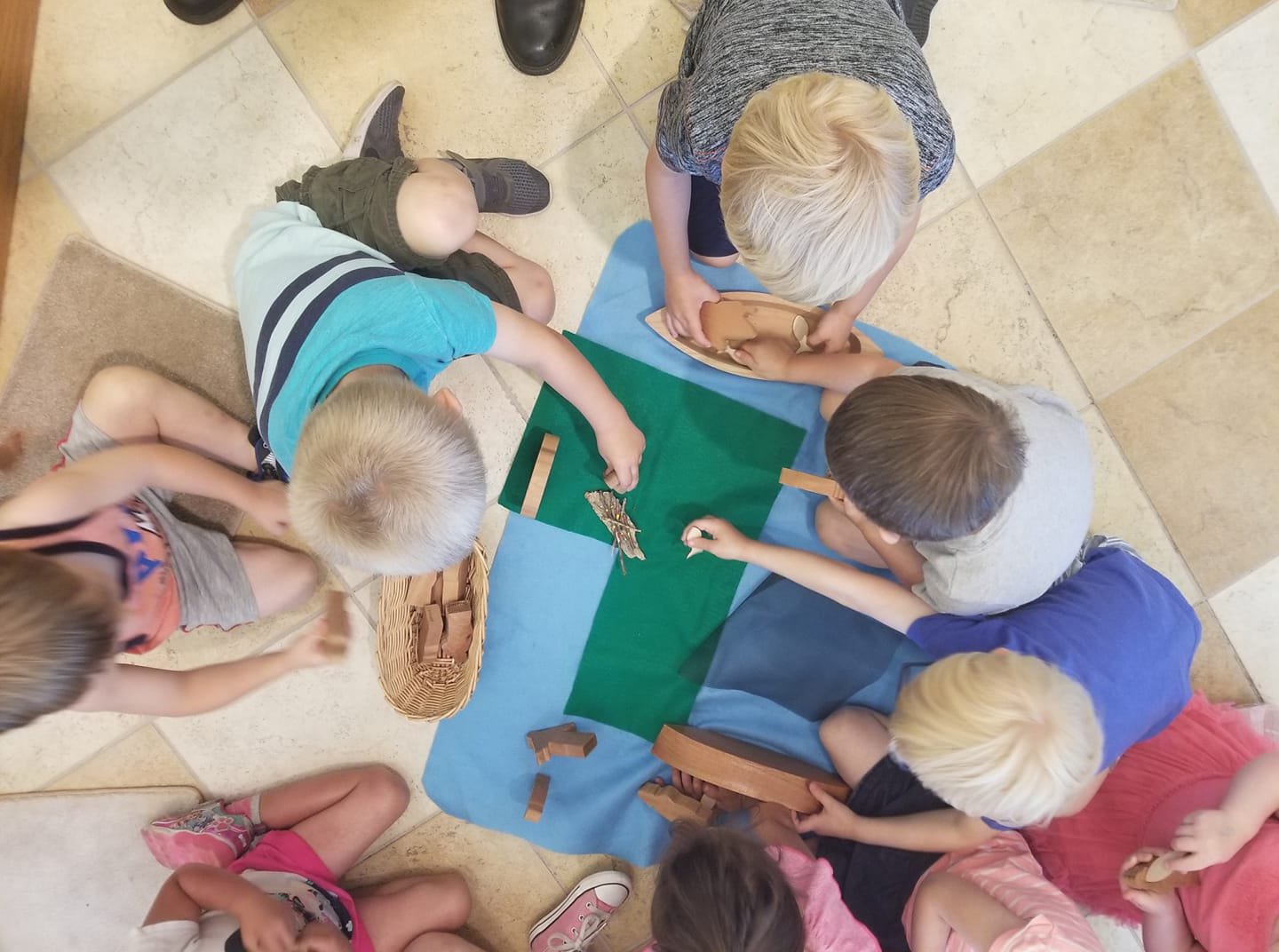
61002735_2362089520513961_2511345267203112960_o

Photo Credit:  Charlie Bauer; reuse with permission only

Yesterday at the Godly Play class Hickory Neck offers at The Kensington School, we finally got to tell the Epiphany story – the story of the magi visiting the Christ Child.  As we reviewed the whole story of Advent and Christmas, out came all the figurines of prophets, Mary, Joseph, Jesus, Angels, Shepherds, various animals, and wise men.  Typically, the teacher tells the story quietly, using the figurines, and then we have the kids retell the story, taking turns with the figurines.  And because the class has become so large, we usually have two sets of figurines so we can break into groups.  I would never say the class is perfectly orderly, but it is much more measured than you might imagine with two- to five-year-olds.

But not yesterday.  I’m not sure whether we, the leaders, were off our game, or the kids were still hyped up from returning from break, but the retelling portion of class was utter chaos.  Taking turns fell apart, quiet redirecting failed miserably, and by the time we regrouped to close the class, there was a mass of wooden, sacred figures in a disordered pile.  As we were making our way out, I looked at the pile sadly, grateful that they were all made out of sturdy wood and nothing more destructible, but somewhat disappointed to see such a holy mess.

But as I was thinking about the mess today, I was thinking perhaps my sadness at the chaos was my own “stuff,” having nothing to do with the success of the class.  Too often, we like our Gospel stories neat and tidy.  Too often we tell familiar scriptural stories expecting them to teach specific lessons.  But when we are honest, we know that is not how the Good News works.  The Good News upends worlds, upends social order, and upends our expectations.  Engaging with Jesus is messy work, and sometimes, in the midst of trying to figure out our faith, we end up with a messy rubble in front of us.

I do not know what you are you struggling with today – what things you wish were under control but are actually a mess, or what things you have been expecting from God that just are not how you expected, or what chaos others are making in your life that makes you feel bereft.  What I can tell you is that Christ is there, maybe a bit mired in the chaos too, but there nonetheless.  And sometimes, the mess is just what you need to shake you up and see the movement of God in a new and fresh way.  I suspect things will not turn out as you expect, but then, the Holy Spirit rarely works in ways we expect.  Sending you prayers today, that you might see Christ in the chaos!

Sermon – Luke 2.8-20, CD, YC, December 25, 2018

02 Wednesday Jan 2019

Posted by jandrewsweckerly in Sermons, Uncategorized

≈ Leave a comment

Tags

birth, chaos, Christmas, forgiveness, God, holy, incarnate, intimate, Jesus, marriage, Mary, normal, quiet, Sermon, shepherds, vows, wisdom

On Christmas Eve and Christmas Day, we split up the gospel of Luke.  On Christmas Eve we hear about the registration, and how all the families have to travel to be taxed.  That part of the story is when we learn about there being no room in the inn, and Mary giving birth, wrapping her child in bands of cloth, lying him in a manger.  But today, we get the part of the story I love.  I know the multitude of the heavenly host has inspired many a Christmas carol, but I like the very last part of the story:  the part where the shepherds have gathered with Mary, Joseph, and baby Jesus, where others gather with them to marvel at the shepherd’s story and Mary ponders everything in her heart.

I like this last part, because this last part is the most normal, intimate moment we get in the birth narrative of Jesus.  Everything else is so chaotic – people migrating, hustling for space to stay, likely arguing about who gets to stay where.  Then there is the birth of Jesus itself, not only without modern medicine, but in the roughest of conditions.  Birthing children is hard enough as is – I cannot imagine the messy, loud scene of childbirth under such conditions.  And finally, the shock of not only an angel of the Lord, but also the chorus of the heavenly host in the middle of the night where there is usually no sound is mind-blowing.

Instead, I prefer the quiet scene at the end.  That is a kind of scene I can imagine.  Of outcasts thrown together, sharing stories, bonding over the craziness of the night.  Of an exhausted mother and father and shepherds lounging around, wondering what all this means.  Of the moments of silence when everyone’s eyes settle on baby Jesus who has finally drifted off to sleep, watching his chest rise and fall, wondering what else might rise and fall because of this tiny baby.  I imagine the bonding that can only happen at three in the morning, that can only happen through a people filled with hope in a hopeless world, that can only happen when God sweeps through your life in a bold way.

That’s why I love today’s service so much.  Last night was the night of holy chaos – of kids with pent up excitement for Christmas day, of dinners being prepared, trumpets leading us in song, and the loud chatter of old friends and family greeting one another.  But today, we enter the church in quiet, with no music to distract us, perhaps having left behind piles of wrapping paper or needy family members, having turned off our radios so that we can tell the old, old story.  On Christmas Day, I like to imagine we recreate that holy, intimate night, where old friends and strangers gather around the mystery of the incarnation, wondering what Jesus has in store for us today.  All we need is a little straw and sleep deprivation, and we can almost imagine ourselves there.

That is why when Margaret and Jim asked if we could renew their wedding vows on Christmas Day, wanting something quiet and sacred to mark their sixtieth wedding anniversary, I said an emphatic, “Yes!”  Marriage is a sacred institution too – where we welcome friend and stranger alike, where we sometimes meet people who change our lives but we never see again, where we share intimate time, and where we ponder what God is doing in our lives.  So, gathering again, sixty years later, we too gather like a band of misfits, sharing stories of marriage, of Jesus, and of community.  We let down our hair and marvel at the holy mystery of God, holding holy moments of silence like gifts, and giving thanks for the God who makes sixty years possible.

The other reason I love the idea of renewing wedding vows on a day like today is because today is a day of hope.  When God incarnate comes into the world, we are given the gift of hope – the promise that life will change dramatically.  As we ponder the baby Jesus with those in that quiet room, we also slowly fill with hope, knowing that God is doing great things.  The same is true of marriage.  When I marry two people, I never know how the marriage will go.  I am hopeful that the two will get to do things like celebrate sixtieth wedding anniversaries, but honestly, hardship and separation are equally likely.  But we marry people anyway because we have hope – hope that God is doing a new thing between two people, and will make those people better through God.  As Margaret and Jim recommit themselves to one another today, we again claim hope that God will do amazing things through their marriage, bringing blessing to all of us, not just to the two of them.

Our prayers for Margaret and Jim today are not just for them.  They are for all of us.  We need wisdom and devotion in the ordering of our common lives as much as they do.  We need to recognize and acknowledge our fault when we hurt others, and seek forgiveness of others just as they do.  We need to make our lives a sign of Christ’s love to this sinful and broken world, and reach out in love and concern for others as much as they do.  All of that ordering of our lives is made possible by what happens today.  When God becomes incarnate in Christ, everything changes.  In that intimate space where strangers, exhausted, afraid, and full of hope, came together in the mystery of a miracle, life is changed.  Our gathering here today, to honor the incarnation, to celebrate the blessing of long marriage, and to create a sacred moment of intimate community, is the way we take the first step in living life differently – living a life of sacred incarnation.  Thanks be to the God who showed us the way in the incarnation of God’s only, begotten Son.  Amen.

God’s Gifts in the Chaos…

19 Wednesday Dec 2018

Posted by jandrewsweckerly in Uncategorized

≈ Leave a comment

Tags

Advent, beauty, blessing, breath, chaos, Christmas, crazy, gift, God, kids, life, moments, relationship, sacred

kids jumping on the bed

Photo credit:  https://www.pinterest.com/pin/214835844696012029/

Every December since our elder child was about two or three years old, the same thing happens.  The anticipation of Christmas turns our children into possessed creatures.  They argue more, act out in school, whine at the drop of a hat, and generally become entirely unpleasant to be around.  No matter how much I try to minimize the excitement of Christmas, the buzz around them is unavoidable, and, ergo, crazy behavior.  I found myself so frustrated the other day with the constant effort to reign them in that I had the distinct thought, “I just wish Christmas was over already!”

But I soon as had the thought, I knew I did not mean it.  You see, despite the mayhem of the season, in these last days of Advent, there are still sacred moments everywhere.  As we read our Advent devotional this week, one of the questions was, “Who are you praying for this Advent.”  My younger daughter immediately said, “I want to pray for all dead people.”  “Oh,” I said, “like whom?”  “Like MeeMaw,” she said.  And despite the fact that they nearly broke half the ornaments that came out of the ornament box, now, every morning, both girls rush to the tree to plug in the lights and find the ornaments that play Christmas tunes or funny sounds, twirling around in their nightgowns to the sounds.  And last week, as they had their Christmas dance performances, I teared up watching them, remembering how very special dance had been to me growing up.

The same can be true in any season.  Whether we are putting our heads down, trying to finish one more project, or absorbed in technology for extended periods of time, or simply fixated on our endless to-do lists, we can achieve a lot, but miss life along the way.  Fortunately, we are blessed with a God who is continually trying to get our attention anyway – who is relentless in pursuing relationship with us.  In these last days of Advent, God invites us to take a deep breath, lift up our heads, and open our eyes to the beauty of the sacred all around us.

Hickory Neck offers us the opportunity to do that over the next several days.  Whether you come to our Blue Christmas service, our last Advent liturgies, Christmas Eve services, or the service on Christmas Day, there will be multiple times to see glimpse of the sacred all around you – ways in which the manger is a window into the greater redemptive work God is doing in the world.  Whether it’s with an encouraging word from our Blue Christmas service, the sharing of memories at an upcoming funeral, or the wedding vows that one couple will renew on Christmas Day (sixty years later!), what we learn is that in the chaos of life, God is gifting us sacred gifts in tiny, momentous ways.  Today, I invite you to receive God’s gifts among the chaos.

Homily – Acts 2.1-21, Pentecost, YB, May 20, 2018

23 Wednesday May 2018

Posted by jandrewsweckerly in Sermons, Uncategorized

≈ Leave a comment

Tags

baptism, baptismal covenant, cacophony, chaos, church, community, God, Jesus, languages, love, Pentecost, Sermon

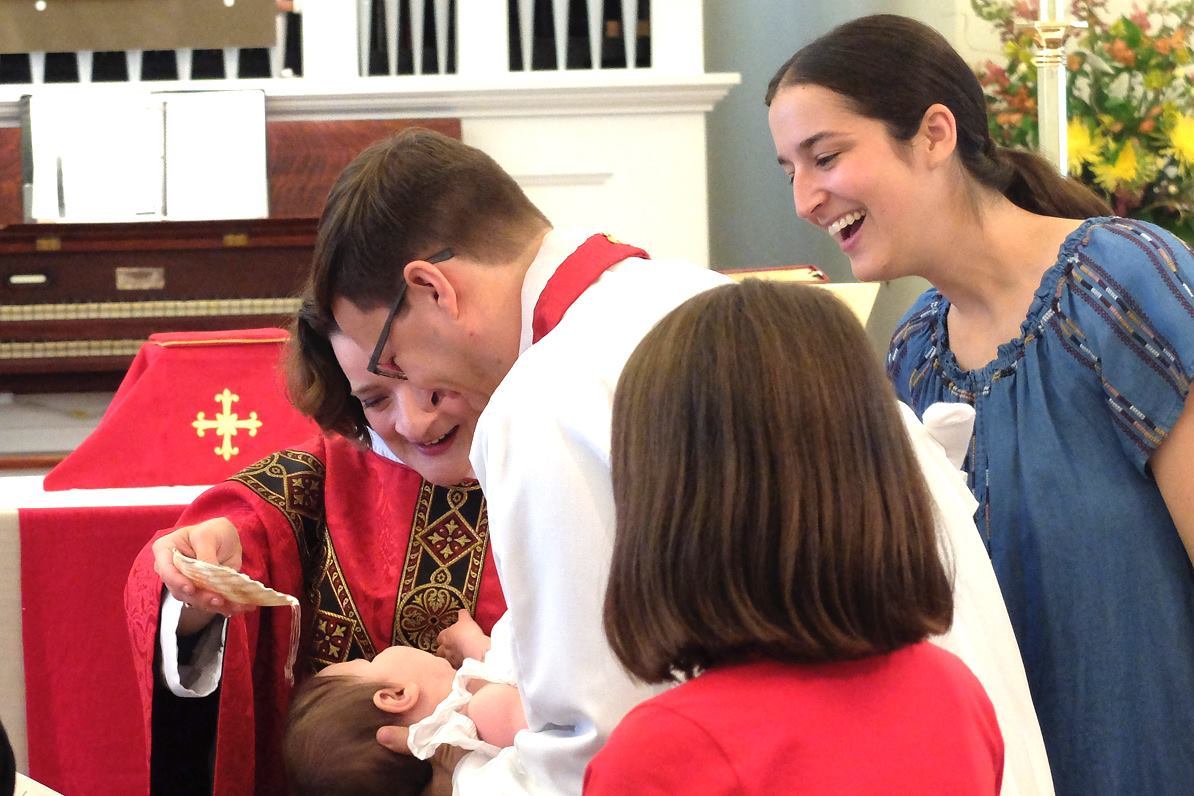
33092215_1843823495673902_5618488268858327040_o

Photo credit:  John Rothnie (permission to reuse required)

I have been looking forward to this baptism for months.  Olive is one of four babies born at Hickory Neck within a month of each other, and one of five within a five-month period.  Not only did I enjoy watching Olive grow in her mom’s belly, I knew how fun welcoming her to the community would be, and especially how special her baptism would be.  So when the Bauer Family finally settled on Pentecost, I was thrilled – baptizing a baby on feast day adds excitement to an already festive day.

But as the liturgy planning staff met about a month ago, I realized we may have made a huge mistake.  We were talking about the needs for today, and remembered we needed to recruit all our foreign language speakers because Pentecost is the one feast of the year where we really try to simulate the experience of the historically significant day in the life of the faith.  And as we were talking about rotas, translations, and participants, a sudden sense of dread hit me.  “Um, Charlie?” I said.  “Are you sure you want to baptize Olive on Pentecost?  I mean, I love Pentecost, but, especially for strangers to our community, Pentecost is a little weird.  Do you want us to just skip the whole languages part?”  To his credit, Charlie didn’t hesitate.  “What better day to baptize?!?” he said, as though my question were silly.

I have been encouraged by Charlie’s enthusiasm, but the more I thought about his response, the more I questioned his logic.  Don’t get me wrong – I love what we do at Pentecost.  Pentecost is one of the few days of the liturgical year that our scripture really comes to life.  Hearing the cacophony of languages helps you to really imagine yourself there.  But this is the kind of service that I would also say to first-time visitor, “Just so you know, we don’t always do this!”  Because, although I love the cacophony, I wouldn’t want anyone to think today is the norm – that we always break into tongues in the service or that we always like to shock your senses.  Surely if we were going to baptize Olive, we should find a tamer way to welcome her to the community, and not freak out her family and friends from all the ends of the country.

We do this all the time with Church.  If we get the nerve up to ask a friend to Church, and they take us up on the offer, we want them to experience the best of Hickory Neck:  a welcoming environment, beautiful liturgy, a sense of belonging, and a deep connection to the immanent and transcendent God.  But just like when you introduce a new romantic interest to your family, you don’t have them meet everyone in the family at the beginning.  You save crazy Uncle Joe until at least the second or third Christmas, when you know your boy or girlfriend is already in love with you enough to make allowances for the crazy in your family.  The same is true for church – we would much rather you see the beauty of Hickory Neck on a regular Sunday or even on a day like Easter.  There is no need for us to show you some of the really weird parts of our faith, like Pentecost, until you have at least been here for a while.

So why was Charlie so enthusiastic about bringing his extended family to celebrate baptism on this one, crazy, bizarre day in the life of the church?  Was he not thinking this through?  Or was he secretly hoping to ensure his family never comes back?  I started working through why this might be the perfect day for a baptism, thinking through what we learn about the church and membership within.  First, we learn the power of the gospel, of the good news of God in Christ, to reach all peoples, no matter who they are.  Although practically speaking, today’s multilingual reading sounds jarring, what we know about this piece of scripture is that despite the din of noise, everyone heard the good news in their own language.  The gospel is not limited to one group of people or to one tribe or nation; the gospel speak truth to all.  Second, we learn that Jesus’ story is not just for us – Jesus’ story is for all.  Up until this point in our story, Jesus has been keeping his resurrection and ascension to a limited group of people.  But today, that norm implodes.  Jesus’ story is no longer for those nearest and dearest to Jesus – Jesus’ story is for everyone.  Third, we are reminded of our commission from Jesus – to go out into all the world, sharing the good news of God in Christ.  Not just the English-speaking places, not just the places where people look and act like us, not just the places that make us comfortable.  And finally, Pentecost affirms the ways in which God loves us, no matter what.  No matter how loud, crazy, or chaotic our lives become, God is with us, breaking through the din of noise we create and making that noise holy.

Perhaps instead of finding the most proper, polished day to baptize a child of God, today may be the perfect day to teach us all what the life of faith is about.  We all know that when our romantic interest or dear friend finally meets Crazy Uncle Joe, or finally sees us when we are sick or not looking our best, or finally realizes we have some pretty awful flaws, and LOVES US ANYWAY – those are the people we want to keep around.  The same is true for those new to the church or those being initiated into the community of faith – we want you to see us on our craziest days so that you know, no matter what God loves you anyway.  God sees your craziness, your chaos, those parts of yourself that you hide from others, and God not only loves you, God commissions you and makes a way you share that love to the ends of the earth.

That is what we affirm today in our baptismal covenant.  Given the promise of unconditional love from God, we promise in return to live a life in accordance with that unconditional love.  To seek and serve all persons, to strive for justice, to respect the dignity of every human being, to proclaim by word and example the good news of God in Christ, to resist evil and repent, and to keep coming back to the community, breaking bread and joining in the prayers.  The chaos of today, the beauty of baptism today, the reminder of God’s love today are all meant to build us up so that we can get back out into the world.  What better day than today to baptize?!?  Amen.

Sermon – Luke 2.1-14, CE, YB, December 24, 2017

10 Wednesday Jan 2018

Posted by jandrewsweckerly in Sermons, Uncategorized

≈ Leave a comment

Tags

chaos, Christmas Eve, church, God, holy, Holy Family, Jesus, life, love, manger, peace, silent, story, worship

Sometimes arriving at the manger on Christmas Eve feels a bit like just barely sliding into home plate.  When little ones are around, you have scurried about, making sure their tights and bowties are on, while trying to squeeze in one last family picture while everyone still looks nice.  By now, you have probably served or been served a meal, purchased and wrapped gifts, prepped or cooked food for tomorrow, sent out cards, decorated the house, and run countless errands.  And none of that includes the four hundred things that will be done in the next twenty-four hours.  Arriving here and semi-put together is a minor victory, with the promise of a peaceful, beautiful hour of worship, before preparing for the chaos to resume tomorrow.

The unfortunate thing is that the story of tonight is not all that much less chaotic.  Though we sing songs like Silent Night or Away in a Manger, or though we exchange cards with pastoral, peaceful settings, nothing about that night is silent.  And I am pretty sure the little Lord Jesus makes lots of cries.  The chaos of the holy family is not unlike the chaos in which we sometimes find ourselves.  Remembering how scandalous Mary’s pregnancy and relationship with Joseph are, the chaos continues as Emperor Augustus sends out a decree that forces a very pregnant, uncomfortable Mary away from her hometown to the crowded city of Bethlehem.  Before they can secure housing, Mary goes into labor.  Not only is she dealing with the drama of delivering a child for the first time ever, she is delivering without so much as the comfort of a home.  And then, just as they are trying to figure out nursing, and soothing, and the fear and wonder of parenting, along come some rowdy, likely filthy, shepherds, who have also not had a silent night.  In fact, they have heard the terrifying chorus of the heavenly host and been told a most preposterous story – so much so, they gather up their livestock and come to see.

With all the chaos of our own lives, and with all the mayhem of that holy night, why do we do it?  Why do we come to church at all?  Maybe we come to church on this night specifically because on this night, more than perhaps any night ever, we find the wonderful revelation that God can take the messy chaos of life and make our mess holy.  You see, as much as we love tonight’s beautiful story, what happens this night is beyond the chaos of registrations, no vacancies, angelic revelations, and messy encounters with strangers.  In order to understand the enormity of what is happening tonight, we broaden our scope.  Tonight’s event – the nativity of our Lord –  is the culmination of a much larger story.  The story started when there was no earth or humankind, when God formed the earth from the formless void.  When we first sinned against God and were cast out of the garden, to when we kept sinning and God flooded the world, to our deliverance from the hands of pharaoh and our arrival in the promised land, to our sinful desires for a king that led to the eventual confiscation of our land.  We are a people who have been oppressed so many times and rescued so many times we can barely count.  And in that rollercoaster of a relationship with our God, as we failed time and again, God, who never gives up and never cedes love, does something unheard of:  takes on human flesh, comes to us in the form of a vulnerable child, with the plan of redeeming us forever and granting us eternal life.

Maybe we come to church tonight because tonight is about God’s unending, undying, unfailing, uncompromising love for us.  Despite centuries of chaos, disobedience, and failures, God shows up tonight in a mighty way.  Despite the chaos of the times and of this night, God shows up among the outcast.  Despite the chaos of our own times, in our seeming inability to tend to those most outcast, God comes once more to redeem us.  We come to church tonight because we long to grasp the enormity of God’s love for us, the extents to which God will go for us, and the hope which only God can give to us.

But the news is even better than that.  I do not believe the beauty of tonight is in trying to find a holy moment, where God’s love speaks to us in an otherwise chaotic life.  In fact, you might not find that moment tonight because despite the fact that you were physically able to get here, your mind may still be somewhere else.  The good news is that is okay.  The deep, lasting peace of this night is not found in a single church service (though I must say, the service certainly helps).  The deep, lasting peace we are looking for comes from the reality that we do not find God’s love and peace in spite of the chaos of life.  Tonight teaches us that God hallows the chaos of life.

Based on our standards, God should have placed this precious child – the God incarnate – in the wealthiest, most well-guarded palace, where a person of great wealth could have given the baby everything the baby needed.  A person of power could have protected the child, brought honor to the child, raised the child up to assume the power of a Messiah.  If we had something so precious, we certainly would have worked to find the best of what we have to protect that preciousness.  And yet, God takes on flesh in an unmarried, inconsequential woman of little means.  God takes on flesh amidst the common people, being born in the lowliest of estates.  God takes on flesh and announces the news not to kings and rulers, but to shepherds – those disregarded by society as being of little import.  From the very beginning, the extraordinary thing God does is done in the midst of the ordinary – worse yet, among the marginalized and outcast.

God takes the mess of life:  our divisions, our stratifications by class, gender, and race, our subjugation of the poor, our inability to refrain from sin, our messes and chaos – and God makes our mess holy.  God sanctifies our chaos, reminding us that in the midst of chaos, God is present.   In the midst of chaos, God is doing a new thing through us.  In the midst of chaos, God is love and makes us agents of love.  I cannot promise that the chaos will not try to overtake you when you walk out the church door tonight.  But just like you will find small glimpses tonight of the overwhelming love God has for you, you can find God present in the chaos of life too.  God is continually breaking through, birthing in you Christ’s light and love, using you to make room in the world for the Christ child, using you to announce good news of great joy for all people.  If that doesn’t break though the chaos, I don’t know what will!  Amen.

On Chaos, Control, and Connection…

18 Thursday May 2017

Posted by jandrewsweckerly in Uncategorized

≈ Leave a comment

Tags

ambiguity, chaos, control, frustration, God, parenting, relationship, sacred, schedule

Stressed_businesswoman_kieferpix_Fotolia_large

Photo credit:  https://consumeraffairs.com/news/lack-of-control-in-a-high-stress-job-could-cause-you-to-die-younger-101716.html

Last week, my husband went away for five days for a family member’s graduation.  I was thrilled he was able to go, but I always get a bit nervous when I am alone with the children for several days straight.  Part of the anxiety is that managing two children is always tough.  Mornings and evenings are chaotic – just when you think everyone is settled, one child starts screaming.  When you have tucked in the youngest so you can read to the oldest, the youngest keeps getting out of bed.  Even with my husband around, the chaos often feels unmanageable.

The first couple of days after my husband was gone, things went as I suspected.  The children were loud, crazy, and frustrating.  There were lots of timeouts, lots of deep breaths, and lots of lost tempers.  But by day three, I slowly began to loosen up.  I began to realize that there was no way I was ever going to get the children to behave exactly how I wanted, when I wanted, and where I wanted.  And so I started figuring out how to pick my battles, I gave up on my own rigidity around “the schedule,” and I figured out how to shift from toleration to acceptance.  By day four, I was no longer stressed out or anxious.  I was being firm, but having fun; I was letting go of what I couldn’t control; and I was able to appreciate this sacred alone time with the girls.

Part of what took me so long to make that shift in behavior and perspective is that I am someone who likes a sense of control and order.  I get irritated when things do not go as I planned, and I get impatient when things do not happen in a timely, organized manner.  And while some may call it stubborn, I have thought through things and selected what I believe is the best course of action; so, when kids do not want to comply, I get frustrated.  These are, obviously, not the best traits for a parent.  Parenting involves much more agility, creativity, and comfort with ambiguity.

I have begun to wonder if my revelation about my own tendencies and behaviors with my children might also be true about my tendencies and behaviors with God.  How often have I wanted God to behave in a certain way, and could not seem to get God to comply?  How often have I been impatient, frustrated, and irritated with God?  How often have I been rigid in my expectations with God?  This week, I am taking a cue from my children, remembering how much more meaningful, loving, and fun our relationship can be when I let loose of my desire for control.  I suspect the same may be true of my relationship with God too!

On Sacred Snippets…

08 Wednesday Mar 2017

Posted by jandrewsweckerly in Uncategorized

≈ 1 Comment

Tags

balance, chaos, God, goodness, holy, Lent, lenten discipline, liturgy, prayer, sacred, sinfulness

lent_image

Photo credit:  https://prayerbookguide.wordpress.com/living-the-season/lent/

I know many Christians who loathe the season of Lent.  They find the season to be heavy-handed, to be too somber and full of self-loathing, and to be a bit of a downer.  I am not one of those Christians.  Lent is probably my favorite season of the Church Year.  There is an honesty about Lent that feels more authentic to me.  I feel like we do not have to pretend in Lent – pretend to be happy, pretend to have our lives together, pretend to be perfect.  Instead, Lent feels like a great equalizer – a time when we all confess our utter inability to live the lives we intend, and our utter dependence upon God.  Add on top of that intentional disciplines, liturgies that articulate the tension of our sinfulness and goodness, and additional church programming, and I come alive during Lent.

But this year, I have been struggling a bit with Lent.  I have gone through all the motions of Lent:  I am reading a book with a study group, I am playing Lent Madness with my oldest child, and I am attending a weekly ecumenical worship service and fellowship gathering.  I have also worked with our liturgical team to change up the liturgies to make them just different enough to shake up the senses.  I am helping teach a bible study in preparation for Holy Week.  I participated in the winter emergency shelter our church hosted last week.  The Lenten “wheels” are all in motion.  But I find this year that I am having a difficult time getting my Lenten grounding.

Now, it could be that my family has been in and out illness over the past month.  It could be that the church schedule has been particularly full, leaving me working most Saturdays this past month.  It could be that I’m still adjusting to my first full year at Hickory Neck, not having shaped a Lenten season here yet.  Whatever is going on, I was gently reminded by my Spiritual Director once that there is no wrong or right prayer life.  Our prayer life is a reflection of the rest of our life.  The Director told me that it was no wonder that my prayers were happening on the go much of the time – because juggling a family of four and a parish means that prayers happen with the rest of life.  In fact, it is unlikely that I will have an hour of prayer time every morning – because balance means finding varied ways to pray in various stages of life.

Remembering that instruction, I have been shifting my expectation of Lent this year.  Since there is little likelihood that Lent will slow down, I am trying to catch meaningful moments as they fly by.  Like how my seven-year old demands that she be allowed to go to Ash Wednesday services to get her ashes or how she begsto go to the winter shelter one more time.  Like how a parishioner calls between drop-offs to talk about navigating the faithful raising of children.  Like how the Great Litany shakes me to my core.  Like how a sermon I prepared speaks to me on a totally different level as I am preaching it.  Like how a conversation with a parishioner reminds me of the powerful ways we are living into God’s call to respect the dignity of every human being.  I may not be finding long periods of silence, setting apart times of dutiful Lenten practices, or mastering a Zen-like experience at church.  But holiness is happening all around me.  My hope now is to savor each moment for just a bit longer, honoring the holy moments God throws my way in the midst of a chaotic season of life.

← Older posts

Recent Posts

  • On the Myth and Magic of Advent…
  • On Risking Failure and Facing Fear…
  • Sermon – Luke 23.33-43, P29, YC, November 23, 2025
  • On Inhabiting Gratitude…
  • Sermon – Luke 20.27-38, P27, YC, November 9, 2025

Archives

  • December 2025
  • November 2025
  • October 2025
  • September 2025
  • August 2025
  • July 2025
  • June 2025
  • March 2025
  • February 2025
  • December 2024
  • November 2024
  • October 2024
  • September 2024
  • August 2024
  • July 2024
  • June 2024
  • May 2024
  • March 2024
  • February 2024
  • January 2024
  • December 2023
  • November 2023
  • October 2023
  • September 2023
  • August 2023
  • July 2023
  • June 2023
  • May 2023
  • March 2023
  • February 2023
  • January 2023
  • December 2022
  • November 2022
  • October 2022
  • June 2022
  • May 2022
  • January 2022
  • December 2021
  • November 2021
  • October 2021
  • September 2021
  • August 2021
  • June 2021
  • May 2021
  • April 2021
  • March 2021
  • February 2021
  • January 2021
  • December 2020
  • November 2020
  • October 2020
  • September 2020
  • August 2020
  • July 2020
  • June 2020
  • May 2020
  • April 2020
  • March 2020
  • February 2020
  • January 2020
  • December 2019
  • November 2019
  • October 2019
  • September 2019
  • August 2019
  • July 2019
  • June 2019
  • May 2019
  • April 2019
  • March 2019
  • February 2019
  • January 2019
  • December 2018
  • November 2018
  • October 2018
  • September 2018
  • August 2018
  • July 2018
  • June 2018
  • May 2018
  • April 2018
  • March 2018
  • February 2018
  • January 2018
  • December 2017
  • November 2017
  • October 2017
  • September 2017
  • August 2017
  • July 2017
  • June 2017
  • May 2017
  • April 2017
  • March 2017
  • February 2017
  • January 2017
  • December 2016
  • November 2016
  • October 2016
  • September 2016
  • August 2016
  • July 2016
  • June 2016
  • May 2016
  • April 2016
  • March 2016
  • February 2016
  • January 2016
  • December 2015
  • November 2015
  • October 2015
  • September 2015
  • August 2015
  • July 2015
  • June 2015
  • May 2015
  • April 2015
  • March 2015
  • February 2015
  • January 2015
  • December 2014
  • November 2014
  • October 2014
  • September 2014
  • August 2014
  • July 2014
  • June 2014
  • April 2014
  • March 2014
  • February 2014
  • January 2014
  • December 2013
  • November 2013
  • October 2013
  • September 2013
  • August 2013
  • July 2013
  • June 2013
  • May 2013
  • April 2013
  • March 2013
  • February 2013
  • January 2013
  • December 2012
  • November 2012
  • October 2012
  • September 2012

Categories

  • reflection
  • Sermons
  • Uncategorized

Meta

  • Create account
  • Log in
  • Entries feed
  • Comments feed
  • WordPress.com

Blog at WordPress.com.

  • Subscribe Subscribed
    • Seeking and Serving
    • Join 394 other subscribers
    • Already have a WordPress.com account? Log in now.
    • Seeking and Serving
    • Subscribe Subscribed
    • Sign up
    • Log in
    • Report this content
    • View site in Reader
    • Manage subscriptions
    • Collapse this bar
 

Loading Comments...