• About

Seeking and Serving

~ seek and serve Christ in all persons

Seeking and Serving

Tag Archives: Christmas

An Advent Rollercoaster…

11 Thursday Dec 2014

Posted by jandrewsweckerly in Uncategorized

≈ Leave a comment

Tags

Advent, Blue Christmas, Christmas, church, Gaudete Sunday, grief, joy

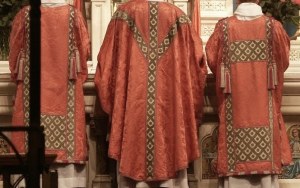
This Advent has been a both-and experience for me this year.  There have been some incredibly joyful moments:  watching my daughter’s excitement about picking a Christmas tree, reading devotionals from our Advent calendar and enjoying my daughter’s insightful comments, and anticipating some fun time with family over the holidays.  But there have also been some sobering moments:   grieving the loss of my husband’s grandfather, keeping vigil at the bedside of a longtime parishioner and then burying him this week, and listening to stories of neighboring families who are struggling to make ends meet and who are dreading the disappointment of their children when Christmas comes.  In some ways, the sobering moments have been hanging heavily for me.  That reality has felt normal because Advent is meant to be a quieter, penitential season of preparation.  But the lows have felt really low, and I have found myself longing for the highs – or at least some sense of joy.

Courtesy of http://www.newliturgicalmovement.org/2010/12/gaudete-sunday-exhibition-of-some-rose.html#.VIm-6dLF-Jo

Courtesy of http://www.newliturgicalmovement.org/2010/12/gaudete-sunday-exhibition-of-some-rose.html#.VIm-6dLF-Jo

That is why I am looking forward to two upcoming events at St. Margaret’s.  First is the third Sunday of Advent.  This Sunday is known as “Gaudete Sunday.”  Basically, Gaudete Sunday is meant to offer a break from the penitential themes of Advent, instead emphasizing the joy of the coming of the Lord.  For a full explanation about the name and origin, look here.  This year, I am finding myself longing for Gaudete Sunday, needing more of the joyful moments like I mentioned above and less of the hard moments that keep coming my way.  I am grateful for the Church’s gift of respite to us of this Sunday.

Oddly enough, I am also looking forward to our Blue Christmas service coming up in a little over a week.  The service is meant to be for those who find Christmas to be a difficult or challenging time.  Given that I was just saying I wanted a little more joy, it may sound funny that I am looking forward to this service.  But the truth is, I am looking forward to sharing some of my Advent grief and sadness with others.  Being able to acknowledge those feelings in the context of worship and have them affirmed seems like a tremendous gift.

I suppose that is both the nature of Advent and life – times of highs and lows, joys and grief, eager anticipation and dread.  My hope is that if your Advent is taking on that both-and shape, you might lean on the Church to help you navigate that experience, and to find companions on the journey.  Come join us for a holy Advent.

Sermon – Isaiah 40.1-11, A2, YB, December 7, 2014

10 Wednesday Dec 2014

Posted by jandrewsweckerly in Uncategorized

≈ Leave a comment

Tags

Advent, care, Christmas, church, community, God, Isaiah, preparation, prepare, promise, Sermon, the Lord, work

This sermon was delivered on the occasion of our Annual Meeting. 

This time of year, I do a lot of preparing.  Though the setup takes a lot of work, I particularly love preparing our house for Christmas.  Unpacking and hanging all the ornaments is a tradition I shared with my family, and that I now can share with my girls.  I love telling my oldest daughter the stories behind certain ornaments and helping her decide where they should go.  I also put out our international crèche collection.  They remind me of travels I have made or friends from far away places.  Each inspires something different in me, reflecting the culture and artistry of different countries.  And of course, my daughter loves helping me hide away the baby Jesuses until Christmas day.  We even take down some artwork on our wall to make room for the cards which friends from far and wide send to us.  There is something homey and comforting about the whole process of preparing for Christmas, and I love the way that the preparation makes me feel grounded and joyful.

In our Old Testament lesson today, the text says, “prepare the way of the LORD.”  In this season of Advent, we are to prepare for the arrival of the Christ Child.  Now certainly, unpacking ornaments, advent wreaths, and crèches are one way to prepare.  But God is talking about a different kind of preparation today.  God is not talking about an outward change – like decorating our homes.  God is talking about an inward preparation – an inward change in anticipation of the LORD.  I am reminded of how one of our parishioners just recently prepared himself for the LORD.  Several weeks ago, one of our young parishioners decided to receive his first communion.  He prepared by reading about the Eucharist at home with his family, asking questions, and talking with them about their experiences.  He worked on memorizing the Lord’s Prayer, so that he might fully participate in the prayer life of our community.  And then he sat with me as we walked through the Eucharistic liturgy, talking about what each part means, why that part is significant, and what all those crazy things on the altar are called.  Finally, he chose someone to present him before the entire community, where he and we all declared that he was prepared to be in full communion with this community.  He waited and worked to prepare himself for the consumption of our LORD.  And now, each week that I have placed the body of Christ in his hand since then, I have felt a sweet, deeply abiding satisfaction when he reaches his hands toward me to receive Christ’s body.

The kind of preparation that our young parishioner did is a small taste of the kind of preparation God calls for in our Old Testament today.  Isaiah says that in order to prepare, we need to make straight in the desert a highway for our God, lift up every valley, make low every mountain and hill, level the uneven ground, and make plain the rough places.  This passage is so familiar to us, that many of us miss the magnitude of what God is saying.  When was the last time you tried to fill in a valley or level a mountain?  Of course, God is not telling us to literally take the winding roads of deserts and make them straight.  But in the metaphors, God is telling us that preparing for God is not easy work.  In fact, preparing for the LORD is a monumental task.  Preparing for the LORD is not like preparing our homes for Christmas, where we can make a basic checklist and slowly check the items off the list.  When given the hefty work of preparing ourselves inwardly for God, the task of leveling our valleys and mountains and smoothing out our rough places is much more difficult.

In some ways, I have watched St. Margaret’s do a lot of this interior work.  Over the course of the last year, our Vestry and Buildings and Grounds Committee have made level the mess that had become our Undercroft.  Though taking on an expensive project, they together worked to clean out harmful mold and mildew, solved a drainage problem to prevent that kind of damage again, and reimagined how that space could be utilized by us and our community.  Meanwhile, our educational offerings have been totally made low in this last year.  We revamped our Sunday School program after years of struggling to find the best way to raise our children in the faith.  We reworked our worship schedule so that adults could claim an hour in their busy lives to ponder their faith and make straight paths in the desert.  We have filled in the valleys by marching in parades, sponsoring baseball teams, eating pancakes at local diners, and inviting total strangers into our midst so that they might help us fill in those valleys.  Of course, anyone who knows St. Margaret’s also knows that you are only a stranger here for about one Sunday before our wonderfully welcoming community has made sure they know your whole life story before your coffee cup is empty.

All of those have been wonderfully positive things in our lives, but not easy work.  I cannot tell you the number of people who worried and fretted over our Undercroft expenses, complained about how long the work was taking, and questioned the wisdom of the work.  I cannot tell you the number of times I myself considered whether we should halt educational offerings altogether due to low turnout.  I cannot tell you how many times I needed each one of us to invite someone to church and instead heard someone say, “Oh, well isn’t that what our new website is for?”  We have been making progress toward straightening paths, filling in valleys, and leveling mountains.  But we have also gotten very dirty, been impatient and frustrated with each other, and sometimes have dropped our shovels altogether.  That is what happens when you do this kind of preparation for the LORD.  The work is not easy.  The work is monumental.  The work is, well, work.  And work is what God is inviting us into today.

The good news is that today’s text is one of those “both-and” texts.[i]  Yes, God is inviting us into some hard work today.  As we reflect on another year of service, at the mounds of dirt we have already moved, God is charging us to roll up our sleeves and keep digging.  And yes, God promises that the work of preparing will not be easy work.  But God also makes a promise while we are in the mire of making roads straight.  Our text today from Isaiah says, “He will feed his flock like a shepherd; he will gather the lambs in his arms, and carry them in his bosom, and gently lead the mother sheep.”  This last sentence has been lingering with me this week.  Maybe because I am a nursing mom, or maybe because this is the only time that scripture talks about the work of a mother sheep, but I find myself riveted by these words.

Just this week, I had one of “those” nights at our house.  I do not know whether she was teething or just had a rough day, but I lost count after the fifth time I woke up to my infant’s crying one night.  The next morning, I woke up bleary-eyed, almost falling asleep while eating my morning cereal, spilling my coffee on my computer, and generally having a rough time trying to focus.  That is the life of a mother with young children.  And I assume, the life of a mother sheep is not much easier – constantly using her body to protect and feed her lambs.  To that wearied mother sheep, God says that God will gently lead her.  In fact, not only that, God will gather up her lambs, embracing them in God’s bosom, and then God will gently lead the mother sheep.  I am reminded of the many times someone has scooped up my daughters when they were losing their cool.  I am reminded of the individuals who have forced me to go take a date night while they watched my kids.  I am reminded of the encouraging words and sympathetic nods I have received over these last five years.

That is the kind of care God promises us in the midst of our work.  God says, “Go out there and get dirty filling valleys, leveling mountains, and straitening roads.  And when you are weary from the work, I will scoop up your little ones, and gently lead you by my side.”  As I look forward to the coming year, I hear both a charge and a comfort for us today.  We all have more to learn, more people to serve, more spreading of the gospel to do.  But we also have a shepherd who tenderly encourages and comforts us – and then kicks us right back into the ring.  Thanks be to God!  Amen.

[i] George W. Stroup, “Theological Perspective,” Feasting on the Word, Yr. B, Vol. 1 (Louisville: Westminster John Knox Press, 2008), 28.


Sermon – Mark 13.24-37, A1, YB, November 30, 2014

03 Wednesday Dec 2014

Posted by jandrewsweckerly in Uncategorized

≈ Leave a comment

Tags

Advent, anxiety, awake, Christmas, contrast, discipline, God, loud, noise, quiet, Sermon

I live a very loud life these days.  If any of you have ever visited the Rectory between the hours of five and seven in the evening, you have witnessed the sheer volume of my life.  Between the baby who can only communicate frustration through crying and the kindergartner who is quite verbose nowadays, mixed in with the fatigue they both feel after a long day of school and nursery care, let’s just say these hours are full of a lot of noise.  That is not to say that all of the noise is unpleasant – there is also the noise of laughter, storytelling, and shaking rattles.  But our house in those hours is not the place where you would want set up a yoga mat and try to meditate.

I sometimes blame all the noise in my life on my beloved children.  But the truth is I am as much a cause of the noise as they are.  I am admittedly loud myself – whether barking instructions around the house, singing aloud, or simply talking my husband’s ear off.  But I am not just loud in the house – I am also loud inside my head.  My mind is in constant conversation:  my to-do list, searching for ideas for a blog post, worrying about a sick friend or parishioner, trying to make plans for the weekend, processing a troublesome conversation, or wallowing in guilt for missed exercise or time in prayer.  As loud as my outside world is, my inside world is probably much worse.  Add Christmastime to the mix, and the loudness of my life reaches levels that can be incapacitating.

That is why I love Advent so much.  In the lead-up to Christmas, the outside world bombards us with noise:   Christmas songs on the radio, shopping to complete, parties to attend, gifts to wrap, houses to decorate, gatherings to host, cards to send, and loud relatives or friends to entertain.  In contrast, the Church at this time asks us to do the exact opposite:  slow down, take a breath, light some candles, breath in the fresh greenery, sing quiet, meditative songs, and worship in the soothing purple of anticipation.  When the outside world is telling us, “Do more, buy more, run more, fuss more, stress more,” the Church says, “Do less, worry less, run less, talk less, be busy less.”  The contrast between the two worlds is like night and day, and at a time of high stress, Advent becomes the Church’s greatest gift to us.

Into this contrast, we hear words from Mark’s gospel today.  The text says, “Beware, keep alert; for you do not know when the time will come.  It is like a man going on a journey, when he leaves home and puts his slaves in charge, each with his work, and commands the doorkeeper to be on the watch.  Therefore, keep awake– for you do not know when the master of the house will come, in the evening, or at midnight, or at cockcrow, or at dawn, or else he may find you asleep when he comes suddenly.  And what I say to you I say to all: Keep awake.”  Many of us hear this text today with a sense of anxiety – of needing to keep anxious watch for the Lord.  We might imagine the many apocalyptic movies, predictions, and preachers we have witnessed over the years and wonder whether Jesus really does want us to be more alarmed.  Certainly the outside world would have us also be alert and anxious for the coming Christmas.

But I think the Church is saying something else today.  Instead of an anxious alarm, our gospel lesson sounds like a gentle reminder to me.  Keep awake, for you do not want to miss the quiet beauty of Advent.  Keep awake, for you do not want to miss the gift of time set apart in these four weeks.  Keep awake, for you do not want to miss the lead in to the manger, the dramatic retelling of why the manger is so important, and the grounding for this entire season.[i]  Jesus’ words for us to “keep awake,” are not meant to be one more anxiety to pile on top of a mound of concerns.  Jesus’ words for us to “keep awake,” are meant to help us focus on what is really important.

So make a commitment to come to church each Sunday in Advent and spend those Sundays in quiet worship with your church family.  Grab an Advent calendar or devotional to help you more intentionally mark the days leading up to the manger.  Or set up that Advent wreath at home, so that you might bring the quiet candlelight of prayer and meditation to your home.  Whatever the discipline, choose something this Advent that will help you maintain the quiet peace you find here at Church and carry that quiet peace throughout your weeks leading up to Christmas.  My guess is that noise of life will slowly fade into a quiet hum in the background – which is right where it should be.  Amen.

[i] Lillian Daniel, “Pastoral Perspective,” Feasting on the Word, Yr. B, Vol. 1 (Louisville: Westminster John Knox Press, 2008), 22.

Holy chaos…

08 Wednesday Jan 2014

Posted by jandrewsweckerly in Uncategorized

≈ Leave a comment

Tags

chaos, children, Christ Child, Christmas, church, Epiphany, holy, incarnation, Jesus, life, liturgy, messy, pageant

Courtesy of http://saintansgar.blogspot.com/2010/11/joint-childrens-christmas-pageant-and.html

Courtesy of http://saintansgar.blogspot.com/2010/11/joint-childrens-christmas-pageant-and.html

This past Sunday, our church held its annual Epiphany Pageant.  Since the pageant involves using Scripture and hymns to retell the entirety of Jesus’ birth narratives, the pageant replaces most of the Liturgy of the Word (the part of the service when we traditionally read/chant the four lessons and then hear a sermon).  Though part of what we love about the pageant is the kids’ presence, we also love being invited into the familiar – rehearing the story of the Christ’s birth and incarnation and singing the hymns that we look forward to all year.

Inevitably, the pageant is a bit messy and chaotic – children forget where to go, costumes do not quite fit, or attention spans are just not long enough.  Situating the pageant within the context of worship also means that the entire worship experience that morning is loud and a bit difficult to stay fully engaged in – especially if you are looking for a quiet, contemplative reflection on the incarnation.

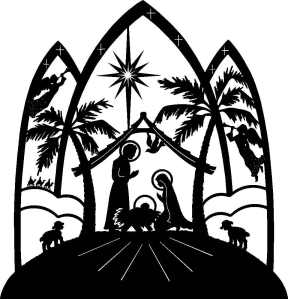
But to be honest, that is what I love about the pageant – the holy chaos of it all.  We often think about the birth of the Christ Child as a clean story, much like many of the two-dimensional artistic renderings we see of what looks like quiet adoration at a manger.  But the whole concept of the incarnation is messy:  from Jesus’ scandalous conception, to what had to have been an unsanitary birth among hay and animals, to stinky visitors like the shepherds, to the visit of three foreign men who act strangely and probably raise more suspicion than excitement.  The birth of Jesus is a bit of a holy mess, not to mention the rest of Jesus’ incarnate life, which involves hanging with those of ill-repute, with smelly fishermen, and with the seriously infected and ill.  Nothing about Jesus’ birth or life is sanitary, controlled, or predictable.

Later on Sunday morning in worship, as I distributed communion, I gave the body of Christ to the young girl who had just played Mary in the pageant.  In that moment, the chaos of the day disappeared, and the miracle of the incarnation became much more real to me.  Mary, the mother of Jesus, was just a woman, trying to live faithfully, caught in the holy chaos of life.  I found myself wondering what receiving the body of Christ, the body of her son, would have been like, especially once he was gone.  And just like Mary was just a woman, each one of us in church – the young girl, the middle-aged man, the aging woman – are all just people, caught in the holy chaos of life, trying to make sense of it all, but also eternally grateful for a God who takes on human flesh for us.  That is why Church is so incredible to me.  In the midst of contemplative prayer, and even in the midst of what feels like a loud, crazy liturgy, God can break through and speak truth to us.  I am grateful to our children for reminding me that God is incarnate in the midst of all of life – in the beautiful and quiet, but especially in the messy, loud, chaos of life.

Sermon – John 1.1-18, C1, YA, December 29, 2013

08 Wednesday Jan 2014

Posted by jandrewsweckerly in Uncategorized

≈ Leave a comment

Tags

Christmas, God, Holy Family, Jesus, John, Mary, miracle, prologue, Rembrandt, scripture

A couple of days after Christmas, the all-Christmas-music radio stations have switched back to their normal formats.  At local stores, the Christmas rack of cards had been transformed to a rack of Valentine’s Day cards.  In our neighborhoods and among our friends and family, we have switched our greeting from, “Merry Christmas!” to, “Happy New Year!”  The world has moved on from Christmas, and yet, the Church is still dwelling in Christmastide – in fact we celebrate not just one day, but the famous twelve days of Christmas.  Our celebrations continue until those wise men arrive on the 6th, when we transition to Epiphanytide.  Today, after stories of shepherd, angels, and the holy family, we find ourselves not wondering what is next, but instead still pondering what has just happened.

For a reflection on what happens in Jesus’ birth, what better text than John’s prologue?  John takes us out of the stable, and invites us not to just consider the miracle of that holy night, but to consider the miracle of a God who takes on human flesh for us.  And so, instead of telling us about the earthly beginning of Jesus’ life, John takes us all the way back to the beginning of all things – that creative moment when the Word and God are together, making all life come into being.  “In the beginning was the Word, and the Word was with God, and the Word was God.”  The words sound beautiful, and John’s text is rich with meaning and interpretation.  But John’s words are also a little circuitous, repetitive, and a bit difficult to understand without reading them multiple times over.  The familiarity and beauty of the words may be soothing, but the meaning of those words sometimes eludes us.

As I sat pondering these words this week, I found myself drawn again to Rembrandt’s painting, “Holy Family,”[i]  In the foreground of the painting, Mary, who is bathed in light, has a well-worn book, perhaps scriptures, lying on her lap, held in place by one hand, as though she has been reading the book intently.  Her face, however is turned away from the weathered book, as her other hand lifts a blanket that is covering a cradle, revealing a sleeping, contented Jesus.  Behind Mary and Jesus, in much fainter light, Joseph is standing over a piece of wood that he is intently planing.  Meanwhile, in the top left corner of the painting, young cherubim are hovering around the scene with outstretched arms.

What I like so much about the painting is that Mary gives us a clue about how we are to understand John’s beautiful, but convoluted words today.  First, I am intrigued by the way Mary clutches her well-worn book.  In looking at her book’s worn edges, I am reminded of the Bible I used for my Education for Ministry class several years ago.  In EFM, you spend two years reading through the Old and New Testaments.  I remember how my homework for the class instructed me to highlight certain passages in different colors so I could track the different contributors to a text.  I remember writing notes in the margins of passages that stood out, held particular meaning, or raised questions.  I remember certain pages being soiled by the meal I tried to cram in while finishing my assigned reading for a particular session.  That Bible looked like a Bible someone actually lived with as opposed to the clean, commemorative ones I have on many of my shelves.

That is the way I imagine Mary treating her worn book.  As the one who ponders things in her heart, I imagine Mary also ponders scripture in her heart.  I imagine she pours over the texts as she looks for words to explain her experiences with Jesus or as she simply longs for words to describe her feelings toward the God who had done something so tremendous in her life.  As Mary seeks to understand the Word made flesh, perhaps she returns again and again to the words of scripture, trying to discern their meaning.  And given that she is a faithful Jew, she probably also does that pouring over scripture with her faith community, as they seek to always hear God’s word for the people.  Her community probably turns back to that creation narrative over and over again.  Her community probably turns back to the Law of Moses over and over again.  Her community probably turns back to the prophets over and over again.

Given her longing for scriptural insight, Mary likely would have appreciated John’s text today, even though John’s gospel was not written until about 60 years after Jesus’ death.  She would have already known the stories of Luke and Matthew because they are her story.  But our text by John today is an attempt to help all of us understand the magnificence of what happens when God takes on human flesh.  In fact, if Mary had been reading John, I imagine that the last line we hear is what draws her attention away from her well-worn book to look at the Christ Child himself in Rembrandt’s painting.  John writes, “No one has ever seen God.  It is God the only Son, who is close to the Father’s heart, who has made him known.”

Perhaps this text is why Rembrandt depicts Mary’s eyes wandering back to that cradle, her hand pulling back the blanket, and her mind not just worrying like any mother does over an infant, but her mind also worrying about what God is doing in this child of hers.  She wants to do more than read the words on the paper – she wants to read the Word, with a capital “W,” in her life.  She wants to gaze at the Word made flesh, who shines light into that dimly lit room and into the world.  She wants to not only know the Law of Moses, but to know the grace and truth that comes directly from the Word incarnate.

What Rembrandt depicts in his painting is perhaps where we find our invitation from John’s gospel lesson today.  In order to understand John’s language, we too are invited to create our own dialogue between the Word of Scriptures and the Word made flesh.  Studying both Holy Scripture and the Holy Child is how we come to understand challenging texts like John’s gospel.  For some of us, that invitation may seem as muddy as John’s gospel.  But what Mary does in Rembrandt’s painting is available for us today too.  We can “develop a richer, fuller faith by tending both to the Word through words and to the Word made flesh, the Christ who is with us in the sacraments, with us in prayer, with us in our church, with us in our friends, with us in the stranger, and with us in creation, since ‘all things came into being through him, and without him not one thing came into being.’”[ii]

For those of you still wondering what this life pattern still looks like, consider the ways in which we already live into this balance.  When we reach into our pockets a little deeper for those families in our neighborhood who are just struggling to put gas in the car and food on the table, honoring the holy in one another, we then turn back to Holy Scripture that tell us to care for the poor.  When we care for one another in this community, sharing our deepest pains and struggles, we then turn to back to Holy Scripture as we struggle to find words to verbalize our understanding of God in that pain and struggle.  When we come to this table, and consume the body of Christ in the bread, we then turn to Holy Scripture to understand what the Word became flesh means.  We gather today as a community of faith, both clutching the Word in Holy Scripture, and clutching Word in the Christ Child, knowing that we can never fully understand one without the other.  Amen.


[i] C. 1645.

[ii] Thomas H. Troeger, “Homliletical Perspective,” Feasting on the Word, Yr. A., Vol. 1 (Louisville: Westminster John Knox Press, 2010), 193.

Sermon – John 1.1-14, CD, YA, December 25, 2013

08 Wednesday Jan 2014

Posted by jandrewsweckerly in Uncategorized

≈ Leave a comment

Tags

Christmas, darkness, death, God, incarnation, Jesus, John, light, prologue, resurrection

I must admit that I have always been a little wary of John’s prologue at Christmas time.  I tend to prefer the earthy stories of Jesus in a manger, of dramatic angelic appearances, of messy shepherds, and of a baffled holy family.  I like that I can picture the events in my mind and ponder their meaning.  I like that I could imagine myself there and even wonder what the events mean to me two thousand years later.  My love of these stories is only accentuated by the songs we sing on Christmas Eve, and the nostalgia the music brings to me.

But today, on Christmas Day, we get none of that.  We sing no songs, we hear no romantic, familiar stories, and we do not get lost in the ancient narrative.  Instead, on this busy, often loud day, we come into a totally different space – a place of quiet reverence – and we hear a totally different text.  John does not go back to the beginning of Jesus’ story – he goes back to the beginning of all our stories.  “In the beginning was the Word, and the Word was with God, and the Word was God.”  Our minds drift not back to a stable, but to the beginning of creation, when the earth was a formless void – tohu wavohu.  Whereas our synoptic gospels try to tell us about who Jesus is by giving a story about his birth narrative, John’s gospel takes an even wider lens to try to explain who Jesus is.

In some ways the contrast between Christmas Eve’s stories about the stable and Christmas Day’s quiet reflection on the beginning of time is quite appropriate.  On Christmas Eve we are full of giddiness and excitement.  We break the long anticipation of Advent with a festive celebration of Jesus’ birth.  We share in jubilation, as if we are a crowd of people gathered at the maternity ward, sharing cigars and bear hugs.  But today, like a crew that has come in to clean up after a late-night party, we gather in these pews with a bit more sobriety, deeply pondering what all this incarnation stuff means.  For that kind of work, John’s gospel is the perfect gift.  John almost seems to say, “Yes, all those stories you know and love about Jesus are true and are to be celebrated.  But do not get swept away in the excitement and forget what this really means.”

For John, he begins his gospel starting not with details of the event of the incarnation, but with details about the significance of the incarnation.  For John, he is not interested in the sentimentality of a cute baby.  John is interested in the astounding fact that God became incarnate – took on flesh, lived among us, took on our dirty, gritty lives, and faced rejection and suffering – all so that we might live.  The God of creation – that same creative God we know from Genesis – is the same God who comes among us.  The Word has always been, and yet the Word also enters into human history to give life and light to the people.  When we talk about this kind of momentous significance, it is no wonder that we gather here in quiet awe of our God, soberly realizing the tremendous, salvific gift of the Word made flesh coming to dwell among us.

In some ways, the contrast between Christmas Eve and Christmas Day are hitting home a little more vividly this year.  On the one hand, I have a four-year old, who really gets Christmas this year, who is excited beyond belief about baby Jesus, St. Nicholas, presents, and visiting family.  Her enthusiasm is infectious, and I want to cultivate that joy.  I am reminded of that collect from compline that asks God to “shield the joyous.”  But on the other hand, death has been heavy around me these last few days.  A dear friend from Delaware died this weekend, St. Margaret’s Cemetery helped a young couple from a neighboring church bury an 8-month stillborn child on Monday, and just two days ago, a St. Margaret’s parishioner lost his mother.  In light of the grief of those around me, I am grateful for a sober reminder of the awesomeness of our God, the salvation and promise of resurrection that is only made possible through the incarnation – that Word made flesh who lived among us, and who is full of grace and truth.  In the end, there is hope on both sides – hope for the happily joyous this season and hope for the soberly mournful this season.  I thank God for a Church who tends to both sets of needs, but mostly I thank God for taking on our earthly flesh, for giving us the Word who knew both joy and sorrow, and for promising us that the light shines in the darkness, and the darkness does not overcome it.  Amen.

Sermon – Matthew 1.18-25, A4, YA, December 22, 2013

08 Wednesday Jan 2014

Posted by jandrewsweckerly in Uncategorized

≈ Leave a comment

Tags

Advent, Christmas, God, goodness, Joseph, Mary, messiness, righteous

So there he is, betrothed to Mary.  The way betrothal works in those days was that the husband and wife, or often the husband and the wife’s parents, enter into a marriage contract.  From that point on, the couple is considered married for all intents and purposes.  Any breaking of the contract would require a divorce.  During the betrothal period, the man prepares financially for his marriage, and the woman grows a bit more into womanhood, since she usually enters into the contract right after beginning puberty.  Some time later, the couple completes the marriage process with some sort of celebration or feast; then, the groom takes his wife into his home and the couple is considered fully married.[i]

Joseph had done everything by the books.  He is a righteous man, which means he follows the law to the letter.  Everything is heading in the proper direction, going as planned, according to schedule.  And then he gets the worst possible news.  Mary is pregnant.  Since Mary and Joseph are betrothed, but not yet in the stage of marriage where they have consummated the union, there is no way Joseph is the father of the child.  He can only assume Mary has been unfaithful.  Joseph has two options: he can have Mary stoned or he can divorce her.[ii]  He is well within his rights to utilize either path, and would not receive criticism by other faithful Jews.  But Joseph is one of those rare treasures who not only knows the letter of the law, but also understands the spirit of the law.  Instead of a brutal, public punishment for Mary, he decides he will divorce her quietly, hoping to help her avoid the full force of cultural judgment.

Joseph makes a well-informed, respectable, and compassionate decision.  He makes his decision and then rests his weary mind and body.  That is when life changes yet again.  God appears to Joseph in a dream, and explains that Joseph’s decision cannot stand.  This child in Mary’s womb is special, and not only is Joseph not to divorce her, he is to legally claim the child as his own by naming the child.  So what does Joseph do?  He bends even further than he already has, and takes Mary as his wife.

When most of us think of the Holy Family or even that holy night, we have a pretty romanticized picture of their life.  Our joy about the Christ Child seems to erase the reality of that poor family.  In fact, the Holy Family was a bit of a holy mess.  Mary is in the extremely vulnerable position of having her body taken over by the Holy Spirit and this child, all without the promise of a willing partner.  And Joseph is in a legal and cultural predicament.  I am sure that anyone in their community could do the math about Mary’s due date and wonder why Joseph stays with her, let alone assume ownership of the child.  Despite being obedient to God, I cannot imagine that Joseph’s dream wiped away all the tension between Joseph and Mary.

Of course, we are no stranger to this kind of messiness in families.  We all have experienced tensions in our relationships with parents, partners, siblings, and extended family.  Sometimes the tensions are from minor issues that eventually get resolved.  But sometimes the tensions break down communication, create broken relationships, and have ripple effects in our families.  Just this week, I have had conversations with people about an aging mother who is creating tensions among her children; a couple struggling with infertility; parents navigating the sexual orientation of their child; and a single person who feels lonely and hopeless.  We all know the messiness of life – in fact, we may have begun to wonder whether our dreams of peace and concord among our families is just a pipe dream.  Or maybe we would rather just divorce ourselves entirely from what our lives have become.

In the midst of messiness, another way emerges.  Joseph, a man who we know to be righteous and faithful makes a choice.  He had nothing to do with the messiness in his life, and he has every reason and right to just walk away and find a much neater, tidier life and a more conventional wife.  But Joseph makes a choice to believe God.  Joseph chooses differently.  “He claims the scandal, he owns the mess – he legitimizes it – and the mess becomes the place where the Messiah is born.”[iii]  Joseph’s choice is unconventional, a bit radical, and perhaps even a bit illogical.  But Joseph, having no idea where the choice will lead him, or how he will navigate his relationships once his decision is made, chooses to believe and to follow God right into the heart of the messiness, trusting that God will sustain him in the messiness and make something beautiful out of the mess.

Of course, Joseph had reason to believe that God could make a way through the messiness.  Just a few verses before the text we hear today in Matthew, Matthew lists the genealogy of Jesus.  In that genealogy, Jesus’ heritage begins with Abraham, goes through David, and ends with Joseph.  But in that list of forty-two fathers, four women from the Old Testament are also listed – all of whom had a history either before marriage or childbirth that made their story either strange or scandalous.  Take Tamar for example.  She was found to be pregnant long after her husband’s death.  Her father-in-law denounced her until he realized that he was the father.  Or look at Bathsheba, the wife of Uriah.  She became pregnant not by her husband Uriah, but by David.[iv]  Joseph comes from a long line of messiness and scandal, and yet, God moves through the messiness to create something new and powerful every time.  Perhaps a family history of messiness and divine action leads Joseph to take that leap of faith with Mary.

I wonder how all of this messiness resonates with your life.  We are still wrapping up Advent, and not quite yet to Christmas.  Like Joseph, we are not quite at the manger, finally arriving at our destination.  Now I recognize that some of you will be blessed by a blissful, picturesque Christmas with nothing but familial harmony.  That kind of reality may be entirely due to some good luck, and if that is what your Christmas looks like, then praise be to God.  But most of us probably are approaching Christmas with our fair share of messiness.  There are relationships to navigate or perhaps relationships that have entirely crumbled over the years.  You may have lingering questions about how God will act and what kind of goodness can come out of your mess.

Our invitation today is to remember that God still speaks to us in the messiness, and that God can still work not in spite of our mess, but through our mess for goodness.  And if you not convinced, perhaps then Joseph might be your best companion in the coming days.  Perhaps Joseph can journey with you as you wade into the messiness of your life, praying to hear God’s words for you.  Perhaps Joseph can fill you with hope and promise that your messiness, which may or may not be as severe as some of the Biblical messiness we have heard about today, has surely been seen by and blessed by God.  Perhaps Joseph can hold your hand at the stable, like he did with Mary, inviting you into a sure, steady trust that your God can do infinitely more than you can ask for or imagine this Christmas.  Amen.


[i] Arland J. Hultgren, “Commentary on Matthew 1.18-25,” as found on http://www.workingpreacher.org/ preaching.aspx? commentary_id=1936 on December 18, 2013.

[ii] David Lose, “Matthew’s Version of the Incarnation,” as found on http://www.workingpreacher.org/craft. aspx?post=2961 on December 18, 2013.

[iii] Martin B. Copenhaver, “Jesus’ Other Parent,” Journal for Preachers, vol. 31, no. 1, Advent 2007, 35.

[iv] Raymond E. Brown, “The Annunciation to Joseph,” Worship, vol. 61, no. 6, November 1987, 483.

Homily – John 10.11-16, Cemetery Memorial Service, December 21, 2013

08 Wednesday Jan 2014

Posted by jandrewsweckerly in Uncategorized

≈ 2 Comments

Tags

Blue Christmas, Christmas, funeral, God, Good Shepherd, grief, Jesus, light, memorial, shadow, winter solstice

Last week I attended the funeral of a parishioner’s mother.  As I sat in a cold pew, on a messy, snowy day, I remember thinking how hard Christmas would be for the family this year.  When death is so fresh at your door, hearing songs that proclaim this to be the “most wonderful time of the year,” do not exactly ring true.  When the loss is so new, finding the energy to send cards or get presents sometimes feels half-hearted, if not impossible.  When the absence is so overwhelming, even preparing a favorite recipe of the lost loved one can feel like ripping open one’s heart as you measure, stir, bake, and taste the memories.

I would love to tell families that coping with the loss gets easier over time, but my experience is that no matter how long ago your loved one passed away, the loss still creates an ache in your heart that never really goes away – especially during Christmas time.  Society, and even the Church, tells us that the Christmas season is supposed to be filled with joy, light, and hope.  But for those with grief, Christmastime just reminds us of all the Christmases that we enjoyed with our loved ones – the memories we have, the traditions we enjoyed together; even the bickering and disagreements would seem preferable to not having our loved one at all.  As time goes on and the family grows, you mourn all the new life that they will never see.

Part of the reason we gather today is to honor the shadow side of Christmas.  We acknowledge the pain, suffering, and grief that Christmas can bring.  We acknowledge the incompleteness, however slight, of the joy of this season.  We acknowledge that we might relate more to the Jesus who is in the tomb this season than the happiness of the Jesus born in a manger.  Today, on this winter solstice – the one day of the year with the least amount of light – we honor the fact that there are times of darkness in our faith.  And the Church stands with us, giving us permission to claim the darkness because, ultimately, we know that the light and the darkness cannot be separated.

That is why I find the gospel lesson today so affirming.  In John’s gospel, Jesus tells the disciples, “I am the good shepherd.  I know my own and my own know me.”  This is the reason why the Church encourages us to acknowledge grief today:  because Jesus already knows the hurt is there.  That is what makes him such a good shepherd.  There is no need to hide the fullness of who we are.  There is no need to try to fake good cheer.  There is no need to pretend to be constantly festive if we are not.  All we have to do is look around this room to realize that not only is Jesus with us in our memories or grief, our brothers and sisters gathered here today are also struggling with the conflicting nature of this season.

Acknowledging that hurt, we come together today to shine a little bit of light into that shadow side of Christmas.  Though we name the shadow side of Christmas, we also reclaim the light we find in Christmas.  Both in our gospel lesson and in the 23rd Psalm we proclaim the Lord to be our Good Shepherd.  We remember that the Lord is with us, that God’s rod and God’s staff comfort us.  We remind one another that we are not alone.  And we light a candle as we leave this place.  In the midst of darkness, we cling to that light – even if only a small flicker from our one candle.  We take that candle to our loved one’s grave remembering all the light that they brought to us.  But that flame goes with us too.  Perhaps we will find that just naming our pain today allows that flame to shine slowly, but steadily, in us.  Perhaps as we see the candles flicker at Christmas services in a few days or in our homes over this next week, we will remember the light of Christ reaching out to us, inviting us to remember that the darkness will not overwhelm us.  Or perhaps that flame will remind us of a deeper joy – not the joy of presents, eggnog, and parties – but the joy of a Good Shepherd who knows us, who loves us, and who will continue to shine a light onto our path.

On this winter solstice, I invite you to remember that after today, our days start claiming more light.  No longer will our days keep getting shorter.  Our days will slowly start to lengthen.  The light will refuse to let the darkness take over.  That is the good news that we proclaim today as we remember our loved ones.  Though there may always be a part of us that hides in the shadows of Christmas, Christ still shines a bit of light in our lives too – sometimes only as little light as is found on the winter solstice – but sometimes as much light as we find in the summer solstice.  So hold fast to the Good Shepherd.  Hold fast to the light.  Hold fast to the promise of resurrection life that is for our loved ones and for us.  Those promises can make even the shadow side of Christmas a little brighter.  Amen.

Homily – Advent Lessons and Carols, December 1, 2013

05 Thursday Dec 2013

Posted by jandrewsweckerly in Uncategorized

≈ Leave a comment

Tags

Advent, Christmas, different, Episcopal Church, Lessons and Carols, music, ordinary, quiet

My first experience of Advent in the Episcopal Church was a bit of a let-down.  In the United Methodist Churches where I grew up in, Advent was a time to sing all our favorite Christmas songs, preparing us for the great feast of Christmas.  It was sort of like turning on the local Christmas radio station throughout Advent, but only with the religious songs.  I loved the experience, and looked forward to December all year long.  So when I encountered Advent in the Episcopal Church for the first time, you can imagine my surprise and disappointment.  Not only were we not singing Christmas songs, the songs we were singing felt drab and disappointing.  Everything about the season felt quiet and reserved – nothing like the boisterous build-up I was used to for Christmas.  I found myself thoroughly confused – wondering if the Episcopal Church had not received the Christmas memo.

But slowly, as the Church usually does, the Episcopal Church won me over.  As my adult life became more frenetic, the quiet of Advent became like a precious gift.  Instead of putting me in the stable on December 1st, the Church reminded me of the journey toward the stable – of prophecies and promises, of visitations and expectations, of hopes and dreams.  And believe it or not, slowly over the years, I found that there were actually Advent songs that I liked, and eventually came to love, cherish, and anticipate every year.  Many of my favorites we hear today:  O Come, O Come Emmanuel; The Angel Gabriel; and Let All Mortal Flesh Keep Silence.  Not only are the words beautiful, but the music reaches something deep inside of me and invites me into a rich, reflective reverence as I block out all that beckons me into a break-neck pace of life.  I find that the music calms my spirit and invites me into contemplation and quiet before our God.

And so today, on this first Sunday in Advent, the Church gives us the gift of Advent Lessons and Carols.  Leading up to this day, many of you have asked me, on this day of joint worship, as we head into our Annual Meeting, why we would not have Holy Eucharist.  The strict answer is that the liturgy of Advent Lessons and Carols does not recommend Holy Eucharist.  But the better answer for me is that by having a service so outside our normal pattern, we are marking the differentness of this season of Advent.  By starting out the season with a service so out of the ordinary, we proclaim that Advent is not ordinary.  Our behavior during Advent will not be ordinary – at least not the ordinary of the secular world this time of the year.  As we claim this season of Advent is as quiet oasis during in an otherwise frenzied time, we shake up our senses so much that we cannot help but to set our intentions for these four weeks on a different way of being throughout this season.

I invite you today to drink in the gift of Lessons and Carols.  I invite you too soak in the differentness of this day, letting the service awaken your senses to what is to come.  I invite you to listen to the lessons, many of which you will hear again throughout Advent, remembering why the birth of the Christ Child is so momentous.  I invite you to meditate on the music of this day, letting the words speak new truth to you, and allowing the melodies to calm and renew you.  Advent is the Church’s gift to you, and our service of Lesson and Carols reminds us of the availability of that gift.  Drink from the rich, deep pools of refreshment waiting for you today.  Amen.

As a child…

09 Wednesday Jan 2013

Posted by jandrewsweckerly in Uncategorized

≈ Leave a comment

Tags

children, Christmas, Epiphany, God, incarnation, Jesus, reverance

Diverse kidsI never really spent time around young children growing up.  I was never a babysitter.  As I became older, my friends often speculated lightheartedly that I would never survive as a mother, since when kids were around I was either like a deer in headlights or was a bit disdainful with the mess, noise, and general chaos.  Even when my own child was born, I had never changed a diaper.  So when Jesus says, “Whoever does not receive the kingdom of God as a little child will never enter it,” I have often worried how serious he really was about that.

But this Christmas and Epiphany, I slowly began to see the wisdom in Jesus words.  My own daughter really opened up the incarnation for me this year in a fresh way.  Over the holidays, we made our way to St. Mary the Virgin Episcopal Church in Times Square.  After Eucharist, while looking at the many side altars, my daughter found a crèche.  She immediately ran up to the small crèche, and knelt on her knees to look at the figures.  I was shocked at the peaceful calm that came over her as she knelt at Jesus’ manger, and was immediately reminded of the way the magi too were brought to their knees in the presence of Jesus.  Her small body kneeling at the feet of Jesus gave me a small window into Jesus’ words about how children guide us into the kingdom.

But my daughter was not the only child who opened up the incarnation for me this year.  Our confirmation class of six teens got word from a parishioner of families in a local hospital who would not be able to afford Christmas gifts this year.  So, the class agreed to take up their December class time (adding in another class sometime this spring as a make-up) to go together and shop for gifts, using their own money.  The pile of gifts the next day blew me away.  Without even thinking, our confirmands demonstrated Christ’s love incarnate in a season that can typically be very self-centered.

Finally, this past Sunday, our young people offered an Epiphany Pageant in the context of worship.  Because they were helping lead worship that day, I asked the children and youth to pray with me the same prayer that I pray with our choir and acolytes before we lead worship.  And although we had the typical smiles and photo ops, the children seemed to really get it – they were leading worship.  And as the pageant closed, with all the kings, shepherds, angels, Mary and Joseph kneeling at the feet of the Christ Child, the incarnation came alive once again.  I could feel the reverence of our children, and they drew me out of my smiles about their “cuteness” and reminded me of my own need for a posture of reverence at our Lord’s feet.

So today I am grateful for the tremendous life and witness of our children.  They are teaching me everyday new and deeply meaningful ways to enter the kingdom of God.  Thank you for your witness to me and to the people of faith.

← Older posts
Newer posts →

Recent Posts

  • On the Myth and Magic of Advent…
  • On Risking Failure and Facing Fear…
  • Sermon – Luke 23.33-43, P29, YC, November 23, 2025
  • On Inhabiting Gratitude…
  • Sermon – Luke 20.27-38, P27, YC, November 9, 2025

Archives

  • December 2025
  • November 2025
  • October 2025
  • September 2025
  • August 2025
  • July 2025
  • June 2025
  • March 2025
  • February 2025
  • December 2024
  • November 2024
  • October 2024
  • September 2024
  • August 2024
  • July 2024
  • June 2024
  • May 2024
  • March 2024
  • February 2024
  • January 2024
  • December 2023
  • November 2023
  • October 2023
  • September 2023
  • August 2023
  • July 2023
  • June 2023
  • May 2023
  • March 2023
  • February 2023
  • January 2023
  • December 2022
  • November 2022
  • October 2022
  • June 2022
  • May 2022
  • January 2022
  • December 2021
  • November 2021
  • October 2021
  • September 2021
  • August 2021
  • June 2021
  • May 2021
  • April 2021
  • March 2021
  • February 2021
  • January 2021
  • December 2020
  • November 2020
  • October 2020
  • September 2020
  • August 2020
  • July 2020
  • June 2020
  • May 2020
  • April 2020
  • March 2020
  • February 2020
  • January 2020
  • December 2019
  • November 2019
  • October 2019
  • September 2019
  • August 2019
  • July 2019
  • June 2019
  • May 2019
  • April 2019
  • March 2019
  • February 2019
  • January 2019
  • December 2018
  • November 2018
  • October 2018
  • September 2018
  • August 2018
  • July 2018
  • June 2018
  • May 2018
  • April 2018
  • March 2018
  • February 2018
  • January 2018
  • December 2017
  • November 2017
  • October 2017
  • September 2017
  • August 2017
  • July 2017
  • June 2017
  • May 2017
  • April 2017
  • March 2017
  • February 2017
  • January 2017
  • December 2016
  • November 2016
  • October 2016
  • September 2016
  • August 2016
  • July 2016
  • June 2016
  • May 2016
  • April 2016
  • March 2016
  • February 2016
  • January 2016
  • December 2015
  • November 2015
  • October 2015
  • September 2015
  • August 2015
  • July 2015
  • June 2015
  • May 2015
  • April 2015
  • March 2015
  • February 2015
  • January 2015
  • December 2014
  • November 2014
  • October 2014
  • September 2014
  • August 2014
  • July 2014
  • June 2014
  • April 2014
  • March 2014
  • February 2014
  • January 2014
  • December 2013
  • November 2013
  • October 2013
  • September 2013
  • August 2013
  • July 2013
  • June 2013
  • May 2013
  • April 2013
  • March 2013
  • February 2013
  • January 2013
  • December 2012
  • November 2012
  • October 2012
  • September 2012

Categories

  • reflection
  • Sermons
  • Uncategorized

Meta

  • Create account
  • Log in
  • Entries feed
  • Comments feed
  • WordPress.com

Blog at WordPress.com.

  • Subscribe Subscribed
    • Seeking and Serving
    • Join 394 other subscribers
    • Already have a WordPress.com account? Log in now.
    • Seeking and Serving
    • Subscribe Subscribed
    • Sign up
    • Log in
    • Report this content
    • View site in Reader
    • Manage subscriptions
    • Collapse this bar
 

Loading Comments...