• About

Seeking and Serving

~ seek and serve Christ in all persons

Seeking and Serving

Tag Archives: Lord

On Collars, Conversations, and Casual Clothes…

10 Wednesday Sep 2025

Posted by jandrewsweckerly in reflection

≈ Leave a comment

Tags

caring, clergy, clothes, collar, faithful, God, Lord, love, receive, serve

Photo credit: https://medium.com/test-everything/everything-you-never-wanted-to-know-about-clerical-collars-2faa4b84c092

One of our favorite family errands is making the Costco run:  grabbing bulk supplies and some special treats to stock the house for the coming weeks.  My experience these days is mostly functional:  get in, grab items on the list, avoid being tempted by impulse purchases caused by yummy samples, and get home.  But last week I ended up near the warehouse while still in my clergy collar and decided to make a run anyway.  I do not know if it was the collar or it was a full moon, but I could not seem to get out of the warehouse without myriad encounters:  from the older gentleman who started with a question about bread and from whom I had to drag myself away ten minutes later because I think he was working out some loneliness; to the customers who either stared at or asked me directly about my collar; to the employee at check out who, without one word about my attire, asked me to pray for the staff that day. 

I have been thinking about how different that day in the store was from days when I do not wear a collar – wondering how folks might see me as a safe person to share their questions, wonderings, and concerns with or without a collar.  For some, the collar is a visual cue toward receptivity – a signal that I am a pastor even outside the church walls.  I suspect that once my collar is off, I am not necessarily putting out “Come talk to me – I welcome your thoughts, cares, and ponderings” vibes. 

Every Sunday in church we talk about taking the church out into the world.  Our dismissal says, “Go in peace to love and serve the Lord.”  My shopping experience made me wonder how much I limit that loving and serving.  Do I only love and serve the Lord when I’m in the mood?  Is my selective loving and serving obvious to others?  In other words, am I somehow actively shutting down loving, faithful care in daily life by masking my identity as a child of God by wearing my “casual clothes”? 

I invite your pondering with me this week about how loving and serving the Lord might mean cultivating a receptivity to loving, open, caring conversations with friends, family, and strangers (especially strangers!) alike.  We all need down time from being on at work or in our family or our volunteer roles.  But perhaps this week, we can experiment with using some of our “ordinary time” for unusual encounters – seeing people as they really are, listening more meaningfully when people reach out, pausing when others indicate they could use some of your time.  I cannot wait to hear how the shift in your week goes!

On New Songs…

29 Wednesday Jul 2020

Posted by jandrewsweckerly in Sermons, Uncategorized

≈ Leave a comment

Tags

God, grace, gracious, Holy Spirit, Jesus, light, Lord, love, moving, new song, praise, Psalm, reflection, Sermon, sing, suffering

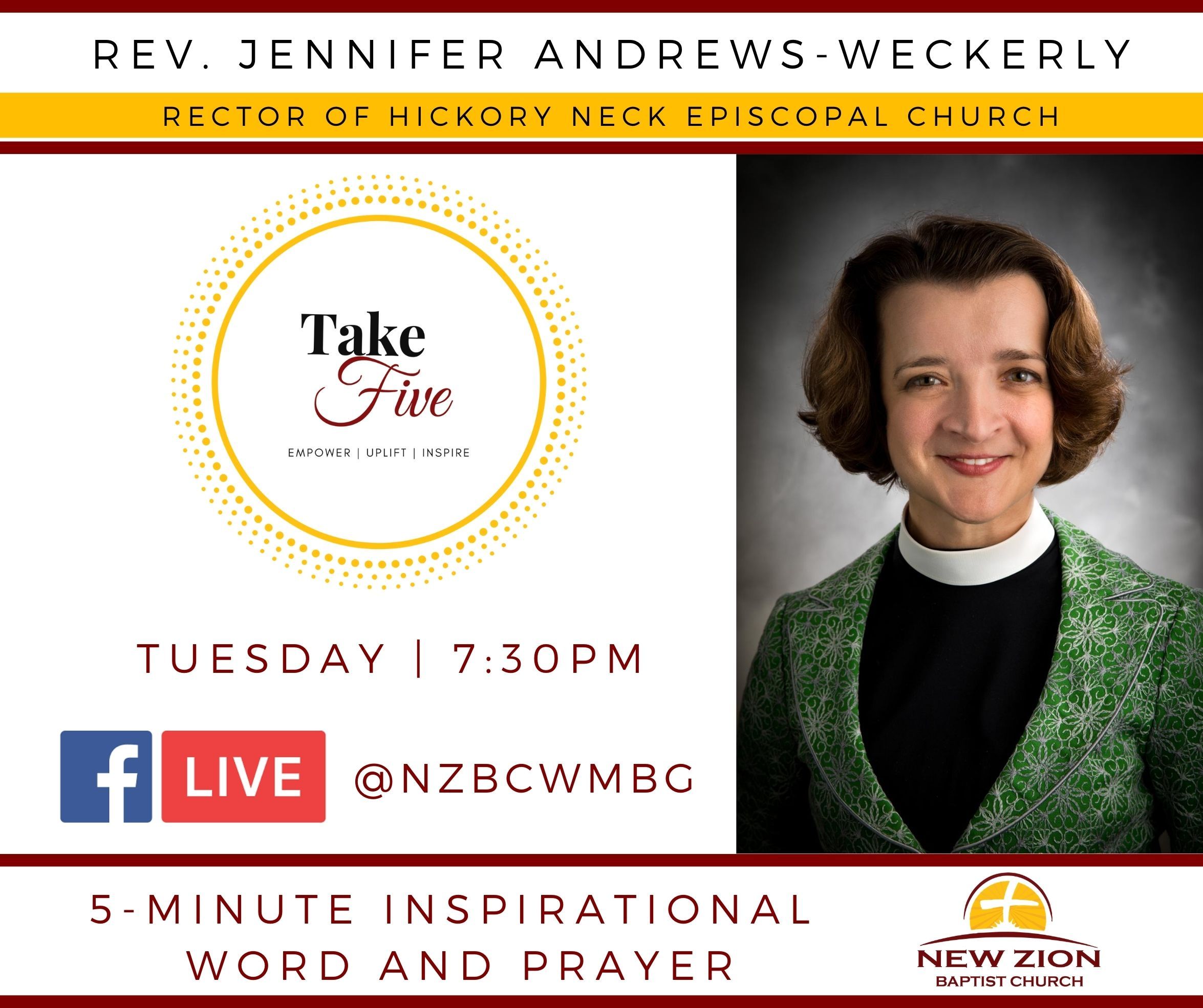
Take Five Speakers-Rev. Jennifer Andrews-WeckerlyThis reflection was offered through the livestream program called “Take Five” at New Zion Baptist Church on July 28, 2020.  This is the text from that talk.

Tonight we turn to Psalm 149, which says, “Praise the Lord.  Sing to the Lord a new song, his praise in the assembly of the saints.  Let Israel rejoice in their Maker; let the people of Zion be glad in their King.  Let them praise his name with dancing and make music to him with tambourine and harp.  For the Lord takes delight in his people; he crowns the humble with victory.  Let the saints rejoice in this honor and sing for joy on their beds.”

Now I know what you may be thinking.  Really?  You want us to talk about praising God?  We’ve got a worldwide pandemic, which our country is becoming one of the worst handlers of in the world, which disproportionately is affecting people of color, and has become so politicized that we are no longer worried about the sanctity of human life, but are instead arguing about rights and the ethics of sacrificing life for some contrived greater good.  Not only that, we are in a crucible around racism, that alternatively gives us great hope for change and makes us despondent about how far we really have to go.  Add to that the emotional, spiritual, financial, and physical toll of this time, a time when we seem incapable of respecting the dignity of every human being, and you want to talk about singing to the Lord a new song?

I don’t know about you, but when I am feeling the weight of the world, and when I am longing for a word from God, an old song is usually where I return.  Every once in a while, when I slow down enough not to just to pray to God, but to actually listen to God, those old timey hymns from my childhood come back.  Their words speak to my ache, or let me wallow in my despair.  They talk about sweet, sweet Spirits, and walks through garden alone with Jesus, and balms in Gilead.  When I talk to Jesus, I want an old song.

But that is not what the psalmist says.  We are not asked to recall the old songs; we are invited to sing a new song.  In fact, seven times in the psalms, we are invited to sing a new song to the Lord.  As a fellow pastor says, “New songs of praise are appropriate for new rescues and fresh manifestations of grace.  As long as God is gracious toward us, as long as he keeps showing us his power, and wowing us with his works, it is fitting that we not just sing old songs inspired by his past grace, but also that we sing new songs about his ever-streaming, never-ceasing grace.”[i]

In this time of utter upheaval, unrest, and unevenness, two things are happening.  One, God is still moving.  The Spirit’s movement may be hard to see or hear in the cacophony of noise.  But I know in talking to New Zion’s leadership, talking to the folks at Hickory Neck Church, and talking to our neighbors here in James City County, Jesus is still moving.  I know that you are finding moments of grace, even in the darkness of this time.  I know that you are seeing shreds of hope, even in what feels like the disappointing failures of our nation.  Two, despite how comforting those old songs are, I am guessing the Holy Spirit has whispering some new songs in your ear.  You may not be sure of the words, and you may be straining to hear the tune.  But in the depths of your heart, where we fear change and we harbor anxiety, we know that only a new song can help get us out of this mess.

So, here’s the good news.  We are not on our own to birth these new songs.  Psalm 40 says, “I waited patiently for the Lord; he turned to me and heard my cry.  He lifted me out of the slimy pit, out of the mud and mire; he set my feet on a rock and gave me a firm place to stand.  He put a new song in my mouth, a hymn of praise to our God.  Many will see and fear the Lord and put their trust in him.”  God put a new song in my mouth, says the psalmist.  Not I, out of my genius, wrote a new song.  Not, I worked hard and put in the time, and out of my labor created a new song.  Not, I listened to what others were singing and sang their songs.  No, the psalmist says, God put a new song in my mouth.  Our invitation tonight is to open ourselves to that new song.  Our invitation is to concede that during this time – a time unlike anything any of us has experienced – God is providing something new – new grace and new songs (which might be even better than that old favorite).  Our invitation tonight is to sing the new song God gives us out in the world – to trust in the wisdom of the words and notes Jesus is giving us and shout them out to a world that desperately needs to hear that new song.

Let us pray.  Holy and creative God, we know that you see our suffering and our cries.  We know that you see us patiently waiting on you to lift us up out of the mud and mire, to put us on a firm place to stand.  Help us to trust that you will put a new song in our mouths – a song to give voice to your ever-streaming, never-ceasing grace.  When we finally hear your new song, help us to sing that song – help us to praise your name with dancing, and make music with tambourine and harp.  Help us to remember that when we sing your new song, we shine your light into the world, helping your transformative, life-giving love take root, and disrupt the injustice of our day.  We praise you, Lord, and we bless you, and we sing a new song with you.  Amen.

[i] David Mathis, “Sing a New Song,” May 4, 2014, as found at https://www.desiringgod.org/articles/sing-a-new-song on July 27, 2020.

Sermon – Matthew 26.14- 27.66, PS, YA, April 5, 2020

08 Wednesday Apr 2020

Posted by jandrewsweckerly in Sermons, Uncategorized

≈ Leave a comment

Tags

afraid, angry, anxious, change, Coronavirus, disciples, God, grief, hope, Jesus, Lent, Lord, Palm Sunday, promise, rollercoaster, Sermon, turbulent, victory, walk

There is a meme that has been circulating that reads, “This Lent is the Lent-iest Lent I’ve ever Lented.”  Of course, the grammar is intentionally ridiculous, but the meme had the effect of making me want to laugh and cry all at the same time.  Lent is usually when we craft a time of sacrifice and abstinence – a time of purposeful withdrawal from comfort to help us ascetically come closer to God.  But this Lent, we have not needed to craft anything.  Comfort has been ripped away from us, our footing has been upended, and a sense of being bereft has swept over us as our governments have attempted to force us to respect the dignity of every human being through stay at home orders with punitive consequences.  In other words, that daily devotional I started reading in the first week of Lent is buried under a pile of crisis management paperwork.

Because this has been a “Lent-y” Lent, the emotional rollercoaster of Palm Sunday is much more relatable than in most years.  We started out our service singing loud hosanas, feeling the high of the promise of the arrival of a savior-king, and we end with a reading where disciples have deserted and betrayed, the faithful have condemned out of fear and resentment, the leadership have mocked and brutalized, the Chosen One of Israel lies dead in a tomb while the remaining faithful women linger at a distance, fearfully mourning Christ’s death.  In this “Lent-iest Lent we’ve ever Lented,” we are no stranger to the feeling of going from confident security and relative prosperity, to sober, fearful waiting and looking at the tomb that is sealed with finality.  As death and the threat of infection hang around us, we do not need to contrive a sense of deep mournfulness and communal culpability.  We do not need to imagine the feeling of Christ’s death.  From singing hosanas to shouting “Let him be crucified,” we are living the narrative of Palm Sunday today.

Though I would never wish our current reality on us, and though I wish we were having a more man-made experience of Lent, I must confess the confluence of this time with this virus feels appropriate.  We do not have to imagine the grief of sitting by the cross mourning the reality of death – we are already sitting by the cross mourning.  We do not have to imagine being forced from the crowd to take up a stranger’s cross in a violent, turbulent moment – we are already in a turbulent moment in the company of strangers.  We do not have to imagine what feels like the extinguishing of hope and victory – we are already in the midst of clouded hope and unseen victory.

I suppose that is where I find hope today.  We do not need to imagine today.  We are the disciples, afraid and unworthy.  We are the mourning women, anxious and bereft.  We are the religious leaders, angry and discouraged.  None of that may sound hopeful.  But I see hope all around.  I see hope in governor’s wives who can see and speak to truth, warning us and helping us see.  I see hope in disciples who can see their own unfaithfulness and mourn with honesty.  I see hope in Jews who risk reputation and sacrifice personal wealth to properly bury the Christ.  I see hope in a Messiah who wanted to escape certain and necessary death, but dies with dignity and faithfulness to save us.  Though today is a sober day, today is also a day of promise.  The hosannas we say are not in vain.  The songs we sing are not in vain.  The prayers we pray are not in vain.  I have hope that we will come through this unique Lent a changed people – a people more humble about our frailty, a people more sober about the importance of community, a people more astounded by the blessing of a savior.  Even in our physical separation, we walk this holiest of weeks together, we mourn and comfort together, and we hold out hope together.  Today, we walk in the light of the Lord.  Amen.

On Singing in a Strange Land…

27 Friday Mar 2020

Posted by jandrewsweckerly in Uncategorized

≈ Leave a comment

Tags

bless, community, Coronavirus, God, Lord, Lord's song, prayer, psalms, reality, refugee, Rivers of Babylon, singing, strange, upheaval, virtual

saul-raskin-on-the-rivers-of-babylon

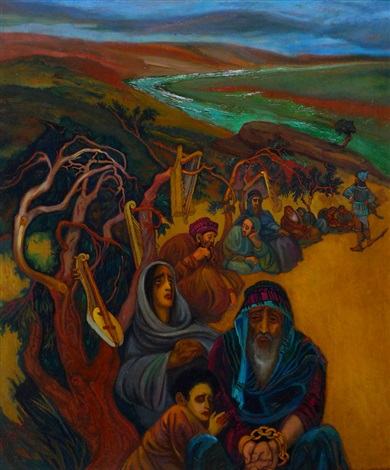
Paul Raskin, “On the rivers of Babylon.”  Photo credit:  http://www.artnet.com/artists/saul-raskin/on-the-rivers-of-babylon-CQj4JGZtS9eQctXb-beJg2

In some ways, I suppose I could have predicted it.  We spent hours luxuriously debating how to safely distribute communion, being able to consider every detail:  imagining how hard this new reality would be for our parish, who is a loving, “touchy-feely” parish; researching burgeoning new practices in other parishes and dioceses; and prayerfully considering how to model safe behavior.  And in the end, our parish engaged beautifully, the pain of their sacrifices obvious on their faces, but also the determination to protect and care for one another equally obvious on their faces.

But then the bottom dropped out.  It was two weeks ago, and I was in the family surgical waiting room, already letting my wardens know I would have to miss a Vestry meeting because my daughter’s surgery had been more complicated than expected, and I had yet to see her.  But just as the nurse was telling us our daughter had been moved to recovery and we could go back soon, our Bishop sent out a communication, cancelling all church campus activities, including worship – including that Vestry Meeting we had planned to hold.  The next several days were a blur – sleep in three-hour bursts as I tended my daughter; texts, emails, and calls to figure out how to still hold worship virtually; pastoral letters to be written to the parish explaining what was happening and how this would all work; and the reality of this even newer normal sinking in slowly.

I have never had a long conversation with a refugee, but I have watched enough news coverage, read enough human-interest stories, and seen enough movies about refugees to have a tiny inkling of how upending, world-changing, and scary it must be to be a refugee.  I would never argue my life in the midst of the Coronavirus is as brutal or devastating as a refugee, but there do seem to be some parallels.  Within moments, our world has been upended.  We went from being totally free to do whatever we desire, to being confined to our homes, having our jobs be totally changed (or sometimes ended), having the schooling of our children and the social support system schooling represents stripped away, worrying about the scarcity of necessities and the wisdom of going out to obtain what we could find, feeling the anxiety of financial insecurity, and losing the comfort of physical touch and community.  As a parent and priest, it has meant taking on the impossibility of two full-time jobs, knowing everyday you could do more, and yet being limited to the constraints of 24 hours a day.  And none of that even touches the emotional, psychological, and spiritual weight of upheaval that our bodies are processing, whether we try to stifle it or not.

Unlike most refugees, I know this new normal for us is relatively temporary.  Someday, we will be able to go back to some modification of the old normal.  But for now, this new reality is foreign, disorienting, and unnerving.  I was just yesterday reminded of that song “Rivers of Babylon,” which pulls from Psalm 137 and 19.  The echo of the verse, “How can we sing the Lord’s song in a strange land?” has been lingering with me.  And yet, that seems to be the only thing holding me together these days – singing the Lord’s song in a strange land.  For all the upheaval, all the disorder, all the anxiety and confusion, rooting myself in daily prayer – having people join in watching on Facebook Live, leaving their comments or greetings, or just seeing their names pop up, has felt like a balm to my heart.  I have not been able to bless or consume the holy meal, I have not been able to embrace my beloved parishioners, and I have not been able exchange physical signs of the peace.  But I have been able to hear the prayers of not only our parish’s heart, but also the hearts of our neighbors, friends, and even strangers.  I have not been able to gather physically with our community, but I have felt the connection of virtual community so palpably, I thought I would cry.  I do not know how long this new reality will last, but I am grateful for the opportunity to sing the Lord’s song in this strange land.  You are most welcome to join me in this singing.  And if you do not know the song, I’m happy to teach you or sing it for you for a while.  May God bless you all, and I’ll see you sometime today as we gather virtually to sing the Lord’s song!

On Baseball, Community, and Church…

12 Wednesday Jul 2017

Posted by jandrewsweckerly in Uncategorized

≈ Leave a comment

Tags

baseball, church, community, disciple, God, Good News, Little League, Lord, love, meaning, ritual, serve, support

baseball kids

Photo credit:  newprovidencepal.org/baseball/

This summer we have had the joy of supporting both a friend’s and a parishioner’s little league baseball teams.  Not having boys myself, it has been a long time since I watched a little league game.  In fact, after the first game we saw, I shared with my husband that I could not imagine giving up so much family time for one member’s extracurricular interest.  He understood my hesitation, but invited me to look around.  You see, with all those mornings, afternoons, and evenings at the baseball field; with the ritual of packing chairs, canopies, and ice chests; and with the repeated gathering of parents and siblings, slowly, slowly a community is formed.  Parents learn about each other’s lives, siblings convert boredom into adventures, and guests are quickly made to feel welcome with a shared chair, beverage, or joke.

What those teams, especially travelling teams, have done is create a community.  They have created a group of people who know each other’s stories, who share wins and losses together, and who slowly learn to talk more than just baseball – but life!  They have created a community where kids do not just have one set of parents – they have a whole community of moms, dads, and siblings.  They have created a community that revolves around ritual, memory-making, and maybe even meaning-making.  In many ways, those teams have created something similar to what Church creates.  Church too creates a multigenerational community – where every elder is a grandma, and every adult can parent children.  Church too creates a community where wins and losses are shared together, where stories are known, and companionship is created.  Church too revolves around ritual, memory-making, and meaning-making.

Church creates community, but uses that creation for a different purpose.  The community of Church nurtures, forms, offers comfort, and creates community, but almost as a side-benefit to the main work we do.  Our purpose is to shape disciples for sharing and living the Good News of God in Christ.  So, while we are loved and supported in the community, we are loved and supported so that we can go out into the world to love and support others.  While we share stories, wins, and loses, we also go out to listen to others’ stories, naming where we see God acting in their lives.  While we participate in ritual, making memories and meaning, that same ritual sends us out to love and serve the Lord in the world.  We may come for the community Church creates.  But we stay because that community demands we be much more.

Today I am grateful for our many communities.  In fact, I think we all need more than just Church communities to keep us grounded in the world God created.  But if you haven’t been to church in a while, I invite you to give it a try.  You may find even more than you were looking for!

On Being Stewards of Dreams…

27 Thursday Apr 2017

Posted by jandrewsweckerly in Uncategorized

≈ Leave a comment

Tags

church, cup, dream, God, intergenerational, Lord, ministry, portion, serve, vision

portion and cup

Photo credit:  https://www.pintrest.com/pin/536632111820932245/

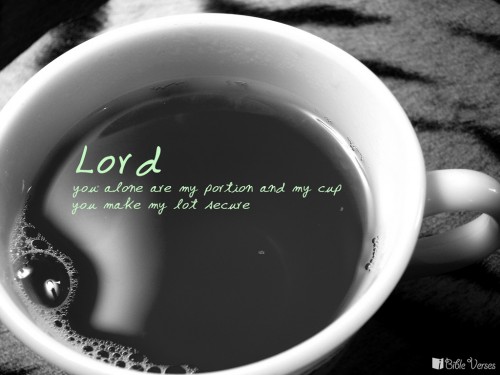
“O Lord, you are my portion and my cup; it is you who uphold my lot.  My boundaries enclose a pleasant land; indeed, I have a goodly heritage.”  (Psalm 16.5-6) 

At our Vestry Retreat this winter, we began to talk about the dream we have been tossing around since before my arrival.  Upon reflection of the demographics and needs in Williamsburg, the dream is that Hickory Neck offer a childcare program, adult daycare program, or a combined ministry of the two.  I have been excited about the idea ever since I first heard it articulated.

I had encountered the concept of intergenerational care online (see video here).  What I loved about the video was that the intergenerational care reminded me of what happens at church:  people from all generations finding comfort, care, and a sense of identity and purpose.  In our modern culture, intergenerational relationship is rare.  Families live far apart, people tend to be segregated by life stage, and we value self-sufficiency.  But what we forget in our modern culture is that our young and our old need each other – they teach each other, they bring each other renewed energy, and they help each other learn.  I have always loved that my children have lots of “grandmas and grandpas” at church.

If I had the option of putting my children in childcare that fosters such a rich environment, I would be thrilled.  Furthermore, I know that our geographic area could use more accessible childcare and senior daycare.  As the pieces came together, God seemed to be inviting Hickory Neck into a new phase of its ministry.  This winter, the Vestry agreed that we should start being stewards of this dream the Spirit had given us.  So, for the last month, the Vestry has been having conversations in the community.  The idea is to learn what services are already offered, whether our sense of the needs matches the actual needs, and what potential partners there may be in our community.  We are obviously in the very early stages of this walk, but it is an exciting time!

I hope you will join us this Sunday as we gather for our quarterly Rector’s Forum.  We will be talking about this vision, as well as the many other tremendous ministries of Hickory Neck.  We indeed are blessed by a goodly heritage at Hickory Neck.  I look forward to celebrating the ways that our Portion and our Cup are leading us!

Sermon – Proverbs 31.10-31, Mark 9.30-37, P20, YB, September 20, 2015

23 Wednesday Sep 2015

Posted by jandrewsweckerly in Uncategorized

≈ Leave a comment

Tags

awe, capable, church, companionship, disciples, fear, God, grace, gratitude, humility, Jesus, joy, Lord, Mark, perfection, power, Proverbs, satisfaction, scolding, scripture, Sermon, strength, warrior-like, wife, woman, wonder

There are some Sundays when the scripture lessons appointed for the day are just right.  They speak truth to power or relate to a spiritual crisis in the community.  They shed light on a current event or they give pastoral words to aching hearts.  On those days, I am so grateful for the ways in which I see the Holy Spirit moving through the Church through the vehicle of scripture.  Today is not one of those days.  I read both our Old Testament and Gospel lessons this week, and my first reaction was, “Really?!?  THIS is what we needed to hear this week, God??”

The Old Testament lesson from Proverbs is actually one of my favorites – even though the lesson takes some deconstructing.  This passage is often referred to as the passage about the capable wife.  Now anytime the church starts talking about how women need to be wives and how those wives need to be “capable” I start getting defensive.  The good news is that the title is more the problem than the lesson itself.  The Hebrew word often translated as “capable” is better translated as powerful, strong, or even warrior-like.  This woman is a superhero.  She rises before dawn; manages a staff, ensuring her family has food and security; she purchases property and plants a vineyard with her own hands; she runs a thriving business, providing fine clothing for her family and the community; she is known for her wisdom and is happy and satisfied; and in her spare time, she is a shining example of philanthropy.  When you think about the traditional role of women in the patriarchal society of the time,[i] this woman is on fire.  She is an empowered woman, an equal partner to her husband, and is the master of both her home and her work outside of the home.[ii]  She is like Martha Stewart on steroids.

In the Gospel lesson, we find the disciples struggling yet again.  Jesus meets with the disciples and explains to them his fate.  And instead of asking Jesus what he means, they remain silent because they are too afraid to ask.  Actually, they do not remain silent.  Instead, they start bickering among themselves about who will be first in the kingdom.  I suppose that if the world is going to end, we might be similarly distracted.  But Jesus catches them arguing and shames them into true silence.  Not only does Jesus tell the disciples that they must strive to be last – servants of all; but also, Jesus tells them that in order to be a part of Jesus’ kingdom, they need to welcome children like they would welcome Jesus (which really could be interpreted as welcoming the poor, widowed, or disenfranchised).  So basically, Jesus tells the disciples they are a mess.  Not only are they not listening, they are distracted by their egos, and they are not attending to the one ministry he has called them to do.

So here is the challenge with these two lessons.  Basically, we take from the lessons that we are all too full of ourselves, we are distracted by the wrong things, we are not doing the work Jesus has called us to do.  And if we want to correct all of that behavior, we need to become warrior women and men – Martha Stewarts on steroids, showing everybody how it’s done.  Now I am not arguing that any of those points are not inherently truthful and are not lovely goals toward which we should strive.  What I am arguing is that I just did not want to hear them this week.  Here we are busting our buns to do the massive amount of work needed to pull off the Fall Fair.  Here we are busy kicking off the program year, with teachers preparing lesson plans, the choir readying music, and all our ministries being back on deck.  Here we are putting together last minute receptions for the bereaved, trying to complete a major construction project, and trying to ensure that we have enough funds to run our operations and enough energy to evangelize in our community.  And that is on top of all the work we are doing to get kids back to school, to reconnect with our community commitments after a summer hiatus, to make sure we are still performing well at work, to get our homes tidy and prepared for fall, and to squeeze in some football games.  In the midst of that chaos, the last thing I need to hear from church today is that my priorities are all wrong and that I need to work harder – a lot harder.  Thanks, but no thanks, Holy Scripture!

The good news is that there is good news.  For all the overwhelming work of the warrior-like woman in Proverbs and for all the scolding the disciples receive, the message from both lessons is clear and surprisingly manageable.  In Proverbs, the lesson concludes, “a woman who fears the Lord is to be praised.”  Now this is not the kind of fear we get when we talk about horror films, phobias, or abject worry.  The fear the passage is talking about is “awe, wonder, gratitude, and reverent humility before the Creator.”[iii]  Now fear of the Lord may sound like one more thing to add to the to-do list, but actually, fear is where the lessons are calling us to start.  You see, the disciples lacked a genuine fear of the Lord.  They were afraid in the more traditional sense – of what Jesus was talking about, of what would happen to them, of how they would ensure their own security.  They got wrapped up in themselves.  But if they had been wrapped up in awe, wonder, gratitude, and humility, all of the things Jesus had to instruct them to do would have come more naturally.  If they were in awe of Jesus, they would have easily been able to see how grateful they should be to have a Messiah who would sacrifice himself for them.  If they had been in wonder of Jesus, they would have simply been happy to be called a disciple, without worrying about their place or status.  If they had been full of gratitude, they would have already been welcoming children – and the poor, and the outcast, and the stranger.  The same sort of reversal is true for the warrior-like woman in Proverbs.  All of those amazing things she seems to accomplish in 24 hours happen only because of her reverence for God.  She is not favored because of all that she does.  She is able to do all that she does because she starts in a place of gratitude.  The rest flows easily out of that vantage point.

Today’s lessons are not about scolding us for how we get everything wrong, or about setting some impossible standard of perfection for us.  Instead, today’s lessons are about checking our baseline.  When our baseline is about awe, wonder, gratitude, and humility, we find living into Jesus’ instructions much easier.  When our baseline is about awe, wonder, gratitude, and humility, those astounding to-do lists and projects do not seem like burdens but gifts.  When our baseline is about awe, wonder, gratitude, and humility, church is not only a place we want to be, church is a place to which we are lovingly drawn.  That’s when that piece you were writing about stewardship doesn’t seem scary or even hard.  That’s when those sacred moments happen in Sunday School when a child or teen says something profound that stays with you all week.  That’s when you are up to your ears in stress about the Fair, and something funny – really funny – happens, and you and the other volunteers laugh so hard that you cry.  Holy Scripture today is not directing us down a path of guilt and shame.  Holy Scripture today is inviting us onto that path less travelled – the one that starts with awe, wonder, gratitude, and humility, and ends with grace, joy, companionship, and satisfaction.  I may not have wanted to hear our scripture lessons today.  But I needed to hear them.  My hope is that you can hear them in the spirit in which they were intended too.  Amen.

[i] Brent A. Strawn, “Commentary on Proverbs 31.10-31,” September 20, 2009, as found at http://www.workingpreacher.org/preaching.aspx?commentary_id=390 on September 18, 2015.

[ii] Telford Work, “Theological Perspective,” Feasting on the Word, Yr. B, vol. 4 (Louisville:  Westminster John Knox Press, 2009), 78.

[iii] Kathleen M. O’Connor, “Exegetical Perspective,” Feasting on the Word, Yr. B, vol. 4 (Louisville:  Westminster John Knox Press, 2009), 79.

Homily – Philippians 4.4–9, John Bosco, January 30, 2014

12 Wednesday Feb 2014

Posted by jandrewsweckerly in Uncategorized

≈ Leave a comment

Tags

gentleness, God, goodness, John Bosco, Lord, rejoice

John Bosco, who we celebrate today, was born in the late 1800s in Italy.  He lost his father at age two, but he managed to retain a sweet, kind disputation.  At age nine, he received a vision of Jesus Christ and the Virgin Mary encouraging him to be kind, obedient, and hardworking – a vision that began his vocation early in life.  Eventually, Bosco went to seminary and became a priest and was assigned as chaplain to a girls’ boarding school.  But before long, Bosco was not satisfied working with well-to-do young women – he was more drawn to the ragamuffin boys outside the school – so much so that he opened an orphanage for them in 1846. Eventually his work led to the formation of the Salesian order, a group of women religious, lay brothers and dedicated laity who operated orphanages, vocational schools, and night-time primary schools for working people.

Having watched the recent State of the Union address, and especially the commentary following, I think we as a country have lost a lot of what Bosco embodied – the sweet, kindness that shows love to one another.  We are so busy being right that we forget what being kind to one another looks like.

We see a difficult invitation from Philippians today, “Let your gentleness be known to everyone.” Gentleness is not one of those virtues we value today – instead we have become rigid upholders of what is right – much as we saw when our government shut down last year.  Showing love sounds good, but showing love is much harder in practice.

So how can we become a people full of love like Bosco’s?  Two things emerge from Philippians: First, the text says, “Rejoice in the Lord always, again I will say, Rejoice.”  Rejoicing in God may seem silly, but having words of adoration for God always on our lips makes loving a lot easier.  Focusing on God somehow takes us out of ourselves and puts us back on track with being agents of love.  Second, the text says, “whatever is true, whatever is honorable, whatever is just, whatever is pure, whatever is pleasing, whatever is commendable, if there is any excellence and if there is anything worthy of praise, think about these things.”  In other words, we have to actively pull our minds out of the messiness of our lives and set our minds on goodness.  Perhaps then we might find our ways to the kindness, generosity, and love we find in people like Bosco.  Amen.

Homily – Psalm 34.1-9, Luke 1.46-55, St. Mary the Virgin, August 15, 2013

26 Thursday Sep 2013

Posted by jandrewsweckerly in Uncategorized

≈ Leave a comment

Tags

angry, bless, God, homily, Jesus, Lord, praise, prayer, St. Mary the Virgin

Today we honor St. Mary the Virgin, mother of our Lord Jesus Christ.  What I find so fascinating about our lessons today is that they are filled with praise.  Mary’s song, or the Magnificat, we heard in Luke, the words from Isaiah, and even the psalm are all about our praise of God.  But if you think about Mary’s life, Mary could have easily and justifiably been quite angry with God.  Not only is she a young bride to an older man, she enters into marriage being pregnant in a traditionally shameful way.  Then her life with Jesus, though with moments of joy, is full of pain:  Jesus pushes her away, she watches him die on the cross, and suffers through his life and the days after his death.  The song of Mary could have been a song raging against God.

More often than not, I think our prayer life with God is like this.  We get angry with God when God doesn’t seem to be responding to our petitions.  We dwell on the things that are going wrong in our lives, in the lives of our loved ones, and in the world.  When we come to God in prayer, it is rarely for thanksgiving; it is usually with petitions and frustrations.

But today, Mary shows us another way.  She sees in her pregnancy blessing not a curse.  She sees the magnificent big picture of what God is doing in the world through her, not to her.  She can dream about what this Messiah can do, and she stays by his side, knowing God can do more – even in the throws of death.  Mary is able to do what the psalmist does: “I will bless the LORD at all times; his praise shall ever be in my mouth.”

This is our invitation today – to find our way back into praising and blessing the LORD.  I was recently reading about a spiritual discipline of prayer where the person looks back on each day and offers to God at least one thing they are grateful for.  The practice seems so simple, but already the practice is changing my prayer life and my attitude toward life in general.  This is the shift Mary invites us into today – to bless the LORD at all times and to let God’s praise ever be in our mouths.  Amen.

Recent Posts

  • On the Myth and Magic of Advent…
  • On Risking Failure and Facing Fear…
  • Sermon – Luke 23.33-43, P29, YC, November 23, 2025
  • On Inhabiting Gratitude…
  • Sermon – Luke 20.27-38, P27, YC, November 9, 2025

Archives

  • December 2025
  • November 2025
  • October 2025
  • September 2025
  • August 2025
  • July 2025
  • June 2025
  • March 2025
  • February 2025
  • December 2024
  • November 2024
  • October 2024
  • September 2024
  • August 2024
  • July 2024
  • June 2024
  • May 2024
  • March 2024
  • February 2024
  • January 2024
  • December 2023
  • November 2023
  • October 2023
  • September 2023
  • August 2023
  • July 2023
  • June 2023
  • May 2023
  • March 2023
  • February 2023
  • January 2023
  • December 2022
  • November 2022
  • October 2022
  • June 2022
  • May 2022
  • January 2022
  • December 2021
  • November 2021
  • October 2021
  • September 2021
  • August 2021
  • June 2021
  • May 2021
  • April 2021
  • March 2021
  • February 2021
  • January 2021
  • December 2020
  • November 2020
  • October 2020
  • September 2020
  • August 2020
  • July 2020
  • June 2020
  • May 2020
  • April 2020
  • March 2020
  • February 2020
  • January 2020
  • December 2019
  • November 2019
  • October 2019
  • September 2019
  • August 2019
  • July 2019
  • June 2019
  • May 2019
  • April 2019
  • March 2019
  • February 2019
  • January 2019
  • December 2018
  • November 2018
  • October 2018
  • September 2018
  • August 2018
  • July 2018
  • June 2018
  • May 2018
  • April 2018
  • March 2018
  • February 2018
  • January 2018
  • December 2017
  • November 2017
  • October 2017
  • September 2017
  • August 2017
  • July 2017
  • June 2017
  • May 2017
  • April 2017
  • March 2017
  • February 2017
  • January 2017
  • December 2016
  • November 2016
  • October 2016
  • September 2016
  • August 2016
  • July 2016
  • June 2016
  • May 2016
  • April 2016
  • March 2016
  • February 2016
  • January 2016
  • December 2015
  • November 2015
  • October 2015
  • September 2015
  • August 2015
  • July 2015
  • June 2015
  • May 2015
  • April 2015
  • March 2015
  • February 2015
  • January 2015
  • December 2014
  • November 2014
  • October 2014
  • September 2014
  • August 2014
  • July 2014
  • June 2014
  • April 2014
  • March 2014
  • February 2014
  • January 2014
  • December 2013
  • November 2013
  • October 2013
  • September 2013
  • August 2013
  • July 2013
  • June 2013
  • May 2013
  • April 2013
  • March 2013
  • February 2013
  • January 2013
  • December 2012
  • November 2012
  • October 2012
  • September 2012

Categories

  • reflection
  • Sermons
  • Uncategorized

Meta

  • Create account
  • Log in
  • Entries feed
  • Comments feed
  • WordPress.com

Blog at WordPress.com.

  • Subscribe Subscribed
    • Seeking and Serving
    • Join 394 other subscribers
    • Already have a WordPress.com account? Log in now.
    • Seeking and Serving
    • Subscribe Subscribed
    • Sign up
    • Log in
    • Report this content
    • View site in Reader
    • Manage subscriptions
    • Collapse this bar
 

Loading Comments...