
Tags
church, God, how, Jeremiah, kingdom of God, love, normalcy, pandemic, poll, prophet, repeat, repent, rest, salvation narrative, Sermon, values, why
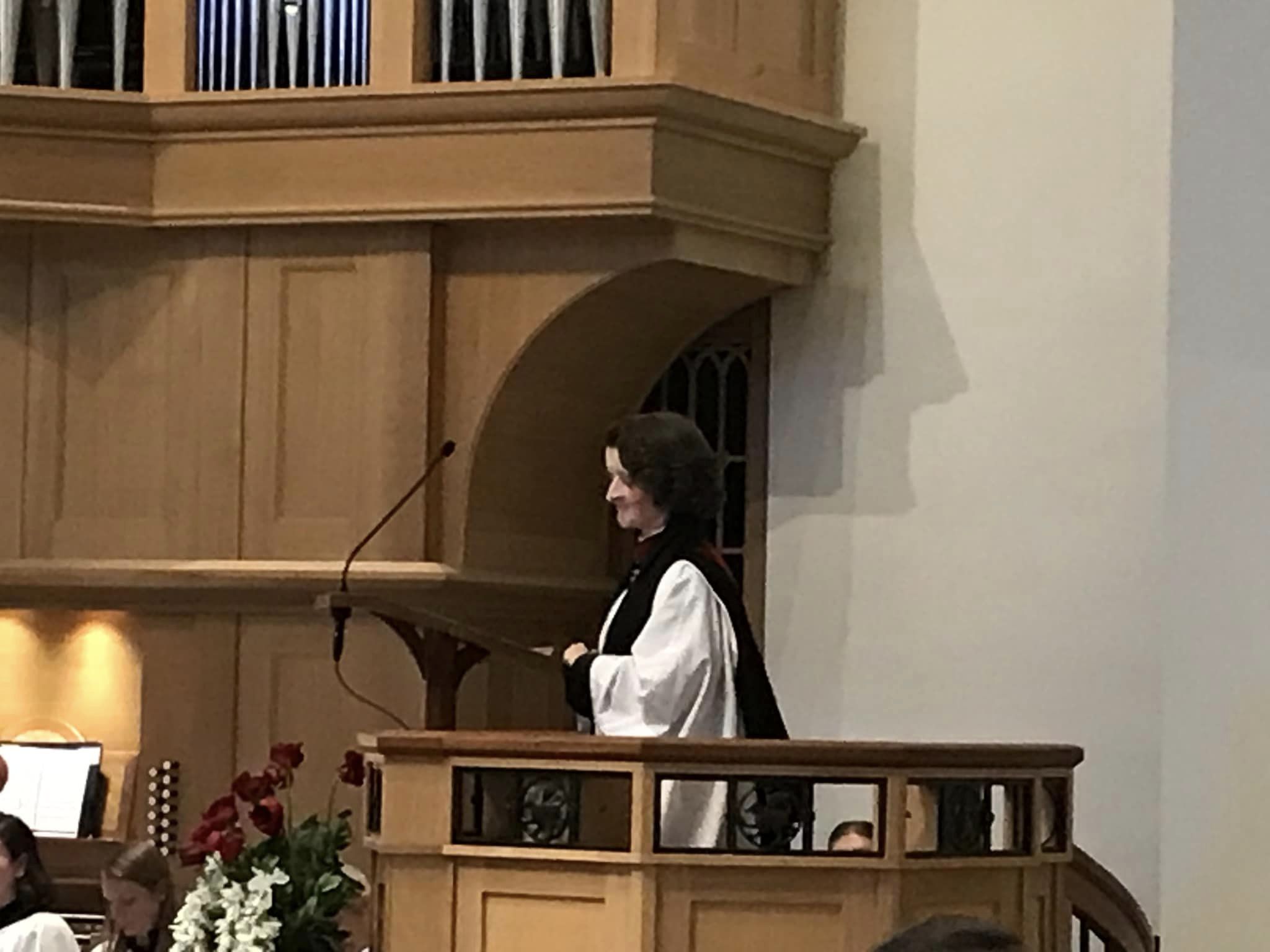
This sermon was delivered to Virginia Theological Seminary on the occasion of our annual Convocation for alumni, faculty and staff, and seminarians.
I live in a pretty “purple” district in Southern Virginia. My Congressman represents a different party than my own, but I make a point to stay on his mailing list as a way to remind him that he represents a politically diverse district. Every month he sends out polls, and I dutifully respond to them. But with every survey I find myself frustrated. My Congressman either has never taken a class in crafting an unbiased survey or he is simply not interested in different opinions. The questions are always phrased something like, “In your opinion, how bad of a job is our president doing: terrible, really bad, pretty bad, or I’m not sure.” Or without any nuance or explanation about the background of the issue, the poll will ask something like, “The Congress wants to pay illegal immigrants who knowingly broke the law hundreds of thousands of dollars. Should we pay these illegal immigrant criminals, yes or no?” Or, one of my favorites, “Which of these issues should be the priority of Congress?” (PS, none of the options listed talk about caring for the poor or our neighbor, and there definitely isn’t an “other” category). But I dutifully take the surveys, hoping my voice is part of my representative’s decision making.
I have been pondering the ministry of Jeremiah and thinking his prophetic ministry is a bit like trying to engage my Congressman. For those of us not taking Old Testament this semester, Jeremiah is prophesying in a time of political decline. The northern kingdom, Israel fell to Assyria nearly a hundred years before, and Judah remains in a tenuous situation. The Assyrians are still in control, but in the course of the book of Jeremiah, Babylon defeats Assyria and takes control of Judah. There are rebellions against Babylon, in particular by King Jehoiakim who we hear about today, but they are eventually unsuccessful.[i] Like any good prophet, Jeremiah is attempting to get the people and king to repent and return to the Lord. And like all people of all time, the people refuse to listen to God. King Jehoiakim is particularly egregious in this refusal. In fact, just verses before our reading, the King has his attendant read Jeremiah’s prophetic scroll three or four columns at a time, then cuts those columns off the scroll and throws them in a fire. King Jehoiakim is not alarmed by the prophecy, and certainly not repentant.
But here’s the funny part. In the verses we read today, the Lord tells Jeremiah to rewrite the entire scroll and add in a little final judgment. Like me, sitting down with yet another poll from my Congressman, he sits down and does the same thing over again. I have been of two minds about this passage. On the one hand, and no offense toward the Lord’s prophetic practices and policies, but how many times are we to keep doing the same thing and expecting different results. As if King Jehoiakim is going to receive the second scroll and say, “Oh, a second scroll? Okay, I guess I won’t burn this one and will change my ways!” If this pandemic has taught us anything this pandemic has taught us we cannot keep doing Church the way we always have and expect the Church to thrive (or in biblical terms, to repent and return to the Lord). This pandemic has made us nimble, agile, creative, and versatile. This pandemic made us stop thinking about hybrid ministries and digital relevance and demanded we start doing and being those things. And God help us if our churches just want to “return to normal” after the pandemic – if we just want to write another scroll.
But as I mentioned, I am of two minds on this passage. On the other hand, despite what seems like poor strategy on the Lord’s part, God’s covenantal relationship with us has never really made sense. The entire salvation narrative is about failure after failure on our part as the people of God to listen and respond to the Lord. Promise after promise, covenant after covenant, even the sending of God’s Son has meant the Lord’s corporate strategy is a case study in what not to do to thrive in business. But that’s what we love about the Lord, right? God keeps writing another scroll, God keeps giving another chance, God keeps holding out hope and promise because God’s love is not meted out in a logical, economical way. Despite all of the innovation which has been entirely life giving during this pandemic, in some ways, what we have offered to a hurting world is the same as what we have always offered: a community of faith, redeemed by God’s grace, commissioned to love God, self, and neighbor. Perhaps that is why I am of two minds about this text. Although this pandemic has not changed who we are and what we offer a broken world, this pandemic has changed how we are. Our core values as the Episcopal Church have not changed. But throughout this pandemic we have learned that how we go about living into those core values certainly can, should, and hopefully has changed. And, as the Genesis writer would say, “…it was very good.”
In this particular season of the Church, many of us are feeling a longing for rest, for relief from constant pivoting, for a sense of normalcy. Many of us would like to sit down and just write the same scroll over again. In Jeremiah’s day that second scroll meant suffering and exile, and there would be more than twenty years before the people of God would see God’s promise of restoration realized.[ii] But I do not think that is the invitation from scripture today. I do not think the Lord is inviting the Church to write another scroll or fill out another poll. We have a whole Bible full of examples of how doing the same thing over and over does not lead to the fulfillment of the kingdom of God. Instead, the invitation from scripture today is to see the patterns of the resistance to love, and find a new way to love. God is not inviting us to change our “who” or our “what,” but to change our “how.” Your “how” might be different from mine. But Jeremiah shows us time and again that the same repeated “how” does not turn hearts. Our work in this season is to listen to what new “hows” the Holy Spirit is showing us, and then be willing to be vulnerable enough to try them. Because, Lord knows, we do not need another scroll. Amen.
[i] Josey Bridges Synder, “Jeremiah,” The CEB Women’s Bible, (Nashville: Common English Bible, 2016), 953.
[ii] 953.


 Seeking and Serving