• About

Seeking and Serving

~ seek and serve Christ in all persons

Seeking and Serving

Tag Archives: rest

On Finding God in the Busyness…

06 Wednesday Sep 2023

Posted by jandrewsweckerly in reflection

≈ Leave a comment

Tags

blessing, busyness, celebrate, church, God, holy, renewal, rest, sabbath, sabbatical

Photo credit: https://www.theladders.com/career-advice/overcoming-business-our-cultural-addiction

One of the questions I received before heading off on sabbatical was whether my sabbatical was too full.  I chuckled at the question because on paper, my sabbatical did have a great deal of movement and activity.  But I also knew that as an extrovert who was longing to reconnect after a pandemic that forced a period of disconnection, I would be just fine.  What I was more surprised about was my own parish’s response to their sabbatical.  When I have asked them “How was your sabbatical?” many people have responded, “It was busy!” or “That was one of the busiest summers we’ve had!”  Upon further inquiry, to a person, the follow-up comment was how although the summer of sabbatical was busy, it was full of meaningful, powerful, enriching things – none of which they would have missed or wanted to omit from the schedule. 

I often talk about the temptations of busyness – how busyness can keep us from noticing God, or how busyness can make us feel like we’re accomplishing something even if that accomplishment is purposeless movement or busyness for busyness’ sake.  But I never really thought about how busyness filled with the work of God or with encounters with God in community can be tremendously life giving.  In essence, the difference seems to be how we define sabbath or sabbatical.  For many of us, sabbath or sabbatical should mean rest or a slowing down of all things so that we can take in God’s creation and blessing.  And for many, both physical rest and spiritual rest are necessary.  But for anyone who has wasted a day away binge-watching a series, we know that not all “rest” is created equal.  That’s why we talk so much about sabbatical or sabbath being about renewal – about the feeding of our souls.  That renewal might be found in the busyness of yoga classes, labyrinth walks, meditation classes, or movie and game nights.  Renewal might be about surrounding yourself with laughter, storytelling, and dancing.  And renewal might also be about sitting on a bench in solitude, listening to the sounds of God’s creation.

As the school year gets underway, church gets back into its program year, and busyness starts to bubble up in our lives, I hope what we take from our time of sabbatical into our post-sabbatical time is a pattern of making our busyness holy.  Where are you finding God on the football field, gymnastics mat, or the horse stables?  Where are finding God in the lunch meetings, PTA events, or church calendar?  Where are you finding God in phone call to a grieving friend, the meal made for someone recovering from surgery, or the backpack purchased for a neighbor?  Our busyness does not have to be inherently pulling us away from God.  Our invitation is to look for and celebrate God in the midst of the busyness. 

Sabbatical Journey…On Sabbaticals within Sabbaticals

30 Friday Jun 2023

Posted by jandrewsweckerly in reflection

≈ Leave a comment

Tags

busy, creation, God, reconnect, rest, sabbatical, spiritual practice, weary

Time for S’mores! (Reuse with permission)

If you are following this blog, you may have noticed that our family’s version of sabbatical is not really about rest.  Our sabbatical is more about getting out of your comfort zone, seeing the beauty of God’s creation, and making amazing memories.  But even sabbatical adventurers sometimes need a day of rest.  One of our crew was not feeling 100% today, so we left him behind and saw just a morning’s worth of the national park we wanted to visit instead of a whole day.  Seeing him have some down time made us realize maybe we all needed a little down time.  So instead of making memories out in the wild, we made memories resting in our lovely hotel.  It wasn’t dreamy or romantic, but it was very much lifegiving.

I was thinking how hard it is for all of us to give ourselves rest.  Our weekends are often a break from the work week or school week, but we want to enjoy them so much we often overly jam pack them – with sports commitments, attending events, meeting up with friends, or just getting out and about town.  Somehow rest on the weekend feels like wasting the weekend.  Part of my own sabbatical and my parish’s sabbatical was not necessarily scheduling a bunch of naps, but about creating space outside of the normal pace of life to reconnect – with God, with one another, with ourselves.

If you are not a part of our parish’s sabbatical (although if you are local, feel free to join any of the fun events found HERE), perhaps you can make this summer about finding mini sabbatical times too.  Maybe that means making space for prayer, finding your way to a church service (either in person or online), or taking on a spiritual practice.  Maybe it means engaging in an activity that helps you connect with God in a way that you haven’t tried before.  Or maybe it means taking a deep breath and really seeing the goodness all around you.  I promise, you’ll be grateful for the energizing your “sabbatical” can create!

On Delight and Sabbatical…

06 Tuesday Jun 2023

Posted by jandrewsweckerly in reflection

≈ Leave a comment

Tags

delight, family, friends, God, harmony, intentional, practice, rest, sabbatical, tension

Photo credit: https://www.linkedin.com/pulse/why-you-need-help-schedule-sabbatical-asap-kadi-cole-rn-ms/

Toward the end of my second week of sabbatical, it dawned on me what a different space sabbatical creates from vacation.  The beginning is quite similar:  a flurry of activity, trying to tie up loose ends, ensuring all systems and coverage are in place, and maybe, clearing off your desk.  But at the end of the second week of sabbatical, I noticed a distinction from vacation.  Usually at the end of vacation, even a two-week vacation, tension in my body begins to return.  The wheels in my mind start to churn, even if I know they shouldn’t.  “Work mode” creeps into vacation mode and spoils any deep relaxation I have established.  I was delighted to realize that creep is not happening as I enter week three of sabbatical.

Part of my delight in this realization is how restorative these last two weeks have been.  It’s been such a joy to slow down and reconnect with God, with my family, and with friends.  When I was on retreat at the monastery, I turned off the notifications on my phone, and I was amazed at how much tension released from my body.  In times of quiet, I have been able to stop talking so much, and be more focused on listening:  to God, to my family, to those around me.  And in the differently paced time of sabbatical, I am finding so much love:  finding “space” to remember how powerfully life-giving the loving relationships are in my life.

I am not likely to have twelve weeks of sabbatical again for at least another seven years, which has left me wondering how to hold on to moments of sabbatical time in “real life.”  How might I find harmony between my natural full-speed self and my intentional sabbatical self?  It is my hope in the coming weeks to learn that harmonic practice.  I would love to hear what tricks you have developed for that harmony in your own life!

Sermon – Jeremiah 36.27-37.2, VTS Convocation Evensong, October 11, 2022

19 Wednesday Oct 2022

Posted by jandrewsweckerly in Sermons

≈ Leave a comment

Tags

church, God, how, Jeremiah, kingdom of God, love, normalcy, pandemic, poll, prophet, repeat, repent, rest, salvation narrative, Sermon, values, why

This sermon was delivered to Virginia Theological Seminary on the occasion of our annual Convocation for alumni, faculty and staff, and seminarians.

Photo credit: The Rev. Matthew Tucker

I live in a pretty “purple” district in Southern Virginia.  My Congressman represents a different party than my own, but I make a point to stay on his mailing list as a way to remind him that he represents a politically diverse district.  Every month he sends out polls, and I dutifully respond to them.  But with every survey I find myself frustrated.  My Congressman either has never taken a class in crafting an unbiased survey or he is simply not interested in different opinions.  The questions are always phrased something like, “In your opinion, how bad of a job is our president doing:  terrible, really bad, pretty bad, or I’m not sure.”  Or without any nuance or explanation about the background of the issue, the poll will ask something like, “The Congress wants to pay illegal immigrants who knowingly broke the law hundreds of thousands of dollars.  Should we pay these illegal immigrant criminals, yes or no?”  Or, one of my favorites, “Which of these issues should be the priority of Congress?” (PS, none of the options listed talk about caring for the poor or our neighbor, and there definitely isn’t an “other” category).  But I dutifully take the surveys, hoping my voice is part of my representative’s decision making.

I have been pondering the ministry of Jeremiah and thinking his prophetic ministry is a bit like trying to engage my Congressman.  For those of us not taking Old Testament this semester, Jeremiah is prophesying in a time of political decline.  The northern kingdom, Israel fell to Assyria nearly a hundred years before, and Judah remains in a tenuous situation.  The Assyrians are still in control, but in the course of the book of Jeremiah, Babylon defeats Assyria and takes control of Judah.  There are rebellions against Babylon, in particular by King Jehoiakim who we hear about today, but they are eventually unsuccessful.[i]  Like any good prophet, Jeremiah is attempting to get the people and king to repent and return to the Lord.  And like all people of all time, the people refuse to listen to God.  King Jehoiakim is particularly egregious in this refusal.  In fact, just verses before our reading, the King has his attendant read Jeremiah’s prophetic scroll three or four columns at a time, then cuts those columns off the scroll and throws them in a fire.  King Jehoiakim is not alarmed by the prophecy, and certainly not repentant. 

But here’s the funny part.  In the verses we read today, the Lord tells Jeremiah to rewrite the entire scroll and add in a little final judgment.  Like me, sitting down with yet another poll from my Congressman, he sits down and does the same thing over again.  I have been of two minds about this passage.  On the one hand, and no offense toward the Lord’s prophetic practices and policies, but how many times are we to keep doing the same thing and expecting different results.  As if King Jehoiakim is going to receive the second scroll and say, “Oh, a second scroll?  Okay, I guess I won’t burn this one and will change my ways!”  If this pandemic has taught us anything this pandemic has taught us we cannot keep doing Church the way we always have and expect the Church to thrive (or in biblical terms, to repent and return to the Lord).  This pandemic has made us nimble, agile, creative, and versatile.  This pandemic made us stop thinking about hybrid ministries and digital relevance and demanded we start doing and being those things.  And God help us if our churches just want to “return to normal” after the pandemic – if we just want to write another scroll. 

But as I mentioned, I am of two minds on this passage.  On the other hand, despite what seems like poor strategy on the Lord’s part, God’s covenantal relationship with us has never really made sense.  The entire salvation narrative is about failure after failure on our part as the people of God to listen and respond to the Lord.  Promise after promise, covenant after covenant, even the sending of God’s Son has meant the Lord’s corporate strategy is a case study in what not to do to thrive in business.  But that’s what we love about the Lord, right?  God keeps writing another scroll, God keeps giving another chance, God keeps holding out hope and promise because God’s love is not meted out in a logical, economical way.  Despite all of the innovation which has been entirely life giving during this pandemic, in some ways, what we have offered to a hurting world is the same as what we have always offered:  a community of faith, redeemed by God’s grace, commissioned to love God, self, and neighbor.  Perhaps that is why I am of two minds about this text.  Although this pandemic has not changed who we are and what we offer a broken world, this pandemic has changed how we are.  Our core values as the Episcopal Church have not changed.  But throughout this pandemic we have learned that how we go about living into those core values certainly can, should, and hopefully has changed.  And, as the Genesis writer would say, “…it was very good.”

In this particular season of the Church, many of us are feeling a longing for rest, for relief from constant pivoting, for a sense of normalcy.  Many of us would like to sit down and just write the same scroll over again.  In Jeremiah’s day that second scroll meant suffering and exile, and there would be more than twenty years before the people of God would see God’s promise of restoration realized.[ii]  But I do not think that is the invitation from scripture today.  I do not think the Lord is inviting the Church to write another scroll or fill out another poll.  We have a whole Bible full of examples of how doing the same thing over and over does not lead to the fulfillment of the kingdom of God.  Instead, the invitation from scripture today is to see the patterns of the resistance to love, and find a new way to love.  God is not inviting us to change our “who” or our “what,” but to change our “how.”  Your “how” might be different from mine.  But Jeremiah shows us time and again that the same repeated “how” does not turn hearts.  Our work in this season is to listen to what new “hows” the Holy Spirit is showing us, and then be willing to be vulnerable enough to try them.  Because, Lord knows, we do not need another scroll.  Amen. 


[i] Josey Bridges Synder, “Jeremiah,” The CEB Women’s Bible, (Nashville:  Common English Bible, 2016), 953.

[ii] 953.

Sermon – Matthew 11.25-30, St. Francis Feast, YC, October 2, 2022

05 Wednesday Oct 2022

Posted by jandrewsweckerly in Sermons

≈ Leave a comment

Tags

animals, blessing, Jesus Christ, light, peace, reconciliation, relationship, rest, sabbath, Sermon, St. Francis, truth, wolf, work, yoke

Today we honor the life of St. Francis of Assisi.  Francis is one of the most popular and admired saints of all time.  Most of us know the highlights of his story:  born the son of a wealthy man in 1182; had a conversion experience and devoted his life to Lady Poverty; shaped monastic and lay devotion; was a friend to all God’s creatures – being known to have preached to the birds.

But the story I like most is the story about St. Francis and the Wolf.  According to legend, there was a wolf that was terrorizing the town of Gubbio, killing and eating animals and people.  The villagers tried to fight back, but they too died at the jaws of the wolf.  Francis had pity on the townspeople and went out to meet the wolf.  When Francis found the wolf, he made the sign of the cross, and said, “Come to me, Brother Wolf.  In the name of Christ, I order you not to hurt anyone.”  In response, the wolf calmly laid down at Francis’ feet.  Francis then went on to explain to the wolf how he was terrorizing the people and other animals – all who were made in the image of God.  The wolf and Francis then made a pact that the wolf would no longer harm the townspeople and the townspeople would no longer try to hurt the wolf.  The two traveled into town to explain the pact they had formed.  The people were amazed as Francis and the wolf walked side-by-side into town.  Francis made the people pledge to feed the wolf and the wolf pledge not to harm anyone else.  From that day on, the wolf went door to door for food.  The wolf hurt no one and no one hurt the wolf; even the dogs did not bark at the wolf.[i]

What I love about this story of St. Francis is that the story is about reconciliation and relationship.  At the beginning of the story the town and the wolf are at an impasse – the wolf is hungry and getting attacked; the people are afraid and are lashing out.  What Francis does for both parties is shock them out of the comfortable.  For the wolf, no one has addressed the wolf kindly – they have either shut the wolf out or actively tried to kill him.  For the people, the wolf has not asked for help – he has simply and violently taken what he needed and wanted.  Francis manages to shock the wolf first – not through violence or force, but with the power of love and blessing.  By giving a blessing in the name of God, Francis is then able to implore the wolf to reciprocate with love.  Francis also manages to shock the village – not with a violent victory, but with a humble display of forgiveness and trust.  By walking into town with a tamed wolf at his side, Francis is able to encourage the town embrace, forgive, and care for the wolf.  Francis’ actions remind both parties that unless their relationships are reconciled, unrest and division will be the norm. 

The funny thing about this story is that the story is pretty ridiculous.  I mean, how many of us go around talking to wild animals, blessing them with the sign of the cross, expecting anything other than being attacked?  We will never really know whether the story is true.  But like any good Biblical story, whether the story is true is hardly the point: the point is that the stories point toward “Truth” with a capital “T.”  What this story teaches is peace and reconciliation only happen through meeting others where they are.  We cannot expect great change unless we are willing to get down in the trenches – to go out and meet that destructive wolf face-to-face.  The other thing this story teaches is relationships are at the heart of peace work.  Only when the wolf and the town begin to get to know each other and begin to form a relationship with one another can they move forward. 

This is the way life is under Jesus Christ.  In our gospel lesson today, Jesus says, “Come to me, all you that are weary and are carrying heavy burdens, and I will give you rest.  Take my yoke upon you, and learn from me; for I am gentle and humble in heart, and you will find rest for your souls.  For my yoke is easy, and my burden is light.”  Jesus’ words have layered meaning.  The first meaning we all catch is that Jesus offers us rest and refreshment.  Jesus encourages us to come to him, to cast our burdens and cares upon him, and to take rest, to take Sabbath in Christ.  Our souls will find peace in Christ Jesus.  The second meaning is that peace in Christ Jesus is not without work.  Jesus does not say come unto me and relax forever in happy retirement.  Jesus says we will still have to take on a yoke – the burden of disciple living.  Luckily, that burden of being Christ’s disciple will not be burdensome – it will be light.  Finally, not only will Jesus make the workload “light,” as in not heavy.  Jesus will also make us “light” – as in lights that shine into the darkness and refuse to allow the shadow to overwhelm.   We become the light when we work for reconciliation in our relationships with others. 

That is why we do a couple of special things today.  First, we ask for blessing on our animals – that God might help our relationship with our pet be one of blessing and light.  Second, we come to Jesus for Sabbath rest – that God might renew us on this Sabbath day, use the rest to fill us with light, and renew our commitment to be agents of reconciliation, gladly putting on Christ’s yoke.  Amen.


[i] Jack Wintz, “St. Francis and the Taming of the Wolf,” as found at https://www.franciscanmedia.org/franciscan-spirit-blog/st-francis-and-the-taming-of-the-wolf on September 30, 2022. 

Sermon – Matthew 11.16-19, 25-30, P9, YA, July 5, 2020

15 Wednesday Jul 2020

Posted by jandrewsweckerly in Sermons, Uncategorized

≈ Leave a comment

Tags

abdication, comfort, delightful, God, Jesus, light, meaning, pandemic, purpose, reckless, refreshment, rest, satisfying, Sermon, weary, yoke

In Compline, one of the prayers is for “we who are wearied by the changes and chances of this life.”[i]  I have been feeling that prayer these last several weeks – or even months.  The longer we stay in our homes, the longer this pandemic wages illness and death upon us, the longer the spread of virus takes away the everyday privileges we never fully appreciated, and the longer civil unrest forces us to look at our demons and sinfulness, we become more and more weary.  We do not have to ponder too long why cases of the pandemic are soaring this summer.  People who are wearied by the changes and chances of this life are so grief-stricken they are becoming reckless, self-centered, and indignant.

So, you can imagine my full-bodied relief when I heard the last verses of our Gospel lesson today.  “Come to me, all you that are weary and are carrying heavy burdens, and I will give you rest.”  Those words from Jesus are sweet comfort to us, who just want a break, who just want some semblance of normalcy, who just want peace.  Jesus’ words are a warm embrace in a time of touchlessness.  Jesus’ words are a balm to our country who this very weekend honors a liberty that many of our neighbors are reminding us is not felt by all our citizens.

But as scholar Thomas Long says, “What Jesus offers, however, is not a hammock, but a yoke.”[ii]  I know we want to linger on verse 28, but immediately after that comforting embrace, Jesus says, “Take my yoke upon you, and learn from me; for I am gentle and humble in heart, and you will find rest for your souls.  For my yoke is easy, and my burden is light.”  In the shift between these last verses, Jesus does a bit of a bait and switch.  He beckons us into his comforting arms, but also places a burden on our shoulders.

I confess, I have been a bit cranky about that switch.  Can’t we just have one week, one Sunday, one moment, where we abdicate responsibility, where we take a sabbath from all this work, where we binge watch television and eat crappy food?  Isn’t that what Jesus means when he says he will give us rest?!?

Fortunately for all of us, I had my tempter tantrum early in the week, and have had some time to sit with this yoke of Jesus’.  You see, when I am being honest, I know binge watching television or eating junk food is not actually restorative.  I feel stiff and tired after sitting for hours.  And when I eat unhealthily, the lingering stomachache or sluggishness is not actually as comforting as the comfort food implies.

What Jesus is suggesting today is not a restful, self-centered, time of abdication.  What Jesus is suggesting is we find rest in the things of life that matter.  As one scholar suggests, “we will find rest for carrying the burden of the gospel by living out the unique mission to which Jesus calls each of us.”[iii]  That yoke we may be skeptical of this week, is not actually a ploy or a trick by Jesus.  The reason Jesus says his yoke is easy and his burden is light is “because [his yoke] is the way of God, and [his yoke] is profoundly satisfying to the human soul.”[iv]

Jesus uses some strong imperatives today:  come to me, take my yoke, learn from me.  But Jesus is not being bossy.  Jesus is reminding us, in his ever so firm, but pastoral way, that the ways we are seeking rest and relief from weariness are not the ways to life.  The way to life, of true refreshment, of renewed spirits is through the yoke of Christ.  How is that possible?  As one scholar reminds us, “The easy yoke means having something to do:  a purpose that demands your all and summons forth your best.  [The easy yoke] means work that is motivated by a passionate desire to see God’s kingdom realized.  [The easy yoke] means work toward a certain future in which all of God’s dreams will finally come true.  To accept the yoke of the gentle and humble Lord is to embrace the worthy task that puts the soul at ease.”[v]  Jesus reminds us today that the rest we seek is not mind-numbing, emotion-numbing, spirit-numbing relief, but purposeful, meaning-filled, reward-making clarity.  When we harness ourselves to Christ, the burdens no longer feel like burdens, the work no longer feels like work, and the desire to be done turns to a desire for God’s delightful sense of purpose and meaning.  That is the kind of profound satisfaction Jesus offers today.  Thanks be to God!

[i] Book of Common Prayer, 133.

[ii] Thomas G. Long, Matthew (Louisville:  Westminster John Knox Press, 1997), 132.

[iii] Emilie M. Townes, “Theological Perspective,”  Feasting on the Word, Year A, Volume 3 (Louisville:  Westminster John Knox Press, 2011), 214.

[iv] Long, 132.

[v] Lance Pape, “Homiletical Perspective,” Feasting on the Word, Year A, Volume 3 (Louisville:  Westminster John Knox Press, 2011), 217.

The Pilgrim’s Way…Day 3

09 Sunday Feb 2020

Posted by jandrewsweckerly in Uncategorized

≈ Leave a comment

Tags

Cambridge, escape, invitation, Jesus, liturgy, pilgrimage, rest, room, sabbath, worship

85206035_2885670511489190_771351468954353664_n

Photo credit:  Jennifer Andrews-Weckerly; reuse with permission only

Sixteen pilgrims from Hickory Neck Church traveled to England for 8 days of pilgrimage.  Our focus was on choral music, hearing Evensong or Choral Mass at a Cathedral, Minster, or college everyday.  This is the third entry, initially posted on our church Facebook page.  For those of you who do not follow us on Facebook, I am repeating the journey’s daily entries here.  Enjoy!

Cambridge

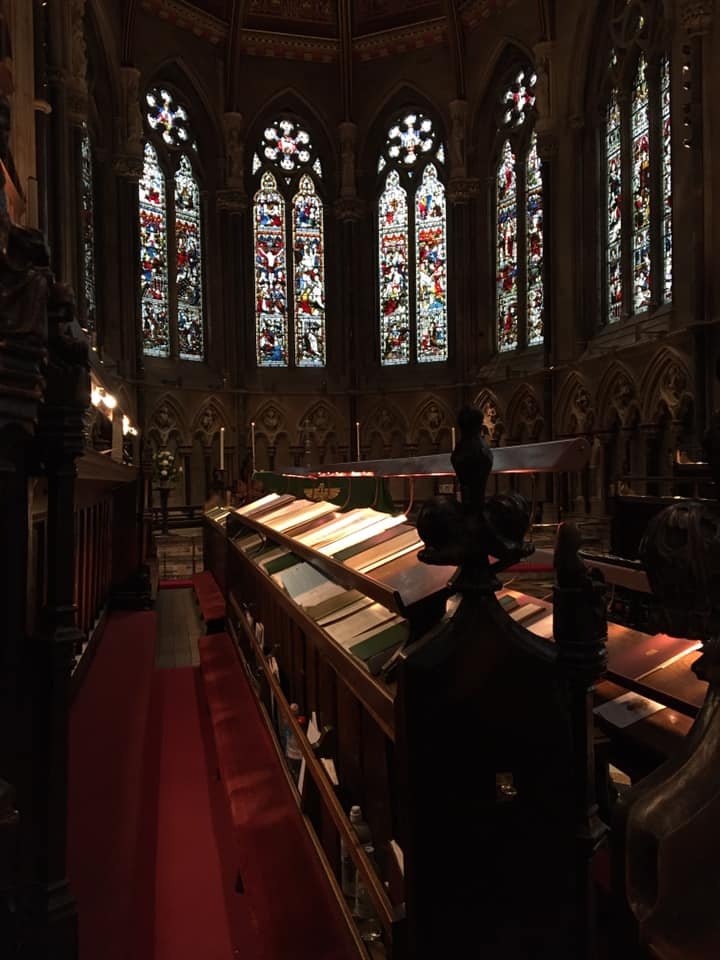
Today our pondering question was about sabbath, a fitting reflection for a Sunday full of worship. But even though I help create pondering questions, I rarely know how they will be answered. I was surprised, then, to see how much I learned about sabbath in churches today.

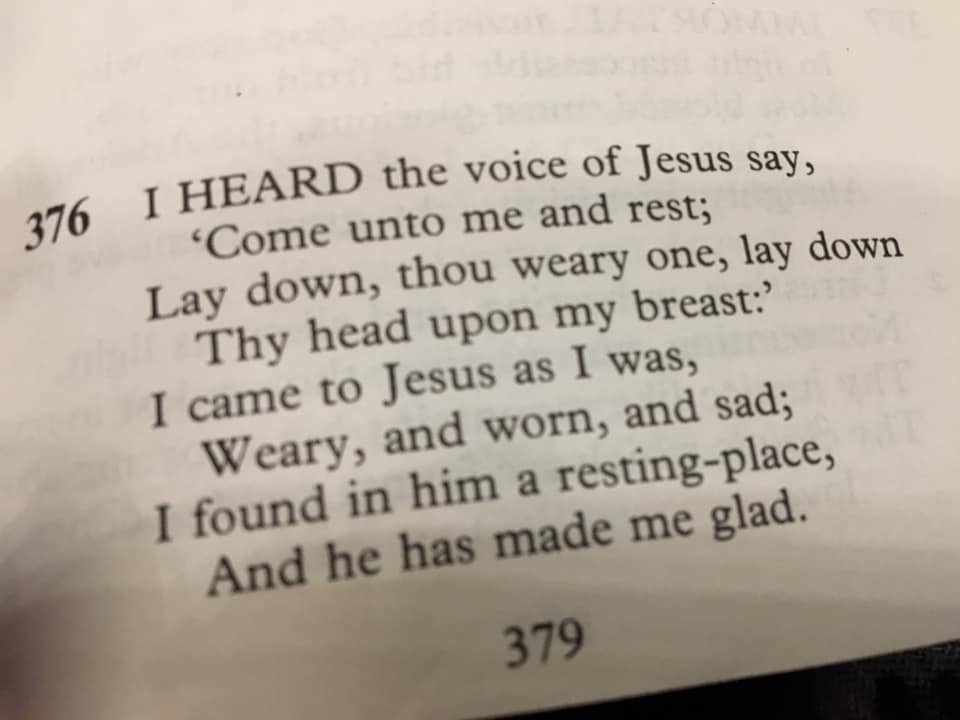
One of our hymns at St. John’s College set the perfect tone. You’ll see the words in the picture below. In it, Jesus offers the invitation to come unto him and rest – that we find resting in Him. Sabbath has always seemed to me to be about “escape from,” as in, escape from work, from stress, from the worldly. I had never thought of sabbath as being “escape to,” as in, escape to Jesus.

The other observation we made about sabbath was making room. St. John’s used the English pattern of praying the psalms where you pause an extra few seconds at the asterisks (or, half verse). This extra breath made the words breathe and come alive. Meanwhile, at King’s we found the liturgy was not rushed. There were pauses in familiar prayers or the Creed that were unfamiliar, forcing us to slow down and pace ourselves with the liturgy leaders. The liturgies themselves today modeled how to find sabbath, how to make room in our words and worship. We would love to hear what you did with your Sabbath today. How did you make space, or escape unto Jesus?

84915916_2885670484822526_19765946302332928_n

Photo credit:  Jennifer Andrews-Weckerly; reuse with permission only

On Finding and Creating Sabbath…

13 Wednesday Mar 2019

Posted by jandrewsweckerly in Uncategorized

≈ Leave a comment

Tags

church, creative, everyday, God, Holy Spirit, intentional, intentionality, moments, reconnect, rest, sabbath, space, time

IMG_5288

Photo credit:  Elizabeth Shows Caffey; reuse with permission only

“So what do you actually do on your Sabbath?”  It’s a question I have received many times.  Usually, I think people want to make sure I am resting and reenergizing.  Or maybe they are imagining what they would do with a Sabbath day.  Or, maybe just the word “Sabbath” is a little too churchy and weird, and so they are trying to figure it out – does it just mean “day off”?

The truth is, usually my Sabbath day is just that – a day off where I do the same stuff everyone else does on their day off.  I run errands, clean the house, try to go to an exercise class, go to a doctor’s appointment, get my hair cut, or, if I’m lucky, get a nap.  I do not think a single Sabbath has consisted of me “sitting around all day and eating bonbons,” as many have asked.  Luxuriating may happen for an hour, but that is rare, and it never extends to a whole day.  And although I do try to take care of my physical well-being, I can rarely be found praying, meditating, or studying all day.

But this past Monday and Tuesday, I converted my Sabbath to a true Sabbath.  I got away with four other clergy friends, and we took a true Sabbath – not answering work emails (for the most part), not tending to the laundry, not running errands, but just relaxing, sharing stories about our ministries, talking about our dreams, reflecting on our relationships, and even exchanging ideas about leadership.  Of course, there was also yummy food, lots of laughter, sleeping in, and balancing a nice long hike with some comfy time on the couch.  But because we stepped away from the everyday stuff of life and work, we all actually reconnected with the intention of Sabbath – of taking time apart to reconnect with God, with others, and with ourselves.

Now, I know how hard finding true Sabbath time can be.  Lord knows, I am not sure when the last time my “Sabbath day” felt like this much of a Sabbath.  But I suspect that there might be ways that we can create little moments of Sabbath in our lives.  Maybe it’s putting down technology for a few hours.  Maybe it’s mixing up the family’s routine to spend unstructured time together.  Maybe it is neglecting that “to do” list for a few hours to read, pray, or connect with God, others, and/or ourselves.  You will have to be creative to find it – you may even have to just claim it by turning off all stimulation in the car so that the ten minutes of alone time you get is dedicated to Sabbath.  Regardless of the restrictions on your time, Sabbath is actually about intentionality – intentionally creating little blocks of time set apart.  It takes work, but when you intentionally make that space, not only are you restored, and your relationships enriched, but also, you may be able to finally hear the Holy Spirit’s whisper.  I cannot wait to hear about your creative creations of Sabbath, and the new ways your spirit is renewed!

Homily – Luke 2.8-20, Blue Christmas, December 21, 2018

02 Wednesday Jan 2019

Posted by jandrewsweckerly in Sermons

≈ Leave a comment

Tags

angels, Blue Christmas, Christmas, hope, Jesus, joy, life, light, Mary, peace, rest, sad, Sermon, shepherds, slow, weary

One of the Christmas songs we do not sing tonight is “It Came Upon a Midnight Clear.”  Up until this year, I was mostly familiar with the first verse, which says, “Peace on the earth, good will to men,” and “The world in solemn stillness lay to hear the angels sing.”  Those words have always felt more like an aspiration than my reality.  I do not know about you, but the holidays are rarely a time of stillness and peace for me.

But this year, I stumbled on a verse of this song that is not in our hymnal.  The verse says, “And you, beneath life’s crushing load, whose forms are bending low, who toil along the climbing way with painful steps and slow; look now, for glad and golden hours come swiftly on the wing; oh, rest beside the weary road and hear the angels sing!”

One of the challenges about Christmas is that we can sometimes lose our place.  When we listen to the old carols, we either hear songs of peaceful silence or we hear songs of beautiful, glorious praise.  The same is true of our secular experiences of Christmas.  We are filled with retouched nostalgic memories, with songs that tell us we should be rockin’ around Christmas trees, or cozying up with loved ones.  But sometimes Christmas is none of those things.  Instead Christmas is a time when the gap between our reality and the projection of all the things we should be feeling grows ever wider.

I think that is why I was captivated by this extra verse of “It Came Upon a Midnight Clear.”  “And you, beneath life’s crushing load, whose forms are bending low, who toil along the climbing way with painful steps and slow; look now, for glad and golden hours come swiftly on the wing; oh, rest beside the weary road and hear the angels sing!”  Suddenly, the otherworldliness of the angels are there for us too.  Whether life feels like a crushing load, whether your daily toil is bringing you down, or whether you are just weary, the song invites us rest by the weary road – because the angels have a song for us too.

I used to serve at a church where Christmas was the pinnacle of events.  Families would wear evening gowns and tuxedos to church, they would send their servants to reserve rows of seats, and the coat rack was full of fur coats.  Christmas was another soiree in their perfectly formed lives, and church was host of their glamorous party.  But what always amused me about that experience was the contrast between their polished, perfect lives, and the rustic, imperfect story of the angels and shepherds.  I wondered if they understood the ironic contrast of their experience and scripture’s experience.  What did they know of being crushed beneath life’s load, the toil of taking painful, slow steps, and the weary road?

Not until many years later did I realize that the weariness of life can infect anyone.  Those in tuxedos and evening gowns were struggling with broken marriages, estranged family members, and the grief of death as much as someone gathered in a candlelit historic chapel.  Those whose servants went to reserve a seat in church were just as lonely, unfulfilled, and afraid as those who are servants.  Those whose fur coats lined the coat racks were experiencing a sense of failure, a lack of fulfillment, and a longing for meaning as much as someone slipping quietly into a service like tonight.  Weariness affects the donkey who carries a pregnant Mary; the shepherds who keep watch all night; the innkeeper who feels pulled in many directions with no vacancies to accommodate need; with Josephs who are on a path they did not choose, but who feel obligated to be faithful; and with Marys who say yes and hold hope, even though the dread of impending suffering is almost palpable.[i]

You see the angels came not to a perfect world, to a perfect people, delivering perfectly good news.  The angles came to a weary world, with weary people, delivering good news that would not dismiss our weariness, but relieve our weariness.  That is why I love this service so much.  I love our Blue Christmas service because Christmas is all about a wearied people, with a crushing load, with painful steps, welcoming a savior who gives us hope that we will not be weary forever, that God will walk our weary roads alongside us.

On this night, I share this blessing for all of us:  “May the world slow down enough this season for you to catch a glimpse of a star in the sky and a light on the horizon.  May the earth pause enough for you to catch the faint sound of a baby’s cry on the wind and the song of the angels through the trees.  May the slow time of Christmas night bring joy to you, and hope, and light, and more than anything else, rest to your waiting spirit.  All you, beneath life’s crushing load, whose forms are bending low, who toil along the climbing way with painful steps and slow; look now, for glad and golden hours come swiftly on the wing; oh, rest beside the weary road and hear the angels sing!”[ii]  Amen.

[i] Melissa Bills, “All This Weary World,” December 18, 2018, as found at https://youngclergywomen.org/all-this-weary-world/ on December 18, 2018.

[ii] Bills.

Homily – Mt. 11.25-30, St. Francis Feast, YB, October 21, 2018

24 Wednesday Oct 2018

Posted by jandrewsweckerly in Sermons, Uncategorized

≈ Leave a comment

Tags

blessing, easy, healing, homily, hurt, Jesus Christ, light, love, pets, reconciliation, relationship, rest, sabbath, Sermon, St. Francis, village, wolf, yoke

FrancisOfAssisi

Photo credit:  http://thewildreed.blogspot.com/2007/10/st-francis-of-assisi-dancer-rebel.html

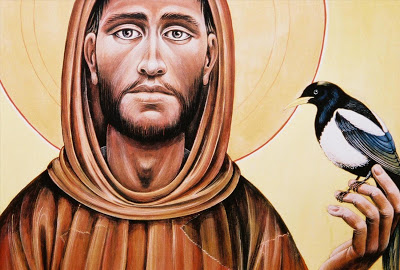
Today we honor the life of St. Francis of Assisi.  Francis is one of the most popular and admired saints of all time.  Most of us know the highlights of his story: born the son of a wealthy man in 1182; had a conversion experience and devoted his life to Lady Poverty; shaped monastic and lay devotion; was a friend to all God’s creatures – being known to have preached to the birds.  But the story I like most is the story about St. Francis and the Wolf.

According to legend, there was a wolf that was terrorizing a nearby town, killing and eating animals and people.  The villagers tried to fight back, but they too died at the jaws of the wolf.  Francis had pity on the people and went out to meet the wolf.  When Francis found the wolf, he made the sign of the cross, and said, “Come to me, Brother Wolf.  In the name of Christ, I order you not to hurt anyone.”  The wolf calmly laid down at Francis’ feet.  Francis then went on to explain to the wolf how the wolf was terrorizing the people and other animals – all who were made in the image of God.  The wolf and Francis then made a pact that the wolf would no longer harm the town and the town would no longer try to hurt the wolf.  The two traveled into town to explain the pact they had formed.  The people were amazed as Francis and the wolf walked side-by-side into town.  Francis made the people pledge to feed the wolf and the wolf pledge not to harm anyone else.  From that day on, the wolf went door to door for food.  The wolf hurt no one and no one hurt the wolf; even the dogs did not bark at the wolf.[i]

What I love about this story of St. Francis is that the story is about reconciliation and relationship.  At the beginning of the story the town and the wolf are at an impasse – the wolf is hungry and getting attacked; the people are afraid and are lashing out.  What Francis does for both parties is shock them out of the comfortable.  For the wolf, no one has addressed the wolf kindly – they have either shut the wolf out or actively tried to kill the wolf.  For the people, the wolf has not asked for help – he has simply and violently taken what he needed and wanted.  Francis manages to shock the wolf first – not through violence or force, but with the power of love and blessing.  By giving a blessing in the name of God, Francis is then able to implore the wolf to reciprocate with love.  Francis also manages to shock the village – not with a violent victory, but with a humble display of forgiveness and trust.  By walking into town with a tamed wolf at his side, Francis is able to encourage the town to embrace, forgive, and care for the wolf.  Francis’ actions remind both parties that unless their relationships are reconciled, unrest and division will be the norm.

The funny thing about this story is that the story is pretty ridiculous.  I mean, how many of us go around talking to wild animals, blessing them with the sign of the cross, expecting anything other than being attacked?  We will never really know whether the story is true.  But like any good Biblical story, or even any good midrash, whether the story is true is hardly the point: the point is that the stories point toward “Truth” with a capital “T.”  What this story teaches is that peace and reconciliation only happen through meeting others where they are.  We cannot expect great change unless we are willing to get down in the trenches – to go out and meet that destructive wolf face-to-face.  The other thing this story teaches is relationships are at the heart of reconciliation.  Only when the wolf and the town began to get to know each other and began to form a relationship with one another could they move forward.

This is the way life is under Jesus Christ.  In our gospel lesson today, Jesus says, “Come to me, all you that are weary and are carrying heavy burdens, and I will give you rest.  Take my yoke upon you, and learn from me; for I am gentle and humble in heart, and you will find rest for your souls.  For my yoke is easy, and my burden is light.”  Jesus’ words have layered meaning.  The first meaning we all catch is that Jesus offers us rest and refreshment.  Jesus encourages us to come to him, to cast our burdens and cares upon him, and to take rest, to take Sabbath in Christ.  Our souls will find peace in Christ Jesus.  The second meaning is that peace in Christ Jesus is not without work.  Jesus does not say come unto me and relax forever in happy retirement.  Jesus says we will still have to take on a yoke – the burden of disciple living.  But luckily, that burden of being Christ’s disciple will not be burdensome – it will be light.  Finally, not only will Jesus make the workload “light,” as in not heavy:  Jesus will also make us “light” – as in lights that shine into the darkness and refuse to allow the shadow to overwhelm[ii]; as in lights that shine on this very Holy Hill where Hickory Neck rests.  We become the light when we work for reconciliation in our relationships with others.

That is why we do so many special things today.  Today, we ask for prayers and then exchange signs of peace – that God might help us reconcile the relationships in our life that need healing.  Today, at our 9:00 am service, we ask for blessing on our animals – that God might help our relationship with our pet be one of blessing and light.  Today, we come to Jesus for Sabbath rest – that God might renew us on this Sabbath day, use the rest to fill us with light, and renew our commitment to be agents of reconciliation, gladly putting on Christ’s yoke.  Amen.

[i] John Feister, “Stories about St. Francis and the Animals,” October 4,2005, as found at https://faith32.livejournal.com/61897.html on October 18, 2018.

[ii] Mel Williams, “Let it go…and rest” Faith and Leadership, July 6, 2014 as found at http://www.faithandleadership.com/sermons/mel-williams-let-it-go%E2%80%A6and-rest  on October 18, 2018.

← Older posts

Recent Posts

  • On the Myth and Magic of Advent…
  • On Risking Failure and Facing Fear…
  • Sermon – Luke 23.33-43, P29, YC, November 23, 2025
  • On Inhabiting Gratitude…
  • Sermon – Luke 20.27-38, P27, YC, November 9, 2025

Archives

  • December 2025
  • November 2025
  • October 2025
  • September 2025
  • August 2025
  • July 2025
  • June 2025
  • March 2025
  • February 2025
  • December 2024
  • November 2024
  • October 2024
  • September 2024
  • August 2024
  • July 2024
  • June 2024
  • May 2024
  • March 2024
  • February 2024
  • January 2024
  • December 2023
  • November 2023
  • October 2023
  • September 2023
  • August 2023
  • July 2023
  • June 2023
  • May 2023
  • March 2023
  • February 2023
  • January 2023
  • December 2022
  • November 2022
  • October 2022
  • June 2022
  • May 2022
  • January 2022
  • December 2021
  • November 2021
  • October 2021
  • September 2021
  • August 2021
  • June 2021
  • May 2021
  • April 2021
  • March 2021
  • February 2021
  • January 2021
  • December 2020
  • November 2020
  • October 2020
  • September 2020
  • August 2020
  • July 2020
  • June 2020
  • May 2020
  • April 2020
  • March 2020
  • February 2020
  • January 2020
  • December 2019
  • November 2019
  • October 2019
  • September 2019
  • August 2019
  • July 2019
  • June 2019
  • May 2019
  • April 2019
  • March 2019
  • February 2019
  • January 2019
  • December 2018
  • November 2018
  • October 2018
  • September 2018
  • August 2018
  • July 2018
  • June 2018
  • May 2018
  • April 2018
  • March 2018
  • February 2018
  • January 2018
  • December 2017
  • November 2017
  • October 2017
  • September 2017
  • August 2017
  • July 2017
  • June 2017
  • May 2017
  • April 2017
  • March 2017
  • February 2017
  • January 2017
  • December 2016
  • November 2016
  • October 2016
  • September 2016
  • August 2016
  • July 2016
  • June 2016
  • May 2016
  • April 2016
  • March 2016
  • February 2016
  • January 2016
  • December 2015
  • November 2015
  • October 2015
  • September 2015
  • August 2015
  • July 2015
  • June 2015
  • May 2015
  • April 2015
  • March 2015
  • February 2015
  • January 2015
  • December 2014
  • November 2014
  • October 2014
  • September 2014
  • August 2014
  • July 2014
  • June 2014
  • April 2014
  • March 2014
  • February 2014
  • January 2014
  • December 2013
  • November 2013
  • October 2013
  • September 2013
  • August 2013
  • July 2013
  • June 2013
  • May 2013
  • April 2013
  • March 2013
  • February 2013
  • January 2013
  • December 2012
  • November 2012
  • October 2012
  • September 2012

Categories

  • reflection
  • Sermons
  • Uncategorized

Meta

  • Create account
  • Log in
  • Entries feed
  • Comments feed
  • WordPress.com

Blog at WordPress.com.

  • Subscribe Subscribed
    • Seeking and Serving
    • Join 394 other subscribers
    • Already have a WordPress.com account? Log in now.
    • Seeking and Serving
    • Subscribe Subscribed
    • Sign up
    • Log in
    • Report this content
    • View site in Reader
    • Manage subscriptions
    • Collapse this bar
 

Loading Comments...