• About

Seeking and Serving

~ seek and serve Christ in all persons

Seeking and Serving

Tag Archives: weary

Sabbatical Journey…On Weariness and Gratitude

01 Saturday Jul 2023

Posted by jandrewsweckerly in reflection

≈ Leave a comment

Tags

antidote, cranky, God, gratitude, Holy Spirit, invitation, Jesus, journey, perspective, practice, tired, weary

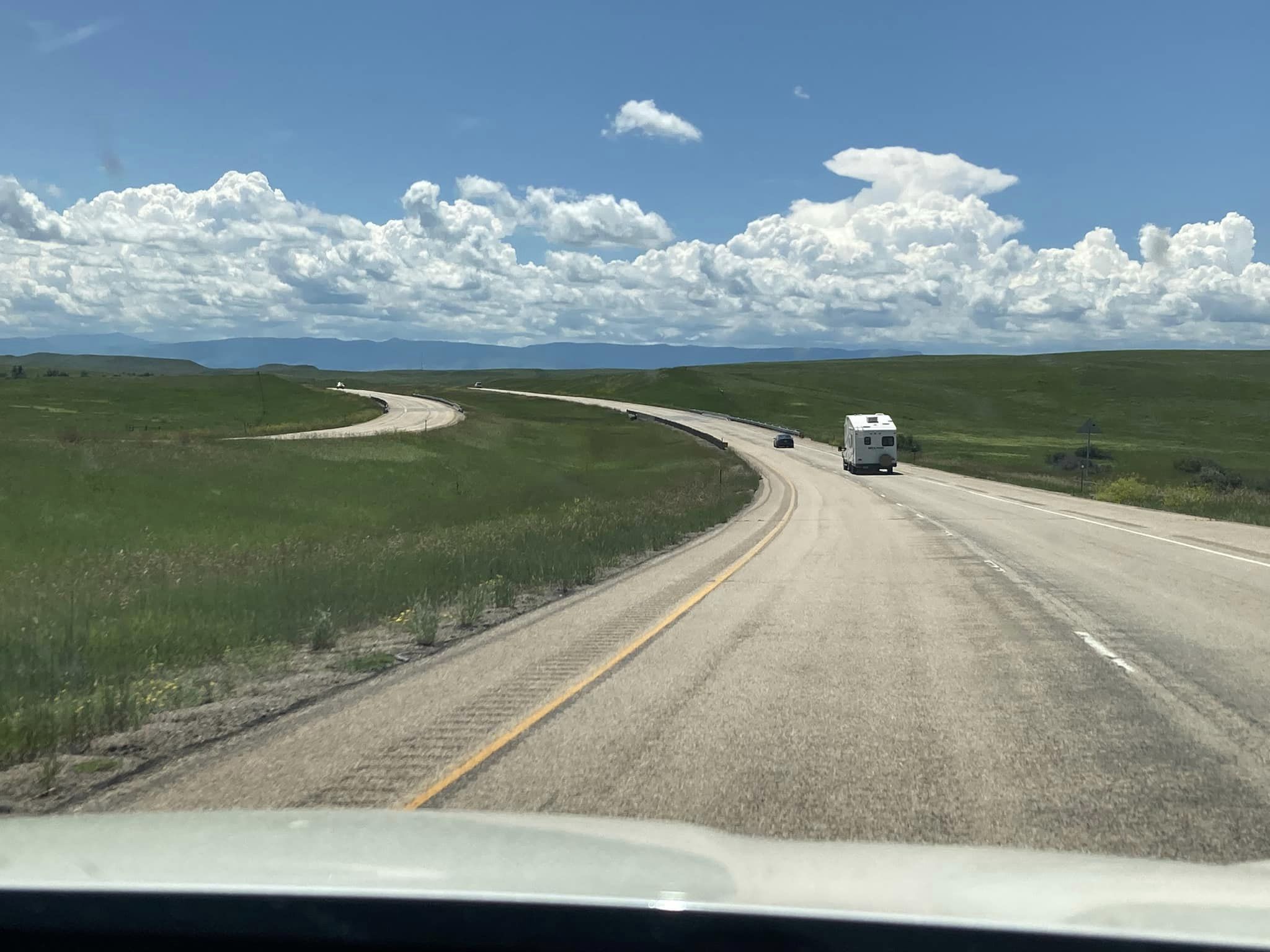
Montana Driving (reuse with permission)

Today was a driving day for our cross-country trip – perhaps the longest driving day of the trip.  All told, we were on the road, with multiple stops, for about 10-11 hours.  By the last hour, I was engaged in an inner complaint fest:  the trip felt like forever, I was stiff from the ride, and I just wanted to be in the next location and stretch my legs.  But when we arrived, I was glad I had kept my complaining to myself.  First my younger child exclaimed, “That wasn’t so bad!  It went by kind of quickly!”  My husband agreed, “Yeah, that was an easy drive!”  My elder child confessed, “I kind of like driving days.  They’re like ‘chill’ days.” 

Their comments helped me reflect on the day a little differently.  I tried to remember all the good things about the day:  the way the heavy fog slowly lifted to reveal beautifully green mountain scenery with rivers and tall pines; how fun it was to drive along winding road, hugging the curves; the pops of color that wildflowers brought to the drive; the fun road trip games we played, where everyone was winning at different points; the laughter, the naps, and adding a new state to our list of visited states.

Today, I am grateful for the invitation into gratitude.  It’s a practice I encourage all the time, but one that is easily forgotten when we are tired, weary, and cranky.  But the funny thing is that gratitude is the best antidote to us who are tired, weary, and cranky.  When we give thanks, we see all the good things that made us tired.  When we offer gratitude to God, our weariness is held like soft mattress.  When we give ourselves to thankfulness, crankiness is melted into praise.

I would love to hear what you are grateful for today.  How has God shown up in surprising ways?  How has the Holy Spirit spoken grace through people in your life?  How is Jesus inviting you into a new interpretation of the day?  I’m grateful for you and our journey together in gratitude!

Sabbatical Journey…On Sabbaticals within Sabbaticals

30 Friday Jun 2023

Posted by jandrewsweckerly in reflection

≈ Leave a comment

Tags

busy, creation, God, reconnect, rest, sabbatical, spiritual practice, weary

Time for S’mores! (Reuse with permission)

If you are following this blog, you may have noticed that our family’s version of sabbatical is not really about rest.  Our sabbatical is more about getting out of your comfort zone, seeing the beauty of God’s creation, and making amazing memories.  But even sabbatical adventurers sometimes need a day of rest.  One of our crew was not feeling 100% today, so we left him behind and saw just a morning’s worth of the national park we wanted to visit instead of a whole day.  Seeing him have some down time made us realize maybe we all needed a little down time.  So instead of making memories out in the wild, we made memories resting in our lovely hotel.  It wasn’t dreamy or romantic, but it was very much lifegiving.

I was thinking how hard it is for all of us to give ourselves rest.  Our weekends are often a break from the work week or school week, but we want to enjoy them so much we often overly jam pack them – with sports commitments, attending events, meeting up with friends, or just getting out and about town.  Somehow rest on the weekend feels like wasting the weekend.  Part of my own sabbatical and my parish’s sabbatical was not necessarily scheduling a bunch of naps, but about creating space outside of the normal pace of life to reconnect – with God, with one another, with ourselves.

If you are not a part of our parish’s sabbatical (although if you are local, feel free to join any of the fun events found HERE), perhaps you can make this summer about finding mini sabbatical times too.  Maybe that means making space for prayer, finding your way to a church service (either in person or online), or taking on a spiritual practice.  Maybe it means engaging in an activity that helps you connect with God in a way that you haven’t tried before.  Or maybe it means taking a deep breath and really seeing the goodness all around you.  I promise, you’ll be grateful for the energizing your “sabbatical” can create!

Sabbatical Journey…on Burdens and Blessings

20 Tuesday Jun 2023

Posted by jandrewsweckerly in reflection

≈ Leave a comment

Tags

blessing, burden, gifts, God, Holy Spirit, injustice, journey, plan, renew, restore, sabbatical, sideways, travel, weary

My husband is a master planner, especially when it comes to travel.  So, when we embarked on this sabbatical adventure, I had no worries because I knew he had planned the trip, down to which rest areas we should use.  You might imagine that kind of exacting detail would translate to rigidity – someone who can become rattled when things do not go as planned.  But that is not the case with my husband.  In addition to being a master planner, he is also absolutely the person you want in the room when things go sideways.  He is able to quickly shift, make alterations, and carry things forward seamlessly.

Today, just day three of our twenty-one-day adventure, those skills came in very handy.  The first hiccup happened when our lunch plans got altered.  Our lunch date got called away (welcome to the life of a priest-parent!).  I was super sad about missing our visit but know all too well that things happen.  But when you travel with my super husband, all is not lost.  During lunch, my husband coordinated Plan B, and off we went to the Oklahoma City National Memorial.  I had only seen the site in pictures, but pictures cannot capture the power of seeing all those names, retelling the tragic story to our kids, noting small chairs for the children in daycare who died that day, and even worse, the one chair that indicated the death of a pregnant woman, with the unborn named child on her chair.  It was a powerful moment of sobriety and a reminder to all of us how much we need to savor one another.

Fast forward to our final destination.  We were all tired and a bit weary.  When we stopped at our hotel to check in, we figured the water gushing from a ceiling down the hall was a bad sign.  Sure enough, the hotel’s water had been shut down, with no estimated fix schedule.  Before we even got through the line to cancel our registration, my husband was already booking an alternative hotel on his phone, and then calling customer service to make sure our prior booking wouldn’t charge our card.  Our frazzled, anxious little family was on our way to a new hotel less than a block away within the half-hour.

It had been a heavy day.  We began the day with conversations about the Trail of Tears, why there are so many reservations in Oklahoma, and what we can do as consumers to support the economy of indigenous Americans.  We talked about Juneteenth, and wondered about our experiences in Little Rock and how much more work we have to do.  We recalled mass violence and the death penalty as we walked through the vivid artistry of the Oklahoma City National Memorial.  And we dealt with our own travel hiccups.  Needless to say, as walked in 100-degree weather to an impromptu dinner, we were all a bit worse for the wear.

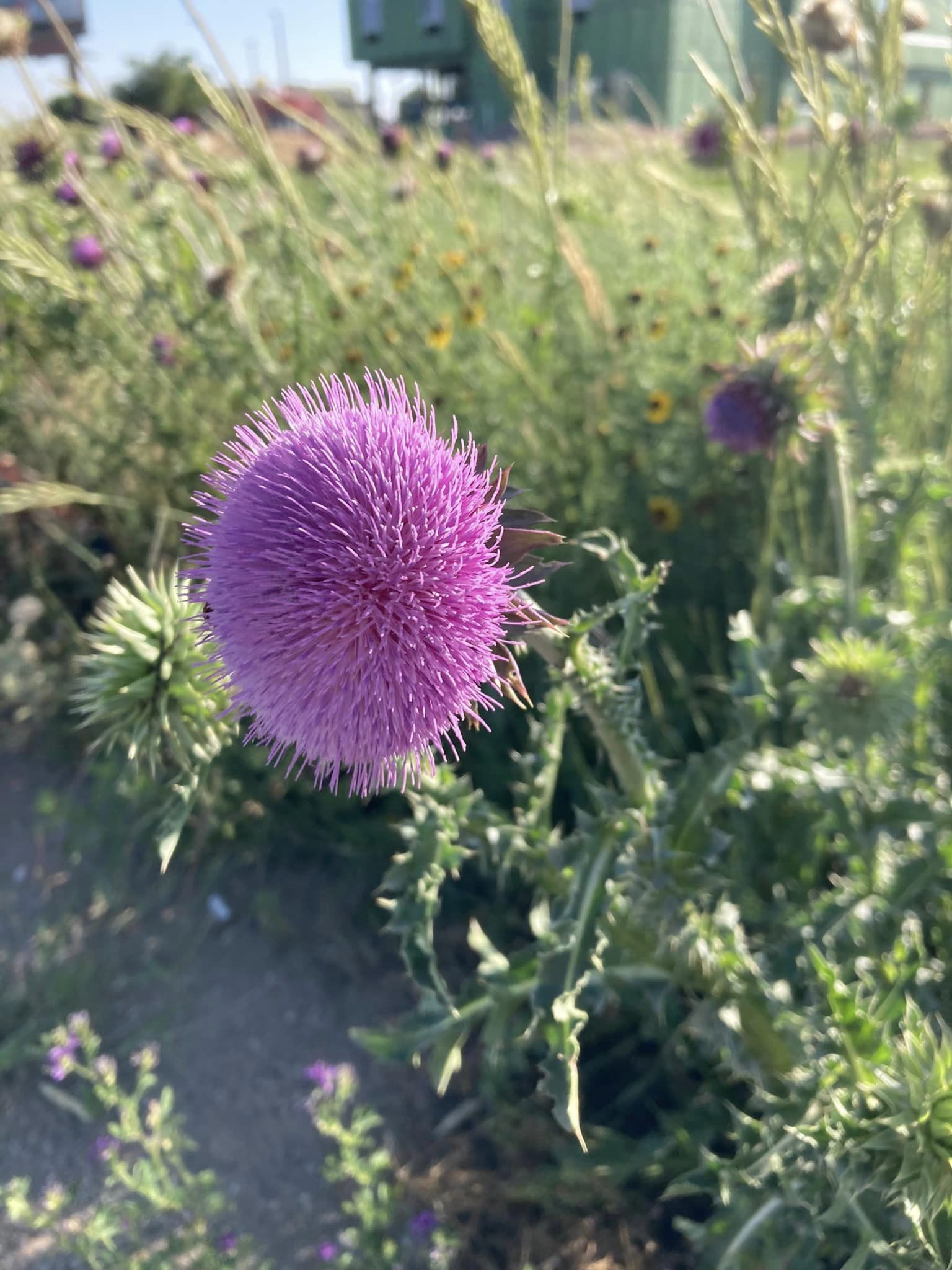
And then I saw it.  A beautiful, unusual flower lining the road of our walk.  It seemed silly to stop and take a picture of the flowers (or at least, so my then cranky family told me), but I knew this was the Holy Spirit’s way of telling me to look around at the blessings of the day:  to remember the constant invitation to think about injustice in all its forms and how we can be agents of change; to remember that even when things do not go your way, sometimes equally wonderful things happen; to remember that even in the midst of sweaty, weary, whiny messes, God uses the gifts of all of us (problem-solving husbands, caring strangers, and even nature herself) to renew and restore us.  What blessings has the Holy Spirit been trying to show you today?

Photo credit: Jennifer Andrews-Weckerly (reuse with permission)

Sermon – Luke 9.28-36 (37-43), TRS, YC, February 27, 2022

25 Wednesday May 2022

Posted by jandrewsweckerly in Sermons

≈ Leave a comment

Tags

comfort, Elijah, empowerment, Epiphany, escape, Jesus, Moses, sacred, secular, Sermon, Transfiguration, weary

Well, we finally made it.  After a season of epiphanies about Jesus:  from the Magi with gifts, the voice of God at Jesus’ baptism, the water into wine, the fishes bursting from nets, and lessons about life with Jesus from the Sermon on the Plain, we get to the mother of all epiphanies – Transfiguration Sunday.  In this event is everything we need to know about Jesus.  Luke tells us everything starts with prayer – life with Jesus is rooted in prayerful relationship with God.  Then, Jesus’ divinity is revealed as his entire appearance changes, with everything becoming dazzling white.  Moses and Elijah appear, which many argue represents the prophets and the law confirming Jesus’ identity and significance.  We even hear a conversation between the three figures about Jesus’ pending journey to Jerusalem and ultimate departure.  And, as if we needed to know even more about who Jesus is, God comes down in a cloud and says, clear as a bell, “This is my Son, my Chosen; listen to him!”  We can’t get a lesson more epiphanic than this!

This story in Luke is so dramatic, that the lectionary says we can skip the next seven verses.  If you notice in your bulletin, those verses are in parenthesis.  And if I am really honest, as your preacher, I seriously considered eliminating those verses today.  I wanted to stay on that mountaintop with Peter, John, and James.  I want to be overwhelmed by the majesty of the moment, I want to gobble up the crystal clarity of this event, I want to breathe in the confidence of that comes from knowing this is the Messiah, the answer.  I might even want to build those dwellings or booths Peter is talking about for Jesus, Moses, and Elijah.  This is a mountain of wonder, of joy, of understanding, of specialness, of the sacred.  I want to stay here.

But the text is not having such comfort today.  Nope, in Luke, the very next thing that happens after this rich, shocking, full epiphany and the disciples’ stunned silence, is they go back down the mountain and face another person who needs to be healed.  And this is not a simple request for healing, but a report that the man begged Jesus’ disciples to cast out the demon first, but they could not.  So not only do Jesus and his disciples go back to work, but also we learn that the disciples are not very good at the work.  In other words, they have work to do.

Sometimes, when we are tired and weary – and believe me, we have had a lot of tired and weary in the last two years – in those times we slip into the mode of thinking Church is an “escape from” place.  We face illness, and death, and war, and suffering, and poverty, and discrimination, and persecution, and brokenness every single day of the week, and we just want our mini-Easter on Sundays.  We want to climb a mountain, pray with Jesus, and bask in Jesus’ radiance.  And that is okay.  Luke would not tell us so many times in his gospel that Jesus escapes to pray if Jesus’ praying (and our praying) were not important.  But the danger in thinking of Church as an “escape from” place is that we risk not seeing the brilliance of Jesus in all the other days.

A couple of weeks ago, I was at a doctor’s office that serves patients from a broad range of socioeconomic backgrounds.  One such client had arrived for one of the daily walk-in appointments only to be told arriving at 9:00 am meant he had missed the available appointments.  The staff very graciously gave him a list of other places he could try and encouraged him to come back earlier next time.  The client sat there a bit stunned and dejected and I began to avert my eyes to give him some privacy for his grief.  But a minute or so later, an older gentleman came up to him and asked to see the paper the staff had given him.  He proceeded to show the younger man which alternatives were best, and then whispered the secret that although the staff said to come at 7:00 am, the real trick was to arrive by 6:00 am.  The young man’s face slowly relaxed under the loving tutelage of his elder fellow struggler in life.

Luke does not leave us on the mountaintop because Luke knows the danger the artificial divide between the sacred and the secular.  As scholar Debie Thomas warns, “Desperate for the mountain, we miss the God of the valley, the conference room, the pharmacy, the school yard.”[i]  The story of the healing in the valley is the “so what?” of this last grand epiphany story before we head into Lent.  “The story of the transfiguration of Jesus loses its power if [the transfiguration] does not include that moment when Jesus and the disciples come down from the mountain.”  By seeing Jesus differently today, we are enabled to see ourselves and others differently too.[ii]  We are able to see God in an elderly struggling man taking a young struggling man under his wings.  We are able to see God in the way an older child shepherds a younger child to Children’s Chapel.  We are able to see God in our gut-wrenching conversations of the presence of evil in the world and how to navigate war in a way that demonstrates all life is sacred.

This week, our invitation is to take this hour not as an “escape from” but as an “empowerment to” – an empowerment to go out in the world seeing the God of the valley, the God of the medical clinic, the God of the grocery store, the God of the Zoom meeting, and to be agents of God in all those places.  We come from a long line of disciples who were not always good at healing the suffering of this world.  But we enter a season of intentionality in these coming six weeks that will embolden us to keep trying.  We know from this hour of empowerment who Jesus is.  Now we get the chance to show Jesus’ face to others in our everyday lives.  Amen.


[i] Rohr summary about the sacred and the secular and quote from Debie Thomas, “Down from the Mountain” February 19, 2022, as found at https://www.journeywithjesus.net/lectionary-essays/current-essay?id=2944 on February 26, 2022.

[ii] Lori Brandt Hale, “Theological Perspective,” Feasting on the Word, Year C, Vol. 1 (Louisville: Westminster John Knox Press, 2009), 456.

Sermon – Matthew 25.31-46, P29, YA, November 22, 2020

17 Thursday Dec 2020

Posted by jandrewsweckerly in Sermons

≈ Leave a comment

Tags

Christ the King, crisis, election, God, Good News, Jesus, mend, pain, pandemic, peace, Sermon, Thanksgiving, weary

Once upon a time, “there was a cobbler who lived alone in his shop with one window that looked out on the street.  His wife and children had all died and he asked God, “Holy One why have you so long delayed your coming?  I have almost given up hope in seeing you.  Please come to my humble shop this day and show me your face.”

Outside on the street the cold winter brought snow.  Through his window he saw a beggar who shivered in the cold.  The cobbler invited the beggar into the shop to warm him and offer a meager meal from his shrinking larder.  The beggar thanked him and left.

As the day passed, a few customers came with repairs they needed for their shoes and harnesses.  A young boy sought shelter from the cold and snow.  The child’s feet were wrapped in old dirty rags and stuffed with paper.  Into the shop he invited the boy.  After making him some warm milk and a sandwich from the little food he had he went to his closet and found a pair of shoes that [had] belonged to his son.  He fit the shoes to the boy.  Grateful, the boy left with a promise to return to visit him.

It was approaching dusk and the cobbler despaired of a visit from the Lord.  A woman with her young babe appeared in front of the window.  She was dressed in a thin piece of cloth and she looked as if she might freeze to death.  The cobbler invited her into his shop.  Wary of the old man, she hesitated at the door, but feeling the warmth within she stepped across the threshold.  The cobbler made her some tea and went to his closet to find a heavy woolen cloak that [had] belonged to his wife.  Giving her the cloak the woman thanked him and after he shared the rest of his larder with her, she left with the child.

The sun descended and left the cobbler bereft.  “Why didn’t you come and visit me today,” the cobbler asked?  There was a voice that spoke to him in his humble shop:  “But I did come to you.  When you invited in the beggar, the boy, and the mother and her child, I was there with you.  In each of their faces you looked into my eyes.”[i]

I don’t know about you, but the last eight months have been exhausting.  Every week I look at the lessons and newspaper and hope for some good news – some glimpse of the face of Jesus.  But every week, the news somehow seems worse.  This week has been no different, with suffering hitting us at both the macro and micro levels.  Our country is in an existential crisis about the Presidential election.  Although many commentators seem to think things will work out, at question is the very foundation of democracy – elections where the votes of the people matter and where the peaceful, respectful exchange of power can happen.  We have managed to successfully do this for over two hundred years, and somehow, this year we cannot seem to hold to our founding principles.  Meanwhile, on the micro level, we are approaching a national holiday of Thanksgiving – a holiday characterized by the gathering of peoples around a table, not unlike our own Eucharistic feast.  And yet, flights are being cancelled, car keys are being put down, and painful calls of cancellation are being made.  Once again, this pandemic is crushing our rituals, forcing us to stay apart from one another.

So, when I picked up the Biblical texts for today, remembering this is Christ the King Sunday, I could not have been more relieved.  I am ready for the shepherd of Ezekiel who seeks out the lost, binds up the wounded, and feeds us on the good pasture – all while destroying the fat sheep and feeding them justice!  I am ready for the Psalmist’s invitation to bow down before the Lord our Maker – the king above all gods, the one in whose hands are the caverns of the earth, the heights of the hills, the sea, and the dry lands!  I want to hear the beauty of the song, King of Glory, King of Peace.  I want a god who will take all of this away – the strife, fighting, suffering, weariness, and make everything better.  I want to see Christ the King!

But nothing is ever easy with Jesus.  When we call out for Jesus, Jesus tells us in the gospel today that he is already here – here with us when we feed the hungry, sate the thirsty, welcome the stranger, clothe the naked, and visit the sick and imprisoned.  To our wearied selves, who just want a victorious king to fix things, our king reminds us today that relief is not found in power grabs and punishments.  As the founder of The Catholic Worker, Peter Maurin, once explained, the social policy Jesus gives us for the renewal of the world is works of mercy.[ii] 

Our lives right now are upended.  Even doing the literal work of the cobbler from that story may not seem possible in these times of social distancing.  But the good news we hear today is peace will not come from powerful, political overpowering.  Peace and relief in these times will come from loving the vulnerable, tending the weak, serving those suffering more deeply than we can imagine.  Like the cobbler in his grief, we may not be able to see those in need in this pandemic.  But they are there, with us, every day.  And it is there, we will see the face of Jesus.  There, God will soothe our pain.  There, the Holy Spirit will mend our weariness.  There is our peace.  Thanks be to God. 


[i] Leo Tolstoy, “Martin the Cobbler,” as retold by Bob Stuhlmann in “Goat Cheese And Starfish: For November 23, 2014,” posted on November 18, 2014, as found at http://storiesfromapriestlylife.wordpress.com/2014/11/18/goat-cheese-and-starfish-for-november-232014/ on November 20, 2020.

[ii] Stanley Hauerwas, Matthew:  Brazos Theological Commentary on the Bible (Grand Rapids:  Brazos Press, 2006), 212.

On Shifting Sands and Drishtis…

19 Thursday Nov 2020

Posted by jandrewsweckerly in Uncategorized

≈ Leave a comment

Tags

balance, control, family, focus, God, goodness, grace, imbalance, Jesus, love, pandemic, parenting, power, sand, weary, yoga

Photo credit: https://www.yogajournal.com/yoga-101/pillars-of-power-yoga-using-drishti-on-and-off-the-mat

When you are doing balancing postures during yoga, one of the skills you learn early on is developing a drishti, or a focal point.  The idea is the more you focus your gaze on one fixed object, the more your body steadies itself.  I am not entirely sure why or how finding a drishti works, but I know from experience that a very wobbly body in a balancing posture is quickly steadied once focused on a drishti.  It is a strange sensation, but when the drishti is engaged, the gaze of the eyes has complete power over the entire body, creating a sense of self-possession, control, and power.

I was talking to a fellow parent this past week and when we talked about parenting during a pandemic, I told her I felt like I was standing on shifting sand.  Just when I would start to figure out a rhythm or start to feel like I had some modicum of control over family life, things would change – whether the formal arrangement with hybrid learning, the changing of teachers mid-quarter, or even my own child’s changing ability to adapt and thrive.  Just when I feel like our family is finding our balance, something makes us wobbly all over again.  That kind of uncontrolled imbalance, of attempting to stand on shifting sand leaves the body weary and fatigued.

But as I have been thinking about pandemic parenting and my learning in yoga, I’ve begun to wonder if what this wobbly parent might need is a pandemic drishti.  For some parents that might mean focusing on the blessing of your children – so that no matter what tempter tantrum they are throwing today, what argument you are having as a family, or what door they have slammed, you focus not on the anger and frustration of the scene immediately in front of you, but on the love you have for your child (even if it’s only the love you see when they are fast asleep).  For me, my drishti is the love of God surrounding us on every side:  the one who loves me when I fail as a parent, the one who loves my child as they receive another setback in expectations, the one who loves each of us when all we can see is the heat of anger and frustration in one another.  Once I focus on God’s love of us, slowly my demeanor starts to shift, my balance starts to return, and my steadiness strengthens.

This week, I encourage you to claim your pandemic drishti.  Whether you focus on God’s lovingkindness, the grace of our Lord Jesus Christ, or the ever-present blessing of the Holy Spirit, take whatever time you need to shift your gaze on God.  My guess is the more you practice steading your gaze on the goodness of God, the more your wobbling, weary body will feel grounded in goodness too.  We cannot control the shifting sand of these times.  But we can control our steady gaze in the face of a storm.

On Empty and Overflowing Cups…

21 Wednesday Oct 2020

Posted by jandrewsweckerly in Uncategorized

≈ Leave a comment

Tags

exhaustion, fatigue, generosity, God, grace, heart, Jesus, love, pandemic, tired, weary

Photo credit: https://stock.adobe.com/au/search?k=overflowing%20cup

I have always been a bit of a night owl.  It has served me well with small children, as I often get a second wind after everyone is asleep.  In college, it allowed me to stay up late to finish papers and studying.  Of course, I also found in college that the late hours meant my eyelids were sometimes heavier than they should be in lectures – with my notetaking become illegible as my body succumbed to the fatigue, as if my handwriting was in sync with my drooping eyelids.

That kind of fatigue – the sheer exhaustion of pushing our bodies and minds to work at maximum capacity – is the kind of exhaustion I am seeing all around me.  Whether it is fellow clergy trying to be constantly nimble and creative while managing the emotional and spiritual field of a pandemic, whether it is working parents who are feeling the crush of working and schooling their children simultaneously, whether it is essential workers who have been putting themselves in constant risk for months, unsure of their job security despite our desperate need for their services, or whether it our retirees who feel the weight of missing their extended family, the binding feeling of restrictions, or the loneliness that can come from social distancing, we are all tired: bone-tired, fatigued, emotionally, physically, and spiritually spent.  Add on top of that a pending heated election, the work of racial reconciliation, and the economic impact of a pandemic and it is a minor miracle that most of us are functioning.

In this time of weariness, I want you to know not only do I see you, but also our Lord and Savior sees you.  When we are this spent in all parts of our lives, we may not feel Christ present with us in the same way.  But it is during these times that Christ is most available to us, surrounding us with grace and light.  It may be in the form of a healing phone call with a loved one, the stunning beauty of a tree turning vibrant fall colors, an online set of prayers or worship service, a good, hearty, unexpected laugh, or the kind word of a stranger, but God is with us in this, seeing our pain and weariness and sending us loving gestures every day.

Today, I invite you find some small way to let that loving generosity into your heart.  Maybe you give yourself a couple of minutes before bedtime tonight to make a mental list of things for which you are grateful, maybe you write down those moments of grace from the last week, or maybe you call someone to share with them your reflection.  My guess is once you create that moment for grace, you will start seeing those moments more and more.  These small graces are what can sustain us in this moment, and eventually refill our cup so that it can run over to bless others.  You are in my prayers as you refill your cup!

Sermon – Matthew 11.16-19, 25-30, P9, YA, July 5, 2020

15 Wednesday Jul 2020

Posted by jandrewsweckerly in Sermons, Uncategorized

≈ Leave a comment

Tags

abdication, comfort, delightful, God, Jesus, light, meaning, pandemic, purpose, reckless, refreshment, rest, satisfying, Sermon, weary, yoke

In Compline, one of the prayers is for “we who are wearied by the changes and chances of this life.”[i]  I have been feeling that prayer these last several weeks – or even months.  The longer we stay in our homes, the longer this pandemic wages illness and death upon us, the longer the spread of virus takes away the everyday privileges we never fully appreciated, and the longer civil unrest forces us to look at our demons and sinfulness, we become more and more weary.  We do not have to ponder too long why cases of the pandemic are soaring this summer.  People who are wearied by the changes and chances of this life are so grief-stricken they are becoming reckless, self-centered, and indignant.

So, you can imagine my full-bodied relief when I heard the last verses of our Gospel lesson today.  “Come to me, all you that are weary and are carrying heavy burdens, and I will give you rest.”  Those words from Jesus are sweet comfort to us, who just want a break, who just want some semblance of normalcy, who just want peace.  Jesus’ words are a warm embrace in a time of touchlessness.  Jesus’ words are a balm to our country who this very weekend honors a liberty that many of our neighbors are reminding us is not felt by all our citizens.

But as scholar Thomas Long says, “What Jesus offers, however, is not a hammock, but a yoke.”[ii]  I know we want to linger on verse 28, but immediately after that comforting embrace, Jesus says, “Take my yoke upon you, and learn from me; for I am gentle and humble in heart, and you will find rest for your souls.  For my yoke is easy, and my burden is light.”  In the shift between these last verses, Jesus does a bit of a bait and switch.  He beckons us into his comforting arms, but also places a burden on our shoulders.

I confess, I have been a bit cranky about that switch.  Can’t we just have one week, one Sunday, one moment, where we abdicate responsibility, where we take a sabbath from all this work, where we binge watch television and eat crappy food?  Isn’t that what Jesus means when he says he will give us rest?!?

Fortunately for all of us, I had my tempter tantrum early in the week, and have had some time to sit with this yoke of Jesus’.  You see, when I am being honest, I know binge watching television or eating junk food is not actually restorative.  I feel stiff and tired after sitting for hours.  And when I eat unhealthily, the lingering stomachache or sluggishness is not actually as comforting as the comfort food implies.

What Jesus is suggesting today is not a restful, self-centered, time of abdication.  What Jesus is suggesting is we find rest in the things of life that matter.  As one scholar suggests, “we will find rest for carrying the burden of the gospel by living out the unique mission to which Jesus calls each of us.”[iii]  That yoke we may be skeptical of this week, is not actually a ploy or a trick by Jesus.  The reason Jesus says his yoke is easy and his burden is light is “because [his yoke] is the way of God, and [his yoke] is profoundly satisfying to the human soul.”[iv]

Jesus uses some strong imperatives today:  come to me, take my yoke, learn from me.  But Jesus is not being bossy.  Jesus is reminding us, in his ever so firm, but pastoral way, that the ways we are seeking rest and relief from weariness are not the ways to life.  The way to life, of true refreshment, of renewed spirits is through the yoke of Christ.  How is that possible?  As one scholar reminds us, “The easy yoke means having something to do:  a purpose that demands your all and summons forth your best.  [The easy yoke] means work that is motivated by a passionate desire to see God’s kingdom realized.  [The easy yoke] means work toward a certain future in which all of God’s dreams will finally come true.  To accept the yoke of the gentle and humble Lord is to embrace the worthy task that puts the soul at ease.”[v]  Jesus reminds us today that the rest we seek is not mind-numbing, emotion-numbing, spirit-numbing relief, but purposeful, meaning-filled, reward-making clarity.  When we harness ourselves to Christ, the burdens no longer feel like burdens, the work no longer feels like work, and the desire to be done turns to a desire for God’s delightful sense of purpose and meaning.  That is the kind of profound satisfaction Jesus offers today.  Thanks be to God!

[i] Book of Common Prayer, 133.

[ii] Thomas G. Long, Matthew (Louisville:  Westminster John Knox Press, 1997), 132.

[iii] Emilie M. Townes, “Theological Perspective,”  Feasting on the Word, Year A, Volume 3 (Louisville:  Westminster John Knox Press, 2011), 214.

[iv] Long, 132.

[v] Lance Pape, “Homiletical Perspective,” Feasting on the Word, Year A, Volume 3 (Louisville:  Westminster John Knox Press, 2011), 217.

Homily – Luke 2.8-20, Blue Christmas, December 21, 2018

02 Wednesday Jan 2019

Posted by jandrewsweckerly in Sermons

≈ Leave a comment

Tags

angels, Blue Christmas, Christmas, hope, Jesus, joy, life, light, Mary, peace, rest, sad, Sermon, shepherds, slow, weary

One of the Christmas songs we do not sing tonight is “It Came Upon a Midnight Clear.”  Up until this year, I was mostly familiar with the first verse, which says, “Peace on the earth, good will to men,” and “The world in solemn stillness lay to hear the angels sing.”  Those words have always felt more like an aspiration than my reality.  I do not know about you, but the holidays are rarely a time of stillness and peace for me.

But this year, I stumbled on a verse of this song that is not in our hymnal.  The verse says, “And you, beneath life’s crushing load, whose forms are bending low, who toil along the climbing way with painful steps and slow; look now, for glad and golden hours come swiftly on the wing; oh, rest beside the weary road and hear the angels sing!”

One of the challenges about Christmas is that we can sometimes lose our place.  When we listen to the old carols, we either hear songs of peaceful silence or we hear songs of beautiful, glorious praise.  The same is true of our secular experiences of Christmas.  We are filled with retouched nostalgic memories, with songs that tell us we should be rockin’ around Christmas trees, or cozying up with loved ones.  But sometimes Christmas is none of those things.  Instead Christmas is a time when the gap between our reality and the projection of all the things we should be feeling grows ever wider.

I think that is why I was captivated by this extra verse of “It Came Upon a Midnight Clear.”  “And you, beneath life’s crushing load, whose forms are bending low, who toil along the climbing way with painful steps and slow; look now, for glad and golden hours come swiftly on the wing; oh, rest beside the weary road and hear the angels sing!”  Suddenly, the otherworldliness of the angels are there for us too.  Whether life feels like a crushing load, whether your daily toil is bringing you down, or whether you are just weary, the song invites us rest by the weary road – because the angels have a song for us too.

I used to serve at a church where Christmas was the pinnacle of events.  Families would wear evening gowns and tuxedos to church, they would send their servants to reserve rows of seats, and the coat rack was full of fur coats.  Christmas was another soiree in their perfectly formed lives, and church was host of their glamorous party.  But what always amused me about that experience was the contrast between their polished, perfect lives, and the rustic, imperfect story of the angels and shepherds.  I wondered if they understood the ironic contrast of their experience and scripture’s experience.  What did they know of being crushed beneath life’s load, the toil of taking painful, slow steps, and the weary road?

Not until many years later did I realize that the weariness of life can infect anyone.  Those in tuxedos and evening gowns were struggling with broken marriages, estranged family members, and the grief of death as much as someone gathered in a candlelit historic chapel.  Those whose servants went to reserve a seat in church were just as lonely, unfulfilled, and afraid as those who are servants.  Those whose fur coats lined the coat racks were experiencing a sense of failure, a lack of fulfillment, and a longing for meaning as much as someone slipping quietly into a service like tonight.  Weariness affects the donkey who carries a pregnant Mary; the shepherds who keep watch all night; the innkeeper who feels pulled in many directions with no vacancies to accommodate need; with Josephs who are on a path they did not choose, but who feel obligated to be faithful; and with Marys who say yes and hold hope, even though the dread of impending suffering is almost palpable.[i]

You see the angels came not to a perfect world, to a perfect people, delivering perfectly good news.  The angles came to a weary world, with weary people, delivering good news that would not dismiss our weariness, but relieve our weariness.  That is why I love this service so much.  I love our Blue Christmas service because Christmas is all about a wearied people, with a crushing load, with painful steps, welcoming a savior who gives us hope that we will not be weary forever, that God will walk our weary roads alongside us.

On this night, I share this blessing for all of us:  “May the world slow down enough this season for you to catch a glimpse of a star in the sky and a light on the horizon.  May the earth pause enough for you to catch the faint sound of a baby’s cry on the wind and the song of the angels through the trees.  May the slow time of Christmas night bring joy to you, and hope, and light, and more than anything else, rest to your waiting spirit.  All you, beneath life’s crushing load, whose forms are bending low, who toil along the climbing way with painful steps and slow; look now, for glad and golden hours come swiftly on the wing; oh, rest beside the weary road and hear the angels sing!”[ii]  Amen.

[i] Melissa Bills, “All This Weary World,” December 18, 2018, as found at https://youngclergywomen.org/all-this-weary-world/ on December 18, 2018.

[ii] Bills.

Sermon – Luke 23.33-43, P29, YC, November 20, 2016

23 Wednesday Nov 2016

Posted by jandrewsweckerly in Uncategorized

≈ Leave a comment

Tags

Christ the King, cross, darkness, forgiveness, hope, Jesus, king, kingdom of God, kingdom of man, light, love, politics, Sermon, shine, thief, tired, weary

Today I have a confession.  I am tired.  After the election two weeks ago, and struggling to understand how vastly different the kingdom of God is from the kingdom of man, I found myself not emboldened, but just tired.  As our country and the world has tried to absorb what America’s decision means, as sides seem to dig in their heels – identifying all sorts of ways in which their side has been right, and as uncertainty, instead of peace, seem to rise, I find myself, quite simply, tired.  I was certainly given some opportunities for redemption.  Our Celebration of a New Ministry filled with me such joy that the evening felt like a redemptive group hug.  While reading the psalms appointed for evening prayer this week, I found several verses full of righteous indignation and a call against enemies.  The words felt cathartic, but later, left me feeling empty, as I know vengeance is not the answer.  Even at our Clergy Conference this week, we took some time to talk about how to navigate the results of the election as leaders of churches.  Though I appreciated the gift of that time from the Bishop, I could tell that most of us were filled with the same uncertainty that everyone else is feeling.  And, like a dutiful priest, I keep trying to stay tuned in to the news so that I am sure we are being relevant – but that, too, makes me tired.

As I turned to our gospel lesson for today, I was hoping for some bit of encouragement – some promise that everything would be okay.  Knowing today is Christ the King Sunday, the last Sunday in the liturgical year whose text should bring into focus the point of a year of journeying with Christ, I had hoped that there would be some sort of rallying text that would invigorate me and shake me out of my emotional and spiritual exhaustion.  But instead, on this day when we honor Christ our King, what is the image we are given?  A beaten, humiliated, ridiculed, discredited, shameful shell of a man, hanging on a cross, defeated in the approaching death.  We do not get Christ risen from the grave today – the ultimate Easter message.  No, today we get Good Friday – our hoped-for Messiah, seemingly defeated on the cross.  Of course, he dies with great dignity, forgiving sinners until the very end, welcoming the repentant even on their last breath, resisting every urge strike back or at least refute the charges against him.  He dies with dignity, but he dies nonetheless.

As we close out this liturgical year and prepare to begin a new year with the season of Advent, I have been thinking a lot about the other version of Christ we will soon be talking about – the Christ Child.  As I meditated on Christ the King, imagining his battered body, whose mother is not far away, I wondered if she too is thinking back to those early days with her infant.  I imagine every mother has some hopes and dreams for whom her child might become.  Maybe they have specific hopes of power and influence for their child.  Certainly, at the very least, they hope their child will be a decent, respectful human being.  But Mary could be tempted to dream much more for her child – shepherds, angels, and wise men told her to expect great things.  I wonder how she sits at that cross, devastated at what had come of her son’s journey.  Of course, her son never really had an overwhelmingly positive journey.  He was run out of towns; people were constantly trying to trick him into saying something incriminating; though those who were healed were often happy, more often, people were upset about Jesus’ healing ministry; and although they had that parade just a few days ago for her son, how quickly they had turned against him.  As she sits at the foot of that cross, I wonder if she is, at the root of her being, just plain tired.

I have often thought it is strange how the cross, and not the empty tomb is our primary Christian symbol.  That we use an instrument of death as our sign for victory is rather odd.  But today we do not just honor Christ’s death on the cross; we honor how he died on the cross.  Even in death Christ our King managed to love his neighbor – even the really bad neighbors.  Even in death, Christ managed to love God – inviting God to forgive even the most hateful behavior.  Even on the cross, Jesus never loses his focus.  Jesus never gets tired.

Just like the kingdom of God is different, so is the king of God.  The people of God never really had a king until they reached the Promised Land.  They saw the neighboring countries with their armies and their admirable kings, and they wanted one for themselves.  That was their first mistake.  God granted them a king to rule over them, but inevitably, the kings, like any humans, were flawed – some more than others.  Hence, there are four books in the Hebrew Scriptures about the kings who ruled and the judges who tried to correct their behavior.  Most of the kings were corrupted by power, money, and greed.  Many abused the people.  Even the most revered king, King David, was a bit of a mess.  But Jesus is not like foreign kings or the kings of Israel.  Jesus’ kingship is different.  He loves the poor and cares for the sick, he sees through the pretenses of the temple and calls for authenticity, he loves deeply and forgives infinitely.[i]  And he never tires of being this kind of king.

For most of us, looking to Jesus as an example of how to rally out of our fatigue and weariness may feel overwhelming to our tired selves.  Instead, I found looking at the repentant thief to be helpful.  You see, the thief was probably tired too.  Anyone who is a thief has been hustling long before he gets caught.  He may have even been caught several times before for more minor offenses.  His arrest this time is different.  There will be no escape.  He will hang on that cross until he dies.  With the cruelty of the cross, and the pain of his body, also shining forth is an overwhelming sense of fatigue.  He too is tired.  Tired of running, tired of hustling, tired of the life that leads one to become a thief.  But even in his deep fatigue, he does something extraordinary.  When the other thief taunts Jesus, the repentant thief lets the other thief have it.  Hanging in agony, he looks outside himself, and refuses to stand for the hypocrisy of the other thief.  He decries the injustice of Jesus’ sentence, he wisely points out his own, as well as the other’s, culpability in sin, and then, without shame looks right at Jesus and asks Jesus to remember him.

Even at our most weary, tired states, when we feel like there is no hope, or when death feels ever present, Jesus invites us to keep shining our light for all to see.[ii]  Our gospel this week is full of people doing just that:  taking their world of hurt, pain, sadness, sorrow, defeat, seeming hopelessness, and turning toward the light.[iii]  Mary and the other women eventually find their light despite their fatigue.  The thief hanging in humiliation and death finds his light.  And Jesus, defeated in the eyes of all but the thief today, keeps shining his light until the bitter end.  Christ our King invites us to do likewise.  Of all people, Jesus understood being tired.  His cry out to God in prayer in the Garden of Gethsemane is a prayer of a tired man.  But Jesus stood up that night, all the way to the cross on Calvary and refused to let fatigue be an excuse for a world without love, hope, and forgiveness.  Our king may not look like other kings.  His story may be strange and full of contradictions.  But our king has the power to pull you out of darkness and drag you into the light.  But along the way, he is going to need you to shine your light too.  Amen.

[i] David Lose, “Christ the King C:  What Kind of King Do You Want?” November 14, 2016, as found at http://www.davidlose.net/2016/11/christ-the-king-c-what-kind-of-king-do-you-want/ on November 16, 2016.

[ii] Caroline Lewis, “Who and What is Your King?” November 13, 2016, as found at http://www.workingpreacher.org/craft.aspx?post=4754 on November 17, 2016.

[iii] Patrick J. Willson, “Homiletical Perspective,” Feasting on the Word, Yr. C, Vol. 4 (Louisville: Westminster John Knox Press, 2010), 337.

← Older posts

Recent Posts

  • On the Myth and Magic of Advent…
  • On Risking Failure and Facing Fear…
  • Sermon – Luke 23.33-43, P29, YC, November 23, 2025
  • On Inhabiting Gratitude…
  • Sermon – Luke 20.27-38, P27, YC, November 9, 2025

Archives

  • December 2025
  • November 2025
  • October 2025
  • September 2025
  • August 2025
  • July 2025
  • June 2025
  • March 2025
  • February 2025
  • December 2024
  • November 2024
  • October 2024
  • September 2024
  • August 2024
  • July 2024
  • June 2024
  • May 2024
  • March 2024
  • February 2024
  • January 2024
  • December 2023
  • November 2023
  • October 2023
  • September 2023
  • August 2023
  • July 2023
  • June 2023
  • May 2023
  • March 2023
  • February 2023
  • January 2023
  • December 2022
  • November 2022
  • October 2022
  • June 2022
  • May 2022
  • January 2022
  • December 2021
  • November 2021
  • October 2021
  • September 2021
  • August 2021
  • June 2021
  • May 2021
  • April 2021
  • March 2021
  • February 2021
  • January 2021
  • December 2020
  • November 2020
  • October 2020
  • September 2020
  • August 2020
  • July 2020
  • June 2020
  • May 2020
  • April 2020
  • March 2020
  • February 2020
  • January 2020
  • December 2019
  • November 2019
  • October 2019
  • September 2019
  • August 2019
  • July 2019
  • June 2019
  • May 2019
  • April 2019
  • March 2019
  • February 2019
  • January 2019
  • December 2018
  • November 2018
  • October 2018
  • September 2018
  • August 2018
  • July 2018
  • June 2018
  • May 2018
  • April 2018
  • March 2018
  • February 2018
  • January 2018
  • December 2017
  • November 2017
  • October 2017
  • September 2017
  • August 2017
  • July 2017
  • June 2017
  • May 2017
  • April 2017
  • March 2017
  • February 2017
  • January 2017
  • December 2016
  • November 2016
  • October 2016
  • September 2016
  • August 2016
  • July 2016
  • June 2016
  • May 2016
  • April 2016
  • March 2016
  • February 2016
  • January 2016
  • December 2015
  • November 2015
  • October 2015
  • September 2015
  • August 2015
  • July 2015
  • June 2015
  • May 2015
  • April 2015
  • March 2015
  • February 2015
  • January 2015
  • December 2014
  • November 2014
  • October 2014
  • September 2014
  • August 2014
  • July 2014
  • June 2014
  • April 2014
  • March 2014
  • February 2014
  • January 2014
  • December 2013
  • November 2013
  • October 2013
  • September 2013
  • August 2013
  • July 2013
  • June 2013
  • May 2013
  • April 2013
  • March 2013
  • February 2013
  • January 2013
  • December 2012
  • November 2012
  • October 2012
  • September 2012

Categories

  • reflection
  • Sermons
  • Uncategorized

Meta

  • Create account
  • Log in
  • Entries feed
  • Comments feed
  • WordPress.com

Blog at WordPress.com.

  • Subscribe Subscribed
    • Seeking and Serving
    • Join 394 other subscribers
    • Already have a WordPress.com account? Log in now.
    • Seeking and Serving
    • Subscribe Subscribed
    • Sign up
    • Log in
    • Report this content
    • View site in Reader
    • Manage subscriptions
    • Collapse this bar
 

Loading Comments...