• About

Seeking and Serving

~ seek and serve Christ in all persons

Seeking and Serving

Author Archives: jandrewsweckerly

On the Myth and Magic of Advent…

10 Wednesday Dec 2025

Posted by jandrewsweckerly in reflection

≈ Leave a comment

Tags

Advent, busy, Christ, Christmas, God, Jesus, life, love, productive, quiet, sacred, schedule, spiritual, stillness

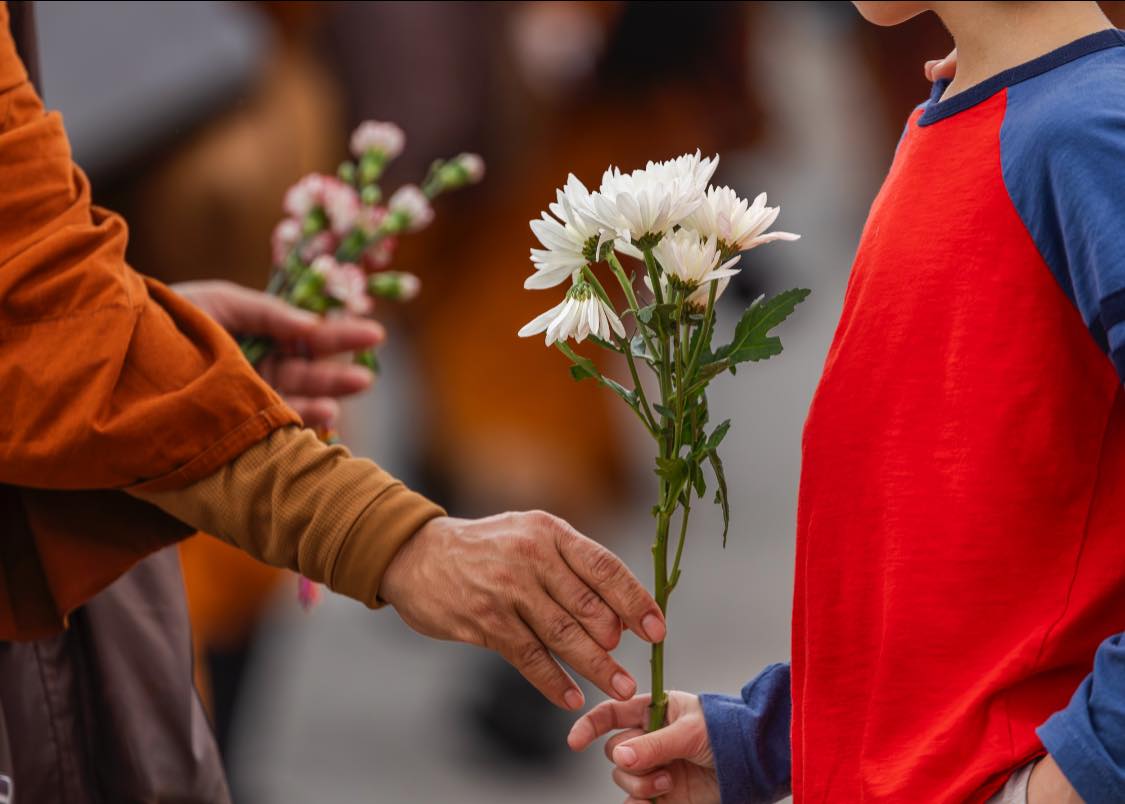
Photo credit: https://christchurchofaustin.org/announcement2/

As a pastor, I am constantly preaching about savoring the quiet anticipation of Advent.  We even offer Advent Lessons and Carols, which has a more contemplative note than its celebratory sibling, Christmas Lessons and Carols.  But in everyday life, I am just as vulnerable as anyone else to the secular chaos in which Advent lives.  I find myself running kids around to obligations and performances, juggling calendar conflicts with all the special holiday offerings, and even add commitments myself because I want to maintain annual traditions.  Nothing about life outside of church feels quiet and centered.

I think is why I was so grateful for the gift of a minimally scheduled Saturday this past weekend.  Both professionally and personally the calendar was mostly clear – I even reserved the TV for watching a basketball game which I rarely can do.  As my daughter and I settled in, she proposed doing a puzzle together – an activity we always say we’ll do but somehow never get around to doing.  And so evolved an afternoon of sports watching, puzzle assembling, and the kind of conversation that can only happen when you make unstructured space for it.  When I got to close of the day, I realized that while a part of me felt guilty for not being particularly “productive” (no catching up on work, no doing household chores, no addressing Christmas cards), I marveled at how spiritually and emotionally productive the day felt with my daughter.

I know finding even moments of quiet anticipation in Advent can feel impossible these days.  There are so many things vying for our attention – many of them quite good and important.  But I wonder if you might be able to carve out some unscheduled time in these weeks left of Advent.  They may have to be in the car on your way to something, or while walking on the treadmill, or saying goodnight to the children.  Maybe it means making your way to church even if you have other invitations. Whenever you can find that sacred space, I promise the life and love of Christ is waiting for you in the stillness.  God is already there.  You are invited to say hello.

On Risking Failure and Facing Fear…

03 Wednesday Dec 2025

Posted by jandrewsweckerly in reflection

≈ Leave a comment

Tags

anxiety, challenge, failure, fear, God, growth, hesitant, Holy Spirit, invitations, Jesus, joy, new, risk, try, yes

Photo credit: https://stock.adobe.com/search?k=parachute+jump+plane

I was listening to a podcast this week that was talking about how, as they mature, adults have a harder time trying new things because they have a deeper understanding, and perhaps fear of, failure.  Children don’t have this same hesitancy.  They try new things, figure out what works and what doesn’t, and keep at it.  There is a freedom in their development that allows them not to hold back or be afraid, but to keep trying out new experiences and challenges.

As one of my daughters ages, she is heading into that in-between time where she doesn’t have the same innocent willingness to try and fail, and is starting to understand that failures or inadequacies are sometimes noticed by others negatively.  She is trying out a new extracurricular this fall, and hated the first session.  As we headed into the second session, she pulled out all the stops about why she shouldn’t have to go back:  she wasn’t good enough, people weren’t nice, she would bring down the group through her inexperience.  In a moment of weakness, I almost caved.  I know how big those feelings are.  I palpably remember the anxiety that kind of experience brings, and I wanted to protect her from that hurt. 

When she came out of the second practice, she was a different person.  She was smiling, had a lightness to her step, and a warmth about her.  “That was fun!” she said.  As I listened to her describe the session, I was overwhelmed with two realizations.  First, I realized how close I came to cutting off a growth experience – how she would have never had learned the feeling of what it means to push through fear and find joy.  And second, I realized I needed to take a long look at where I am cutting off growth experiences in my own life.  Masked with the label, “wisdom,” how often do I fail to risk?

I wonder what growth opportunities are being presented to you today.  It doesn’t have to be something big or dramatically different.  Part of creating an openness to growth means being open to the little invitations – talking to a stranger when that’s not something you would normally do, reaching out for support when you don’t like feeling dependent upon someone, saying yes to an invitation to something that is not at all in your comfort zone but you admittedly have never tried to know for sure.  Those yeses prepare us for the yeses the Holy Spirit desires in each of our lives.  Those invitations are often God’s quiet invitations into God’s joy.  Those experiences are often pathways to the incarnate Jesus in your life.  I can’t wait to hear what you say yes to this week!

Sermon – Luke 23.33-43, P29, YC, November 23, 2025

03 Wednesday Dec 2025

Posted by jandrewsweckerly in Sermons

≈ Leave a comment

Tags

Christ the King, fatigue, forgiveness, God, hope, Jesus, king, kingdom of God, light, love, Messiah, Sermon, tired

Today I have a confession.  I am tired.  After watching the debacle of the longest ever government shutdown, only to jump into the next political scandal, struggling to understand how vastly different the kingdom of God is from the kingdom of man, I find myself not emboldened, but just tired.  Now, as person of faith, I am always looking for hope.  In fact, even this week, your Vestry and I spent time taking a step back and looking at all the goodness happening in this place – the signs of vitality and vibrancy, the things that are bringing us joy, moments and ministries that are giving us life.  But I confess, even with all that energy and goodness to celebrate, one look back out into the world, and my spirit is dampened and I am just…tired.

As I turned to our gospel lesson for today, I was hoping for some bit of encouragement – some promise that everything would be okay.  Knowing today is Christ the King Sunday, the last Sunday in the liturgical year whose text should bring into focus the point of a year of journeying with Christ, I had hoped that there would be some sort of rallying text that would invigorate me and shake me out of my exhaustion.  But instead, on this day when we honor Christ our King, what is the image we are given?  A beaten, humiliated, ridiculed, discredited, shameful shell of a man, hanging on a cross, defeated in approaching death.  We do not get Christ risen from the grave today – the ultimate Easter message.  No, today we get Good Friday – our hoped-for Messiah, seemingly defeated on the cross.  Of course, he dies with great dignity, forgiving sinners until the very end, welcoming the repentant even on their last breath, resisting every urge strike back or at least refute the charges against him.  He dies with dignity, but he dies nonetheless.

I have often thought it is strange how the cross, and not the empty tomb is our primary Christian symbol.  That we use an instrument of death as our sign for victory is rather odd.  But today we do not just honor Christ’s death on the cross; we honor how he died on the cross.  Even in death Christ our King managed to love his neighbor – even the really bad neighbors.  Even in death, Christ managed to love God – inviting God to forgive even the most hateful behavior.  Even on the cross, Jesus never loses his focus.  Jesus never gets tired.

Just like the kingdom of God is different, so is the king of God.  The people of God never really had a king until they reached the Promised Land.  They saw the neighboring countries with their armies and their admirable kings, and they wanted one for themselves.  That was their first mistake.  God granted them a king to rule over them, but inevitably, the kings, like any humans, were flawed – some more than others.  Hence, there are four books in the Hebrew Scriptures about the kings who ruled and the judges who tried to correct their behavior.  Most of the kings were corrupted by power, money, and greed.  Many abused the people.  Even the most revered king, King David, was a bit of a mess.  But Jesus is not like foreign kings or the kings of Israel.  Jesus’ kingship is different.  He loves the poor and cares for the sick, he sees through the pretenses of the temple and calls for authenticity, he loves deeply and forgives infinitely.[i]  And he never tires of being this kind of king.

For most of us, looking to Jesus as an example of how to rally out of our fatigue and weariness may feel overwhelming to our tired selves.  Instead, I found looking at the repentant thief to be helpful.  You see, the thief was probably tired too.  Anyone who is a thief has been hustling long before he gets caught.  He may have even been caught several times before for more minor offenses.  His arrest this time is different.  There will be no escape.  He will hang on that cross until he dies.  With the cruelty of the cross, and the pain of his body, also shining forth is an overwhelming sense of fatigue.  He too is tired.  Tired of running, tired of hustling, tired of the life that leads one to become a thief.  But even in his deep fatigue, he does something extraordinary.  When the other thief taunts Jesus, the repentant thief lets the other thief have it.  Hanging in agony, he looks outside himself, and refuses to stand for the hypocrisy of the other thief.  He decries the injustice of Jesus’ sentence, he wisely points out his own, as well as the other’s, culpability in sin, and then, without shame looks right at Jesus and asks Jesus to remember him.

Even at our most weary, tired states, when we feel like there is no hope, or when death feels ever present, Jesus invites us to keep shining our light for all to see.[ii]  Our gospel this week has people doing just that:  taking their world of hurt, pain, sadness, sorrow, defeat, seeming hopelessness, and turning toward the light.[iii]  The thief, hanging in humiliation and death, finds his light.  Jesus, defeated in the eyes of all but the thief today, keeps shining his light until the bitter end.  And Hickory Neck has them too.  Our children last Sunday and our psalm this Sunday that tell us to “Be still and know that I am God.”[iv]  Our parishioners delivering food before thanksgiving and shopping for the forgotten for Christmas.  Our members making stretch gifts to support the work of the kingdom here. 

Christ our King invites us to do likewise.  Of all people, Jesus understood being tired.  His cry out to God in prayer in the Garden of Gethsemane is a prayer of a tired man.  But Jesus stood up that night, all the way to the cross on Calvary and refused to let fatigue be an excuse for a world without love, hope, and forgiveness.  Our king may not look like other kings.  His story may be strange and full of contradictions.  But our king has the power to pull you out of darkness and drag you into the light.  But along the way, he is going to need you to shine your light too.  Amen.


[i] David Lose, “Christ the King C:  What Kind of King Do You Want?” November 14, 2016, as found at http://www.davidlose.net/2016/11/christ-the-king-c-what-kind-of-king-do-you-want/ on November 21, 2025.

[ii] Karoline Lewis, “Who and What is Your King?” November 13, 2016, as found at http://www.workingpreacher.org/craft.aspx?post=4754 on November 21, 2025.

[iii] Patrick J. Willson, “Homiletical Perspective,” Feasting on the Word, Yr. C, Vol. 4 (Louisville: Westminster John Knox Press, 2010), 337.

[iv] Psalm 46.10a.

On Inhabiting Gratitude…

12 Wednesday Nov 2025

Posted by jandrewsweckerly in reflection

≈ Leave a comment

Tags

act, barriers, God, gratitude, incarnate, practice, stewardship, tangible, Thanksgiving

Photo credit: https://www.southernliving.com/culture/what-to-write-in-thank-you-card

November is regularly a month when I talk about gratitude with my parish.  Most of that push comes from the confluence of things that happen in November.  We are almost always closing up our stewardship season in November – a season when we encourage parishioners to let their giving reflect their gratitude toward God.  We are also preparing for the Thanksgiving holiday – which although a secular holiday comes pretty close to being a sacred time of thanksgiving and praise.  And just yesterday we took the day to thank Veterans, honoring the sacrifices their vocations require and the blessings we enjoy because of their work.

This year, to help cultivate my own sense of gratitude, I picked up a calendar one of my favorite non-profits produced call “30 Days of Gratitude.”  Though some of the “activities” are to think about something I am grateful for, like a good memory in my home, most of the “activities” are more hands-on – like expressing gratitude to every member of the household or greeting a neighbor.  What I have loved about the calendar is the shift the calendar has created. 

Often when we talk about gratitude, we feel burdened – like we’re supposed to force ourselves into an emotion.  But what the calendar has done is make gratitude tangible – to act on my gratitude.  What’s beautiful about that shift is that the action is something I can do that has the unintended consequence of feeling gratitude instead of trying to manufacture gratitude out of thin air.  The calendar has made gratitude incarnate – allowed me to inhabit gratitude instead of simply emoting gratitude.  It’s a subtle change, but one that feels much more freeing.

I wonder how you are navigating gratitude during this season.  What are the barriers to you inhabiting gratitude?  What burdens are clouding your gratitude practices, making you more cranky than grateful?  Gratitude is not easy.  If it were, folks wouldn’t be producing gratitude calendars and journals.  I invite you to find the tool, the person, or the community who can help make your gratitude incarnate.

Sermon – Luke 20.27-38, P27, YC, November 9, 2025

12 Wednesday Nov 2025

Posted by jandrewsweckerly in Sermons

≈ Leave a comment

Tags

death, earth, God, grace, heaven, Jesus, love, mercy, questions, resurrection, Sadducees, Sermon

When my oldest was about three years old, a parishioner of mine died.  At the time we were still recovering from Hurricane Sandy.  Though many of us finally had our power back, an early snow storm delivered just enough snow to knock out power in some of the local schools and mucked up roads that were already struggling to be freed from fallen trees.  My daughter’s school was cancelled, and I had anticipated just trying to stay warm at home for the day.  But when I got the call that my church member had died – I was dumbfounded.  There was no doubt in my mind that I would go join the family for prayers, but I had no idea how to incorporate my daughter into the visit.  With the weather conditions such as they were, there was no way she could stay anywhere else.  And so began a ten-minute drive during which I frantically tried to explain to my three-year old daughter what death meant, what heaven is, and what God’s role in all of this is.  Of course, I totally forgot to factor into my explanation the fact that the parishioner’s body would still be present, and how her body figured into my three-year-old-appropriate explanation of heaven.  Needless to say, that day was not one of my finest parenting or priestly moments, and I ended up fielding questions about death, heaven, and God for months.

Truthfully, I think adults have just as many questions about death, heaven, and God as young children do.  When we hear the complicated question of the Sadducees to Jesus about the woman with seven husbands, we find ourselves morbidly curious too.  What does happen to this woman in the afterlife?  Would she have wanted to be with one over another in heaven?  Her scenario makes us think of all the stories of loved ones we know – or maybe even of ourselves.  What happens to the widow who remarries in the resurrection?  What about the couple who divorces and later remarries?  Surely they will not have to be reunited with their exes!  Or what about that abusive father, that mean uncle, or that estranged sister?  Do we face them in the afterlife?  Since we do not really have anyone to give us an insider’s perspective, these are the questions that we really wonder about.  And if we have ever held the hand of a loved one approaching death, we may have asked these questions to God, to our priest, or to a friend.  So, when the Sadducees ask this question of Jesus, we perk up, hoping for some real clarity from Jesus, and secretly praying for the answer that we think is best.

The trouble with this text though is the Sadducees are not really asking Jesus a practical question about what happens in the resurrection.  In fact, the Sadducees do not even believe in the resurrection.  The Sadducees are the group of people who believe the Torah – those first five books of the Hebrew Scriptures – to be the only authorized scripture.  None of the other books that we know from scripture – the prophetic writings or the Psalms – are considered valid scripture by the Sadducees.  Because there is neither a doctrine of resurrection of the dead nor a belief in angels in the written Torah, the Sadducees refuse to believe that there is life after this earthly life.  The Pharisees, along with Jesus and his disciples, on the other hand, believe in ongoing interpretation of Torah handed down by word of mouth, and so, they have no problem with the ideas of resurrection presented in other Hebrew scriptures.[i]

This question by the Sadducees about the resurrection, therefore, is not really a question for which the Sadducees are looking for answers.  Instead, this is a question meant to both ridicule Jesus,[ii] and to trap Jesus in an impossible question.  Though we may feel some sense of camaraderie in shared curiosity, the Sadducees are not simply a curious bunch with a heartfelt question.  They are trying to manipulate Jesus and embarrass him in front of the crowd.  Luckily for us, Jesus offers an answer anyway.  The answer is not as specific as we might like, but the answer does offer hope and mercy in a roundabout way.

What Jesus basically tells the Sadducees and those gathered around him is that the resurrection is not like life here on earth.  Life after earthly life is not “Earthly Life, Part II,” where everything is the same, but better.  In the resurrection life, rules of this life – and in particular, rules that applied to Levirate marriage, like a brother taking on a widowed sister-in-law – are not the same as the rules in the afterlife.  Jesus does not explain exactly what this looks like or how this plays out, and Jesus does not fully satiate our curiosity.  But Jesus does give an answer that is full of mercy and love.  Jesus basically tells those gathered that the beauty of the resurrection is that the strictures and limitations of this life are lifted in the life to come.  Things like women being treated as property to be managed, infertility, and grief are erased in the afterlife.  Things like disappointment in marriage, pressure to be married, and even death itself are no longer present in the afterlife.  Things that define us here, limit or frustrate us, or pain us here in this life are absent in the afterlife.  Jesus will never concede to the Sadducees that resurrection life does not exist.  But Jesus does try to kindly invite the Sadducees into seeing that resurrection life is so much more than they can imagine, and so much fuller of true life than this earthly life they know.  Jesus does not answer their question fully, but Jesus does say that the Creator God of Torah is still revealing truth, and that the truth is full of mercy, grace, and love.

I am reminded of the scene from the movie The Matrix where the main character, Neo, goes to visit a woman called the Oracle to find out if he is “the one,” a messiah-like figure to save the world.  Neo goes to the Oracle with a clear-cut question, “Am I the One?”  The conversation that ensues is complex and layered with meaning.  She seems to be telling Neo he is not the one, but we later learn in the movie that she was actually telling him that he is not the one if he will not claim his status as the One.  The scene is as complicated as my rudimentary attempts to explain the scene.  But what the scene reminds me of is our conversations with God about ultimate things.  We often come to God with basic questions and concerns that are rarely answered directly.  But that does not mean we do not get an answer.  In the end, the answer is loving, full of compassion, and ultimately full of truth when we are ready to understand and interpret that truth.

This is all that Jesus can offer us today.  Jesus is not offering an exclusive interview to a top news source to tell us everything we want to know about resurrection life.  We will not be able to watch with bated breath as Jesus answers every question we want answered.  Instead, Jesus offers us a promise to take home.  His promise is that we have resurrection life beyond this earthly life.  His promise is that resurrection life is not some two-dimensional repeat of this life, with the limited happiness we can find here, but instead is a three-dimensional life beyond our knowing because of our limited earthly experience.  His promise is that God is ever revealing truth to us, showing us the most important truth:  that God loves us, shows us exquisite mercy, and offers us unfailing grace.  Jesus’ words today may not be the 60-Minute special we were hoping for, but Jesus’ words today give us something to hold on to in the midst of this crazy, chaotic world that is our earthly home.  Hold fast to the Lord who loves you, shows you exquisite mercy, and offers you unfailing grace.  Amen.


[i] Vernon K. Robbins, “Exegetical Perspective,” Feasting on the Word, Yr. C, vol. 4 (Louisville: Westminster John Knox Press, 2010), 285.

[ii] Eberhard Busch, “Theological Perspective,” Feasting on the Word, Yr. C, vol. 4 (Louisville: Westminster John Knox Press, 2010), 286

On Claiming Your Why…

05 Wednesday Nov 2025

Posted by jandrewsweckerly in reflection

≈ Leave a comment

Tags

abundance, bless, church, community, God, grace, gratitude, home, obligation, why

Photo credit: https://worksheets.clipart-library.com/five-whys-worksheet.html

In one of my executive leadership courses we read about the “five whys.”  Developed within the Toyota Motor Corporation, the process is a problem-solving process meant to get to the deepest root causes of a problem by asking the simple question, “why?” repeatedly.  While this was intended for manufacturing processes, the “five whys” found its way into all industries as a way to help teams focus on the root of any situation. 

I have often said that at church, understanding your “why” is really important.  Using a system like the “five whys” to get to the root of a challenge before the Vestry, or a situation before the staff, or even to problem before lay leaders, discerning the real “why” before us helps us address the issue at hand at a deeper, much more relevant manner.

This autumn, our parishioners have been sharing their “whys” with our congregation about why supporting ministry at Hickory Neck Church is so important.  Through short video testimonies we have heard all kinds of whys, learned about the impact of ministries in our faith community, and been able to see the deeper meaning people are finding in our spiritual home.  Why would we want to know that?  Well, as we consider how we want to support the church with our time, talent, and treasure, knowing our whys helps us convert our giving from obligation to gratitude.  Once we understand our why more deeply – and the whys of fellow members – we begin to see the wideness of God’s mercy in this place, and begin to feel more committed to supporting this place that blesses us and others so richly.  Slowly, we see we are not being pressured to give, we are being invited into a vibrant, life-changing, purpose-making place that we can enable with the resources God has given us.

We’ve shared the case for Hickory Neck, we’ve heard from fellow parishioners, and now, we are invited to ask our “five whys” about this place we have come to call our spiritual home.  I look forward to hearing about the abundance and grace you find when you ask your “five whys” this week.  I suspect your whys might inspire my own!

Sermon – Luke 6.20-31, AS, YC, November 2, 2025

05 Wednesday Nov 2025

Posted by jandrewsweckerly in Sermons

≈ Leave a comment

Tags

All Saints Sunday, Beatitudes, compassion, faithful, fragrance, God, Golden Rule, Jesus, justice, love, saint, scent, sensory, Sermon, witness

On the blog this week, I shared about friends of ours who are fragrance aficionados.  When we spend time together, we’ve taken to doing fragrance samplings with them – sort of like wine tastings, but with the focus on the sense of smell.  Invariably, I find a new fragrance I like that I had never heard of, but that brings me a sense of playful joy.  This past week I was sharing one of those fragrances with one of our daughters and she said, “It’s okay, but I prefer your ‘Mom smell.’”  While I wish there was a more attractive label to that particular fragrance, and while I suspect that “Mom smell” is some combination of the scents of my soap, hair products, and laundry detergent, I get what my daughter meant.  Just like fragrances can evoke memories of special places, fragrances can also recall to us people in our lives.  One whiff, and we are transported to another time and place, remembering what someone meant to us.

On this All Saints Sunday, we engage in a similar kind of sensory recalling.  In our case at Hickory Neck, instead of the sense of smell, we invoke the sense of touch – the feel of smooth or ridged ribbons running through our fingers as we tie them to the altar rail in memory of a saint of God, the feel of droplets of water landing on our heads and bodies as we recall our baptismal identity and the baptisms of saints who have died, and the feel of the wafer in our hands and mouth or the feel of the priest’s thumb as they rub a blessing on our forehead, as we engage in the earthly banquet, reminiscent of the heavenly banquet our loved ones are enjoying.

But just like scents have the power to remind us of beloved memories, so scents can remind us of painful memories.  While some of us may have a “Mom scent” we recall with love and affection or wistful memory, others of us didn’t have such beloved memories or experiences – and unfortunately, smells can recall those memories too.  As I was reading Luke’s gospel for today, that’s where I landed – that all of us – all of us saints of God – have the opportunity to live lives of good or ill – to leave behind fragrances that help or harm.  And since Luke’s language is entirely literal and not at all the flowery, spiritual language of Matthew’s beatitudes[i], we are very clear on Jesus’ words and meaning.  The blessings and woes of Luke’s beatitudes are straightforward and simple.  As one scholar puts it, “If you want anything to do with Jesus or the God who sent him, Luke says, you had better go find the poor, the hungry, the captives, the blind, and the outcast, and join Jesus, as Jesus cares for them.  The way we know who Jesus is, is to go where Jesus is, with the poor, the hungry, and the oppressed.”[ii]

While All Saints Sunday can take us to place of remembering loved ones and the saints of the church, tempting us to get lost in those memories, what All Saints Sunday ultimately hopes to impart is that the lives we live matter.  We remember the saints of the church and the lives of our loved ones we miss because they showed us what living lives that matter looked like.  We do not honor them because they were rich or well fed or joyful or respected.  We honor them because they loved their enemies, they did good to those who hated them, they blessed those who cursed them, and prayed for those who hurt them.  We honor them because they were nonviolent, because they gave sacrificially of their wealth, because they understood that poverty makes people desperate – and because they did to others as they would have them do to them.

We could easily leave here today with the commission to “go and do likewise,” as if Jesus’ words are a simple commission.  But nothing about what Jesus is saying is simple or easy.  Several years ago, I was talking to our children about the Golden Rule – those words we hear today about doing unto others as you would have them do unto you.  To my great shock, my children did not see the wisdom of the words at all.  Instead, their desires were rooted in a sense of justice or fairness.  “No way!” one said.  “I’ll do unto others what they do to me.”  What I had understood as simple, universal wisdom that is shared among faith traditions totally flies in the face of secular, American ideals.  Even Professor Johnson says about Luke’s text today, “It is not only greed that jeopardizes the wealthy Christian’s relationship with God, but the simple – and subtle – temptation to think we can take care of ourselves.”[iii]

Luke leaves us, then, with a challenging invitation.  As you tie on a ribbon to remember a loved one today, you can certainly recall whatever fragrance of theirs you miss.  But Luke asks you to go further – to recall the witness they left to you about living a faithful life, and be emboldened to start leaving your own faithful fragrance behind too.  Lean into those who have gone before to encourage your own witness of love, compassion, and justice.  Lean into the faithful who gather beside you in person every Sunday who struggle to live that Golden Rule with gusto instead of resentment.  Lean into Jesus, who walked before us in incarnate form, leaving behind the fragrance of incense – the fragrance of humility, compassion, and sacrificial love.  With them, you can then begin to create a signature fragrance of your own that will help draw others to God.  Amen. 


[i] Marjorie Procter-Smith, “Homiletical Perspective,” Feasting on the Word, Yr. C, Vol. 4 (Louisville:  Westminster John Knox Press, 2010), 239.

[ii] E. Elizabeth Johnson, “Exegetical Perspective,” Feasting on the Word, Yr. C, Vol. 4 (Louisville:  Westminster John Knox Press, 2010), 239.

[iii] Johnson, 241.

On the Nose…

29 Wednesday Oct 2025

Posted by jandrewsweckerly in reflection

≈ Leave a comment

Tags

broken, Christ, grace, healing, Jesus, love, perfume, recollection, scent

Photo credit: https://www.istockphoto.com/search/2/image-film?phrase=perfume+spray

We recently spent some time with friends who are fragrance aficionados.  Often when we gather, we do a fragrance sampling, noting what we smell and what it evokes – and whether we could imagine wearing the fragrance ourselves.  Our friends are great guides, teaching us tips from the industry, helping us define fragrance-specific terms, and sharing the gracious wisdom that all scent evaluations are subjective.  The sessions are always a delight, sometimes leading us to new fragrances we enjoy.

When I returned home after the visit, I asked one of my daughters whether she liked a particular fragrance I was trying.  She confessed it was nice, but said, “I just prefer your ‘Mom Smell.’”  Through our chuckles, I asked her what she meant about a “Mom Smell.”  She couldn’t quite explain it, and I can only assume she meant a combination of the soap, hair products, or laundry detergent I use.  But I knew what she meant – like scientifically devised fragrances can, any smell can evoke the essence of a person or place we know and love.  It is the gift of recollection that comes through the sense of smell.

Her insight had me wondering if all of life isn’t about leaving behind traces of our scent, unbeknownst to us.  Who had a positive experience or a blessing through me that is recalled when the smell something reminiscent of my “Mom Smell” wafts by?  Who has been in a location far from me and smelled my soap or laundry detergent and remembered something kind and generous I said or did?  We all leave traces of ourselves in this world.  I wonder what gifts you are leaving behind, unbeknownst to you.  I wonder what recollections people have of you that remind them of the grace and love of Christ himself.  I look forward to hearing about what healing scent you are trying to leave for this broken world.

On Commitments and Gratitude…

15 Wednesday Oct 2025

Posted by jandrewsweckerly in reflection

≈ Leave a comment

Tags

blessing, commitment, God, grateful, gratitude, joy, list, positive, sight, stewardship, support

Photo credit: https://medium.com/@mnwieschalla/why-you-should-make-a-gratitude-list-every-night-before-bed-fc4a30196af9

One of the tools I use in my line of work is an executive coach.  The coach helps me examine my leadership and develop tools for higher levels of executive functioning.  Sometimes that means troubleshooting a specific challenge I am facing and sometimes that means skill development work.  Each month that we meet, we monitor progress and reflect on newly emerging needs or unresolved issues.  This month the content of our meeting was a little different.  We spent most of the meeting reflecting on things that were going well – successes to celebrate, progress being made, and joys to honor.  As I shared each positive reflection, I was reminded of other things to celebrate.  It was as if the positive news was multiplying, bubbling up as I recalled each source of thanksgiving.

In many ways, that is what we have been inviting our entire congregation to do in this season of stewardship.  Before asking parishioners to consider how they might support ministry with their time, talent, and treasure, first we have been sharing our joys – what good things are happening in our church, what positive impact we are making inside and outside of our church community, and what goodness is motivating our members.  Each bit of sharing has led to more positive, encouraging reflection:  from the mom who really appreciated the elder member sharing about how much he values the formation of children in our church, to the person who still isn’t sure they are an Episcopalian hearing about someone else’s journey to the Episcopal Church through Hickory Neck, to the parishioner who knows the speaker has different views from them but who finds a similar sense of belonging in this unique place.  We have found the sharing of our gratitude begets more gratitude – opens our eyes to the abundance that seems hard to see lately.

This week, as we begin to think about our commitment of support to our church, I invite all of you to start first with gratitude.  What is bringing you joy in your faith community?  What are you grateful for?  What keeps bringing you back?  Start today with a list of three different things for which you are grateful.  Write them down (or make a note in your phone).  Tomorrow, think about three other items, repeating the process each day.  See how the list grows, and watch how your sight begins to widen.  You’re welcome to have your commitment card and forms nearby (or the link from our website open in your tabs), but first, take some time filling your heart with gratitude before filling out the forms with commitments.  Let your commitments pour out of your grateful heart and your conversation with God before sharing those commitments with the community.  I can’t wait to hear how starting with gratitude changes your sight.

Sermon – Luke 17.11-19, P23, YC, October 12, 2025

15 Wednesday Oct 2025

Posted by jandrewsweckerly in Sermons

≈ Leave a comment

Tags

blessing, duty, God, gratitude, Jesus, lenses, lepers, see, Sermon, sight, stewardship, Thanksgiving

Several years ago, A.J. Jacobs wrote a book called Thanks a Thousand.  Jacobs had decided that he loved his daily cup of coffee from his local coffee shop so much that he wanted to thank every person who made the cup of coffee possible.  His book journals what started out as that simple premise that became a journey around the world.  You see, he could easily thank the barista he saw every morning.  But then he realized he should thank the owner of the shop for the shop existing in the first place.  From there, he realized the owner had a graphics designer who designed the logo, and there was company that made his coffee cup that carried that logo.  He eventually recalled the beans for the coffee came from somewhere – and there were hundreds of people who moved the beans from tree to harvest to packaging to shipping to storage and to distribution.  And that didn’t include those who made sure the city had clean water that was used to combine beautifully with beans to make his daily beloved cup of coffee.  Each thank you – often received with confusion, surprise, mystification, and occasional delight – led to another individual for Jacobs to thank.  Jacobs had read that the practice of gratitude could change your life, and slowly, he began to find that genuine gratitude made him kinder, happier, and gave him the opportunity to make an impact in the world.  Gratitude helped him to see the world differently.

In our gospel lesson today, ten lepers experience a miraculous healing through Jesus.  Jesus sends the lepers to the priests and they become clean along the way.  But only one of the lepers actually sees that he is healed.  We are told that because he sees, he turns back, praises God, and prostrates himself at Jesus’ feet, thanking him.  Now, to be clear, the other nine lepers do nothing wrong.  In fact, they follow Jesus’ instruction explicitly and enjoy being healed.  The promise made to them is fulfilled.  The tenth leper – a Samaritan of all people – though sees.  And when he returns to give thanks, he is blessed a second time.  David Lose explains, “Jesus concludes his exchange by inviting the man to rise and go on his way and saying that his faith has made him not only physically well, but also whole and, indeed, saved.  That’s part of the complex and multivalent meaning of the Greek root word σoζω (transliterated as “sozo” and pronounced “sod-zo”) Jesus uses.”[i]  That second blessing does not happen though without the act of seeing.

The Samaritan leper experienced a second blessing much like A.J. Jacobs experienced a second blessing.  Once Jacobs began his coffee gratitude journey – thanking all those folks who made that perfect cup of daily coffee – he began to see just like the leper.  His eyes were opened to the powerful work of God by the simple act of gratitude.  Scholars across the centuries have noted how deeply faith and gratitude are linked.  “Karl Barth was fond of saying that the basic human response to God is gratitude – not fear and trembling, not guilt and dread, but thanksgiving.  ‘What else can we say to what God gives us but stammer praise?’ [Barth says.]”  C.S. Lewis “also observed the connection between gratitude and personal well-being.  [He said,] ‘I noticed how the humblest and at the same time most balanced minds praised most:  while the cranks, misfits, and malcontents praised least.  Praise almost seems to be inner health made audible.’”[ii]  The entire enterprise of thanking thousands of people for his cup of coffee was A.J. Jacobs’ attempt to correct his vision so that he might cultivate a healthy practice of faith.

The Stewardship team at Hickory Neck this year has been doing the same thing.  They have been working to help us better see God in this place we keep returning to.  Today you will receive a packet of information meant to engage your vision.  In the packet will be testimonies of how much this community has impacted the lives of your fellow parishioners.  You will find a visual representation of how every dollar is stretched to make possible the goodness we experience here.  You will find an invitation to respond to your own gratitude to Jesus for the many blessings in your faith journey by committing your time, your talent, and your treasure –not out of a sense of duty, but because you have seen goodness here, and gratitude is bubbling out of you.  And in case all those invitations into seeing differently are not enough, our Stewardship team will be bringing back to you the stories of your fellow parishioners in their own words.  Each week, you will be sent videos on what they are calling Motivational Mondays and Faithful Fridays – videos of your fellow parishioners describing how their devotion to generosity has richly blessed their faith journey.

In the coming weeks, you may be tempted to do what the nine lepers do – to dutifully follow Jesus’ invitation to go and be healed – and simply open your stewardship packet and return the commitment card and time and talent form.  And doing so would not be wrong at all – in fact, the Stewardship Team and Vestry would be deeply grateful.  But our invitation from today’s gospel lesson goes a little further than duty.  Our invitation is to put on new lenses – to use the tools Hickory Neck is gifting you to better see the overwhelming blessings from the Spirit and to make tangible our gratitude – “gratitude for the gift of life, gratitude for the world, gratitude for the dear people God has given us to enrich and grace our lives.”[iii]  I cannot wait to hear what you see.  Amen.


[i] David Lose, “Second Blessing,” October 7, 2013, as found at https://www.workingpreacher.org/dear-working-preacher/second-blessing on October 10, 2025. 

[ii] John M. Buchanan, “Homiletical Perspective,” Feasting on the Word, Yr. C, Vol. 4 (Louisville:  Westminster John Knox Press, 2010), 165.

[iii] Buchanan, 169.

← Older posts

Recent Posts

  • On the Myth and Magic of Advent…
  • On Risking Failure and Facing Fear…
  • Sermon – Luke 23.33-43, P29, YC, November 23, 2025
  • On Inhabiting Gratitude…
  • Sermon – Luke 20.27-38, P27, YC, November 9, 2025

Archives

  • December 2025
  • November 2025
  • October 2025
  • September 2025
  • August 2025
  • July 2025
  • June 2025
  • March 2025
  • February 2025
  • December 2024
  • November 2024
  • October 2024
  • September 2024
  • August 2024
  • July 2024
  • June 2024
  • May 2024
  • March 2024
  • February 2024
  • January 2024
  • December 2023
  • November 2023
  • October 2023
  • September 2023
  • August 2023
  • July 2023
  • June 2023
  • May 2023
  • March 2023
  • February 2023
  • January 2023
  • December 2022
  • November 2022
  • October 2022
  • June 2022
  • May 2022
  • January 2022
  • December 2021
  • November 2021
  • October 2021
  • September 2021
  • August 2021
  • June 2021
  • May 2021
  • April 2021
  • March 2021
  • February 2021
  • January 2021
  • December 2020
  • November 2020
  • October 2020
  • September 2020
  • August 2020
  • July 2020
  • June 2020
  • May 2020
  • April 2020
  • March 2020
  • February 2020
  • January 2020
  • December 2019
  • November 2019
  • October 2019
  • September 2019
  • August 2019
  • July 2019
  • June 2019
  • May 2019
  • April 2019
  • March 2019
  • February 2019
  • January 2019
  • December 2018
  • November 2018
  • October 2018
  • September 2018
  • August 2018
  • July 2018
  • June 2018
  • May 2018
  • April 2018
  • March 2018
  • February 2018
  • January 2018
  • December 2017
  • November 2017
  • October 2017
  • September 2017
  • August 2017
  • July 2017
  • June 2017
  • May 2017
  • April 2017
  • March 2017
  • February 2017
  • January 2017
  • December 2016
  • November 2016
  • October 2016
  • September 2016
  • August 2016
  • July 2016
  • June 2016
  • May 2016
  • April 2016
  • March 2016
  • February 2016
  • January 2016
  • December 2015
  • November 2015
  • October 2015
  • September 2015
  • August 2015
  • July 2015
  • June 2015
  • May 2015
  • April 2015
  • March 2015
  • February 2015
  • January 2015
  • December 2014
  • November 2014
  • October 2014
  • September 2014
  • August 2014
  • July 2014
  • June 2014
  • April 2014
  • March 2014
  • February 2014
  • January 2014
  • December 2013
  • November 2013
  • October 2013
  • September 2013
  • August 2013
  • July 2013
  • June 2013
  • May 2013
  • April 2013
  • March 2013
  • February 2013
  • January 2013
  • December 2012
  • November 2012
  • October 2012
  • September 2012

Categories

  • reflection
  • Sermons
  • Uncategorized

Meta

  • Create account
  • Log in
  • Entries feed
  • Comments feed
  • WordPress.com

Blog at WordPress.com.

  • Subscribe Subscribed
    • Seeking and Serving
    • Join 394 other subscribers
    • Already have a WordPress.com account? Log in now.
    • Seeking and Serving
    • Subscribe Subscribed
    • Sign up
    • Log in
    • Report this content
    • View site in Reader
    • Manage subscriptions
    • Collapse this bar
 

Loading Comments...