• About

Seeking and Serving

~ seek and serve Christ in all persons

Seeking and Serving

Author Archives: jandrewsweckerly

Sermon – Matthew 6.1-6, 16-21, AW, YC, March 5, 2025

18 Wednesday Jun 2025

Posted by jandrewsweckerly in Sermons

≈ Leave a comment

Tags

alms, Ash Wednesday, both-and, community, confess, fasting, honest, Jesus, Lent, prayer, real, reconciliation, redemption, reflection, repentance, Sermon, sin, solo, vulnerable

If I were to say to you that there are two services that attract the most non-members each year, which two services would you guess?  Christmas and Easter?  In part, you could be right – there are definitely a lot of guests at Christmas and Easter.  But proportionately, when talking members and non-members, I notice we get more guests at Blue Christmas and Ash Wednesday – especially if we include Ashes to Go in our Ash Wednesday count. 

So what about Blue Christmas or Ash Wednesday is so appealing to someone who doesn’t regularly attend church?  Having just been a part of Ashes to Go in our parking lot with lots of guests, I think there is something very real, honest, and vulnerable about services on Ash Wednesday that do not always happen on a Sunday or especially on festivals like Christmas and Easter.  On Ash Wednesday, the church gives us permission to bring our real, broken, hurting, mortal selves to a space, to acknowledge our fragility and hurt, and to bless the fullness of our selves – the good, the bad, and the ugly. 

Now to some, this may feel a little too self-centered.  As we impose ashes, the choir will chant from Psalm 51 tonight:  “Wash me through and through from my wickedness and cleanse me from my sin.  For I know my transgressions, and my sin is ever before me.  Against you only have I sinned and done what is evil in your sight.  And so you are justified when you speak and upright in your judgment.”  Perhaps that is the appeal of this day – the opportunity to take a moment for the self and really ponder where we are with God and this life.  Those ashes will be grittily spread on my forehead, the penitence and fasting are my work to do, and death is mine alone to face.  Everything about today is about my own journey with God.

Stephen and I were just debating about this reality for Lent in general.  We are making plans for Holy Week and we have a service with gospel songs and meditations.  I was excited about the possibility of the service and Stephen quipped, “It’s a little self-centered, don’t you think?  What about worrying about others and the rest of the world?!?”  The truth is, the season of Lent that we start today and end on Good Friday is sort of a both-and experience.  This is a season we are called into self-examination and repentance.  AND, this is also a season where we examine the sinfulness in the world in which we are complicit.

That both-and experience is what Jesus was worried about in our gospel lesson today.  Jesus talks a great deal about personal piety and not showing off in front of others – to not to let others seeing you give alms, pray, or fast.  But as I studied Matthew again this year, I reread something that brought me up short.  All those warnings Jesus makes, “Beware of practicing your piety before others…whenever you give alms, do not sound a trumpet…when you pray, do not be like the hypocrites…whenever you fast, do not look dismal…”, all of those warnings are not in the singular.  They are actually in the plural.[i]  So the words are more like, beware of practicing you all’s piety.  Or maybe in southern speak, “when all ya’ll pray…” Jesus is not criticizing or singling out you or you or me.  Jesus is singling out the community of the faithful.

That may sound like semantics, but there is something quite dramatic about Jesus speaking in the plural versus the singular.  Every week in Sunday services, we confess our sins.  But we confess them communally.  Communal confession is an extraordinary event.  While we may feel lost or despondent about our inability to live in the light of Christ as individuals, when we communally confess, a room of voices is saying with you, “Me too!”

One of the things I grieved during the pandemic was our inability to gather in person.  I loved that we had and continue to have an online community – especially for our homebound, our busy members, or for those meeting Hickory Neck for the first time.  But our necessary isolation during the pandemic naturally led to a pattern of looking inward – sometimes so much so that we forgot we are not alone – that there is a whole community of faith who is walking this journey with us and struggling just as we are.  There is something quite powerful about listening to the voices of the 7-year-old next to the 77-year-old – the person who looks so put together next to the person who is clearly struggling – the dad with children next to the widow – all confessing together.  Week in and week out, those myriad voices remind us we are not alone.

Tonight’s service very much calls us into reflection and repentance.  But our invitation tonight as we enter Lent is to remember that the act of reconciliation and redemption does not only happen alone.  We all are invited into a holy Lent.  We all are invited into prayer, fasting, and alms giving.  We all are invited to remember we are dust.  In person, online, and hybrid together, we are not only invited into solo, parallel journeys.  But also, our journeys are strengthened and made possible through the companionship of community.  You are not alone.  We are in this together – all y’all.  And Jesus lights the way for us all.  Amen.


[i] Karoline Lewis, as described on the podcast, “Sermon Brainwave:  #889: Ash Wednesday –Rebroadcast from February 22, 2023,” February 25, 2025, as found at https://www.workingpreacher.org/podcasts/889-ash-wednesday-rebroadcast-from-february-22-2023 on March 4, 2025.


On the Risk of Anticipation…

12 Wednesday Mar 2025

Posted by jandrewsweckerly in reflection

≈ Leave a comment

Tags

anticipate, anticipation, control, dance, God, good, Holy Spirit, impact, Lent, movement, planner, spiritual

Photo Credit: https://www.pinterest.com/pin/tango–761882461966749050/

So, what does a Dancing with the Williamsburg Stars competitor do after the competition?  Well, in my case, you get back in the studio!  Before the competition even began, I already knew I wanted to keep dancing.  I was having such a great time stretching my mind and body learning new things that I knew it was a good physical, and spiritual, discipline I wanted to maintain. 

Now, you may be wondering how in the world ballroom dancing can be categorized as a spiritual discipline.  The truth is, I encounter the sacred in ballroom dance all the time.  I talked about it once before HERE.  This week, as I started my first post-competition class, we went back to basics, learning the rumba and cha-cha.  There’s a certain humbling that comes with learning a new dance that I had forgotten from when I started months ago.  As we progressed through the class, I felt like I was slowly getting the hang of the technicalities – that is, until we started turns.  At one point, my instructor said, “Stop anticipating!”  He reminded me that he would show me where to go, but if I anticipated what he was going to do next, I would mess up our unique dance.

Those two words have been rattling around in my head.  Stop anticipating.  You see, I am a planner by nature.  Anticipation is my jam.  I am constantly thinking ahead, wondering about decision trees and the potential impact of each branch.  I like thinking about the larger system and strategically guiding my parish in our next steps.  So, the idea of stopping anticipation seems anathema. 

But the more I thought about it, every good thing that has come about in my ministry was nothing I actually anticipated.  In my current parish, I might have conducted a needs assessment with the community, listened to my parish’s desires, and researched a particular new ministry.  But what I didn’t anticipate was an outside group needing space to do the exact ministry we were contemplating.  I might have envied other parishes with digital ministries, but what I never anticipated was a worldwide pandemic that would launch my church’s own digital ministry.  I might be dreaming with my parish about alternative revenue streams and the repurposing of our spaces, but what I didn’t anticipate was three conversations that fell into my lap in the course of three weeks about potential partnerships.  When I finished the planning and stop anticipating, God happened each time.

I wonder in what ways your anticipation is blocking the movement of the Holy Spirit.  In what ways are you anticipating a left-hand turn, only to discover, God is over the to right, ready for you, if you can just stop anticipating?  For those of you who are lifetime planners, I know this is hard spiritual work.  Perhaps this Lent, you can join me in my prayer, “Lord, help me stop anticipating.” 

On Ashes and Dust…

05 Wednesday Mar 2025

Posted by jandrewsweckerly in reflection

≈ Leave a comment

Tags

Ash Wednesday, ashes, care, community, dust, dusty, finitude, God, healing, mortality, music, organ, spiritual life, vulnerability

Phot credit: https://www.yamaha.com/en/musical_instrument_guide/pipeorgan/maintenance/

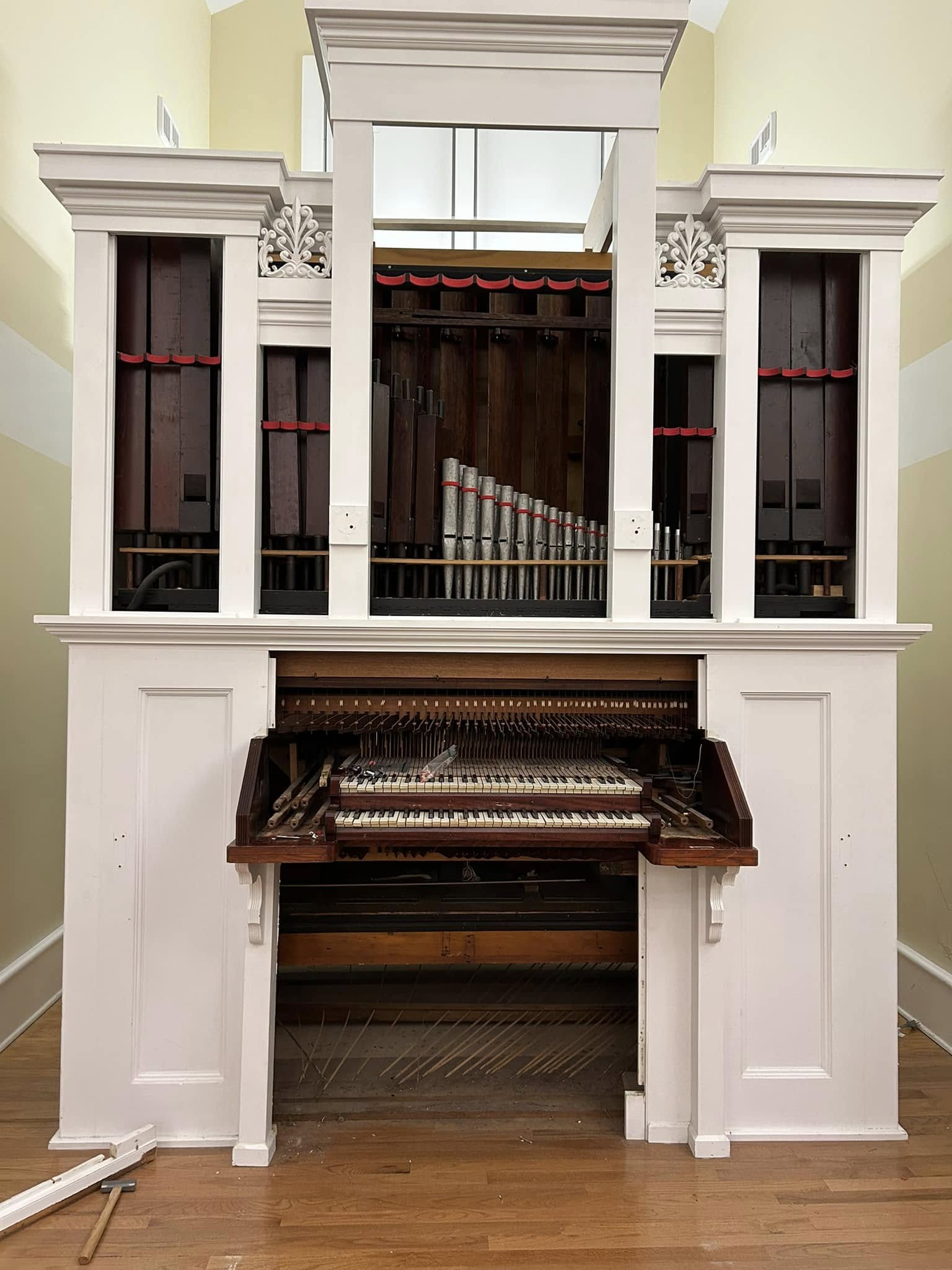
Last year our parish was donated a new pipe organ.  We have been eagerly waiting for the deconstruction of our current organ and the installation of the new one.  The time has finally come, we said a prayer of blessing on the current organ, and we have been waiting and watching as the process begins.  Ideally this wouldn’t be staring just days before Ash Wednesday, but I suppose there is no “perfect” time to deconstruct your worship space.

Knowing we are in a liminal time of deconstruction and reconstruction, I had not thoroughly thought through the impact this time would have on our experience of Ash Wednesday.  But walking into the Chapel this morning, seeing the pipes mostly gone, and the guts of our current organ exposed, I was hit by a sadness I couldn’t quite place.  Almost 20 years of music from that organ has filled our worship space, countless talented individuals have made the organ sing, and even more moments of sacred encounters with God have happened through that instrument.  Seeing the organ exposed today did something that left me unsettled. 

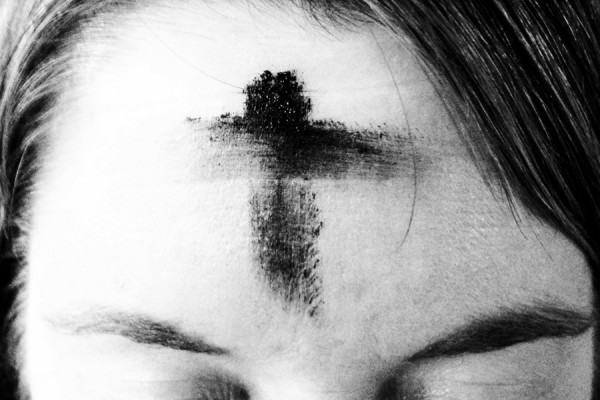
Photo credit: https://annkroeker.com/2011/03/09/there-back-again-my-first-ash-wednesday/

When I necessarily turned my attention to preparing for tonight’s Ashes to Go and Ash Wednesday service, I realized what was so unsettling.  Ash Wednesday is all about reminding us of our mortality, our finitude, and our vulnerability before God.  When those gritty ashes are scraped across my forehead and I am told that I will return to dust, that texture and those words linger with me.  So too, as that organ case sits gaping and open, with dust motes floating in the air, our worship space has suddenly become the perfect metaphor for entering a Holy Lent.

I wonder what gaping holes Ash Wednesday is exposing for you.  I wonder where your spiritual life is feeling dusty and in need of some care.  As always, you are most welcome to engage at Hickory Neck Episcopal Church for some tending – to find a connection with God that might be missing, to heal some holes that have been exposed for too long, and to find a place of belonging, because, believe me, you are not alone.  Welcome to Lent.

Photo credit: Stephen Trumbull; reuse with permission only

Sermon – Luke 9.28-43, TRS, YC, March 2, 2025

05 Wednesday Mar 2025

Posted by jandrewsweckerly in Sermons

≈ Leave a comment

Tags

Christian, church, division, Elijah, follow, formation, identity, Jesus, Lent, love, mission, Moses, prayer, Sermon, spiritual, Transfiguration

As I spend time with parishioners, staff, clergy leaders, and folks outside the community one common question keeps emerging, “What do we do?”  As we watch divisions deepen – something that seemed impossible given how deeply divided we already were, and as we watch a dismantling of how our country has operated for ages, and as we argue about what is best for our country, I have heard us asking, wondering, struggling with that question, “What do we do?”  The question is mirrored in the story of the transfiguration in Luke’s gospel today too.  Sleepy disciples who are supposed to be praying with Jesus on top of a mountain are jolted into alertness upon seeing Jesus in dazzling brightness, talking with long-gone Moses and Elijah, saying something about Jesus departing.  John and James are stunned into silence, but Peter answers his own question of “What do we do?” by proposing they build some dwellings – for surely remaining here in God’s glory is what he thought they should do.

Though we tease Peter about his not fully “getting it” when we wonder what we should do, I find myself mimicking Peter these days.  When I am asked, “What do we do?” my immediate and probably over-simplified answer is “follow Jesus” – not follow Republicans or follow Democrats; not follow supporters or follow opposers; not follow these Christians or follow those Christians.  Simply follow Jesus.  The problem with my answer of following Jesus is that the answer is so simple the answer leaves us with more questions than actual answers. 

That is why I am so grateful for Luke’s gospel today.  What this passage from Luke’s gospel does is tell us that following Jesus means, One, “…we must be clear about our identity;” two, be “resolute in our mission;” and three, be “intentional in our spiritual formation.”[i]  So, clear on our identity, focused on mission, and intentional about our spiritual formation.  Let’s dig in to this passage to find more clarity.

To follow Jesus, we need to be clear about our identity.  As scholar Jeffery Tribble argues, in Luke’s gospel, “The transfiguration bears witness to the identity of Jesus Christ.  By God’s action in the transformation itself and in the words of the voice of heaven, a theological statement is made.  Jesus Christ is declared to be the Chosen Son of God.  The disciples heard the declaration:  ‘Listen to him!’  The Christ event – his incarnation, passion, death, resurrection, ascension, gift of the Holy Spirit, and promised second coming – is the defining script for our local performances of the gospel.”[ii]

So what does that mean?  What is our identity here at Hickory Neck?  We define that identity using the acronym HNEC.  H stands for Hospitality:  We are committed to creating an environment where all experience an on-going sense of welcome, acceptance, and belonging.  Our hospitality is responsive to the unique needs of each generation, creating a community of mutuality, respect, dignity, and connection.  N stands for Nurture:  We are committed to nurturing the unique ministry of every individual so they can fully realize their baptismal covenant and participate in the life of the church, using their God-given gifts both within and outside the parish.  E stands for Engagement and Evangelism:  We are committed to responding to the needs of the wider community, sharing the love of Christ with our neighbors, and shining Christ’s light in the world.  And C stands for Curiosity:  While cherishing our particular history and Anglican identity, we are committed to being open to the movement of the Holy Spirit, being playful with one another and the wider community, while taking joy in one another.  So, our identity is about hospitality, nurture, engagement, and curiosity. 

So, being clear first about our identity, we must secondly be resolute in mission.  The transfiguration reveals the redemptive mission of Jesus Christ.  With Moses’ presence pointing to the exodus event and the communal responsibly to teach the statutes and ordinances, and with Elijah’s presence pointing to the end times, Jesus’ work of continued redemption is clear.  As Tribble says that “…in the transfiguration event Jesus is clear about his mission, which continues the redemptive work of God from the exodus through the end times.”[iii]

What about us, then?  Hickory Neck actually has a mission statement.  The mission statement reads, “We foster a loving, welcoming Christian Community with a uniquely intergenerational approach to worship, fellowship, and formation, helping us to develop a relationship with God and each other.  Nourished in community, we share the love of Christ Jesus by caring for each other, serving neighbors in need, and seeking justice and peace for all people.”  If I had to “make it plain,” I would use these eight words, “Love inside these walls, love outside these walls.”  When we are puzzling our way through what we should be doing in these profound times, our mission is simple:  love inside these walls and love outside these walls.  Now I know that sounds very pie in the sky – I have been known to roll my eyes a few times when someone says, “It’s all about love!”  But here’s the thing:  no matter what political or theological view you have, I can guarantee you that someone in this room disagrees with you.  How will you love them?  And when you are out in the world, all kinds of policies and moves are being made that may feel like they do not matter because they do not impact you directly – at least not yet.  How will you make sure that you and we as wider community are making sure love reigns?  There is a lot happening outside these walls that are done in the name of the redemptive Christ.  Your work is to discern which of those activities are actually following the identity and mission of the Jesus we are talking about this very day.

And that leads us to the third thing we invited to do to follow Jesus:  to be intentional in our spiritual formation.  I don’t know if you noticed, but Jesus took James, John, and Peter up that mountain not to heal, or to work, or even to witness the transfiguration.  Jesus brought them up to pray.  Whether in this passage or in the many verses to come, we know from holy scripture that “throughout his ministry Jesus was faithful in spiritual disciplines that would bring him into the presence of his Father.”[iv]

Tribble reminds us that “Professing faith in Christ in one thing, but living our Christian faith requires greater depth and breadth in our spiritual formation.”[v]  If we are in fact a congregation that doesn’t preach politics but instead preaches Jesus, then our work collectively is to know Jesus.  That means if you are not already in Bible Study, or reading scripture at home, or listening to a podcast about scripture, now is the time to dust off that book (or app) and get going.  That means if you are not one who is too comfortable with prayer, or only use prayer when you have an emergency, now is the time to start flexing your prayer muscles – whether you work your way through the Book of Common Prayer, whether you set aside daily time for prayer, or whether you start using those prayer beads, now is the time to step away with Jesus in prayer.  I remember reading about a conversation between His Holiness the Dalai Lama and Archbishop Desmond Tutu in which the two of them were competing about who got up the earliest for prayer.  Both of these deeply spiritual men knew that the only way they could do any good work was to deepen their spiritual formation.

The good news is that we are heading into a season in the church where all of this work is enriched, supported, and encouraged.  In the season of Lent, we are encouraged to be intentional about our spiritual formation.  In Lent we work to become very clear about our identity.  In Lent we become resolute in our mission.  If you are feeling that overwhelming sense of “What do I do?” in these times, the Church invites you to follow Jesus.  The Church invites you to be focused on identity, mission, and formation.  And this Church specifically creates the structure for you to do just that.  Your invitation is to join us!  Amen.


[i] Jeffery L. Tribble, Sr., “Pastoral Perspective,” Feasting on the Word, Yr. C, Vol. 1 (Louisville:  Westminster John Knox Press, 2009), 452.

[ii] Tribble, 452.

[iii] Tribble, 454.

[iv] Tribble, 454.

[v] Tribble, 456.

Sermon – Luke 6.17-26, Jeremiah 15.5-10, EP6, YC, February 16, 2025

05 Wednesday Mar 2025

Posted by jandrewsweckerly in Sermons

≈ Leave a comment

Tags

blessed, blessing, curse, discipleship, God, Jesus, politics, Sermon, Sermon on the Plain, status quo, trust, vulnerable, woe

One of the things I love about the diversity of parish like Hickory Neck is that I often get to see the fullness of life in just a matter of days – or even hours.  Whether I am talking to a retiree dealing with new health issue, an adult dealing with rigors of parenting, or a kid dealing with the everyday challenges to their identity, the breath of life is ever before me.  But these last weeks have brought a new rawness that I have not seen in a while.  The philosophical arguments of an election year have birthed a new praxis that has everyone on edge – from deep divides about economic and ethical policies, to the questions of how we bound we are to care for our neighbors, to whole livelihoods and vocations coming into question.  We are swimming in a sea of defensiveness, of vulnerability, of righteous indignation – no matter where you find yourself on the political spectrum. 

Into that volatile atmosphere, we get some scripture today that cuts to the bone and leaves all of us standing vulnerably before God who is calling us to task.  The bite starts in Jesus’ Sermon on the Plain in Luke’s gospel.  The blessings alone should bring us up short:  blessed are you who are poor (not poor in Spirit like Matthew says, but the literal poor), who are hungry, who weep, who are reviled.  Jesus’ blessings should be enough to bring us up short about how we are treating the poor, hungry, and oppressed.  But Jesus does not stop there.  Then he begins with the “woes.”  The word “woe” in Greek is translated literally as “woe” – like the sound woe makes as woe comes out of your mouth – like a sigh of “oh man!”  As New Testament scholar Matt Skinner says, that sound is not necessarily a sign of disappointment, but as if Jesus is explaining, “Your vision is so small, so limited,” like Jesus is just giving a “deep sigh.”[i] And all of this blessing and woe would be hard enough in normal times, but the truth is, as many of our own find ourselves in economic insecurity – whether layoffs are coming, or social security may be cut, or loan payments may increase – we’re not even sure which category we are in anymore.

In looking at Luke’s Gospel, professor Mary Hinkle Shore explains, “The difficulty in…this text in a 21st-century American, mainline Christian context is that most of us who will hear this word are not inclined to trust it…  We aim to be rich, full, laughing, and respected.  Hearing the beatitudes from Jesus, we may be tempted to think, ‘I’ll take my chances with the status quo.’   This reaction may be why Jesus adds woes here after his blessings.  No matter how hopeful his words are, some in the crowd have placed their trust elsewhere, and the choices they have made are working for them.  For these, the woes are not curses, but warnings.  It is as if Jesus said, ‘Certain things are worthy of your trust, and other things are sure to betray it.’  When those objects of misplaced loyalty do betray your trust—Lord, have mercy.”[ii]

I think that is why the designers of the lectionary chose Jermiah today.  Jeremiah features blessings and curses too.  But these blessings and curses are almost harder because they are not about economic categories but about our very relationship with God.  Jeremiah pronounces in the text today, “Cursed are those who trust in mere mortals and make mere flesh their strength, whose hearts turn away from the Lord.  They shall be like a shrub in the desert, and shall not see when relief comes.  They shall live in the parched places of the wilderness, in an uninhabited salt land.”  In contrast, Jeremiah goes on to say, “Blessed are those who trust in the Lord, whose trust is the Lord.  They shall be like a tree planted by water, sending out its roots by the stream.”  All of holy scripture seems to be pushing us to deeply examine where we are putting our trust these days.

As many of you know I have been working the last few months on a charity event to raise money for two amazing non-profits in our community – a little event called Dancing with the Williamsburg Stars.  I thought the dance lessons would be fun, and as someone who has danced in the past, I thought I would have a somewhat easier go of things.  And I loved the idea of representing Hickory Neck in such a fun-loving way.  But here’s the funny thing about ballroom dancing – dancing with a partner requires a level of trust I never experienced when dancing in an ensemble.  A few weeks ago, we were practicing a move where I basically lean backwards, held up by my partner.  I thought I was doing a great job until we watched video replays.  I was barely dipping my head back at all.  My partner had to show me where his arms were placed to catch me and how little I was leaning into them.  Then just this week, we were working on another move were I basically fall forward with an extended arm behind me.  My partner explained that if I try to catch myself in the fall, I will make him fall.  I must trust that his hold is steady enough that I won’t slam face-forward to the ground.  And then, just to show me how I still wasn’t fully trusting him, he showed me how even in the turn out from that fall, I was muscling my arm to get up, instead of trusting him to pull me up. 

We are in intricate dance with God right now.  We are vulnerable, on stage, and not at all in control.  Our natural inclination is going to be to muscle our way through, to fight for some modicum of control, to determine what we want (to be rich, full, laughing, and respected) and trusting that that fullness is the ultimate end game.  Into that battle of wills, Jesus sighs a big “woe.”  As we stare out into the audience of that dance, I love what Debie Thomas sees in this text.  When thinking about her relationship with trust and God, Thomas confesses, “I might begin by admitting that Jesus is right.  I might come clean about the fact that most of the time, I am not desperate for God.  I am not keenly aware of God’s active, daily intervention in my life.  I am not on my knees with need, ache, sorrow, longing, gratitude, or love.  After all, why would I be?  I have plenty to eat.  I live in a comfortable home.  My family is safe.  I’m not in dire need of anything.  In short, there isn’t much in my circumstances that leads me to a sense of urgency about ultimate things.  I can go for days without talking to God…Most of the time, it just plain doesn’t occur to me that I would be lost — utterly and wholly lost — without the grace that sustains me.”

Thomas goes on to conclude, “I think what Jesus is saying in this Gospel is that I have something to learn about discipleship that my life circumstances will not teach me.  Something to grasp about the beauty, glory, and freedom of the Christian life that I will never grasp until God becomes my everything, my all, my starting place, and my ending place.”[iii]  In other words, until I let God take the lead, and actually follow, my dance through this life is going to echo the woe’s I have been sighing for the last several weeks.  Blessing comes in placing trust not in earthly things or earthly policies, but in the Lord.  Then, as Jeremiah reminds us, we will be like trees planted by water, roots going down by the stream, and leaves that stay green, not ceasing to bear fruit.  When we are so rooted, growing, and producing, then we can share our fruit, our shade, our refreshment.  God needs us so rooted so that we can stop sighing woes and start being blessings.  Amen.


[i] Matt Skinner, “Sermon Brainwave Podcast:  #1008: Sixth Sunday after Epiphany (C) – Feb. 16, 2025,” February 6, 2025, as found at https://www.workingpreacher.org/podcasts/1008-sixth-sunday-after-epiphany-c-feb-16-2025 on February 12, 2025.

[ii] Mary Hinkle Shore, “Commentary on Luke 6:17-26,” February 16, 2025, as found at https://www.workingpreacher.org/commentaries/revised-common-lectionary/sixth-sunday-after-epiphany-3/commentary-on-luke-617-26-3 on February 14, 2025.

[iii] Debie Thomas, “Leveled,” February 6, 2022, as found at https://www.journeywithjesus.net/essays/3319-leveled on February 14, 2025.

On the Dance of Trust…

12 Wednesday Feb 2025

Posted by jandrewsweckerly in reflection

≈ 2 Comments

Tags

afraid, dance, God, grace, hard, trust

Photo credit: World Class Ballroom

In a little over a week, I will be competing in my town’s version of Dancing with the Stars – where 12 of us local “stars” are paired with professional dancers and perform our routines in a ticketed show.  The event is for charity, hoping to raise about $60,000 for our local Big Brothers Big Sisters affiliate and Literacy for Life.  When I was asked to be a star this year, I was excited.  I loved the idea of supporting local ministries, of a clergy person doing something so outside the box, and the fun of dancing.

Naively, I thought years of dancing in childhood and adolescence would be a big help.  I took ballet, tap, and jazz all through my school years – even taking a little ballet in college.  I was on dance teams in high school and college, doing hip hop style dancing.  And I even took a “Social Dance” class in college meant to teach you the basics of ballroom dance.  Consequently, I was fully expecting to learn and execute my routine with relative ease.

What I hadn’t accounted for in my mental preparation was what dancing with a partner would mean.  Of course, I knew that, as a female, I would need to let the male lead – and I also knew that would be hard based on previous experiences.  It can be hard to trust someone who also doesn’t know what they are doing.  But I had assumed dancing with a professional would make the trust part easier.  That was until a lesson recently where my teacher basically told me that I needed to fall forward in a particular position – with the promise he would catch me.  When I gave him an incredulous look, he explained that if I tried to catch myself, I would make him fall.  But if I just fell, he would catch me and the move would look dramatically graceful.

I have loved getting to know my teacher and have no reason not to trust him – he’s incredibly talented and has been doing this for ages.  But my resistance to trusting my teacher has given me a lot of insight on how deeply demanding trusting God is.  God has proven to us time and again how God is holding us, caring for us, bringing us to the right places at the right time.  And yet, every time something gets scary or unfamiliar, we yank that trust right back.  I suppose that is why we hear that refrain in Scripture, “Do not be afraid,” so often – because being unafraid is really hard.

I wonder in what ways you are holding back your trust in God these days.  I wonder how often you are unwilling to “fall,” expecting something dramatically graceful, and instead limiting God’s grace by your resistance to giving up control.  Letting go will not be easy – God wouldn’t have to tell us to not be afraid so much if letting go were easy.  But imagine the beautiful dance you could produce if you could reach out your hand and instead say, “Here I am.  Send me.” 

You can help me “let go” by making a donation to the amazing charities we are supporting.  Click HERE to donate today and make a difference in the lives of others.

Sermon – Luke 5.1-11, EP5, YC, February 9, 2025

12 Wednesday Feb 2025

Posted by jandrewsweckerly in Sermons

≈ Leave a comment

Tags

abundance, baptism, change, empower, feelings, gospel, Jesus, Kingdom, same, Sermon, wisdom, with, work

On occasions of big life milestones, we tend to be a people who like to offer sage advice.  Whether the advice is about how to approach retirement after decades of work, how to handle parenting to a first-time parent, how to manage marriage, how to navigate divorce, or, like today, how to approach full membership in the body of Christ through the act of baptism.  As parents and godparents tentatively offer their children to the Church, in turn, we as a community offer advice and counsel – sometimes formally through things like the baptismal covenant, and sometimes informally over coffee and cake from our own lived experiences.

As I was reading our gospel lesson this week, I was thinking about one of those loved bits of wisdom that often comes up in the life of the Church.  I cannot tell you the number of times I have heard a parishioner say to me, “You know what they say the definition of insanity is, Jennifer?  Insanity is doing the same thing over and over again and expecting different results.”  Sometimes, when we just cannot get some momentum to overcome a problem at church, I find myself doing an “insanity check” because of that old adage.  So, imagine my surprise when I read today’s gospel and hear Jesus basically asking the disciples to do the exact opposite of what that bit of wisdom suggests about how doing the same thing over and over again never leads to meaningful change. 

Here we are, meeting Simon, James, and John in Luke’s gospel for the first time.  These career fishermen have had a rough day on the job.  They have been out on the water all night long, using all their normal tricks, fishing in all the right spots, and have come to shore, exhausted, disappointed, and likely more than a bit irritated to have nothing to show for their labor.  Into this despondency and frustration, this guy, Jesus, inserts himself and basically says the complete opposite of what that old saying says about doing the same thing over and over.  Jesus says to the soon-to-be disciples, “Go back and fish again.”  To weary, disheartened men, who have just spent all night doing this work, Jesus says, “Do the work again.” 

We do not know why Peter agrees.  But we do know the feeling Peter describes when he basically tells Jesus this is a terrible idea.  We may not be fishermen, but we know “what it’s like to work really hard at something that matters, and have nothing to show for [our] efforts when [we’re] done.  …I imagine we all know what’s it’s like to pour ourselves into a job, a relationship, a ministry, a dream — and come away exhausted, frustrated, thwarted, and done.”[i]  For that matter, after the last month we may be having those feelings right now.  Whether we are weary from watching the chaos and upheaval of these first few weeks of a new administration, or we are weary from having big conversations about church, we know how resistant we would be if Jesus were to tell us, “Just go back out into the world (or to Hickory Neck) and keep doing the same thing!”

But here is the thing:  Jesus doesn’t actually ask Peter to keep doing the same thing.  Though the physical action Jesus is suggesting is the same, something dramatic changes in the scene.  Yes, Peter, James, and John, are using the same nets, in the same waters, in the same location, using all their same gifts.  But this time, this time the text tells us that Jesus gets in the boat with them.  Jesus does not shout from the shore what the disciples should do.  Jesus gets on that weary boat with them, and heads out into the deep, trouble waters with them.  As scholar Debie Thomas says, “This is a promise to cultivate us, not to sever us from what we love.  It’s a promise rooted in gentleness and respect — not violence and coercion.  It’s a promise that when we dare to ‘go deep,’ to do what we know and love with Jesus at our side, God will enliven our efforts in ways we couldn’t have imagined on our own.”[ii]

As I have been looking at the chaos in the political sphere right now, and even as I have been looking at pretty big changes at Hickory Neck, I have been wondering if Jesus’ only words of encouragement are going to be, “Just get back out in the deep waters and keep doing the good work of the Gospel.”  Because lately that has just felt more like “insanity work.”  Instead, what our gospel lesson tells us that when we get back to the work Jesus has given us to do, knowing that Jesus is in the boat with us, it means not only will we not get the same results, we are going to be surprised with abundance.  Now, I’m not saying you have to accept the promise of abundance enthusiastically.  Even Peter protests and then acquiesces half-heartedly.  “Yet if you say so, I will,” Peter tepidly commits.  So Debie Thomas tells us we can commit too.  “Yet if you say so, I will try again.  Yet if you say so, I will be faithful to my vocation.  Yet if you say so, I will go deep rather than remain in the shallows.  Yet if you say so, I will trust that your presence in the boat is more precious than any guarantee of success.  Yet if you say so, I will cast my empty net into the water, and look with hope for your kingdom to come.”[iii]

When we baptize little Arthur today, and we decide what bit of wisdom we want to pass along to him, forget about that whole “insanity” advice.  Maybe instead, our advice can be something more akin to our gospel.  We can tell him, “Sometimes Jesus is going to invite you to do some crazy stuff – to do something that you are certain will lead to the same old results.  But just remember, Jesus does not send without getting in the boat with you.  Jesus does not send you without empowering you to do the work.  Jesus does not send you without the promise that abundance will come.”  Our invitation today is to not to just give the advice to little Arthur – but to hear and embrace the advice for ourselves too.  Amen.


[i] Debie Thomas, “Same Old Same Old,” February 3, 2019 as found at https://www.journeywithjesus.net/essays/2075-same-old-same-old on February 7, 2025.

[ii] Thomas.

[iii] Thomas.

Sermon & Annual Meeting Address – 1 Corinthians 12.12-31a, EP3, YC, January 26, 2025

12 Wednesday Feb 2025

Posted by jandrewsweckerly in Sermons

≈ Leave a comment

Tags

Annual Meeting, anxiety, body, Christ, Holy Spirit, home, Jesus, members, Paul, Sermon, system, value

One of the things we do on Annual Meeting Sunday is install new Vestry Members.  Even though only one third of the Vestry rotates on and off each year, I always remind Vestries that we become a new, changed body every year.  Each of those nine members bring different gifts, talents, and insights.  Each of those members shifts the tone and tenor of our work, and helps us dance a little bit differently.  I was reminded of this reality last week.  When talking about a retiring Vestry member, another member said, “What’s so cool about him is that he does not speak often, but when he does everyone gets really quiet because the insight he offers is so profound.”  That feedback was entirely true – and that feedback reminded of me of another Vestry member much earlier in my tenure at Hickory Neck who would do the same thing – come in toward the end of a conversation with an insight none of us had seen but was entirely needed.

That is the funny thing about bodies – we need all our parts to be the best versions of our bodies.  I think that is why Paul leans into the metaphor of a body to describe the followers of Christ in first Corinthians.  As one scholar writes, “The human body has 206 bones, 693 muscles, and about 6 pounds of skin, along with ligaments, cartilage, veins, arteries, blood, fat, and more.  Every time we hear a sound; every time we take a step; every time we take a breath, hundreds of different parts work together so that what we experience is a single movement, our minds and bodies working as one unit.  Even the great engineers struggle to achieve anything like [the body] in mechanical form.  The human body represents one of the most complex systems in existence.”[i]

For Paul, that super complex system represents the body of Christ – the way each part of the body (or in this case, each member of the church) is not just a belonging member, but is a member whose participation is vital – the whole body is thrown out of balance when we are not all using our gifts.  Scholar Raewynne Whiteley explains, “Every single person in the church matters – the homebound elderly, babies, those with disabilities, and well as the generous givers and hard workers.  This is a reality we can name, which has less to do with equality than with wholeness.  Only with all our members can the body of the church be whole.”[ii]

This last year, we saw what wholeness looks like at Hickory Neck.  Tech team members and pop-up prayer leaders who stream worship online connect us to homebound members, overstretched families who cannot make their way to church but want to pray with us, and those unchurched in our wider community who want to see if they have a place in this body before braving the doors that open to super friendly (sometimes overwhelmingly so) Hickory Neckers.  Retirees who live far from their families and have very little interaction with children in the daily lives connect with children whose own grandparents may live far away and whose parents may be frazzled just by trying to get the family in the car on Sunday mornings.  College students who love to sing but maybe have an estranged relationship or no relationship with the Church connect with a community who cares about the poor and hear sermons from clergy that help them think about faith and politics a little differently. 

And that is just the everyday Sunday at Hickory Neck.  If we are to believe Paul’s metaphor that we are a complex body of parts that need one another, we need only to look at the long list of moving parts in our community in the last year:  from 5 baptisms, 2 first communions, 11 confirmations/receptions/ reaffirmations, and 1 wedding; from 19 members of Discovery Class, 25 participants in Godly Play classes at the Kensington School, and countless volunteers during the Winter Shelter; from a brand new Choir Camp with 20 children, guest concerts with well over 100 attendees each time, to a guest choir of 38 high school students from New Jersey; from over 13,000 points of pastoral care from clergy, an increase in pledges by over $17,000, and an increase in average Sunday attendance by 8%.  This is a complex community, who is not only content with daily operations but is ever trying new things like a Cursillo Eucharist, St. Patrick’s Day Liturgy, a children’s Chorister program, Holy Vino fundraiser, a new organ, a Finance Committee, and even a priest as a dancing star in Williamsburg.  When Bishop Haynes visited us in 2024, and said we are a vibrant, thriving community, this is what she meant.

Now, there is an inherent tension about being a body with varying parts, as Paul reminds us.  As scholar Karen Stokes explains, “There will always be differences with a congregation – differing opinions, experiences, priorities, needs – and it is dangerous to try to play down those differences in the interest of some superficial harmony.  When this natural diversity within a congregation is not allowed to be expressed openly, subtle judgments are communicated:  when the ear gets the message that it would really be better if [the ear] were an eye, when the foot realizes the community values hands more highly.”[iii]  If we do not let the uniqueness of each part be celebrated, when we face changes, anxieties can increase.  And Stokes goes on to say, “Anxiety lessens once’s ability to be imaginative, creative, and self-reflective, and instead causes reactivity, defensiveness, even paranoia”[iv] 

We have been talking a lot the last couple of weeks about our finances and our need for increased revenue to support our vibrant, varied ministries.  Those conversations have brought up a lot of anxiety.  After nine years at Hickory Neck, I have come to recognize that every January is similar – talk of finances gets all of us anxious.  As I have been marinating on Paul’s body metaphor and thinking about the miracle of such diverse parts working so harmoniously together, and as I reflected on 2024 and how we started with anxiety around budgets twelve months ago and managed to power through a tremendous year of vibrant ministry, I find I am looking toward 2025 with renewed confidence.  Perhaps this is the time of year when we are reminded that we are not all ears or feet or eyes.  We will not see ministry the same or hold the same opinions.  Even though we might approach ministry differently, we are all here to see the body do what the body of Christ does best – love God, love self, and love neighbor. 

Just a few weeks ago, I was talking to a first-time visitor who was looking for a new church home.  She heard about Hickory Neck from another new family to Hickory Neck and was able in that one Sunday to see a place for her family here.  That experience tells us all something powerful:  we may be a body that is complex, and beautiful, and sometimes anxious because of our differences; but we are also a body who honors how every person who comes through that door is a part we did not even realize we were missing and who we are thrilled to welcome into their unique contribution to our whole.  Having seen church communities who are not open to new body parts being added, I can tell you, having that experience made me realize we are a beautiful, complex, fabulous body, made possible by the gifts of the Spirit, who works in and through each of us.[v]  Our work this year is to let the Spirit use us to be awesome ears, eyes, feet, tendons, and muscles.  I cannot wait to see what the Spirit does with this fabulous body in 2025!  Amen.


[i] Raewynne J. Whiteley, “Homiletical Perspective,” Feasting on the Word, Yr. C, Vol. 1 (Louisville:  Westminster John Knox Press, 2009), 279.

[ii] Whiteley, 283.

[iii] Karen Stokes, “Pastoral Perspective,” Feasting on the Word, Yr. C, Vol. 1 (Louisville:  Westminster John Knox Press, 2009), 280.

[iv] Stokes, 280.

[v] Whiteley, 283.

Sermon – Isaiah 43.1-7, Luke 3.15-17, 21-22, E1, YC, January 12, 2025

12 Wednesday Feb 2025

Posted by jandrewsweckerly in Sermons

≈ Leave a comment

Tags

affirmation, baptism, belong, Christ, church, exile, God, hard, joy, new birth, Sermon

Some Sundays, Church is a bit hard.  Every Sunday, even the ones in Lent, are considered resurrection celebrations – days where we take a break from all that weighs on us and we celebrate the gift of a Savior.  But some Sundays turning our hearts to joy is difficult.  We may be mourning a loss, or watching a crisis like the fires near Los Angeles this week.  We may be struggling with anger or fear, or worried about an estranged child, or precarious relationship, or how we are going to make ends meet.  And yet, Sunday after Sunday, the Church says, “Rejoice, and again I say, rejoice!” 

That contrast is experienced brilliantly in our Old Testament lesson today.  The reading from Isaiah is the perfect pairing for our gospel lesson where Jesus is baptized, the Holy Spirit descends like a dove, and the voice of God speaks, “You are my Son, the Beloved; with you I am well pleased.”  The echoes of the prophet Isaiah are those words to Jesus.  God says to the people in Isaiah’s time, “Do not fear, for I have redeemed you; I have called you by name, you are mine…you are precious in my sight, and honored, and I love you…I am with you.”  On the surface, these words sound like joy upon joy.  Who would not be thrilled to hear such affirmation and respond with songs of praise and jubilation?

But here is what you might not realize about chapter 43 of Isaiah.  At this point, the people of God are in exile in Babylon.  God is not speaking to0 the generation of people who were driven out of the land of promise into Babylon.  These words are spoken to the children and even grandchildren of those first exiles – some of whom were born in exile and only know the land of promise by legend.[i]  These words sound lovely, but must have been hard to hear.  The exiles may have even asked, “If God is with us…how did we end up in Babylon?”[ii]  God is speaking to a people who have likely lost hope or lost belief that God is even with them anymore.  Because if God is with us, how can suffering be? 

Today we will baptize two young boys – one, August, who is too young and innocent for such questions yet, and the other, Jonathan, who is just old enough to start asking the big questions:  who is God?  What is baptism?  If you are a priest, can you bless the water I drink too?  On a Sunday when we might be struggling to bring the joy with the world burning and freezing around us, a baptism might be just what we need.  Baptism is all about identity making – baptism is the moment we are acknowledged as full members of the body of Christ – as children of God.  Baptism is the day the church says, “You belong to God.” 

And so, when God says through Isaiah, “I have called you by name, you are mine…you are precious in my sight, and honored, and I love you…I am with you,” God means you.  Even the pronoun used in the text is the second-person-singular – as if God is speaking to each member of the community.[iii]  So you, Bob and Betty, are precious in God’s sight.  You, Nancy and David, are called by name and are God’s.  God loves you, Jonathan and August.  As one scholar writes, “Our sense of belonging comes not from the acceptance of our peers or the status of our communities but from the One who claims us and will never let us go.  What makes us worthy is not our individual achievements or the size of our congregational budgets, but God’s gracious love.”[iv]

In the ancient church, baptism looked a little different than it does today.  They did not have beautifully carved and crafted fonts with small amounts of water poured over heads or sprinkled among people.  The early Church had a deep, cruciform shaped pools with stairs on either end of the cross length.  So the candidate would walk down into the water at one end, totally submerge under the waters, and then emerge on the other end.  The symbolism was that your old self died in the waters of baptism, and you were born into the life of Christ, emerging from the womb’s water a new person.

We may not submerge Jonathan and August, but we do understand them as born anew today.  And in fact, each of us here today are born anew too as we reaffirm what happened in that new birth for us.  That’s how we tangibly grasp onto the hope and celebration of a resurrection Sunday – even in the midst of fire and freeze.  We grasp onto hope as the Church reminds us who we are and how we will be.  We promise today to “continue in the apostles’ teaching and fellowship, in the breaking of the bread, and in the prayers.”  We promise to “repent and return to the Lord, to proclaim by word and example the Good News of God in Christ.”  We promise to “seek and serve Christ in all persons, loving our neighbor as ourselves and to strive for justice and peace among all people, and respect the dignity of every human being.”  Whether we brought joy with us today, or we are in need of joy, the Church promises that if we keep trying to live into those baptismal promises, live into that identity of beloved children of God, we will find our way into believing and feeling the truth of those words from God.  “I have called you by name, you are mine…you are precious in my sight, and honored, and I love you…I am with you.”  Amen.     


[i] Julia M. O’Brien, “Commentary on Isaiah 43:1-7,” January 12, 2025, as found at https://www.workingpreacher.org/commentaries/revised-common-lectionary/baptism-of-our-lord-3/commentary-on-isaiah-431-7-6 on January 10, 2025.

[ii] Valerie Bridgeman Davis, “Homiletical Perspective,” Feasting on the Word, Yr. C, Vol. 1 (Louisville:  Westminster John Knox Press, 2009), 221.

[iii] Kathleen M. O’Connor, “Exegetical Perspective,” Feasting on the Word, Yr. C, Vol. 1 (Louisville:  Westminster John Knox Press, 2009), 219.

[iv] W. Carter Lester, “Pastoral Perspective,” Feasting on the Word, Yr. C, Vol. 1 (Louisville:  Westminster John Knox Press, 2009), 222.

Sermon – Matthew 2.1-12, EP, YC, January 5, 2025

12 Wednesday Feb 2025

Posted by jandrewsweckerly in Sermons

≈ Leave a comment

Tags

both/and, either/or, Epiphany, Episcopal, fear, God, hope, Jesus, magi, Sermon

Many Episcopalians find their way to the Episcopal Church from another way – another denomination or even no faith at all.  One common theme among those making their way to the Episcopal Church is that they are fleeing a faith that is “black and white,” or “either/or.”  They find comfort in the Episcopal Church because the Episcopal Church embraces the “gray,” or the “both/and.”  The appeal of those other traditions is obvious – there is no ambiguity or need for discernment in a “black and white” faith.  Something is either right or wrong.  That kind of clarity is refreshing in a world that is always complex, complicated, and ambiguous.  But our Episcopal tradition does not offer the comfort that comes from absolutes.  Our tradition helps us find comfort within, not despite, the complexity and ambiguity of both our sacred and secular lives.

Take our gospel lesson today.  We could easily read the Epiphany story, the story of the visitation of the Wise Men or Magi, and make easy, defendable categories:  Herod is bad, the Magi are good.  But before we dig in too deeply in that dichotomy, we are going to be good Episcopalians this morning and look into the gray.  We start with the Magi.  There is something quite magical about these wise people of thought.  Their magic is not in how they used their mental capacities to track a star to find the Messiah.  What is magical about the Magi is their response to finding Jesus.  Matthew tells in the literal translation that the Magi “rejoiced with a really, really big joy.”[i]  These Magi, who know very little about the life, death, and resurrection of the king of the Jews feel something, feel really, really big joy in the Christ Child because they, unlike most of us, have “mastered the art of hoping in God.”[ii]

Ellen Davis, Old Testament scholar, explains there is a Proverbs verse that helps us understand the Magi.  Proverbs 10.28 says, “The hope of the righteous is gladness.”  She goes on to explain, “Those who train their sights on the faithfulness of God, ‘the righteous’ – they already experience joy even before they see their hopes fulfilled, even if they never live to see (in this world, at least) the clear fulfillment of all that God has promised…That is the kind of joy that burst forth that night on the streets of Roman-occupied Bethlehem, like flowers springing suddenly out of stone pavement.  It was joy that takes root in nothing more (or less) substantial than hope itself.”[iii]

The Magi’s hope does not teach us that because God is born in Jesus all is right in the world.  I am not sure any of us would believe that anyway, given the current state of the world.  Instead, as Davis explains, “Christian hope is something very different from the natural feeling of elation that comes when things are going our way.  No, hope is not a feeling that ebbs and flows.  Rather, it is a way of living that we choose; and gradually, day by day, we learn to be graceful in it.  Hope is a way of living beyond our own limited vision and natural fears, a way of living into God’s faithfulness and there finding fullness of joy forevermore.”[iv]

Now, we could easily stop our interpretation there, and say, “Don’t be bad like Herod, be hopeful and righteous like the Magi, and all shall be well.”  But remember how I told you about the ambiguity of the Episcopal Church?  Let’s go back to Herod – the supposed “wrong” to the “right” of the Magi.  We know Herod is a horrible, power-hungry, paranoid ruler.  We are told that when these foreigners come out saying a new King of the Jews has been born, Herod is afraid.  He’s not scared of a baby – he’s scared about the threat to his power.  And so, he pulls together his own biblical scholars in secret, and then talks to the Magi in secret to get them to find this baby – not so that he can worship him, as Herod claims, but so that he can kill the threat to his power.  And when that does not work because the Magi go home another way, we find out in the verses following our text today, that Herod has all the boys in Bethlehem under the age of two murdered – just to make super sure that his power is secure.

But the problem of making Herod out to be the villain is we skip over one key point.  The text says, all of Jerusalem is frightened by this new king too.  As Davis explains, “Herod could not have secured the deaths of all those children, if he were the only one who was afraid.  Matthew is pointing to the clearly documented fact that fear is contagious, and [fear] readily crosses party lines…Fear spreads like plague through an unhealthy system, infecting not only those who are powerless to defend themselves – the Jewish families in Bethlehem – but also infecting the relatively powerful, the ruling elite in Jerusalem, who sensed (with that gut-gripping fear that comes in the middle of the night) the fragility of the base on which their power rested.”[v]

So, before we try to simplify again – Magi are good, Herod (and the people of faith in Jerusalem) are bad,” Ellen Davis encourages us to see another way.  She says, “This is not a simple picture of them and us, as we would prefer to believe.  Rather, if we read the story deeply and honestly, I think we will identify both with fearful Jerusalem and with hopeful Magi; for they both reveal aspects of our own situation that we have not seen clearly before…there is judgment for us in that picture of Herod and all Jerusalem.  Matthew holds [that judgment] before us like a mirror, challenging us to acknowledge our fear, to recognize the violence that springs from fear and will doubtless perpetuate [violence].  Yet Matthew does not consign us to despair.  For alongside that mirror is a second one – you might call [the second mirror] a glass of vision, for [the second mirror] show us something a little ahead of where we are now.  [The mirror] shows what we as a church can and will look like if we stand against the tyranny of self-perpetuating fear.  We will look like the Magi.”[vi]

I cannot think of a better time to read this “both/and” text, this “gray” text where everything is not so rigid as we might prefer.  Many in our communities are full of fear right now – fear from what the changes of a new administration will do in power, fear of violence like the wonton killing of those in New Orleans this New Year’s, and even fear of financial instability in these volatile times.  We do not honor the Magi today because their message is “Just have hope and all shall be well!”  Instead, as Davis argues, Matthew, “challenges us to be the community of resistance that the church has been…from the beginning.  [Matthew] challenges us as a church to examine and deepen our understanding of the systems that generate fear for ourselves and others.  He challenges us as a church to find ways out of those systems – not to despair, though the systems are large and powerful, but to find and commit ourselves to the small steps by which we may depart from the country governed by fear and go by another road to our own country, that place we call the kingdom of God.  Matthew’s Gospel challenges us to live boldly in the hope of the Magi, so that having rejoiced with them at the first coming of Christ, we may at his second coming know fullness of joy forevermore.”[vii]  That may not be the “right/wrong” word you were looking for this morning.  But I think the beauty of the gray of Holy Scripture today is exactly what we need.  Amen.


[i] Ellen F. Davis, “Stargazers,” January 5, 2003, Sermons from Duke Chapel:  Voices from “A Great Towering Church,” William H. Willimon, ed. (Durham, NC:  Duke University Press, 2005), 337.

[ii] Davis, 338.

[iii] Davis 338.

[iv] Davis, 339.

[v] Davis, 340. 

[vi] Davis, 341.

[vii] Davis, 341.

← Older posts
Newer posts →

Recent Posts

  • On Politics, Football, and Love…
  • On Sharing the Love…
  • Sermon – Micah 6.1-8, Matthew 5.1-12, EP4, YA, January 30, 2026
  • On Justice, Kindness, Humility, and the Messy Middle…
  • Feast of the Rev. Dr. Martin Luther King, Jr., January 18, 2026

Archives

  • February 2026
  • January 2026
  • December 2025
  • November 2025
  • October 2025
  • September 2025
  • August 2025
  • July 2025
  • June 2025
  • March 2025
  • February 2025
  • December 2024
  • November 2024
  • October 2024
  • September 2024
  • August 2024
  • July 2024
  • June 2024
  • May 2024
  • March 2024
  • February 2024
  • January 2024
  • December 2023
  • November 2023
  • October 2023
  • September 2023
  • August 2023
  • July 2023
  • June 2023
  • May 2023
  • March 2023
  • February 2023
  • January 2023
  • December 2022
  • November 2022
  • October 2022
  • June 2022
  • May 2022
  • January 2022
  • December 2021
  • November 2021
  • October 2021
  • September 2021
  • August 2021
  • June 2021
  • May 2021
  • April 2021
  • March 2021
  • February 2021
  • January 2021
  • December 2020
  • November 2020
  • October 2020
  • September 2020
  • August 2020
  • July 2020
  • June 2020
  • May 2020
  • April 2020
  • March 2020
  • February 2020
  • January 2020
  • December 2019
  • November 2019
  • October 2019
  • September 2019
  • August 2019
  • July 2019
  • June 2019
  • May 2019
  • April 2019
  • March 2019
  • February 2019
  • January 2019
  • December 2018
  • November 2018
  • October 2018
  • September 2018
  • August 2018
  • July 2018
  • June 2018
  • May 2018
  • April 2018
  • March 2018
  • February 2018
  • January 2018
  • December 2017
  • November 2017
  • October 2017
  • September 2017
  • August 2017
  • July 2017
  • June 2017
  • May 2017
  • April 2017
  • March 2017
  • February 2017
  • January 2017
  • December 2016
  • November 2016
  • October 2016
  • September 2016
  • August 2016
  • July 2016
  • June 2016
  • May 2016
  • April 2016
  • March 2016
  • February 2016
  • January 2016
  • December 2015
  • November 2015
  • October 2015
  • September 2015
  • August 2015
  • July 2015
  • June 2015
  • May 2015
  • April 2015
  • March 2015
  • February 2015
  • January 2015
  • December 2014
  • November 2014
  • October 2014
  • September 2014
  • August 2014
  • July 2014
  • June 2014
  • April 2014
  • March 2014
  • February 2014
  • January 2014
  • December 2013
  • November 2013
  • October 2013
  • September 2013
  • August 2013
  • July 2013
  • June 2013
  • May 2013
  • April 2013
  • March 2013
  • February 2013
  • January 2013
  • December 2012
  • November 2012
  • October 2012
  • September 2012

Categories

  • reflection
  • Sermons
  • Uncategorized

Meta

  • Create account
  • Log in
  • Entries feed
  • Comments feed
  • WordPress.com

Blog at WordPress.com.

  • Subscribe Subscribed
    • Seeking and Serving
    • Join 395 other subscribers
    • Already have a WordPress.com account? Log in now.
    • Seeking and Serving
    • Subscribe Subscribed
    • Sign up
    • Log in
    • Report this content
    • View site in Reader
    • Manage subscriptions
    • Collapse this bar
 

Loading Comments...