• About

Seeking and Serving

~ seek and serve Christ in all persons

Seeking and Serving

Category Archives: Uncategorized

Sermon – Mark 9.38-50, P21, YB, September 27, 2015

30 Wednesday Sep 2015

Posted by jandrewsweckerly in Uncategorized

≈ Leave a comment

Tags

barrier, boundaries, call, church, division, Episcopal, exclusivity, God, hospital, in, Jesus, out, prayer, priest, Roman Catholic, rules, sent, Sermon

“Are you the priest they sent?”  That was the question he asked me.  I was confused at first, but realized one of the nurses must have called an on-call priest.  I also knew from experience that if he was looking for the “priest they sent” he was not looking for me.  You see, I’m a priest, but I’m also a woman.  When people at hospitals are looking for priests, the majority of the time they mean a Roman Catholic priest.  But he seemed desperate, so I delicately said “No, I’m actually here to see a parishioner.”  But I stayed and talked to him a bit more about what was going on and whether the chaplain’s office had been called.  His wife joined us as we talked.  Then the inevitable question came.  She asked what church affiliation I had.  I told them I was a priest in the Episcopal Church, and that they were welcome to wait for a Catholic priest.  She insisted it didn’t matter – they just wanted a priest to say prayers.

Honestly, I was floored.  That had never happened to me.  Usually when I tell a Roman Catholic person that I am not a Roman Catholic priest, they reveal (subtly or not so subtly) that I am not the kind of priest they want.  And truthfully, I am totally fine with that.  I totally understand and would never assert any differently, especially to someone in crisis at the hospital.  We ended the conversation with the agreement that we would go to our separate rooms.  When I was done, if they still didn’t have their Roman Catholic priest, I would be happy to say prayers.  I went on to my visit, fully anticipating the “real” priest to show up for them while I was elsewhere.

That division among the Church, among the faithful of God, is not unique to Roman Catholics.  We all make boundaries and distinctions about who is in and who is out.  Episcopalians are only in full communion with the Evangelical Lutheran Church of America.  So if I ever wanted to have a United Methodist Minister or Presbyterian pastor celebrate Eucharist, I would not be allowed.  We also make rules around the communion rail.  Most Episcopal Churches say that all baptized Christians are welcome to the table – meaning if you have not been baptized, you should not receive.  Even to serve on Vestry we have boundaries.  All Vestry members have to be financial supporters of the parish, are expected to be present regularly in worship and parish events, and are asked to contribute to at least one ministry of the church.  If the Vestry member is unwilling to make those commitments, they cannot serve on Vestry.  We often think of Roman Catholics as having lots of boundaries – from no women at the altar, to no married clergy, to no communion unless you are Roman Catholic.  But the reality is that, as Episcopalians, we have an equal number of boundaries that keep people in and out of our community.

The good news is that we come by our exclusivity honestly.  In our gospel lesson from Mark today, we are told about an encounter between the disciples and Jesus.  John comes up to Jesus and says, “Teacher, we saw someone casting out demons in your name, and we tried to stop him, because he was not following us.”  John is so confident of his authority that he almost sounds like he is boasting to Jesus.  “Hey, Jesus, there’s some dude who is trying to do our work and he keeps using your name.  But don’t worry – we shut him down.”  You can almost imagine John expecting Jesus to give him a chug on the shoulder and say, “Good work, John!”  But that is not how the story unfolds.  Instead, Jesus says the total opposite, “Do not stop him; for no one who does a deed of power in my name will be able soon afterward to speak evil of me.  Whoever is not against us is for us.”  You can imagine the disciples’ confusion.  Jesus is constantly pulling them aside and only telling them how to interpret his parables.  When Jesus commissions people, he commissions the disciples, and no one else.  And although people are often following Jesus in droves, his crew, or his posse, is made up of the disciples.  In the disciples’ minds, Jesus is implicitly telling them that they are the insiders, with special privileges, and everyone else is an outsider.  The disciples are in; everyone else is out.  And anyone who tries to break those boundaries is going against the will of Jesus – and, ergo, the will of God.

Despite the fact that Jesus shuts down the notion of insiders and outsiders, the Christian community has been struggling with boundaries since Jesus’ death.  Who is a Christian?  Who can have communion?  What are the rules and what are the consequences of breaking the rules?  Now, boundaries are not necessarily bad.  Boundaries help us define who we are and what behavior is acceptable.  Boundaries help us uphold values and create meaning.  Boundaries can even help us make an informed choice about belonging to a community.[i]  Clearly Jesus created some boundaries.  When he says, “Whoever is not against us is for us,” he implies that there are people who are in fact against them.  Jesus himself creates a group of insiders and outsiders.  What Jesus is trying to communicate is not that boundaries are bad.  What Jesus is trying to communicate is that we are capable of getting so wrapped up in our boundaries that we exclude people from the love of Christ.  And nothing could be more harmful, or even sinful, than making someone feel that they are cut off from the love of Christ.

I had a friend who started going to therapy to help him cope with a spouse suffering from depression.  He imagined that the therapist would share her knowledge of persons suffering from depression and teach him some coping skills.  But after a lengthy explanation about what was wrong with his spouse, the first question the therapist asked was about him.  The therapist wanted to know what his issues were.  My friend interrupted, “No, no, no, I’m not here for me, I’m here to learn more about dealing with my spouse.”  The therapist wisely said, “Yes.  But before we get to your spouse, let’s talk about you.”  That therapist did what Jesus does with the disciples.  Jesus redirects the disciples concern about others by telling them to worry about their own problems – those hands, feet, and eyes that cause them to sin.  You see, Jesus is very clever.  What he realizes is that when the disciples start sorting through their own sinfulness, their own “stuff,” they do not have time to worry about boundaries and rules and barriers.[ii]  And when they let go of those boundaries, rules, and barriers, something incredible can happen – the love of God and the fellowship of Christ can grow and thrive.

By the time I finished my visit with my parishioner, the Catholic on-call priest had still not arrived.  I went into the room of the family and realized they needed more than a prayer.  They were going to be removing life support and wanted someone to offer the patient Last Rites.  I again reminded them that I was an Episcopal Priest.  The wife of the couple said, “It’s still Last Rites though, right?”  “Yes,” I replied.  “Okay, then.”  That was all.  Here I was bringing up boundaries again and again, and this person, who normally has even more boundaries than I do, insisted that I let go of my boundaries and help her family have an experience with God.  The first words the husband had asked me were, “Are you the priest they sent?”  My first answer was correct.  I was not.  But my answer was not complete.  I was not the priest that “they” sent.  But I was the priest that God sent.  You see, God has a call on me – and in fact God has a call on each person here.  God sends us everyday – to our workplaces, to our schools, to our friends, and to strangers.  Everyday we have the choice to get tangled up in boundaries and rules and limitations.  But we also have the choice to remember the ways that Jesus wants us to love God and love our neighbors.  Those are the only two boundaries Jesus really cares about anyway.

That is our invitation this week:  to consider how God is calling you and also to consider how you are getting in the way of God’s call.  The boundaries and the rules really are not as complicated as they sound.  If the Pope can say, “Who am I to judge?” surely we can start letting go and embracing love.  Then, the next time someone asks you, “Are you the person that was sent?” you can reply, “Yes.  Yes, I am.”  Amen.

[i] Harry B. Adams, “Pastoral Perspective,” Feasting on the Word, Yr. B, vol. 4 (Louisville:  Westminster John Knox Press, 2009), 116, 118.

[ii] Amy Oden, “Commentary on Mark 9.38-50,” September 30, 2012, as found at http://www.workingpreacher.org/preaching.aspx?commentary_id=1357 on September 25, 2015.

Showing forth love and light…

23 Wednesday Sep 2015

Posted by jandrewsweckerly in Uncategorized

≈ Leave a comment

Tags

assumptions, charity, community, feet, generosity, gift, God, hands, Jesus, light, love, need

Photo credit:  http://www.kiss925.com/2015/07/16/watch-man-surprises-strangers-by-paying-for-their-groceries/

Photo credit: http://www.kiss925.com/2015/07/16/watch-man-surprises-strangers-by-paying-for-their-groceries/

This week I stumbled on a video published this summer about a guy who goes to a local grocery store and surprises customers by paying for their groceries.  The video portrays a series of about ten encounters.  The mystery man, walks up to the customer, looks at the total due on the cash register, gives the amount to the cashier, and walks off.  He doesn’t engage in conversation.  He pats a few people on the back, telling them to have a good day.  For the few people who ask him why, his response is, “God is good.”  The conversations that happen between the customers and the cashier are incredible.  Most end up having a conversation about God.  Many are shocked, some laugh, and several cry.

What I found most fascinating about the piece is who the man helps.  The first few customers looked like they could use the help – of course I say that recognizing my own stereotypes about class and race.  But one customer surprised me.  He was a white male, who looked middle-class, without much wear and tear.  When the mystery giver left, the man and the cashier had a conversation.  He confesses how nice the gesture was, especially considering he was just mugged the week before.  As they talk further, he confesses that he was held at gun point in front of his home.

What shook me up about the encounter were my own assumptions.  There have been several times at stores when I noticed someone using their WIC voucher or EBT card and could sense the tension as they managed how much money they had to spend.  It makes perfect sense to help someone like that.  But what does it mean to help others:  those whose need is not obvious to us?  How often do I cut short God’s work when my assumptions get in the way of how and when I help?  What this mystery giver was giving was not necessarily charity per se.  What he was giving was a chance to have an encounter with God.  The customers received a variety of things that day – a lightened spirit through the gift of generosity, a desire to share the gift with others (one customer actually said, “I’m going to do that for someone else!”), and a deep and profound encounter with God – a God that they could only see through the vehicle of the giver.  In essence, this giver became the hands and feet of Jesus.

I’m not sure this video is calling me to go out and do the exact same thing.  But what the video is inviting me to do is to see my brothers and sisters through the eyes of Christ.  To honor those around me who are probably going through things I know nothing about, who may be in a dark place, or who may actually have more to give me than I have to give them.  At St. Margaret’s, we already know there are needs in our community – in fact, we helped four families this month purchase the school supplies they needed to send their children back to school.  But there are needs beyond financial – there are needs for people to experience love and to experience our Lord and Savior Jesus Christ.  Those are things that they may not experience unless we are willing to offer those gifts.  How might you show forth God’s love and light this week?

Sermon – Proverbs 31.10-31, Mark 9.30-37, P20, YB, September 20, 2015

23 Wednesday Sep 2015

Posted by jandrewsweckerly in Uncategorized

≈ Leave a comment

Tags

awe, capable, church, companionship, disciples, fear, God, grace, gratitude, humility, Jesus, joy, Lord, Mark, perfection, power, Proverbs, satisfaction, scolding, scripture, Sermon, strength, warrior-like, wife, woman, wonder

There are some Sundays when the scripture lessons appointed for the day are just right.  They speak truth to power or relate to a spiritual crisis in the community.  They shed light on a current event or they give pastoral words to aching hearts.  On those days, I am so grateful for the ways in which I see the Holy Spirit moving through the Church through the vehicle of scripture.  Today is not one of those days.  I read both our Old Testament and Gospel lessons this week, and my first reaction was, “Really?!?  THIS is what we needed to hear this week, God??”

The Old Testament lesson from Proverbs is actually one of my favorites – even though the lesson takes some deconstructing.  This passage is often referred to as the passage about the capable wife.  Now anytime the church starts talking about how women need to be wives and how those wives need to be “capable” I start getting defensive.  The good news is that the title is more the problem than the lesson itself.  The Hebrew word often translated as “capable” is better translated as powerful, strong, or even warrior-like.  This woman is a superhero.  She rises before dawn; manages a staff, ensuring her family has food and security; she purchases property and plants a vineyard with her own hands; she runs a thriving business, providing fine clothing for her family and the community; she is known for her wisdom and is happy and satisfied; and in her spare time, she is a shining example of philanthropy.  When you think about the traditional role of women in the patriarchal society of the time,[i] this woman is on fire.  She is an empowered woman, an equal partner to her husband, and is the master of both her home and her work outside of the home.[ii]  She is like Martha Stewart on steroids.

In the Gospel lesson, we find the disciples struggling yet again.  Jesus meets with the disciples and explains to them his fate.  And instead of asking Jesus what he means, they remain silent because they are too afraid to ask.  Actually, they do not remain silent.  Instead, they start bickering among themselves about who will be first in the kingdom.  I suppose that if the world is going to end, we might be similarly distracted.  But Jesus catches them arguing and shames them into true silence.  Not only does Jesus tell the disciples that they must strive to be last – servants of all; but also, Jesus tells them that in order to be a part of Jesus’ kingdom, they need to welcome children like they would welcome Jesus (which really could be interpreted as welcoming the poor, widowed, or disenfranchised).  So basically, Jesus tells the disciples they are a mess.  Not only are they not listening, they are distracted by their egos, and they are not attending to the one ministry he has called them to do.

So here is the challenge with these two lessons.  Basically, we take from the lessons that we are all too full of ourselves, we are distracted by the wrong things, we are not doing the work Jesus has called us to do.  And if we want to correct all of that behavior, we need to become warrior women and men – Martha Stewarts on steroids, showing everybody how it’s done.  Now I am not arguing that any of those points are not inherently truthful and are not lovely goals toward which we should strive.  What I am arguing is that I just did not want to hear them this week.  Here we are busting our buns to do the massive amount of work needed to pull off the Fall Fair.  Here we are busy kicking off the program year, with teachers preparing lesson plans, the choir readying music, and all our ministries being back on deck.  Here we are putting together last minute receptions for the bereaved, trying to complete a major construction project, and trying to ensure that we have enough funds to run our operations and enough energy to evangelize in our community.  And that is on top of all the work we are doing to get kids back to school, to reconnect with our community commitments after a summer hiatus, to make sure we are still performing well at work, to get our homes tidy and prepared for fall, and to squeeze in some football games.  In the midst of that chaos, the last thing I need to hear from church today is that my priorities are all wrong and that I need to work harder – a lot harder.  Thanks, but no thanks, Holy Scripture!

The good news is that there is good news.  For all the overwhelming work of the warrior-like woman in Proverbs and for all the scolding the disciples receive, the message from both lessons is clear and surprisingly manageable.  In Proverbs, the lesson concludes, “a woman who fears the Lord is to be praised.”  Now this is not the kind of fear we get when we talk about horror films, phobias, or abject worry.  The fear the passage is talking about is “awe, wonder, gratitude, and reverent humility before the Creator.”[iii]  Now fear of the Lord may sound like one more thing to add to the to-do list, but actually, fear is where the lessons are calling us to start.  You see, the disciples lacked a genuine fear of the Lord.  They were afraid in the more traditional sense – of what Jesus was talking about, of what would happen to them, of how they would ensure their own security.  They got wrapped up in themselves.  But if they had been wrapped up in awe, wonder, gratitude, and humility, all of the things Jesus had to instruct them to do would have come more naturally.  If they were in awe of Jesus, they would have easily been able to see how grateful they should be to have a Messiah who would sacrifice himself for them.  If they had been in wonder of Jesus, they would have simply been happy to be called a disciple, without worrying about their place or status.  If they had been full of gratitude, they would have already been welcoming children – and the poor, and the outcast, and the stranger.  The same sort of reversal is true for the warrior-like woman in Proverbs.  All of those amazing things she seems to accomplish in 24 hours happen only because of her reverence for God.  She is not favored because of all that she does.  She is able to do all that she does because she starts in a place of gratitude.  The rest flows easily out of that vantage point.

Today’s lessons are not about scolding us for how we get everything wrong, or about setting some impossible standard of perfection for us.  Instead, today’s lessons are about checking our baseline.  When our baseline is about awe, wonder, gratitude, and humility, we find living into Jesus’ instructions much easier.  When our baseline is about awe, wonder, gratitude, and humility, those astounding to-do lists and projects do not seem like burdens but gifts.  When our baseline is about awe, wonder, gratitude, and humility, church is not only a place we want to be, church is a place to which we are lovingly drawn.  That’s when that piece you were writing about stewardship doesn’t seem scary or even hard.  That’s when those sacred moments happen in Sunday School when a child or teen says something profound that stays with you all week.  That’s when you are up to your ears in stress about the Fair, and something funny – really funny – happens, and you and the other volunteers laugh so hard that you cry.  Holy Scripture today is not directing us down a path of guilt and shame.  Holy Scripture today is inviting us onto that path less travelled – the one that starts with awe, wonder, gratitude, and humility, and ends with grace, joy, companionship, and satisfaction.  I may not have wanted to hear our scripture lessons today.  But I needed to hear them.  My hope is that you can hear them in the spirit in which they were intended too.  Amen.

[i] Brent A. Strawn, “Commentary on Proverbs 31.10-31,” September 20, 2009, as found at http://www.workingpreacher.org/preaching.aspx?commentary_id=390 on September 18, 2015.

[ii] Telford Work, “Theological Perspective,” Feasting on the Word, Yr. B, vol. 4 (Louisville:  Westminster John Knox Press, 2009), 78.

[iii] Kathleen M. O’Connor, “Exegetical Perspective,” Feasting on the Word, Yr. B, vol. 4 (Louisville:  Westminster John Knox Press, 2009), 79.

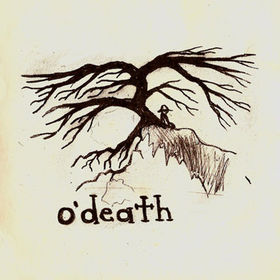
O death…

16 Wednesday Sep 2015

Posted by jandrewsweckerly in Uncategorized

≈ 1 Comment

Tags

abundance, blessing, call, death, different, eternal life, fear, freedom, God, grace, joy, pretend

This past week I have been thinking a lot about death.  It’s probably a function of being a priest, but death is ever a part of my journey.  Many days I can avoid thinking about it.  But I imagine that is not really what God wants.  Just to prove the point, I find that deaths usually come in threes.  No one can avoid thinking about death when they come in threes.

That was the case last week.  Within 24 hours, a parishioner, a family member, and an acquaintance all died.  The parishioner was retired but was living a full life.  She went in to check on some pain and within four months she was gone.  The family member was much older.  She had lived a full life and the journey toward death took a long time.  We were sad, but ready.  The acquaintance was around my age and had three kids at the same nursery school one of my daughters attends.  She got sick and within a week died.  Three children.  My age.

That’s the funny thing about death.  We can pretend it happens only to old people (which we never are – even when we are).  We can pretend it is far away and will come when we are fully prepared and ready to join our God.  We can pretend that death is non-existent.  But we know that is all pretend.  We know that pretending is just our way of masking how scary death is.  For those of us who believe in eternal life, we like to say that life is changed, not ended.  But that is what we say about others.  I wonder how much we can proclaim it for ourselves.

Photo credit:  http://www.oneforall-allforone.net/rssnews/odeath/

Photo credit: http://www.oneforall-allforone.net/rssnews/odeath/

One of my favorite songs from the film “O Brother, Where Art Thou,” soundtrack is called “O Death.”  In the song, the artist sings, “O, death, won’t you spare me over til another year.”  The singer’s voice is haunting.  And while there is a part of us that knows we should not fear death, there is something in that song’s words that resonates with us.  We want one more year.  One more decade.  One more lifetime.

And yet death comes.  Sometimes death comes within a week – within a day.  I wonder what you would do differently with your life if you were willing to let that reality slip over you.  What has God been calling you to do that you have been avoiding?  What have you been meaning to say to someone that you don’t say because you are afraid?  Does the reality of death make you want to move?  Though the questions are heavy, as is the topic, I think there is freedom in the questions too.  We can let go of all that is weighing us down and start living.  The promise of earthly death is a blessing – one that frees us to live this life with abundance, grace, and joy.  How will you start living into that joy today?

On being wonderfully made…

09 Wednesday Sep 2015

Posted by jandrewsweckerly in Uncategorized

≈ Leave a comment

Tags

awesomely, celebrate, eyes, failures, fearfully, flaws, glory, God, goodness, positive, prayer, Psalm 139, version, wonderfully

This is a big week for our family.  Both of my girls are moving up in school.  The youngest is moving from the infant room to the toddler room.  The oldest is starting first grade.  It has been a big week, and I am certainly having some feelings.  Mostly, as I look at both of them, boldly tromping into their new rooms and onto the bus, I am in awe.  I marvel at how big they have gotten.  I marvel at how beautiful they each are in their own unique ways.  I marvel at their awesome personalities and the joy that they bring to others.  I know I am biased as a parent, and I also recognize all the days when my children are not awesome, but today I am profoundly moved by how awesomely and wonderfully made they are.

Photo credit:  http://jennawaters.com/fruitful-fearful-wonderful/

Photo credit: http://jennawaters.com/fruitful-fearful-wonderful/

As I thought about each of them today, I was reminded of that verse from Psalm 139, “I praise You, for I am awesomely, wondrously made; Your work is wonderful; I know it very well.” (Ps. 139.14, Tanakh translation)  Today, I felt like I received a small glimpse into the ways that God must look at each of us.  So often, we look at our flaws and failures.  Even our prayer time can be filled with regrets and apologies to God.  We know that we fall short of the goodness God wants for us.  But that is not how God sees us.  God sees the wonderful and awesome creature that God has made and God is greatly pleased with us.  Perhaps there are days when we greive God through sin and violence to ourselves, to one another, and to God.  But God has a tremendous way of cutting through all that sinfulness and seeing goodness in us.  God sees how we are awesomely and wondrously made.

This week, I invite you to connect with God’s version of you.  I invite you in your prayer time to let go of the flaws and failures and to instead celebrate the goodness of each day.  Maybe you will have to reach really far into your reflection to find something positive.  But my guess is that you do something each day that pleases God – however big or small.  Meditate on that goodness and give glory to God!

Sermon – 1 Kings 2.10-12; 3.3-14, P15, YB, August 16, 2015

09 Wednesday Sep 2015

Posted by jandrewsweckerly in Uncategorized

≈ Leave a comment

Tags

bad, baptism, baptismal covenant, God, good, journey, king, love, Sermon, shrewd, Solomon, wisdom, wise

Let me tell you a story that a friend of mine once told me.  Once upon a time, there was a wise prince.  Following his father’s death, the prince became king, married a beautiful princess from a neighboring kingdom, and began to rule his people in a way that honored God.  One night, God came to the king in a dream, and told him he could have anything he wanted.  Being a humble man, the king did not ask for money, power, or a long life.  Instead, the king asked God to make him wise so that he could care for the people.  God was very pleased by this request, and God decided to grant the king wisdom.  And, as a reward for being so humble, God said the king could have wealth, honor, and long life too!  The king became known all over the land as a wise king.  People traveled far and wide to hear the king’s wisdom.  The king’s kingdom flourished, his rule becoming a Golden Age for the kingdom.  After forty years of peaceful success, the king handed over his throne to his son.[i]

The king in that story is a real king:  King Solomon from our Old Testament reading today.  As we baptize Kayla today, we wish the same things for her that King Solomon has.  We pray that she might be wise in her decisions, that she might have a close relationship with God, and that she might honor others.  And to help her become those things, we as a community pledge to support her, and we promise to try to do those things too.  On this special day, we look to the future with hope and optimism, praying that God will make Kayla as wise as Solomon.

But, we have to be careful.  You see, once upon a time there was also a shrewd prince.  When the prince’s father died, the prince ordered that his older brother be killed so that he could become king instead.  As he began his rule as king, he killed many more people out of revenge for the way they treated his father.  Then he set out to build a kingdom of riches, power, and honor.  But this king was greedy.  He wanted so many things that he made the people suffer.  He made the people pay taxes, and forced them to build lavish homes and temples.  He collected 700 wives and 300 concubines.  Many of the women worshiped foreign gods, and so the king started to worship those gods too.  He was not loyal to the God we know.  By the time he died, the people were very angry, and they revolted when the king’s son tried to take over.  A big war broke out, the kingdom divided in two, and the world fell into chaos.[ii]

Here’s the funny thing about the bad king.  That bad king is Solomon too.  Isn’t that weird?  We often remember all the good stuff about Solomon – and there is a lot of good stuff.  But there is a lot of bad stuff about Solomon too.[iii]  In fact, we skipped that part in our reading in church today.[iv]   The same king who humbly asks for wisdom is the same king who gets greedy when good things happen to him.  The same king who wisely rules the land also forgets about loving the people he is ruling.

When we think about Kayla’s journey with God in the years to come, we want her to be like wise Solomon.  But the truth is Kayla, and the all the rest of us, are probably a mix of wise Solomon and naughty Solomon.  We are a mix of both because we all learn that we can never be perfect.  But the good news is that God loves us anyway.  When we baptize Kayla today, and we renew our baptismal covenant, we recognize that truth.  We pray that we all will be wise, and kind, and blessed.  And we recognize that we will have to work really hard to not be greedy, unkind, and separated from God.  But we also promise that we will take care of each other on the journey, helping each one of us find our way back to being good servants of God.

So how about we find another way to tell Solomon’s story?  “Once upon a time there was a king.  He had big dreams, as most of us do.  He had great faults, as most of us do.  He lived a life marked by success and failure, nobility and disgrace.  He loved God and he didn’t.  He pleased God and he didn’t.  He left a legacy that was neither perfect nor wretched, as most of us will.  But he was loved by God throughout, even when his foolish wisdom shattered God’s heart.  As we are.”[v]  Amen.

[i] Debie Thomas, “A King’s Tale,” Journey with Jesus, August 9, 2015, as found at http://www.journeywithjesus.net/essays/324-a-king-s-tale on August 12, 2015.

[ii] Thomas.

[iii] Cameron B.R. Howard, “Commentary on 1 Kings 2:10-12; 3:3-14,” August 19, 2012, as found at https://www.workingpreacher.org/preaching.aspx?commentary_id=1358 on August 12, 2015.

[iv] Andrew Nagy-Benson, “Exegetical Perspective,” Feasting on the Word, Supplemental Essays Yr. B, Batch 2 (Louisville:  Westminster John Knox Press, 2012), 2.

[v] Thomas

On dignity and solidarity…

14 Friday Aug 2015

Posted by jandrewsweckerly in Uncategorized

≈ Leave a comment

Tags

baptismal covenant, community, dignity, food, God, human being, Kingdom, ministry, solidarity, vow

This past year, St. Margaret’s read the book Take This Bread, by Sara Miles.  In it, Miles describes a food ministry that she began at her Episcopal Church in San Francisco.  At St. Gregory’s, their worship is open – roles are more open, the Eucharistic Table is open, and idea flow in the open.  Like Miles was welcomed to the Eucharistic Table without barrier, she wanted to create a food ministry that was without barriers.  She didn’t want to have people register or keep records of how often they had received food.  She just wanted people to come, get what they need and let them go about their lives.  She wanted them to find a sense of dignity and welcome when so few of them experience that in other parts of their lives.

Photo credit:  https://www.finedininglovers.com/blog/news-trends/waste-food-project/

Photo credit: https://www.finedininglovers.com/blog/news-trends/waste-food-project/

I was reminded of her ministry today when I heard an NPR story about a program in Spain called the Solidarity Fridge.  The idea was to create a communal fridge where people who are hungry can come and get what they need.  Local restaurants pack up their leftovers in plastic containers and put them in the Fridge each night.  Even local grandmas make food for those in need.  There are standards in place, including the fact that food cannot stay more than four days.  But the organizers insist that it has never been a problem.  Tapas come in at night and they are gone by the next morning.  There is no monitoring process for the Fridge.  Whomever needs food can just come and get it.  And the food is really good.  Those who are in need find dignity in not being dehumanized by red tape and by being fed superior quality food.

Their program is not unlike a ministry we support at St. Margaret’s called Food Not Bombs.  An empty parking lot is suddenly transformed when volunteers arrive with carloads of food from restaurants, grocery stores, churches, and neighbors.  People fill grocery bags with what they need and leave to feed their families.  When everything is gone, the parking lot empties, without a soul around.  The idea from Food Not Bombs is that there is enough food for everyone – and the only reason people go hungry is because of waste and greed.  So they work to remedy the situation.

As I was thinking about the confluence of these three ministries, I was thinking of how they are living into the baptismal covenant we make – to respect the dignity of every human being.  There are passive ways we can do that – trying not to be judgmental or racist.  There are active ways that we can do that – giving money to charities that feed the hungry.  But there are intentional ways we can do that too – investing ourselves in ministries that specifically want to honor the dignity in others and that will encourage us to do the same.  That is why we make those baptismal promises in the context of community – because we need the community to hold us accountable to the covenant.  This Sunday, we will baptize a child of God and renew our own baptismal covenant.  I encourage you this week to prayerfully consider what ways you might be more intentional about fulfilling those vows.  And if you are struggling, find a member of the community and ask them to work with you.  Together, we can transform this world into the kingdom of God here on earth.

Sermon – 2 Samuel 18.5-9, 15, 31-33, P14, YB, August 9, 2015

14 Friday Aug 2015

Posted by jandrewsweckerly in Uncategorized

≈ Leave a comment

Tags

Absolom, Christ, confession, cross, David, God, guilt, judgment, loser, losing, loss, redemption, sin, tragedy, victory, We Are Marshall, winning

I recently watched the film We Are Marshall.  The film details the true story of a tragedy in 1970 that happened to Marshall University.  After an away football game, most of the team and coaches, as well as several boosters, took a private plane back to the university.  The plane crashed just minutes from landing, killing everyone onboard.  The town was bereft as they mourned their sons, friends, boyfriends, wives, husbands, and teammates.  The University’s Board was set to cancel the 1971 football season, when the few surviving players petitioned to play anyway.  The president was then tasked to find a coach who would be willing to step into this tragic situation – coaching a season that many thought was inappropriate given the deaths, to find enough players when Freshmen were not yet allowed to play per NCAA rules, and to find a supporting coaching staff, including trying to recruit the only assistant coach who had not been on the plane.  The season moves forward and after the first game, which Marshall loses, the head coach and the surviving assistant coach have a heart-to-heart.  The assistant coach explains that the deceased former head coach had always said that the most important thing in football was winning.  And if the current team was not going to win, the assistant didn’t want to coach, because they would be dishonoring the former coach’s memory.  After a long pause, the current head coach confesses that before he came to Marshall, he would have said the same thing:  that winning is the most important thing.  But now that he was there, in the midst of the Marshall community, the most important thing to him was simply playing.

We are a society that glorifies winning.  Not just in sports, but in all of life, we want to be winners.  No one likes to lose because losing, when we are really honest, is not fun.  Of course, we try to teach our children that we cannot always win.  Many a play date argument is settled by the conversation that sometimes we win and sometimes we lose.  We even have a word for being comfortable with losing.  We say we are being “good sports.”  But being a good sport takes work.  We do not like losing.  Losing itches as something deep inside of us – both internally and externally reinforced.  We want to be winners.

Of course no one knows more about losing than King David.  History labels him as a winner, but as we reread his story, we know that David was an intimate friend of losing.  We hear the deep pain of his losing in his final words today, “O my son Absalom, my son, my son Absalom!  Would I had died instead of you, O Absalom, my son, my son!”  We know the pain of losing a child – the sorrow and the grief of that kind of losing.  But David is not just mourning the loss of his child in these words.  He is morning the loss even more deeply because he knows he is indirectly guilty of his son’s death.[i]  If you remember, in the reading we heard last week, Nathan told David that because of his sinfulness with Bathsheba and Uriah that his household will be plagued by a sword.  Through Nathan, the Lord proclaims, “I will raise up trouble against you from within your own house; and I will take your wives before your eyes, and give them to your neighbor, and he shall lie with your wives in the sight of this very sun.  For you did it secretly; but I will do this thing before all Israel, and before the sun.”[ii]

God stays true to God’s judgment.  Between last week’s reading and this week’s reading, David’s family starts to fall apart.  His first child with Bathsheba dies.  One of David’s sons rapes his half-sister.  When David does not punish that son, another son, Absalom, takes action, killing his half-brother.  Absalom then flees, and spends years amassing a revolution against David.  Absalom manages to take Jerusalem, and further humiliates David by sleeping with ten of David’s concubines in front of everyone.  David is forced to battle against Absalom to restore the kingdom, but he does so begrudgingly.  Today we hear David trying to make victory as painless as possible, asking his men to deal gently with Absalom.  But Absalom had made too many enemies in the family and kingdom, and when the time came, he was killed in battle.  Though many saw Absalom’s death as a victory, David knew the truth.  Victory in this case was not winning for David.  Victory was just another reminder of the ways in which David’s life had become about losing – about the painful reminder of his sin hanging over his head.

David reminds us of what we have all learned about losing.  Though none of us like losing, we know losing is a necessary and probably valuable part of life.  You see, losing helps us in many ways.  First, losing reminds us of our finitude.  Though we might like to think we are without limits or we can control everything, losing reminds us of the “futility of our personal striving and the frailty of our existence.”  Second, losing gives us the opportunity to reexamine our goals and outlook on life.  Losing can help us see when perhaps we have become overly self-serving, have developed unrealistic expectations, or we have just become distracted by the wrong things in life.  Finally, losing reminds us that our lives are in need of redemption.  Losing can give us a much-needed opportunity to renew our relationship with God.  As one scholar explains, “In this moment of realization, we are liberated to renew our trust in God’s power and in [God’s] purpose for our lives.”  That does not mean we should give up, stop trying, or be overcome by the fear of losing.  Instead, maintaining our trust in God gives assurance that “ultimately, there is no losing without the possibility of redemption.”[iii]

Think for a moment about the ultimate symbol of our faith – the cross.  The cross is both a symbol of loss and victory.  We always remember the victory of resurrection and redemption, but first, the cross was a symbol of death and defeat.  The cross was a humiliating reminder of the brutal death of the one we insist is the Messiah.  Our main symbol was the symbol of ultimate loss – the place where losers go to lose:  lose their life, their dignity, and their power.  That symbol of being a loser is only redeemed because the Redeemer redeems it.  Of course, we should not be surprised.  Every week, we as a community gather and remind ourselves at how we are losers when we confess our sins.  We kneel down and young, old, male, female, single, partnered, good, and bad confess that we lost.  Every single week we confess how, once again, we have lost.

I sometimes wonder how David coped with the sword in his house.  Sure, he had moments of redemption.  Solomon taking the helm at David’s death was one of the best redemptive moves in his family.  But I wonder, on that deathbed, how all the losing in David’s life weighed on him.  In last week’s lesson, David did what all of us do.  He confessed.  He confessed, “I have sinned against the Lord.”  His confession did not make Absalom’s death any less painful.  But his confession, like ours, is redemptive.  Like David, when we acknowledge and confess our senses of incompleteness, “we are able to be freed from the entrapments of a win/lose culture.  God accepts us despite our failings.  This relationship is not earned; [this relationship] is a divine gift.  Accepted and forgiven, we are liberated to celebrate life.  Affirmed and fulfilled by God, we are released to care for others.  These affirmations point to the redemptive side of failure, to the God who accepts losers.”[iv]

When we wear a cross, or we reverence the cross in church, we reverence both the winning and the losing of the cross.  We honor the ways in which the cross represents not just the loss of Christ, but also the brokenness in each of us – the ways in which we have failed.  Only when we honor that loss can we then hold that cross as a symbol of victory.  That cross becomes a symbol of the ways in which Christ redeems us, but also the ways in which we too made new through our losing.  When we embrace the cross in its fullness of expression, we also recognize the fullness of our lives – the good, the bad, and the ugly.  We know that without the embracing of our losing we can never fully claim the victory of our winning through the cross.  Amen.

[i] Ted A. Smith, “Commentary on 2 Samuel 18:5-9, 15, 31-33” 2009, as found at http://www.workingpreacher.org/preaching.aspx?commentary_id=365 on August 6, 2015.

[ii] 2 Samuel 12.11-12.

[iii] The ideas in this paragraph and the quotes within come from Carnegie Samuel Calian, “Theologizing in a Win/Lose Culture, Christian Century, vol. 96, no. 32, October 10, 1979, 978.

[iv] Calian, 979.

Saintly Shout Out

05 Wednesday Aug 2015

Posted by jandrewsweckerly in Uncategorized

≈ Leave a comment

Tags

God, gratitude, humility, important, lost, prayer, saints, St. Anthony

Yesterday I lost something very dear to me.  Normally, I am not that passionate about material possessions.  I try to stay detached so that I don’t get fixed on the “stuff” of life.  But there are a few things that mean a great deal to me, and this was one of them.  There was a lot of weeping and gnashing of teeth yesterday (literally!), and ultimately, I remembered one of my favorite saints – St. Anthony.

Photo credit:  http://www.stanthonyoakley.com/our-patron-saint.html

Photo credit: http://www.stanthonyoakley.com/our-patron-saint.html

I know a lot of you are not familiar with or even in favor of praying with saints.  It was a practice I discovered in college.  Not having grown up in a tradition that prays with saints, it seemed mildly like praying to idols.  But once someone explained to me that the saints are more like companions in our prayer life – much like a dear friend who you ask to pray for you – I was able to ease my way into praying with saints.  I still think there is a bit of superstition to some of the saints.  St. Anthony is a classic example – he’s the patron saint of lost things.  I mean, it seems a little fishy to expect a saint to magically make your stuff appear.  But when you are desperate, you will try anything.  Hence, the prayers to St. Anthony last night and this morning.

The truth is, I am not sure praying with St. Anthony really helps you find things.  What I do know is that St. Anthony reminds you to pray – which is always a good thing.  If nothing else, when we slow down enough to pray, we find a sense of peace, and are reminded that God is with us, even when we are devastated and may never find the lost things that belong to us.  That prayer time also brings perspective about what is important in life, makes us question why we had not tended to prayer life in so long, and reconnects us with a real sense of gratitude – even in the midst of loss.  And my prayer time with St. Anthony also reminded me of how he might be helpful the next time I lose more important things – “things of the spirit,” as you will see in the prayer below.

The good news is that the item reappeared today and all the angst I felt is gone.  Now, I don’t know if St. Anthony helped.  All I know is that my gratitude is deeper and more humble today, and that I am grateful for a God who sits with me in the ashes.  Whether you pray with saints, with friends, or you just pray the old fashioned way, know that God longs to be in conversation with you.  Slow down, pull up a chair, and draw nearer to your God.

O blessed St. Anthony, the grace of God has made you a powerful advocate in all our needs and the patron for the restoring of things lost or stolen.  I turn to you today with childlike love and deep confidence.  You have helped countless children of God to find the things they have lost, material things, and, more importantly, the things of the spirit: faith, hope, and love.  I come to you with confidence; help me in my present need.  I recommend what I have lost to your care, in the hope that God will restore it to me, if it is His holy Will.  Amen.[i]

[i] http://www.catholicdoors.com/prayers/english/p00557.htm

Sermon – Ephesians 4.1-16, 2 Samuel 11.26-12.13a, P13, YB, August 2, 2015

05 Wednesday Aug 2015

Posted by jandrewsweckerly in Uncategorized

≈ Leave a comment

Tags

Bathsheba, Black Lives Matter, body, calling, Christians, David, denigrate, dignity, God, Jesus, Nathan, one, Paul, power, shame, sin, Uriah, women

A short film circulated about a year ago[i] about the role of all religions to protect women.  The film starts out with a young woman, walking along a dirt road with books in her arms.  We presume she is walking to school to further her education.  She walks past two young men who covetously watch her pass by.  The viewer can surmise what is going to happen next.  The two men get up from the wall and start to follow her.  The young woman glances over her shoulder and sees the men following.  She speeds up, but they start running, managing to pass her, and block her way.  She comes up short and starts to back up, calculating how she is going to get away from these two men to safety.

The anxiety and dread of the young woman in that film has reminded me of Bathsheba these past two weeks.  Most of us are familiar with the David and Bathsheba story.  When we started hearing David’s story this summer, we knew this part was coming.  The story starts out in a totally different place.  When we first meet David, he is an unsuspecting, seemingly innocent, wholesome boy.  We watch David bravely take on the giant Goliath with just a bag of stones.  He is the loving friend of Jonathan and Michal, despite the fact that their father Saul tries repeatedly to kill him out of jealousy.  And when David finally becomes king, he joyously dances before God.  David has been towing the “blessed” line for most of the summer.

But these last two weeks, the story changes.  You see, David has gotten complacent and a bit self-important.  When all the other kings are going out to battle, David stays behind, letting others do his fighting.  When the rest of the kingdom is busy working or tending to life, David is lounging around the palace.  That’s where he first spies Bathsheba.  David should not have been there, and he certainly should not have let his eyes linger on a bathing married woman.  And then something awful takes over David.  He sends his men to take Bathsheba, and he sleeps with her.  Though the text never says so, we know the act must be against Bathsheba’s will, given the “enormous power differential between the violator and the violated, the intuitional background in which the crime [is] committed, and the cunning with which it [is] executed.”[ii]  Later, when Bathsheba becomes pregnant, David deepens his shame by trying to trick Bathsheba’s husband to sleep with her so that he will think the baby is his.  When that doesn’t work, David sends him to battle, having him killed in the line of fire.

I know most of us know this story.  Many of us think of this story as David’s little indiscretion.  But for some reason, reading this story this year has enraged me.  I don’t know if I am angered because I have been hearing too many stories lately about the way we treat women.  Or maybe I am angered because I expect more from David – this king who is the ancestor of our Messiah.  Or maybe I am just outraged by one more example of the powerful overpowering the powerless – taking whatever they want, ruining lives along the way.  This story is about more than an indiscretion.  This story is about a violation of the created order – a violation of the body of God.

Today, as Paul is teaching the Ephesians, he holds them to a higher standard.  Paul says, “I…beg you to lead a life worthy of the calling to which you have been called, with all humility and gentleness, with patience, bearing with one another in love, making every effort to maintain the unity of the Spirit in the bond of peace.  There is one body and one Spirit, just as you were called to the one hope of your calling, one Lord, one faith, one baptism, one God and Father of all, who is above all and through all and in all.”  Paul says we are one body.  This calling that we are to live worthily is not the vocation we have.[iii]  The calling Paul is talking about is the calling we have as Christians to be one body in Christ – of being a loving, caring, humble body in the Lord.  Nothing David does today reflects the dignity of every human being or the one body in the Lord.  In fact, David does not even seem to see the humanity in Bathsheba or her husband, Uriah.

I think why I am so angry at David is because I am angry with myself.  As much as I want to chastise and critique David, I know that my judgment of him comes out of deep sense of my own brokenness.  David makes me acutely aware of my own failings to see the dignity of every person, to honor the ways in which we are all a part of the body of Christ.  I have become aware of my own complicity with sin as the campaign “Black Lives Matter,” has arisen over the past few years.  As more and more cases of the oppression black men and women have arisen in our country, and as more and more stories have been told about the separate reality these men and women experience from white men and women, I have been feeling more and more convicted.  If we are all one body, when black lives are denigrated, all of our lives are denigrated.  When parts of our body are shamed, abused, or live in the shadow of fear, the rest of our body is not whole.  When I participate in that abuse, whether consciously or unconsciously, I am a part of that sinful denigration of our collective body.

The same was true for Bathsheba.  When Bathsheba is taken by David, the whole body of God is denigrated.  When David sins, everyone loses favor.  And the only way to correct for sin is repentance.  The initiator of repentance today is not David, but Nathan.  Now Nathan is a smart prophet.[iv]  He does not storm into the palace, wagging his finger at David.  No, he tells a story.  Nathan tells a story of a poor man and his beloved sheep.  Of course, David is drawn in by the story.  As a former shepherd himself, he knows the beloved relationships that can happen with animals for which you care.  And so when David hears of a rich man taking that sole, beloved animal, David is outraged, and proclaims that justice must prevail.  Without hesitation, Nathan now is able to quietly, but pointedly say to David, “You are the man!”  You see, Nathan remembers his calling.  He remembers the way that God taught us to live as a community of faith – that when one of our members sins, we are all denigrated by that sin.  What David would hide, and cover, Nathan exposes and corrects.

In that short film of the two men pursuing the young woman, a turn happens.  As the woman starts to slowly back up, another man is passing by.  He sees what is happening and he quickly runs over to stand between the young woman and the two men.  The two men threaten him, but he stands firm.  A Sikh man in a turban also sees what is happening and joins the protesting man, grabbing his hand and joining him in front of the woman.  A Muslim man comes along and joins hands with the men too.  Then a Christian man joins the other men.  Slowly, eight men join hands together, forming a circle of protection around the woman.  The two pursuing men back away and retreat.  A smile crosses the young woman’s face, and she lifts her head a little higher.

What this short film captures is the power of the body acting as the body.  When Nathan pronounces judgment on David, Nathan is participating in holding up the health of the whole body.  The story at this point could have gone a different way.  Nathan could have been tossed aside, and David could have kept up his deception.  But David’s last words are simple and profound.  “I have sinned against the Lord.”  Truthfully, David sinned against Bathsheba and Uriah.  But what David understands even more profoundly is that when David sins against members of the body, David sins indirectly against the Lord.[v]  We hear his fuller confession in the words of the Psalm we read today.[vi]  But what David’s words teach us is that healing and wholeness are possible.  David does not just say “I am sorry,” but David repents – or as the Hebrew word connotes, David changes his way, and returns to the Lord.  David moves back toward health and wholeness.

The redemption in David’s story for me comes not through David, but through Nathan.  Like those men in that video, Nathan stands up for those without power.  When that action happens, the body is able to move toward wholeness.  When Paul tells us to remember our calling today, Paul is talking about all the parts of us.  For those times when we are Davids, those times when we are pushed to be Nathans, and for those times when we are the Bathshebas and Uriahs, Paul’s words are simple.  “I…beg you to lead a life worthy of the calling to which you have been called….  There is one body and one Spirit, just as you were called to the one hope of your calling, one Lord, one faith, one baptism, one God and Father of all, who is above all and through all and in all.”  There is one body.  I beg you:  lead a life worthy of the calling to which you have been called.  Amen.

[i] “Every Religion Protects Women, Protecting Women Is Religion,” https://www.youtube.com/watch?v=D51_GQqVfSk, July 21, 2014, as found on July 30, 2015.

[ii] Eleazar S. Fernandez, “Theological Perspective,” Feasting on the Word, Supplemental Essays, Yr. B (Louisville:  Westminster John Knox Press, 2012), 9.

[iii] N. T. Wright, Paul for Everyone:  The Prison Letters (Louisville:  Westminster John Knox Press, 2004), 43.

[iv] Lloyd H. Steffan, “On Honesty and Self-Deception:  ‘You Are the Man’,” Christian Century, vol. 104, no. 14, April 29, 1987, 405.

[v] Carol J. Dempsey, OP, “Exegetical Perspective,” Feasting on the Word, Supplemental Essays, Yr. B (Louisville:  Westminster John Knox Press, 2012), 10.

[vi] Kathleen A. Robertson Farmer, “Exegetical Perspective,” Feasting on the Word, Supplemental Essays, Yr. B (Louisville:  Westminster John Knox Press, 2012), 6.

← Older posts
Newer posts →

Recent Posts

  • On the Myth and Magic of Advent…
  • On Risking Failure and Facing Fear…
  • Sermon – Luke 23.33-43, P29, YC, November 23, 2025
  • On Inhabiting Gratitude…
  • Sermon – Luke 20.27-38, P27, YC, November 9, 2025

Archives

  • December 2025
  • November 2025
  • October 2025
  • September 2025
  • August 2025
  • July 2025
  • June 2025
  • March 2025
  • February 2025
  • December 2024
  • November 2024
  • October 2024
  • September 2024
  • August 2024
  • July 2024
  • June 2024
  • May 2024
  • March 2024
  • February 2024
  • January 2024
  • December 2023
  • November 2023
  • October 2023
  • September 2023
  • August 2023
  • July 2023
  • June 2023
  • May 2023
  • March 2023
  • February 2023
  • January 2023
  • December 2022
  • November 2022
  • October 2022
  • June 2022
  • May 2022
  • January 2022
  • December 2021
  • November 2021
  • October 2021
  • September 2021
  • August 2021
  • June 2021
  • May 2021
  • April 2021
  • March 2021
  • February 2021
  • January 2021
  • December 2020
  • November 2020
  • October 2020
  • September 2020
  • August 2020
  • July 2020
  • June 2020
  • May 2020
  • April 2020
  • March 2020
  • February 2020
  • January 2020
  • December 2019
  • November 2019
  • October 2019
  • September 2019
  • August 2019
  • July 2019
  • June 2019
  • May 2019
  • April 2019
  • March 2019
  • February 2019
  • January 2019
  • December 2018
  • November 2018
  • October 2018
  • September 2018
  • August 2018
  • July 2018
  • June 2018
  • May 2018
  • April 2018
  • March 2018
  • February 2018
  • January 2018
  • December 2017
  • November 2017
  • October 2017
  • September 2017
  • August 2017
  • July 2017
  • June 2017
  • May 2017
  • April 2017
  • March 2017
  • February 2017
  • January 2017
  • December 2016
  • November 2016
  • October 2016
  • September 2016
  • August 2016
  • July 2016
  • June 2016
  • May 2016
  • April 2016
  • March 2016
  • February 2016
  • January 2016
  • December 2015
  • November 2015
  • October 2015
  • September 2015
  • August 2015
  • July 2015
  • June 2015
  • May 2015
  • April 2015
  • March 2015
  • February 2015
  • January 2015
  • December 2014
  • November 2014
  • October 2014
  • September 2014
  • August 2014
  • July 2014
  • June 2014
  • April 2014
  • March 2014
  • February 2014
  • January 2014
  • December 2013
  • November 2013
  • October 2013
  • September 2013
  • August 2013
  • July 2013
  • June 2013
  • May 2013
  • April 2013
  • March 2013
  • February 2013
  • January 2013
  • December 2012
  • November 2012
  • October 2012
  • September 2012

Categories

  • reflection
  • Sermons
  • Uncategorized

Meta

  • Create account
  • Log in
  • Entries feed
  • Comments feed
  • WordPress.com

Blog at WordPress.com.

  • Subscribe Subscribed
    • Seeking and Serving
    • Join 394 other subscribers
    • Already have a WordPress.com account? Log in now.
    • Seeking and Serving
    • Subscribe Subscribed
    • Sign up
    • Log in
    • Report this content
    • View site in Reader
    • Manage subscriptions
    • Collapse this bar
 

Loading Comments...