On Looking Back to Look Forward…

Tags

, , , , , , , ,

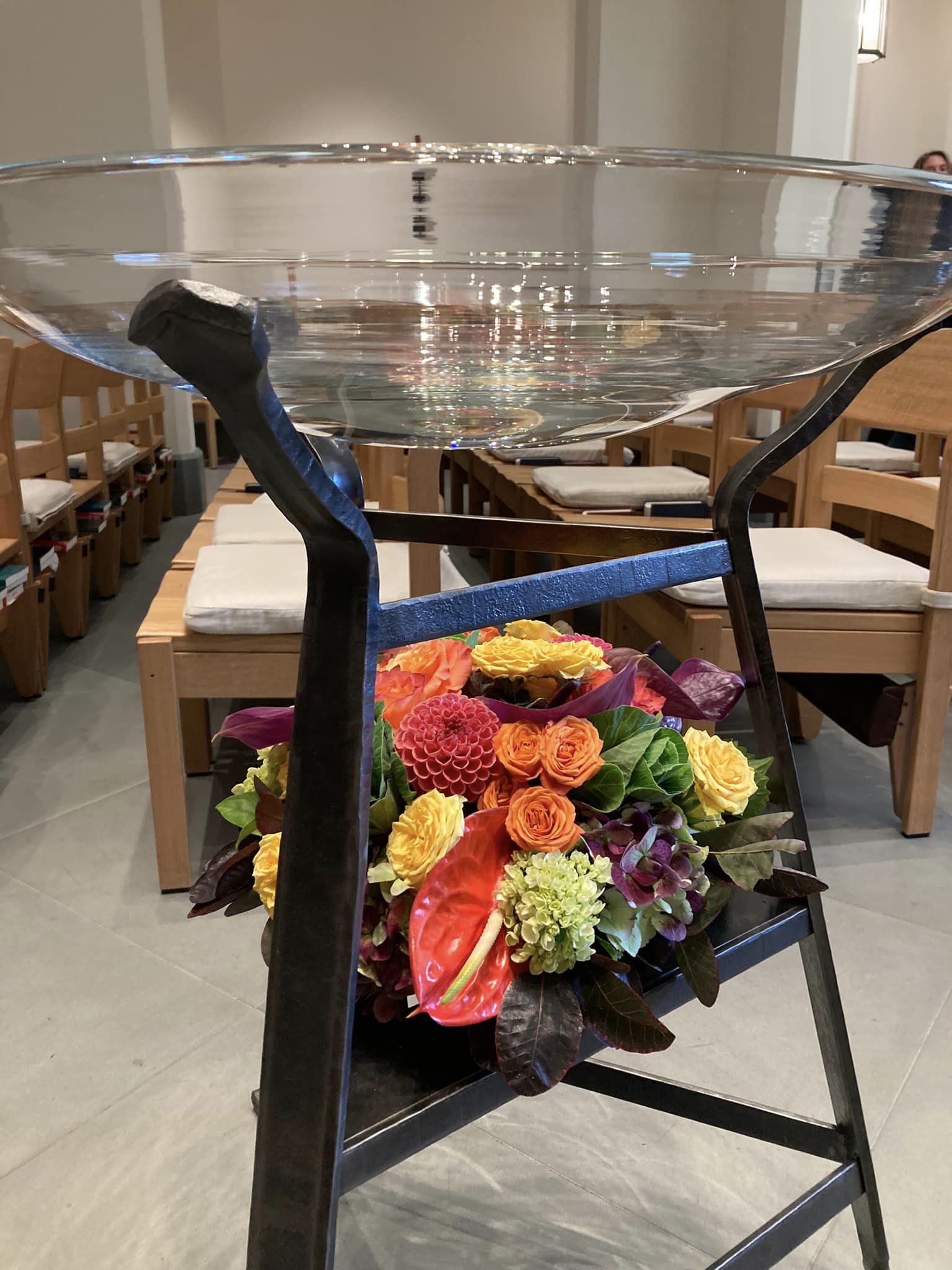
Font at Virginia Theological Seminary

I remember when I was a seminarian, sitting in daily worship, my eyes and mind would sometimes wander.  In particular, I was fascinated by the names or other small mementos carved into the old pews.  I always wondered who the mystery person was who left their mark, how long ago they carved it, and how they managed not to get caught.  What I loved about those small little marks was how they made me feel connected – connected to a long line of priests and lay leaders shaped by the seminary, all with varying gifts and talents, serving God in God’s church around the world.

Last week, my seminary honored 200 years of forming priests in the Episcopal Church.  Though those pews from the old chapel were lost in a fire, what struck me was the massive changes the seminary has seen.  From slaves who helped build and then worked on the property, wars that shaped the context for ministry dramatically for generations, fiduciary decisions that impacted the viability and structure of the seminary, the growing diversity of the student body as the Episcopal Church’s understanding of who can be called to ministry has expanded, and an evolving physical plant that has shifted what the school on the holy hill looks like – all of that change has made for a rich and layered history, of which I am a small part. 

But perhaps what speaks to me most about Virginia Theological Seminary is the ways that it also has a microcosmic impact on the church – namely, the ministry of every graduate from the seminary.  My time at VTS shaped and formed me into the priest I am today – from academic formation to liturgical formation, from learnings on leadership to the development of relationships, from shaping my spirituality to shaping my sense of the wider church.  And for every graduate like me, VTS has shaped thousands of others who go out into the world to preach the gospel.  That reality is what inspires my financial support every year – knowing the future generations I can support.

As my church journeys into stewardship season, a time of discernment about how we will support our church financially and with our time, I am reminded of how we all come to think about the stewardship of our resources.  Supporting my seminary and my church financially are ways I say to those institutions and my community that these institutions are important to me:  they have made an impact in my life, and have inspired me to make an impact on the them.  I would not be the priest, mother, or wife that I am without either my seminary or Hickory Neck Church.  What about you?  How has our church shaped your life?  What stories are the stories that make you eager to be a part of financially supporting ministries of impact?  I can’t wait to hear what inspires your giving!

Sermon – Matthew 22.1-14, P23, YA, October 15, 2023

Tags

, , , , , , , , , , , , ,

I cannot count the number of times I have had some variation of the dream.  The procession has started and I am not vested yet.  I run into the vesting room, only to be unable to find my alb and cincture.  Of course, I could grab one of the hundreds of albs in the vesting room but they are either too long or too short.  If I somehow manage to run into church vested, usually the service has begun without me.  And sure enough, when I look at the pulpit, my sermon is nowhere to be found.  Before I was a priest, the nightmares were about a test for a class I have not attended all semester, or a classroom I cannot find, or a mystery locker that has books I need.  We all have them – or at least I hope I am not the only one!  I have heard of church musician nightmares about unpracticed pieces of music or music missing from the music stand.  And, of course, there is the classic nightmare of showing up to an important event without your clothes.

So, in our gospel lesson, when the person who was not originally invited to the wedding banquet because he did not have enough social capital is put on the spot in front of everyone by an agitated and somewhat violent host about not wearing the right garment, our anxiety levels and sense of injustice soar.  What if he did not own a wedding garment?  Maybe he was too poor to have one.  Maybe he did not know the social mores of fancy banquets.  Surely God does not cast us out with no regard for human dignity.  Isn’t that what Jesus is all about – loving and welcoming all?!?

Truth be told, this whole parable is one of those awful parables we wish we could skip or at least skim until we reach something more palatable.  With the Holy Land crumbling into violence and suffering, the last thing I wanted to read about this week was of entitled invitees to the king’s wedding feast violently mistreating messengers from the king and the retaliatory destruction and burning of the city.  And then, when the seemingly guilty parties have done to them what they did to others, the king cannot seem to contain his anger, and lashes out at a seemingly innocent man about not wearing the right garment, even though he had very little time to prepare for the afterthought invitation to the banquet.  In what has been a week of violence, particularly violence against civilians on all sides, the last thing I wanted to hear this morning was more violence from our gospel lesson. 

If we are going to tackle this seemingly awful parable, we are going to have to step back to see what is happening.  First, as scholar Yung Suk Kim explains, “a parable is not intended for literal interpretation…  For example, while the king is like God in some sense, he is not the same as God.  Likewise, his son is not Jesus.  His slaves who went out to call the invited guests are not prophets, and invited guests are not Israel.  The king’s violent response is not the same as the fall of Jerusalem.  Allegorical interpretation is not wrong [with parables] but has limitations…  Indeed, the allegorical interpretation cannot explain the complexities in the parable of the wedding banquet.”[i]

Second, despite our ability to remove immediate comparisons of God to the violent king, Matthew does say the kingdom of God is like this parable.  So, there is some learning, even in the uncomfortable casting out of the man who shows up at the party in the wrong garb – fulfilling every anxiety dream we have ever had.  When we hear those harsh words, many called, but few are chosen, we finally understand the “so what?” of all this violence and seeming overactions.  Karoline Lewis explains, “…many are called but few are chosen indeed.  The chosen are the ones who realize that just showing up is not enough anymore.  The chosen are the ones who insist that mere acquiescence, week after week, day after day, to doctrine and dogma will not stand the test of what it means to be the salt of the earth and the light of the world.  The chosen are the ones who believe that a God who is Immanuel might very well stake a claim on their own humanity.  And, the chosen are the ones who understand that the time for bringing about the Kingdom of Heaven is now — not later, not tomorrow, not someday, but now.”[ii]

Today’s language is violent and somewhat despondent.  And although that may not be literally applied to God, this text comes with consequences.  Today’s text reminds us that RSVPing to church, and showing up to consume comfort and reassurance is not the totality of membership in the body of Christ.  Showing up in this community means being gifted the clothing of discipleship – clothing we will put on every week.  We are always welcome in these chairs and on our YouTube channel.  And, to belong here means to take on the clothing of discipleship.  As Lewis says, we can no longer don the clothing of “complacency, conformity, and any kind of garb that is content with the way things are.”  Today we are invited to put on “…the kind of compassion, birthed by God’s own righteousness, that cannot, anymore, leave things the way they are.”[iii] 

But no need to worry about a new anxiety dream.  If you forget your clothing of discipleship, we have that clothing ready for you every Sunday.  That is why in stewardship season, so many of us are generous with our gifts of time, talent, and treasure – because we know how precious the gift of that weekly garb is.  We know the feeling of coming to church weary, downtrodden, and tired, and we also know the feeling of leaving church empowered and invigorated to slip on that gown of discipleship anew for the coming week.  Hickory Neck is the place we come to every week to join in the communal feast.  And Hickory Neck is the place where that weekly feast emboldens us to feed others.  There is no casting out into the outer darkness from these doors – not without the garb of discipleship we are gifted with from this place of nourishment and belonging.  Amen.


[i] Yung Suk Kim, “Commentary on Matthew 22:1-14,” October 15, 2023, as found at https://www.workingpreacher.org/commentaries/revised-common-lectionary/ordinary-28/commentary-on-matthew-221-14-9 on October 12, 2023.

[ii] Karoline Lewis, “What Not To Wear,” October 8, 2017, as found at https://www.workingpreacher.org/dear-working-preacher/what-not-to-wear on October 12, 2023.

[iii] Lewis.

On Celebrating Life, Death, and Movies…

Tags

, , , , , , , , , , , , , , , , , ,

Photo credit: https://www.cnn.com/2023/09/28/tech/netflix-dvd-rental-movies-ending/index.html

Well, it finally happened.  Netflix’s DVD business closed last Friday.  Now I recognize that acknowledging I still received DVDs from Netflix may make me seem old-fashioned.  Even a contemporary exclaimed recently, “Do people even have the equipment to play DVDs anymore?!?”  I took a good ribbing, but the truth is I love movies, and Netflix’s DVD business allowed me to watch movies that were not available via streaming services.  I was constantly finding new gems, and still had over 100 movies in my queue that I hoped to watch some day.

For those of us old-timers still watching DVDs, the closing of Netflix’s DVD branch has been tinged with nostalgia and a tiny bit of grief.  Over the course of 18 years, I watched 667 films, each story sparking my imagination, eliciting pleasure, sorrow, excitement, indignation, laughter, and hope.  Obviously there will be other ways for me to revel in the artistry of filmmaking, but there is a certain finality to the closing of this chapter. 

Despite my wistfulness, I commend Netflix for the way they have handled this change.  Instead of wallowing in grief, or attempting to apologize for market changes beyond their control, instead, they have handled this “death” with grace and joy.  Knowing the closing was coming, this year they used their iconic mailing envelopes to feature celebratory artwork honoring how a whole generation has been shaped by their service.  On the week of their closure, the sent a “gift” to every member – a summary of the highlights of our membership – what movies we had watched each year, milestones in our membership, and even the list of movies in our queue in case we want to find another way to see them.  Instead of a death, it has felt like a celebration of life.

In a lot of ways, it has reminded me of the ways the Episcopal Church approaches death.  When someone we love passes, we use the burial office to celebrate life – certainly the life of the one who has died, but especially the promise of eternal life promised in Jesus Christ.  But I’ve been thinking about it over this last week, and the Church honors “mini-deaths” all the time:  the ending of a ministry that is no longer needed or effectively utilized, the retirement of a ministry leader after a successful tenure, or the blessing of a parishioner or staff member who moves away from the community.  All those transitions can be hard because they make us remember fondly the ways ministry blessed us in the past.  But those transitions are also often the source of new life:  a new ministry we could never have imagined five years ago, a new leader whose fresh ideas opens up new opportunities, and new members who shape and mold us into a new community.

I wonder what things feel like they are dying in your life right now – what things you thought would always be there are undergoing change.  Where might the Holy Spirit be inviting you to see new shoots of growth in the midst of something withering on the vine?  How might those “mini-deaths,” be tremendous gifts to you or your community?  How might we take a cue from Netflix, and find ways to celebrate those endings with dignity and joy?  I am grateful for the ways a secular business is helping me see the sacred in our own life cycles.  Let’s celebrate together!

Sermon – Matthew 11.25-30, Feast of St. Francis, October 1, 2023

Tags

, , , , , , , , , , , , ,

“Come to me, all you that are weary and are carrying heavy burdens, and I will give you rest.”  Whether you are wearied from wrestling your pets this morning (or your kids!), weary from full fall schedules, or weary from illness, anxiety, or bad news, Jesus’ words are words of comfort today.  They remind us of our time of renewal in sabbatical, and we want to cozy into the Gospel words today.

But today is not about Jesus blessing times of rest.  Jesus is actually commissioning disciples.  At this point in Matthew’s gospel, Jesus has been describing the way of discipleship:  serving the poor, working for justice, striving for peace.  Jesus tells them the work will be hard and will make the disciples weary.  To those disciples, Jesus offers a way to reach comfort.  Jesus says, “Take my yoke upon you, and learn from me; for I am gentle and humble in heart, and you will find rest for your souls.  For my yoke is easy, and my burden is light.”

Now, I do not know how much you know about yokes, but I have been studying up on yokes this past week.  There are actually two kinds of yokes.  Some yokes are meant for one person.  Imagine, if you will, a person hauling water from a well in village, the yoke over her shoulders, while two buckets full of water hang below.  The yoke distributes the weight of the water, but the yoke is not exactly an easy yoke.  The other kind of yoke is meant for two animals – like two oxen working together.  If one ox gets tired, the other pushes a little harder; later the roles may reverse.  A good yoke balances the work between the animals, without chafing or rubbing.  The work is genuinely easier and lighter.

This second kind of yoke is the metaphor Jesus uses to depict discipleship.[i]  Jesus tells them the work of discipleship will be hard and wearisome.  But when yoked to Jesus, the work will feel light.  So often, when we think of disciples as easing suffering, fighting for the poor, struggling for justice, we think we need to solve the worlds’ problems on our own – that we must use our own gifts to make a difference.  We go unyoked, and we feel overwhelmed and disheartened.[ii]  Even when try to do good work:  building beds for kids in need, buying extra food for food collection Sunday, or donating money to events like our Murder Mystery – we can still become discouraged.  When we think we can go at it alone (or maybe even better than others), we do not get relief in Jesus’ yoke. 

St. Francis, who we honor today, knew all about the yoke of Jesus.  Francis came from a wealthy family, had a rambunctious youth, and enjoyed status and privilege.  But one day he encountered some beggars and lepers and everything changed.  Francis renounced his privilege and wealth, took on poverty, and honored the sick, poor, and disenfranchised.  What Francis discovered was his wealthy had become its own burden of sorts.  Once he yoked himself to Jesus, everything changed.  He began to see Jesus in everyone, even birds to which he preached and the animals for whom he advocated.  Francis yoked himself to Jesus and became a faithful steward of God’s creation – so faithful that we bless animals and rejoice in creation ourselves through music and scripture today.

Now, I know you maybe came today to bless your pet, or maybe to remember a beloved pet who showed you what unconditional love really is.  And while that will bring us comfort today, and we do so with love and laughter, we also do something much bigger.  Today we remember all the instances where we have felt love – in animals, in each other, even in Jesus – and we take that love not only as a comfort, but also as a commission.  Today Jesus invites us outside of ourselves – our worries, our woes, our weariness, and put our attention on those who may need love even more than we do. 

Do not get confused.  I am not asking you to add weight to that single yoke, asking you to add more water to your heavy buckets.  I am inviting you to take off the single yoke and step in a double yoke – to yoke yourself to Jesus, yoke yourself to other disciples in this room.  Take on that yoke of Christ because the yoke is easy and light – and will actually free up your burden.  Jesus will give you the comfort, encouragement, and strength you need.  And you will be enabled to stride forward making an impact right here in James City County.  We will do that work together, because the yoke is easy and the burden is light.  Amen.


[i][i] Douglas R. A. Hare, Matthew:  A Bible Commentary for Teaching and Preaching (Louisville:  John Knox Press, 1993), 129.

[ii] Barbara Brown Taylor, The Seeds of Heaven:  Sermons on the Gospel of Matthew (Louisville:  Westminster John Knox Press, 2004), 21.

On Loss and Light…

Tags

, , , , , , , , , ,

Photo credit: https://pixy.org/361878/

There’s an old adage, at least among clergy, that deaths often come in threes.  As clergy, we are accustomed to walking a community through the death of a loved one.  In death, time sort of stands still, as being present with the grieving, and preparing for funerals takes precedence over all other work that was formerly deemed urgent.  If a second death happens, clergy get a little skittish because of that old adage about threes.  So, death can not only upend a week or two, it can last for weeks on end. 

But recently, I have begun to wonder if subscribing to that adage about threes clouds our vision about what else is happening.  I have had the experience of sitting with someone in the hospital who was approaching death, only to hear over the hospital PA system the tinkling sound that marks the birth of a new baby.  I have had the experience of within twenty-four hours receiving four texts:  one about the death of a friend’s mom, followed by one about a clean bill of health after cancer treatment; another one about a death in the parish, followed by one about the birth of a grandchild.  When we only see deaths in threes, we seem to lose sight of the incidents of life all around us. 

I do not mean to minimize the experience of death – each one is unique and needs time to go through the full cycle of grief.  But I have been wondering if in those darkest moments – whether in death, divorce, or the loss of a job – there isn’t lightness breaking in too.  That tinkling sound announcing a birth did not negate the end of life walk of my parishioner.  But as we made eye contact, that tinkling did help us remember all the moments of life that parishioner had experienced before those last days. 

I do not know what you are going through today:  what losses you may be grieving or what deaths are hanging over you like a cloud.  But as a people of resurrection, I suspect there is life surrounding you too – maybe as quietly as a tinkling, or maybe as loud as a toddler who has found her words.  My prayer for you today is that whatever pain you are experiencing in death today, you might be gifted with eyes to see the blessing of God’s light and life.   

Sermon – Matthew 18.21-35, P19, YA, September 17, 2023

Tags

, , , , , , , , , , , , , ,

One of the tricky things about Jesus’ parables is where to situate ourselves, especially when the parable is a familiar one.  As soon as we hear the words, “…the kingdom of heaven may be compared to a king who wished to settle accounts…” our brains jump ahead, “Oh, this is the one where the guy is forgiven of his debts and then two seconds later turns around and refuses to forgive someone else’s debt.”  We may have felt pity for the first slave who owed so much, we may have been shocked by his poor behavior toward the other slave, or we may have even thought, “That guy deserved what he got!”  But the thing that is the hardest to do when reading this familiar parable is to situate ourselves in the shoes of the first slave.  And yet, that is the entire reason Jesus tells the parable today. 

We know where to situate ourselves because of what happens before the parable.  If you remember our gospel last week, we talked about Jesus’ conflict resolution plan.  In the very next verse after Jesus explains how the community of faith is to handle conflict, Peter asks a question in today’s text.  The question is a fair one, and when we’re really honest with ourselves, one we may have asked God ourselves.  Peter asks, “Lord, if another member of the church sins against me, how often should I forgive?  As many as seven times?”  The parable Jesus tells today is in response to Peter’s question about conflict, sin, and forgiveness in the community of faith.  Essentially, Jesus says, “Let me tell you a little story about forgiveness.”  So, we, who have resisted forgiveness ourselves like Peter, can situate ourselves with not just Peter, but with the slave who fails so miserably at forgiveness. 

Now, before you get too defensive about how you would never treat a fellow human being like the first slave treats the second, we need to think about Peter’s question first.  Theologian Stanley Hauerwas explains, “Peter’s question presupposes that he is the one who has been sinned against.  He assumes that he is in the position of power against the one who has wronged him.  But Jesus’s reply reminds Peter that he is to learn to be the forgiven.”[i]  Before we begin to think about offering forgiveness, we operate from one foundational truth:  we are a people who have first been forgiven.[ii]  Our forgiven status is at the heart of our ability to be a people of forgiveness.

But before we even talk about being a people of forgiveness, we need to talk a little bit about what forgiveness is not.  Some of us believe that forgiveness means excusing or overlooking the harm that has been done to us and saying that everything is okay.  For those who hold that belief, forgiveness can be equated with stuffing our feelings down deep inside or downright lying in order to keep the peace.  Others of us believe that forgiveness means allowing those who have hurt us to persist in their behavior.  For those who hold this belief, forgiveness is so important, that we become recurring victims of offenses.  Still others believe that forgiving means forgetting what happened.  For those who hold this belief, forgiveness is pretending an old hurt does not still hurt.  Finally, others see forgiveness as something that we can do at will, and always all at once.  For those who hold this belief, forgiveness must be immediate and offered quickly.  The problem with all these models of forgiveness – of overlooking the harm, saying everything is okay, of allowing recurring behavior, of trying to forget, or forgiving once and for all – is that these models of forgiveness would have been totally foreign to Jesus.  According to author Jan Richardson, in Jesus’ teaching about forgiveness, “…nowhere does Jesus lay upon us the kinds of burdens we have often placed upon ourselves—burdens that can make one of the most difficult spiritual practices nearly impossible.”[iii]

So, if we know what forgiveness is not, we need to know what forgiveness is.  I like what scholar Debie Thomas has to say about forgiveness.  She says, “I think forgiveness is choosing to foreground love instead of resentment. If I’m consumed with my own pain, if I’ve made injury my identity, if I insist on weaponizing my well-deserved anger in every interaction I have with people who hurt me, then I’m drinking poison, and the poison will kill me long before it does anything to my abusers. To choose forgiveness is…to cast my hunger for healing deep into Christ’s heart, because healing belongs to him, and he’s the only one powerful enough to secure it.”  She goes on to say, “Secondly, …forgiveness is a transformed way of seeing.  A way of seeing that is forward-focused.  Future-focused.  Eschaton-focused.  …abuse and oppression are [n]ever God’s will or plan for anyone.  But I do believe that God is always and everywhere in the business of taking the worst things that happen to us, and going to work on them for the purposes of multiplying wholeness and blessing…Because God loves us, we don’t have to forgive out of scarcity. We can forgive out of God’s abundance.”[iv]

So how many times are we to forgive?  Not seven times.  Not even really seventy-seven times or seventy times seven, as some translations say.[v]  The forgiveness that first slave receives is hyperbolically abundant – the forgiveness by the king of ten thousand talents (or the equivalent of 150,000 years of labor)[vi] is almost ludicrous in its generosity.  But that is how abundantly God loves us.  We are invited today to love with that kind of ludicrous abundance too.  For our health, for our faith in the better world God is creating, we pray for the strength to ask God to “forgive us our sins as we forgive those who sin against us.”  We are a forgiven people, who, because God loves us, can forgive not out of scarcity, but out of God’s abundance.  Amen.  


[i] Stanley Hauerwas, Matthew:  Brazos Theological Commentary on the Bible (Grand Rapids:  Brazos Press, 2006), 166.

[ii] Hauerwas, 166.

[iii] Jan Richardson, “The Hardest Blessing,” September 9, 2014, as found at http://paintedprayerbook.com/2014/09/09/the-hardest-blessing/#.VBOogcKwKi0 on September 16, 2023.

[iv] Debie Thomas, “Unpacking Forgiveness,” September 6, 2020, as found at https://www.journeywithjesus.net/essays/2748-unpacking-forgiveness on September 16, 2023.

[v] Lewis R. Donelson, “Exegetical Perspective,” Feasting on the Word, Year A, Vol. 4 (Louisville: Westminster John Knox Press, 2011), 69.

[vi] David Lose, “Pentecost 14A: Forgiveness and Freedom,” Sept. 7, 2014, as found at http://www.davidlose.net/ 2014/09/pentecost-14-a/.

Sermon – Matthew 18.15-20, P18, YA, September 10, 2023

Tags

, , , , , , , , , , , , ,

I have been looking forward to this Sunday for weeks!  Although we just had our post-sabbatical gala last night, there are still several parishioners who I expect to see for the first time in months today.  Our staff finally reunited for the first time since sabbatical began this week.  Our choir is back in action at the 10:00 am service and our Sunday School and Adult Formation teams are doing open houses today.  Our Parish Life Committee has brewed up fresh coffee – which is no small feat after transforming the New Chapel for last night’s festivities.  Church members have been inviting friends to join them for church, or maybe you yourself decided today was the day to search for a new church home – either in person or online.  I have felt the anticipation building as this has day approached. 

Into my excitement to kick off a new program year, to invite people to engage in their faith journey, and to share an invitation to others to discover the beauty of this vibrant community, what does the gospel lesson from Matthew offer us?  A text about fighting within the church.  Jesus does not just admit that sometimes, every once in a while, people in the church might experience conflict.  No, Jesus goes into great detail about what to do when you face conflict in the church:  embrace conflict directly, repeatedly, and publicly.  To those of us who were raised in the South, or at least to those of us who were raised in conflict-avoidant families, this text is our worst nightmare!  And this is certainly not the joyful text I was looking for when anticipating this festive day.

Part of what bothers us about this text from Holy Scripture is many of us come to church looking for a break from the conflict that surrounds our everyday life.  Whether we experience conflict in our families, conflict in our workplaces, schools, or service organizations, or conflict in our political lives, the last thing we want to do when we come to church on Sundays is deal with more conflict.  A friend of mine once confessed to me that he was thinking about leaving his current church home over a conflict within the church.  We were both young adults, on our own for the first time since college, and we had images in our minds about what church should be and what we wanted from our church communities.  But instead of bucolic communities of peace, harmony, and justice, we were both finding churches riddled with conflict and disunity.  As we were talking about his frustration, my friend finally confessed, “When I go to church, I just want everyone to get along.  I go to church to escape what is going on in my everyday life, not relive it!”

Now, I could spend the next hour deconstructing his complaint, but there is something powerful at the heart of his complaint, and perhaps at the heart of our own experience of church.  When we talk about church as being like a family, or being like home, what we really mean is we want a place that is a bit unlike our families or homes.  We want a place that is always happy, loving, nurturing, sometimes challenging, but more often comforting.  When we think about the warm, fuzzy feeling we have, the feeling we find at a place like Hickory Neck, the last thing we think is, “Man, I love the way we handle conflict at church!” 

Unfortunately, that is exactly what our text is inviting us to do – to celebrate the way that the church teaches us to fight – or to phrase it a little differently, how the church teaches us to deal with conflict in healthy ways.  In order to get to the point where we can see the gift of healthy conflict resolution as a good thing, we need to do a few things.  First, we need to get to the point where we can embrace the inevitability of conflict in the church community.  For some of us, that is not a big hurdle.  For others of us, the assumption of conflict is difficult.  Perhaps you were raised in a family who treated conflict as something to be avoided at all costs.  Or perhaps you grew up in an environment where conflict was so aggressive you created patterns of conflict-avoidance later in life.  Regardless, if we have come to see conflict as the enemy, accepting the inevitability of conflict is going to be our first task.  In Matthew’s gospel today, Jesus says, “For where two or three are gathered in my name, I am there among them.”  But what he implies is that when two are three are gathered in his name, there will be conflict.  Jesus himself is so sure there would be conflict that he develops a whole conflict management plan.  So, repeat after me, “Conflict is unavoidable in church.” 

Now that you are accepting the unavoidable, the next thing we need to do is honor the gift of conflict management Jesus gives us in scripture today.  For those of us who are conflict avoidant, Jesus’ conflict management plan is going to seem daunting.  The good news is scholars agree with you.  Many of the scholars who have written about this text say the step-by-step instructions do not necessarily need to be read as a step-by-step guide to solving conflict within a church.[i]  What is most important is what the instructions convey:  conflict in the church is not to be ignored, hidden, or buried.  Theologian Stanley Hauerwas has this to say about conflict, “[Jesus] assumes that conflict is not to be ignored or denied, but rather conflict, which may involve sins, is to be forced into the open.  Christian discipleship requires confrontation because the peace that Jesus has established is not simply the absence of violence.  The peace of Christ is nonviolent precisely because it is based on truth and truth-telling.  Just as love without truth cannot help but be accursed, so peace between the brothers and sisters of Jesus must be without illusion.”[ii] 

As Christians, Jesus wants us to behave differently.  Jesus wants us to be truthful with one another.  Jesus wants us to deal with one another face-to-face instead of talking behind each other’s backs.  Jesus wants us to work on reconciliation of relationships instead of letting hurt and pain fester and erode relationships.  For Jesus, being right or wrong is much less important than being in relationship.  Being in right relationship, keeping the family together is much more important.[iii]  Jesus wants us to repeat after him, “Conflict is not the enemy.  Letting conflict ruin relationships is the enemy.”

Finally, once we have accepted the inevitability of conflict, and once we have agreed to value relationships over the avoidance of discomfort, we are ready to embrace the gift of our gospel lesson today – and perhaps even claim that this might be the perfect lesson for a Kickoff Sunday.  If you came to church to escape conflict or enter some bubble of blissfully ignorant happiness, Hickory Neck is probably not the right place for you.  But, if you came to Hickory Neck to learn how to transform conflict into something holy, then you may have just found a real home – not a home based on illusion, but a home based on truth, dignity, and respect.  When you accept the inevitability of conflict and the value of meaningful relationship, you receive the tools to work through conflict and land in the reality of reconciliation. 

But here is the best part of Jesus’ Conflict Resolution Class today.  If we can stay on the journey through conflict to reconciliation, gaining the tools that this community has to offer us, then we as a community create something much more powerful than can be contained in these walls.  We create a witness for our community.  We create disciples capable of not only working through conflict within the community, but also capable of modeling reconciliation beyond our community.  Anyone who has read a headline in our country in the last several years knows that our country needs more models for healthy conflict engagement.  That is what Jesus offers us today:  tools to work on our own issues around conflict, tools to become a loving, honest, and reconciling community, and tools to teach reconciliation beyond these walls.  Jesus has promised to be with us as we do our work.  In fact, Jesus is here with us now as we anxiously try to step on that path toward reconciliation.  So, repeat after me, “Conflict is a blessing my church teaches me to embrace.  Thank you, Jesus, for the blessing of conflict and the promise of reconciliation.  Help me to share that gift with others.”  Amen. 


[i] David Lose, “Pentecost 14 A – Christian Community,” September 6, 2017, as found at http://www.davidlose.net/2017/09/pentecost-14-a-christian-community/ on September 8, 2023.

[ii] Stanley Hauerwas, Matthew:  Brazos Theological Commentary on the Bible (Grand Rapids:  Brazos Press, 2006), 165-166.

[iii] Barbara Brown Taylor, The Seeds of Heaven: Sermons on the Gospel of Matthew (Louisville:  Westminster John Knox Press, 2004), 88-89.

On Finding God in the Busyness…

Tags

, , , , , , , , ,

Photo credit: https://www.theladders.com/career-advice/overcoming-business-our-cultural-addiction

One of the questions I received before heading off on sabbatical was whether my sabbatical was too full.  I chuckled at the question because on paper, my sabbatical did have a great deal of movement and activity.  But I also knew that as an extrovert who was longing to reconnect after a pandemic that forced a period of disconnection, I would be just fine.  What I was more surprised about was my own parish’s response to their sabbatical.  When I have asked them “How was your sabbatical?” many people have responded, “It was busy!” or “That was one of the busiest summers we’ve had!”  Upon further inquiry, to a person, the follow-up comment was how although the summer of sabbatical was busy, it was full of meaningful, powerful, enriching things – none of which they would have missed or wanted to omit from the schedule. 

I often talk about the temptations of busyness – how busyness can keep us from noticing God, or how busyness can make us feel like we’re accomplishing something even if that accomplishment is purposeless movement or busyness for busyness’ sake.  But I never really thought about how busyness filled with the work of God or with encounters with God in community can be tremendously life giving.  In essence, the difference seems to be how we define sabbath or sabbatical.  For many of us, sabbath or sabbatical should mean rest or a slowing down of all things so that we can take in God’s creation and blessing.  And for many, both physical rest and spiritual rest are necessary.  But for anyone who has wasted a day away binge-watching a series, we know that not all “rest” is created equal.  That’s why we talk so much about sabbatical or sabbath being about renewal – about the feeding of our souls.  That renewal might be found in the busyness of yoga classes, labyrinth walks, meditation classes, or movie and game nights.  Renewal might be about surrounding yourself with laughter, storytelling, and dancing.  And renewal might also be about sitting on a bench in solitude, listening to the sounds of God’s creation.

As the school year gets underway, church gets back into its program year, and busyness starts to bubble up in our lives, I hope what we take from our time of sabbatical into our post-sabbatical time is a pattern of making our busyness holy.  Where are you finding God on the football field, gymnastics mat, or the horse stables?  Where are finding God in the lunch meetings, PTA events, or church calendar?  Where are you finding God in phone call to a grieving friend, the meal made for someone recovering from surgery, or the backpack purchased for a neighbor?  Our busyness does not have to be inherently pulling us away from God.  Our invitation is to look for and celebrate God in the midst of the busyness. 

On an Amazing Day with Purpose…

Tags

, , , , , , , , ,

Hotel Gym View from Treadmill

On my sabbatical adventures, I stayed in a lot of hotels.  When you stay in that many hotels you get used to some rhythms:  finding the ice machine, sussing out the free breakfast, making your way to the gym.  I rarely encountered others at the gym, but when I did, the normal etiquette was usually a nod or a smile, but not really any small talk.  Everyone has their own headphones for music or video, and focuses on their workout in a parallel, but non-communal kind of way.

So, you can imagine my surprise at one hotel when someone broke out of the norm.  I was finishing up my workout and cleaning up my space.  As I grabbed my key to go, the only other woman in the gym turned to me and said, “Have an amazing day with purpose!”  She didn’t say a simple, “Bye!” or even “Have a good day!”  No, she said, “Have an amazing day with purpose!”  I have genuinely never had anyone say that phrase to me, let alone someone in the typically anti-social hotel gym. 

As I left the gym and made my way back to my room, my head was spinning.  Maybe today could be amazing, and not just “good.”  What might God have in store for the day?  But more importantly, what was my purpose that day?  If I was being invited to live the day with intentionality, and not just wait to see what happened to me, what would living that particular (supposedly amazing) day with purpose look like?

As a pastor who has visited the dying and buried the dead, I know all too well that every day is a gift.  I usually start most of my prayers thanking God for the gift of that day.  But I am not sure I usually go a step forward and ask what God wants me to do with that day – what the purpose is for the gift of the day God has given me. 

I do not know what you are facing today, or how you might be struggling today.  But God has gifted you another day today.  And that day has every potential to be amazing, especially depending on what lenses you put on to describe the day.  Your invitation, then, is to have an amazing day with purpose.  I cannot wait to hear how that sense of purpose drives you to do something amazing today!

Sermon – Exodus 1.8-2.10, P16, YA, August 27, 2023

Tags

, , , , , , , , , , , , , , ,

This likely comes as no surprise to you, but I come from a long line of strong women.  My paternal grandmother, the matriarch of the family, was so intimidating that most of us grandchildren were a little bit afraid of her.  But she was likely the only minister’s wife of her time who refused to play the stereotypical minister’s wife role, teaching one parish after another how to respect her personhood.  My maternal grandmother was widowed when she had five young children.  I knew her as a gentle, kind soul, but I know she must have been tough as nails to survive that time as a struggling single mother in the rural south.  My mother, who had to restart her own business every time my father was assigned to a new church, managed to help her children and herself thrive in every new place she was planted.  I, in my wisdom, married a man who also came from a long line of strong women – independent, fierce, wise women who navigated all sorts of challenges.  I suppose I should be grateful then for the fierce, smart, sometimes annoyingly stubborn young women we are raising in our own home.  I keep reminding myself that they come by their strength honestly.

But the story from Exodus today reminds us that we all come from a long line of strong women.  We all know the story of one of our most prominent forefathers, Moses.  Saved from a ride in a river basket, called by a burning bush, reigning down plagues until God’s people are freed from slavery, walking God’s people through the Red Sea, guiding the Israelite’s to the Promised Land, delivering our foundational Ten Commandments, and even appearing to Jesus on the Mountain of the Transfiguration.  But Moses would not be any of those things but for the strong five women we hear about today.

Before we hear Moses’ story, today we hear the story of his foremothers.  The reading from Exodus starts ominously, “Now a new king arose over Egypt, who did not know Joseph.”  In other words, the new king, the new pharaoh, does not know the story of how Joseph saved Egypt from famine, and began a symbiotic, peaceful relationship with the Israelites.  Now, the new pharaoh only sees the sheer number of foreigners on his land and he is afraid.  He is afraid they will revolt; he is afraid of their strength in numbers; and in his fear he introduces chaos:  enslavement, oppression, and murderous, violent death.[i] 

In the midst of the chaos and violence Pharaoh causes for the Israelites, two midwives, Shiphrah and Puah, change the course of an administration.  Pharoah calls these two women – women who would normally never even meet a man of such power and influence – to conspire with him for evil.  Doing anything other than his wishes would surely result in not only their own deaths, but also maybe the suffering of their families and loved ones.  But Shiphrah and Puah – who if you notice the text lists by name, while leaving the pharaoh unnamed (a biblical signal of importance)[ii] – Shiphrah and Puah decide they will defy the pharaoh, refusing to murder the male children of the Hebrews.  But not only that, when the pharaoh calls them back into his presence, the women do not cave under pressure, or even seem to be afraid of Pharaoh. Instead, they defy Pharaoh again, making up some crafty story about Hebrew women’s vigorous birthing practices, manipulating pharaoh’s stereotypes and fears of the Hebrews to save children’s lives.

But they are not the only women standing up to the power of Pharaoh.  Moses’ mother knows all Egyptians have been told to cast male Hebrew babies into the Nile.  So, she builds a water-tight basket to shield her son, refusing to cast him off without protection.  Meanwhile, Moses’ sister Miriam refuses to stand by idly either.  She follows her brother’s path, ready to defy Pharaoh too.  Even the pharaoh’s own daughter, who acknowledges Moses must be a Hebrew child condemned to death, refuses to participate in her father’s violence and fear.[iii]  When lowly, seemingly powerless Miriam boldly approaches the royal suggesting a Hebrew woman nurse the child, Miriam secures Moses’ well-being and buys their mother 2-3 more years of relationship before Moses will be adopted into safety.[iv]  Miriam, Moses’ mother, and the pharaoh’s daughter all defy Pharaoh in unique ways.  Without any one of these women’s actions, Moses as we know him today would not exist.[v]  In fact, without any of these women’s defiance, none of us as the people of God would exist today. 

I do not know what kind of chaos to which your life is subject.  I do not know in what ways you may be feeling powerless or incapable of making a difference.  I do not know what fears – sometimes legitimate, life-threatening fears – you are facing today.  But what I can tell you is you are not powerless or incapable of making a difference.  Your fears are not experienced without the presence of God.  And your life has the capacity to be history altering – even if you feel like what you are doing is only one tiny act of change or defiance of the power of evil in the world.  Pharaoh underestimates “…the power of God to work deliverance through the vulnerable – and seemingly powerless – on behalf of the vulnerable.”[vi]  But you, you come from a long line of powerful women.  God is with you as you harness their power for good.  Amen.


[i] Terence E. Fretheim, Exodus:  Interpretation:  A Bible Commentary for Teaching and Preaching (Louisville:  John Knox Press, 1991), 28

[ii] Alice Ogden Bellis, Helpmates, Harlots, and Heroes:  Women’s Stories in the Hebrew Bible (Louisville:  Westminster John Knox Press, 1994), 100.

[iii] Jacqueline E. Lapsley, Whispering the Word:  Hearing Women’s Stories in the Old Testament (Louisville:  Westminster John Knox Press, 2005), 77.

[iv] Lapsley, 78.

[v] Bellis, 101.

[vi] Lapsley, 74.