Sermon – Deuteronomy 34.1-12, P25, YA, October 29, 2017, 8 AM

Tags

, , , , , , , , , , , ,

This morning our community is celebrating our past, present, and future.  We celebrate the community of Hickory Neck, who one hundred years ago, came together to consecrate this historic church, which had been dormant of worship since the Revolutionary War, used varyingly as a school and hospital.  We celebrate a community who committed itself this year to paying off our debt which covered the cost of our New Chapel, as well as renovations to existing buildings.  And we celebrate our commitments to financially support Hickory Neck in the year ahead through our pledges of offerings.  In each celebration, we see glimpses of who Hickory has been, is, and is becoming.

We are not unlike our ancestors, the Israelites, as we find them on the brink of the Promised Land.  Today’s lesson from Deuteronomy tells the story of the last days of Moses and the beginning of Joshua’s leadership.  In their mourning over Moses’ death, the community remembers the profound ways in which God, through Moses, changed their lives.  They were exiles by famine from their land, enslaved by the Egyptians, and indebted to Pharaoh.  But Moses became their advocate, leading them out of slavery, across the Sea of Reeds, and through the long years of the wilderness.  Moses took all their complaints and whining, and advocated for food, water, and safety.  Moses took their metaphorical wandering, and delivered a new law from the Lord.  Moses organized their community and empowered the next generation to lead.  Moses’ death reminds the people of Israel all they have been through.  Their mourning is where they find themselves in the present:  no longer wandering, but not yet into their next phase of life.

And yet, Moses’ death also points them to their future.  Moses has already blessed Joshua as their next leader, and Joshua will take them into the Promised Land.  Moses is even given the gift of seeing the beauty of that land, as far as the eye can see.  Though Moses knows he is not to cross over, God shows him all that is to come.  The vision is vast, abundant, and blessed.  We suspect Moses can die in peace having seen the land of milk and honey, even if he himself will not experience the land.  And Moses has already seen Joshua receive the spirit of wisdom.  There is nothing left to do but join God in the heavenly kingdom.

On days of introspection about the past, present, and future, we can easily gloss over all the hard stuff.  Though today the people of Israel honor their esteemed leader, and they have the Promised Land ahead of them, we do not often get a sympathetic retelling of the Israelite story.  For the last several weeks, we have heard stories of the Israelites complaining about water and food, but we forget how debilitating hunger and thirst can be.  We read the story of the construction of the golden calf recently, but we rarely wonder about what waiting blindly at the foot of the mountain for Moses to return felt like or the doubt his absence created.  We also recently heard the story of the Passover, but we rarely imagine how terrifying that night must have been and what being saved meant.

I have wondered what stories linger behind our own history.  I have asked our historians about the Hickory Neck community one hundred years ago.  I have wondered who the members were, what their feelings were about the old church that was no longer theirs, or what inspired them to regather.  But we have no record of their story:  their passion that lead to us worshiping here today.  We can only imagine the negotiating they did, the partnerships they forged, the strain they underwent in those early years.  And though many of you were here when we built our New Chapel, I was not.  I imagine there were lingering doubts and concerns about whether a capital campaign, and taking on a mortgage was a good idea.  I am sure there were anxieties about church growth and identity.  And I already know some of that same labor is true today.  We wonder where the Holy Spirit is guiding us, what ministries will define us, and what people will join our community and change us for the better.  The future is always ambiguous and daunting.

That is why I appreciate our parallel story of the Israelites, Moses, and Joshua today.  As one scholar writes, what our ancient story and our modern story reminds us of is “Building the realm of God is a process, and we each have our part to play, even if we will not be around to see all our hopes come to fruition.  Even if we will not be present for the final outcome, it is important that we build the realm of God in the here and now, trusting God to work through each of us to bring about God’s vision for the world.  Furthermore, God assures us in [today’s Old Testament reading] that there will be people to continue leading us to the promised land and building God’s kingdom after we are gone.  The emergence of Joshua as the new leader of the Israelite people shows us that the work to be done is bigger than any one individual, and God will continue to provide prophetic presence through different people and voices.”[i]

In both the stories of our biblical and historical ancestors, we are reminded that we are a part of a greater narrative – each phase of the journey filled with challenges, hard times, and anxious moments.  But each phase is also filled with successes, celebratory times, and joyful, life-giving moments.  That is why we have been talking about journeys this month.  As we have reflected on our personal journeys to generosity during stewardship season, we have heard countless stories of how our journey has evolved, changed, and deepened.  We have also heard of the fellow pilgrims along the way who taught us about generosity and shaped our journey along the way.  What we have been doing this month, and what our Old Testament lesson and our current celebrations remind us of is “there is value in the journey.  The value lies in the growth, the relationships, and the spiritual development we experience along the way, not to mention the incremental progress we make toward creating the just and peaceable world that God desires for all of creation.”[ii]

Our invitation this week, is to continue to invest in the journey.  Each of you have shared with me the innumerable ways that Hickory Neck has influenced your journey.  I cannot tell you the countless times that this building alone has played a powerful part of your experience here.  I cannot tell you the multiple times I have heard about the passion and excitement that enlivened your faith life as we built a new worship space after hundreds of years on this land.  I cannot tell you the hundreds of times I have heard dreams and vision whispered in my ear as you have envisioned what the next steps of our journey together at Hickory Neck will be.  There will be hard moments and joyful moments, times of struggle and times of celebration.  Today we are reminded of the God who journeys in each phase with us, and empowers us as partners on the journey to change the kingdom of God here on earth.  God will empower us to stay on the journey together.  I cannot wait to see where the journey leads!  Amen.

[i] Leslie A. Klingensmith, “Homiletical Perspective,” Feasting on the Word, Supplement to Yr. A, Proper 25 (Louisville:  Westminster John Knox Press, 2011), 4.

[ii] Klingensmith, 6.

On Generations of Generosity…

Tags

, , , , , , , , , , ,

This past week, my daughter and I were out shopping for a birthday gift for a friend.  As we were doing the self-checkout, the computer asked us if we would like to donate to charity.  I quickly tapped “no,” and my daughter was incensed.  “Don’t you want to help, Mommy?!?”  As we walked back to our car, I explained how we do help others.  She seemed incredulous, so I detailed our charitable giving, starting with what we give to the church.

Though she seemed mildly satisfied, our conversation made me realize a couple of things.  First, I could stand to have more explicit conversations with our children about our giving to church.  We already talk about budgets, treats, and how we spend money otherwise.  I realize now that our eldest may be ready to understand the commitment we make to church too.  Second, my daughter’s initial indignation is really good thing.  Her frustration with me reveals a sense of compassion and generosity that I was not sure she had fully developed.

This Sunday in church, we are celebrating lots of things.  We are celebrating the 100th anniversary of the consecration of our historic church.  After hundreds of years of our church being used as a school and hospital, a faithful community gathered once again in 1917 for the original purpose of the building – to worship the Lord in the beauty of holiness.  We are also celebrating the paying off of our mortgage on our newest worship space.  After one final push this summer, and years of generosity before, we are able to be debt free!  We are also celebrating In-Gathering Sunday: a day where we offer our pledge cards for blessing.  These pledge cards indicate our commitment to the upcoming year of ministry, and reflect our journey toward generosity.

As these three celebrations combine into one day, I am ever aware of Hickory Neck’s own journey to generosity.  From the faithful who worked to reestablish our church after years of dormancy, to the faithful who saw a vision of a more modern, spacious place of worship just over ten years ago, to the faithful who see the new things budding at Hickory Neck and want to be a part of that growing community, we are a community who has always been on a journey to generosity.  I am grateful for the chance to celebrate together, especially for the ways in which our celebration is an example for the future generations who are also being shaped into faithful servants of compassion and generosity.  From the past and present, and into the future, I see God’s abundance all around us!

On Seeing Sacred Moments…

Tags

, , , , , , , , , , , , , ,

In general, my children are pretty typical in many ways – they have their good days and their bad days.  They tattle on each other, try to sneak in a hit or shove, and one will occasionally shout how she “hates her life.”  But then, every once in a while, totally unprompted and seemingly “out of sight,” I will overhear the love, care, and affection they have for one another.  One child will walk over the other who is crying, and she will give a hug and offer reassuring words.  Or the two children will gleefully play with one another without arguing or fussing.  Or best of all, I will hear them laughing pure, innocent laughs together.  In these holy moments, they show me the light of God’s presence, and reveal their best qualities – that they are individuals full of love and compassion.

These last few weeks at our church, I feel like I have been able to see similar holy moments.  We are preparing for our Annual Fall Festival, from which all the proceeds go to support local ministries.  As we lead up to the event, I have seen countless tasks being done by parishioners:  from making up food order forms and staffing tables for pre-orders, from cleaning out closets to pricing and sorting donations, from recruiting donations from local businesses to developing the silent auction booklet, from breaking down our worship space to setting up parking space.  As the weeks and days have gotten closer to our festival, I have seen hard work, commitments of time, generosity of spirit, and joy in participation.  Most of the work could go unnoticed; even those of us who volunteer do not always see all the other work that is happening somewhere else.

But today, I want to say, “I see you.”  I see you, Hickory Neck, giving your cherished time to support the church.  I see you, sharing in fellowship as you work together on projects.  I see you, passionate about your neighbors in need and working a little bit harder.  I see you in holy moments, individually and collectively, and I am so proud of you.  Your laughter together is a sweet, sacred sound.  Your labor is a witness to me and to our community of God’s abundant love for all.  Well done, good and faithful servants!  You are a blessing!!

laughter_625x350_41474366938

Photo credit:  food.ndtv.com/health/10-surprising-health-benefits-of-laughter-1464095

On Redefining our Work and God’s…

Tags

, , , , , , , , , ,

This Sunday our church has planned “Bring a Friend Sunday.”  The day is the culmination of a series on evangelism, and we had imagined that bringing a friend would be a perfect way to conclude the series.  Some people have excitedly shared with me whom they plan to bring with them this Sunday, others have expressed a tinge of anxiety, while others have not mentioned the day (or their fears about inviting friends) at all.  We have been using a series of videos to inspire us, distributed postcards and other invitation tools, and created fun social media posts.

But our class this past Sunday had me wondering if we were approaching our event all wrong.  In his book Transforming Evangelism, David Gortner talks about the fact that evangelism is not a program or an effort to “get more people in the pews.”  Instead, evangelism is about creating an ethos of sharing the good news.  That ethos involves doing our own inner work about our own journey in Christ, and cultivating the skills for evangelism, such as practicing gratitude, listening for the holy in other’s stories, strengthening a sense of humility, and knowing the sacred stories that speak most powerfully for us.

We concluded our session with a talk by Michael Harvey, who argues that evangelism is not about bringing people to church, but creating a culture of invitation.  He suggests that events like “Bring a Friend Sunday” place “success” in the wrong place.  In fact, he says the most important work we can do is invite others.  “Whether someone says yes or no is God’s bit.  That is not our bit.  Our job is to just offer a simple invitation,” says Harvey.  By both worrying about inviting and labeling “success” as acceptance, we confuse our work with God’s work.  Instead, Harvey suggests that faith communities focusing on faithfulness, not some measure of “success.”  Whether the friend you invited comes or not, the church says, “Well done!”

So, I’m officially changing the name of this Sunday to “Invite a Friend Sunday.”  If you come to Hickory Neck this week and tell me you invited a friend, I’ll have a gold star waiting for you.  I want to hear about your experience in invitation, whether the experience was different than your expectations, and what it was like knowing that the invitation was more important than the return.  I suspect we will all grow in Christ in the process.  I cannot wait to hear about your experiences in invitation!

inviteafriend-940x250

Photo credit:  davisstreetbaptist.org/how-to-invite-people-to-church/

Sermon – Matthew 21.33-46, P22, YA, October 8, 2017

Tags

, , , , , , , , , , , , , , , , , , , ,

One of the things I love about coming to church week in and week out is the practice setting time aside to discern how Holy Scripture is speaking to our everyday life.  Whether I have had a stressful week or a week of celebration, whether I am struggling in life or am experiencing a time of joy, or whether I am pained by the world around me or encouraged by the world around me, the Holy Scripture that we hear on Sunday always finds a way of speaking to me – of comforting, encouraging, challenging, and journeying with me.

But I confess to you I have been struggling to hear a good word from God through Holy Scripture this week.  You see, six days ago, we awoke to the news of the deadliest mass shooting in our modern history.  I cannot seem to shake the awful images and sounds of that night – the rapid sound of gunfire, the screams of terror in the crowd, the panic created in a crowd who had no idea how to escape the unseen shooter, and the sheer volume of deaths, injuries, and psychological trauma.  A week later, having no real leads on motive, all I am left with is the reality of violence in our society that seems inescapable – of one more city to add to the growing list of instances of mass violence:  Columbine, Blacksburg, Aurora, Newtown, Charleston, Orlando.

With the weight of the sinfulness of our violence upon one another, what I really wanted from Holy Scripture was a balm or a promise from God that love would win.  Instead, our gospel lesson today feels more like a mirror of our modern violence.  Jesus tells the leaders of the faithful a parable about a landowner who plants a vineyard and entrusts the tending of the vineyard to tenants.  When the time comes for the tenants to proudly show the landowner the fruits of their labor, instead the tenants do something awful.  They beat, kill, and stone the servants sent by the landowner.  And their action is not a one-time occurrence.  The landowner sends even more of his servants to the tenants, and they beat, kill, and stone them too.  The landowner even sends his own son; but filled with greed, entitlement, and violence, they kill the landowner’s son too.  Instead of redemption at the end of the parable, Jesus says, “Therefore I tell you, the kingdom of God will be taken away from you and given to a people that produces the fruits of the kingdom.”

Because this is a parable, we know that Jesus is trying to tell the people of Israel something about themselves.  Stanley Hauerwas interprets the parable in this way, “The parable of the wicked tenants can serve as an outline of Matthew’s understanding of the life of Israel.  God [calls] Israel to be his vineyard fenced by the law, grounded in the land, and protected by worship of God in the temple.  God [sends] his prophets to call the people to faithfulness, but the people beat, [stone], and [kill] them.  Finally God [sends] his very Son, but even he [is] rejected…Jesus [leaves] no ambiguity about how this parable is to be understood.  The chief priests and the Pharisees [realize] that they are the ‘rejected.’  Yet they are not in any fashion to repent.”[i]

The starkness of Jesus’ parable has left me wondering whether we have become like the tenants in this story.  Not knowing the motive of the shooter in Las Vegas, we can somewhat distance ourselves from him – perhaps blaming mental illness or labeling him as an outlier in an otherwise healthy society.  But what concerns me more is that this is not an isolated event.  This is not the first time I have had to talk about a mass shooting from the pulpit.  We have not just beaten, killed, and stoned a couple of servants.  We keep committing awful violence, and what is worse is I fear we are becoming desensitized, accepting violence as the status quo – a consequence we are willing to live with in order to have the things we want in life.

In the spiral of darkness between our news feed and Holy Scripture, I had to take a deep breath, praying for some glimmer of hope.  So I started with where we started in worship today – with our collect.  We prayed, “Almighty and everlasting God, you are always more ready to hear than we are to pray, and to give more than we either desire or deserve: Pour upon us the abundance of your mercy, forgiving us those things of which our conscience is afraid, and giving us those good things for which we are not worthy to ask, except through the merits and mediation of Jesus Christ our Savior…”  The collect today reminded me that no matter how dark things seem, there is always light to be found.

With the encouragement of the collect, I was able to go back to the parable.  I realized that perhaps the tenants, or perhaps even ourselves, are not going to be the origin of our hope.  Instead, our hope in darkness rests on God.  The landowner in the parable is marked by goodness.  The landowner plants the vineyard, puts a fence around it, digs a wine press, and builds a watchtower.  Then the landowner allows tenants to use the land, having given them the tools they need, trusting them to care for the land.  Heard another way, we hear all the good news of our creative God.  God creates this beautiful land which we are given the privilege to tend – our own breathtaking vineyard.  And because tending vineyards is hard work, God gives us the “fence” of the law – a set of guidelines to order our common life.  God gives us the tools for work, protection, and worship, knowing we will need those things too.  God even sends us prophets, knowing we will likely go astray.  Eventually, God sends us God’s Son.  This parable is the story of God’s covenantal relationship with us – a relationship marked by love, forgiveness, and grace.  And just like the whole of our Christian story, there will be moments of faithfulness, and moments of repentance.  There will be moments of honor and moments of shame.  In spite of the winding nature of our journey, God is ever present, pouring out love, abundance, mercy, and grace.  Even on our darkest days, when we crucify God’s Son, God does not answer violence with violence.  As one scholar conveys, “… rather than return violence for violence, in the cross of Jesus God absorbs our violence and responds with life, with resurrection, with Jesus triumphant over death and offering, not retribution, but peace.”[ii]

In the midst of stewardship season, I have been wondering all week how in the world I could talk about stewardship today.  But I think stewardship might be the perfect response to the seeming hopelessness of the world and this parable.  A Journey to Generosity is just that:  a journey.  Each one of us has been gifted a vineyard to tend, is surrounded by the gift of God’s word to root us in love, is given the tools needed to tend the vineyard, and is promised that even when we are pretty terrible farmers, Jesus will redeem our darkest days.  God has given us all we need, walks with us in the darkness, and makes a way for us toward light.

The invitation for us today is two-fold.  The first is to go back to the beginning – whether we go back to the collect we heard today, go back to the covenantal stories of our walk with God, or go back to our own vineyard to look around at the abundance in which we find ourselves.  Sometimes in order to appreciate where we are in our Journey to Generosity, we have to look back at the faithfulness of God that is often only evident in the rearview mirror.  After we have immersed ourselves in the abundance of love, grace, mercy, and forgiveness offered by our God, then we take the next step on our journey.  What that next step is will be different for each person in this room.  But if we can envision each person in this room as agents of God’s light and love, imagine the collective power we have to drive out darkness, and transform the world into goodness.  We do not do this work alone.  We are encouraged today by fellow companions on the Journey to Generosity.  I cannot wait to hear the stories from your adventures in generosity.  God is doing great things through you.  And that is reason enough for hope.  Amen.

[i] Stanley Hauerwas, Matthew:  Brazos Theological Commentary on the Bible (Grand Rapids:  Brazos Press, 2006), 186-187.  Verbs in quotation changed to present tense for preaching purposes.

[ii] David Lose, “Pentecost 18A: Words and Deeds,” October 6, 2017, as found at http://www.davidlose.net/2017/10/pentecost-18-a-words-and-deeds/ on October 6, 2017.

A Journey to Generosity…

Tags

, , , , , , , , , , , , ,

tens_nodate_logovertical (1)I am always amused when I discover the Holy Spirit at work because the discovery usually happens when I am in the thick of executing something I thought I had planned myself.  Ideas come to me, I test out the idea with others, I do the planning to implement the idea – basically the whole process involves a great deal of self-direction.  But when an idea really blows me away is when the idea takes off in even better ways than I planned.  When I finally realize how inspired the idea is, I realize that the idea could not have possibly come from me alone.  The only way those incredible moments of confluence occur is through the Holy Spirit.

I had one of those moments this week.  On Sunday we kicked off our stewardship campaign entitled “Journey to Generosity.”   All sorts of activities are a part of that campaign:  inspirational materials from our Stewardship Committee explaining the campaign, reflections from fellow parishioners, Parish Parties, sermons from the clergy, and meditations from national church leaders.  All of those experiences would be enough to situate us in a place of profound gratitude.  But then other things started happening.

The first has been attending our adult formation series.  The series is about evangelism, so I had expected our energies to be focused on the work of spreading the good news.  But the first sentence from the book we are using says, “Evangelism is your natural expression of gratitude for God’s goodness.”[i]  While I thought our conversations about gratitude and generosity would be limited to stewardship, here gratitude was permeating other areas of church life.  The second thing that happened was welcoming the first of three babies due this month at church.  As I held the first one yesterday, especially after a rough twenty-four hours of mourning another massive shooting in Las Vegas, I looked at that tiny child and felt a profound sense of gratitude for the gift of life.

Our “inspired” idea to talk and pray about our Journey to Generosity has already morphed into something much bigger.  I find myself being grateful not just for the generosity of parishioners who are passionate about our church and support its work through financial giving.  I am also grateful for a community of people who are so enthusiastic about their gratitude that they want to go out and share the good news with others.  I am grateful for a church community so generous in spirit that they can take tragedy and find rays of light and hope all around.  I am grateful for a community whose gratitude is so powerful that they have a vision of making our community a better place:  through our Fall Festival, through our visioning work with our Vestry, and through daily service to others.  What seemed like a catchy campaign slogan has actually been naming a way of life at Hickory Neck:  a life rooted in gratitude and generosity.  Thank you for letting me be a part of this journey with you all.  You inspire me every day and you transform my relationship with God every week.  God bless you on your journey to generosity!

[i] David Gortner, Transforming Evangelism (New York:  Church Publishing, 2008), 1.

On Cars and Change…

Tags

, , , , , , , , , , , ,

to-everything-there-is-a-season-orlando-espinosa

Photo credit:  https://orlandoespinosa.wordpress.com/2015/12/09/to-everything/

This weekend we got a new car and traded in my old car.  My old car was fifteen years old and had almost 180,000 miles.  We would have kept the car longer, but there were too many expensive fixes to make repairing the car worth the car’s value.  Normally, people get pretty excited about a new car – all the old dents and scratches are gone, and in my case, I can now be certain I won’t be break down on the highway.  But mostly I have been a bit sad about having to get rid of the old car.  That car helped us get through three rounds of graduate school, four moves, multiple jobs, the birth of two children, and was only six months younger than our marriage.  The car survived endless road trips, commutes to work, and at one point was our shared car until we got a second car.  Although the car had started making me anxious with all its repair needs, I felt like I was saying goodbye to a good, faithful friend.

As I have been reflecting on that experience, I have been thinking my experience with my old and new car is similar to how we all experience change.  Most of us know that change in inevitable, and yet most of us do not like change.  Even if the thing we are changing from is good for us, we miss the old quirks, patterns, and sense of regularity.  And the further out of the familiar we get, the more epic the memory of what once was becomes.  This is often the point at which people begin to refer to the “good ol’ days,” or “the way things used to be.”  Whatever the new change is will rarely seem as good as the old standard.

I have been feeling that way about my new car.  Sure, it is more reliable, it has fewer things peeling, sagging, or just broken, and it is more sporty, shiny, and colorful.  But I am finding I am not yet sold.  The new car just does not feel like it fits yet.  Observing my feelings about my car has been especially helpful for me as I think about all the times I have introduced change at church.  Sure, whatever changes I have introduced are usually for the good, and most often, become the new “way we have always done it.”  But falling in love with the new change takes time.  It does not happen overnight.

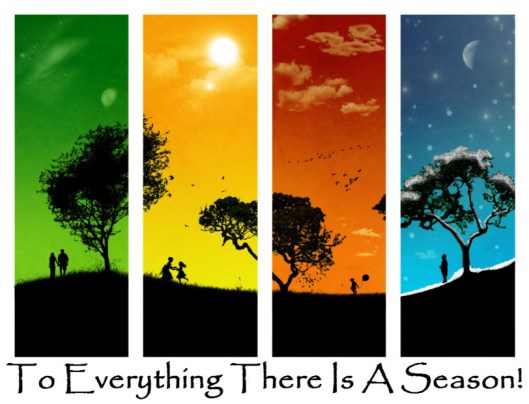
Perhaps this may be a good way we can approach our relationship with God.  The Holy Spirit is God’s agent of change.  She is always whispering new ideas, blowing new people into our lives, and breathing life into our imaginations.  Listening to the movement of the Holy Spirit is exciting, fun, and invigorating.  But boldly following the Holy Spirit also needs to involve tending to the grief of letting go of the what the Spirit was doing before.  The writer of Ecclesiastes says, “For everything there is a season, and a time for every matter under heaven.”  I wonder what seasons are passing away in your life, and what new times are arriving for you.  My prayer for you is that you be able to appreciate the season you are in, let go of the seasons that have passed, and embrace the seasons that are yet to come.  I know the Holy Spirit is doing good things in you.  I cannot wait to walk with you in the twists and turns!

Sermon – Exodus 16.2-15, Matthew 20.1-16, P20, YA, September 24, 2017

Tags

, , , , , , , , , , , , , ,

This week in Discovery Class, we did a review of Holy Scripture.  We talked about how many years writing the Bible took, the content in each section, the types of literature we find in scripture, and what scripture reveals about us as God’s people.  Our homework was to study today’s gospel lesson, being sure to read the text immediately before and after the text we hear today as a way of helping us interpret the passage.  That tip was especially telling in today’s Old and New Testament lessons

In our lesson from Exodus last Sunday, we heard the story of the parting of the Sea of Reeds.  We heard of that dramatic moment where God allows the Israelites to pass through on dry land, but destroys the Egyptians as the waters return.  The last line in last week’s lesson from Exodus is, “Israel saw the great work that the Lord did against the Egyptians.  So the people feared the Lord and believed in the Lord and in his servant Moses.”  Today, the first sentence from our Exodus reading is, “The whole congregation of the Israelites complained against Moses and Aaron in the wilderness. The Israelites said to them, ‘If only we had died by the hand of the Lord in the land of Egypt, when we sat by the fleshpots and ate our fill of bread; for you have brought us out into this wilderness to kill this whole assembly with hunger.’”  Israel’s groaning and complaining today are much more grievous when we read the great heights of their praise and faithfulness last week.

Likewise, in our gospel lesson today, we hear the familiar story of the generous landowner, who gives the same wage to those who work an hour and those who work all day in the broiling sun.  We can read this passage, and criticize the envious, hardworking laborers for their lack of gratitude.  But the power of the story is heightened when we realize immediately before Jesus’ parable, Peter interrupts Jesus’ teaching and basically says, “But what about us?  We left everything behind and we have been following you.  What’s in it for us?”  And right after Jesus’ parable, the mother of James and John approaches Jesus and basically says, “Listen, if it’s not too much trouble, can my boys sit at your right and left hand in the kingdom?”  So, when Jesus says to Peter, “many who are first will be last, and the last will be first,” and when the landowner says to the workers, “the last will be first, and the first will be last,” what do you think Jesus is trying to address?[i]

I do not know about you, but both of these texts have left me pretty uncomfortable this week.  Watching the Israelites go from faithful, obedient, loyal followers, to whiny, unappreciative, complaining messes hits a little too close to home.  Admittedly, part of me cringes at this text because we have been hammering home the importance of gratitude with our own children.  No sooner is the ice cream cone finished before the complaint comes that we never do anything nice for them.  But as much as we fuss at them, we know the same is true for us.  We are great at praise and thanksgiving to God – when things are going well.  When seas are parting, and enemies are defeated, our God is awesome.  But when we cannot seem to make ends meet, when our loved one is sick again, or when our relationships are falling apart, gratitude is the last thing on our lips.  We find ourselves in what one scholar calls the “spiritual wilderness of ingratitude.”[ii]  We cringe at these readings because we are no more masters at gratitude than our children are.

What both of these lessons do, ever so brutally, is lure us in with stories about abundant, underserved generosity, and put under a microscope our deeply buried discomfort with abundant, underserved generosity.  Part of the reason we are uncomfortable is because God’s generosity often bumps up against our notions of fairness.[iii]  I do not know if we understand the concept of fairness innately or if we are taught fairness by our community, but somewhere along the line, we learn the concept of fairness and apply the concept with exacting scrutiny.  I remember when I was a child and wanted a treat, my dad would make my brother and me share the treat.  One child was allowed to split the treat in half, but the other child got to pick which half he or she wanted.  You can imagine how precise my cuts became when looking at that cookie.

But our notions of fairness evolve over time.  One could take that same cookie and give a slightly larger half to the older child since they are bigger.  Or one could take that same cookie and give the slightly larger half to the child who was better-behaved.  Or one could give the larger half to the one who was physically weaker and needed more nourishment.  There are all sorts of ways to determine fairness.  But God’s measure, in both the Hebrew and Christian Scriptures seems to be that everyone receives God’s generosity despite worth or effort – or even the showing of gratitude.

Take our lesson from Exodus.  The people have clearly approached mutiny.  Their love for God is buried in their physical hunger and their self-centered greed.  But instead of punishing the Israelites, God lavishes them with all they need.  God gives them bread every day and meat every night.  In fact, God even gives them a double portion on the eve of the Sabbath so that they can observe the Sabbath without having to work for their food.  The feast is not a rich feast of wines and marrow, but their feast is gloriously generous and enough.

The same is true in Jesus’ parable.  Yes, the landowner has a weird way of putting the day-long workers in the awkward position of watching his generosity, but ultimately, the landowner gives everyone enough.  He gives the wage he promised to the day-long workers – a wage that will fill them and their families for days.[iv]  But he also gives the same wage to the hour-long workers.  Sure, they did not deserve the wage, but the same wage that feeds the other workers feeds them too.  The landowner is gloriously generous and gives enough.[v]

I have been wondering all week where these texts leave us:  maybe a bit guilty, perhaps a bit convicted, and definitely “last” in the pecking order Jesus describes.  But what I realized this week is both in Exodus and in Jesus’ parable, perhaps being last is not all that bad.  You see, Jesus does not say, “The last shall be first, and the first shall be ejected.”  No, Jesus says, “the last will be first, and the first will be last.”  So even on our worst Israelite days, when we are moaning and complaining about the very God who miraculously saved us, or even on our worst vineyard days, when we are complaining about an unfair, albeit generous, owner, we are still not ejected.  We are not taken out of God’s generosity; we are not stripped of our blessing.  We may be last, but we still have enough.  Our abundantly generous God takes care of us when we deserve God’s care and when we do not.  Our abundantly generous God gives us enough when we think God’s generosity is fair and when we do not.  Our abundantly generous God loves us whether we embrace God’s generosity or we do not.

I cannot promise we will ever get in line with God’s generosity.  I am not sure we will ever be cured of our sense of fairness or even our ill-conceived notions that we could earn God’s generosity.  But what I can tell you is that we are not alone.  Our people thousands of years ago did not master God’s generosity.  The disciples two thousand years ago did not master Christ’s generosity.  And I suspect we will not either.  But every week, we try.  Every week we continue on our journey toward generosity – seeing God’s generosity in ourselves and others – being inspired to try again.  I am not sure we will ever be first in line.  But the good news is we get to stay in line – which means there is always room to try again.  Our generous God will make sure we have enough until then.  Amen.

[i] Barbara Brown Taylor, The Seeds of Heaven: Sermons on the Gospel of Matthew (Louisville:  Westminster John Knox Press, 2004), 100-102.

[ii] Deborah A. Block, “Homiletical Perspective,” Feasting on the Word, Supplemental Essays, Year A  (Louisville:  Westminster John Knox Press, 2011), 2.

[iii] Taylor, 103.

[iv] Amy-Jill Levine, Short Stories by Jesus: The Enigmatic Parables of a Controversial Rabbi (New York:  Harper Collins, 2014), 224.

[v] Block, 4.

On Creating Tables…

Tags

, , , , , , , , , , , , , ,

Group of people using their smart phones

Photo credit:  https://www.webmarketing-com.com/2016/10/03/50473-mobile-first-vitesse-enjeu-principal

This week I stumbled on a commercial that was created for an event commemorating Canada’s 150th anniversary.  Canada decided to celebrate with “Eat Together” Day this summer.  The commercial, which you can see here, features a woman, surrounded by people on their phones wrapped up in their own worlds, not acknowledging each other’s presence.  Fed up, she grabs her roommate, her small kitchen table and chairs, and sets dinner out in the hallway of their apartment complex.  Slowly, people emerge from the elevator and are invited to sit down.  Others hear the commotion, come out of apartments, and add tables, chairs, and food to the impromptu gathering.  People of all colors, ethnicities, and ages sit at the table, perhaps hearing and seeing each other for the first time.

Modern technology did not create the longing to be connected.  The need has always been there.  But technology has shifted how we connect.  We can now feel closer to friends in distant places, keep up to date on news stories that were buried or hard to find, and even connect with strangers with whom we have a lot in common.  But connecting online sometimes means we are no longer available for the person sitting on the couch next to us, waiting in line at the grocery store, or living next door.  In a desire to connect from afar, we sometimes forget to connect nearby.

I am usually one of the last to criticize the ways in which technology helps us connect.  In this past week alone, I have been grateful for the ways social media has enabled me to hear when a friend or family member is safe after a storm, to see that good things are still happening to my friends who are living in areas of conflict, and to learn when friends are blessed with new babies, marriages, and milestones.  In fact, this weekend Christians around the world will be participating in “Social Media Sunday,” a Sunday to embrace the ways social media helps us connect both virtually and in real time to our neighbors, friends, and strangers.

At Hickory Neck, we will be joining other churches as we celebrate the ways social media brings us together.  But part of what we are celebrating this Sunday is how social media takes the connections we make online, and brings them to the table – the Eucharistic table, where, like that video “Eat Together,” people encounter one another in meaningful, vulnerable, and powerful ways.  We can certainly be transformed by Social Media, but nothing can replace the taste of communion bread and wine on your tongue, the experience of brushing shoulders at the altar rail with someone very different from you, and the power of God’s blessing that comes at the table.  So by all means, post about Hickory Neck Episcopal Church, bringing your cell phones and tablets to church.  But also make time and room this week to “Eat Together” at God’s table.  I suspect that the connections you make at the Eucharistic Table will enrich the virtual table you have created online.

On Busyness…

Tags

, , , , , , , , , , , ,

We all have habits that pull us away from God.  Mine is the habit of busyness.  In juggling family, work, and self, I can easily fill every second of every day.  Even the fun stuff I schedule can feel like something to be “fit” into the schedule, not delighted in and savored in the moment.  I was particularly convicted of this reality by a speaker I heard at a leadership conference, Juliet Funt, who talked about the value of white space.  She defines white space as the strategic pause taken between activities.  White space is not meditation, letting the mind wander, or mindfulness.  It is a simple, intentional break.  And white space isn’t just for work – it is for the home too.

What struck me about her talk is I realized in my devotion to busyness, I am carving out a life that looks and is experienced in a particular way – a way that I am not sure I necessarily like.  Two things brought this home to me recently.  The first was watching the film About Time.  The plotline was a bit farfetched:  a man who can travel back in time and change parts of his life.  After myriad adventures, what the time traveler eventually realizes (spoiler alert!) is that he does not need to travel anymore.  Instead, he treats everyday like a gift to be savored and celebrated.  He was carving out white space in his life.

The second thing that brought this home was the funeral of a beloved parishioner.  In the eulogy, the family talked about all the life lessons they had learned from their mother, many of which were about living with joy and exuberance.  As I sat listening to the eulogy, I realized that everyday I am filling up my children’s life full of lessons – and I want them to be the right ones.

So, taking a cue from the fictional to the very real, I decided to create a little white space this week.  There are some lovely yellow wildflowers blooming on the drive to my children’s childcare facility.  So yesterday, I pulled over, grabbed the phone, and took some pictures of beauty – the beauty of God’s creation in nature and in my children.  It was a small victory, but as my children proclaimed, “That was fun!” I knew I had carved out a little holy space for all of us:  space to say thank you to God for all of our gifts – creation, life, each other.  I invite you today to find a moment of white space.  I can’t wait to hear about what that white space brings!

yellow-flowers-field-background-1

Photo credit:  eskipaper.com/yellow-flowers-field-background.html#gal_post_32591_yellow-flowers-field-background-1.jpg