Waves of Gratitude

Tags

, , , , , , , ,

I don’t really know how it happens.  I am sure we could blame consumerism, capitalism, or competition.  Maybe we could even blame sin.  But somehow, in the midst of our abundance, we find ways to be dissatisfied.  We want more – more stuff, more security, more freedom.  There is something deep inside of us that sees what others have and covets.  Our maybe it is more subtle and quiet.  We look at our current situation, and think, “If I just had that, I would be happy.”  And whatever “that” is, it does not seem like too much to ask in our minds.

The other day, my family and I were driving in the city.  We turned the corner, and right before us loomed an enormous billboard.  But instead of trying to sell something (or convince me that I needed “that”), it simply said, “Gratitude.”  I was stunned.  I do not know who put up the sign or why, but what I can tell you is that it stopped me in my tracks.  Whether I am bustling around with my family or busy at work, I am rarely meditating on gratitude.  I am just not very good at holding gratitude at the center of everything.  For me, that sign was a beckoning back:  a beckoning back to a spirit of gratitude.  So instead of having my mind on wherever we were going that day, suddenly, I looked around the car.  There was my beautiful, loving, precious family.  We were sitting in a car that works, enjoying leisure time.  I was not sick or worried about my housing security.  A wave of gratitude swept through that car that left me stunned.

This week St. Margaret’s kicked off our Stewardship season.  Most of us think about Stewardship season, and we immediately start worrying about what we are going to be able to pledge this year.  But before you start crunching numbers, I invite you to take a moment to be stunned by the prayerful practice of gratitude.  Start at home.  Prayerfully consider your friends and community.  Think about St. Margaret’s and why you pull yourself out of bed every Sunday to be there.  Give thanks for the God that creates us, sustains us, and gives us all that we need.  The further out we move from ourselves, the bigger our gratitude gets.  By the time we get to God, that unfathomable One who is infinitely bigger and more gracious than we can imagine, our longings for anything else disappear.  All we are left with is humble sense of gratitude.

This week, I invite you to meditate not on your checkbook, but on this blessed life God has given you.  If you have to start with something as basic as being able to breathe – being on this side of the ground, then start there.  I imagine no matter how rough or dissatisfying life may feel, you will slowly begin to realize the enormity of abundance surrounding you.  Let that wave of gratitude sweep you into a stunned silence – and join our God who waits there for you.

Journeying in the darkness…

Tags

, , , , , , ,

October is Pregnancy Loss Awareness Month.  In some ways, it seems like a strange month to choose.  In October, we are often focused on the harvest.  We have harvest-themed door wreaths and table decorations.  We enjoy a taste of the harvest ourselves – picking apples and pumpkins.  This is a time we celebrate abundance, and yet this is also the month when we honor when abundance is taken away.

As a child, I knew very little about pregnancy loss.  I had an aunt who sometimes referred to infant she lost by name, but no one besides her talked about it much, and the subject was so hushed and confusing that I never asked many questions.  As a chaplain, I experienced my first pregnancy loss with a patient.  A whole new world of darkness invaded what had developed in my mind as a world of joy.  I was at the age that my friends were starting to have babies.  But no one had ever talked to me about the dark side of pregnancy.  The darkness still felt very “other.”

Finally, a dear friend – one with whom I had shared many confidences – lost her pregnancy.  We lived far away, but I had just seen her pregnant belly at a reunion of friends for the weekend.  We had laughed and shared dreams about the child.  It had been a weekend of light.  And suddenly, that weekend was washed away with darkness.  We all rallied, sending flowers, meals, and cards.  We prayed and we cried.  And we listened.  My friend was very good about being vocal and honest about her pain.  We journeyed with her through the darkness.

During our mourning period, I shared with a few coworkers about my grief.  Slowly, the stories poured out.  Of pregnancies lost, of an infant loss, and even of the grief of trying to get pregnant.  No longer could I go on pretended that the world of pregnancy and babies was all roses and sunshine.  There is a darkness, a fear, and an uncertainty that haunts every pregnancy.  Most of the time those fears are unrealized, but unfortunately, not always.  And sometimes that darkness crashes down on those who never even realized the darkness was lurking.

We don’t talk about pregnancy loss much in church.  We have a liturgy for blessing a pregnancy.  We have a liturgy for giving thanks for a healthy birth.  And we have a liturgy for an infant baptism.  But the liturgies for infant loss are scattered and hard to find.  They are modified versions of other liturgies, often unauthorized by a liturgical committee.  They are like the darkened corner room of the maternity ward where they try to hide away the mom who has to deliver her stillborn.

Today, I want you to know that I am willing to talk about pregnancy and infant loss.  As a priest in the Church, I am willing to journey with you through the darkness – even if that darkness has been lingering for twenty years or more.  Or if you are trying to get pregnant, or even if you are pregnant and are afraid of the darkness – I am here.  You are not alone.  I will stand in the darkness with you – for however long you need.  And for those of you who are just now becoming aware of this issue and want to be supportive, I recommend this video.  You will find great resources on the website, as well as a link to an amazing book of devotions.  Join me in being the Church – a Church willing to sit in the darkness until we can find the light again together.

Homily – Matthew 11.25-30, St. Francis, October 4, 2015

Tags

, , , , , , , , , , , , , , , , , , , ,

I once led a book group that read the book The Prison Angel.  The Prison Angel is the story of Mother Antonio, a woman of privilege from California who had a mid-life crisis, took on the role of a nun, went to the largest prison in Tijuana, Mexico, and began a ministry of transforming guards, inmates, and families connected to the prison.  Her work was amazing – the way that she was able to love everyone equally, the way that she was able to harness resources and get them where they needed to be, and the way that she was able to devote her life to this system – even living in her own prison cell for a while – were all examples of her awesome witness.  As we finished the book, I had hoped that people in our book group would be inspired, and might even consider their own contribution to a prison ministry.  Instead, the response was more like this:  Mother Antonio is truly amazing.  But let’s be honest.  I can’t be like her.  I’m not going to drop everything – my family and life – and become totally devoted to a ministry.  And just like that, I lost them.  No longer was Mother Antonio inspiring.  She was impossible.  And once she was impossible, no one felt compelled to do anything.  I definitely felt like I failed my mission of inspiration leading to action.

As I was preparing for today’s celebration of St. Francis, I ran across this quote:  “Of all the saints, Francis is the most popular and admired, but probably the least imitated.”[i]  You see, we have a sanitized version of Francis in our minds.  He was nice to animals and took care of the poor.  He devoted his life to Christ as a monk.  We even put up statues of Francis in our gardens and outside our churches.  When we think of Francis, we think of a gentle man gingerly allowing a bird to perch on his finger, and we smile.  We like our sanitized version of Francis because the real version is a little scary.  When Francis renounced his rather significant wealth, he stripped naked in front of his father and the bishop.  Francis didn’t just help the poor, he became poor, begging on the streets.  He worked with lepers – people no one wanted to touch, touching them with his bare hands and kissing them.  Barefoot, he preached in the streets about repentance.  He preached to the birds, and is rumored to have negotiated with a wolf.  If we met St. Francis today, most of us would not imitate or venerate him.  We would just see him as another homeless beggar with a serious case of mental illness.

That is the challenge for us when trying to live a holy life.  St. Francis is the obvious example today.  Though we love and admire St. Francis, few of are comfortable with his total identification with poverty, suffering, and care for our creation.  The same can be said of Jesus.  Though we profess that Jesus is our Lord and Savior, we regularly fail to live in the ways that Jesus taught – in fact, some of us have given up even trying.  Even looking toward a modern-day example of holy living trips us up.  When we watched Pope Francis come through last week, we marveled at his radical witness.  We loved what he had to say – except when he had something to say that made us uncomfortable or that we disagreed with.  When thinking about the radical life that is following Jesus – whether through the Pope, through St. Francis, or Jesus himself – most of us stumble and feel like giving up.

Luckily Jesus offers us a promise today.  Jesus says, “Come to me, all you that are weary and are carrying heavy burdens, and I will give you rest.  Take my yoke upon you, and learn from me; for I am gentle and humble in heart, and you will find rest for your souls.  For my yoke is easy, and my burden is light.”  My yoke is easy and my burden is light.  When we look at St. Francis’ witness and we think about the poverty, the preaching, and the penitence, we get nervous.  We like our stuff, we like being comfortable, and we like being Christians without having to be too loud about it.  When we think about St. Francis, we think of a yoke – but not a light one – one that is heavy and onerous.  But Jesus harkens us back to his original words.  My yoke is easy and my burden is light.

One of the reasons I am a proponent of international missions is that they help you experience reality in a totally different way.  When we go on local missions, we can keep our smart phones, we have access to clean, accessible health care, and we can always find a McDonalds for a burger fix.  But when we are in a rural town in a third world country, things change.  We may not get to shower everyday, we may have to boil our water before drinking it, we will eat food that you are not so sure about, and we pray that we don’t get too sick while abroad.  And forget about a cell phone and internet access.  Most of us don’t even take a watch or jewelry to ensure they do not get lost.  Now that may sound like torture to most of you.  But here is what we learn when we are stripped of comforts and living and working in a foreign setting:  We learn to appreciate your massive wealth comparable to the poor in the third world; we learn what hospitality – real hospitality in the face of nothing – really feels like; we forget about email, phone calls, and even stop obsessively checking the time, because those things do not really matter that week; we hear birds and other creatures in a way that we never have before – maybe because of their proximity, or maybe because we normally distract ourselves with a hundred other things; and – now this is the crazy one – we talk about Jesus and no one is uncomfortable (well, except maybe us because we haven’t done that very much).  When stripped of everything familiar, we discover that Jesus’ burden really is easy and his yoke truly is light.  And sometimes we need to be stripped of the familiar so that when we are back in our comfort zone, we can more tangibly remember how easy that burden was and how light that yoke felt.

You may not be able to go on an international mission trip.  But each of you has some experience – a heartfelt expression of gratitude when you cared for the poor, a prayer with someone who was really hurting, or surprisingly easy conversation in a coffee shop about church and your faith.  Though Jesus, St. Francis, and even the Pope sometimes go to extreme measures, they all ultimately are trying to do the same thing.  To remind us that Jesus’ burden is easy and his yoke is light.  And then they all invite us to get comfortable with discomfort or even with the label of being crazy – and to go and do likewise.  Amen.

[i] Holy Men, Holy Women:  Celebrating the Saints (New York:  The Church Pension Fund, 2010), 622.

On Progress and Outstanding Work…

Tags

, , , , , , , , , , , , , , , ,

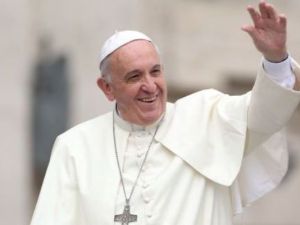
I must admit, the Pope’s visit to the United States last week was awesome.  Though I have been happy for the Roman Catholic Church since Pope Francis was elected, last week I realized his witness is good for all Christians.  Too often people professing to be Christian make Christians look bad.  Their hatred and exclusion in no way reflects the love and inclusion expressed by Jesus Christ.  But not Pope Francis.  He continues to challenge all of us to get back to the work Jesus gave us to do – to love and care for the poor, disenfranchised, and unjustly treated.  He beckons us toward lives of making peace and justice.  In essence, he reminds us to live as Christ called us to live.  And in starkly obvious ways, he reminded us that Jesus was not a Democrat or a Republican.  In fact, Jesus made, and continues to make, everyone uncomfortable.  Pope Francis did the same thing.  Though we all loved what he did for the Church and Christians in general last week, he likely made each of us feel uncomfortable at some point during his visit.  But I think we could all respect that he was trying to get us back to our true identity – he is a Christian who made us proud, not embarrassed, to be Christians.

Coming off the high of the Pope’s visit, I attended a funeral mass this week at the local Roman Catholic Church.  I was there to support a parishioner who had lost his mother (a Roman Catholic).  I wore my collar, but sat in the pew.  I prayed with the priest, cried with the family, and reverenced during the Eucharist.  But when the Eucharist was distributed, I stayed in my seat.  To his credit, the priest did not disinvite any non-RC attendees.  But he did not actively invite them either.  So instead of risking offense, I stayed in my seat, as I have been well-trained by many other RC priests that I am not to receive Eucharist as a non-RC.  I knew the moment would come and I was mentally prepared to stay in that seat.  But I must admit, my heart ached in that moment.  I felt a sharp pain in my chest as others walked around me to go forward for the heavenly meal.  For all the unity, the love, and the excitement of last week, I realized in that moment that we have a long way to go.

Of course, that work is not limited to the Roman Catholic Church.  Last week I preached about how much the Episcopal Church does its own work of excluding people – even from the Table, if you are not baptized.  In fact, I remember writing a paper in my liturgics class in seminary defending the practice of limiting the Eucharist to those who are baptized.  I don’t remember my argument at the time, but it was good, well-thought out, and prayerfully constructed.  But sitting in that pew yesterday, not receiving the comfort of the holy meal made me rethink the whole concept of an open table.  I do not really know if I am ready to make any changes right away, but the experience was a powerful lesson in the realities of constructing boundaries around the Table.  I do not want anyone’s heart to hurt the way mine did yesterday.  What about you?  What boundaries the church has constructed make you feel conflicted?  What might compel you to reconsider your position?  I invite us to pray about these conflicts as a community and see where the Spirit is leading.

Sermon – Mark 9.38-50, P21, YB, September 27, 2015

Tags

, , , , , , , , , , , , , , , , ,

“Are you the priest they sent?”  That was the question he asked me.  I was confused at first, but realized one of the nurses must have called an on-call priest.  I also knew from experience that if he was looking for the “priest they sent” he was not looking for me.  You see, I’m a priest, but I’m also a woman.  When people at hospitals are looking for priests, the majority of the time they mean a Roman Catholic priest.  But he seemed desperate, so I delicately said “No, I’m actually here to see a parishioner.”  But I stayed and talked to him a bit more about what was going on and whether the chaplain’s office had been called.  His wife joined us as we talked.  Then the inevitable question came.  She asked what church affiliation I had.  I told them I was a priest in the Episcopal Church, and that they were welcome to wait for a Catholic priest.  She insisted it didn’t matter – they just wanted a priest to say prayers.

Honestly, I was floored.  That had never happened to me.  Usually when I tell a Roman Catholic person that I am not a Roman Catholic priest, they reveal (subtly or not so subtly) that I am not the kind of priest they want.  And truthfully, I am totally fine with that.  I totally understand and would never assert any differently, especially to someone in crisis at the hospital.  We ended the conversation with the agreement that we would go to our separate rooms.  When I was done, if they still didn’t have their Roman Catholic priest, I would be happy to say prayers.  I went on to my visit, fully anticipating the “real” priest to show up for them while I was elsewhere.

That division among the Church, among the faithful of God, is not unique to Roman Catholics.  We all make boundaries and distinctions about who is in and who is out.  Episcopalians are only in full communion with the Evangelical Lutheran Church of America.  So if I ever wanted to have a United Methodist Minister or Presbyterian pastor celebrate Eucharist, I would not be allowed.  We also make rules around the communion rail.  Most Episcopal Churches say that all baptized Christians are welcome to the table – meaning if you have not been baptized, you should not receive.  Even to serve on Vestry we have boundaries.  All Vestry members have to be financial supporters of the parish, are expected to be present regularly in worship and parish events, and are asked to contribute to at least one ministry of the church.  If the Vestry member is unwilling to make those commitments, they cannot serve on Vestry.  We often think of Roman Catholics as having lots of boundaries – from no women at the altar, to no married clergy, to no communion unless you are Roman Catholic.  But the reality is that, as Episcopalians, we have an equal number of boundaries that keep people in and out of our community.

The good news is that we come by our exclusivity honestly.  In our gospel lesson from Mark today, we are told about an encounter between the disciples and Jesus.  John comes up to Jesus and says, “Teacher, we saw someone casting out demons in your name, and we tried to stop him, because he was not following us.”  John is so confident of his authority that he almost sounds like he is boasting to Jesus.  “Hey, Jesus, there’s some dude who is trying to do our work and he keeps using your name.  But don’t worry – we shut him down.”  You can almost imagine John expecting Jesus to give him a chug on the shoulder and say, “Good work, John!”  But that is not how the story unfolds.  Instead, Jesus says the total opposite, “Do not stop him; for no one who does a deed of power in my name will be able soon afterward to speak evil of me.  Whoever is not against us is for us.”  You can imagine the disciples’ confusion.  Jesus is constantly pulling them aside and only telling them how to interpret his parables.  When Jesus commissions people, he commissions the disciples, and no one else.  And although people are often following Jesus in droves, his crew, or his posse, is made up of the disciples.  In the disciples’ minds, Jesus is implicitly telling them that they are the insiders, with special privileges, and everyone else is an outsider.  The disciples are in; everyone else is out.  And anyone who tries to break those boundaries is going against the will of Jesus – and, ergo, the will of God.

Despite the fact that Jesus shuts down the notion of insiders and outsiders, the Christian community has been struggling with boundaries since Jesus’ death.  Who is a Christian?  Who can have communion?  What are the rules and what are the consequences of breaking the rules?  Now, boundaries are not necessarily bad.  Boundaries help us define who we are and what behavior is acceptable.  Boundaries help us uphold values and create meaning.  Boundaries can even help us make an informed choice about belonging to a community.[i]  Clearly Jesus created some boundaries.  When he says, “Whoever is not against us is for us,” he implies that there are people who are in fact against them.  Jesus himself creates a group of insiders and outsiders.  What Jesus is trying to communicate is not that boundaries are bad.  What Jesus is trying to communicate is that we are capable of getting so wrapped up in our boundaries that we exclude people from the love of Christ.  And nothing could be more harmful, or even sinful, than making someone feel that they are cut off from the love of Christ.

I had a friend who started going to therapy to help him cope with a spouse suffering from depression.  He imagined that the therapist would share her knowledge of persons suffering from depression and teach him some coping skills.  But after a lengthy explanation about what was wrong with his spouse, the first question the therapist asked was about him.  The therapist wanted to know what his issues were.  My friend interrupted, “No, no, no, I’m not here for me, I’m here to learn more about dealing with my spouse.”  The therapist wisely said, “Yes.  But before we get to your spouse, let’s talk about you.”  That therapist did what Jesus does with the disciples.  Jesus redirects the disciples concern about others by telling them to worry about their own problems – those hands, feet, and eyes that cause them to sin.  You see, Jesus is very clever.  What he realizes is that when the disciples start sorting through their own sinfulness, their own “stuff,” they do not have time to worry about boundaries and rules and barriers.[ii]  And when they let go of those boundaries, rules, and barriers, something incredible can happen – the love of God and the fellowship of Christ can grow and thrive.

By the time I finished my visit with my parishioner, the Catholic on-call priest had still not arrived.  I went into the room of the family and realized they needed more than a prayer.  They were going to be removing life support and wanted someone to offer the patient Last Rites.  I again reminded them that I was an Episcopal Priest.  The wife of the couple said, “It’s still Last Rites though, right?”  “Yes,” I replied.  “Okay, then.”  That was all.  Here I was bringing up boundaries again and again, and this person, who normally has even more boundaries than I do, insisted that I let go of my boundaries and help her family have an experience with God.  The first words the husband had asked me were, “Are you the priest they sent?”  My first answer was correct.  I was not.  But my answer was not complete.  I was not the priest that “they” sent.  But I was the priest that God sent.  You see, God has a call on me – and in fact God has a call on each person here.  God sends us everyday – to our workplaces, to our schools, to our friends, and to strangers.  Everyday we have the choice to get tangled up in boundaries and rules and limitations.  But we also have the choice to remember the ways that Jesus wants us to love God and love our neighbors.  Those are the only two boundaries Jesus really cares about anyway.

That is our invitation this week:  to consider how God is calling you and also to consider how you are getting in the way of God’s call.  The boundaries and the rules really are not as complicated as they sound.  If the Pope can say, “Who am I to judge?” surely we can start letting go and embracing love.  Then, the next time someone asks you, “Are you the person that was sent?” you can reply, “Yes.  Yes, I am.”  Amen.

[i] Harry B. Adams, “Pastoral Perspective,” Feasting on the Word, Yr. B, vol. 4 (Louisville:  Westminster John Knox Press, 2009), 116, 118.

[ii] Amy Oden, “Commentary on Mark 9.38-50,” September 30, 2012, as found at http://www.workingpreacher.org/preaching.aspx?commentary_id=1357 on September 25, 2015.

Showing forth love and light…

Tags

, , , , , , , , , , ,

This week I stumbled on a video published this summer about a guy who goes to a local grocery store and surprises customers by paying for their groceries.  The video portrays a series of about ten encounters.  The mystery man, walks up to the customer, looks at the total due on the cash register, gives the amount to the cashier, and walks off.  He doesn’t engage in conversation.  He pats a few people on the back, telling them to have a good day.  For the few people who ask him why, his response is, “God is good.”  The conversations that happen between the customers and the cashier are incredible.  Most end up having a conversation about God.  Many are shocked, some laugh, and several cry.

What I found most fascinating about the piece is who the man helps.  The first few customers looked like they could use the help – of course I say that recognizing my own stereotypes about class and race.  But one customer surprised me.  He was a white male, who looked middle-class, without much wear and tear.  When the mystery giver left, the man and the cashier had a conversation.  He confesses how nice the gesture was, especially considering he was just mugged the week before.  As they talk further, he confesses that he was held at gun point in front of his home.

What shook me up about the encounter were my own assumptions.  There have been several times at stores when I noticed someone using their WIC voucher or EBT card and could sense the tension as they managed how much money they had to spend.  It makes perfect sense to help someone like that.  But what does it mean to help others:  those whose need is not obvious to us?  How often do I cut short God’s work when my assumptions get in the way of how and when I help?  What this mystery giver was giving was not necessarily charity per se.  What he was giving was a chance to have an encounter with God.  The customers received a variety of things that day – a lightened spirit through the gift of generosity, a desire to share the gift with others (one customer actually said, “I’m going to do that for someone else!”), and a deep and profound encounter with God – a God that they could only see through the vehicle of the giver.  In essence, this giver became the hands and feet of Jesus.

I’m not sure this video is calling me to go out and do the exact same thing.  But what the video is inviting me to do is to see my brothers and sisters through the eyes of Christ.  To honor those around me who are probably going through things I know nothing about, who may be in a dark place, or who may actually have more to give me than I have to give them.  At St. Margaret’s, we already know there are needs in our community – in fact, we helped four families this month purchase the school supplies they needed to send their children back to school.  But there are needs beyond financial – there are needs for people to experience love and to experience our Lord and Savior Jesus Christ.  Those are things that they may not experience unless we are willing to offer those gifts.  How might you show forth God’s love and light this week?

Sermon – Proverbs 31.10-31, Mark 9.30-37, P20, YB, September 20, 2015

Tags

, , , , , , , , , , , , , , , , , , , , , , , , ,

There are some Sundays when the scripture lessons appointed for the day are just right.  They speak truth to power or relate to a spiritual crisis in the community.  They shed light on a current event or they give pastoral words to aching hearts.  On those days, I am so grateful for the ways in which I see the Holy Spirit moving through the Church through the vehicle of scripture.  Today is not one of those days.  I read both our Old Testament and Gospel lessons this week, and my first reaction was, “Really?!?  THIS is what we needed to hear this week, God??”

The Old Testament lesson from Proverbs is actually one of my favorites – even though the lesson takes some deconstructing.  This passage is often referred to as the passage about the capable wife.  Now anytime the church starts talking about how women need to be wives and how those wives need to be “capable” I start getting defensive.  The good news is that the title is more the problem than the lesson itself.  The Hebrew word often translated as “capable” is better translated as powerful, strong, or even warrior-like.  This woman is a superhero.  She rises before dawn; manages a staff, ensuring her family has food and security; she purchases property and plants a vineyard with her own hands; she runs a thriving business, providing fine clothing for her family and the community; she is known for her wisdom and is happy and satisfied; and in her spare time, she is a shining example of philanthropy.  When you think about the traditional role of women in the patriarchal society of the time,[i] this woman is on fire.  She is an empowered woman, an equal partner to her husband, and is the master of both her home and her work outside of the home.[ii]  She is like Martha Stewart on steroids.

In the Gospel lesson, we find the disciples struggling yet again.  Jesus meets with the disciples and explains to them his fate.  And instead of asking Jesus what he means, they remain silent because they are too afraid to ask.  Actually, they do not remain silent.  Instead, they start bickering among themselves about who will be first in the kingdom.  I suppose that if the world is going to end, we might be similarly distracted.  But Jesus catches them arguing and shames them into true silence.  Not only does Jesus tell the disciples that they must strive to be last – servants of all; but also, Jesus tells them that in order to be a part of Jesus’ kingdom, they need to welcome children like they would welcome Jesus (which really could be interpreted as welcoming the poor, widowed, or disenfranchised).  So basically, Jesus tells the disciples they are a mess.  Not only are they not listening, they are distracted by their egos, and they are not attending to the one ministry he has called them to do.

So here is the challenge with these two lessons.  Basically, we take from the lessons that we are all too full of ourselves, we are distracted by the wrong things, we are not doing the work Jesus has called us to do.  And if we want to correct all of that behavior, we need to become warrior women and men – Martha Stewarts on steroids, showing everybody how it’s done.  Now I am not arguing that any of those points are not inherently truthful and are not lovely goals toward which we should strive.  What I am arguing is that I just did not want to hear them this week.  Here we are busting our buns to do the massive amount of work needed to pull off the Fall Fair.  Here we are busy kicking off the program year, with teachers preparing lesson plans, the choir readying music, and all our ministries being back on deck.  Here we are putting together last minute receptions for the bereaved, trying to complete a major construction project, and trying to ensure that we have enough funds to run our operations and enough energy to evangelize in our community.  And that is on top of all the work we are doing to get kids back to school, to reconnect with our community commitments after a summer hiatus, to make sure we are still performing well at work, to get our homes tidy and prepared for fall, and to squeeze in some football games.  In the midst of that chaos, the last thing I need to hear from church today is that my priorities are all wrong and that I need to work harder – a lot harder.  Thanks, but no thanks, Holy Scripture!

The good news is that there is good news.  For all the overwhelming work of the warrior-like woman in Proverbs and for all the scolding the disciples receive, the message from both lessons is clear and surprisingly manageable.  In Proverbs, the lesson concludes, “a woman who fears the Lord is to be praised.”  Now this is not the kind of fear we get when we talk about horror films, phobias, or abject worry.  The fear the passage is talking about is “awe, wonder, gratitude, and reverent humility before the Creator.”[iii]  Now fear of the Lord may sound like one more thing to add to the to-do list, but actually, fear is where the lessons are calling us to start.  You see, the disciples lacked a genuine fear of the Lord.  They were afraid in the more traditional sense – of what Jesus was talking about, of what would happen to them, of how they would ensure their own security.  They got wrapped up in themselves.  But if they had been wrapped up in awe, wonder, gratitude, and humility, all of the things Jesus had to instruct them to do would have come more naturally.  If they were in awe of Jesus, they would have easily been able to see how grateful they should be to have a Messiah who would sacrifice himself for them.  If they had been in wonder of Jesus, they would have simply been happy to be called a disciple, without worrying about their place or status.  If they had been full of gratitude, they would have already been welcoming children – and the poor, and the outcast, and the stranger.  The same sort of reversal is true for the warrior-like woman in Proverbs.  All of those amazing things she seems to accomplish in 24 hours happen only because of her reverence for God.  She is not favored because of all that she does.  She is able to do all that she does because she starts in a place of gratitude.  The rest flows easily out of that vantage point.

Today’s lessons are not about scolding us for how we get everything wrong, or about setting some impossible standard of perfection for us.  Instead, today’s lessons are about checking our baseline.  When our baseline is about awe, wonder, gratitude, and humility, we find living into Jesus’ instructions much easier.  When our baseline is about awe, wonder, gratitude, and humility, those astounding to-do lists and projects do not seem like burdens but gifts.  When our baseline is about awe, wonder, gratitude, and humility, church is not only a place we want to be, church is a place to which we are lovingly drawn.  That’s when that piece you were writing about stewardship doesn’t seem scary or even hard.  That’s when those sacred moments happen in Sunday School when a child or teen says something profound that stays with you all week.  That’s when you are up to your ears in stress about the Fair, and something funny – really funny – happens, and you and the other volunteers laugh so hard that you cry.  Holy Scripture today is not directing us down a path of guilt and shame.  Holy Scripture today is inviting us onto that path less travelled – the one that starts with awe, wonder, gratitude, and humility, and ends with grace, joy, companionship, and satisfaction.  I may not have wanted to hear our scripture lessons today.  But I needed to hear them.  My hope is that you can hear them in the spirit in which they were intended too.  Amen.

[i] Brent A. Strawn, “Commentary on Proverbs 31.10-31,” September 20, 2009, as found at http://www.workingpreacher.org/preaching.aspx?commentary_id=390 on September 18, 2015.

[ii] Telford Work, “Theological Perspective,” Feasting on the Word, Yr. B, vol. 4 (Louisville:  Westminster John Knox Press, 2009), 78.

[iii] Kathleen M. O’Connor, “Exegetical Perspective,” Feasting on the Word, Yr. B, vol. 4 (Louisville:  Westminster John Knox Press, 2009), 79.

O death…

Tags

, , , , , , , , , , ,

This past week I have been thinking a lot about death.  It’s probably a function of being a priest, but death is ever a part of my journey.  Many days I can avoid thinking about it.  But I imagine that is not really what God wants.  Just to prove the point, I find that deaths usually come in threes.  No one can avoid thinking about death when they come in threes.

That was the case last week.  Within 24 hours, a parishioner, a family member, and an acquaintance all died.  The parishioner was retired but was living a full life.  She went in to check on some pain and within four months she was gone.  The family member was much older.  She had lived a full life and the journey toward death took a long time.  We were sad, but ready.  The acquaintance was around my age and had three kids at the same nursery school one of my daughters attends.  She got sick and within a week died.  Three children.  My age.

That’s the funny thing about death.  We can pretend it happens only to old people (which we never are – even when we are).  We can pretend it is far away and will come when we are fully prepared and ready to join our God.  We can pretend that death is non-existent.  But we know that is all pretend.  We know that pretending is just our way of masking how scary death is.  For those of us who believe in eternal life, we like to say that life is changed, not ended.  But that is what we say about others.  I wonder how much we can proclaim it for ourselves.

One of my favorite songs from the film “O Brother, Where Art Thou,” soundtrack is called “O Death.”  In the song, the artist sings, “O, death, won’t you spare me over til another year.”  The singer’s voice is haunting.  And while there is a part of us that knows we should not fear death, there is something in that song’s words that resonates with us.  We want one more year.  One more decade.  One more lifetime.

And yet death comes.  Sometimes death comes within a week – within a day.  I wonder what you would do differently with your life if you were willing to let that reality slip over you.  What has God been calling you to do that you have been avoiding?  What have you been meaning to say to someone that you don’t say because you are afraid?  Does the reality of death make you want to move?  Though the questions are heavy, as is the topic, I think there is freedom in the questions too.  We can let go of all that is weighing us down and start living.  The promise of earthly death is a blessing – one that frees us to live this life with abundance, grace, and joy.  How will you start living into that joy today?

On being wonderfully made…

Tags

, , , , , , , , , , , , ,

This is a big week for our family.  Both of my girls are moving up in school.  The youngest is moving from the infant room to the toddler room.  The oldest is starting first grade.  It has been a big week, and I am certainly having some feelings.  Mostly, as I look at both of them, boldly tromping into their new rooms and onto the bus, I am in awe.  I marvel at how big they have gotten.  I marvel at how beautiful they each are in their own unique ways.  I marvel at their awesome personalities and the joy that they bring to others.  I know I am biased as a parent, and I also recognize all the days when my children are not awesome, but today I am profoundly moved by how awesomely and wonderfully made they are.

As I thought about each of them today, I was reminded of that verse from Psalm 139, “I praise You, for I am awesomely, wondrously made; Your work is wonderful; I know it very well.” (Ps. 139.14, Tanakh translation)  Today, I felt like I received a small glimpse into the ways that God must look at each of us.  So often, we look at our flaws and failures.  Even our prayer time can be filled with regrets and apologies to God.  We know that we fall short of the goodness God wants for us.  But that is not how God sees us.  God sees the wonderful and awesome creature that God has made and God is greatly pleased with us.  Perhaps there are days when we greive God through sin and violence to ourselves, to one another, and to God.  But God has a tremendous way of cutting through all that sinfulness and seeing goodness in us.  God sees how we are awesomely and wondrously made.

This week, I invite you to connect with God’s version of you.  I invite you in your prayer time to let go of the flaws and failures and to instead celebrate the goodness of each day.  Maybe you will have to reach really far into your reflection to find something positive.  But my guess is that you do something each day that pleases God – however big or small.  Meditate on that goodness and give glory to God!

Sermon – 1 Kings 2.10-12; 3.3-14, P15, YB, August 16, 2015

Tags

, , , , , , , , , , , ,

Let me tell you a story that a friend of mine once told me.  Once upon a time, there was a wise prince.  Following his father’s death, the prince became king, married a beautiful princess from a neighboring kingdom, and began to rule his people in a way that honored God.  One night, God came to the king in a dream, and told him he could have anything he wanted.  Being a humble man, the king did not ask for money, power, or a long life.  Instead, the king asked God to make him wise so that he could care for the people.  God was very pleased by this request, and God decided to grant the king wisdom.  And, as a reward for being so humble, God said the king could have wealth, honor, and long life too!  The king became known all over the land as a wise king.  People traveled far and wide to hear the king’s wisdom.  The king’s kingdom flourished, his rule becoming a Golden Age for the kingdom.  After forty years of peaceful success, the king handed over his throne to his son.[i]

The king in that story is a real king:  King Solomon from our Old Testament reading today.  As we baptize Kayla today, we wish the same things for her that King Solomon has.  We pray that she might be wise in her decisions, that she might have a close relationship with God, and that she might honor others.  And to help her become those things, we as a community pledge to support her, and we promise to try to do those things too.  On this special day, we look to the future with hope and optimism, praying that God will make Kayla as wise as Solomon.

But, we have to be careful.  You see, once upon a time there was also a shrewd prince.  When the prince’s father died, the prince ordered that his older brother be killed so that he could become king instead.  As he began his rule as king, he killed many more people out of revenge for the way they treated his father.  Then he set out to build a kingdom of riches, power, and honor.  But this king was greedy.  He wanted so many things that he made the people suffer.  He made the people pay taxes, and forced them to build lavish homes and temples.  He collected 700 wives and 300 concubines.  Many of the women worshiped foreign gods, and so the king started to worship those gods too.  He was not loyal to the God we know.  By the time he died, the people were very angry, and they revolted when the king’s son tried to take over.  A big war broke out, the kingdom divided in two, and the world fell into chaos.[ii]

Here’s the funny thing about the bad king.  That bad king is Solomon too.  Isn’t that weird?  We often remember all the good stuff about Solomon – and there is a lot of good stuff.  But there is a lot of bad stuff about Solomon too.[iii]  In fact, we skipped that part in our reading in church today.[iv]   The same king who humbly asks for wisdom is the same king who gets greedy when good things happen to him.  The same king who wisely rules the land also forgets about loving the people he is ruling.

When we think about Kayla’s journey with God in the years to come, we want her to be like wise Solomon.  But the truth is Kayla, and the all the rest of us, are probably a mix of wise Solomon and naughty Solomon.  We are a mix of both because we all learn that we can never be perfect.  But the good news is that God loves us anyway.  When we baptize Kayla today, and we renew our baptismal covenant, we recognize that truth.  We pray that we all will be wise, and kind, and blessed.  And we recognize that we will have to work really hard to not be greedy, unkind, and separated from God.  But we also promise that we will take care of each other on the journey, helping each one of us find our way back to being good servants of God.

So how about we find another way to tell Solomon’s story?  “Once upon a time there was a king.  He had big dreams, as most of us do.  He had great faults, as most of us do.  He lived a life marked by success and failure, nobility and disgrace.  He loved God and he didn’t.  He pleased God and he didn’t.  He left a legacy that was neither perfect nor wretched, as most of us will.  But he was loved by God throughout, even when his foolish wisdom shattered God’s heart.  As we are.”[v]  Amen.

[i] Debie Thomas, “A King’s Tale,” Journey with Jesus, August 9, 2015, as found at http://www.journeywithjesus.net/essays/324-a-king-s-tale on August 12, 2015.

[ii] Thomas.

[iii] Cameron B.R. Howard, “Commentary on 1 Kings 2:10-12; 3:3-14,” August 19, 2012, as found at https://www.workingpreacher.org/preaching.aspx?commentary_id=1358 on August 12, 2015.

[iv] Andrew Nagy-Benson, “Exegetical Perspective,” Feasting on the Word, Supplemental Essays Yr. B, Batch 2 (Louisville:  Westminster John Knox Press, 2012), 2.

[v] Thomas