
Sermon – Acts 16.9-15, E6, YC, May 5, 2013

Tags

, , , , , , , , ,

This Eastertide, I have been thinking a lot about evangelism.  The bishop asked us to have a conversation about our mission and evangelism efforts here in Plainview during Eastertide.  The Vestry just started reading a book about evangelism as a spiritual discipline.  And our Vestry retreat in April was about the tangible practices of evangelism we could employ.  For a topic that makes most Episcopalians very uncomfortable, evangelism seems to be everywhere I turn.  But as I was thinking about the theme of evangelism this Eastertide, I realized that the theme’s prominence makes quite a bit of sense.  Eastertide is sort of the “so what?” of the resurrection.  Throughout Eastertide, we are hearing the stories of the disciples’ reaction to the resurrection, and what life was like after this pivotal moment.  What better time to think about evangelism than while the disciples are doing just that – taking the Good News of Jesus’ resurrection and sharing that Good News with others.

What I appreciate then about our lesson from Acts today is that the practice of evangelism in biblical times was not exactly precise.  You would think that the book of Acts would tell the story of how after Jesus’ death the disciples knew exactly how to spread the Good News.  You would think after all those years with Jesus, the disciples had clear instructions for moving forward, and were able to draw up a structured evangelism plan.  But our stories from Acts this year have included nothing of the sort.  So far we have heard stories of a brutal persecutor of Christians being dramatically converted, of Peter realizing that Gentiles should also be included in the Christian community, and today we hear of this foreign woman of power coming to Christ.  I am pretty sure if the disciples sat down and planned their target audience for the Good News, Paul, Cornelius, and Lydia would not have been on their list.  And yet, this is the story of evangelism we hear during Eastertide: a story of unlikely and unexpected people hearing and responding to the word of God.

On the surface, this sounds like good news to us.  These stories of conversion give a sense of confidence that no matter with whom we share the story of Jesus, they will be converted.  But looking at the end of the story glosses over the actual experiences of those on the evangelism journey.  If you remember, when Paul is converted, and his eyes are scaled over, the Christian who goes to talk with him is scared to death.  God tells him to go to Paul, but that is little assurance when that instruction means walking into the lair of a nasty murderer of Christians.  And for Peter, his interaction with Cornelius means that he must surrender all that has been familiar to him – the necessity of circumcision and all that he has known as being central markers of faithfulness – and let go of that familiarity.  Even with this interaction between Paul and Lydia today, Paul must take on a long journey based on a few words in a dream, only to find not a Macedonian man who is asking for help, but a foreign woman.[i]

These stories during Eastertide only highlight our own anxieties about evangelism.  As modern Christians, we have a hard enough time sharing the Good News with our friends and family.  Religion is one of those primary topics to avoid at dinner parties.  At the slightest hint of discomfort from someone else, we immediately drop the topic, not wanting to drive away a friend or colleague.  We do not want to become known as some Jesus freak who everyone avoids at parties.  Quite frankly, there are even times when we feel uncomfortable even talking about our faith within Church.  How in the world could we ever then expect ourselves to be able to talk to those who are hostile, unchurched, or strangers to us?

Before I went to seminary, I participated in a group at my parish called EFM – Education for Ministry.  The program was a four-year program where a small group of people gathered and each year covered a different topic – Old Testament, New Testament, Church History, and Theology.  During one of the scripture years, I was traveling by plane alone and I was sorely behind in my scripture reading.  I carried a large study bible with me, and that trip I found that I had more interesting conversation than you could ever imagine.  I had a slightly uncomfortable conversation with a young evangelical male who started telling me about his conservative views on scripture.  I had a businessman ask me if I was a minister or theology student.  When I told him no, he seemed bewildered as to why I would be reading the Bible, and kept eyeing me suspiciously the rest of that flight.  I had a middle-aged woman start telling me about her church and Bible Studies she had enjoyed.  And of course, there were tons of people who just stared at me warily trying to figure out what my angle was.  You would think the lesson from my trip would be, “Take a Bible with you, and see what evangelism opportunities it creates.”  But to be honest, I found myself wanting to never carry a Bible with me again in an airport.

I think why we get so uncomfortable about evangelism is we imagine evangelism as knocking on the doors of strangers, presenting some uncomfortable script, and then having doors slammed in our faces.  But our lesson from Acts today shows us a different model.  Our lesson from Acts tells us is that yes, evangelism will entail going places that may be uncomfortable or interacting with people you would not expect.  Paul goes on a long journey expecting to meet a man and gets something quite different.  Lydia goes seeking a place to pray with her familiar girlfriends and hears something entirely new.  But evangelism is not just about the evangelizer and the evangelizee.  The other major actor is the Holy Spirit.  The text tells us that the Lord opened Lydia’s heart to listen eagerly to Paul.  Evangelism is the intersection between human faithfulness and divine guidance.  “Paul would not have been guided to this place at this moment, were he not first of all at God’s disposal, open to being guided, sensitively attuned to being steered in one direction and away from all others.  Lydia would not have arrived at this place or time, had she not first of all been a worshiper of God, a seeker already on her way.  Peter does his part and Lydia hers, but it is God who guides all things and works in and through all things, not just for good but for what would otherwise be impossible.”[ii]

What is so liberating about this understanding of evangelism is that even if we thought we had to or could do evangelism on our own, we realize today that our work of evangelism only happens with God.  The book our Vestry is reading says that “Evangelism is a spiritual practice of expressing gratitude for God’s goodness and grace.”[iii]  That does not sound so bad, does it?  A spiritual practice of expressing gratitude for God’s goodness and grace.  He does not define evangelism as saving souls or self-righteously driving away your friends.  He says that evangelism is about expressing gratitude for God’s goodness and grace.  Knowing that definition of evangelism and knowing from scripture that evangelism happens as a partnership between our faithfulness and God’s guidance makes the whole enterprise seem a lot less scary.

I want you to take a moment to think about the best vacation you ever had.  Think about all the reasons why the vacation was wonderful and why you enjoyed yourself.  Think about the happiness and peace that the vacation brought you and the warm smile that just recalling the trip brings to your face.  Imagine the enthusiasm in your voice as you share that story with someone else and the great conversation your sharing might evoke.  Now, take a moment to imagine the same experience with a conversation about your faith journey.  Think about the great joy you have had in your relationship with God.  Think about the happiness and peace you have at times found in God.  And now think about the enthusiasm in your voice as you share that story with someone else and the incredible conversation your sharing might evoke.  That is all that happens between Paul and Lydia.  That is all that God invites you to do today.  Because the Holy Spirit will take care of rest.  Amen.


[ii] Ronald Cole-Turner, “Theological Perspective,” Feasting on the Word, Yr. C, Vol. 2 (Louisville: Westminster John Knox Press, 2009), 476

[iii] David Gortner, Transforming Evangelism (New York: Church Publishing, 2008), 29.

Homily – Psalm 71.1-8, Bishop Athanasius, May 2, 2013

Tags

, , , ,

Today we honor Athanasius, Bishop of Alexandria.  Athanasius is a major figure in Church history and in the theological world.  Rarely in the history of the Church has the course of its development been more significantly determined by one person than by Athanasius in the forth century.  Called “the pillar of the Church” and “the God-given physician of her wounds,” Athanasius was a key voice at the Council of Nicea in 325 as they debated the divinity of Christ.  Athanasius was the one who crafted the words from our Nicene Creed, “of one Being with the Father.”  When he became bishop in 328, he fearlessly defended Nicene Christology – five times he was exiled for his efforts.  We are indebted to Athanasius for his theological work – some of the most accessible I have read – and yet all of that work came at great personal cost.

I wonder if Athanasius ever prayed the Psalm we prayed today, “in you, O LORD, have I taken refuge; let me never be ashamed.  In your righteousness, deliver me and set me free; incline your ear to me and save me.  Be my strong rock, a castle to keep me safe…”  Surely once or twice in exile Athanasius cried out those words to God.

Of course, few of us know the desperation of being exiled from our country for defending a theological truth.  But we do know what it feels like to call out to God – to call out to God when we know we are doing the right thing, but we are paying for it.  When friends cut us off or family members shut us out, we too may have asked God to incline God’s ear to us.  We know what it feels like to only feel assurance through the God that is our strong rock.

What I like about Athanasius’ story is that during this last exile, the Emperor had to bring him back because the citizens threatened insurrection unless Athanasius was returned.  When Athanasius stood his ground, staked his claim on Truth, God, even in exile, was a castle to keep him safe.  What Athanasius’ experience reminds us of is that even in times that seem hopeless (like a fifth exile), God is with us, keeping us safe and making things better all the while.  Our invitation today is to remember that God is our strong rock and to let our mouths be “full of God’s praise and God’s glory all the day long”…even in exile!  Amen.

A confession…

Tags

, , , , , ,

One of the things I find fascinating about teenagers, especially as a priest, is how difficult it can sometimes be to have a deep conversation.  I do not know if it is the collar, if I am particularly uncool, or if my timing is off (I suppose right before a Sunday 8:30 am Eucharist might not be the best time!), but there are times when I get one-word answers or blank looks.  Even in our confirmation class this year, I found that the teens were willing to ask big questions, but my responses did not evoke much extended dialogue.

So imagine my pleasant surprise this Sunday to see how our confirmands led worship.  They read scripture, served as ushers and chalicists, prayed the prayers of the people, and preached with confidence.  I was particularly nervous about the sermon because the preacher did not seem to want much guidance from me in her preparation.  But her sermon blew me away.  I found myself nodding at her insightful words, wanting to say aloud, “Yes!”  Her words were prophetic, perceptive, and powerful.

After service on Sunday, my perspective shifted a bit.  First, I began to realize that the way I judge meaning may not be a true indicator of meaning.  Just because I feel like I am not getting the feedback I am looking for from a teen does not mean that something meaningful is not happening.

But second, and much more importantly, I think that teens are getting a bad rep from people like me.  The truth is that I know an equal amount of adults who are unable or unwilling to have deep, meaningful conversations.  We are all a bit guarded about the things that make us uncomfortable, and our faith is probably one of the biggest areas in our lives that make us feel uncomfortable – because we are not sure how to explain some of the things we believe, or we worry someone will point out some basic biblical or theological concept that we do not know.  In fact, one of the major reasons that adults give for not wanting to teach teens is that they are afraid the teens will ask a question that they don’t know how to answer.

multi-generationalIn order for us to have deeper, more meaningful, and more authentic conversations about our faith, our invitation today is to do a little more listening and a lot less judging.  Our invitation today is to let go of the fear we have of embarrassment and be honest about what we are still figuring out about the mystery of God.  Our invitation today is to remember that only through our collective sharing – from our three- to our thirteen- to our thirty- to our sixty-three-year-olds – will we begin to hear the fullness of God’s voice among us.

Homily – Mark 16.15-20, St. Mark the Evangelist, April 25, 2013

Tags

, , , ,

Today we celebrate St. Mark the Evangelist, author of the Gospel according to Mark.  I have always loved Mark’s gospel.  His writing is so succinct that you have to run to keep up.  He gives very little detail at times, leaving the reader to use their imagination.  Mark feels like the Gospel for the 21st century:  quick snippets that you have to catch before they are gone.

What’s funny about celebrating Mark is that he is the same Mark who bails out on Paul in the book of Acts.  Paul, Barnabus and Mark were to go on a missionary journey, but Mark decided not to go.  Paul was so upset that he refused to travel with Mark on the next trip.  They eventually made up, but Mark is always that guy who turned his back on a missionary journey with Paul and Barnabus.

What I appreciate about this flaw is that Mark gives us all permission to be human, something we do not always give to ourselves.  We are a people who strive to be good Christians, to use the gifts God has given us.  When we fail, we beat ourselves up and wallow in guilt.  We can take more time to forgive ourselves than we take to forgive others.  And we see all our flaws with a magnifying glass – we know our failures better than anyone.

How perfect is it then that we get the gospel lesson for today?  Mark, the guy who bailed on a missionary journey, writes about Jesus’ commission to share the good news.  Mark’s inclusion of this text shows both his humility and his redemption.  If an abandoner of mission can be “Mark the Evangelist” and can write one of the four gospels about Jesus Christ, then there must be plenty of redemption for all of us.

When we were potty-training our daughter, we watched a Sesame Street video about potty training.  One of her favorite parts was a song by Elmo and Grover.  The chorus goes, “Accidents happen and that’s okay.”  Just the other day, I caught my daughter doing something she wasn’t supposed to.  When caught, she looked at me and said, “Accidents happen Mommy, and that’s okay.”  She took a lesson about using the potty and could make it a much larger concept about forgiveness and redemption.  If only we could do the same!  Amen.

Homily – Luke 12.4-12, Bishop Alphege, April 18, 2013

Tags

, , , , , ,

I have been thinking about the Boston Marathon a lot this week.  The more stories I hear, the worse it gets.  The story of the 8 year old who died has captured my attention the most – mostly because I cannot imagine losing a child, having a daughter lose a limb, and having a seriously injured spouse all at once.  For many of us, the tendency might be to shut down:  if it is not safe for us at even the Boston Marathon, an occasion of great joy and triumph, then maybe it isn’t safe anywhere.  Why risk the danger?  We tend to close ourselves off, moving into protection mode, even if only emotionally – and in so doing, cut off others as well.

Archbishop Alphege, who we celebrate today, could have done the same.  In the late 900s, he was a monk and abbot.  He could have stayed in that life, protected and cut off from others.  That would have been a respectable life.  And later, when he became bishop, he could have hidden from the Scandinavian invaders, hoping to save his own life or the lives of his parishioners and priests.

But instead burrowing into a hole, Alphege went out into the world.  He brought the Norse King to King Aethelred to make peace.  And when he was captured by the Danes in 1011, he refused to allow a ransom to be paid for him, knowing the financial burden it would put on his people.  He was brutally murdered seven months later.

Our gospel lesson today encourages this kind of boldness.  “Do not fear those who kill the body, and after that can do nothing more.”  Jesus knows our tendency to fear the wrong things.  We get so attached to what we know and the life we experience that we can become paralyzed with fear or even fight vigilantly to protect that life.  But Jesus knows there is much more to life than this earthly life.

This is our invitation today: a life of boldness.  Such a life will cost us.  But Jesus promises us the Holy Spirit will be with us at the very moment we need the Holy Spirit.  Our rewards for such boldness will be better than we can imagine!  Amen.

Finding joy in exhaustion…

Tags

, , , , , ,

hands_teamThis month has been one of those months at church that has been super busy.  Three out of four Saturdays have had events, and Sundays have been full too.  That alone can be exhausting, as many of us have commiserated.  But I was thinking about it today, and the truth is that all of the things we are doing are a big deal.  I think that some of our exhaustion is not just because our weekends have been full, but that the things that have been filling our time are emotionally and spiritually significant.
Two weekends ago, our Vestry had our annual retreat.  During that time we were exploring our evangelism efforts here in Plainview and imagining how we might reinvent some of our space to welcome visitors.  Both think about going out into the community and rearranging our own house raised all sorts of apprehensions and anxieties.

Last weekend, we put the soil in our new Garden of Eatin’ – a Grow to Give garden that will allow us to feed our hungry neighbors this summer.  The work was fun, took a physical toll, and brought on a mixture of emotions.  Like any new project, this project has brought a whole host of conversation and at times, conflict.  So in some ways, seeing things moving was completely refreshing and life-giving.  But we still have a ways to go before emotions are completely settled.

Later that afternoon, we held our Annual High Tea.  What I loved about the event was that the attendees ranged widely – total strangers to our church, friends of parishioners, and then a good dose of parishioners.  Now if only we can be as bold to invite those folks on Sundays as we are to invite them to our tea, we would be heading in the right direction.  But thinking about that practice can bring anxiety too.

Finally, this coming weekend, we have two major events.  First six of our teens are being confirmed at the Cathedral.  Although this comes at the end of months of preparation, I really see this as a beginning for them.  They declare on that day that they are ready to take more intentional steps in their journey with God.  It is a declaration made without certainty, but faith that God will be with them along the way.

On Sunday, our confirmands will lead us in worship as they serve in various roles.  We will conclude that service with a parish wide conversation about our ministry and mission here in Plainview.  This is a conversation that parishes throughout the diocese are having.  I am excited to see where the conversation goes, but I know that even this conversation will lead to some tough questions and uncomfortable answers.

What makes me happy about all of this is that this is all good stuff.  That does not mean all of it is easy or does not make us spiritually or emotionally drained.  But if we are not feeling drained, then we are not letting this work really do what it needs to do among us.  So as tired as we are, I hope you can hang in there with me.  I think God is doing great things among us.

Sermon – Psalm 23, E4, YC, April 21, 2013

Tags

, , , , , , , , ,

One of the most familiar pieces of scripture is the 23rd Psalm.  Today we hear the BCP version of the psalm, but most of us know the psalm in the King James Version.  In fact, the Prayer Book even has the King James Version printed within the Burial office because that translation is so familiar and comforting to us.  This is the psalm we turn to when we are steeped in anxiety.  This is the psalm we turn to when a loved one is facing serious illness.  This is the psalm we turn to when death finally comes.

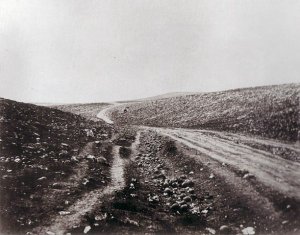
I have been particularly grateful for this psalm this week.  This week has felt like a tremendous “valley of the shadow of death.”  We started the week with the horrible bombing in Boston.  Not only did we lose lives, and were many people horribly injured and maimed, but also something of the innocent joy of that sporting event was taken away.  But the week just kept getting worse.  After powerful testimonies from the Newtown families, the Senate still could not pass legislation around background checks for guns.  I know that gun control is a sensitive political topic, but for many people, the Senate’s not passing this bill felt like an acquiescence to the violence in our country.  Then just a day later, a horrible explosion happened in Texas, killing many.  After the past six months, which have included Hurricane Sandy and Newtown, this week makes our valley of the shadow of death seem more and more barren, and perhaps unending.

Of course that is only our own American valley of the shadow of death.  That valley does not include the hundreds of places around the world where bombings happen every day.  The American valley does not include the places where villages are ravaged by HIV/AIDS, where children are starving, and where violence threatens whole ethnic groups.  Just this week, the night one of the Boston bombers was killed, a bomb went off in Baghdad in a coffee shop, killing 27 people and injuring over 50.  If we really tracked the worldwide and domestic news everyday, we may not feel as though we are just walking in the valley of the shadow of death, but instead our entire world has been exiled to a permanent valley of darkness and death.

But the reason I have been so drawn to the 23rd Psalm this week has not only been because of the poignancy of the valley.  I have also been drawn to this psalm because of the richness of comfort, blessing, and peace in this psalm.  In fact, in some ways, the valley is mentioned in passing to highlight the ways that God cares for us so abundantly.  Frederick Buechner wrote about a worship service that happened immediately after September 11th, in which a speaker said, “At times like these, God is useless.”  Buechner writes, “When I first heard of it, it struck me as appalling, and then it struck me as very brave, and finally it struck me as true.  When horrors happen we can’t use God to make them unhappen any more than we can use a flood of light to put out a fire or Psalm 23 to find our way home in the dark.  All we can do is to draw closer to God and to each other as best we can, the way those stunned New Yorkers did, and to hope that, although God may well be useless when all hell breaks loose, there is nothing that happens, not even hell, where God is not present with us and for us.”[i]

This is why we are all drawn to this piece of scripture.  All that we want to believe about God, all that we hope is true about God, is found here in this brief psalm.  Our longing for words like these is why this psalm is so popular and prominent.  The 23rd Psalm is so well-know that the psalm has been called “an American secular icon,” because even people who do not attend church have come to know this psalm.[ii]  We all want a God who leads us beside still waters, who restores our souls, who takes away all fear, and who comforts us.

I think this is why so many artists and biblical scholars are drawn to this psalm.  Because this psalm captures for so many people not only who we believe God to be, but also who we desire God to be, many have been inspired to rephrase the language of this psalm to capture our imagination in new and fresh ways.  Probably the most familiar is the hymn “The King of Love my Shepherd Is.”  This hymn breathes air into the psalm, describing our God as a God, “whose goodness faileth never; I nothing lack if I am his.”  Just this week I stumbled on an a cappella version of the 23rd Psalm that uses feminine language to refer to God – “She makes me lie down in green meadows; beside the still waters she will lead.”[iii]  For those of us who struggle with the overly masculine language we have about God, this version of the psalm broke open the psalm yet again for me.  All of the things we hear about God in this psalm – one who comforts, cares, and cradles – are all stereotypically feminine qualities.  When God can be both feminine and masculine, then God truly is bigger and more whole.

But the one translation that really grabbed me this week is from the New Jerusalem Bible.  The verse that we typically recall as, “Surely goodness and mercy shall follow me all the days of my life,” in the New Jerusalem Bible is translated as, “kindness and faithful love pursue me every day of my life.”  The “mercy” or “faithful love” we hear translated is the hesed of God in Hebrew – God’s loving-kindness.  This is the kind of overflowing love, loyalty, and lavishness that God shares with God’s people.  In fact, when people show hesed, that loving-kindness is sometimes translated as “godly love.”  But what really grabbed me about this translation is that God’s hesed does not simply follow us in life.  God’s hesed pursues us in life.  God chases after us, actively, even frantically, attempting “to reach us with the gift of life and the resources which sustain life.”[iv]  We hear the strength of this verb because this is the same verb in scripture that is often used to describe what enemies do – they pursue.  So to use the strength of this word to describe what God does to us is to say that God ferociously desires and drives to give us God’s hesed.

Our invitation today is to allow these new images to work on us as we continue to journey with God, even in what feel like valleys of the shadow of death.  Even when we feel like God is useless or that darkness may overwhelm us, God’s love never fails, God’s motherly care is for us, and when we feel most abandoned by God, God is chasing us down to rain God’s hesed upon us.  This is the beauty of our spiritual journey – our words are ever trying to help us understand this God with whom we journey.  Our language will never fully capture God, but each new attempt awakens our journey and invites us into deeper connection.  Our blessing this Eastertide is the myriad voices that help us get just a little closer to God when we need God the most.  Amen.


[ii] J. Clinton McCann, Jr., “Preaching the Psalms: Psalm 23,” Journal for Preachers, vol. 31, no. 2, Lent 2008, 43.

[iv] McCann, 46.

On being an Easter people…

Tags

, , , , ,

Valley_of_the_Shadow_of_DeathThis coming Sunday, the appointed psalm is Psalm 23.  As I have been praying on the texts, that phrase, “the valley of the shadow of death,” has been haunting me.  In some ways, it feels like our country has been in the valley of the shadow of death for quite some time.  After Hurricane Sandy and Newtown last year, multiple deaths by gun violence since Newtown – including two accidental deaths caused by four-year-olds with guns, and now the tragedy in Boston, it feels like we are in a valley of death that we cannot escape.  In fact, on Monday, I almost found that I could no longer watch the coverage about Boston because I could not handle the emotional overload that has been these six months.  The images were just too much to bear.

What is interesting about the texts for this Sunday is that not only do we read the 23rd Psalm, but also we read a text from Revelation 7.  Both of these are regularly read at funerals.  As I sit with these texts this week, all I can think about is death – which is especially frustrating in the midst of Eastertide – a season supposed to be about life.  So what do we make of a Sunday about death, and what feels like a world overshadowed by death, in the midst of Easter?  I suppose in many ways, this is the same paradox we have at every funeral.  At every funeral, a time when we mark someone’s death, the church encourages us to look toward life.  In fact, we decorate the church in white for funerals because burials are Easter celebrations.

Recalling the many times I have redirected mourning families toward life, I took my own advice today and starting looking for signs of life in the midst of this valley of death.  I was amazed at how much I could recall.  Here in New York, the trees are just now starting to bloom, and pops of color continue to surprise and delight me.  Our Vestry just had a retreat this weekend to talk about Evangelism.  The day brought up all sorts of fresh ideas and a commitment to growth.  The hopefulness of our Vestry is nothing like the weight of the valley of the shadow of death.  Even the empty garden bed which will be filled with soil this weekend is a sign of life here at St. Margaret’s.  As our parish children stood in the bed on Sunday, which will only be empty for a few more days, I smiled to think about the convergence of life both in our children and in our produce for the poor.  And even in Boston, there were immediate signs of life – people rushing to help victims, even to their own personal endangerment, strangers holding hands, people carrying victims, and strangers using their own clothes to stop bleeding and death.

I do not know if I can completely erase those words, “the valley of the shadow of death,” and all that it connotes for me this week, but my hope is that I can at least linger equally on the next words, “Thou art with me.”  Perhaps the answer is not that life erases death, but that God is with us in both.  And knowing that God is with us in death and in life helps me better to be an Easter person this week.

Sermon – John 21.1-19, E3, YC, April 14, 2013

Tags

, , , , , ,

There are two layers to our gospel lesson today.  In one layer, there is a lot of movement and action.  We have disciples fishing, a man shouting about where to put nets, Peter leaping out of a boat to swim ashore, breakfast sizzling in a pan over a crackling fire, and Peter and Jesus having this strangely repetitive conversation.  This layer of the text is really distracting.  There is so much happening that by the time we get to Jesus telling Peter to feed his lambs, we forget the part of the story about Peter getting dressed to jump into water.  The frenetic nature of the text leaves us with more questions than answers.  Why is Peter fishing at a time like this?  Why is he naked?  Why do the disciples not recognize Jesus at first?  Why is Jesus cooking breakfast?  Why does Jesus repeat his question to Peter three times?

In truth, I think there is so much activity in our gospel lesson because the disciples are a little frenetic themselves.  They had all settled into certain identities in their lives – many of them were fishermen, many of them had families that they worked with, and all of them had homes where they resided.  Their lives were simple and predictable.  Then this guy came into their lives and their identity and purpose got totally out of balance.  They had no consistent daily routine, they left behind everything they knew, this man they were following was compelling but also completely confusing, and they were being asked to totally change their lives.  And just when they had found the rhythm of managing their unpredictable lives with Jesus, then everything turns over on its head again, and they lose everything – their leader, their purpose, and their identity.  So in an effort to find something to hang on to, the disciples become punchy with action.

We all do this.  I know that I am particularly stressed out when I find myself intently scrubbing something in the house.  I may not be able to solve some problem at work, or I might not be able to fix some relationship that needs mending, but I can have a clean floor.  I might not have responded to the forty-eight emails and the twenty-nine items on my to-do list, but my desk will be cleared of all clutter and looking freshly dusted.  My neurotic behavior is cleaning, but we all have some neurotic behavior.  Some of us need to find a mall to clear our minds of all the stuff going on inside of us.  Somehow finding the perfect dress or pair of shoes takes away our other anxieties.  Others of us get out in the garden and dig our way to peace of mind.  Something about a freshly weeded garden makes us feel like something was accomplished, even if the rest of us is in shambles.  Still others hit the gym.  There is nothing like sweating away anxieties or feeling the burn to take away the other feelings going on inside of us.[i]

What is interesting about all the activity and noise found in our gospel lesson is that there is another layer of this text that is completely quiet.  We start with the disciples silently staring at that Sea of Tiberias.  There is nothing left to say among them, because they have talked this whole resurrection thing to exhaustion.  Then we find the disciples on the boat fishing in the middle of the night.  I do not know the last time you went fishing, but fishing is one of the more quiet, uneventful activities you can do.  Despite the splashing of Peter to swim to Jesus, once they all gather on the beach, no one says a word.  The air is only filled with the quiet lapping of water and the sizzling of a pan over a fire.  The disciples have questions, but no one says anything.  Even the conversation between Jesus and Peter has a quiet tone to the conversation.

In some ways, I think this is where the text is really pointing.  The disciples, who have irritated Jesus to no end, finally fall silent.  No more asking about who shall be first, and nor more asking what Jesus means or who he is.  No more crazy proposals like building booths for Moses, Elijah, and Jesus, and no more insisting that Jesus wash all of their bodies, not just their feet.  No more insisting that they would never betray Jesus.  There is nothing left to say.  And so they stare quietly, they fish in silence, and they answer in hushed voices.

This layer is the most important because this layer marks a shift.  The disciples stop trying to muscle their way to discipleship, and they finally learn to let Jesus take the lead.  They have become so physically, mentally, and spiritually exhausted that they stop trying to control everything, and they simply wait for Jesus to tell them what to do.  This is a critical moment in the disciples’ journey with Christ.

I think many of you know this about me, but I love to dance.  I grew up doing all sorts of dancing, but the most difficult form of dancing I stumbled into was formal partnered dancing – the fox trot, waltz, etc.  In the other forms of dancing I learned, I was responsible for myself, learning the steps, and making sure I knew the rhythm so that the dance looked beautiful.  But in partnered dance, especially as the woman, you have to learn how to follow.  As someone with pretty good rhythm and memory for steps, you have no idea how incredibly frustrating it is to follow a man who does not know what he is doing.  The tendency is to want to use your arms or legs to start guiding the man, or even to whisper the directions.  But the role of the woman is to follow where the man leads – perhaps the only time in a woman’s life that she is forced to do this!  But what I also found in this kind of dancing is that when you have a really good partner, he can make you feel like the most graceful, beautiful woman on the dance floor.  In fact, you stop worrying about the steps and the count, and you start moving with fluidity and ease.  The price for such a feeling is total surrender and trust.  But the payoff is that you find a joy so strong that you will hunt down that partner and beg them to save you a dance.

This is the kind of submission the disciples finally master on that beach.  No more trying to muscle Jesus into the way they want him to behave.  No more trying to talk their way through their relationship with him.  They surrender all they have to him, longing for the clarity that only he can give them.  And when they finally do that, in the quiet of that morning, they finally hear the words of purpose for their lives.  “Follow me,” Jesus says.  They are the same words Jesus said to them at the beginning of their relationship with him.  But now they finally hear.  And now they can finally respond with their whole being.  Jesus’ words are as clear as they can be.  Jesus’ words give their life meaning.  And their spirit is finally in the place where they can hear and respond.  They are truly and thoroughly ready to follow him.

This is what Jesus invites us to do as well.  This morning, as we sit in the sacred place, Jesus invites us to shove those piles off the desks of our minds, to rip out the weeds blocking our hearts, and to drop our armfuls of distractions and to listen to his simple words for us.  The words are there waiting.  The direction is clear.  The peace and comfort of clarity and purpose are ours for the taking.  So when you come to this table for the Eucharistic feast, quietly listening for Jesus’ words for you, you will be able to hear those words, “Follow me,” and do just that when you walk out those church doors.  Amen.


[i] Gary D. Jones, “Pastoral Perspective,” Feasting on the Word, Yr. C, Vol. 2 (Louisville: Westminster John Knox Press, 2009), 420.

Homily – Matthew 10.7-16, George Augustus Selwyn, April 11, 2013

Tags

, , , ,

Today we honor George Augustus Selwyn, bishop of New Zealand and of Lichfield, England, in the mid-to-late 1800s.

Bishop Selwyn was best known for his work in New Zealand.  On his voyage there, he mastered the Maori language and was able to preach in it upon his arrival.  During a ten-year war between the English and the Maoris, he was able to minister to both sides with integrity.  His treatment of the Maori people was so tremendous that the Maoris still make pilgrimages to his grave in England today.

Bishop Selwyn seems to have taken our gospel lesson from Matthew to heart.  The sending out of the twelve is full of action.  They are to go and proclaim the Good News.  They are to cure, raise the dead, heal, and cast out demons.  They are to rely on the kindness of strangers – and brush off those who do not show them kindness.  They are to take nothing – no money, clothes, or staff.  Jesus’ instructions are full of work, but they are also stripped of all the creature comforts that might have enabled the disciples to do the work.  Much like Bishop Selwyn jumped on a ship to New Zealand, to a land whose language and culture he did not know, with obstacles like war to navigate, the disciples too are tasked with dropping everything and jumping into the unfamiliar.

Just recently I had a conversation with a local clergy person about a potential mission partnership.  There were many things about the partnership that intrigued me – but there were also many things that made me wonder if this was “the one.”  There were aspects of the mission relationship that made me think that this would not be an “easy relationship.”  In the middle of confessing my concerns to the other priest, I had to stop myself, and said, “You know what – this trip makes me a little uncomfortable – and that’s how I know we’re heading in the right direction.”

What I have learned, Bishop Selwyn knew, and the disciples found, is that doing Jesus’ work is not easy.  Jesus promises that the work will not be easy in the gospel lesson today.  But inherent in Jesus’ instructions are also promises of deep joy.  There will be people who welcome the disciples and they will develop deep, meaningful, profound ministries that they will be equipped to do.  They will be cared for, even when their natural tendency will be to care for themselves.  When we can trust Jesus to do all that he says he will do, then we can have incredible experiences with God’s people.  The adventure awaits!  Amen.