• About

Seeking and Serving

~ seek and serve Christ in all persons

Seeking and Serving

Tag Archives: baptism

Homily – Luke 10:25-37, P10, YC, July 13, 2019

17 Wednesday Jul 2019

Posted by jandrewsweckerly in Sermons, Uncategorized

≈ Leave a comment

Tags

baptism, baptismal covenant, covenant, dignity, faith, God, Good Samaritan, Jesus, kindness, Mr. Rogers, neighbor, sacred, Samaritan, Sermon, unworthy

Last Sunday, a group of parishioners gathered to watch Won’t You Be My Neighbor, the documentary about Fred Rogers.  There were countless things I could tell you about this film, but one thing that really grabbed my attention was toward the end.  The film documented a criticism of Mr. Rogers as raising up a generation of people who feel and act entitled.  You see, one of the primary lessons from Mr. Rogers is he loves each individual, just as they are.  No changes are necessary; no fault is too big.  Mr. Rogers loves you just as you are.  You can hear the words of God in Mr. Rogers’ words – God too loves us unconditionally, and certainly loves us better than any human ever could.  However, Mr. Rogers’ critics would argue if everyone is loved just as they are, then surely they do not need to improve, or earn respect, or work hard.  But the film asserts something quite different.  The film asserts without being recipients of unconditional love, individuals cannot be givers of unconditional love.  In other words, to respect the dignity of every human being, one must first learn how sacred one’s own dignity is – one must be shown how she or he is a person with dignity to be respected in order to know how to respect the dignity of others.

That sense of each person having profound, sacred dignity is one of the main lessons of our gospel today.  The Good Samaritan is one of those stories that is so widely known all I need to do is say, “the Good Samaritan,” and we likely already know the story.  We might automatically recall, “Oh, that’s the story Jesus uses to tell us to be like the Good Samaritan – to be kind to others.”  In one sense, our recollection would be true – at the heart of Jesus’ story is a message to be kind to all.  But what that simple summary misses is the finer details to this story.

You see, those two people who separately pass the victim along the road, are a priest and a Levite.  These two people are not just people of faith – they are keepers of the faith.  They know the laws better than most people of faith.  You may have heard over the years the logic that priests or Levites could not risk being defiled by touching the body of the victim, and so that is why they went around the victim.  But the truth is, their avoidance had nothing to do with defilement – they were heading away from the temple and therefore were not in need of ritual purity, and any good priest or Levite knows they were expected to check on this victim; should he be dead, they should help bury him, and should he be alive, they should tend him.[i]  Basically, these are good, trained people of faith, not fulfilling their duty to love their neighbor as themselves.

But perhaps even more significant is the identity of the Samaritan.  The story does not say, a priest and Levite passed, but another faithful Jew came to the victim’s aid.  The story says, a priest and Levite passed, but a man whose people are mortal enemies of people of faith – who has persecuted, defiled, and subjugated people of faith – is the one who helps.  Saying “The Good Samaritan,” is like saying, “The Good Murderer.”[ii]  That this typically hated man is the one who shows mercy, kindness, and love is shocking.  The hearers of Jesus’ story are shocked, and our ears need to be similarly shocked.  Asking us to respect the dignity of every human being is already a monumental task; respecting the dignity of every human being is inconvenient, is humbling, and involves a willingness to be wrong about others.  Respecting the dignity of every human being means being willing to see how the best of the faithful fail at kindness, and how sometimes our worst enemies are better people of faith than we are.

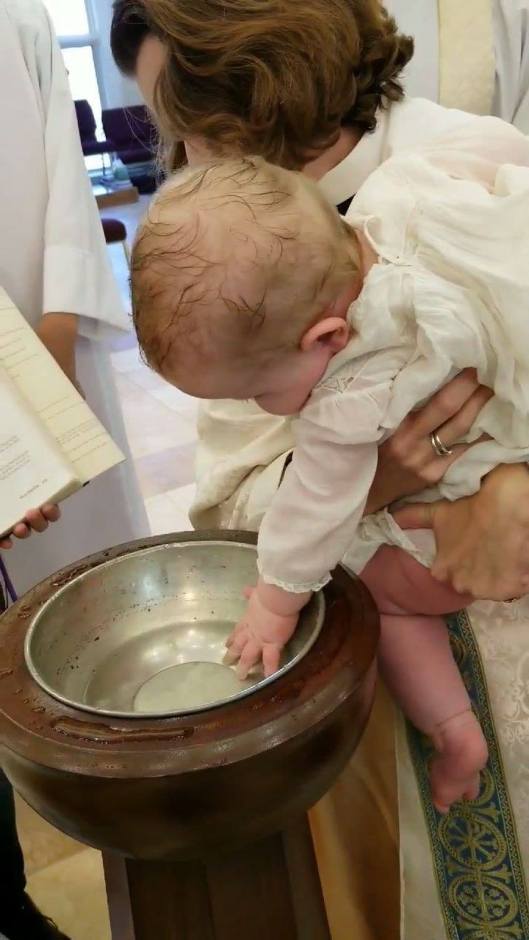
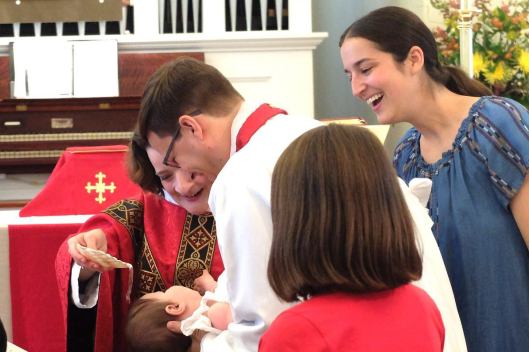
Today we are baptizing a child of God.  Her parents, godmothers, and our community will make promises today – to raise her in the community of faith, to show her to love and respect, to fight for justice and peace, to share the word of God, and to repent when she messes up.  We say those words today as we reaffirm our own baptismal covenants; but sometimes we forget how revolutionary the covenant is.  We are agreeing to teach Selah to live a revolutionary life.  When we say we will teach baby Selah to respect the dignity of every human being, we are saying we will teach her the hard work being inconvenienced and humbled in order to care for others.  When we say we will teach her to love her neighbor as herself, we are saying we will teach her that even her greatest enemies are worthy of love.  When we say we will teach her to repent when she sins, we are saying we will teach her to be willing to admit when people who we have deemed unworthy of love and care show us what true kindness really looks like.

Today, when we hear Christ’s words to “go and do likewise,” we can be encouraged that Jesus empowers us to make some promises.  Today we look at Selah’s precious, innocent face, and we promise to walk with her as she discovers how hard this work of being a faithful follower of Christ really is.  Today, we promise to confess to Selah the times when we have failed to love our neighbors as ourselves.  Today, we promise when those we despise, those who hurt us, those we cast out because they are not like us, those we can no longer see humanity in ask us, “Won’t you be my neighbor,” we will say with Selah, “Yes.  You are my neighbor too.”  Amen.

[i] Amy-Jill Levine, Short Stories by Jesus (New York:  Harper One, 2014), 99-102.

[ii] Levine, 105.

On Neighbors, Kindness, and Baptism…

10 Wednesday Jul 2019

Posted by jandrewsweckerly in Uncategorized

≈ Leave a comment

Tags

baptism, Christian, church, community, covenant, dignity, Episcopal Church, God, identity, Jesus, justice, kind, kindness, love, neighbor, welcome

wont-you-by-my-neighbor

Photo credit:  https://www.92y.org/event/won-t-you-be-my-neighbor

This weekend our parish’s Faith & Film offering was Won’t You Be my Neighbor, the documentary about Fred Rogers.  My daughter had never seen a documentary before, and I was a bit anxious about her attending for fear she would be bored or the film would be too advanced for her.  Ultimately, it was a risk I was willing to take because although though I knew she had never watched Mr. Rogers, I also knew she would appreciate his message.

But the true test came on the drive home.  As we were riding along, my daughter said, “You know what, Mom?  I think if Mr. Rogers were alive today, he would be a part of WMBGkind.”  Right then, I knew that she got it – that she had been paying attention to the witness of Mr. Rogers and his ministry of teaching children about the dignity of every human being.  That is what kindness is really all about – honoring and respecting the dignity of other human beings – no matter their age, race, ethnicity, gender, sexual identity, socioeconomic status, ability, or even their own ability to show kindness in return.

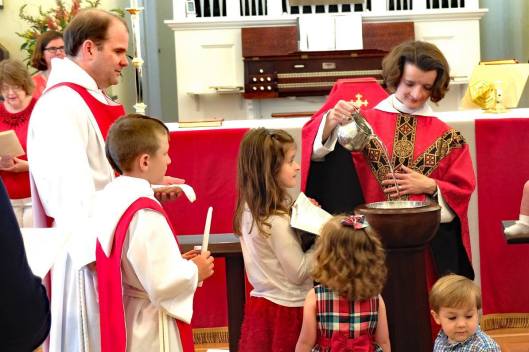
This Sunday, we are baptizing a baby into the household of God.  As part of that ritual, we will make promises about our own spiritual journey.  We will promise to gather regularly in Christian community, breaking bread and praying together; to resist evil, and repent when we fail; to proclaim the Word of God in word and deed; to seek and serve Christ, loving neighbors as ourselves; and to strive for justice and peace, respecting the dignity of every human being.  We promise to do what Christ asked us to do:  love God, love your neighbor, love yourself.

I love that my daughter is affirming her baptismal identity at Hickory Neck – whether she sees Christian witness through Mr. Rogers or through her Sunday School teachers.  I love that our younger children and older youth are learning how to live into their baptismal identity – whether through nursery care providers or youth group leaders.  And I love that our adults are still learning to live into their baptismal identities – through preaching, teaching, and our children’s witness.  At Hickory Neck, we are working across generations to keep loving God, loving our neighbors, and loving ourselves.  If you are in need of a community to help you claim that same identity and purpose, know that you are always welcome here – won’t you be our neighbor?

46040735_2084113391644910_120194659778560_o

Photo credit:  Hickory Neck Episcopal Church; permission to use required

On Being an American and a Christian…

03 Wednesday Jul 2019

Posted by jandrewsweckerly in Uncategorized

≈ 3 Comments

Tags

American, asylum, baptism, children, Christian, complicated, Detention, diverse, faith, God, gospel, immigration, Jesus, politics

6d4151a40a463e26db746895528eb216

Photo credit:  https://www.pinterest.com/pin/439734351090290865/

Last week, several of the interfaith clergy in our community published a litany for children in detention centers.  They requested clergy leaders read the litany in their homes of worship – not in a special vigil, but in the heart of where weekly prayer and formation take place.  The litany was beautiful, and spoke to much of my own sense of despair about our treatment of children.  But I found myself in a quandary.  You see, my parish is a diverse one.  We pride ourselves on being Christians of varying political opinions who respect one another enough to honor our political differences by kneeling as equals at the Lord’s table.  In order to maintain that sense of respect, I am very careful about how I talk about current events.  My goal is always to preach the gospel of Jesus Christ, with the charge that we should engage in politics with the Gospel always in the forefront.

But the issue of children in detention centers tugs at me at two levels.  On the one hand, this is very much an issue of politics – of how we manage the flow of immigrants and those seeking asylum into our country.  I know our parishioners are of a divided mind on this issue – as is most of the country.  The issue of our borders is vastly layered – were it not so, there would be clear, easy answers to very difficult questions.  In addition to being a political, economical, sociological issue, this is a spiritual one as well.  One’s sense of gratitude for our country’s blessings, one’s baptismal covenant to respect the dignity of every human being, and one’s understanding of Christ’s command to love God and love neighbor collide with the realities of limited resources, stretched budgets, and funding priorities.

On the other hand, these are children.  These are eight-year-olds caring for unrelated infants.  These are nursing teen mothers with no diapers or place to lay their heads.  These are toddlers who have no way to wash their hands or clean their soiled clothing.  I look at my own children, who have every comfort they could ever need, and when I imagine them soiled, hungry, deprived of sleep, and so afraid that the color has drained from their faces, my heart shatters.  I know this issue is truly complicated, and I know that philosophically we as a country need to decide how we will manage the treatment of our neighbors.  But when I am hesitant to pray for the welfare of children in detention because it is politically complicated, I realize I am failing to live the Gospel life.

I cannot say I will ever be able to pray the litany presented by my interfaith brothers and sisters.  Though it is beautiful, it is also politically motivated.  But what I can tell you is, as a pastor and baptized child of God, I am praying for those children, praying for their mothers and fathers, and praying for our own souls as we figure out how to reckon politics and human dignity – how to be Americans and Christians.  Given our country’s history, it would seem those two things fit together easily.  But to be a good American and to be a good Christian both take intentionality, discernment, and prayer.  May God bless us all as we seek to harmonize the two.

On Kindness and Holy Healing…

06 Wednesday Feb 2019

Posted by jandrewsweckerly in Uncategorized

≈ Leave a comment

Tags

baptism, body, church, community, faith, God, healing, holy, Jesus, kindness, Mayor Tait, symptom, wholeness, Williamsburg

KINDlogo_final-01This past Friday, our LEAD Greater Williamsburg Class launched our kindness initiative.  About 200 people from Williamsburg, James City County, and York County gathered to learn how they could commit to kindness.  One of the highlights was keynote speaker former Mayor Tom Tait.  Mayor Tait served for many years on City Council in Anaheim, California.  He described his work with City Council as a game of “Whack-a-Mole,” where they were constantly trying to snuff out “symptoms,” whether they be drug abuse, homelessness, or violence.  What he slowly came to realize was this model of treating the symptoms was not getting to the root of the problem – the fact that the whole body was sick.  And so, he ran for Mayor on a campaign of kindness.  He believed kindness would transform the entire body, or system, in such a way that the symptoms would go away – because the entire body would learn to operate in a healthier way.

After the event, as I spoke with clergy about the theology of kindness, we came to a few conclusions.  First, we agreed that embodying kindness is one way that people of faith can embody God – the same God that is regularly described as showing loving-kindness, or hesed, in Hebrew.  Our acts of kindness help us to show forth and experience God in our community.  But as we talked about Mayor Tait’s analogy, we realized that showing kindness gets to the root of Jesus’ work.  Jesus was often seen healing what may be seen as symptoms – leprosy, blindness, hemorrhaging.  But what Jesus was really doing was healing entire systems.  Each healed person was restored to wholeness in the community, with no barriers to full membership in the community.  Christ was concerned about the presenting symptoms and suffering of individuals – but what his work was really about was restoring the entire body to wholeness.

The kindness campaign #WMBGkind is an incredible movement because it seeks to do just the same thing – transform our entire community from one that can be divided or cynical, to being a community transformed to wholeness through kindness.  As members of the faith community of Greater Williamsburg, we have an opportunity to be leaders in that transformative work:  because we were commissioned through our baptism to be agents of healing and wholeness, because we can be a powerful witness of God’s love through our kindness, and because, as members of the “body” of our community, we will be transformed too.  This Sunday at Hickory Neck, you will be invited into this commitment to kindness – or as we as persons of faith would call it, into doing acts consistent with our baptismal identity.  I look forward to seeing you then, as we work toward transforming our community, one act of kindness at a time!

Homily – Ruth 3.1-5, 4.13-17, P27, YB, November 11, 2018

14 Wednesday Nov 2018

Posted by jandrewsweckerly in Sermons, Uncategorized

≈ Leave a comment

Tags

acceptance, Armistice Day, baptism, Boaz, change, covenant, dignity, God, gun violence, honor, life, Naomi, respect, Ruth, sanctity, Sermon, veterans

My intention today had been to talk about Emersyn, whose baptism we will celebrate today, and the gift that she is giving us through her baptism.  When we baptize someone into the family of faith, we also take time to remember our own baptismal covenant.  We remember the promises we make about how we will live our lives, promises we just renewed last week at another baptism.  One of our promises is to respect the dignity of every human being – to respect human life.

We respect human life because we learn to do so in Holy Scripture.  Today, Ruth, Naomi, and Boaz teach us how to respect life.  If you remember, Naomi is a widow who has not only lost her husband and her two sons, but who is left shepherding two foreign daughters-in-law; she is so shattered, she asks people to call her Mara, which means bitterness, instead of Naomi, which means pleasantness.  Ruth, one of those daughters-in-law, is equally bereft; having married into a foreign family, widowed herself, she pledges allegiance to a people who point out her foreign identity at every turn – in fact, she is regularly called, “Ruth, the Moabite from Moab” – or in common language, “Ruth, the foreigner from a foreign land (a land the people hated, by the way).  Boaz is an upright man, put into a precarious situation by Naomi, who sends Ruth to lay at his feet so that he might serve as their redeemer.  But despite the fact life is hard, life brings sorrow, and life treats us like a hated foreigner, Ruth, Naomi, and Boaz respect the dignity of each other.  They respect life.

We need people like Emersyn, Ruth, Naomi, and Boaz because we have been doing a pretty horrible job of respecting life lately.  In just the past two weeks, we have had four “soft target” attacks in our country.  “Soft targets” are attacks that happen in simple, everyday life – where people are having a cup of coffee, celebrating with friends over food and drink, picking up groceries, or worshipping in their house of worship.  In the last two weeks, 27 people were slain in soft target areas:  Two shoppers were gunned down in a Kroger parking lot in Kentucky; Eleven people were gunned down while worshiping in a synagogue in Pittsburgh; Two women were gunned down in a yoga studio in Florida; and twelve people were gunned down in a bar in California.[i]  We can pray for the victims, and attempt to find motives behind shootings, and even bemoan the mental health system.  But until we are willing to make concrete changes, we as Americans disrespect life.  We as Christians fail to respect the dignity of every human being when we do nothing to change our culture of acceptance around gun violence.

Our Veterans helped us understand this failure many years ago.  One-hundred years ago, this day was marked not as Veterans Day, but as Armistice Day – the day we were able to stop a war, to stop aggression, to stop the denigration of life on both sides.  Armistice Day was a day to honor the end of World War I, but perhaps even more powerfully, Armistice Day was a day to honor the dignity of every human being.  On that day, after 8.5 million soldiers had been killed, 100,000 of which were American, you could see the sheer joy in people’s faces as they flooded the streets, realizing death would be no more – that human life would be honored once more.[ii]

Today we have the opportunity to celebrate too.  We have the opportunity to honor and respect the sanctity of life – the life of beautiful baby Emersyn, the lives of our Veterans, and the lives of those shattered by unrestrained gun violence.  The question is whether we will accept the invitation.  Scholar Cameron Howard says in the book of Ruth, we do not experience God in the story as some divine physical presence, as a booming voice from heaven, or as a visible mover of events; instead, we experience God through the characters in the book – God is revealed to the world through the actions of the characters of Ruth, Naomi, and Boaz.[iii]  The world is not that much different today.  The world needs to see God through us too.  Emersyn needs to see God through us.  Our community, state, and nation need to see God through us.  The growing population of those scarred by gun violence need to see God through us.  The only question remaining is whether we will say “yes,” to the invitation, or at least, “I will with God’s help.”  I promise God’s help is waiting for you when decide to respect the dignity of every human being through your actions, revealing God’s presence in the world.  Amen.

[i] Eliott C. McLaughlin, “This is the 4th ‘soft target’ Attack in 2 Weeks,” November 8, 2018, as found at https://www.cnn.com/2018/11/08/us/soft-targets-thousand-oaks-bar-shooting/index.html on November 9, 2018.

[ii] Alexis Clark, “In Photos Unpublished for 100 Years, the Joy of War’s End on Armistice Day,” The New York Times, November 9, 2018, as found at https://www.nytimes.com/2018/11/09/world/europe/armistice-day-100th-anniversary-photos.html on November 10, 2018.

[iii] Cameron B.R. Howard, “Commentary on Ruth 3:1-5; 4:13-17,” November 11, 2018, as found at http://www.workingpreacher.org/preaching.aspx?commentary_id=3890 on November 8, 2018.


Sermon – Ephesians 4.25-5.2, P14, YB, August 12, 2018

22 Wednesday Aug 2018

Posted by jandrewsweckerly in Sermons, Uncategorized

≈ Leave a comment

Tags

baptism, children, Christ, Christian, Ephesians, faith, formation, God, identity, imitators, improve, love, offering, Paul, Sermon, systems, vacation bible school

I used to LOVE Vacation Bible School when I was growing up.  As a preacher’s kid, of course that meant I went to VBS at my dad’s church.  But I loved Vacation Bible School more than that.  I would sign up for VBS at the Baptist Church, the Presbyterian Church, and the Lutheran Church, and would beg, “Can I go? Can I go?”  I have always joked that what I really like about VBS was the crafts.  But as I watched our own children in Vacation Bible School this week at Hickory Neck, I began to wonder if my crafts assessment was entirely true.  I liked the songs too.  And the snacks.  And the storytelling.  I liked the instant comradery and the games and laughter.  I liked the feeling of being loved by people who did not even know me.  VBS was the first – and probably only since I did not go to church with many Baptists – place where I was asked if I had accepted Jesus as my Lord and Savior; and if I had not, I could ask Jesus to come to me in that moment.  My eight-year-old self was not sure what the pastor meant, but I did know a strange warming of my heart that night.

On those hot, humid summer nights, with the cicadas chirping and the lightning bugs flashing, VBS accomplished for me what I talked about with the Baptismal family last weekend.  When we prepare a child and their family for baptism, we talk about how their primary role is to raise the child up in the faith – get them to church, talk about Jesus at home, pray together, and read the Bible stories.  The parents and godparents are not flying solo with the task of raising the child in the faith – we as a community pledged just last week that we would be active in raising Dallas up in the faith.

As I watched our children at Vacation Bible School this past week, I slowly began to realize that we were doing just that – raising children up in the faith.  We were teaching them to pray, to sing, to learn, to tactilely use their bodies to engage Jesus.  And sure, there were games and snacks and laughter and silliness.  But there were also children who walked over to their neighbor’s houses and delivered VBS registration forms, inviting them into Jesus’ love too.  There were children who remembered their neighbors with pets and tentatively rang doorbells to deliver pet treats they had made with their own hands.  There were children whose joyous songs in the Public Library later that day brought hope to a man who had lost hope.  When I was a child, I was lured by crafts and snacks and potato sack races; but I left with love, and hope, and mercy.  I left knowing deep in my soul who Jesus was and what being a Christian meant.

This week I have begun to wonder if we might need an adult version of VBS; if we might need a week of evenings where we just spend some time with Jesus among the community of the faithful.  Bishop Curry would call that a revival, and Episcopal Churches are doing revivals all around the country.  I am not sure what we call that week matters, but I am beginning to wonder if we need those summer nights because we have fallen away from the practices Paul articulates today in his epistle to the Ephesians.  Paul is quite clear.  If we are going to claim the moniker of Christian, then our lives need to be signposts.  We need to speak truth to one another.  We need to not let anger rule our lives.  We need to make new ways for thieves and sinners to not only repent, but be fully restored into the world as those who not only contribute their labor, but who are freed to give their money to the poor.  We need to take on kindness, tenderness, forgiveness.  We need to be imitators of God, beloved children of God, living in love.

We hear Paul’s words today and say to ourselves, “Yes, yes, the world needs more of that.”  But what we really mean is, “Yes, that lady two rows over needs to start doing that,” or “Yes, that guy on my committee needs to be that.”  But Paul is not talking to our neighbor.  He is talking to us.  He is talking each person in this room saying, “You…I need you to live in the life of love, to be an imitator of God, to be…to be a Christian.”  And that is where the squirming begins.  I hear Paul’s words about not letting the sun go down on your anger and I can tell you there have been many a night when I was just not done with my anger – I needed to let my anger burn off before I could speak a word of forgiveness or, more importantly, a word or apology.  I hear Paul’s words about thieves and I am not worried about thieves being gainfully employed so they can make charitable contributions – I need them to punished for what they took from me.  I hear Paul’s words telling me to imitate God and I am incredulous that I could ever achieve such holiness – I need to worry about all those other people who are not imitating God towards me!

This week, I attended a conference called the Global Leadership Summit.  Founded over 25 years ago, the conference is for all people, regardless of industry or position at work or home, looking to hone their leadership skills, to learn new techniques, and to refresh old learnings.  The Conference is held in Chicago, but through technology is live broadcasted all over the world, even to Williamsburg.  One of the things I took from the Summit was that my leadership improvement work was primarily about improving myself.  Craig Groeschel reminded us, “When the leader gets better, everyone gets better.”  His message is the same message we teach congregations and families through family systems work.  The only person you can improve in a system is yourself – even though you know for certain your brother Bob is the real problem.  System experts live by this understanding though because they have witnessed time and again when one person in the system gets better, he or she creates a ripple in the system – and almost magically, everyone else starts getting better.

The reason why we send our children to VBS or Sunday School or Children’s Chapel is because we want them to know, and love, and embody Christ.  We want them to be imitators of God, beloved children, who live in love, as Christ loved us.  But what we sometimes forget in helping our children grow in Christ is that we adults need to grow in Christ too – to become those imitators of God, beloved children, who live in love, as Christ loved us.  We like to bemoan the state of the world today – to look at how we are so divided and cannot seem to come together and we want to just give up on the world, or worse yet, we want to bury our heads in the sand and not come back up until things magically get better.  But what Paul says to us today is not to worry about everyone else.  Start working on yourself.  Now whether that means you need to go to a Leadership Summit, or join a Bible Study, or commit to coming to Church regularly, or maybe agree to help with VBS so you can absorb some of that joyful goodness – do something for your faith formation today.  Systems work teaches us that the only person we can change in a dysfunctional system is ourselves.  Paul looking at Ephesians or the United States in 2018 would same the same – work on yourself, imitate God, live in love, make your life like Christ’s – or as Paul says, “a fragrant offering and sacrifice to God.”

I know that Episcopalians are pretty divided about the use of incense.  I have always loved incense.  The parish I served in Alexandria used incense every Sunday.  I loved how the scent lingered in my hair and on my clothes after church.  Sometimes, I would bring my alb home, and when I opened the bag, the fragrance of incense wafted into the room.  Years later, on the occasions my other parishes used incense, I found the scent had a calming effect on my body.  That fragrance was my physical, tangible way of remembering that I was in the presence of God.

When Paul invites us to be a fragrant offering, he is inviting us to be that tangible reminder of God that lingers behind.  When we respect the dignity of every human being, our Christian fragrant offering lingers behind.  When we are kind, tenderhearted, and forgiving, our fragrant offering lingers behind.  When we seek to imitate God in our lives, even as others see us fail and try again and again, our fragrant offering lingers behind.  I am not saying our work on ourselves will be perfect right away – or even ever help us achieve that true fragrant offering.  But what Paul encourages us to do is try.  To put ourselves in places where we can grow in faith and love and mercy so that we can become those fragrant offerings that linger with others.  And Paul knows we can do that work because God is with us to enable us.  Our invitation today is to accept the challenge:  to not leave behind the foul odors of anger, judgment, and malice, but through our baptismal-life striving through our faithful work on ourselves, to leave behind the fragrant scent of God.  What happens after that is God’s work.  Amen.

On Raising Kids in the Faith…

01 Wednesday Aug 2018

Posted by jandrewsweckerly in Uncategorized

≈ Leave a comment

Tags

baptism, children, church, faith, formation, God, kids, questions, scripture, teach, teaching, vacation bible school

kids_SS

Photo credit:  http://livingwaterlutheran.us/

Last week, as we were driving to summer day-camp, my eight-year old was mid-stream with a story from the backseat when she abruptly jumped to another story she remembered.  Used to the constant chatter from my little ones, I barely noticed, but she exclaimed, “Oh my goodness!  I’m just like Mark!”  “What?” I asked, having no idea who this Mark was and what he had to do with either of her stories.  “You know, like Mark from the Bible, when he interrupts one story with another one.  Ha!”

As I struggled to stay focused on driving, my mouth fell open.  I was stunned.  You see, several weeks ago, I preached a sermon about Mark, explaining his “sandwiching technique,” – basically interrupting the telling of a story with another story, only to return to the original story.  You can read here about why he utilizes this literary technique.  I was shocked to know that my daughter actually remembered that detail from a sermon; honestly, I was a little surprised that she was listening at all, let alone remembering anything I said.  In my shock, I managed to stammer out, “Oh, you remember that?”  “Yeah.  Everyone thinks I don’t listen in church because I’m doing other things.  But I listen.”

Now I don’t expect children of all ages to grasp literary devices of Gospel writers, but what that conversation reminded me of is how often children are listening, and especially listening to what we have to say about God.  Many parents I talk to often worry about how to help their children learn about God, feeling a bit inadequate themselves for such a daunting task.  The advice I give them is simple:  bring them to church.  Let them experience as much of the liturgies as they can handle.  Let them go to Children’s Chapel and Sunday School as much as you can.  And when things like Vacation Bible School come up, as they do next week at Hickory Neck, take them.  The songs, the stories, the dialogue will slowly seep in, and the questions will surely pop up in the backseat of a car, at the dinner table, or before bed.  And if you are not sure about the answers, don’t worry.  You can always use the question as a “wondering moment,” asking questions and leaving things open for their imaginations (and the Holy Spirit!).

This Sunday we will baptize a baby at Hickory Neck, and his parents, godparents, and the parish will pledge to do the same – see that the child is raised up in the church.  We won’t have all the answers, and we may even stumble through trying to explain our faith (I could tell you countless stories about my own bumbling).  But in the end, each child’s journey feeds and enriches the journey of each of us.  Their questions inspire the adults to get into church too – to be steeped in the liturgy, to study scripture, to engage in conversation, to reflect on the presence of God in our lives.  The Church offers that tremendous gift to us every week.  Our invitation is to get ourselves there.

33076825_1843825552340363_5100443877848907776_o

Photo credit:  John Rothnie (permission required for reuse)

On Holiness and Heroes…

27 Wednesday Jun 2018

Posted by jandrewsweckerly in Uncategorized

≈ Leave a comment

Tags

baptism, Christ, discern, disciple, Episcopalian, ethics, fantasy, foundational, God, identity, Jesus, morals, purpose, superheroes

Wonder Woman

Photo credit:  https://www.themarysue.com/no-boys-allowed/

This Sunday we begin our summer film series at Hickory Neck called “Faith and Film.”  When I announced to our parish that this year’s theme would be superheroes, I got some raised eyebrows.  My suspicion is that for those of our parish who have not already blocked out the next five Sunday evenings, their raised eyebrows are because superhero movies may seem frivolous, superficial, or even violent.  On the surface, I can understand the suspicions.  For a long time, I though superhero films dabbled a little too much in escapism and fantasy.  And there is certainly some of that component to the films – who doesn’t enjoy what filmmakers can do with computer graphics these days?!

But at the heart of these films is something much more significant.  Each film seems to asks deep, defining questions.  What kind of person are you going to be?  What morals or ethics will rule your life?   What things are of ultimate significance in your life?  What responsibility do you have for the world and people around you?  These questions are not frivolous questions.  When someone dons a Captain America hat or a Wonder Woman shirt, they are not just celebrating a fun, fictional hero – they are also celebrating a moral way of life.

I cannot imagine anything more relevant to a disciple of Jesus than discerning and making decisions about your life that reflect your morals and ethics.  As Episcopalians, we look to our baptismal covenant for that definition.  It defines five core elements:  1) continuing in the apostles’ teaching and fellowship, the breaking of the bread, and the prayers, 2) resisting evil, and, whenever we fall into sin, repenting and returning to the Lord, 3) proclaiming by word and example the Good News of God in Christ, 4) seeking and serving Christ in all persons, loving our neighbor as ourselves, and 5) striving for justice and peace among all people, and respecting the dignity of every human being.[i]

These days, as our current political climate challenges us on more and more specific issues, I cannot imagine a better topic than to talk about what defines us and our behavior, and then recommitting to that identity and purpose.  The good news is that if you are able to make it to all five movies, the following Sunday (August 5), we will be renewing our baptismal covenants as we baptize a child of God – an event where we all commit to being superheroes in the life of Christ.  I hope you will join us for this fun, sometimes frivolous, but mostly foundational journey.

[i] Book of Common Prayer, 304-304.

Homily – Acts 2.1-21, Pentecost, YB, May 20, 2018

23 Wednesday May 2018

Posted by jandrewsweckerly in Sermons, Uncategorized

≈ Leave a comment

Tags

baptism, baptismal covenant, cacophony, chaos, church, community, God, Jesus, languages, love, Pentecost, Sermon

33092215_1843823495673902_5618488268858327040_o

Photo credit:  John Rothnie (permission to reuse required)

I have been looking forward to this baptism for months.  Olive is one of four babies born at Hickory Neck within a month of each other, and one of five within a five-month period.  Not only did I enjoy watching Olive grow in her mom’s belly, I knew how fun welcoming her to the community would be, and especially how special her baptism would be.  So when the Bauer Family finally settled on Pentecost, I was thrilled – baptizing a baby on feast day adds excitement to an already festive day.

But as the liturgy planning staff met about a month ago, I realized we may have made a huge mistake.  We were talking about the needs for today, and remembered we needed to recruit all our foreign language speakers because Pentecost is the one feast of the year where we really try to simulate the experience of the historically significant day in the life of the faith.  And as we were talking about rotas, translations, and participants, a sudden sense of dread hit me.  “Um, Charlie?” I said.  “Are you sure you want to baptize Olive on Pentecost?  I mean, I love Pentecost, but, especially for strangers to our community, Pentecost is a little weird.  Do you want us to just skip the whole languages part?”  To his credit, Charlie didn’t hesitate.  “What better day to baptize?!?” he said, as though my question were silly.

I have been encouraged by Charlie’s enthusiasm, but the more I thought about his response, the more I questioned his logic.  Don’t get me wrong – I love what we do at Pentecost.  Pentecost is one of the few days of the liturgical year that our scripture really comes to life.  Hearing the cacophony of languages helps you to really imagine yourself there.  But this is the kind of service that I would also say to first-time visitor, “Just so you know, we don’t always do this!”  Because, although I love the cacophony, I wouldn’t want anyone to think today is the norm – that we always break into tongues in the service or that we always like to shock your senses.  Surely if we were going to baptize Olive, we should find a tamer way to welcome her to the community, and not freak out her family and friends from all the ends of the country.

We do this all the time with Church.  If we get the nerve up to ask a friend to Church, and they take us up on the offer, we want them to experience the best of Hickory Neck:  a welcoming environment, beautiful liturgy, a sense of belonging, and a deep connection to the immanent and transcendent God.  But just like when you introduce a new romantic interest to your family, you don’t have them meet everyone in the family at the beginning.  You save crazy Uncle Joe until at least the second or third Christmas, when you know your boy or girlfriend is already in love with you enough to make allowances for the crazy in your family.  The same is true for church – we would much rather you see the beauty of Hickory Neck on a regular Sunday or even on a day like Easter.  There is no need for us to show you some of the really weird parts of our faith, like Pentecost, until you have at least been here for a while.

So why was Charlie so enthusiastic about bringing his extended family to celebrate baptism on this one, crazy, bizarre day in the life of the church?  Was he not thinking this through?  Or was he secretly hoping to ensure his family never comes back?  I started working through why this might be the perfect day for a baptism, thinking through what we learn about the church and membership within.  First, we learn the power of the gospel, of the good news of God in Christ, to reach all peoples, no matter who they are.  Although practically speaking, today’s multilingual reading sounds jarring, what we know about this piece of scripture is that despite the din of noise, everyone heard the good news in their own language.  The gospel is not limited to one group of people or to one tribe or nation; the gospel speak truth to all.  Second, we learn that Jesus’ story is not just for us – Jesus’ story is for all.  Up until this point in our story, Jesus has been keeping his resurrection and ascension to a limited group of people.  But today, that norm implodes.  Jesus’ story is no longer for those nearest and dearest to Jesus – Jesus’ story is for everyone.  Third, we are reminded of our commission from Jesus – to go out into all the world, sharing the good news of God in Christ.  Not just the English-speaking places, not just the places where people look and act like us, not just the places that make us comfortable.  And finally, Pentecost affirms the ways in which God loves us, no matter what.  No matter how loud, crazy, or chaotic our lives become, God is with us, breaking through the din of noise we create and making that noise holy.

Perhaps instead of finding the most proper, polished day to baptize a child of God, today may be the perfect day to teach us all what the life of faith is about.  We all know that when our romantic interest or dear friend finally meets Crazy Uncle Joe, or finally sees us when we are sick or not looking our best, or finally realizes we have some pretty awful flaws, and LOVES US ANYWAY – those are the people we want to keep around.  The same is true for those new to the church or those being initiated into the community of faith – we want you to see us on our craziest days so that you know, no matter what God loves you anyway.  God sees your craziness, your chaos, those parts of yourself that you hide from others, and God not only loves you, God commissions you and makes a way you share that love to the ends of the earth.

That is what we affirm today in our baptismal covenant.  Given the promise of unconditional love from God, we promise in return to live a life in accordance with that unconditional love.  To seek and serve all persons, to strive for justice, to respect the dignity of every human being, to proclaim by word and example the good news of God in Christ, to resist evil and repent, and to keep coming back to the community, breaking bread and joining in the prayers.  The chaos of today, the beauty of baptism today, the reminder of God’s love today are all meant to build us up so that we can get back out into the world.  What better day than today to baptize?!?  Amen.

On Being Called by Name…

14 Wednesday Mar 2018

Posted by jandrewsweckerly in Uncategorized

≈ Leave a comment

Tags

affirmed, baptism, call, church, Episcopal, God, identity, known, loved, name, nickname, pastor, priest, relatedness, role, tension

nametag

Photo credit:  blog.sweetcareersconsulting.com/2015/10/what-name-should-you-use-on-linkedin.html

In my line of work, my female colleagues are widely divided on what we should be called.  You see, for years in the Episcopal Church, the male priests were “Father so-and-so.”  In formal writing, it was “the Rev. so-and-so.”  But in the Episcopal Church, priests are not called “Rev. so-and-so” because the word reverend is an adjective, not a noun, and most Episcopalians cannot stand by grammatical errors.  Episcopalians also do not often use “Pastor so-and-so,” as it is considered too protestant.  So, that leaves Episcopalians in a bit of mess with titles for female priests.  Many have taken to calling women “Mother so-and-so,” to create a sense of parity between male and female priests.  But some women despise that address.  And so, female priests tend to be all over the map about what they prefer – from no title at all (simply using their name given at baptism) to Mother, to Reverend (conceding to the grammatical error for the sake of convenience), to Pastor.

So, when I was asked at my local yoga studio what I was called professionally, I had to chuckle.  I told them when I use a title, I prefer Mother Jennifer.  But that I answer to almost anything – Mother Jennifer, Rev. Jen, Pastor Jennifer, or just Jennifer.  But this past week, I added some new favorites.  A toddler in our parish was watching on online broadcast from church.  When her dad asked, “Do you know who that is?” she replied, “That’s Mama Church.”  Just last week, as our ecumenical brothers and sisters helped us host a winter shelter for the homeless in our community, a Roman Catholic volunteer was talking to my husband.  When she realized who he was she said, “Oh, your wife is that little spitfire thing!”

The funny thing is that despite our baptized names, I think we are all living into identities throughout life.  Sometimes we will only be known as our child’s parent – “Simone’s Mom.”  Sometimes we are known by our profession title – Doctor Smith, Nurse Johnson, Professor Green, Colonel Davis.  Sometimes we take on a funny nickname from a particular stage of life – I’ll let your memories recall a few of your own.  What we are called creates meaning, purpose, and identity throughout life.  And sometimes we have nicknames that we do not even know about – whether it’s “spitfire” or something else.

One of the things I love about church is that we work hard to know each other’s names:  sometimes the ones we are baptized with, but sometimes the funny, the serious, and the beloved names.  Those names can make us feel known, loved, and affirmed.  But mostly those names in church remind us that we are known by name by someone else:  our God.  I like to think God is able to hold all our names in tension:  the funny, yet embarrassing ones; the honorific ones; the ones that remind us of our call; the ones that reveal our relatedness.  God knows us better than any one name can contain, and yet I imagine loves every little nuance of our names.  I wonder what names in your life could stand to be let go, and which names invite you to be someone powerful and life-changing.

← Older posts
Newer posts →

Recent Posts

  • On the Myth and Magic of Advent…
  • On Risking Failure and Facing Fear…
  • Sermon – Luke 23.33-43, P29, YC, November 23, 2025
  • On Inhabiting Gratitude…
  • Sermon – Luke 20.27-38, P27, YC, November 9, 2025

Archives

  • December 2025
  • November 2025
  • October 2025
  • September 2025
  • August 2025
  • July 2025
  • June 2025
  • March 2025
  • February 2025
  • December 2024
  • November 2024
  • October 2024
  • September 2024
  • August 2024
  • July 2024
  • June 2024
  • May 2024
  • March 2024
  • February 2024
  • January 2024
  • December 2023
  • November 2023
  • October 2023
  • September 2023
  • August 2023
  • July 2023
  • June 2023
  • May 2023
  • March 2023
  • February 2023
  • January 2023
  • December 2022
  • November 2022
  • October 2022
  • June 2022
  • May 2022
  • January 2022
  • December 2021
  • November 2021
  • October 2021
  • September 2021
  • August 2021
  • June 2021
  • May 2021
  • April 2021
  • March 2021
  • February 2021
  • January 2021
  • December 2020
  • November 2020
  • October 2020
  • September 2020
  • August 2020
  • July 2020
  • June 2020
  • May 2020
  • April 2020
  • March 2020
  • February 2020
  • January 2020
  • December 2019
  • November 2019
  • October 2019
  • September 2019
  • August 2019
  • July 2019
  • June 2019
  • May 2019
  • April 2019
  • March 2019
  • February 2019
  • January 2019
  • December 2018
  • November 2018
  • October 2018
  • September 2018
  • August 2018
  • July 2018
  • June 2018
  • May 2018
  • April 2018
  • March 2018
  • February 2018
  • January 2018
  • December 2017
  • November 2017
  • October 2017
  • September 2017
  • August 2017
  • July 2017
  • June 2017
  • May 2017
  • April 2017
  • March 2017
  • February 2017
  • January 2017
  • December 2016
  • November 2016
  • October 2016
  • September 2016
  • August 2016
  • July 2016
  • June 2016
  • May 2016
  • April 2016
  • March 2016
  • February 2016
  • January 2016
  • December 2015
  • November 2015
  • October 2015
  • September 2015
  • August 2015
  • July 2015
  • June 2015
  • May 2015
  • April 2015
  • March 2015
  • February 2015
  • January 2015
  • December 2014
  • November 2014
  • October 2014
  • September 2014
  • August 2014
  • July 2014
  • June 2014
  • April 2014
  • March 2014
  • February 2014
  • January 2014
  • December 2013
  • November 2013
  • October 2013
  • September 2013
  • August 2013
  • July 2013
  • June 2013
  • May 2013
  • April 2013
  • March 2013
  • February 2013
  • January 2013
  • December 2012
  • November 2012
  • October 2012
  • September 2012

Categories

  • reflection
  • Sermons
  • Uncategorized

Meta

  • Create account
  • Log in
  • Entries feed
  • Comments feed
  • WordPress.com

Blog at WordPress.com.

  • Subscribe Subscribed
    • Seeking and Serving
    • Join 394 other subscribers
    • Already have a WordPress.com account? Log in now.
    • Seeking and Serving
    • Subscribe Subscribed
    • Sign up
    • Log in
    • Report this content
    • View site in Reader
    • Manage subscriptions
    • Collapse this bar
 

Loading Comments...