• About

Seeking and Serving

~ seek and serve Christ in all persons

Seeking and Serving

Tag Archives: body

Sermon & Annual Meeting Address – 1 Corinthians 12.12-31a, EP3, YC, January 26, 2025

12 Wednesday Feb 2025

Posted by jandrewsweckerly in Sermons

≈ Leave a comment

Tags

Annual Meeting, anxiety, body, Christ, Holy Spirit, home, Jesus, members, Paul, Sermon, system, value

One of the things we do on Annual Meeting Sunday is install new Vestry Members.  Even though only one third of the Vestry rotates on and off each year, I always remind Vestries that we become a new, changed body every year.  Each of those nine members bring different gifts, talents, and insights.  Each of those members shifts the tone and tenor of our work, and helps us dance a little bit differently.  I was reminded of this reality last week.  When talking about a retiring Vestry member, another member said, “What’s so cool about him is that he does not speak often, but when he does everyone gets really quiet because the insight he offers is so profound.”  That feedback was entirely true – and that feedback reminded of me of another Vestry member much earlier in my tenure at Hickory Neck who would do the same thing – come in toward the end of a conversation with an insight none of us had seen but was entirely needed.

That is the funny thing about bodies – we need all our parts to be the best versions of our bodies.  I think that is why Paul leans into the metaphor of a body to describe the followers of Christ in first Corinthians.  As one scholar writes, “The human body has 206 bones, 693 muscles, and about 6 pounds of skin, along with ligaments, cartilage, veins, arteries, blood, fat, and more.  Every time we hear a sound; every time we take a step; every time we take a breath, hundreds of different parts work together so that what we experience is a single movement, our minds and bodies working as one unit.  Even the great engineers struggle to achieve anything like [the body] in mechanical form.  The human body represents one of the most complex systems in existence.”[i]

For Paul, that super complex system represents the body of Christ – the way each part of the body (or in this case, each member of the church) is not just a belonging member, but is a member whose participation is vital – the whole body is thrown out of balance when we are not all using our gifts.  Scholar Raewynne Whiteley explains, “Every single person in the church matters – the homebound elderly, babies, those with disabilities, and well as the generous givers and hard workers.  This is a reality we can name, which has less to do with equality than with wholeness.  Only with all our members can the body of the church be whole.”[ii]

This last year, we saw what wholeness looks like at Hickory Neck.  Tech team members and pop-up prayer leaders who stream worship online connect us to homebound members, overstretched families who cannot make their way to church but want to pray with us, and those unchurched in our wider community who want to see if they have a place in this body before braving the doors that open to super friendly (sometimes overwhelmingly so) Hickory Neckers.  Retirees who live far from their families and have very little interaction with children in the daily lives connect with children whose own grandparents may live far away and whose parents may be frazzled just by trying to get the family in the car on Sunday mornings.  College students who love to sing but maybe have an estranged relationship or no relationship with the Church connect with a community who cares about the poor and hear sermons from clergy that help them think about faith and politics a little differently. 

And that is just the everyday Sunday at Hickory Neck.  If we are to believe Paul’s metaphor that we are a complex body of parts that need one another, we need only to look at the long list of moving parts in our community in the last year:  from 5 baptisms, 2 first communions, 11 confirmations/receptions/ reaffirmations, and 1 wedding; from 19 members of Discovery Class, 25 participants in Godly Play classes at the Kensington School, and countless volunteers during the Winter Shelter; from a brand new Choir Camp with 20 children, guest concerts with well over 100 attendees each time, to a guest choir of 38 high school students from New Jersey; from over 13,000 points of pastoral care from clergy, an increase in pledges by over $17,000, and an increase in average Sunday attendance by 8%.  This is a complex community, who is not only content with daily operations but is ever trying new things like a Cursillo Eucharist, St. Patrick’s Day Liturgy, a children’s Chorister program, Holy Vino fundraiser, a new organ, a Finance Committee, and even a priest as a dancing star in Williamsburg.  When Bishop Haynes visited us in 2024, and said we are a vibrant, thriving community, this is what she meant.

Now, there is an inherent tension about being a body with varying parts, as Paul reminds us.  As scholar Karen Stokes explains, “There will always be differences with a congregation – differing opinions, experiences, priorities, needs – and it is dangerous to try to play down those differences in the interest of some superficial harmony.  When this natural diversity within a congregation is not allowed to be expressed openly, subtle judgments are communicated:  when the ear gets the message that it would really be better if [the ear] were an eye, when the foot realizes the community values hands more highly.”[iii]  If we do not let the uniqueness of each part be celebrated, when we face changes, anxieties can increase.  And Stokes goes on to say, “Anxiety lessens once’s ability to be imaginative, creative, and self-reflective, and instead causes reactivity, defensiveness, even paranoia”[iv] 

We have been talking a lot the last couple of weeks about our finances and our need for increased revenue to support our vibrant, varied ministries.  Those conversations have brought up a lot of anxiety.  After nine years at Hickory Neck, I have come to recognize that every January is similar – talk of finances gets all of us anxious.  As I have been marinating on Paul’s body metaphor and thinking about the miracle of such diverse parts working so harmoniously together, and as I reflected on 2024 and how we started with anxiety around budgets twelve months ago and managed to power through a tremendous year of vibrant ministry, I find I am looking toward 2025 with renewed confidence.  Perhaps this is the time of year when we are reminded that we are not all ears or feet or eyes.  We will not see ministry the same or hold the same opinions.  Even though we might approach ministry differently, we are all here to see the body do what the body of Christ does best – love God, love self, and love neighbor. 

Just a few weeks ago, I was talking to a first-time visitor who was looking for a new church home.  She heard about Hickory Neck from another new family to Hickory Neck and was able in that one Sunday to see a place for her family here.  That experience tells us all something powerful:  we may be a body that is complex, and beautiful, and sometimes anxious because of our differences; but we are also a body who honors how every person who comes through that door is a part we did not even realize we were missing and who we are thrilled to welcome into their unique contribution to our whole.  Having seen church communities who are not open to new body parts being added, I can tell you, having that experience made me realize we are a beautiful, complex, fabulous body, made possible by the gifts of the Spirit, who works in and through each of us.[v]  Our work this year is to let the Spirit use us to be awesome ears, eyes, feet, tendons, and muscles.  I cannot wait to see what the Spirit does with this fabulous body in 2025!  Amen.


[i] Raewynne J. Whiteley, “Homiletical Perspective,” Feasting on the Word, Yr. C, Vol. 1 (Louisville:  Westminster John Knox Press, 2009), 279.

[ii] Whiteley, 283.

[iii] Karen Stokes, “Pastoral Perspective,” Feasting on the Word, Yr. C, Vol. 1 (Louisville:  Westminster John Knox Press, 2009), 280.

[iv] Stokes, 280.

[v] Whiteley, 283.
Sermon – Mark 7.1-8, 14-15, 21-23, P17, YB, September 1, 2024

04 Wednesday Sep 2024

Posted by jandrewsweckerly in Sermons

≈ Leave a comment

Tags

body, church, disciples, Episcopal Church, faith, identity, Jesus, member, membership, Sermon, serve, work

Before I became a priest, I served as a Director of Volunteer services at a Habitat for Humanity affiliate.  In my training as a volunteer manager, I learned that one of the most important things about recruiting someone to a volunteer position was clarity about what one was asking from a volunteer.  If they were going to serve on a committee, how long was the commitment, how frequently would they meet, what work would be expected, and how was leadership structured were all details they should have.  If they were going to work on site, what training was expected or would be provided, what age restrictions existed, what risks would they undertake, and how their day would be structured were important details before a workday.  If they had a group event, they needed to know how many volunteers could be on site, what hours they needed to commit to, and what happened in inclement weather.  By the end of my tenure, every volunteer position had a position description outlining expectations, qualifications, and rewards.

So, imagine my transition to the priesthood and realizing how poorly the Episcopal Church had defined membership.  The very first time someone asked me (and every time since then), I dread the question, “So what do I need to do to become a member of this church?”  The Episcopal Church does a notoriously poor job of defining membership.  Our commitment to professing “All are welcome!” seems to translate into no defining characteristics of membership.  “How do I join your church?” should be one of the easiest questions there is.  And yet, when I talk to new members, the answer has to be two-fold:  the technical answer (as long as you attend three services a year and are a financial contributor, you’re considered a member – the answer from the wider Episcopal Church which I loathe!), and the more practical answer we have crafted here at Hickory Neck:  you fill out a form, you commit to supporting the church financially, you commit to feeding yourself (through study, prayer, regular worship), and you commit to feeding others (through giving your time to the church and to the wider community on behalf of the church). 

Our gospel lesson today seems to be wading through a similar lack of clarity.  The Pharisees and scribes are totally perplexed by how some of Jesus’ disciples are not washing their hands before eating – a totally valid concern in these days of post-pandemic!  But handwashing was not just about hygiene.  The ritual washing of hands was about identity, or “membership” as we understand membership today.  The Jews of this time are in an “oppressed minority, living in an occupied land.”  Their question is asked with the backdrop of colonialism, cultural and religious diversity, and competing claims on identity.[i]    Their question is both simple and complex:  why aren’t the disciples living like members of our community? 

For many a reader of this text, all sorts of erroneous conclusions have been drawn – primarily the anti-Semitic understanding that the laws of the Jews are superseded by laws of Jesus.[ii]  But that is not what is happening in this text.  Jesus does not have any issue with ritual cleansing:  he of all people understands the expectations of following God.  But Jesus is saying something more nuanced about identity and membership.  Jesus is saying that no matter how we traditionally mark ourselves as “other,” even if something is “the way we’ve always done it,” what is more important is how we live our faith.  So, if we are doing all the right things:  washing our hands the right way, bowing or genuflecting at all the right times, crossing ourselves when we’re supposed to, saying “Amen” during the sermon – or avoiding saying “Amen” during the sermon – none of that matters if our insides are defiled.  As Jesus quotes from Isaiah, “This people honors me with their lips, but their hearts are far from me…”[iii] 

Today’s invitation is to ponder what membership in this body of faith means.  Are we honoring Jesus with our lips, but our hearts are far from Jesus?  Are we following the external “rules” but fostering evil intentions in our heart?  Have we filled out the membership form but neglected our work of feeding ourselves and feeding others?  Our work this week is making sure that when we go out into the world to love and serve the Lord – the dismissal that the we agree to every week – that we love and serve the Lord in ways that show people Christ through our words and actions; that as the political season ramps up, we ensure we are not defiling the dignity of any human being with our lips; and that when we talk about how much we love this church on the hill, we do so in a way that does not mask our individual struggles with avarice, deceit, slander, pride, and folly.  Telling the world you are a proud member of Hickory Neck Episcopal Church is just fine – and something I hope you do on a regular basis.  But our invitation from scripture today is to be clear with others that, as that old tune says, “He’s still working on me,” is also a part of membership in the body of Christ – perhaps the most appealing one that draws others into a desire for membership too.  Amen. 


[i] Debie Thomas, “True Religion,” August 22, 2021, as found at https://www.journeywithjesus.net/lectionary-essays/current-essay?id=2944 on August 30, 2024.

[ii] Idea suggested by Matt Skinner on the Sermon Brainwave podcast, “#799: 14th Sunday after Pentecost (Ord. 22B) – Aug. 29, 2021,” August 22, 2021, as found at https://www.workingpreacher.org/podcasts/799-14th-sunday-after-pentecost-ord-22b-aug-29-2021 on August 28, 2024.

[iii] Mark 7.6b.

Sermon – John 2.13-22, Exodus 20.1-17, L3, YB, March 3, 2024

15 Friday Mar 2024

Posted by jandrewsweckerly in Sermons

≈ Leave a comment

Tags

body, enfleshed, flesh, God, good, Jesus, Lent, ministry, Sermon, temple

Today’s gospel lesson is one of those lessons in Scripture that is so vivid we find looking away difficult.  All four of the gospels have this story, and three of the gospels use this story to convey Jesus’ righteous anger about how the practice around temple worship and obligatory sacrifice has led to monetary abuses.  Matthew and Luke even have Jesus calling the whole enterprise a den of robbers.  The story evokes images of Jesus flipping tables, or in today’s version, swinging around a whip like Indiana Jones.  We often recall this text when looking for evidence of Jesus’ righteous anger at injustice. 

But John’s version of this story takes us down a different path from the other three gospels.  First, John places this story in a very different place in his narrative.[i]  Unlike the other gospels who place this story toward the end of Jesus’ earthly ministry, John places this incident in the second chapter, right after the miracle in Cana.  And in John’s version, Jesus does not lay into the moneychangers in quite the same way.  Instead of financial injustice, Jesus seems more concerned that those gathered have missed something critical – in the obligatory administering of sacrifices at the physical temple, they have missed the fact that God is no longer tied to the location of the temple – and instead is found in the temple of Jesus’ body.  For John, the incarnation, the word becoming flesh and dwelling among us, is central to the entirety of the good news and in this story specifically. 

We are in a season of flesh.  Lent is that season when we experience Jesus in deeply enfleshed ways.  What our Lenten disciplines or practices do for us is help us remember that we are a people of flesh and our God was willing to take on that flesh to transform our lives.  We do not often talk about the profound reality of an enfleshed God, but I recalled a hymn this week that opens up the reality.  Brian Wren’s hymn Good is the Flesh says, “Good is the flesh that the Word has become, good is the birthing, the milk in the breast, good is the feeding, caressing and rest, good is the body for knowing the world, Good is the flesh that the Word has become.”  The hymn goes on to say, “Good is the body, from cradle to grave, growing and aging, arousing, impaired, happy in clothing, or lovingly bared, good is the pleasure of God in our flesh, Good is the flesh that the Word has become.”[ii]  Now I do not know about your own spiritual language, but I cannot think of anything that talks about Jesus’ flesh so vividly.  The closest I have come has been in imagining the vulnerability of that enfleshed body in the cradle.  But capturing what being enfleshed means for all of life – from cradle to grave – somehow opens up John’s words about the temple of Jesus’ body.  God takes something we often associate with sinfulness – and transforms that flesh into something good.  “Good is the pleasure of God in our flesh,” are powerful words that shift how we experience the fullness of Christ’s humanity.

Once we reconnect with the goodness of God’s flesh – the incarnation of Christ – then we begin to see all of Jesus’ ministry immersed in the flesh of life.  Scholar Karoline Lewis reminds us Jesus’ fleshy life was important, “Because a woman at a well, whose body was rejected for the barren body it was, experiences the truth of neither on this mountain nor in Jerusalem; because a man ill for 38 years, his entire life to be exact, whose body has only known life on the ground, is now able to imagine his ascended life; because a man born blind, is then able to see, and to see himself as a sheep of Jesus’ own fold; because Lazarus, whose body was dead and starting to decay, found himself reclining on Jesus, eating and drinking, and with his sisters, sharing a meal once again.”[iii]  Not only is Jesus’ incarnation good, making flesh good, Jesus’ ministry is about blessing, healing, and restoring physical bodies. 

Once we connect with the goodness of God’s flesh, and the power of Jesus’ fleshy ministry, we are forced to see something we do not always feel comfortable with – the goodness of our own flesh.  I do not know about your journey, but my experience in church has not been one in which the church tells me how good my body is.  In fact, today’s inclusion of the ten commandments, not once, but twice, usually reminds me of the opposite – of the myriad ways my body is sinful:  from the words that come out of my mouth, to the ways in which I hurt others and take things with my body, to the ways in which I covet things and other bodies.  And those sins do not even touch the ways in which I hear the message that my body is imperfect – how my body is not the right height or shape or gender, how my body is not fit or strong enough, how my skin color, hair, or nails are not quite the ideal.  But if God takes on flesh and says, “Good is the flesh,” and if that enfleshed God engages in a ministry of blessing flesh, then surely part of what we remember today is how good and blessed our own flesh is – how God made our flesh for good. 

Now, here comes the tricky part.  Once we realize “Good is the flesh,” that ministered to the flesh, that our flesh is beautiful and revered, then we are forced to make yet another leap – that the flesh of others is also beautiful.  Those bodies we would like to subjugate, regulate, and decimate are no longer able to be separated from the goodness of God’s flesh or our own flesh.  Barbara Brown Taylor argues in An Altar in the World, “‘One of the truer things about bodies is that it is just about impossible to increase the reverence I show mine without also increasing the reverence I show yours.’  In other words, once I value my own body as God’s temple, as a site of God’s pleasure, delight, and grace, how can I stand by while other bodies suffer exploitation, poverty, discrimination, or abuse?”[iv]

This week at Hickory Neck has been all about that kind of work.  As we welcomed guests through the Winter Shelter, we affirmed the goodness of all flesh – of God’s flesh, of our flesh, and especially the flesh of those who have no shelter, who work hard all day but cannot secure housing, who live lives of uncertainty, of insecurity, of scarcity.  Once we recall the incarnation of Christ, the dignity of our own incarnation, our work immediately becomes to honor the incarnation of others.  We certainly accomplished the work of honoring flesh this week through the Winter Shelter.  But as we keep walking our Lenten journey, we will struggle with our bodies.  Even our collect today says, “we have no power in ourselves to help ourselves: Keep us both outwardly in our bodies and inwardly in our souls, that we may be defended from all adversities which may happen to the body, and from all evil thoughts which may assault and hurt the soul.”  Our invitation this Lent is to struggle with claiming our body as good – and using the goodness of our flesh to bless other flesh.  Our repentance this week is not just of the sinfulness of the flesh, but we repent this week of the ways in which we do not honor how “Good is the flesh that the Word has become.”  Amen.


[i] Joseph D. Small, “Theological Perspective,” Feasting on the Word, Year B, Vol. 2 (Louisville:  Westminster John Knox Press, 2008), 92.

[ii] I found this hymn in the commentary by Debie Thomas, “The Temple of His Body” in Into the Mess & Other Jesus Stories:  Reflections on the Life of Christ (Eugene, OR:  Cascade Books, 2022), 63. 

[iii] Karoline Lewis, “Body Zeal,” February 26, 2018, https://www.workingpreacher.org/dear-working-preacher/body-zeal as found on March 1, 2024.

[iv] Debie Thomas, “The Temple of His Body” February 28, 2018, https://www.journeywithjesus.net/lectionary-essays/current-essay?id=1675 as found on March 1, 2024.

Sermon – Matthew 5.21-37, Sirach 15.15-20, EP6, YA, February 12, 2023

15 Wednesday Feb 2023

Posted by jandrewsweckerly in Sermons

≈ Leave a comment

Tags

better, Bible, body, body of Christ, church, dignity, discipleship, discomfort, divorce, hard, interpretation, Jesus, love, mend, relationship, restore, self-centered, Sermon, together

As a teenager, in my rural southern United Methodist Church, our Sunday School class each week was an in-depth Bible Study of some book of the Bible.  I have a distinct memory of one particular class where a condemning text arose about divorce.  My Sunday School teacher herself was divorced and was happily and healthily remarried.  I remember being aghast and indignant about the text, questioning my teacher about how divorce could be seen in such a condemning way, holding in my mind how beautiful my teacher’s current marriage was.  Her response to me was a defeated admission of judgement for herself and her husband that would not be remedied.

Once upon a time, I might have told you that faulty biblical interpretation like this is what drove me from the Methodist church to the Episcopal Church.  But the truth is, there have been many a times when Episcopalians do not fare much better.  When confronted with gospel lessons like we have today from Matthew, most Episcopalians are more likely to either brush hard texts under the rug, or minimize and point you to something shiny, like “It’s all about love, so don’t worry about that pesky Biblical passage.” 

Instead, today I invite us to acknowledge that Jesus’ words in Matthew’s gospel are hard.  When Jesus tells us we cannot approach the altar without being reconciled in our broken relationships, or that our natural urges are so destructive we should gouge out our eyes, or that divorcing or lying are gravely dangerous offenses, we get nervous and even defensive.  Where is that Jesus of love we like so much?  Is not this a place where we claim all are welcome?

In order to understand scripture today – in a way that is neither defeatistly resigned nor superficially glossed over – the discomfort we may be feeling today is actually a good thing.  The first thing you need to know about Jesus is that he was a skilled rhetorician.  Much of what you hear today about ripping eyes out and cutting off hands are used not literally, but figuratively to point to something very important:  the central importance of relationships in the community of the faithful.[i]  Jesus wants to shock and provoke, to unsettle and destabilize, because he wants to invite a reorientation.[ii]  I find theologian Stanley Hauerwas’ explanation the most helpful.  He argues, “Jesus does not imply that we are to be free of either anger or lust; that is, he assumes that we are bodily beings.  Rather he offers us membership in a community in which our bodies are formed in service to God and for one another so that our anger and our lust are transformed…Jesus is not recommending that we will our way free of lust and anger, but rather he is offering us membership in a people that is so compelling we are not invited to dwell on ourselves or our sinfulness…If we are a people committed to peace in a world of war, if we are a people committed to faithfulness in a world of distrust, then we will be consumed by a way to live that offers freedom from being dominated by anger or lust.”[iii]

Now I can tell you about how progressive Jesus words are about divorce since women were socially and economically marginalized by divorce at the time,[iv] or I could address anger, lying, or lust.  But all of these four vignettes are meant to point our attention not to the salacious nature of Jesus’ words, but what Jesus is trying to do for us.  Being a part of Hickory Neck or the wider body of Christ means our bodies are part of Christ’s body – that, as Dietrich Bonhoeffer suggests, we are so in communion with Jesus’ body that our infidelity is not just a sin against our own body, but against Jesus’ body.[v]  We come here not just to reassure our own selves, and to find restoration for our souls, but also to be a part of something bigger.  To become disciples, finding a purpose much bigger than our naturally self-centered ways, means becoming part of the larger body of Christ – a body that mends broken relationships, restores others to wholeness, and values the dignity of every human being.

The good news is that you do not join that body of discipleship alone.  Everyone of us here is on the journey to being a different kind of human than the outside world would have us be.  In fact, the reason we do this work together is we are better together than we ever could be on our own.  We hold each other accountable, we keep working on reconciliation when we fail, we offer grace and love in our very humanness.  The choice is ours.  As Sirach aptly describes today, the choice is always before us – the choice of life or death, of fire or water.  Our invitation today is to choose relationship – to choose the life of discipleship that joins us to the body of Christ, that roots us in the love of Christ, and enables our work of light in the world.  We cannot do the work alone.  Our invitation is to choose the love and light of Christ that we find his body, the Church, and in the relationships we find here.  Amen. 


[i] Ronald J. Allen, “Homiletical Perspective,” Feasting on the Word, Yr. A, Vol. 1 (Louisville:  Westminster John Knox Press, 2010), 359.

[ii] Anna Case-Winters, Matthew.  Belief:  A Theological Commentary on the Bible (Louisville:  Westminster John Knox Press, 2015), 84.

[iii] Stanley Hauerwas, Matthew:  Brazos Theological Commentary on the Bible (Grand Rapids:  Brazos Press, 2006),  69.

[iv] Case-Winters, 81.

[v] Dietrich Bonhoeffer, as referenced by Hauerwas, 70.

Sermon – John 6.1-21, P12, YB, July 25, 2021

25 Wednesday Aug 2021

Posted by jandrewsweckerly in Sermons

≈ Leave a comment

Tags

abundance, body, bread, community, engagement, God, Jesus, miracles, need, panic, Sermon, theology of abundance, theology of scarcity

A few weeks ago, your Vestry engaged in a calendaring session – looking at the 2021-2022 calendar and deciding what events, programs, and services we want to offer.  This year’s calendaring session was a bit easier than last year’s, even though there is still some lingering lack of clarity about how much resumption of “normal” activities we should plan.  The most immediate concern was about our annual backpack and school supply drive.  We had not heard from our partner church with whom we have coordinated for years to support a local low-income-earning neighborhood.  We were not sure how we would coordinate assignments anyway since many people are still watching church from home, and not coming in for activities, and we were just not sure what people’s inertia would be like.  So, we hemmed and hawed and eventually landed on the idea of using Vacation Bible School as a forum for collecting backpack supplies for a different, smaller agency that could use our help.  The thought was we could at least help on a smaller scale with the outside help of Vacation Bible School attendees.

Then this week, the flood gates opened.  Our partnering church called and wants to do backpacks again for our immediate neighbors in need.  Suddenly there was a loaded silence among our community engagement leaders:  eyes widened as we processed the predicament.  We have certainly had support of the backpack ministry in the past and managed to cover the needs for our neighbors.  But, managing to collect supplies and backpacks for two communities?  Could we even accomplish that?  And what about our current COVID fog?  Half of our traditional donors are not attending in-person worship on Sundays.  We certainly cannot use Sundays as our main recruitment center.  Who is going to call all our previous donors and coordinate assignments?  Are people still going to be willing to give?  What if they aren’t?  Should we check the Community Engagement budget and the Rector’s Discretionary fund?  And if we use those funds, who will procure the supplies with the redirected funds?  The panic was palpable.  Obviously, we want to support both efforts.  But we are not even sure we can.

Jesus creates a similar panic in our gospel lesson today when he asks the disciples where they can buy bread for the approximately five thousand people who have been following Jesus.  Phillip pipes up first, explaining they would need six months of salary to buy that kind of bread – and even then, each person would only get a little.  Andrew starts to get creative by noticing a boy in the crowd has five barley loaves and two fishes.  But then he realizes how ridiculous the numbers sound:  how could five barley loaves and a couple of fish feed five thousand people.  Any outside-the-box thinking is immediately squashed as the disciples go silent with panic.  They are not unconcerned with the crowd but come on!  They do not have the kind of cash necessary to feed that many mouths.  And they are all for creative problem solving, but even this kid’s food won’t feed more than a few families.  Jesus is asking for the impossible.

 Whether we are talking about bread or backpacks, our gut reactions to extraordinary requests are often rooted in a theology of scarcity.[i]  Now I know how that sounds:  weighing the methods and means of an effort is not about scarcity; weighing the methods and means is good stewardship.  We have limited resources.  The need out in the world is astronomical.  If we try to help everyone, we will not get very far.  Besides, giving out bread or backpacks is just piecemeal work – that kind of work is about feeding people, not teaching them how to fish.  And we are not just worried about money:  we must be realistic about the amount of labor to accomplish tasks.  What others call a theology of scarcity seems like judicious stewardship to us.   

Unfortunately, Jesus has never been big on realistic, measured stewardship.  Where we see scarcity, Jesus sees abundance.  First, the text tells us there is much grass on which the people can sit – a detail unique to John’s gospel.[ii]  Second, unlike in the three other gospels, in John’s gospel, Jesus does not have the disciples do the work.  Jesus distributes the bread himself.  As Karoline Lewis notes, Jesus knows “Life cannot be abundant if it is not grounded in intimacy and relationship and security….Not only is Jesus the source of abundant life, but it is being in relationship with him that is also the source.”[iii]  Third, John’s gospel is all about abundance – and the disciples have already seen this witness.  They saw the theology of abundance from Jesus chapters before at a wedding in Cana – where Jesus did not just produce wine, but he produced barrels of wine – and not just any wine, but the best wine.  Even before that miracle in Cana, John’s gospel tells us that Jesus is the Word made flesh, from whom we experience grace upon grace.  And later, Jesus will tell the disciples about how the Father’s house has abundant dwelling places, and how Jesus himself will go ahead of them to prepare a place for them in that abundant place.[iv]  And just in case the disciples are not sure about the validity of such a theology of abundance after seeing twelve baskets of leftovers, later in our reading today, when the disciples are terrified in a boat on rocky waters, Jesus calmly says, “It is I, do not be afraid.”  But the actual Greek translation is not just “It is I,” but “It is I AM.”[v]  As in, all that you have seen, all the abundance you have witnessed is of God, of Yahweh, of the great I AM. 

The good news is that Jesus does not ask us to make abundance in the world.  In fact, as Debie Thomas explains, “Jesus’s feeding miracles are his self-revelations.  He gives bread because he is Bread.  He makes possible the gathering of the body so that we might become his body, the church.”[vi]  Our invitation is to do just that.  Whether we participate in the theology of abundance by adding some school supplies to our shopping list, whether we start looking for abundance when our gut instinct is to wisely worry about scare resources, or whether we participate in Jesus’ abundance by saying “yes,” to whatever new scary adventure Jesus invites us into, the miracles of Jesus are not just something to marvel at from a distance.  Our invitation is to become Jesus’ body, knowing full well that Jesus will give the bread because he is Bread.  Amen.


[i] H. Stephen Shoemaker, “Bread and Miracles,” Christian Century, July 5-12, 2000, vol. 117, no. 20, 715.

[ii] Karoline Lewis, John (Minneapolis:  Fortress Press, 2014), 83.

[iii] Lewis, 83.

[iv] Charles Hoffman, “More than Enough,” Christian Century, July 25, 2006, vol. 123, no. 15, 18.

[v] Lewis, 85.

[vi] Debie Thomas, “The Miracle of Gathering,” July 18, 2021, as found at https://www.journeywithjesus.net/lectionary-essays/current-essay?id=2944 on July 22, 2021.

The Pilgrim’s Way…Day 5

11 Tuesday Feb 2020

Posted by jandrewsweckerly in Uncategorized

≈ Leave a comment

Tags

beautiful, blessing, body, connection, Eucharist, evensong, evocative, God, instrument, intimate, liturgy, music, pilgrimage, power, Salisbury, sound, spiritual, Winchester

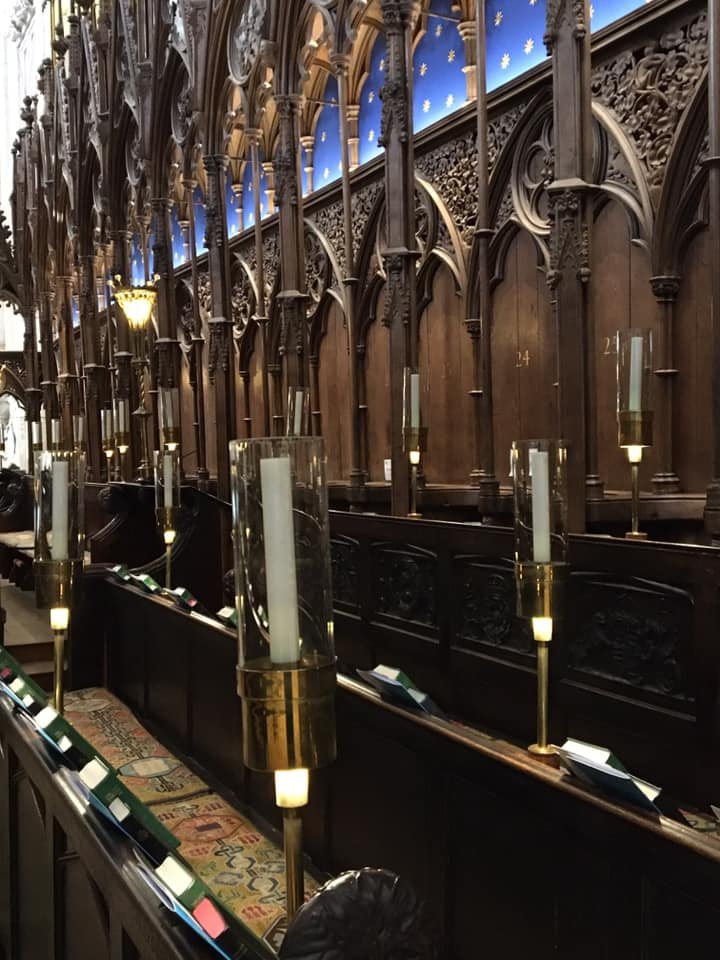
84338524_2889910537731854_333793429337145344_n

Photo credit:  Jennifer Andrews-Weckerly; reuse with permission only

Sixteen pilgrims from Hickory Neck Church traveled to England for 8 days of pilgrimage.  Our focus was on choral music, hearing Evensong or Choral Mass at a Cathedral, Minster, or college everyday.  This is the fifth entry, initially posted on our church Facebook page.  For those of you who do not follow us on Facebook, I am repeating the journey’s daily entries here.  Enjoy!

Salisbury/Winchester

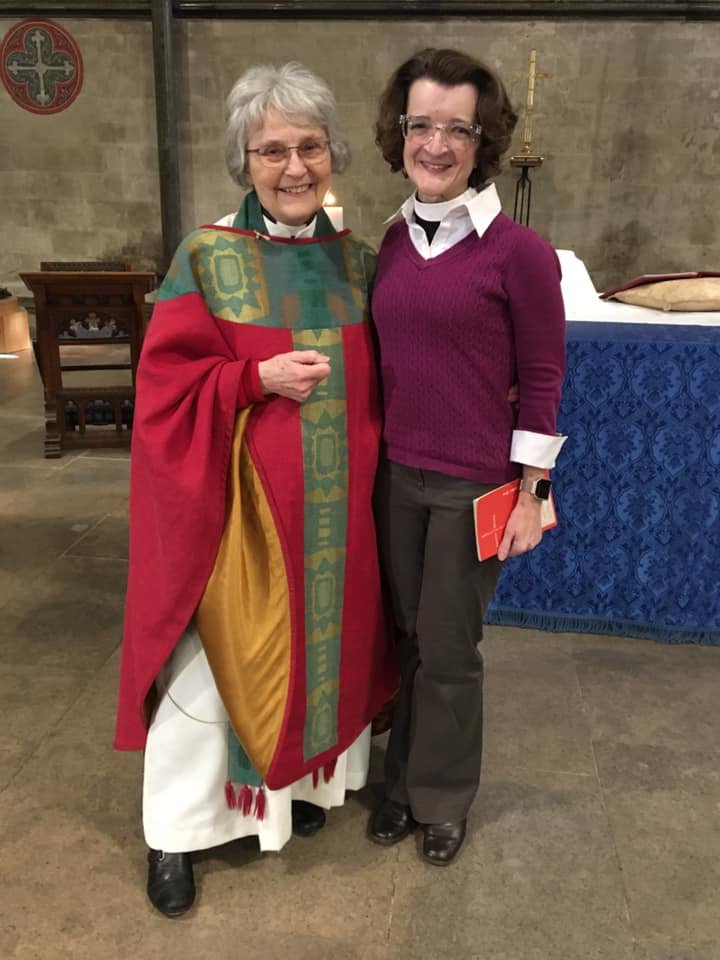
Today, I was struck by the tremendous power of liturgy. We stumbled into a midday Eucharist at Salisbury Cathedral. It was spoken, and the homily was humbly short, but poignant. Then, as the priest set the table, she asked if anyone was a licensed Chalicist. I didn’t volunteer for fear someone else would want to help, and even unsure what the rules were in the Mother Church. But as the priest finished the Eucharistic Prayer, I determined I would just go up and offer to help. As soon as the priest saw my collar, she gratefully handed me the chalice. I found myself profoundly moved: doing something almost innate, but something that also felt foreign in the vast space, in a country not my own. And yet the power of Christ’s meal knows no boundaries. His blood is shed for you, and my body is His instrument.

Later this evening, we attended Evensong at Winchester Cathedral. The Adult singers and boy Chorister’s voices sang in perfection: clean and clear, expressive and moving. Their anthem, Deep River, is the third movement of Michael Tippett’s oratorio about the Nazi government’s violent pogrom against its Jewish population—called Kristallnacht. Pulling from African-American spirituals, this last movement holds a message of hope for the possible healing that would come from Man’s acceptance of his Shadow in relation to his Light. Combining the sound of spirituals and Anglican Choral singing, and the message of justice and reconciliation, I felt all my spiritual worlds colliding, and the words and sounds brought me to tears. I was amazed by how evocative a piece a liturgical music could be. I left Evensong feeling like I had journeyed with God somewhere deeply intimate and profoundly beautiful.

I don’t know if you have had one of those liturgical moments lately. If you are longing for that kind of connection, you are always welcome at Hickory Neck. And if you have found that liturgical blessing, do share it with someone who needs it!

The lyrics for Deep River:

Deep river,
My home is over Jordan.
Deep river, Lord.
I want to cross over into campground.

Deep River,
My home is over Jordan.
Deep river, Lord,
I want to cross over into campground.

Oh, don’t you want to go,
To the Gospel feast;
That Promised Land,
Where all is peace?

Oh, deep river, Lord,
I want to cross over into campground.

86441337_2889910554398519_6456003992475402240_n

Photo credit:  Jennifer Andrews-Weckerly; reuse with permission only

On Kindness and Holy Healing…

06 Wednesday Feb 2019

Posted by jandrewsweckerly in Uncategorized

≈ Leave a comment

Tags

baptism, body, church, community, faith, God, healing, holy, Jesus, kindness, Mayor Tait, symptom, wholeness, Williamsburg

KINDlogo_final-01This past Friday, our LEAD Greater Williamsburg Class launched our kindness initiative.  About 200 people from Williamsburg, James City County, and York County gathered to learn how they could commit to kindness.  One of the highlights was keynote speaker former Mayor Tom Tait.  Mayor Tait served for many years on City Council in Anaheim, California.  He described his work with City Council as a game of “Whack-a-Mole,” where they were constantly trying to snuff out “symptoms,” whether they be drug abuse, homelessness, or violence.  What he slowly came to realize was this model of treating the symptoms was not getting to the root of the problem – the fact that the whole body was sick.  And so, he ran for Mayor on a campaign of kindness.  He believed kindness would transform the entire body, or system, in such a way that the symptoms would go away – because the entire body would learn to operate in a healthier way.

After the event, as I spoke with clergy about the theology of kindness, we came to a few conclusions.  First, we agreed that embodying kindness is one way that people of faith can embody God – the same God that is regularly described as showing loving-kindness, or hesed, in Hebrew.  Our acts of kindness help us to show forth and experience God in our community.  But as we talked about Mayor Tait’s analogy, we realized that showing kindness gets to the root of Jesus’ work.  Jesus was often seen healing what may be seen as symptoms – leprosy, blindness, hemorrhaging.  But what Jesus was really doing was healing entire systems.  Each healed person was restored to wholeness in the community, with no barriers to full membership in the community.  Christ was concerned about the presenting symptoms and suffering of individuals – but what his work was really about was restoring the entire body to wholeness.

The kindness campaign #WMBGkind is an incredible movement because it seeks to do just the same thing – transform our entire community from one that can be divided or cynical, to being a community transformed to wholeness through kindness.  As members of the faith community of Greater Williamsburg, we have an opportunity to be leaders in that transformative work:  because we were commissioned through our baptism to be agents of healing and wholeness, because we can be a powerful witness of God’s love through our kindness, and because, as members of the “body” of our community, we will be transformed too.  This Sunday at Hickory Neck, you will be invited into this commitment to kindness – or as we as persons of faith would call it, into doing acts consistent with our baptismal identity.  I look forward to seeing you then, as we work toward transforming our community, one act of kindness at a time!

Sermon – 1 Corinthians 12.12-31a, EP3, YC, January 27, 2019

30 Wednesday Jan 2019

Posted by jandrewsweckerly in Sermons, Uncategorized

≈ Leave a comment

Tags

affirm, body, church, community, convict, Corinthians, essential, gifts, honor, incomplete, needed, Paul, rejoice, Sermon, spiritual

Last week, Paul talked to us through his first letter to the Corinthians about spiritual gifts.  He talked about how there are a variety of gifts, and although they are all different, they are all activated by God.  As Charlie talked about this lesson last week, he encouraged us to reflect on our own spiritual gifts, and then to use that discernment to determine how we might support the ministries of Hickory Neck.  In fact, today we will gather our Time and Talent forms, blessing our discernment and our offering of those spiritual gifts.

If the portion of Paul’s letter last week affirmed that we all have gifts, the portion of Paul’s first letter to the Corinthians we hear today tells us how the use of our gifts within the church is not just a nice thing to do – like bringing someone flowers.  No, today Paul explains to us the sharing of our gifts is critical to the operation of the church as an organism.  In other words, without each of us giving our gifts to the church, the whole church either limps along as an incomplete body or does not function at all.

Any of us who have had an injury or are currently suffering through a portion of our body not working knows how this works.  A couple of weeks ago, my hands got really dry and a little crack developed on my thumb.  Literally, the crack was about an eighth of an inch in size.  And yet, it was one of the most painful experiences.  Over the next few days, I realized the pain wasn’t going to stop and the cut wasn’t going to heal until I put on a Band-Aid.  The first challenge is figuring out how to make the Band-Aid stick when the cut is not on a flat surface.  Then, of course, do you know how hard keeping the thumb dry to maintain a Band-Aid is?  Suddenly, you find you are washing your hands and your face in super awkward contortions – sometimes electing to use only one hand while washing your face, or giving up altogether so you can help give a bath to your little one.  And once you have the Band-Aid on your thumb, you do not have the same kind of grip on things like jars and bottles you are opening.

This drama is the same for any part of us that is damaged.  We never realize how important one of our body parts is until we lose or have limited use of the part.  For a brief period of time, once the body part is healed, we find ourselves thanking God for our thumb, or kidney, or heart.  But we are a pretty forgetful people, and eventually, we stop thanking God for the incredible parts of our body.  We walk, eat, talk, ponder, laugh, exercise, and breathe without thinking about all the tiny parts needed to make those functions possible in the first place.  Everyday, we could easily pray through hundreds of parts of our bodies, thanking God for each part that works.  And yet, I know very few healthy people who engage in such thanksgiving and gratitude.  Even folks who were once ill or injured seem to forget the painful reminders of not being whole once wholeness is restored.

Paul uses the classic metaphor of the body to help the Corinthians see that the body of the faithful is no different.  Once the community has done a spiritual assessment, once those Time and Talent forms are turned in, we are not done.  We do not take those forms and say, “Okay, we got an usher, someone willing to adopt a church garden, a Sunday School teacher, and someone to make meals.  We did not get someone to operate the sound system, or deliver welcome baskets to newcomers, or help layout the newsletter.  Ah well, we’ll be fine.”  Paul knows we cannot operate the body of Christ this way in the same way that anyone with a broken toe or someone with fluid in their lungs or ears cannot operate at full capacity.  As Paul familiarly says, “The eye cannot say to the hand, ‘I have no need of you,’ nor again the head to the feet, ‘I have no need of you.’”[i]

Paul’s letter today reminds of a few things.  First, we are not fully honoring our own bodies when we do not offer our gifts to the church.  When I was trying to figure out what I wanted to be when I grew up, I tried out many things.  I remember a Marketing department tried to convince me that I would be a great asset to their team.  And, I probably would have been pretty good at the work and the team did seem to have a lot of fun.  I remember how I loved working at a Food Bank and my awesome boss, even though most of my fellow volunteers were not people of faith.  I remember being thrilled when I landed at a Habitat for Humanity affiliate, serving a good cause, talking about our faith, even praying at staff meetings.  And yet, something still felt unbalanced.  And so the church became my playground.  I learned how to lead Morning Prayer, I fumbled my way through an adult bible study, and they even convinced me to co-lead the Middle School class!  What Paul would remind seekers like you and me is the church is the place where we can find a sense of wholeness by using all the parts of our bodies.  The church may be the place where the teacher by weekday brings his gifts to the Sunday School classroom on Sundays; or the church may be the place where the teacher by weekday finds her gifts are better utilized organizing a portion of the Winter Shelter.  The Church is the place where our head and our hands, our bodies, are affirmed.

The second thing Paul’s letter does is remind us how essential each person in the body is.  When other ancient writings used the metaphor of the body, they used the metaphor to determine social or political status; whomever was the head had power over the hands, feet, and legs.[ii] [iii]  Not so with Paul.  Paul says the head is just one part of many.  In fact, those parts we often forget about are usually the essential missing link to powerful ministry.  So, you may have been at home this week thinking, “Meh!  Hickory Neck has nine toes, they will be fine without me.”  Today, Paul asserts ministry does not work without you – whether you are the pinkie toe or the big toe!  Not all of us are great lectors, are handy with a wrench, or are tech savvy.  But we are all good at something – and when that “something” is not offered, the body of Hickory Neck is not whole.  Each of us, even the littlest one who goes to the nursery on Sundays, or the homebound member who rarely gets to join us, has an ability to make us better.  In fact, Paul might argue that those two individuals should have the highest honor in the community.  In other words, even if you do not think you have a gift special enough to give, the church needs you.[iv]  Hickory Neck is not whole without your offering.

The final thing Paul’s letter does is a little more subtle.  Even when all of us fill out our Time and Talent forms, and even when we make that stretch and agree to lead Children’s Chapel, take communion to a parishioner, or help with marketing, Hickory Neck will still not be complete.  There will always be parts of the body that are not operating at full capacity because not everyone is here yet.  This is why whenever a newcomer decides to become a member, we encourage them to look over the Time and Talent form – even if they join at a time well past stewardship season.  Each new person who enters through our doors has something new and fresh to teach us – something we as the community of Hickory Neck were missing until that fateful day you walked through our doors.  But if each new person makes us more whole, that means there are a lot of other holes in our body from all the people we have not yet invited into our fold.  For every neighbor, friend, and stranger who was looking for wholeness and yet we did not invite to church, our community suffers.  For every person whose socioeconomic status, skin color, or sexual orientation is not like ours that we did not invite to church, our community suffers.  For every person who is not my age, does not have my physical or mental abilities, or does not agree with my politics that we did not invite to church, our community suffers.  When we read Paul’s letter and when we look at our Time and Talent forms this week, we will invariably see the people we forgot to invite to church who would make us so much better as a community.

Today’s word from scripture is both affirming and convicting.  Paul wants us to know that each us has the capacity for wholeness when we use all the gifts God gives us.  Paul wants us to know that our Church needs us, in all our unique, odd, loveliness.  Paul wants us to know that the Church is the place where everyone has a place.  But Paul also wants us to know that we are not done.  We have sometimes not affirmed our own beautiful selves, we have sometimes held back our gifts from the church, and we have sometimes avoided welcoming in the very people who would make Hickory Neck a fuller version of her fantastic self.  Our invitation this week is to say yes:  say yes to honoring our own bodies with all their fabulous gifts; say yes to trying new adventures at church that will bless us in ways we cannot imagine; say yes to inviting a person who we might not even consider compatible with our image of who Hickory Neck should be.  Paul promises God will arrange the body so that we can all rejoice together.  Amen.

[i] 1 Corinthians 12.21

[ii] Lee C. Barrett, “Theological Perspective,” Feasting on the Word, Yr. C, vol. 1 (Louisville:  Westminster John Knox Press, 2009), 278.

[iii] Troy Miller, “Exegetical Perspective,” Feasting on the Word, Yr. C, vol. 1 (Louisville:  Westminster John Knox Press, 2009), 279.

[iv] Raewynne J. Whiteley, “Homiletical Perspective,” Feasting on the Word, Yr. C, vol. 1 (Louisville:  Westminster John Knox Press, 2009), 283.

On Seeing God in the Body…

08 Wednesday Aug 2018

Posted by jandrewsweckerly in Uncategorized

≈ Leave a comment

Tags

body, body of Christ, Christ, church, gift, God, ministry, play, vacation bible school, vocation, witness, work

IMG_2385

Photo credit:  Jennifer Andrews-Weckerly; reuse with permission only

One of the things I learned very early on in my priesthood is I cannot do all the work of the church.  The priest cannot be everywhere, at every event, leading every ministry.  And I have wholeheartedly come to believe that she should not try.  In doing so, the priest disables the ministry of the laity, and to be frank, never gets close to the glory of what can happen when everyone contributes their gifts in ministry to the work of the church.  When Paul talks about the Body of Christ being like parts of the body – where every hand, foot, elbow, and nose are needed to make the Body complete – Paul was talking about the leaders too.  The Body of Christ does not function without all the members.

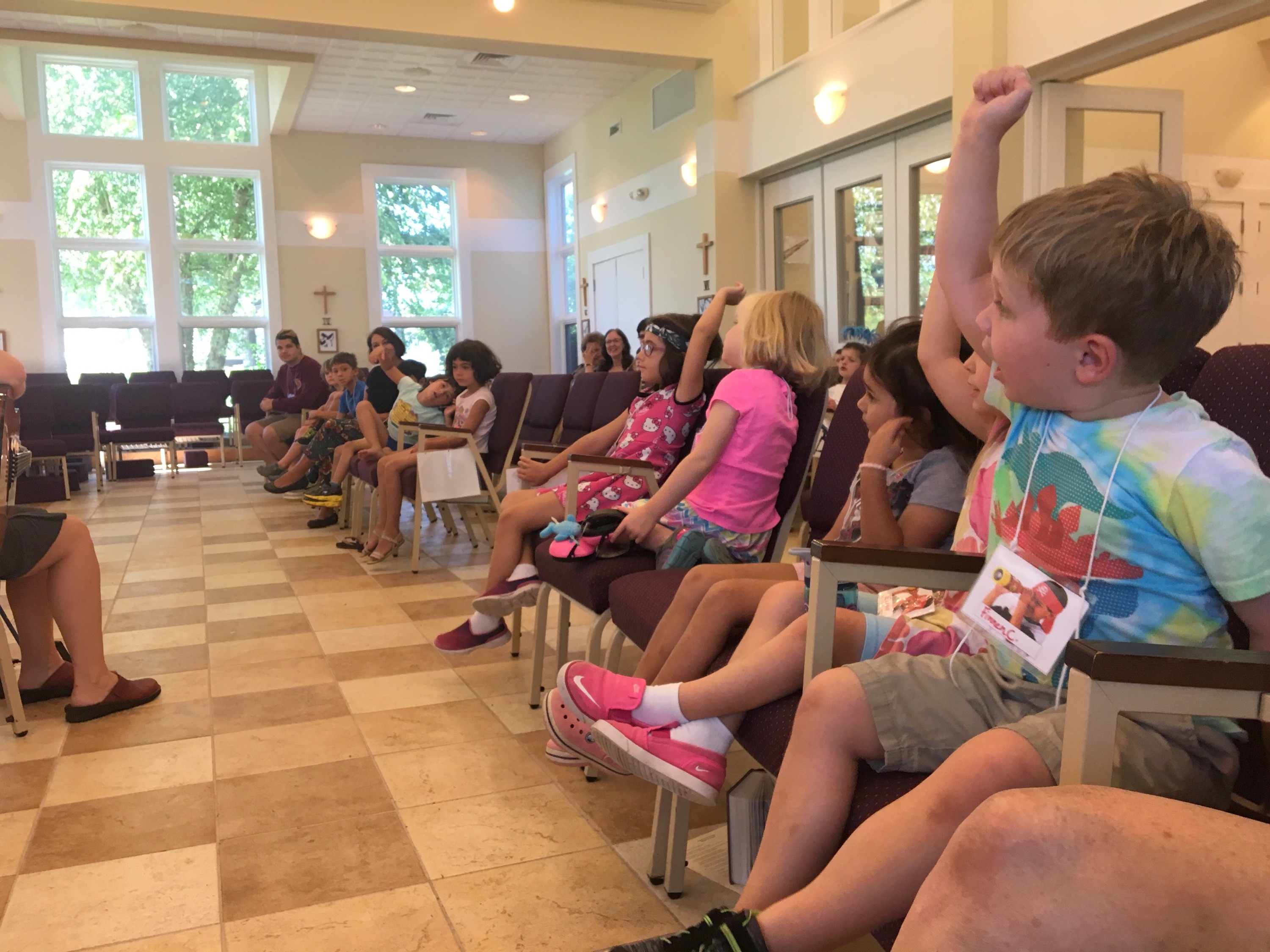
I have been reminded of this truth this week as I have watched our Vacation Bible School program in action.  Months of planning, organizing, imagining, and executing have come to fruition.  I was given 10 minutes this week for teaching and prayer.  The rest of the time – five days, 15 hours, 900 minutes – has been filled with adults, youth, and even children leading a wonderful week of reflection about where we see God, how we can be helpers in God’s mission, and how we can be God’s hands, changing the world.  It has been a glorious experience to watch fingers strumming guitars, adults comforting children, teens running little ones’ energy out, children holding hands, priests from neighboring churches teaching and praying, and, as I like to imagine, God smiling broadly as God hears us asking God to “kumbaya.”

Part of what is nice about this week is I get to see the work of the Body up close.  I get to see church members flexing their vocational gifts, teaching and showing our kids how much God loves them and how they are now empowered to love others.  But much like my contribution this week is just a small part of the whole, I realize Vacation Bible School week is just a small part of the larger whole.  Every week our parishioners – children, youth, and adults – are living out their vocations every day.  They are teaching children, building homes, healing bodies, fighting fires, studying for tests, and holding each other’s hands as faithful children of God.  There are holy moments every week, every day, every hour, every minute, where we live into the gifts God has given us, and show God’s love to others.  Our witness to Christ does not happen unless we are all doing are part as the Body of Christ.

I wonder where you are seeing God and the work of the Body of Christ today.  At home, at work, at play, we can all see God working through each other.  Our invitation this week is to look for that work, to be a part of that work in our own lives, and to witness where we see that work in others.  My suspicion is once we start doing that work, we will be smiling as God has been smiling this week!

Sermon – John 2.13-22, Exodus 20.1-17, L3, YB, March 4, 2018

07 Wednesday Mar 2018

Posted by jandrewsweckerly in Sermons, Uncategorized

≈ Leave a comment

Tags

beautiful, bless, body, flesh, God, good, honor, incarnation, Jesus, Lent, ministry, repentance, righteous anger, sacred, Sermon, sinful, temple

Today’s gospel lesson is one of those lessons in Scripture that is so vivid we find looking away difficult.  All four of the gospels have this story, and three of the gospels use this story to convey Jesus’ righteous anger about how the practice around temple worship and obligatory sacrifice has led to monetary abuses.  Matthew and Luke even have Jesus calling the whole enterprise a den of robbers.  The story evokes images of Jesus flipping tables, or in today’s version, swinging around a whip like Indiana Jones.  We often recall this text when looking for evidence of Jesus’ righteous anger at injustice.  We are so familiar with this text we can almost hear the sermon about a call to justice in our heads.

But this week, the gospel has been speaking a different sermon to me.  You see, John’s version of this story is a bit different from the other three gospels.  First, John places this story in a very different place in his narrative.[i]  Unlike the other gospels who place this story toward the end of Jesus’ earthly ministry, John places this incident in the second chapter, right after the miracle in Cana.  And in John’s version, Jesus does not lay into the moneychangers in quite the same way.  Instead of financial injustice, Jesus seems more concerned that those gathered have missed something critical – in the obligatory administering of sacrifices at the physical temple, they have missed the fact that God is no longer tied to the location of the temple – and instead is found in the temple of Jesus’ body.  For John, the incarnation, the word becoming flesh and dwelling among us, is central to the entirety of the good news and in this story specifically.

I realized this week that when I think about the Incarnation, I immediately think of the baby Jesus.  Somehow, like a child you do not see for a few years, my image of Jesus incarnate gets stuck in the manger.  And because the adult Jesus sometimes feels so superhuman, I forget about the earthy, gritty flesh of his body – the body that touches to heal, stoops down to wash feet, eats and drinks with others, cries wet tears, and breathes a last breath of the cross.  In coming to know the Messiah who heals, teaches, brings about justice, and is transfigured before the disciples, I forget the enfleshed Jesus – the human body in which God dwells – the only temple we need to draw nearer to our God.

We are in a season of flesh.  Lent is that season when we experience Jesus in deeply enfleshed ways.  What our disciplines or our practices do for us in Lent is help us remember that we are a people of flesh and our God was willing to take on that flesh to transform our lives.  We do not often talk about the profound reality of an enfleshed God, but I stumbled on a hymn this week that opened up the reality.  Brian Wren’s hymn Good is the Flesh says, “Good is the flesh that the Word has become, good is the birthing, the milk in the breast, good is the feeding, caressing and rest, good is the body for knowing the world, Good is the flesh that the Word has become.”  The hymn goes on to say, “Good is the body, from cradle to grave, growing and aging, arousing, impaired, happy in clothing, or lovingly bared, good is the pleasure of God in our flesh, Good is the flesh that the Word has become.”[ii]  Now I do not know about your own spiritual journey, but I do not think I have ever heard Jesus’ flesh being described so vividly.  The closest I have come has been in imagining the vulnerability of that enfleshed body in the cradle.  But capturing what being enfleshed means for all of life – from cradle to grave – somehow opened up John’s words about the temple of Jesus’ body.  God takes something we often associate with sinfulness – and transforms that flesh into something good.  “Good is the pleasure of God in our flesh,” are powerful words that shift how we experience the fullness of Christ’s humanity.

Once we reconnect with the goodness of God’s flesh – the incarnation of Christ – then we begin to see all of Jesus’ ministry not stuck in a manger but immersed in the flesh of life.  Karoline Lewis reminds us Jesus’ fleshy life was important, “Because a woman at a well, whose body was rejected for the barren body it was, experiences the truth of neither on this mountain nor in Jerusalem; because a man ill for 38 years, his entire life to be exact, whose body has only known life on the ground, is now able to imagine his ascended life; because a man born blind, is then able to see, and to see himself as a sheep of Jesus’ own fold; because Lazarus, whose body was dead and starting to decay, found himself reclining on Jesus, eating and drinking, and with his sisters, sharing a meal once again.”[iii]  Not only is Jesus’ incarnation good, making flesh good, Jesus’ ministry is about blessing, healing, and restoring physical bodies.

Once we connect with the goodness of God’s flesh, and the power of Jesus’ fleshy ministry, we are forced to see something we do not always feel comfortable with – the goodness of our own flesh.  Now I do not know about you, but my experience in church has not been one in which the church tells me how good my body is.  In fact, today’s inclusion of the ten commandments usually reminds me of the opposite – of the myriad ways my body is sinful:  from the words that come out of my mouth, to the ways in which I hurt others and take things with my body, to the ways in which I covet things and other bodies.  And those sins do not even touch the ways in which I learn the message that my body is imperfect – how my body is not the right height or shape or gender, how my body is not fit or strong enough, how my skin color, hair, or nails are not quite the ideal.  But if God takes on flesh and says, “Good is the flesh,” and if that enfleshed God engages in a ministry of blessing flesh, then surely part of what we remember today is how good and blessed our own flesh is – how God made our flesh for good.

Now, here comes the tricky part.  Once we realize “Good is the flesh,” that ministered to the flesh, that our flesh is beautiful and revered, then we are forced to make yet another leap – that the flesh of others is also beautiful.  Those bodies we would like to subjugate, regulate, and decimate are no longer able to be separated from the goodness of God’s flesh or our own flesh.  Barbara Brown Taylor argues in An Altar in the World, “‘One of the truer things about bodies is that it is just about impossible to increase the reverence I show mine without also increasing the reverence I show yours.’  In other words, once I value my own body as God’s temple, as a site of God’s pleasure, delight, and grace, how can I stand by while other bodies suffer exploitation, poverty, discrimination, or abuse?”[iv]

This week, we enter that kind of work.  As we welcome guests through the Winter Shelter, we affirm the goodness of all flesh – of God’s flesh, of our flesh, and especially the flesh of those who have no shelter, who work hard all day but cannot secure housing, who live lives of uncertainty, of insecurity, of scarcity.  Once we recall the incarnation of Christ, the dignity of our own incarnation, our work immediately becomes to honor the incarnation of others.  We certainly accomplish the work of honoring flesh this week through the Winter Shelter.  But as we keep walking our Lenten journey, we will struggle with our bodies.  Even our collect today says, “we have no power in ourselves to help ourselves: Keep us both outwardly in our bodies and inwardly in our souls, that we may be defended from all adversities which may happen to the body, and from all evil thoughts which may assault and hurt the soul.”  But our invitation this Lent is to also struggle with claiming our body as good – and using the goodness of the flesh to bless other flesh.  Our repentance this week is not just of the sinfulness of the flesh, but we repent this week of the ways in which we do not honor how “Good is the flesh that the Word has become.”  Amen.


[i] Joseph D. Small, “Theological Perspective,” Feasting on the Word, Year B, Vol. 2 (Louisville:  Westminster John Knox Press, 2008), 92.

[ii] I found this hymn in the commentary by Debie Thomas, “The Temple of His Body” February 28, 2018, https://www.journeywithjesus.net/lectionary-essays/current-essay?id=1675 as found on March 1, 2018.

[iii] Karoline Lewis, “Body Zeal,” February 26, 2018, http://www.workingpreacher.org/craft.aspx?post=5071 as found on March 1, 2018.

[iv] Thomas.

← Older posts

Recent Posts

  • On the Myth and Magic of Advent…
  • On Risking Failure and Facing Fear…
  • Sermon – Luke 23.33-43, P29, YC, November 23, 2025
  • On Inhabiting Gratitude…
  • Sermon – Luke 20.27-38, P27, YC, November 9, 2025

Archives

  • December 2025
  • November 2025
  • October 2025
  • September 2025
  • August 2025
  • July 2025
  • June 2025
  • March 2025
  • February 2025
  • December 2024
  • November 2024
  • October 2024
  • September 2024
  • August 2024
  • July 2024
  • June 2024
  • May 2024
  • March 2024
  • February 2024
  • January 2024
  • December 2023
  • November 2023
  • October 2023
  • September 2023
  • August 2023
  • July 2023
  • June 2023
  • May 2023
  • March 2023
  • February 2023
  • January 2023
  • December 2022
  • November 2022
  • October 2022
  • June 2022
  • May 2022
  • January 2022
  • December 2021
  • November 2021
  • October 2021
  • September 2021
  • August 2021
  • June 2021
  • May 2021
  • April 2021
  • March 2021
  • February 2021
  • January 2021
  • December 2020
  • November 2020
  • October 2020
  • September 2020
  • August 2020
  • July 2020
  • June 2020
  • May 2020
  • April 2020
  • March 2020
  • February 2020
  • January 2020
  • December 2019
  • November 2019
  • October 2019
  • September 2019
  • August 2019
  • July 2019
  • June 2019
  • May 2019
  • April 2019
  • March 2019
  • February 2019
  • January 2019
  • December 2018
  • November 2018
  • October 2018
  • September 2018
  • August 2018
  • July 2018
  • June 2018
  • May 2018
  • April 2018
  • March 2018
  • February 2018
  • January 2018
  • December 2017
  • November 2017
  • October 2017
  • September 2017
  • August 2017
  • July 2017
  • June 2017
  • May 2017
  • April 2017
  • March 2017
  • February 2017
  • January 2017
  • December 2016
  • November 2016
  • October 2016
  • September 2016
  • August 2016
  • July 2016
  • June 2016
  • May 2016
  • April 2016
  • March 2016
  • February 2016
  • January 2016
  • December 2015
  • November 2015
  • October 2015
  • September 2015
  • August 2015
  • July 2015
  • June 2015
  • May 2015
  • April 2015
  • March 2015
  • February 2015
  • January 2015
  • December 2014
  • November 2014
  • October 2014
  • September 2014
  • August 2014
  • July 2014
  • June 2014
  • April 2014
  • March 2014
  • February 2014
  • January 2014
  • December 2013
  • November 2013
  • October 2013
  • September 2013
  • August 2013
  • July 2013
  • June 2013
  • May 2013
  • April 2013
  • March 2013
  • February 2013
  • January 2013
  • December 2012
  • November 2012
  • October 2012
  • September 2012

Categories

  • reflection
  • Sermons
  • Uncategorized

Meta

  • Create account
  • Log in
  • Entries feed
  • Comments feed
  • WordPress.com

Blog at WordPress.com.

  • Subscribe Subscribed
    • Seeking and Serving
    • Join 394 other subscribers
    • Already have a WordPress.com account? Log in now.
    • Seeking and Serving
    • Subscribe Subscribed
    • Sign up
    • Log in
    • Report this content
    • View site in Reader
    • Manage subscriptions
    • Collapse this bar
 

Loading Comments...