• About

Seeking and Serving

~ seek and serve Christ in all persons

Seeking and Serving

Tag Archives: Christ

On Tiny Perfect Things…

26 Wednesday May 2021

Posted by jandrewsweckerly in reflection

≈ 1 Comment

Tags

blessing, Christ, God, grace, moment, pandemic, perfect, small, tiny

Photo credit: https://www.pinterest.com/pin/269441990176015475/

I just finished up a movie called The Map of Tiny Perfect Things.  The premise is much like Groundhog Day, where Bill Murray relives the same day over and over again.  But in this film, the two protagonists use their day of repetition to find tiny perfect things – an eagle grabbing a fish out of a lake, an elderly woman dancing about a game victory, a perfectly timed funny moment, a custodian sneaking on a piano, demonstrating his incredible hidden talent. 

These last weeks, I have been noticing a lot of tiny perfect things as we slowly make our way out of this pandemic:  a hug between vaccinated friends who haven’t seen, let alone touched, each other in over a year; watching kids play with bubbles, mastering not just blowing them, but popping them too; an outdoor wedding after a year of wondering if it would be possible with a long pandemic and the threat of unpredictable weather; being able to hold and bounce a baby after over a year of isolating newborns from all of us. 

We are approaching some of those tiny perfect things at our church as well.  Because we are loosening restrictions incrementally, we are not getting some magical “perfect” experience where everything “goes back to normal.”  But we are approaching a time where we can sit in pews that were off limits, where we can sing those songs and texts that have been spoken or been instrumental, where we can sit beside a friend whose physical presence we have missed, where we can receive the body and blood of Christ.  We still have to mask, and communion is being served in sealed plastic chalices – but there are tiny perfect things nonetheless. 

This week, I invite you to find your own tiny perfect things – tiny moments of grace.  Take a moment to watch children play in your neighborhood, see what wonders nature is up to, enjoy a bit of hearty laughter, or observe the way an older couple holds hands after what must be decades of marriage.  There is a lot of work to be done as Christ commissions us to go out in the world.  But what will sustain us in that work are the tiny perfect things that remind us of God’s blessing and grace that are there for us every day.  I cannot wait to hear what you find!

Sermon – Luke 2.1-20, CE, YB, December 24, 2020

06 Wednesday Jan 2021

Posted by jandrewsweckerly in Sermons

≈ Leave a comment

Tags

anxiety, beautiful, Bonhoeffer, Christ, Christ Child, Christmas, different, discomfort, displacement, Eucharist, familiar, feast, God, Jesus, joy, magnificence, real

This year, Christmas is unlike any other we have experienced.  For starters, we are gathered in homes around the globe, perhaps in pjs, on couches, or even bundled up in our beds, instead of being here together, crammed into seats where we may not normally sit, sitting next to friends and strangers, dressed in our Christmas finery.  Instead of gathering with large groups of extended family and friends, or traveling great distances, many of us are home alone, only able to see beloved faces on screens or hear familiar voices on phones.  Meals may be much smaller, gift exchanging more subdued (if happening at all), and singing is happening in isolation, not in the warmth of this space, where the sound fills not just the room but also our hearts.  Operating in the background of all of this is anxiety – fear for the health of ourselves and our loved ones, concern about financial stability, and dread about how much longer this pandemic may press down upon us.  Christmas this year is an experience in displacement, discomfort, and dissatisfaction.

And yet, here we are – gathered virtually, hearing the achingly familiar Christmas story, singing the soothing, familiar songs, and eventually participating in the ritual of the Eucharistic feast – even if we receive the feast spiritually.  Although this is not at all how I hoped to spend this Christmas, both for us as a community, or even personally with my own family, as I hear the Christmas story again this year, something is different.  The displacement of Mary and Joseph, the strain of a long journey, the collective discomfort of being herded against their will, and the anxiety of giving birth with none of the creature comforts of home or health feels strikingly familiar and contemporary.  The shock of angels is more palpable when we imagine shepherds going about the daily tasks needed for survival, the sheer ordinariness of working the night shift, and the miraculous happening among the least.  Even the experience of intimate conversation between strangers forced together by life is familiar, as we recall the recent conversations we have had with neighbors who, perhaps until this year, we have only spoken to superficially.  And Lord knows we have been doing a lot of pondering in our hearts these days.  Somehow the rawness of these days cracks open this overly familiar story in ways I could have never expected.

This Christmas, as I was preparing for tonight, I stumbled on a letter from Dietrich Bonhoeffer to his parents.  Bonhoeffer was a pastor, theologian, and political activist in World War II Germany.  When word of his anti-Nazi activism spread, he was imprisoned for a year and a half.  Sitting in that jail cell as Christmas approached, Bonhoeffer wrote to his parents, “In times like these we learn as never before what it means to possess a past and a spiritual heritage untrammeled by the changes and chances of the present.  A spiritual heritage reaching back for centuries is a wonderful support and comfort in face of all temporary stresses and strains.”  He goes on to say, “I daresay [Christmas] will have more meaning and will be observed with greater sincerity here in this prison than in places where all that survives of the feast is its name.  That misery, suffering, poverty, loneliness, helplessness and guilt look very different to the eyes of God from what they do to man, that God should come down to the very place which men usually abhor, that Christ was born in a stable because there was no room for him in the inn – these are things which a prisoner can understand better than anyone else.  For a prisoner, the Christmas story is glad tidings in a very real sense.”[i]

We may not have wanted any of this:  the discomfort, the dislocation, the anxiety, the suffering, the total upendedness of these days, especially during a holiday that is supposed to be reserved for joy and jubilation.  But perhaps the good news for us this Christmas is we get to know the Christmas story in a different way – not in the shiny, pretty way we normally tell the story, but in the raw, gritty, real way we tell the story tonight.  We hear, smell, and feel the ordinariness of the room with the holy family:  the “sweat; blood; makeshift blankets and diapers; the raw, immediate joy that comes with new life.”  But we also hear the unfathomable news of angels through shepherds intruding into that space, beautifully weaving the ordinary and extraordinary.[ii]  I know this is not the Christmas any of us wanted.  But perhaps in this terrible, awful, beautiful Christmas, we can more profoundly understand the terrible, awful, beautiful thing that happens in the Christ Child this year.  And whether we sing with jubilation with angels and shepherds, or ponder these things in our hearts with Mary, perhaps we see the Christ Child in his magnificence for the first time.  Amen.


[i] Dietrich Bonhoeffer, Letter to his parents, December 17, 1943, as found in A Christmas Sourcebook, Mary Ann Simcoe, ed. (Chicago:  Liturgy Training Publications, 1984), 11.

[ii] Cynthia RL. Rigby, “Theological Perspective,” Feasting on the Word, Yr. B, Vol. 1 (Louisville:  Westminster John Knox Press, 2008), 116, 118.

Sermon – Matthew 10.40-42, P8, YA, June 28, 2020

01 Wednesday Jul 2020

Posted by jandrewsweckerly in Sermons, Uncategorized

≈ Leave a comment

Tags

Bible, Christ, covenant, disciple, God, hospitality, Jesus, love, mirror, missionary discourse, pandemic, power, presence, Sermon, vulnerability

This summer, several parishioners are participating in our 90-Day Bible Reading Challenge.  In supporting each other in our reading, one of the patterns we have noticed is the break-neck pace of reading twelve pages a day means we do not have a lot of time for traditional Bible Study – looking at the original Hebrew or Greek, discerning the historical context of the book, studying the cultural norms of the community, or even delving into the literary devices of the book.  Instead we are drinking from the fire hose of Scripture – capturing the larger narrative God’s covenantal relationship with humankind, but not indulging in the intriguing details.

With a passage like the one we hear in today’s gospel from Matthew, we could easily do the same.  There are only three verses in the text, and they are somewhat repetitive in pattern.  A quick skim brings up an old adage we have learned by heart – welcome the stranger because you may be welcoming Christ himself.  Maybe your mind immediately leapt to a time you saw Christ in a stranger.  Maybe you began thinking about the ministry of hospitality, particularly how strong that ministry is at Hickory Neck.  Maybe you even started to wonder what you could do to be more hospitable, especially during this time of social distancing.

But here’s the thing:  when we slow down our reading, we realize Jesus does not say, “whoever welcomes the stranger welcomes me.”  Jesus says, “Whoever welcomes you welcomes me…”  Often when we think of hospitality, we think of hospitality from the perspective of the host.  Whether we acknowledge the reality or not, we are people of power and privilege, and our notion of hospitality is rooted in how we can offer hospitality to others.[i]  There is nothing inherently wrong with this dynamic – in fact, our sense of obligation to offer hospitality is an answer to Jesus’ call to love neighbor.  But Jesus is not talking about offering hospitality to others from a position of power.  Instead, Jesus is inviting us to give up power and receive others’ hospitality.

If you remember, we have been in the midst of Jesus’ Missionary Discourse[ii] the last several weeks.  Jesus told the disciples to go out, without resources, to do the work of discipleship.  He warned them they would face persecution, and family members would turn against one another.  And today, as Jesus concludes his discourse, he tells them whoever welcomes them, welcomes Jesus.  So not only are the disciples to make themselves vulnerable to the hospitality of others, they will be mirroring Jesus to others.  In other words, in every moment, every interaction, every relationship, encounter, conversation, and conflict among the disciples –the disciples will be witnessing Jesus.[iii]

I do not know about you, but that is a lot of pressure.  Making oneself vulnerable is hard enough.  Making oneself vulnerable means opening up all our flaws, weaknesses, and doubts.  And now, Jesus is saying while we are vulnerable, our homes, our marriages, our workplaces, our extended families, even our friendships are windows into Christ for others.  As Debie Thomas asks, “When we know Jesus is visible in and through us at every moment…[will] we tread more lightly on the earth?  Speak less and listen more?  Reconsider our grudges and grievances?  Choose our words with greater care?  Examine our motivations more closely?”[iv]

There is a lot about this pandemic that has been absolutely awful – devastating, painful, and full of death.  But one of the things that has happened to Hickory Neck in this pandemic represents new life too.  Before we closed our buildings in March, we offered hospitality from our comfort zone – hospitality unparalleled once you walked in those doors – hospitality that made most of us join this church.  But once we moved everything online, the doors and walls of this place lowered – we went out, showing who we are and what we are about to a much broader audience.  Here in this exposed setting, we are carefully, thoughtfully, intentionally showing others what Jesus looks like.  The work is hard and scary, but the reward is great too.  In letting down our walls, we are helping people to see Christ – the same Christ who redeems us, gives us strength, and makes us whole.  But the work of discipleship is not just happening on livestream.  I see this work happening in you – as you call to check in on people in the parish you have not met before because you attend a different service, as you don a mask and attend a rally in support of our African-American brothers and sisters during this raw time, and as you have socially-distanced conversations with neighbors about the power of Christ in your life.  The promise Jesus made at the beginning of his Discourse is still lingering today.  Christ is with us always, even to the end of the age.  His promised presence will allow us to keep letting down walls and being Christ’s mirror in the world.  Our job is to take up the challenge we will hear in our dismissal today:  Go.  Receive God’s love and hospitality.  Serve the Lord as Christ’s mirror.  Amen.

[i] Debie Thomas, “Welcome the Prophet,” June 21, 2020, as found at https://www.journeywithjesus.net/lectionary-essays/current-essay on June 26, 2020.

[ii] Eugene Eung-Chun Park, “Exegetical Perspective,” Feasting on the Word, Year A, Volume 3 (Louisville:  Westminster John Knox Press, 2011), 189.

[iii] Thomas.

[iv] Thomas.

On Teachers, Nurses, and Grandmas…

07 Thursday May 2020

Posted by jandrewsweckerly in Uncategorized

≈ Leave a comment

Tags

appreciation, blessing, care, Christ, God, grandmother, gratitude, Jesus, light, love, ministry, notes, nurses, pandemic, sacred, teachers, thank you, thankful, vocation, work

thank-you-notes

Photo credit:  https://www.considerable.com/life/etiquette/bring-back-thank-you-notes/

One of the things my grandmother instilled in me from an early age was the importance of thank you notes.  She taught me how to write them, how quickly to send them, and the significance of being a person who reliably sends them.  These days I fear she would be sorely disappointed with how those carefully honed skills have deteriorated over time – not that I do not know how to write them or understand their importance, but how my overflowing plate often means the list of thank you notes to be written makes it to the bottom of my “to do” pile.

That is why I am thankful for the ways in which our country has designated this week as appreciation weeks for two powerful vocations:  teachers and nurses.  Left to my own devices, I regularly forget to show my appreciation for the teachers in our lives.  But this annual week always reminds me that for thirty-five-plus hours a week, teachers are the people who are with my children – teaching them, shaping them into thoughtful citizens, helping them grow into their unique identity, and generally helping them feel loved and valued.  I have always thought of teachers as part of our “village,” who are helping my husband and me raise our children.  And this year, more than ever, I am amazed at the ways teachers are pivoting, learning new technologies, figuring out different ways to engage children in a pandemic, and showing love to our kids while socially distanced.

Likewise, I am grateful for a week to show our gratitude toward our nurses.  My most powerful experience with a nurse was in childbirth.  I had been laboring for the better part of twelve hours when I finally elected to have an epidural.  Everyone left the room, and as I leaned forward for the anesthesiologist, I could not stop shaking – whether from exhaustion or fear, I am not sure.  But the nurse took my arms firmly, looked me right in the eyes, and instilled in me a trust so deep I can still feel it palpably ten years later.  Nurses do this every day – take our lives into their hands, guide us through healing and wellness, and comfort us in ways that build confidence, trust, and care.  And in the midst of this pandemic, they are literally putting their lives on the line to do this often-overlooked work.

I’m not sure this is enough of a thank you note to meet my grandmother’s standard.  But what I can tell you is our teachers and our nurses are doing sacred work every day of the year.  They love us, care for us, and show us the light of Christ every day.  If you have a teacher or nurse in your life, neighborhood, or circle of friends, please be sure to thank them personally for the ways in which they are changing our lives today.  I invite you to return God’s blessing they have been to you back to them.

Sermon – Ezekiel 37.1-14, John 11.1-45, L5, YA, March 29, 2020

01 Wednesday Apr 2020

Posted by jandrewsweckerly in Sermons, Uncategorized

≈ Leave a comment

Tags

change, Christ, Coronavirus, death, dry bones, exile, God, health, hope, Israel, Jesus, journey, Lazarus, life, normal, restoration, resurrection, Sermon, suffering

Today would be an easy day to skim the lessons and declare a victory.  We come to these texts today with cases of Coronavirus rising, deaths increasing, schools closing, jobs ending, and life stopping.  A simple drive down Richmond Road, and the restaurants and tourist stops whose parking lots are usually filled reveal a ghost town.  Even when we do venture out to grab necessities, the faces of people in stores are filled with anxiety, and bodies tense when spacing gets a little too close with others.  In this bizarre reality, we want nothing more than a breath of fresh air, a promise of hope and resurrection.

In many ways, that is exactly what we get in our lessons today.  Ezekiel shares a vision of resurrection and restoration.  The valley full of dry bones – presumably representing the people of Israel in exile in Babylon[i] – are brought back to life.  Through Ezekiel’s prophesying, God’s breath is breathed into the bones.  Bones reassemble, sinews and flesh come upon them, and even breath fills their lungs.  Reassembled, the bodies feel bereft in a strange land, but the Lord our God promises them they will be returned to Israel – to their land.  The same can be said of John’s gospel.  Lazarus is dead.  Four days dead.  The common Jewish understanding of the time was that the soul hovered near the body for three days, hoping to return; but after those three days, the soul departed for good.[ii]  There is no hope for Lazarus.  And yet, in Jesus’ deep love for this man, he weeps.  And then he raises Lazarus from the dead.  Into the next chapter, we even find Lazarus reclining on Jesus – not just alive, but living a life of abundance.

These are texts we want to hear today.  We want Holy Scripture to say, “Everything will be okay.  Everything will go back to normal.  You’re okay.”  And in some ways, that is what the texts seem to say.  The exiled people of Israel will be returned to their land.  The lost brother of Martha and Mary is returned to them in health and vigor.  Suffering is ended for both.  Life is restored for both.  We get to go back to normal.

And yet, I am not sure our texts today are saying things quite that simply.  For the people of God in exile, Ezekiel’s words are a bit more complex.  The breath God breathes into them helps them remember that even in exile, God is with them.  God is animating them in a foreign land.  Yes, there is a promise to return to the Promised Land.  But we know that any great journey into suffering means that even when we return to “normal,” we are not “normal.”  We are changed.  Health may be restored, land may be restored; but we are forever changed.  The news for Lazarus is a bit more complex too.  Although Jesus brings Lazarus back from the dead, to live an abundant life in the here and now, Lazarus’ resurrection is not forever.  Someday, Lazarus will return to the ground.  We know, like the people in exile, Lazarus’ life after the tomb will not be like his life before.  And we also see in Jesus’ conversation with Martha that Lazarus’ death not just about Lazarus.  Lazarus’ death is merely a foretaste of the resurrection of Jesus.  This return to life is limited to one person.  Jesus’ return to life will change a people.

All of this is to say that today’s good news is good news indeed.  There will be life after this virus.  There will be restored health and community after this virus.  There will be renewed strength and vitality after this virus.  But we will also be forever changed by this virus.  We will see life and the gift of life differently than before.  We will come back to our life rhythms and routines a changed people.  We will understand the gift of resurrection in new and deeply moving ways.  The promise of these passages in not simply a return to normal.  The promise of these passages is a journey that will change us all – of valleys with dry bones, of weeping by bedsides, of crying out to Jesus.  The promise of these passages is the destination of Easter.  Not a return to normal, but a new, profound understanding of resurrection in Christ.  In the meantime, Jesus weeps with us.  God is breathing life into us.  And soon, we will know the depths of resurrection life like never before.  Amen.

[i] Kelton Cobb, “Theological Perspective,” Feasting on the Word, Yr. A, Vol. 2 (Louisville:  Westminster John Knox Press, 2010), 122.

[ii] Leander E. Keck, ed., The New Interpreters Bible, vol. ix (Nashville: Abingdon Press, 1995), 687.

On Suffering, Strangers, Jesus, and Viruses…

19 Thursday Mar 2020

Posted by jandrewsweckerly in Uncategorized

≈ Leave a comment

Tags

Caronavirus, Christ, exhausted, flesh, hope, Jesus, present, Simon of Cyrene, Stations of the Cross, stranger, suffering

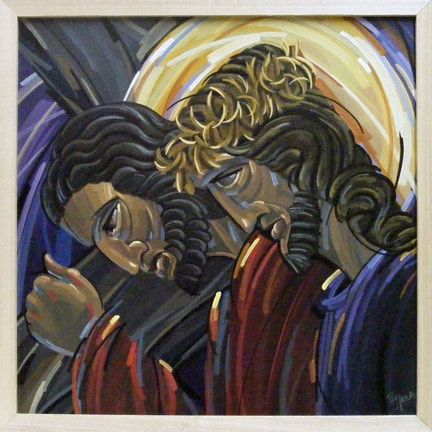
Simon of Cyrene

Photo credit:  http://www.vibrantlives.net/blog/simon-of-cyrene

This week, I was scheduled to gather with my ecumenical brothers and sisters and preach about Simon of Cyrene.  I had initially been very excited about the assignment.  During Lent, we were all assigned people to preach about who are associated with the Stations of the Cross, and Simon has always fascinated me.  But it was not until I started preparing to preach that I realized why I had found his story so intriguing.  After having looked and looked, each of the synoptic gospels gives Simon of Cyrene one verse of text.  One verse.  That is all.  We have this dramatic event that occurs as Jesus struggles to carry his cross, so dramatic that a whole station of the cross is dedicated to him.  And yet, everything we know about him is encapsulated in one verse.

Now, we do know some details.  He is from Cyrene, which means he was likely in Jerusalem on a trip there for religious devotion.  We know he is a father.  And we know he did not volunteer or chose to help Jesus.  He was made to help Jesus.  That is all we know.  Anything else we want to know – whether he connected with Jesus powerfully in that moment; whether he helped Jesus begrudgingly, out of fear, or with compassion; whether his life was changed by the moment or he never thought of the moment again.  We simply do not know.

Instead, what we really learn about in this moment is not about the psyche or spiritual development of Simon.  Instead, what we really learn about is Jesus.  This past Sunday, I talked in my homily about how what is most powerful about the story of Jesus and the woman at the well is not the scandalous, but the ordinariness of Jesus – the fleshiness of the incarnation.  That is what I think Simon does for us in this one verse.  Simon reminds us of how very human Jesus was – so physically exhausted, he needed help.  So very abandoned, his own loved ones or disciples did not step forward to help him.  So very humiliated, a stranger was forced to see his humiliation up close.

As we are in the midst of a pandemic that affects the body, I am feeling very grateful this week of the reminders of Jesus’ fleshiness on this earth.  I am reminded that no matter how alone we feel, no matter how exhausted we are, no matter how much we hate to ask for help (especially from a stranger), our neediness right now is akin to the experiences Jesus had in his life.  In essence, Christ is in our suffering because he suffered too.  Of course, that does not solve this virus or change our reality much.  But I am deeply comforted knowing that Jesus is standing with us as we work our way through this virus.  I hope you can feel that same hope too.

On the Blessings of Interdependence…

04 Wednesday Mar 2020

Posted by jandrewsweckerly in Uncategorized

≈ Leave a comment

Tags

blessing, Christ, Christian, community, help, interdependence, Jesus, need, prayer, role reversal

interdependence

Photo credit:  https://bcalmbcorp.com/rising-interdependence-agreements-are-not-so-far-5947ba50d170

This past Sunday was my first attempt to start using my voice professionally after a bout of laryngitis.  My voice was feeling strained after the second service, so I wandered away from coffee hour and back in the nave to reorder my sermon and rest my voice.  As I was there, I noticed the volunteers at the healing altar tidying up their station.  I have never visited the station in my almost four years of ministry here because I am usually administering or assisting with communion at the time they are working.  But as my gaze settled on them, I realized there might be no better time to get some healing prayers.

In receiving the parishioner’s prayers for healing, I began to understand how much I have had to lean on others for help in this illness:  from the deacon to help with pastoral care calls (because I literally couldn’t speak), to the two retired priests who helped lead services I could not have led alone, to the choir who sang a song so powerful it became a healing balm, to the countless parishioners who prayed for me and simply patiently waited for my strength to return, to my own family who kindly trudged through family life with a Magna Doodle board.  As a person whose job is to care for a community of people, it is a strange feeling to not only not be able to do your job, but also to need the kind of care you usually offer to your own community.

I’ve been thinking this week how much we need, and yet rarely get, that kind of role reversal in our lives.  We are all problem-solvers, hard workers, and generally responsible for ourselves in life.  But sometimes, whether through injury, illness, or other obligations, we simply cannot fulfill our responsibilities or expectations, and are left at the mercy of others.  I am convinced that these seasons of need are the only thing that is keeping us in check to thinking we have no need for community.  Being at someone else’s mercy from time to time teaches us how interdependent we truly are – not only upon one another, but upon Christ.

Being a part of a community you can trust with that vulnerable need for mercy is at the heart of the Christian experience.  Without leaning into the community from time to time, we cannot learn how to lean into Jesus – how to come to Christ for help when everything is overwhelming, difficult, or seemingly impossible.  By learning to say, “I need your help,” to other human beings, we train ourselves to do the same with God – to honestly and authentically say to God, “I need your help.”  If you do not have that kind of community in your life, please know that you are always welcome at Hickory Neck.  And if you are a part of our community, and have not yet leaned into to others, know that our interdependence is mutual!  You are needed here!

The Pilgrim’s Way…Day 8

14 Friday Feb 2020

Posted by jandrewsweckerly in Uncategorized

≈ Leave a comment

Tags

beginning, canticles, Christ, diverse, end, evensong, God, grow, Holy Spirit, longing, pilgrimage, prayers, question, songs, stories, variety, wandering, Westminster Abbey

84540568_2896312937091614_6368332770682339328_n

Photo credit:  Jennifer Andrews-Weckerly; reuse with permission only

Sixteen pilgrims from Hickory Neck Church traveled to England for 8 days of pilgrimage.  Our focus was on choral music, hearing Evensong or Choral Mass at a Cathedral, Minster, or college everyday.  This is the last entry, initially posted on our church Facebook page.  For those of you who do not follow us on Facebook, I am repeating the journey’s daily entries here.  Enjoy!

London – Westminster Abbey

The full last day of our pilgrimage was a free day until Evensong. What was fascinating was how varied our experiences were. Some pilgrims chose museums, some did tours of government-related buildings (historic and modern), some did touristy things, and some rested or visited local friends. I was surprised by the limited overlap in our choices, and realized how diverse our interests really are.

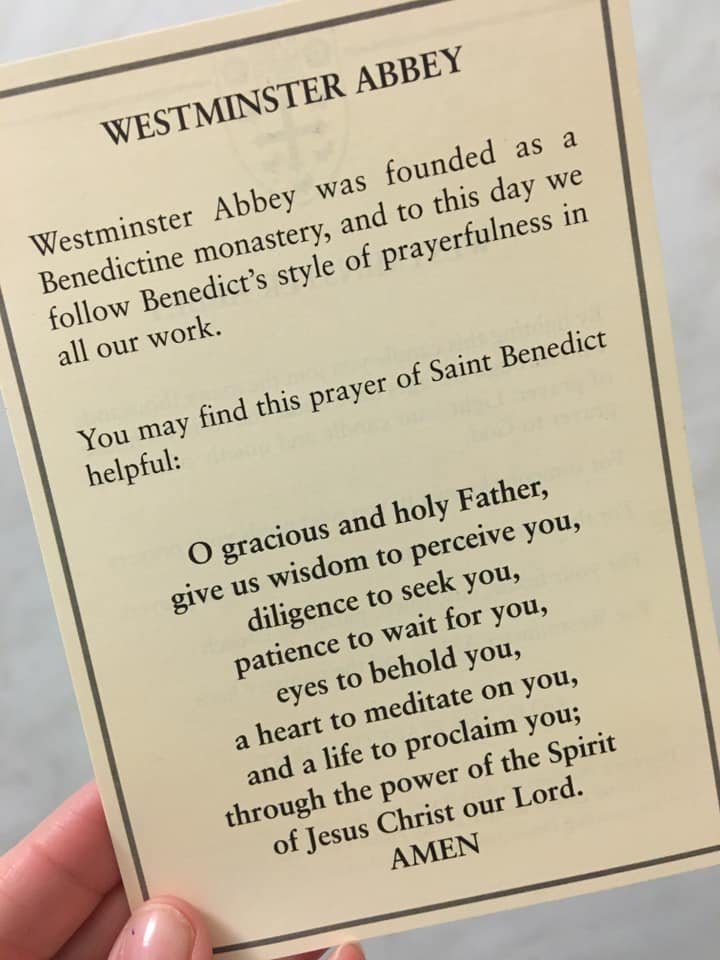
That is part of what has been so beautiful about this experience. We represent a variety of ages and phases of life, backgrounds, and spiritual journeys. And yet, we all had a longing for something – a desire to know God more fully, to walk with Christ more intentionally, and experience the Holy Spirit more playfully. The commonality in our diversity made Evensong even more beautiful tonight. We gathered back in from our wandering and settled into the prayers, canticles, and songs that have rooted us this entire pilgrimage. As the boys and men artfully played one another’s voices against each other, sounds seemed to be all over the place, and yet majestically all together. Our journey mirrored the singing at Westminster Abbey in profound ways.

As we return from our pilgrimage, I encourage you to ask questions, to hear stories, and to grow with us. Our pilgrimage may feel like it is ending, but our pilgrimage is just beginning with you.

85023488_2896313000424941_3665780026227294208_n

Photo credit:  Jennifer Andrews-Weckerly; reuse with permission only

The Pilgrim’s Way…Day 7

13 Thursday Feb 2020

Posted by jandrewsweckerly in Uncategorized

≈ Leave a comment

Tags

Christ, community, evensong, faith, feel, God, guide, hear, history, London, pilgrimage, profound, space, spiritual, St. Paul's Cathedral, Westminster Abbey

84582427_2894152720640969_3643179195351171072_n

Photo credit:  Jennifer Andrews-Weckerly; reuse with permission only

Sixteen pilgrims from Hickory Neck Church traveled to England for 8 days of pilgrimage.  Our focus was on choral music, hearing Evensong or Choral Mass at a Cathedral, Minster, or college everyday.  This is the seventh entry, initially posted on our church Facebook page.  For those of you who do not follow us on Facebook, I am repeating the journey’s daily entries here.  Enjoy!

London – Westminster Abbey/St. Paul’s Cathedral

Today’s journey highlighted a truth about our spiritual lives in general. One of the tricky dynamics of being a pilgrim in cathedrals, minsters, and colleges is you need a guide to teach you and create a depth of learning and growth. What the naked eye sees only gets you so far. Then you need someone who can explain how many years worship has happened there, why you are only one pilgrim in centuries of pilgrims, and how our history informs our present. Our guides are not just historical guides; they are spiritual guides too.

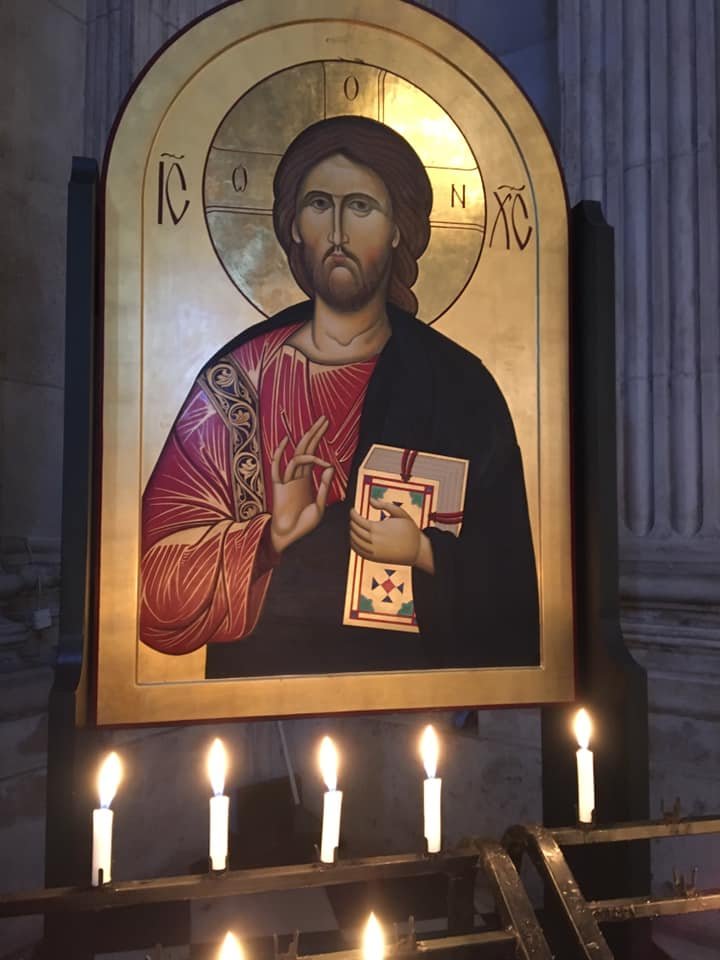
But the other part of pilgrimage is experience. No three hour lecture can replace the experience of staring at beautiful arches, stained glass windows, modern art, or a flickering prayer candle. No amount of talking can help you hear God more than just sitting and listening. No lesson on the historical period of a composer can help you hear the intricacies of Evensong that can sometimes take your breath away. Sometimes pilgrimage is about making space to hear and feel God in profound ways – in ways that are hard to access in the hubbub of everyday life.

Today was such a day. The morning was full of kings, queens, murder, theft, and a lot of royal history as it relates to the faith. This afternoon was about making room for God. And Evensong was a breath of fresh air – with sounds of comfort, of embracing gentleness, of the maternal nature of God. Today was about finding a spiritual guide and then letting go in order to meet God on your own.

Where are you on your journey? Do you need a guide, or perhaps a faith community, to start enriching your spiritual life? Or do you need to let go of learning for a time and simply bring yourself to God’s house for either new connections to Christ, or to recall richer spiritual times, waiting for enlightenment? I can’t wait to hear about your pilgrimage!

85121020_2894152613974313_5887720260903108608_n

Photo credit:  Jennifer Andrews-Weckerly; reuse with permission only

The Pilgrim’s Way…Day 4

10 Monday Feb 2020

Posted by jandrewsweckerly in Uncategorized

≈ Leave a comment

Tags

Christ, claim, Coventry, faith, forgive, God, inspire, love, Oxford, persecution, pilgrimage, reconciliation, witness

85028394_2887868867936021_715629181731340288_n

Photo credit:  Jennifer Andrews-Weckerly; reuse with permission only

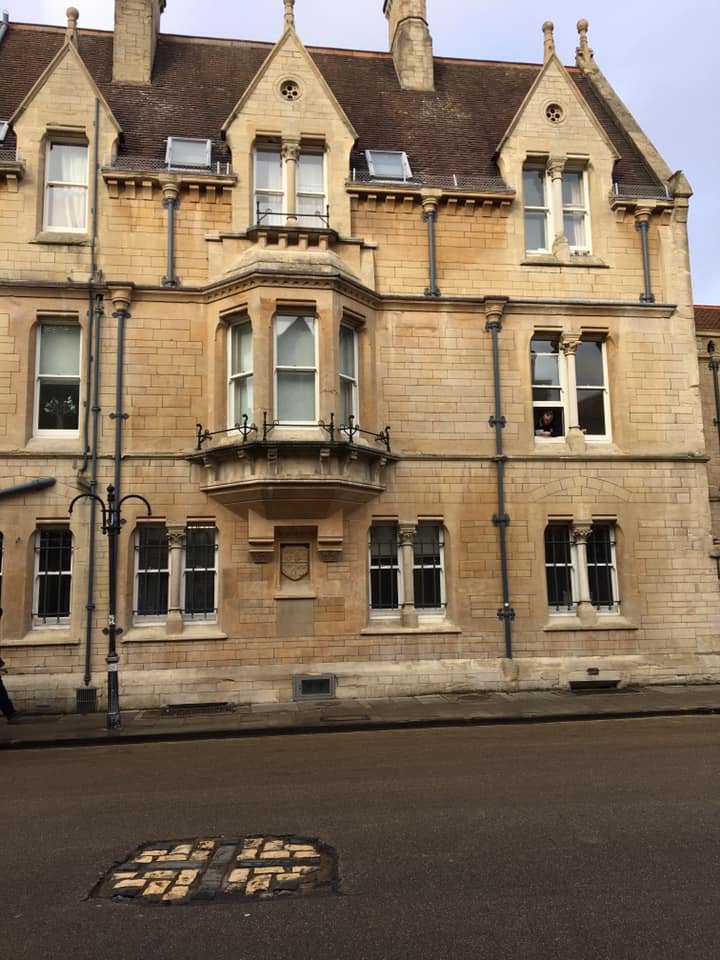
Sixteen pilgrims from Hickory Neck Church traveled to England for 8 days of pilgrimage.  Our focus was on choral music, hearing Evensong or Choral Mass at a Cathedral, Minster, or college everyday.  This is the fourth entry, initially posted on our church Facebook page.  For those of you who do not follow us on Facebook, I am repeating the journey’s daily entries here.  Enjoy!

Coventry/Oxford

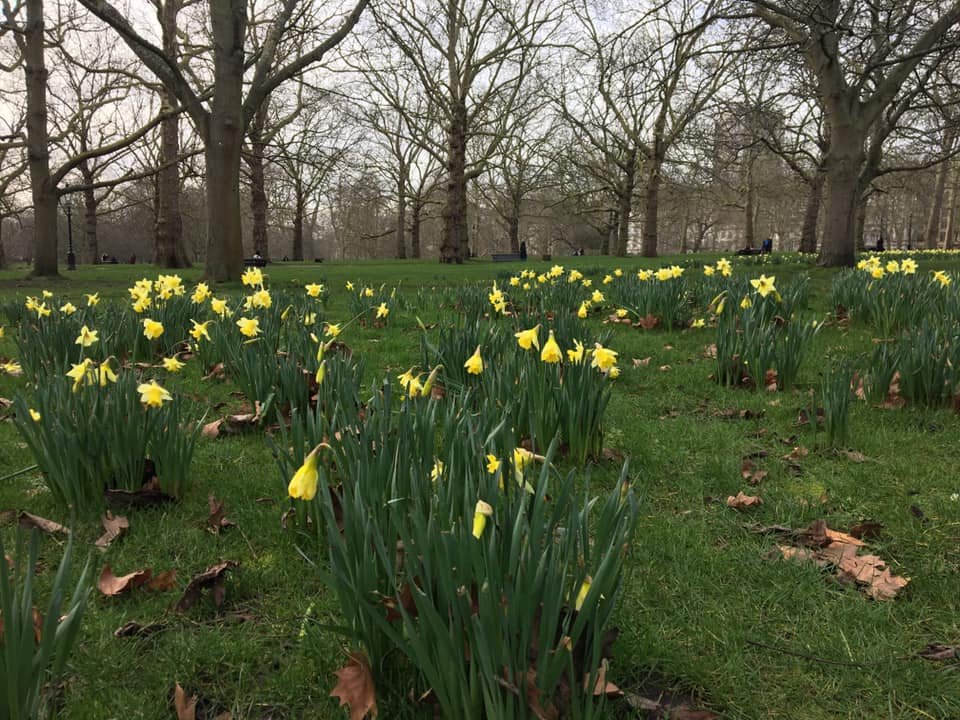
Today I was struck by the notion of our lives as “witness.” Following the bombing of the medieval Cathedral in 1940, Provost Howard had the words “Father Forgive,” inscribed on the wall behind the altar of the ruined building. Howard had many ways he could have pastored the community. But by asking God to forgive, he led his people to forgive their enemies, but also forgive themselves who were complicit in war too. His witness of forgiveness inspired a community to embrace reconciliation over retaliation, love over hate, life over death.

Meanwhile, Bishops Cranmer, Ridley, and Latimer had the option renounce their new Protestant identity and return to their Catholic roots – the only identity they had ever known. Instead, they bravely faced fire over their faith. Their witness inspired countless others to hold fast to their faith, to choose what is right, to trust God even until persecution and death.

I wonder what witness you are embracing today. How are you claiming Christ in a way that inspires others? I can’t wait to hear about it!

84686777_2887868871269354_7932178037292924928_n

Photo credit:  Jennifer Andrews-Weckerly; reuse with permission only

← Older posts
Newer posts →

Recent Posts

  • On the Myth and Magic of Advent…
  • On Risking Failure and Facing Fear…
  • Sermon – Luke 23.33-43, P29, YC, November 23, 2025
  • On Inhabiting Gratitude…
  • Sermon – Luke 20.27-38, P27, YC, November 9, 2025

Archives

  • December 2025
  • November 2025
  • October 2025
  • September 2025
  • August 2025
  • July 2025
  • June 2025
  • March 2025
  • February 2025
  • December 2024
  • November 2024
  • October 2024
  • September 2024
  • August 2024
  • July 2024
  • June 2024
  • May 2024
  • March 2024
  • February 2024
  • January 2024
  • December 2023
  • November 2023
  • October 2023
  • September 2023
  • August 2023
  • July 2023
  • June 2023
  • May 2023
  • March 2023
  • February 2023
  • January 2023
  • December 2022
  • November 2022
  • October 2022
  • June 2022
  • May 2022
  • January 2022
  • December 2021
  • November 2021
  • October 2021
  • September 2021
  • August 2021
  • June 2021
  • May 2021
  • April 2021
  • March 2021
  • February 2021
  • January 2021
  • December 2020
  • November 2020
  • October 2020
  • September 2020
  • August 2020
  • July 2020
  • June 2020
  • May 2020
  • April 2020
  • March 2020
  • February 2020
  • January 2020
  • December 2019
  • November 2019
  • October 2019
  • September 2019
  • August 2019
  • July 2019
  • June 2019
  • May 2019
  • April 2019
  • March 2019
  • February 2019
  • January 2019
  • December 2018
  • November 2018
  • October 2018
  • September 2018
  • August 2018
  • July 2018
  • June 2018
  • May 2018
  • April 2018
  • March 2018
  • February 2018
  • January 2018
  • December 2017
  • November 2017
  • October 2017
  • September 2017
  • August 2017
  • July 2017
  • June 2017
  • May 2017
  • April 2017
  • March 2017
  • February 2017
  • January 2017
  • December 2016
  • November 2016
  • October 2016
  • September 2016
  • August 2016
  • July 2016
  • June 2016
  • May 2016
  • April 2016
  • March 2016
  • February 2016
  • January 2016
  • December 2015
  • November 2015
  • October 2015
  • September 2015
  • August 2015
  • July 2015
  • June 2015
  • May 2015
  • April 2015
  • March 2015
  • February 2015
  • January 2015
  • December 2014
  • November 2014
  • October 2014
  • September 2014
  • August 2014
  • July 2014
  • June 2014
  • April 2014
  • March 2014
  • February 2014
  • January 2014
  • December 2013
  • November 2013
  • October 2013
  • September 2013
  • August 2013
  • July 2013
  • June 2013
  • May 2013
  • April 2013
  • March 2013
  • February 2013
  • January 2013
  • December 2012
  • November 2012
  • October 2012
  • September 2012

Categories

  • reflection
  • Sermons
  • Uncategorized

Meta

  • Create account
  • Log in
  • Entries feed
  • Comments feed
  • WordPress.com

Blog at WordPress.com.

  • Subscribe Subscribed
    • Seeking and Serving
    • Join 394 other subscribers
    • Already have a WordPress.com account? Log in now.
    • Seeking and Serving
    • Subscribe Subscribed
    • Sign up
    • Log in
    • Report this content
    • View site in Reader
    • Manage subscriptions
    • Collapse this bar
 

Loading Comments...