• About

Seeking and Serving

~ seek and serve Christ in all persons

Seeking and Serving

Tag Archives: Christian

On Being an American and a Christian…

03 Wednesday Jul 2019

Posted by jandrewsweckerly in Uncategorized

≈ 3 Comments

Tags

American, asylum, baptism, children, Christian, complicated, Detention, diverse, faith, God, gospel, immigration, Jesus, politics

6d4151a40a463e26db746895528eb216

Photo credit:  https://www.pinterest.com/pin/439734351090290865/

Last week, several of the interfaith clergy in our community published a litany for children in detention centers.  They requested clergy leaders read the litany in their homes of worship – not in a special vigil, but in the heart of where weekly prayer and formation take place.  The litany was beautiful, and spoke to much of my own sense of despair about our treatment of children.  But I found myself in a quandary.  You see, my parish is a diverse one.  We pride ourselves on being Christians of varying political opinions who respect one another enough to honor our political differences by kneeling as equals at the Lord’s table.  In order to maintain that sense of respect, I am very careful about how I talk about current events.  My goal is always to preach the gospel of Jesus Christ, with the charge that we should engage in politics with the Gospel always in the forefront.

But the issue of children in detention centers tugs at me at two levels.  On the one hand, this is very much an issue of politics – of how we manage the flow of immigrants and those seeking asylum into our country.  I know our parishioners are of a divided mind on this issue – as is most of the country.  The issue of our borders is vastly layered – were it not so, there would be clear, easy answers to very difficult questions.  In addition to being a political, economical, sociological issue, this is a spiritual one as well.  One’s sense of gratitude for our country’s blessings, one’s baptismal covenant to respect the dignity of every human being, and one’s understanding of Christ’s command to love God and love neighbor collide with the realities of limited resources, stretched budgets, and funding priorities.

On the other hand, these are children.  These are eight-year-olds caring for unrelated infants.  These are nursing teen mothers with no diapers or place to lay their heads.  These are toddlers who have no way to wash their hands or clean their soiled clothing.  I look at my own children, who have every comfort they could ever need, and when I imagine them soiled, hungry, deprived of sleep, and so afraid that the color has drained from their faces, my heart shatters.  I know this issue is truly complicated, and I know that philosophically we as a country need to decide how we will manage the treatment of our neighbors.  But when I am hesitant to pray for the welfare of children in detention because it is politically complicated, I realize I am failing to live the Gospel life.

I cannot say I will ever be able to pray the litany presented by my interfaith brothers and sisters.  Though it is beautiful, it is also politically motivated.  But what I can tell you is, as a pastor and baptized child of God, I am praying for those children, praying for their mothers and fathers, and praying for our own souls as we figure out how to reckon politics and human dignity – how to be Americans and Christians.  Given our country’s history, it would seem those two things fit together easily.  But to be a good American and to be a good Christian both take intentionality, discernment, and prayer.  May God bless us all as we seek to harmonize the two.

Sermon – Ephesians 4.25-5.2, P14, YB, August 12, 2018

22 Wednesday Aug 2018

Posted by jandrewsweckerly in Sermons, Uncategorized

≈ Leave a comment

Tags

baptism, children, Christ, Christian, Ephesians, faith, formation, God, identity, imitators, improve, love, offering, Paul, Sermon, systems, vacation bible school

I used to LOVE Vacation Bible School when I was growing up.  As a preacher’s kid, of course that meant I went to VBS at my dad’s church.  But I loved Vacation Bible School more than that.  I would sign up for VBS at the Baptist Church, the Presbyterian Church, and the Lutheran Church, and would beg, “Can I go? Can I go?”  I have always joked that what I really like about VBS was the crafts.  But as I watched our own children in Vacation Bible School this week at Hickory Neck, I began to wonder if my crafts assessment was entirely true.  I liked the songs too.  And the snacks.  And the storytelling.  I liked the instant comradery and the games and laughter.  I liked the feeling of being loved by people who did not even know me.  VBS was the first – and probably only since I did not go to church with many Baptists – place where I was asked if I had accepted Jesus as my Lord and Savior; and if I had not, I could ask Jesus to come to me in that moment.  My eight-year-old self was not sure what the pastor meant, but I did know a strange warming of my heart that night.

On those hot, humid summer nights, with the cicadas chirping and the lightning bugs flashing, VBS accomplished for me what I talked about with the Baptismal family last weekend.  When we prepare a child and their family for baptism, we talk about how their primary role is to raise the child up in the faith – get them to church, talk about Jesus at home, pray together, and read the Bible stories.  The parents and godparents are not flying solo with the task of raising the child in the faith – we as a community pledged just last week that we would be active in raising Dallas up in the faith.

As I watched our children at Vacation Bible School this past week, I slowly began to realize that we were doing just that – raising children up in the faith.  We were teaching them to pray, to sing, to learn, to tactilely use their bodies to engage Jesus.  And sure, there were games and snacks and laughter and silliness.  But there were also children who walked over to their neighbor’s houses and delivered VBS registration forms, inviting them into Jesus’ love too.  There were children who remembered their neighbors with pets and tentatively rang doorbells to deliver pet treats they had made with their own hands.  There were children whose joyous songs in the Public Library later that day brought hope to a man who had lost hope.  When I was a child, I was lured by crafts and snacks and potato sack races; but I left with love, and hope, and mercy.  I left knowing deep in my soul who Jesus was and what being a Christian meant.

This week I have begun to wonder if we might need an adult version of VBS; if we might need a week of evenings where we just spend some time with Jesus among the community of the faithful.  Bishop Curry would call that a revival, and Episcopal Churches are doing revivals all around the country.  I am not sure what we call that week matters, but I am beginning to wonder if we need those summer nights because we have fallen away from the practices Paul articulates today in his epistle to the Ephesians.  Paul is quite clear.  If we are going to claim the moniker of Christian, then our lives need to be signposts.  We need to speak truth to one another.  We need to not let anger rule our lives.  We need to make new ways for thieves and sinners to not only repent, but be fully restored into the world as those who not only contribute their labor, but who are freed to give their money to the poor.  We need to take on kindness, tenderness, forgiveness.  We need to be imitators of God, beloved children of God, living in love.

We hear Paul’s words today and say to ourselves, “Yes, yes, the world needs more of that.”  But what we really mean is, “Yes, that lady two rows over needs to start doing that,” or “Yes, that guy on my committee needs to be that.”  But Paul is not talking to our neighbor.  He is talking to us.  He is talking each person in this room saying, “You…I need you to live in the life of love, to be an imitator of God, to be…to be a Christian.”  And that is where the squirming begins.  I hear Paul’s words about not letting the sun go down on your anger and I can tell you there have been many a night when I was just not done with my anger – I needed to let my anger burn off before I could speak a word of forgiveness or, more importantly, a word or apology.  I hear Paul’s words about thieves and I am not worried about thieves being gainfully employed so they can make charitable contributions – I need them to punished for what they took from me.  I hear Paul’s words telling me to imitate God and I am incredulous that I could ever achieve such holiness – I need to worry about all those other people who are not imitating God towards me!

This week, I attended a conference called the Global Leadership Summit.  Founded over 25 years ago, the conference is for all people, regardless of industry or position at work or home, looking to hone their leadership skills, to learn new techniques, and to refresh old learnings.  The Conference is held in Chicago, but through technology is live broadcasted all over the world, even to Williamsburg.  One of the things I took from the Summit was that my leadership improvement work was primarily about improving myself.  Craig Groeschel reminded us, “When the leader gets better, everyone gets better.”  His message is the same message we teach congregations and families through family systems work.  The only person you can improve in a system is yourself – even though you know for certain your brother Bob is the real problem.  System experts live by this understanding though because they have witnessed time and again when one person in the system gets better, he or she creates a ripple in the system – and almost magically, everyone else starts getting better.

The reason why we send our children to VBS or Sunday School or Children’s Chapel is because we want them to know, and love, and embody Christ.  We want them to be imitators of God, beloved children, who live in love, as Christ loved us.  But what we sometimes forget in helping our children grow in Christ is that we adults need to grow in Christ too – to become those imitators of God, beloved children, who live in love, as Christ loved us.  We like to bemoan the state of the world today – to look at how we are so divided and cannot seem to come together and we want to just give up on the world, or worse yet, we want to bury our heads in the sand and not come back up until things magically get better.  But what Paul says to us today is not to worry about everyone else.  Start working on yourself.  Now whether that means you need to go to a Leadership Summit, or join a Bible Study, or commit to coming to Church regularly, or maybe agree to help with VBS so you can absorb some of that joyful goodness – do something for your faith formation today.  Systems work teaches us that the only person we can change in a dysfunctional system is ourselves.  Paul looking at Ephesians or the United States in 2018 would same the same – work on yourself, imitate God, live in love, make your life like Christ’s – or as Paul says, “a fragrant offering and sacrifice to God.”

I know that Episcopalians are pretty divided about the use of incense.  I have always loved incense.  The parish I served in Alexandria used incense every Sunday.  I loved how the scent lingered in my hair and on my clothes after church.  Sometimes, I would bring my alb home, and when I opened the bag, the fragrance of incense wafted into the room.  Years later, on the occasions my other parishes used incense, I found the scent had a calming effect on my body.  That fragrance was my physical, tangible way of remembering that I was in the presence of God.

When Paul invites us to be a fragrant offering, he is inviting us to be that tangible reminder of God that lingers behind.  When we respect the dignity of every human being, our Christian fragrant offering lingers behind.  When we are kind, tenderhearted, and forgiving, our fragrant offering lingers behind.  When we seek to imitate God in our lives, even as others see us fail and try again and again, our fragrant offering lingers behind.  I am not saying our work on ourselves will be perfect right away – or even ever help us achieve that true fragrant offering.  But what Paul encourages us to do is try.  To put ourselves in places where we can grow in faith and love and mercy so that we can become those fragrant offerings that linger with others.  And Paul knows we can do that work because God is with us to enable us.  Our invitation today is to accept the challenge:  to not leave behind the foul odors of anger, judgment, and malice, but through our baptismal-life striving through our faithful work on ourselves, to leave behind the fragrant scent of God.  What happens after that is God’s work.  Amen.

On Politics, Priests, and Prayer…

20 Wednesday Jun 2018

Posted by jandrewsweckerly in Uncategorized

≈ 4 Comments

Tags

American, Bible, Christian, communion, dignity, disciple, diversity, Episcopal Church, Eucharist, Good News, gospel, Jesus, policy, politics, prayer, priest, scripture, table

lightstock_99088_medium_david_needham

Photo credit:  https://www.lebanonfbc.org/ministries/power-prayer-pop

One of the hardest parts of being a priest is creating a community in which we can talk about the Gospel of Jesus Christ, hold widely varying political opinions, and yet still gather at the Eucharistic Table – elbow to elbow, as the imperfect, but beloved body of Christ, determined to stay in community.  I say that the work is difficult because I have seen how fragile this work really can be.  During my priestly formation at seminary, congregations and Dioceses were walking away from that common table over the issue of human sexuality.  Although I was proud of what the Episcopal Church did at the time, I also deeply mourned the loss of diversity at the Table – the creation of a more homogenous Church than a Church who was devoted to staying in the tension while honoring the Gospel.

Because of my high value of the uniting force of the Eucharistic Table, my priesthood has taken a slightly different shape than I might have imagined in my early twenties.  If you had asked me then about the primary role of the priest, I might have argued the role of prophet – decrying injustice and leading the people of faith to a more just world.  But as I aged, and as I served diverse parishes, I began to see the role of prophet is one of many roles, one that needs to be used judiciously so as not to alienate parishioners and create an exclusive community of like-minded people.  And so, my priesthood has been marked with great caution around politics.  While many of my colleagues will beat the drum for justice, I find myself trying to carefully walk with my diverse congregations as we discern together how to interpret politics in light of the Gospel – not in light of Democrats or Republicans, but in light of the witness of Jesus Christ.  That doesn’t mean I don’t have strong political opinions; it just means that I try to take focus off the politician or political issue of the moment and try to create disciples who can see and follow Christ.

That being said, this past week, the issue of what is happening to families seeking asylum on our southern border, and the separation of children from parents as a punitive, purportedly deterring action has shifted my normal practice – not because I changed my mind about politics and the Church, but because two agents of our government utilized Holy Scripture to justify those actions.  Here’s the thing:  if this were just another issue where we are divided about policy, where we had a debate about the extents to which we value national security over other values, I would have happily encouraged our parishioners to be faithful Christians in dialogue.  But when Attorney General Jeff Sessions invoked Holy Scripture to justify separating children from parents, he stepped into my area of authority, leaving me no other option but to speak.

Now I could layout a Biblical defense against the small portion of Romans 13 that Attorney General Sessions quoted, giving you the context of the chapter, giving you the verses immediately following what he quoted as a counter to his argument.  I could quote to you chapter and verse for countless other scripture lessons that tell us to love one another, respect the dignity of other human beings, care for the outcast and alien, tend the poor, and honor children.  I could also tell you about how that same bit of scripture was used to justify slavery, Nazis, or apartheid in South Africa.  But the problem with a scripture quoting war is that no one wins.  What is more important is what we know of the canon of Scripture:  that our God is a God of love, that Jesus walked the earth showing us how to be agents of love, healing, and grace, and that the Holy Spirit works through us today to keep spreading that love.

Knowing what I know about the Good News of God in Christ, in my baptismal identity as one who seeks and serves Christ in all persons, respecting the dignity of every human being, I cannot stand idly by or be silent when the Holy Scriptures of Christians are being used to justify political actions that are antithetical to our Christian identity.  As a priest, I invite you this week, especially when a governmental leader is invoking our faith, to reflect on how the Gospel of Christ is informing your view on this issue.  Not as a Republican and not as a Democrat, but as a follower of Christ.  Fortunately, prominent politicians on both sides of the aisle seem to be coming to agreement on this issue – a rarity these days – but also an example to Episcopalians who hold a high view of coming to the Eucharistic Table across our differences.  I am not saying we need to agree on this – in fact, I suspect we will not.  What I am asking is that you live into your identity as a disciple of Christ, as an agent of love, and then respond in conversation, in political advocacy, and in worship as one holding in tension both our American and Christian identities.  I support you in this difficult, hard work.  I love you as you struggle.  I welcome you to the Eucharistic Table.

Sermon – Luke 24.36b-48, E3, YB, April 15, 2018

19 Thursday Apr 2018

Posted by jandrewsweckerly in Sermons, Uncategorized

≈ Leave a comment

Tags

afraid, Christian, disciples, God, hiding, identity, Jesus, judge, Sermon, witness, world

Last month I was talking to Pastor Alex from Stonehouse Presbyterian.  We were walking toward our cars and he complimented my license plate, noting how fun spotting my plate around town has been.  I chuckled and told him the plate had been both a blessing and a curse.  He asked me what I meant, and I explained.  You see, I love the plate for the very reason he mentioned – that I run into people who recognize my plate, that people connect who I am with what I do, that people ask me about my vocation and about Hickory Neck.  But the plate is also a bit of a curse.  If I had to choose any place to be a witness for Christ, I am not sure the car is the best location.  You see, the car is where I leave prayer books, post-its about phone calls, gum wrappers, and coffee cups.  The car is where I cart around children – sometimes singing at the tops of our lungs to a favorite song, and sometimes scowling after an argument about behavior.  The car is where I find a moment to getaway before picking up children, and the car is where I sometimes reveal that I once lived in a region of the country that is known for impatient, sometimes foul-mouthed drivers.  The car is not really home to my best witness for loving Christ.  And yet, there is where a big plate – on both the front and the back – witnesses to the world who and whose I am.

That is what I find so funny about the disciples this week.  Here they are in Luke’s gospel, not unlike what we heard in John’s gospel last week, hiding in a room, afraid, disbelieving, and wondering what to make of all that has happened.  To be fair, life has gotten a bit chaotic of late.  Their whole world has gotten turned upside down since that beautiful, sacred night when Jesus washed their feet.  They had ideas about what was coming in their life, what was going to happen to Jesus, and how the world would be changed.  But Jesus dies, they are outcasts, and God seems to have closed a door – a tomb door.  Then, just days later, their world gets upended again.  The disciples learn from the women that the same closed tomb door is now open.  Two of the disciples have an encounter with the risen Christ on the road to Emmaus.  And as if all of that is not enough, today, Jesus shows up – very much alive, proving his corporality, teaching them, and reminding them they are witnesses.

The disciples certainly have our sympathy and concern.  And yet, the disciples remain holed up in a room – as if they can hide.  As if they can integrate back into the world, with no one realizing who and whose they are.  As if no one will notice the license plate on their car that says, “Jesus’ disciple.”  The disciples are hiding, acting as though no one is watching, no one is making conclusions about them based on their behavior, no one is making conclusions about Christ.  Their hiding is just as much of a witness as going out into the community.  Perhaps they feel being in that room is giving them a break from being witnesses – that no one sees them.  But we know better.  And so does Jesus.  “You are witnesses of these things,” says Jesus.

Sometimes we do the exact same thing.  We too can start to believe that we have hiding places in our lives – places where we do not have to be witnesses.  Maybe yours is a car.  Maybe yours is at work or school because those places seem more removed from what we do here on Sundays.  Maybe yours is at home, on vacation, or when surrounded by friends.  Like the disciples, we too have that same longing to “turn off” our witness.  Maybe we are just tired and feel like being a witness for Christ is exhausting.  Maybe we are upset with or disappointed in God and are not sure communicating those feelings helps our witness of Christ.  Or maybe we are just afraid – that people will notice that we do not live lives that reflect who and whose we are.

But “turning off” our identity as people of faith is not really an option.  Sooner or later we will get caught.  Sometimes being caught can be a very positive thing.  An acquaintance who knows you go to church may ask you to add them to your church’s prayer list because they or their child just received a horrible diagnosis.  But sometimes being caught can be less flattering.  At our Adult Forum series on evangelism this fall, we watched a video about how not to invite people to church.  The video features two neighbors, one who is out gardening in the yard and the other who is clearly just coming home from church.  The neighbor who is out gardening wonders to himself, “I wonder why he never invites me to his church.  I would go if he asked me.”  But sometimes being caught can be even worse.  I had a friend who waited tables during college.  She always moaned when she got her work schedule and discovered she was assigned a Sunday.  I finally asked her why she hated Sundays so much.  She said, “Because that’s when all the churchgoers go out to eat – and they are the worst tippers!”  Somehow, in all her long hours of trying to make a few bucks to pay for books and school fees she had gotten the message that people of faith did not value her.

We know from experience that hiding as a Christian is really an illusion.  Wherever we are, whenever we are, with whomever we are, our identity is always there.  Jesus confirms that today.  As biblical scholar Karoline Lewis says, “Jesus’ address to the disciples is not, ‘you will be witnesses.’ Not, ‘please be witnesses.’ Not, ‘consider being witnesses if you have time.’ No, [Jesus says] ‘you are witnesses of these things.’ We are witnesses.  As it turns out, witnessing is not voluntary, but a state of being.”[i]  Lewis goes on to add, “‘We are witnesses’ does not depend on our acceptance or agreement or approval. ‘We are witnesses’ does not depend on our readiness or recognition or responsiveness. ‘We are witnesses’ just is.”[ii]  The disciples learn that today.  When Jesus says, you are witnesses, he empowers a very scared, uncertain, fearful group of followers to remember who and whose they are.

The good news is that Jesus does not judge the disciples today.  Jesus meets the disciples where they are.[iii]  Jesus’ first words are words of encouragement.  “Peace be with you,” he says.  Then, ever the tender pastor, Jesus asks the question in verse 38, “Why are you frightened, and why do doubts arise in your heart?”  Knowing their confusion, Jesus eats with them to assure them he is really there, not just some ghost or figment of their imagination.  He sits down and teaches them once again, taking them back to their roots, reminding them of how the prophets have taught them all they need to know.  And then, come those fateful words in verse 48, “you are witnesses of these things.”  Jesus meets them where they are, offering comfort, assurance, and affirmation.  But Jesus also encourages them to move beyond where they are.

After September 11th, there were two widows featured on the news.  “Grateful for the outpouring of support they received, they started thinking about the women in Afghanistan who, when widowed, lose status in that society and therefore find their already difficult lives even harder.  They raised money and formed a foundation called Beyond the 11th to support Afghani widows, and even made visits to Afghanistan to meet the widows they were helping.”[iv]  Those widows had lot of options – fear, anger, vengeance, or isolation.  But instead, they remembered how Jesus encourages us to remember our identity as witnesses and to move beyond where we are.  Our invitation today is to reclaim that same identity.  Now I do not know if that means you go put a Hickory Neck bumper sticker on your car, or you start wearing that cross necklace again, or you start tangibly connecting your words and actions to your identity as a witness.  Only you can know the shape your witness will take.  But today Jesus invites us to let go of our hiding places, realizing that even when we think we are hiding, we are still witnessing.  Our invitation is to own who we are, so that others might see the beauty of who and whose we are.  Amen.

[i] Karoline Lewis, “We Are Witnesses,” April 9, 2018, as found at http://www.workingpreacher.org/craft.aspx?post=5126 on April 12, 2018.

[ii] Lewis.

[iii] Nancy R. Blakely, “Pastoral Perspective,” Feasting on the Word, Year B, Vol. 2 (Louisville:  Westminster John Knox Press, 2008), 424.

[iv] Blakely, 428.

On Keeping Watch…

13 Wednesday Dec 2017

Posted by jandrewsweckerly in Uncategorized

≈ Leave a comment

Tags

Advent, anxiety, Christ Child, Christian, community, devotional, God, Holy Spirit, insight, inspiration, keep, photo, speak, tension, watch, Word

f9f56881c6863e8e994df67022934897

Photo credit:  https://it.pinterest.com/pin/628252216738231468/

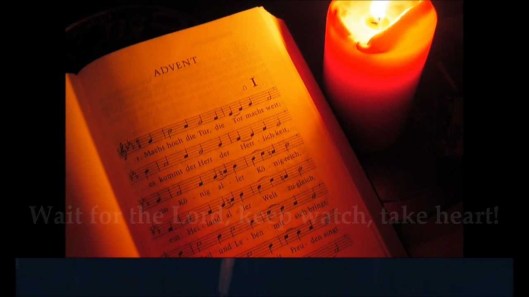
One of the themes we find in Advent is keeping watch.  Throughout the four weeks leading up to the birth of the Christ Child, we are to keep watch, preparing our hearts for the nativity of our Lord.  Traditionally, I have kept watch by using an Advent calendar or a special devotional book.  But this year, I am trying something new.  I have joined the Anglican Communion in a participatory Advent devotional called “Advent Word.”  Each day of Advent has an assigned word, and participants are invited to post a picture on social media that captures that word.

When I decided to join the Advent Word community, I was a bit nervous.  I worried what I would do if I could not figure out a picture to take or use that went with the daily word.  I have found my initial anxiety has not disappeared, but has created a sense of anticipatory tension.  Each day, I open up my email, and find a word and picture, with an invitation to prayer.  Then, throughout the day, I am keeping watch – for inspiration, for insight, for the Holy Spirit speaking to me anew through the images of everyday life.  By praying the word throughout the day, I am finding myself much more aware throughout the day, and much more attuned to God speaking to me in fresh ways.

In some ways, the anticipatory tension of participating in Advent Word has helped me accomplish the bigger goal of keeping watch during Advent.  Instead of having Advent slip by in the bustle of the season, each day has a poignancy and sense of meaning.  Instead of wishing away the days until Christmas comes, my Advent has become much more intentional and meaningful.

I wonder how your Advent is going?  Are you finding ways to keep watch?  If the days are slipping away, I invite you to find ways to slow down, and listen for the Holy Spirit who longs to prepare your heart for the Christ Child.  If you have found other ways to keep watch this Advent, I would love to hear about your experience.  If nothing else, I have learned this year that Christian community can be a wonderful partner in helping us keep watch.  If you are looking for such a community, Hickory Neck is full of everyday people who are happy to keep watch with you.

Sermon – Matthew 25.31-46, P29, YA, November 26, 2017

29 Wednesday Nov 2017

Posted by jandrewsweckerly in Sermons, Uncategorized

≈ Leave a comment

Tags

American, Christ the King, Christian, feeding, God, imprisoned, Jesus, king, kingdom of God, Messiah, naked, politics, Sermon, sick, stranger, Thanksgiving, thirst, vocation

This past weekend we celebrated one of the most significant American holidays.  Thanksgiving has evolved over time, but generally involves people gathering with family, friends, or neighbors over a meal to give thanks for the blessings of life.  The concept sounds rather innocuous, but the meal can be fraught with challenges.  A few days before Thanksgiving this year, I caught the results of a poll.  The poll said almost 70% of people were hoping to avoid talking about politics with their family this Thanksgiving holiday.  According to the survey, the percentage of people wanting to avoid talking about politics is one of the highest in years.  Even though the numbers are unprecedented, the results are probably not a surprise to anyone here.  Politics is one of those topics polite conversations are supposed to avoid anyway.  But given the especially high tensions of our political climate lately, I can totally understand why almost three-fourths of us would want to avoid talking about our country’s deep divisions and political differences.  No need to ruin a day of attempted unity with a conversation about the very thing that divides us most deeply.

So, on the Sunday following the day when everyone wants to avoid talking politics, what are we going to do?  Talk politics.  Now before you get too anxious, do not worry.  We are not invited to talk American politics.  Today, our readings invite us to talk about biblical politics.  Today, we celebrate Christ the King Sunday – the last Sunday in the liturgical year before we start Advent next week.  The feast of Christ the King is not actually that old of a feast.  Pope Pius XI established the feast day in 1925 in response to growing secularism and a deemphasis on the primacy of Christ.  At the time, Europe was seeing a rise in non-Christian dictators, many of whom were seeking to influence authority over the Church.  Pope Pius wanted to remind the Church who was the head of the church, and the primacy of Christ for the Church’s identity.  Establishing Christ the King Sunday was not only a bold move by Pope Pius, the feast day was also needed if the Church were going to remain loyal to its identity.

The historical setting of the creation of the holiday is not all that unique from the biblical struggle with kingship.  If you remember, God is not at all on board when the people ask for a king.  You see, the people of God have already been on a long journey.  Abraham had settled them in a faraway land, which God had promised would be their land.  But famine struck, and the people were forced to flee to Egypt for sustenance, submitting themselves to a pharaoh – a new king of sorts.  For a while, that arrangement was not so bad.  But a new pharaoh meant a harsh life of enslavement.  So, God once again led the people out of the rule of a king, into the wilderness and eventually the promised land.  And what do the people ask for upon their arrival?  A king!  You see, they have been watching the other nations who have kings, and they want their own.  God wants them to see how God is their king.  But eventually God submits, giving them their hearts’ desire.  As predicted, an earthly king does not go well.  Sure, there are moments of enjoyment and blessing.  There are even some kings who do well – king David and Solomon.  But even the good kings come with human flaws.  As time goes on, the bad kings outnumber the good ones, and eventually the kingdom of God is ripped apart, and the peoples are scattered.

That is where we pick up things today in Ezekiel.  Recognizing the earthly kings have not worked so well, God promises to take the throne back, to become the people’s king once again.  God becoming king means the people will be gathered once again in their promised land.  They will have their wounds bound, their stomachs filled, and their thirst quenched.  They will return to an abundant land, with the rule of a comforting shepherd.  The promise to the wearied people of God is assuring and soothing; a balm to a scattered, disheartened people.  Their failures are ever before them:  their insistence on an earthly king have gotten them where they are today.  But admitting failure hardly seems onerous with the promise of redemption by God.

By the time we get to our gospel reading today, the people are yet again under an oppressive rule.  Rome has put her heavy hand on the people of God, and their hoped-for Messiah has not arrived.  The expectation of the Messiah was for a mighty, God-ordained leader who would vindicate the people, and establish a time of prosperity, power, and peace.  There are rumors that Jesus might be that Messiah, but much of what he has to say does not jive with what they are expecting.  Take today’s lesson, for example.  Jesus tells them the reign of God will entail feeding the poor, giving drink to the thirsty, welcoming the stranger, clothing the naked, tending the sick, and visiting the imprisoned.  Those are all certainly good things to do, but they are not exactly what the people are thinking of when they imagine a Messiah.  Though those tasks are noble, they do not indicate a people who have triumphed over oppressive rule.

I suspect we know a little about that sense of disappointment and disorientation.  Now I know I said I was not going to talk about politics, but stay with me for a bit.  You see, no matter who our leader is, we will never be truly happy with an elected, human leader.  Human leaders, like those leaders in the times of Ezekiel are flawed.  Think of your favorite president in American history – the president that really represented the goodness of American ideals.  Think of all the great things he did, the advancements he made, the ways in which he made us a better country.  Now, in balance with all that goodness, think of all the flaws he had.  Every president had them.  For every advancement he made, there was an advancement he neglected.  For every inspiring quote he had, there were things he said that would make us shudder.  For every injustice he corrected, there were injustices he ignored.

That is the funny thing about being both an American and a Christian.  Though we have probably structured the government with the most potential for justice and balanced leadership, we still fall short of the goal – because we are human.  And because nothing we make or conceive or structure will be perfect, we lean into our Christian identity for guidance, comfort, and strength.  You see, the only king who will ever bring about a perfect kingdom is Christ.  And yet, even “perfection” is redefined by Christ.  The kingdom of God is not reproduced through democracy, socialism, monarchy, oligarchy, or totalitarianism.  The perfect system in Christ involves each us feeding the poor, giving water to those who thirst, welcoming the stranger, clothing the naked, tending the sick, and visiting the imprisoned.

I can imagine what you are thinking, because I am thinking the same thing.  Those jobs all sound nice, but how do we ensure justice, safety, and structure?  How do we govern?  The good news is, just as we talked about last week, we all have a vocation.  If feeding, sating, welcoming, clothing, tending, and visiting are the parameters of perfection, we are each to use our gifts to achieve that perfection.  So maybe your vocation is to physically feed the poor and sate the thirsty.  Maybe your vocation is to advocate for those in prison.  Maybe your vocation is to govern with the intention of creating laws that will tend the sick and clothe the naked.  How we approach perfection will vary widely, but that we strive toward perfection is what Christ asks today.  Christ is not actually all that worried about who our king is or what kind of government we choose.  Christ is concerned that our lives reflect his true kingship over us.  Christ wants us to live lives that, upon observation by others, make obvious who is our king.

Our invitation this week is to take stock of our daily living, making sure we have aligned our lives with the kingdom of God.  If you have gotten off track, there is time and support for correcting course.[i]  If you have mastered feeding the hungry, but are not so great at welcoming the stranger, this community is here to help you expand your kingdom work.  And if you are not sure you can get on board with this kingdom work at all, you may need to do what we all avoided this Thanksgiving – get to a table and start talking politics.  Jesus promises to be with us, joining us in the conversation, blessing our ponderings.  With Christ the King on our side, the work does not feel like work, the conversation does not feel like a curse, and the results produce much more for which to be thankful.  Amen.

[i] Stanley Hauerwas, Matthew:  Brazos Theological Commentary on the Bible (Grand Rapids:  Brazos Press, 2006), 212.

On Parenting and Other Failures…

23 Wednesday Aug 2017

Posted by jandrewsweckerly in Uncategorized

≈ Leave a comment

Tags

children, Christian, disciple, encouragement, failure, faith, faithful, God, hope, Jesus, love, parent, parenting, Peter

I have never really thought of myself as a very good parent.  I am constantly finding myself in the midst of parenting and thinking, “I really could be handling this much better.”  In looking back, I can see countless ways in which I escalated a situation instead of deescalated, in which I got stuck in wanting control instead of fostering independence, or in which I simply lost my cool.  Parenting sometimes brings out the worst in me, and on the really bad days, I feel like I am failing pretty miserably at the whole endeavor.

I feel that way about my faith sometimes too.  I know all the ways I am called to serve God and to be a faithful disciple.  But I often find myself failing.  For as many times as I can be like an insightful Peter, more often I am like the Peter who is sinking into the sea, trying to control what Jesus does, or putting myself in front of the gospel.  Reading about modern saints, or people who are making a difference with their life only makes me more aware of my many failings to live as a faithful Christian.

The good news is that children, and other people, often give us glimpses of hope and encouragement.  The other day, I was stirring from a nap with my youngest (who refuses to nap now unless you nap with her).  As she was waking up, she smiled at me and said, “You can be my best friend, Mommy.”  A few nights ago, my oldest requested to start using the same shampoo, conditioner, and soap that I use, instead of her 3-in-1 tear-free wash we have been using.  I sighed out of irritation, and asked her why.  She said, “Because I want to be like you, Mommy.  Except for your short hair!”

I laughed on both occasions, but both comments reminded me that for all the times I fail, there is still love.  For all the ways in which I mess up this parenting thing, there are glimpses of times when I managed to get it a tiny bit right.  I think the same is true for our faith life.  For all the ways we are horribly imperfect, we also have glimpses of powerful faithfulness.  I encourage you to listen to those around you to hear those little comments that will encourage you on your journey.  And then I invite you to straighten up, take a deep breath, and get back in there.  God is doing amazing things through you.  I can’t wait to hear all about it!!

Dad Teaching Daughter Electrical Engineering

Photo credit:  www.quoteambition.com/best-encouraging-quotes-words-encouragement/

On Disagreement and Hope…

15 Wednesday Mar 2017

Posted by jandrewsweckerly in Uncategorized

≈ Leave a comment

Tags

Bible, Christian, clergy, community, conversation, disagreement, God, hope, interpretation, Jesus, love, protest, relationship, scripture, sexuality, witness

hope (1)

Photo credit:  www.gwinnettpl.org/nine-books-on-hope-in-troubled-times/

Last week, I received an email directed to local pastors from a fellow pastor.  He wanted to draw our attention to the fact that the local elementary schools would be hosting an author whose most recent book features a family with two gay dads.  He was upset that the author had been invited and upset that the school board and principals had not been more upfront about the invitation to the author to parents and the community.  His email was an invitation for the clergy to come together to discuss what we might be able to do to voice our protest.

There were several things that alarmed me in the communication.  First, as a pastor and parent, not only am I not opposed to the author coming, I am quite pleased that a non-heteronormative story is being featured in our schools.  Second, and more importantly, I was concerned about a group of clergy gathering to present to the community the voice of the clergy – as though we are all of one mind.  At first I thought I would email the pastor, and then I thought I should email the schools and board.  But then I realized, no email or letter could fully express my concerns, and that kind of one-sided communication often leads to misunderstanding and assumptions.  And so, I decided to go.

I did not make that decision lightly.  I have many friends and family members who have a very different interpretation of the Bible and the issue of sexuality than me.  I have engaged in some deeply hurtful conversations around those topics, and knew I could be walking into a lion’s den going to the meeting.  But I kept thinking of my goddaughter, raised by two incredibly loving men, who have created a home that is a shining example of Christ’s commandment to love God and neighbor.  And so, I went.

I suspected we were heading for trouble as I listened to people talking before the meeting about how Christian morals are being corrupted by the world.  But when the meeting started, things shifted.  The inviting pastor opened with scripture, and then asked us to pray for God’s guidance and for each member of the School Board.  Out of those prayers came the same words I always use when talking about the wideness of God’s love:  inclusivity, love, transformation, loving neighbor as self, being a witness to Christ’s love.  I was fascinated to see how two opposing opinions could be rooted in the same biblical text and the witness of Christ Jesus.  After our enlightening time of prayer, people began to speak.  Some of the concerns were quite legitimate:  a lack of transparency from the schools and board, a lack of intentional engagement with the parents around the choice of the author, and a lack of clarity around why the decision was made.

Of course, where we differed was in the result we desired.  I braced myself and shared with the group why I was there.  Much to my surprise, no one freaked out, no one condemned me for my different perspective, and no one shut down.  Most of the other pastors and lay leaders were quite clear that they believe that scripture should be interpreted differently than I do, but there was no hate or malice.  We even learned that another pastor in the room shared my viewpoint.

What I came away with from the meeting was a sense of hope.  I have never seen such civility, such Christ-like conversation, as I saw that day.  I have rarely seen people of radically different opinions be able to stay at the table without walking away.  We did not change each other’s minds, but we also did not denigrate or disrespect one another.  Suddenly it hit me:  if we could take that kind of civil, Christ-like engagement out into the world, that would be a much more powerful witness of Christ’s love than pastors simply telling people to love each other without actually doing it.  I could even envision the two groups peacefully gathered at a School Board meeting, calmly presenting our opposing views; not witnesses to whether or not an author should be invited into the schools, but witnesses to what holy conflict and conversation look like.  It was a beautiful image, and a wonderful counter to our current political climate.

Now, I do not know if that image will ever come to fruition.  I do not know if the relationship-building we discussed will ever materialize.  But if nothing else, the meeting taught me that there is hope.  There is hope that God can work in the midst of conflict and disagreement and transform it into something sacred.  There is hope that we as a people can engage with one another respectfully despite our differences.  There is hope that Christ can do infinitely more than we can ask or imagine.

Sermon – John 13.31-35, E5, YC, April 24, 2016

27 Wednesday Apr 2016

Posted by jandrewsweckerly in Sermons

≈ Leave a comment

Tags

baptism, child, Christian, command, covenant, God, hard, identity, Jesus, live, love, neighbor, parent, Sermon, simple, speech, work

A few years ago, some friends of mine engaged in the elevator speech challenge.  The idea was simple.  If you were stuck in an elevator with someone for thirty seconds and were asked to tell them about your faith, what would you say?  The challenge was to explain to someone your faith in Jesus Christ in thirty seconds or less.  I remember when my friends started sharing their elevator speeches, I was totally intimidated.  First, I knew that if someone actually asked me to do this in an elevator, I would probably stutter through some answer, mostly filled with “ums” and “you knows,” and not much of substance.  But more importantly, even when I tried to sit down and give myself way more than thirty seconds to formulate my thirty-second speech, I could not do it.  I could not figure out how to distill everything that had happened to me in my faith journey, why I still believe and am so devoted to church, and who I believe the three persons of the Godhead to be.

The last night in the upper room that we hear about in our gospel lesson today is a little like Jesus’ elevator speech.  Although the disciples did not fully grasp the importance of that night, Jesus certainly did.  If you remember, back on Maundy Thursday, we joined Jesus and the disciples on this night.  Jesus tells the disciples many things.  He teaches them about the importance of servitude as he washes their feet.  He teaches them how to celebrate the Lord’s Supper.  But when Judas leaves at the beginning of our reading today, Jesus knows he is out of time.  The end is coming and he desperately wants to leave the disciples with a few words of wisdom.  Knowing his time is up, Jesus does not tell anymore parables or give them any convoluted metaphors.  He keeps his words simple and direct.[i]  “Love one another,” he tells them.  “Love one another as I have loved you.”  That is all he gives them.

His words are simple, perfect, and beautiful.  I am sure those words were in many of the elevator speeches I read.  God is love.  Our call is to love as Jesus loved us.  That is how others will know us to be Christians – through our love.  The problem is this:  though “love one another” sounds simple, perfect, and beautiful, loving one another is really hard work.  Think about that one family member who is so difficult – the sibling who always tries to start a fight, the family member who always has some story about why they need to borrow money from you, or that aunt who is just plain mean.  Jesus says we must love them.  Or think about that classmate who started a nasty rumor about you, the coworker who took credit for your idea, or that friend who shared your confidence with someone else.  Jesus says we must love them too.  Or think about that political candidate that you cannot stand, that religious leader who constantly says offensive things, or that homeless person you tried to help who was completely ungrateful.  Jesus says we must love them too.  Jesus words, “Love one another,” are simple, perfect, and beautiful.  But Jesus’ words are also hard, frustrating, and sometimes seemingly impossible.  Loving one another is at times the most wonderful, rewarding thing we do in this life, and at times is one of the most challenging, difficult things we do in this life.  But we love because that is what Jesus taught us to do.

Today we will baptize a child into the family of God.  Baptism is our sacred initiation rite.  During any initiation rite, we normally summarize what is most important to us so that the newly initiated person knows what we expect from her.  In this case, the parents and Godparents will be reminded of our ultimate priorities so that they can teach her in the years to come.  Most of those promises and priorities come in the baptismal covenant.  We ask five questions:  Will you continue in the apostles’ teaching and fellowship, in the breaking of the bread, and in the prayers?  Will you persevere in resisting evil, and, whenever you fall into sin, repent and return to the Lord?  Will you proclaim by word and example the Good News of God in Christ?  Will you seek and serve Christ in all persons, loving your neighbor as yourself?  Will you strive for justice and peace among all people, and respect the dignity of every human being?   The questions are big questions – the guiding principles of our faith.  But most of the questions boil down to that night in the upper room:  love one another.

As we think about baptizing Elaina today, and teaching her to love, some of us may feel overwhelmed.  We know how hard loving is.  Elaina will even teach her parents and godparents how difficult loving is:  when she learns and uses the word “no!”, when she throws her first epic temper tantrum, or when she first utters those dreaded words, “I hate you!”  But Elaina will also teach the parents and godparents how wonderful love is:  when she first calls you by name, when you first see her helping someone or tenderly comforting a crying friend, or when she finally learns those wonderful words, “I love you!”  Everyday her parents and godparents will have the chance to teach her about what her baptism means by showing her how to love.  They may not have a patented elevator speech, but Elaina will understand what her Christians identity means when she sees what “love one another” really means.

But today is not just about Elaina, her parents, and her godparents.  Today is for all of us.  Today is a day when we too can take stock of how well we are living into our own identity as baptized children of God.  Every day we can take a moment to remember where we have failed to show love and where we have excelled in showing love.[ii]  The moments will be small and sometimes seemingly inconsequential.  But all those tiny moments add up to a lifetime of loving one another.  And today we will promise to, with God’s help, keep trying to be a people who love another.  Loving one another may not be a fancy elevator speech.  But loving one another might be much more powerful in the long run than any fancy words we can assemble – because Jesus’ commandment today is not so much about what we believe, but about how we live.[iii]  Jesus did not tell us to love one another because he knew loving one another would be easy.  But Jesus did tell us to love one another because he knows that we can.  He has seen each one of us do that simple, perfect, and beautiful act.  Today, he invites us to keep up the good work.  Amen.

[i] Gary D. Jones, “Pastoral Perspective,” Feasting on the Word, Year C, Vol. 2 (Louisville:  Westminster John Knox Press, 2009), 468, 470.

[ii] David Lose, “On Loving – and Not Loving – One Another,” April 21, 2013, as found at https://www.workingpreacher.org/craft.aspx?post=2542 on April 20, 2016.

[iii] Jones, 470.

On Progress and Outstanding Work…

30 Wednesday Sep 2015

Posted by jandrewsweckerly in Uncategorized

≈ Leave a comment

Tags

boundaries, Christian, church, conflicted, Episcopal, Eucharist, excitement, exclusion, God, Jesus, love, open table, Pope Francis, Roman Catholic, Spirit, table, unity

Photo credit: http://www.wusa9.com/story/life/faith/pope-coverage/2015/08/20/poll-pope-francis/32052555/

Photo credit: http://www.wusa9.com/story/life/faith/pope-coverage/2015/08/20/poll-pope-francis/32052555/

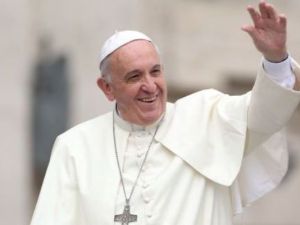
I must admit, the Pope’s visit to the United States last week was awesome.  Though I have been happy for the Roman Catholic Church since Pope Francis was elected, last week I realized his witness is good for all Christians.  Too often people professing to be Christian make Christians look bad.  Their hatred and exclusion in no way reflects the love and inclusion expressed by Jesus Christ.  But not Pope Francis.  He continues to challenge all of us to get back to the work Jesus gave us to do – to love and care for the poor, disenfranchised, and unjustly treated.  He beckons us toward lives of making peace and justice.  In essence, he reminds us to live as Christ called us to live.  And in starkly obvious ways, he reminded us that Jesus was not a Democrat or a Republican.  In fact, Jesus made, and continues to make, everyone uncomfortable.  Pope Francis did the same thing.  Though we all loved what he did for the Church and Christians in general last week, he likely made each of us feel uncomfortable at some point during his visit.  But I think we could all respect that he was trying to get us back to our true identity – he is a Christian who made us proud, not embarrassed, to be Christians.

Coming off the high of the Pope’s visit, I attended a funeral mass this week at the local Roman Catholic Church.  I was there to support a parishioner who had lost his mother (a Roman Catholic).  I wore my collar, but sat in the pew.  I prayed with the priest, cried with the family, and reverenced during the Eucharist.  But when the Eucharist was distributed, I stayed in my seat.  To his credit, the priest did not disinvite any non-RC attendees.  But he did not actively invite them either.  So instead of risking offense, I stayed in my seat, as I have been well-trained by many other RC priests that I am not to receive Eucharist as a non-RC.  I knew the moment would come and I was mentally prepared to stay in that seat.  But I must admit, my heart ached in that moment.  I felt a sharp pain in my chest as others walked around me to go forward for the heavenly meal.  For all the unity, the love, and the excitement of last week, I realized in that moment that we have a long way to go.

Of course, that work is not limited to the Roman Catholic Church.  Last week I preached about how much the Episcopal Church does its own work of excluding people – even from the Table, if you are not baptized.  In fact, I remember writing a paper in my liturgics class in seminary defending the practice of limiting the Eucharist to those who are baptized.  I don’t remember my argument at the time, but it was good, well-thought out, and prayerfully constructed.  But sitting in that pew yesterday, not receiving the comfort of the holy meal made me rethink the whole concept of an open table.  I do not really know if I am ready to make any changes right away, but the experience was a powerful lesson in the realities of constructing boundaries around the Table.  I do not want anyone’s heart to hurt the way mine did yesterday.  What about you?  What boundaries the church has constructed make you feel conflicted?  What might compel you to reconsider your position?  I invite us to pray about these conflicts as a community and see where the Spirit is leading.

← Older posts
Newer posts →

Recent Posts

  • On the Myth and Magic of Advent…
  • On Risking Failure and Facing Fear…
  • Sermon – Luke 23.33-43, P29, YC, November 23, 2025
  • On Inhabiting Gratitude…
  • Sermon – Luke 20.27-38, P27, YC, November 9, 2025

Archives

  • December 2025
  • November 2025
  • October 2025
  • September 2025
  • August 2025
  • July 2025
  • June 2025
  • March 2025
  • February 2025
  • December 2024
  • November 2024
  • October 2024
  • September 2024
  • August 2024
  • July 2024
  • June 2024
  • May 2024
  • March 2024
  • February 2024
  • January 2024
  • December 2023
  • November 2023
  • October 2023
  • September 2023
  • August 2023
  • July 2023
  • June 2023
  • May 2023
  • March 2023
  • February 2023
  • January 2023
  • December 2022
  • November 2022
  • October 2022
  • June 2022
  • May 2022
  • January 2022
  • December 2021
  • November 2021
  • October 2021
  • September 2021
  • August 2021
  • June 2021
  • May 2021
  • April 2021
  • March 2021
  • February 2021
  • January 2021
  • December 2020
  • November 2020
  • October 2020
  • September 2020
  • August 2020
  • July 2020
  • June 2020
  • May 2020
  • April 2020
  • March 2020
  • February 2020
  • January 2020
  • December 2019
  • November 2019
  • October 2019
  • September 2019
  • August 2019
  • July 2019
  • June 2019
  • May 2019
  • April 2019
  • March 2019
  • February 2019
  • January 2019
  • December 2018
  • November 2018
  • October 2018
  • September 2018
  • August 2018
  • July 2018
  • June 2018
  • May 2018
  • April 2018
  • March 2018
  • February 2018
  • January 2018
  • December 2017
  • November 2017
  • October 2017
  • September 2017
  • August 2017
  • July 2017
  • June 2017
  • May 2017
  • April 2017
  • March 2017
  • February 2017
  • January 2017
  • December 2016
  • November 2016
  • October 2016
  • September 2016
  • August 2016
  • July 2016
  • June 2016
  • May 2016
  • April 2016
  • March 2016
  • February 2016
  • January 2016
  • December 2015
  • November 2015
  • October 2015
  • September 2015
  • August 2015
  • July 2015
  • June 2015
  • May 2015
  • April 2015
  • March 2015
  • February 2015
  • January 2015
  • December 2014
  • November 2014
  • October 2014
  • September 2014
  • August 2014
  • July 2014
  • June 2014
  • April 2014
  • March 2014
  • February 2014
  • January 2014
  • December 2013
  • November 2013
  • October 2013
  • September 2013
  • August 2013
  • July 2013
  • June 2013
  • May 2013
  • April 2013
  • March 2013
  • February 2013
  • January 2013
  • December 2012
  • November 2012
  • October 2012
  • September 2012

Categories

  • reflection
  • Sermons
  • Uncategorized

Meta

  • Create account
  • Log in
  • Entries feed
  • Comments feed
  • WordPress.com

Blog at WordPress.com.

  • Subscribe Subscribed
    • Seeking and Serving
    • Join 394 other subscribers
    • Already have a WordPress.com account? Log in now.
    • Seeking and Serving
    • Subscribe Subscribed
    • Sign up
    • Log in
    • Report this content
    • View site in Reader
    • Manage subscriptions
    • Collapse this bar
 

Loading Comments...