• About

Seeking and Serving

~ seek and serve Christ in all persons

Seeking and Serving

Tag Archives: church

On Bringing the Church and World Together…

02 Wednesday May 2018

Posted by jandrewsweckerly in Uncategorized

≈ Leave a comment

Tags

bless, church, community, fellowship, holy, identity, rogation, sacred, service, welcome, world

img_0160

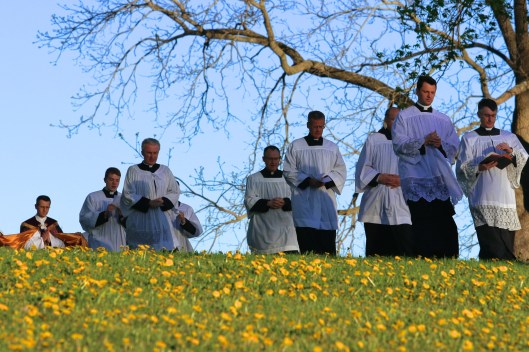
Photo credit:  http://stas.org/en/media/photos/rogation-days-2016-15612

This coming Sunday at Hickory Neck, we will be adding a procession and blessing before our service begins in honor of Rogation Days.  Traditionally, Rogation Days are the three days before Ascension Day during which the litany is said as an act of intercession. In England, Rogation Days were associated with the blessing of the fields at planting, and in the United States they have been associated with rural life, agriculture and fishing, commerce and industry, and the stewardship of creation.[i]  For Hickory Neck, we are using this year’s Rogation Days to give thanks for rainwater collection barrels built for our Community Garden by a Boy Scout in our parish.  We will also bless the Garden, praying for a fruitful harvest for our parishioners and neighbors who use the gardens this year.

What I love about this upcoming event is that it represents a confluence of everything about which the church should be.  Our Community Garden has long been an example of using our property as a way to bless and welcome others.  At the garden, I see strangers become friends, people planting and tending in sacred silence, and the fruits of labor shared with one another.  Meanwhile, it has been a joy to watch our parishioner take leadership of an Eagle Scout project that benefits the church, the community, and his troop.  Watching our parishioner bring his faith community and his service community together has been a tremendous witness to each of us about how to make connections between the various parts of our lives.  And marking Rogation Days with liturgy is the church’s way of making the everyday parts of our lives sacred.  We take the labor of our hands, the fellowship of friends and strangers, the bounty of creation, and we name it all as holy.

Often when people think about church, they think about the building and the people who regularly attend worship services on Sundays.  But the church is much more about what the faith community does outside of the walls of the building, and how the community uses the blessing of its property to bless others.  This Sunday, we celebrate the ways in which we are living into the fullness of our identity, while also challenging ourselves to ever be outwardly-minded in our ministry.  I hope you will join us, but mostly, I hope you will invite a friend as we celebrate the ways in which the blessing of our community flows out into the world!

21463342_1589859034403684_3079109709240303206_n

Rainwater Collection Barrels Installation.  Photo credit:  Paula Simmons.  Permission required for reuse.


[i] Donald S. Armentrout and Robert Boak Slocum, eds., An Episcopal Dictionary of the Church:  A User-Friendly Reference for Episcopalians, “Rogation Days,” as found at https://www.episcopalchurch.org/library/glossary/rogation-days on May 1, 2018.

Sermon – Psalm 23, E4, YB, April 22, 2018

25 Wednesday Apr 2018

Posted by jandrewsweckerly in Sermons, Uncategorized

≈ Leave a comment

Tags

action, church, dying, funeral, God, Good Shepherd, goodness, life, living, promise, pslam, pursue, Sermon, shadow

Many years ago, I was planning the funeral of a longtime, beloved church member.  We had visited on multiple occasions, and I knew all the stories about her children, including the son who was no longer going to church.  We talked about Jesus and her faith walk, and I always looked forward to sassy, witty, heartfelt stories.  When I sat down with her children to plan her funeral, I had an idea of what I could expect.  As we chose the lessons for the funeral, I shared with them that many people appreciate hearing the 23rd Psalm.  “Oh, no, we can’t do the 23rd Psalm,” the family protested.  A bit taken aback, since the parishioner I knew would have loved the psalm, they explained to me what had happened in her last days.  Her daughter had been comforting her one afternoon and decided to start reading scripture with her mom.  She started with the 23rd Psalm, and the mother snapped at her, saying, “Don’t read that one!  I’m not dead yet!”

Every year, on this Good Shepherd Sunday, we hear the 23rd Psalm.  Though many of us are more familiar with the King James Version, the words of Psalm 23 are words that are familiar even to those who do not attend church regularly.  Whether we have heard the psalm at a funeral, or read the psalm at someone’s deathbed, or seen the psalm on someone’s wall, the 23rd Psalm is one of the most well-known psalms in our culture.  Even in surveys, when asked about their favorite piece of scripture in times of trouble, many respondents name Psalm 23.[i]

In some respect, this familiarity and preference is a blessing and something to be celebrated.  But in other ways, this familiarity can be a tremendous hindrance to hearing these sacred words with fresh ears.  For example, most of us hear the psalm’s words as words of comfort for the dying.  We hear the words, “the valley of the shadow of death,” and we assume the whole psalm is about death.  Lying down in green pastures, remaining by still waters, gathering at a table, and having goodness and mercy follow us all sound like end of life images.  We envision the peaceful, beautiful resting place, gathered around the heavenly banquet table, and we take home the promise that no matter what happens in life, at least the ending will be a place of respite and relief.  And in some ways, that is true.  But I am not sure that is what this psalm is ultimately about; this is a psalm not about death, but about life.

The 23rd Psalm is a psalm on the move.[ii]  Throughout the psalm, we hear the activity of life.  Those green pastures we are going to lie down in are the places where we will find rest after a long day.  Those still waters are the sources of water we will need to drink in this earthly life.  Those righteous pathways we will be on are the paths of ethical living, those paths where we will seek and serve Christ, loving our neighbor as ourselves.  That rod and staff that will comfort us because those are God’s tools that will push and pull us toward our vocations and the purposes God gives us.  The dwelling we do in the house of the Lord is not the eternal dwelling place, but the earthly church where we find renewal for the journey.  That valley of the shadow of death is not the valley of death, but those shadowy places in our lives where we are reminded of the darkness of death:  times of illness, divorce, unemployment, loneliness.  The 23rd Psalm is not ultimately about a promise in death, but about the promise we are given in life – the promise of refreshment, restoration, reinvigoration for the journey of life.

This winter Charlie and I attended a training on church development.  One of the first images from the presentation was that of a base camp on a mountain.  We talked about the purpose of a base camp – what people need from and do at a base camp.  Ideas included rest, refreshment, preparation, and stocking up for the journey.  No one mentioned making a permanent home or using base camp as a place of escape.  Our instructor then asked us how a base camp is similar to Church.  We began to talk about how Church does the same thing – is a place of refreshment, rest, preparation, and stocking up for the journey.  Church is not a place to escape the real world or to hide away from hurt and pain.  Instead, Church is the place where we refill our tanks so that we can go out into the world – gathering the strength we need for the journey.  Church is not the house of the Lord where we will dwell forever.  In fact, that translation, “to dwell” is not helpful.  The word in Hebrew that is translated as “dwell” is better translated as “return.”[iii]  So instead of talking about a place where we will hide out from the world or imagining the heavenly kingdom where we will dwell, the psalmist is talking about the place we will keep returning – the base camp, the Church, where we will keep returning for strength so that we can get back into the world doing the activity of discipleship – the life where we will rest, drink, walk, be righteous, commune, and serve.[iv]

So just in case I have ruined Psalm 23 for you forever, making the psalm feel more like a psalm of work and labor as opposed to a psalm for rest and relief, have no fear.  There is one more line that similarly gets mistranslated which may open this text for you in another way.  In verse six, the psalmist says, “Surely goodness and mercy shall follow me all the days of my life.”  Again, understanding the original Hebrew is helpful.  The word translated as “follow” is better translated as “pursue” or “chase down,”  Goodness and mercy shall chase me down all the days of my life.[v]  Shifting that word does a similar thing as the rest of the verbs in this text.  When goodness and mercy follow us, we often think of hindsight.  Bad things happen to us, but when we look back, we will see goodness and mercy came out of the bad things.  But the psalmist says something more powerful than that.  The psalmist says that goodness and mercy will pursue us – will hunt us down and knock us over with their power.  We will feel threatened by that valley of the shadow of death, or we will worry about places to lie or drink or walk.  But the psalmist tells us those worries are futile because even in the midst of those stresses, God’s goodness and mercy is constantly seeking to bowl us over.

Scholar Gary Simpson says this about God’s goodness, “The goodness of God is in every place before we ever arrive at any particular place.  The good things that happen to us along life’s journey do not happen because we have arrived.  God’s goodness has already been where we are planning to go.  The goodness of God is so present that every direction that we turn to look, wherever we are, we bump into goodness again.  It is perhaps egocentric and arrogant to think that goodness follows us.  The goodness of God goes ahead of us, clearing out new ground, pulling us to new terrain, lighting a pathway in the dark places of new possibility, opening doors that no one can shut.”[vi]

I think that parishioner resisted hearing the 23rd Psalm in her last days of life because like many of us, she had trapped the psalm in the land of the dying.  But the 23rd Psalm is a psalm for the land of the living – a psalm that commissions us to continue our work of discipleship, to move out into the world with the promise of the essentials we will need, to keep returning to God’s house for sustenance and refueling, and to remember that no matter what we face, God’s goodness is already there, chasing us down.  On this Good Shepherd Sunday, perhaps you were hoping to hear a few words of comfort, longing to dwell in this house for longer than an hour today.  But today, that Good Shepherd is prodding you with a staff, filling up your tank so that you can go out into the world, serving as God’s disciple in all the green pastures and right paths where God leads.  You can do your work because no matter how much those shadows linger, God’s goodness will chase you down – all the days of your life.  Amen.

[i] Rolf Jacobson, “Commentary on Psalm 23,” March 30, 2014, as found at http://www.workingpreacher.org/preaching.aspx?commentary_id=2004 as found on April 19, 2018.

[ii] Joel LeMon, “Commentary on Psalm 23,” April 25, 2015, as found at http://www.workingpreacher.org/preaching.aspx?commentary_id=3646 on April 19, 2018.

[iii] LeMon.

[iv] Cameron B.R. Howard, “#602 – Fourth Sunday of Easter,” April 14, 2018, as found at http://www.workingpreacher.org/brainwave.aspx?podcast_id=1008 on April 17, 2018.

[v] Gary V. Simpson “Pastoral Perspective,” Feasting on the Word, Year B, Vol. 2 (Louisville:  Westminster John Knox Press, 2008), 438.

[vi] Simpson, 440.

On Resurrection Living…

19 Thursday Apr 2018

Posted by jandrewsweckerly in Uncategorized

≈ 1 Comment

Tags

afraid, Christ, church, death, Easter, Eastertide, eternal life, free, identity, Jesus, life, resurrection, transformation

I have been thinking a lot about death lately.  That probably sounds a bit morbid, but given my profession, should not be much of a surprise.  I think death has been on my mind for lots of reasons:  we celebrated the death of an incredible woman at our parish last week, our Adult Forum series during Eastertide is about death (end of life care, wills, legacy giving, funeral planning), and this Sunday’s lessons, although beloved, are quite common readings for funerals.  Everywhere I turn seems to offer reminders of death, and yet here we are in the season of Easter – a time to honor resurrection – to honor Christ’s victory over death!

One of the reasons we are freed up to talk about death in Eastertide is because death is changed through the resurrection of Christ.  In light of the resurrection, we see our life and death differently.  We proclaim that difference in the Book of Common Prayer at funerals.  “Life is changed, not ended,” we say in the burial office.  Whereas the secular world would have us consume life to its fullest, ignoring the inevitability of death; would have us preserve our bodies and make ourselves look younger to ignore our natural aging; would have us avoid conversations with our loved ones and community about death, the Church says something different.

The Church says Christ’s resurrection changes life so much, talking about death is no longer morbid.  The Church says, the promise of eternal life allows us make those funeral plans with a spirit of joy, not a spirit of dread.  The Church says that our time among the living is meant to bless and honor others, so making that will and designating those legacy gifts to a church are in great congruence with our understanding of resurrection living.  An Adult Forum series on death (or Resurrection Living, as we have called it) or reading lessons from funerals during Eastertide makes perfect sense.  Those exercises free us from seeing death as final, encouraging instead a life of resurrection hope and joy – a life lived in the light of eternal life.  I hope you will join us this week at Hickory Neck as we dive into that new identity and welcome the transformation of life in the light of the resurrection.

RLM_about

Photo credit:  http://www.rlmonline.com/about-rlm/


Sermon – John 20.1-18, ED, YB, April 1, 2018

12 Thursday Apr 2018

Posted by jandrewsweckerly in Sermons, Uncategorized

≈ Leave a comment

Tags

affirmation, called, church, Easter, encouragement, gift, joy, known, Mary Magdalene, name, reason, Sermon, share

Last weekend, before Holy Week started, our family celebrated my youngest’s fourth birthday.  A dear friend was there and asked me how I was doing, knowing full well that Holy Week and Easter were coming.  I launched into a diatribe about all the things I was juggling – birthday party, work commitments, packing for Spring Break, and the pressures of writing an Easter sermon.  The last complaint caught her attention.  “You’re worried about an Easter sermon?” she asked.  “Oh, yes!” I explained.  “It’s a big day.  The sermon needs to be good!”  She looked at me, dumbfounded, and said to me, in a way that only a best friend can, “You know nobody comes to church on Easter because of the sermon.”

Now as a preacher, you can imagine my ego was a little bruised.  But the more I thought about her observation, the more I realized she was right.  We come to church on Easter for a whole host of reasons.  We come to church on Easter because that is what our family has always done, and the continued observation of Easter somehow connects us to the past, present, and future, creating a sense of belonging and identity.  We come to church on Easter, because we long for a good word – a reminder that even in a tumultuous world, there is the promise of resurrection life, joy, and hope.  We come to church on Easter because we love the music, the flowers, the crowded seats, the Easter attire, and the experience of being a part of community.  And some of us are not sure why we come to church on Easter, but we suspect, or at least hope, we will find something that can revive our weary souls.

I suspect what most of us are hoping for today is an experience like Mary Magdalene’s.  I am not sure Mary knew why she went to the tomb that fateful day.  In John’s gospel, Mary is not there with spices to anoint Jesus’ body.  She does not bring flowers or some memento to leave at the tomb.  In fact, she comes to the tomb in darkness, before the morning light has arisen, perhaps in a fog of knowing she needs something but not sure what that something might be.  And then, not unlike the chaos that may have been your morning to get here on time and half-way presentable, Mary’s life gets thrown into chaos.  An empty tomb means she and the disciples run around like chickens with their heads cut off.  Later, Mary finds herself bemoaning to angels and a stranger alike that she just wants Jesus’ body – a physical reminder of all the horror and love and pain that has happened.  And in the midst of this chaos, a simple, profound thing happens.  Mary is called by her name.[i]  And her world gets turned on its head.

There is something very powerful about being called by your name.  We will frequent restaurants or coffee shops because we love being recognized by name by our favorite barista or shop owner.  If you have ever received a blessing or healing prayer by a person who knew your name, you know the intimacy that is created between the two of you, and the power of hearing your name lifted up to God.  We even try to use nametags here at Hickory Neck because we know how wonderful being known by name feels.  Being known by name creates a feeling of acceptance, affirmation, affection, and acknowledgement.[ii]  I can only imagine the rush of emotions when Jesus calls Mary by name today – not just the recognition of who Jesus is, but the reminder of how much he has loved her.

I suspect we should add that to the list of reasons why we come to church on Easter Sunday.  We want to be known too.  Perhaps we want to literally be called by name.  But perhaps we know just being here creates the same sense of belonging that being known by name creates.  When we sit in these seats today, we know that we are sitting next to someone who is longing for belonging today too – who also rallied to get to church on time – maybe with kids in cute dresses, or maybe just pulling their aching bodies to church.  When we sit in the seats today, we know that we are surrounded by a group of people who also love having their senses overwhelmed – from the smell of fragrant lilies, to the joyous sound of song [brass], to the taste of communion bread and wine, to the sight of fanfare and smiles, to the feel of another hand at the peace.  When we sit in these seats today, we know that we will be offered a word of joy, light, love, hope – and we want our lives to be marked by that same sense of promise.

Now you may feel tempted today to take all that affirmation, encouragement, and joy, and go about the next days on your own personal high – as though the gifts you receive today are solely for you.  But what all this fanfare, acknowledgment, and hope are meant to do is to propel you out into the world.  When Mary is called by name, receiving the blessing of recognition and encouragement, she does not stay at the feet of the resurrected Jesus.  She becomes John’s gospel’s first preacher.  “I have seen the Lord,” Mary says to the disciples.  Now I know some of you will go out from this place today and do just that – you will put on your Facebook page, “Alleluia, Christ is Risen!” or you will hug your neighbor and tell them what a joyous day you just had at church.  But for others of you, sharing today’s joy may take you a little more time, or may look a bit different than proclaiming, “I have seen the Lord,” to your favorite barista.  But what Mary invites us to do today is find our own way of sharing the beautiful gift we receive today – to give someone else the gift of joy and hope, to quietly tell a friend what a cool experience this day was, or to simply call someone else by name – sharing that same sense of belonging and affirmation you receive today.   You came to church this Easter Sunday for something.  Mary invites you to give that something to someone else.  Amen.  Alleluia!

[i] Serene Jones, “Theological Perspective,” Feasting on the Word, Year B, Vol. 2 (Louisville:  Westminster John Knox Press, 2008), 378.

[ii] D. Cameron Murchison, “Pastoral Perspective,” Feasting on the Word, Year B, Vol. 2 (Louisville:  Westminster John Knox Press, 2008), 380.

A Gift from the Church…

21 Wednesday Mar 2018

Posted by jandrewsweckerly in Uncategorized

≈ Leave a comment

Tags

Christ, church, diversity, Easter, gift, God, Holy Week, Jesus, liturgy, music, pilgrimage, powerful, variety, worship

Holy-Week-2015-POST

Photo credit:  https://blueeyedennis-siempre.blogspot.com/2011/04/update-holy-week-poems.html

As a former United Methodist and preacher’s kid turned Episcopal priest, I have a pretty wide range of what I find liturgically inspiring.  I was raised on what I would call the “Ol’ Timey Hymns,” I discovered praise and guitar music in college, I found the joy of call-and-response preaching and participatory music at a primarily African-American church where I was a member, I discovered Anglican choral music at the Cathedral that sponsored me for ordination, I was immersed in “high church” worship during seminary where my alb constantly smelled like incense, I discovered the joys of a paid professional choir who could chant choral matins, and I have served in churches with praise bands.  I have been known to crank up the gospel channel on Sunday mornings on my way to church before listening to traditional chant during the services later that morning.

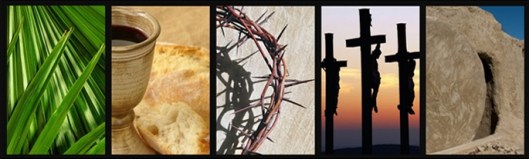
So imagine my joy when I found a church that seemed to capture a good portion of the variety and breadth of my own liturgical experience.  The diversity of worship at Hickory Neck reveals an embarrassment of riches.  We are so blessed with a variety of liturgical and music leaders that I still do not have a favorite service.  Of course, fitting that diversity into one Sunday can be tricky.  That is one of the millions of reasons why I love Holy Week so much, especially at Hickory Neck!  Over the course of a week, we celebrate Palm Sunday, we lead a quiet compline digitally via Facebook live, our Praise Band leads us in a contemplative Taize service, our Congregational Choir and local ecumenical clergy lead us in a healing service, our Choral Scholars lead us in a beautiful foot washing and altar-stripping service, we retreat into quiet on Good Friday midday, but then our youth lead us in a powerful Stations of the Cross service that night, our liturgical team puts together an amazing Easter Vigil, and then the brass rings in Easter Sunday.  In one week, we get the fullness of Hickory Neck on dazzling display.

I do not know what life is like for you these days.  But if you are in the position to give yourself the gift of Holy Week, I highly recommend it.  The full experience allows you to create a sort of pilgrimage, and certainly makes Easter Day a much more powerful experience.  But even if you can only catch a few services, realize that each night’s service is like a carefully crafted gift, meant to create an encounter between you and our Lord and Savior Jesus Christ.  Even if you have been feeling distant from God lately, I know most churches are happy to have you slip into a back pew, take in what you need, and slip back out into the world.  Lord knows I have sometimes showed up at the doors of a church not entirely sure why I was there, but left knowing exactly why the Holy Spirit had drawn me there.  If you do not have a church home and want to join us in the feast of Holy Week, you have a church home at Hickory Neck.  If you are reading from further away, I hope you will share with me your experiences this coming Holy Week.

On Being Called by Name…

14 Wednesday Mar 2018

Posted by jandrewsweckerly in Uncategorized

≈ Leave a comment

Tags

affirmed, baptism, call, church, Episcopal, God, identity, known, loved, name, nickname, pastor, priest, relatedness, role, tension

nametag

Photo credit:  blog.sweetcareersconsulting.com/2015/10/what-name-should-you-use-on-linkedin.html

In my line of work, my female colleagues are widely divided on what we should be called.  You see, for years in the Episcopal Church, the male priests were “Father so-and-so.”  In formal writing, it was “the Rev. so-and-so.”  But in the Episcopal Church, priests are not called “Rev. so-and-so” because the word reverend is an adjective, not a noun, and most Episcopalians cannot stand by grammatical errors.  Episcopalians also do not often use “Pastor so-and-so,” as it is considered too protestant.  So, that leaves Episcopalians in a bit of mess with titles for female priests.  Many have taken to calling women “Mother so-and-so,” to create a sense of parity between male and female priests.  But some women despise that address.  And so, female priests tend to be all over the map about what they prefer – from no title at all (simply using their name given at baptism) to Mother, to Reverend (conceding to the grammatical error for the sake of convenience), to Pastor.

So, when I was asked at my local yoga studio what I was called professionally, I had to chuckle.  I told them when I use a title, I prefer Mother Jennifer.  But that I answer to almost anything – Mother Jennifer, Rev. Jen, Pastor Jennifer, or just Jennifer.  But this past week, I added some new favorites.  A toddler in our parish was watching on online broadcast from church.  When her dad asked, “Do you know who that is?” she replied, “That’s Mama Church.”  Just last week, as our ecumenical brothers and sisters helped us host a winter shelter for the homeless in our community, a Roman Catholic volunteer was talking to my husband.  When she realized who he was she said, “Oh, your wife is that little spitfire thing!”

The funny thing is that despite our baptized names, I think we are all living into identities throughout life.  Sometimes we will only be known as our child’s parent – “Simone’s Mom.”  Sometimes we are known by our profession title – Doctor Smith, Nurse Johnson, Professor Green, Colonel Davis.  Sometimes we take on a funny nickname from a particular stage of life – I’ll let your memories recall a few of your own.  What we are called creates meaning, purpose, and identity throughout life.  And sometimes we have nicknames that we do not even know about – whether it’s “spitfire” or something else.

One of the things I love about church is that we work hard to know each other’s names:  sometimes the ones we are baptized with, but sometimes the funny, the serious, and the beloved names.  Those names can make us feel known, loved, and affirmed.  But mostly those names in church remind us that we are known by name by someone else:  our God.  I like to think God is able to hold all our names in tension:  the funny, yet embarrassing ones; the honorific ones; the ones that remind us of our call; the ones that reveal our relatedness.  God knows us better than any one name can contain, and yet I imagine loves every little nuance of our names.  I wonder what names in your life could stand to be let go, and which names invite you to be someone powerful and life-changing.

On Prayer and Connection…

07 Wednesday Mar 2018

Posted by jandrewsweckerly in Uncategorized

≈ Leave a comment

Tags

church, community, connection, God, intentional, petitions, practice, prayer, worthy

39753-women-praying-1200.1200w.tn

Photo credit:  https://www.crosswalk.com/slideshows/10-issues-your-church-should-be-praying-together-about.html

When I was in college, I was involved in the Wesley Fellowship, the United Methodist Campus Ministry.  We gathered every Sunday night for fellowship, a program, and worship.  One of the student leadership roles was the “student pastor” – basically a student who volunteered to be a pastoral presence in the community.  One of the student pastors during my time in Wesley would always carry a small notebook to our Sunday gatherings.  When we got to the time of open prayer requests during worship, he would write notes in his notebook.  Initially, the practice struck me as odd.  What was he writing?  What did he do with those notes?  Assuming he used the notes for his personal prayers that week, did he use them as a checklist?  I never got up the courage to ask any of my questions, so I was left with a bit of skepticism and suspicion.  But also, a little bit of hope – even if he did not use the notes for his prayer life, at least whatever requests were mentioned seemed worthy of his writing them down.

This Lent, I realized that I have basically and unintentionally started doing something similar.  We are trying a new ministry this year at Hickory Neck where each week, 3-6 parishioners or parish families received a postcard from the clergy.  The postcard basically says “I am praying for you this week, and if you want to talk or have coffee, I would love to meet with you.”  Knowing how caught up in the busyness of life I can get, I decided to put the names of those for whom I am praying as an appointment on my calendar.  Everyday, I get a little ping on my phone, reminding me to pray for a specific set of people.  Meanwhile, our church is also hosting a Facebook Live broadcast of compline, or evening prayers, once a week.  In the morning, we put a post on our page, asking for prayer requests, and during the broadcast, people can also submit requests through the website.  This week, I have been using those petitions as another addition to my metaphorical prayer journal.

What I am learning from the two practices, and also incorporating into my prayer life in general, is a more intentional practice of prayer.  When a parishioner tells me about a concern during coffee hour, or when someone drops by my office with a concern, instead of just praying for those concerns as they come in, I incorporate them into my prayers throughout that week.  These practices are having the consequence of making me feel much more connected with my faith community, with the community beyond our church, and with God.  What are some of the practices you have picked up lately – intentional or not – that have brought you closer to God, the church, and the community?  Is there some small change you can make in your daily routine that might help you strengthen those connections?  I look forward to hearing your reflections.


On Remembering You Are Dust…

14 Wednesday Feb 2018

Posted by jandrewsweckerly in Uncategorized

≈ Leave a comment

Tags

ash, Ash Wednesday, church, community, failure, gift, God, Lent, liturgy, mortality, vulnerable

ashes_6329cnp

Photo credit:  http://www.churchofoursaviour.org/church-events/2018/2/14/ash-wednesday-services

As a priest, I find Ash Wednesday to be the most difficult celebration of the Church.  One might think funerals are harder; but by the time we get to a funeral, the loss has already happened, and the people are gathered for a celebration of life and resurrection.  But Ash Wednesday is much more challenging.  The liturgy is the most honest, vulnerable, and sobering of our liturgies.  We gather in community, stripping away all appearances of success, faithfulness, and achievement, and we confess our deepest failures and separation from God – as if standing naked before our Lord.  And then, a priest rubs gritty ash upon our foreheads, and tells us, “Remember you are dust, and to dust you shall return.”

As someone who has experienced the worship from the pews, I know how powerful the liturgy is.  It’s as if the Church says to us, “I know everyone out there thinks you have it all together.  But we both know the truth – that you have a long way to go before you have it all together.  They see your strength and power; I see your weakness and vulnerability.”  The intimacy of the liturgy, experienced within a community of people going through the same exposure, can be both unnerving and deeply comforting.  Out in the world, we are alone, trying to prove ourselves.  Inside the church walls, we are together, admitting we cannot prove ourselves.

As a priest, I have the privilege of guiding people through that powerful experience.  It is so powerful, that I sometimes struggle to perform the actions the liturgy.  As I say those words, “Remember you are dust, and to dust you shall return,” I know that I am saying those words to a preschooler, who does not fully understand death; to a woman who has battled breast cancer and is in remission; to an elderly man who may be closer to death than we want to admit; to a widow or widower who lost their spouse earlier in life than they should have.  The weight of that pronouncement is palpable every single time I say it – and it makes my own mortality that much more real.

If you have not yet received ashes today, I encourage you find a church or Ashes-to-Go station.  It is a tremendous gift to be seen as you truly are, and to kneel alongside others who are trying to be faithful to the charge God has given us.  And if you cannot make it today, know that the entire season of Lent is available to you to continue the journey of remembering you are dust, and finding purpose before you return to that dust.

Sermon – 1 Samuel 3:1-20, Psalm 139:1-5, 12-17, 1 Corinthians 6:12-20, John 1:43-51, EP2, YB, January 14, 2018

17 Wednesday Jan 2018

Posted by jandrewsweckerly in Sermons, Uncategorized

≈ Leave a comment

Tags

call, church, discipleship, faithful, Jesus, reaction, relation, relationship, revelation, Sermon

As we celebrate our Annual Meeting and another year of ministry in Jesus Christ through Hickory Neck, we could not have received a better set of lessons.  Today’s lessons are all about discipleship – what being a disciple of Jesus means for us today.  Our lessons tell us discipleship involves relation, revelation, and reaction.

What we first learn about discipleship is relation – that our work as disciples cannot happen without being related to one another.  In Samuel’s almost comical call story, inexperienced Samuel would never have understood that God was trying to speak to him unless he had been in relationship with Eli – his mentor and guide in the life of faith.  Similarly, skeptical Nathaniel would have likely never believed that Jesus could be the Messiah had enthusiastic Philip not said to him, “Come and see.”  Even our lesson from first Corinthians, which perhaps embarrassingly talks about fornication and prositution, shows us that how we relate to others matters – how we use our marvelously made bodies with others matters.

This past year of discipleship at Hickory Neck has similarly and importantly been about relation.  Whether we were talking about race through film, books, or testimony; whether we were sharing a festive meal or taking the holy meal to our homebound members; whether we sharing our stories of giving at Stewardship parties or sharing our faith journeys in confirmation class; whether we were discerning how to modify worship at Hickory Neck or talking with community leaders about how Hickory Neck could address wider needs of our community; whether we were preparing for a quiet day of reflection in Lent or whether we were preparing to welcome a new community onto our property – whatever we did this year, we did so in relation to others.  At Hickory Neck, long-timers and newcomers alike are needed when we are discerning the call of God on our common life.  At Hickory Neck, when changes big and small are being made, we do so with the input of others – both inside and outside of the community – to ensure our discernment is reflective of our related nature through Christ.  At Hickory Neck, we experience God most when we relate to one another through deep, meaningful, vulnerable relationships that rely on trust in one another and on our Lord and Savior, Jesus Christ.  We are Samuels who cannot discern God’s voice without Elis, and we are Nathaniels, who cannot believe what we are hearing without Philips.  Our discipleship is impossible without relation.

After relation, the second thing we learn from our lessons today about discipleship is revelation.  When skeptical Nathaniel responds to Philip’s invitation to come and see, and he meets Jesus, he asks Jesus how Jesus knows him.  Jesus responds, “I saw you.”  Likewise, upon the third interruption of Eli’s sleep, Eli finally realizes that Samuel is not sleepily confused; Eli realizes God is trying to speak to Samuel.  Furthermore, when Eli sees Samuel the next morning, his insistence on knowing what God said to Samuel reveals his own sin and his own coming punishment.  Even Paul’s letter to the Corinthians reveals to them how important their bodies are.  When the psalmist says God created us, knit us together, and we are marvelously made, Paul understands that those wonderful bodies God made are meant to be used for the glory of God.

The more we committed to our relationships at Hickory Neck over this past year, the more we began to experience revelation through those relationships.  When our Tuesday night seekers group invited our brothers and sisters from New Zion Baptist Church to a joint Bible Study, all sorts of beautiful, hard revelations were experienced that night.  When our liturgical task forces worked to define and discern what God was doing at Hickory Neck through worship, we discovered new and beautiful ways we could honor the abundant liturgical variety found in these walls.  When an outstanding mortgage was weighing on our budget or when longtime givers moved on from Hickory Neck, we realized how our giving could impact change at Hickory Neck.  And our budding relationship with the Kensington School has been full of revelation by the Holy Spirit – from sensing within the Vestry that the time had come to think again about a school, to discerning with community leaders that a school was indeed needed, to responding immediately when Charlie got word that Kensington was looking in our neighborhood, to developing a relationship so strong that Kensington would choose to come to Hickory Neck as opposed to another location, God used our relationships to reveal new, different possibilities for ministry.

In some ways, relation and revelation might be the easy parts of discipleship.  The harder part is that third part of discipleship:  reaction.  When Paul writes that letter to the Corinthians, Paul is able to say some hard things about the ways his friends are using their bodies.  The Corinthians could have used that revelation to linger in shame or guilt.  But Paul has a different idea. “Glorify God in your body,” Paul says.  Paul calls the community to change.  When Philip shares his experience with Jesus with Nathaniel, Philip’s story is not an idle tale.  “Come and see,” Philip says.  Philip issues an invitation to action.  And when Eli counsels Samuel what to do about the voice he keeps hearing, Samuel needs to say the words, “Speak for your servant is listening.”  In each of these stories, when something dramatic is revealed through relationship, true discipleship means answering with reaction – doing something in response.

This past year, Hickory Neck has embraced this last part of discipleship with vigor.  When our neighbors needed shelter this past winter, even when our community would have preferred to keep our treasured tradition of a Mardi Gras party, we opened our doors and found new ways to celebrate and care for one another and the wider community.  When we realized that our neighbors were longing for relationship with Christ and our welcome on Sunday mornings was not enough, we developed new ways to invite others to church, and new ways to help newcomers feel more connected once they found their way to Hickory Neck.  When we realized how deep and wide the stain of slavery on our nation was, we welcomed a stranger from Ghana into our home, and found a new friend and a deeper commitment to dealing with our own demons.  When we found new ways to use our property – either through new worship experiences, creating space for community leaders to offer healing yoga to our neighbors in need, or agreeing to step into a rapidly moving process of welcoming a school – we prayed, pondered, and wondered – but eventually said yes.

As I looked back on this year in preparation for our Annual Meeting, I was overwhelmed by the faithful discipleship of Hickory Neck.  We have taken to heart the steps of relation, revelation, and reaction, and said yes time and again.  Being in relation to one another is not easy – look at how hard our country is struggling to stay in relationship with one another.  And yet, the Hickory Neck community takes the uncomfortable and is unwavering.  Welcoming revelation is also not easy – holding up a mirror to our behavior can be scary.  And yet, the Hickory Neck community embraces that vulnerability with boldness.  Being willing to react is not easy either – answering the call to come and see, or saying, “Here I am,” involves strength and commitment.  And yet, the Hickory Neck community trustingly takes on the challenge, and acts with passion and vigor.  I cannot fully express to you how incredibly proud I am of you for all that you have done this year for the sake of the Gospel.  Your discipleship has been an inspiration to me, as I seek each day to faithfully serve Christ as his disciple too.  Of course, the work of discipleship is never done – we will continue to need to commit to the work of relation, revelation, and reaction.  But for today, in this moment of reflection and celebration, know that you are doing good work in the name Christ, glorifying God in your bodies.  Well done, good and faithful servants.  I feel privileged to work alongside you!

Sermon – Luke 2.1-14, CE, YB, December 24, 2017

10 Wednesday Jan 2018

Posted by jandrewsweckerly in Sermons, Uncategorized

≈ Leave a comment

Tags

chaos, Christmas Eve, church, God, holy, Holy Family, Jesus, life, love, manger, peace, silent, story, worship

Sometimes arriving at the manger on Christmas Eve feels a bit like just barely sliding into home plate.  When little ones are around, you have scurried about, making sure their tights and bowties are on, while trying to squeeze in one last family picture while everyone still looks nice.  By now, you have probably served or been served a meal, purchased and wrapped gifts, prepped or cooked food for tomorrow, sent out cards, decorated the house, and run countless errands.  And none of that includes the four hundred things that will be done in the next twenty-four hours.  Arriving here and semi-put together is a minor victory, with the promise of a peaceful, beautiful hour of worship, before preparing for the chaos to resume tomorrow.

The unfortunate thing is that the story of tonight is not all that much less chaotic.  Though we sing songs like Silent Night or Away in a Manger, or though we exchange cards with pastoral, peaceful settings, nothing about that night is silent.  And I am pretty sure the little Lord Jesus makes lots of cries.  The chaos of the holy family is not unlike the chaos in which we sometimes find ourselves.  Remembering how scandalous Mary’s pregnancy and relationship with Joseph are, the chaos continues as Emperor Augustus sends out a decree that forces a very pregnant, uncomfortable Mary away from her hometown to the crowded city of Bethlehem.  Before they can secure housing, Mary goes into labor.  Not only is she dealing with the drama of delivering a child for the first time ever, she is delivering without so much as the comfort of a home.  And then, just as they are trying to figure out nursing, and soothing, and the fear and wonder of parenting, along come some rowdy, likely filthy, shepherds, who have also not had a silent night.  In fact, they have heard the terrifying chorus of the heavenly host and been told a most preposterous story – so much so, they gather up their livestock and come to see.

With all the chaos of our own lives, and with all the mayhem of that holy night, why do we do it?  Why do we come to church at all?  Maybe we come to church on this night specifically because on this night, more than perhaps any night ever, we find the wonderful revelation that God can take the messy chaos of life and make our mess holy.  You see, as much as we love tonight’s beautiful story, what happens this night is beyond the chaos of registrations, no vacancies, angelic revelations, and messy encounters with strangers.  In order to understand the enormity of what is happening tonight, we broaden our scope.  Tonight’s event – the nativity of our Lord –  is the culmination of a much larger story.  The story started when there was no earth or humankind, when God formed the earth from the formless void.  When we first sinned against God and were cast out of the garden, to when we kept sinning and God flooded the world, to our deliverance from the hands of pharaoh and our arrival in the promised land, to our sinful desires for a king that led to the eventual confiscation of our land.  We are a people who have been oppressed so many times and rescued so many times we can barely count.  And in that rollercoaster of a relationship with our God, as we failed time and again, God, who never gives up and never cedes love, does something unheard of:  takes on human flesh, comes to us in the form of a vulnerable child, with the plan of redeeming us forever and granting us eternal life.

Maybe we come to church tonight because tonight is about God’s unending, undying, unfailing, uncompromising love for us.  Despite centuries of chaos, disobedience, and failures, God shows up tonight in a mighty way.  Despite the chaos of the times and of this night, God shows up among the outcast.  Despite the chaos of our own times, in our seeming inability to tend to those most outcast, God comes once more to redeem us.  We come to church tonight because we long to grasp the enormity of God’s love for us, the extents to which God will go for us, and the hope which only God can give to us.

But the news is even better than that.  I do not believe the beauty of tonight is in trying to find a holy moment, where God’s love speaks to us in an otherwise chaotic life.  In fact, you might not find that moment tonight because despite the fact that you were physically able to get here, your mind may still be somewhere else.  The good news is that is okay.  The deep, lasting peace of this night is not found in a single church service (though I must say, the service certainly helps).  The deep, lasting peace we are looking for comes from the reality that we do not find God’s love and peace in spite of the chaos of life.  Tonight teaches us that God hallows the chaos of life.

Based on our standards, God should have placed this precious child – the God incarnate – in the wealthiest, most well-guarded palace, where a person of great wealth could have given the baby everything the baby needed.  A person of power could have protected the child, brought honor to the child, raised the child up to assume the power of a Messiah.  If we had something so precious, we certainly would have worked to find the best of what we have to protect that preciousness.  And yet, God takes on flesh in an unmarried, inconsequential woman of little means.  God takes on flesh amidst the common people, being born in the lowliest of estates.  God takes on flesh and announces the news not to kings and rulers, but to shepherds – those disregarded by society as being of little import.  From the very beginning, the extraordinary thing God does is done in the midst of the ordinary – worse yet, among the marginalized and outcast.

God takes the mess of life:  our divisions, our stratifications by class, gender, and race, our subjugation of the poor, our inability to refrain from sin, our messes and chaos – and God makes our mess holy.  God sanctifies our chaos, reminding us that in the midst of chaos, God is present.   In the midst of chaos, God is doing a new thing through us.  In the midst of chaos, God is love and makes us agents of love.  I cannot promise that the chaos will not try to overtake you when you walk out the church door tonight.  But just like you will find small glimpses tonight of the overwhelming love God has for you, you can find God present in the chaos of life too.  God is continually breaking through, birthing in you Christ’s light and love, using you to make room in the world for the Christ child, using you to announce good news of great joy for all people.  If that doesn’t break though the chaos, I don’t know what will!  Amen.

← Older posts
Newer posts →

Recent Posts

  • On Redefining Community…
  • On Parenting, Milestones, and Community…
  • Sermon – Acts 2.42-47, E4, YA, April 26, 2026
  • On Seasons of Discernment…
  • Sermon – Luke 24.13-35, E3, YA, April 19, 2026

Archives

  • May 2026
  • April 2026
  • February 2026
  • January 2026
  • December 2025
  • November 2025
  • October 2025
  • September 2025
  • August 2025
  • July 2025
  • June 2025
  • March 2025
  • February 2025
  • December 2024
  • November 2024
  • October 2024
  • September 2024
  • August 2024
  • July 2024
  • June 2024
  • May 2024
  • March 2024
  • February 2024
  • January 2024
  • December 2023
  • November 2023
  • October 2023
  • September 2023
  • August 2023
  • July 2023
  • June 2023
  • May 2023
  • March 2023
  • February 2023
  • January 2023
  • December 2022
  • November 2022
  • October 2022
  • June 2022
  • May 2022
  • January 2022
  • December 2021
  • November 2021
  • October 2021
  • September 2021
  • August 2021
  • June 2021
  • May 2021
  • April 2021
  • March 2021
  • February 2021
  • January 2021
  • December 2020
  • November 2020
  • October 2020
  • September 2020
  • August 2020
  • July 2020
  • June 2020
  • May 2020
  • April 2020
  • March 2020
  • February 2020
  • January 2020
  • December 2019
  • November 2019
  • October 2019
  • September 2019
  • August 2019
  • July 2019
  • June 2019
  • May 2019
  • April 2019
  • March 2019
  • February 2019
  • January 2019
  • December 2018
  • November 2018
  • October 2018
  • September 2018
  • August 2018
  • July 2018
  • June 2018
  • May 2018
  • April 2018
  • March 2018
  • February 2018
  • January 2018
  • December 2017
  • November 2017
  • October 2017
  • September 2017
  • August 2017
  • July 2017
  • June 2017
  • May 2017
  • April 2017
  • March 2017
  • February 2017
  • January 2017
  • December 2016
  • November 2016
  • October 2016
  • September 2016
  • August 2016
  • July 2016
  • June 2016
  • May 2016
  • April 2016
  • March 2016
  • February 2016
  • January 2016
  • December 2015
  • November 2015
  • October 2015
  • September 2015
  • August 2015
  • July 2015
  • June 2015
  • May 2015
  • April 2015
  • March 2015
  • February 2015
  • January 2015
  • December 2014
  • November 2014
  • October 2014
  • September 2014
  • August 2014
  • July 2014
  • June 2014
  • April 2014
  • March 2014
  • February 2014
  • January 2014
  • December 2013
  • November 2013
  • October 2013
  • September 2013
  • August 2013
  • July 2013
  • June 2013
  • May 2013
  • April 2013
  • March 2013
  • February 2013
  • January 2013
  • December 2012
  • November 2012
  • October 2012
  • September 2012

Categories

  • reflection
  • Sermons
  • Uncategorized

Meta

  • Create account
  • Log in
  • Entries feed
  • Comments feed
  • WordPress.com

Blog at WordPress.com.

  • Subscribe Subscribed
    • Seeking and Serving
    • Join 391 other subscribers
    • Already have a WordPress.com account? Log in now.
    • Seeking and Serving
    • Subscribe Subscribed
    • Sign up
    • Log in
    • Report this content
    • View site in Reader
    • Manage subscriptions
    • Collapse this bar

Loading Comments...