• About

Seeking and Serving

~ seek and serve Christ in all persons

Seeking and Serving

Tag Archives: death

An invitation…

25 Wednesday Feb 2015

Posted by jandrewsweckerly in Uncategorized

≈ Leave a comment

Tags

Ash Wednesday, ashes, church, death, dust, God, holy, invitation, Lent, relief, sobriety

In my line of work, I deal with death a lot.  The first two calls a family usually makes when a loved one dies are to the funeral home and to the priest.  I have done funerals for people I have known and loved, and for people who I have never met.  I have done funerals for people who were deeply involved with and committed to the Church, and for people who actively avoided the church.  I have done funerals for grandmothers, husbands, sisters, and children.  I have held the hand of a shallow-breathing senior who had lived a long life but was approaching the last hours, and have touched the tiny hand of a stillborn.  Death is ever present in my life, always a phone call away.

Photo credit:  http://www.commonschurch.org/event/ash-wednesday/

Photo credit: http://www.commonschurch.org/event/ash-wednesday/

So you would think that Ash Wednesday would not be that jarring to me.  A day meant to remind us of the fragility of life, that we are dust and to dust we shall return, really should not be that extraordinary.  But every year it gets me.  Though I deal with death when it comes my way, Ash Wednesday is a little different.  Ash Wednesday involves reminding people who may be nowhere near death to ponder the shortness of life.  Each time I spread gritty ashes on a forehead, my whole being shutters.  I think of the many laughs I have shared with the person my age; I think of the illness someone in their 50s overcame and the fullness of life they have enjoyed since then; I think of the bounding energy of the six-year old and how much joy they bring; and I think of the quiet confidence and wisdom of the grandmother figure.  Every time I say, “Remember you are dust, and to dust you shall return,” I feel like I am whispering a dark truth into each person’s ears.  There is nothing more sobering than those words, than those grainy ashes, than those shared moments of eye contact.  And no matter how well I clean up afterwards, a little black residue remains on my thumb, reminding me how close death lingers.

Though the reality of Ash Wednesday is sobering, and perhaps something one might want to avoid, I find that most people who come for ashes are relieved.  They are relieved for the gift of a church that will remind them of things of ultimate importance.  They are relieved for some perspective and levity in a world that tells them if they push more, do more, achieve more, they will somehow be happier.  They are relieved to be shaken out of the distractions or the fog of life and to be invited into a sense of clarity and purpose.  I certainly am relieved in that same way.  Because I am the solo priest at my parish, I usually have a parishioner also spread ashes on my forehead.  No matter who I end up asking, there is always a moment of shared humility and connection.  I am grateful to the church for the gift of Ash Wednesday and the invitation for a holy Lent.

In the midst of life…

19 Wednesday Nov 2014

Posted by jandrewsweckerly in Uncategorized

≈ 3 Comments

Tags

birth, blessing, church, death, Diocese, God, joy, life

Courtesy of http://www.glogster.com/deathhangel/death-and-life/g-6l1p46td8m4d3uhesabrba0

Courtesy of http://www.glogster.com/deathhangel/death-and-life/g-6l1p46td8m4d3uhesabrba0

Maybe it is because today is my birthday or maybe it is because we just lost a dear family member to cancer, but life and death have been on my mind a lot lately.  The funny thing about being a priest is that those two things are almost always held in tension.  In the course of one week, I can hold the hand of a dying person and then bless a baby at the communion rail.  I can celebrate a funeral and baptize a child in the course of two days.  I can officiate a wedding and offer counsel to someone getting a divorce in a matter of weeks.  And so, with the death of our family member so fresh in my mind, I took a deep breath on the way to work today and thanked God for this wonderful life that I have been given.  Many days I grumble and complain about the little stuff of life – but today, both life and death are giving me perspective.

The same has been true about my work lately.  This past weekend, The Diocese of Long Island held its Annual Convention.  In the Bishop’s address, he told us about the many churches around the diocese that had closed or merged with other parishes.  Though he ran through the list relatively quickly, I knew all too well how painful each of those closures must have been.  I have been a part of churches that have had to close and it is a brutal process – it feels very much like the death of a loved one.

But just like in the death of a loved one, life slowly springs up.  The Bishop told us about a particular parish in Brooklyn that had to close due to “life-safety issues.”  Located near the Barclays Center, the sale of the property netted almost $20 million for the Diocese – all of which is being invested and distributed.  Some of the proceeds will go to support local churches and ministries while others will be used for international missions.  But out of that death is coming tremendous life.  Though we mourn with that community, through the death of that stage of their ministry they are birthing incredible new life.

And such is life – a continual cycle of life and death, suffering and blessing, mourning and celebrating.  Today, I turn toward celebration and life.  I can do that with deep joy because the sobering reality of death sets me free to appreciate every blessing of this life.  My cup runneth over – thanks be to God!

On being dust…

06 Thursday Mar 2014

Posted by jandrewsweckerly in Uncategorized

≈ Leave a comment

Tags

Ash Wednesday, community, death, dust, God, humble, journey, priest

One of the gifts of being a clergy person is the moments of insight, intimacy, and holiness.  That gift is probably one of the primary things that keep me going, especially in the midst of weeks when the vocation feels more full of challenge than full of blessing.  The cool thing about the gift is that it often catches me unawares – I am busy just doing my job when all of sudden, wham!, God brings me to my knees with the enormity and privilege that this vocation is.

Courtesy of http://en.wikipedia.org/wiki/Ash_Wednesday

Courtesy of http://en.wikipedia.org/wiki/Ash_Wednesday

It happened yesterday as our church celebrated Ash Wednesday.  As my mind was distracted with my sermon, the choreography of the liturgy, and the elements of the altar, I suddenly found myself at the part of the liturgy where I spread ashes on each person’s forehead.  I had forgotten how incredible that moment is.  There I am, rubbing dirty, gritty ash on person’s forehead, reminding them of their mortality.  The experience is a visceral, fleshy one.  Some foreheads are covered with hair, some are oily after a day of work or activity, and some are polished and made up.  Some foreheads are smooth and non-anxious and others are lined with the wrinkles of age or stress.

But even more profound than the tangible piece is the emotional piece of the experience.  There is the woman who just celebrated 91 years of life.  I find myself wondering how many more years we will share moments like this.  There is the parishioner with whom I have shared laughs and tears, who is the prime of their lives, and whose death I cannot fathom.  And of course there are the children.  There is something profound about reminding a five-year old that they will someday die, whether they fully understand what is happening in the liturgy or not.

After everyone had received ashes, I turned to our acolyte and asked her to give me ashes as well.  In this time of growing life inside of me – as I have frequently fretted about the viability of my child outside the womb – I was reminded that neither my coming child nor I are spared from returning to dust someday.  Though that sounds like a grim thought, where it ultimately left me was convinced that no matter what happens, God is the firm foundation that I stand firmly upon, grounding me, keeping me humble, and reminding me of what really matters.

That is the other beauty of being a clergy person.  As much as I hope liturgies are meaningful to others, I find them equally meaningful to me.  Sometimes it is harder than others to worship while leading worship.  But this Ash Wednesday, the power and wonder of the liturgy and our God did not escape me.  I am grateful today for the powerful reminder of my humanity, the collective recognition of the fragility and preciousness of this life, and the blessing of a community who always gives me a healthy dose of perspective.

Homily – Galatians 2.19-20, Mark 8.34-38, Martyrs of Japan, February 6, 2014

12 Wednesday Feb 2014

Posted by jandrewsweckerly in Uncategorized

≈ Leave a comment

Tags

cross, death, Jesus, life, martyrs, Martyrs of Japan, witness

Today we celebrate the martyrs of Japan.  Christianity was first introduced in Japan in the 1500’s, first by the Jesuits and then by the Franciscans.  By the end of the 1500’s, there were about 300,000 baptized believers in Japan.  But the successes were compromised by both rivalries among religious orders and the interplay of colonial politics.  Eventually, all Christians suffered cruel persecution and suppression.  The first victims, whom we honor today, were six Franciscan friars and 20 converts who were crucified in Nagasaki in 1597.  By 1630, what was left of Christianity was driven underground; yet 250 years later, many men and women, without priests, persevered with their faith.

I have been thinking a lot about those martyrs.  First, I am still a little shocked by the idea of someone being actually crucified almost 1,600 years after Jesus’ death.  I didn’t even think people would do that anymore.  Second, I am astounded by the idea of someone using that form of murder on Christians – crucifixion seems like the ultimate form of insult and torture one could commit that would certainly intimidate and dissuade followers.  What is so sobering to me about the martyrs’ deaths is that the murderers almost seem to be using the faith against the followers, as if to say, “You want to follow Jesus Christ?  Then do what Jesus says in Mark’s gospel and take up your cross.  We may think of “taking up one’s cross” as a description of the suffering for following Jesus – but we often forget that the cross ultimately points to death.  That is an extreme form of witness that few of us would be comfortable assuming.

I think where the gospel, the epistle and even the martyrs are trying to get us to is an emptying of the self and an assuming of total dedication to Christ.  Now we may not be literally crucified in our age, but if we fully embrace the idea of taking up a cross, we fully submit our lives to God.  Certainly there will be dramatic moments – I always remember those kids in Columbine who at gun point were asked to deny their faith.  But more likely, the moments will be small, but tremendous.  Seeing God in the homeless man; saying something uncomfortable among a group of friends because your faith compels you to challenge the direction of the conversation, re-examining your life patterns to assess the ways you have already put your cross down.  Though taking up our crosses now may seem ambiguous, when we take on that work, we will find death – death to our old way of being and life in a new way of being.  Amen.


This homily, along with the several posted immediately after date from December 2013 – February 2014.  When we celebrate Eucharist each Thursday morning at St. Margaret’s, I preach a short homily to celebrate the feast day of whatever saint falls nearest to that day (as appointed by Lesser Feasts and Fasts and Holy Men, Holy Women).  A parishioner helps me to transcribe the homilies so that others can enjoy them too.  We seem to have finally caught up now – enjoy!

Sermon – John 1.1-14, CD, YA, December 25, 2013

08 Wednesday Jan 2014

Posted by jandrewsweckerly in Uncategorized

≈ Leave a comment

Tags

Christmas, darkness, death, God, incarnation, Jesus, John, light, prologue, resurrection

I must admit that I have always been a little wary of John’s prologue at Christmas time.  I tend to prefer the earthy stories of Jesus in a manger, of dramatic angelic appearances, of messy shepherds, and of a baffled holy family.  I like that I can picture the events in my mind and ponder their meaning.  I like that I could imagine myself there and even wonder what the events mean to me two thousand years later.  My love of these stories is only accentuated by the songs we sing on Christmas Eve, and the nostalgia the music brings to me.

But today, on Christmas Day, we get none of that.  We sing no songs, we hear no romantic, familiar stories, and we do not get lost in the ancient narrative.  Instead, on this busy, often loud day, we come into a totally different space – a place of quiet reverence – and we hear a totally different text.  John does not go back to the beginning of Jesus’ story – he goes back to the beginning of all our stories.  “In the beginning was the Word, and the Word was with God, and the Word was God.”  Our minds drift not back to a stable, but to the beginning of creation, when the earth was a formless void – tohu wavohu.  Whereas our synoptic gospels try to tell us about who Jesus is by giving a story about his birth narrative, John’s gospel takes an even wider lens to try to explain who Jesus is.

In some ways the contrast between Christmas Eve’s stories about the stable and Christmas Day’s quiet reflection on the beginning of time is quite appropriate.  On Christmas Eve we are full of giddiness and excitement.  We break the long anticipation of Advent with a festive celebration of Jesus’ birth.  We share in jubilation, as if we are a crowd of people gathered at the maternity ward, sharing cigars and bear hugs.  But today, like a crew that has come in to clean up after a late-night party, we gather in these pews with a bit more sobriety, deeply pondering what all this incarnation stuff means.  For that kind of work, John’s gospel is the perfect gift.  John almost seems to say, “Yes, all those stories you know and love about Jesus are true and are to be celebrated.  But do not get swept away in the excitement and forget what this really means.”

For John, he begins his gospel starting not with details of the event of the incarnation, but with details about the significance of the incarnation.  For John, he is not interested in the sentimentality of a cute baby.  John is interested in the astounding fact that God became incarnate – took on flesh, lived among us, took on our dirty, gritty lives, and faced rejection and suffering – all so that we might live.  The God of creation – that same creative God we know from Genesis – is the same God who comes among us.  The Word has always been, and yet the Word also enters into human history to give life and light to the people.  When we talk about this kind of momentous significance, it is no wonder that we gather here in quiet awe of our God, soberly realizing the tremendous, salvific gift of the Word made flesh coming to dwell among us.

In some ways, the contrast between Christmas Eve and Christmas Day are hitting home a little more vividly this year.  On the one hand, I have a four-year old, who really gets Christmas this year, who is excited beyond belief about baby Jesus, St. Nicholas, presents, and visiting family.  Her enthusiasm is infectious, and I want to cultivate that joy.  I am reminded of that collect from compline that asks God to “shield the joyous.”  But on the other hand, death has been heavy around me these last few days.  A dear friend from Delaware died this weekend, St. Margaret’s Cemetery helped a young couple from a neighboring church bury an 8-month stillborn child on Monday, and just two days ago, a St. Margaret’s parishioner lost his mother.  In light of the grief of those around me, I am grateful for a sober reminder of the awesomeness of our God, the salvation and promise of resurrection that is only made possible through the incarnation – that Word made flesh who lived among us, and who is full of grace and truth.  In the end, there is hope on both sides – hope for the happily joyous this season and hope for the soberly mournful this season.  I thank God for a Church who tends to both sets of needs, but mostly I thank God for taking on our earthly flesh, for giving us the Word who knew both joy and sorrow, and for promising us that the light shines in the darkness, and the darkness does not overcome it.  Amen.

Sermon – Luke 20.27-38, P27, YC, November 10, 2013

14 Thursday Nov 2013

Posted by jandrewsweckerly in Uncategorized

≈ Leave a comment

Tags

afterlife, answers, death, God, grace, heaven, Jesus, life, love, mercy, resurrection, Sadducees, Sermon

About a year ago we lost one of our parishioners after a sustained battle with illness.  If you remember, at that time we were still recovering from Hurricane Sandy.  Though many of us finally had our power back, we faced an early snow storm.  The storm delivered just enough snow to knock out power in some of the local schools and to muck up roads that were already struggling to be freed from fallen trees.  My daughter’s school was cancelled, and I had anticipated just trying to stay warm at home for the day.  But when I got the call that Mina had died – I was dumbfounded.  There was no doubt in my mind that I would go join the family for prayers, but I had no idea how to incorporate my daughter into the visit.  With the weather conditions such as they were, there was no way she could stay anywhere else.  And so began a ten minute drive during which I tried to explain to my three-year old daughter what death meant, what heaven is, and what God’s role in all of this is.  Of course, I totally forgot to factor into my explanation the fact that Mina’s body would still be present, and how her body figured into my three-year-old-appropriate explanation of heaven.  Needless to say, a year later, I am still fielding questions about death, heaven, and God.

The truth is that I think adults have as many questions about death, heaven, and God as young children do.  When we hear the complicated question of the Sadducees to Jesus about the woman with seven husbands, we find ourselves morbidly curious too.  What does happen to this woman in the afterlife?  Would she have wanted to be with one over another in heaven?  Of course her scenario makes us think of all the stories of loved ones we know – or even of ourselves.  What happens to the widow who remarries in the resurrection?  What about the couple who divorces and later remarries?  Surely they will not have to be reunited with their exes!  Or what about that abusive father, that mean uncle, or that estranged sister?  Do we face them in the afterlife?  Since we do not really have anyone to give us an insider’s perspective, these are the questions that we really wonder about.  And if we have ever held the hand of a loved one approaching death, we may have asked these questions to God, to our priest, or to a friend.  So when the Sadducees ask this question of Jesus, we perk up, hoping for some real clarity from Jesus, and secretly praying for the answer that we think is best.

The trouble with this text though is that the Sadducees are not really asking Jesus a practical question about what happens in the resurrection.  In fact, the Sadducees do not even believe in the resurrection.  If you remember, the Sadducees are the group of people who believe the Torah – those first five books of the Hebrew Scriptures – to be the only authorized scripture.  None of the other books that we know from scripture – the prophetic writings or the Psalms – are considered valid scripture by the Sadducees.  Because there is neither a doctrine of resurrection of the dead nor a belief in angels in the written Torah, the Sadducees refuse to believe that there is life after this earthly life.  The Pharisees along with Jesus and his disciples, on the other hand, believe in ongoing interpretation of Torah handed down by word of mouth, and so, they have no problem with the ideas of resurrection presented in other Hebrew scriptures.[i]

So this question by the Sadducees about the resurrection is not really a question for which the Sadducees are looking for answers.  Instead, this is a question meant to both ridicule Jesus,[ii] and to trap Jesus in an impossible question.  Though we may feel some sense of camaraderie in shared curiosity, the Sadducees are not simply a curious bunch with a heartfelt question.  They are trying to manipulate Jesus and embarrass him in front of the crowd.  Luckily for us, Jesus offers an answer anyway.  Of course the answer is not as specific as we might like, but the answer does offer hope and mercy in a roundabout way.

What Jesus basically tells the Sadducees and those gathered around him is that the resurrection is not like life here on earth.  Life after earthly life is not “Earthly Life, Part II,” where everything is the same, but better.  In the resurrection life, rules of this life – and in particular, rules that applied to Levirate marriage, like a brother taking on a widowed sister-in-law – are not the same as the rules in the afterlife.  Jesus does not explain exactly what this looks like or how this plays out, and Jesus does not fully satiate our curiosity.  But Jesus does give an answer that is full of mercy and love.  Jesus basically tells those gathered that the beauty of the resurrection is that the strictures and limitations of this life are lifted in the life to come.  Things like women being treated as property to be managed, infertility, and grief are erased in the afterlife.  Things like disappointment in marriage, pressure to be married, and even death itself are no longer present in the afterlife.  Things that define us here, limit or frustrate us, or pain us here in this life are absent in the afterlife.  Jesus will never concede to the Sadducees that resurrection life does not exist.  But Jesus does try to kindly invite the Sadducees into seeing that resurrection life is so much more than they can imagine, and so much more full of true life than this earthly life that they know.  Jesus does not answer their question fully, but Jesus does say that the Creator God of Torah is still revealing truth, and that the truth is full of mercy, grace, and love.

I am reminded of the scene from the movie The Matrix where the main character, Neo, goes to visit a woman called the Oracle to find out if he is “the one,” a messiah-like figure to save the world.  Neo goes to the Oracle with a clear-cut question, “Am I the One?”  But the conversation that ensues is complex and layered with meaning.  She seems to be telling Neo he is not the one, but we later learn in the movie that she was actually telling him that he is not the one if he will not claim his status as the One.  The scene is as complicated as my rudimentary attempts to explain the scene.  But what the scene reminds me of are our conversations with God about ultimate things.  We often come to God with basic questions and concerns that are rarely answered directly.  But that does not mean we do not get a response.  In the end, the response is loving, full of compassion, and ultimately full of truth when we are ready to understand and interpret that truth.

This is all that Jesus can offer us today.  Jesus is not offering an exclusive interview a top news source to tell us everything we want to know about resurrection life.  We will not be able to watch with bated breath as Jesus answers every question we want answered.  Instead, Jesus offers us a promise to take home.  His promise is that we have resurrection life beyond this earthly life.  His promise is that resurrection life is not some two-dimensional repeat of this life, with the limited happiness we can find here, but instead is a three-dimensional life beyond our knowing because of our limited earthly experience.  His promise is that God is ever revealing truth to us, showing us the most important truth:  that God loves us, shows us exquisite mercy, and offers us unfailing grace.  Jesus’ words today may not be the 60-Minute special we were hoping for, but Jesus’ words today give us something to hold on to in the midst of this crazy, chaotic world that is our earthly home.  Hold fast to the Lord who loves you, shows you exquisite mercy, and offers you unfailing grace.  Amen.


[i] Vernon K. Robbins, “Exegetical Perspective,” Feasting on the Word, Yr. C, vol. 4 (Louisville: Westminster John Knox Press, 2010), 285.

[ii] Eberhard Busch, “Theological Perspective,” Feasting on the Word, Yr. C, vol. 4 (Louisville: Westminster John Knox Press, 2010), 286


Sermon – Psalm 23, E4, YC, April 21, 2013

24 Wednesday Apr 2013

Posted by jandrewsweckerly in Uncategorized

≈ Leave a comment

Tags

Boston, death, God, hesed, images, King James Version, Psalm 23, Sermon, translation, valley

One of the most familiar pieces of scripture is the 23rd Psalm.  Today we hear the BCP version of the psalm, but most of us know the psalm in the King James Version.  In fact, the Prayer Book even has the King James Version printed within the Burial office because that translation is so familiar and comforting to us.  This is the psalm we turn to when we are steeped in anxiety.  This is the psalm we turn to when a loved one is facing serious illness.  This is the psalm we turn to when death finally comes.

I have been particularly grateful for this psalm this week.  This week has felt like a tremendous “valley of the shadow of death.”  We started the week with the horrible bombing in Boston.  Not only did we lose lives, and were many people horribly injured and maimed, but also something of the innocent joy of that sporting event was taken away.  But the week just kept getting worse.  After powerful testimonies from the Newtown families, the Senate still could not pass legislation around background checks for guns.  I know that gun control is a sensitive political topic, but for many people, the Senate’s not passing this bill felt like an acquiescence to the violence in our country.  Then just a day later, a horrible explosion happened in Texas, killing many.  After the past six months, which have included Hurricane Sandy and Newtown, this week makes our valley of the shadow of death seem more and more barren, and perhaps unending.

Of course that is only our own American valley of the shadow of death.  That valley does not include the hundreds of places around the world where bombings happen every day.  The American valley does not include the places where villages are ravaged by HIV/AIDS, where children are starving, and where violence threatens whole ethnic groups.  Just this week, the night one of the Boston bombers was killed, a bomb went off in Baghdad in a coffee shop, killing 27 people and injuring over 50.  If we really tracked the worldwide and domestic news everyday, we may not feel as though we are just walking in the valley of the shadow of death, but instead our entire world has been exiled to a permanent valley of darkness and death.

But the reason I have been so drawn to the 23rd Psalm this week has not only been because of the poignancy of the valley.  I have also been drawn to this psalm because of the richness of comfort, blessing, and peace in this psalm.  In fact, in some ways, the valley is mentioned in passing to highlight the ways that God cares for us so abundantly.  Frederick Buechner wrote about a worship service that happened immediately after September 11th, in which a speaker said, “At times like these, God is useless.”  Buechner writes, “When I first heard of it, it struck me as appalling, and then it struck me as very brave, and finally it struck me as true.  When horrors happen we can’t use God to make them unhappen any more than we can use a flood of light to put out a fire or Psalm 23 to find our way home in the dark.  All we can do is to draw closer to God and to each other as best we can, the way those stunned New Yorkers did, and to hope that, although God may well be useless when all hell breaks loose, there is nothing that happens, not even hell, where God is not present with us and for us.”[i]

This is why we are all drawn to this piece of scripture.  All that we want to believe about God, all that we hope is true about God, is found here in this brief psalm.  Our longing for words like these is why this psalm is so popular and prominent.  The 23rd Psalm is so well-know that the psalm has been called “an American secular icon,” because even people who do not attend church have come to know this psalm.[ii]  We all want a God who leads us beside still waters, who restores our souls, who takes away all fear, and who comforts us.

I think this is why so many artists and biblical scholars are drawn to this psalm.  Because this psalm captures for so many people not only who we believe God to be, but also who we desire God to be, many have been inspired to rephrase the language of this psalm to capture our imagination in new and fresh ways.  Probably the most familiar is the hymn “The King of Love my Shepherd Is.”  This hymn breathes air into the psalm, describing our God as a God, “whose goodness faileth never; I nothing lack if I am his.”  Just this week I stumbled on an a cappella version of the 23rd Psalm that uses feminine language to refer to God – “She makes me lie down in green meadows; beside the still waters she will lead.”[iii]  For those of us who struggle with the overly masculine language we have about God, this version of the psalm broke open the psalm yet again for me.  All of the things we hear about God in this psalm – one who comforts, cares, and cradles – are all stereotypically feminine qualities.  When God can be both feminine and masculine, then God truly is bigger and more whole.

But the one translation that really grabbed me this week is from the New Jerusalem Bible.  The verse that we typically recall as, “Surely goodness and mercy shall follow me all the days of my life,” in the New Jerusalem Bible is translated as, “kindness and faithful love pursue me every day of my life.”  The “mercy” or “faithful love” we hear translated is the hesed of God in Hebrew – God’s loving-kindness.  This is the kind of overflowing love, loyalty, and lavishness that God shares with God’s people.  In fact, when people show hesed, that loving-kindness is sometimes translated as “godly love.”  But what really grabbed me about this translation is that God’s hesed does not simply follow us in life.  God’s hesed pursues us in life.  God chases after us, actively, even frantically, attempting “to reach us with the gift of life and the resources which sustain life.”[iv]  We hear the strength of this verb because this is the same verb in scripture that is often used to describe what enemies do – they pursue.  So to use the strength of this word to describe what God does to us is to say that God ferociously desires and drives to give us God’s hesed.

Our invitation today is to allow these new images to work on us as we continue to journey with God, even in what feel like valleys of the shadow of death.  Even when we feel like God is useless or that darkness may overwhelm us, God’s love never fails, God’s motherly care is for us, and when we feel most abandoned by God, God is chasing us down to rain God’s hesed upon us.  This is the beauty of our spiritual journey – our words are ever trying to help us understand this God with whom we journey.  Our language will never fully capture God, but each new attempt awakens our journey and invites us into deeper connection.  Our blessing this Eastertide is the myriad voices that help us get just a little closer to God when we need God the most.  Amen.


[i] Frederick Buechner, Beyond Words, as found on http://www.frederickbuechner.com/content/weekly-sermon-illustrations-disaster.

[ii] J. Clinton McCann, Jr., “Preaching the Psalms: Psalm 23,” Journal for Preachers, vol. 31, no. 2, Lent 2008, 43.

[iii] http://www.youtube.com/watch?v=91TbjlaS4kc.

[iv] McCann, 46.

On being an Easter people…

17 Wednesday Apr 2013

Posted by jandrewsweckerly in Uncategorized

≈ Leave a comment

Tags

Boston, death, Easter, funerals, life, Psalm 23

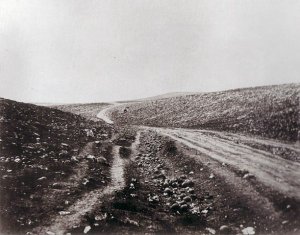
Valley_of_the_Shadow_of_DeathThis coming Sunday, the appointed psalm is Psalm 23.  As I have been praying on the texts, that phrase, “the valley of the shadow of death,” has been haunting me.  In some ways, it feels like our country has been in the valley of the shadow of death for quite some time.  After Hurricane Sandy and Newtown last year, multiple deaths by gun violence since Newtown – including two accidental deaths caused by four-year-olds with guns, and now the tragedy in Boston, it feels like we are in a valley of death that we cannot escape.  In fact, on Monday, I almost found that I could no longer watch the coverage about Boston because I could not handle the emotional overload that has been these six months.  The images were just too much to bear.

What is interesting about the texts for this Sunday is that not only do we read the 23rd Psalm, but also we read a text from Revelation 7.  Both of these are regularly read at funerals.  As I sit with these texts this week, all I can think about is death – which is especially frustrating in the midst of Eastertide – a season supposed to be about life.  So what do we make of a Sunday about death, and what feels like a world overshadowed by death, in the midst of Easter?  I suppose in many ways, this is the same paradox we have at every funeral.  At every funeral, a time when we mark someone’s death, the church encourages us to look toward life.  In fact, we decorate the church in white for funerals because burials are Easter celebrations.

Recalling the many times I have redirected mourning families toward life, I took my own advice today and starting looking for signs of life in the midst of this valley of death.  I was amazed at how much I could recall.  Here in New York, the trees are just now starting to bloom, and pops of color continue to surprise and delight me.  Our Vestry just had a retreat this weekend to talk about Evangelism.  The day brought up all sorts of fresh ideas and a commitment to growth.  The hopefulness of our Vestry is nothing like the weight of the valley of the shadow of death.  Even the empty garden bed which will be filled with soil this weekend is a sign of life here at St. Margaret’s.  As our parish children stood in the bed on Sunday, which will only be empty for a few more days, I smiled to think about the convergence of life both in our children and in our produce for the poor.  And even in Boston, there were immediate signs of life – people rushing to help victims, even to their own personal endangerment, strangers holding hands, people carrying victims, and strangers using their own clothes to stop bleeding and death.

I do not know if I can completely erase those words, “the valley of the shadow of death,” and all that it connotes for me this week, but my hope is that I can at least linger equally on the next words, “Thou art with me.”  Perhaps the answer is not that life erases death, but that God is with us in both.  And knowing that God is with us in death and in life helps me better to be an Easter person this week.

Sermon – John 12.1-8, L5, YC, March 17, 2013

20 Wednesday Mar 2013

Posted by jandrewsweckerly in Uncategorized

≈ 2 Comments

Tags

community, death, faith journey, God, Holy Week, Jesus, Judas, Lazarus, Mary, poor, Sermon, tension

With Holy Week only a week away, today’s Gospel lesson throws us into preparation for that significant week.  Six days before the Passover – six days before Jesus will sit down with his disciples for their last meal together – Jesus sits down for another significant meal.  Jesus returns to Bethany, to the home of the family he loves – the home of Martha, Mary, and Lazarus.  The foreshadowing is all there.  Lazarus, and the lingering smell of his once-dead body, is at the table as a vivid reminder of the death that awaits Jesus.  The two of them sharing table fellowship together both brings to mind the resurrection of Lazarus, and foreshadows a more important resurrection that is soon to come.  Even Mary is preparing us and Jesus for his death, as she uses costly perfume, nard that she has saved for the day of Jesus’ burial, to anoint Jesus now.  Death is heavy in the room.  What sounds like a simple reunion of friends is actually the foretaste of what is to come in a mere week.

So in the midst of this sacred, significant moment, what does Judas do?  Judas totally misses what is happening in the moment.  On one level, Judas is right.  That bottle of nard – a whole pound of fragrance – would have cost about $20,000 in today’s terms[i].  Judas has spent years with Jesus hearing nothing but Jesus’ preference for the poor.  We cannot fault Judas for seeing the potential good that the same bottle could have done for the poor.  But like any good church member, Judas gets stuck in the ways he has learned.  Judas takes a really good practice – Jesus’ passion for the poor – and makes that practice rigid and lifeless.  This valued practice blinds him to the other realities that are unfolding right before him.

We behave like Judas all of the time.  We too have ideas about what we should do and how that should be done.  Our reasoning might be very informed and, under normal circumstances, deeply rooted in our faith and tradition.  But sometimes we too are off base.  We miss the big picture.  When I went on my mission trip to Honduras, we spent an entire winter and spring preparing for the trip.  One of the many books we read was a book by a woman named Elvia Alvarado.  Elvia was a poor Honduran woman who saw much strife in her country and who slowly became an organizer and advocate for change.  But along the way she tells of many atrocities that happened in Honduras to the poor.  As I read the book, I became more and more outraged and incensed about what was happening to the Honduran poor – so outraged that I wanted to go and do something, to make a difference for the people who could not speak for themselves.  But in her concluding remarks, Elvia says something quite shocking.  Elvia asks every gringo reader (gringos being white people from the United States) not to come to Honduras to solve their problems.  In fact she tells the gringos to stay where we are.  She says that this work is the Hondurans’ work to do.  But what she does charge the gringos with is working on our own stuff.  She asks us to look at the systems in our own country that encourage oppression – governmental trade policies, manufacturing and farming practices, and our own purchasing patterns.  Elvia’s words to me were like a slap in the face.  Elvia basically said to me, “Don’t bring your savior mentality down here and think that you will save us all.  Instead, stay at home and work on the ways that you and your country are a part of the problem.”

Elvia’s words to me and all of us are not unlike Jesus words to Judas that night.  What Elvia taught me is that we do not always have the whole picture.  We may have learned a lot, we may have spent a great deal of time studying our faith or developing our relationship with Christ, and we may feel like we have a pretty good idea about what God calls us to do and be.  But what we forget in our confidence is that God is always on the move, always breaking into the world in new ways, and always opening up new paths for us.  The moment that we think we have God figured out – and particularly the moment that we start telling others what they should and should not do – is the moment that Jesus slaps us in the face with another reality.

So if we are not to be imitating Judas in this story from scripture, what do we glean from Mary’s actions?  I once heard a story about an experience at a stewardship conference whose theme was generosity.  When one of the presenters spoke about offering a gift directly to God, the clergy began to yawn.  The presenter then pulled a $100 bill from his wallet, set it on fire in an ashtray, and prayed, “Lord, I offer this gift to you, and you alone.”  The reaction was electric.  Clergy began to fidget in their chairs, whispering about the legality of burning currency, and murmuring about how they would happily take any more money he felt like burning.  In that nervous room, the speaker asked, “Do you not understand?  I am offering it to God, and that means it is going to cease to be useful for the rest of us.”[ii]

In many ways, Mary “wastes” her perfume on Jesus much like this presenter wasted that $100.  But Jesus does not see Mary’s gift as wasteful.  He declares the gift to be appropriate in that moment, and is gracious enough to receive the gift with gratitude.  He understands that the extravagant gift is rooted in Mary’s confidence in the boundless capacity of God’s love.  “Mary pours out her whole bottle of perfume without regret because she knows it is only a trifle compared to the magnitude of God’s love that she sees in the Messiah before her.  Mary knows that Lazarus will die again, and she knows that Jesus will die, but she believes with even greater passion that Jesus can bring victory over death.”[iii]

This tense interaction between Jesus, Mary, and Judas invites us into another kind of tension.  The story invites us to live into the tension of what we know about God and what is still unfolding.  We need to learn the “rules” or the “law” of this crazy life of faith.  But we also need to learn the “way of being.”  We need to learn when to focus on the details and when to see the big picture.  We need to learn when the time has come to “waste” an extravagance on another.  When Jesus says, “You always have the poor with you,” Jesus is not giving us an out for caring for the poor.  Instead Jesus invites us into a “both-and” tension.  Yes, we are to care for the poor.  That is living into the law of our life together.  And, we also need to have the presence of mind to see when something so significant is happening, such as losing our Savior to the cross, that we pause our other work.  This is the way of being in our life together.

Ultimately, we need both Judas and Mary for our faith journey today.  We need that person in our community who will always remind us of the laws that we live by and who will always remind us of the ways things should be done.  But we also need that person in our community who is the crazy one who will open up for us the lavish ways of God and who will remind us to let go of the law enough to see God’s bigger picture.  Without each person in our community, including those individuals who have not yet come to St. Margaret’s, we only have a portion of the community we need to fully embody the community of faith.  Without the “both” and the “and” we are incomplete.  Sometimes that means we will not agree.  The “boths” and the “ands” of our community will experience a tension so strong that we may hear Jesus shouting, “Leave her alone.”  But both the “boths” and the “ands” need each other.  Jesus gives us all value today, but Jesus also requires us to value one another.  Amen.


[i] George W. Stroup, “Theological Perspective,” Feasting on the Word, Yr. C, Vol. 2 (Louisville: Westminster John Knox Press, 2009), 142.

[ii] William G. Carter, “Pastoral Perspective,” Feasting on the Word, Yr. C, Vol. 2 (Louisville: Westminster John Knox Press, 2009), 142.

[iii] Beth Sanders, “Heaven Scent,” Christian Century, vol. 124, no. 5, March 6, 2007, 19.

Sermon – Matthew 6.1-6, 16-21, AW, YC, February 13, 2013

14 Thursday Feb 2013

Posted by jandrewsweckerly in Uncategorized

≈ Leave a comment

Tags

Ash Wednesday, death, discipline, God, Jesus, journey, Lent, Sermon, sobering

I have been thinking about death a lot lately.  We lost one of our beloved parishioners yesterday, and another parishioner is sick enough that we have been talking about death.  The journeys with those parishioners have made death much more present for me.  Then, last week I was listening to an interview with Oscar-nominee Bradley Cooper who talked about how he nursed his father through to death.  Cooper explained how the death of his father dramatically changed Cooper’s perspective on life – how that last gasp of air by his father was the very moment that Cooper’s entire worldview shifted.  Then, just this weekend I watched a film called 50/50, a dramatic comedy that chronicles the way a 27 year-old deals with a cancer diagnosis that gives him only a fifty percent chance of survival.  At every turn, death seems to be whispering to me.

Part of my job as a priest is to bring a certain sobriety about death as death approaches.  That is not to say that I am a party pooper, but my role is to name the truth that is approaching – earthly death and reunion with our Lord in eternal life.  In fact, the Church is one of the few places left in the world that openly and regularly talks about death.  In a world that encourages anti-aging treatments, who has desensitized us to death as we have moved away from an agricultural lifestyle, and whose medical advances have extended life much longer than before, we learn that death can be conquered and should be fought at all costs.

Pushing against this secular understanding of death, the Church gives us Ash Wednesday.  The Church looks at our flailing efforts to preserve life and as we are humbly kneeling at the altar rail, rubs gritty ash on our heads and says, “Remember you are dust and to dust you shall return.”  There is no, “Don’t worry about death; you’ll be fine!”  Instead those grave words, “Remember you are dust and to dust you shall return,” echo in our heads, haunting our thoughts.  Every year the Church reminds us of the finite amount of time we have on this earth.

This is why I love Lent so much.  The Church dedicates forty days to a time where we cut to the chase and honestly assess our relationship with God.  We take a sobering look at our lives, a sobering look that could be reserved only for the time of death, and we discern what manifestation of sinfulness has pulled us away from God.  Our Prayer Book defines sin as “the seeking of our own will instead of the will of God, thus distorting our relationship with God, with other people, and with all creation.”[i]  Lent is the season when we focus on repentance from our sin – not just a feeling guilty about our sinfulness, but eagerly seeking ways to amend those relationships and turn back toward resurrection living.  What most people get only at the time of death, we are given every year at the time of Lent:  a time of sobering realignment.

This is why we get Matthew’s gospel lesson on Ash Wednesday.  As we begin our sobering Lenten journey, the gospel lesson names disciplines and practices that can help us along the way.  Jesus names those ancient practices that have brought people back to God for ages – giving alms, praying, and fasting.  Each one of these practices has ways of bringing us closer to God by shaking up our normal routines.  Of course, any Lenten practice can have the same effect.  Giving up caffeine, taking on a new fitness regiment, or reconnecting with nature are equally valid ways to shake up our routines enough to notice the ways in which we have become more self-centered than God-centered.  Although Jesus names the disciplines of alms giving, prayer, and fasting, the actual discipline itself is not the issue for Jesus.  The issue is our intentions in our practice.

This is why we hear Jesus labeling so many people as hypocrites in our gospel lesson today.  Jesus is less concerned about what disciplines we assume and is more concerned about the authenticity behind those disciplines.  Jesus is not arguing that private acts are authentic and public ones are inauthentic by nature.  What matters is the desire and motivation behind these practices.  We have all seen this in action.  One of my favorite comediennes jokes about this very behavior in one of her shows.  She talks about how people sometimes use prayer requests as a means of gossip.  In one of her jokes, she has the gossiper of the church inviting people into a prayer circle so that they can pray for someone in the church who just got pregnant, even though the news was supposed to be private.  We all know the kind of hypocritical behavior Jesus is addressing.  This kind of behavior will never get us to the sobriety we need to right our relationship with God and others.

Of course, any kind of practice we take up this Lent can be corrupted.  The giving up of a particular kind of food can be more for weight loss than a connection to God.  The taking up of a volunteer activity can be to fulfill a requirement for something else.  Whatever we do this Lent, that deprivation or incorporation is meant to help us restore our relationship with God, other people, and all creation.  So when we give up a food, instead of glorying in the fact that we lost a few pounds, we can instead see how that food has become an emotional crutch that keeps us from leaning on God and others.  When we take on a new prayer routine, we slowly begin to see how little time we give to God in our daily lives.  Whatever our practice, Jesus is concerned that authenticity be at the heart, so that we can more readily prepare for Good Friday and Easter.[ii]

And so, in order to shake us out of our self-centered, sinful, distant ways, Ash Wednesday gives us death.  Ash Wednesday grittily, messily, publicly reminds us of our death, and then leaves us marked so that we can humbly enter into a Lenten reconnection with God.  Ash Wednesday throws death in our faces so that we can wake up in a world that would have us keep striving for longevity of earthly life instead of striving for intimacy with God here and now.  This Ash Wednesday, our ashes are the outward reminder of the sobering journey we now begin, because only when we consider our own death can we begin to see the resurrection glory that awaits us at Easter.  My prayer is that our journey this Lent is not one of painful guilt, but instead one of glorious reconnection with our creator, redeemer, and sustainer.  Amen.


[i] BCP, 848.

[ii] Lori Brandt Hale, “Theological Perspective,” Feasting on the Word, Yr. C, Vol. 2 (Louisville: Westminster John Knox Press, 2009), 24.

← Older posts
Newer posts →

Recent Posts

  • On the Myth and Magic of Advent…
  • On Risking Failure and Facing Fear…
  • Sermon – Luke 23.33-43, P29, YC, November 23, 2025
  • On Inhabiting Gratitude…
  • Sermon – Luke 20.27-38, P27, YC, November 9, 2025

Archives

  • December 2025
  • November 2025
  • October 2025
  • September 2025
  • August 2025
  • July 2025
  • June 2025
  • March 2025
  • February 2025
  • December 2024
  • November 2024
  • October 2024
  • September 2024
  • August 2024
  • July 2024
  • June 2024
  • May 2024
  • March 2024
  • February 2024
  • January 2024
  • December 2023
  • November 2023
  • October 2023
  • September 2023
  • August 2023
  • July 2023
  • June 2023
  • May 2023
  • March 2023
  • February 2023
  • January 2023
  • December 2022
  • November 2022
  • October 2022
  • June 2022
  • May 2022
  • January 2022
  • December 2021
  • November 2021
  • October 2021
  • September 2021
  • August 2021
  • June 2021
  • May 2021
  • April 2021
  • March 2021
  • February 2021
  • January 2021
  • December 2020
  • November 2020
  • October 2020
  • September 2020
  • August 2020
  • July 2020
  • June 2020
  • May 2020
  • April 2020
  • March 2020
  • February 2020
  • January 2020
  • December 2019
  • November 2019
  • October 2019
  • September 2019
  • August 2019
  • July 2019
  • June 2019
  • May 2019
  • April 2019
  • March 2019
  • February 2019
  • January 2019
  • December 2018
  • November 2018
  • October 2018
  • September 2018
  • August 2018
  • July 2018
  • June 2018
  • May 2018
  • April 2018
  • March 2018
  • February 2018
  • January 2018
  • December 2017
  • November 2017
  • October 2017
  • September 2017
  • August 2017
  • July 2017
  • June 2017
  • May 2017
  • April 2017
  • March 2017
  • February 2017
  • January 2017
  • December 2016
  • November 2016
  • October 2016
  • September 2016
  • August 2016
  • July 2016
  • June 2016
  • May 2016
  • April 2016
  • March 2016
  • February 2016
  • January 2016
  • December 2015
  • November 2015
  • October 2015
  • September 2015
  • August 2015
  • July 2015
  • June 2015
  • May 2015
  • April 2015
  • March 2015
  • February 2015
  • January 2015
  • December 2014
  • November 2014
  • October 2014
  • September 2014
  • August 2014
  • July 2014
  • June 2014
  • April 2014
  • March 2014
  • February 2014
  • January 2014
  • December 2013
  • November 2013
  • October 2013
  • September 2013
  • August 2013
  • July 2013
  • June 2013
  • May 2013
  • April 2013
  • March 2013
  • February 2013
  • January 2013
  • December 2012
  • November 2012
  • October 2012
  • September 2012

Categories

  • reflection
  • Sermons
  • Uncategorized

Meta

  • Create account
  • Log in
  • Entries feed
  • Comments feed
  • WordPress.com

Blog at WordPress.com.

  • Subscribe Subscribed
    • Seeking and Serving
    • Join 394 other subscribers
    • Already have a WordPress.com account? Log in now.
    • Seeking and Serving
    • Subscribe Subscribed
    • Sign up
    • Log in
    • Report this content
    • View site in Reader
    • Manage subscriptions
    • Collapse this bar
 

Loading Comments...