• About

Seeking and Serving

~ seek and serve Christ in all persons

Seeking and Serving

Tag Archives: Eucharist

Sermon – John 18.33-37, P29, YB, November 22, 2015

25 Wednesday Nov 2015

Posted by jandrewsweckerly in Uncategorized

≈ Leave a comment

Tags

ambiguity, angst, bizarre, Christ the King, communion, divinity, Eucharist, evil, faith, follow, Jesus, king, mystery, Pilate, Sermon, terrorism, uncomfortable, violence

Every once in a while, I am reminded of how bizarre our faith can sound to others.  When a child asks a seemingly basic question, or when a non-believing stranger asks me a question that is not easy to explain, I can imagine how strange my responses sound.  But having been raised in the faith, the strangeness never bothered me.  And if I really was not sure about something, I found myself comfortable with the explanation, “It’s a mystery.”

But lately, I have been barraged by incidents where “It’s a mystery,” just does not cut it!  The first instance was the First Holy Communion class I did with David and William a few weeks ago.  David and William actually went pretty easy on me.  But those classes are always challenging because they do not allow you to simply experience Holy Eucharist – I have to explain Holy Eucharist:  from why we process and reverence an instrument of death (the cross had the same purpose as our modern-day electric chair); to what to do when we don’t necessarily believe everything in the Nicene Creed; to why the priest holds out her hands during the Eucharistic prayer.  The second instance of “It’s a mystery,” not cutting it was in Bible Study class last week.  The group is reading John and John’s rather gory discussion of eating flesh and drinking blood.  The group wanted to know what Episcopalians believe about what happens to the bread and wine when the priest consecrates the elements – and how that differs from what other denominations believe.  I am fairly certain that if I had told the group that what happens in Eucharist is a mystery, they would not have let me off the hook so easily.  The final instance of “It’s a mystery,” not cutting it has been in reading the book, The Year of Living Biblically.  In this past week’s assignment, our author, A.J. Jacobs finally makes his way into the New Testament.  As an agnostic Jew, the author discusses his fears about trying to live the Bible literally if he cannot get behind the idea of Jesus as the Messiah and the idea of Jesus being both human and divine.  As a cynical New Yorker who confesses he has no desire to convert, I am sure my “It’s a mystery,” explanation would get him nowhere.

The challenges of our faith are not limited to worship, Eucharist, and Jesus’ divinity.  Today we celebrate yet another bizarre element of our faith – Christ the King Sunday.  On this last Sunday of Pentecost, before we enter into the season of Advent, we declare Christ as our King.  On the surface, that is not a bizarre claim, I realize.  Many communities have kings, and the way we venerate Christ is not unlike the way many kingdoms venerate their kings.  Given the familiarity of that image, we might imagine that Christ the King Sunday is about regal processions, festive adornments, and praise-worthy songs.  In fact, we will do some of that today.  The problem though with Christ the King Sunday is not that Jesus is our King.  The problem is what kind of king Jesus is.

We have seen evidence of what kind of king Jesus is.  Most famously would be the Palm Sunday procession.  Jesus does not ride into Jerusalem on horseback with a sword and an army.  No, he rides into town on a borrowed donkey, accompanied by a little crowd – nothing newsworthy really.  There are other clues too.  There is that time when the Samaritans refuse housing to Jesus and his disciples.  The disciples ask, “Lord, do you want us to command fire to come down from heaven and consume them?”[i]  But Jesus just rebukes the disciples and keeps on going.  Even when Jesus knows Judas is going to betray him, he does not stop Judas.  Instead of stopping Judas or outing Judas, Jesus quietly lets Judas leave to betray him.

So we should not be surprised today at the interaction between Pilate and Jesus and why this passage, of all passages, should be selected for Christ the King Sunday.  Pilate is perplexed by this man who is being labeled (or more accurately, is being accused of having claimed to be) the king of the Jews.  So Pilate asks repeatedly whether Jesus is indeed the king of the Jews.  Jesus mockingly explains that if he were a traditional king, his people would be fighting to save him – which they are decidedly not doing.  Jesus cryptically further explains that his kingship does not look like kingship in the traditional sense – and in fact, his version of kingship is the only kind of kingship that can save anyone.  Violence, retaliation, and revenge will not work.[ii]  A battle of wills will not win control.  The only thing that will win is sacrifice, selflessness, and ceding.  Jesus will not overcome the evil of the world by matching wills with rulers like Pilate.  Jesus will only overcome by allowing himself to be overcome.  When we really think about Jesus’ kingship, his kingship is yet another bizarre thing about our faith.  Who pins their faith on a weak, non-violent, forgiving man?

Given the multiple terrorist attacks we have witnessed over the past week, the irony of Christ the King Sunday is not lost on me.  Just this past week, at Lunch Bunch, we were discussing the challenges of engaging in war to stop terrorism verses isolationism.  The discussion we had was the same discussion that hundreds of theologians have had for centuries.  I have even witnessed top scholars debate the ethics of intervention versus non-violence.  We watch Jesus turn the other cheek – in fact, Jesus tells us to turn the other cheek, give away our tunics, go a second mile, give to borrowers, and love our enemies.[iii]  But we watched what happened in World War II when we stayed out of the war as long as possible – a genocide happened.  And we have seen what sanctions do in foreign countries – though they are non-violent, the brunt of the restrictions hit the poorest of the country.  And yet, we are also only one country.  We cannot possibly fight every force of evil, have troops in every country, and wage war every time evil emerges.

This is one of those times when I would love to say, “It’s a mystery!”  We say that phrase because the answer is beyond our knowing – or because we just do not know the answer.  Any kind of guessing about “What Would Jesus Do,” is not likely to get us very far.  We know that Jesus does not fight Pilate today, and has no intention of answering evil for evil.  But we also know that Jesus is wholly other – the Messiah, the Savior, the sacrifice for our sins.  His death is different from our deaths, and the kingdom he brings is both already and not yet.

Despite the fact that I cannot give you answers about what we should do about ISIS, about terrorism, or about violence, what I can tell you is that the ambiguity of Jesus’ identity as Christ the King is actually good news today.  Now I know ambiguity does not sound like a gift.  But in this instance, I believe ambiguity is where we can put our faith today.  Ambiguity is a gift today because ambiguity makes us uncomfortable.  Because we do not have definitive answers, we are forced to stay in prayer and keep discerning God’s will in this chaotic world.  Because we do not have a king who answers violence for violence (which is quite frankly, a very easy black-and-white formula to replicate), we are forced to contemplate our faith in light of the world.  Because we follow Christ the King, we do not get to say, “It’s a mystery,” as an excuse not to wrestle.

As I think about the conversations I have had with David and William, with our Thursday Bible Study Group, and even the conversation I would have with A.J. Jacobs, I realize ambiguity is the most honest, vulnerable, real way we can start any conversation about faith and Jesus Christ.  And if we ever want a young person, a non-believer, or even someone wise beyond their years to trust that they can have an authentic, meaningful conversation with us about faith, then we have to be willing to step into the ambiguity of faith.  One of Jacobs’ advisors talks about the “glory of following things we can’t explain.”[iv]  That is what Christ the King offers us today – the opportunity to follow things we cannot always explain.  Jesus invites us share our ponderings and struggles with knowing this king who is sometimes counterintuitive.  He invites us to relinquish our angst about the ambiguity, and instead to celebrate the King of ambiguity.  Amen.

[i] Luke 9.54.

[ii] David Lose, “Christ the King B:  Not of this World,” November 16, 2015 as found at http://www.davidlose.net/2015/chirst-the-king-b-not-of-this-world/ on November 19, 2015.

[iii] Matthew 5.39-48.

[iv] A. J. Jacobs, The Year of Living Biblically (London:  Arrow Books, 2009), 203.
On Progress and Outstanding Work…

30 Wednesday Sep 2015

Posted by jandrewsweckerly in Uncategorized

≈ Leave a comment

Tags

boundaries, Christian, church, conflicted, Episcopal, Eucharist, excitement, exclusion, God, Jesus, love, open table, Pope Francis, Roman Catholic, Spirit, table, unity

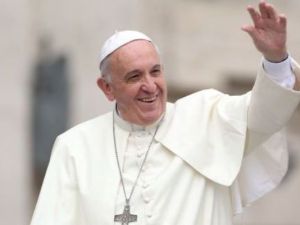
Photo credit: http://www.wusa9.com/story/life/faith/pope-coverage/2015/08/20/poll-pope-francis/32052555/

Photo credit: http://www.wusa9.com/story/life/faith/pope-coverage/2015/08/20/poll-pope-francis/32052555/

I must admit, the Pope’s visit to the United States last week was awesome.  Though I have been happy for the Roman Catholic Church since Pope Francis was elected, last week I realized his witness is good for all Christians.  Too often people professing to be Christian make Christians look bad.  Their hatred and exclusion in no way reflects the love and inclusion expressed by Jesus Christ.  But not Pope Francis.  He continues to challenge all of us to get back to the work Jesus gave us to do – to love and care for the poor, disenfranchised, and unjustly treated.  He beckons us toward lives of making peace and justice.  In essence, he reminds us to live as Christ called us to live.  And in starkly obvious ways, he reminded us that Jesus was not a Democrat or a Republican.  In fact, Jesus made, and continues to make, everyone uncomfortable.  Pope Francis did the same thing.  Though we all loved what he did for the Church and Christians in general last week, he likely made each of us feel uncomfortable at some point during his visit.  But I think we could all respect that he was trying to get us back to our true identity – he is a Christian who made us proud, not embarrassed, to be Christians.

Coming off the high of the Pope’s visit, I attended a funeral mass this week at the local Roman Catholic Church.  I was there to support a parishioner who had lost his mother (a Roman Catholic).  I wore my collar, but sat in the pew.  I prayed with the priest, cried with the family, and reverenced during the Eucharist.  But when the Eucharist was distributed, I stayed in my seat.  To his credit, the priest did not disinvite any non-RC attendees.  But he did not actively invite them either.  So instead of risking offense, I stayed in my seat, as I have been well-trained by many other RC priests that I am not to receive Eucharist as a non-RC.  I knew the moment would come and I was mentally prepared to stay in that seat.  But I must admit, my heart ached in that moment.  I felt a sharp pain in my chest as others walked around me to go forward for the heavenly meal.  For all the unity, the love, and the excitement of last week, I realized in that moment that we have a long way to go.

Of course, that work is not limited to the Roman Catholic Church.  Last week I preached about how much the Episcopal Church does its own work of excluding people – even from the Table, if you are not baptized.  In fact, I remember writing a paper in my liturgics class in seminary defending the practice of limiting the Eucharist to those who are baptized.  I don’t remember my argument at the time, but it was good, well-thought out, and prayerfully constructed.  But sitting in that pew yesterday, not receiving the comfort of the holy meal made me rethink the whole concept of an open table.  I do not really know if I am ready to make any changes right away, but the experience was a powerful lesson in the realities of constructing boundaries around the Table.  I do not want anyone’s heart to hurt the way mine did yesterday.  What about you?  What boundaries the church has constructed make you feel conflicted?  What might compel you to reconsider your position?  I invite us to pray about these conflicts as a community and see where the Spirit is leading.

Sermon – Luke 24.36b-48, E3, YB, April 19, 2015

23 Thursday Apr 2015

Posted by jandrewsweckerly in Uncategorized

≈ Leave a comment

Tags

church, disciples, eat, embolden, Eucharist, food, heal, Jesus, peace, power, reconcile, Sermon, witness

I have been thinking this week about the power of food.  In almost all my mission trips, there was a food story.  Whether I was uncertain about eating what looked like undercooked chicken in the Dominican Republic, or I was struggling with the proper way to eat the tiny bird I was given in Burma, or I was trying to swallow the freshly made tamale in Honduras when all I wanted to eat was a saltine because I was so sick – there was always a dramatic food story from each trip that led to endless jokes later.  Of course there are good food stories too.  There are those foods that you always eat when you visit a favorite restaurant, the foods you beg your mom to make when you visit home, or the foods whose recipes you try to master before your grandfather passes away and the magic taste is gone with him.  Food is a powerful thing.  There is the basic need for food for sustenance, there is the nostalgia and delight that the smell and taste of food can bring, there is the adventure of trying new and exotic foods, and there are ways in which food can be the enemy – from overeating to disordered eating.  Food is the common denominator among all peoples, and in many ways, our life is centered around food.  The common joke in the South is that you know a family is a good southern family if they are planning their next meal while eating the current one.

So today, when Jesus says, “Have you anything here to eat?” Jesus harnesses the power of food to do something equally powerful.  In Luke’s gospel, the women have found the empty tomb and reported the news to the disbelieving disciples.  Peter has confirmed the news, but the disciples remain huddled in fear.  Two of those gathered have an encounter with Jesus on their walk to Emmaus, and return to the disciples to share the news.  Finally, in our lesson today, Jesus appears among them.  Though he offers peace to them, and tries to calm their doubts and fears, the text tells us that they are joyful, but still in disbelief and wonder.  Despite the fact that the disciples have received multiple testimonies of the risen Lord and despite the fact that the same risen Lord is standing right in front of them, offering them peace and assurance and even showing his wounds as proof of his identity, the disciples just cannot get their heads around this strange new reality.  And so Jesus resorts to the one power left he has to reach the disciples – the power of food.  To this scared, confused, disbelieving gang of followers, Jesus says the most basic, normal question, “Have you anything here to eat?”

Who among us has not tried to use food as the great peace maker?  Almost every time we go to visit family, our family anxiously asks, “What do you guys eat?”  Whenever we host friends, we are careful to ask about food allergies or what kinds of foods they do not like.  Pretty much every birthday party we have been to with our five-year old has served pizza and cake – because apparently, every kid likes pizza and cake.  Nothing feels better than satisfied eaters around a dinner table.  Once people are happily eating, the conversation flows and the laughter soon follows.  Likewise, when we make the wrong food choices for a meal, the results can be disastrous.  I always have loved the scene from the film, My Big Fat Greek Wedding, when the Greek girl invites her very non-Greek boyfriend to meet the family.  The whole family has gathered, a pig is on the spit, food is flowing, music is playing, and the favorite Aunt comes up the boyfriend and asks him what she can serve him.  The Greek girl tries to calmly and quietly explain that her boyfriend is a vegetarian.  The Aunt seems confused, and so she explains that her boyfriend does not eat meat.  The Aunt loudly asks, “What do you mean he doesn’t eat meat?!?”  The room suddenly stops – a record scratches as the music halts, a glass drops from a stunned hand, and jaws drop as they stare at this strange boyfriend.  But the Aunt, ever the gracious host, quickly affirms the boyfriend and says, “That’s okay, that’s okay.  I’ll make lamb!”

Though the Aunt clearly does not comprehend the practice of being a vegetarian, she still leans on food as a way make peace.  Once she has made peace, the party continues, and the family gets back to knowing the foreigner and welcoming him as family.  That is because food has that power.  Food can break down walls between foreigners, food can soothe old hurts, and food can help make new friends.  Food has power.

Jesus seemed to know this truth.  When appearances, conversations, and physical evidence cannot not seem to calm the disciples enough for them to understand what God is doing in the risen Christ, Jesus resorts back to the one thing that can transform everything.  “Have you anything here to eat?” is not just a question about whether there is food in the house.  His question is a disarming one – a question that not only requires the mundane work of preparing food, but also gets the disciples into a place a familiarity, comfort, and ease.  In this place, gathered around the table with food, the disciples are finally put in a place where they can really hear Jesus.  In fact, the text says that Jesus opens their minds to understand the scriptures.  Finally, after confusion, fear, and disbelief, through the power of food comes clarity, wisdom, and direction.  Jesus is able to break through, create understanding, and most importantly, commission the disciples to spread the good news to all the nations.[i]

On those mission trips, those funny food stories always led to something more powerful.  That questionable chicken was procured for us because the village leaders knew how hard we had labored and they wanted to give us food to sustain us – even if it meant driving out of the way to obtain the chicken.  And once we ate, the hungry villagers ate too.  Those tiny birds that we panicked about in Burma were actually quite a delicacy.  They are a rare treat that were painstakingly prepared by the women of the church.  And though I am sure our faces betrayed our uncertainty, you could not have seen more proud looks on those women as we began to pick through those tiny bones for meat.  Those mounds of fresh tamales were like a death sentence to me in Honduras.  But I learned that the women of the village had pooled their money for the ingredients and had been working all day to prepare for the feast.  After we ate those delicious offerings, there was great dancing and celebration as our team honored a productive week with our village hosts.

Churches understand the power of food.  I still hear stories at St. Margaret’s about the progressive dinners held back in the day.  Parishioners who are often quite overbooked will clear their calendars for our annual parish picnic.  I have told many a friend that St. Margaret’s is the only parish I know whose Coffee Hour truly lasts an hour – sometimes more if the conversation is really hopping.  Even our most recent new endeavor of providing a family-friendly worship and fellowship opportunity is centered around food – Pasta, Pray, and Play.  Churches understand the power of food to bring people together, to enrich relationships, and to create new connections.

But probably most important for the Church is the power of food to heal, reconcile, and embolden.  The Eucharistic Meal is the primary way we use the power of food.  For those of us who have been receiving communion our whole lives, we sometimes forget the power of that simple meal.  I remember, at one of the services when one of our young people received his first communion, the look of consternation on his face when he first tasted the dry wafer.  I do not know what he was expecting, but I can tell you, that wafer shocked his senses.  That is what our Eucharistic Meal is supposed to do.  We spend an hour pondering and praying about what God is doing in our lives, we confess our failures to live as faithful servants of God, we reconcile with our brothers and sisters in the peace, and then we stand humbly before God and receive a meal that restores us and makes us whole.  That single meal gives us the peace and the power to get back out into the world and try again – try again to be the witnesses Jesus invites us to be today.  That is the power of this food – this meal can transform us and enable us to be faithful witnesses in the world.  When Jesus says today, “Have you anything here to eat?” we say emphatically, yes, we do.  Amen.

[i] Sarah S. Henrich, “Exegetical Perspective,” Feasting on the Word, Yr. B, vol. 2 (Louisville:  Westminster John Knox Press, 2008), 429.

Sermon – John 13.1-17, 31b-35, MT, YB, April 2, 2015

15 Wednesday Apr 2015

Posted by jandrewsweckerly in Uncategorized

≈ Leave a comment

Tags

belonging, brokenness, church, dinner, Eucharist, failings, footwashing, forgiveness, God, home, identity, Jesus, joy, Last Supper, Maundy Thursday, peace, renewal, sacred, Sermon, sinfulness, strength, table

The dinner table is where sacred things happen.  The dinner table is where food is served that can satisfy a hunger, can heal an ailing body, can delight the senses, and can invoke a nostalgia like no other.  The dinner table is where stories are told, days are recounted, prayers are said, and laughter is had.  The dinner table is where places are set, dishes are passed, plates are cleared, and remnants are cleaned.  The dinner table is the host of all things mundane – like that frozen meal you threw together before you ran off to the next thing; and the dinner table is the host of all things momentous – like that gloriously planned and executed Thanksgiving meal that you hosted for your friends and family.  Because the dinner table can do all these things, the dinner table becomes the place in our home where sacred things happen – a holy site for one’s everyday and one’s extraordinary moments.

The dinner table where Jesus and his disciples gathered for that Last Supper was no different.  They had gathered at table hundreds of times in the three years they had spent together.  There had been learning and laughter, stories and questions, arguments and celebrations.  In many ways, all of these things seem to happen in the course of this one night during the Last Supper.  Jesus and the disciples are likely chatting up a storm, talking about the days events, when Jesus does something extraordinary.  He gets up, takes off his outer robes, and washes the feet of his disciples.  This kind of event is unheard of.  Hosts and well-respected teachers do not wash others feet; that task was assigned to a household slave.[i]  And some of the midrashic commentary suggests that not even a Hebrew slave was expected to perform such a menial task.  Instead, the slave might bring out a bowl of water, but the guest would wash his own feet.[ii]  So of course, a lively debate ensues with Peter, who does not understand what is happening.  Jesus washes Peter’s feet anyway – and washes Judas’ feet – before returning to that dinner table to explain what he has done.  He goes on to explain that not only will he die soon, but also that he expects a certain behavior after he is gone – that they love one another.

That is the funny thing about dinner tables.  They can bring out the most sacred and holy of conversations.  The dinner table is where one tells his family that he has terminal cancer.  The dinner table is where one tells her best friend that she lost her job and has no idea what she is going to do.  The dinner table is where the young couple announces that that they lost their pregnancy.  The dinner table is where the college student tells his parents that he is dropping out of school.  We tell these awful, scary stories at the dinner table because we know that the table can handle them.  The table is where we gather with those who we care about and is therefore the place where we can share both the joys of life and also the really hard stuff of life.  Though our table may have never hosted a dinner as beautiful as one of the tables Norman Rockwell could paint, our table is still a sacred place that can hold all the parts of us – the good, the bad, the beautiful, and the ugly.  We can share the awfulness of life there because we know that those gathered can handle it, and can carry us until we can be back at the table laughing some day.

What I love about our celebration of this day is that all of those things – the good, the bad, the beautiful, and the ugly – were present that night with Jesus and his disciples.  So yes, earlier in the evening, there probably is a raucous conversation.  The disciples are gathered at the table, in all their imperfection: those who love Jesus with a beautiful innocence and those who greedily hope to be at Jesus’ left and right hand; those who humbly understand Jesus and those who want Jesus to victoriously claim his Messianic power; those who profess undying faithfulness (even though they will fail to be faithful) and those who actively betray Jesus.  At that table Jesus not only talks about how to be agents of love, Jesus also shows them how to love.  On this last night – this last night before the storm of Jesus’ trial, crucifixion, and death – a sacred moment happens at the dinner table.  And though we do not hear the story tonight, we also know that Jesus then breaks the bread and offers the wine, instituting the sacrament of Holy Communion.

We know the rest of the story.  The disciples, who still do not really understand Jesus fully, muddle their way through footwashing and Holy Communion.  Then those same dense disciples sleep their way through Jesus’ last prayers.  One of those disciples becomes violent when a soldier tries to seize Jesus.  And eventually, most of the disciples betray and abandon Jesus altogether.  To this unfaithful, dimwitted, scared group, Jesus offers a sacred moment at the dinner table, inviting them into the depths of his soul and a pathway to our God:  and encourages them to love anyway.

Our own Eucharistic table is not unlike that dinner table with Jesus.  Tonight, we too will tell stories, sing, and laugh.  We too will wash feet in humility, embarrassment, and servitude.  We too will hear the sobering invitation to the Eucharistic meal, and will walk our unworthy selves to the rail to receive that sacrificial body and blood.  We too will argue with God in our prayers, pondering what God is calling us to do in our lives and resisting that call with our whole being.  We too will lean on Jesus, longing for the comfort that only Jesus can give.  And we too will hear Jesus’ desperate plea for us to also be agents of love – not just to talk about love, or profess love, but to show love as Jesus has shown love to us.

In this way, our Eucharistic table is not unlike the dinner table in your own home.  Our Eucharistic table has hosted countless stories, arguments, and bouts of laugher.  Our Eucharistic table has witnessed great sadness and great joy.  Our Eucharistic table feeds us, even when we feel or act unworthily.  And our Eucharistic table charges us to go out into the world, being the agents of love who are willing to wash the feet of others – even those who betray us and fail us.  This Lent, we have been praying Eucharistic Prayer C.  In that prayer, the priest prays, “Deliver us from the presumption of coming to this Table for solace only, and not for strength; for pardon only, and not for renewal.”[iii]   This Eucharistic table, like our own dinner table, can handle all of us – all our failings, sinfulness, and brokenness.  This table can fill us up with joy, forgiveness, and peace.  This table can be a place where we find belonging, identity, and security.  But this table is also meant to build us up – to give us strength and renewal for doing the work God has given us to do – to love others as Christ loves us.  Sacred things happen at this table.  Those sacred things happen so that we can do sacred things in the world for our God.  Amen.

[i] Guy D. Nave, Jr., “Exegetical Perspective,” Feasting on the Word, Yr. B, vol. 2 (Louisville:  Westminster John Knox Press, 2008), 279.

[ii] Mary Louise Bringle, “Homiletical Perspective, Feasting on the Word, Yr. B, vol. 2 (Louisville:  Westminster John Knox Press, 2008), 279.

[iii] BCP, 372.

Comfort food…

30 Friday Jan 2015

Posted by jandrewsweckerly in Uncategorized

≈ 3 Comments

Tags

church, comfort food, Eucharist, God, meal, nostalgia, senses, taste

Courtesy of https://www.flickr.com/photos/lorikay/172625272/

Courtesy of https://www.flickr.com/photos/lorikay/172625272/

Whenever my family and I travel to familiar places, there are required food-related stops.  When we go to San Diego, it is El Indio, Rubios, and In-N-Out.  When we go to Delaware, it is Capriotti’s and Rita’s.  When we go anywhere South, it is Krispy Kreme, Chick-fil-A, and Waffle House.  Somehow our trips do not feel complete until we have made it to our special food establishments.  In fact, in San Diego, the very first stop after the airport is not home – it is straight to El Indio.  We look forward to the food for weeks before our trips, and we make sure that whatever agenda is planned, those food stops are figured into the master plan.

Not only do we make the stops because the food is amazing (because it is!), we also make the stops out of a sense of nostalgia.  Because many of those establishments have not expanded to where we currently live, there is a way in which the food brings us back to other times in our lives.  The sense of taste overwhelms the mind with memories, and we find ourselves savoring not just the food but the treasured experiences as well.  Food has a tremendous power to create a sense of home – sometimes even more so than a particular house.

I have often felt that same way about the Eucharistic meal.  Though I celebrate Eucharist multiple times per week now, every once in a while, powerful sensory experiences overwhelm what could be the mundane.  The flavor of the host (yes, those bland wafers actually do have a taste), whether or not the host is stale or crunchy in your mouth, the sharp taste of communion wine at a time that would not normally be acceptable for consumption of wine – all of these sensory experiences can make communion powerful over and over again.  And sometimes, the familiarity of the taste and texture is also comforting.  When all else in my world seems out of control, that moment of receiving the body and blood of Christ is centering like nothing else can be.

I wonder what you have done lately to connect on a sensory level with God.  Maybe you have missed church these last couple of weeks (or months, or years).  Maybe you come to church, but you disconnect during the familiar Eucharistic prayer because it is just too familiar.  This past Sunday at St. Margaret’s, we sang “Taste and See,” one of my favorite communion hymns.  The words are based on Psalm 34.  Like a familiar dining establishment, whenever I read the psalm, I think of the song.  And whenever I think of the song, I am reminded of the many powerful times that holy meal has shaken up my senses in fresh ways.  I invite you reconnect with God this week on a sensory level.  Perhaps you will remember another place you call home.

Newer posts →

Recent Posts

  • On the Myth and Magic of Advent…
  • On Risking Failure and Facing Fear…
  • Sermon – Luke 23.33-43, P29, YC, November 23, 2025
  • On Inhabiting Gratitude…
  • Sermon – Luke 20.27-38, P27, YC, November 9, 2025

Archives

  • December 2025
  • November 2025
  • October 2025
  • September 2025
  • August 2025
  • July 2025
  • June 2025
  • March 2025
  • February 2025
  • December 2024
  • November 2024
  • October 2024
  • September 2024
  • August 2024
  • July 2024
  • June 2024
  • May 2024
  • March 2024
  • February 2024
  • January 2024
  • December 2023
  • November 2023
  • October 2023
  • September 2023
  • August 2023
  • July 2023
  • June 2023
  • May 2023
  • March 2023
  • February 2023
  • January 2023
  • December 2022
  • November 2022
  • October 2022
  • June 2022
  • May 2022
  • January 2022
  • December 2021
  • November 2021
  • October 2021
  • September 2021
  • August 2021
  • June 2021
  • May 2021
  • April 2021
  • March 2021
  • February 2021
  • January 2021
  • December 2020
  • November 2020
  • October 2020
  • September 2020
  • August 2020
  • July 2020
  • June 2020
  • May 2020
  • April 2020
  • March 2020
  • February 2020
  • January 2020
  • December 2019
  • November 2019
  • October 2019
  • September 2019
  • August 2019
  • July 2019
  • June 2019
  • May 2019
  • April 2019
  • March 2019
  • February 2019
  • January 2019
  • December 2018
  • November 2018
  • October 2018
  • September 2018
  • August 2018
  • July 2018
  • June 2018
  • May 2018
  • April 2018
  • March 2018
  • February 2018
  • January 2018
  • December 2017
  • November 2017
  • October 2017
  • September 2017
  • August 2017
  • July 2017
  • June 2017
  • May 2017
  • April 2017
  • March 2017
  • February 2017
  • January 2017
  • December 2016
  • November 2016
  • October 2016
  • September 2016
  • August 2016
  • July 2016
  • June 2016
  • May 2016
  • April 2016
  • March 2016
  • February 2016
  • January 2016
  • December 2015
  • November 2015
  • October 2015
  • September 2015
  • August 2015
  • July 2015
  • June 2015
  • May 2015
  • April 2015
  • March 2015
  • February 2015
  • January 2015
  • December 2014
  • November 2014
  • October 2014
  • September 2014
  • August 2014
  • July 2014
  • June 2014
  • April 2014
  • March 2014
  • February 2014
  • January 2014
  • December 2013
  • November 2013
  • October 2013
  • September 2013
  • August 2013
  • July 2013
  • June 2013
  • May 2013
  • April 2013
  • March 2013
  • February 2013
  • January 2013
  • December 2012
  • November 2012
  • October 2012
  • September 2012

Categories

  • reflection
  • Sermons
  • Uncategorized

Meta

  • Create account
  • Log in
  • Entries feed
  • Comments feed
  • WordPress.com

Blog at WordPress.com.

  • Subscribe Subscribed
    • Seeking and Serving
    • Join 394 other subscribers
    • Already have a WordPress.com account? Log in now.
    • Seeking and Serving
    • Subscribe Subscribed
    • Sign up
    • Log in
    • Report this content
    • View site in Reader
    • Manage subscriptions
    • Collapse this bar
 

Loading Comments...