• About

Seeking and Serving

~ seek and serve Christ in all persons

Seeking and Serving

Tag Archives: life-giving

Sermon – Luke 10.38-42, P11, YC, July 20, 2025

24 Thursday Jul 2025

Posted by jandrewsweckerly in Sermons

≈ Leave a comment

Tags

better, dichotomy, discipleship, gender roles, God, hospitality, Jesus, life-giving, Martha, Mary, ministry, Sermon, work

Professor Jennifer Wyant describes “…a famous legend told about Martha of Bethany that was popular in the Middle Ages.  In this story, which takes place after the resurrection of Jesus, she becomes a traveling preacher and ends up in a small town in France that, unfortunately, has a chronic dragon problem.  She manages to slay the dragon and, in doing so, wins the whole town over to Christianity.  In that same story, her sister Mary, on that same trip, ends up starting a monastery in the wilderness, meaning they both live out the roles assigned to them in Christian history:  Martha acts and Mary studies.  Martha represents an active faith, while Mary represents a contemplative faith.”  Wyant goes on to explain that “This dichotomy comes in many ways from Luke 10:38–42 [that we read today], in which Martha shows Jesus hospitality while Mary sits at his feet.  The two women embody different aspects of Christian discipleship in Luke’s Gospel, and both are lifted up as positive characters.  They are both doing good things.  There is no villain in this story.  But ultimately, Jesus tells Martha that Mary has chosen the better part, and this represents a tension point for most readers.”[i]

Now like any good Episcopalian, I am not big on dichotomies.  I am not a fan of either-or options – I am more of a both-and Christian.  So, I am not sure if this story gets my hackles up because I think dichotomies can be dangerous, or if I am defensive because both this story and the Old Testament lesson have women hustling around in stereotypically gendered roles, or if Jesus’ lack of support and criticism of Martha is so biting, or if I just see too much of myself in Martha.  If Martha and Mary’s story today has you similarly anxious, uncomfortable, or defensive, or if this story has you feeling a bit affirmed and self-righteous, then we all need to dig a bit more deeply into this story. 

Starting with the text will help.  On the surface, this is a story about an older sibling, Martha, taking on all the household work while the younger sister, Mary, sits with Jesus, enjoying the luxury of learning from Jesus while Martha does all the work.  But in verse 40, the translation we have says Martha is distracted by her many tasks.  Now according to scholars, the Greek translation says something more like, “Martha is ‘distracted by much ministry.’”[ii]  This is not a critique of stereotypically gendered work women must do.  Martha is not just distracted by preparing food, cleaning the house, and making beds for disciples.  Martha is doing the sacred, faithful work of hospitality – a crucial act of ministry.  Later, Jesus says Martha is “worried and distracted by many things…”  Here, the Greek word for “worry” is “‘strangle’ or ‘seize by the throat’ and ‘tear.’  The root meaning of the word ‘distraction’ is a dragging apart of something that should be whole.  These are [two] violent words.  Words that wound and fracture.  States of mind that render us incoherent, divided, and un-whole.”[iii]

This story is not about who is the better sibling, whether women’s work is inferior to men’s work, or even about judgment of identity for us Marthas in the room.  This is a story about how all of us have ministries – ministries of discipleship that involve learning and action, of studying the Word and showing Christian hospitality to strangers, of speeding up and slowing down.  What Jesus is really concerned about is our intention around our discipleship.  The question is not if we are doing God’s work, but how we are doing God’s work.[iv]  According to Debie Thomas, Martha is in “such a state of fragmentation, a condition in which she cannot enjoy [Jesus’] company, savor his presence, find inspiration in her work, receive anything he wishes to offer her, or show him genuine love.  Instead, all she can do is question his love…fixate on herself…, and triangulate.”  Martha seems to think she can “invite Jesus into her life – and then carry on with that life as usual, maintaining control, privileging her own priorities, and clinging to her long-cherished agendas and schedules.”  And unfortunately, “That’s not how discipleship works.”[v]

So maybe instead of getting some either-or clarity today, we need to ask some both-and questions.  How are we approaching our ministry these days?  Are we so wrapped up in our assumptions about other people’s behaviors that we have forgotten to look at our own?  Have we invited Jesus into our lives, but only under our own set of requirements and strictures?  Once we refocus our questions, some clarity comes into view[vi].  Maybe we need to take some more time at Jesus’ feet, praying, reading scripture, coming to church, or joining something like Faith and Film or Sunday morning Bible Study.  Maybe we need to look at those metaphorical dinner plates as an invitation to prayer, holding dear the bodies that will be fed by our labor.  Maybe we need step out of our controlled kitchens and go serve up a meal at Meals on Wheels or at From His Hands.  Jesus loves us and affirms us in our varied ministries.  And Jesus also knows that when we start looking at how we are doing our ministries, the real, life-giving, whole-making discipleship will come.  Amen.


[i] Jennifer S. Wyant, “Commentary on Luke 10:38-42,” July 20, 2025, as found at https://www.workingpreacher.org/commentaries/revised-common-lectionary/ordinary-16-3/commentary-on-luke-1038-42-6 on July 19, 2025.

[ii] Amy-Jill Levine and Ben Witherington, III, The Gospel of Luke: New Cambridge Bible Commentary (Cambridge:  Cambridge University Press, 2018), 297.

[iii] Debie Thomas, Into the Mess & Other Jesus Stories:  Reflections on the Life of Christ (Eugene, Oregon:  Cascade Books, 2022), 51.

[iv] Matthew L. Skinner, “Exegetical Perspective,” Feasting on the Word, Yr. C., Vol. 3 (Louisville: Westminster John Knox Press, 2010), 265 and 267.

[v] Thomas, 51.

[vi] James A. Wallace, “Homiletical Perspective,” Feasting on the Word, Yr. C., Vol. 3 (Louisville: Westminster John Knox Press, 2010), 265.

Sermon – Luke 13.1-9, L3, YC, March 20, 2022

25 Wednesday May 2022

Posted by jandrewsweckerly in Sermons

≈ Leave a comment

Tags

answers, ask, fig tree, God, Jesus, life-giving, parable, questions, Sermon, suffering, Ukraine, un-ask

As I have been watching the news about Ukraine, I find that I am in equal measures blown away by the fortitude and commitment of Ukrainians – who by all accounts had no chance in beating powerful Russia, and devastated by the suffering of Ukrainians – starving and trapped inside surrounded cities, attempting to protect children by writing the word “children” outside a safe house, only to have that safe space bombed, and even having maternity wards being fair game for destruction.  As my heart ached the question, “Why?” this week, I was so grateful when I read today’s gospel and see those gathering around Jesus asking Jesus the same question.

In Luke’s gospel today, the people come with two concerns to Jesus.  They want to know why Galilean Jews have suffered at the hand of Pilate, and why many were killed when the tower of Siloam collapsed.  I feel a solidarity in their painful questions, and I have a hopeful longing when Jesus opens his mouth.  But what comes next feels like Jesus has not heard us at all.  In answer to their question of why there has been suffering, Jesus tells this story:  Once upon a time, there was a fig tree that was not bearing fruit and had not borne fruit for three years.  Fed up, the vineyard owner decided to cut down the unproductive tree.  But before the vineyard owner could touch the tree, the gardener made one last plea.  The gardener asked for one more year.  In that year, the gardener would dig around the tree, spreading manure at the roots of the tree.  If after a year of such care the tree still did not produce fruit, then the owner could chop down the tree. 

Now maybe you hear Jesus’ parable today, and you can immediately see the correlation between the question why there is suffering in the world and the parable of the unproductive fig tree.  I was not so lucky this week.  In fact, I found myself staring blankly at this text for days.  Certainly, I understand the question the people ask, since I have been asking that same question for weeks.  And I think I somewhat understand the parable – I mean, what better parable for Lent than one about repentance.  But what I did not understand was why Jesus told this parable to answer our question of why there is suffering in the world.

Fortunately, I stumbled on the work of a biblical scholar.  She describes the idea by poet and healer Pádraig Ó Tuama of the “Buddhist concept of ‘mu,’ or un-asking.  If someone asks a question that’s too small, flat, or confining, Ó Tuama writes, you can answer with this word mu, which means, ‘Un-ask the question, because there’s a better question to be asked.’  A wiser question, a deeper question, a truer question.  A question that expands possibility, and resists fear.”[i]  I think what the poet and the scholar are pointing to is a little like that movie The Karate Kid from the 1980s.  In the movie, the main character wants an old man to teach him karate so he can stand up to the high school bully.  And so, what are the first things the old teacher has him do?  Paint a fence, wax a car, and sand a wooden walkway.  This desperate teen asks for help, and at first glance, the wise teacher is responding in a totally disconnected way.

Of course, in the movie we learn that the teacher’s method is anything but disconnected.  Painting, waxing, and sanding all incorporate the skills needed to master karate.  Jesus is a similar sensei in his telling of this cryptic parable.  In order to help us shift our work of repentance on this third week of Lent, when we ask why, Jesus says “mu.”  As Debie Thomas argues, Jesus “…says “mu” because “why” is just plain not a life-giving question.  Why hasn’t the fig tree produced fruit yet?  Um, here’s the manure, and here’s a spade — get to work.  Why do terrible, painful, completely unfair things happen in this world?  Um, go weep with someone who’s weeping.  Go fight for the justice you long to see.  Go confront evil where it needs confronting.  Go learn the art of patient, hope-filled tending.  Go cultivate beautiful things.  Go look your own sin in the eye and repent of it while you can.  In short: imagine a deeper story.  Ask a better question.  Live a better answer.”[ii] 

Jesus is not unfeeling about our angst about suffering in the world.  I suspect Jesus is grateful for our empathetic hearts.  But this cryptic parable this week is meant to shift us a quarter turn so that we move out of empathetic paralysis and into repentant productivity.  We learn from the parable we will not do this work alone.  We unproductive, rooted trees cannot exactly fertilize and aerate our own soil.  God, the gardener, who graciously asks for more time, will do that work as we focus on moving from being empathetic fig trees with no sustaining fruit, to humble, repentant fig trees who work on improving our own sinful behavior before becoming overwhelmed with the rest of the sinful world.  God will likely have to shovel a lot of manure to help transform our unproductive soil.  But as we weep with others, grab our own spades, confront evil in our own life, and fight for justice through hope-filled tending, we begin the work of asking better questions and living better answers.  Amen.


[i] Debie Thomas, “What Are You Asking?” March 13, 2022, as found at https://www.journeywithjesus.net/lectionary-essays/current-essay?id=2944 on March 19, 2022.

[ii] Thomas.

GC79: Kingdom Work

26 Thursday Jul 2018

Posted by jandrewsweckerly in Uncategorized

≈ Leave a comment

Tags

Episcopal Church, General Convention, God, heaven, hope, Jesus Christ, Kingdom, liberating, life-giving, loving, people

IMG_5342

Photo credit:  Ruth Beresford (reuse only with permission)

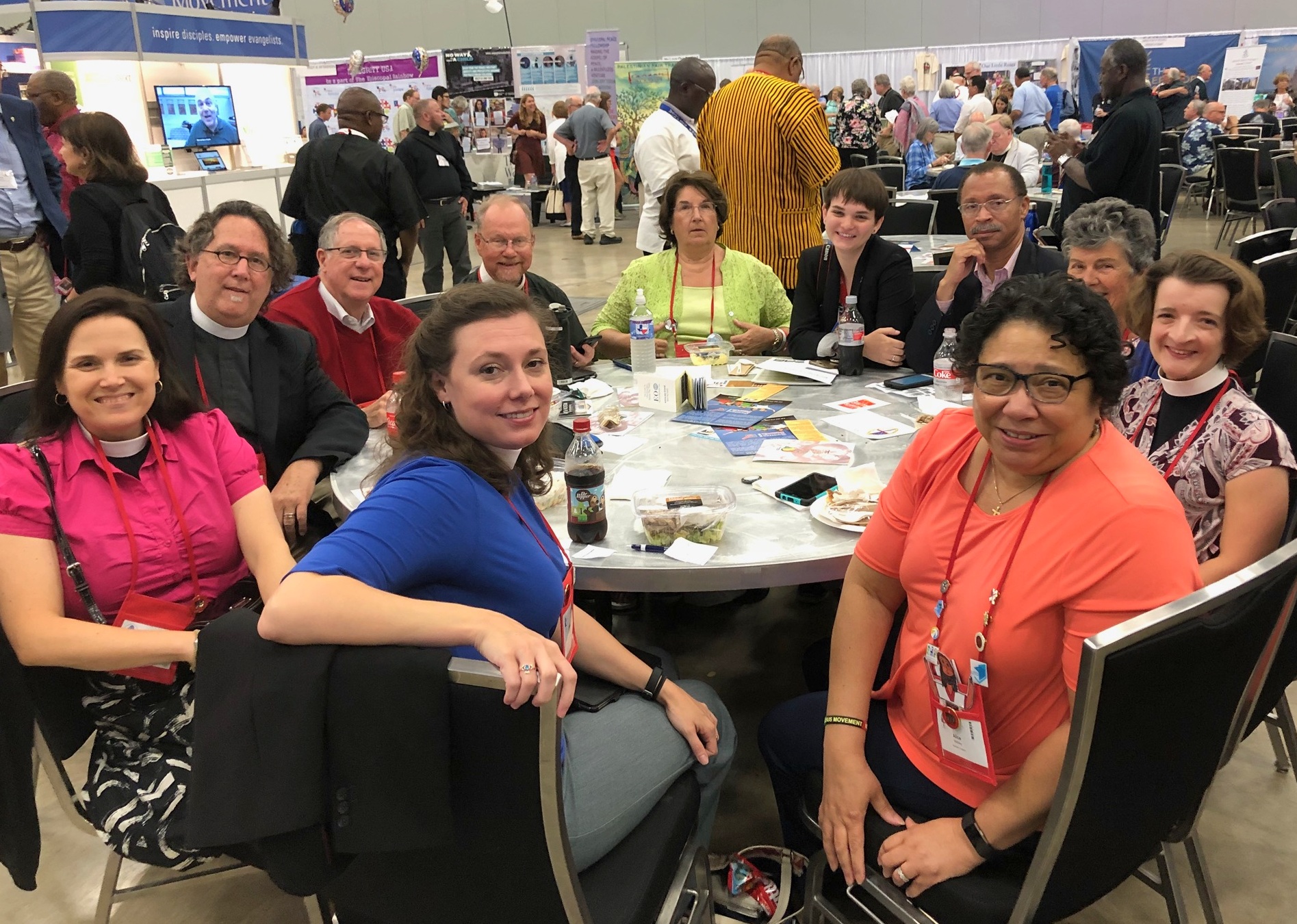
One of the questions I have received about General Convention is what it is like.  What you notice right away is General Convention’s impressive scale.  Every one of the 110 dioceses of the Episcopal Church is able to bring four clergy and four lay deputies.  They may also bring four alternate clergy and four alternate lay deputies.   In total, that’s over 800 people on the floor of the House of Deputies.  All bishops are also present, meeting in the House of Bishops.  Each diocese can have 1 – 3 bishops in place (Diocesan, Suffragan, and Assisting/Assistant).  Visitors from near and far can also attend, as well as media from dioceses, youth observers, and distinguished guests.  The Exhibit Hall also has an extraordinary number of staff and volunteers, and in addition to booths, the seminaries regularly bring in staff or faculty for seminary reunions.  Meanwhile, the entire Convention Center is run by massive amounts of volunteers – covering everything from check-in, monitoring the floor, helping with worship, to the exhibits.  Meanwhile, the ECW holds its annual triennium at the same time, which involves representatives, organizers, and volunteers.  Needless to say, Episcopalians take over the host city (this year coined as the Episcapocalypse).  Even Austin, Texas, which prides itself in being “weird,” I think was a little overwhelmed by our numbers.

IMG_1950

Photo credit:  Chris Girata (reuse only with permission)

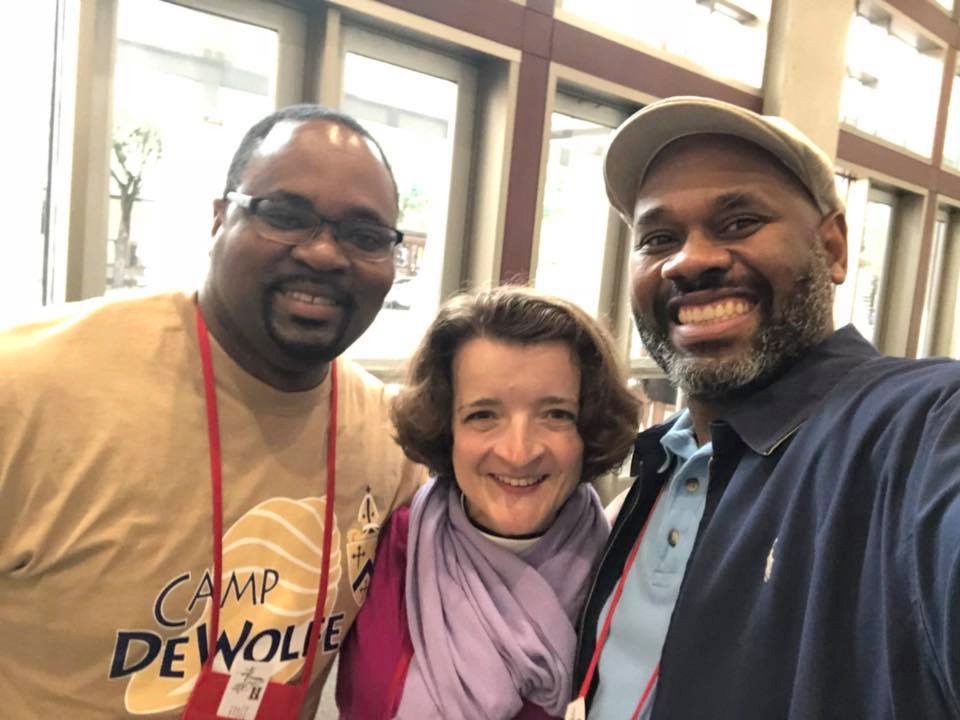
What I particularly enjoyed was getting a taste of what it might be like to enter God’s heavenly kingdom.  People from all walks of my life were present at Convention.  There were people from my time in undergraduate campus ministry, my time working as a lay person, my time in seminary, my time as a curate, my first time as a rector, and my current position.  The joy of greeting one longtime friend or colleague after another was heartwarming.  It also reminded me of how incredibly blessed my life has been to be full of incredible people who have shaped, influenced, and sometimes directed my faith life.  God’s abundance was all around me in the faces of God’s children.

IMG_1885

Photo credit:  Hickman Alexandre (reuse only with permission)

But you could not be at General Convention without meeting other people.  A conversation about something mundane would lead to the realization that we had friends in common.  Waiting in line for something would lead to a conversation about a shared passion.  People you have “met” online through vocational networking you could finally meet in person.  Suddenly, you realized you were making connections from all over the world.  The family of the Episcopal Church is deep and wide.  I leave General Convention feeling hopeful for the future of the Episcopal Church, knowing that it is full of passionate people, doing their part to create a loving, liberating, life-giving world through Jesus Christ.  Thanks be to God!

IMG_1749

Photo credit:  Ann Turner (reuse only with permission)

Always go to the baptism…

01 Wednesday Jul 2015

Posted by jandrewsweckerly in Uncategorized

≈ Leave a comment

Tags

baptism, bold, community, faith, funeral, Jesus, journey, life-giving, radical, transformation

Photo credit:  http://www.holyangelssturgis.org/sacraments/baptism/

Photo credit: http://www.holyangelssturgis.org/sacraments/baptism/

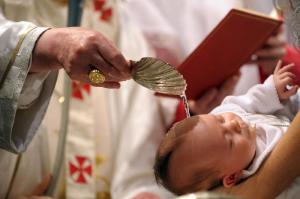
At St. Margaret’s we are in the middle of two big weeks.  This past Sunday we baptized twin girls and this coming Sunday we are baptizing another baby girl.  It is fairly rare for our parish to have back-to-back baptisms.  For the Altar Guild, that has meant that the same paraments can stay on the altar, the Pascal Candle can stay in the sanctuary, and flowers will be equally festive.  For the liturgical leaders it means that the occasionally used service is much more familiar as we head into this weekend – we should not need as much preparation and should be primed for who is holding what and when (it turns out there is a lot of choreography when it comes to liturgy!).  And for the parish, the liturgy will be very familiar and they will be ready for their big line, “We will!” when it is their turn to affirm that they will do all in their power to support these persons in their life in Christ.

But just because this coming Sunday feels familiar or even repetitive, nothing about it is rote.  That is the thing about baptisms:  although everything surrounding the day is the same, the experience is totally unique.  In the Episcopal Church, we only baptize once.  A baptism is a once-in-a-lifetime experience, something that is tremendously significant and special.  Nothing can invalidate our baptism.  Once we are welcomed into the household of God, nothing the person does can take away that status.  Baptism is a big deal.

I have often heard it said that you should never miss a funeral.  A funeral only happens once, and is something you can never recreate.  Though many of us fear what to say or do or how to approach the family, just being there becomes a blessing to the bereaved and to you.  It is a practice many have come to value:  always go to the funeral.  In fact, I began to embrace that mantra fully after seeing this story.

I think the same can be said of a baptism.  Though the liturgy is always the same, the liturgy says and does something very important.  It is not about the pretty dresses or handsome outfits.  It is about a sacred thing that happens.  It is about committing to a way of life – declaring the importance of faith in one’s life and agreeing to live in a certain way.  It is about renewing our own commitment to our baptismal covenant – something that, if done regularly, could probably help us change the world.  And it is about standing tall as a community, and taking ownership for the ways in which we form one another.  When we jubilantly say, “We will!”, our commitment is to being a community that lives life in a radically different way – in seeking Jesus, in serving Jesus, and in sharing Jesus.  When we stand at the font as a community we are claiming a radical identity that changes everything in our lives.  Something bold, invigorating, and life-giving happens at baptism.  You may think that if you have seen one baptism, you have seen them all.  On the contrary, I suggest that each one has a unique way of transforming us in Christ.  For the health of ourselves, the community, and the newly baptized, we need to be at the baptism as much as the family wants us to be there.  Always go to the baptism.  It will change your life.

Recent Posts

  • On the Myth and Magic of Advent…
  • On Risking Failure and Facing Fear…
  • Sermon – Luke 23.33-43, P29, YC, November 23, 2025
  • On Inhabiting Gratitude…
  • Sermon – Luke 20.27-38, P27, YC, November 9, 2025

Archives

  • December 2025
  • November 2025
  • October 2025
  • September 2025
  • August 2025
  • July 2025
  • June 2025
  • March 2025
  • February 2025
  • December 2024
  • November 2024
  • October 2024
  • September 2024
  • August 2024
  • July 2024
  • June 2024
  • May 2024
  • March 2024
  • February 2024
  • January 2024
  • December 2023
  • November 2023
  • October 2023
  • September 2023
  • August 2023
  • July 2023
  • June 2023
  • May 2023
  • March 2023
  • February 2023
  • January 2023
  • December 2022
  • November 2022
  • October 2022
  • June 2022
  • May 2022
  • January 2022
  • December 2021
  • November 2021
  • October 2021
  • September 2021
  • August 2021
  • June 2021
  • May 2021
  • April 2021
  • March 2021
  • February 2021
  • January 2021
  • December 2020
  • November 2020
  • October 2020
  • September 2020
  • August 2020
  • July 2020
  • June 2020
  • May 2020
  • April 2020
  • March 2020
  • February 2020
  • January 2020
  • December 2019
  • November 2019
  • October 2019
  • September 2019
  • August 2019
  • July 2019
  • June 2019
  • May 2019
  • April 2019
  • March 2019
  • February 2019
  • January 2019
  • December 2018
  • November 2018
  • October 2018
  • September 2018
  • August 2018
  • July 2018
  • June 2018
  • May 2018
  • April 2018
  • March 2018
  • February 2018
  • January 2018
  • December 2017
  • November 2017
  • October 2017
  • September 2017
  • August 2017
  • July 2017
  • June 2017
  • May 2017
  • April 2017
  • March 2017
  • February 2017
  • January 2017
  • December 2016
  • November 2016
  • October 2016
  • September 2016
  • August 2016
  • July 2016
  • June 2016
  • May 2016
  • April 2016
  • March 2016
  • February 2016
  • January 2016
  • December 2015
  • November 2015
  • October 2015
  • September 2015
  • August 2015
  • July 2015
  • June 2015
  • May 2015
  • April 2015
  • March 2015
  • February 2015
  • January 2015
  • December 2014
  • November 2014
  • October 2014
  • September 2014
  • August 2014
  • July 2014
  • June 2014
  • April 2014
  • March 2014
  • February 2014
  • January 2014
  • December 2013
  • November 2013
  • October 2013
  • September 2013
  • August 2013
  • July 2013
  • June 2013
  • May 2013
  • April 2013
  • March 2013
  • February 2013
  • January 2013
  • December 2012
  • November 2012
  • October 2012
  • September 2012

Categories

  • reflection
  • Sermons
  • Uncategorized

Meta

  • Create account
  • Log in
  • Entries feed
  • Comments feed
  • WordPress.com

Blog at WordPress.com.

  • Subscribe Subscribed
    • Seeking and Serving
    • Join 394 other subscribers
    • Already have a WordPress.com account? Log in now.
    • Seeking and Serving
    • Subscribe Subscribed
    • Sign up
    • Log in
    • Report this content
    • View site in Reader
    • Manage subscriptions
    • Collapse this bar
 

Loading Comments...