• About

Seeking and Serving

~ seek and serve Christ in all persons

Seeking and Serving

Tag Archives: messy

On Thanksgiving and Imperfection…

04 Wednesday Dec 2019

Posted by jandrewsweckerly in Uncategorized

≈ Leave a comment

Tags

God, gratitude, imperfect, love, messy, perfect, ritual, shadow, sinner, Thanksgiving, Thanksgiving Day

Norman Rockwell Thanksgiving

Photo credit:  https://www.saturdayeveningpost.com/collections/thanksgiving/

The last two weeks have been marked with rituals of thanksgiving:  a community ecumenical Thanksgiving service at the local Roman Catholic Church, Holy Eucharist on Thanksgiving Day at Hickory Neck, dinner and visiting with my dad, and, today, offering the benediction at the 400th anniversary of the first official English Thanksgiving in North America.  The rituals have all been tremendous blessings and ways to center and ground life in gratitude, a practice that can sometimes fall to the wayside in the busyness of life.

However, what has struck me about this season of gratitude is how imperfect it has been.  Often when we think of Thanksgiving Day, we immediately picture Norman Rockwell’s famous painting of the perfect meal.  But as I checked in with people and as I watched those around me, I realized nothing about this season of thanksgiving has been perfect.  I had parishioners who just welcomed a baby a few days before Thanksgiving Day and had resigned themselves to having Chinese so that no one would have to cook or stress about taking the newborn out.  I heard stories of family drama over the menu for the day.  My own family was coming off a few hospitalizations so resigned ourselves to dinner out – which then got foiled by a two-hour wait, with a wait staff that looked like they wanted to be home with their own families.  The music and collaboration of clergy was beautiful last week, but we hold in tension our denominational differences.  Even the anniversary celebration today is consciously honoring the ways in which the histories of American Indians, African-Americans, and English-Americans bring a shadow over our celebration.

As I have been pondering this imperfection, this disconnect between our ideal of perfected thanksgiving rituals and the reality of the messiness of life, I have actually found deep spiritual comfort.  Nothing about our lives is perfect.  We are all sinners, trying to be better versions of ourselves.  Even our offering of thanksgiving is imperfect.  But the love of God is perfect.  God sees our messiness and loves us anyway.  God sees the ways we hurt each other, the ways we argue, the ways we are rude or unkind, the ways that we cannot always honor our rituals, and God loves us anyway.  In fact, I sometimes wonder if God doesn’t prefer our imperfection, for in confessing our imperfection, we are fully honest, fully vulnerable, and fully trusting of God.  We bring our real selves to God, and it is there that we give the most heartfelt thanksgiving.  We feel, know, and experience God most powerfully in those moments of imperfection.

This week, I invite you to continue your practice of gratitude with God and one another.  In our thanksgiving, we are not just thanking one another for appearance’s sake, but we are thanking one another in fullness, in love, and in generosity.  Use this week to find people to thank – for the big things and the very tiny things.  My guess is we may all start working toward the perfection of God’s love with each act of thanksgiving.

Sermon – Matthew 1.18-25, A4, YA, December 18, 2016

21 Wednesday Dec 2016

Posted by jandrewsweckerly in Sermons, Uncategorized

≈ Leave a comment

Tags

ancestors, beautiful, call, calling, discernment, God, Jesus, Joseph, life, listen, messy, ordination, righteous, scary, Sermon

This week, I have been thinking a lot about callings.  Of course, with Charlie’s ordination to the priesthood this weekend, thinking about callings is not unusual.  I have always enjoyed ordinations – and not just because I am a priest.  I remember the first ordination I went to there were six people being ordained.  I only knew one of the six because she was our new assistant at the Cathedral.  But I remember being awed by the service.  The six ordinands seemed set apart.  As they processed down the aisle, wearing their simple albs, I remember wondering how they came to be called as priests, imagining they must have led a special life or be particularly holy.  I remember the swarms of clergy who gathered up front to lay hands on the new priests.  I remember how the new priests somehow seemed bathed in light that day – as if they had some special connection to the holy.

Having been through the ordination process myself, I look at ordinands a little differently today.  Instead of seeing perfectly pious priests processing, I see people who have come through a great ordeal.  I imagine the countless nights of struggling with God about why in the world they should become priests.  I imagine the stressful meetings with bishops, priests, and committees and the ambiguity about what would happen.  I imagine the exams, the sense of failure after messy pastoral visit, and the countless “no”s that come along in the process.  I no longer see perfectly coifed new priests, but instead see the haggard, raw, vulnerable people who have said, “yes,” to what promises to be a life of hard, beautiful, ugly, blessed days.   In that way, I do not see the ordained as all that different from the rest of us – a vulnerable group of people who are trying to figure out what in the world God wants us to do with our lives.

That is why I love that we hear Joseph’s story today.  Most of us think of Joseph as the stable, quiet figure in Jesus’ life.  He is present on the holy night of Jesus’ birth.  He protects Jesus from Herod by fleeing to Egypt.  He teaches Jesus a trade.  He accepts the mighty task of raising a child that is both his own and not his own.  In our minds, he is a righteous, quiet, solid man of faith.

While all of those things may be true, what they miss is the mess of his life behind the scenes. [i]  Joseph is a typical man of faith, righteously living his life, betrothed to a faithful, promising young woman.  He is quietly living his life when his world gets turned upside down.  His betrothed becomes pregnant, which must mean she has been unfaithful, and in Joseph’s time, that means his soon-to-be wife must either be stoned or divorced immediately.[ii]  Trying to overcome this tremendous disgrace and disappointment, Joseph discerns the best, most gracious path forward.  And just when he has settled what is next, God comes along, and flips his world upside-down again.  Now Joseph is supposed to not only believe that Mary is magically pregnant through the Holy Spirit, but he is also to stay with her and take the baby in as his own.  And based on scripture, we know once Jesus hits the teenage years, Joseph’s story disappears altogether.  Even though God calls Joseph to do this tremendous, hard, messy, but beautiful thing, Joseph does not get the spotlight for long.  He goes about his everyday life, living out his calling, relatively unnoticed by the world.

One of the things I have loved about mentoring people over the years is seeing just that same phenomenon.  Throughout our lives we have distinct seasons of discerning call.  Sometimes those moments are obvious:  graduating from school, trying to find a job, figuring out how to spend time in retirement.  The pattern seems to go a little like this:  we hit a point where we need to discern what God is calling us to do; we go through a process of discernment, sometimes formal, but usually informal; we make a decision and take the necessary steps to follow that path; and eventually we look back.  In looking back, we rarely find that the call we heard and answered leads us to where we expected or wanted.  Invariably, there are twists and turns we never could have anticipated.  Invariably, there are failures scattered throughout the successes.  Answering a call is never a simple, clean, or easy process.

Just this week, I was reading about a young man from North Carolina who happened to see a traveling ballet company at his church at age seven.  Four years later, he found himself practicing six days a week.  He eventually joined the New York City Ballet.  He says, “I’ve always seen ballet as my way of serving God.  I think it’s what God has called me to do.”[iii]  What I love about this young man’s story is that whether you are a ballet dancer, cabinet maker, housekeeper, or financial manager, at some point, God has called you to that work for a reason.  The ballet dancer admits he sacrificed a lot to follow his call.  I imagine he failed a lot before he succeeded.  And some day, his body will no longer be able to dance, and he will have to figure out what else God is calling him to do.  His story is the messy, beautiful, challenging story of call we all live.

And if we have never struggled with discerning our professional calling, we have certainly struggled to understand what God is doing in our personal lives.  Though we are approaching a season of joy and merriment, I know there are many of us who are facing medical diagnoses whose purpose we do not understand.  There those among us who are living in relationships – romantic, familial, or otherwise – that are at times loving, hurtful, confusing, and life-giving.  And there are those of us who feel lost, lonely, or restless, even though everything in our lives seems to be moving along well on the outside.  God is in the midst of the personal too – calling us, challenging us, and shaping us.

If we were ever unsure about God’s presence in our messy professional and personal calls, Joseph stands ready to remind us.  He too faces a medical diagnosis that changes his world – a pregnancy that he did not plan, or even participate in, that changes the course of his life forever.  He too faces a relationship that seems broken.  Even when he feels as though he is choosing a kind, compassionate, and righteous decision, God calls him to take another path.  Joseph too understood what feeling lost is like.  Just because an angel tells him to take in Mary and adopt the child as his own, I doubt that things are easy sailing at home, on that journey to Bethlehem, or even after Jesus’ birth.  Though Joseph is listening to God and following God’s call, he is never promised a simple, peaceful, happy life.

So why do we do it?  Why do we listen to God’s call for us if we have no guarantees of a happy, smooth, or peaceful life?  We follow God’s call because we have experienced that sense of dis-ease when we do not follow God’s call – that sense that we are not using all the gifts God has given us, or that discomfort that comes from trying to force what we “should” do in life with what God calls us to do in life.  We follow God’s call because we have experienced the tremendous grace that comes from answering God’s call.  Sure, the road is messy, and hard, and sometimes frustrating.  But the road is also full of beautiful surprises, wonderful accidents, and joyful confirmations that we are right where God wants us.  And we follow God’s call because we are part of a people who have always followed God’s call:  from Abraham, to Moses, to Esther, to Jonah, to Mary, to Joseph.  Our ancestors have taught us that when we say “yes,” God does indeed turn our lives upside down.  But our ancestors have also taught us that in the midst of that topsy-turvy turmoil is where we find out truest selves, where we meet the world’s deepest needs, and where we find ourselves in Christ’s light and love.  So, do not be afraid.  God is with us.  God is with you.  Amen.

[i] David Lose, “Matthew’s Version of the Incarnation,” December 17, 2013, as found at http://www.workingpreacher.org/craft.aspx?post=2961 on December 14, 2016.

[ii] Douglas R. A. Hare, “Exegetical Perspective,” Feasting on the Word, Yr. A, Vol. 1 (Louisville:  Westminster John Knox Press, 2010), 93.

[iii] Quote and story from Humans of New York, December 12, 2016, at http://www.humansofnewyork.com/post/154395391126/i-was-first-exposed-to-ballet-at-the-age-of-seven, as found on December 14, 2016.  Photo by Brandon Stanton.  Subject unnamed.

Holy chaos…

08 Wednesday Jan 2014

Posted by jandrewsweckerly in Uncategorized

≈ Leave a comment

Tags

chaos, children, Christ Child, Christmas, church, Epiphany, holy, incarnation, Jesus, life, liturgy, messy, pageant

Courtesy of http://saintansgar.blogspot.com/2010/11/joint-childrens-christmas-pageant-and.html

Courtesy of http://saintansgar.blogspot.com/2010/11/joint-childrens-christmas-pageant-and.html

This past Sunday, our church held its annual Epiphany Pageant.  Since the pageant involves using Scripture and hymns to retell the entirety of Jesus’ birth narratives, the pageant replaces most of the Liturgy of the Word (the part of the service when we traditionally read/chant the four lessons and then hear a sermon).  Though part of what we love about the pageant is the kids’ presence, we also love being invited into the familiar – rehearing the story of the Christ’s birth and incarnation and singing the hymns that we look forward to all year.

Inevitably, the pageant is a bit messy and chaotic – children forget where to go, costumes do not quite fit, or attention spans are just not long enough.  Situating the pageant within the context of worship also means that the entire worship experience that morning is loud and a bit difficult to stay fully engaged in – especially if you are looking for a quiet, contemplative reflection on the incarnation.

But to be honest, that is what I love about the pageant – the holy chaos of it all.  We often think about the birth of the Christ Child as a clean story, much like many of the two-dimensional artistic renderings we see of what looks like quiet adoration at a manger.  But the whole concept of the incarnation is messy:  from Jesus’ scandalous conception, to what had to have been an unsanitary birth among hay and animals, to stinky visitors like the shepherds, to the visit of three foreign men who act strangely and probably raise more suspicion than excitement.  The birth of Jesus is a bit of a holy mess, not to mention the rest of Jesus’ incarnate life, which involves hanging with those of ill-repute, with smelly fishermen, and with the seriously infected and ill.  Nothing about Jesus’ birth or life is sanitary, controlled, or predictable.

Later on Sunday morning in worship, as I distributed communion, I gave the body of Christ to the young girl who had just played Mary in the pageant.  In that moment, the chaos of the day disappeared, and the miracle of the incarnation became much more real to me.  Mary, the mother of Jesus, was just a woman, trying to live faithfully, caught in the holy chaos of life.  I found myself wondering what receiving the body of Christ, the body of her son, would have been like, especially once he was gone.  And just like Mary was just a woman, each one of us in church – the young girl, the middle-aged man, the aging woman – are all just people, caught in the holy chaos of life, trying to make sense of it all, but also eternally grateful for a God who takes on human flesh for us.  That is why Church is so incredible to me.  In the midst of contemplative prayer, and even in the midst of what feels like a loud, crazy liturgy, God can break through and speak truth to us.  I am grateful to our children for reminding me that God is incarnate in the midst of all of life – in the beautiful and quiet, but especially in the messy, loud, chaos of life.

Sermon – Luke 10.25-37, P10, YC, July 14, 2013

17 Wednesday Jul 2013

Posted by jandrewsweckerly in Uncategorized

≈ Leave a comment

Tags

ESPN, God, Good Samaritan, Jesus, love, messy, relationship, Sermon, the other

Lisa had produced lots of stories like this over the last ten years.  They were human-interest stories for ESPN – the stories that drew people into the private pain and sacred celebrations behind their beloved sports.  Lisa loved her work, but she had never gotten as involved as she did four years ago.  In 2009 she met Leroy and Dartanyon – two high school wrestlers from a poor Cleveland school who were fighting against all odds.  Dartanyon was homeless and legally blind and Leroy had lost parts of both legs in a train accident.  Dartanyon often carried Leroy to classes up stairs, while Leroy helped Dartanyon with his homework.  Their story was so potent for Lisa that she could not walk away.  Over the course of four years, she would find herself doing everything from helping Dartanyon obtain his birth certificate, to ensuring they had food everyday; from helping them fill out financial aid forms for college, to connecting Dartanyon to a Paralympic coach.

When I saw Lisa’s story this week, I could not help but to think about the Good Samaritan from the gospel lesson today.  Most of us know this story well, and pretty much all of us want to strive to be a Good Samaritan; so much so that we spend time volunteering, we give money to aid important causes, and we even occasionally give a dollar to that guy on the corner.  But what struck me this week about the story of the Good Samaritan is that we often simplify the example of the Samaritan. We read this story and we know that we should not be like the lawyer or the priest or the Levite.  We should help others like the Samaritan.  The problem though with this simplified response to Jesus’ command to “Go and do likewise,” is that we skim over all the work the Samaritan did.  The text says the Samaritan, “went to [the victim] and bandaged his wounds, having poured oil and wine on them.  Then he put him on his own animal, brought him to an inn, and took care of him.  The next day he took out two denarii, gave them to the innkeeper, and said, ‘Take care of him; and when I come back, I will repay you whatever more you spend.’”

Several things strike me about this account.  First of all, there is a longevity to the care of the Samaritan.  The Samaritan does not simply give the man some bandages, or a cloak, or even some money, and then leave.  The Samaritan does not simply help the man to a local hospital or inn and then carry on with his life.  The Samaritan does not even care for the man overnight, and then depart, having certainly done his duty.  No, the Samaritan even pays for the man to stay and promises to return and pay for whatever else is due.  This is not a one-time exchange, or even a short-term exchange.  This exchange is a commitment to the long haul – a dedication not just to help but to be in relationship.  This is what Jesus means when he says we are to “go and do likewise.”

What is tricky about this kind of relationship is that this kind of relationship is messy.  Though there is some debate among scholars, many seem to think that the victim on the side of the road was a Jew.[i]  So not only was this victim beaten, robbed, and abandoned by those who should have cared for the victim, he was helped and tended to by a Samaritan – a man who was his enemy.  The Jews and Samaritans had a long-standing conflict.  The Jews had a very low opinion of the Samaritans.  Samaritans were seen as second-class citizens to be avoided at all costs.  So imagine when the victim woke up at that inn to find a Samaritan nursing him back to health.

Not to mention how complicated this is for the Samaritan.  He knows how most Jews feel about him.  He may have even felt the same way about the Jewish people.  But somehow, his sense of pity gets the best of him, and he finds himself not just asking if the guy is okay, but spending his time and resources on this complete stranger who is his enemy as well.  This encounter between these two men is not simply a one-way, clean exchange of helper and helped.  This is a messy encounter that leaves the two in a strange relationship that can only be possible through God’s grace.  Whatever biases the Jew had against Samaritans had to have been called into question that next morning.  Hatred of another cannot remain when one is the recipient of love as deep as the Samaritan shows.  And whatever biases the Samaritan had against Jews had to have weakened that day too.  You cannot dress a man’s wounds, care for him overnight, and return to check in on him without some of your defenses coming down.  The kind of neighborliness that Jesus is inviting people into is messy, complicated, and a bit scary.

Lisa, Leroy, and Dartanyon knew a little about this kind of messiness.  Dartanyon and Leroy not only faced the challenges of their own physical limitations, they also lived in a world of struggle.  Their school was a school marked by violence and active police presence.  Books were handed out and locked back up after each class.  Less than forty percent would ever graduate and untold numbers were left pregnant.  And white people were not necessarily seen as allies.  Meanwhile, Lisa had grown up on the other side of Cleveland.  Her parents scraped together money just so that she would not have to go to school with those her parents would call, “those people.”  Lisa and Leroy and Dartanyon grew up knowing each other as “the other,” and any attempt at a relationship brought these biases, baggage, and burdens to the foreground.

The funny thing is that when we read our gospel lesson day, we can feel that Jesus is scolding the lawyer in some way.  But I think what is actually happening here is a bit of healthy challenge.  Jesus fully admits that if the lawyer simply does what the law calls for:  to love the Lord your God with all your heart, and with all your soul, and with all your strength, and with all your mind; and your neighbor as yourself – then the lawyer will be fine.  Jesus is saying that even the slightest effort of loving God and loving neighbor is good and to be commended.  But in the story of the Good Samaritan, Jesus is hinting to the lawyer that there is a potential for more – a potential to know God more fully and to love more deeply than he could even imagine is possible.  And that kind of amped up grace and blessing can only come from messy, complicated, scary relationships with the other.

Recently, while Lisa, Leroy, and Dartanyon prepared for a follow-up story with ESPN, Dartanyon quietly asked Lisa the question that probably many others had wondered about but never asked.  “Why did you stay?”  Lisa’s response was automatic.  “I love you,” she answered.  “That’s what I thought you’d say,” he replied.  “But … why … why did you stick around and do everything you did?”  Lisa’s response was long and complicated because their relationship was messy, complicated, and at times maybe even scary.  But after much reflection, Lisa concludes, “I stayed because we can change the world only when we enter into another’s world.”[ii]  Though I have no idea whether Lisa is a person of faith, Lisa is preaching Jesus’ words today with her life.  She understands that being neighbors means not just helping people, but entering into their lives, and taking on whatever messiness that involves – because only then can we know the kind of love Jesus has for us.  In that sacred, vulnerable, tenuous reality that is relationship with the other is where we experience Jesus and the love Jesus has for all of us – even those we might label as the other.  Jesus knows how hard this will be.  But Jesus tells us to “Go and do likewise,” anyway because Jesus knows that we can.  Amen.


[i] Matthew L. Skinner, “Exegetical Perspective,” Feasting on the Word, Yr. C, Vol. 3 (Louisville: Westminster John Knox Press, 2010), 241.

[ii] Lisa M. Fenn, “‘Carry On’: Why I Stayed,” as found on http://espn.go.com/espn/otl/story/_/id/9454322/why-stayed on July 9, 2013.

Holy mess…

20 Wednesday Mar 2013

Posted by jandrewsweckerly in Uncategorized

≈ 2 Comments

Tags

Holy Week, incarnate, messy, Prayer Book

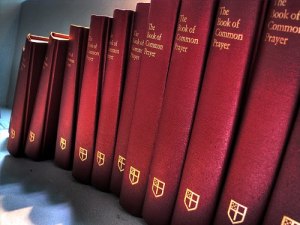
Last week I was officiating a committal service in our cemetery.  It had rained the day before, so not only was the ground very soggy, but also the dirt that I use to throw on the casket during the service was a bit wet too – despite the fact that we tried to keep it covered overnight.  What I did not realize was just how wet the dirt would be.  After I tossed the dirt, my hands we covered with crumbling mud.  Despite my efforts to rub the dirt off my hands, my Prayer Book pages got dirty and even the back of my Prayer Book had smudges on it.

As someone who loves books and likes to show my respect for books by caring for them gently, normally something like this would freak me out.  But my Prayer Book lives a very different life than my other books.  My Prayer Book has been sullied with dirt and sand from funerals and interments.  My Prayer Book has gotten damp from baptisms and the use of an aspergillum.  The pages in my Prayer Book that have the ordination liturgy have oil smears because the bishop anointed my hands so that I may anoint others.  No one could ever argue that my Prayer Book is pristine.

But that is exactly why I love my Prayer Book.  My sullied Prayer Book reminds me of the incarnate life we all live together.  Each dirt smear reminds me of a beloved parishioner, or a family who was completely unknown to me until they came to me for liturgical help.  Each hint of a drop of water reminds me of the babies and young adults I have baptized into the faith.  Those touches of oil remind me of the many times I have said healing prayers with others.  My Prayer Book caries in it the incarnate memories from this blessed vocation I am privileged to live.

As I think about next week – Holy Week in the Church – I am looking forward to more of those incarnate moments with others.  Palms that will be shoved into the back of my Prayer Book, Chrism that I will receive from the Diocese that may drip on those pages, water from the washing of feet that may splash into the book, and wax from the Vigil candles that may drip on a page of my beloved Prayer Book.  The liturgies of Holy Week not only encourage us to remember Jesus’ journey toward the cross and resurrection, but also the liturgies involve our senses, our bodies, and our messy incarnate ways.  I am looking forward to messy memories next week with St. Margaret’s!

Newer posts →

Recent Posts

  • On Sharing the Love…
  • Sermon – Micah 6.1-8, Matthew 5.1-12, EP4, YA, January 30, 2026
  • On Justice, Kindness, Humility, and the Messy Middle…
  • Feast of the Rev. Dr. Martin Luther King, Jr., January 18, 2026
  • On Peace, Love, and Conduits…

Archives

  • February 2026
  • January 2026
  • December 2025
  • November 2025
  • October 2025
  • September 2025
  • August 2025
  • July 2025
  • June 2025
  • March 2025
  • February 2025
  • December 2024
  • November 2024
  • October 2024
  • September 2024
  • August 2024
  • July 2024
  • June 2024
  • May 2024
  • March 2024
  • February 2024
  • January 2024
  • December 2023
  • November 2023
  • October 2023
  • September 2023
  • August 2023
  • July 2023
  • June 2023
  • May 2023
  • March 2023
  • February 2023
  • January 2023
  • December 2022
  • November 2022
  • October 2022
  • June 2022
  • May 2022
  • January 2022
  • December 2021
  • November 2021
  • October 2021
  • September 2021
  • August 2021
  • June 2021
  • May 2021
  • April 2021
  • March 2021
  • February 2021
  • January 2021
  • December 2020
  • November 2020
  • October 2020
  • September 2020
  • August 2020
  • July 2020
  • June 2020
  • May 2020
  • April 2020
  • March 2020
  • February 2020
  • January 2020
  • December 2019
  • November 2019
  • October 2019
  • September 2019
  • August 2019
  • July 2019
  • June 2019
  • May 2019
  • April 2019
  • March 2019
  • February 2019
  • January 2019
  • December 2018
  • November 2018
  • October 2018
  • September 2018
  • August 2018
  • July 2018
  • June 2018
  • May 2018
  • April 2018
  • March 2018
  • February 2018
  • January 2018
  • December 2017
  • November 2017
  • October 2017
  • September 2017
  • August 2017
  • July 2017
  • June 2017
  • May 2017
  • April 2017
  • March 2017
  • February 2017
  • January 2017
  • December 2016
  • November 2016
  • October 2016
  • September 2016
  • August 2016
  • July 2016
  • June 2016
  • May 2016
  • April 2016
  • March 2016
  • February 2016
  • January 2016
  • December 2015
  • November 2015
  • October 2015
  • September 2015
  • August 2015
  • July 2015
  • June 2015
  • May 2015
  • April 2015
  • March 2015
  • February 2015
  • January 2015
  • December 2014
  • November 2014
  • October 2014
  • September 2014
  • August 2014
  • July 2014
  • June 2014
  • April 2014
  • March 2014
  • February 2014
  • January 2014
  • December 2013
  • November 2013
  • October 2013
  • September 2013
  • August 2013
  • July 2013
  • June 2013
  • May 2013
  • April 2013
  • March 2013
  • February 2013
  • January 2013
  • December 2012
  • November 2012
  • October 2012
  • September 2012

Categories

  • reflection
  • Sermons
  • Uncategorized

Meta

  • Create account
  • Log in
  • Entries feed
  • Comments feed
  • WordPress.com

Blog at WordPress.com.

  • Subscribe Subscribed
    • Seeking and Serving
    • Join 395 other subscribers
    • Already have a WordPress.com account? Log in now.
    • Seeking and Serving
    • Subscribe Subscribed
    • Sign up
    • Log in
    • Report this content
    • View site in Reader
    • Manage subscriptions
    • Collapse this bar
 

Loading Comments...