• About

Seeking and Serving

~ seek and serve Christ in all persons

Seeking and Serving

Tag Archives: discernment

On Seasons of Discernment…

22 Wednesday Apr 2026

Posted by jandrewsweckerly in reflection

≈ Leave a comment

Tags

anxiety, decision, discernment, fear, God, Holy Spirit, hope, prayer, tools

Photo credit: https://spiritualmarketingclub.com/apply-spiritual-discernment-in-business/

In my role as pastor and parent, I have recently walked people through all kinds of discernment:  about denominational affiliation or specific church membership, ranking college options, deciding on coursework for the next school year, discerning the right candidate for a job or the right job for a candidate, hunting for a home, pondering the journey of fertility, developing strategic initiatives, exploring new models of ministry, and even casting a vote in a special election.  Discernment across these varying life situations has some commonalities.  People feel a sense of anxiety about making the right choice, they experience the tension of the in-between or the liminal time between one reality and another, they feel the thrill of possibility and the hope of something unexperienced, and they feel a fear of the unknown and the inevitability of change.  There is almost a weightlessness or that tightness of the chest when one unconsciously holds their breath.  An end of discernment is definitive, but the results and the consequences are not always known.

When one is in discernment, there are lots of best practices:  mapping out the pros and cons to methodically sort out the decision, reading about the experience of others, conducting research with people who can testify to their experience or at least be a sounding board, and for those who are religious, lots and lots of prayer.  Part of the reason I am privy to these seasons of discernment for so many people is that I join the process as a companion.  In some instances, I suspect that those who are discerning come with a hope that I will just tell them what to do.  But ultimately, we both know that this kind of discernment really has to lie at the feet of the one deciding – and in my case with a lot of prayer for divine wisdom and inspiration.

Perhaps the hardest part of discernment is figuring out when you’re done.  In some instances, there is a deadline – a day the application is due, a cutoff for registration, or election day.  Discernment with a deadline is gift.  Though it can feel like more pressure, there is a concrete ending.  Open-ended discernment means self-imposing some guidelines about when you have listened enough, read enough, prayed enough, and worried enough.  There is often too much room for self-doubt and second-guessing.  But even in those instances, decisions still must be made.

I wonder where you are on your own discernment journey.  You may be thinking, “Oh, no big decisions for me.  I just keep living each day.”  But the truth is, we are constantly moving in and out of discernment throughout life.  Opportunities percolate up, invitations arise, diagnoses appear, and the Holy Spirit always seems to be whispering in our ears about what’s next:  a new ministry invitation, a person you can help, a book or a play that can shake up your worldview, or some other thing to keep you on your toes.  Knowing the reality of constant discernment, our invitation is to create habits that buttress our discernment.  That may mean tending relationships that are healthy homes for grace-filled discernment, developing practices for logically sorting through decision points, and, most importantly, nurturing a healthy relationship with the Holy Spirit so that when God is whispering in your ear, you’ve tuned yourself to the right channel to eliminate static.  My prayers are with you as you build your discernment toolbox.  And I can’t wait to hear what the Holy Spirit is doing! 
On Discernment and Community…

03 Wednesday Sep 2025

Posted by jandrewsweckerly in reflection

≈ Leave a comment

Tags

college, conversation, discernment, gifts, God, Job, joy, passion, satisfaction, vocation

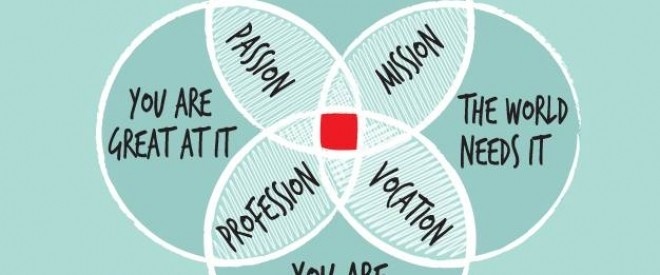
Photo credit: https://www.linkedin.com/pulse/what-vocation-well-its-job-career-willie-chain/

Our older daughter is starting up the college tour in earnest this school year, and with that search have come conversations about college that were not a part of the conversations I had at a similar age.  Given the astronomical increases in the cost of tuition relative to income, our conversations with our children now include considerations like return on investment, debt management, and employability – topics I never addressed with my parents because going to college, let alone a prestigious college, meant things would fall into place for you – even if you chose a non-traditional path.

I have found this conversation bleeding into other areas of my life too.  The owner of the body shop I recently used and I got into a conversation about how we are guiding our children vocationally.  He shared how there is even a debate in his own vocation about the value of expensive, time-consuming vo-tech schools versus real world experience.  Even NASA has been conducting research about its own young employees who go straight into vocational training versus a traditional four-year college experience – most making six figures in their early twenties.

Of course, all this analysis came to a screeching halt the moment my younger daughter joined me in picking up my car at the body shop.  She was admiring some paint samples when the owner explained to her that he had invented some of the colors himself – some of which have been used by international businesses.  She then asked him a question I had not thought to ask, “What’s the best car you ever worked on?”  It was a simple question, but what her question taught me was something much more basic about vocational discernment: What brings you joy and satisfaction?

That basic question has got me thinking this week about how we value each other.  In his letter to the Ephesians, Paul says that God granted that some are apostles, prophets, evangelists, pastors, and teachers (4.11).  Not only do we need to be helping our children discern what gifts God is nurturing in them, we need to do the good work of celebrating each other’s gifts.  I remember have a case of nerves in seminary about preaching a senior sermon.  Upon hearing I was nervous, a professor quoted to me from the song There is a balm in Gilead.  He recited, “Well, if you cannot preach like Peter, if you cannot pray like Paul, you can tell the love of Jesus, and say ‘He died for all.’”   

This week, I invite you to start looking at others with a different lens – searching for the unique gifts you see in others and celebrating those gifts with them.  Far too often we see the transactional nature of each other – the jobs we do or the roles we play and how those jobs and roles serve a purpose.  But I am much more interested in the vocations that are bringing others joy and satisfaction – a joy and satisfaction that can reinvigorate my own passion for the gifts God has given me.  I can’t wait to hear about the conversations you have this week!

Sermon – Mark 1.29-39, EP5, YB, February 4, 2024

14 Wednesday Feb 2024

Posted by jandrewsweckerly in Sermons

≈ Leave a comment

Tags

bishop, calling, comfort, deacon, discernment, Jesus, Kingdom, ministry, motherhood, ordain, redirected, Sermon, serve, work

You may or may not know about me that I became a mom and was ordained at the same time.  I was seven months pregnant when the bishop ordained me.  Needless to say, there is ongoing debate about whether Simone is also a deacon since she was in utero at the ordination.  But what becoming a mom and becoming ordained at the same time has meant is the patterns of the two vocations are interwoven for me.  So just like on any given day in ministry, my plan for the day can get upended with a phone call, a drop-in visit, or a text, so is the precarious nature of parenting.  I can be in the middle of preparing dinner when a friend-crisis erupts at home for one of the kids.  I can be driving a kid to practice, only to learn from the backseat that the kid is struggling with a bully.  I can be trying to write a sermon, and another kid bursts inside with a bloody knee.  Some folks might see those parenting and pastoring moments as “interruptions” to a day.  But as someone who became a pastor and parent at the same time, that constant feeling of pushed and pulled, interrupted while trying to charge ahead, and even rerouted entirely is part and parcel of living my vocations faithfully.

I think that is why I find our gospel lesson today so compelling.  Jesus has just come off the casting out of demons in the temple that we heard about last week, with everyone awe-struck by his teaching with authority.  Then, today he just tries to go to Simon’s house to chill out, when he is immediately notified about Simon’s sick mother-in-law.  After healing her, Jesus tries to settle back down, but by sundown, the whole town is at the door, asking for healing and cures – which Jesus graciously offers.  In the wee hours of the morning, Jesus goes out to a deserted place for a moment of peace and prayer, and Simon and the others interrupt his moment for more work.  Jesus rallies the troops and off they go, proclaiming the gospel and casting out demons.  Even Simon’s mother-in-law, as soon as she is healed, begins serving Jesus and his disciples.  Not to be confused with some sort of subservient, sexist expectation that women should serve men – no, the word used for what Simon’s mother-in-law does is the same word used for what deacons do:  she serves.  In fact, she is the first deacon in the New Testament[i], and as such, teaches us that life following Jesus is just like following along in this story about a day in the life for Jesus – you are constantly pulled and pushed, invited into service in whatever ways that service shows up on your doorstep.

Yesterday I was a part of a bishop’s election.  Sometimes I think the way we elect bishops is almost cruel – for the community where the candidate serves, they are both incredibly proud of their priest, but also incredibly anxious that they may lose their priest.  All sorts of emotions and concerns get stirred:  maybe my priest doesn’t want to be here anymore, maybe my priest is neglecting her job here, maybe my priest doesn’t care about me or our church.  But getting lost in those anxieties misses what is happening in a bishop’s search.  The priest is simply doing what he or she does everyday:  listening and responding to the call of ordained life, wherever that call pushes and pulls.  Sometimes that means hopping in a car to get to the hospital immediately; sometimes that means stopping the crafting of a report, article, or sermon to listen to a hurting soul; sometimes that means talking for an extended time with a stranger at the grocery store, the gym, or the bus stop because your priesthood doesn’t belong just in the church walls.  But sometimes that means saying yes to serving on a board for workforce housing, saying yes to a bishop’s request that you serve the diocese in a particular way, saying yes to raising funds for your seminary – and even saying yes to discernment to the episcopacy.  Just like there are countless balls to juggle in parenting, there are countless balls to juggle in ordained life.  That’s just what we do when Jesus calls us – we serve.

As we settle into the idea that I will in fact being staying in ministry with you, I see this “Day in the life of Jesus” from Mark’s gospel today as an invitation.  As Debie Thomas describes, our invitation today is to “spend our days as Jesus spent his…living graciously and compassionately in this vast and often terrible in-between.  To offer the comfort of our steady presence to those who suffer.  To encourage those in pain to hang on, because the work of redemption is ongoing.  To create and to restore community, family, and dignity to those who have to walk through this life sick, weak, and wounded – without cures.  To make sure that no one who has to die – and that’s all of us in the end – dies abandoned and unloved, if we can help it.”[ii]  That means as we at Hickory Neck step away from this time of discernment, we do the work of that first deacon, Simon’s mother-in-law.  We get up and we get back to work:  caring for one another, serving our neighbors, sharing the good news with those who need a good word.  Though this call to serve may feel like a frustratingly interrupted time of prayer, in fact, the interruption today is the perfect reminder of the life of Jesus:  being pushed and pulled, interrupted and redirected, and in moments like this – seeing the beautifully sacred in the midst of all our very human feelings.  I invite you today to take my hand, so we can get back to the work of the kingdom.  Amen.


[i][i] Gary W. Charles, “Exegetical Perspective,” Feasting on the Word, Yr. B, Vol. 1 (Louisville: Westminster John Knox Press, 2008), 335.

[ii] Debie Thomas, Into the Mess & Other Jesus Stories:  Reflections on the Life of Christ (Eugene, OR:  Cascade Books, 2022), 75.

Sermon – John 1.6-8, 19-28, A3, YB, December 17, 2023

03 Wednesday Jan 2024

Posted by jandrewsweckerly in Sermons

≈ Leave a comment

Tags

Advent, call, discernment, Episcopal, evangelism, identity, Jesus, John, nervous, Sermon, vocation, witness

Episcopalians are a funny crew.  I can claim that description honestly because I actively chose the Episcopal Church, having been raised in another denomination.  But what continues to humor me all these many years later is the almost universal look of panic Episcopalians get in their eyes when you start talking about evangelism.  I can already feel the nervous shifting in the room, so know that you are not alone.  The problem is the concept of evangelism brings up all sorts of images:  the guy on the street corner with a megaphone talking about the end being near; people knocking on your door with tracks about Jesus; the person asking you directly if you have been saved; or maybe even some more personally deeply damaging memories from so-called evangelicals.  And so, Episcopalians either:  just don’t do evangelism (entirely faithful but absolutely unwilling to talk to people about their faith life or Jesus); or they might be willing to share something vaguely about their church, but couldn’t imagine uttering the name Jesus; or they’ll do my favorite thing, which is quote St. Francis who is quoted as saying, “Preach the gospel at all times and if necessary, use words.” – and use that as the ultimate excuse to never actually have to use words.

For all of us squeamish Episcopalians, scripture gives us John today.  Now, in Mark’s gospel, John is called “John the baptizer.”  In Matthew’s gospel, he is called “John the Baptist.”  In Luke’s gospel, he is called, “John, the son of Zechariah, in the wilderness.”  But in John’s gospel that we read today, our beloved John is “John the Witness.”[i]   In fact, John’s gospel doesn’t have any narratives about John leaping in the womb, John dressed in funny clothes, or even John baptizing Jesus.  Instead, John’s gospel is the one that starts with that flowery poetry, “In the beginning was the Word, and the Word was with God, and the Word was God.”  Into this beautifully convoluted prologue comes John, who comes as a witness – whose entire job is to point to Jesus. 

I am not suggesting that your whole life needs to be a self-emptying, agency-free pointing to Jesus.  I had a dear friend whose response to every compliment was, “It’s not me.  It’s all Jesus working in me.”  This is a wonderfully humble way to live, but also a completely irritatingly sanctimonious way to live.  Instead, what John’s gospel today is inviting us to do today is to be entire clear about who we are in relation to Jesus.  Four times John the Witness is asked about his identity, “Who are you?” they ask.  “Are you Elijah?  Are you the prophet?  Who are you?”  And John the Witness says over and over again, “I am not.  I am not.  No, I am not.”  Even the prologue in the gospel tells us, “[John] came as a witness to testify to the light…He himself was not the light, but he came to testify to the light…”[ii]  In the verses following what we read, we’ll find John the Witness shouting to crowds about Jesus, “There he is!”  John is crystal clear about who is he and his role in honoring Jesus the Messiah.  His whole purpose is to be a witness.

Now, I know I might have painted this Advent as a time of sacred silence, a time of quiet preparation.  We even spent last week letting the words of Advent lap over us like cool refreshing water.  But this week, our quiet work is not passive.  Our invitation today is to get real clear on who we are.  Those questions for John are questions for each of us as well.  Who are you?  What then?  Who are you?  We have talked countless times about the work of discernment about our call – our vocation in the world.  Our work of being faithful followers of Christ is constantly checking that we know who we are and what we are called to be doing.  This is ongoing work that does not end – even in the midst of crazy Christmas preparations, we are to ask, “Who am I?” – what is God calling me to do?

This work of discernment does not excuse us nervous Episcopalians from evangelism.  I can imagine the math you were all just doing:  If John the Witness’s answers to “Who am I?” was that he was a witness, maybe my “Who am I?” will be something else – something less evangelical.  But the entire reason we do the work of answering the barrage of questions about who we are is so that we can prepare ourselves for active encounters with others about who they are – what they long for – how the coming Jesus has blessed us, and how our Church has helped us answer “Who are you?”  John is not the only Witness today in our gospel lesson.  John is simply pointing the way for our own witness too.  Amen.


[i] Gary W. Charles, “Exegetical Perspective,” Feasting on the Word, Yr. B, Vol. 1 (Louisville: Westminster John Knox Press, 2008), 71.

[ii] John 1.7-8.

To Everything There is a Season…

25 Wednesday Aug 2021

Posted by jandrewsweckerly in reflection

≈ Leave a comment

Tags

call, church, discernment, God, Jesus, love, season, vulnerable

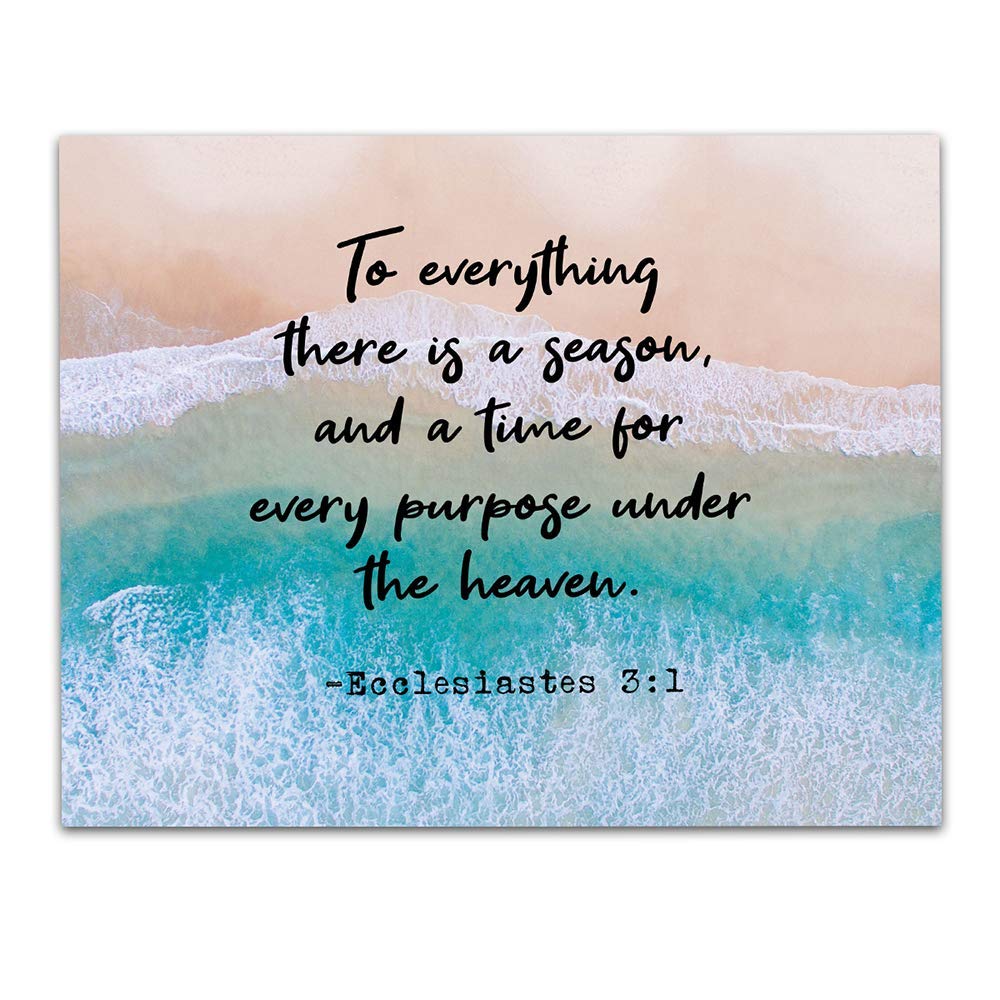
Photo credit: https://www.amazon.com/Ecclesiastes-Everything-Season-Unframed-Inspirational/dp/B08FMDFBTK

Having finally sat down to write a blog post, I was shocked to realize it had been two months since my last post.  Writing has always been a source of pleasure, joy, and learning for me – a way to reflect on the happenings of life in light of my faith and Holy Scripture.  Blogging for me is akin to preaching and spiritual direction:  an exercise in translating our daily, seemingly secular life into the sacred.  Nearly weekly postings for most of my ministry has been an outlet for me and a ministry to many others.

As I contemplated why there was such a big gap this summer, two theories percolated.  One was the more obvious.  I took some time for vacation, we were searching for and then training a new staff member, I was a part of a bishop’s search (which some argue is like a second full-time job), I was tending my family in a pandemic, I was investing time in continuing education, and I was trying to serve my beloved parish.  My plate was quite obviously full. 

But the second, perhaps more revealing reason came to me through scripture.  I was reminding of that familiar passage from Ecclesiastes, chapter 3:  For everything there is a season.[i]  Honestly, I think more people are familiar with this passage through The Byrd’s song “Turn! Turn! Turn!”  This summer has felt like a different season for me.  Instead of writing about life around us and interpreting it in light of our faith, I spent the summer doing that work orally with two faith communities – talking through what God is doing in the Church, what God has done through us in this time of pandemic, where the Church is going, and who Jesus is calling all of us to be.  In some ways those conversations have been very similar in content to what I write.  But experientially, it was significantly more vulnerable.  Instead of hiding behind the written word, I was engaging in deep, hard, thoughtful conversations in real time, being probed, questioned, and challenged – and all of that experience being broadcast in recorded and live videos for anyone and everyone to see.  I described it to a dear friend as a time of feeling naked before the world.

This summer has been a season for discernment, for deep reflection, for vulnerable pondering.  And just like the scripture writer says, for everything there is a season:  a time to plant, a time to break down, a time to laugh and dance, a time to embrace, a time to seek and a time to lose, a time to speak, and a time to love.  Now, I enter into another season:  a time to reconnect with the Hickory Neck community that loved me through this process – even though it was difficult for them.  A time to write again:  about where we see God in the midst of this season of pandemic that we wish were over.  A time to dream and a time to innovate:  about where God is calling us now.  A time to laugh, dance, and embrace:  even if we have to go back to doing that all virtually.  No matter what the season, God is with us.  I’m honored to journey in this season with you.


[i] Ecclesiastes 3.1-8 reads:  For everything there is a season, and a time for every matter under heaven:  a time to be born, and a time to die; a time to plant, and a time to pluck up what is planted; a time to kill, and a time to heal; a time to break down, and a time to build up; a time to weep, and a time to laugh; a time to mourn, and a time to dance; a time to throw away stones, and a time to gather stones together; a time to embrace, and a time to refrain from embracing; a time to seek, and a time to lose; a time to keep, and a time to throw away; a time to tear, and a time to sew; a time to keep silence, and a time to speak; a time to love, and a time to hate; a time for war, and a time for peace.

Sermon – Ephesians 4.1-16, P13, YB, August 1, 2021

25 Wednesday Aug 2021

Posted by jandrewsweckerly in Sermons

≈ Leave a comment

Tags

bishop, call, community, discernment, equip, exceptional, fear, gifts, God, good, ministry, Peter, preach, Sermon

In your senior year of seminary, you are given the privilege of preaching for the entire community.  I remember the week I was to preach, I was sitting at lunch with some classmates and a professor and I confessed to the table that I was a little nervous.  There is little worse than preaching to a room full of preachers; we tend to be a tough crowd.  But I will never forget what my professor said in response to my anxiety.  “Just remember what that old hymn says, Jennifer.  ‘If you cannot preach like Peter, if you cannot pray like Paul, you can tell the love of Jesus and say, “He died for all.”’”  At the time, I remember thinking how reassuring his words were – all that mattered was I preached the gospel. 

But sometime later, as I thought back to his comments, I had the distinct thought, “Wait a minute.  Was he saying I was not going to be as good a preacher as Peter?”  Suddenly I was confused by my professor’s words – was he trying to center me for preaching, or just trying to gently tell me not being a good preacher was okay.  I felt the emotional whiplash that seems to be a unique gift of Southerners – a little akin to a solid, “Bless your heart.”

What the words of that professor unearthed in me was a fear we all experience.  Our society tells us we need to be good at all the things – at being exceptional in our workplaces while also being an exceptional parent and spouse; at being a high-performing student and accomplished athlete (and musician, performer, and artist); at volunteering in so many places in retirement that we are working harder than we were working for compensation! 

But that is not what Paul, or the person writing in the name of Paul,[i] tells the Christian community.  Our epistle writer says, “The gifts he gave were that some would be apostles, some prophets, some evangelists, some pastors and teachers, to equip the saints for the work of ministry, for building up the body of Christ, until all of us come to the unity of the faith and of the knowledge of the Son of God, to maturity, to the measure of the full stature of Christ.”[ii]  Paul argues that mature Christians understand that they have been equipped with gifts for ministry.  However, as scholar Clark-Soles says, Christians “do not need to imagine themselves as pan-gifted, and there is no reason to compete with one another.  Our job is simply to recognize our particular gifts and use them for the development and augmentation of the body.”[iii] 

Nine months ago, I began to sense God was asking me to live into the maturity of my gifts – perhaps being called to serve as a bishop in the church in a land called Iowa.  The decision to be open to that process was not an easy one because my gifts have also been very much affirmed in this slice of heaven here called Hickory Neck.  A day after the election, with the news that I will in fact not be serving as a bishop, I find myself singing that old tune again, “If you cannot preach like Peter, if you cannot pray like Paul…” 

But this time, the recollection of that hymn does not sting in the same way the song stung in seminary.  Former bishop Porter Taylor says, “while the passage [in Ephesians] affirms the diversity of individual gifts, it asserts that these are always to be used for the good for the whole, ‘to equip the saints for ministry.’…To grow in one’s ministry, therefore, is to align oneself with God’s intentions, both individually and corporately…”[iv]  What Bishop Porter, the epistle to the Ephesians, and even the election yesterday remind us all of is that God equips each one of us here to the work of ministry – sometimes as preachers, sometimes as evangelists, sometimes as pastors, sometimes as teachers, sometimes as bishops – but always for the good of the whole and of the greater community.  Even though I was not elected yesterday, my hope is that the process was a good reminder for all of us that our work is to constantly be assessing what gifts God is giving us, how those gifts are evolving over time, and how we can use them for good.  Our one baptism is an invitation, whether we are Peters or Pauls, to share the love of Jesus.  The rest is in God’s hands.  Amen.


[i] Paul V. Marshall, “Pastoral Perspective,” Feasting on the Word, Year B, Vol. 3 (Louisville: Westminster John Knox Press, 2009), 304.

[ii] Ephesians 4.11-13.

[iii] Jaime Clark-Soles, “Exegetical Perspective,” Feasting on the Word, Year B, Vol. 3 (Louisville: Westminster John Knox Press, 2009), 305.

[iv] G. Porter Taylor, “Theological Perspective,” Feasting on the Word, Year B, Vol. 3 (Louisville: Westminster John Knox Press, 2009), 304.

Sermon – Acts 1.15-17, 21-26, E7, YB, May 16, 2021

26 Wednesday May 2021

Posted by jandrewsweckerly in Sermons

≈ Leave a comment

Tags

apostles, bishop, discernment, disciples, election, Episcopal, God, goodness, grace, Holy Spirit, Jesus, prayer, Sermon, trust, will

I have sometimes daydreamed about the experience of liturgical freedom:  picking and choosing the scripture for a given Sunday (particularly when I need to address a specific issue), praying an extemporaneous prayer on a Sunday to address a certain topic in the church, or drafting our own liturgical experience to address a particular need.  However, as crazy as the idea may sound, I more often find freedom within our Episcopal constraints than within the endless possibilities of what could be. 

This past week was a classic example.  Last Sunday, totally unaware of the announcement I would be making on Tuesday, Bob preached about the invitation of the Resurrection being an invitation into discernment – discernment about what each of us needs to do to bring about the kingdom here on earth.  On Tuesday night, our regularly scheduled Discover Class topic, which was scheduled months ago, was focused on the structure and leadership model of the Episcopal Church, including who bishops are and how they are elected.  Then today, we get this lesson from the Acts of the Apostles in which Peter and the other apostles are attempting to replace the twelfth spot Judas left open through his death.  All that daydreaming about constructing our spiritual experiences went out the window this week when I remembered the Holy Spirit does a much better job at constructing those experiences than I ever could!

To say that this portion of the Acts of the Apostles is a divine gift is not necessarily because we happen to be talking about a bishop’s election this week just as the apostles are talking about an election of sorts.  In fact, what the apostles are doing is the opposite of an election.  No one asks Matthias or Justus to go through an interview process or offer their vision of leadership for the next decade.  Instead, their criteria are pretty simple.  First, the replacement should be someone who knows Jesus personally.  Second, they want to honor their ancestral roots in the twelve tribes of Israel – eleven apostles will not suffice.[i]  Third, their decision is rooted in prayer.  And finally, their decision is based on trust in the will of God.  Nowadays, we might think the casting of lots is a little too random and could lead to a poor appointment of leadership – I mean when was the last time we selected a Rector, Warden, or Committee Chair by flipping a coin?  But according to New Testament scholar Kathy Grieb, the casting of lots is “an ancient biblical practice for determining God’s will…”[ii]

Hearing about all the coincidences in our last week, from talking about discernment, to the structure of the Episcopal Church, to the selection of the last apostle, may be intriguing or even amusing, but may also leave you asking, “So, what?  What does all of this have to do with me or my experience of Hickory Neck, or even more broadly, with Jesus?”  As I have reflected on these coincidences – or as Carl Jung referred to them as instances of “synchronicity” or “meaningful coincidence”[iii] – I see an invitation for all of us from Peter.  First is an invitation to recall our identity.  We are a community whose historic identity has been about weathering change – whether it was the identity crisis created by the Revolutionary War, the replacement of a faith community by schools and hospitals for over a century, to reclaiming and expanding our land to become a church again, to surviving a global pandemic.  The possibility of a change in clergy – a very small possibility at that – does not alter the fact that we are a community rooted in Jesus’ love, shining our light on this Holy Hill for almost three centuries.  Second is an invitation into prayer:  prayer for the Hickory Neck Community, prayer for your Rector, and prayer for the Diocese of Iowa and the other candidates.  Our hurt, our frustration, our fear, and our joy can be left at the feet of Christ in prayer.  When given the space, prayer can do much more than we can imagine.  And finally, our invitation this week is to trust in God.  We may not always like what God does – I am pretty sure the apostles would much rather have not been trying to figure out a leadership model in Jesus’ absence.  But we do know that God is faithful, and, in time, God leads us to goodness and grace.  I do not know where the next couple of months will lead us.  But I do know if we can stay rooted in our identity, in prayer, and in our faith in God, we will come out stronger disciples for Jesus, strengthened to take on whatever “meaningful coincidences” the Holy Spirit throws our way.  Amen.


[i] Noel Leo Erskine, “Theological Perspective,” Feasting on the Word, Year B, Vol. 2 (Louisville: Westminster John Knox Press, 2008), 528.

[ii] A. Katherine Grieb, “Exegetical Perspective,” Feasting on the Word, Year B, Vol. 2 (Louisville: Westminster John Knox Press, 2008), 531.

[iii] Carl G. Jung, Synchronicity: An Acausal Connecting Principle (Princeton:  Princeton University Press, 2012), 44, as cited at https://artsofthought.com/2020/05/30/carl-jung-synchronicity/ on May 14, 2021.

On Nudges and the Holy Spirit…

12 Wednesday May 2021

Posted by jandrewsweckerly in reflection

≈ Leave a comment

Tags

Bible, call, church, discernment, follow, God, Holy Spirit, Jesus, journey, life, ministry, vocation

Photo credit: https://www.ibelieve.com/faith/what-is-discernment-ways-grow-more-discerning.html

Discernment is a topic we talk a lot about in church.  Some of our most beloved biblical stories, often called “call narratives,” are about discernment.  They all have a pattern:  God calls the individual to some bold action, the person resists (sometimes repeatedly and comically), but when the person eventually acquiesces, God equips the individual for the work. 

I love these call narratives mostly because they are so human and relatable.  But I sometimes wonder if the dramatically entertaining nature of these stories makes us think “calls” are something that only happens to certain, singled-out people.  In truth, that is why we talk about discernment so much in the life of the church:  because we want people to know that discernment is not just about major life transitions.  Discernment happens repeatedly throughout life – sometimes at expected moments, like a school graduation, in response to a spouse’s new job, or even retirement.  But discernment also happens in the times when we are plugging away at the calls we have already discerned:  when a volunteer opportunity stirs something in us; when a friend makes an off-handed comment about a gift we should be honoring; or when we just feel a little discomforted but do not know why (as a spoiler, that discomfort is usually the Holy Spirit!).

In my ministry setting, we talk about discernment a lot.  It is the topic of one of the six sessions in our Discovery Class (a newcomer/confirmation class).  We talk about discernment from the pulpit – even when there is not some big call narrative in the lectionary.  We talk about discernment in Bible study, in pastoral visits, and even over coffee.  We have come to understand that “call” is not static, and that even within a call, or vocation, the Holy Spirit continues to move and nudge us in ways that enrich our own journey and the journey of those around us.  Following Jesus means just that – continuing to follow wherever he may lead.

This week, I announced to my parish that the Spirit had been nudging me too.  In this unique situation, it may be a nudge that does not come to fruition.  Even in those cases, God is doing something too.  But it may also lead to something new and different.  That is the risk we take when we listen to the Holy Spirit.  I cannot authentically encourage my community into constant discernment if I am closed to the possibilities of the Spirit – especially when I would be perfectly happy to stay right where I am.  And so, this week I join you in that gloriously off-centered life that is the life of following Jesus.  I do not know where it will lead, but I am grateful for a community who journeys with me!

On Discernment…

25 Wednesday Sep 2019

Posted by jandrewsweckerly in Uncategorized

≈ Leave a comment

Tags

bishop, choose, Diocese, discernment, Episcopal, God, Holy Spirit, identity, politics, prayer, silence, space, trust

70764-shoes-direction-arrows-road-gettyimages-11361.1200w.tn

Photo credit:  https://www.ibelieve.com/faith/what-is-discernment-ways-grow-more-discerning.html

This past weekend, our Diocese elected its next bishop.  Having never served in a diocese that was electing a bishop, I was not entirely sure what to expect.  I had heard stories of clergy politicking for particular candidates, trying to sway their colleagues to vote a particular way.  I knew we have a diversity of perspectives in our Diocese and coming to consensus may be difficult.  And although I had spoken to many clergy colleagues about their discernment for the best bishop, I did not know nearly as many laity and what their discernment had been like.  By the time we gathered for the election, I felt anxious, hoping we could be civil, but dreading what might be a contentious process.

Instead, I found something quite different.  Some of the difference may have been the result of careful crafting.  We were seated in an auditorium, with a long center row.  Try as one might, getting up and down to talk to others between votes was not exactly easy.  Instead, many of us were left to pray on our own or consult the limited people around us.  Likewise, once the polling was closed, we were required to wait for the candidates to be notified of the results before we were; once the results were announced though, the leadership immediately had us vote again.  We had little ability to process the results of one ballot with others before voting again.  Further, before each vote, our chaplain read a prayer from the Book of Common Prayer.  And finally, there was absolutely no internet or WiFi in the room, forcing us away from technology and into a real sense of presence in the room.

Perhaps it was the rigid structure that guided our behavior, making the election different than I expected.  But I also suspect those gathered last weekend consciously chose a different path.  Instead of dividing into camps behind one of the six candidates, our laity and clergy seemed to embrace the election as a matter of prayerful discernment, not premeditated politicking.  Limited by the confines of the room, you could sense the powerful prayers emanating from each delegate – desperately trying to discern the Holy Spirit’s will.  The pacing of the ballots did two things.  One, there was ample time to prayerfully consider the name one just submitted electronically, before knowing what everyone else had just done; and two, there was a mandate to keep moving, to keep faithfully and rapidly calling on God for answers.  Even our chaplain seemed to root us in tradition.  By using the BCP instead of extemporaneous prayer, she minimized her and our influence on one another – instead, calling us back to the book the is such a marker of our identity.

You may already know about the dramatic turn of events toward the end of our election.  I suspect the prayerful process of discernment in which we were engaged in that space was also shared among the candidates, helping them to faithfully discern what they should do too.  Having walked through that experience so prayerfully, I wonder if there is not something for us all to learn from about the hard decisions of everyday life.  Perhaps we too could stand to:  root ourselves in prayer, trust those around us to be praying too, create environments around our discernment where are weakness are less able to thrive, return again and again to the beautiful words of prayer book, make space for silence when you do not know all there is to know, and, perhaps most importantly, trust the Holy Spirit to do great things in spite of us.  If you are in discernment about something in your life, know that you have my prayers.  I would love to hear your stories of how the Spirit is moving in your life too!

On the Power of Hands…

03 Wednesday May 2017

Posted by jandrewsweckerly in Uncategorized

≈ Leave a comment

Tags

bishop, blessing, church, confirmation, discernment, Episcopal, God, hands, journey, spiritual

confirmation

Photo credit:  https://www.sevenwholedays.org/2012/05/29/on-confirmation/

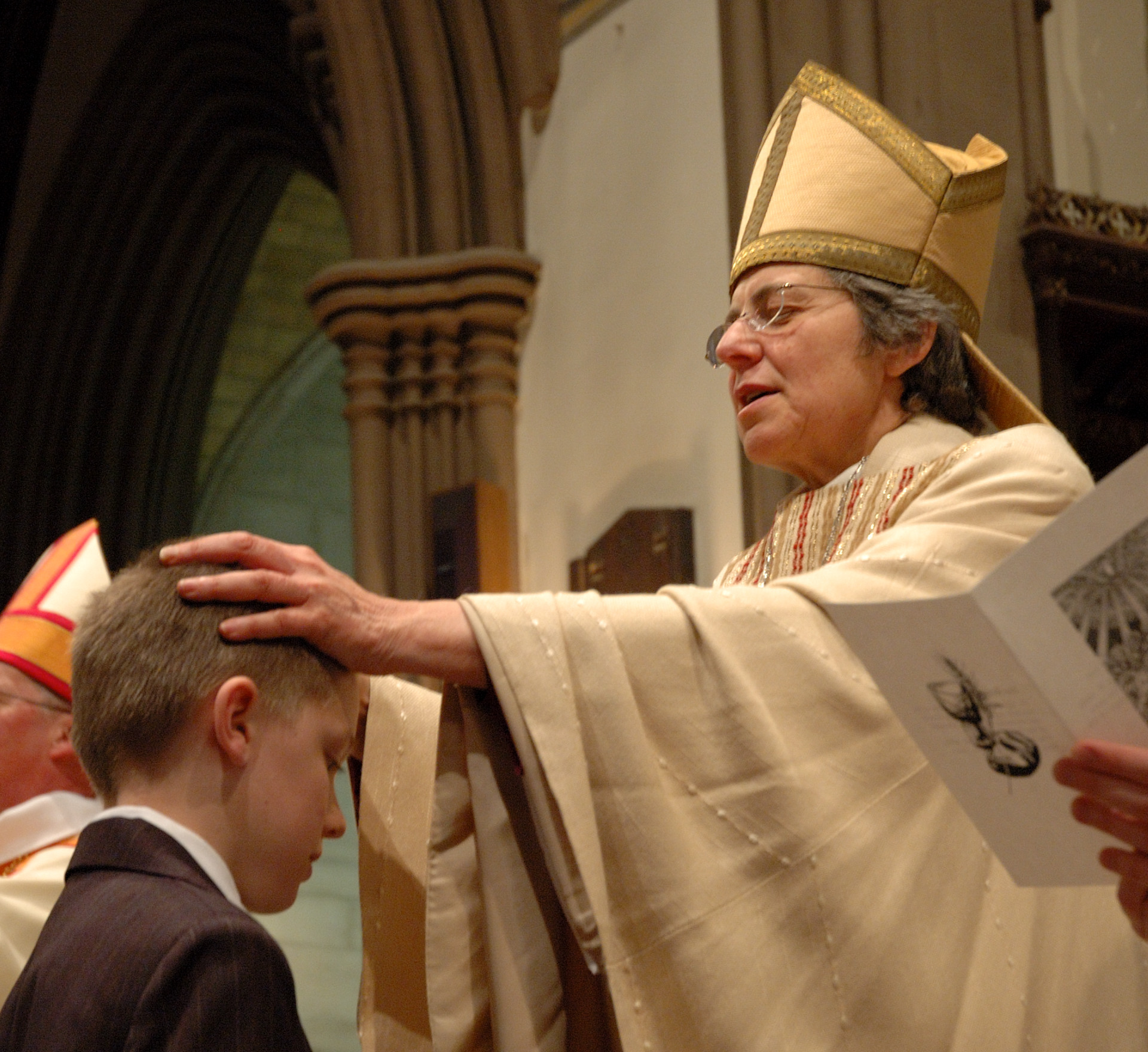
When I was confirmed as an Episcopalian, the decision to be in the Cathedral that day was preceded by a long journey.  I took not one, but two confirmation classes, not feeling entirely ready after the first class.  I was not only discerning whether I was called to membership in the Episcopal Church, I was also discerning a call to ordained ministry in the Church.  I had spent over a year studying, praying, talking to people about their denomination experiences, and listening for the voice of God.  I had to have conversations with people like my father, who not only was a United Methodist minister, but also was his father, his brother, his uncles, and on and on.  Needless to say, when I knelt down in front of the bishop that day, I came with the weight and conviction of that discernment process.

But something powerful happened when the Bishop put his hands on my head, and my presenters put their hands on my shoulders.  Though the weight of those hands was heavy, the weight also seemed to melt away the year of toil and angst.  The power of those hands seemed to push out of my being any doubt or sense of wandering, and instead, a wave of peace, affirmation, and purpose washed over me.  When the Dean helped me rise to my feet, I felt light and buoyant.  The imprint of those hands felt both oddly still heavily present and yet empowering.

This Sunday, we will be confirming and receiving several parishioners at our triennial bishop’s visit.  They come from all walks of life.  Some are youth who were born and raised in the Episcopal Church.  Some are adults from Baptist, United Methodist, and Roman Catholic backgrounds.  Some bring burdens from their past experiences in the church and some are deeply appreciative of their roots in another tradition.  All have spent time in study, reflection, and discernment about whether this is the right decision for them.  And all are excited about the new ways they have seen God inspiring their spiritual journey, and are hopeful about the ways that Hickory Neck will walk with them on that journey.

All of that – the preparation, the discernment, the long histories, the maturing of youth, the questions, and the affirmation all come through hands – hands that have been blessed through the centuries and consecrated to bless this new phase of journeys.  I look forward to this momentous occasion and all it brings for our confirmands and those being received.  And I can’t wait to see where the journey takes them in the years to come!

← Older posts

Recent Posts

  • On Redefining Community…
  • On Parenting, Milestones, and Community…
  • Sermon – Acts 2.42-47, E4, YA, April 26, 2026
  • On Seasons of Discernment…
  • Sermon – Luke 24.13-35, E3, YA, April 19, 2026

Archives

  • May 2026
  • April 2026
  • February 2026
  • January 2026
  • December 2025
  • November 2025
  • October 2025
  • September 2025
  • August 2025
  • July 2025
  • June 2025
  • March 2025
  • February 2025
  • December 2024
  • November 2024
  • October 2024
  • September 2024
  • August 2024
  • July 2024
  • June 2024
  • May 2024
  • March 2024
  • February 2024
  • January 2024
  • December 2023
  • November 2023
  • October 2023
  • September 2023
  • August 2023
  • July 2023
  • June 2023
  • May 2023
  • March 2023
  • February 2023
  • January 2023
  • December 2022
  • November 2022
  • October 2022
  • June 2022
  • May 2022
  • January 2022
  • December 2021
  • November 2021
  • October 2021
  • September 2021
  • August 2021
  • June 2021
  • May 2021
  • April 2021
  • March 2021
  • February 2021
  • January 2021
  • December 2020
  • November 2020
  • October 2020
  • September 2020
  • August 2020
  • July 2020
  • June 2020
  • May 2020
  • April 2020
  • March 2020
  • February 2020
  • January 2020
  • December 2019
  • November 2019
  • October 2019
  • September 2019
  • August 2019
  • July 2019
  • June 2019
  • May 2019
  • April 2019
  • March 2019
  • February 2019
  • January 2019
  • December 2018
  • November 2018
  • October 2018
  • September 2018
  • August 2018
  • July 2018
  • June 2018
  • May 2018
  • April 2018
  • March 2018
  • February 2018
  • January 2018
  • December 2017
  • November 2017
  • October 2017
  • September 2017
  • August 2017
  • July 2017
  • June 2017
  • May 2017
  • April 2017
  • March 2017
  • February 2017
  • January 2017
  • December 2016
  • November 2016
  • October 2016
  • September 2016
  • August 2016
  • July 2016
  • June 2016
  • May 2016
  • April 2016
  • March 2016
  • February 2016
  • January 2016
  • December 2015
  • November 2015
  • October 2015
  • September 2015
  • August 2015
  • July 2015
  • June 2015
  • May 2015
  • April 2015
  • March 2015
  • February 2015
  • January 2015
  • December 2014
  • November 2014
  • October 2014
  • September 2014
  • August 2014
  • July 2014
  • June 2014
  • April 2014
  • March 2014
  • February 2014
  • January 2014
  • December 2013
  • November 2013
  • October 2013
  • September 2013
  • August 2013
  • July 2013
  • June 2013
  • May 2013
  • April 2013
  • March 2013
  • February 2013
  • January 2013
  • December 2012
  • November 2012
  • October 2012
  • September 2012

Categories

  • reflection
  • Sermons
  • Uncategorized

Meta

  • Create account
  • Log in
  • Entries feed
  • Comments feed
  • WordPress.com

Blog at WordPress.com.

  • Subscribe Subscribed
    • Seeking and Serving
    • Join 391 other subscribers
    • Already have a WordPress.com account? Log in now.
    • Seeking and Serving
    • Subscribe Subscribed
    • Sign up
    • Log in
    • Report this content
    • View site in Reader
    • Manage subscriptions
    • Collapse this bar

Loading Comments...