• About

Seeking and Serving

~ seek and serve Christ in all persons

Seeking and Serving

Tag Archives: prayer

On Race, Lent, and Children…

10 Wednesday Apr 2019

Posted by jandrewsweckerly in Uncategorized

≈ Leave a comment

Tags

America, brokenness, children, Civil Rights, confess, Jesus, Lent, prayer, race, racism, repentance, shame, sin, unite

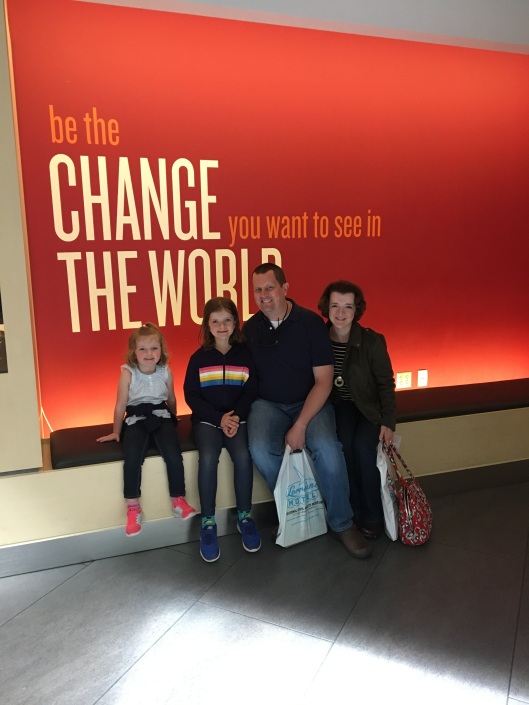
IMG_7640

Photo credit:  Jennifer Andrews-Weckerly; reuse only with permission

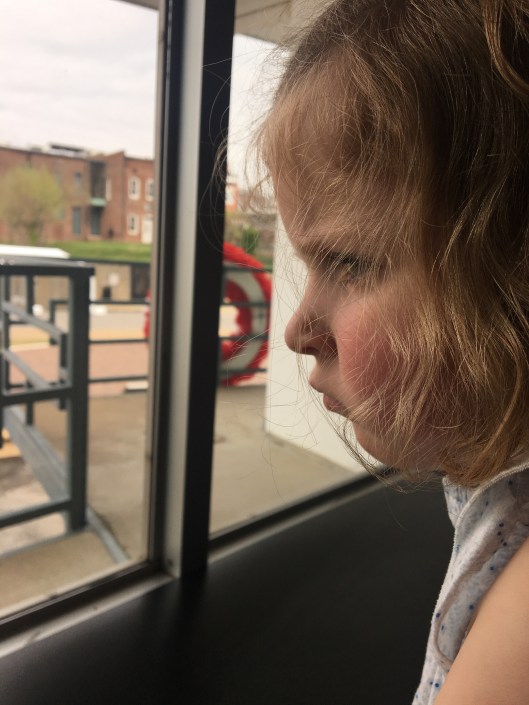
This past week, our family traveled to Mississippi to visit friends.  On the trip we were able to see both the Mississippi Civil Rights Museum in Jackson, and the National Civil Rights Museum in Memphis, Tennessee.  While the museums were appropriate for our older child, who has been studying the Civil War and Reconstruction in her Social Studies Class, our younger child was a bit mystified by the museums.  She struggled with understanding the concept of history versus modern day, but she especially struggled with why people were hurting and killing each other.  She clearly made the connection that Caucasians (or “peach-skinned” people as she called them) were being mean to African-Americans (or “brown-skinned” people), but she could not fathom why.  With every video or picture, I was barraged with questions about why people were doing what they were doing, or why someone would kill someone like Martin Luther King, Jr.

Explaining the atrocities of American racial history to a five-year old is one of the most gut-wrenching experiences I have had.  I already struggle with the shame of our history and my participation in racism.  But to expose my child to the sinfulness and brokenness of our country made the shame deeper.  As the museum bombarded me with statistics around racial disparities, as prerecorded voices shouted out awful words that were once shouted out to people of color, and as “Precious Lord,” or “We Shall Overcome,” played overhead, I was reminded of all that we have been through as a country, and how much further we have to go.

In Lent, we do a lot of confessing of our sinfulness and working on repentance.  On Ash Wednesday, we confessed our exploitation of other people, our blindness to human need and suffering, and for “all false judgments, for uncharitable thoughts toward our neighbors, and for our prejudice and contempt toward those who differ from us.”[i]  In the Great Litany this Lent, we prayed, “From all blindness of heart; from pride, vainglory, and hypocrisy; from envy, hatred, and malice; and from all want of charity, Good Lord, deliver us.”[ii]  In the Exhortation in the Penitential Order, the priest asked us to “Examine your lives and conduct by the rule of God’s commandments, that you may perceive wherein you have offended in what you have done or left undone, whether in thought, word, or deed. And acknowledge your sins before Almighty God, with full purpose of amendment of life, being ready to make restitution for all injuries and wrongs done by you to others; and also being ready to forgive those who have offended you, in order that you yourselves may be forgiven.  And then, being reconciled with one another, come to the banquet of that most heavenly Food.”[iii]

As we finish these last days of Lent, as we hear the passion narrative on Sunday, and as we walk the days of Holy Week next week, I am reminded of how much work we still have to do.  For me, I will be contemplating the ways in which I participate in the systems and practices of racism in our community, working to not only be better, but to teach my children to be better.  And knowing our work of repentance is on-going, I look forward to our Eastertide book study that will allow us to delve into these issues even more.  This week I pray for the whole human family:

O God, you made us in your own image and redeemed us through Jesus your Son: Look with compassion on the whole human family; take away the arrogance and hatred which infect our hearts; break down the walls that separate us; unite us in bonds of love; and work through our struggle and confusion to accomplish your purposes on earth; that, in your good time, all nations and races may serve you in harmony around your heavenly throne; through Jesus Christ our Lord.  Amen.[iv]

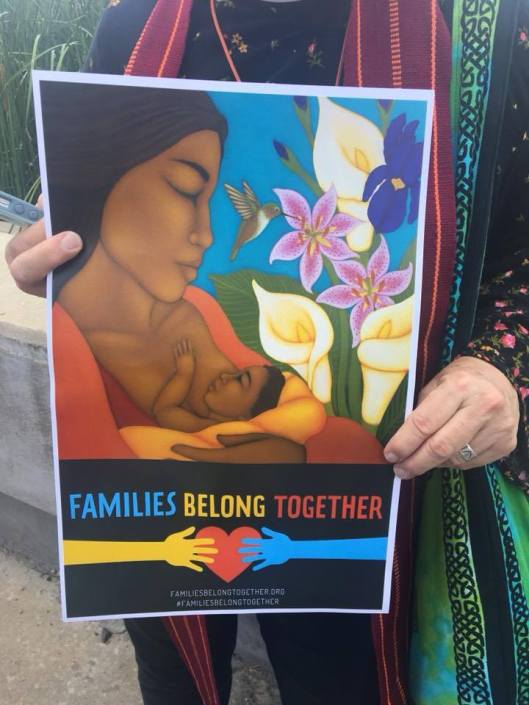
IMG_7644 (1)

Photo credit:  Jennifer Andrews-Weckerly; reuse only with permission

[i] Book of Common Prayer (BCP), 268.

[ii] BCP, 149.

[iii] BCP, 317.

[iv] BCP, 815.

On Shielding the Joyous…

16 Wednesday Jan 2019

Posted by jandrewsweckerly in Uncategorized

≈ Leave a comment

Tags

cautious, evil, God, grow, happy, joy, joyous, prayer, shield, sinfulness, spread

cheering young asian woman on grassland with colored balloons

Photo credit:  https://www.rebeccahintze.com/blog/2018/1/23/how-to-create-joy-in-your-life/

A couple of weeks ago a parishioner of mine asked me what had changed.  “Changed?” I asked.  “Yes,” he said.  “You seem full of joy lately.  You are almost glowing at the altar.”  I have been thinking about his observation and wondering what the cause could be – what might be the reason my countenance has changed.  And then I realized what it must be.  I am happy.  I am full of joy and that joy is evident.

As a pastor, and someone who sees the worst of the worst at times, I am very cautious about claiming joy or happiness.  I think there is something deep in the recesses of my subconscious that is afraid to claim joy or happiness because I am afraid to jinx it.  If I simply say aloud, “I’m happy,” surely some tragedy will come along and steal my joy.  I also think the power of evil slips in at times and tries to convince me that joy or happiness is equal to perfection; if life is not perfect, it cannot be happy or joyous either.  On one level, my hesitancy around claiming joy is silly and superstitious.  But on another level, I have begun to wonder if it is selfish.  By not claiming my joy, claiming my happiness, I do not allow those around me to know how happy they make me.  But, equally important, by not claiming my joy, I do not allow God’s joy to spread.

In The Book of Common Prayer, one of my favorite prayers comes from Compline.  It reads, “Keep watch, dear Lord, with those who work, or watch, or weep this night, and give your angels charge over those who sleep.  Tend the sick, Lord Christ; give rest to the weary, bless the dying, soothe the suffering, pity the afflicted, shield the joyous; and all for your love’s sake.  Amen.”   (BCP, 134)  I have always loved the petition “shield the joyous,” because we ask God to protect not just those who are suffering, but also those who are experiencing joy.  Maybe we ask that because joy can be fleeting.  But maybe we ask that because we know the sinfulness of the world would rather squash joy than have it thrive, grow, and spread.

Knowing full well I could jinx things, I ask your prayers that God might shield my joy:  that God might help me to celebrate the myriad ways I love my church and the joy my parishioners give me every day; that God might help me honor my daughters and husband by telling them how much joy they give me, even in the tiny things; that God might help me to shout on the mountaintop how much we love being a part of Williamsburg, the friends we are making, the connections we are establishing, and the service in which we are engaging.  And then, I ask your prayers that I might take that protection of my joy and share it with others – so that we might be a people of joy, sharing joy, spreading joy.  If you need a little joy, or you want to pile on some joy, let me know.  I am happy to share and receive.  And when my well of joy runs low, I will look for your joy to bring me back up.  Together we will keep praying for God to shield the joyous, for all of our sakes!

On Balance and Harmony…

14 Wednesday Nov 2018

Posted by jandrewsweckerly in Uncategorized

≈ Leave a comment

Tags

balance, church, God, harmony, health, life, prayer, spiritual life, wellness, wholeness, work

rocks-balancing-on-driftwood--sea-in-background-153081592-591bbc3f5f9b58f4c0b7bb16

Photo credit:  https://crossfitodyssey.com/sunday-story-balance-vs-harmony/

I recently visited the William & Mary Wellness Center for a presentation on how they help students create a culture of wellness.  After the presentation, someone asked about how to create work-life balance.  The presenter said the Wellness Center does not teach work-life balance, because work-life balance is a myth – something that can never be achieved because we can never perfectly balance our work life and our personal life.  He went a step further to suggest that attempting to achieve work-life balance is quite unhealthy because it places pressure upon us in each arena.  One will never spend an equal amount of time in either arena, and attempts to create a one-for-one balance only create more stress and anxiety.

Instead, what he teaches is work-life harmony.  He knows that we will never achieve, and arguably should never desire, a balance of the two arenas.  But the two arenas can work in harmony in such a way to create a more happy, healthy lifestyle.  As an example, the presenter talked about an orchestra.  If you tried to work on balance within an orchestra, every instrument would sound equally, making for a horrible racket.  But if each instrument plays in harmony with one another – well, then you have a masterpiece!

I have been wondering if the same might be true with our spiritual life.  Now I will be the first admit, I would love to see my parishioners at church every Sunday – partially because I know how healing and life-giving communal worship can be, but also partially because I just like my parishioners so much.  Church is more fun when everyone is there.  But using the harmony model, I think our spiritual life needs a sense of harmony too.  We need to create space for worship, learning, service, and outreach.  We need to find time for fellowship, formation, and evangelism.  We need to be sure we are both being fed and feeding others at church.  But we need to do that in a way that creates harmony in our lives.

Now I imagine some of you are thinking, “Awesome, my rector just said I don’t have to come to church as much so that my life is more in harmony.”  And maybe that is true for you.  But I suspect that the opposite may be true.  My guess is that for many of us, our spiritual life is not in harmony with the rest of life:  we aren’t finding time for formation, for worship, or for service.  The good news is that I am not suggesting you find balance – just harmony.  I remember complaining once to my Spiritual Director that with young children and a busy work life and a desire to be present to my husband, my prayer life was suffering – I just wasn’t praying like I used to.  Gracefully, he suggested that I shouldn’t worry about praying in a certain way – as if only praying the Daily Office everyday is real prayer.  He suggested something much more harmonious in life.  “Perhaps at this stage of life, the best you can expect is a prayer spoken at a stop light, or an exhausted thank you before drifting off to sleep.”  We all struggle with spiritual harmony.  I wonder what solutions are working for you today.  How are you finding harmony with work, life, and God?

GC79: Prayer and Presence

13 Friday Jul 2018

Posted by jandrewsweckerly in Uncategorized

≈ Leave a comment

Tags

asylum, Detention, families, General Convention, God, Hutto, immigration, isolation, prayer, presence, women

36853368_10157022959522565_1614959607975772160_n

Photo credit:  Jennifer Andrews-Weckerly (reuse with permission)

On Sunday of General Convention, the Convention invited us to step out into the world on issues of injustice.  The Bishops gathered to protest against gun violence in the morning.  At midday, we were all invited not to a protest, but a prayer service – a service of solidarity with our sisters seeking asylum in this country.  I was a bit conflicted about the prayer service.  My parishioners have been trying to reconcile their sense of the injustice of families being torn apart at our borders, but with divergent opinions about how immigration and asylum should work in the United States.  I certainly have my opinions about the matter, but I always try to honor the diversity of our community.

Ultimately, I decided that we can always stand to pray.  And so, with a friend and her one-year old daughter, we drove to the Hutto Detention Center for a prayer service.  The Hutto Detention Center was once a prison in Texas.  It is run by a privately-held, for-profit corporation, and hosts women – some of whom have been separated from their children, but all of whom are awaiting help from lawyers as they process asylum petitions.  The day was sweltering hot, and we were in a field by the Center.  Around 1,200 Episcopalians had gathered, with a line of buses surrounding us that had brought many from Austin.  The former identity as a prison was obvious – small, skinny windows, stark, cold walls, high, barbed fences.  Songs were spontaneous at times:  We Shall Overcome, Amazing Grace, This Little Light of Mine.  There were spoken prayers, and impassioned pleas for justice.

I found myself staring out at the building, wondering about the stories, fear, and suffering inside.  I later learned that there have been high occurrences of sexual assault in the Detention Center.  As the child we were with cooed and chattered, I wondered about the hole in my heart I would feel if my children were stripped from me – children I would protect at all costs.  A portion of the crowd walked to the street to get closer and I felt myself drawn to their path.  I wanted a connection with the women inside so deeply.

As we stopped at the entrance, chants began.  “We see you, God loves you.”  “You are not alone.”  Songs followed.  As tense, cold guards stood in front of us (for whom I was grateful and sympathetic toward), I found my grief increasing.  There were rumors that the guards would have pulled the women away from the windows, so it was possible that they would not even hear us.  But as we began to move back to the field, we saw them – women waving in windows, waiving towels behind tall windows.  Later, we would find out from Grassroots Leadership that, “A woman called from Hutto after today’s prayer and told us they were glued to the windows until the last bus left the detention center.  Women inside were crying, saying they knew they weren’t alone after seeing so many people there.”

I know this is a complicated issue for many of us.  But I have to tell you, prayer, relationship, and empathy would certainly get us a long way.  Those are humans, fleeing violence, degradation, and persecution in their home countries, stuck behind cold walls, being persecuted in another country.  And for that, we could all stand to do a lot more praying.

GC79: When People Start Getting Real…

07 Saturday Jul 2018

Posted by jandrewsweckerly in Uncategorized

≈ Leave a comment

Tags

apathy, children of God, compromise, conversation, Episcopal, General Convention, Jesus, justice, prayer, relationship, truth, uncomfortable

36768122_10157017520522565_436164541772988416_o

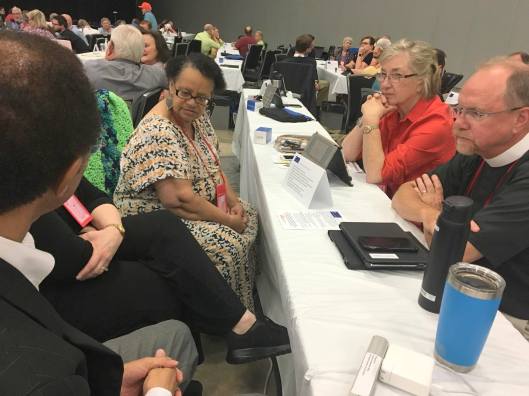
General Convention, July 6, 2018.  Photo credit: Jennifer Andrews-Weckerly (reuse with permission)

One of the things that I am finding powerful about General Convention is a willingness to enter into a time of truth-telling.  Before I arrived, the House of Bishops hosted a listening session of stories from women who have been sexually harassed or abused in the context of the church.  From what I hear it was a powerful experience of honesty and vulnerability, and I believe many of the bishops (most of whom are male) were moved by the experience.

Last night, I sat in on a hearing for people to offer their testimonies about a couple of resolutions involving marriage rights, particularly same-sex marriages.  Much of the conversation was about a resolution put forth involving a compromise (B012).  According to the resolution, bishops can still make decisions with their conscious for their priests and diocese, but would give permission for any priests who feel called to celebrate same-sex marriages to do so with the oversight of another bishop of the Church.  The testimonies lasted for almost two hours (not including the two hours earlier in the day), and many things became abundantly clear.  Our LGBTQ brothers and sisters are hurting and longing to be treated as equal children of God.  And our more conservative brothers and sisters are fearful about not being able to be faithful to their understanding of Scripture and tradition.  The tension was high.  But also present was a spirit of graciousness.  People of opposing views were sitting beside one another, able to make eye contact and stay in the room.  I came away realizing that what I was seeing was what compromise looks like – no one fully happy, but a path forward for now.  And in a county that seems incapable of compromise, it was a gift to see the Church moving in that direction.

And then today, we spent time together talking about Racial Reconciliation – a topic that my conversation partner said has been a topic for twenty years of General Conventions – which means we haven’t gotten there yet.  It was an inspiring, beautiful, hard time, but a time I was glad to see us have.  One of my favorite speakers, the Rev. Nancy Frausto, had this to say, “This society has been contaminated by the plague of apathy.”  In other words, in a political environment where injustice is rampant, we cannot afford to let apathy infect us.

I do not know where these conversations will lead.  I suspect we will not solve the world’s ills at this Convention.  But what we are starting to do is show the world what it means to be a diverse people who stay together, find a compromise, and love and lead together.  It is not easy.  In fact, it’s pretty uncomfortable. But following Jesus is pretty uncomfortable too.  If the Church can’t do it, I’m not sure we can ask anyone else to do that work.  I’m proud of the Episcopal Church tonight.  And I will continue to hold her in my prayers.

On Discipleship and Decisions…

04 Wednesday Jul 2018

Posted by jandrewsweckerly in Uncategorized

≈ 1 Comment

Tags

decisions, disciple, discipleship, Episcopal, Episcopal Church, General Convention, identity, Jesus, prayer

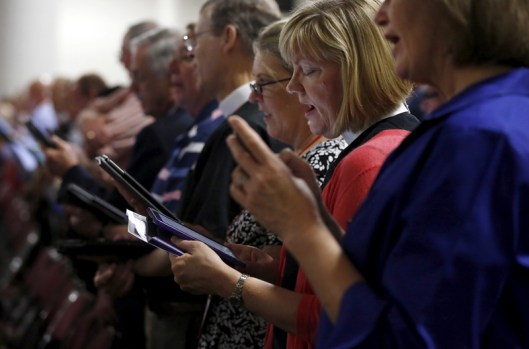
Members sing during a church service during the General Convention of the Episcopal Church in Salt Lake City

Photo credit:  https://religionnews.com/2015/07/02/episcopal-church-expansive-inclusive-thanks-gay-marriage-votes-commentary/

Today, I am traveling to Austin for the General Convention of the Episcopal Church.  General Convention meets every three years and is a bicameral legislature that includes the House of Deputies and the House of Bishops, composed of deputies and bishops from each diocese. During General Convention, deputies and bishops consider a wide range of important matters facing the Church.  Some years the issues have a huge impact (examples include the ordination of women and members of the LGBTQ community, as well as same-sex marriage).  Other years, General Convention works on important issues that are less flashy.  Regardless of the news cycle, the work of General Convention is about continuing to define who and whose we are, and making sure our work reflects our identity.

I am attending this year as an alternate clergy deputy for the Diocese of Southern Virginia.  My work is to support the eight clergy and lay deputies and our bishops, helping them make important decisions, and filling in when breaks are needed.  The official meetings take place July 5-13, but there are already many committee meetings happening.

In talking to a clergy colleague about my participation in General Convention he asked me, “Why in the world did you volunteer?”  I have been thinking (and laughing) about that question, and after reflection, I realized why I was so interested in serving.  One of the things I preach about a lot is about identity – understanding it, naming it, living into it.  In the current climate of the United States, our identity as disciples of Jesus is an anchor.  But just saying we are disciples without critically examining our lives through that lens does little good.  For me, being a part of General Convention is a way of participating in the work of honing our identity as Episcopalians, and where applicable, helping us to better live into that identity.

I look forward to serving the broader church, our Diocese, and ultimately my parish through this work.  This kind of work creates the space for making us all better, and I am hopeful about what the week can bring.  I ask your prayers for the General Convention over the next many days.  Like any family, parish, Diocese, or church who tries to come to consensus across differences, we will need your prayers to listen deeply, speak intentionally, and make decisions thoughtfully and prayerfully.  I look forward to sharing this experience with you!

On Politics, Priests, and Prayer…

20 Wednesday Jun 2018

Posted by jandrewsweckerly in Uncategorized

≈ 4 Comments

Tags

American, Bible, Christian, communion, dignity, disciple, diversity, Episcopal Church, Eucharist, Good News, gospel, Jesus, policy, politics, prayer, priest, scripture, table

lightstock_99088_medium_david_needham

Photo credit:  https://www.lebanonfbc.org/ministries/power-prayer-pop

One of the hardest parts of being a priest is creating a community in which we can talk about the Gospel of Jesus Christ, hold widely varying political opinions, and yet still gather at the Eucharistic Table – elbow to elbow, as the imperfect, but beloved body of Christ, determined to stay in community.  I say that the work is difficult because I have seen how fragile this work really can be.  During my priestly formation at seminary, congregations and Dioceses were walking away from that common table over the issue of human sexuality.  Although I was proud of what the Episcopal Church did at the time, I also deeply mourned the loss of diversity at the Table – the creation of a more homogenous Church than a Church who was devoted to staying in the tension while honoring the Gospel.

Because of my high value of the uniting force of the Eucharistic Table, my priesthood has taken a slightly different shape than I might have imagined in my early twenties.  If you had asked me then about the primary role of the priest, I might have argued the role of prophet – decrying injustice and leading the people of faith to a more just world.  But as I aged, and as I served diverse parishes, I began to see the role of prophet is one of many roles, one that needs to be used judiciously so as not to alienate parishioners and create an exclusive community of like-minded people.  And so, my priesthood has been marked with great caution around politics.  While many of my colleagues will beat the drum for justice, I find myself trying to carefully walk with my diverse congregations as we discern together how to interpret politics in light of the Gospel – not in light of Democrats or Republicans, but in light of the witness of Jesus Christ.  That doesn’t mean I don’t have strong political opinions; it just means that I try to take focus off the politician or political issue of the moment and try to create disciples who can see and follow Christ.

That being said, this past week, the issue of what is happening to families seeking asylum on our southern border, and the separation of children from parents as a punitive, purportedly deterring action has shifted my normal practice – not because I changed my mind about politics and the Church, but because two agents of our government utilized Holy Scripture to justify those actions.  Here’s the thing:  if this were just another issue where we are divided about policy, where we had a debate about the extents to which we value national security over other values, I would have happily encouraged our parishioners to be faithful Christians in dialogue.  But when Attorney General Jeff Sessions invoked Holy Scripture to justify separating children from parents, he stepped into my area of authority, leaving me no other option but to speak.

Now I could layout a Biblical defense against the small portion of Romans 13 that Attorney General Sessions quoted, giving you the context of the chapter, giving you the verses immediately following what he quoted as a counter to his argument.  I could quote to you chapter and verse for countless other scripture lessons that tell us to love one another, respect the dignity of other human beings, care for the outcast and alien, tend the poor, and honor children.  I could also tell you about how that same bit of scripture was used to justify slavery, Nazis, or apartheid in South Africa.  But the problem with a scripture quoting war is that no one wins.  What is more important is what we know of the canon of Scripture:  that our God is a God of love, that Jesus walked the earth showing us how to be agents of love, healing, and grace, and that the Holy Spirit works through us today to keep spreading that love.

Knowing what I know about the Good News of God in Christ, in my baptismal identity as one who seeks and serves Christ in all persons, respecting the dignity of every human being, I cannot stand idly by or be silent when the Holy Scriptures of Christians are being used to justify political actions that are antithetical to our Christian identity.  As a priest, I invite you this week, especially when a governmental leader is invoking our faith, to reflect on how the Gospel of Christ is informing your view on this issue.  Not as a Republican and not as a Democrat, but as a follower of Christ.  Fortunately, prominent politicians on both sides of the aisle seem to be coming to agreement on this issue – a rarity these days – but also an example to Episcopalians who hold a high view of coming to the Eucharistic Table across our differences.  I am not saying we need to agree on this – in fact, I suspect we will not.  What I am asking is that you live into your identity as a disciple of Christ, as an agent of love, and then respond in conversation, in political advocacy, and in worship as one holding in tension both our American and Christian identities.  I support you in this difficult, hard work.  I love you as you struggle.  I welcome you to the Eucharistic Table.

Sermon – John 17.6-19, Acts 1.15-17, 21-26, E7, YB, May 13, 2018

16 Wednesday May 2018

Posted by jandrewsweckerly in Sermons, Uncategorized

≈ Leave a comment

Tags

Ascension, busy, disciples, Jesus, name, Pentecost, pray, prayer, present, scared, Sermon, wait

I used to belong to a community that had healing prayers every Wednesday at a midday Eucharist.  I never liked to go forward myself, but I was happy to see so many other people go forward for prayers.  Honestly, for the longest time, I did not really understand the whole process.  Were the same people so sick they needed prayers every week?  Were they having prayers for themselves or for other people?  And I had no idea what the priests were saying to them or what they said to the priests.  I was so intimidated by the whole process that I usually just sat in my seat and prayed for those going forward.

Then one day, some stuff was going on in my life I felt overwhelmed by and I finally stood up and got in line with all the other people.  I was so nervous.  I wasn’t sure if I was supposed to tell the priest my whole story, or if I was supposed to ask for something specific, or if I was just supposed to bow my head and wait for the priest to pray.  When I finally reached the priest, he looked at me expectantly.  I mumbled some prayer request that was super short and in no way indicated why I really needed prayers.  But then the priest did something extraordinary.  He prayed for me by name and was able to craft a prayer so thoughtful and generous, that I felt like he could see into my soul and understand what was really weighing me down.  By simply saying my name, I felt known, cared for, understood, and seen – really seen – for the first time in a long time.

I suspect that is what the disciples are looking for at this point in our narrative.  For weeks, Jesus has been making resurrection appearances, teaching the disciples, and talking to them about next steps.  These weeks have been reassuring, lifegiving, and invigorating.  What seemed to be a massive disaster is now a holy victory.  But then, just days ago, Jesus finally leaves them for good as he ascends into heaven.  Before he goes, he tells them to wait for the Spirit to clothe them with power.  We are told they disciples return to the temple, praising God, but in our Acts lesson today, the disciples are busy figuring out their leadership plan.  You see, the establishment of twelve disciples was important to the ancestral roots of the twelve tribes of Israel.  The disciples want to be ready to “witness the messianic kingdom inaugurated by the death and resurrection of Jesus.” [i]

This is what we all do when we are scared.  We busy ourselves.  Jesus tells the disciples to wait for the Holy Spirit, and what do the disciples do?  They start developing a leadership plan, thinking about their presentation to the faith community, and organizing themselves.  None of these things were things Jesus told them to do.  In fact, Jesus told them to wait.  But we are not very good at waiting.  I remember last summer when the Vestry finished our needs assessment about child care and adult day care in Upper James City County, the conclusions were clear.  Both were needed and anything we could do would be a help.  When we finished that final assessment, I remember thinking, “Now what?!?  How in the world are we going to actually do something about either of these issues?”  When we left that meeting, I sensed we all walked away with the same sense of dread.  The community had spoken, but we had no idea how to live into God’s dream for us.  It was like looking over a great chasm with no way to cross over.  I remember wondering what other work we could do to prepare ourselves for something like that.  But I also remember being so clueless about what would come next that I kind of just looked to God with a sense of panic, wondering, “Now what?!?”

That’s why I love the gospel lesson from John today.  The lesson from John does not fit chronologically with where we have been in the Luke-Acts story.  John’s gospel today includes the words of Jesus’ farewell discourse before his passion.  These last verses of John 17 are a part of a prayer that Jesus says after an extensive time of teaching.  The words we hear today are not the words of a desperate prayer said in private by Jesus to God.  The words we hear today are words of prayer said for and about the disciples – said right within their hearing.  The words are not particularly pretty.  In typical John form, they sound circuitous and repetitive – so much so, they can be hard to really hear.  But if we listen closely, Jesus’ words today are an impassioned prayer for the personal care and safety of the disciples, so that the disciples can feel empowered to go out into the world under God’s protection.  “This is not Jesus teaching his disciples how to pray.  This is not only a personal prayer or privatized piety.  After betrayal and predicted denial, after concerned questions and foretold rejection, the disciples do not need another lesson, another miracle, another example.  They need exactly what Jesus does, because Jesus knows — for Jesus to pray for them.”[ii]

Jesus’ prayer is like the priest’s prayer at that healing service.  Jesus sees these scared, confused, anxious disciples and he prays for them by name, reminding them how they are loved, calling down God’s motherly love for the disciples, and asking for a sense of empowerment for each disciple. Although his prayer is not said in those days between the Ascension and Pentecost, the disciples could stand to remember this moment as they wait.  When we steer far from God’s providence, and we start to busy ourselves to hide our anxiety, these are the words we return to to steady ourselves.  Jesus’ words today, called the High Priestly Prayer, are the words of a priest – calling us by name, naming our specific anxieties before God, soothing us by their healing power, and calming us so that we might be able to go out into the world.

But Jesus’ words are not just the words of a priest.  Jesus’ words today are the words of all the faithful – said on behalf of another we name, said in the confidence of a child of God, said in the presence of one receiving prayer.  We can give away the gift of prayer and blessing the disciples needed too.  You may not feel comfortable praying aloud with another person yet.  If so, a prayer, using the person’s name and praying as Jesus does for that person is fine.  But Jesus’ words and actions for the disciples today embolden you to do what Jesus does.  You can ask the other person if you might pray for them – and pray with them right then and there:  whether you are praying for your own child and the concerns they have just voiced to you, whether you are praying for a friend who has finally confessed what is on their heart aloud, or whether you are praying for an acquaintance who cannot express their heart, but who is speaking to you because they know you are a person of faith and they need a priestly prayer from Jesus.  Any of you who have gathered at the side altar for healing prayers, or who have had your name called aloud for prayer knows the power of this work.

Normally, I commission you at the end of every sermon – giving you a task to do out in the world, bringing the good news of God in Christ into the broken world.  But on this Sunday between the Ascension and Pentecost, I invite you to take Jesus word’s seriously:  to pray while you wait for the empowerment of the Spirit.  This is not an invitation to look busy or to use action to cover anxiety this week.  This is an invitation to be present every day, looking around you for those who need your prayer, and then offering that personal, named prayer for those in your path.  As Jesus prayed for the disciples, as the disciples prayed for those with whom they shared the good news, so we continue the age-old practice of deep, personal, abiding prayer with others.  Those prayers for the disciples are prayers for us – Jesus prays for us today.[iii]  Our invitation is to give that comforting, loving, emboldening gift to others.  Your words, your calling another by name, give them power to sit and wait for our God too.  Amen.

[i] David S. Cunningham, “Theological Perspective,” Feasting on the Word, Year B, Vol. 2 (Louisville:  Westminster John Knox Press, 2008), 528.

[ii] Karoline Lewis, “Prayers Needed,” May 6, 2018, as found at http://www.workingpreacher.org/craft.aspx?post=5147 on May 9, 2018.

[iii] David Lose, “Easter 7 B:  Prayer is Love,” May 10, 2018, as found at http://www.davidlose.net/2018/05/easter-7-b-pray-is-love/ on May 10, 2018.

On Prayer and Connection…

07 Wednesday Mar 2018

Posted by jandrewsweckerly in Uncategorized

≈ Leave a comment

Tags

church, community, connection, God, intentional, petitions, practice, prayer, worthy

39753-women-praying-1200.1200w.tn

Photo credit:  https://www.crosswalk.com/slideshows/10-issues-your-church-should-be-praying-together-about.html

When I was in college, I was involved in the Wesley Fellowship, the United Methodist Campus Ministry.  We gathered every Sunday night for fellowship, a program, and worship.  One of the student leadership roles was the “student pastor” – basically a student who volunteered to be a pastoral presence in the community.  One of the student pastors during my time in Wesley would always carry a small notebook to our Sunday gatherings.  When we got to the time of open prayer requests during worship, he would write notes in his notebook.  Initially, the practice struck me as odd.  What was he writing?  What did he do with those notes?  Assuming he used the notes for his personal prayers that week, did he use them as a checklist?  I never got up the courage to ask any of my questions, so I was left with a bit of skepticism and suspicion.  But also, a little bit of hope – even if he did not use the notes for his prayer life, at least whatever requests were mentioned seemed worthy of his writing them down.

This Lent, I realized that I have basically and unintentionally started doing something similar.  We are trying a new ministry this year at Hickory Neck where each week, 3-6 parishioners or parish families received a postcard from the clergy.  The postcard basically says “I am praying for you this week, and if you want to talk or have coffee, I would love to meet with you.”  Knowing how caught up in the busyness of life I can get, I decided to put the names of those for whom I am praying as an appointment on my calendar.  Everyday, I get a little ping on my phone, reminding me to pray for a specific set of people.  Meanwhile, our church is also hosting a Facebook Live broadcast of compline, or evening prayers, once a week.  In the morning, we put a post on our page, asking for prayer requests, and during the broadcast, people can also submit requests through the website.  This week, I have been using those petitions as another addition to my metaphorical prayer journal.

What I am learning from the two practices, and also incorporating into my prayer life in general, is a more intentional practice of prayer.  When a parishioner tells me about a concern during coffee hour, or when someone drops by my office with a concern, instead of just praying for those concerns as they come in, I incorporate them into my prayers throughout that week.  These practices are having the consequence of making me feel much more connected with my faith community, with the community beyond our church, and with God.  What are some of the practices you have picked up lately – intentional or not – that have brought you closer to God, the church, and the community?  Is there some small change you can make in your daily routine that might help you strengthen those connections?  I look forward to hearing your reflections.


On Finding Rhythm…

24 Wednesday Jan 2018

Posted by jandrewsweckerly in Uncategorized

≈ Leave a comment

Tags

God, off, prayer, relationship, rhythm, routine, schedule, snow, suffer

636192130225735907-snow-bus

Photo credit:  https://www.commercialappeal.com/story/news/education/2017/01/09/three-schools-closing-early-monday/96345724/

This year has gotten off to an interesting start with our children.  We had two snow and ice storms in January, and we live in an area with many rural and privately-controlled roads, so snow removal is challenging.  We also had a federal holiday and have a four-day “winter break” holiday coming up.  So basically, including Christmas break, our school-aged child will not have had a full week of school for seven weeks.  Many of those weeks only included two school days.  Given the rocky start to the new year, our children are what one could call “off their schedule.”

For any of you who have spent time with children, whenever children (or, let’s be honest – adults too!) get off their routine, they tend to struggle behaviorally.  They are overly energetic during the day, have a hard time sleeping at night, get cranky more easily, and tend to be more argumentative.  Consequently, our family has yet to rediscover our rhythm since the holidays, and I find myself longing for the familiar tempo and relationships.

I imagine the same is true with our relationship with God.  We all go through seasons when we get “off schedule” with God.  Either we fall out of prayer routines, devotional reading, or study groups.  We stop setting apart time for connection with God because other “stuff” gets in the way.  And similar to our beloved children, we get cranky, have misplaced energy, and can be argumentative with others.  When our relationship with God suffers, the rest of our life gets out of rhythm too.

Of course, you may be waiting for Lent to rediscover your rhythm with God.  If so, I totally understand, and encourage you to be thinking about what Lenten discipline will help you reconnect with God.  But there is nothing that says you cannot start today with that reconnection.  Maybe you need to take a long walk, a yoga class, or a meandering drive through the country.  Maybe you need to reclaim your prayer or devotional time, or turn off the radio in the car for some silence.  Or maybe you need to turn off electronics during meal times and use the time for prayer and thanksgiving for the blessings of life over a shared meal.  My prayer for you this week is that you find what you need to get back to your rhythm with God.  Let’s get back to our routine together!

← Older posts
Newer posts →

Recent Posts

  • On the Myth and Magic of Advent…
  • On Risking Failure and Facing Fear…
  • Sermon – Luke 23.33-43, P29, YC, November 23, 2025
  • On Inhabiting Gratitude…
  • Sermon – Luke 20.27-38, P27, YC, November 9, 2025

Archives

  • December 2025
  • November 2025
  • October 2025
  • September 2025
  • August 2025
  • July 2025
  • June 2025
  • March 2025
  • February 2025
  • December 2024
  • November 2024
  • October 2024
  • September 2024
  • August 2024
  • July 2024
  • June 2024
  • May 2024
  • March 2024
  • February 2024
  • January 2024
  • December 2023
  • November 2023
  • October 2023
  • September 2023
  • August 2023
  • July 2023
  • June 2023
  • May 2023
  • March 2023
  • February 2023
  • January 2023
  • December 2022
  • November 2022
  • October 2022
  • June 2022
  • May 2022
  • January 2022
  • December 2021
  • November 2021
  • October 2021
  • September 2021
  • August 2021
  • June 2021
  • May 2021
  • April 2021
  • March 2021
  • February 2021
  • January 2021
  • December 2020
  • November 2020
  • October 2020
  • September 2020
  • August 2020
  • July 2020
  • June 2020
  • May 2020
  • April 2020
  • March 2020
  • February 2020
  • January 2020
  • December 2019
  • November 2019
  • October 2019
  • September 2019
  • August 2019
  • July 2019
  • June 2019
  • May 2019
  • April 2019
  • March 2019
  • February 2019
  • January 2019
  • December 2018
  • November 2018
  • October 2018
  • September 2018
  • August 2018
  • July 2018
  • June 2018
  • May 2018
  • April 2018
  • March 2018
  • February 2018
  • January 2018
  • December 2017
  • November 2017
  • October 2017
  • September 2017
  • August 2017
  • July 2017
  • June 2017
  • May 2017
  • April 2017
  • March 2017
  • February 2017
  • January 2017
  • December 2016
  • November 2016
  • October 2016
  • September 2016
  • August 2016
  • July 2016
  • June 2016
  • May 2016
  • April 2016
  • March 2016
  • February 2016
  • January 2016
  • December 2015
  • November 2015
  • October 2015
  • September 2015
  • August 2015
  • July 2015
  • June 2015
  • May 2015
  • April 2015
  • March 2015
  • February 2015
  • January 2015
  • December 2014
  • November 2014
  • October 2014
  • September 2014
  • August 2014
  • July 2014
  • June 2014
  • April 2014
  • March 2014
  • February 2014
  • January 2014
  • December 2013
  • November 2013
  • October 2013
  • September 2013
  • August 2013
  • July 2013
  • June 2013
  • May 2013
  • April 2013
  • March 2013
  • February 2013
  • January 2013
  • December 2012
  • November 2012
  • October 2012
  • September 2012

Categories

  • reflection
  • Sermons
  • Uncategorized

Meta

  • Create account
  • Log in
  • Entries feed
  • Comments feed
  • WordPress.com

Blog at WordPress.com.

  • Subscribe Subscribed
    • Seeking and Serving
    • Join 394 other subscribers
    • Already have a WordPress.com account? Log in now.
    • Seeking and Serving
    • Subscribe Subscribed
    • Sign up
    • Log in
    • Report this content
    • View site in Reader
    • Manage subscriptions
    • Collapse this bar
 

Loading Comments...