• About

Seeking and Serving

~ seek and serve Christ in all persons

Seeking and Serving

Tag Archives: prayer

On the Sacred and Bus Stops…

08 Wednesday Sep 2021

Posted by jandrewsweckerly in reflection

≈ Leave a comment

Tags

action, bus, children, compassion, empathy, holy, prayer, ritual, sacred, transition, world

Photo credit: https://www.longislandpress.com/2019/12/13/school-bus-stop-arm-cameras-coming-soon-to-long-island/

For years now, I have walked my children to the school bus stop.  It has been precious time – holding hands, talking about expectations and hopes for the day, noticing nature’s wonders, playing games while we wait.  We have goodbye rituals too:  the four instructions they get everyday (have fun, be kind, learn lots, and do your best), waving and making heart signs from the bus, waiting until the bus pulls away.  They are rituals that are often taken for granted as the day’s to-do list creeps into one’s mind.  But when one pays attention, one realizes these are sacred rituals.

As you can imagine, the transition to the new rituals of Middle School has been a bit rough.  I am still allowed to drive my child to the bus stop, but definitely not allowed to get out of the car.  We still talk about hopes and expectations, except when a friend finally shows up and becomes the priority.  We are in that journey to adulthood where my child’s primary influences are changing from me to her peers:  and this is good and holy too. 

And so, I am creating new practices for myself.  When my child leaves the safe space of the car and boards the bus with twenty other kids, I have been surprised to find myself praying.  Praying for my own child, certainly:  that she will be safe from this pandemic, that she will cultivate friendships that are life-giving, that she will be inspired by the gift of learning.  But as I watch the other children board the bus, I find myself praying for them too:  for the ways in which Middle School can be so brutal, for the struggles at home they may be experiencing, for the pressures they face as they define their identity.  I even pray for the bus driver, and the ways in which he is the guardian of our children, even if only for a couple of hours a day.

I imagine there are opportunities for expanding prayer for all of us in everyday life.  Where have you found yourself worryingly praying for a loved one?  Who in their immediate field can you pray for too:  their coworkers, teammates, doctors and nurses?  Who are the shepherds who need your prayers too:  their bosses, coaches, ministers?  This week, in your prayers, I invite you to let your prayers expand – fan out a little further than the immediate concern on your heart.  Observe how your fanning prayers expand something inside of you too:  a larger worldview, a bit more compassion, a lot more empathy.  Then, maybe add an action:  send a note to someone, make a phone call, send a text.  I would love to hear how your expanding prayers and actions help expand your experiences with the sacred.

Sermon – Acts 1.15-17, 21-26, E7, YB, May 16, 2021

26 Wednesday May 2021

Posted by jandrewsweckerly in Sermons

≈ Leave a comment

Tags

apostles, bishop, discernment, disciples, election, Episcopal, God, goodness, grace, Holy Spirit, Jesus, prayer, Sermon, trust, will

I have sometimes daydreamed about the experience of liturgical freedom:  picking and choosing the scripture for a given Sunday (particularly when I need to address a specific issue), praying an extemporaneous prayer on a Sunday to address a certain topic in the church, or drafting our own liturgical experience to address a particular need.  However, as crazy as the idea may sound, I more often find freedom within our Episcopal constraints than within the endless possibilities of what could be. 

This past week was a classic example.  Last Sunday, totally unaware of the announcement I would be making on Tuesday, Bob preached about the invitation of the Resurrection being an invitation into discernment – discernment about what each of us needs to do to bring about the kingdom here on earth.  On Tuesday night, our regularly scheduled Discover Class topic, which was scheduled months ago, was focused on the structure and leadership model of the Episcopal Church, including who bishops are and how they are elected.  Then today, we get this lesson from the Acts of the Apostles in which Peter and the other apostles are attempting to replace the twelfth spot Judas left open through his death.  All that daydreaming about constructing our spiritual experiences went out the window this week when I remembered the Holy Spirit does a much better job at constructing those experiences than I ever could!

To say that this portion of the Acts of the Apostles is a divine gift is not necessarily because we happen to be talking about a bishop’s election this week just as the apostles are talking about an election of sorts.  In fact, what the apostles are doing is the opposite of an election.  No one asks Matthias or Justus to go through an interview process or offer their vision of leadership for the next decade.  Instead, their criteria are pretty simple.  First, the replacement should be someone who knows Jesus personally.  Second, they want to honor their ancestral roots in the twelve tribes of Israel – eleven apostles will not suffice.[i]  Third, their decision is rooted in prayer.  And finally, their decision is based on trust in the will of God.  Nowadays, we might think the casting of lots is a little too random and could lead to a poor appointment of leadership – I mean when was the last time we selected a Rector, Warden, or Committee Chair by flipping a coin?  But according to New Testament scholar Kathy Grieb, the casting of lots is “an ancient biblical practice for determining God’s will…”[ii]

Hearing about all the coincidences in our last week, from talking about discernment, to the structure of the Episcopal Church, to the selection of the last apostle, may be intriguing or even amusing, but may also leave you asking, “So, what?  What does all of this have to do with me or my experience of Hickory Neck, or even more broadly, with Jesus?”  As I have reflected on these coincidences – or as Carl Jung referred to them as instances of “synchronicity” or “meaningful coincidence”[iii] – I see an invitation for all of us from Peter.  First is an invitation to recall our identity.  We are a community whose historic identity has been about weathering change – whether it was the identity crisis created by the Revolutionary War, the replacement of a faith community by schools and hospitals for over a century, to reclaiming and expanding our land to become a church again, to surviving a global pandemic.  The possibility of a change in clergy – a very small possibility at that – does not alter the fact that we are a community rooted in Jesus’ love, shining our light on this Holy Hill for almost three centuries.  Second is an invitation into prayer:  prayer for the Hickory Neck Community, prayer for your Rector, and prayer for the Diocese of Iowa and the other candidates.  Our hurt, our frustration, our fear, and our joy can be left at the feet of Christ in prayer.  When given the space, prayer can do much more than we can imagine.  And finally, our invitation this week is to trust in God.  We may not always like what God does – I am pretty sure the apostles would much rather have not been trying to figure out a leadership model in Jesus’ absence.  But we do know that God is faithful, and, in time, God leads us to goodness and grace.  I do not know where the next couple of months will lead us.  But I do know if we can stay rooted in our identity, in prayer, and in our faith in God, we will come out stronger disciples for Jesus, strengthened to take on whatever “meaningful coincidences” the Holy Spirit throws our way.  Amen.


[i] Noel Leo Erskine, “Theological Perspective,” Feasting on the Word, Year B, Vol. 2 (Louisville: Westminster John Knox Press, 2008), 528.

[ii] A. Katherine Grieb, “Exegetical Perspective,” Feasting on the Word, Year B, Vol. 2 (Louisville: Westminster John Knox Press, 2008), 531.

[iii] Carl G. Jung, Synchronicity: An Acausal Connecting Principle (Princeton:  Princeton University Press, 2012), 44, as cited at https://artsofthought.com/2020/05/30/carl-jung-synchronicity/ on May 14, 2021.

On Hope, Sobriety, and Better Angels…

20 Wednesday Jan 2021

Posted by jandrewsweckerly in reflection

≈ Leave a comment

Tags

baptismal covenant, better angels, dignity, God, grace, hope, Inauguration, nation, prayer, president, sober

Photo credit: https://www.juneauempire.com/life/living-growing-the-better-angels-of-our-nature/

We are not enemies, but friends. We must not be enemies. Though passion may have strained it must not break our bonds of affection. The mystic chords of memory, stretching from every battlefield and patriot grave to every living heart and hearthstone all over this broad land, will yet swell the chorus of the Union, when again touched, as surely they will be, by the better angels of our nature.  ~Abraham Lincoln, Inaugural Address, March 4, 1861

This morning, as we await the inauguration of our next President, I find myself equally sober and hopeful.  I am sober today because I am still reeling from the attempted insurrection in our Capitol Building just weeks ago.  That event signaled to me how much damage has been done to the fabric of our nation – how divided we have become, how hateful we have become, and how far we have strayed from our baptismal promise to respect the dignity of every human being.  I am sober because I know simply changing Presidents will not magically solve the division that took many years of cultivation.  We have much truth telling and healing to do. 

But my sobriety is balanced with hope.  Again, I have this hope not because I think our President Elect is the Messiah – we already have one of those!  But I am hopeful because being hopeful is the nature of being made in the image of God.  I am hopeful we will find our way back to our baptismal identity, of seeking and serving Christ in all persons, and striving for justice and peace among all people.  I know we have a long way to go.  Our black brothers and sisters have shown us this year how far we have to go in the movement toward respecting the dignity of every human being.  But somehow, seemingly impossibly, I am hopeful.

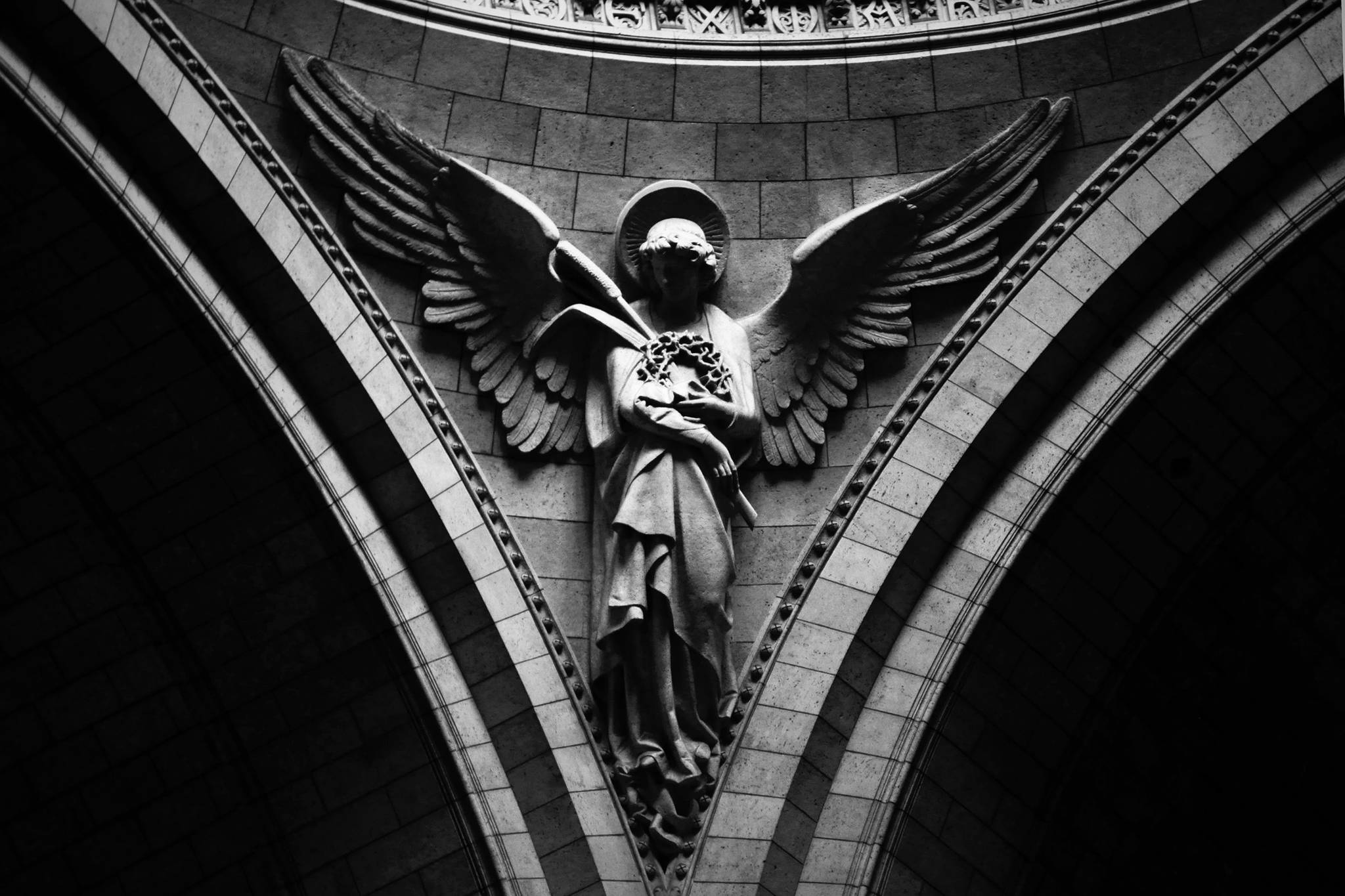
I was reminded today of the quote above from Abraham Lincoln’s first inaugural address, given on the brink of Civil War.  He had no idea what the future held and how our nation almost fell apart – and the very long road it would take (and is still taking) to recover.  But even then, on the cusp of some of our darkest times as a nation, Lincoln was convinced that we had better angels of our nature.  Perhaps that is where my hope comes from today too.  I am convinced that we have better angels still, and that, with God’s grace, we will be touched again by the better angels of our nature.  That is my prayer for all of us today!

On Haircuts, Darkness, and Light…

15 Wednesday Jul 2020

Posted by jandrewsweckerly in Uncategorized

≈ 1 Comment

Tags

anxiety, Bible, darkness, excitement, God, haircut, light, pandemic, prayer, vanity, weight

bob-haircut-lede

Photo credit:  https://www.allure.com/story/getting-haircut-after-hair-loss-confidence

One of the inconveniences of this pandemic was that I was due for a haircut right as salons were closed.  I decided quickly this was a superficial, somewhat vain, concern, and I could simply wait until things reopened.  As the months passed, my growing hair became a symbol of this time – our need to stay-in-place, to stay socially distanced, and to make sacrifices for the sake of the community.  Eventually, as I did daily online prayers, it became a running joke that people were measuring the length of quarantine by the length of my hair.

So, when my hairdresser finally came back to work last week, I was equal parts thrilled and nervous.  My hair had not grown that long since college, and I longed for the ability to look properly groomed.  But I also was anxious – there is no way to stay six feet away from someone cutting your hair, and even with us both wearing masks, getting my hair cut was taking on a risk.  I tentatively booked the appointment, feeling both relief and guilt.

That tension did not dissipate during the experience.  My nervousness made my entire body tense.  I realized half-way through the cut I was subconsciously praying for both of us – that neither of us would get sick (then, guiltily realizing I probably ought to be praying for my hairdresser daily!).  As three-inches curls of hair fell to the ground, I had flashes of the Sampson story we had just read in our 90-day Bible Reading Challenge.  Had this been a mistake?  Was shedding all this hair a symbol of my failed ability to lead others with the example of compassion and care?

As I got back into my car though, the lightness of the weight of my hair created a lightness on my spirit too.  I suddenly realized that in addition to all of the suffering and death this pandemic has brought, it has also given us an invisible weight on our shoulders – the angst of making decisions about communal versus personal behavior, the load of constant cycles of grief, and the burden of a system crumbling around us.  Losing my hair was akin to losing a bit of the weight on my shoulders – remembering that despite all of the bad that has come out of this pandemic, so has a lot of good.  For me, cutting my hair (done with all the safety precautions possible) was a reminder of the light in the darkness of this time.  I say that not as an endorsement of getting one’s hair cut in general.  I say that because we all need reminders of the light trying to shine through during this time of darkness.  If you are finding you need help finding that light, I am here.  If you need help finding that light, Hickory Neck Church is here.  If you need help finding that light, God is surrounding you with light on every side, even if you cannot see it yet.  My prayer for you is you find hints of light today to sustain you in this darkness!

On Refreshment in a Parched Land…

01 Wednesday Jul 2020

Posted by jandrewsweckerly in Uncategorized

≈ Leave a comment

Tags

care, comfort, communion, Coronavirus, grieve, Holy Eucharist, pandemic, parched, prayer, reassurance, refreshment, salve, wilderness

70038647_10158090008257565_6128712585278652416_n

Photo credit:  Jennifer Andrews-Weckerly; resuse with permission only.

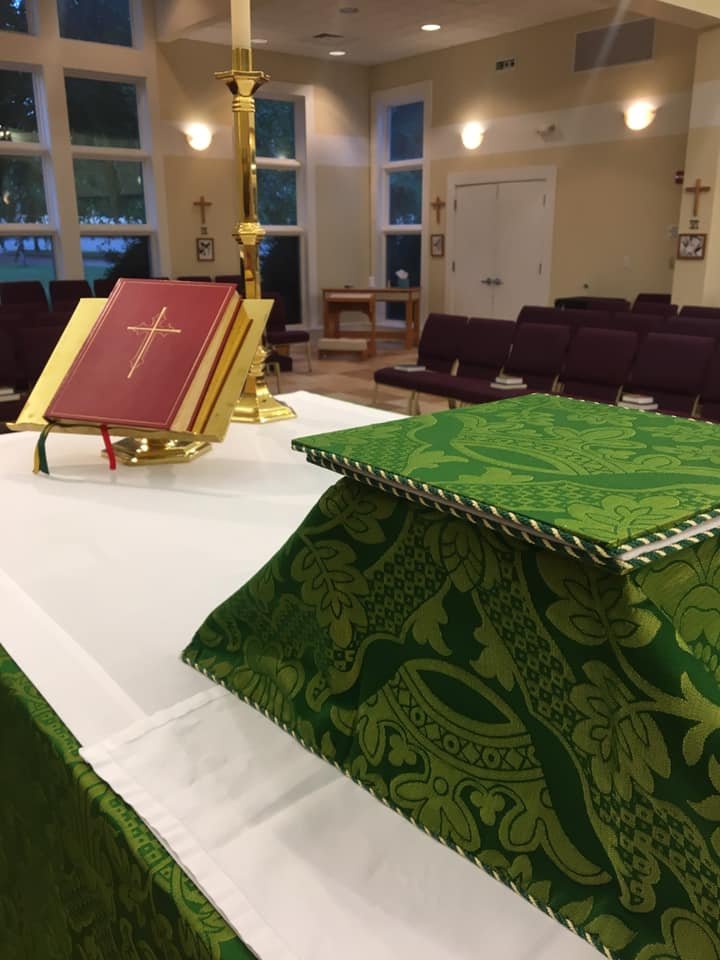
Over three months ago, when we closed our church’s doors because of the Coronavirus pandemic, we had to make some quick, difficult decisions.  We knew we wanted to offer a livestream service, but we also knew we did not feel comfortable consuming the holy meal without the community of faith gathered.  Fortunately, we have a rich traditional of prayers from our Book of Common Prayer, so we switched to Morning Prayer on Sundays.  In seminary, I attended Morning Prayer daily, so in some ways, the last many months has been like visiting an old friend.  As the officiant, I have often worn my seminary cross as a sign of gratitude for the formation I receive at Virginia Theological Seminary to be able to confidently officiate the service.

But as our diocese gave us permission to begin the regathering process, the liturgical team began to realize we had a conundrum.  For the limited number of people who would be able to gather in the space, would we keep offering Morning Prayer, or would we offer communion under the new guidelines?  If we offered communion to some, would those watching online feel left out if the livestream was different from the in-person offering?  So, like we often do at Hickory Neck, we decided to try an experiment.  We still did not want the altar party to consume on screen if no one else could consume with us.  But perhaps we could try an offering of “Spiritual Communion”:  a service identical to the familiar Holy Eucharist we normally celebrate, but with a special shared prayer instead of actual reception of the body and blood of Christ.

This past Sunday, we gave the experiment a go.  Shifting types of services is more complicated than it sounds, especially given the challenges of working with limited technology.  My brain was so jumbled with details that when we hit the livestream button, I had not processed the significance of the morning.  I put on vestments I have not worn in over three months – vestments I used to wear every week.  As the celebrant, I was saying words that I have said countless times in the last ten years.  It was only when I elevated the elements, recognizing the muscle memory of my body, that the power of what we were doing hit me.  Holy Eucharist is just one of the myriad things that have been taken away from us during this time of social distancing – one of the many comforts that I have grieved in these last months.  Despite the fact we were not actually receiving communion, despite the fact the room was still empty minus a camera, despite the fact a hundred little things were different, all of a sudden, I found myself overwhelmed with emotion.

Celebrating Spiritual Communion was not the same as celebrating Holy Eucharist.  But celebrating Spiritual Communion felt like a sip of water in a parched land.  It was not complete refreshment, but it was reassurance, comfort, and care.  It was an unexpected gift from the Holy Spirit in the wilderness of this pandemic.  I do not know what our community will decide to do going forward – whether we will keep Morning Prayer or Spiritual Communion, or some combination of the two.  In fact, I am hoping our parishioners and viewers will let us know their feedback.  This week I am just grateful for a community that is willing to experiment – to try, to fail, to learn, and to grow.  That commitment to playful creativity has always been a joy; during this pandemic it is salve to our open wounds.  Thanks be to God!  And thank you, Hickory Neck!

On Singing in a Strange Land…

27 Friday Mar 2020

Posted by jandrewsweckerly in Uncategorized

≈ Leave a comment

Tags

bless, community, Coronavirus, God, Lord, Lord's song, prayer, psalms, reality, refugee, Rivers of Babylon, singing, strange, upheaval, virtual

saul-raskin-on-the-rivers-of-babylon

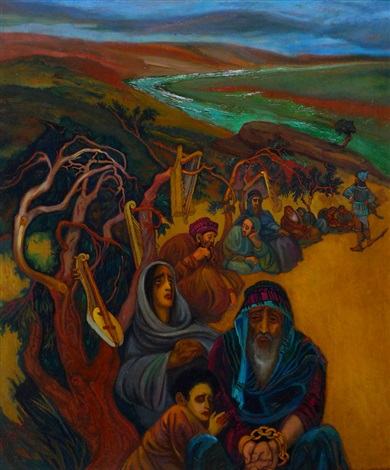
Paul Raskin, “On the rivers of Babylon.”  Photo credit:  http://www.artnet.com/artists/saul-raskin/on-the-rivers-of-babylon-CQj4JGZtS9eQctXb-beJg2

In some ways, I suppose I could have predicted it.  We spent hours luxuriously debating how to safely distribute communion, being able to consider every detail:  imagining how hard this new reality would be for our parish, who is a loving, “touchy-feely” parish; researching burgeoning new practices in other parishes and dioceses; and prayerfully considering how to model safe behavior.  And in the end, our parish engaged beautifully, the pain of their sacrifices obvious on their faces, but also the determination to protect and care for one another equally obvious on their faces.

But then the bottom dropped out.  It was two weeks ago, and I was in the family surgical waiting room, already letting my wardens know I would have to miss a Vestry meeting because my daughter’s surgery had been more complicated than expected, and I had yet to see her.  But just as the nurse was telling us our daughter had been moved to recovery and we could go back soon, our Bishop sent out a communication, cancelling all church campus activities, including worship – including that Vestry Meeting we had planned to hold.  The next several days were a blur – sleep in three-hour bursts as I tended my daughter; texts, emails, and calls to figure out how to still hold worship virtually; pastoral letters to be written to the parish explaining what was happening and how this would all work; and the reality of this even newer normal sinking in slowly.

I have never had a long conversation with a refugee, but I have watched enough news coverage, read enough human-interest stories, and seen enough movies about refugees to have a tiny inkling of how upending, world-changing, and scary it must be to be a refugee.  I would never argue my life in the midst of the Coronavirus is as brutal or devastating as a refugee, but there do seem to be some parallels.  Within moments, our world has been upended.  We went from being totally free to do whatever we desire, to being confined to our homes, having our jobs be totally changed (or sometimes ended), having the schooling of our children and the social support system schooling represents stripped away, worrying about the scarcity of necessities and the wisdom of going out to obtain what we could find, feeling the anxiety of financial insecurity, and losing the comfort of physical touch and community.  As a parent and priest, it has meant taking on the impossibility of two full-time jobs, knowing everyday you could do more, and yet being limited to the constraints of 24 hours a day.  And none of that even touches the emotional, psychological, and spiritual weight of upheaval that our bodies are processing, whether we try to stifle it or not.

Unlike most refugees, I know this new normal for us is relatively temporary.  Someday, we will be able to go back to some modification of the old normal.  But for now, this new reality is foreign, disorienting, and unnerving.  I was just yesterday reminded of that song “Rivers of Babylon,” which pulls from Psalm 137 and 19.  The echo of the verse, “How can we sing the Lord’s song in a strange land?” has been lingering with me.  And yet, that seems to be the only thing holding me together these days – singing the Lord’s song in a strange land.  For all the upheaval, all the disorder, all the anxiety and confusion, rooting myself in daily prayer – having people join in watching on Facebook Live, leaving their comments or greetings, or just seeing their names pop up, has felt like a balm to my heart.  I have not been able to bless or consume the holy meal, I have not been able to embrace my beloved parishioners, and I have not been able exchange physical signs of the peace.  But I have been able to hear the prayers of not only our parish’s heart, but also the hearts of our neighbors, friends, and even strangers.  I have not been able to gather physically with our community, but I have felt the connection of virtual community so palpably, I thought I would cry.  I do not know how long this new reality will last, but I am grateful for the opportunity to sing the Lord’s song in this strange land.  You are most welcome to join me in this singing.  And if you do not know the song, I’m happy to teach you or sing it for you for a while.  May God bless you all, and I’ll see you sometime today as we gather virtually to sing the Lord’s song!

On the Blessings of Interdependence…

04 Wednesday Mar 2020

Posted by jandrewsweckerly in Uncategorized

≈ Leave a comment

Tags

blessing, Christ, Christian, community, help, interdependence, Jesus, need, prayer, role reversal

interdependence

Photo credit:  https://bcalmbcorp.com/rising-interdependence-agreements-are-not-so-far-5947ba50d170

This past Sunday was my first attempt to start using my voice professionally after a bout of laryngitis.  My voice was feeling strained after the second service, so I wandered away from coffee hour and back in the nave to reorder my sermon and rest my voice.  As I was there, I noticed the volunteers at the healing altar tidying up their station.  I have never visited the station in my almost four years of ministry here because I am usually administering or assisting with communion at the time they are working.  But as my gaze settled on them, I realized there might be no better time to get some healing prayers.

In receiving the parishioner’s prayers for healing, I began to understand how much I have had to lean on others for help in this illness:  from the deacon to help with pastoral care calls (because I literally couldn’t speak), to the two retired priests who helped lead services I could not have led alone, to the choir who sang a song so powerful it became a healing balm, to the countless parishioners who prayed for me and simply patiently waited for my strength to return, to my own family who kindly trudged through family life with a Magna Doodle board.  As a person whose job is to care for a community of people, it is a strange feeling to not only not be able to do your job, but also to need the kind of care you usually offer to your own community.

I’ve been thinking this week how much we need, and yet rarely get, that kind of role reversal in our lives.  We are all problem-solvers, hard workers, and generally responsible for ourselves in life.  But sometimes, whether through injury, illness, or other obligations, we simply cannot fulfill our responsibilities or expectations, and are left at the mercy of others.  I am convinced that these seasons of need are the only thing that is keeping us in check to thinking we have no need for community.  Being at someone else’s mercy from time to time teaches us how interdependent we truly are – not only upon one another, but upon Christ.

Being a part of a community you can trust with that vulnerable need for mercy is at the heart of the Christian experience.  Without leaning into the community from time to time, we cannot learn how to lean into Jesus – how to come to Christ for help when everything is overwhelming, difficult, or seemingly impossible.  By learning to say, “I need your help,” to other human beings, we train ourselves to do the same with God – to honestly and authentically say to God, “I need your help.”  If you do not have that kind of community in your life, please know that you are always welcome at Hickory Neck.  And if you are a part of our community, and have not yet leaned into to others, know that our interdependence is mutual!  You are needed here!

The Why of Pilgrimage…

05 Wednesday Feb 2020

Posted by jandrewsweckerly in Uncategorized

≈ Leave a comment

Tags

foreign, God, Holy Spirit, Jesus, journey, pilgrim, pilgrimage, prayer, refresh, relationship, renew, sacred, servant, Spirit, spiritual, walk

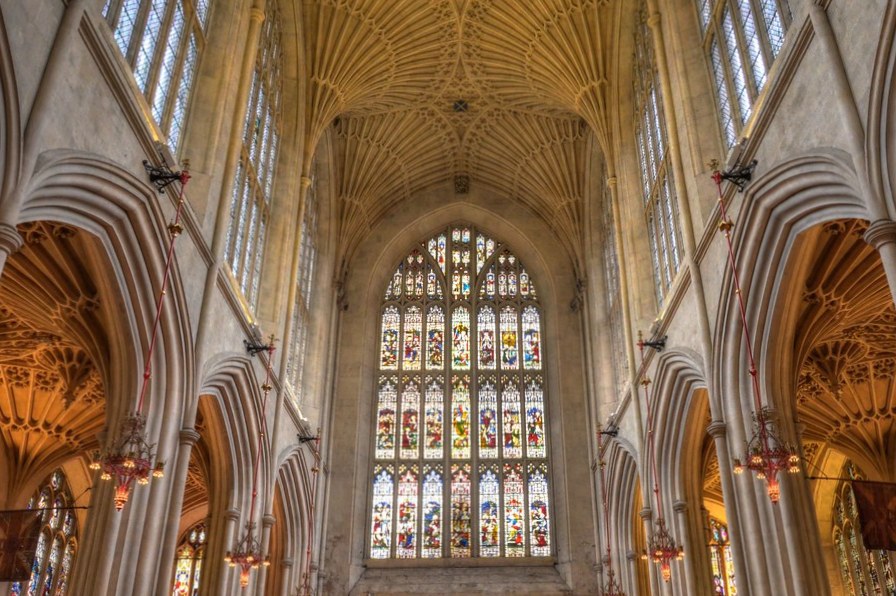
Bath-Abbey

Photo credit:  https://rrcb.org/the-spiritual-blessing-of-pilgrimage/

Tomorrow, I will help lead sixteen pilgrims on a journey through England.  There have been countless details to coordinate, communication to send, logistics to handle back home, and preparations for the team’s spiritual guidance.  Over a year of planning will come to fruition once we step on that plane, and I cannot be more excited to see what is in store for each person’s spiritual journey.

Many people have asked me why we would go on a pilgrimage.  The truth is, there is no simple answer, and each person goes for their own reason.  Perhaps at the heart of the reason is to forge a deep connection to God.  For some, that connection is enriched with beautiful architecture, sacred art, and beautiful, holy music, all of which can be found in minsters, cathedrals, and colleges on our journey.  For others, simply getting out of their routine, going to a foreign place, and taking on the ritual of walking, meditating, listening, and praying is how they enliven that connection.  For others, relationship is their mode of connecting to God – relationship with team members, relationship to other pilgrims and Christians along the way, and relationship with our spiritual ancestors, who built these sacred spaces centuries ago.  We go on pilgrimage to know God, to walk with Jesus, to be fed by the Holy Spirit.  Many of us even go having no idea what to expect, but longing for something deep and abiding.

But we go not just to fill our own spirits – we go to bring back those renewed spirits.  We go so we can share our journey with others.  We go so we can come back better servants of the Good News.  We go so our faith community is richer as a body.  We go on pilgrimage for all of us.  I invite your prayers for those who go this week.  But I also invite your prayers for your own spiritual journey.  May your week be enlivened, refreshed, and renewed as we walk together.


Please enjoy this poem found in Ian Bradley’s Pilgrimage:  A Spiritual and Cultural Journey.  Our team has used it in our own preparations, and would like to gift it to you. 

To the Pilgrim

 Set out!

You were born for the road.

Set out!

You have a meeting to keep.

Where?  With whom?

Perhaps with yourself.


Set out!

Your steps will be your words –

The road your song,

The weariness your prayers.

And at the end

Your silence will speak to you.


Set out!

Alone, or with others –

But get out of yourself!

You have created rivals –

You will find companions.

You envisaged enemies –

You will find brothers and sisters.


Set out!

Your head does not know

Where your feet are leading your heart.


Set out!

You were born for the road –

The pilgrim’s road.

Someone is coming to meet you –

Is seeking you

In the shine at the end of the road –

In the shine at the depths of your heart.


He is your peace.

He is your joy!


Go!

God already walks with you!


~Anonymous


On Discernment…

25 Wednesday Sep 2019

Posted by jandrewsweckerly in Uncategorized

≈ Leave a comment

Tags

bishop, choose, Diocese, discernment, Episcopal, God, Holy Spirit, identity, politics, prayer, silence, space, trust

70764-shoes-direction-arrows-road-gettyimages-11361.1200w.tn

Photo credit:  https://www.ibelieve.com/faith/what-is-discernment-ways-grow-more-discerning.html

This past weekend, our Diocese elected its next bishop.  Having never served in a diocese that was electing a bishop, I was not entirely sure what to expect.  I had heard stories of clergy politicking for particular candidates, trying to sway their colleagues to vote a particular way.  I knew we have a diversity of perspectives in our Diocese and coming to consensus may be difficult.  And although I had spoken to many clergy colleagues about their discernment for the best bishop, I did not know nearly as many laity and what their discernment had been like.  By the time we gathered for the election, I felt anxious, hoping we could be civil, but dreading what might be a contentious process.

Instead, I found something quite different.  Some of the difference may have been the result of careful crafting.  We were seated in an auditorium, with a long center row.  Try as one might, getting up and down to talk to others between votes was not exactly easy.  Instead, many of us were left to pray on our own or consult the limited people around us.  Likewise, once the polling was closed, we were required to wait for the candidates to be notified of the results before we were; once the results were announced though, the leadership immediately had us vote again.  We had little ability to process the results of one ballot with others before voting again.  Further, before each vote, our chaplain read a prayer from the Book of Common Prayer.  And finally, there was absolutely no internet or WiFi in the room, forcing us away from technology and into a real sense of presence in the room.

Perhaps it was the rigid structure that guided our behavior, making the election different than I expected.  But I also suspect those gathered last weekend consciously chose a different path.  Instead of dividing into camps behind one of the six candidates, our laity and clergy seemed to embrace the election as a matter of prayerful discernment, not premeditated politicking.  Limited by the confines of the room, you could sense the powerful prayers emanating from each delegate – desperately trying to discern the Holy Spirit’s will.  The pacing of the ballots did two things.  One, there was ample time to prayerfully consider the name one just submitted electronically, before knowing what everyone else had just done; and two, there was a mandate to keep moving, to keep faithfully and rapidly calling on God for answers.  Even our chaplain seemed to root us in tradition.  By using the BCP instead of extemporaneous prayer, she minimized her and our influence on one another – instead, calling us back to the book the is such a marker of our identity.

You may already know about the dramatic turn of events toward the end of our election.  I suspect the prayerful process of discernment in which we were engaged in that space was also shared among the candidates, helping them to faithfully discern what they should do too.  Having walked through that experience so prayerfully, I wonder if there is not something for us all to learn from about the hard decisions of everyday life.  Perhaps we too could stand to:  root ourselves in prayer, trust those around us to be praying too, create environments around our discernment where are weakness are less able to thrive, return again and again to the beautiful words of prayer book, make space for silence when you do not know all there is to know, and, perhaps most importantly, trust the Holy Spirit to do great things in spite of us.  If you are in discernment about something in your life, know that you have my prayers.  I would love to hear your stories of how the Spirit is moving in your life too!

Sermon – Luke 11.1-13, P12, YC, July 28, 2019

31 Wednesday Jul 2019

Posted by jandrewsweckerly in Sermons, Uncategorized

≈ Leave a comment

Tags

authentic, disciples, God, honest, Jesus, language, Lord's Prayer, power, pray, prayer, real, relationship, Sermon, teach, vulnerable

One of the practices highly recommended to clergy is having a spiritual director.  My director is a professor I had in seminary.  He is wise and insightful, and always helps me not only see the bigger picture, but also see goodness in what sometimes feels like darkness.  But perhaps my favorite thing about him is the way he prays.  You would think with such a spiritual, learned man, his prayers would be profound and flowery – worthy of the kind of prayers we find in our own Prayer Book.  But instead, his prayers are the opposite.  They are awkward and fumbling.  You can hear long pauses in them as he struggles to articulate what he wants to say to God.  He uses everyday language, rarely capturing the phrases we normally hear in prayers.  The first several times I heard him pray, I was admittedly a little disappointed and, when I’m really being honest, a bit judgmental.  But in time, I began to see his prayers differently.  His prayers may not be artfully constructed or perfectly paced, but his prayers are never canned or artificial.  His prayers may not be theologically intricate, but his prayers are honest, vulnerable, and capture the deep profundity of whatever you have just shared.  His prayers are not pretty, but they are real and raw – more real than most prayers I have heard.

Of course, I am not the first person to wonder, worry, or wander through prayers.  Today, the disciples ask a simple favor of Jesus, “Lord, teach us to pray.”  The disciples at this point have seen Jesus pray many times.  They see how good he is and they see how important prayer is in his life.  In fact, in Luke’s gospel, Jesus is regularly found in prayer.[i]  They watch Jesus enter into prayer with God for months, and they long to be able to do that too.  And so they come to Jesus, and they vulnerably submit their request:  teach us to pray.

Their request is full of implications.  First is the admission that they do not have the first idea about what they are doing.  Maybe they learned some prayers in temple, or maybe their parents prayed with them.  But they realize in watching Jesus that they do not actually know how to pray themselves.  Not really.  Second, they see a real connection between Jesus and God that somehow is revealed in Jesus’ prayer life.  Perhaps they see how prayer strengthens him in his weakness and how he is more vulnerable with God than even with them.  They long for that kind of connection with God too, but still, they are not sure how the whole thing works.  Finally, a deeper implication is at hand in the disciples’ request.  Perhaps they are not only asking Jesus how to pray, but also wanting to know what is actually happening in prayer.  Perhaps they have tried praying on their own – for an illness, for a new job, for a broken relationship – but the prayer did not work.  They want Jesus to teach them the right way to pray so that the results they desire are fulfilled.

And so, Jesus responds.  Jesus gives them the ultimate prayer – the prayer we call The Lord’s Prayer.  The prayer Jesus gives them is so beautiful and powerful, that two thousand years later, people who never go to church seem to know this prayer.  This is the prayer we pray when we pray the rosary, when we end our days, and at the end of every Eucharistic Prayer.  This is the prayer we pray when we have no other words.  This is the prayer we teach our children to pray and we sing in our own unique Hickory Neck way.

But if you look at Luke’s version of this prayer, the prayer sounds a little more like one of the prayers my spiritual director might pray.  As one scholar says, “Pious convention has conditioned most of us to repeat this prayer so quietly and reverentially that we fail to recognize how we are risking an aggressiveness incommensurate with bourgeois manners.”[ii]  In other words, the Lord’s Prayer is kind of pushy.  There is no flowery language or even polite deference or usage of the word “please.”  Instead, Jesus just tells us to ask for a bunch of stuff:  give us, forgive us, lead us, deliver us.  And every week or even every day, we say the same words – give us, forgive us, lead us, deliver us.  And if we keep reading Luke’s gospel, after the prayer, we hear Jesus saying that our prayerful life with God is akin to being a pushy friend who through their shameless relentlessness[iii] is able to get a friend up out of bed in the middle of the night.

So why in the world do we teach our children this prayer when the prayer is so flagrantly pushy?  Next week Ella and Charlie will be receiving their First Holy Communion.  First Communion is not really the norm in the Episcopal Church.  As a priest, I first encountered First Holy Communion on Long Island, where the Episcopal Church was highly influenced by the Roman Catholic tradition.  Though the Episcopal Church’s theology is that any baptized person can receive communion, some families prefer their children to understand what Holy Communion means before receiving instead of learning to understand communion through experience.  There really is no wrong way to approach Eucharist, but if we are to do a First Holy Communion, one of the things we require candidates to do is learn the Lord’s Prayer.  In part we do that so that there is at least one part of the Eucharistic service they have memorized and in which they can fully participate.

But there is another reason we have candidates learn the Lord’s Prayer.  We want candidates to learn the Lord’s Prayer because the Lord’s Prayer teaches us about what our relationship with God is like.  Our relationship with God is not flowery or picture perfect.  We  may have moments of poetic beauty with God, but when our relationship with God is at its deepest, we cry ugly, full-bodied tears, we rage about injustice – both personal and in the world, we confess our shame and sorrow for the awful things we sometimes do, and we laugh and rejoice with the kind of dancing we would only do in the confines of our homes.  We do not use language with God containing the formality of language we use with strangers; we use language with God we would use with a friend who knows all our foibles and loves us anyway.  All of that is not to say the poignant prayers of the Prayer Book cannot inspire faithfulness; they can and do.  But we teach the Lord’s Prayer to our children so they know we can say unsure, vulnerable, real words to God.

That is what Jesus is really teaching the disciples.  Jesus does not tell the disciples to “ask, and it will be given you; search, and you will find; knock, and the door will be opened for you,” because he is saying prayer is a vending machine for our every wish.  Jesus tells us to ask, search, and knock, because prayer and our relationship with God is active and relational.  As one scholar asserts, Jesus teaches us the Lord’s Prayer because he wants his disciples to know, “prayer is not a meek, contrived, and merely ‘religious’ act; [prayer] is the act of human beings who know how hard it is to be human.  Real prayer cannot be faked.  [Real prayer’s] only prerequisites are sufficient self-knowledge to recognize the depths of our need, and enough humility to ask for help.”[iv]

This week, I invite you to take a cue from Jesus’ own relationship with God.  Maybe you will start with a prayer like my spiritual director’s – one that does not lead with preplanned words, but instead tries to authentically say the words on your heart; not a structured collect, but a raw conversation with God.  Jesus gives you permission to ask for those things you need, the forgiveness you desire, the protection you long for, and the deliverance you seek.  Jesus invites you to just be you – to be a human with the God who loves you and made you in God’s image.  And if all that fails, then you can say the Lord’s Prayer.  You can rest in the assurance that although Jesus’ prayer sure sounds pretty, his prayer is one of the most honest ones you can offer – the small step you can take in connecting back to your Lord and your God.  Amen.


[i] James A. Wallace, “Homiletical Perspective,” Feasting on the Word, Yr. C, Vol. 3 (Louisville: Westminster John Knox Press, 2010), 289.

[ii] Douglas John Hall, “Theological Perspective,” Feasting on the Word, Yr. C, Vol. 3 (Louisville: Westminster John Knox Press, 2010), 288, 290.

[iii] Wallace, 291.

[iv] Hall, 290.

← Older posts
Newer posts →

Recent Posts

  • On Redefining Community…
  • On Parenting, Milestones, and Community…
  • Sermon – Acts 2.42-47, E4, YA, April 26, 2026
  • On Seasons of Discernment…
  • Sermon – Luke 24.13-35, E3, YA, April 19, 2026

Archives

  • May 2026
  • April 2026
  • February 2026
  • January 2026
  • December 2025
  • November 2025
  • October 2025
  • September 2025
  • August 2025
  • July 2025
  • June 2025
  • March 2025
  • February 2025
  • December 2024
  • November 2024
  • October 2024
  • September 2024
  • August 2024
  • July 2024
  • June 2024
  • May 2024
  • March 2024
  • February 2024
  • January 2024
  • December 2023
  • November 2023
  • October 2023
  • September 2023
  • August 2023
  • July 2023
  • June 2023
  • May 2023
  • March 2023
  • February 2023
  • January 2023
  • December 2022
  • November 2022
  • October 2022
  • June 2022
  • May 2022
  • January 2022
  • December 2021
  • November 2021
  • October 2021
  • September 2021
  • August 2021
  • June 2021
  • May 2021
  • April 2021
  • March 2021
  • February 2021
  • January 2021
  • December 2020
  • November 2020
  • October 2020
  • September 2020
  • August 2020
  • July 2020
  • June 2020
  • May 2020
  • April 2020
  • March 2020
  • February 2020
  • January 2020
  • December 2019
  • November 2019
  • October 2019
  • September 2019
  • August 2019
  • July 2019
  • June 2019
  • May 2019
  • April 2019
  • March 2019
  • February 2019
  • January 2019
  • December 2018
  • November 2018
  • October 2018
  • September 2018
  • August 2018
  • July 2018
  • June 2018
  • May 2018
  • April 2018
  • March 2018
  • February 2018
  • January 2018
  • December 2017
  • November 2017
  • October 2017
  • September 2017
  • August 2017
  • July 2017
  • June 2017
  • May 2017
  • April 2017
  • March 2017
  • February 2017
  • January 2017
  • December 2016
  • November 2016
  • October 2016
  • September 2016
  • August 2016
  • July 2016
  • June 2016
  • May 2016
  • April 2016
  • March 2016
  • February 2016
  • January 2016
  • December 2015
  • November 2015
  • October 2015
  • September 2015
  • August 2015
  • July 2015
  • June 2015
  • May 2015
  • April 2015
  • March 2015
  • February 2015
  • January 2015
  • December 2014
  • November 2014
  • October 2014
  • September 2014
  • August 2014
  • July 2014
  • June 2014
  • April 2014
  • March 2014
  • February 2014
  • January 2014
  • December 2013
  • November 2013
  • October 2013
  • September 2013
  • August 2013
  • July 2013
  • June 2013
  • May 2013
  • April 2013
  • March 2013
  • February 2013
  • January 2013
  • December 2012
  • November 2012
  • October 2012
  • September 2012

Categories

  • reflection
  • Sermons
  • Uncategorized

Meta

  • Create account
  • Log in
  • Entries feed
  • Comments feed
  • WordPress.com

Blog at WordPress.com.

  • Subscribe Subscribed
    • Seeking and Serving
    • Join 391 other subscribers
    • Already have a WordPress.com account? Log in now.
    • Seeking and Serving
    • Subscribe Subscribed
    • Sign up
    • Log in
    • Report this content
    • View site in Reader
    • Manage subscriptions
    • Collapse this bar

Loading Comments...